Nejat Society
  • Home
  • Articles
  • Media
    • Cartoons
    • NewsPics
    • Photo Gallery
    • Videos
  • Publications
    • Books
    • Nejat NewsLetter
    • Pars Brief
  • About Us
  • Contact us
  • Editions
    • عربي
    • فارسی
    • Shqip
Nejat Society
Nejat Society
  • Home
  • Articles
  • Media
    • Cartoons
    • NewsPics
    • Photo Gallery
    • Videos
  • Publications
    • Books
    • Nejat NewsLetter
    • Pars Brief
  • About Us
  • Contact us
  • Editions
    • عربي
    • فارسی
    • Shqip
© 2003 - 2024 NEJAT Society. nejatngo.org
Mujahedin Khalq; A proxy force

America Is Already Committing Acts of War Against Iran

CIA use of terrorist Mojahedin Khalq – Rajavi cult

The war between the United States and Iran is on. CIA use of Terrorist Mojahedin Khalq - Rajavi Cult

USA taxpayer dollars are funding activities that result in Iranians being killed and wounded and Iranian property destroyed — acts of war.

The war between the United States and Iran is on. American taxpayer dollars are being used, with the permission of Congress, to fund activities that result in Iranians being killed and wounded, and Iranian property destroyed.

This wanton violation of a nation’s sovereignty would not be tolerated if the tables were turned and Americans were being subjected to Iranian-funded covert actions that took the lives of Americans, on American soil, and destroyed American property and livelihood. Many Americans remain unaware of

what is transpiring abroad in their name.

Many of those who are cognizant of these activities are supportive of them, an outgrowth of misguided sentiment which holds Iran accountable for a list of grievances used by the U.S. government to justify the ongoing global war on terror. Iran, we are told, is not just a nation pursuing nuclear weapons, but is the largest state sponsor of terror in the world today.

Much of the information behind this is being promulgated by Israel, which has a vested interest in seeing Iran neutralized as a potential threat. But Israel is joined by another source, even more puzzling in terms of its broad-based acceptance in the world of American journalism: the Mujahadeen-e Khalk, or MEK, an Iranian opposition group sworn to overthrow the theocracy in Tehran. The CIA today provides material support to the actions of the MEK inside Iran.

The recent spate of explosions in Iran, including a particularly devastating "accident" involving a military convoy transporting ammunition in downtown Tehran, appears to be linked to an MEK operation; its agents working inside munitions manufacturing plants deliberately are committing acts of sabotage which lead to such explosions. If CIA money and planning support are behind these actions, the agency’s backing constitutes nothing less than an act of war on the part of the United States against Iran.

The MEK traces its roots back to the CIA-orchestrated overthrow of the democratically elected Prime Minister Mohammed Mossadeg. Formed among students and intellectuals, the MEK emerged in the 1960s as a serious threat to the reign of Reza Shah Pahlevi. Facing brutal repression from the Shah’s secret police, the SAVAK, the MEK became expert at blending into Iranian society, forming a cellular organizational structure which made it virtually impossible to eradicate. The MEK membership also became adept at gaining access to positions of sensitivity and authority. When the Shah was overthrown in 1978, the MEK played a major role and for a while worked hand in glove with the Islamic Revolution in crafting a post-Shah Iran. In 1979

the MEK had a central role in orchestrating the seizure of the U.S. Embassy in Tehran, and holding 55 Americans hostage for 444 days.

However, relations between the MEK and the Islamic regime in Tehran soured, and after the MEK staged a bloody coup attempt in 1981, all ties were severed and the two sides engaged in a violent civil war. Revolutionary Guard members who were active at that time have acknowledged how difficult it was to fight the MEK. In the end, massive acts of arbitrary arrest, torture and executions were required to break the back of mainstream MEK activity in Iran, although even the Revolutionary Guard today admits the MEK remains active and is virtually impossible to completely eradicate.

It is this stubborn ability to survive and operate inside Iran, at a time when no other intelligence service can establish and maintain a meaningful agent network there, which makes the MEK such an asset to nations such as the United States and Israel. The MEK is able to provide some useful intelligence; however, its overall value as an intelligence resource is negatively impacted by the fact that it is the sole source of human intelligence in Iran. As such, the group has taken to exaggerating and fabricating reports to serve its own political agenda. In this way, there is little to differentiate the MEK from another Middle Eastern expatriate opposition group, the Iraqi National Congress, or INC, which infamously supplied inaccurate intelligence to the United States and other governments and helped influence the U.S. decision to invade Iraq and overthrow Saddam Hussein. Today, the MEK sees itself in a similar role, providing sole-sourced intelligence to the United States and Israel in an effort to facilitate American military operations against Iran and, eventually, to overthrow the Islamic regime in Tehran.

The current situation concerning the MEK would be laughable if it were not for the violent reality of that organization’s activities. Upon its arrival in Iraq in 1986, the group was placed under the control of Saddam Hussein’s Mukhabarat, or intelligence service. The MEK was a heavily militarized organization and in 1988 participated in division-size military operations against Iran. The organization represents no state and can be found on the U.S. State Department’s list of terrorist organizations, yet since the U.S. invasion of Iraq in 2003, the MEK has been under the protection of the U.S. military. Its fighters are even given "protected status" under the Geneva Conventions. The MEK says its members in Iraq are refugees, not terrorists. And yet one would be hard-pressed to find why the 1951 Geneva Convention on Refugees should confer refugee status on an active paramilitary organization that uses "refugee camps" inside Iraq as its bases.

Scott Ritter, Jr. (born July 15, 1961) is noted for his role as a chief United Nations weapons inspector in Iraq from 1991 to 1998, and later for his criticism of United States foreign policy in the Middle East. Prior to the U.S. invasion of Iraq in March 2003, Ritter publicly argued that Iraq possessed no significant weapons of mass destruction (WMDs). He became a popular anti-war figure and talk show commentator as a result of his stance.

Seoul Times

August 5, 2008 0 comments
FacebookTwitterPinterestWhatsappTelegramSkypeEmail
Nejat Publications

Pars Brief – Issue No.41


  1. Britain’s Immoral Support of Terrorists
  2. Nejat Society Letter to the Head of Iraqi Government
  3. Iran-Interlink welcomes UK de-proscription as Iraq moves to expel MKO terrorists
  4. Iraqi Tribal Leaders Want Mojahedin Khalq (Rajavi cult) Expelled
  5. Iraqi MP: Mojahedin Khalq (Rajavi cult) must leave in 6 months
  6. People’s Mujahedeen (Rajavi cult) of Iran seek to be rid of terrorist label
  7. UK deproscription offers lifeline to cult victims in Camp Ashraf

Download Pars Brief – Issue No.41

August 5, 2008 0 comments
FacebookTwitterPinterestWhatsappTelegramSkypeEmail
Missions of Nejat Society

Nejat Society open Letter to Gordon Brown

Prime Minister Gordon Brown

10, Downing Street

London

England

Monday, July 28, 2008 Nejat Society lettr to Prime minister Gordon Brown

Mr. Prime Minister

We the undersigned, the families of the members of the Mojahedin-e Khalq Organization (MKO) who are based in the Ashraf Camp in Iraq, are seriously concerned about the recent decisions made by the British government.

Regrettably we have learned that the British government has de-proscribed the Rajavi’s terrorist cult known as the MKO after they have been listed as a terrorist group for nearly 8 years in Britain.

The consequences of this decision which has been made for political interests is that our beloved ones captured both mentally and physically in the Ashraf Camp would be used as terror tools again. This has caused all of us who are anxiously waiting for the return of our relatives for many years a grave turbulence and stress.

After the fall of Saddam Hussein, there were hopes that our children would soon achieve normal contact with the outside world and with their families and would eventually be freed. Our expectation proved to be wrong and the MKO finally managed to find a substitute for the former Iraqi dictator in the west.

We the families of the MKO members are the first people suffering from this decision since we have gone into deep worrying about the fate of our relatives. Would they be used again as terror apparatus for other people’s interests? Would their captivity in the Ashraf Camp last for a long time again?

You well know that the MKO is an established cult of personality which mentally manipulates its members. And you also know that cults need false victories in order to continue brainwashing their followers. Your government has granted this chance to the MKO leaders to keep on deceiving their members in Iraq. Our children would certainly get a wrong impression from your government’s decision. All cults also need a remote place to isolate their followers from the outside world. The facility of the Ashraf Camp which is guarded beyond the control of the Iraqi government has given the organization such opportunity. This is certainly in contradiction with the policy of war on terror.

Apart from all political issues, we would like to draw your attention to a humanitarian problem. Encouraging the MKO by such actions as de-listing them would have the following outcomes:

1. We as the families would be worried to death about the fate of our beloved ones confined in the Ashraf Camp.

2. Our children would be brainwashed more and more and would be used again in terrorist operations against ordinary people.

3. The Iranian innocent civilians would be subject to terror as before which will certainly leave many victims and casualties.

Mr. Prime Minister

We as the suffering families of the MKO members urge you to safeguard meetings between us and our relatives in the Ashraf Camp. We also demand you to make sure that the group would not use our children in terrorist activities again. You well know that there is no evidence to prove that the MKO has given up using violence to reach political goals. They have kept their army structure in Iraq and continuously have their parades and military trainings. They have even refused to publicly denounce the armed struggle and the usage of violence. They have not changed their strategy by any means. They claim that they have not launched any military actions since 2001. It is obvious that they have been incapable of doing so. Once they find the right backing they have the capacity to start using violence against civilians inside Iranian cities. At the moment they plainly look at the British government as that potential support and openly demand their weaponry to be returned to them.

What has happened under Saddam Hussein’s regime must not be repeated again. We require assurances from the British government that our children would not enter terrorist activities one more time, and if they do so we certainly would find your government responsible for it.

With Regards

Copy to:

Ambassador Jerry Adams

The British Embassy

Tehran, Iran

August 3, 2008 0 comments
FacebookTwitterPinterestWhatsappTelegramSkypeEmail
Missions of Nejat Society

Symposium of Nejat Society in Tehran

One day symposium of the Nejat Society in Tehran, Monday 28 July 2008

In a one day symposium held on 2008-07-28 by the Nejat Society in Tehran, the members and the associates of the society as well as the families of members of the Mojahedin-e Khalq Organization (MKO) captive inside the Ashraf Camp in Iraq gathered from different provinces demanding the free access of the families to their children in Iraq.

Mr.Ebrahim Khodabande

Initially in this symposium Mr. Ebrahim Khodabandeh a former member of the international relations department of the MKO in the UK discussed two topics which were the de-proscription the MKO in Britain and the recent resolution passed by the Iraqi governments which indicates that the control of the Ashraf Camp must be handed over to the Iraqi authorities. He pointed out that the families have suffered most from the latest decision made by the British government since the MKO needs to show false victories to its followers to further control their minds and keep them captive for longer periods. Khodabandeh emphasized that if the British government intends to play the role of Saddam Hussein for the MKO, one has to expect more catastrophes to occur which would result to more victims on both sides. He stressed that protesting against the decision made by the British government is quite essential as far as the families are concerned.

About the resolution of the Iraqi government on the MKO based on the Iraqi constitution, Khodabandeh gave some detailed explanations and finally demanded the Iraqi government to ensure that the items of the resolution are fulfilled as soon as the control of Ashraf Camp is handed over to the Iraqi government. He emphasized that the families do not accept any delay for a direct and free visit with their beloved ones when the Iraqi government holds control over Ashraf Camp in Iraq.

Khodabandeh pointed out that when the former regime in Iraq was toppled, there were hops that the families could have free access to their relatives in Iraq. They were disappointed when they released that there are other forces who intend to use the group the same way Saddam Hussein did. He explained that when the MKO is de-listed in Britain the worrying of the families have become doubled and they have the fear that their beloved ones might be used as tools of terror again. He said that the families expect the Iraqi government to end their sufferings and facilitate direct and continuous meetings with the relatives in the Ashraf Camp in Iraq.

Mr. Arash Sametipour

Next Mr. Arash Sametipour the international relations secretary of the Nejat Society explained about the recent activities of the Society in connection with the Iraqi government and efforts made to pave the way to let the families visit their beloved ones in Iraq. He then answered the families’ questions in this regard and expressed that the Iraqi government must facilitate the immediate and direct connection of the families in Iran with their relatives in Iraq once they had control over the Ashraf Camp and its inhabitants.

After the session was terminated, the participants moved to outside the British Embassy in Tehran and made a gathering opposite to the main entrance to protest against the decision made by the British government to remove the name of the MKO from the list of terrorist groups in that country.

Nejat Society Symposium -Tehran

Families gave slogans such as”there is no good or bad terrorism”,”down with Rajavi”and”free meetings are our just right”and they condemned legitimizing a terrorist cult which in the first hand has mentally captured its own members and followers.

According to Nejat reporter from opposite the British Embassy in Tehran, the participants were carrying banners with writings such as”do not sacrifice our children for state terrorism”and”the Saddam’s terrorists are now employed by the British government”.

The participants also signed a resolution in the form of a letter addressed to the British Prime Minister Mr. Gordon Brown and protested against the decision made by the British government to de-proscribe the group.

The families gathered outside the British Embassy in Tehran emphasized in their letter to the British Prime Minister that they are dreadfully worried about the decision made and its consequences over their captured children in the Ashraf Camp. This resolution was handed over to the British Embassy in Tehran.

Foreign reporters as well as representatives from humanitarian and international organizations were present in this gathering that made talks with some of the 200 families present at the scene.

August 3, 2008 0 comments
FacebookTwitterPinterestWhatsappTelegramSkypeEmail
Mujahedin Khalq; A proxy force

Is American using Terror Groups ?

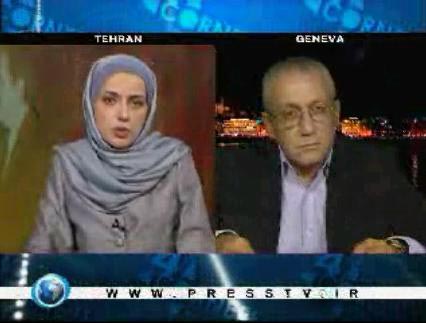
Is American using Terror Groups to fuel a Dirty War inside Iran? Presented by Yvonne Riddley, Anne Singleton from Iran-interlink participates in a one hour discussion on”The Agenda”, Press TV, London studio Is American using Terror Groups to fuel a Dirty War inside Iran? 

Is American using Terror Groups to fuel a Dirty War inside Iran?

Download Is American using Terror Groups ?

August 3, 2008 0 comments
FacebookTwitterPinterestWhatsappTelegramSkypeEmail
Mujahedin Khalq; A proxy force

The Risk of a US-Iran Proxy War

Washington DC – NIAC held a briefing yesterday on Capitol Hill to shed light on Gardinerthe risk of a possible proxy war between the USA and Iran through various sectarian and political groups in Iran and Iraq, including the Mujahedin-e Khalq (MEK). The event featured Col. Sam Gardiner (Ret.), an expert on strategy and military organizations.

Gardiner spoke of the clandestine support offered by Iran for groups in Iraq and by the USA for entities using violence against Iran.

He argued that the proxy war is already well under way, even though it contradicts the diplomatic approach currently propagated by the US military and state department, and even though some of the possible groups supported are designated by the US State Department as Foreign Terrorist Organizations.

The proxy war has created an atmosphere, in Gardiner’s view, in which incidents that otherwise could be handled could now ignite a much larger conflict.

Gardiner’s presentation took place against the backdrop of recent media reports pointing towards a US-Iran proxy war with clandestine US support for militant groups fighting Tehran and vice versa. The briefing provided lawmakers and staff in Congress an opportunity to look more deeply into this issue.

The event is part of NIAC’s US-Iran Policy Program, which is funded by the Ploughshares Fund, the Kenbe Foundation, the Pluralism Fund, the Colombe Foundation and the Rockefeller Brothers Fund.

Julia Murray, NIAC, Jul 31, 2008

http://www.niacouncil.org/index.php?option=com_content&task=view&id=1187&Itemid=2

August 3, 2008 0 comments
FacebookTwitterPinterestWhatsappTelegramSkypeEmail
USA

How Obama Could Tame Iran

(Would Obama end CIA use of Terrorist Mojahedin Khalq – Rajavi cult in Iraq?)

Assume that Barack Obama is elected U.S. president this fall and makes good on his promise to negotiate with Iran without preconditions. How will Tehran How Obama could Tame Iranrespond? Recent interviews I’ve held with three authoritative Iranians suggest that Tehran will have preconditions of its own. Before coming to the table, these Iranians say, the United States would first have to end its “hostile policies” toward their country. The most important step pushed by all three is one already promised by Obama: setting a timetable for the complete withdrawal of U.S. combat forces from Iraq. Other moves, however—like ending economic sanctions—would conflict with Obama’s campaign pledges and be even more controversial in Washington.

“Signals have come to us about negotiations before [Obama] is in the White House,” I was told by Alaeddin Boroujerdi, chairman of the powerful Foreign Affairs and Defense Subcommission of Iran’s Parliament and a close ally of President Mahmoud Ahmadinejad. “They have sent messages through friendly ambassadors that they are willing to talk to us.” But “the ball is in [Washington’s] court,” he emphasized. “It is the United States that severed the connection with us, and the manner in which relations are restored should reflect that.”

To create a “real change in the atmosphere,” he said, Obama should halt ongoing CIA efforts to overthrow the Islamic republic, release Iranian assets frozen in U.S. banks since the 1979 hostage crisis, end banking sanctions and resume sales of civilian aircraft. That’s a long list, but Boroujerdi implied that any one of these measures, plus an Iraq timetable, would be enough to get a dialogue started.

The importance of an Iraq withdrawal plan was also emphasized by Alireza Sheikhattar, first deputy foreign minister. “Whether it’s three months or eight months or longer,” he said, the important thing is that the United States show “a serious intention” to gradually leave Iraq. Asked whether any U.S. forces could remain there, Sheikhattar replied, “Yes, some could stay to help with training Iraqi forces.” But he drew the line at any U.S. moves to make Iraq “a platform for harming the security of Iran and other neighbors.”

Sheikhattar emphasized the fact that the United States currently controls Iraq’s airspace, which he said “upsets” Iraqi Prime Minister Nuri al-Maliki. “The Iraqis should have a real Air Force,” Sheikhattar declared. “Why are they prohibited from having more than token aircraft? They are not poor. They can purchase fighters and have their own aircraft for both internal and external security.” Wouldn’t this pose a security threat to Iran? I asked. Not if Iraq has a sovereign, democratic government, he said, “because there is an absolute majority [there] in favor of Iran.”

Asked about Obama, Hossein Shariatmadiari, editor of the hard-line newspaper Kayhan, was reticent, observing that “anyone replacing Bush will be an improvement. I won’t rule out that Obama does want a new approach to Iran. But we have to see whether he is genuine or is controlled by the same Zionist forces behind the curtain that have controlled Bush,” he said. Even if Obama wants to talk, Shariatmadiari asked, “do we want to talk to him?”

The answer suggested by our conversations is that Iran does want to work out a modus vivendi with the United States—but will play hard-to-get.

Obama will be in a strong bargaining position if he sticks to his pledge to withdraw U.S. combat troops from Iraq over 16 months and also removes U.S. bombers from air bases there. In return, he could demand that Iran prevent the Iraqi Shiite militias it supports from harassing U.S. forces during the pullout, and help in rooting out Al Qaeda from Iraq—a goal Tehran shares with Washington.

To start a broader dialogue on the nuclear issue, Obama would have to take one crucial step sought by Iran: end CIA and Special Forces support for insurgents seeking to overthrow the Islamic republic, especially Kurdish separatists and the Iraq-based Mujahedin-e Khalq. This move wouldn’t need to be publicly announced, however, and would thus have a low domestic political cost for Obama.

Boroujerdi, the parliamentary foreign-policy chief, said that if Washington accepted Iran’s right to continue uranium enrichment for peaceful purposes, the rest of the nuclear issue would be “negotiable.” “We understand and accept that the red line would be the development of a nuclear weapon,” he said.

Ending the Bush administration’s regime-change policy toward Iran is probably key to holding productive nuclear negotiations and would be an acceptable price to pay. But will a President Obama stand up to entrenched forces in the Pentagon, the CIA and allied intelligence services that are already engaged in covert action against Iran? That won’t be easy; the next U.S. president will face tough adversaries in Washington as well as Tehran.

By Selig S. Harrison; Harrison is director of the Iran Program at the Center for International Policy.

Newsweek International

August 4, 2008; International Edition

Harrison is director of the Iran Program at the Center for International Policy.

August 3, 2008 0 comments
FacebookTwitterPinterestWhatsappTelegramSkypeEmail
Mujahedin Khalq 's Function

On the anniversary of a suicide operation

Twenty years ago and after the Iran-Iraq cease-fire in 1988, Rajavi dispatched thousands of his warriors on ”Operation Eternal Light” across the border to capture Iranian territory and reach Tehran in less than two days. It was a total military failure and a proven suicide operation excluding the leader himself. In fact, Mojahedin hurried to take advantage of a no-war no-peace situation created after the ceasefire. The so-called National Liberation Army (NLA) did not sit waiting and hurriedly launched what many called the suicidal operation; in fact it imposed a high cost on the organization and it was the group’s last striving to take its chances to overthrow Iranian regime.

The failure of the operation Eternal Light (Forough Javidan) initiated challenges against Rajavi’s egocentric decision-making that led many forces of the organization to their death. Most of his critics believe that the operation was in no way correspondent with the organization’s line of strategy and that, Rajavi’s uncertain analysis of the post cease-fire situation compelled him to make a hasty decision.

The operation Eternal Light was the result of the search for an outlet out of an inevitable cul-de-sac rather than to be a strategic necessity. An analysis of the operation from the political and tactical point of view and Rajavi’s rationalization of the operation indicates that the move was the outcome of a desperate situation that had completely immobilized Mojahedin both in political and military fronts. A group that had once concentrated all its campaign marrow in a form of militia warfare and had already suffered great loss, suddenly and unbelievably had shifted to adopt a classic military tack to start a big cross-border operation.

August 3, 2008 0 comments
FacebookTwitterPinterestWhatsappTelegramSkypeEmail
Mujahedin Khalq Organization members' families

Families of MKO members gathering

Families of MKO members gather in front of British Embassy Tehran

Families of members of the terrorist Mojahedin Khalq Organization (MKO) gathered in front of the British Embassy in Tehran on Monday to protest London’s recent decision about the notorious organization. families of MKO members gathering

London has recently removed the terrorist organization from the Britain’s terror list.

The protestors were families of those MKO members who have been kept (mostly unwillingly) in the terrorist cult’s camp some 60 km north of the Iraqi capital city of Baghdad.

The center, called the Ashraf Camp, is a place where the MKO members are brainwashed to get prepared to participate in terrorist operations against civilians targets.

At the end of the gathering, the families read a protest letter addressed to the British Prime Minister Gordon Brown condemning the UK’s decision.

The letter considered as the gathering’s final statement, voiced the families serious concerns about the fate of their relatives and loved ones.

Stressing that London has made the decision for "political" reasons, they urged British premier to "make sure" that the terrorist group "would not use our children in terrorist activities again." "What has happened under Saddam Hussein’s regime must not be repeated again. We require assurances from the British government that our children would not enter terrorist activities one more time." The protesting families stressed that they would find the British government responsible, once their children entered any more terrorist operations.

They also called on Brown to "safeguard meetings between us and our relatives in the Ashraf Camp".

Established in 1960s, the MKO is at the European Union’s list of terrorist organizations subject to an EU-wide assets freeze and has been designated by the US government as a foreign terrorist organization.

July 28, IRNA

July 29, 2008 0 comments
FacebookTwitterPinterestWhatsappTelegramSkypeEmail
Mujahedin Khalq Organization members' families

Relatives of MKO Members Stage Rally

TEHRAN (FNA) – Families and relatives of the members of the anti-Iran armed opposition group, the Mojahedin-e Khalq Organization (MKO), staged a rally in Relatives of MKO memebrs stage rallyfront of the British embassy in Tehran on Monday to voice strong protest against the removal of the group from the list of terrorist organizations by London. (2008/07/28)

July 29, 2008 0 comments
FacebookTwitterPinterestWhatsappTelegramSkypeEmail
Newer Posts
Older Posts

Recent Posts

  • MEPs who lack awareness about the MEK’s nature

    December 20, 2025
  • Why did Massoud Rajavi enforce divorces in the MEK?

    December 15, 2025
  • Massoud Rajavi and widespread sexual abuse of female members

    December 10, 2025
  • Farman Shafabin, MEK member who committed suicide

    December 3, 2025
  • Nejat Newsletter No.131

    December 3, 2025
  • Facebook
  • Twitter
  • Instagram
  • Youtube

© 2003 - 2025 NEJAT Society . All Rights Reserved. NejatNGO.org


Back To Top
Nejat Society
  • Home
  • Articles
  • Media
    • Cartoons
    • NewsPics
    • Photo Gallery
    • Videos
  • Publications
    • Books
    • Nejat NewsLetter
    • Pars Brief
  • About Us
  • Contact us
  • Editions
    • عربي
    • فارسی
    • Shqip