Nejat Society
  • Home
  • Articles
  • Media
    • Cartoons
    • NewsPics
    • Photo Gallery
    • Videos
  • Publications
    • Books
    • Nejat NewsLetter
    • Pars Brief
  • About Us
  • Contact us
  • Editions
    • عربي
    • فارسی
    • Shqip
Nejat Society
Nejat Society
  • Home
  • Articles
  • Media
    • Cartoons
    • NewsPics
    • Photo Gallery
    • Videos
  • Publications
    • Books
    • Nejat NewsLetter
    • Pars Brief
  • About Us
  • Contact us
  • Editions
    • عربي
    • فارسی
    • Shqip
© 2003 - 2024 NEJAT Society. nejatngo.org
UK

MKO still a terrorist group, says UK’s Jack Straw

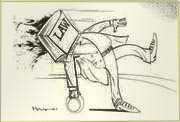
The British government still considers that the MKO is a terrorist group despite being recently removed from the UK’s proscribed organizations, according to Justice Secretary Jack Straw. The British governemnt still considers that the MKO is a terrorist group

During a meeting with visiting Iranian Deputy Foreign Minister for European Affairs, Straw also said that the UK strongly supports keeping the MKO on the EU’s terrorist list.

The British government has argued that it had no alternative but to accept a recent court decision to remove the group, which has assassinated thousands of Iranians, from its list of proscribed organizations under the Terrorism Act 2000.

But at their meeting on Tuesday night, Safari described the decision as both "political and unlawful" and said it was a "black stain on UK-Iran relations."

The deputy foreign minister, who started a three-day visit to London on Monday, also expressed concern about the long-drawn out saga of the US trying to extradite former Iranian Ambassador to Jordan, Nosratollah Tajik, from the UK while at Durham University.

He was particularly distressed about Tajik’s physical and psychological condition caused by two years of duress, while he was not only innocent but a victim of entrapment in a secret US sting operation.

But Safari expressed hope that the case would be successfully resolved as soon as possible and clear the "black mark" in the UK’s relations with Iran to ensure it does not happen again.
September 14, 2008 0 comments
FacebookTwitterPinterestWhatsappTelegramSkypeEmail
The MEK Expulsion from Iraq

Iraq Expels Anti-Iranian Group – MKO

‘ font-size: 10pt”>(Reuters/Mohammed Ameen)Iraqi Interior Ministry Spokesman Abdul Karim Khalaf

‘ font-size: 10pt”> An Iranian opposition group that has sought refuge in Iraq for more than 20 years has been ordered by the Iraqi government to leave the country.

‘ font-size: 10pt”>The Shiite-dominated Iraqi Interior Ministry announced September 1 that members of the Iranian opposition group Mujahideen-e-Khalq (MeK) had six Iraq expels Mujahedin-e-Khalq Organizationmonths to leave Camp Ashraf, the U.S. camp in Iraq where approximately 3,360 members of the group are currently being held. The Saudi daily al Riyadh reported September 3 that the United States and Iran had agreed to hand over members of the MeK (also known as the People’s Mujahideen Organization of Iran) to Iraqi authorities.
‘ font-size: 10pt”>While Iraq wants this group out of the country, it is Iran that is behind the move to expel the MeK from Iraq. Tehran views the MeK—whose goal is to replace Iran’s Islamist theocracy with a secular regime—as a terrorist group. The U.S.’s protection of the group has been a major obstacle in U.S.-Iranian negotiations over Iraq. America—which has been a longtime ally of the MeK—has now caved in to Iran’s demands. At the same time, the U.S. administration has become relatively silent in its criticism of Iran, indicating a final deal between Iran and the U.S. on the future of Iraq may be drawing closer.

‘ font-size: 10pt”>Meanwhile, “By essentially selling out the MeK,” Stratfor reports, “the United States risks sending the wrong message to its current allies” (September 4). The U.S. is increasingly finding itself in such a position—as recently seen in its lack of support for Georgia. As America increasingly loses power and prestige on the world stage and its military forces continue to be overstretched, we can expect it to become less and less reliable as an ally. This will push former allies to desert the U.S. and look to other nations for support and protection.

Trumpet.com

September 14, 2008 0 comments
FacebookTwitterPinterestWhatsappTelegramSkypeEmail
Mujahedin Khalq Organization as a terrorist group

On the anniversary of a terrorist attack

On the anniversary of 11 September terrorist incident, and while the world media take positions and analyze the incident from different angles, MKO-run media have purposefully remained silent, as they have all through these years. It is an issue of concern that while the world unanimously condemned the terrorist acts at the time and voted on a universal move to stop any further terrorist plots and still commemorates the victims, MKO has preferred to keep silent. In contrast to its claims of having accepted democratic parameters of the West, MKO’s indifferent position on 9/11 incident indicates its innate duality and its glorification of terrorism.

The testimonies of the ex-members who were still in Camp Ashraf when the incident happened well reveal the strategic and ideological positions of the organization. A number of these ex-members have stated that after the incident, Massoud Rajavi’s manner of behavior had arisen in them a suspicion that the organization might have masterminded the incident. So passionate had Rajavi talked about the inhuman incident that the members had come to believe that Al-Qaeda operation team might have received their training at Camp Ashraf. In a part of his speech Rajavi was quoted to have stated:

What happened reveals only a percentage of the potentialities of an Islamic organization which has adopted the most reactionary concepts of Islam. Imagine how potential and capable our revolutionary Islam might be!

September 14, 2008 0 comments
FacebookTwitterPinterestWhatsappTelegramSkypeEmail
Former members of the MEK

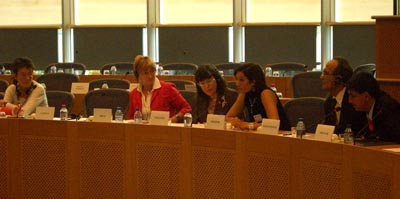
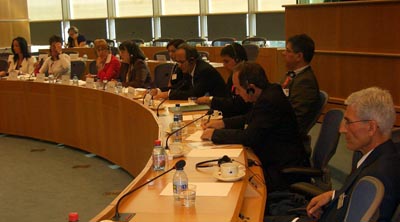
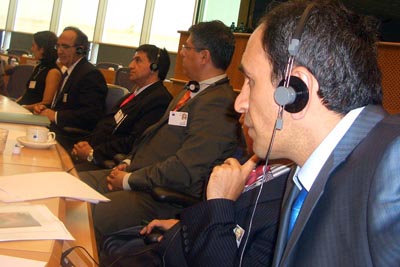
MEPs intrigued by newly arrived from Camp Ashraf

‘ font-size: 10pt”>MEPs intrigued by accounts of newly arrived escapees from Camp Ashraf

‘ font-size: 10pt”>Discussion of the Mojahedin-e Khalq/National Council of Resistance and its activities in the EU Parliament

MEPs intrigued by accounts of newly arrived escapees from Camp Ashraf 

‘ font-size: 10pt”> 

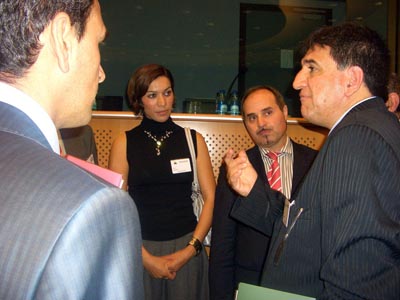
‘ font-size: 10pt”>On Tuesday 9 September a meeting was held by the Delegation for Relations with Iran in the European Parliament. The meeting focused on ‘Discussion of the Mojahedin-e Khalq/National Council of Resistance and its activities in an exchange of views with:

‘ font-size: 10pt”>Ms Anne Singleton expert on the MKO

‘ font-size: 10pt”>Representative of the NCR (declined invitation)

‘ font-size: 10pt”>Three Residents of Ashraf Refugee Camp who arrived from Iraq in the last couple of weeks: Ms. Ebrahimi, Mr. Hassan Piransar and Mr. Hamid Siah Mansoori.

‘ font-size: 10pt”>MEPs intrigued by accounts of newly arrived escapees from Camp AshrafAlso present were former MKO members Karim Haggi, Mohammad Sobhani, Hadi Shams Haeri and Ali Ghashghavi, who accompanied the new arrivals to provide support to these vulnerable people.

‘ font-size: 10pt”>Ms Angelika Beer, President of the Iran Delegation (Greens/EFA), began by describing the MKO and its activities up to the present time.

‘ font-size: 10pt”>Anne Singleton briefly described her own involvement with the MKO for over twenty years.

‘ font-size: 10pt”>Asserting that the MKO will not give up the use of violence to achieve its aims, Ms Singleton went on to explain why, in spite of that, she believes that the MKO has currently little to do with the Iranian political scene, but that precisely because it is a cult, its danger is that it interferes in parliamentary democracy in western countries in ways that may even involve criminal activity.

‘ font-size: 10pt”>Whilst agreeing that the MKO’s platform of ‘total regime change’ in Iran could be attractive to some politicians in the west, Ms Singleton challenged the delegates to consider whether the MKO would be able to achieve its stated aim – ‘will it do what it says on the tin’? Since its last major offensive against Iran in 1988, the MKO has achieved little to further its aims. She told delegates that they should also consider the possibility that, even if they believe the MKO has changed tactic and intends to pursue its aims only through political opposition, the MKO may not actually be ‘fit for purpose’ She urged them to consider the evidence of the three former residents of Camp Ashraf who have arrived in Europe from Iraq only in the past few weeks, and who would speak later in the meeting about conditions inside the MKO.

‘ font-size: 10pt”>Ms Singleton asserted that Iranian people – as those delegates who have visited Iran are aware – are not waiting to be rescued by the MKO and are capable of opposing their own government. Iranian women are not waiting to be taught about feminism by Maryam Rajavi who leads an organisation which – as Batul Ebrahimi will testify – badly abuses women members.

‘ font-size: 10pt”>Then Ms Singleton described the current situation of the MKO in Iraq. Control of Camp Ashraf, the MKO’s headquarters, has been transferred from the American military to the Iraqi military. Ms Singleton said that Iraqi government officials are angry at reports which suggest that the MKO would be ‘massacred’ if the Americans handed over Camp Ashraf.

‘ font-size: 10pt”>Instead, the people inside the camp are facing a humanitarian crisis because they are not allowed even basic freedoms such as the right to enjoy contact and visits from their families. A rumour has arisen that the Americans have removed around 300 of those captive in Camp Ashraf and left the others. Ms Singleton said that if this is the case then she would consider the remaining 3000 individuals in Camp Ashraf to be ex-members of the MKO. They should be brought to western countries as soon as possible.

‘ font-size: 10pt”>Finally, Ms Singleton presented delegates with one solution to the crisis at Camp Ashraf, remove the MKO from the European terrorist list and bring ALL 3,300 residents to Europe where those who are mentally, physically and emotionally sick would be able to receive help.

‘ font-size: 10pt”>Ms Singleton finished by reminding delegates that continuing support for the MKO would, of course, mean that the European Parliament accepted to have a cult operating in its midst and continuing to interfere in parliamentary democracy. However, if that is the decision to be made, then so be it.

‘ font-size: 10pt”>Ms Beer thanked Anne Singleton for her contribution and asked the three recently arrived, former Camp Ashraf residents to speak.

‘ font-size: 10pt”>Ms Ebrahimi (speaking in Farsi) told delegates that she had gone to Camp Ashraf when she was sixteen years old and although she quickly realised she wanted to leave, she was captive there for another ten years. She described conditions for women in the camp. Not only does the MKO not allow women to marry, women are made to work in the scorching sun for hours at a time so their complexions are ruined and they become ugly. This is so they do not develop the vanity to think they could be attractive to a man, she told delegates.

‘ font-size: 10pt”>In order to remove hope from the women of ever having a family, they are being sent under surgery for spurious medical conditions to have their wombs removed [hysterectomy] and around ten percent of women in Camp Ashraf have now undergone this surgery. When they tried to impose it on her, Ms Ebrahimi ran away. She begged delegates to take doctors to Camp Ashraf to check the veracity of what she was telling them.

‘ font-size: 10pt”>The MKO told her that if she left the camp and went with the American soldiers, they would rape her. For this reason it took two years before she was able to have the courage to escape.

‘ font-size: 10pt”>Ms Ebrahimi said she saw Mr Paulo Casaca when he visited Camp Ashraf. We were not allowed to approach him and speak to him, she explained to delegates. If they had somewhere to go, she told delegates, without doubt ninety-nine percent of the people in Camp Ashraf would leave the camp and the MKO.

‘ font-size: 10pt”>Mr Hamid Siah Mansoori (speaking English) told delegates he had been in the MKO for over twenty five years. He described how he had gone to Iraq from Canada. He had a good education, and a good life in Canada and had his own business before leaving everything behind in the mid 1980s to go to Iraq. He then described the MKO’s attitude to family. He said no one is allowed to contact their family, except in a few cases where people were told to contact their family to get money from them. He said the MKO told his family he was dead. They came to look for him five years ago – at the beginning of the American occupation – but were told he was dead.

‘ font-size: 10pt”>Mr Hamid Siah Mansoori said he had arrived only a week ago, but had lost any contact details for his family. Nevertheless, his first priority now was to make contact with his parents and the rest of his family.

‘ font-size: 10pt”>Ms Beer asked delegates if they had questions. One delegate asked how the MKO continued to be financed which allowed them to continue to undertake such expensive campaigns in parliament and elsewhere. Another delegate asked for more detail about the role of the Americans in supporting Camp Ashraf when the US State Department so strongly describes them as a terrorist group.

‘ font-size: 10pt”>Anne Singleton answered these questions, pointing out that during the reign of Saddam Hussein the MKO had received almost unlimited finance from Saddam Hussein, as well as from Saudi Arabia and some western governments from behind the scene. Now, however, although it is clear that MKO finances are dwindling somewhat, it was unclear how the MKO could continue to spend so much money, and the only people to answer that are the MKO themselves.

‘ font-size: 10pt”>Ms Singleton pointed out a five year rift in policy toward the MKO between the US State Department – which has a very thorough knowledge of the MKO – and the US Defense Department under Donald Rumsfeld. Some in the US Administration wanted to use the MKO in confronting Iran and therefore Camp Ashraf has been protected by the US military in Iraq for five years. Ms Singleton conceded that this protection was beneficial in keeping the MKO out of danger in the midst of a war zone. But that the Americans had also flouted the UN Fourth Geneva protocol by not allowing MKO to meet their families and not enabling them to leave the situation.

‘ font-size: 10pt”>Ms Beer then introduced Mr Mohammad Sobhani who had previously addressed the Delegation. Following that meeting he had been the subject of unfounded accusations of having attacked MKO members in Paris. Instead, Mr Sobhani was the victim of a violent attack when some fifty MKO supporters ambushed a meeting at which Mr Sobhani was a speaker.

‘ font-size: 10pt”>Following this, Mr Hadi Shams Haeri briefly pleaded with delegates to help him have contact with his children whom he has not been allowed to see for eighteen years. He asked that Mr Paulo Casaca accompany him to Camp Ashraf and help him meet with them again.

‘ font-size: 10pt”>At the end of the meeting Ms Beer expressed her appreciation for the speakers and said it had been a valuable meeting. One which, given the ongoing situation at Camp Ashraf, might soon be repeated.

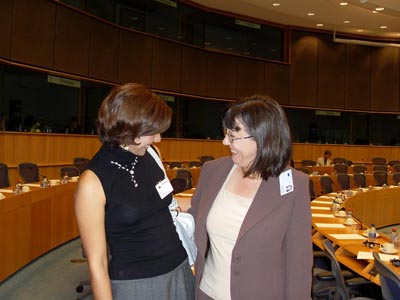
‘ font-size: 10pt”>After the meeting, several of the attendees stopped to talk to the visitors – in particular the three who had just arrived from Iraq – and asked them to keep them informed of developments.

‘ font-size: 10pt”>Reported from EU Parliament,


MEPs intrigued by newly arrived from Camp Ashraf

MEPs intrigued by newly arrived from Camp Ashraf

Ms Anne Singleton expert on the MKO & Ms Ebrahimi newly escapee from camp Ashraf

September 14, 2008 0 comments
FacebookTwitterPinterestWhatsappTelegramSkypeEmail
MEK Camp Ashraf

Ashraf – when is a city not a city?

Apparently we – the ‘rest of the world’, that is – are not ‘allowed’ to refer to Camp Ashraf as anything other than Ashraf City. Says who? Says Massoud Rajavi, leader-in-hiding of the Iranian Mojahedin-e Khalq organisation (MKO, MEK, aka Rajavi cult). Why?

Well, the MKO’s military camp is now under the control of the Iraqi government. American forces handed it over this week. In spite of a deeply insulting scaremongering campaign by the MKO, which claimed that the Iraqis would stage a ‘Srebrenica-style massacre’ if they got their (dirty, barbaric) hands on the MKO, the handover to Iraqi military personnel has gone ahead, as planned, without incident. The Iraqi government will now work with MNF and international agencies to find a satisfactory solution to the illegal presence of foreign terrorists in its territory.

The MKO response to the inevitable loss of its main base for ideological indoctrination has been interesting. Aside from the ‘massacre’ tactic, the group has also gone all out for an ostrich-like pretence that it is not really a uniformed military group and that the people in Camp Ashraf – sorry, ‘Ashraf City’ – are just like ordinary citizens living in a small, thriving town.

Last week, Iranians were amused to watch Voice of America television when it gave air time to MKO spokesman Alireza Jafarzadeh. In the programme Jafarzadeh extolled in glowing terms the great achievement of the MKO in creating this wonderful “city” and described the facilities ‘enjoyed’ by the MKO there.

Without contradicting his words, let us have a little glimpse at this ‘city’ and compare it with our own towns and cities, the places we all live and work and send our kids to school.

Ashraf

has an extensive cemetery but no maternity hospital

has huge, well-equipped salons for mass meetings but no arrangements to register or celebrate marriages or births

has (gender segregated) swimming pools but no nurseries, primary schools or high schools and no playgrounds

has prisons but no court of law

has strictly enforced regulations (including compulsory hijab) but no council elections

has gas stations (segregated, with different opening times for men and women) but no place to drive

residents work up to 18 hours a day but there is no bank because they don’t get paid – unpaid workers need no shops – they have no money to buy anything

residents only wear military uniforms – so there are no shops to buy pretty dresses and make-up, or smart suits or casuals

has air-conditioned, gender segregated accommodation but no hotels for visitors from out of town to visit their families

has no internet cafes, no newspaper deliveries, no radio or television sets for individual use, no satellite channels to choose from

has no public telephones and no mobile phones

Is anyone allowed to keep a pet?

Does this sound like the town you live in, or would want to live in?

No?

So when is a city not a city? When it’s a cult’s military and ideological headquarters of course.

Over forty people who have escaped from Camp Ashraf have arrived in Europe in the past few weeks. They are happy to talk about current conditions inside the MKO. Please contact Iran-Interlink for further details.

September 14, 2008 0 comments
FacebookTwitterPinterestWhatsappTelegramSkypeEmail
Massoud Rajavi

Autopsy of a Cult Leader

Autopsy of a Cult Leader (Massoud Rajavi leader of Mojahedin Khalq)

Most cults promulgate stories and legends concerning the cult leader. Research into the dynamics of persuasion has long established that the credibility and attractiveness of a message’s source are vital ingredients in determining its overall impact. Accordingly, cults credit their leaders with superhuman qualities. Lenin on the left and Hitler on the right are viewed in a semi-divine light by their followers. They are regarded as possessing uncommon insight into society’s problems, and with personal characteristics such as honesty, genius, and compassion which it is assumed will be attractive to prospective recruits. If such founders are dead then the present leaders, in effect, present themselves as the reincarnation of Lenin, Trotsky, Mao, Hitler or whoever. Often, the real problems of the leaders (such as alcoholism and drug dependency) are concealed from both prospective and current members.

– Tourish & Dennis, On the edge, 2000

It is meaningless to talk of a cult in the absence of its leader because formation of a cult depends on the outstanding ability of the founder termed as the leader or guru who charms and wins over followers. In fact, the life and survival of a cult is strongly tied to the leader that steers it. That is mostly because the purpose of a cultic group is to serve the emotional, financial, political, and in general power ambitions of the leader. Thus, the most important thing that obsesses a leader is power. The dynamic around which cults are formed is similar to that of other power relationships and is essentially ultra-authoritarian, based on a power imbalance.

Formation of cults has a history as long as man’s history; from the very days he lived in the caves until there emerged protestants to challenge pre-historic religions and beliefs. In all these instances, cults have called to change for the better; they have claimed to have attained, and of course are ready to share, occult knowledge and secretes beyond current human understanding. Therefore, every cult has something to offer and they exploit the weaknesses of individuals. They typically offer knowledge or wisdom that the individuals think they need to achieve an end. Often it is knowledge of eternal life, schism from a religion, techniques for enlightenment and happiness, or even achieving a political ambition.

In general, a cult cannot be truly explored or understood without understanding its leader. No follower is to attain what is he or she looking for unless through a leader who is believed to be endowed with magical powers or has connection to God or whatever higher power or belief system he is espousing. Some are so strongly possessed by megalomania that they publicize to be anointed to rule the world. A cult’s formation, proselytizing methods, and means of control "are determined by certain salient personality characteristics of [the] cult leader….Such individuals are authoritarian personalities who attempt to compensate for their deep, intense feelings of inferiority, insecurity, and hostility by forming cultic groups primarily to attract those whom they can psychologically coerce into and keep in a passive-submissive state, and secondarily to use them to increase their income." 1

Unfortunately, leaders often have beliefs which are very far from matching reality and which can become more extreme as they are encouraged by their followers. The predilection of many cult leaders for abstract, ambiguous, and therefore unchallengeable ideas reduce the likelihood of reality testing and hardly any follower dares to question or challenge the accuracy of the leaders’ status and the ideology they preach; “Gradually, the leader inculcates the group with his own private ideology (or craziness!), then creates conditions so that his victims cannot or dare not test his claims. How can you prove someone is not the Messiah? That the world won’t end tomorrow? That humans are not possessed by aliens from another world or dimension? Through psychological manipulation and control, cult leaders trick their followers into believing in something and then prevent them from testing and disproving that mythology or belief system”. 2

Although not all cults springing up like mushrooms in today’s’ modern society are destructive and malignant, however, most of them exercise extraordinary control over followers’ lives and use thought-reform processes to influence and control them and induce whole hearted devotion. Of course, this induction of devotion does not happen spontaneously but is the result of the cult leader’s skillful use of thought-reform techniques. Thaler Singer believes that “While the conduct of certain cults causes nonmembers to criticize them, the term cult is not in itself pejorative but simply descriptive. It denotes a group that forms around a person who claims he or she has a special mission or knowledge, which will be shared with those who turn over most of their decision making to that self-‘appointed leader”. 3

The power and hold of most cults depend on the particular environment shaped by the thought-reform program and control mechanisms that are usually conceptualized and put in practice by the leaders. Thus, it is the psychopathology of the leader that causes the systematic manipulative abuse and exploitation found in cults; “I prefer to use the phrase "cultic relationships" to signify more precisely the processes and interactions that go on in a cult. A cultic relationship is one in which a person intentionally induces others to become totally or nearly totally dependent on him or her for almost all major life decisions, and inculcates in these followers a belief that he or she has some special talent, gift, or knowledge”. 4

Hence, cultic groups and relationships are formed primarily to meet specific demands of the leaders, many of whom suffer from one or another form of character disorder. Some of them are even described as neurotic, psychotic individuals or suffering from a diagnosed personality disorder. We can conclude, and we intend to discuss it further, that before engaging to describe a certain cult, it is necessary to conduct a thorough study of its leader whose personal, behavioral features foster his followers’ belief in his special qualities.

To be continued

References:

www.anandainfo.com/cult_leaders.html 

Ibid.

Thaler Singer, Margaret; Cults in Our Midst: The Continuing Fight Against Their Hidden Menace, introduction.

Ibid, p. 7.

September 14, 2008 0 comments
FacebookTwitterPinterestWhatsappTelegramSkypeEmail
Mujahedin Khalq Organization's Propaganda System

MKO and supporters’ fear causes a question

Worried over the hand over of Camp Ashraf to Iraqi government, Maryam Rajavi said that the action paves the way for the massacre of thousands of MKO members! She asked the human rights advocates to support Mujahedin members in “Ashraf City”!

MKO and supporters’ fear causes a question From the other side Andrew McKinley, an MKO supporter in the British Parliament, via a letter to the State Department, asked the US to guarantee the protection of Ashraf city, stating his deep concern over the case. Besides, twelve European parliamentarians asked the international Red Cross to protect Ashraf residents. It is obvious that these current challenges originated from the deep fear of MKO and its supporter. They don’t try to hide their fear. There is a question: why don’t they ask for Iranian people’s support that they have always claimed to enjoy. Masud Rajavi who has always fantasized to have the position of a political party is not able to show Iranian’s significant support for MKO in the tumult of declining days. Instead of seeking the help of the United States’ authorities and Human Right Communities, why don’t they call for Iranians’ support? If the MKO supporters believe in the lies they repeat every day, about the situation of the group in Iran, they can write a letter to Iranian people and ask them to do something for the cult of Rajavi! They can also ask MKO leaders not to save the support of Iranians for after the military invasion to Iran. Spend it now that you are drowning in your strategy of moving along with American policy.
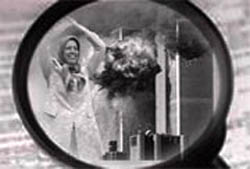
 Translation:Nejat Society

September 10, 2008 0 comments
FacebookTwitterPinterestWhatsappTelegramSkypeEmail
Terrorist groups and the MEK

11 September and MKO’s Tactic of Duplicity

Hardly anyone doubts that al-Qaeda perpetrated 11 September attacks had a great impact on Mojahedin-e Khalq Organization, or Mojahedin cult, to make a11 September and MKO’s Tactic of Duplicity shift in its terrorist conducts. The global reaction against the attacks and a shown decisiveness to combat against the abominable phenomena of terrorism made MKO to denounce armed activity if not in nature but provisionally in words. 

 

The US invasion of Iraq as 9/11’s aftermath and the consequent fall of Saddam actually deprived MKO of a bountiful, reliable strategic ally. Not only Saddam granted Mojahedin soil and abode, but also supplied them with logistics and arms, espionage equipments, training and abundant dollars. In fact, Mojahedin’s greatest enthusiasm to overthrow the Iranian regime came all from Saddam’s support. Saddam’s fall absolutely disappointed MKO of further availability of the precious opportunity that destined the group’s survival or demise.

The global war on terrorism turns to be an internationally sensitive issue at the present. Consequently, Mojahedin had to start a new phase to avoid coming under the central focus of anti-terrorism moves as well as enabling them to take a different step and a new democratic array in its struggle against the Islamic Republic. It was impossible unless Mojahedin could be adopted inside a new sphere of power and influence that was dominating the region. Fortunate enough for Mojahedin, the long friction between the new authoritative power in Iraq and Iran’s ruling power was at its climax.

 But there existed an impediment; MKO was on the State Department’s FTO since it was initiated. Now the blacklisted group had to convince the invader-host that it no more advocated armed and aggressive means and sought democratic approaches. The first steps were taken by its novel proposition of the “third option” and establishment of a “Solidarity Front”. Such moves were much the outcome of its lost military equipments and potentialities that were indispensables of armed struggle rather than a fundamental shift to democracy in its strategy of struggle.

 The ECJ’s lower court ruling wherein it was stated that MKO had denounced terrorist deeds since June 2001 emboldened the group to start an overall propaganda blitz to get rid of the terrorist tag and draw supports especially among the Americans. However, neither the US nor the EU paid were duped by what they concluded to be a new tactic by a terrorist group. One of the reasons contradicting MEK’s claim of renouncing terrorist activities since June 2001 was presented by the State Department’s April 30 report releasing the list of designated terrorist organizations:

In 2003, French authorities arrested 160 MEK members at operational bases they believed the MEK was using to coordinate financing and planning for terrorist attacks. Upon the arrest of MEK leader Maryam Rajavi, MEK members took to Paris’ streets and engaged in self-immolation. French authorities eventually released Rajavi.”[Rajavi was released on bail and is currently awaiting trial on terrorism charges].

 Furthermore, in an unprecedented move, the report branded MKO as a “cult of personality”. It happened at a time when Mojahedin eluded to show a clear position concerning 9/11 plots and maintained a meaningful silence over a most lambasted terrorist deed that exemplified the highest threat of terrorism which demanded a global move to confront. Developing a deep comprehension of Mojahedin’s terrorist nature, America is well aware that MKO cannot change a terrorist mentality it has preserved for nearly forty years. As asserted in the State Department’s report, MEK leadership and members across the world maintain the capacity and will to commit terrorist acts in Europe, the Middle East, the United State, Canada, and beyond.

MKO seems to be the sole terrorist group on the State Department’s list that has been carefully scrutinized to be found that it would undergo no fundamental and strategic change unless it reconsidered its ideology whose infrastructure is aggressive confrontation of global imperialism embodied in America. Thus, MKO’s refuge in liberalism stronghold in no way indicates that it has submitted to an ideological shift but rather parlaying circumstantial opportunities to break out of its complete isolation, a result of a universal combat against terrorism, from the political stage.

Americans in particular and the West in general have discerned that although al-Qaeda and Mojahedin-e Khalq show slight differences in interpretation of Islam, in contrast to al-Qaeda, Mojahedin appear more dogmatic in confrontation of America, the West, and the camp of capitalism. Once al-Qaeda formed a short-lasting alliance with America against the threat of communism in the world of Islam; Mojahedin, because of its ideological collectivity, played the same role for the camp of socialism.

Mojahedin’s immediate, explicit reaction to al-Qaeda’s terrorist attacks was its extravagant banquet and cries of jubilance at Camp Ashraf. Instead of taking a strong position against al-Qaeda operations at least as a proof of their own claims of renunciation of terrorism, Mojahedin began condemning Iranian regime and proposing seemingly pro-democratic solutions in a new turn of phony democratic struggle after long advocating the violent overthrow of the clerical regime. Before going any further in propagation of democracy, to convince the suspicious eyes surveying their slightest terrorist attitudes, Mojahedin should have a revision of their ideological bigotry and exhibit a clear stance toward the globally despised terrorist al-Qaeda.

September 10, 2008 0 comments
FacebookTwitterPinterestWhatsappTelegramSkypeEmail
The cult of Rajavi

Who cares about children in the cult of Rajavi?

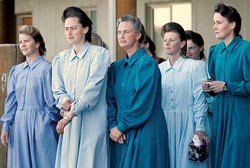
On April 15th,2008, a report was published on Boston.com, according to which “ Texas officials took 416 children from a polygamist retreat into state custody …Texas officials took 416 children from a polygamist retreat into state custody” These children were taken from the cult due to the risk of abuse. Marissa Conzales spokeswoman for the State children ‘s Protective Services agency said: ” it is not the normal practice to allow parents to accompany the child when an abuse allegation is made.” According to Jenniffer Donaber and Michael Graczyk, the Associated Press correspondents, the state is accusing the sect of physically and sexually abusing the youngsters and wants to strip their parents of custody.  The parents are accused of being manipulated as it is normal in all CultsThe parents in the sect are accused of being manipulated as it is normal in all sects such as MKO where after the Ideological Revolution the spouses were indoctrinated manipulated and eventually forced to divorce and in 1990 during the first Gulf War, they were forced to leave their children under the care of the organization. But there is no protective service agency to care for MEK members’ children who were transferred to Europe where they live in group houses in a very poor condition, and every morning they should hail to Uncle Masud and Aunt Maryam ( since they do not have any idea of Mother, Father and Family) As Elizabeth Rubin quoted from Nadereh Afshari MKO’s former member in her article ‘’ the Cult of Rajavi’’: ”Every morning and night, the kids, beginning as young as 1 and 2, had to stand before a poster of Massoud and Maryam, salute them and shout praises to them… They saw these kids as the next generation’s soldiers. They wanted to brainwash them and control them.” Where are the judges, juries, attorneys and lawyers to defend the case of MKO members’ children whose parents have no idea of where they live. The children are forced to participate in fund raising propaganda of the organization soliciting European citizens with their poor appearance. Is it a normal practice to see children living a difficult life in the modern European cities. The democratic cover of MKO activities have hidden their anti – human behavior towards their members especially children who are considered as the future militia by MKO. So what is called children’s rights abuse? Isn’t it the abuse of a child’s life to prevent him from living a normal life within his family, enjoying education in a free school of a free country? Batul Soltani is a mother whose children were taken of her in the organization. Now that she has left MKO, she is looking for her beloved children whose photos were hidden in her clothes during the dark years of living behind the bars of Rajavi’s cult. She will hopefully find her children someday but who can return those grieving years of missing her children? The years when she was not even allowed to think about them.

September 9, 2008 0 comments
FacebookTwitterPinterestWhatsappTelegramSkypeEmail
Mujahedin Khalq; A proxy force

US relocates MKO leaders for protection

US forces have relocated leading members of the Mujahedin Khalq Organization (MKO) after Iraqi authorities took control of their camp. Following a decision by the Iraqi government to take over the security of the MKO headquarters, the US forces relocated selected members of the organization. According to an informed source in the Iraqi Foreign Ministry, the move was aimed at preventing the MKO leaders from falling into the hands of Iraq’s government. Earlier in August, Iraqi army took control of MKO’s Camp Ashraf in Diyala province, 60 kilometers north of the Iraqi capital, Baghdad. Iraqi government officials believe the MKO is playing a significant role in fueling violence and insecurity in the country and have announced plans to activate judiciary petitions against the members of the terrorist cell. The foreign ministry official added that the MKO members, currently residing in the camp, are those who have been deceived to join the terrorist cell and are considering leaving the organization. "Therefore these members are not helpful for the American forces to achieve their goals," the source said. The group has so far claimed responsibility for several terrorist attacks inside Iran and it cooperated with former Iraqi dictator Saddam Hussein in the massacre of Iraqi civilians. The cell has been blacklisted as a terrorist organization by many countries including Iraq, Iraq, Canada, the United States, and the European Union.

September 9, 2008 0 comments
FacebookTwitterPinterestWhatsappTelegramSkypeEmail
Newer Posts
Older Posts

Recent Posts

  • A study on the financial mechanism of the Mujahedin-e Khalq

    August 10, 2026
  • A Child behind the Ideological Bars of Massoud and Maryam Rajavi

    August 8, 2026
  • A Comparative Analysis of Psychological Control Mechanisms in Jeffrey Epstein’s Cult and the MEK

    August 3, 2026
  • Operation Mersad: How Iran foiled Saddam’s final gambit 37 years ago

    August 1, 2026
  • Ideology Cannot Prevail over Human Dignity

    July 29, 2026
  • Facebook
  • Twitter
  • Instagram
  • Youtube

© 2003 - 2025 NEJAT Society . All Rights Reserved. NejatNGO.org


Back To Top
Nejat Society
  • Home
  • Articles
  • Media
    • Cartoons
    • NewsPics
    • Photo Gallery
    • Videos
  • Publications
    • Books
    • Nejat NewsLetter
    • Pars Brief
  • About Us
  • Contact us
  • Editions
    • عربي
    • فارسی
    • Shqip