Nejat Society
  • Home
  • Articles
  • Media
    • Cartoons
    • NewsPics
    • Photo Gallery
    • Videos
  • Publications
    • Books
    • Nejat NewsLetter
    • Pars Brief
  • About Us
  • Contact us
  • Editions
    • عربي
    • فارسی
    • Shqip
Nejat Society
Nejat Society
  • Home
  • Articles
  • Media
    • Cartoons
    • NewsPics
    • Photo Gallery
    • Videos
  • Publications
    • Books
    • Nejat NewsLetter
    • Pars Brief
  • About Us
  • Contact us
  • Editions
    • عربي
    • فارسی
    • Shqip
© 2003 - 2024 NEJAT Society. nejatngo.org
Mujahedin Khalq; A proxy force

In Bed with Terrorists

"Hell-bent on regime change in Iran, some neoconservative hawks are lobbying the Bush administration to support an organization designated as a terrorist group by the State Department. "

A battle is brewing within the ranks of neoconservatives in Washington. Public flashes of private quarrels are uncommon among this rarefied circle of uber-hawks, who have been unanimous in shaping and supporting the Bush administration’s aggressive foreign policy. Yet they find themselves at odds over the most unlikely of issues: an Iranian terrorist group.

The neoconservatives have been unanimous in their skepticism that recent European-led negotiations to curtail Iran’s nuclear program will hold. But here, unanimity breaks down. One faction of neoconservative Iran hawks believes that the Bush administration should pursue a more traditional set of diplomatic, economic and mi litary carrots and sticks to persuade Iran to abandon its nuclear aspirations. But another faction argues that the only real long-term solution is to change the Iran regime itself. "Even if you believe that a nuclear Iran is inevitable," Michael Ledeen, one of the leading Iran regime change advocates, recently wrote in National Review, "is it not infinitely better to have those atomic bombs in the hands of pro-Western Iranians, chosen by their own people, than in the grip of fanatical theocratic tyrants?"

And even as they urge the Bush administration to adopt regime change in Iran as its official policy, the hawks disagree on which Iranian opposition groups Washington should work with to depose Iran’s current fundamentalist regime.

Until recently, some neoconservatives looked to Reza Pahlavi, the son of the former U.S. ally, the Shah of Iran, who was deposed by Ayatollah Khomeini in 1979. Pahlavi, currently living in a Washington, D.C. suburb, is a potential Ahmad Chalabi-type figure around which the Iranian opposition could unite (at least for Washington’s purposes). But those plans now seem unlikely for a variety of reasons, including Pahlavi’s own reluctance to assume the political mantle.

As they look around for replacements, one camp is pushing the U.S. to provide financial assistance, communications equipment and counsel to Iranian students and other dissident groups to help engineer a nonviolent revolution, similar to the ones the world has witnessed in Serbia in 2000, last year in Tbilisi, Georgia, and, just this past month, in Ukraine.

Other hawks  led by conservative think tanks such as the pro-Israeli Washington Institute for Near East Policy – dismiss such a plan as unrealistic. They argue that the U.S. should work with the sole Iranian opposition group that has experience fighting the Tehran regime: the People’s Mujahedeen (Mujahedeen-e-Khalq, or MEK). According to them, the group possesses two irreplaceable assets: an established network of supporters inside Iran that can provide intelligence on Iran’s nuclear program; a long history of fighting the Tehran regime.

Ledeen’s camp, however, has been vocal in opposing the idea of using the MEK, which received significant military support from Saddam Hussein. And there’s just one other problem: in 1997, the State Department put the MEK, and its political wing, the National Council of Resistance of Iran (NCRI), on the official U.S. government list of foreign terrorist organizations.


Terrorists We Tolerate

Founded as an Iranian leftist group in the 1960s with Marxist and Islamist leanings, the MEK participated in the 1979 revolution to overthrow the U.S.-backed Shah. But in 1981, the MEK broke with Iran’s post-revolutionary leaders and decamped first to France (where it still has a large following), and then in 1986, to Iraq, where the group fought with Saddam Hussein against fellow Iranians during the Iran-Iraq war. They also served as shock troops to put down the rebelling Iraqi Shias in the wake of the first Gulf War. The MEK was also responsible for numerous attacks on Iranian embassies and assassination of Iranian officials carried out by the group in Europe and Iran in the 1990s.

Thanks to this bloody track record, the MEK/NCRI is widely despised by fellow Iranians, including other Iranian dissident groups that are working to overthrow Iran’s clerical rulers.

Their history with regard to the United States is just as unsavory. When the State Department designated the MEK and the NCRI as terrorist organizations in 1997, it cited the group’s involvement in attacks during the 1970s on U.S. military contractors in Iran, and more importantly, in the 1979 takeover of the U.S. embassy in Tehran.

Yet the Bush administration’s policy toward the MEK has been erratic. During the U.S.-led invasion of Iraq, Washington first bombed MEK camps in Iraq but then, in April 2003, signed a ceasefire with the group in April 2003. The agreement confiscated the group’s heavy weaponry and confined some 3,800 MEK members to Camp Ashraf in the northeast of Baghdad.

According to reports in the media, in the immediate aftermath of the Iraq campaign, some in the State Department favored turning over MEK members in Iraq to the Iranian government in exchange for al Qaeda suspects being held in Iranian custody even as some hardliners in the administration were lobbying to keep the MEK intact for possible use against the Iranian regime. At the time, the Pentagon’s undersecretary of defense for policy Douglas Feith went on record in a June 2003 press conference to deny the any such plan. The issue was put to rest this past July, when, after a year-long, multi-agency review, the U.S. government granted MEK members at Camp Ashraf formal protected person’s status under the Fourth Geneva Convention – which guarantees MEK members can’t be involuntarily repatriated to Iran.

Just as confused has been the U.S. relationship to the NCRI in Washington. While the U.S. government’s official line about the MEK has been that "a terrorist is a terrorist is a terrorist," Washington hardly treats NCRI members the same way as it would, say, Hamas. Former NCRI spokesman Alireza Jafarzadeh is highly visible in the media – often serving as an expert commentator on Fox News Channel – and frequently attends Iran-related events in D.C. held by conservative think tanks. Neoconservative guru Richard Perle spoke at a charity fundraiser organized by an MEK front group last January to benefit victims of the earthquake in Van, Iran. He later told the Washington Post that he was unaware of MEK’s involvement – a claim that’s hard to swallow since Perle’s fellow keynote speaker at the event was MEK leader Maryam Rajavi, who addressed the audience via videophone from Paris.


Iraq Redux?


Despite the organization’s cult-like reputation and sordid human rights record, some neoconservatives remain steadfast in their support for the MEK. One of the arguments most often cited by its supporters is its alleged capacity to deliver highly specific intelligence on Iran’s nuclear program – information that the MEK claims it receives from an underground network of well-placed sources inside Iran.

"With the need to obtain intelligence on Iran’s nuclear weapons progress, the MEK is the only organized group capable of providing detailed human-source intel," says Raymond Tanter, a Middle East expert at the pro-Israel think tank, the Washington Institute for Near East Policy. "The MEK has people on the ground in Iran and has information our intelligence community might use to compare with satellite imagery and electronic intercepts."

But what about the MEK’s past involvement in anti-U.S. activities? "When you are dealing with intelligence information, you can’t pick or choose," Tanter says. "These guys could have information that you don’t have."


The information put forward by MEK/NCRI has also been key to neoconservative efforts to oppose the European Union’s efforts to broker a deal with Tehran. Last month, one day after European negotiators announced they had won Tehran’s agreement to temporarily suspend uranium enrichment, the NCRI held parallel press conferences in Paris and Vienna alleging that Iran was hiding secret nuclear facilities that it had failed to declare to the International Atomic Energy Agency [IAEA].

The information put forward by the NCRI has been proved accurate in the past. In an Aug. 14, 2002 press conference, its leaders revealed that, unbeknownst to the intelligence agencies of most countries in the world at that time, Iran possessed an advanced nuclear program that it had been developing for the past sixteen years. The NCRI claims led the UN nuclear watchdog body, the IAEA, to send inspectors to two Iranian nuclear facilities, Natanz and Arak, where they were verified as accurate. They also set in motion more than two years of further such NCRI revelations and subsequent IAEA inspections – all of which has served to make Iran’s nuclear program among the foremost concerns of the international community and the Bush administration.

In recent months, however, some experts have expressed growing doubts about the group’s claims. "I can no longer trust their information," says David Albright, a former UN weapons inspector and director of the Institute for Science and International Security in Washington. "It is like a barrage they are throwing up, making all of these accusations. That highly enriched uranium came from Pakistan. That there are two enrichment projects that are active. That bomb designs came from AQ Khan. There is not a single bit of evidence that has been offered to back any of this." While the MEK does provide important intelligence, Albright says that their claims now reflect "a political agenda."

The MEK’s claims also serve the political agenda of the Bush administration, which is facing tough choices in the wake of Tehran’s recent success in outmaneuvering the U.S. In his piece, Iran’s Nuclear Power Play, Dilip Hiro reveals how Tehran was able to secure nuclear, political and trade concessions from the Europeans in return for agreeing to temporarily suspend uranium enrishchment. More to the point, Hiro says, "this deal killed the Bush administration’s pet plan to refer the Iranian case to the United Nations Security Council for censure or the possible imposition of sanctions for its alleged breaches of the IAEA nuclear protocol."

Stymied for now from getting Iran referred in noncompliance with the Nuclear Non-Profliferation Treaty to the UN Security Council, and lacking confidence that it will ever be able to persuade Europe, China or Japan to give up lucrative trade and energy agreements with Iran, Washington is contemplating a set of potentially bleak options: negotiate with Tehran directly, consider military options to take out Iran’s nuclear facilities, let Iran go nuclear, or consider making regime change in Iran official U.S. policy.

So it’s no wonder that hawks in the Bush administration are lobbying for the MEK as a means to promote their goal of regime change. Some Iran watchers say that a mutual working relationship between Washington and the NCRI/MEK has already been agreed to, one which includes the U.S. debriefing of MEK members at Camp Ashraf in Iraq for Iran intelligence information.

"We will use them, but not de-list them [as terrorists]," predicts Dan Byman, a former Middle East analyst at the CIA now affiliated with the Brookings Institution and the Georgetown School of Foreign Service. "We have control of MEK facilities in Iraq  and we are taking advantage of it, and not shutting them down."

It’s too early to tell if the Bush administration’s relationship with the MEK will endure in the long run. But many experts worry that the MEK/NCRI may end up playing the same role in the Bush administration’s plans for Iran as the Iraqi National Congress did in the invasion of Iraq. In other words, the MEK may become the expedient source of cooked-up intelligence on Iran’s nuclear weapons program designed to justify a pre-determined regime change policy.


AlterNet  –  By Laura Rozen. -December 16, 2004.

Laura Rozen reports on national security and foreign policy issues from Washington, D.C. for the American Prospect, the Washington Monthly, Tom Paine, and other media, and for her weblog, War and Piece.

June 28, 2008 0 comments
FacebookTwitterPinterestWhatsappTelegramSkypeEmail
Mujahedin Khalq Organization as a terrorist group

Combating Terrorism Requires New Outlook

Despite many clear evidence pointing to the contrary, there are still some who when they hear about a hideous act of terror, they naturally think that the person or the group who committed it is in one way or another lunatic. Well, this may be true in some cases, but it is not in most other situations. Indeed, the terrorists of our time have proven to be smart, sophisticated, and well capable to highjack even our own democratic judicial and executive systems and turn them against us before our eyes. This leads me to say that to effectively combat terrorism, we need a shift in our view about terrorists and their tactics. For as long as we continue hanging to our old thinking, they (the terrorists) can easily manipulate our very system that is supposed to shield us from their acts. A recent UK court ruling in favor of de-listing an Iranian terror group speaks volumes about how easily our legal systems can be manipulated.

A common deceptive tactic that has been overlooked by EU officials is that terror groups operate under various aliases and mantles. This is an effective tactic that enables them to continue their operation on our soil even when they are banned. For example, the PMOI has many aliases such as MeK, MKO, NCRI, NLA, to name a few. But all refer to the same group, the Mojahdeen-e Khalgh (MeK). When the group was listed in the EU terror list, its members continued their activities under the façade of NCRI. The US State Department discovered this manipulative tactic by MeK and added the NCRI to the terror list in 2004. A judicial decision in Washington DC also concluded that NCRI is just an alias of the MeK, effectively rejecting the group’s claim that the two are two separate entities. 362 U.S. App. D.C. 143; 373 F.3d 152

Now the question is how long it would take for EU to realise the NCRI is the same as PMOI, and PMOI is just another name for NLA, and NLA just another alias for MKO?

Another devastating flaw in our current thinking of terrorism is even more serious when we tend to downplay or ignore terror acts perpetrated on other people or nations, and frown only when we or our interests are targeted. Thus giving terrorists another false pretext to argue that since we are not directly targeted by their acts, we cannot call them terrorists! In this distorted view and interpretation of terrorism, we seem to be content when others are targeted by the same terrorists. Terror groups like PMOI want us to be indifferent to the life and death of their victims only because these victims live outside of EU boundaries. We should not play into their hands, and we need to be aware of such manipulative tactics. The current US Secretary of State, Dr. Rice, once said that a terrorist is a terrorist, is a terrorist. Alas! This seems to have fallen on deaf ears with some EU officials.

To protect our citizens and those of other nations, we need to outsmart the terror groups, and to foil their deceptive tactics. When a terror organization like PMOI is banned, it is imperative to list all other aliases used by the group, or else expect them to be at your door the next day, albeit under a different name.

Ahmad Baaraan

Paris-France

ABaaraan@yahoo.fr

Ahmad Baaraan, Paris, June 27, 2008

ABaaraan@yahoo.fr

June 27, 2008 0 comments
FacebookTwitterPinterestWhatsappTelegramSkypeEmail
The cult of Rajavi

Targets of Violence

Implementation of Violence in the Cult of Mojahedin: Targets of Violence

In its past four decade history, MKO, as a leftist terrorist cult similar to a handful of other cults, has been allegedly associated with numerous recorded or unrecorded instances of tragic deaths, either in the course of terrorist operations, tortures, suicides and commanded self-immolations. The highly publicized cases have convinced the public that MKO is among one of extremist cultic groups that are highly dangerous. Although there may be little global understanding about the real nature of MKO, since now it is engaged in a widespread phony pro-democratic campaign, it is a cult that fails to exist outside of the violence mainstream. For a better understanding of the modes and targets of violence within MKO, the discourse can be outlined as the follow.

1. Terrorist victims as the main targets of violence

2. Sever reprimand of disobedient and dissident members

3. Hostile repercussion against ideological sinners

4. Cultic, suicidal operations

Terrorist victims as the main targets of violence

There is a general belief that cults are dangerous either to themselves or others. But the most dangerous ones are those that employ violence not only against the world outside but the inside as well. MKO, unlike other Iranian opposition, has never refrained preaching violence for the accomplishment of internal and external objectives. In its primitive form of utilizing violence soon after declaring armed struggle against the newly formed Islamic government in Iran, MKO started a new method calling it Engineering Operation, a barbarous method to revenge their loss in the power struggle. The group began to kidnap innocent Iranian civilians and exposed them to merciless tortures that led to their death.

To give a report of its operation teams only in a one-year period, considered a hallmark of its military operations in 1987, the organization published a 54-page booklet entitled Resistance on the Rise that contains a detailed account of more than 20 terrorist operations perpetraited by its teams in various Iranian regions and cities. In these attacks, Mojahedin’s operation teams killed and wounded hundreds of Iranian innocent civilians. Although the teams targeted many Iranian authorities, whom Mojahedin believed to have a key role in safeguarding and preserving the Islamic regime, nothing could justify brutal butchering of innocent women and children and arson attacks.

To present a record of Mojahedin’s atrocities against immaculate civilians and to depict plights of people survived from the group’s felonies, Antoine Gessler, the celebrated Swiss reporter, in 2005 published A Shared Pain. Through a display of grievous photographs and the victim’s testimonies, a variety of violent tactics employed by MKO to establish freedom and democracy for Iranians are well illustrated.

Sever reprimand of disobedient and dissident members

MKO settlement in Iraq while two neighboring countries were still at war completely split it from the world to develop use of unethically manipulative techniques of persuasion and control to advance the Rajavi’s cultic objectives. MKO’s camps soon turned into physically and psychologically abusive environments that harmed members and required them all never to question, criticize, disobey or distrust the Rajavis known to be the ideological parents and who were self-promoted to a status similar to that of a celestial being.

Being totally backed by Saddam, MKO did not hesitate to benefit the notorious Abu-Ghuraib, as well as the inbuilt lockups, to silence the opponent and disobedient members and even let them experience its unbearable condition for a while. Mohammad Hussein Sobhani, a former member of the group is one among many whom experienced the torments of the both prisons. His memoirs are published in a volume called Abu-Ghuraib Prison. There are much more physical and psychological techniques to reprimand them.

Scourging the dissidents was most common within the organization. Critics and dissidents were trounced by cables not only to punish them but also to instill ideological teachings into them. Human Rights Watch report under the title of No Exit, which was published to give a report of human rights abuses inside the MKO camps, is an explicit evidence of aggressive practices in the group. Explaining the process of repression on the insiders, Norooz-Ali Rezvani, an ex-member, has averred:

In Rajavi’s system, none of the utilized forms of physical and psychological violence is observed to be a means of punishment and torture and not a bad thing at all. That is because all is done to retrieve leadership’s rights. They believe that we [members] have violated leadership’s rights by rejecting to submit to Rajavi’s absolute leadership which justifies shedding our blood. Above that, the hasher they did the punishment, the closer they could get to the leader and, thus, the ranks closer to leader showed more violence in castigating the dissidents and prisoners. Of the most common means of penalization in most prisons is pounding prisoners by cables; Rajavis prisons were no exception but one. There they would use it on prisoners’ heads as well as a technique of thought reform. They believe that it is the thought rather than the body that makes the dissidents. The deepest wounds would heal after long but the spoiled thought never heals but has to be reformed so the head has to be pounded to destabilize psychological balance. Once Rajavi ironically said, when I rejected his revolution, to pound my head in a mortar so I could come to my mind to accept sister Maryam’s revolution. 1

The organization that is making strenuous efforts to posture a pro-democratic alternative for Iranian regime fails to respect the least democratic principles in its own internal relations and affairs that are absolutely concealed from the notice of the outside world. Nobody has the right neither to question the organization nor to doubt the accuracy of the made decisions. The members live under an atmosphere of severe repression and their only choice is to submit to whatever they are commanded to do; otherwise they have to suffer the backwash of their dissidence and disobedience:

Mojahedin repeatedly talk of democracy but there could be seen no sign of democracy in the camp wherein I was kept. Hardly anybody willed to stay since they were under severe pressure and even thrashing. Morteza Yusefi, for instance, was not physically fitting for the enforced trainings and stopped them. They hit him with batons in his sleep. It was so horrible. There was no answer for the questions and it was the beginning of rethinking about the cult I was living in. The dissidents would be called the agents of [Iranian] regime and as I would ask a lot, they called me Iran’s intelligence spay; they tortured me and deprived me of sleeping. 2

The life was even harsher for those who announced their separation and they would come under severe harassment. The condition of the ideological sinners is one of the most unusual among many existing cults.

References:

1.Rezvani, N. Neo-scholastics in Rajavi’s cult; interview with a detached member, 1996.

2.The memoirs of Hassan Khalaj; interview with Nimrooz magazine.

Research Bureau، Mojahedin.ws، June 26, 2008

http://www.mojahedin.ws/article/show_en.php?id=2783

June 26, 2008 0 comments
FacebookTwitterPinterestWhatsappTelegramSkypeEmail
Iran

Terrorists arrested in Iran were trained abroad

(Iran calls the British support for Terrorist Mojahedin Khalq disgraceful)

TEHRAN (FNA)- Iranian security forces have arrested 10 people armed with weapons including missile launchers who were trained abroad to carry out attacks in Iran.

A police official in the southeastern province of Sistan and Baluchestan told the Islamic republic news agency that the arrests took place after security forces clashed with "terrorists" in recent days.

"These bandits had entered the country to carry out bombings, terror officials and create fear and panic among people of the province… but in an operation 10 of them were arrested," Gholamali Nekoui said.

Nekoui said the groups, armed with missile launchers and other weapons, were trained outside the country, without elaborating.

Iran has blamed US and British agents based in neighboring Iraq and Afghanistan for launching deadly attacks in border provinces in recent years.

Documents obtained in previous cases have proved that Britain and the United States have both striven to destabilize the Islamic Republic by supporting rebels, mainly those in sensitive border areas.

Earlier this month, armed bandits kidnapped 16 Iranian police and took them across the border to Pakistan. Tehran blamed the attack on Jundollah rebel group with bases in Pakistan.

Jundollah later took responsibility for the attack. It said it had killed two of the hostages and threatened to kill the other 14 if Tehran refused to meet its demands, including the release of jailed comrades.

Iran’s border regions with Afghanistan and Pakistan are also a major smuggling route for drugs and other contraband. More than 3,600 Iranian policemen have died in the region fighting drug traffickers since Iran’s 1979 revolution.

Fars News, June 26, 2008

http://english.farsnews.com/newstext.php?nn=8704060510

June 26, 2008 0 comments
FacebookTwitterPinterestWhatsappTelegramSkypeEmail
Mujahedin Khalq; A proxy force

Does a Ruling Change the Truth?

Would it ever acquit a criminal of his committed crime if he merely washed off his blood-stained hands? In the same way, the removal of a terror tag from a notorious terrorist group with a long history of perpetrated terrorist atrocities against a nation will not change anything. Some may congratulate Mojahedin-e Khalq Organization (MKO/MEK/PMOI) for the ruling to be removed from the UK terror list and some may be shocked and dismayed. But the truth is that there are enough telling evidences on the group’s appalling terrorist deeds against Iranian people to make its supporters ashamed of giving the group an iota of backing.

Far beyond joking, MKO’s leaders are mocking Iranian government and people when they grin to congratulate the so-called victory since they know better than anybody else what they have done. They call it the outcome of a seven-year-battle between advocates of democracy and Iranian regime but, unnoticed as it may go, the supposed victory emerges exactly on the anniversary of one the group’s most outrageous terrorist operation in Iran. On 27 June 1981, the late Ayatollah Beheshti, then Iranian judiciary chief, and 72 other senior officials were perished in a bomb explosion planted in the Islamic Republic Party’s main building by MKO.

Can the incident be erased from the history or sank into oblivion? Or maybe the group’s advocates have justifiable explanation up their sleeves for Iranian people for whom they are trying to suggest the once expelled terrorists for the accomplishment of democracy! Who knows, maybe they have concluded that if they succeeded to wash the blood off their protégés, the Machiavellianists would be granted an extra opportunity to jump on the scene under a false pro-democratic disguise.

Of course, it will not take long for its advocates to be disappointed because neither is it a political weight nor has it any publicity among Iranian people to start over a new political career. Besides, the ruling faces the organization with further internal crises; being removed from the terror list, it has no other way but to respect democratic principles and let its unwilling members decide for themselves

Mojahedin.ws, June 26, 2008

http://www.mojahedin.ws/news/text_news_en.php?id=1722

June 26, 2008 0 comments
FacebookTwitterPinterestWhatsappTelegramSkypeEmail
UK

Britain’s Immoral Support of Terrorists

In response to the British Parliament’s removal, on June 23, of the Iranian Communist MEK (MKO, PMOI, NCRI, Rajavi Cult, or Pol Pot of Iran) terrorists from the United Kingdom’s list of banned terrorist organizations, Amir Taheri (“Iran’s Troubling Opposition”, Wall Street Journal, June 26, 2008, page A15) posed this question: “Does all of this mean that the British decision is morally wrong and perhaps politically counterproductive?” Taheri’s answer was “an unequivocal yes” if this had happened in January 2003 but “not so sure” today. Taheri’s change in position was based upon his questionable claim that the MEK has not committed any terrorist acts since it attacked an Iranian village in January 2003.

Taheri failed to explain that American and coalition military forces attacked Camp Ashraf , Iraq in 2003. Since April 2003, American and other military forces have protected Camp Ashraf , Iraq . The MEK terrorists could not continue terrorist activities from Camp Ashraf , Iraq without the approval of American military forces. There have been numerous reports in the American media of the use of the MEK terrorists by the Central Intelligence Agency (CIA) and by the American Special Forces in Iran and in areas surrounding Iran for spying and for terrorist activities. There have been additional reports of MEK terrorist activities since 2003 in the Iranian media, such as:

http://www.presstv.com/ 

irandidban.com  

Taheri failed also to explain where the terrorist leader, Massoud Rajavi, is being held now. There have been media reports that the American military has been holding Massoud Rajavi in Iraq since 2003. Amazingly, Taheri has suggested that the MEK must hand over to the Iraqi prosecutors those in the MEK responsible for the atrocities committed against the Shiites and Kurds in Iraq to please Saddam Hussein. The American military is holding or protecting many of these terrorist criminals in Iraq . France provides a safe harbor for other MEK terrorists.

For different views, read Massoud Khodabandeh and Anne Singleton’s views at http://iran-interlink.org/?mod=view&id=4701

Taheri noted that the British Parliament’s action will enable the terrorists to recruit members and to raise money in Britain . Taheri failed to address the issue raised by Massoud Khodabandeh and by Anne Singleton about permitting MEK members at Camp Ashraf , Iraq to leave Iraq .

Anne Singleton has provided the following links for researchers who want to read the discussions in the British Parliament leading to this decision:

http://www.publications.parliament.uk/pa/cm200708/cmhansrd/cm0806

23/debtext/80623-0015.htm#08062346000001 

http://www.publications.parliament.uk/pa/cm200708

/cmhansrd/cm080623/debtext/8 0623-0016.htm  

http://www.publications.parliament.uk/pa/cm200708

/cmhansrd/cm080623/debtext/80623-0017.htm 

http://www.publications.parliament.uk/pa/cm2007

08/cmhansrd/cm080623/debtext/80623-0018.htm 

http://www.publications.parliament.uk/pa/ld2007

08/ldhansrd/text/80623-0013.htm#08062349000003 

http://www.publications.parliament.uk/pa/ld200708/

ldhansrd/text/80623-0014.htm

Paul Sheldon Foote, June 26, 2008

http://360.yahoo.com/paulsheldonfoote

Link to the Article”Iran’s Troubling Opposition”by Amir Taheri (WSJ)

http://iran-interlink.org/?mod=view&id=4720

June 26, 2008 0 comments
FacebookTwitterPinterestWhatsappTelegramSkypeEmail
The cult of Rajavi

Implementation of Violence in the Cult of Mojahedin

Potential for violence exists in many cultic groups particularly if they are engaged in underground activities or follow a Machiavellian philosophy of ‘ends justify the means’. Obviously, there is no easy way to predict which group may become involved in terrorism, violence, or suicide operations unless there is a record of already perpetrated instances of violence by the cult even if such deeds might have been ceased temporarily for certain reasons. Horrifying testimonies of some arrested or ex-members of cultic groups to their connection in violent operations and self immolation activities or being witnesses to instances of violence against the groups’ own insiders signify that inborn terrorist and violent groups, if they make some temporal accommodation with the outside world, may resort to indirect application of violence, namely, utilizing outwardly peaceful and pro-democratic measures that promote direct violence.

Cults and violence are commonly bound inextricably together in the public mind since much public understanding about cults is accounts of violence in a variety of forms. The shocking reports of sarin gas release into the Tokyo underground by Aum Shinrikyö cult, the recent news of rescuing children from a polygamist remote compound Ranch of the Fundamentalist Church of Jesus Christ of Latter-day Saints, and above all, the terrible and nightmarish terrorist attack of al-Qaeda are all instances of awful truth about the violent nature of some cults. Talking on the varying degrees of cults’ abusive and destructive nature Thaler Singer states:

Cults are abusive and destructive to varying degrees. Some abuse only their own members; others project the violence outward. Still others have it both ways. Cult members, at the direction of their leaders, have shot at law enforcement officers, engaged in drug dealing and prostitution, stockpiled illegal weapons, practiced repeated sexual abuse, beaten child members to death, enforced a variety of punishments against their own, and murdered dissident members. 88

It is hard to answer the question that why some cults, when facing with opposition and even outright persecution, react by resorting to violence. But one thing is for certain that their violent conducts towards the outside world is either direct or indirect:

Not only have cultic groups engaged in openly violent behavior, but they have also engaged in other activities that have led to members’ being convicted of crimes ranging from conspiracy to tax evasion, spying on governments, and fraud. 89

If we come to believe, as Singer explains, that espionage activities of a political cult are considered as indirect activities of violence, then, MKO’s claimed disclosures on Iran’s nuclear activities that may lead to nothing but escalating global tension and even military conflict can be regarded as instances of inciting violence. Violence is interwoven in MKO and in spite of its claims to have abandoned terrorism, the group can only survive out of violence and engaging in direct and indirect violent activities regardless of the heavy cost imposed only on Iranian people.

MKO is an example of leftist political cults. In many political cults of the contemporary history violence in a variety of forms has dominated. During Stalin’s reign over the Soviet Unions’ Communist Party, for instance, a new form of violence was formed in the course of harsh, internal purges. The purges, a combination of physical and psychological violence, are yet thought to have been the most unusual and eccentric techniques applied. It was only after Stalin’s death that some instances of the applied violence was revealed for the public through a number of novels and made movies.

Somehow it can be said that, among active political cults, it is only MKO that, as a leftist group, is charged with multitude instances of violence working against its own insiders as revealed by Human Rights Watch report and the memoirs of its detached members. In addition to application of physical violence as a method of internal punishment against dissatisfied and disobedient members, there are further indirect ruthless routines of regular self-criticism sessions, cultivating malevolence and spite amongst the members, separating the families and much more. A more detailed study of different forms of internal and external violence employed by MKO will give a broader understanding of the cult.

References:

1. Thaler Singer, Margaret; Cults in Our Midst: The Continuing Fight Against Their Hidden Menace, p. 88.

2. Ibid, 89.

Research Bureau,Mojahedin.ws, June 25, 2008

http://www.mojahedin.ws/article/show_en.php?id=2777


June 26, 2008 0 comments
FacebookTwitterPinterestWhatsappTelegramSkypeEmail
Former members of the MEK

Defectors Hail Iraq’s Control over Mojahedin Khalq Terrorist Base

TEHRAN (FNA)- Nejat (Rescue) Association – formed of the former members of the anti-Iran terrorist group Mojahedin-e Khalq Organization – praised the decision by the Baghdad government to take control of the MKO headquarters in Iraq.

“This decision is supported by Nejat Association because once it is materialized, family members of those in the base can meet them and members of this group can make a decision (about their future) independently and away from the psychological pressures imposed on them by the Monafeqin (hypocrites) leaders,” Secretary of the Association Arash Sammeti told FNA here on Tuesday.

Iranians call the MKO as hypocrites since they turned their back to their country and joined Saddam Hossein in the 1980-1988 Iraqi imposed war on Iran.

Recent reports say that the number of those splitting up with the MKO has been on the increase and the terrorist group’s leaders have, thus, tightened up members’ access to the media and information and banned meetings with family members in a bid to reduce the number of defectors through their intensified brainwashing efforts.

The number of defectors of the MKO has been on the increase, specially after the 2003 US invasion of Iraq.

After the US invasion of Iraq, members of the group were moved to a camp in northeastern Baghdad – known as Ashraf base – where they live under US-led forces’ protection.

“The decision by the Iraqi government to take control of the Ashraf base has faced Americans, who allege to be a fervent supporter of human rights and campaign against terrorism, with a new test” Sammeti stressed, adding that US action vis-à-vis Baghdad’s decision would illustrate how much Washington is loyal to its claims.”

“Hundreds of MKO family members and defectors have recently filed a complaint with the Iraqi government (to force the group leaders to allow them to have meetings with their family members). Officials in Baghdad have vowed to take action on the basis of the complaint,” Sammeti said, and voiced pleasure with the Iraqi government’s decision.

The Iraqi parliament is set to decide on the fate of the terrorist group amid calls for their expulsion.

“Regarding the presence of the MKO in Iraq, the Iraqi national assembly, the cabinet and the president have made the same decision,” Sheikh Humam Hamoudi, a senior Iraqi lawmaker told press tv last Thursday.

Iraqi parliamentarians and officials have called for the expulsion of MKO members, saying the terrorist group meddles in the country’s internal affairs.

In a recent statement, Prime Minister Nouri al-Maliki’s Cabinet has also announced that the Mojahedin-e Khalq Organization interferes in Iraq’s internal affairs and supports anti-government activities.

The government has formerly banned any deal with the members of the group and called on the US to stop supporting them in Iraq.

Many analysts believe that the government should have expelled the group long time ago in a bid to save many Iraqi lives.

They said the decision would help improve the security situation in the war-torn country.

The MKO has been involved in the killing of many Iraqis under Saddam Hussein’s regime.

Several lawmakers described the group as a threat to Iraq’s national security as it trains anti-government elements and is involved in backing insurgents.

The MKO has been blacklisted as a terrorist organization by many countries.

The group is on the European Union’s list of terrorist organizations subject to an EU-wide assets freeze, and has been designated by the US government as a foreign terrorist organization.


Mojahedin-e Khalq Organization has committed innumerable terrorist acts against the Iranian people and top government officials.

Formed in the 1960s in opposition to the rule of US-backed shah, the MKO took part in the 1979 Islamic revolution to take control of Iran, but soon changed course and turned into the main armed opposition to the Islamic Republic and has, ever since, assassinated scores of people and officials.

The then President Mohammad Ali Rajayee, Prime Minister Mohammad Javad Bahonar and Judiciary Chief Mohammad Hossein Beheshti were killed in bomb attacks by MKO members in 1981.

The MKO was an ally of the former Iraqi dictator Saddam Hussein and killed thousands of Iranian civilians and soldiers during the US-backed Iraqi imposed war on Iran in the 1980s.

June 26, 2008 0 comments
FacebookTwitterPinterestWhatsappTelegramSkypeEmail
Iran

London’s new policy of using terrorists in the region

Iran: British overt support for Mojahedin Khalq (Rajavi cult) terrorists is in line with London’s new policy of using terrorists in the region

Iran to UK: MKO ruling will isolate you

Iran says a decision by the British court to remove a ban on Mujahedin Khalq Organization (MKO) would only isolate the UK government. 

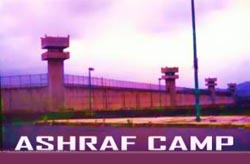
(MKO cult members in Camp Ashraf!!)

Foreign Ministry spokesman Mohammad-Ali Hosseini condemned the decision to remove the MKO from the blacklist of terrorist organizations, saying, "Britain has distanced itself from the international community.” 

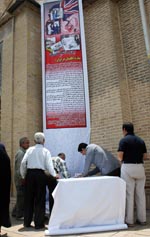
(British Lord!! Corbett promoting terrorism under the Logo of MKO for the past 25 years)

“This ruling will without a doubt isolate the UK," Hosseini cautioned, adding that the move was in line with London’s new policy ‘to use the terrorist card’ to step up pressure on regional nations and governments.

"By adopting a policy of supporting terrorist groups, it (Britain) is pursuing certain provisional interests."

The Iranian spokesman called on European institutions not to be affected by the politically motivated, illegitimate verdict of the British court in favor of the terrorist cell.

The MKO has claimed responsibility for hundreds of bombings and assassinations in Iran, including the assassination of a president, a prime minister and 80 senior officials as well as thousands of civilians.

Press TV, June 25, 2008

http://www.presstv.ir/Detail.aspx?id=61399&sectionid=351020101


June 25, 2008 0 comments
FacebookTwitterPinterestWhatsappTelegramSkypeEmail
Mujahedin Khalq; A proxy force

Arming Mojahedin Khalq Terrorists

Iran: west is arming Mojahedin Khalq Terrorists (Saddam’s private army or Rajavi cult) for target assassination in the Middle East and Europe

‘Attempt on Ahmadinejad’s life failed’

An Iranian presidential aide says Mahmoud Ahmadinejad had been the target of an assassination plot at the UN food summit in Italy.

President Ahmadinejad’s adviser for human resources, Ali Zabihi, said Monday that measures taken over the past three years by the Iranian Chief Executive have jeopardized the ‘illegitimate interests’ of global powers.

"Such measures have prompted certain parties to try and assassinate or force the president to leave office," Zabihi added.

Earlier on Thursday, President Ahmadinejad said the enemy had planned to assassinate him during his March visit to Iraq, adding that last-minute changes in his schedule had foiled the plot.

"The plots to assassinate the president in Iraq and at the UN Food and Agriculture Organization (FAO) conference have both failed," Zabihi continued.

He maintained that the attempts on Ahmadinejad’s life were in line with a secret directive issued in March by US President George W. Bush ordering ‘the assassination of targeted Iranian officials’ as part of efforts to destabilize the Iranian government.

According to a report by Counterpunch magazine, the US president signed a secret finding in March authorizing a covert offensive against Iran which called for the arming and funding of terrorist groups, such as the Mujahedin Khalq Organization (MKO) and Jundallah (Army of God).

Press TV, June 24, 2008

http://www.presstv.ir/Detail.aspx?id=61154&sectionid=351020101


June 24, 2008 0 comments
FacebookTwitterPinterestWhatsappTelegramSkypeEmail
Newer Posts
Older Posts

Recent Posts

  • MEPs who lack awareness about the MEK’s nature

    December 20, 2025
  • Why did Massoud Rajavi enforce divorces in the MEK?

    December 15, 2025
  • Massoud Rajavi and widespread sexual abuse of female members

    December 10, 2025
  • Farman Shafabin, MEK member who committed suicide

    December 3, 2025
  • Nejat Newsletter No.131

    December 3, 2025
  • Facebook
  • Twitter
  • Instagram
  • Youtube

© 2003 - 2025 NEJAT Society . All Rights Reserved. NejatNGO.org


Back To Top
Nejat Society
  • Home
  • Articles
  • Media
    • Cartoons
    • NewsPics
    • Photo Gallery
    • Videos
  • Publications
    • Books
    • Nejat NewsLetter
    • Pars Brief
  • About Us
  • Contact us
  • Editions
    • عربي
    • فارسی
    • Shqip