Nejat Society
  • Home
  • Articles
  • Media
    • Cartoons
    • NewsPics
    • Photo Gallery
    • Videos
  • Publications
    • Books
    • Nejat NewsLetter
    • Pars Brief
  • About Us
  • Contact us
  • Editions
    • عربي
    • فارسی
    • Shqip
Nejat Society
Nejat Society
  • Home
  • Articles
  • Media
    • Cartoons
    • NewsPics
    • Photo Gallery
    • Videos
  • Publications
    • Books
    • Nejat NewsLetter
    • Pars Brief
  • About Us
  • Contact us
  • Editions
    • عربي
    • فارسی
    • Shqip
© 2003 - 2024 NEJAT Society. nejatngo.org
Mujahedin Khalq Organization members' families

The Statement No.6 of Somayeh Mohammadi‘s Family

Bagdad – Jan22nd 2008

Dear Iranian, honorable patriots,

Human Rights and political forces, activists and organization,

On Dec18th, a day after the armed kidnapping of me, Mostafa Mohammadi (father) and my wife Mahboube Mohammadi (mother) by MKO’s team who had hired and bribed two Iraqi policemen, they showed a TV interview with our somayeh. The interview has previously been shown on August 20th , 2006. Fortunately, the kidnapping operation ended with MKO’s failure since the Iraqi authorities and American forces helped us.

Now we have no way unless using our least power and possibility in order to rescue our beloved Somayeh from Ashraf where the Mujahedin have sold freedom and humanity to the foreigners. This time we could receive the visa to enter Iraqi territory contrary to two years ago when we stayed in Jordan for two months and we couldn’t get the visa. Therefore, we accepted the risk of living in Iraq and that’s what any family does to save his child’s life.

What did we want Mujahedin to do?

As we have already stated in our previous statement dated on August 27th, 2006 we had only one request and that was to transfer Somaye to a free country so that she (who was taken to Ashraf when she was under the legal age and she’s gown up since years) could decide whether to stay or return to her family in Canada, in a free atmosphere, not the choking atmosphere ruling MKO.

How you can believe Somayeh’s words while her only source of news is the leader of the organization where there is no free TV or radio and she is under the psychological peer pressure.

She accused us as being the mercenaries of Regime, however her brother Mohammad who was taken to Ashraf as a 15-year old teenager ( and was kept there for 5 years working in their military camp) could visit his sister only once a year on New year’s day when both of them whispered their determination to leave MKO. They didn’t dare to declare their decision in the meetings due to despises and humiliations made against Mohammad has so many times noted in his weblog

www.toeme.blogfa.com

We hadn’t travelled to Iraq 8 times after the fall of Saddam, if the American forces hadn’t helped us, if Mohammad wasn’t a Canadian citizen, Mojahedin would have prevented him from leaving Ashraf and he wouldn’t have had a better fate than that of his sister. We wanted the return of our children – Somayeh a 17 year old girl and Mohamamd a 15 year old boy- who had taken to Iraq for a short trip. Is it a crime?

Before the issue of our first statement on August 27th, 2006, we tried to contact all supporters or members of MKO whether by phone or by person some offered their sympathy but didn’t dare to accompany with us. Some told us to keep quiet since the regime would abuse the situation. Some of them closed the doors to us after so many years of friendship. We asked, requested, and insisted them to ask MEK to return our Somayeh to us in a friendly way.

We didn’t like to be on top of the news like any other family. Our children didn’t like to be represented in mass Medias. The only people who like to be on the top of news on the antennas are those who have political objectives struggling for power or those who have a complex to get themselves known. None of the leaders of MKO listened to us. The only message we received was the snicker that “they can’t do anything”. We are nothing but we are parents who are worried about the future of our children.

Some of our close relatives who are MKO’s members persuaded Mohammad to run away because his father (me) is “the regime’s agent” instead of trying to solve our problem in a friendly way via talks. why didn’t they call me” the regime’s agent” when I raised money with Somayeh in the cold or hot weather in the streets? When we weren’t the agent of regime but their honor!?

How do you claim to struggle for democracy while you don’t hear the words of one of your own activists?

To which freedom or democracy movement your action adopts? We’ve learned in Canada that the first step towards democracy is to listen to each and every person’s words.

If the representative of MEK had visited us during the years from 2003 to 2007, would any thing have happened to MKO‘s credit? Or it would increase their credit due to their tolerance for listening to others. We haven’t found Somayeh in the streets and we can’t keep quiet for ever. But we have already stated that any political responsibility and exploitation of IRI is in MKO’s charge because they refused any possibility to talk. They prevented us from visiting our daughter freely. We have also stated that we don’t see any obstacle in order to publish MKO’s documents since it was a way MKO chose but they didn’t win and paternal emotions changed everything.

What Did Mujahedin do with us?

We have lived in Canada for years. We got refugee there in the fear of Islamic Republic .we have been more active than any other MKO supporter, there.

They brought Somayeh to their TV on August 20th, 2006 to accuse us of being regime’s mercenary. What a nice and great lesson to consolidate familial emotions.

They brought her to their TV again on Dec.8th 2007 and called her as a Mujahed so that she insulted us because we had prevented her from struggling against IRI.

You attacked us once in Ashraf in 2004 in front of my son’s eyes. You hit me so I had to go to Americans and ask them to help me to release my son and be their guest as a Canadian citizen.

Why did you attackus on Dec7,2007 and try to kidnap us?

Why do you want to dissuade us from looking for our child with labeling

us as mercenaries?

You boycotted our family after Mohammad returned home in 2004. Then you started your insults and propaganda against us in your various websites and TV channels and never let us to respond and clarify everything for the audience.

You forced three members of our family who are also your victims to publish statements against us.

You reported to Canadian security organization and police about us.

You threatened Mohamamd that if he says anything you will kill him. But your deciet had no function because Mohammad has begun speaking out.

Is it freedom loving to bring out large propaganda against a labor family? Is threatening my family along with your struggle to liberate Iranian people?

Why do you panic talking?

Which struggle are you talking about?

You haven’t had any news of your main leader Masud Rajavi since four years ago!

You haven’t fired even one gun for four years.

You only shot your hatred against your opponents with insults! Mohammad says:”Masud has always told in the meetings that if the US invaded Iraq we would defend ourselves.” Well did you defend? You just left our children alone and ran away.

Mohammad says:” when the American forces were close to us, the low ranking members started to shoot them but the commandants shouted:” don’t shoot. ‘’ And now you haven’t shot for four years.

We are not politicians and we don’t have the science either but is the absence of the leader of a political and military organization after the American invasion, normal? The taking of Reza Shah and Mohammad Reza Shah was an example of such a way.

In Iraq where Saddam Hussein’s sons are found and killed in exchange for 15 million dollars and the whole Baath authorities and Saddam‘s assistants are imprisoned or executed, do you need any political science to know that it is not normal that Masud Rajavi is living in his anti-bomb palace in Jalula using his dirty political deals of which our people have always been the victims. ?

Saddam’s power in the political transactions and his benefit in the region were finished. Now how Mostafa and Mahboube Mohammadi and their three children who do construction works to survive without begging dastard, can make a scratch in MEK who view themselves as the biggest Iranian Opposition? Mohammadi family doesn’t have any money to support Canadian politicians to gain their support what Mujahedin did to get the Iraqi visa to take our Somayeh to Iraq and didn’t wait for two months.

For God’s sake tell these people who are proud of their links with Western and American MPs, ”how can Mohammadi Family cause a problem in the regional relation where US, Britain, Saud Arabia, Iran, Jordan and Turkey are involved?

Are Mujahedin telling a lie or is Mohammadi a Superman?

The replacements of prime ministers during Shah’s era which were supported by American and British forces couldn’t prevent the revolution and the release of Mujahedin by people from the prisons.

Masud and Maryam Rajavi,

The problem is not Mostafa Mohammadi or Somayeh but you are the problem because you are selfish and enjoy the bloodshed of thousands of people in order to achieve the power. The problem is Masud Rajavi who doesn’t relinquish any deal to gain the government.

The problem is the ruling system of MKO that has got the control of thoughts of the members.

It is not possible for MKO to continue their financial activities to raise money without showing the manipulated people of Ashraf.

Right or Wrong.

The story of Somayeh is that of right and wrong. The story of the legality of family against those who don’t worth family.

Those who collapse a family under an order and think that the only condition for victory is linking the leadership. Such families spend their day and night with the hope of a miraculous order of leader and victory. But the leader has escaped from the scene. He supposed the supporters as stupids who never ask where he is because the regime would exploit the case.

When there is the case of MKO they let themselves ask any state for help but when the case is a family you should fight against IRI.

MKO’s victory and fall of IRI has no benefit for us except to express our happiness for our expatriates who have been far from us for years.

Our children have been captured in MKO’s evil hands for years. They don’t have any freedom. They are in Ashraf prison. You kept all the talks closed. So you have no way except liberating Somaye , then you can ask us to fight for you.

The organization whose survival depends on Somayeh’s stay shows its discredit and mercenary system.

If the roots of the tree are deep in the soil, it isn’t scared of any wind or storm since after the winter, the spring comes and the blossoms will flourish.

The people will win the Mujahedin. The right always wins the wrong.

Mohammadi Family

Baqdad – Ashura – 2008

January 28, 2008 0 comments
FacebookTwitterPinterestWhatsappTelegramSkypeEmail
Former members of the MEK

A letter from Dr. Torabi on behalf of 8 UNHCR refugees

Dear Mr. Speaker,

 I’m writing to you on behalf of the following 8 UNHCR recognized refugees who have been forced by Turkish Security and Political Police under gun fire to leave Turkey and cross the border back into Iraq :


Abdollahi, Ali

Adel, Hassan

Azari, Nasrollah

Eslamizadeh, Karam

Ghorbanzadeh, Ramezan

Mohebbi, Hamid

Nemati, Hassan

Zolfaghaari, Kamran


These 8 people aged 30-50 are from a larger group of 200 Iranian nationals and former members of Mojaheddin Khalkh Organization (MKO), an opposition group fighting against the Islamic Republic of Iran. Following Saddam’s downfall, these people seized the opportunity to leave MKO and take refuge in an American-run camp called Temporary International Presence Facility (TIPF) to await their destiny (i.e., being sent to European countries as refugees). They are all UN recognized refugees, each carrying three identification documents: an Iraqi Government’s issued “Lesser Passer” card, a UNHCR Refugee ID, and a Coalition Forces’ issued ID.

About 4 weeks ago, American Forces in TIPF began freeing these people from the camp in groups of 4 to 8 people and providing secure passage to various cities in Kordestan , Iraq , e.g., Moussell, Erbil . Avoiding arrest by Kurdish police and extradition to Iran , many of them began heading north to Turkey . Upon entering Turkey at the Iraq-Turkey border line, they were all arrested by the Turkish Security Police (in charge of foreigners) and moved to various prisons inside Turkey .

These 8 people, after two weeks in prison, were told to get ready to be moved to the city of Shirnak ( Center of Silopi Region ) for processing their request (to be formally recognized as UN refugees and allowed to contact UNHCR representatives in Turkey for resettlement in a safe 3rd country.) Instead, they were taken to the Turkey-Iraqi border post at Haboor on the Turkey side (called Ebrahim Araghi on the Iraq side) in order to send them back to Iraq. Iraqi officials at the border-crossing refused to allow them entry to Iraq . Turkish Security Police then decided to force these people back into Iraq by taking them to a nearby unmanned border point with a river marking the border line between the two countries. There, the Turkish soldiers stripped these 8 people of their money and valuable personal belongings and under the command of Turkish Security Police forced them (by firing warning shots) to cross the river into Iraq. These 8 people, are now in a border city called Zakhoo in Iraq and in eminent danger of being arrested by the Iraqi police and extradited to Iran .

By writing this letter, I would like to report to you this unprecedented level of violation of human rights as well as the negligence of basic rights of UNHCR recognized refugees by your border and security police and to appeal to you for your help to intervene on behalf of these 8 and close to 200 other former MKO members who are kept in Prisons in Turkey. Please act from the position of authority and responsibility and use whatever means available to you to ensure that the Turkish Government respect the minimum rights of these people as UNHCR refugees and allow them to contact UNHCR representatives in Turkey for a safe passage to and resettlement in a country within European Union.

Yours Truly

M. Torabi


Mohammad Torabi, Ph.D

CTO Architecture & Solutions Engineering

Alcatel-Lucent

Monarch Beach, California

USA 92629


Aria Iran, January 24, 2008-http://www.ariairan.com/?mod=view&id=3020

January 28, 2008 0 comments
FacebookTwitterPinterestWhatsappTelegramSkypeEmail
The cult of Rajavi

The end of modern slavery

Verdict: to arrest three leading officials of the MKO on kidnapping and hostage taking charges

The efforts made by Mostafa Mohammadi and his wife Mahbubeh with the support of their children Mohammad, Morteza, and Hurieh who are in Canada for three months have paid off. Accepting every risk in Iraq and with the support of human rights activists and the people of Iraq and some of the former members and the families of the Mojahedin Khalq Organisation (MKO) members the Mohammadis brought their case before an Iraqi court. They charged that they had been beaten and an attempt at kidnap was made by members of the MKO on 7 December 2007. They also protested to the court against the captivity of their daughter Somayeh who was taken to Camp Ashraf in Iraq in 1998 when she was 17 and charged that their son Mohammad Mohammadi was detained illegally by the MKO for five years from 1999 when he was only 15 years old.

The Mohammadi family approached human rights organizations and an Iraqi attorney alolng with UN officials in Iraq and some Iraqi government ministers. The fruit of their efforts was that the judge of the Baghdad Criminal Court issued an arrest warrant against Abbas Davari, the political liaison of MKO in Camp Ashraf, Mozhgan Parsaii, the Commander of Rajavi’s army in Iraq and Sediqeh Hoseini, the Secretary General of the MKO on the charges of kidnapping and taking hostages. The judge also ordered that Somayeh must be taken away from Camp Ashraf and the MKO must pay compensation to the Mohammadi family.

This is the first official verdict against the MKO by the Iraqi Judicial system and has been issued by one of the highest and most influential courts in Baghdad.

Regarding the verdict given by the court, the Mohammadi family is continuing their campaign to finally release their captive daughter from the hands of the destructive, terrorist MKO cult. They hope that they can start a move to end the modern slavery of the Rajavi Cult. Many individuals were taken to Iraq by Rajavi when they were underage and forced to work hard and as a result many of them suffer from various mental and physical disorders.

The Mohammdi family believe that this first victory which they worked so hard to achieve belongs to all the suffering families of MKO members held mentally and physically captive in Camp Ashraf in Iraq. The leaders of the MKO must be taken to court for brainwashing their members and isolating them from the outside world and banning them from contacting their families.

Mohammadi Family, 23 January 2008

January 28, 2008 0 comments
FacebookTwitterPinterestWhatsappTelegramSkypeEmail
Mujahedin Khalq; A proxy force

The Week on the Hill; Lobbying & Law

Touting ‘Terrorists’

On paper, the Mujahedeen-e Khalq sounds like the sort of group the United States government might like to cultivate: well-organized Iranian exiles concentrated in Europe and Iraq who share Washington’s antipathy to the theocracy in Iran. The group — whose name translates as”warriors (or freedom fighters) for the people of Iran”– has its own”parliament in exile,”the National Council of Resistance of Iran, and says it supports a secular government, democracy, human rights, and women’s rights in Iran.

In practice, however, the Iranian group has some major shortcomings in the ally department. For the past decade, the State Department has listed the MEK as a”foreign terrorist organization,”and more recently has argued that the group displays”cult-like characteristics.”

The MEK has been waging a spirited campaign to persuade the U.S. to drop the terrorist designation — which would require either the secretary of State’s say-so or an act of Congress.

Although the group can’t make its own case directly, in the past several years two prominent former U.S. government officials have been publicly touting the MEK’s virtues and arguing that the United States should remove it from the terrorist list.

At the moment, the more high-profile and influential of these advocates is former House Majority Leader Dick Armey, R-Texas, a senior policy adviser at the global law and lobbying firm DLA Piper. Last year, Armey wrote two op-eds for Washington newspapers urging the State Department to drop the MEK’s terrorist designation.

“Never has the old adage ‘The enemy of my enemy is my friend’ been more true than in the case of the MEK,”he wrote in The Hill in July. And in The Washington Times in December, Armey wrote,”With a stroke of the pen, the secretary of State could, and should, remove the Mujahedeen-e-Khalq and the National Council of Resistance of Iran from the list of foreign terrorist organizations.”

In 2006, DLA Piper and Global Options, a crisis-management company, issued a 232-page report with a foreword by Armey and Neil C. Livingstone, then-CEO of Global Options, aimed at refuting the U.S. government’s allegations against the MEK and calling for an end to its terrorist designation.

Another public advocate for the MEK is Raymond Tanter, who was a senior staff member at the National Security Council in the Reagan administration and is now an adjunct professor at Georgetown University. In 2005, Tanter co-founded the nonprofit Iran Policy Committee, which lists as directors or advisers a half-dozen former executive branch, military, and intelligence officials and describes its mission as promoting a”central role for the Iranian opposition”in bringing about”democratic change”in Iran. The committee’s publications, conferences, and congressional briefings routinely urge the U.S. to take the MEK off its terrorist list, as well as to meet with and fund the group.

The MEK began as an anti-shah leftist group in the 1960s. It got on the wrong side of the United States when members assassinated several of the shah’s American advisers in the 1970s. In the three decades since Iran became an Islamic regime, the State Department says, the MEK has waged violent attacks inside that country, and it maintains the”capacity and will to commit terrorist acts in Europe, the Middle East, the United States, Canada, and beyond.”Over the years, the MEK has periodically reinvented its ideology, which today blends elements of Marxism, Islam, and feminism.
 
A charismatic husband-and-wife team leads the group: Massoud Rajavi, whose whereabouts are unknown, is the military leader, and Maryam Rajavi heads the political wing from France. The MEK’s size is also unknown, but the Council on Foreign Relations estimates that it could have as many as 10,000 members worldwide.

In 2005, Human Rights Watch issued a report detailing complaints from a dozen former MEK members that they suffered physical and psychological abuse while they were in the group. The State Department says that members undergo indoctrination and weekly”ideological cleansings,”are separated from their young children, and must vow”eternal divorce”– that is, to remain unmarried or to divorce their spouse.

The U.S. invasion of Iraq in 2003 took a toll on the MEK, which had set up operations there after being driven out of Iran and, later, France in the 1980s. Because Saddam Hussein had been providing the bulk of its military and financial support, the State Department says, the MEK subsequently began to use”front organizations”to solicit contributions from expatriate Iranian communities.

The U.S. military disarmed the group’s foot soldiers in Iraq and now holds some 3,500 of them as”protected persons”under the Geneva Conventions at an encampment there.”We are not embracing them, we just don’t know how to [disperse] them”without putting their lives in danger, says Brookings Institution senior fellow Peter Rodman, who was an assistant Defense secretary through 2006.

MEK supporters argue that the group has renounced violence, poses no terrorist threat, and, in fact, presents a viable alternative to the theocracy in Tehran. The terrorist designation, they say, was a futile Washington sop to appease that regime.”The U.S. government at any moment can make that decision, and decide [that the designation] is unwarranted,”says Alireza Jafarzadeh, the former representative in Washington for the NCRI, and now a self-described consultant and a commentator on Fox News. Jafarzadeh blames”politics”for Washington’s failure to act and says that the MEK spends about 80 percent of its resources”to counter the consequences of the designation.”

MEK supporters argue that the group provided vital intelligence about Iran’s covert nuclear program in 2002, as well as about Iranian-sponsored attacks on U.S. soldiers in Iraq.

Although more than 220 members of Congress signed a letter in 1998 protesting the group’s terrorist designation, the MEK’s several legal challenges to the designation have failed, and legislative efforts to remove it have gone nowhere.

Despite the Bush administration’s tough line on the Tehran regime, the MEK’s political fortunes in the U.S. have declined in recent years. The NCRI was once allowed to maintain an office, hire lobbyists, hold press conferences, and generally operate openly in the United States. But in late 2003, the administration got tough and the Justice Department shut down the office. The group still has some congressional supporters — led by the ideological odd couple of Reps. Bob Filner, D-Calif., and Tom Tancredo, R-Colo.

And then there is Armey, whose history as an outspoken advocate for the MEK is murky. In their 2006 report, Armey and Livingstone touted regime change in Iran through active support for groups such as the MEK, but said that neither the MEK nor the NCRI provided any direction, control, or financing for the report. Armey’s July 2007 article had a similar disclaimer. The December 2007 article identified Armey only as the chairman of the FreedomWorks Foundation, a free-market advocacy group.

DLA Piper has received $860,000 in fees over the past four and a half years from Saeid Ghaemi, whom the firm identifies as an”Iranian-American businessman who works closely with the Iranian-American community in the U.S. to promote human rights and democracy in Iran.”Public records identify Saeid Ghaemi as a used-car dealer in the Denver area, but an Internet search turned up no information about his political work with the Iranian-American community. When National Journal reached him by phone to ask about his hiring of Armey and DLA Piper, Ghaemi said he was busy and would return the call. He failed to return that or subsequent calls.

Ghaemi’s brother, Tim Mehdi Ghaemi, a Denver-area real estate manager and broker, is a longtime active supporter of the MEK who bills himself as president of the group Colorado’s Iranian-American Community. Over the past three years, Tim Ghaemi has helped to organize half a dozen pro-MEK events, including a controversial January 2004 fundraiser that led the Treasury Department to freeze the assets of the event’s prime sponsor. In 2007, he provided $8,000 for Filner to travel to Paris to deliver a speech at an MEK rally. The Colorado group has a website that posts news about the MEK and articles about Tehran’s persecution of its Iranian opponents, but NJ could find no information about the group, its members, or its board of directors.

Reached by phone, Tim Ghaemi said that his brother, Saeid, was not part of Colorado’s Iranian-American Community, which he called a”larger umbrella group.”He referred to”other, smaller, organizations that work specifically on other projects”such as women’s rights and the rights of minority religious groups in Iran, including Christians and Jews. But”everybody, unanimously, inside and outside [Iran] — they say there is no other hope”than the MEK, Tim Ghaemi said. The United States does not need to”send one soldier, or spend one dollar”to defeat the Iranian rulers he added, but only has to”stop appeasing the regime and take the [MEK’s] name off the list.”

Lobbying disclosure records show that Saeid Ghaemi hired DLA Piper in November 2004, and that Armey joined the team representing him in the first half of 2005. Over time, the team has lobbied Congress; the Defense, State, and Treasury departments; and the National Security Council.

National Journal made repeated calls to Armey’s office for comment and information on how he became a supporter of the MEK. The office referred all calls to a DLA Piper spokesman, who provided no information.

Last year, Armey and the other lobbyists also worked on Ghaemi’s behalf for a House measure urging the secretary of State to designate the Quds Force of Iran’s Islamic Revolutionary Guards Corps as a foreign terrorist organization. Shortly after a broader measure targeting Iran and the Quds Force overwhelmingly passed the House last fall, Secretary of State Condoleezza Rice designated the force a terrorist group.

DLA Piper also lobbied in the Senate for the Iran Human Rights Act of 2007 that would, among other things, expand U.S. support for Iranian opposition groups to include those outside Iran, and would establish a State Department envoy to reach out to such groups.

Tanter, like some other MEK defenders, says he supports the group because it is the only opposition organization that really worries the mullahs in Tehran.”I did an analysis of all the opposition groups and found that the [Islamic Iranian] regime paid attention to [the MEK] 350 percent more than all the others. I am not here to lobby on behalf of groups on the foreign terrorist organization list. I am an American trying to preserve American national security abroad and save lives.”

Tanter’s tax-exempt Iran Policy Committee has raised a substantial amount of money in a short period of time. In its latest filing with the Internal Revenue Service, the group reported revenues of nearly $917,000 — with Tanter receiving about $102,000 in salary, and the group’s co-chairs, Bruce McColm and Chuck Nash, getting just over $32,000 and $21,000, respectively.

Tanter says his group raises money on the Web and from speeches.”Every time I speak before a pro-Israel group or an anti-Iranian-regime group, hundreds of people show up, and if I’m in Europe, thousands show up,”he said. The average contribution is less than $1,000, he said, but some have been six- and seven-figure donations from his former students who now”make a killing”on Wall Street and”remember me.”Tanter added that he drew on his retirement money to start the group.

The law prohibits anyone in the United States or subject to its laws from providing”material support or resources”to a designated foreign terrorist organization. But these financial sanctions don’t prohibit”U.S. citizens from expressing their views on economic sanctions matters — and that includes the designation of the MEK — to Congress or the Executive Branch”according to the Treasury Department, whose Office of Foreign Assets Control oversees the sanctions. Bill Livingstone, who worked with his brother Neil on the 2006 report, said that the authors made sure the report did not violate Treasury’s rules.

“The First Amendment protects Dick Armey to make his opinions known, and protects the Iran Policy Committee’s educational mission to find options to reinforce our diplomacy”toward Iran, Tanter said. He has hired an attorney who specializes in the arcane Treasury rules and contends that his group tries”to vet our money to make sure we’re not getting any”from prohibited groups. Tanter also points out that several of his group’s advisers and directors are retired military and intelligence officers with security clearances that they would do nothing to jeopardize.

The effect of Armey’s and Tanter’s efforts is unclear. So far, the MEK’s efforts to shed its terrorist designation have met with far more success in Europe than here. The group has won court decisions mandating that the European Union unfreeze the group’s assets and that Great Britain remove it from that country’s list of terrorist groups. The British government says it intends to appeal.

Although the State Department is required to review its designation of the MEK later this year, the group’s supporters fear that the decision will reflect a political climate that has become less sympathetic to their cause. Administration hard-liners, who have lost ground to pragmatists, have been further undercut by the recent National Intelligence Estimate stating that Iran stopped its nuclear weapons program in 2003 — a conclusion that the MEK disputes.”This so-called hard-line [Bush] administration is more interested in striking a grand bargain with Iran than the E.U. is,”Tanter said. He and other MEK boosters also contend that if relations with Tehran worsen, the MEK’s prospects could revive.

The neoconservative community, where the MEK has found support in the past, has become sharply divided, with critics becoming as vocal as supporters in conservative publications. I don’t think any administration is going to want to include them,”said Rodman, who describes himself as a hard-line opponent of the Tehran regime.”Everyone has rejected [the MEK]. They’re not the kind of people we want to work with.”


Julie Kosterlitz, National Journal Group Inc

January 28, 2008 0 comments
FacebookTwitterPinterestWhatsappTelegramSkypeEmail
Mujahedin Khalq Organization as a terrorist group

The Collapse within NCR (5)

The ever-increasing political and military crises within Mojahedin due to the wrongly adopted policy in the period subsequent to the failed rallies of June 20, 1981 had devastating internal as well as external impacts on MKO relations with other opposition groups in general and the National Council of Resistance (NCR) in particular. The formation of NCR in 1981 at the peak of terrorist perpetrations of MKO, referred to as strategic strokes by Rajavi, expanded the illusion of an abrupt overthrow of the regime among Mojahedin allies. The quantitative growth of such allies implied the fact that the opposition groups, regardless of political, ideological and strategic disparities, were unanimous to wed all their potentials under the leadership of MKO to bring down the regime. The promises made by Rajavi as well as the encouraging supports by some Westerners made the majority of NCR members yield to the hegemony of Mojahedin. As such, all joined parties and factions had to endorse the essentiality of armed warfare as the cornerstone of the struggle to accomplish the cause despite they were critical of the plans and the drafted charter of NCR. In fact, by submitting to the political hegemony of Mojahedin, all members of NCR entrusted the leadership of armed struggle to Mojahedin.

Many believed that repetitive conduction of bloody, terrorist feats was a grand opportunity for MKO to swagger of big achievements since a number of political and religious figures of the Islamic Republic were the victims of these operations. Rejoiced at committing atrocities for which the group hardly faced condemnation, some Westerners began to cultivate hope in MKO as an appropriate alternative for Iranian clerical government. However, soon MKO’s terrorist activities inside Iran were controlled but Mojahedin and their supporters were the sole losers and MKO could not escape the negative consequence of being stigmatizes as a terrorist organization.

Interestingly, even in such critical conditions Mojahedin’s leadership made an attempt not only to keep integrity of his hegemony on the council but also to expand its dimension. Simultaneous with increasing tensions within NCR, the Iranian regime was overcoming the internal crises. Desperate to find a solution, Rajavi met with Tariq Aziz in 1981; it disappointed all NCR allies who had trusted his leadership. Within one year after Rajavi’s meeting with Iraqi officials, the Kurdistan Democratic Party, one of the largest and weighty allies of Mojahedin, left the council. Soon after, the leftist party, led by Mehdi Khanbaba Tehrani, and also Bani-sadr, the ousted Iranian president, detached from NCR. Subsequently, a number of NCR members got separated due to a variety of organizational as well as personal reasons. The heavy avalanche of defectors challenged the legitimacy of NCR to lead the opposition, and above all, Rajavi failed in recruiting new allies. Niyabati, although a left member of the council, well illustrates the critical phase. He elaborates on the internal crises of Mojahedin and the failure of armed warfare and their grave influence on NCR:

It was even worse in political stage.The failure of Mojahedin in the short-time overthrowing of the regime as well as the failure of NCRI, considered as the sole democratic alternative, in recruiting all the anti-Shah and anti-sheikh political forces made Mojahedin subject to intolerable pressure both from inside and outside of NCRI. Evidently, the main target of all pressures in the first place was Massoud Rajavi. (1)

He also analyses the effects of the big claim of the overthrow on Mojahedin’s allies in the council and the process in which the council turned from an ally to a critical opponent that challenged Mojahedin:

Out of the council, an increasing process of antagonism against Mojahedin that had emerged through 1982 and had reached its peak in 1983, formed into an overwhelming confrontation with Mojahedin in 1984. This remarkable skirmish with an organization fully involved in a bloody war against a regime which logically was the basic enemy of all opposition groups has been, if not rare, a unique occurrence in the contemporary history of Iran. (2)

Opposed to such statements aiming at legitimizing the reactions of Mojahedin to their critics, Mehdi KhanbabaTehrani, a former member of NCR, draws a different picture of the relations of Mojahedin leadership with NCR members. He says:

At the end of the year 1983, when [MKO’s] political failure was proved, impatience, lack of self-control, hegemony, and excluding all non-Mojahedin political groups, under the pretext of keeping ideological principles of the organization, replaced the previous policies. From now on, any criticism on the part of anybody is considered as a ‘satanic’ plot and has to be counterplotted completely (3).

The statements made by another ex-member imply that Rajavi, despite his claims negating the influence of Mojahedin on NCR, resorted to the factor of ideology in his relations with dissident members of NCR. In this regard he writes:

MKO addressed all the NCR members and said ‘First, you should not take any position against our ideology. First you confirm our ideology and then we will answer your strategic questions. We will give no answer to those denying our ideology’. And finally due to the lack of democracy and totalitarian nature of relations within Mojahedin, NCR members left it one after another. Consequently, since 1984 NCR was undervalued and became another wing of MKO active in political and diplomatic affairs of Mojahedin. (4)

The critical circumstances necessitated controlling of the escalated internal crises within NCR as well as justifying MKO’s political and military failures. Niyabati in his review of the ideological revolution refers to the double effects of the challenges met by Mojahedin due to the internal crises of MKO as well as that of NCR and justifies the necessity of an ideological revolution to curb them:

To confront such complicated conditions as a prerequisite for the next phases, while the lack of an internal and international equilibrium in favor of armed warfare was apparent, Mojahedin’s leader had to take for a decisive and crucial decision. (5)

And finally, Niyabati focusing on the necessity of the organization’s turn from a pseudo-democratic organization to an ideological one, considers the pyramidal ideological revolution as the sole solution for responding to the challenges of the critics. He acknowledges that the change could strongly influence the relations of Mojahedin and also guarantee the integrity of NCR:

The sum of internal and international pressures and their political impacts on the National Council of Resistance, the strategic failure of armed struggle and its organizational impacts on MKO, the lack of public support in its real concept, and most important of all, an urging need to take advantage of the Iraqi soil followed by a shift from the strategy of micro to macro, which despite the Mojahedin’s claim to be promoting their previous strategy was an acknowledgement of the failure of their old strategy, necessitated MKO to turn into a full pyramidal organization that had to be absolutely ideological. (6)

In a nutshell, beside the factors mentioned as the reasons for the start of the ideological revolution, the internal tensions within NCR played a key role, too. For Rajavi, the situation of NCR due to its external consequences was as important as controlling the internal relations of MKO. Rajavi’s appeal to the quantitative growth of NCR by means of a foolish order, resignation of MKO members and their registration in NCR, implies the awareness of Mojahedin leader and his western sympathizers of the importance of the collapse within NCR. The next significant issue for Rajavi was the fact that he had to initiate the same ideological revolution within NCR in order to control any kind of opposition or dissidence.


References

1. Niyabati, B. A different look at the internal ideological revolution within MKO, Khavaran publication, p.14

2. ibid, p.18

3. An inside look at the leftist movements in Iran: a collection of some interviews with Mehdi KhanbabaTehrani. (1987). 17th interview.

4. Rezvani, N. Neo-scholastics in Rajavi’s cult. (1966).

5. Niyabati, B. A different look at the internal ideological revolution within MKO, Khavaran publication, p.18

6. ibid, p.19


Bahar Irani,Mojahedin.ws,January 21, 2008

January 28, 2008 0 comments
FacebookTwitterPinterestWhatsappTelegramSkypeEmail
Mujahedin Khalq Organization as a terrorist group

Proscribing terrorists – good or bad politics?

If there are people, notably among parliamentarians, who believe that restraining the threats of the potential adversaries of a nation is ‘bad politics’, then, the good politics would be espousing a terrorist opposition against that nation. Besides, if a country like the UK proscribes an organization, under legislated laws, as terrorist to protect the nation against its threats, it is alleged to be a task of incentive done for political interests rather than for the security of the nation. That is what Roger Gale, a British MP and the former Vice Chairman of Conservative party, strongly advocates.

In an article released by Global Politician, Mr. Gale claims that blacklisting Mojahedin-e Khalq Organization (MKO/MEK) as a terrorist organisation first by the US in 1997, which was followed by the UK in 2001 and the EU in 2002, was a task to appease Iranian regime. I doubt that Mr. Gale has failed to have access to published reasons by the mentioned countries for proscribing MKO. Or he might have been kept in the dark about the group’s long, bloody, terrorist activities perpetrated against Iranian people.

Following the Iranian revolution, with Massoud Rajavi leading the group, the MKO declared an overall violent armed struggle to topple the ruling power and assume power instead. Iranian history will never forget this bloody chapter which the MKO drafted, and its collaboration with Saddam. The group failed in its violent strategy and taking shelter behind another alias, NCRI, led by husband-imposed leader, started a pro-democratic struggle for the same cause. Never has MKO been concerned about the nation itself but about gaining power regardless of who may pay the price.

The countries that proscribed the MKO were well acquainted with its dual nature and hideous terrorist threat it exposed not only to its own people but wherever it settled to set up a base. In fact, the MKO has turned into a grave problem many countries try to deal with. Redesignation of the MKO in spite of two courts’ ruling indicates that no country trusts the group’s democratic masquerade whether people like Mr. Gale like it or not. The group might have few supporters among parliamentarians outside Iran, but, to assure Mr. Gale, the MKO is short of an iota of publicity inside Iran and lacks the political weight to make any change

Sattar Orangi, Mojahedin.ws, January 21, 2008

January 28, 2008 0 comments
FacebookTwitterPinterestWhatsappTelegramSkypeEmail
The MEK to launch Armed Struggle

Armed Struggle

Armed Struggle

Armed Struggle

January 27, 2008 0 comments
FacebookTwitterPinterestWhatsappTelegramSkypeEmail
European Union

Mojahedin Khalq action opens floodgate for other terrorist groups

13 months ago in December 2006, the European Court of First Instance annulled an EU move to keep Iranian Mojahedin-e Khalq Organisation (MKO) on its terror blacklist, ruling it had not given the group a fair hearing or adequate reasons. However, the EU disputed the ruling and kept the organization on a new version of its list. On December 22, 2007 the European Union published its official Journal in which it updated the Common Position 2001/931/CFSP on the application of specific measures to combat terrorism and repeated Common Position 2007/448/CFSP.

But the move by MKO to challenge the EU and lodge an appeal against the EU’s decision seems to have encouraged other blacklisted persons to make a try. Reported by the International Herald Tribune, Yasin al-Qadi, head of the Saudi-based Muwafaq Foundation, is trying to appeal the freezing of his assets by the 27-nation bloc under a U.N. order filed after the Sept. 11. The US Treasury officials allege al-Qadi’s organization is an al-Qaida front used to funnel millions of dollars (euros) to the global terror organization. Al-Qadi was one of four plaintiffs whose case was dismissed by the EU court in 2005 after they were added to the EU’s terror blacklist.

It is said that the EU’s high court has also recently overturned a decision to freeze the assets of an exiled Philippine rebel leader and the Netherlands-based Al-Aqsa foundation because they were not informed why their assets were frozen.

Mojahedin.ws, January 18, 2008,

January 22, 2008 0 comments
FacebookTwitterPinterestWhatsappTelegramSkypeEmail
Mujahedin Khalq Organization as a terrorist group

On Rajavi’s Canadian Hostage

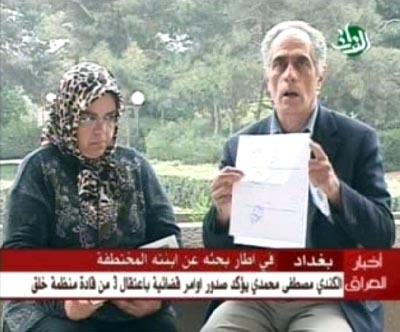
Al-Araghiya TV documnetary on Rajavi’s Canadian Hostage Alaraghiay TV broadcasted a documentary about two Canadian sitizens, Mostafa and Mahboobeh Mohammady, who have gone to Iraq in an attempt to rescue their daughter from Mojahedin Khalq Organisation terrorist cult currently under protection of US army in Ashraf camp North of Baghdad.

The full translation of this film will be posted shortly.

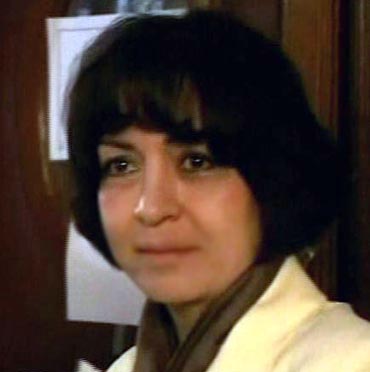
Somaye Mohammady;Rajavi's Canadian Hostage

Mostafa and Mahboobeh Mohammady, who have gone to Iraq in an attempt to rescue their daughter from Mojahedin Khalq Organisation 

Download Al-Araghiah TV documentary on Rajavi’s Canadian Hostage

January 22, 2008 0 comments
FacebookTwitterPinterestWhatsappTelegramSkypeEmail
Massoud Rajavi

Masud Rajavi and the Paranoia of Power

Self-delusion is most apparent in those politicians who least consider their supporters and their people in the policies and strategies which they pursue. These are the kind of leaders who do not see the fear in the faces of the people under their autocracy. Rather they relate all such signs of disfavour to the external enemy. When they do find their internal opponents standing opposed to them, they become astonished and fail to analyse the situation realistically.

Self-delusion is the scourge of power that has no popular support. Self-delusion is the illness of those who are unable to evaluate their power and do not understand their true position in either the international or internal political scene. This inability means there is always a vast divergence between the minds of such politicians and real life. On the one hand they are arrogant of their growing power, and on the other hand pass their lives in fear of their enemies; and finally they become the victims of their own phobia. Their self-delusion directs them to only refer to their self-created fantasy. Disaster occurs when the realities of the outside world threaten to destroy their misinterpretation.

Massoud Rajavi, the leader of the Mojahedin-e Khalq Organisation (MKO) of Iran, is an example of an idealistic leader whose absolute power over his followers in the organisation has both shattered his ideals and increased his self-delusion. As Rajavi discovered his power over the organisation to be unlimited, he distanced himself from the realities of life in both his sayings and in his actions. To this end the picture of the social and political life of the people of Iran today is totally different from what he sees or talks about. He is miles away from today’s world.

Massoud Rajavi is so certain about the outcome of the manipulation of the members of his organisation with his ideas that he does not see the rows of people tired of his "ideological revolution" and those who are trying to escape the boundaries of Camp Ashraf in Iraq. He is, of course, not worried about the increasing critics and opponents to his policies and ideas. According to his so-called revolutionary criteria, those who leave him or turn against him are traitors who will sooner or later destroy themselves by their own hands.

Rajavi is a charismatic leader who enjoys the natural supremacy of all such leaders over his followers. He has managed to instil his own fear and paranoia in the minds of his followers so that they are also unable to see the truth of the outside world. Currently the world is deeply concerned about the outbreak of further wars and conflict here and there, and people are working hard everywhere to prevent this. But living in his own self-deluded world Massoud Rajavi is strongly disturbed that there is no war and that the US does not quickly launch a militarily attack on Iran.

Today Massoud Rajavi has gone into hiding and does not give public appearances – apparently for reasons of security. But he is in fact living in his own dream world of self-delusion and the nightmare of fear as all totalitarians of his kind must do.


Ebrahim Khodabandeh, 15 November 2007

ebrahim_khodabandeh_2006@yahoo.com

January 22, 2008 0 comments
FacebookTwitterPinterestWhatsappTelegramSkypeEmail
Newer Posts
Older Posts

Recent Posts

  • Rebranding, too Difficult for the MEK

    December 27, 2025
  • The black box of the torture camps of the MEK

    December 24, 2025
  • Pregnancy was taboo in the MEK

    December 22, 2025
  • MEPs who lack awareness about the MEK’s nature

    December 20, 2025
  • Why did Massoud Rajavi enforce divorces in the MEK?

    December 15, 2025
  • Facebook
  • Twitter
  • Instagram
  • Youtube

© 2003 - 2025 NEJAT Society . All Rights Reserved. NejatNGO.org


Back To Top
Nejat Society
  • Home
  • Articles
  • Media
    • Cartoons
    • NewsPics
    • Photo Gallery
    • Videos
  • Publications
    • Books
    • Nejat NewsLetter
    • Pars Brief
  • About Us
  • Contact us
  • Editions
    • عربي
    • فارسی
    • Shqip