Nejat Society
  • Home
  • Articles
  • Media
    • Cartoons
    • NewsPics
    • Photo Gallery
    • Videos
  • Publications
    • Books
    • Nejat NewsLetter
    • Pars Brief
  • About Us
  • Contact us
  • Editions
    • عربي
    • فارسی
    • Shqip
Nejat Society
Nejat Society
  • Home
  • Articles
  • Media
    • Cartoons
    • NewsPics
    • Photo Gallery
    • Videos
  • Publications
    • Books
    • Nejat NewsLetter
    • Pars Brief
  • About Us
  • Contact us
  • Editions
    • عربي
    • فارسی
    • Shqip
© 2003 - 2024 NEJAT Society. nejatngo.org
Europe

A leader of a terrorist organization is welcomed in Strasbourg

On Monday, October 1, 2007, Maryam Rajavi, the self appointed next president of Iran and the leader of the terrorist religious cult of mohahedin-e khalq of Iran was invited by the European People’s Party (Christian Democrats) Parliamentary Group to speak at the Council of Europe in Strasbourg.

This marked a dark day for the legitimacy and credibility of the EU. Indeed, inviting Maryam Rajavi goes against the very core principles of democracy and its practice. Mrs. Maryam rajavi and her organization which she represents have never stood by any of her claim of a believer in democracy and human rights. She simply speaks what she believes people want to hear without ever backing those words with actions.

She, along with her organization is responsible for the killings of hundreds of innocent Iranians in the years 1982 to as recent as 2003. One of the key reasons for today’s brutal conditions in Iran is in part thanks to the mohajedin and their role in supporting a violent means to an end and legitimizing crackdown by the Iranian regime.

They have for two decades been the long arm of Saddam Hussein in his terror against his own people as well his neighbors. They acted as the 5th division of Saddam Hussein’s army in waging war against Iran (1980-1988) and the repression and killing of kurds and shias in Iraq.

http://en.wikipedia.org/wiki/Iran-Iraq_War

This organization has a long history in repressing and killing of their own members as evidenced in human right report (NO EXIT: Human Rights Abuses inside MKO Camps) as well as sworn testimonies by former members.

http://hrw.org/backgrounder/mena/iran0505

http://www.iranpeyvand.com/2007/03/09/mko-terrorist-operations

As an effect, the invitation of such an individual is stains the EU parliament and its member who approved of this meeting and therefore must answer of their true intentions.

To use the mojahedin as some sort of a triumph card against the Iranian regime shows the lack of understanding of the Iranian psyche and the role that mojahedin plays in this part. It is a proven fact that the mojahedin hold no real support amongst the Iranian people and is seen as a traitorous group who in the past has allied with Iran’s enemy and now deliberately and behind the scene calls for attack on Iran by US forces. The regime in Iran has long since stopped looking at Mojahedin as a threat and only use them as a mean to legitimate their continued oppression of dissident voices amongst the populace.

Let’s not forget that the mojahedin continue to be listed as a terrorist organization by most of the western government and is listed in Interpol wanted list.

http://www.state.gov/s/ct/rls/crt/2006/82738.htm

The only way EU and the world at large can help the Iranian people is to support and speak out in favor the true democratic voices within Iran and their struggle for a democratic Iran.

Karim Haggi Moni – Iranpeyvand  – Oct 8, 2007
October 14, 2007 0 comments
FacebookTwitterPinterestWhatsappTelegramSkypeEmail
Mujahedin Khalq; A proxy force

Mojahedin Khalq the US-backed Terrorists

The best way for the US to start rolling back its regime change policy, both editors and several officials said, would be to dismantle a US-backed militia of Iranian exiles based in Iraq, known as the Mujahideen-e-Khalq (MEK). The MEK supported Saddam Hussein in the 1980-88 Iran-Iraq war and subsequently its 3,600 fighters, many of them women, stayed on in Iraq.  According to US sources, since the invasion of Iraq US intelligence agencies have disarmed the fighters but have kept the MEK camps near the Iranian border intact, using MEK operatives for espionage and sabotagein Iran and to interrogate Iranians accused of aiding Shia militias in Iraq.  Until recently, MEK radio and TV stations broadcasting to Iran were based in Iraq, but Iranian pressure on the Baghdad government forced their relocation to London. When the moderate Mohammad Khatami was elected president of Iran in 1997, the State Department made a conciliatory gesture by listing the MEK as a terrorist organisation guilty of human rights violations, and it is still on the list.  Dismantling the MEK paramilitary forces would be an effective way to signal US readiness to accommodate Tehran, suggested Abbas Maleki, an adviser to the National Security Council, since it is the only militarised exile group seeking to overthrow the Islamic Republic and is the darling of the Washington lobby for regime change in Iran. Alireza Jaffarzadeh, chairman of the MEK’s front group, the National Council of Resistance of Iran, appears regularly on the conservative TV channel Fox News as its Iran expert, rather like the pro-US Iraqi politician Ahmad Chalabi before the Iraq invasion, rallying Congressional and media support for military action against Iran.  As its terrorist listing of the MEK showed, the Clinton administration hoped for a diplomatic opening to Iran. When the Republican House speaker, Newt Gingrich, pushed through an $18m appropriation for non-lethal covert action to force the replacement of the current regime in Iran, the White House restrained the CIA. But the Bush administration was quick to change course. Cheney shared Gingrich’s goal of regime change and he persuaded doubters that pressure on Tehran would strengthen the US in negotiations to end the uranium enrichment programme. First, the administration revived and expanded the dormant plans for direct US non-lethal covert action. Then, in February 2006, it obtained a $75m appropriation from Congress for an overt State Department programme “to promote openness and freedom for the Iranian people”. Finally, it cast about for covert ways to harass the regime militarily without the need for a formal presidential finding. … Selig S Harrison is director of the Asia Program at the Center for International Policy, senior scholar of the Woodrow Wilson International Center for Scholars (both in Washington), and author of In Afghanistan’s Shadow: Baluch Nationalism and Soviet Temptations (Carnegie Endowment for International Peace, 1980)  ———————–  full Report: Covert action, economic pressure and destabilisation; The US meddles aggressively in Iran

Le Monde Diplomatique, Selig S Harrison, October 01, 2007

Despite the disaster of the invasion and occupation of Iraq, the Bush administration wants not just to deter Iran’s nuclear ambitions but maybe even to overthrow the Islamic Republic. It has already authorised ‘non-lethal’ action within Iran and helped separatist groups. But instead of supporting the country’s democratic opposition, US meddling has encouraged its hardliners to reinforce their positions

The battle lines are familiar and clearly drawn in the unresolved policy struggle over Iran within the Bush administration. Vice-President Richard Cheney and his allies in the Pentagon and Congress, prodded by the American-Israel Public Affairs Committee (Aipac), not only want the US to bomb the Natanz uranium enrichment facility but are also calling for air strikes on Iranian military installations near the Iraq border.

Secretary of State Condoleezza Rice wants to test diplomacy first by broadening the US-Iran negotiations on stabilising Iraq that began in Baghdad in May. But, as the price for postponement of a decision on military action, she has agreed to a self-defeating compromise that has directly undermined the Baghdad negotiations: increased covert action to destabilise the Islamic Republic, formalised by a presidential “finding” in April.

Covert action to undermine the Tehran regime has already been under way intermittently for the past decade. Until now, however, the CIA has operated without a finding (authorisation for covert action) by using proxies. Pakistan and Israel, for example, provide weapons and money to insurgent groups in southeast and northwest Iran, where the Baluch and Kurdish ethnic minorities, both Sunni Muslim, have long fought against the repression of Shia-dominated Persian regimes.

The presidential finding was necessary to permit accelerated non-lethal activities by US agencies. Besides expanded propaganda broadcasts, a media disinformation campaign and the use of US and European-based Iranian exiles to promote political dissent, the programme focuses on economic warfare, especially currency rate manipulation and the disruption of Iran’s international banking and trade.

Although the finding was nominally secret, it did not stay secret for long after it was reported to the House and Senate Intelligence Committees, as required by law.

On a recent visit to Tehran, everyone was talking about it and both conservatives and reformers agreed that it came at an unusually damaging moment of genuine opportunity for cooperation with the US in Iraq and Afghanistan. Senior officials in the foreign ministry, the National Security Council, the office of President Mahmoud Ahmadinejad and pro-government think tanks all said that stability in Iraq and Afghanistan is in Iran’s interest. Cooperation with the US is possible, they said, but only in return for a gradual accommodation between Washington and Tehran, starting with a complete cessation of covert and overt regime change policies.

“The United States is like a fox caught in a trap in Iraq,” said Amir Mohiebian, editor of the conservative daily Reselaat. “Why should we free the fox so he can eat us? Of course, if the US changes its policy, there is scope for cooperation.”

At the other end of the journalistic spectrum, Mohammed Adrianfar, editor of Hammihan, identified with the moderate former president, Akbar Hashemi Rafsanjani, said: “The atmosphere here is for starting negotiations and relations. People want stability. The slogan ‘Death to America’ doesn’t work, and our leaders know it. It’s an irony that two governments which are now enemies have many of the same interests in Iraq and Afghanistan.”

While officials would not discuss whether Iran is aiding Shia militias in Iraq and, if so, which ones, Alaeddin Boroujerdi, chairman of the Majlis (parliament) Foreign Affairs Committee, criticised US “coddling” of Baathist and Sunni elements and made it clear that Iran expects Shia domination as the prerequisite for stability in Baghdad and for US-Iranian cooperation there as part of an overall accommodation.

“The US occupying authorities are not truly pursuing de-Baathification of the security forces,” he said, “and should give the Iraqi government greater freedom to do so. That is the key to cooperation between our countries in Iraq.”

US-backed militia

The best way for the US to start rolling back its regime change policy, both editors and several officials said, would be to dismantle a US-backed militia of Iranian exiles based in Iraq, known as the Mujahideen-e-Khalq (MEK). The MEK supported Saddam Hussein in the 1980-88 Iran-Iraq war and subsequently its 3,600 fighters, many of them women, stayed on in Iraq.

According to US sources, since the invasion of Iraq US intelligence agencies have disarmed the fighters but have kept the MEK camps near the Iranian border intact, using MEK operatives for espionage and sabotagein Iran and to interrogate Iranians accused of aiding Shia militias in Iraq.

Until recently, MEK radio and TV stations broadcasting to Iran were based in Iraq, but Iranian pressure on the Baghdad government forced their relocation to London. When the moderate Mohammad Khatami was elected president of Iran in 1997, the State Department made a conciliatory gesture by listing the MEK as a terrorist organisation guilty of human rights violations, and it is still on the list.

Dismantling the MEK paramilitary forces would be an effective way to signal US readiness to accommodate Tehran, suggested Abbas Maleki, an adviser to the National Security Council, since it is the only militarised exile group seeking to overthrow the Islamic Republic and is the darling of the Washington lobby for regime change in Iran. Alireza Jaffarzadeh, chairman of the MEK’s front group, the National Council of Resistance of Iran, appears regularly on the conservative TV channel Fox News as its Iran expert, rather like the pro-US Iraqi politician Ahmad Chalabi before the Iraq invasion, rallying Congressional and media support for military action against Iran.

As its terrorist listing of the MEK showed, the Clinton administration hoped for a diplomatic opening to Iran. When the Republican House speaker, Newt Gingrich, pushed through an $18m appropriation for non-lethal covert action to force the replacement of the current regime in Iran, the White House restrained the CIA. But the Bush administration was quick to change course. Cheney shared Gingrich’s goal of regime change and he persuaded doubters that pressure on Tehran would strengthen the US in negotiations to end the uranium enrichment programme. First, the administration revived and expanded the dormant plans for direct US non-lethal covert action. Then, in February 2006, it obtained a $75m appropriation from Congress for an overt State Department programme “to promote openness and freedom for the Iranian people”. Finally, it cast about for covert ways to harass the regime militarily without the need for a formal presidential finding.

The most readily available means of doing this was to get Pakistan and Israel to arm and finance already-existing insurgent groups in the Baluch and Kurdish areas through well-established US ties with Pakistan’s Interservices Intelligence Directorate (ISI) and the Israeli intelligence agency Mossad.

The ISI channelled weapons and money to an already established Iranian Baluch dissident group, Jundullah (Soldiers of God), which inflicted heavy casualties in raids on Iranian Revolutionary Guard units in Zahedan and southeast Iran in 2006 and 2007. The US made no effort to hide its support for Jundullah. On 2 April 2007 the Voice of America interviewed its leader, Abdolmalek Rigi, introducing him as “the leader of the popular resistance movement of Iran”. Several of my Baluch contacts recently provided detailed proof of Rigi’s ISI ties.

Mossad contacts

Mossad has built up contacts in the Kurdish areas of Iran and Iraq since it used bases in Iran during the days of the Shah to destabilise the Kurdish areas of Iraq. Against this background, Seymour Hersh’s report that Mossad is giving equipment and training to the Iranian Kurdish group Pejak is credible (1). Jon Lee Anderson interviewed a senior Kurdish official in Iraq who said that Pejak is operating out of bases in Iraqi Kurdistan to conduct raids in Iran and has “received covert US support” (2). In retaliation, Iran bombarded these bases for two weeks in late August, prompting Iraqi protests.

The most dangerous latent separatist threat facing Tehran is in the south-western province of Khuzestan, which produces 80% of its crude oil revenue. The Arab Shia of Khuzestan share a common ethnic and religious identity with the Arab Shia across the Shatt-al-Arab waterway in Iraq. Ahwaz, the capital of Khuzestan, is only 150km east of Basra, where British forces in Iraq have been headquartered.

Not surprisingly,in the light of history, Tehran accuses Britain of using Basra as an intelligence base for stirring discontent in Khuzestan.

Backed by British forces and British oil interests, the Arab princes of Khuzestan seceded from Persia in 1897 and established a British-controlled protectorate, Arabistan, which Persia did not recapture until 1925. Although most of Iran’s oil wealth is produced in Khuzestan, separatist groups charge that Tehran denies the province a fair share of economic development funds. So far, the scattered separatist factions have not created a unified military force like the Jundullah and no evidence of foreign help has surfaced. But they periodically raid government security installations and bomb oil production facilities.

Several broadcast propaganda in Arabic from foreign locations that are not clearly identified. The National Liberation Movement of Ahwaz, which advocates independence, operates Ahwaz TV, a satellite channel with an on-screen caption giving a fax number with a California area code. Another satellite channel, Al-Ahwaz TV, broadcast by Iranian exiles in California, is linked to the British-Ahwaz Friendship Society, which advocates regional autonomy for the province in a federal Iran. Nearly half ($36m) of the $75m 2006 US appropriation goes to support for the US-operated Voice of America and Radio Farda and to anti-regime broadcasting outlets run by Iranian exiles in the US, Canada and Britain.

Another $20m goes to NGO human rights activists in Iran and the US. Undersecretary of State Nicholas Burns has revealed that “we are working with Arab and European organisations to support democratic groups within Iran”, since getting direct US funding into Iran “is a very difficult thing for us to do” given “the harsh Iranian government response against the Iranian individuals” (3).

One Iranian participant in a US-sponsored workshop in Dubai last year told the Iranian-American journalist Negar Azimi that “it was like a James Bond camp for revolutionaries” (4). Four Iranian participants were later arrested.

Counter-productive attempts

My clear impression in Tehran was that covert and overt efforts to destabilise the Islamic Republic andpressure it economically to abandon its nuclear programme have been counter-productive. They have given hardliners an excuse to harass Iranians working internally to liberalise the regime and visiting Iranian-American dual citizens such as Haleh Esfandiari of the Woodrow Wilson International Center for Scholars, who was imprisoned for three months on vague espionage charges.

By aiding ethnic minority insurgencies, the US has enabled Ahmadinejad to cast himself as the champion of the Persian majority. The minorities constitute at most 44% of the population. The largest, the Azeris (24%) have been mostly assimilated, and the rebellious Baluch, Kurds and Khuzestani Arabs are bitterly divided between advocates of secession and of a restructured federal Iran. Ahmadinejad can also blame external economic pressures for economic problems that are mainly the result of his own mismanagement.

Negotiated compromises on stabilising Iraq and Afghanistan are possible, but only if destabilisation stops and not if President Bush takes the military steps implied in his 28 August threat “to confront Tehran’s murderous activities” in Iraq. Even if the pressure is relaxed, a definitive nuclear compromise is unlikely in the absence of changes in the US Persian Gulf security posture, though a suspension of the Natanz facility might be possible if Israel would agree to a parallel freeze of the Dimona reactor. “How can we negotiate denuclearisation while you send aircraft carriers to the Gulf that, for all we know, are equipped with tactical nuclear weapons?” asked Alireza Akbari, deputy defence minister in the moderate Khatami government. “How can you expect us to negotiate when you won’t talk about Dimona?”

The covert and overt pressures so far applied to Iran are just sufficient to infuriate Iranians of all political persuasions, strengthening the hardliners, but are not nearly enough to undermine the regime. The economic pressures are more effective than the covert insurgency aid. Out of 40 European and Asian banks doing business with Iran, though, only seven have cut ties with Iran in response to US sanctions. In any case, Iran is routing its international business though 400 Dubai-based financial institutions, mostly Arab. With trade between Iran and the United Arab Emirates, including Dubai, nearing $11bn this year, US Undersecretary of the Treasury Stuart Levey’s threat of reprisals against firms dealing with Iran, in a speech in Dubai on 7 March, were pointless. The administration is now pushing more sharply-targeted measures against enterprises linked to the Revolutionary Guards and the conglomerates run by clerical interests, but their impact has been limited.

Likening the US-Iran tussle to a bull fight, a respected European ambassador long resident in Tehran asked: “What’s the point of all this? What good does it do to keep waving the red flag? It just makes the bull more and more angry. It doesn’t kill.”

(1) “The Next Act”, The New Yorker, 27 November 2006.

(2) “Mr Big”, The New Yorker, 5 February 2007.

(3) Council on Foreign Relations, New York, 11 October 2006.

(4) “The Hard Realities of Soft Power”, New York Times Magazine, 24 June 2007.

Selig S Harrison is director of the Asia Program at the Center for International Policy, senior scholar of the Woodrow Wilson International Center for Scholars (both in Washington), and author of In Afghanistan’s Shadow: Baluch Nationalism and Soviet Temptations (Carnegie Endowment for International Peace, 1980)

Le Monde Diplomatique, Selig S Harrison, October 01, 2007

October 14, 2007 0 comments
FacebookTwitterPinterestWhatsappTelegramSkypeEmail
The cult of Rajavi

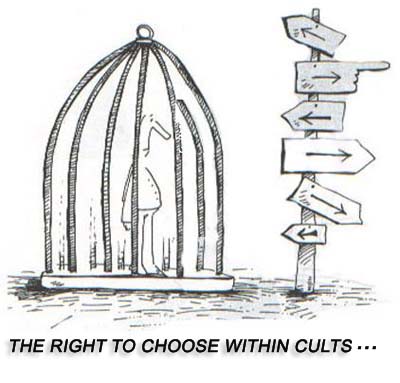
The right to choose within cults

The right to choose within cults

The right to choose within cults

October 8, 2007 0 comments
FacebookTwitterPinterestWhatsappTelegramSkypeEmail
Iran

Iran: Washington behind today’s assassination of Shia clergyman

US-backed terrorists martyred a clergyman in Khash, in this southeastern province Tuesday night.

The clergyman, Mehdi Tavakoli, was delivering sermons at a mosque when he was martyred by unknown terrorists.

The White House which has been defeated by the resolve of the Iranian nation, has put support for terrorists on its agenda in order to create an atmosphere of terror and intimidation and kill innocent people.

———-

A military commander said here Wednesday that the Tuesday night assassination of a Shia clergyman in Khash was aimed at sowing discord among Shia and Sunni Muslims.

The clergyman, Mehdi Tavakoli, was delivering sermons at a mosque at Eftekharabad village of Khash when he was martyred by an unknown”US-backed terrorist”.

Commander of Fatah Base, General Mohammad Ghafari, further said that the martyrdom of the clergyman was surely a pre-orchestrated plan aimed at sowing discord among various sects and ethnic groups in the province.

“US-backed terrorists are retaliating Washington’s failures at political and international scenes through blind assassination in Iran,”he said.

The White House which has been defeated by the resolve of the Iranian nation, has put support for terrorists on its agenda in order to create an atmosphere of terror and intimidation and kill innocent people.

October 7, 2007 0 comments
FacebookTwitterPinterestWhatsappTelegramSkypeEmail
USA

Mojahedin Khalq , A Tool in US’s Psychological War on Iran

The new tactics of the US and France against Iran are focused on psychological war and using opposition groups as a tool.

Israeli intelligence sources have acknowledged that the secret war on Iran’s nuclear programs has intensified.

These sources, stressing that press conferences by Iranian opposition on Iran’s nuclear program are not coincidental, said: "Secret services of the U.S. used the same tactics five years ago and gave their initial intelligence to the Iranian opposition to be announced in their press meetings."

In a new press conference by Mehdi Abrishamchi, member of MKO, new claims were expressed on the existence of secret nuclear bases in Iran.

Referring to Abrishamchi’s recent comments, Israeli sources said that they had been produced wholly by French and American secret services and the MKO was only used as an outlet.


Al-Rai newspaper/Rabi’ Yahya,

October 7, 2007 0 comments
FacebookTwitterPinterestWhatsappTelegramSkypeEmail
France

French charge d’affaires in Tehran summoned to foreign ministry

French Charge D’Affaires in Tehran Jean Grebling was summoned to Foreign Ministry on Wednesday morning.

According to Foreign Ministry Media Department report, following provocative and unreasonable statements by French political officials, especially the radical and continuous statements by French Foreign Minister Bernard Kouchner, head of second office of Western Europe in Foreign Ministry summoned the French charge d’affaires in Tehran, in the absence of the ambassador, and submitted Iran’s official protest against recent statements of Mr. Kouchner.

In the meeting, the Iranian diplomat also expressed Iran’s dissatisfaction with Paris recent stances and intensified negative tone concerning Iran’s constructive agreement with International Atomic Energy Agency IAEA).

Referring to French officials stances in recent weeks concerning Iran’s nuclear dossier, the foreign ministry diplomat condemned and strongly protested against ‘French efforts in forming the UN Security Council resolution against Iran, persuading European countries to impose extra sanctions outside UNSC framework on Iran and recommending European companies to stop new economic cooperation with Iran’.

While 5+1 group in its latest meeting agreed to postpone discussion on Iran’s nuclear dossier until November when IAEA presents its report, French Foreign Minister Bernard Kouchner in an unrealistic and irresponsible statement has accused Iran of trying to access atomic bomb.

Kouchner, in an interview with French Channel One Radio on Tuesday, claimed that existing situation in Iran is dangerous and Islamic Republic of Iran will only take the West seriously just by intensifying sanctions against it.

Two weeks ago, Kouchner in another irresponsible statement, said that the world should be prepared for a war against Iran as the worst choice in dealing with its nuclear issue.

In the foreign ministry meeting, dual and discriminatory behavior of the French government in facing with the issue of terrorism was criticized and it was said that the freedom of the terrorist group Mojahedin Khalq Organization (MKO) in France is in contradiction with international resolutions and obligations on fight against terrorism.

The French diplomat answered he would promptly inform his government on Iran’s viewpoints.

Concerning MKO activities, the French diplomat said, "French government stance on the group has not changed and they are still under control of France judiciary system and there is no sympathy with them."

Tehran, Oct 3, IRNA


October 7, 2007 0 comments
FacebookTwitterPinterestWhatsappTelegramSkypeEmail
Iran

Who is using Mojahedin Khalq Terrorist organisation?

In protest against western support for proscribed terrorists in EU Majlis speaker cancels speech at European Parliament

Majlis Speaker Gholam-Ali Haddad-Adel has canceled an scheduled visit to Strasbourg, France, where he was to address the European Parliament on Thursday. The decision was made in protest to”the dual behavior”of EP officials.

The speaker’s decision was made after it was reported that a number of EP officials have recently met with the leader of the terrorist Mujahideen Khalq Organization (MKO).

Haddad-Adel’s visit was due to take place upon an invitation extended by head of European Parliament Council.

He was to address the Council of Europe Parliament as rotating chairman of the Asian Parliamentary Assembly (APA).

The speaker was to talk about Asia’s specific status at the international community and the significant efforts which are underway to promote the continent’s role in international

developments.

Haddad-Adel called on the APA president to voice the speaker’s strong protests to EP officials for their”dual behavior in their alleged fight against terrorism.”

The MKO is enlisted by the EU as a terrorist group and its leader is under prosecution by the INTERPOL for the crimes committed by the MKO members in Iraq and Iran.

—————-

Majlis speaker to address IPU confab in Switzerland

Majlis Speaker Gholam-Ali Haddad-Adel, heading a high-ranking delegation, will visit Switzerland next Monday to address the Inter-Parliamentary Union (IPU) meeting.

According to the Press Bureau of Majlis, Haddad-Adel will take part in a three-day conference in Geneva at an invitation by the IPU head. Speakers from 120 countries will also participate in the event.

This is the first time that the IPU invites a high-ranking delegation from Iran to attend its meeting.

Heshmatollah Falahat-Pisheh, Seyed Abdullah Hosseini, Javad Jahangirzadeh, Kazem Jalali, Fatima Alia and Nafisseh Fayyaz-Bakhsh will accompany the Majlis speaker during the three-day visit to Switzerland.

Haddad-Adel will hold talks with heads of Swiss Federal Council and Parliament during the visit.

The IPU Geneva-based non-governmental organization, comprising 148 member states, was established 110 years earlier.

The Iranian speaker will pay a visit to Bosnia and Herzegovina at an official invitation by their parliament speaker.

October 7, 2007 0 comments
FacebookTwitterPinterestWhatsappTelegramSkypeEmail
The MEK Expulsion from Iraq

US Senate’s plan to”divide”Iraq against will of people

Iraqi govenment seriously angered by the US’s conduct in supporting Mojahedin Khalq Terrorist group (Rajavi cult or Saddam’s Private Army) in Ashraf camp in Dialy province against the will of the Iraqis

…

Q- A while ago, the Iraqi government had asked for the expulsion of Monafeqin [hypocrites; term used to describe opposition group Mojahedin-e Khalq Organization based in Iraq], but we are still witnessing their presence and the American support for them. What happened to this issue?

A- The position of the Iraqi government in expelling the Monafeqin group remains in place. Unfortunately, the American support for this group is obvious and against the will of the Iraqi government. The Iraqi government has announced that the area which is under American control should be returned to the government and according to the legislation approved by the Iraqi government the members of this group must leave Iraq once the area is returned to the Iraqi government.

Considering the very negative role that this group has had in the security situation of Dayaleh Province and intensifying the insecurities in this region, the government of Iraq is seriously angered by their conduct and is making efforts to take control of this issue.

BBC Monitoring Middle East, October 03, 2007

…

Full Report:

Iranian envoy says US Senate’s plan to”divide”Iraq against will of people

Text of interview conducted with Iranian ambassador to Iraq, Hasan Kazemi-Qomi by Ehsan Taqaddosi headlined”Tehran’s dissatisfaction with American Senate’s plan”published by Iranian newspaper Iran on 30 September

The plan to divide Iraq presented by the chairman of the American Senate’s Foreign Relations Committee, Joseph Bayden, which was later approved has created a lot of controversy. This plan was presented at a time when the neoconservatives of the White House found all their strategies in Iraq unsuccessful and the Democrats stepped into the Iraq war policy room and delivered the plan to divide Iraq. The Senate’s plan for Iraq has been copied from the well-known Dayton Treaty in Bosnia, which in the eyes of the democrats, is a solution for controlling and ending the wave of violence in Iraq.

The Senate’s plan recommends a federal government for Iraq that would include separate and autonomous Shi’i, Sunni and Kurdish regions.

Although this plan was immediately rejected by all Iraqi groups and figures but is still making headlines in Iraq. We have discussed this issue with our country’s ambassador in Baghdad, Hasan Kazemi-Qomi which is as follows:

Q- What is the aim behind the Congress and Senate’s plan?

A- The political system of Iraq has been defined based on the central and federal government within the framework of the constitution and the people of Iraq have confirmed this. According to the Iraqi constitution, each province or a combination of more than one province could submit their request for federalising that region. Given the cultural, social, political and economic structure of Iraq, naturally a political systems based on federalism could secure both the interests of social groups and the national interests of Iraq.

Even the mechanism for materializing federalism has been included within the framework of the Iraqi constitution. What has been notable in terms of the people of Iraq and this country’s constitution is safeguarding the solidarity, independence and territorial integrity of Iraq. Whatever, is outside the principles embodied in the constitution would be unacceptable in the view of the Iraqi people.

In addition to Iraqi people, the neighbouring countries of Iraq are also opposed to any division of Iraq under any circumstances as the Iraqi experience [the occupation] and the division of this country is neither in the expedience of the Iraqi people nor the countries of the region.

Q- Do you think this plan could be accepted inside Iraq?

A- The reaction of Iraq’s political leaders and the people of this country to what was approved in the American Senate were strongly negative. In their view, this legislation was a kind of interference in Iraq’s internal affairs and no political group in Iraq supported this plan.

Q- What thought and policy has the White House been pursuing in Iraq after the well-known Crocker-Petraeus report?

A- The report that was presented to the Congress by Crocker and Petraeus was in fact a staged scenario and had no new point that would have been derived from a new strategy. In the view of the Iraqi people, this report was not an Iraqi report but a report to eliminate the domestic problems of America. That is why it was received with indifference by the Iraqi people.

The Americans have not presented a new plan but what was seen in this report indicated that the Americans are after a long-term presence in Iraq and this issue is definitely in contradiction with the will of the people and government of Iraq.

Q- From now on, how would the Americans establish their relations with the Iraqi government in the diplomatic dimension?

A- From the Iraqi point of view, America must end its military presence in Iraq and define its relations with Iraq like other countries. The Iraqi government considers no concessions for America and is willing to have good and balanced relations with all countries and particularly its neighbouring countries. This also includes America – of course, without giving any special concessions. In addition, in the view of the Iraqi government the issue of the office for security affairs should be returned to the government.

Q- A while ago, the Iraqi government had asked for the expulsion of Monafeqin [hypocrites; term used to describe opposition group Mojahedin-e Khalq Organization based in Iraq], but we are still witnessing their presence and the American support for them. What happened to this issue?

A- The position of the Iraqi government in expelling the Monafeqin group remains in place. Unfortunately, the American support for this group is obvious and against the will of the Iraqi government. The Iraqi government has announced that the area which is under American control should be returned to the government and according to the legislation approved by the Iraqi government the members of this group must leave Iraq once the area is returned to the Iraqi government.

Considering the very negative role that this group has had in the security situation of Dayaleh Province and intensifying the insecurities in this region, the government of Iraq is seriously angered by their conduct and is making efforts to take control of this issue.

Source: Iran, Tehran, in Persian, on 30 Sept 07, p21


October 7, 2007 0 comments
FacebookTwitterPinterestWhatsappTelegramSkypeEmail
Iraqi Authorities' stance on the MEK

Another Step Towards Eradicating Iraq’s Terrorists

According to an agreement signed by Bashir Atalay and Jawad al-Boolani, the interior ministers of Turkey and Iraq, the two countries vowed to cooperate on preventing terrorists’ sabotage operations, training, investment and propaganda campaigns. They also promised to extradite terrorist elements.

Al-Boolani, Iraqi interior minister, said: "Iraq cooperates with neighboring countries on the issue of fighting terrorism. We pursue terrorist elements in our soil."

He stressed that a country alone wouldn’t be able to succeed in the fight against terrorism, adding: "There are a number of terrorist groups in Iraq, including PKK, MKO, Ansar al-Sunnah, Ansar al-Islam and others, whose presence is a threat to Iraqi people and neighboring countries."

"Iraq can’t allow its soil to become a base for terrorism and threat against its neighbors," he said.

al-Watan newspaper/Ahmed Yassin/Ankara

 2007/10/02


October 7, 2007 0 comments
FacebookTwitterPinterestWhatsappTelegramSkypeEmail
France

French Judiciary Prosecutes MKO

On Wednesday, the Foreign Ministry summoned French charge d’affaires Jean Graebling to protest over remarks by French Foreign Minister Bernard Kouchner claiming Tehran could be seeking nuclear bomb.

The Foreign Ministry Director for West European Affairs noted that France’s stance ran counter to Tehran’s agreement with the International Atomic Energy Agency on a timetable to answer outstanding questions about its nuclear activities.

The Foreign Ministry strongly protested over France’s push for another UN Security resolution and encouraging European nations to impose additional sanctions on Iran.

Kouchner, who caused a stir last month by saying the world must prepare for war with Iran, was quoted by AFP as telling Europe 1 radio on Tuesday that “nothing is more dangerous than the situation in Iran.

The Iranians must stop enriching uranium, because what they are doing encourages the experts to think they are possibly moving towards the atomic bomb and not the civil nuclear power to which they have absolute right.

The Iranian Foreign Ministry also blasted French double standard policy toward terrorism.

The fact that the terrorist Mojahedin Khalq Organization (MKO) is freely doing activities in France is a flagrant violation of international law on curbing terrorism, the Foreign Ministry official noted.

PRESS TV

2007/10/06


October 7, 2007 0 comments
FacebookTwitterPinterestWhatsappTelegramSkypeEmail
Newer Posts
Older Posts

Recent Posts

  • The Psychological Impact of MEK Ideology on Members

    August 17, 2026
  • A study on the financial mechanism of the Mujahedin-e Khalq

    August 10, 2026
  • A Child behind the Ideological Bars of Massoud and Maryam Rajavi

    August 8, 2026
  • A Comparative Analysis of Psychological Control Mechanisms in Jeffrey Epstein’s Cult and the MEK

    August 3, 2026
  • Operation Mersad: How Iran foiled Saddam’s final gambit 37 years ago

    August 1, 2026
  • Facebook
  • Twitter
  • Instagram
  • Youtube

© 2003 - 2025 NEJAT Society . All Rights Reserved. NejatNGO.org


Back To Top
Nejat Society
  • Home
  • Articles
  • Media
    • Cartoons
    • NewsPics
    • Photo Gallery
    • Videos
  • Publications
    • Books
    • Nejat NewsLetter
    • Pars Brief
  • About Us
  • Contact us
  • Editions
    • عربي
    • فارسی
    • Shqip