Nejat Society
  • Home
  • Articles
  • Media
    • Cartoons
    • NewsPics
    • Photo Gallery
    • Videos
  • Publications
    • Books
    • Nejat NewsLetter
    • Pars Brief
  • About Us
  • Contact us
  • Editions
    • عربي
    • فارسی
    • Shqip
Nejat Society
Nejat Society
  • Home
  • Articles
  • Media
    • Cartoons
    • NewsPics
    • Photo Gallery
    • Videos
  • Publications
    • Books
    • Nejat NewsLetter
    • Pars Brief
  • About Us
  • Contact us
  • Editions
    • عربي
    • فارسی
    • Shqip
© 2003 - 2024 NEJAT Society. nejatngo.org
Ann SingletonFormer members of the MEK

BBC Yorkshire Radio Leeds interviews Anne Singleton

P: We’re joined now by Anne Singleton she’s a married mum from Leeds. Who was actually brainwashed by extremists at one point but now campaigns to warn others. Good Morning Anne.

 AS: Good morning.

 P: Is brainwashed the right word to use? What actually happened to you Anne?

 AS: It is a word which resonates with people. More familiarly I would call it ‘mind control techniques. These are well-known, well-documented. For years and years destructive cults have been using them. The way that they work in essence is that they will take a perfectly ordinary person and strip that person of their values using specific psychological manipulation.

 P: What got you into this position in the first place?

 AS: I was involved with Iranian students at the time of the Iranian revolution in 1979. I was at Manchester University. I was young and innocent, looking for something to fulfill my ambition to ‘change the world’. I was very idealistic and I got involved with those people. They seemed to me very sincere, very genuine and committed to making change in their country. I hadn’t grasped that the path which they were leading me along led to extreme violence.

  P: So this was happening in this country, it wasn’t happening in a foreign environment where you would maybe be more susceptible to someone else’s culture.

  AS: I was recruited at Manchester University. Having said that, ten years down the line – I was just supporting the group from a distance, I had a job and ostensibly a normal life. But ten years down the line I took part in a hunger strike and that’s really what tipped the balance for me and sent me over the edge into total commitment to this group. After about five days of eating nothing I was on a complete high and I felt as though I was moving at a different speed to the rest of humanity.

  P: What was it they encouraged you to support?

 AS: The Mojahedin even today present themselves as an alternative to the islamic regime in Iran. They say that they want to overthrow the whole regime in its entirety and replace that regime with themselves. They frame this in the context of human rights. They say we will protect human rights by overthrowing the mullahs. What I came to realize was that they were committing just as much abuse of human rights inside their organization as Amnesty International was ‘clocking-up’ in other countries throughout the world.

 P: Anne, what do you think of the stories today? The front page of the Yorkshire Post says ‘University Launches Review after Conviction of Student Terror Ring’. How do you feel when you feel when you hear about these students, about what they were doing – substituting their faces with the faces of the 9/11 highjackers – after what you have been through.

  AS: What comes to mind first of all is that terrorism is such a complex issue. Yes, it sounds horrific on the surface when you hear of people having extremely radical views like this. And people are frightened because they know that such views can lead to violence. But what I have understood from my experience is that to tip somebody over the line between radical ideas and actually perpetrating violence needs psychological manipulation. Words don’t kill people, they never have. Words are how societies move forward, through discussion, debate and progress. There have been lots of radical ideas throughout history – the world is round was quite a radical thought at one point. So we must pull back a little bit and say that OK there are extremist views but if we remember a few years back – 1993 – the Admiral Duncan pub was bombed, a gay pub in Soho. If you start looking only at the so-called ideology of these people then you are going to miss a whole lot of clues that lead you to understand how a person goes from thinking extremely to acting extremely.

 P: You mentioned the hunger strike thing and that really strikes a chord with me. When I was going through my divorce I literally couldn’t eat a thing. And it absolutely does your mind no good. If you are not eating properly you think in a totally irrational way. That’s my experience. So, when you say your hunger strike was the one that led you up to that kind of high, moving and thinking differently from everyone else, that must be part and parcel of it.

  AS: This is a fundamental technique for psychological manipulation. These techniques are used by all destructive cults – whether they present themselves as religious, therapeutic, or like the Jonestown cult of the 1980s. They each present themselves differently but they all use the same techniques. These techniques are very effective, you can actually recruit and convert somebody into a cult member within three or four days. That’s how effective they are.

  P: This was happening to you at Manchester University. Now we hear about these students at Bradford University. There are some interesting issues about how this radical thought, idealistic thought can tip over the edge into violent action, but in terms of the universities what is the best plan for them in your experience in combating this, I mean tipping over into violent action.

 AS: I think that young people generally need to be educated in the danger of destructive cults. You should start at high school even. I am surprised that in schools you may be given sex education, you are educated about how to keep your PIN number safe and not get robbed, But where is the education to tell people how to look out for somebody who is going to come along, take you out of your normal environment and convert you into either a terrorist or at least a cult member.

 P: But will that education be enough? I think one of the things Bradford University is looking at as well is the idea of surveillance and looking at what people are looking at on the Internet and monitoring the traffic that’s coming through.

 AS: I am not a security expert so I couldn’t say how effective that would be.

 P: Would education have stopped you?

 AS: Certainly it would have opened my eyes a lot sooner to looking for signs that people were trying to influence me in ways that I wasn’t aware of actually happening. I think university students are quite vulnerable because they are away from home usually, they are in a vibrant atmosphere. They are intelligent, idealistic and are looking for new experience and new ideas.

  P: You are a mum, Anne. How many kids have you got?

 AS: I’ve just got the one.

  P: And how old is your child?

  AS: My child is seven.

 P: Right, so a long way to go in terms of university. How do you feel about your life now and your fears for your child?

  AS: I have to add here is that the reason I have one child is that we started rather late. I was involved with a terrorist cult, the Mojahedin Khalq, which denied its members marriage and children. Those are the levels of intrusion that these organisations have on ordinary members. So, they would not allow anyone to be married, they forced people to divorce and took their children away from them. It was only after I left and met my husband that I was able to have a family. And I realise now that being in one of these organisations deprives you of all your basic, fundamental human rights, even freedom of thought. Because a person who is brought around to thinking as terrorists do in order to give their own life to this other person – because it is someone else who will be persuading them to do that – your basic freedoms are taken away from you without you realising. Now, if you are aware, first of all, of your basic freedoms – what are the basic human rights that everyone is entitled to – that is a starting point from which you can say, I do have the right to have a family, to have children. These are certainly the things I will be teaching my child as he grows up and certainly I will be teaching him to think and to question and not to accept anything at face value, ever.

 People can be very persuasive. I think we’ve all been sold something we didn’t really want by somebody who was very persuasive. The same techniques will persuade you to act in ways that you don’t mean to, let alone buy things.

  P: Anne, thank you very much for coming in. She’s a wife and mum and she was involved with the Mojahedin in West Yorkshire.


BBC Yorkshire, Radio Leeds, July 26, 2007

http://www.bbc.co.uk/leeds


    Download Anne Singleton Interview with BBC Yorkshire Radio Leeds
July 26, 2007 0 comments
FacebookTwitterPinterestWhatsappTelegramSkypeEmail
The cult of Rajavi

A letter from Ebrahim Khodabandeh

An article in the French daily The Liberation, dated Thursday 24 May 2007 written by Christophe AYAD, draw my extreme attention:

http://www.liberation.fr/transversales/portraits/255706.FR.php?mode=PRINTERFRI

The article refers to a 48 year old Iranian-French man called Raphael-Karim Djavani who is living in exile in France for about 20 years. According to this commentary the man is a former member of the Mojahedin-e Khalq Organisation (MKO) lead by Mas’ud and Maryam Rajavi which is aiming to topple the regime in Iran. Apparently this man has published a book called "Allah and I". In this controversial book, he describes how he broke with Islam and God after breaking with the MKO. Djavani was an Iranian Shiite Moslem who has now turned his back, not only to MKO or even Islam, but to God himself too.

As a former member of the MKO, I have spent a good deal of time and efforts to study about cults in the past four years since I left the organisation. I have come to the absolute conclusion that the MKO is a destructive cult with every characteristic of a modern cult as described by the sociologists and the psychiatrists. This cult is operating under the banner of Shiite Islam. But in reality it is practicing mental manipulation and utilising coercive techniques and psychological methods to gain total control over the minds and lives of its members and followers.

One example of the social destruction of cult practices could be observed with the case of Mr Djavani. He has not only abandoned the organisation but every kind of religion and the Almighty God too. He has lost his faith with God all together after being disappointed with a cult claiming to be a religious establishment.

I believe that this case needs to be carefully and thoroughly examined by the media as well as social workers as an example of how cults could damage social and moral relations.

Ebrahim Khodabandeh, July 2007

ebrahim_khodabandeh_2006@yahoo.com

http://www.banisadr.info/PointOfViewEbi220707.htm

July 24, 2007 0 comments
FacebookTwitterPinterestWhatsappTelegramSkypeEmail
Mujahedin Khalq Organization as a terrorist group

MEK Contacts Detained in Karbala

Police spokesman in Karbala announced that police forces in the province have arrested 3 men in connection with MEK who carried documents on political and religious figures of Karbala.

According to AFP, Rahman Mashavi, police spokesman in Karbala, said that they were arrested after police received intelligence on their entrance to the city in Al-Husseinieh area, 20 Km north of the city.

The spokesman didn’t reveal the identity of these three men. "Searching the detainees, police found documents on Karbala’s political and religious figures; the documents relate them to the group of Mojahedin-e khalq," he added.

Mashavi said: "The three are being interrogated in order for identifying their supporters."

According to the report, Iraqi government has accused the MEK of interfering in Iraq’s internal affairs and has asked its members to either return to Iran or to another country


http://www.mehrnews.com/fa/NewsDetail.aspx?NewsID=521615


July 24, 2007 0 comments
FacebookTwitterPinterestWhatsappTelegramSkypeEmail
Mujahedin Khalq 's Function

A Prescription of Terrorism for Democracy

In occasions, I feel ashamed because of what other people have done or said to justify felonies of criminals. It happens mostly when I hear people claiming to be advocates of global peace and security but for them the term ‘global’ is defined within the context of their own people and nation, or interests better to say. They walk side by side of groups that are known as terrorists and criminals by the rules of law because they are misled by the enchantments of “have we ever been a threat to your people and country?” totally disregarding the atrocities these groups have perpetrated against other peoples and nations for whom they shed crocodile tears of sympathy.

Once home secretary under Margaret Thatcher’s government, Lord Waddington in his comments, published in The Scotsman, said in defence of MKO stated: “Laws passed to defend our society against terrorism are being used by the Iranian regime to buttress its own position and to make it easier to crush dissent within the country”.

Lord Waddington seems to have forgotten that MKO is hardly a “dissent within the country” for Iranian regime; the group is lying at his own county’s gate at the moment. It is hard to accept that he knows nothing of the group’s past bloody terrorist activities in Iran predating and postdating 2001 when he shows his objection to the EU’s decision of maintaining MKO on its list of terror:

Shamefully, the European Council has refused to honour and abide by the CFI ruling, claiming – wrongly – that the finding was merely procedural. When forced to state the evidence on which it relied, it advanced only irrelevant allegations that do not even relate to the present time, but predate 2001.

The group’s cult-like preaching infused with its old notorious motto of ‘the end justifies the means’ embolden all insiders, at the command of the leaders, to sacrifice themselves along with whoever in wherever to accomplish the ends of the organization. Once they were predominantly active inside Iran and now in European countries. The Iranian contemporary history is full of bloody pages of the group’s terrorist operations and assassinations. But its tactics are different in other countries; Western citizens hardly fail to remember the instances of the group’s cult-like self-immolations in Paris, London and some other Western cities that demonstrated MKO’s potentiality to jeopardize social security and psychological health.

The supporters of MKO, whether being of any political weight or not, that act as the mouthpiece of the organization to remove its name from the terrorist lists are not only betraying their own people but also Iranian nation. Nobody condemned the group’s deeds when it was shedding blood of Iranian citizens following its open declaration of a violent, military war against the regime because it was believed to be struggling for peace and freedom! Look how Lord Waddington justifies terrorist acts of MKO:

The PMOI never belonged on the terrorism list and the CFI has rightly ruled that it be removed. It is high time that our government acknowledged the ruling and removed the obstacles it has placed in the way of the PMOI as it struggles to draw attention to and mobilise opposition to a brutal regime. Surely the PMOI and NCRI deserve our support in the struggle for peace and freedom in their country.

It is really shameful to see that there are people who believe in support of terrorism for the accomplishment of democracy and peace. Only God knows what might happen to the nation whose freedom lies in the hands of terrorists. If people like Lord Waddington believe MKO deserve their support on behalf of Iranian people, then I, on behalf of the same people say oh, God save us from our friends.

Sattar Orangi, Mojahedin.ws, July 21, 2007

July 24, 2007 0 comments
FacebookTwitterPinterestWhatsappTelegramSkypeEmail
The MEK; Baath Party Accomplice

Plans to dismantle terrorists’ alliances

When you sit at same table with people you have taken an oath of loyalty, of course you try to do something in sympathy with them in the vicissitude of fortune. Before being officially settled in Iraq, MKO had proved their loyalty to Saddam and Ba’ath Party working as a fifth column even before the initiation of war between Iran and Iraq according to secretly videotaped documents by Iraqi Estekhbarat. Saddam’s collapse could in no way be regarded as the end of standing by the ideologically bound commitment endorsed by MKO and the Ba’ath Party.

Instigation of a widespread social chaos, following the formation of a solid Iraqi government after the fall of the dictator, by the remnants of Ba’ath Party and Saddam’s loyalists and mercenaries is the prime threat against Iraq’s state and social integrity. Reporting on the increasing terrorist operations in al-Khles area and the ongoing collaboration of MKO with the remnants of Saddam’s regime, Al-Sabah Newspaper quoted the member of council of Diyala province, Najm al-Rabiee, saying: "Aziz al-Faraj is at the centre of accusations; he is the son-in-law of Ezzat Ibrahim al-Dowri, the second man in Saddam’s regime. Aziz al-Faraj is the leader of terrorist operations in the area. He has been directly invited by the MKO and uses the protection of this organization”.

The solution to the problem is a decisive decision to disintegrate the union of the old alliances especially in Diyala province, a task the Iraqi government is determined to accomplish with the cooperation of the province Council. Welcoming the plan to terminate the terrorist operations, al-Rabiee said: "Diyala’s Council has proposed a plan to remove terrorists from the province, which completes Baghdad’s security plan. People and tribes of the province have welcomed the plan that would begin from border areas and Baqubah, spreading to the whole province. It’s aimed at blocking terrorists’ infiltration to the province”.

To confront contacts between leading dissident factions mainly made in the course of conferences and gatherings organized by MKO in Camp Ashraf, the Iraqi government has declared a ban for Iraqis to visit the terrorist bastion. The Diyala Council’s proposed plan is the next essential step to fulfill the former. For sure, the next measures will gradually quell the escalated disorder by the terrorists that regard peace and tranquility a threat against their shared interests.

Mojahedin.ws, Ehsan Kavehpour – 21/07/2007

July 24, 2007 0 comments
FacebookTwitterPinterestWhatsappTelegramSkypeEmail
Former members of the MEK

Status of Mojahedin Khalq (Rajavi cult) Members Held in Iraq Prompts Debate

SCOTT SIMON, host:

This is WEEKEND EDITION from NPR News. I’m Scott Simon.

Coming up, climate change comes to the Sky Islands. But first, the next round of talks in Baghdad between the U.S. and Iran is expected to take place before the end of July. One issue of particular interest to Iran is the presence in Iraq of more than 3,000 militants of the Mujahideen cult of the People’s Mujahideen.

Until the U.S. invasion of Iraq, this group carried out cross-border attacks against the government in Tehran aided by Saddam Hussein. Since the invasion, the MEK, as it’s known, has been confined to a base in Iraq under the control of U.S. forces. In Tehran, an effort has emerged to persuade MEK members to return home.

NPR’s Mike Shuster has more from Tehran.

MIKE SHUSTER: Arash Semitapur(ph) is a fresh-faced young man with unkempt black hair. Eager to police, he doesn’t look like a terrorist or an assassin. Only his false right hand suggests something may have been amiss in his past.

Semitapur is one of the leaders of the Najat Society here in Iran. Najat means salvation and its goal is to bring the Iranians of the MEK home. Semitapur joined the MEK in the 1990s, recruited as a naive college student in Virginia. Eventually, he made his way to a training base in Iraq. And in 2001, he was sent over the border with automatic rifles, ammunition, grenades and two cyanide pills in his mouth.

Mr. ARASH SEMITAPUR (Leader, Najat Society, Iran; MEK Member): That was like the street order we had that when you entered in Iranian territory, you have to have the cyanide pills in your mouth. We were convinced that if we get arrested here by the securities, we will be tortured to death. And we were told that the easiest way is just to have the cyanide pills and chew them if you are getting arrested. Then you will be a hero. You will be a martyr.

SHUSTER: Semitapur’s mission was to assassinate an Iranian general in Tehran, but everything went wrong and he was arrested. Even the cyanide pills did not kill him.

Mr. SEMITAPUR: Of course, my handgun was jammed and it didn’t work. And I was taken to the police station. There they didn’t search me. I had a hand grenade, like a small grenade in my pocket. Again, with the street orders of the organization, I tried to commit a suicide again so I exploded the grenade in my hand, but fortunately didn’t kill me.

SHUSTER: Because Semitapur didn’t kill anyone he served just four years in prison. When he got out, he joined the Najat Society to try to convince others of what he calls the MEK cult to return to Iran. The Najat Society also helps the families of MEK members to visit Iraq and try to persuade their loved ones to come home.

After the U.S. invasion, Masumai Rasahid(ph) tried to bring her son Sayed(ph) home. So far, she has not been successful.

Ms. MASUMAI RASAHID (Resident, Iran): (Through Translator) They’re completely brainwashed and even they don’t trust us. When my son accuses me as his mother that you got money from the Islamic government to come here, to persuade me and convince me to go back. And she says I’m your mother, how can I cheat you? And this is the way they taught you and they do not trust and believe nobody.

SHUSTER: The MEK is confined to Camp Ashraf, about a hundred miles north of Baghdad. When U.S. forces seized the camp, they disarmed the MEK and took possession of hundreds of tanks, artillery pieces and other military hardware. The State Department considers the MEK a terrorist group.

The U.S. has permitted family members to visit Camp Ashraf. Masumai Rasahid has been there to see her son four times.

Ms. RASAHID: (Through Translator) When he met me, he had a very bad reaction in front of everybody. He screamed at me and yelled at me. His friends told me that he was forced to do that. The last time that we met, it was much better. They let us stay for the night in the camp with him, and he was a little better than the previous time.

SHUSTER: The last time Masumai Rasahid saw her son was in 2004. Since then, it’s been far too dangerous to make the trip. The U.S. has been unable to decide just what to do with the MEK. The Iranian government has reportedly offered to exchange some al-Qaida members it says it is holding for the leaders of the MEK, permitting the rank and file to return to Iran to be reunited with their families.

Some U.S. officials have suggested sending the MEK to a third country. Others have argued that the U.S. should continue to hold the MEK as a bargaining chip and even use them for covert operations against Iran in retaliation for attacks that the U.S. says Iran is behind in Iraq.

Arash Semitapur(ph) urges Washington not to be tempted to use the group against the Iranian government.

Mr. SEMITAPUR: Maybe there are some people in U.S. government who would think that they are useful for them, but I don’t think that they are so naive that they can trust these guys.

SHUSTER: Semitapur argues for a more humanitarian solution to the problem – helping the families to spend more time in Baghdad or in bordertowns with MEK members. That way, he says, many will decide to come home. So far, according to the Najat Society, since the U.S. invasion of Iraq, about 300 MEK members have returned to Iran and are now living with their families.

Mike Shuster, NPR News, Tehran.

National Public Radio, Weekend Edition – Saturday, July 21, 2007

listen to the program:

http://www.npr.org/templates/story/story.php?storyId=12144968

July 24, 2007 0 comments
FacebookTwitterPinterestWhatsappTelegramSkypeEmail
Former members of the MEK

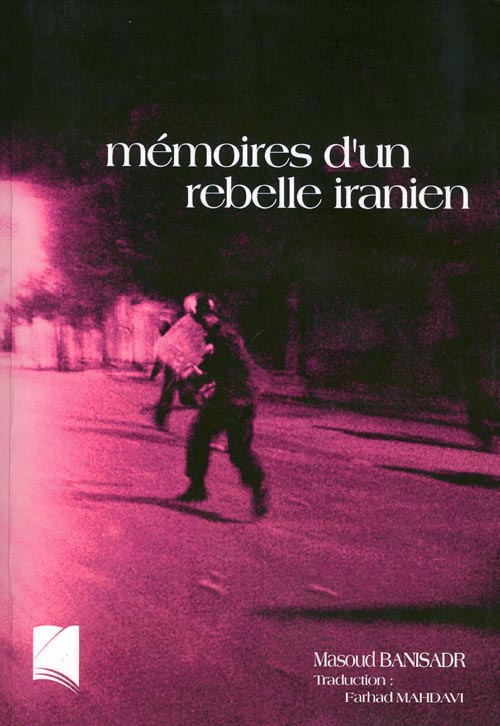
Masoud: Memoirs of an Iranian Rebel

REVIEW: Masoud Banisadr, Masoud: Memoirs of an Iranian Rebel Memoirs of an Iranian Rebel (London: Saqi Books, 2004).

Memories of Iranian Rebel

The Mojahedin-e Khalq Organization (MKO), or the People’s Combatants Organization, was established in 1965 as an armed, underground group opposed to the Pahlavi regime and seeking to establish a "monotheistic classless society." Fus­ing aspects of Marxism-Leninism and political Islam, the MKO played an important role in mobilizing urban, educated Iranians during the Islamic Revolution, yet quickly fell out with Ayatollah Ruhollah Khomeini and his inner circle in the post-revolution­ary period. Driven out of Iran, Masoud Rajavi and the Central Committee moved the MKO’s headquarters to Western Europe and then after 1986 to Saddam Hussein’s Iraq. Aside from its of­ficial history, little has been written in English about the inner workings of this highly secretive group.

The memoir of Masoud Banisadr, until 1996 a US and Eu­ropean representative of the National Council for Resistance (NCR), the MKO’s nominally independent political wing, helps present a picture of the organization as it functioned from the late 1970s. Masoud is especially timely, since the MKO, though deemed a "terrorist organization" by the State Department and several European governments, has been identified by neo-conser­vatives Daniel Pipes and Patrick Clawson as a candidate to bring "the tide of freedom" to Iran. The book seriously challenges such assumptions. In fact, Banisadr’s detailed life story corroborates a recent Human Rights Watch report, which describes the MKO’s systematic abuse and torture of members who challenge the Cen­tral Committee or seek to defect.

Banisadr, a cousin of the first popularly elected president of the Islamic Republic, and his wife were postgraduate students in Britain during the 1979 revolution. They became involved with the MKO and its affiliates after the fall of the Shah. A self-described "social democrat" at the time of the revolution, Banisadr was attracted to an ideology that "seemed indistinguishable from [Ali] Shariati’s," the thinker he had read and admired while still in Iran. Interestingly, he acknowledges that many MKO supporters did not "know much about the Mojahedin ideology, especially as it differed from that of other Muslims and Marxists." For him, "it was enough to know that they supported democracy, independence and progress."

At almost 500 pages, Masoud is a meticulous, but often me­andering and disjointed, book. Yet, for the patient reader, it is crammed with poignant details of how the MKO has maintained organizational unity despite external hostility and the many unsa­vory practices described by Banisadr. He tells us how the various "bases" scattered across Europe created a combination of complex, opaque hierarchy and communal living arrangements, how songs and military drills were used as rituals to develop a sense of soli­darity among middle-class college graduates, and how in order to raise funds the MKO established businesses, such as a stand that "introduced the joys of kebabs" to Durham.

But what will receive the most attention are the disturbing psy­chological techniques employed to force members to relinquish all sense of individual identity, to monitor each other and to disavow feelings for all people other than the married couple who make up the ideological and spiritual leadership of the MKO, Masoud and Maryam Rajavi. From the outset, the MKO encouraged members to distance themselves from their families, unless they could support the cause monetarily or through activities in Iran. The detachment from greater society, however, reached new levels after 1985 when the Rajavis announced various stages of the "ideo­logical revolution," whereby the MKO sought to reposition itself against the more consolidated regime in Iran. This "revolution" was initiated by the "marriage of the century," in which Rajavi wed Maryam Azodanlu, who had been married to another lead­ing member until shortly beforehand. All MKO members were expected to go through their own "ideological revolutions" in order to become true Mojahedin and demonstrate their loyalty. This was done at regular group confessionals ("cooking pots") in which Mojahedin would admonish themselves and each other, as well as through writing reports on one’s weaknesses, burn­ing "bourgeois" luxury items, limiting and even ending relations between the sexes, and divorcing one’s spouse to prevent "con­tradictions." The latter step was said to remove the main "buffer" preventing true understanding of the revolution, embodied in "the ideological mother" Maryam Rajavi, the only bridge to her husband. The meetings, taped sermons by the Rajavis and limits on outside sources of information created what Banisadr calls the "mystical efficacy of drip-fed propaganda."

This politico-theological apparatus surely helped to create some devoted followers, as demonstrated when several Mojahedin set themselves on fire when France briefly arrested Maryam Rajavi in 2003. Yet Banisadr describes how this psychologically abusive atmosphere, combined with growing doubts about the MKO’s military capability and political skill, led many other members to question the leadership and eventually quit. Banisadr’s suggestions and criticisms were met with indifference and public personal con­demnation, so much so that he began to doubt his own character. Unlike others who ended up attempting suicide or in Abu Ghraib prison for their criticisms, Banisadr was able to leave with relative ease, because he spent much of his time abroad and still had an extended family, including his ex-wife, living in Britain.

Masoud does not fully explain why Banisadr joined the MKO, as opposed to another political party, or why he left when he did. Nor does it offer an alternative politics to the one offered by the MKO. Like many autobiographies, it is too self-reflective to take these analytical steps or challenge the teleology of the narrative. Instead, Banisadr paints a picture of an organization that, over time, corrupted its members’ idealistic vigor and organizing acu­men into a means for self-abnegation with the only relationship of any significance being that between the individual member and the two-headed Rajavi beloved. After reading Masoud, it is difficult to imagine, as Pipes and Clawson apparently do, that the MKO will be able to mobilize its small, psychologically frag­ile membership or recruit more Iranians in order to overthrow the Islamic Republic, let alone establish a transparent political regime and foster a pluralistic society.


Reviewed by Arang Keshavarzian

MIDDLE EAST REPORT No:237

http://www.banisadr.info/MER.htm

Download Masoud: Memoirs of an Iranian Rebel

July 24, 2007 0 comments
FacebookTwitterPinterestWhatsappTelegramSkypeEmail
Missions of Nejat Society

Nejat Society Letter to Ms Beatrice Megevanal Roggo

The Nejat Society Tehran, Iran July 2007  Ms Beatrice Megevanal Roggo  International Committee of the Red Cross  The Middle East Department  Dear Ms Roggo We in the Nejat Society in Iran would like to draw your good attention to a rather crucial matter regarding the members of the Mojahedin-e Khalq Organisation (MKO) in Ashraf Camp in Iraq and their worrying relatives in Iran.

The Nejat Society is an NGO consisting of those former members of the MKO who have organised themselves in order to help the mentally and even physically captive members to gain their freedoms.

As you may well be aware the MKO is considered as a terrorist cult by many governments and establishments around the world. This organisation is utilising psychological techniques to mentally manipulate its own members in order to make them commit deeds they would not perform in normal status. The self-immolations done by some members in European capitals after the arrest of their leader Maryam Rajavi in Paris on 17 June 2003, is one obvious example of the kind. Like all cults, this organisation needs a remote site to be able to isolate the members from the outside world. The residents of Ashraf Camp have no contact with the real world, not even with their relatives or old friends. The members are forced to participate in the daily ideological sessions called "the Current Operation". In these sessions members are systematically subject to peer pressure and coercion methods.

Last summer we had news “ later confirmed by the organisation “ which designated that Mr Yasser Akbari-Nasab had passed out due to self-immolation. This “ along with some other news indicating that the MKO had asked its entire member to volunteer for self-emblazing “ has put the families into grave distress.

The families of the members of the MKO in Iraq have strived hardly in the past three years to get some information about their beloved ones. They have approached the ICRC, UNHCR, and other international bodies as well as the Iraqi and the Swiss Embassies many times with no outcomes.

We are therefore urging you to use your whole capacity to ensure the visit of the families with their beloved ones in a place in Baghdad without the presence of the MKO officials. Some of these families have not seen their beloved ones for up to twenty years and they believe it is their right to have the chance to be alone with their relatives for a few days. The MKO, under the protection of the US Forces which are guarding the Ashraf Camp, has denied this right despite the efforts of the Iraqi government.

Please let us know of your activities. We thank you in advance for your attention and your good work.

Yours truly,

The Nejat Society


July 21, 2007 0 comments
FacebookTwitterPinterestWhatsappTelegramSkypeEmail
Mujahedin Khalq; A proxy force

A row and nothing more

Reported by Telegraph, America is secretly funding militant ethnic separatist groups in Iran in an attempt to pile pressure on the Islamic regime to give up its nuclear program. In a move that reflects Washington’s growing concern with the failure of diplomatic initiatives, CIA officials are understood to be helping opposition militias among the numerous ethnic minority groups clustered in Iran’s border regions.

The operations are controversial because they involve dealing with movements that resort to terrorist methods in pursuit of their grievances against the Iranian regime.

The report further elucidates that a row has also broken out in Washington over whether to "unleash" the military wing of the Mojahedeen-e Khalq (MEK), an Iraq-based Iranian opposition group with a long and bloody history of armed opposition to the Iranian regime. But it remains only a row and no action follows it. The group is since 1997 on the US State Department as a terrorist organization and the recently published report not only maintains the group on the list but also takes an unprecedented rough attitude exposing it a cult.

Even the American advocates of this political cult admit that the group holds no political weight but can be manipulated as a means of psychological warfare against Iran. John Pike, the head of the influential Global Security think tank in Washington, said: "A faction in the Defense Department wants to unleash them. They could never overthrow the current Iranian regime but they might cause a lot of damage." The group’s past atrocities well indicate that nothing but damage can come out of the group, even for its sponsors. Then, can anybody really accept the responsibility of unleashing MKO?

mojahedin.ws –  17/07/2007


July 21, 2007 0 comments
FacebookTwitterPinterestWhatsappTelegramSkypeEmail
Mujahedin Khalq; A proxy force

Americans Appease the MKO in Iraq

Fars News Agency Quoted Sotaliraq website as follows:

After General Abdulkarim Al-Rabiee asked Baqubah refugees to return to their homes following the restoration of security in parts of the area, residents said that security won’t be established in the city while American forces appease terrorist groups including Mojahedin Council, Ansar al-Sunnah and Mojahedin-e khalq.

Qais Abdulhalim, a resident of Al-Mefraq district in Baqubah, said: "We are tired of changing our homes and going from one place to another. We like to get back to our city if terrorists have left any homes at all!"

"This situation requires real security strategies and those who had to leave their place should be compensated," he added.

The report indicates that at least 13000 residents of Baqubah have been forced to leave their homes in the past 2 years due to US’s wrong policies.

Earlier, Iraqi officials had announced that they were going to discuss the issue of MKO expulsion in a meeting on Tuesday.

Fars News – 2007/07/19


July 21, 2007 0 comments
FacebookTwitterPinterestWhatsappTelegramSkypeEmail
Newer Posts
Older Posts

Recent Posts

  • The Psychological Impact of MEK Ideology on Members

    August 17, 2026
  • A study on the financial mechanism of the Mujahedin-e Khalq

    August 10, 2026
  • A Child behind the Ideological Bars of Massoud and Maryam Rajavi

    August 8, 2026
  • A Comparative Analysis of Psychological Control Mechanisms in Jeffrey Epstein’s Cult and the MEK

    August 3, 2026
  • Operation Mersad: How Iran foiled Saddam’s final gambit 37 years ago

    August 1, 2026
  • Facebook
  • Twitter
  • Instagram
  • Youtube

© 2003 - 2025 NEJAT Society . All Rights Reserved. NejatNGO.org


Back To Top
Nejat Society
  • Home
  • Articles
  • Media
    • Cartoons
    • NewsPics
    • Photo Gallery
    • Videos
  • Publications
    • Books
    • Nejat NewsLetter
    • Pars Brief
  • About Us
  • Contact us
  • Editions
    • عربي
    • فارسی
    • Shqip