Nejat Society
  • Home
  • Articles
  • Media
    • Cartoons
    • NewsPics
    • Photo Gallery
    • Videos
  • Publications
    • Books
    • Nejat NewsLetter
    • Pars Brief
  • About Us
  • Contact us
  • Editions
    • عربي
    • فارسی
    • Shqip
Nejat Society
Nejat Society
  • Home
  • Articles
  • Media
    • Cartoons
    • NewsPics
    • Photo Gallery
    • Videos
  • Publications
    • Books
    • Nejat NewsLetter
    • Pars Brief
  • About Us
  • Contact us
  • Editions
    • عربي
    • فارسی
    • Shqip
© 2003 - 2024 NEJAT Society. nejatngo.org
The MEK and Jundullah

Order restored after blast at girls school in Iran

TEHRAN, Iran (CNN) — Militants detonated a percussion bomb at a girls school in southeastern Iran and opened fire on an electricity plant before fleeing and hiding in a nearby house in Zahedan, according to a Iranian news agency’s report.

No one was hurt in the blast, according to the Islamic Republic News Agency.

A percussion bomb is also known as a "sound bomb," and is used to cause distraction.

Police shot at the gunmen as they ran into a residential complex under construction Friday night, the city’s governor Gen. Hassan-Ali Nouri told IRNA, adding that the blast was "just a blind operation."

On Saturday, IRNA reported that police had restored order in Zahedan, a town at the juncture of the borders of Iran, Afghanistan and Pakistan.

Gunfire was heard after security forces blocked off streets near the bombers’ hideout. Police cut off the electricity to the housing complex, the semi-official FARS news agency said.

Abdolmalek Rigy, the leader of the Jondollah militant group, told MKO-TV that said his group was responsible for the bombing, FARS reported. However, MKO officials told CNN they aired no such claim.

MKO stands for the Mojahedin Khalq Organization, which the Iranian government considers a terrorist group stationed in Iraq.

The Jondallah group claimed responsibility for a car bomb in the same area Wednesday, Iranian officials said. Eleven people were killed and 30 more were wounded after a car bomb ripped through an Iranian military bus in Zahedan. (Full story)

The bus belonged to the Islamic Revolutionary Guards Corps, and a witness told IRNA that the car exploded as the bus arrived to pick up military personnel at a barracks. Five people, including a failed suicide bomber, were arrested after the Wednesday attack, IRNA reported.

Jondollah has a history of attacking Iranian border posts, according to Iranian news agencies.

Zahedan is on a busy route used by smugglers to traffic contraband, such as opium, through Iran.

CNN’s Shirzad Bozorgmehr contributed to this report.

February 19, 2007 0 comments
FacebookTwitterPinterestWhatsappTelegramSkypeEmail
The MEK Expulsion from Iraq

Voices from Everywhere, Calling for MKO’s Expulsion

The differences between Iraqi officials and the armed Iranian opposition group, Mojahedin-e Khalq, based mainly in Iraq, have heightened and many Iraqi officials are asking for its expulsion.

Some 4000 Iranians, mostly women, are now living in Camp Ashraf in Al-Azim region in Dyalah Province.

Fazel Al-Shovaili, adviser of Iraq’s Deputy Interior Minister for Security Affairs Shirvan Vaeli, said: “MKO is a terrorist group with long history of killing Iraqis and enjoying privileges from Saddam government.”

During a conference called “Iraq Without Terrorist Organization, sponsored by Iraq’s National Security Ministry in Baghdad, he added: “the presence of this organization is a tragic consequence left from former regime. It has had much impact on neighboring countries.”

Dr. Aziz Jabr Shial, professor of Political Sciences in Baghdad University, also said: “The MKO should leave our country because its presence here has a negative message for Iranian officials and it may be interpreted that Iraqi is not firm in establishing goodwill ties with neighbors. It also gives the green light to Iran’s interferences in Iraq. Allowing this organization to act in Iraq was a wrong policy by the former regime.”

He also suggested that Iraq and Iran cooperate to guarantee the safety of MKO members and return them to their country.

Dr. Abdulamir Al-Asadi, researcher at the center of Dialog, said in the conference: “The most threatening issue in criminal acts is that they are acting covertly and it’s not easy to get to their ideas. I ask the security ministry of Iraq to form an independent committee to fight terrorism and make serious decision on stopping terrorism in Iraq.”

Hussein Al-Sadr, a Shiite cleric, said: “It’s right to try to expel the MKO from Iraq and we should do so because these people had criminal roles in the former regime. They took part in suppressing the uprising of Iraqis in the south in 1991. the people who make alliance with terrorist groups show how bankrupt they’re politically and internationally.”

 Ittihad newspaper/UAE

February 19, 2007 0 comments
FacebookTwitterPinterestWhatsappTelegramSkypeEmail
Mujahedin Khalq 's Terrorism

The Terrorist cult of Mujahedin

The Mujahedin Cult

The Mujahedin Cult

February 19, 2007 0 comments
FacebookTwitterPinterestWhatsappTelegramSkypeEmail
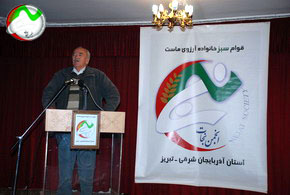
Missions of Nejat Society

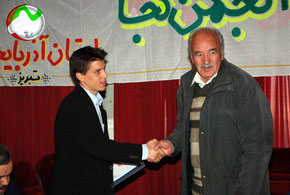
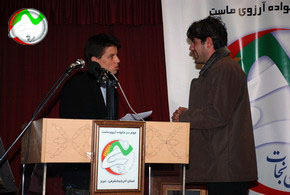
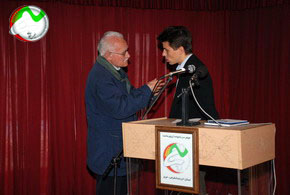
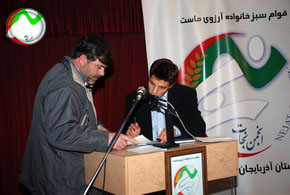
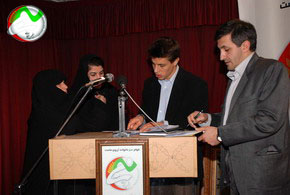
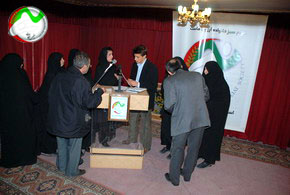
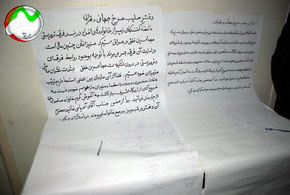
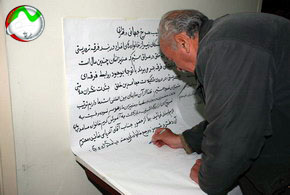
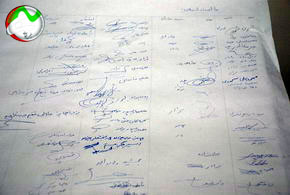
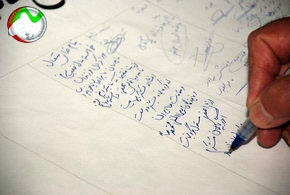
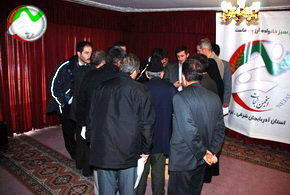
Representatives of the International RC met several families of MKO members

Representatives of the International Red Cross met several families of MKO members .Representatives of the International RC met several families of MKO members
Representatives of the International RC met several families of MKO members

February 16, 2007 0 comments
FacebookTwitterPinterestWhatsappTelegramSkypeEmail
Iraq

Adnan, Al-Alyan and Alaani Cry for MKO!

What forced me to write this were the cries of Adnan, Al-Alyan and Alaani for the MKO in Brussels.

First, this double behavior these people are following will have nothing except destruction of Iraq and Iraqis, including Shiites and Sunnis, and only helps their personal interests. As everyone knows, the MKO is an Iranian organization and besides, it has been categorized as a terrorist group. Now, what’s the mystery of relations of Adnan, Al-Alyan, Zafer and Al-Zari with this organization that they cry for it and claim of Iran’s interference in Iraq through Shiite militia? Why do they claim that Shiites are Safawis not Iraqis? Why do they cry for the elements of MKO while they’re in fact very Safawis in Iraq?

Is there anything except the fact that these remnants want to destroy Iraq with every possible means? They would do it even if they have to sell Iraq and Iraqis with the cheapest price and set fire to the public in order to revenge for their former master. These people tried to sell Iraq in their deals with Israelis, the US and some neighboring countries. Their last card could be the MKO. This would be their losing card not winning card but they consider it a boost to their sick bodies.

What’s the reason for these people, who are of Iraqi Sunnis, to cry for the MKO. This group includes people who plot for killing and beheading Iraqis.

Our government should always be vigilant about the dangers of MKO criminals, who were used by Saddam Hussein in killing our Kurd brothers during 1991 uprising. These traitors were armed to the teeth, used modern weapons, had enough experience to run the war, agents of Estekhbarat monitored their training and their weapons and their ties with the former regime was complex and strong; I’m sure that they already have cooperation with terrorist groups in Iraq. They’re being supported by the people who call themselves”the enemies of Safawis”.

This group should be dealt with cautiously. It should be noted that if their weapons were transferred to terrorists like Dulaimi and Zari, a disaster would happen to Iraq and Shiites in particular.


Nabil Al-Basari/Sautaliraq,

February 15, 2007 0 comments
FacebookTwitterPinterestWhatsappTelegramSkypeEmail
Iraqi Authorities' stance on the MEK

MKO Presence Illegal: Iraqi Interior Minister

In a meeting with his Iranian counterpart, Iraqi interior minister Javad Bulani pointed to the terrorist records of the MKO and said that it’s presence in Iraq was illegal.

According to IRNA, Javad Bulani stressed that, "The continuation of MKO’s presence in Iraq can create, besides security problems, obstacles in the way of expanding ties with the Islamic Republic."

According to him, Iraqi government seeks the expulsion of the group and doesn’t like the ties between two sides be influenced by the presence of this group in Iraq.

"In the new Iraq, there’s no place for groups that can have negative impacts on relations with neighboring countries," he said.

"The two countries should be careful in preserving the security of their borders and to achieve that the two sides have already taken good steps," he added.

In the meeting, Hassan Kazemi Qomi, Iranian ambassador to Iraq invited his Iraqi counterpart to visit his country.

According to IRNA, quoting an Iraqi security officer, the conference of "Discussing the Role of Terrorist Groups in Destabilizing Operations against Iraqis" was held last weekend in Iraq.


IRNA – 2007/02/13


February 15, 2007 0 comments
FacebookTwitterPinterestWhatsappTelegramSkypeEmail
The Ideology of the MEK

February 8, A New Phase to Encounter People

A notable date in Mojahedin Khalq’s history is 20 June 1981 which marks a turning point in developing a good understanding of the group’s ideological, political and strategic nature that build the fundamental premise of its challenge with the Islamic Republic. The importance of the chapter lies in the fact that in spite of Rajavi’s insistence to justify his decision, declaring armed struggle, as a strategic and well calculated move, Mojahedin not only suffered an overall loss of organizational competency, but also generated a temporal hurdle in Iran’s prime leap towards democracy.

It cost Mojahedin a big price to come to believe that it was actually impossible to overthrow the created Islamic system in a short-run process as the group had anticipated. Successive blows over the body of the organization both was leading it to the precipice of a complete termination and challenging the adopted strategy of establishing a phase of armed struggle. Hardly could Mojahedin give an explicit explanation of the factors evolving so challenging a decision, a fact that has remained unanswered to the time. However, now nearly three decades after the initiation of the phase, Mojahedin admit that it was not a sound decision and consider it as a barren move. Bijan Nyabati, a left member of NCRI, talking on the move as unproductive states:

The strategy of developing a national-wide armed move came to be nothing but undermining the position of a great social movement to that of a limited militia struggle with no perspective.*

It has also come to be the cause of a widespread disagreement among the insiders and the detachments of many as well as fostering dispute with other active oppositions.

The crushing blows the organization received during the early months following the armed move phase made irreparable cracks in its structure. Among all the blows struck, the 8 February blow was one of the most crushing ones. Talking on the strategic importance of the event, Bijan Nyabati says:

Martyrdom of the commander [Musa Khyabani] was the first strategic blow over the armed resistance. From that point on, the regime took an offensive posture while Mojahedin maintained a defensive shelter.

The killing of nearly 20 team-commanders of Mojahedin including Musa Khyabani and Ashraf Rabiee after Rajavi’s escape to France brought Mojahedin’s blind assassinations into a sudden halt. Regardless of the force loss, the operation teams inside Iran suffered a great trauma and lost a big portion of their operational potentialities. On the other hand, the tactic of urban guerilla warfare as the leading axis of the armed struggle move was facing a challenge:

And finally, the blow that bereaved Mojahedin, and not only them, for ever was that strategic one struck on 8 February 1982 that put an end to the accuracy of urban guerilla warfare!

Nyabaty refers to the event as a dead-end to the armed strategy that proves to have initially been a foul and which was followed by other received strikes. He explains:

The last blow struck on Mojahedin on the first August 1982 was merely military. Martyrdom of the commander Syavash Seifi characterizes the blow to be a military strike. Thus, the urban guerilla warfare that had faced a dead-end on 8 February 1982, reaches its climax.

The 8 February incident makes Mojahedin desperately withdraw its ranking commanders from Iran to plan a new tactic:

To break the dead-end, Mojahedin, for the moment stressing on the armed struggle policy, adopt a fundamentally tactical change. By withdrawing the remnants of its commanders and ranks out of the soil dominated by the enemy, the tactic of conduct from the outside is adopted.

The aim was to reorganize the commanders to retaliate the 8 February strike. There is an exception; the armed operation mainly aimed at the regime’s authorities shifts to target civil elements alleged to be the regime’s agents.

Massoud Rajavi, besides reviewing various strategic lines, insists on a widespread armed struggle with the difference that, from a tactical point, the aim shifts from the authoritative elements to the believed agents among the people. That is to say, to cut off the finger-points of the suppression in the society in a new turn of tactic. It was a hallmark in the sense of being an easy target for the operation teams.

The result of this turn of tactic was tragic and it is estimated that more than ten thousand civilians were the victims of Mojahedin’s atrocious blind terrorist operations and bombings.

Although a shattering blow, the 8 February strike opened Mojahedin’s eyes on the truth that the people, caught in Mojahedin’s propelled atmosphere of disorder and terror, not only despised them but also confronted them. Mojahedin attempted to trouble the society and inject terror to paralyze the security system of the regime so as to continue the line of assassinating the key authorities with the assistance of their infiltrated agents. But, seeing people in the front of the regime, Mojahedin shifted to target the “finger-points”, a Mojahedin idiomatic expression meaning ordinary people. Besides being easy targets, people could at least lose the trust in the regime and react in the way Mojahedin could take advantage of. These are the reasons that before approval of the ruling system’s legitimacy, advocates Mojahedin’s deprivation of a sound theoretic and political insight to develop a realistic analysis of social context.

The adopted tactic of conducting urban guerilla warfare in exile means that Mojahedin are convinced that people have to be disregarded in their campaign calculations. People were replaced by other supporting apparatus like Iraq that provided them with all forms of geographical, political, military, and financial backings. Consequently, a new transformation was evolved and a new definition of friends and enemies developed.


*All quotes are extracts from Bijan Nyabati’s “A distinct look at Mojahedin’s internal revolution”


Bahar Irani – February 13, 2007

February 15, 2007 0 comments
FacebookTwitterPinterestWhatsappTelegramSkypeEmail
Mujahedin Khalq Organization's Propaganda System

So Discredited A Ruling

"When the European court issued a ruling on this case, the MKO was on the terrorist list of the EU and the court, of course, complained that enough reasons for designating the group. However, the legal obstacles are being resolved now in order to keep this group on the list," French Foreign Ministry spokesman Jean-Baptiste Mattei said on the issue of lifting restrictions of MKO properties.

He added that, "We agree that the group should remain on the list. There was a legal problem which is being dealt with and the group will remain on the terrorist list".

Following these comments on the terrorist gang of Rajavi, the remnants of the cult issued a statement and said:

1. This position ignores the ruling of the court in whole and mocks the ruling of law, which is the backbone of democracy.

2. Illegal insistence on keeping the MKO on terror list is a gift to the mullahs’ regime that’s trying to disrupt the process of the court. This is another aspect of the policy of compromising with mullahs, which will advance to the point where religious fascists get to one or two nuclear bombs.

3. The stance of French Foreign Ministry indicates that it has decided, in contradiction with the decision of the court, to put the MKO on the list of terrorist organization without giving a chance of fair hearing to the MKO.*

In the 1st article of this statement, Mojahedin-e Khalq, admitting how discredited the ruling of First Instance Court is, tries to resort to the ruling as a strong and credible one while it has been proved that the ruling has neither led to the MKO’s exit from terror list nor to the lifting of bans on its properties.

In the 2nd article that is inspired by the deceiving policies of Rajavi, the MKO tries to link itself to the issue of Iran and its nuclear program and convince the public opinion that the West has no way except choosing between the MKO and Iran.

Given this, it should be said that Western politicians are familiar with MKO’s tactics and won’t allow them to use opportunities.

This, of course, doesn’t mean that the MKO won’t be used as a means against Iran but it indicates that there’s a good understanding of MKO’s position in Iran’s political scene. As the Western officials have repeatedly declared, there’s no need for this group to be taken off the terror list….

More importantly and regarding what has been said in the 3rd article, Mojahedin who have been in European countries for 25 years and claim of having ties with senior officials, journalists, Parliamentarians and …are now asking for a fair hearing!

This only means that all claims by the criminal gang of Rajavi have been invalid and discredited so that after 25 years they are seeking fair hearing.


Irandidban –  2007/02/13

February 15, 2007 0 comments
FacebookTwitterPinterestWhatsappTelegramSkypeEmail
USA

How Not to Handle the Facts

How Not to Handle the Facts: Max Boot’s Pretzel Logic on Iran

Editor’s note: Los Angeles Times columnist Max Boot argued in an Oct. 25 column, “How to Handle Iran,” that America should aim to topple the Iranian government with cash infusions to guerrilla groups and, perhaps, with American military force. Boot is considered by many to be the “respectable” face of neo-conservatism. A senior fellow for national security studies at the Council on Foreign Relations and former editorial editor for The Wall Street Journal, he nimbly straddles the mainstream and neocon universes.

There are so many things wrong with Max Boot’s Los Angeles Times column, “How to Handle Iran,” one hardly knows where to begin.

But these “soft” measures aren’t the real deal anyway as far as Boot is concerned, as his column eventually makes clear. Washington needs to consider the option, he writes, “of going beyond peaceful measures to foment change.” Though ruling out an outright invasion, he advocates doing “to Iran what the Iranians are doing to us in Iraq,” that is, “funneling weapons and money to militias that are killing our soldiers.” Among the militias to which he advocates funneling weapons and money is the Mujahedin Khalq (MEK), an outfit Boot himself calls a “leftist political cult.” “Leftist” is euphemistic: The MEK is in fact a Stalinist political cult.

Boot mentions that the MEK “mounted attacks on Iran in the 1980s and 1990s from bases in Iraq,” but conveniently fails to mention that it was funded, supported and given cover throughout that period by Saddam Hussein himself. He also fails to mention that this group is on the State Department’s official list of terrorist organizations. (Several of Boot’s fellow neoconservatives have been campaigning for the MEK to be removed from that list, thus far unsuccessfully.)

It appears not to have occurred to Boot, or to the Mujahedin Khalq’s other conservative supporters, to find out what Iran’s human rights activists and democratic dissidents think of this “cult.” Not surprisingly, the MEK is held in near-universal disdain by those dissidents, precisely because it is a cult, a terrorist body and Stalinist in ideology—that is, undemocratic to the core. Either this contradiction hasn’t occurred to Boot or, worse, it simply doesn’t matter to him.

Likewise with what Boot calls “the only serious option left” when all is said and done: airstrikes on Iran’s nuclear facilities. What does Boot make of the fact that, without exception, every human rights activist and democratic dissident in Iran is categorically opposed to U.S. airstrikes on their country? Does this “inconvenient” fact simply not factor into Boot’s equation, or is it something that must be pushed aside in his calculus?

Whichever the case, Boot can’t have it both ways. Either he fancies himself a supporter of Iran’s democratic dissidents, in which case he has to confront the gaping discrepancies between his positions and theirs (on military strikes, on the MEK, on U.S. funding and on other issues), or he should drop the pretense of representing the views of Iran’s dissidents and frame his position in more honest terms.

As it turns out, Iran’s democratic dissidents have already solved this question for us, by making it clear that they want nothing to do with Boot’s neoconservative agenda. Boot and his fellow travelers would be well served to think through the implications of that fact.


Oct 31, 2006 – Truthdig -By Danny Postel and Nader Hashemi


[Danny Postel is senior editor of openDemocracy (http://www.opendemocracy.net/home/index.jsp) and the author of the forthcoming “Reading ‘Legitimation Crisis’ in Tehran: Iran and the Future of Liberalism” (Prickly Paradigm Press, December). Nader Hashemi is an Andrew W. Mellon postdoctoral fellow in the department of political science at Northwestern University and the author of a forthcoming book on Iran and democracy.]

February 14, 2007 0 comments
FacebookTwitterPinterestWhatsappTelegramSkypeEmail
The Ideology of the MEK

An Autopsy of the Ideological Media in Mojahedin Cult (2)

A remarkable complementary task in applying the news as working propaganda instruments is employment of the sponsored or paid newspapers, especially those circulated in Iraq. At the present, a number of Iraqi newspapers are directly and indirectly supported by MKO. The papers publish selected or exclusive news reports which in turn serve as sources of reference for MKO propaganda machine. That is to say, a single piece of news is repeated again and again with the difference that each time it is quoted from a different paper with a deliberate display of the front page. As an evidence of MKO’s trick of reporting news more than once but from different angles, Rassul Mohammadnejad, an ex-member, stated:

I remember the years when I was with Mojahedin in Iraq. One of the issues of my falling-out was why we announced a single move as many and even as hundreds. For instance, we launched a small operation ourselves but we saw that the media coverage of the same operation demonstrated as if many teams at different time ad places had carried out many operations. We knew well that they developed many phases of a single operation as fully accomplished operations to pose as a potential force capable of planning many operations every day.*

This news making method is actually applied in all other programs such as interviews, meetings, and so. We see that a matter and event of significance becomes the subject matter of many programs for the extent of many days and each time presented as if a fresh subject.

At times, the airing of the news projects the group’s strategy. In none of the aired reports concerning the US – Iran dispute over the nuclear file you may end up with a peaceful conclusion. The audiences regularly encounter an escalated tension on the horizon. No promising diplomatic and peaceful solution to the file is ever anticipated and the attempts are made to fan the existing dispute to reach a stalemate where the sole outlet would a military option.

In the case of Saddam’s execution, the reports are prepared so crafty that you come to believe that no body consents his hanging and that the executioners have to be prosecuted. Saddam’s being exonerated of all charges might depict a positive effect on the minds that the group’s past collaboration wit the dictator revolved on an axis of goodwill. Thus, when a dictator can be made into a hero, the terrorists can also be taken as pro-democrats.

Mojahedin are fond of being mentioned in the media for whatever cause, even if they are referred to as mercenaries and spies. Although revelation of Iran’s nuclear programs might be considered as an act of espionage rather than a political campaign, they recurrently and in any occasion advert to be the first to have disclosed the veiled activities.

Of course, many aired and published reports of events from inside Iran are merely distorted and exaggerated news and reports. A commonplace gathering of people before state-run or NGO offices is publicized as a big demonstration of dissidents and advocates of Mojahedin in Iran. The national and traditional events and celebrations, especially when the youths swarm into the streets, are reported as rebellions against the regime. Even in the case of quoting Iranian authorities, parts of speeches and comments are left out and are paraphrased so new subjects are formed to maneuver on.


To learn for yourself, have a look over Mojahedin’s TV programs and publications.


Omid Pouya – February 7, 2007

February 13, 2007 0 comments
FacebookTwitterPinterestWhatsappTelegramSkypeEmail
Newer Posts
Older Posts

Recent Posts

  • Tactical Links Between the MEK and Separatist Groups in Iran

    October 26, 2026
  • Echoes in an Empty Room: MEK Propaganda, Western Media Silence, and the Cuneo Case

    October 24, 2026
  • Various Aspects of Massoud Rajavi’s Disappearance

    October 20, 2026
  • MEK agents near schools in Tirana, Albania

    October 17, 2026
  • Expectations of human rights bodies regarding censorship within the MEK

    October 13, 2026
  • Facebook
  • Twitter
  • Instagram
  • Youtube

© 2003 - 2025 NEJAT Society . All Rights Reserved. NejatNGO.org


Back To Top
Nejat Society
  • Home
  • Articles
  • Media
    • Cartoons
    • NewsPics
    • Photo Gallery
    • Videos
  • Publications
    • Books
    • Nejat NewsLetter
    • Pars Brief
  • About Us
  • Contact us
  • Editions
    • عربي
    • فارسی
    • Shqip