Nejat Society
  • Home
  • Articles
  • Media
    • Cartoons
    • NewsPics
    • Photo Gallery
    • Videos
  • Publications
    • Books
    • Nejat NewsLetter
    • Pars Brief
  • About Us
  • Contact us
  • Editions
    • عربي
    • فارسی
    • Shqip
Nejat Society
Nejat Society
  • Home
  • Articles
  • Media
    • Cartoons
    • NewsPics
    • Photo Gallery
    • Videos
  • Publications
    • Books
    • Nejat NewsLetter
    • Pars Brief
  • About Us
  • Contact us
  • Editions
    • عربي
    • فارسی
    • Shqip
© 2003 - 2024 NEJAT Society. nejatngo.org
Camp Ashraf
Former members of the MEK

Goli’s Prison Break, an account of escaping Camp Ashraf

“We were lucky that we could manage to escape Camp Ashraf,” Mohammad Reza Goli writes. “If we had been arrested while escaping the camp, we would have been at risk of any kind of punishment by the group commanders.”

Goli, was a member of the Mujahedin Khalq Organization (MKO/ MEK/ PMOI/ Cult of Rajavi) for 23 years. In the spring of 2011, after he lost 36 of his comrades in the operation against Iraqi forces, he decided to leave the group. (On April 6th, Massoud Rajavi ordered his unarmed forces to attack the Iraqi armed forces who were supposed to enter Camp Ashraf to build a station. Members of the Cult of Rajavi had been coerced to stand as a human shield against Iraqi military vehicles. The clashes left the MEK’s rank and file with 36 people dead and hundreds injured.)

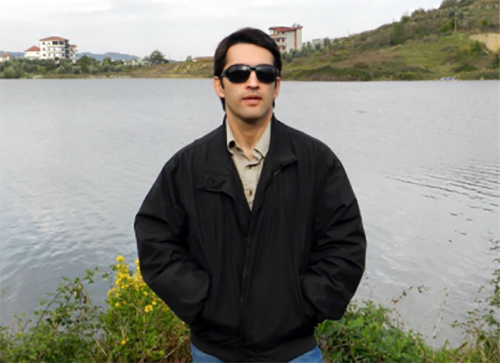
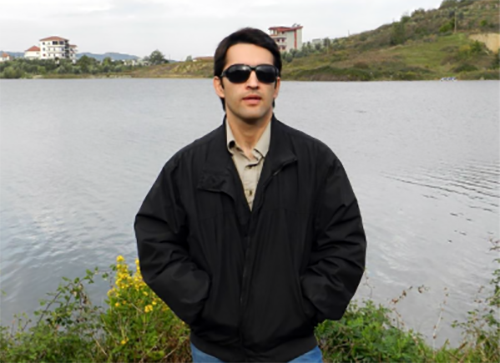
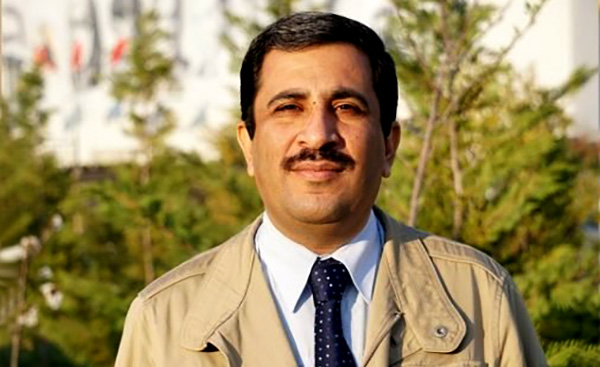
Mohamamd Reza Goli

Mohamamd Reza Goli

“After the April 6th clashes, I got determined to leave the Cult of Rajavi”, Goli writes in his memoirs on his escape from the cult. It was not easy to break through the tall, highly guarded fences of Camp Ashraf. Together with a comrade, he started planning the escape but, in the cult-like atmosphere of the group it was not easy to talk to each other about the simplest issues either.

“We had to secretly discuss our plan in the way to go to the eating place or while eating meals there,” he states. “This way, we planned how to escape and we divided the tasks.”
They needed a ladder, to climb the fences around Camp Ashraf but it was not enough. The fences included three rows of circled barbed wires of which the width was about 1.5 meters. Thus, they needed a tool to put on top of the fences to move through it.

“We made it from wood and we found a ladder. We put them near the fences,” Goli explains how they prepared the equipment they needed for their prison break.

They chose Thursday night for their flee because that was the only time in the week that members were a little free to do sports or have gatherings in the eating place. The were under less control. Other times of the week they had to do the tasks they are ordered to and they had to attend self-confession and self-criticism meetings.
“On Thursday night I went to the eating place but I could not eat dinner,” he says. “I was not stressed out or scared but I felt guilty. I felt like a traitor to my 23 years background of struggle. However, the atmosphere of the group was so poisonous and negative that I was not able to stay.”

It was about nine o’clock when Goli and his friend went out from the door behind their unit to take the ladder and move it to the wall of the unit. They succeeded to cross the wall and now it was time to go to the Southern fence of Camp Ashraf.

The Southern side of the camp was guarded by three people. That night, Goli himself was supposed to take the post at ten o’clock. They waited in ambush for the other guard to leave. “We crawled to the fences carrying our pack backs, the ladder and the wooden board,” he writes. “We climbed up the ladder and threw our back backs on the other side of the fence and then we jumped down the fence.”

Goli and his friend could manage to escape the bars of the Cult of Rajavi. They had to submit themselves to Iraqi forces who were in charge of guarding camp Ashraf. “I told the Iraqi soldier that we had escaped Ashraf.” Goli writes. “He called his commanders to inform them that two people had left the camp.”
“While Waiting for Iraqi officers we were watching our ex-comrades on the other side of the fences inside Camp Ashraf,” Goli continues. “The guard noticed the ladder on the fence. He rushed to call the commanders. Fifteen people of forces of our unit came to the scene. Commanders came in their Land Cruisers. They were frightened. They looked confused. They were looking all around.”

The funny part of the story is that Goli and his friend wave to them to let them know that they had left the group in order that they stop looking for them but they kept on searching. “The idiots were so freaked out that they could not stop searching. They thought that they would find other escapees among the bush.”
Leaving the Cult of Rajavi is unforgivable. “They had no arms,” Goli says. “If they had had arms, they would have shot us undoubtedly.”

Eventually, Goli got back to his family in his home town, north of Iran. Today, he writes his account of years of living under the modern slavery of the personality cult of Massoud and Maryam Rajavi, in Persian.

May 14, 2022 0 comments
FacebookTwitterPinterestWhatsappTelegramSkypeEmail
Massoud Rajavi
The cult of Rajavi

The Pandora Box of the Mujahedin Khalq sex cult

“There has never been such a sovereign in the whole history of human beings”, former member of the Mujahedin khalq organization and a long-standing critic of the group, Iraj Mesdaghi says. “Massoud Rajavi is a unique example among dictators who practiced polygamy. There have been kings, emperors and cult leaders who had many wives, who used to take the wives of their rank and file but Rajavi is an exception because he has forbidden marriage for other men under his rule. Sex is forbidden for all male members of the MEK.”

After the so-called ideological revolution in the MEK, Members of the group were forced to divorce their spouses under the order of Massoud Rajavi; celibacy became mandatory in the group. “All emotions had to be led to Massoud Rajavi.”

Iraj Mesdaghi

Iraj Mesdaghi

Mesdaghi who has been labeled as the agent of the Iranian government by the MEK propaganda, has numerous documents and testimonies of former members of the MEK to prove that Massoud Rajavi raped female members of his so-called Elite Council under a systematic process. In an interview with Sahar Tahvili, he reveals secrets of Rajavi’s mass marriage with the group’s female rank and file.

Maryam was in love with Massoud when she was married to Abrishamchi and was the mother to his daughter with him.

The first victim of such a horrifying system is Massoud Rajavi’s third wife, Maryam Qajar Azdanlou who turned to be Maryam Rajavi after their so-called “ideological marriage” in Paris, in 1985. The marriage was hailed by the organization as the beginning of a permanent “ideological revolution”.
“Rajavi is proud to say that Maryam was in love with him while she was still married to Mehdi Abrishamchi,” Mesdaghi discloses. “So, as the office manager of Massoud Rajavi, Maryam was near his love, doing his personal affairs around the office.”

Masud and Maryam Rajavi

Masoud Rajavi launched what he called an”ideological revolution”in 1985. He married the wife of a confidant and forced all others to get divorced

Their marriage was the eventual consequence of those days but Massoud tried to garnish it with an ideological sauce. “Massoud claimed that Maryam has gone a long way to reach him and all women of the group should follow her in her path to reach him”. Mesdaghi cites form Rajavi, “I belong to all of them.”.
Maryam should not be an obstacle between Massoud and other female members, instead she should be a catalyzer for their unification. “The first woman who is led by Maryam to sleep with Massoud Rajavi is Fahimeh Arvani,” Mesdaghi highlights. “Compared with other women of the Elite Council, Arvani did not enjoy a higher ideological or political status but she only looked more beautiful. So, she opened her way to Massoud’s Harem.”

Sex with Rajavi is vital for your growth

Rajavi had to justify his abnormal relationships with women with kind of argument. “This is vital for your growth and progress in the group” Mesdaghi quotes Rajavi. “Maryam is scarifying herself for you.”
Mesdaghi speaks of a series of steps that coerces women to obey Massoud Rajavi’s bizarre orders. He emphasizes on the fact that members of the Cult of Rajavi are kept in complete ignorance, isolation and deprived from all rights even sexual life. “They are like zombies,” he says. “They are under constant manipulation techniques. Before going to private meetings, they have to write love letters to Massoud Rajavi expressing their love for him. If they disobey, they go under severe peer pressure. They are verbally abused with the most horrific words.”

Then the women get ready to go to a session called “Salvation Dance” which is actually a party of nude dancing in front of Massoud Rajavi which leads to group sex with him. “Rajavi called nude dancing as a spiritual ceremony,” Mesdaghi says.
During the ceremony, Maryam and several high-ranking women persuaded other women to remove their clothes and dance before the eyes of Massoud. “They asked them to take of the clothes of evil,” Mesdaghi says. “They try to give an ideological aspect to the ceremony. As moments pass, the participants go to a kind of ecstasy.”

Rajavi reads verses of Quran before sex

According to Mesdaghi’s evidences, Massoud Rajavi uses religious concepts as a tool to run his cult of polygamy. “Before going to bed with the selected woman of the night he says prayer, then he reads a few verses of Quran,” he states.

Asked about those women who did not agree to sleep with Rajavi, Mesdaghi speaks of Minoo Fathali and Mehri Mousavi who were killed mysteriously in the group because they wanted to leave the cult.
Mesdaghi declares that he has enough documents to condemn leaders of the Cult of Rajavi for sexual abuse of female members of their group. He correctly points out the silence of the MEK’s propaganda about the revelations on sex abuse in its group. “Rajavi knows that what he committed against his female members is considered a criminal act according to the international laws,” Mesdaghi says.

By Mazda Parsi

May 11, 2022 0 comments
FacebookTwitterPinterestWhatsappTelegramSkypeEmail
Radio Free Europe on MEK Camp ashraf3
The cult of Rajavi

Cults use ideology as a cover for controlling members

Cults look fairly attractive from the outside since their colorful attractions prevent you from understanding the nature of the “cult”. But when we delve too deeply into them, we will discover the unseen aspects that the cults do not want to be known. Cult leaders seek deceptive recruitment techniques and seek to take control all aspects of members’ lives. Cults utilize sophisticated brainwashing and recruitment techniques, which have become highly advanced after the spread of social networks.

Most people who are attracted to cults are almost unaware of the nature of the group they are trying to join or think that they can be safe from the cults’ strict and conventional controls. However, it has been proved to be a failed experience, to the extent that most cult members do not even discern that they are involved in cultish relations. They do not understand their position and the internal relations of cults are designed in such a way that it is impossible to escape.

To remove the attractive shell of cults, it is necessary to know how they operate and what techniques they use. In most cults, “ideology” is used as a cover for control techniques. One of the cults known to the Iranian people is the Mujahedin-e Khalq Organization, which presents itself as a political opposition group but is in fact a terrorist group that acts as a cult in organizing and recruiting individuals. The terrorist cult uses Islam as a cover and Shiism as a tool to maintain its framework and structure as its origin is a Muslim country (Iran) and most of its members were formerly Shiites.

Mandatory organizational clothes for controlling members

One of the principles of Islam and Shiism is the hijab and head covering of women, but the MEK uses this tactic as a means of controlling individuals.

In a free society, people can believe in whatever they want, say whatever they think, and wear whatever clothes and color they want, but this is not the case in cults. The women at the headquarters of this group must wear uniforms with a specific color and even the fabric had been specified by the leaders of the group. Outside this framework, they were out of choice.

MEK women

“Women who entered the cult were told very openly: The headscarf is the official (i.e., mandatory) form of this organization,” said Zahra Sadat Mirbagheri; a dissident member of the MEK.

Majid Mohammadi, a current member of the MEK says, “The red color of the headscarf in the MEK’s uniform is borrowed from Marxism. The green uniform also belonged to the Castro and Che Guevara wars in Cuba. The hijab of MEK women, although a part of Shari’a, is merely a declaration of allegiance to the religion of the masses.”

“In this cult, hijab is limited to headscarf, women are not allowed to use other types of clothing such as shawls or hats, etc. Khaki was allowed only in certain places, and if someone wanted to wear a red or khaki scarf outside the MEK propaganda gatherings, he would be given a reprimand,” Zahra Sadat Mirbagheri said.

According to the memoirs of MEK defectors in the 1960s, a number of girls and boys lived and worked side by side in the group’s “team houses”. Sexual relations in these buildings indicate a lack of practical and systematic belief in Islamic principles in the group. However, in public, members have never been allowed to remove the hijab or have never had the right to choose its color.

In the following years, after the relocation of MEK members to Europe (France; Auvers-Sur-Oise), then Iraq (Camp Ashraf and Camp Liberty and other camps), and finally Albania (Camp Manez) and the establishment of organizational camps to maintain and deepen relationships, none of the female members of the group, even in all women’s environments, dormitories, and restaurants, are allowed to remove their hijab. While there have been several cases of Massoud Rajavi’s non-compliance with the basic principles as hijab and other moral issues, such as raping female members of the leadership council. This has been narrated many times in various forms by MEK defectors.

Creating guilt and mind control by character assassination

Leaders of the terrorist cult hold daily, weekly, and occasional ideological cleansing sessions to strictly control the individuals’ feelings and emotions and their performance. This was designed also to continuously evaluate members and take away the slightest time for thinking and provide the ground for their absolute obedience by destroying their human dignity and personality and creating a personality vacuum.

MEK Cult current operation - one of the groups self criticism sessions

the MEK members in an confession session

“In Rajavi’s organization, women have no right to remove headscarves. If women expose their hair a little, they would receive warnings at first, and then they would receive insulting labels,” Zahra Sadat Mirbagheri said.

Self-immolation of members

One of the most blatant examples of the group’s cultish behavior is several self-immolations by its deceived members in European countries in protest of Maryam Rajavi the group leader’s arrest, in 2003. Several people were killed and wounded, and the European media has long analyzed the cultish behavior.

self immolation

All that has been said, along with other cultish tactics, such as forced and organizational marriages, coerced sterilizations, bans on love and marriage, bans on family relationships, fear, and intimidation, mind and information control, planning for round-the-clock work, and holding glorious gatherings has turned the organization into a cult with a terrorist function that is far more dangerous than a normal terrorist group.

by Mohammad Mahdi Mirzaei – Quds Online – Translated by Habilian Association

May 10, 2022 0 comments
FacebookTwitterPinterestWhatsappTelegramSkypeEmail
Torture in the MEK Cult
Former members of the MEK

I come from the land of pain and suffering – Part four

I was physically and psychologically tortured by Ebrahim Zakeri and others for at least seven to eight hours. I was subjected to the most terrifying and violent torture. A number of them began hitting me on the shin with their arm boots. They would tie my hands behind my back, pick me up and slap me around. Sometimes they would put their mouth next to my ears and would scream loudly. It was tortured and nerve-racking.
They feared that I had somehow been able to telephone my family and BBC radio. Therefore, they were trying to break me down and force me to sign the letter, so in case the news of my imprisonment were to be broadcast, they would be able to manufacture a document explaining their actions.

Prior to my treatment at the hands of these people, I had spent the night before wondering in the streets of Baghdad and had not slept for 48 hours. This fact intensified the awful effects of the torture.
I was subsequently blindfolded and handcuffed again and transferred to another solitary confinement cell where I remained until Dec 1999-Jan 2000 [Dey 1379]. They sold me (blindfolded and handcuffed again) to Iraqi intelligence and Security Organization (Mukhaberat) on 16 January of the same year [26 Dey ]] (later I discovered that three other long-time members of the organization had separately received the same kind of treatment as I. I, however, would not reveal their identities for safety reasons, but, I am prepared to give their names to Amnesty International, UN High Commissions on Human Rights and legal agencies).

Mohammd Hussein Sobhani

Mohammd Hussein Sobhani

Other members of the organization and I spent 35 days in Iraqi torture chambers and at Intelligence and security Organization’s (Mukhaberat) central jail. As long as I was at Rajavi’s jail, I was kept in solitary confinement which placed great deal of emotional and psychological pressure on me.
However, the overcrowded jails at Iraqi Intelligence and Security Organization were unbearable. They put 12 prisoners in a cell three meters by three meters. The prisoners had to sleep on top of each other. Toilet and sink filled one third of the room. The walls of the cell were the colors of blood. The half-dark cell was lit only by a dim moonlight. This was in stark contrast to Rajavi’s solitary confinement jail, where for four years I had to sleep with the light on every night. And anytime I was awaken by onslaught of mosquitoes, suffocating heat or unbearable psychological pressure, I was not able to go back to sleep. The bright lamps would worsen the throbbing headache that I had to frequently endure.

After two or three weeks,Abu-Seyf came to visit me at Ashraf Base. I protested my imprisonment and demanded to be turned over to UN so I could join my daughter in Denmark. In the past, he, on many occasions because of my post in the HE, had seen me with Mr. Rajavi and Mrs Rajavi Qajar Azdanlou. Abu-Seyf tried to console me. He tried to portray Iraq as an innocent party to all that had aspired by differentiating between MKO and Iraqi policies. He placed the blame for my years in Rajavi’s solitary confinement on MKO. he expressed his sorrow at my years of imprisonment and torture and my inability to see my daughter promising to transfer me to a new location where UN officials in Baghdad would visit me. He said that I would be able to ask the UN officials to transfer me to Denmark where I could join my daughter.
I, along with another three long-time members of the organization were transferred to Abu-Ghuraib prison on 20 February 2001, date as received.[Esfand 137]. To my amazement I found out that 30 or 40 former members of the organization who had been sold to Iraqi government were housed at that prison. This number, however reached 80 by the winter of 2002 [1380].

To be continued

May 8, 2022 0 comments
FacebookTwitterPinterestWhatsappTelegramSkypeEmail
Massoud and Maryam Rajavi
The cult of Rajavi

May Day, a standard to bring the MEK leaders to trial

Under the impression that she was joining a movement to free the Iranian people, Zahra Mirbagheri found herself in the deserts of Iraq, running carrying heavy pack bags full of rocks. “Viva Rajavi”, she heard herself chanting in the headquarters of the Mujahedin Khalq Organization.
Motivated by the inspirations made by her older brother and sister, Zahra left her parents behind in Tehran and joined the MEK in Camp Ashraf, Iraq, where she actually became the victim of the destructive Cult of Rajavi.

Zahra Mirbagheri


Zahra Mirbagheri showing the pendant that Rajavi gave to the women of the organization telling them that they were all connected to him and to no other man

Forced labor was one of the practices of the cult.

The American National Defense Research Institute, RAND reported on the MEK in 2009: “Rajavi instituted what he termed an ‘ideological revolution’ in 1985, which, over time, imbued the MeK with many of the typical characteristics of a cult, such as authoritarian control, confiscation of assets, sexual control (including mandatory divorce and celibacy), emotional isolation, forced labor, sleep deprivation, physical abuse, and limited exit options.”

On the occasion of the International Workers’ Day, it is worth to investigate the MEK’s approach to the working class. The rank and file of the group is actually the working class of a few thousand-populated community that Maryam Rajavi and her disappeared husband rule in Camp Ashraf 3 in Albania and previously ruled in Camp Ashraf and Camp Liberty in Iraq.

MEK women

While the MEK’s propaganda website states, “Iran’s workers are living in utter potter and struggling to afford even the most basic daily needs for themselves and their families”, members of the MEK do not enjoy the least opportunities Iranian workers enjoy. The rank and file of the MEK have been never paid for the long years they served the group. They own no personal property, not even a cellphone which every Iranian worker at least has one.

May Day commemorates the historic struggles and gains made by workers and the labor movement. It is observed and celebrated in many countries including Iran where workers still struggle for their rights but being supported by Massoud Rajavi seems ridiculous. The disappeared leader of the MEK stated in his recent message, “Help the farmers who have suffered from deprivation and exploitation for years.”!

MEK members in Albania

MEK members – Camp Ashraf 3

This is while families of members of the MEK have been struggling to help the release of their loved ones who are barred in the Cult of Rajavi. Zahra Mirbagheri, former member of the MEK whose neck and backbone was hurt in the suppressive system of the cult has been endeavoring to save her brother and sisters who are still taken as hostages in the Cult of Rajavi.

MEK members in Albania

MEK members in Albania

Before her escape from the MEK, Zahra was serving in Maryam Rajavi’s military unit. “I felt the violence in my bones and flesh,” she says. “We had to attend heavy military maneuvers. We had to drive nonhydraulic military vehicles, carry heavy bags of rocks on our shoulders, running 700 meters…Most women were injured in back, neck and backbone. I am one of the victims of such practices.” Zahra cannot move her neck easily, without pain.
Forced labor continued after the MEK was disarmed by the US army in 2003. At the time, the American journalist, Elizabeth Rubin of the New York Times magazine visited Camp Ashraf and described the camp as “a fictional world of female worker bees”.

Today, after two decades, the metaphor still works for the MEK’s rank and file. Just a few days ago, the group’s propaganda published the news of building a huge mosque in Camp Ashraf 3. Boasting of the hard work by its hostages, the website said, “In less than a year, fighters’ glorious, miniature-like, labyrinth-like and parallel group work founded a city.”

Camp Ashraf 3 - Albania

Yes, they are right. The MEK’s newly established city in north of Tirana (Camp Ashraf 3), with its many buildings was built in less than a year by the hands of two thousand male and female members who have nothing to do except obeying the orders of their commanders. They are not paid for such long hours of hard work and they are not retired even if they are old, sick or paralyzed. They have no days off even if it is the International Worker’s Day.

By Mazda Parsi

May 7, 2022 0 comments
FacebookTwitterPinterestWhatsappTelegramSkypeEmail
Issa Akbarzadeh
Mujahedin Khalq Organization members' families

Letter of Issa Akbarzadeh’s brother to Albanian Prime Minister

To his excellency, the Albanian Prime Minister

Dear Mr. Edi Rama
I am Mohammad Akbarzadeh, the brother of Issa Akbarzadeh. Issa was working in Turkey in 2001 when the recruiters of the Mujahedin Khalq Organization (MKO/ MEK/ PMOI/ Cult of Rajavi) kidnapped him and transferred him to their headquarters, Camp Ashraf in Iraq under fake promises of job and residence in Europe.
My brother has been taken as a hostage in the MEK’s camp in Albania and unfortunately, due to the cult-like regulations of the group, he is deprived form all types of communication with his family.
My family and I have had no news of my brother for years. We are really concerned about him. There are also other families who have no possibility to contact their loved ones in Albania and they are seriously worried.

Issa Akbarzadeh

Issa Akbarzadeh

I am pleased to send you some photos and let you be the judge. The first one is a photo of my brother taken for his passport when he was 24 years old. The second one, wearing military uniform shows my brother two years later at Camp Ashraf. It was taken in 2003. At the time, the MEK allowed families to have a short visit with their children in Camp Ashraf under the sever control of several of its commanders. Rajavi imagined that members could influence their families to join the group but it turned out in an opposite way and therefore, any contact with family became forbidden. The last photo relates eight years later, my brother’s departure from Camp Ashraf, taken by an Iraqi soldier.

His excellency,
Why is that a 35-year-old young man look so old, with fake teeth and whatever you see in the photo? Isn’t it because of forced labor and mental torture?
We intend to travel to your country in order to visit my brother but the government of Albania does not issue visa for Iranian families. This is what the terrorist Cult of Rajavi wants. They fear the presence of families in Albania because families can influence members and inform them about the outside world.
The destructive cult of Rajavi is anti-family. It considers family as its main enemy so it always makes efforts to cause separation between members of the cult and their families.
I really appreciate your approval regarding visa issuance for us in order to our traveling to Albania to visit our loved ones.

Yours Sincerely,
Mohammad Akbarzadeh
Qazvin, Iran

May 5, 2022 0 comments
FacebookTwitterPinterestWhatsappTelegramSkypeEmail
Nejat Society Newsletter no.93
Nejat Publications

Nejat Newsletter No. 93

Inside this issue:

– Journalist award “The staying power” for research on the MEK
The award goes to Luisa Hommerich April 30, 2022Nejat Society Newsletter no.93
Berlin (dpa) – The journalist Luisa Hommerich has been honored with a prize for her research into the
influence of the Iranian opposition group People’s Mujahideen in Germany.

– Tahereh Golrizan letter to her brother Abbas, in the MEK Camp in Albania
Tahereh Golrizan wrote a letter to his brother Abbas; captive at the MEK camp in Albania on the eve of the Persian new year. Some parts of the letter reads…

– My father is a prisoner of the MEK Cult
Leila was only two years old when her father left Iran. ”My father and I have never heard each other’s
voice”, she says. Leila has no memory of her father. Leila’s father; Rahim Kiukan who as a supporter of the MEK was brainwashed by the instincts of the MEK..

– The worst experience of being an MEK member
“When we were in Ashraf, one day I was on guard post in one of the sides, I noticed my mother and brother who had come to visit me, behind the barbed wires. They were not allowed to enter Ashraf.

– MEK; Virus of Corruption, Terrorism in Albania
It has been more than five and a half years since the terrorist Mujahedin-e Khalq Organization has relocated to Albania, a small country in southeastern Eu..

– Albania – Citizenship for special merits
If u are a foreign citizen, are actually living in Albania and have a special contribute, you are a great candidate to win the Albanian citizenship. The news was made public on Wednesday by the Interior Minister, Bledi Cuci, who also unveiled that during the meeting of the Government was decided that this will be a good action to attract new talents.

– Khalil Ansarian honors his release from the MEK cult
The MEK former member: after 30 years of captivity, now I am a free man Khalil Ansarian, the MEK former member published a photo on his facebook page honoring the anniversary of his defection..

– Marzieh Babakhani set herself on fire to protest the arrest of Maryam Rajavi
“I do not regret what I did on June 17th 2003”, Marzieh Babakhani said in a conference held by the
Mujahedin Khalq (MKO/ MEK/ PMOI/Cult of Rajvai) in Paris in 2014. This was not…

– Alireza Taherloo; burned alive under the order of Massoud Rajavi
On April 8th, 2011, Massoud Rajavi ordered his members to scarify themselves to stop Iraqi
forces from entering Camp Ashraf. Thirty-six members of the MEK were killed and hundreds were injured in the clashes between the MEK’s rank and file and Iraqi army. Iraqi police were supposed to return the lands in north of Camp Ashraf to their original owners, Iraqi farmers of the region.

– 33 years of the MEK crimes
Due to their intense anti-American approach,MEK killed many US officials, including three officers who had been military advisors under the Shah and three civilian contractors working in Iran. They also kidnapped the US Ambassador to Iran. They were the main elements for occupying the US embassy in Tehran, and when the embassy staff were released they called it a ”surrender”.

To view the pdf file click here

May 5, 2022 0 comments
FacebookTwitterPinterestWhatsappTelegramSkypeEmail
MEK Cult current operation - one of the groups self criticism sessions
Former members of the MEK

The MEK Ex-member: We were remote controlled, like robots

Ali Qashqaei spent five years (1995-1998) in the organization’s camps in Iraq:
“I was in a difficult financial situation. I thought the organization could help me to get out of it. I was alsoThe peoples Mujahidin of Iran: A Struggle for what attracted by the leaders’ message. They claimed they were working to give freedom back to the people and to create democracy and social justice. I left Iran for Istanbul (Turkey) and from there, entered Iraq where movement officials welcomed me. I received military training to use a number of weapons, but I was never involved in operations against the Iranian army. I only took part in reconnaissance missions inside Iran”.

“From the time I arrived in Iraq, the atmosphere of suspicion in the camps shocked me. Our leaders asked us for total devotion, heart and soul, to the organization. They remote controlled us, like robots. They told us, “if you have sexual fantasies, even a dream, you must report it in writing in order to exorcise it”. In a speech repeatedly broadcast in video, Maryam Rajavi told the Mojahedin: “80% of your energy should be used in the fight against your sexual instincts”. Many of the organization’s officers, who protested against this sudden authoritarian and sectarian change of course, paid a heavy price for their insubordination. They were humiliated, tortured and imprisoned.one, named Hassan Rashedi who now lives in Iran, went insane, because of this. I knew him in prison, along with Beijan, from Kermanshah. Houshang, from Eilam, Ali Reza, from Tehran and Mahdi Eftekhari, who before his demotion, had been in charge of organizing Rajavi’s travel”.

Ali Qashqaei spent four years in prison, two months in the movement’s jail in the Ashraf Camp and the rest in the foreigner’s wing of an Iraqi penitentiary. He particularly wanted to share this eyewitness account: “in prison, I knew Parviz Ahmadi, a young man from Kermanshah. He had held senior positions in the organization. Because he refused to support Rajavi’s new ideological line, he was brutally tortured and then killed. Twenty of us were witnesses to his execution. He was only 36”.

From the book: The People’s Mojahedin of Iran: A Struggle for what? “By Victor Charbonnier

May 2, 2022 0 comments
FacebookTwitterPinterestWhatsappTelegramSkypeEmail
torture
Former members of the MEK

I come from the land of pain and suffering – Part three

Towards the end of March 1997[Esfand 1376], I was transferred to Badie Prison. They used to take me to Baghdad once every month or 45 days in order to wipe away the effects of years of spending in solitary confinement.

However, Mr. Rajavi did not keep his promise and didn’t allow me to call my daughter in Denmark. They also refused to give me her letters and photographs. They only let me have two or three old letters and photographs from my daughters dating back to 1992 and 1993. They, however, remained silent when I asked why they had not let me to have the most recent letters and photographs sent to me by my daughter. I had drawn up an escape plan which I put to work on 24 Tir 1378[15 July 1999] when taken to Baghdad to get some air( I must explain that at least five or six Rajavi’s trusted officials driving two Land cruisers would guard and watch me on these outings). Not having good commands of foreign languages, I had memorized BBC radio’s [Persian section] telephone number, hoping to speak with a Farsi-speaking individual.

Unfortunately, I was not able to contact the station or my family for that matter. Instead, I went to UN headquarters in Baghdad on 25 Tir 1378 between 1200 and 1300 local time. I noticed that four members of the organization had been waiting for me in their land cruiser hoping to capture me. I started running and hit the UN building’s glass front door. The MKO members tried to grab me and force me into the car. I, however, resisted their attempts until the people inside the UN building came out. The police stationed next to the UN building came out. The police stationed next to the UN building came out. The police stationed next to the UN building began shooting in the air. The UN personnel took me away from them and placed me under their protection. But, unfortunately, as soon as the officers from Iraqi intelligence and Security Organization (Mukhaberat) arrived on the scene, I was turned over to them. I was transferred to the local police station after half an hour (UN office in Baghdad holds a file on this incident).

Iraqi intelligence and security officers moved me from the police station to Mojahedin Khalq Organization’s military base in Baghdad and handed me over to the office of Abu-Sayf [ A high ranking Iraqi intelligence officer who liaison between the government and MKO]. After the arrival of Ebrahim Zakeri and his discussions with Abu-Sayf, I realized that the MKO would like to take over my custody from Iraqi intelligence and security forces. Ebrahim Zakeri and a few other MKO members blindfolded and handcuffed me and pulled sheet over my head before taking me to the infamous “Hostel” to street NO 100 in Ashraf Base.

To be continued

May 1, 2022 0 comments
FacebookTwitterPinterestWhatsappTelegramSkypeEmail
Luisa Hommerich
The cult of Rajavi

Journalist award “The staying power” for research on the MEK

Berlin (dpa) – The journalist Luisa Hommerich has been honored with a prize for her research into the influence of the Iranian opposition group People’s Mujahideen in Germany. She received the 1st prize in the “The long breath” award, as the DJV Berlin − Journalists’ Association Berlin-Brandenburg announced on Thursday.

According to the information, she researched for “Zeit Magazin” and “Spiegel”. Among other things, it is about a dropout who reports on his experiences with the group.

Luisa Hommerich

Luisa Hommerich

The “Staying Power” prize was awarded for the 15th time. It honors media professionals who conduct investigative research on socially relevant topics and courageously bring them to the public. The prizes are endowed with a total of 6000 euros. The prerequisite for a nomination is that you live and work in Berlin or Brandenburg.

Yaghmaee and Golmaryami

Second prize went to reporters Adrian Bartocha and Jan Wiese from the ARD broadcaster Rundfunk Berlin-Brandenburg (RBB). They researched trafficking in Vietnamese children and young people.
The 3rd prize was awarded to Kersten Augustin and Sebastian Erb from the daily newspaper “taz” based in Berlin. They reported on cases of right-wing extremism in the Bundestag police. Only on Wednesday did it become known that the team of authors also received second prize in the daily press’ Guardian Prize for this research. The prize is one of the most renowned journalism awards in Germany and has been awarded since 1969.

Newsroom.de

April 30, 2022 0 comments
FacebookTwitterPinterestWhatsappTelegramSkypeEmail
Newer Posts
Older Posts

Recent Posts

  • Nejat Society Albania’s Conference on June 20th

    June 22, 2026
  • Maryam Rajavi’s Stance, Peace or Survival Tactic?

    June 22, 2026
  • France’s foreign ministry denies asking for ban of MEK’s rally

    June 20, 2026
  • The MEK did not allow them to visit their father

    June 20, 2026
  • June 17th, 2003, a Counterproductive Event for the MEK

    June 17, 2026
  • Facebook
  • Twitter
  • Instagram
  • Youtube

© 2003 - 2025 NEJAT Society . All Rights Reserved. NejatNGO.org


Back To Top
Nejat Society
  • Home
  • Articles
  • Media
    • Cartoons
    • NewsPics
    • Photo Gallery
    • Videos
  • Publications
    • Books
    • Nejat NewsLetter
    • Pars Brief
  • About Us
  • Contact us
  • Editions
    • عربي
    • فارسی
    • Shqip