Nejat Society
  • Home
  • Articles
  • Media
    • Cartoons
    • NewsPics
    • Photo Gallery
    • Videos
  • Publications
    • Books
    • Nejat NewsLetter
    • Pars Brief
  • About Us
  • Contact us
  • Editions
    • عربي
    • فارسی
    • Shqip
Nejat Society
Nejat Society
  • Home
  • Articles
  • Media
    • Cartoons
    • NewsPics
    • Photo Gallery
    • Videos
  • Publications
    • Books
    • Nejat NewsLetter
    • Pars Brief
  • About Us
  • Contact us
  • Editions
    • عربي
    • فارسی
    • Shqip
© 2003 - 2024 NEJAT Society. nejatngo.org
Mujahedin Khalq; A proxy force

Bargaining with the Devil

It would seem that there is a great deal at stake for the 150 MEK supporters in Congress. Whether it is these congressional members who are providing Jafarzadeh, the MEK spokesman, with aerial photos of Iran’s nuclear facilities, or vice versa, the Bush administration is having a field day with it at the UN General Assembly.

Of course, the doctored satellite images that took America to war three years ago, proved costly. Body bags and a depleted treasury have prompted the Pentagon to revisit its preemptive nuclear doctrine. The justification would be saving lives – obliterating cities to save a thousand American lives and half a billion dollars seems reasonable. Rumsfeld is right on the ball. School children will grow up learning that Iran had to be nuked so that the Iranians would stop sponsoring terrorists that were going to harm Americans with their nukes 10 years down the line. Oil was reaching $100 a barrel. We wanted to keep Alaska clean for you all.

Sadly, the mainstream media is following suit. Regrettably, there is no free press in this society – it is simply a mouthpiece of corporations and the government. Else, why would the speaker of a terrorist cult the MEK be given a platform? And why would the facts about Iran’s nuclear program be distorted to such an extent?

Even the once reputable The Economist writes "two decades of nuclear deception” (September 10-16th, 2005). The uninformed author of this article, or the ill-intentioned writer, should be reminded that Iran was openly soliciting bids to buy reactors from different countries after Germany, under pressure from the U.S., withheld its reactors which had been duly paid for. In fact, in 1996, Iran filed a lawsuit against Germany’s Kraftwerk Union at the International Commerce Commission.

More importantly, as a signatory to the 1968 Non-Proliferation Treaty (NPT), the construction of a facility, even a nuclear facility, does not have to be reported to the IAEA (Natanz is a case in point). The only stipulation is that 180 days PRIOR to introducing any nuclear material, the NPT member has to declare the existence of the facility. The construction of the Natanz facility is not a violation of the NPT as the Bush administration would have us believe, echoed by the media. The NPT does allow a member to legally build any nuclear facility, including one for uranium enrichment, so long as it is declared, and safeguarded by the IAEA, and is intended for peaceful purposes.

As for the revelations of Natanz, though Jafarzadeh would like to take credit, if treason can be given credit to; it was revealed by Seymour Hersh, the renowned journalist who exposed the My Lai massacre and the human right abuses at Abu Gharib prison (and Afghanistan), that it was indeed Israel that provided the MEK with the intelligence reports, many unfounded, regarding Iran’s nuclear sights.

The 150 congressional members have betrayed the trust of the American people by bargaining with the devil, the MEK, a terrorist cult who betrayed their own people”

October 1, 2005 0 comments
FacebookTwitterPinterestWhatsappTelegramSkypeEmail
Mujahedin Khalq; A proxy force

MEK’s Gratitude for NYTimes and IHT Articles

One of the major news stories today on the Iranian satellite television channel Simaye Azadi was the favorable news coverage the MEK (Rajavi Cult) received on September 24, 2005 in the New York Times and in the International Herald Tribune. Craig S. Smith’s article appeared as “Exiled Iranians Try to Foment Revolution From France” in the New York Times and as “An implacable opponent to the mullahs of Iran” in the International Herald Tribune.

http://www.nytimes.com/2005/09/24/international/europe/24rajavi.html

http://www.iht.com/articles/2005/09/23/news/profile.php

Both newspapers reported the statements of Maryam Rajavi during an interview at MEK headquarters in Auvers-Sur-Oise, France. While the reporter raised questions about or mentioned frequent criticisms of the MEK (cult organization, mandatory divorce, members burning themselves to death, the unusual marriage of Massoud Rajavi and of Maryam Rajavi), the newspapers published Maryam Rajavi’s responses without identifying factual errors. For example:

“She denies that the movement ever accepted financial support from Iraq or fought against Iraqi Shiites and Kurds on Mr. Hussein’s behalf, as some people claim.”

Smith included a description of Maryam Rajavi that readers of the New York Times who believed that Fidel Castro was the “George Washington of Cuba” will find endearing: “She speaks volumes on a Castro-like scale”- The New York Times’ support for Castro’s 1959 takeover of Cuba was so strong that the National Review responded by placing a picture of Fidel Castro on its cover with the words: “I got my job through the New York Times”.

http://www.etherzone.com/2002/bren013002.shtml

On September 12, 2002, President George W. Bush spoke to the United Nations General Assembly. His Office of the Press Secretary distributed a background paper supporting his remarks: "A Decade of Deception and Defiance". The section “Saddam Hussein’s Support for International Terrorism” included the MEK and did not include al-Qaeda:

“Iraq shelters terrorist groups including the Mujahedin-e-Khalq Organization (MKO), which has used terrorist violence against Iran and in the 1970s was responsible for killing several U.S. military personnel and U.S. civilians.”

http://www.whitehouse.gov/news/releases/2002/09/20020912.html

President George W. Bush employed two major pretexts to dupe Americans into supporting the Iraq War: (1) extend the war on terror to Iraq, a major sponsor of terrorist organizations such as the MEK (2) find and destroy weapons of mass destruction before Saddam Hussein uses the weapons or sells the weapons to terrorists.

The New York Times and the International Herald Tribune have published claims contrary to American government reports. On October 13, 2004, Newsweek published “Shades of Gray” by Michael Isikoff and Mark Hosenball.

http://msnbc.msn.com/id/6242223/site/newsweek

The Newsweek article contains details counter to New York Times and International Herald Tribune articles:

1. Chief U.S. weapons inspector Charles Duelfer’s report includes evidence that Saddam Hussein allocated approximately $16 million of oil to the MEK over a 4-year period prior to the Iraq War. Saddam Hussein made the allocations using the United Nations-managed Oil-for-Food program. Saddam Hussein signed approvals to add any group to the Oil Allocation Recipient List.

2. The MEK’s response was that Iranian intelligence agents must have been involved with placing the MEK on the list!

3. MEK war crimes in Iraq:

But a U.S. official told NEWSWEEK that more recent reporting from Camp Ashraf indicates that about 40 MEK members have been identified as possible candidates for prosecution. Most likely, the official said, the prosecutions would take place in Iraq, where MEK members might be charged with crimes against humanity or war crimes associated with assistance they provided Saddam’s regime including acting as a paramilitary force to suppress uprisings by the Shia. Another handful, perhaps four to six, might be brought to the United States for prosecution for terrorist-related acts or other crimes, the official said.”

Quiz: Who is publishing the truth about the MEK: Maryam Rajavi, New York Times and the International Herald Tribune, President George W. Bush, or Newsweek?

Please email your answers and references to: traitorsusa@yahoogroups.com

References

“A Decade of Deception and Defiance”, Office of the Press Secretary, The White House, September 12, 2002.

http://www.whitehouse.gov/news/releases/2002/09/20020912.html

Brennan, Phil, “The New York Times: The “Newspaper of Record”- Some Record, Ether Zone, January 30, 2002.

http://www.etherzone.com/2002/bren013002.shtml

Isikoff, Michael, and Mark Hosenball, “Shades of Gray”, Newsweek, October 13, 2004.

October 1, 2005 0 comments
FacebookTwitterPinterestWhatsappTelegramSkypeEmail
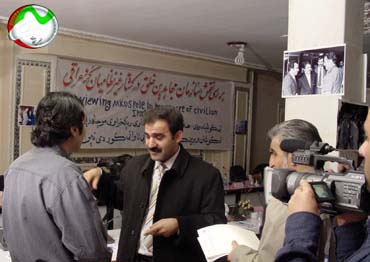
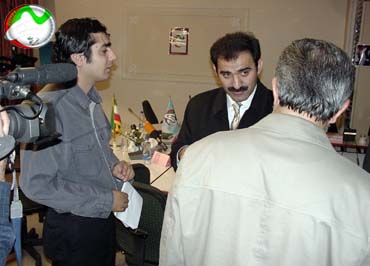
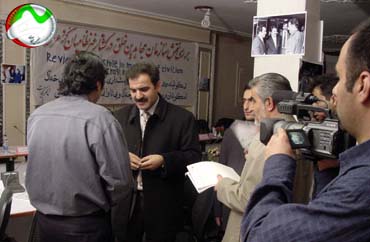
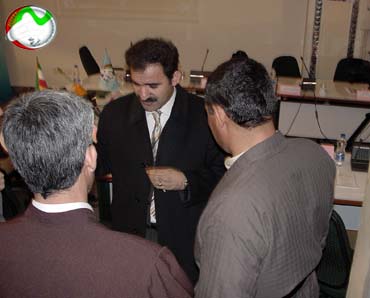
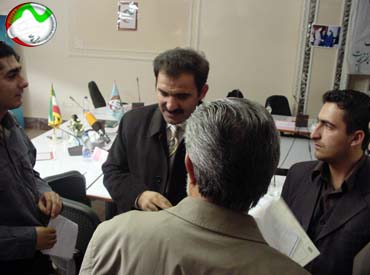
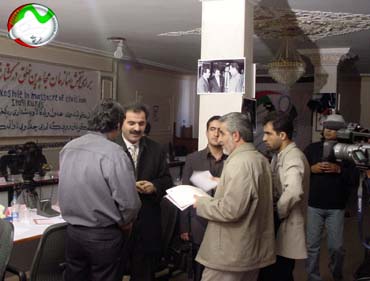
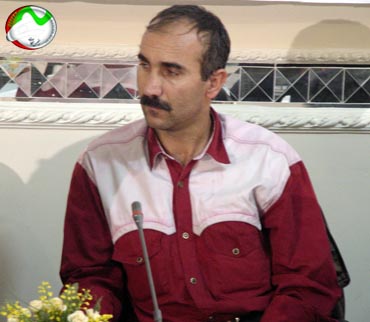
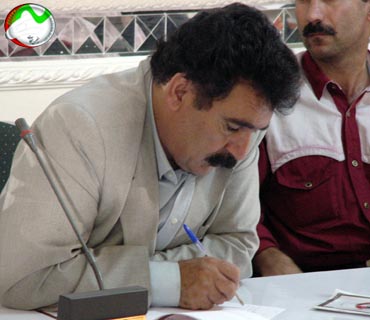
Mujahedin Khalq Organization members' families

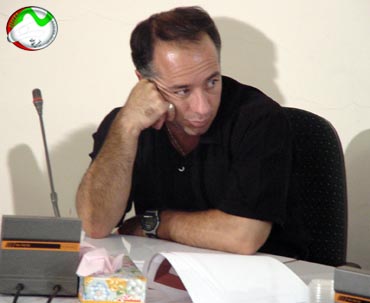
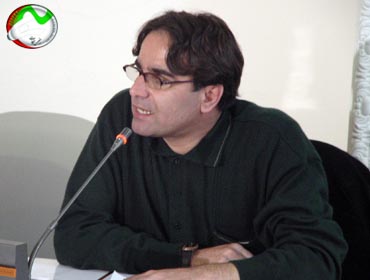
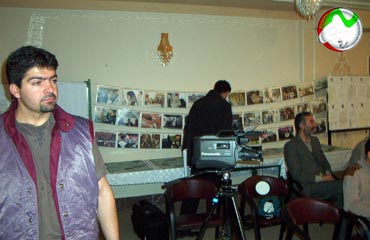
Nejat families gathered in Tabriz

Nejat society meeting in Tabriz

September 28, 2005 0 comments
FacebookTwitterPinterestWhatsappTelegramSkypeEmail
Raymond Tanter

Tanter’s Golden Dreams

A newly established group has asked the US government to lift the name of MKO from terror list.

Few members of “Iran Policy Committee” (IPC) are comprised of former officials of US government and retired CIA agents.

In order to understand its importance and influence, one should consider how far they are from the latest analysis of US government about the terrorist group they support. A terrorist group on US terror list, offices of which were shut down by the government of George Bush.

Part of Pentagon officials believe that MKO members should be used in espionage activities against Iranian regime and this constitutes the pillars of Raymond Tanter’s idea to support this terrorist group.

But Tanter is not aware of the unified approach of US officials toward this group. He doesn’t how Iranians hate this group and that’s why he call it a “resistance group”.

AP published recently a very funny and simple analysis on MKO by Raymond Tanter.

He said that his committee found strong opposition to MKO in different website and that , according to this, it can be concluded that Iranian government is worried about MKO and that this group has a high level of support!

Tanter and his partners in IPC (support of whom for MKO is very suspicious and, like many other examples, can be acquire by MKO in exchange for paying money) have based their analysis on the presence of a number of websites. This approach proves that they’re not familiar with Iran affairs. It also shows how they’ve copied MKO’s stances, since it’s only the MKO that claims “slogans in Friday prayers in Iran prove its position”!

Instead of citing websites, Tanter could have talked about popular actions and demonstrations in support of MKO; something that has never happened during past two decades and that’s why they have used the contents of a number of websites for their judgment.

Tanter refers to infeasibility of military attack against Iran and asks for the removal of MKO (as an alternative) from terror list; this also proves how far they are from official policies of the US government.

While one can barely relate the option of military strike against Iran to the removal of MKO from terror list (posing such claim is essentially senseless), what’s more lamentable is that Tanter and those who think like him (if there’s any thinking at all!) even don’t know that the unacceptable idea of using Mojahedin-e khalq was posed in the framework of military option. Even in that case, this terrorist group with shameful records of cooperating with Saddam Hussein and involvement in terrorist operations has little chance to accompany US soldiers.

The new US approach in foreign diplomacy, introduced recently by Undersecretary of State for Public Diplomacy Karen Hughes, is to cleanse US policies from contradictions and double standards. Regarding this new approach, will the US government officially support a group it categorized as terrorist?

Furthermore, Raymond Tanter and his partners have denied those records of the MKO that can’t be denied even by the spokespersons of the group itself!

How can they deny the issue of assassination of US citizens in Iran when its case is available in US State Department and CIA since before revolution in Iran?

The least IPC can do to get to its goals is to break the consensus in the White House and State Department against this group, clear terrorist records of this group and also ignore this fact that the cult of Rajavi has no popular support in Iran. It doesn’t seem they’re able to do so. 

September 19, 2005 0 comments
FacebookTwitterPinterestWhatsappTelegramSkypeEmail
Elaheh Iranian singer

Elahe Iranian Singer and Anne Singleton

Elahe is one of the most important singers in Iran’s history. She has sung and made famous many of Iran’s traditional (asil), pop, jazz, and standard hits. Her voice was so liked by Davood Pirnia, the original creator and director of Radio Iran’s "Golha" program, that he employed Elahe to manage it for a while. Her voice is on more "Golha" shows than any other singer.

Would you please briefly describe your singing career for us.

I trained for two years in the classical Iranian singing style. At that time, Davood Pirnia, introduced this style to radio listeners with the popular Golha programme. The orchestra and the singers of this program established this form of classical music in Iran. I was the leading singer for fifteen years that the programme was broadcast. Of course, after the revolution it was no longer possible for women’s singing voices to be heard and we were silenced.

With this background please tell us how you became involved with the Mojahedin organisation.

For a long time I was unable to sing for the people in Iran. One of the ways I could have continued with my singing career was to join with the exiles on the American west coast. But there was so much infighting between them and petty behaviour that I didn’t want to join with any of the factions.

Then, in 1994, I was approached by some people who said they were from an Iranian intellectual group in Europe which wanted to stage a concert as a gesture of defiance toward the Iranian regime and to show solidarity with the people inside the country in their struggles for freedom and democracy. They told me they were supporters of the Mojahedin. Of course I had heard of the Mojahedin but I knew little about them. The way these young people described them was as freedom fighters.

They invited me to sing in the concert. I have always felt that my voice, because it was made famous by the listeners of the Golha programme, my voice belongs to the people of Iran and that I should return it to them somehow. So, the Mojahedin became the way to do this. Of course, I wasn’t alone and there were several other popular singers who also agreed to sing in the concert.

Can you describe how they approached people and how they behaved toward you in persuading you to take part in their concert.

I told them that although I was sympathetic to the Mojahedin’s stance against the regime, I would not be involved in anything political, so there should only be Iranian flags at the concert, and I would sing some classical songs and nothing else. Now, in all my singing career, I have never had a written contract. My word was always enough. But they insisted on having a contract. I believed they were just amateurs and so I agreed. The contract was for six evening concerts with a forfeit of several thousand dollars if I didn’t show up. Since this had never been a problem for me in the past, I agreed. Then they went away and I didn’t hear from them again. A month before the concert I still had no news, so I tried to contact them without success. Then a week before the concert it was announced everywhere as a Mojahedin concert in support of Maryam Rajavi!

After the concert, Iranian radio stations started swearing at me because I had sung for the Mojahedin. The Mojahedin themselves paid me only half the money we had agreed and then no more. Radio USA said that I should go on air and apologize to Iranians everywhere. All that happened was that all the rest of the opposition groups, instead of helping me, only pushed me further toward the Mojahedin with the pressure of their criticisms and these uncompromising attacks on me. I didn’t have a sympathetic refuge anywhere.

Then the Mojahedin themselves started a campaign of showing great affection and kindness toward me. They pretended to really care for me and that they were concerned about me. In this phase, they couldn’t do enough for me. I know now that this is the usual method used by cults to recruit people. At that time, even though I knew it was all lies, there was something seductive and intriguing about their behaviour so I ended up curious to find out more about them.

Could you describe your perception of how the Mojahedin operates as a cult.

I was invited to join them as a singer, and I had thought they were freedom fighters, but it soon became apparent that they are a cult – an extremely narrow and strict cult.

After the people burned themselves when Maryam was arrested I told them not to contact me anymore.

They are like Hassan Sabbah. No, worse. Sabbah protected his men from their sexual urges by castrating them, but he never asked them to burn themselves for him. Rajavi has no mercy. He places himself above everyone. The Rajavis have their own luxury lifestyle with the best homes, clothes and food while everyone else has to suffer degradation.

No friendships exist inside the Mojahedin, they are extremely harsh with even their supporters. The commanders order them about this way and that on nonsensical work. They have two faces, one is the good public face they show to the outside world, the other is all swearing and harshness and anger.

Most of all I hated what they did in Iraq with Saddam. I hate what Iraq did to my country in that war. I discovered in that relationship that Rajavi has no limits – he really doesn’t care who he allies himself with, friend or foe. I asked Maryam once about their work with Saddam. She told me: ‘if Saddam hadn’t lost the war and had captured Iran. When we had taken over in Iran we would have rewarded Saddam and given him Khuzestan’!

One thing that was very interesting to observe from close up is that both of the Rajavis are obsessed with power. I remember one of the NCRI members was talking to Massoud Rajavi about what the Mojahedin would do once they arrived back in Tehran. Rajavi, with a glint in his eye, told him: ‘When we go to Iran it will take a few days before we reach Tehran. On the way we will kill one million Bassij forces and one million Pasdaran and…, then we’ll just see what happens.’

There are some interesting dynamics between the leaders. It is obvious that Maryam wants power and is prepared to push Massoud aside to achieve this. Also, her ex-husband Mehdi Abrishamchi wants her to replace Massoud. Why not? When Maryam came to Europe in 1993 her husband had an affair with her second in command, Fahimeh Arvani back in Iraq. Everyone knew about that, poor woman.

If the USA supports them now and pushes them into Iran, they will be worse in Iran than Saddam was for the US in Iraq. They performed intelligence work against their own country in a time of war. I met an Iranian nurse recently and she wept as she told me about the war. She said the Azmayesh factory constructed metal sheets to use in the war to shelter from attack. 30,000 Iranian soldiers were there. But the Mojahedin gave the intelligence to the Iraqis, who then bombarded them. Between 70-80,000 men lost their lives because of the Mojahedin. That’s why I know they are more ruthless than anyone can believe.

Did you know the Mojahedin before you met them.

I had heard of them, everyone had. But I didn’t know them as I do now. I thought they were freedom fighters. We hadn’t heard about the crimes they committed with Saddam. And especially we hadn’t heard anything about how they behave inside the organization.

Nowadays I have seen more than enough with my own eyes, and if I say nothing else, it is to warn others not to go near them. They are criminals and traitors. When I call them criminals I’m not exaggerating. I was once visiting them in Paris. Of course, they go all out to be hospitable and look after us. But there was a young woman there who was working alongside us that I remember well and with good reason!

One evening I was really tired but felt too anxious to sleep, so when I went to my room I took a sleeping pill and settled down to rest. After a while I heard a noise in the room and, half-awake I lifted my head to look. I saw the young woman standing with her hand in my handbag. I was so drowsy I didn’t know if I was dreaming or not and drifted back to sleep.

When I woke in the morning I discovered she had stolen my passport, my Green Card and around one thousand US dollars from my bag. Yet there she was in front of me. When I confronted her about it, one of the women commanders stepped in and sent her away. But they never returned my things.

Another time I was persuaded to visit them in their camp in Iraq. It happened that back home my shoes had been giving me some discomfort, so I had put a piece of paper in one of them to ease the pain. While I was having dinner in the garrison, I slipped my shoes off to be more comfortable and the paper must have been visible. Without warning the woman sitting next to me grabbed my shoe, took the paper out and ran away. For a moment I was amazed and perplexed. What …? Then I realised what had gone on. They suspected that someone in the camp had passed me a secret message to take out of the camp. In that moment I knew everything I ever needed to know about them. I knew that people inside were desperate to leave. I knew that they would do anything in their power to prevent that happening, and I knew that all the stories I had heard about their prisons and torture of their own people were all true. It was truly disturbing.

I have seen more than I needed to. I have seen that they do many illegal things. But you know, the thing they do worse than all this, which isn’t even illegal is to play with people’s minds and hearts.

I joined with them because of the people of Iran and all the time I tried hard to change them and to inform them about the realities both of the world and about themselves. It was as though they could not see anything but their own lies. I even tried to get Maryam Rajavi to change those hideous clothes she wears. When I first met her she was wearing a military uniform. It was completely inappropriate for what she wanted to do. Then, after I suggested she dress more attractively, she spend thousands of dollars on outrageous pink or yellow clothes, handmade from upholstery fabric! She doesn’t have a clue and no one around her dares to criticise or even suggest she does things differently. It was only me who got her out of that uniform.

All the time I was with them singing in their concerts, they told me, don’t talk about Iran only talk about Maryam. But I had no interest in her. I didn’t work with the Mojahedin, I was an opposition voice, a thorn in their flesh. I sang because I wanted to return my voice to Iranians.

How did the Mojahedin behave toward you when you wanted to dissociate yourself from them?

It is true that once anyone gets into the claws of the Mojahedin they get trapped there, like in a cat’s paw, and every time they try to escape the paw comes down on them again, sometimes with claws extended, sometimes with softness. But nevertheless it’s a real trial to get away. One of the ways they used to trap people like me was through debt. They never paid us fully for our work even though we had agreements. They were always promising to pay next week, next month, next time.

One of the veteran NCRI members spoke to me in confidence some time ago, he said, ‘Elahe, why don’t you get out of here. People like me can’t leave because we are totally dependent on the Rajavis for all our needs. We don’t have a penny, but at least you have a home and independence, and family. Leave now while you have the chance.’ I was really saddened by this.

I visited Maryam in Paris one day and I told her: ‘Look, the cage you have put me in is not even golden, it’s wooden. I can’t see the people and they can’t see me’. All she could do was just stare at me. I asked them to pay me the money they owed me for all the concerts I had performed for them which I had not yet received.

Whenever I asked for the money which they owed me, which I have to say was a considerable amount, they kept telling me they can’t pay. A short time after the start of the war in Iraq I saw Mohammad Mohaddessin and he told me: ‘Look our people in Iraq are stuck and we have no money’. Then four days later, the French police raided Maryam Rajavi’s home in Paris and along with all her garments and computers, they found eight million dollars in cash. Imagine. The next time I saw Mohaddessin he blushed with embarrassment. But I still didn’t get my money.

Last year, I decided that I had had enough. I wrote a formal letter of resignation and faxed it directly to Maryam. But for a year they haven’t announced my decision and it appears they don’t want to accept it. They kept phoning me, saying OK, come and get your money. Once they said I should go to see Maryam in Paris to get my money. When I got there, they had laid on an extravagant dinner party apparently in my honour. They invited many of their French neighbours in Auvers-sur-Oise and even Danielle Mitterand came to dinner. All the time, Maryam kept trying to sit next to me so she could get some photographs or film me with her. But I knew what she was doing so I evaded her. Again, I left without my money.

In fact I was afraid too. I know that even now they use intelligence surveillance against people that they suspect are against them. They use phones in that way. They ring someone up and pretend to be someone else so they can get information from that person and record what they have to say. They don’t just do it with Iranians, they do it with westerners too, with human rights workers and government places. It’s not just Iranians. I also discovered that they have plans for ‘accidents’ for people. Right now I am worried. They are capable of anything. They have a widespread network in European countries and they could easily and quite discreetly harm me or my children. I am still afraid of what they could do to me or to my children.

Do you think being linked with the Mojahedin has changed how people view you?

I believe that history will be the judge. We have all made mistakes in our lives, we all have our ups and downs, especially now because Iran’s recent history has been of change and upheaval for many people and we have all had to do our best to cope with this. What I am certain of is that my legacy is my voice and that for years to come people will enjoy my voice and my songs. These belong to Iran and to the world of music. The Mojahedin will also take their place in history regardless of my involvement. I believe history will judge them to be the despicable liars and traitors that I and others know them to be.

Finally, how would you describe the MKO’s appreciation of art?

Art for the Mojahedin is like anything else. If they can exploit it they will do so. It has no other meaning. They use anything and everything for their own aims whether that is people or art. Just as they use and destroy people, they use and destroy art. And, I should add, the artists too.

September 19, 2005 0 comments
FacebookTwitterPinterestWhatsappTelegramSkypeEmail
Former members of the MEK

Evidence Proves MKO Massacred Kurds

A brief look at Morvarid Operation (memoirs of Hamid Dehdar Hassani, former member of the MKO)

Kill the Kurds to save the life of “The Master”!

In everybody’s lives, there are black points whose remembrances are associated with shame and disturbance. Whether the act is pleasant or painful is up to the views and attitudes of the individuals toward their surrounding world and rules, which govern human relationships. March to September 1991 is bitterest loathsome shameful point in my life.

After a relatively heavy mental process, I was just starting to digest the issue of cooperating with the Iraqi regime that operation “Morvarid” was set before me and other members of the organization (MKO). After Saddam invaded Kuwait (Kuwait Occupation), the US and its allies started heavy bombings in order to retake that country. Amid that war, known as “Gulf War”, Iraqi Kurds who had been suppressed by Saddam regime for years started expressing their opposition to Saddam. The risk of being toppled by revolutionary Kurds threatened Saddam, whose army had lost its power due to Gulf War as well as war with Iran. I never forget that although US planes never bombed MKO bases, Rajavi ordered all members of Ashraf to spread over the hills of Kurdish region of Kefri in order to be safe from bombings. The bitter events started when MKO members were ordered to return to Ashraf Camp.

We were passing the Kurdish township of “Tuz” when we heard the ill-fated voice of Rajavi on radios. “Revolutionary guards and agents of Iranian regime in Kurdish clothes are going to attack MKO members, therefore kill them as soon as you see them” this was his message!

Neither anyone nor I could have thought that there’s something else behind this event. At those anxious hours, no one could think that Rajavi’s order was a show of his faithfulness to Saddam. Saddam (who was called “landlord” by Rajavi) was on the edge of cliff and revolutionary Kurds were taking the control of Iraqi cities, one after another. At that time, the ouster of Saddam meant the full destruction of MKO and according to Rajavi himself (which was expressed later in meetings): “Whether we want or not, our interests and fate are tied to those of Iraqi government.”

On that bitter day, following the order of Massoud Rajavi, MKO members attacked those regions believing that Iranian agents and revolutionary guards (in Kurdish clothes) were hiding in the villages.

A number of minibuses, full of passengers, were set on fire by MKO’s weapons near the city of Kirkuk and Kefri. Women, children and other passengers burnt to ashes in front of us. Rajavi had said that they would kill all MKO members if they’re not stopped, therefore MKO members used cannon fire from a close distance so that the bodies of Kurds were torn into pieces, and they (members) enjoyed seeing such scenes. After Massoud Rajavi, it was the turn of Maryam who shouted on the radio like a vulture:

“Shoot at these (Kurds). Ride your tanks over them”!

Time passed and my anxieties melt down a bit. Then, I, some other members, found that no one was in front of us except Iraqi Kurds, women, children and old defenseless people.

Although I saw a number of Kurd rebels, there was no Iranian Revolutionary Guards. I understood that I was involved in a horrible crime! When I expressed my protest to my commander (Farhad Olfat) and said that Kurds’s issues had nothing to do with us, he shouted on me: “No one fights against Saddam except the Iranian agents! Now we can destroy regime’s social base among Iraq Kurds…” Rajavi and his agents used different explanations to justify this crime but they shamed to say that they had committed this crime because they were Saddam’s serviles. In addition to deployment of forces into Kurdish areas, MKO had established checkpoints across the roads to prove its total officiousness to Saddam. MKO members stopped cars, identified revolutionary Kurds and opponents of Saddam, arrested them and delivered to Iraqi security officers. If someone protested to the activities of MKO, or refused to cooperate with them, he was beaten severely. Recalling these scenes is shocking. MKO arrested a number of Kurd villagers and took them as detainees to Ashraf Camp.

Once, Baathist officers came to receive a number of Kurd detainees. We got them on an IFA trucks and brought them, blindfolded and handcuffed, to the gates of the camp. Mehdi Abrishamchi (a high-ranking official of the organization) climbed the truck and pushed the detainees off the vehicle, using violence. Baathist officers also used maximum violence to take them to Saddam prisons. Mehdi Abrishamchi, wet-nursing , behaved the Kurds like animals.

Many of the MKO members raised questions about such activities, but no one was able to protest. During a meeting, Massoud Rajavi stated insolently: “in a recent meeting with Izzat Ibrahim, he appreciated our efforts and called the MKO the best friend of Iraqi government. He said they’re going to give us new armors and weapons to show their appreciation for the suppression of Kurd rebels.”

Rajavi called “Morvarid” a self-defense but he never explained the reason and logic behind the involvement of MKO in Iraq’s internal affairs and suppression of Saddam opponents. Of course, it was clear that there was no honesty in the explanations of Massoud Rajavi because everyone knew the consequences of Baghdad occupation by Kurds. Rajavi deceived members and said that Iranian revolutionary guards were in Kurdish clothes but soon all members found that there’s not even an Iranian Revolutionary among detainees or the dead. Therefore, Rajavi and his agents talked about “protecting the landlord (Saddam)”. In a meeting after Operation Morvarid, Rajavi said: “in this operation, we wanted to advance toward Tehran, but the master (Saddam) didn’t’ advise it!”

I don’t know what happened to Kurd detainees but after the fall of Saddam Hussein many mass graves-full of the bodies of these Kurds- were found. After Operation Morvarid, Mojahedin-e khalq has always been in fear of being subjected to the anger and revenge of Iraqi Kurds, therefore Rajavi tried to justify his crimes and win the satisfaction of Kurds but Iraqi Kurds or Shiites who had been attacked repeatedly by MKO never accepted it as a revolutionary freedom-seeking force. Some members of MKO were attacked by Kurds in Iraq and even after the fall of Saddam, ordinary Kurds killed a MKO commander (revenging the lives of innocent women and children killed by Mojahedin). It was so difficult for the MKO (after the operation) that they couldn’t go the cities without bodyguards. They asked for Baathists help when they wanted to go shopping in the city. MKO members were armed to teeth when going into cities. People looked at them with anger and hatred. Some Iraqis spat on them and were called “traitors”…

Today, years after massacring Kurds by MKO, memories are still agonizing me. Nightmares of destroyed villages and houses of the Kurds upset me. I can never forget the kids who burnt to ashes in the bosom of their mothers by the fire of MKO.

Indeed, why were they killed?


September 19, 2005 0 comments
FacebookTwitterPinterestWhatsappTelegramSkypeEmail
Mujahedin Khalq; A proxy force

Who is the MEK?(Part two)

Who is the MEK? Why are they protected in Iraq? (Part two)

The War on Terror. The Iraqi occupation. The neoconservative idealist notion of liberating the Middle East. Regime change in Iran. All of the points reach a nexus with the Mujahideen-e Khalq [MEK], an anti-Iranian regime Foreign Terrorist Organization in Iraq with US backing. In this second installment of the series, I cover the Congressional and neoconservative support for the MEK and the MEK’s role as misinformed of Iran’s nuclear weapons program.

Congressional support

"I know about support on Capitol Hill for this group, and I think it’s atrocious," said Dan Brumberg of the Carnegie Endowment for International Peace. "I think it’s due to total ignorance and political manipulation."

In late 2001, Rep. Gary Ackerman (D-NY) tells the Village Voice, "I don’t give a shit if they are undemocratic. OK, so the [MEK] is a terrorist organization based in Iraq, which is a terrorist state. They are fighting Iran, which is another terrorist state. I say let’s help them fight each other as much as they want. Once they all are destroyed, I can celebrate twice over."

"This group loves the United States. They’re assisting us in the war on terrorism; they’re pro-US," said Rep. Ileana Ros-Lehtinen (R-FL). "This group has not been fighting against the US. It’s simply not true."…"In no meeting or briefing I have ever attended has anyone called this group an anti-US, terrorist organization," she continued, adding that the group has provided useful intelligence to the US government on Iran’s nuclear ambitions.

"In November [of 2002], Ros-Lehtinen released a letter of support for the MEK that she said had the backing of 150 colleagues, whom she repeatedly refused to identify. Among the 150 signers are reportedly 30 committee and sub-committee members and 35 committee and subcommittee ranking members. "Because of the [Iranian President Mohammed] Khatami’s well-funded campaign on propaganda, lies and misinformation, I have decided not to release the names of these signers."

A month earlier, as Ros-Lehtinen’s letter circulated throughout the House, Reps. Henry Hyde (R-IL) and Tom Lantos (D-CA), also wrote to their colleagues, giving them a "full" and "accurate" picture of the MEK.

"We are strong opponents of the current government of Iran but do not believe that it is necessary to use terrorism or make common cause … [with] Saddam Hussein to change Iran’s government."…"Particularly in view of the fact that the MEK is based in Iraq, has taken part in operations against the Kurds and Shia, has been responsible for killing Americans in Iran, and has supported the takeover of the American Embassy in Tehran, we wanted you to have the full background on this organization as most recently reported by the Department of State, so that you may best decide whether to lend your name to the letter" of support. It further advised, "Some colleagues have signed similar letters in the past and then been embarrassed when confronted with accurate information about the MEK."

Ros-Lehtinen dismissed the US intelligence reports of the group’s involvement in Hussein-led campaigns against Kurds and Shia as "hogwash" and "part of the Khatami propaganda machine." Before the Iraq invasion, Yleem Poblette, staff director for the House Subcommittee on the Middle East and Central Asia and aid to Rep. Ros-Lehtinen, stated, "In the months leading up to the war, we made it very clear that these folks are pro-democracy, anti-fundamentalism, anti-terrorism…They are our friends, not our enemies."

On January 15, 2003, the New York Times ran a full-page ad on page A8 advocating for MEK support. The ad printed six photographs of current Congressional supporters, including Ros-Lehtinen (R-FL), Tancredo (R-CO), Filner (D-CA), Towns (D-NY), Jackson-Lee (D-TX) and Diaz-Balart (R-FL). Insight on the News reported the MEK had given to former Senator Robert Torricelli (D-NJ) more than $136,000 in hard money and several thousand to Towns and Ros-Lehtinen. Source.

Bob Ney (R-OH), who was once a supporter of MEK, summarized MEK support as anti-Iranian zeal. "I think a lot of people just hear [MEK] folks coming in saying, `We’re for democracy.’ These members [who support the MEK] are American members of Congress. I don’t question their patriotism or their loyalty to the United States. But on this issue, they just aren’t looking at the facts." Ney on MEK’s lobbying access, "We better watch those characters coming into the building. They’re a terrorist group. I do not believe that we need to allow them access to our physical Capitol grounds."

In late April, 2003, Bob Ney wrote a letter to the editor of the The Hill, MEK of same lot as al Al Qaeda and Hamas, in response to a recent full-page ad and letter to the editor from the group:

"In fact, because of the MEK’s long association with and support with Saddam Hussein’s regime, the former Iraqi information minister may very well have been the one who taught the MEK his craft of making false statements in the face of incontrovertible facts." Ney later alleged the reason behind Ros-Lehtinen’s refusal to publish her list of 150 Congressional supporters: "it does not exist." "At one point, it may have; in fact, when MEK representatives first visited my office several years ago, preaching democracy in Iran, I was glad to join them in what appeared to be their effort. However, I quickly discovered that the MEK are not the proponents of democracy they claim to be but are in fact documented terrorists with a history of killing American citizens and supporting Saddam Hussein. Today, no more than a handful of members supports the MEK, and even that number is dwindling."

While the frequency of public comments in favor of the MEK has declined, it is safe to assume that the same ideology which fostered Congressional support for the MEK (a fierce desire to spread democracy to Iran by any means necessary), largely remains among some Congressional hawks.

Just months after Ney’s letter, following the June arrests in France of leader Maryam Rajavi and others as well as the seizure of $1.5 million in MEK funds, members of Congress wrote a letter to President Chirac urging the immediate release of Rajavi and the others. Among the signatures were Reps. William Lacy Clay (D-MI), Dennis Moore (D-KS), Tom Tancredo (R-CO), Sheila Jackson-Lee (D-TX), and Edolphus Towns (D-NY).

Tom Tancredo (R-CO), always good for a genius soundbyte, stated his support for the MEK because they are an "asset to US intelligence" and "the most reliable source of information for the region." Tancredo’s press secretary, Carlos Espinosa, commented, "Are these guys saints? No…If there’s a problem, it’s that the MEK is on the [FTO] list." Espinosa added that the intelligence the MEK has supplied to America has been `100 percent true.’ "Call them what you want, but they’re not liars." Elsewhere, Tancredo has defended his support of the MEK by comparing Ted Kennedy’s support of the IRA.

In January 2004, the MEK would take part in a fundraiser in `solidarity’ with the `Iranian resistance.’ The American Red Cross, which hosted the event, later refused to accept the funds raised by the event because of its political nature. The US had temporarily lifted a ban on US donations to Iranian organizations in order to increase humanitarian aid. This allowed for the Iranian-American Solidarity Society of Kansas City and the Society of Iranian-American Medical Professionals, both led by MEK member Saeid Sajadi, and the Association of Iranian Women, led by MEK member Behjat Dehghan to sponsor the event. According to the IRS, 17 of the 23 sponsors were MEK front organizations. The event was addressed by neoconservative thinker and Bush advisor Richard Perle, British Labour MP and MEK supporter Win Griffiths and MEK leader and "president-elect" Maryam Rajavi (via satellite link). This appears to be in direct breach of Executive Order 13224 on terrorist financing. Perle later commented that he was under the impression the event was in support of an earthquake in Bam and that the proceeds would go to the Red Cross and was not aware of any ties the fundraiser had to the MEK. Perle also commented that "it did not have the aura of an event with terrorist sponsorship." (The basis of that observation is remains rather puzzling.) FBI agents were also in attendance at the event, reportedly as part of an ongoing investigation. Days later, the Treasury Department froze the assets of the event’s prime organizer.

In 2005, Ed Towns (D-NY) responded to a Human Rights Watch report which cited numerous human rights violations, including torture, beatings and solitary confinement by the MEK on its enemies and internal members who have sought to leave the group.

"It is an outrage to see the Iranian regime is using the American NGP, Human Rights Watch, to politically attack and tarnish the reputation of its main opponent the [MEK]."…"Human Rights Watch should view the MEK as its partner in defense of human rights in Iran not perpetrators. I firmly believe HRW’s report on the MEK published on May 18th will only advance Tehran’s agenda to derail the fight for democracy and human rights in Iran," calling on the group "to retract the report and provide a more factual account of rights violations in Iran."

On April 6, 2005, Tancredo and Rep. Bob Filner (D-CA), co-chaired an Iran Human Rights and Democracy Caucus meeting, with the Iran Policy Committee in attendance as panelists. During the meeting, the caucus and the IPC members agreed on the need to remove the MEK from the FTO list. Among the IPC are neoconservatives Raymond Tanter, Paul E. Vallely (Fox News pundit and advocate for regime change in Iran, North Korea and Syria), and Lt. Gen. Thomas McInerney (also a Fox News pundit and advocate for regime change in Iran, North Korea and Syria).

A week following the caucus, the National Convention for a Democratic, Secular Republic in Iran was held, also in Washington. Maryam Rajavi again speaks via satellite. Filner was also in attendance commenting that, "Unless we deal with Iran, there will never be a solution in Iraq." The neoconservatives are even more passionate in their

Neoconservative support

Iranian.com reports:

"Although [MEK] agents have claimed that the inclusion [of MEK as a terrorist organization] was part of Clinton’s appeal to the reformist government in Iran, the argument is no longer cogent in light of the fact that during Bush’s 5 years in office he has yet to remove the [MEK] as a terrorist group despite significant political pressure by various neo-conservatives (this includes Daniel Pipes who currently has a chair with the US Institute of Peace) and Republican representatives."

"Not only were the [MEK] re-designated as a terrorist group under the executive order by Bush on Nov. 2, 2001, but the President used the MEK as an example of Saddam’s support for terrorism during the drive up to the Iraqi war when stating: `Iraqi shelters terrorist groups including the Mujahideen-e Khalq, which has used terrorist violence against Iran and in the 1970s was responsible for killing several US military personnel and US civilians.’"

The Asia Times reports:

"The Israeli newspaper Ha’aretz reported `AIPAC is spurring Congress to pass a sanctions bill against Iran.’ AIPAC is also pressuring the US to support the Iranian MEK (a.k.a. the NCRI) for use against Iran’s mullahs."

Michael Ledeen on the MEK:

"The MEK, an organization I do not admire, but whose information is generally credible on such matters, claimed that more than 50,000 workers participated , from Pakdast and Varamin near Tehran, to Golestan province in the north and Khorassan province in the east [against the Iranian regime]."

(The MEK is notorious for inflating the numbers of protestors and the severity of its military forces in order to create an impression of formidable opposition.)

Douglas Feith, undersecretary for policy at the Department of Defense has argued that since the MEK hasn’t attacked any Americans since the 1970s, it needn’t stay in the FTO list.

The Asia Times’ A Spector of the Iran Contra Affair is Hauting Washington:

"it appears certain elements in the Pentagon leadership, specifically Douglas Feith, are trying to sabotage sensitive talks between Tehran and the State Department to promote cooperation over Al Qaeda and other pressing issues affecting Afghanistan and Iraq. The Pentagon clique thinks Ledeen’s old friend Ghorbanifar can help, according to Newsday, which reported August 8 that two of Feith’s senior aides – without notice to the other agencies – have held several meetings with the Iranian, whom the CIA has long considered "an intelligence fabricator and nuisance."

Daniel Pipes wrote a column on his blog pleading the MEK’s case:

"Is the MEK a terrorist group? No. It used terrorism decades ago, when its members attacked Americans. For the last 15 years, however, the MEK has been organized as an army, and its only violent activities have been directed against the Iranian regime."

…

"Can the MEK be useful? Yes. Western spy agencies are short on "human intelligence" – meaning spies on the ground in Iran, as distinct from eyes in the sky. Coalition military commanders should seek out the MEK for information on the Iranian mullahs’ agents in Iraq. The MEK can also supply key information on development in Iran – where, despite a tendency towards exaggeration, it has had some major scoops. Its information in mid-2002 about Iran’s nuclear program, for example, was better than what the IEAE knew, thereby leading a shocked US government to kick off an investigation that confirmed just how far advanced the Iranians are toward building a nuclear bomb."

…

"Finally, because Iran’s mullahs irrationally fear the MEK (as shown by their 1988 massacre in the jails of Iran of 10,000 long-imprisoned MEK members and supporters), maintaining the MEK as an organized group in separate camps in Iraq offers an excellent way to intimidate and gain leverage in Tehran."

British historian Ali Ansari comments on the MEK, "They are trying desperately to set themselves up as Iran’s equivalent of the Iraqi National Congress. The Iranians will be aware that the Americans are trying to keep them as a potential INC."

"They [want] to make us mercenaries," a MEK official told Newsweek, referring to the US.

Raymond Tanter, writing in response to reports in the Washington Post that Iran was some ten years from nuclear weapons capability, disagreed:

"The intelligence community has not had a good track record regarding Iran. Most of the major nuclear sites that are now known to the outside world and are inspected by the International Atomic Energy Agency, including the uranium enrichment site in Natanz and the heavy water facility in Arak, were revealed by Iran’s main opposition, the National Council of Resistance of Iran (NCRI)." Tanter compares the IEAE’s findings to a "disinformation program" from the Iranian regime. "If American analysts are using ‘creative analysis’ to make up for lack of current, actionable intelligence from assets on the ground, it would argue for using information from Iranian dissidents to provide ‘lead intelligence,’ information that can be used to verify intelligence obtained from other sources and methods," according to Tanter.

On September 15, 2005, Tanter is set to hold another Iran Policy Committee seminar (he is the co-chair) in support of the MEK. In mid-October, the MEK is up for State Department review of its terrorist status. If the State Department removes the MEK from the list of foreign terrorist organizations, the MEK stands to receive large sums of aid to help them carry out any number of murderous deeds inside Iran in order to overthrow the regime.

Media influence and intelligence supply

Intelligence supply as credibility building

"In August 2002, the group revealed the existence of the Arak heavy water facility and a massive underground uranium enrichment plant at Natanz, both of which Tehran later declared to the IAEA, the U.N.’s nuclear watchdog."

The press conference in question was held in downtown Washington, DC. The NCRI also alleged that the Iranian government was using a front company, the Mesbah Energy Company, to hide unwanted disclosures associated with the project. Iran maintained that its rationale for opening the facilities were strictly for energy purposes, "In the next 20 years, Iran has to produce 6,000 megawatts of electricity by nuclear plants and the launch of these two centers are aimed at producing necessary fuel for these plants," Foreign Minister Kamal Kharrazi said.

Under IAEA regulations, Iran was not required to notify the watchdog until it had begun "source or special nuclear materials" at Arak or Natanz.

"However, the satellite images of the site put on [the] internet by an American specialized firm a day after confirmed that the information was provided to the group by some Pentagon sources keen to get the [MEK] out of the terrorist list, giving it the image of a group that has reliable sources inside Iran."

(Because if you can help the Americans with intelligence, you’re should no longer be deemed a terrorist.)

Later, a CIA source would comment, "’We had all these information and have reported them to the Administration,’…frustrated at the leak of sensitive intelligence documents to the terrorist group."

"Evidence of these effects can already be seen by [MEK]’s effectiveness in persuading the mass news agencies to publish stories advocating that newly elected President Ahmadinejad was pictured directly involved in the 1979 hostage [taking]."

Counterpunch notes:

"Every few weeks these Chalabi-like, men-in-black characters-and also Fox News commentators-come up with some `top secret satellite photos’ showing non-existent nuclear weapons sites in Iran (how a US-designated terrorist organization gets top secret satellite photos is, of course, beyond anyone’s imagination.)"

CSM reports:

"Some [MEK] tips have led to recent revelations about key aspects of Iran’s clandestine nuclear program, though many others have proven unreliable. Long a diplomatic hot potato, which Tehran has offered to solve by exchanging [MEK] militants for Al Qaeda players now in Tehran, the [MEK] continues to complicate US-Iran-Iraq relations."

(But, as you’ll see later, the neoconservatives refused to give up their grunts.)

In September of 2004, just days before an International Atomic Energy Agency meeting, the National Council of Resistance of Iran held a meeting in London, the NCRI claimed that it had unearthed more information about Tehran nuclear weapons program. They claimed that Iran secretly had a nuclear weapons facility in Bandar Abbas and that it is the "second largest facility for converting uranium to yellow cake. This site has not been disclosed before and it is in its final stage of being fully installed."

Cameron Brown, assistant director of Israel’s Global Research in International Affairs, said she believed the information but warned, "Remember the lousy information that the United States had on Iraqi weapons of mass destruction also came from dissidents."

However, on January 24, 2005, the AP ran a story clearing Iran and dismissing the NCRI’s allegations. "Ali Akbar Salehi, Iran’s former envoy to the Vienna-based IAEA, said Iran had informed the agency in 2003 about the Bandar Abbas facility."

"August 18, 2005 – In a press conference in London, Hossein Abedini of the National Council of Resistance of Iran told reporters that Iran’s Ministry of Defense and Islamic Revolutionary Guard Corps had secretly produced the centrifuges on the orders of the Supreme Leader Ayatollah Ali Khomeini."

A day later, Reuters ran a story with the NCRI as their source, presumably from the same press conference, claiming that Iranian officials had recently expressed their pleasure with the progress being made at Iran’s heavy water program in Arak. The NCRI claimed that the site could produce plutonium.

On August 20, a former senior member of the MEK told the Iran Press Service:

"All the information that [MEK] provides the western media is pure lies and fabricated to discredit the Iranian regime and help the United States and Israel to put more pressure on Iran."

The article also reports that the MEK simply tells the media "what the CIA feeds them." Later, Mas’oud Khodabandeh, a former senior MEK officer, would confess,

Further:

"Except the information on Natanz and Arak the group disclosed, documents that were given to them by the Americans, all other material the [MEK] gave to the media are open secret, most of them from the Iranian press, like the name of companies and firms that works for the Defense Ministry and are known to the IAEA."

Khodabandeh deserted from the [MEK] and now runs a website, Iran-Interlink.org, which exposes the true face of the MEK, and leads the Association for the Support of Victims of MEK.

The MEK campaign to spread misinformation doesn’t stop at holding press conferences and writing press releases. The MEK has adjusted to the web and hosts Iran Focus, and Iran Terror are MEK-affiliated news sites. In addition, the NCRI has a website, featuring the latest publications of their misinformation and, even, an RSS feed. The blog, Iranian Truth, has more background on MEK’s media affiliates.

In the third and last installment, I’ll focus exclusively on the deal that never was. For several months, the US (backed by the State Department) was vigorously attempting an exchange of captive MEK members in Iraq for five top Al Qaeda members, including Saad bin Laden, the son of Osama bin Laden, and Saif al Adl, intelligence chief. The neoconservatives would ultimately prevail, the deal was dropped, and they kept their pawn.

September 17, 2005 0 comments
FacebookTwitterPinterestWhatsappTelegramSkypeEmail
Mujahedin Khalq Organization as a terrorist group

Report to Senate Foreign Relations Committee

THE QUEST FOR IRAN’S DEMOCRATIC MOVEMENT.

Testimony for the Senate Foreign Relations Committee.

One side of the opposition spectrum is represented by the Mujahedin Khalq Organization (MKO or MEK) which the U.S. State Department designated a "foreign terrorist organization" in 1997. Still identified as a terrorist organization, the MKO also is known as the National Liberation Army of Iran (the militant wing of the MKO), the People’s Mujahedin of Iran, National Council of Resistance, the National Council of Resistance of Iran, and Muslim Iranian Student’s Society (a front organization used to garner financial support). The EU designated the MKO’s military wing as a terrorist organization in May 2002.

The MKO was created in the 1960s and its ideology combines Islam and Marxism. It was involved with anti-U.S. terrorism in the 1970s, and it initially supported the 1978-79 revolution. In June 1981, it staged an unsuccessful uprising against the Islamic regime; many members were imprisoned while others fled the country. The MKO transitioned from being a "mass movement" in 1981 to having "all the main attributes of a cult" by mid-1987, Professor Ervand Abrahamian writes in his 1989 book, Radical Islam: The Iranian Mojahedin. The MKO refers to its head, Masud Rajavi, in religious terms, calling him the rahbar (leader) and imam-i hal (present imam).

From its Iraqi exile the MKO attacked the Iranian regime’s leadership: a 1981 bombing killed President Mohammad-Ali Rajai and Prime Minister Mohammad-Javad Bahonar, in 1992 it attacked 13 Iranian embassies, and it is behind other mortar attacks and assassination attempts in Iran. Former President Saddam Hussein granted the MKO refuge in Iraq, and it helped Saddam Hussein suppress the 1991 uprisings of Shia in southern Iraq and Kurds in the north, so it is not very popular in Iraq. The MKO fought Iranian forces in the Iran-Iraq War, and this has discredited the organization among the Iranian public.

In May 2003, after Operation Iraqi Freedom, the MKO agreed to turn over its weapons to U.S. forces, and over time most of them have been restricted to one location, Camp Ashraf. In July 2004, MKO members in Iraq were granted "protected status" under the Geneva Conventions. The Iranian government has repeatedly offered an amnesty to rank-and-file members if they return to Iran, but the amnesty does not extend to the organization’s leadership. A reluctance to return is understandable: many MKO members who were imprisoned in the early 1980s were tortured into recanting, and for a few months in 1988-1989 thousands of MKO and leftist prisoners were executed. Iranian state media sporadically reports on groups of former MKO members who have returned, but it is not clear how they are treated.

Some U.S. commentators have recommended removing the MKO from the terrorist list and using it as an armed resistance movement against Iran. There also are suggestions that MKO personnel should be cultivated as intelligence assets that might re-energize the reform movement in Iran. It is unlikely that MKO members would be trusted, since some reformists fought MKO personnel in the war, others created the security institutions that hunted them down, and most are part of the current political system. Furthermore, information provided by the MKO, which does not have the same objectives as the U.S., is likely to be self-serving and unreliable. Using MKO personnel as a partisan force is appealing, but association with them will discredit the U.S. in Iranians’ eyes.

In conclusion, there are steps the U.S. can take to hasten Iran’s becoming a democracy. The belief that there is a pre-existing democratic movement or even an effective opposition group, however, is inaccurate. And although most Iranians undoubtedly favor independence and self-determination, assisting individuals rather than organizations without proper planning will be neither efficient nor effective.

September 17, 2005 0 comments
FacebookTwitterPinterestWhatsappTelegramSkypeEmail
USA

An Open Letter to US President

Mr. George Bush, the President of the United States

At the 4th anniversary of 9/11 events, I’d like to have your attention to the following important notes.

1. As a former member of the Mojahedin-e Khalq, Iranian terrorist group based in Iraq, I have always lived in fear since I’ve left the group; fear from being assassinated or kidnapped by the MKO because I and others left the group in response to its terrorist activities. 9/11 events proved that terrorists are cruel. Since then, we have always felt that we should do something, not only for our own lives but also for the lives of innocent people who’ve been kept there in the MKO and their only fault is that they’re human beings.

Although the 9/11 wasn’t the only day on which the people of the world felt deeply the danger of terrorism, but it was one of the most horrible days. 9/11 proved that terrorism, in its wildest forms, has the capacity to cross the power lines and choose its victims by creating new methods, without being concerned about inhuman consequences of such attacks. Deep fear made by such terrorist attacks is worse than the damage.

9/11 events stressed this fact that the idea of getting to political aims by terrorism, anywhere in world with any justification, only helps its expansion. These attacks once again attracted world’s attention to terrorism and exposed the uniform nature of all terrorists. These attacks and its aftermath directed public attention towards Bin Laden and Taliban (as the most dangerous terrorists).

However, we should not forget that terrorism is not limited to Taliban and Bin Laden. The word “terrorism” reminds Europeans of Afghanistan. They may pass a number of terrorists each day while walking in a park in London or in New York, or while buying books in Ottawa or in Berlin, without knowing that. They barely believe that some of these terrorists are more dangerous than Bin Laden.

These terrorists may not issue “Fatwa” for killing westerners as Bin Laden does; their faces may comply with the standards of developed nations; these acceptable faces may talk about the concepts of freedom, democracy and human rights even more than US and European statesmen but their presence is as hazourdas for human civilization as the presence of Bin Laden.

They may appear in the streets of the cities of the West, under the name of charities for children and hungry people, but the reality is that “terrorism is what terrorism does”.

2. Since 1987, MKO has all major aspects of a cult:

– Lifelong leader who’s called “Imam”

– Strict hierarchy in which the orders come from above and all should obey unquestionably (Stalinist system).

– No one has the right to form family live, except the leader.

– All members should live in ghettos

– The group believes in armed struggle as an ideological principle and it has never quit it.

Such an organization has high potential to eradicate security and democracy in the West. They’re like time bombs, ticking in the Western society, which would explode in the case they’re not defused. The first victims of such an event would be the innocent people of the West. The religious cult of the MKO started with killing US officers in Iran and continued with self-immolations in June 2003 in Europe, showing abhorrent aspect of its ideological abilities. More like a political chantage, these recent shameful acts’ message to the West was that MKO would do anything to get to its goals even if the cost is the elimination of human beings. We can even expect that a member of this organization takes bomb and explodes himself in US or Europe in the near future.

Mr. President,

With the issues mentioned above it’s natural that your respected government- and governments of Canada, Australia and many other Western countries- recognized imminent threat of the MKO and put it on the terror list. This is appreciated and we expect no changes this year in the status of the MKO. We, former members of the MKO, are ready to cooperate on this.

But what has surprised me is practical measures of that government towards the list. According to US law, the properties of the organizations on the list should be confiscated and the activities of the groups should be banned.

MKO has political-financial activities in the US regardless of the law. MKO holds meetings, press conferences and demonstrations in different cities of the US (the last of which was held on November 20, 2004 in Washington). They’re planning for another demonstration on September 14th to protest to Iranian president’s visit to New York.

I ask you as the president of the United States:

1. Isn’t the MKO on your government’s list of terrorist organizations? If yes, then why is it treated with laxity?

2. Why isn’t it banned from political-financial activities?

3. Your security organizations know that the MKO is active under forged and unreal names, don’t they? So, why have you closed your eyes on them?

4. It should be kept in mind as an example that compromising with Taliban and tactic cooperation with that group has had horrible consequences for the people of Afghanistan and then the people of the US.

The fear is that this idea would be spread that the US is going to experience the same disaster, this time by using the MKO.

September 13, 2005 0 comments
FacebookTwitterPinterestWhatsappTelegramSkypeEmail
The MEK Expulsion from Iraq

Talabani: MKO Should be Expelled

Iraq’s president Jalal Talabani has emphasized the quick expulsion of the members of terrorist MKO from Iraq.

According to IRIB, in a meeting with Iranian charge d’affaires in Baghdad, Mr. Talabani said the MKO was the common enemy of Iran and Iraq, adding that: “We have also suffered from the terrorist crimes of this group. So, Iraqi government is tough in pursuing their expulsion from Iraq.”

September 8, 2005 0 comments
FacebookTwitterPinterestWhatsappTelegramSkypeEmail
Newer Posts
Older Posts

Recent Posts

  • A Criterion for Proving the Violent Nature of the MEK

    December 31, 2025
  • Rebranding, too Difficult for the MEK

    December 27, 2025
  • The black box of the torture camps of the MEK

    December 24, 2025
  • Pregnancy was taboo in the MEK

    December 22, 2025
  • MEPs who lack awareness about the MEK’s nature

    December 20, 2025
  • Facebook
  • Twitter
  • Instagram
  • Youtube

© 2003 - 2025 NEJAT Society . All Rights Reserved. NejatNGO.org


Back To Top
Nejat Society
  • Home
  • Articles
  • Media
    • Cartoons
    • NewsPics
    • Photo Gallery
    • Videos
  • Publications
    • Books
    • Nejat NewsLetter
    • Pars Brief
  • About Us
  • Contact us
  • Editions
    • عربي
    • فارسی
    • Shqip