Nejat Society
  • Home
  • Articles
  • Media
    • Cartoons
    • NewsPics
    • Photo Gallery
    • Videos
  • Publications
    • Books
    • Nejat NewsLetter
    • Pars Brief
  • About Us
  • Contact us
  • Editions
    • عربي
    • فارسی
    • Shqip
Nejat Society
Nejat Society
  • Home
  • Articles
  • Media
    • Cartoons
    • NewsPics
    • Photo Gallery
    • Videos
  • Publications
    • Books
    • Nejat NewsLetter
    • Pars Brief
  • About Us
  • Contact us
  • Editions
    • عربي
    • فارسی
    • Shqip
© 2003 - 2024 NEJAT Society. nejatngo.org
Mujahedin Khalq; A proxy force

Exiled Iranian Resistance Could Help Pressure Tehran?

The terrorist status of the exiled Iranian resistance might be used to pressure Iran’s regime over the next few months as the US, the UN and the EU step up efforts to get the country to comply with specific rules on its nuclear program. The proposition is simple: the Mujahiddeen stays on the terrorist list for at least another two years and in return for this goodwill, Iran is more forthcoming in its nuclear pledges.

There wouldn’t be all that much substance to such a deal, but comments from diplomats reveal that it’s been pondered rather matter of factly time and again as a feasible bargaining ploy. The exiled Iranian resistance groups’ terrorist label can either be used as little more than a bargaining chip or -less likely- they might find that they might be fitted into a US cooked up plan for inciting popular uprisings inside Iran. Both ends of the spectrum have implications that might be unforeseen.

At the center of the action would be the dissident National Council of Resistance of Iran (NCRI). It is also known as the Mujahiddeen el Khalq (MeK) or the National Liberation Army (NLA). Some 3,000 of its members have been granted protection in July 2004 by the US in their camp in Ashraf, northwest of Baghdad. The organization’s main appeal to Western backers, of whom the Europeans are even more enthusiastic than the Americans, is the result of intensive campaigning over the last 15 years. In a sense, it has found the perfect organizational formula to win over Western hearts and minds – it puts women’s rights at the heart of its philosophy. Women make out 30 percent of the group yet they are covering 70% of all leadership functions.

The MeK has successfully attracted world media attention and it appears that it charmes work. US congress member for Florida, Illeana Ros Lehtinen, who frequently campaigns for the recognition of Iranian resistance groups certainly will have bought into the female message. However, it appears that the group got some wires crossed when it made news headlines that indicated practices in stark contrast with such lofty idealism. The freedom fighters have a dysmal appreciation of human rights according to a report last May by Human Rights Watch (HRW). The report exacerbated the controversy surrounding the terrorist status of the group, and highlighted some rather gruesome incidents inflicted on people trying to leave the group. One of the instances involved a former bodyguard of Rajavi. Le Parisien describes what happened to him. "When he decided to leave MKO, they injected narcotics into his body and Tahmasebi was under heavy mental torture". The former bodyguard’s fate was relatively mild compared to the punishments the leadership cooked up for other members and which frequently ended in the death of the people punished.

Even though in some eyes the MeK has made significant strides in becoming an acceptable organization, vowing to lay off terrorist actions, insiders say that the last decade its leaders have adopted a cult like aura that not everyone has found to be admirable and which likely contributed to its difficulty in recruiting new members. In the early 1990s, the husband and wife team leading the group, Masoud Rajavi and Maryam Uzdanlu, asked all its members to undertake their own "ideological revolution" by divorcing their spouses. One of the victims of this kind of brainwashing operation is the Iran affairs analyst Ali Reeza Jafarzade who frequently appears on Fox TV. An Iranian exile, Jafarzade is an ex MeK member, as well as the head of a think tank that is not part of the group. It was Jafarzade who was the NCRI’s official spokesman breaking the news to the world of Iran’s  nuclear facilities in Natanz and Arak two years ago.

Iran Interlink, an organization that claims to reveal the MeK’s true face to the world, runs a website that claims that Jafarzade married his wife, Robabeh Sadeghi of Babol, in 1986 on Massoud Rajavi’s orders. Four years later, the couple divorced after Rajavi told all the group’s members to do so for ideological reasons. Iran Interlink published a bio of Jafarzade, that cast a shadow of doubt over his links with Fox News. "Fox News now introduces Jafarzadeh as either their employee or as the head of a consultancy company. But as recently as 2002 the same man was interviewed by Fox News as the MKO’s representative in the US Congress", according to the website. "There are serious allegations that Jafarzadeh has been involved in illegal deals in the USA, including deals involving chemicals which can be used to produce WMDs. There are also allegations that the MKO, with him as its representative, have been involved in serious money laundering and drug trafficking in the USA. These allegations, as well as his and Fox News’ dodgy connections in Washington, are currently under investigation," Iran interlink contends. Jafarzadeh apparently was such a committed member that he repeatedly volunteered for suicide operations, Interlink claims, adding that in one of the organization’s publications he is quoted as saying that he is ready to burn himself in front of the UN’s New York office whenever it is needed.

Even though it is unlikely that the MeK is not at all involved in helping out the covert agents running around inside Iran, it is equally unlikely that they are being heavily relied upon as an organization, observers believe. Ron Jacobs at counterpunch.com believes that it is not necessarily logical to expect that the US would immediately enlist the services of the NCRI’s members to conduct a foreign invasion of the country, even though this group has been actively publicizing the locations of Iran’s nuclear sites. "Should change come to Iran with minimal US interference, it seems likely that those groups and people with the fewest connections to DC will be those held in greatest favor by the Iranian people", Jacobs believes. But it is difficult to get a clear picture on this issue.

The only recent official sign that the Bush administration is working on the situation was the release by the US State Department to members of Congress of a classified report entitled ‘non compliance report’, covering the nuclear situation in Iran and a few other countries. Parts of the report were publicized, but it was also announced that there is a "secret" as well as a "top secret" version of the report in circulation – a clear sign that Washington wants the world to know that the wheels are turning.

For all that it matters, the main investigations that are ongoing into the role of individuals and groups like the NCRI are also mostly classified. It is virtually impossible to gain access to even the review dates of the three State Department lists that brand the MeK as a terrorist organization and which happens every two years.

This is bad news for the MeK, which has focused on losing the terrorist stigma for the last Decade. In recent years, the MeK appealed three times to the United States Court of Appeals to review the 1999 and 2001 decisions of the state Department to designate it as a foreign terrorist organization. But from a rational point of view it would be hardly possible to grant the MeK its wish. The Bush administration has named the organization a major reason for its invasion in Iraq, believe it or not. In a white paper released in September 2002, the US administration restated a claim President Bush had made before in a speech to the UN General Assembly, saying that one of the main reasons it had invaded Iraq had been its "sheltering of terrorist groups including the Mujahideen-e-Khalq Organization, which has used terrorist violence against Iran and in the 1970s was responsible for killing several U.S. military personnel and U.S. civilians." Michele Steinberg, a writer for the Executive Intelligence Review says that "the only major concrete charge that the Bush administration made about a terrorist organization was against, rather than in favor of the MeK.

One of the allegations to haunt the organization most persistently is that it was actively involved in suppressing an uprising of the Kurds in Northern Iraq in 1991. One of its official spokespeople has a lot of experience countering this threat and says that even the PKA dismisses these allegations. That’s one example of putting out a fire that showcases the organization’s potential use yet again as an outfit that conveys reliability. If the US administration is at all orchestrating the publicity, it’s casting the group as precisely this – a  source of information.

Aside from the revelations on the two nuclear power plants that the Iranian leadership had not told the IAEA about, Jafarzade has recently started to take to repeating stories. News broken to the world by the Financial Times a few months ago was regurgitated once again, as well as the allegations that there are some 4,000 centrifuges spinning at full speed inside Iranian nuclear facilities. What the point is of such allegations is dubious. Outside observers believe that Washington might be readying the public opinion for a military strike against Iran’s nuclear sites. Analysts say that the majority of the policymakers in favor of attacking Iran favor this option over inciting an uprising. "Even so, the fate of democracy in Iran will hardly be determined solely in Washington. A year after NATO bombed Serbia to halt Milosevic’s brutal crackdown against the Kosovo Albanians, Serbian students led a peaceful struggle to overthrow Milosevic. The forces that lead to regime change are often unpredictable — and not easily suppressed", writes Laura Rozen, who is voicing just what some analysts at lobby groups are banking on. It remains to be seen whether such a scenario will be volunteered as easily. People at NCRI say they have a very difficult time educating the population on just how much money the Iranian regime is spending on the nuclear program. If the population finds it has any bones to pick with their government, it will likely be more inspired by economic incentives that are more readily digestible.

Rozen believes that a strike wouldn’t be without considerable risks either. "However, an unfortunate link might be made between the even more unfortunate bombing by US troops of Sarajevo .. in 1998 … US leaders might be dreaming of a similar scenario, when, a month after the bombing, a peaceful demonstration of a bunch of students led to the revolt that ousted the then president Slobodan Milosovic. However, it’s unlikely that policymakers will be so naieve as to think history repeats itself at their whim even without making an attempt whatsoever."

The main challenge the Iranian resistance abroad poses aside from the controversy surrounding the status of the MeK in the US and France are widely convering views within the organizations. For all the MeK hype’s worth, one wonders whether alternative support of Iranian dissidents exists besides the choice of this flagship group.  But this is offset by equally few scrupules over trading the MeK’s terrorist status for better nuclear pledges from the Iranian regime. From the ground up however, there is a growing movement among Brussels politicians that wants to end the restrictions on the MeK as an organization. The French closed the organization down two years ago . They kicked out the organization before too, when in 1986 it forced the movement to relocate to Baghdad and effectively hire itself out as Saddam Hussein’s private army. Surprisingly, the French are said to be most effective in garnering results from nuclear negotiations.

It’s most likely the MeK is only used to incite terror inside Iran in a non official capacity. Or even without direct approval from the very people that are responsible at the top in the US Bush administration. This won’t be a unique development. The officials like Bush and Rice were not informed of the decision by the US army to give the Mujahiddeen fighters their arms back upon invading Iraq and very shortly after the group were bombed by the Iraqi army. Yet as soon as she got wind of what the Vice President Dick Cheney and a few like minded friends were condoning, Secretary of State Condoleezza Rice cancelled this agreement and declared the Asraf grounds a protected zone later on. It is US policy not to allow dealings between US officials and members of organizations that officially are listed as terrorist. The US, round about the same time as France, closed the MeK offices in the summer of 2003.

Even from the more recent State Department documents it appears that there is scepticism within the State Department. The Decades old claim that the group is essentially Marxist and that it does not envisage Iran as an Islamic state has obviously not been updated for years save on its stay in Iraq. "The MeK philosophy mixes Marxism and Islam. […] Its primary support came from the former Iraqi regime of Saddam Hussein starting in the late 1980s. The MeK conducted anti-Western attacks prior to the Islamic Revolution. Since then, it has conducted terrorist attacks against the interests of the clerical regime in Iran and abroad. The MeK advocates the overthrow of the Iranian regime and its replacement with the group’s own leadership."

Massoud Rajavi confirms that a Marxist coup d’etat took place within the group when he was in prison following the street rallies in the MeK’s heydays, but that he managed to regain control even from his prison cell. In a bid to make the organization acceptable overseas, he has repeatedly repudiated all Marxist leanings. Aside from its dodgy philosophical makeup, information about how the group functions internally reads much like the accounts of the Davidian Waco cult that was butchered by the FBI in Texas in 1993. Radio messages are broadcast every day to induce members to the gospel according to its leaders and psychological pressure is the standard way of conveying orders. The MeK’s long history starts in 1965, when three former students of Tehran University -Mohammad Hanifnezhad, Saeed Mohsen and Asghar Badizadegan set up the movement to help topple the regime of the much hated Shah. They made Marxism and Islam the foundation of their ideology, a trend that most groups of the time participated in. The MeK found soon after the revolution that the new Ayatollah-run regime would simply not trust it or allow it any role in public life and took to arms. On June 20 1981, the movement started to organize mass rallies and soon thousands of its members inside Iran were arrested and executed in the streets because they had participated in regime hostile activities. With the anti-shah revolution still fresh in the Iranian people’s minds, the new regime’s leaders had legitimate worries that a similar fate could rather easily befall them.

The Mujahiddeen nowadays is not seen by experts as a major military outfit, but it has known its moments and could be up for a similar refashioning. Maryam Rajavi has been arrested while hiding in France and is currently awaiting trial on terrorism related charges. Husband Massoud hasn’t been seen in two years. Meanwhile, Iran Interlink reports that Maryam has been replaced by someone who served in Saddam Hussein’s private army, and who in turn is succeeding a deputy leader that has mysteriously disappeared from the scene. All is very sensitive in Tehran. The European Parliament invited Maryam to outline an alternative view for state organization in Iran and outraged the Iranian regime. It shows yet again that the organization’s international standing is somewhat of a potent bargaining chip with Tehran.

The impression one gets from the official organization is however that the MeK’s aspirations to topple the Iranian regime and replace it with its own officers are still going strong. But the ambitions are rather hopeless without some staunch backing. "The presence of a female-dominated army prepared to fight the mullahs and Iran’s Revolutionary Guards is a powerful symbol to all women in the region. Its effectiveness is not in its military might. The fact that the army exists at all is a huge threat to all male-dominated fundamentalist regimes. It shows what women can do", says Anne Land, a Danish Human Rights lawyer who visited Camp Ashraf. Yet last Summer’s human rights watch report has set the scene once again for a review of the group’s ‘sins of the past’. It looks increasingly difficult to fit the organization in any official US plan for regime change. For all its campaigning however to lose the terrorist label and to muster international support for the dream team of husband and wife aided by an army of innocent virgins, the MeK simply has too much blood on its hands for it to be feasibly considered suitable material by even the most unconscionable neocon in Washington.

Within Iran, the MeK won’t be greeted with open arms either. "The MKO are highly disliked and disregarded by Iranians worldwide. During the Iran-Iraq war, Saddam Hussein financed and utilized the MKO to institute several attacks against Iranians," a writer at the IranTruth blog writes. These reports are confirmed time and again. It appears that it’s likely going to be rather difficult to gain trust as an organization that once has taken up arms against its own people -in the 1988 Iran Iraq war- rather than against only the regime in Tehran. The group is also widely perceived by the Iranian population to have been actively involved in suppressing the Kurds in 1991, together with Saddam’s army. "The MKO do not gain immunity for their previous actions simply by refraining from targeting European and American targets for 30 years", according to the IranTruth blog.

Angelique van Engelen is a former Middle East correspondent and currently runs a writing agency http://www.contentclix.com. She also participates in a writing ring http://clixyplays.blogspot.com/
October 18, 2005 0 comments
FacebookTwitterPinterestWhatsappTelegramSkypeEmail
Former members of the MEK

13 MKO defectors repatriated

Nejat Society reporter: Mehr Abad Airport Tehran,October 14th, 16:30 pm.  A Red Cross flight in which there were 13 of separated members of Rajavi’s cult landed. These defectors returned to their homeland by the help of International Red Cross.

It is notable that most of these members were in Rajavi’s cult  for 18 to 20 years who are separated from it due to threat, torture … in Rajavi’s cult and introduced themselves to TRC.

This indicates the disappointment and depressive atmosphere in Camp Ashraf- Iraq.

Below is the list of the returnees:

Mohammad Reza Baraty – Tehran

Marzie Ghorbani Moghadam –  Tehran

Jamal Amirie – Tehran

Behrouz Nazarian – Nahavand

Jabar Ghaderie – Kamiyaran

Mohammad Ebadie – Mahshahr – Hendijan

Shanbe Kalantary – Ahvaz

Hussein Farah Bakhsh – Rasht

Naser Ravaee – Tehran

Ali Ekramie – Mahshahr

Saied Naserie  –  Abadan

Siyavoush Daryapeyma – Minab – Hormoz

Gholam Reza Yousefy – Dare Gaz


October 17, 2005 0 comments
FacebookTwitterPinterestWhatsappTelegramSkypeEmail
Ann SingletonFormer members of the MEK

BBC’s Interview with Anne Singleton

Anne Singleton became involved with the Iranian Mojahedin when she was at University in the late 1970s. Initially offering practical and political support she eventually became so immersed in the group she went to a military training camp in Iraq for 3 months. Eventually she became disillusioned and struggled to leave. So how did a girl from Sheffield get involved in a radical group from Iran? Anne talks to Jenni about her experiences.

Jenni Murray: When we hear about young people who’ve become involved in terrorism we often wonder how did they get drawn into it and what makes them take part in violent acts that most people would find utterly repulsive. Well, Anne Singleton from Leeds became involved with the group which has been declared a terrorist organization in recent years, the Iranian Mujahideen. She was at University in Manchester in the late 1970s, then spent a time in their military training camp in Iraq and eventually struggled to leave. She now helps others who want to get away. I spoke to her earlier this morning, how did she get involved in the first place?

Anne Singleton: I was very much interested in changing the world. I was a very idealistic young person and very passionate about justice and injustice in the world and it happened that I came across this group who were very very serious about what they were doing and they held a lot of meetings and they held demonstrations and I went along and recruited.

Murray: So, how did it intensify? I mean you started on the periphery of it but then really became involved in it?

Singleton: They would use techniques such as being very very friendly towards you, making you feel that you perhaps are understanding a little bit more than other people, a bit of flattery and a bit of guilt and they will say well how can you sit around doing nothing when all these people are suffering. And then they will little by little take things from you, such as your money, they start with that, can you make a contribution? Would you mind helping out? We are desperately in short of funds can you please help us out and I would because I was working and I could give them sums of money which made me feel good about helping. I would give them quite large amounts of money. Then, it didn’t stop there and they would say well it’s ok but can you just please stay some time off working and come to a demonstration because we really really need the support, we really need the help. So I would give up my time and it gradually escalated from there.

Murray: And how were your family and friends involved this?

Singleton: I tried to get my friends involved because I thought it was such a good cause and I felt very strongly about it. They were practically a bit more cynical than I was…. involved emotionally. So, yes we were aware they didn’t try to stop me because I don’t think they felt there’s any problem with it.

Murray: How aware were you of things like attacks on US civilians in Tehran and that they’d supported the take over of the American embassy in 1979?

Singleton: I think those of things which I became aware of in passing, and I read the literature from the time before the revolution but of course the history of the organization had changed quite a lot in 20 years it’d been operating.

Murray: Why did you go to military training in Iraq?

Singleton: Because I underwent a process of psychological manipulation which didn’t allow me to think properly and really numbed my critical faculties to the point where I would have followed them to the ends of the earth if they’d asked me to.

Murray: You were young when you started. Were you naïve getting involved with them?

Singleton: Well these recruitment methods work on young people, will work on old people, will work on rich people poor people. Yes, it’s a simple answer. I don’t think you can say that because somebody is young they’re more vulnerable. I actually became fulltime in that organization when I was thirty. And I gave up my job and my home and my car and I get everything up and gave it to them when I was thirty. The reason I did that is because of the psychological techniques which they used on me and it wouldn’t have mattered of what age I was, they work on anybody at any stage.

Murray: So, what were you doing in military training?

Singleton: The military training, it was kind of inevitability I went to Iraq because everybody went. It was just a standard for that organization, for the Mujahideen-e Khalq that they take people to Iraq and give them basic military training; marching, information, you learn basic skills, handling a gun, crawling under the barbwire, assault courses, it’s really just quite basic military training.

Murray: would you’ve taken part in a violent attack if they asked you to?

Singleton: You know this is the point where I very recently decided I had to talk more about my experience because when I heard about the London bombings and I saw these three young men who were brought up in the same areas that I was and I thought about them going off , I can’t remember I heard they’d gone but I thought they must have gone off to training camps in Pakistan or Afghanistan, and it suddenly hit me that that was me that was exactly what I did, what was the difference? What on earth was the difference between them and me? I had gone to Iraq. To a terrorist training camp and I hadn’t thought about it. I had not given it one thought about where that might have led at the end of the day. At that point I started to question myself this was just a few months ago, and I thought well surely surely surely I would not have ever ever got involved in violence because I personally deeply don’t believe in that, you know, I catch flies and put them out of the window rather than kill them. But being very honest with myself, I realized that I would have gone along with it because I would have not had the will to resist at that point I was so completely under their influence that I would have just gone along. If they said that well OK we’re going to start an armed operation into Iran I would have probably felt scared and doubtful but I’m sure I would have found myself swept along with it, I’m sure I would.

Murray: How difficult was it for you to actually …. yourself?

Singleton: Very very difficult, very difficult. Although I was failing in the organization the sense that I just could not bring myself to conform fully and I was struggling I was under so much stress I stopped eating for a long time and then because of this kind of inability to conform them, from Iraq, they sent me back to Paris and then from Paris they sent me back to England. And I think it was in England where because it was my homeland that I had possibility to make little escape routes. Fortunately my mother had never lost contact with me. She always kept in contact and that was a lifeline definitely knowing that they were there, knowing that they happen to give a … on me. But the other thing that was also being back home feeling that there’s a social security system I had somewhere to go, I could find a flat and get housing benefit. I knew these were escape routes but those are the physical escape routes. The natural ability to get out of the cult is much much harder because you are brainwashed. It is simple as that.

Murray: I was talking to Anne Singleton.

BBC Radio Four/Woman’s Hour

October 15, 2005 0 comments
FacebookTwitterPinterestWhatsappTelegramSkypeEmail
Iraq

New Anti-Terror Law Passed by Iraqi parliament

Iraqi lawmakers approved the death penalty Tuesday for anyone financing or "provoking" terrorism. Of 152 lawmakers present, 147 supported the new law.

The law defines terrorism as any criminal act against people, institutions or property that "aims to hurt security, stability and national unity and introduce terror, fear or horror among the people and cause chaos."

It also cites "activity threatening to spark sectarian differences or civil war … including by arming citizens or encouraging or financing their arming."

The tough new anti-terrorism law – a response to almost daily suicide bombings and attacks in Iraq – sets capital punishment for "those who commit … terror acts" as well as "those who provoke, plan, finance and all those who enable terrorists to commit these crimes," according to a text obtained by The Associated Press.

Life imprisonment is the punishment for "whoever intentionally conceals terrorist activity or gives shelter to a terrorist for the purpose of hiding him."


October 15, 2005 0 comments
FacebookTwitterPinterestWhatsappTelegramSkypeEmail
Australia

Austrian Security Office’s Report on MKO

Austria’s security office has released a report on the terrorist organization of Mojahedin-e khalq. Part of this report is as follows:

Mujahideen-e Khalq, led by Massoud and Maryam Rajavi, has a totalitarian iron structure and acts all over the world.

Despite suppressive strategies of the Islamic Republic of Iran in 80s, MKO was active in Iran and inflicted damages to governmental institutions (especially security organizations) through terrorist activities. Out of Iran, MKO’s activities are focused on political propaganda and fundraising.

MKO supporters and sympathizers are also in Austria but they lack an organized structure. MKO’s body of activists in Austria is considered as a division from MKO’s headquarters in Germany.

MKO and its front organization, National Council of Resistance, as well as its military wing, National Liberation Army, are all on EU’s terror list.

Prediction: MKO would try to reorganize its structure in Europe, change its appearance as a terrorist organization and strengthen its political position in Europe. It’s difficult to have another prediction because MKO’s developments and their process depend on political events in Islamic Republic. In Austria, an organization of MKO is not likely.

Khabargah.com – October 3, 2005

October 15, 2005 0 comments
FacebookTwitterPinterestWhatsappTelegramSkypeEmail
Former members of the MEK

Jabani in Interview with BBC

BBC’s Persian Service has conducted an interview with Mr. Massoud Jabani regarding former MKO members’ letter on MKO’s organized movements in order to defame dissidents and former members, which paves the way for Rajavi’s trained Fedayeens to assassinate them.

Interviewer: Mr. Jabani, we heard that you have received a medal from Netherlands Queen. Can you explain about it?

Massoud Jabani: Yes, it was a royal honor. They appreciated my voluntary efforts in the filed of education, culture, and society as well as fighting radicalism and violence. They also praised my “Psychology of Violence and Terror” and its translation.

Interviewer: A group of former members has recently published an open letter. What’s you opinion about it?

Massoud Jabani: I believe the more they (MKO) are isolated and the more they lose their supporters, the more violence and pressure they inflict on their defectors and dissidents. A few months ago, Mr. Shams Haeri had a meeting with a Dutch pastor. There, MKO members attacked him. If the pastor had not interfered, Mr. Haeri would have been hurt severely.

In another incident in Stockholm, MKO released announcement on which appeared the photos of Ahmadinejad and former members beside each other. MKO tried to show them as the spies of the regime.

In Köln, around Mr. Rastgou’s home, they have distributed statements among neighbors saying that Mr. Rastgou is a spy.

Accusing former members of false charges and engaging them with security police are of MKO’s tactics. They used such tactics about Mr. Farhad Javaherian in Köln.

In Netherlands, they have put Ms. Farah Karimi under heavy pressure with a wave of threatening letters and phone calls.

She has just expressed opposition to violence, chantage and insult.

Interviewer: Do you believe this is organized?

Massoud Jabani: Yes, I believe this is organized and these people have been trained in Iraq to erase their opponents.

Interviewer: what do you think can be done for countering such activities?

Massoud Jabani: I think police and authorities of hosting countries should be informed as soon as one receives threatening items. Their activities under different names should be exposed so that they are not able to play with people’s emotions.

Interviewer: Thank you. I wish you success.

Counter-Terrorism Club

October 15, 2005 0 comments
FacebookTwitterPinterestWhatsappTelegramSkypeEmail
Missions of Nejat Society

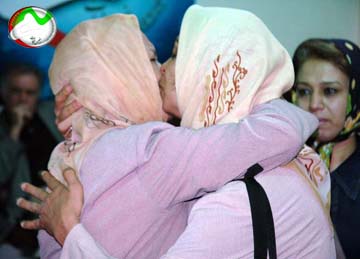
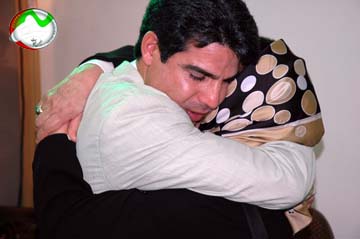
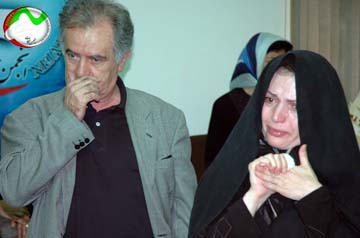
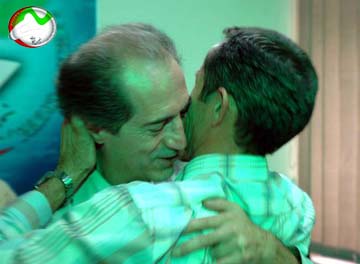
Repatriation of MKO disaffected members

Repatriation of MKO disaffected members

Repatriation of MKO disaffected memebrs

October 12, 2005 0 comments
FacebookTwitterPinterestWhatsappTelegramSkypeEmail
Nejat Publications

Pars Brief – Issue No.18

1.    List of the returnees to Iran

2.    Report to Senate Foreign Relations Committee

3.    Terrorist Mercenaries

4.    Interview – Elahe Iranian Singer  and Anne Singleton

 
Download Pars Brief – Issue No.18

October 5, 2005 0 comments
FacebookTwitterPinterestWhatsappTelegramSkypeEmail
Mujahedin Khalq Organization as a terrorist group

MKO Critics Warn – Take MKO Threat Seriously

…Sending a letter to European countries, US and Canada, a group of former members of the MKO warned that the group is starting to harass them in western countries using its trained members. The letter said that a number of MKO members trained in security, intelligence and urban warfare courses had been deployed to Europe illegally.

I had an interview with Massoud Khodabandeh, former member of National Council of Resistance, who is among the letter’s signatories. I asked him about the reasons behind signing such a letter?

Massoud Khodabandeh: before the fall of Saddam, the MKO deployed 200-300 of its members along with Maryam Rajavi to Europe. Most of these people were trained in Saddam’s security systems and can be compared to Saddam’s Fedayeen.

It seems that this intelligence system has matured during the past 2 years and is now active. For the time being, this system is centered in Germany, with direct contact with the MKO’s headquarters in Auvers-sur-Oise in France. Its divisions are also active in the capitals of other democratic countries. They now have more than one hundred associations, companies and websites to cover-up their activities and they have come to a point, unfortunately, that their activities include kidnapping in Germany, beatings in Netherlands, harassing families and even schoolchildren whose parents are critics of the organization.

We sent this letter, signed by 80-90 people, to the Interior Ministries of European countries, the USA and Canada to be investigated seriously. But we should be careful about the process; the way it’s going now would turn the previous self-immolations into future murders and killings and we don’t want this to happen.

Interviewer: Mr. Khodabandeh, according to you, these attacks have intensified. What are the goals of such activities? Are they organized movements? In all countries?

Khodabandeh: yes, it’s organized by a trained system. Some of them have 20 to 25 year records in this. They were officially trained in Iraq. It means that we can’t ignore it. And, about the goals of such activities: they believe that their problems with being on the terror lists, or being prosecuted by the French Judiciary, are rooted in the revelations made by their critics and by former members. They’ve concluded that they will never relieved [from the terror label] while these people continue to disclose the organization’s realities. So, they spend a significant amount of their energy to suppress, or erase, those who criticize them.

Interviewer: What measures can the western countries take? What have they done?

Khodabandeh: For instance, a court in Germany is now hearing the complaints of a former Abu Ghraib prisoner who is a critic of the MKO. They [MKO] wanted to kidnap him in the street. The court is doing its work, and that’s a positive step. There have been cases of beatings in the Netherlands but it was not possible to investigate the cases because the MKO agents were able to flee the scene; that’s because, as I told you, they’re trained in this field. But it seems that there are some ways to stop such activities if western governments take this seriously. Anyway, such organized movements are not legal in these countries. Even the lawyers here say that surveillance is not legal. Making databases of opponents is not legal. Harassing people and their children is not legal. Apparently, such activities can be prevented. The only thing is that they should be paid attention to.

October 2, 2005 0 comments
FacebookTwitterPinterestWhatsappTelegramSkypeEmail
Former members of the MEK

Return of some MKO Defectors

Once more MKO members repatriated. 13 former members have returned to Iran by the cooperation of Islamic Republic, Red Crescent, International Red Cross and other officials.

Earlier, hundreds of other members of MKO who’d left the group’s camp in Iraq returned to the country.

Gradual defections reveal the existing deadlock in Iraq.

October 2, 2005 0 comments
FacebookTwitterPinterestWhatsappTelegramSkypeEmail
Newer Posts
Older Posts

Recent Posts

  • Why the MEK Failed to Become a National Movement

    August 26, 2026
  • From Studying in America to Death in a Village in Albania

    August 22, 2026
  • The Psychological Impact of MEK Ideology on Members

    August 17, 2026
  • A study on the financial mechanism of the Mujahedin-e Khalq

    August 10, 2026
  • A Child behind the Ideological Bars of Massoud and Maryam Rajavi

    August 8, 2026
  • Facebook
  • Twitter
  • Instagram
  • Youtube

© 2003 - 2025 NEJAT Society . All Rights Reserved. NejatNGO.org


Back To Top
Nejat Society
  • Home
  • Articles
  • Media
    • Cartoons
    • NewsPics
    • Photo Gallery
    • Videos
  • Publications
    • Books
    • Nejat NewsLetter
    • Pars Brief
  • About Us
  • Contact us
  • Editions
    • عربي
    • فارسی
    • Shqip