Nejat Society
  • Home
  • Articles
  • Media
    • Cartoons
    • NewsPics
    • Photo Gallery
    • Videos
  • Publications
    • Books
    • Nejat NewsLetter
    • Pars Brief
  • About Us
  • Contact us
  • Editions
    • عربي
    • فارسی
    • Shqip
Nejat Society
Nejat Society
  • Home
  • Articles
  • Media
    • Cartoons
    • NewsPics
    • Photo Gallery
    • Videos
  • Publications
    • Books
    • Nejat NewsLetter
    • Pars Brief
  • About Us
  • Contact us
  • Editions
    • عربي
    • فارسی
    • Shqip
© 2003 - 2024 NEJAT Society. nejatngo.org
Hanif Azizi
Former members of the MEK

Swedish police recruited by the Iranian intelligence !

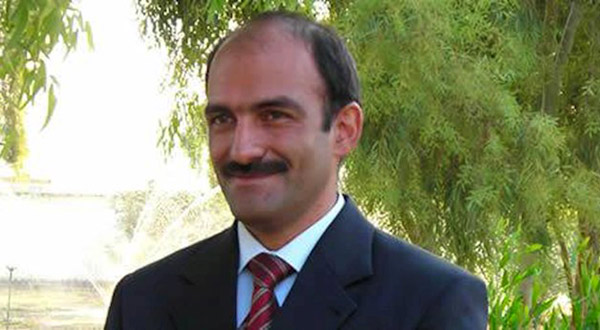
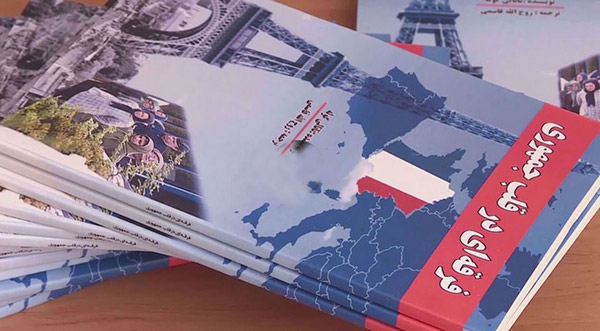
Hanif Aziz, 40, a Swedish police officer and the son of Mujahed parents published his autobiography on the early 2021 in Swedish language. The book was soon published on Google Play eBooks and Amazon and other online stores for $9.99. While the propaganda media of the Mujahedin Khalq (MEK) claims that the book has been written by the Iranian Intelligence (!) the world’s largest community of book lovers, Good Reads, has introduced the book. In this database, there are also eleven reviews on the book of which two are in English. The MEK-run media claim that the Iranian intelligence is abusing Swedish Police personnel! Their proof for such a claim is that, as a child, Hanif had not been interested in writing books and politics.

Hanif Azizi

The Swedish title of the book is “Förortssnuten” which has been translated to English as “Suburban snout”. These unbiased reviews on the book clarify that Hanif Azizi’s book is not a book on politics. Google Reads states:
Hanif Azizi grew up on a military base in the Iraqi desert. His parents are warriors for the Iranian rebel movement Mujahedin of the People and the fight against Khomeini permeates his entire life. After his father is killed in the war, nine-year-old Hanif takes his little brother by the hand and begins an escape that eventually takes him to Sweden. He has a hard time adjusting to the new country and in his teens he gets in touch with the terrorist-branded rebel movement again. Attracted by fellowship and a possible reunion with his mother, he goes to Iraq to become a warrior in the People’s Mujahedin.

The story could have ended here, but something happens that makes life turn around. Instead, Hanif returns to Sweden – and trains as a police officer.
He is looking for a job in Rinkeby, and will soon be involved in things he never thought could happen in Sweden.
Suburban Snot is a reality-based story about escape, exclusion, radicalization and life in Swedish areas of exclusion. It is a story about friendship, cohesion and about a police force that is faced with a brutality it cannot handle.

Ksena a user on Good Reads rated the book “really liked it” and wrote:
Recommends it for: Anyone!

Shelves: painful, lovely, dramatic, biographical, nonfiction-facts, read-for-work, important, favorites
This was… a really good book. And an important one. AND! Much more than I first had anticipated.
I expected a story about a Swedish cop being a refugee originally or from such a family, and working in a Vulnerable area. And I do get that. But not only.
He grew up his first 9 years in the organization Peoples Mujahedin of Iran. But was then sent away to an uncertain future with alone. Just him and his little brother. 9 and 6 years old.
It’s interesting how he has written this book about his life. Every other chapter is about his life as a cop. And every other chapter is about how he grew up and survived just him and his little brother with various adults around them, both good and bad.
It’s both tragic and inspiring. Especially when he does finally meet his mother again as a young adult and almost joins the Mujahedin organization… It makes it so clear how young men so easily can be so easily manipulated to join extremist organizations.
Now he didn’t, he grew up mentally, returned to Sweden and ended up being a cop through various roads of life. And works in areas in Sweden where crime-rates are high and honor culture are way to common. And he is using his past to help as much he can.
It’s an inspiring story. It would have been cool to meet this man, and especially to have the teens and kids in the school I work in. I think it would have done them good.
I’m glad to have read this book. Even though the language was a bit weak here and there (hence not max-rating), over all it was an amazing story!

Another user Katerina Dashti rated it “liked it” and wrote:
“He is not welcome here (Han är inte välkommen hit). ”
This book happened to be on my to-read list due to several reasons. First, it has been much discussed in Swedish social median and book societies. Second, this is the topic that is very important for my new Swedish family and it was very interesting to read other people view about it.
This is a story of Iranian boy, who grow up in a military base in the Iraqi desert where his parents joined the Iranian rebel movement in the fight against political regim in Iran. After death of his father, Hanif and his brother start their journey for a better life that eventually takes them both to Sweden. This is a story about difficulties to adjust to the new country and how different situation can be experienced by two brothers. The story has a twist and instead of leaving for Iraq to reunion with his mother and join the People of Mujahedin, he decides to become a police officer in Sweden and work in one of the problematic areas in Rinkeby.

The story is presented in two parts. On the one hand, it is a story of a little boy who goes through really tough moments that undoubtably affected his life and views. On the other hand, it is a story of a police officer working in one of the most criminal areas in Sweden and facing loads of brutality that is hard to handle.
This is announced to be a reality-based story about escape, exclusion, radicalization and life in Sweden. Yet it turned to be more a one-sided story, that perhaps is a part of author’s getting well and accepting himself process. The part of the police officer story was really interesting as it focused on emotional aspects and challenges and possible ways (or lack of them) to deal with them. In addition, it was interesting to read about some tragical events in Sweden from the insider perspective. The biographic part of the growing up boy and information presented raised numerous questions. Thus, I would recommend to see the book more as a fiction story with some connections to the reality than as the reality based one. In other words, this book is a great example case where one should read consciously and remember about the danger of a single story.
Book is in Swedish and translation in English is not available. The language is easy and advanced language skills are not required.

December 13, 2021 0 comments
FacebookTwitterPinterestWhatsappTelegramSkypeEmail
weekly digest
Iran Interlink Weekly Digest

Iran Interlink Weekly Digest – 304

++ In Albania, Alice Taylor for Exit News reported the arrest of two senior MEK officials for drug trafficking, people smuggling and money laundering. While MEK experts and observers responded by saying it was about time the MEK’s crimes were exposed and the perpetrators brought to justice, a parallel scandal took place as the article was expunged from the site leaving an Error 404 notice. The article reported an official source stating that the pattern of criminality by the MEK dates back to 2015. Commentators pointed out that manipulation of the media also follows the same pattern. In 2017, after two visits to Tirana, some media interviews with Anne Khodabandeh, expert in Cultic Abuse, were removed as editors and proprietors were intimidated and bribed by the MEK. Similarly, reporting on the death of Malek Sharaii was also removed after the MEK intervened. False reporting labelled Iranian visitors as ‘terrorists’. The pattern of MEK mafia-like behaviour in Albania encompasses not only the media, but includes the police, security services, judiciary and politicians from all parties. This has become so prevalent and well-known that an article in Balkans Insight by Nahzi, from BIRN, concerning America’s complaints about high-level corruption in Albania, directly mentions the MEK presence in that country as an example.

++ Gazeta Impact, Albania, published an article highlighting the difficulties faced by MEK members who try to leave or have already left the cult. The piece focuses on the Danafar family of father and two sons who requested from the MEK leadership that they be allowed to live freely in Tirana rather than continue in the closed camp in Manez. This was not a defection, simply a change to their living arrangements. They were refused. One son attempted suicide. In hospital, he was guarded 24/7 by MEK minders. The article points out that under Albanian law, inciting suicide – for example through ill treatment – is a criminal offence, as is depriving a person of their liberty. The article’s authors call for state protection of these people from Maryam Rajavi and her lieutenants. Another case is mentioned, that of Farshad, a famous singer who escaped the MEK camp. He has since been subjected to extreme psychological pressure by an MEK commander. The authors appeal to the Albanian police to protect Farshad “thus avoiding any extraordinary event such as murder, suicide or even murder disguised as suicide”. After all, the state is responsible for protecting all Iranians sheltering in Albania.

++ Nejat Society draws our attention again to the plight of MEK children who were separated from their parents by the leadership. A translation of an interview of Hanif Azizi by Linda Eliasson in folkbladet.nu describes the lucky escape he made. Azizi, who is now a policeman in Sweden, describes how he was deceptively recruited by his biological mother and the brainwashed to join the MEK fighters in Iraq. When he returned to Sweden to say goodbye to his foster family, they were able to alert him to this deception. Waiting to renew his passport allowed him time to realise he was living his dream life and he returned to Swedish society, eventually joining the police.

++ Mehdi Khoshhal in Cologne, Germany has addressed an Open Letter to Olaf Sholz, the new Chancellor of Germany. Khoshhal says that the working class and immigrants have good expectations from Sholz based on his policies. This must include guarding against the continued activities of the MEK in Germany. Khoshhal gives a brief overview of the danger that the MEK poses because of its belief in violence and human rights abuse and points out that this propensity for violence does not only affect Iran but also Europe where self-immolations were ordered. He suggests that the office of Green Party Minister Annalena Baerbock could be used to leverage human rights policies that would target the MEK’s abuses.

December 12 2021

December 13, 2021 0 comments
FacebookTwitterPinterestWhatsappTelegramSkypeEmail
Maryam Rajavi
Germany

Danger of Mujahedin-e Khalq for Germany

Dear Mr Olaf Scholz,
Greetings.

First of all, congratulations on your victory in the October elections and the leadership of the Coalition for the Social Democrats, the Greens and the Free Democrats, and your approval as Chancellor by the Bundestag on December 8.
Like many German citizens and other immigrants, I participated in the recent German elections in October. The result of the election in Germany was a strange event. Ms Angela Merkel, led by Conservative parties such as the Christian Democrats and the Christian Social Democrats, lost the majority of the vote and, after sixteen years, lost the game to the coalition parties known as the traffic lights.
The victory of the above parties and with a large number of votes among the lower classes and immigrants, undoubtedly holds a message, and these groups have demands from you and the coalition parties that you, as the representative and Chancellor of Germany, must respect.
Your 178-page alliance agreement was raised and heard in the community. Although these are few, they are still a delight to the lower German citizens. As one of the citizens who wanted to write the first letter to your service, I would like to acknowledge and warn of a serious loss and problem in German society.

Dear Mr Olaf Scholz,
First of all, I must admit that I have lived in Germany for almost three decades and enjoyed the blessings of life and freedom like other citizens, and I am extremely grateful for that. But as a citizen, I wanted to warn you and your new government of things that other citizens are not aware of. That is, a security issue related to terrorism, which has been rampant in European countries for many years and has grown significantly in recent years, and due to its performance, has taken a lot of energy from governments and citizens.
The Mujahedin-e Khalq (MEK), of which I was a former member and now a critic and protester, was on the EU terrorist list until 2009. This group has been living in Europe for about four decades and one of the most important bases of their activities and travels is Germany. The group, led by Massoud Rajavi, who is now living a secret life, and his wife and representative, Maryam Rajavi, are leading the terrorist movement. They spent more than three decades on Iraqi soil, and during the war between Iran and Iraq, they were in full service of the dictator Saddam Hussein, but at the same time hid behind a political front, while many of their tools and facilities were supplied from European countries especially in France.

The group, which is a sect in organization and lives a collective life, apart from its terrorist and war activities in Iran and Iraq – which killed tens of thousands – and participation in most of the suppressive activities of Iraqi dictator Saddam Hussein, has also been active in European countries in committing terrorist activities and human rights violations, some of which I will briefly describe.

In early 1991, the Iraqi-based Mujahedin-e Khalq (aka PMOI) sent about 900 child members to other Western countries via Jordan under the pretext of war, including about 200 children in Germany and Cologne. The MEK, subjected these children to all kinds of abuse by their parents and supervisors, and even spent the welfare allowances due to them on war and terrorism. The MEK raised them in safe houses and gave them training in terrorism. Far from the eyes of the law, a number of them who were under the legal age were transferred from Germany to Iraq to join the military and some of them were killed.

The MEK also celebrated the news on 11 September 2001, when al-Qaeda forces attacked the twin towers in New York in a suicide mission which killed 3,000 civilians. Rajavi told his forces that if this is what reactionary Islam, by which he meant the terrorist group al-Qaeda, can do, woe be the day when revolutionary Islam, by which he meant the MEK, takes action.

It was not long before Saddam Hussein was defeated by allied forces in Iraq, and one of the leaders of the Mujahedin, Maryam Rajavi (nee Qajar Azodanlu), who had clandestinely arrived in France in spite of committing all kinds of criminal and terrorist activities, was arrested in Auvers-sur-Oise on June 17, 2003 on terrorism and money laundering charges and, instead of respecting democracy and the rule of law, ordered the self-immolation of dozens of MEK members on European soil, causing two deaths, several severe injuries and panic for the people of Europe.

In addition, the Mujahedin-e Khalq leadership, which faced criticism and rejection by Iranian and European citizens for its destructive policies, issued death sentences against disgruntled members, some of whom are now German citizens, and handed implementation of these over to its remaining forces. Rajavi issued a fatwa condemning his critics to death and told the members to report the execution of these critics to the police after their deaths because European prisons are like four-star hotels, so not worry about it. Although the group has lived in Western countries for many years and has exploited all the material and spiritual resources available to it, it still strongly believes in the strategy of violence and has never rejected the use of terror and violence, not only in Iran and Iraq but now in Europe as well.

Mr Scholz,
The above is a sample of the facts. But this brief letter does not address other crimes and human rights violations related to this terrorist movement. The people of Iran and Germany have had cultural relations for more than five centuries. Now that you are determined in your future plans for your government to put human rights at the forefront of your humanitarian actions outside the borders of Germany and to put pressure on other countries in this regard through the Green Party Minister, Annalena Baerbock, I suggest that such leverage is not bad to implement human rights for those living in Germany in connection with terrorist groups and human rights violators.

Dear Mr Scholz,
In connection with the danger posed by the above-mentioned group, which only a few years ago praised the ISIL forces as “revolutionary tribes” and which is accused of collaborating with ISIL behind the scenes, you can also ask the defectors and those from the lower ranks of this movement whether their years of captivity, forced labour, imprisonment, torture and other human, financial and psychological damage, have brought them to the free world. A number of critics and former members of the MEK are now German citizens but are constantly threatened, slandered and intimidated by the Mujahedin.

Wishing you greater strength to reform the old structures for the benefit of the underprivileged and immigrants, I congratulate you again on your victory and wish for you and the German people good health and prosperity. Be successful and victorious.

Mehdi Khoshhal, Germany

December 12, 2021 0 comments
FacebookTwitterPinterestWhatsappTelegramSkypeEmail
Fazel Farhadi
Former members of the MEK

Fazel Farhadi defector of the MEK recounts experiences

“We were enduring the conditions of Iraqi camps when one day, they announced over loudspeakers that we get in line in the yard. We got in line. A few minutes later, a few men wearing suit and tie and two women arrived. A man –I later realized that he was Mehdi Abrishamchi—began to speak. He said, ‘We come from the Mujahedin Khalq. Brother Massoud says hello to you. We feel pity for you. We know that you suffer difficulties here. We are sorry and we want to take you to our own camp.’ Then Abbas Davari started speaking repeating the same nonsense.” Fazel recounts.

Fazel Farhadi was serving his army service as a soldier when he was taken as a war prisoner by Iraqi forces in Iran-Iraq war. The Iraqi forces took Fazel and other Iranian POWs to their camps which were terribly in shortage of food and hygiene. Fazel and a few of other POWs were deceived by the MEK agents to join the group’s camp in Iraq.


Fazel Farhadi

Fazel Farhadi

That day, MEK recruiters served the Iranian prisoners with lunch. During the lunch time, the prisoners used the opportunity to ask them some questions. Fazel asked Abbas Davari, “If you save me from here, when will you take me to Iran?” Davari promised him to take him to Iran after he joined the group’s so-called army National Liberation Army (NLA). “We will soon go to Iran and you will return to your family after you join the NLA,” Davari told Fazel.

“In the NLA you are free to take a few days off every week,” Davari fabricated some lies about their army. “You are even paid for the days you are off.”
The MEK agents left the camp after the lunch but they got back a week later. “This time they had brought us some gifts,” Fazel writes. “They said, ‘we are going to go to Iran in a few days and if you do not join us, you are not Iranian and we will not take you to Iran.’ We believed their fake promises. So, I and some of other prisoners told them our names and asked them to take us. They took us to Camp Ashraf two days later. Our dark days started from that very day.”

Initially, the Iranian prisoners were received warmly at camp Ashraf but just a few weeks later, they were treated like slaves; forced to labor without any payment. “I was exhausted with the repetitive and sever daily labors so I asked a commander to give me a few hours off to go to the town. He laughed at me! ‘What kind of off!?’ he asked, ‘Here we are in Iraq. We are fighting. There is no off here. Who told you such a nonsense!?’ I told him that a man named Abbas Davari had told me about it but he said that I was wrong. ‘Here is the place of war and there is no day off in war.’ he said.”

Fazel started complaining about the false promises and the lies that MEK recruiters had told them and asked to leave camp Ashraf to get back to the Iraqi camp. He was not allowed and instead he was threatened to death. “I suddenly found out that the lunch and gifts were a trap to capture me and other POWs,” Fazel states.
“Rajavi and his commanders are just a bunch of fraudulent liars,” he says. “I spent 16 years of my life in the cult of Rajavi, in a closed atmosphere. I waisted my life in the MEK. Rajavi resorts to any dirty deals to achieve his dire ambitions. I hope that Rajavi and his allies will be brought to trial in near future.”

December 11, 2021 0 comments
FacebookTwitterPinterestWhatsappTelegramSkypeEmail
MEK Cult women in Albania
The cult of Rajavi

Learning a new language is forbidden in the MEK

Traveling abroad presents an ideal opportunity to master a foreign language. The immersion process facilitates communication in a diverse world. However, for members of the Mujahedin Khalq (MEK) who have lived the longest part of their life in foreign countries learning the languages of that country is forbidden.
In today’s world, learning a new language has a lot of benefits. The experts believe that learning a foreign language improves your memory, makes you a better multitasker, encourages cultural appreciation, makes you a better communicator and encourages creativity. But, as members of a cult-like system, the rank and file of the MEK are not supposed to gain these benefits.

Former member of the group, Mehdi Soleimani told Mardom TV, in his recent interview on the life of child soldiers in the MEK, “The MEK leaders do not allow members to learn English. As soon as they see someone speaking a few English words they accuse him or her of being a mercenary or of being willing to leave the group to join a bourgeois life!”

In fact, anything that opens the windows to the outside world for the members of the MEK is a taboo. The leaders of the MEK know that learning English improves and widens employment opportunities for defectors. A person who masters in English is able to explore the world with confidence and access world-class education systems and establishments. And eventually knowing English increases his or her cognitive ability which can be paraphrased as brain power.

Herd mentality or mob mentality within cults

Brain power is what all destructive cults do not want for their members. Destructive cults are considered as being dangerous and harmful, as their practices can be manipulative and can have a detrimental effect on the mental and physical well-being of members. Many members who have left the MEK report practices of physical and mental abuse, both of adults and children.

As a matter of fact, most members of the Cult of Rajavi resided in Iraq for about three decades but the scandalous fact about them is that the majority of them hardly ever know Arabic, the official language of Iraqis. Having been isolated in the Iraqi deserts at Camp Ashraf which had almost all facilities of a city, MEK members were not allowed to leave the camp and to communicate Iraqi people.

After the group’s relocation in Europe, Albania, the same restrictions were made for the rank and file of Massoud Rajavi’s cult of personality. Members who are kept as hostages in camp Ashraf 3 in Manez, in north of Tirana are deprived from the proper self-confidence to enter the foreign community of which they do not know the language and culture. Furthermore, the group has confiscated their ID documents, their money and other properties as well as their brain power. Thus, those who dare to leave the MEK are really brave and respectable people.

Mazda Parsi

December 9, 2021 0 comments
FacebookTwitterPinterestWhatsappTelegramSkypeEmail
Hanif Azizi
The cult of Rajavi

Hanif was trained for terror as an MEK child

Hanif grew up in the rebel movement Mujahedin-e Khalq.
He was only six years old when he was trained in the use of weapons, and as a nine-year-old he was sent by his mother alone on the run. – For my mother, the fight was more important than the love for me.

Iraq, 1988: Hanif is six years old and the weapon in his hand is heavy. With all his might, he manages to lift the Kalashnikov over his head in a victory movement. His teacher laughs and the children around him cheer. It is a regular school day at the Camp Ashraf military base in the Iraqi desert. – The fight against Ayatollah Khomeini permeated our lives and marked my entire childhood. That was what life was all about, and the battle came before anything else. Another memory: He draws a drawing for his mother Zohreh, which depicts an automatic weapon surrounded by red stars. He gets the highest grade and the art teacher says his mother will be proud.
Dad died in battle

After the Iranian revolution in 1979, the religious leader Ayatollah Khomeini took power. He created an Islamic state and changed Iran from base. Hanif’s parents agreed to fight in the resistance movement People’s Mujahedin and settled in neighboring Iraq. Hanif’s father lost his life in the battle. A common question among children at the military base was: “Are your parents alive?” We were many who answered no to that question. We shared the suffering together, and somehow it made the loss less painful. It is said that if one “have not lost a parent, you are not a real Mujahedin child. It sounds absurd, but that’s the way it is,” Hanif said.
He remembers the great desert and the great gray tanks that were donated by Saddam Hussein. He remembers the cohesion, and despite being aware of the struggles, he was rarely scared as a child. But as the conflict escalated, risks increased, and Hanif’s mother, like many others in the rebel movement, decided to send her children away.

Hanif Azizi

– She could have followed, but for her the fight was more important than us. Hanif was given responsibility for his little brother He was nine years old and carried a bag in black imitation leather. The bus was covered in mud to camouflage it, thus reducing the risk of bombings. – The memory of my mother’s words has etched itself, she looked serious and said that I was grown up enough to take care of my little brother so as I had the responsibility for my little brother. When I waved to her, I did not know that it would not see each other gain. I remember holding my little brother’s hard in my hand tightly. The two brothers ended up in Sweden and eventually in Norrköping. Hanif did everything to fit in to take care of himself. But his father’s death and flight to Sweden had affected him deeply.

– I had a hard time focusing and for the first time began to question the way we had lived. The grief made me become something of a mess and I made quite a fuss. I was seen as a problem wherever I went, and with each adversity the hole and emptiness within me grew larger. I was a strange bird that did not fit in anywhere. He felt outside and alone, and in his teens, the feelings got worse. – I had long tried to distance myself from the movement and did not want to be reminded of my past. I tried instead to become as Swedish as possible. But it did not work, I remained stranger. He missed his mother, his roots, a connection.

Hanif Azizi

The missing pulled him back to Iraq When the Mujahedin of the People reached out, I took it. I was recruited to become a warrior and join the fight. On a subtle level, room for maneuver was limited and there was a form of radicalization and brainwashing that I was exposed to. I was not lured into the movement, but slowly my thoughts were reworked to fit their purpose. There was also a warmth that was so existentially comfortable that I continued to be a part of the movement.

Human Rights Watch claimed in a report in 2005 that the movement was a sect, and it was until 2009 that the movement was removed from the EU’s list of terrorist organizations. But Hanif was attracted by the community and by resuming contact with his mother. – I was like a ticking bomb, full of emotions that could explode at any moment. Everything was clear. He had to travel to fight for the Mujahedin. But one detail, a broken passport, put an end to his plans. – In hindsight, I have realized that the incident gave me a relief and I got a chance to stop and think. I understood that I was looking for an identity and not for a place in the struggle. How did you realize that? – I have thought about it a lot and often get questions about it. But there is no easy answer, rather several factors. Part of it, I think, was that I had a strong desire to become Swedish and saw myself as a Swedish.

Hanif Azizi

Hanif’s life can make a difference for young people in the same situation
Hanif’s life took a new turn and he trained as a policeman. Today he works in Rinkeby and often meets people who are outside society, but also in different phases of radicalization. – There is no point in preaching about the right path, I have realized this through my story, but you can reach the young people in a different way. They can feel that I am not just talking, but that I understand. He no longer has any contact with his mother, and the bitterness of his mother leaving her children was for a long time the dominant feeling in him. – It’s a trauma that has left its mark on me. A part of me will always be an abandoned child. Now I have turned my back on my past to be able to move on and it is a sadness but somehow it has also given me an inner peace. I have found my place and it is here in Sweden.

udeoghjemme.dk , Translated by Nejat Society

December 8, 2021 0 comments
FacebookTwitterPinterestWhatsappTelegramSkypeEmail
Hanif Azizi
The cult of Rajavi

Story of a Swedish police who was about to become terrorist

Hanif Azizi was close to become a terrorist, but a broken passport and a dream of ice cream saved him.
I used to stand in front of the mirror and pretend to be in Sweden buying ice cream, says Hanif Azizi. Today he is a police officer and lectures on extremism.
Hanif Azizi grew up in a military base between Iran and Iraq. He dreamed of Sweden as a child. He had heard that there was a car driving around the streets selling ice cream – and that the parents could give pocket money to the children to buy ice cream. One day he was suddenly sent to Sweden.

– Mother said “You are nine years old, you are old enough to take care of your little brother now”. “Yes mom,” I replied.

The plan was that later in life he would return and fight for the terrorist group Mujahedin-e Khalq.

Trauma, fear, lack of trust, grief and hatred are something a child gets who is sent away in that way, Hanif says.

They told me that my father was a hero

– When I came to Sweden, I had to live with a Persian family who were also traumatized. Some days we did not get food and my clothes were not washed. At school I was teased, “Hanif go from here, you stink”.

Hanif Azizi

Hanif Azizi

The staff at Hanif’s school asked many questions and they made concerns. Thanks to that, he got to come to a new family. The actions of the leisure staff came to change Hanif’s entire life.

Although Hanif was doing well with his foster parents, it was something that weighed heavily on him, even though he could not put his finger on what it was. One day Hanif got a phone call from his biological mother that lasted for about an hour, she told him, among other things, that he had to visit Mujahedin’s office in Stockholm.

– They told me that my father was a hero, and that they fought with him. From not being anything, I became something.

Hanif was confused and did not feel that he belonged anywhere. He was desperately looking for an identity and had big questions about life. What was the point of that? He had low self-esteem, felt excluded and did not know exactly what he wanted to do with his life. But he wanted to make a difference, he wanted to find belonging and he wanted to be a hero.

When Hanif was 19, he went to Iraq to visit his mother and was manipulated by the Mujahedin.

– They took advantage of the fact that I had been discriminated against in Sweden to get me to join them. “Why should you be in Sweden, they do not give you a job. For them, you are just a black skull.”

Hanif decided to follow in his father’s footsteps and become a soldier. But he first wanted to go back to Sweden and say goodbye to his family.

Back home in Sweden, he felt that the heavy backpack he was carrying became lighter, perhaps because he had met his mother.

– When I told my foster parents, my mother said “This is not you, these are not your words. You have been brainwashed”.

After visiting the family, Hanif discovered that his passport was broken, so it took some time before he could return to Iraq.

– It was summer and nice weather, I hiked, ate ice cream and hung out with those who loved me. I realized that I was living my dream life, I had dreamed of coming to Sweden. I decided to make a comeback in Swedish society and today I am a police officer, says Hanif Azizi.

Linda Eliasson,folkbladet.nu

December 7, 2021 0 comments
FacebookTwitterPinterestWhatsappTelegramSkypeEmail
Mohammadreza Seddigh
Former members of the MEK

Mohammad Reza Sedigh announced defection from the MEK

Another member of the Mujahedin Khalq (MEK) announced his defection from the group and joined the newly established ASILA.

Mohammad Reza Sedigh, was born in 1979 in Tabriz, Easter Azarbaijan, Iran. In 2002, in order to get in a better job market he moved to Turkey where he was deceived by an MEK recruiter. “Join the MEK to enjoy a better life and a job with a good income!” the recruiter told MohammadReza. “Then the MEK will send you to Europe.”
MohammadReza who was eager to have a better life in Europe accepted the suggestion and the next day he was in the MEK’s camp in Iraqi territory. “They gave me a military uniform and told me ‘You are a fighter of the MEK now!’” MohammadReza writes in the message that he published to announce his defection from the group.
He was forced to stay in the MEK’s camps in Iraq for over 13 years. After the expulsion of the group from Iraq and its relocation in Albania, MohammadReza stayed 3 more years in the group’s camp near Tirana. “In Albania, the group leaders kept on the same cult-like regulations, called red lines,” he writes. “I could not endure their fraudulent practices anymore. I had waisted my youth, my mental and physical health under the deceptive system of Massoud Rajavi.”

Mohammadreza Seddigh

Mohammadreza Seddigh

Therefore, MohammadReza decided to leave the group but his departure from the group’s camp did not stop the MEK commanders from controlling him. He had to go to the group’s office to receive the monthly payment that the UNHCR was supposed to pay all MEK members in Albania. “Every time I went to the MEK’s office to receive my money, the office’s authorities such as Javad Khorasan, Fereidoon Salimi and Abdollah Tehranchi tried to interrogate me,” he writes. “They wanted me to spy other MEK defectors in Tirana. They wanted me to give them information about Hassan Heirani and even about other separated members who still went to them for the monthly cash.”

Mohammadreza Seddigh at ASILA office

Mohammadreza Seddigh at ASILA office

MohammadReza Sedigh was fed up with these monthly interrogation meetings. He explains how he decided to denounce the MEK completely: “The last time I went there to get my 35 thousand Albanian Lek was November 27th. They asked me to take position against the group’s defectors who have recently founded the Association for the support of the Iranians Living in Albania (ASILA). They wanted me to repeat the lies that the group propagates about ASILA. I wondered why the group itself does not take such a position and eventually I found out that ASILA is a legal organization registered by the Albanian government as a European country.”

Mohammadreza Seddigh at ASILA office

MohammadReza realized that the MEK leaders are determined to cause division between defectors of the group. The group knows that any accusation against ASILA can be officially sued in the Albanian judiciary. “I joined ASILA and reported the MEK’s intentions against the association to the Albanian authorities via ASILA.”
MohammadReza Sedigh announced his complete dissociation from the MEK’s office and his membership in ASILA.

Mohammadreza Seddigh at ASILA office

Mohammadreza Seddigh at ASILA office

December 7, 2021 0 comments
FacebookTwitterPinterestWhatsappTelegramSkypeEmail
Nejat NewsLetter - No.88
Nejat Publications

Nejat Newsletter No. 88

Inside this Issue:

– ASSOCIATION FOR THE SUPPORT OF IRANIANS LIVING IN ALBANIA (ASILA)
Defectors of the Mujahedin Khalq (MEK) who reside in Albania established an association to support the MEK defectors in Albania. Hassan Heirani, former member of the MEK announced the establishment of the associationNejat NewsLetter - No.88 which is supposed to help Iranians who leave the MEK’s camp in Durres, near Tirana. “The Association was registered as a legal institute to support those who defect the Cult of Rajavi,” Hassan Heirani said.

– MEK defector testifies about emotional suppression in the group
Gholam Mirzai is in his fifties. He defected the Mujahedin Khalq in Albania, three years ago and he re turned to his home town a year later. Gholam writes about his experiences of living in the cult-like structure of the group for Nejat society website. His recent piece published on the Persian page of the website points out certain cases of Mujahed mothers whose kids were separated..

– Baba Adam Theater Show in Tehran
A play called Baba Adam has been staged by the City Theatre in Tehran. The play charts the journey of the father from Iran to Iraq in search of his long-lost son who is a member of the MEK. On arriving at Camp Ashraf, instead of letting him know that his son is alive or not, fanatics of the MEK throw stones at him and break his head.

– MEK CHILD SOLDIER SPEAKS OUT – FREED AT LAST
Amin Golmaryami came to Germany as a refugee child. When he was 15, he was taken from Cologne to Iraq together with many other young people, he says – to a military camp run by an Iranian organization called the People’s Mojahedin. He is the first of those victims of this political cult to make his story public under his name.

– Nine Women Under the Rule of Massoud Rajavi
A sample of nine women in Rajavi cult Former member of the group writes of nine women of hundreds who were oppressed under the cult-like structure of the group. Maryam Sanjabi who escaped the MEK’s notorious base, Camp Ashraf, in Iraq in 2011, recalls the stories of these women under the abusive ruling
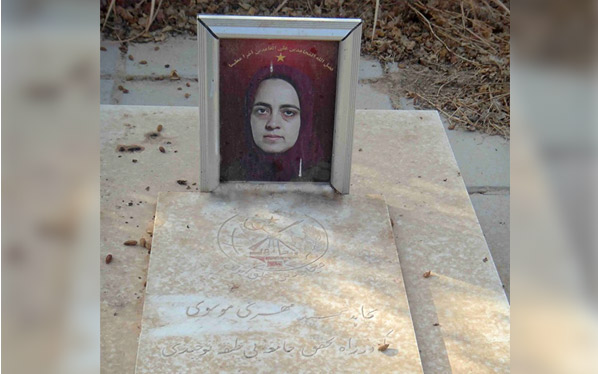
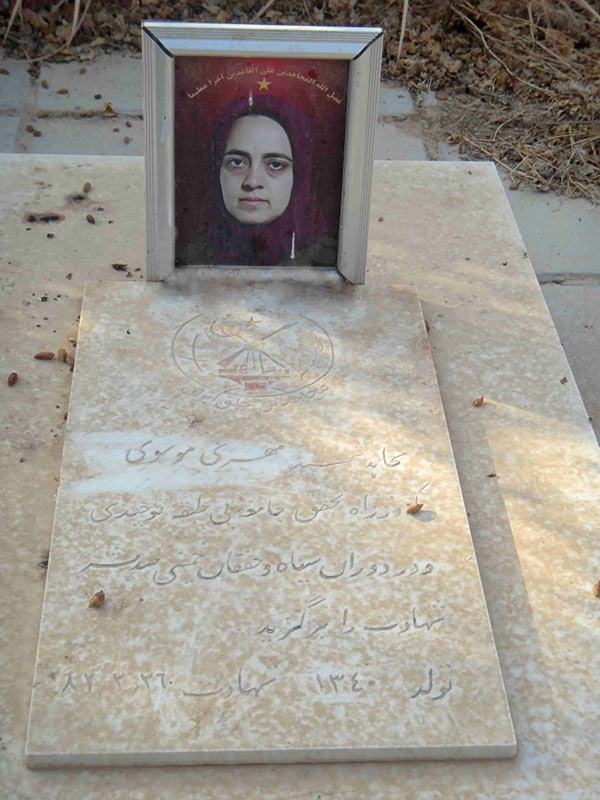
of the MEK authorities. In her recent article she writes of a large number of female members of the group who were under severe suppression in the group although they were allegedly members of the MEK’s so called Elite council.“Among the nine hundred women who have been taken as hostages by the Cult of Rajavi, I know at least a hundred who have been dissidents to the group,”Maryam Sanjabi writes.“As I and other former members have revealed, Mehri Musavi, Minoo Fathali, Zahra Feizbakhsh and Nasrin Ahmadi
were killed under the order of Massoud Rajavi and by Mah vash Sepehri, Faezeh Mohabat kar and some other criminal commanders of the MEK.”

– Petition of The MEK members’ families
More than 1,700 awaiting families of nearly 700 captured members in the MEK camp in Albania, signed a petition to the International Criminal Court, to which a list of signatures was sent.

– Extreme cultic abuse used by Rajavi to control and exploit the members
Zeit Online in Germany has published another lengthy and informative piece by Louisa Hommerich.
Last week the MEK exploded with anger at publication of her interview with a former MEK member
and child soldier who has now returned to Germany. He accepted to be named and he talked in some
depth about the abuses committed against the children of MEK members like himself. This led to the
MEK issuing defamatory rants and death threats against Hommerich.

To view the pdf file click here

December 7, 2021 0 comments
FacebookTwitterPinterestWhatsappTelegramSkypeEmail
Navid Danafar
Albania

State officially responsible for protecting Iranians sheltering in Albania

Between 2013 (in the last days of the Berisha Government 2) and 2016, several thousand Iranians arrived in Albania on the basis of an agreement never made public between the Albanian governments and the international community.

These Iranians were part of a former terrorist organization (until 2012 it was also listed as a terrorist entity by the U.S. State Department). The organization is known by several names or as part of other umbrella organisations such as MEK, NCRI, PMOI, etc. These Iranians sheltering in Albania are also known as members of the Rajavi Cult. With the arrival of this organization to Albania from Iraq, a series of desertions from its ranks were recorded. Men and women members deserted and left, either when the Iranians had settled on the outskirts of Tirana or when they were transferred to Manez in the so-called Camp Ashraf 3.

After Albania was hit by the Covid-19 pandemic, desertions increased in Camp Ashraf 3 as well, because this virus spread significantly in the camp leaving many dead and many affected by it. (For more see this link:

In recent days, in addition to the continuation of desertions, even of family groups, there have been serious human rights violations of these former members of the Rajavi Cult. Such violations of human rights constitute at the same time criminal offenses which carry prison sentences according to the articles of the Criminal Code of the Republic of Albania. The Danafar family tragedy occurred in late November when the Danafar family decided to leave the Rajavi Cult. The father of the family and his two sons, Navid Danafar and Shahpour Danafar, asked their Rajavi Cult superiors to allow them to leave the Manez camp and live in the city of Tirana like many other former members of the cult. The commanders of the camp on the direct order of Maryam Rajavi, the cult leader, refused to allow the family in question to leave the camp in Manez and settle in Tirana.

Maryam Rajavi

Suicide attempt

One of the sons, Shahpour Danafar attempted suicide by cutting the veins of his wrist. Shahpour was hospitalized in QSUT Hospital (University Hospital Center “Mother Teresa”). Albanian state bodies are keeping a dirty silence over this case of attempted suicide.

The police of Durrës and Tirana have not mentioned such a case in their press releases at all. The QSUT directorate, gripped by the fever of changing its head, has also kept a total silence. We remind the police, doctors and leaders of the Rajavi Cult that inciting suicide is a criminal offense, punishable by imprisonment. To the leaders of the police in Durrës and Tirana as well as the director Gledis Nano, we bring to their attention what is written in article 99 of Law no. 7895 dt. 27/1/1995: “Causing the suicide or attempted suicide of a person, as a result of systematic ill-treatment or other systematic behaviour which seriously affects their dignity, committed by the person on whom they are dependent or by the person with whom they have a family or cohabitation relationship, is punishable by imprisonment from three to seven years.

Navid Danafar

Navid Danafar

All those police officers and medical personnel who have kept their mouths shut in the face of such a crime – which is punishable by up to 7 (seven) years in prison – should ask themselves if it is worth going to jail to fulfil the criminal whims of an old woman; former apolitical and stateless terrorist (no homeland), like this Maryam Rajavi?

Unfortunately, even now, when we are writing this article, the violation of the human rights of the victim, the survivor of the suicide attempt continues! From the amateur mobile phone videos made secretly in QSUT, it transpires that 2 (two) male guards, members of the Rajavi Cult, are constantly posted next to the victim. I remind the new director of QSUT, Mrs Albana Fico, that the stationing of two such guards next to the victim all day is in flagrant contradiction of the provisions of the Basic Regulation of the Functioning of QSUT of v. 2015. The presence of two such “full time” guards is nothing short of constant psychological torture of the victim Shahpour Danafar.

Such a flagrant violation of the law means administrative but also criminal penalties for all those Albanians who, by violating the law and the bylaws in force, have joined the Rajavi Cult in violating the human rights of the victim Shahpour Danafar.

I remind the police officers that the brother-in-law of director Fico, currently Minister of the Interior of the Republic of Albania, after the incident with the police, who deliberately pushed the journalist and cameraman into the abyss, did not hesitate to sell the police officer in question. After this scandal of an information blackout of the suicide attempt of a foreigner, who is in Albania as a person protected by the Albanian state (Article 27 and Article 33 of the Fourth Geneva Convention), the police of Durrës and Tirana cannot be silent; most hopefully Minister Cuci this time will not sell his subordinates! I publicly call on former terrorist Maryam Rajavi to clarify the fate of the mother of the two sons Shahpour and Navid. The lady is still in Camp Ashraf 3 in Manez. It is not known, whether she remains in the camp voluntarily, unlike the other 3 family members, or she is merely a hostage in the camp. In the second case, I remind the Albanian police that the head of the cult, Maryam Rajavi and her subordinates have committed beyond any reasonable doubt the criminal offense of unlawful deprivation of liberty of a person.

It is not too late for the Albanian officials to stop their criminal cooperation with the former terrorist Maryam Rajavi and stop the violation of the human rights of the poor “serfs”, who are kept locked up in Camp Ashraf 3. The troubles are not over for the former terrorist Maryam Rajavi – the haemorrhage of members from Camp Ashraf 3 continues. The Rajavi cult ranks are being abandoned not only by ordinary members but also by the high-ranking members of this cult. In the past two weeks, another member of the cult, a very famous Iranian singer named Farshad, left the camp in Manez. This singer, just like Mr Shahpour Danafar, does not ask for anything except that the former terrorist Maryam Rajavi allow him to live in Tirana as a free man and not as a “serf” in the Manez camp. I take this opportunity to call on the Albanian police to take care of Mr Farshad, because he is under constant psychological pressure from the cult commanders. You can expect everything from the former terrorists of this cult, so I pray to God that the Albanian police protect Mr Farshad.

MEK member Esmaeil Mortezaei aka Javad Khorasan; the group's torturer living in Albania

MEK member Esmaeil Mortezaei aka Javad Khorasan; the group’s torturer living in Albania

A brief investigation which I conducted revealed to me that a commander of the Rajavi Cult with the nickname Javad Khorasan (his real name is Morteza Ismail) has exerted extreme psychological pressure on Mr Farshad. I hope that the Albanian police will take care of Mr Farshad thus avoiding any extraordinary event such as murder, suicide or even murder disguised as suicide. I appeal to the Albanian police to protect the lives of these Iranians, because the Albanian state, in written agreement in accordance with the Fourth Geneva Convention, bears responsibility for protecting the lives of these Iranians as internationally recognized protected persons. The U.S. military, since 2003, has categorized these Iranians as protected persons. I strongly believe that both the Albanian police and the Albanian secret service, in accordance with the written commitment of the Albanian government and following the example of the U.S. allied military, will take every measure to protect the life and health of these Iranians, who have abandoned the Rajavi Cult and Camp Ashraf 3 in Manez.

Gazeta Impact, Tirana, Albania, Translated by Iran Interlink

December 6, 2021 0 comments
FacebookTwitterPinterestWhatsappTelegramSkypeEmail
Newer Posts
Older Posts

Recent Posts

  • Rebranding, too Difficult for the MEK

    December 27, 2025
  • The black box of the torture camps of the MEK

    December 24, 2025
  • Pregnancy was taboo in the MEK

    December 22, 2025
  • MEPs who lack awareness about the MEK’s nature

    December 20, 2025
  • Why did Massoud Rajavi enforce divorces in the MEK?

    December 15, 2025
  • Facebook
  • Twitter
  • Instagram
  • Youtube

© 2003 - 2025 NEJAT Society . All Rights Reserved. NejatNGO.org


Back To Top
Nejat Society
  • Home
  • Articles
  • Media
    • Cartoons
    • NewsPics
    • Photo Gallery
    • Videos
  • Publications
    • Books
    • Nejat NewsLetter
    • Pars Brief
  • About Us
  • Contact us
  • Editions
    • عربي
    • فارسی
    • Shqip