
Expressing disapprobation of the terrorist Mujahedin-e Khalq group’s presence in Iraq, head of the Iraqi 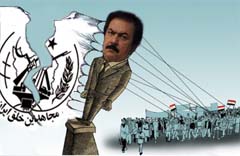 parliamentary committee on martyrs and political prisoners said that, if compelled, they would extradite MKO members to Iran.
“The United Nations should expedite the process of their expulsion from Iraq,” Muhammad al-Hindawi said, as quoted by FNA, Habilian Association reported.
“One day we may be forced to hand the MKO elements over to the government of Iran,” he said, adding that nobody in Iraq thinks about aggression against MKO members held in the country, but they have to leave Iraqi soil.
The Iraqi MP finally concluded that the government of Iraq is not responsible for the lives of these people, as it has not granted them political asylum.
Earlier this week, the temporary home of some 3000 MKO members came under mortar attack, leaving 6 dead and dozens injured.
In an e-mail sent to news media outlets in Iraq, the military wing of Hezbollah in Iraq, claimed responsibility for the attack and warned that others would follow, NY times reported.
Head of an Iraqi human rights group says Iraq seeks to try in absentia the members of the terrorist Mujahedin-e  Khalq organization (MKO, a.k.a. MEK and PMOI) in Iraq.
“The silence of the Iraqi government, international organizations, and the mass media regarding the martyrs and victims of Munafeqin (hypocrites, a term used in Iran and Iraq for the members of MKO) grouplet made us request the hearing in the absence of the Munafeqin,” head of the Association of Justice to Defend Iraqi Victims of MKO, Dr. Nafe al-Isa, told Habilian Association in an interview on Thursday.
He said the people of Tuz Khurmato, who are victims of the MKO and the trial is going to be held in their city, expressed happiness and satisfaction over the issue.
He added that the trial will be held as coordinated with the judicial system, and the witnesses will be heard in the first session.
Dr. Nafe al-Isa also called on Iranian media to cover the sessions, the first of which will be held on February 18, 2013.
 Mujahedin-e Khalq organization is not complying quickly enough with the Iraq’s calls on the terrorist group to complete the move from its former military camp. So the Diyala provincial officials are giving the grouplet a new deadline to fully evacuate Camp Ashraf.
According to a report published by Habilian Association, a human rights NGO formed of the families of over 17000 Iranian terror victims, a responsible source in the town of Khalis, 50 km north of Baghdad where Camp Ashraf is located, said the officials have set the February 9, 2013, as the new deadline for MKO to withdraw all its members from the Camp Ashraf.
The source added that the Diyala Operations Command is responsible to inform the remaining elements of the MKO in this regard.
The relocation is in line with the memorandum of understanding signed on 25 December, 2011, between Iraq and United Nations to temporarily transfer members of the terrorist MKO group to a former U.S. military base near the Baghdad International Airport for the UNHCR to determine their refugee status.
So far, over 3100 of the group’s members have been transferred to their transient home in Camp Liberty. Although the Iraqi government’s patience is wearing thin and has repeatedly insisted the closure of the Camp Ashraf, about 100 of the MKO members, who were due to leave shortly, are still at the camp to “sell their property” in there.
A member of the National Reform Trend, an Iraqi political faction headed by the former Iraq’s prime minister, says the terrorist Mujahedin-e Khalq Organization (MKO, a.k.a. MEK and PMOI) has been debilitated in Iraq since the US withdrawal from the country.
During a meeting with Seyed Mohammad Javad Hasheminejad Secretary-General of the Habilian Association, Manal Finjan explained that there are two factors, which have resulted in the weakening of the MKO.
“Terrorism charges that some pro-MKO politicians are facing and the unavailing efforts of the United States in the wake of its withdrawal [from Iraq] in supporting the group.”
Referring to the Iraqi people and government’s efforts in the eviction of MKO from Iraq, the Iraqi political analyst said, “the group’s expulsion from Iraq has entered a new phase in 2003, and the people staged many protests for the MKO members’ removal [from Iraq].”
She further explained the main reason that made the Iraqi government subjugate Camp Ashraf, saying that the group had been trying to “defeat the new political process in Iraq.”
“The group has perpetrated many crimes against [Iraqi] people,” she said, emphasizing that the terror victims’ families in Iraq have filed lawsuits against the terrorist MKO group.
The member of the Iraqi National Alliance went on to accuse the MKO of abduction, and said, “The group was behaving like criminal gangs in the region by kidnapping people and sending them to Camp Ashraf.”
She added that the MKO case in Iraq could have ended soon if some Iraqi politicians did not exert pressure on the government of Iraq.
Describing the MKO members’ expulsion from Camp Ashraf as a “courageous measure” by the government, she reiterated, “During the recent years, Camp Ashraf has been considered as the MKO’s home and their symbol of power.”
Dr. Finjan concluded that since the MKO members had access to their spies around the Camp Ashraf, the government of Iraq decided to cleave all their external links by relocating them to a place where they are not able to be in touch with anybody.
Chairman of the board of trustees of Iraq media network believes some countries will probably utilize the Mujahedin-e Khalq group in the upcoming presidential election in Iran, just like what they did in 2009.

“Some 1000 kilometers of shared borders between the two countries as well as deep rooted religious and historical ties are very important in the relations between the two sides,” Dr. Hassan Salman said in a meeting with Habilian Association Secretary-General.
Referring to the close ties between Iran and Iraq, he added that no group can affect the social relations between the two countries.
This group was supported by Iran’s enemies such as France and England after the Islamic Revolution,” Hasan Salman said, adding, “and a significant number of this group’s members in Iraq hold citizenship of the two countries.
“Saddam Hussein, without a shadow of a doubt, got the green light to support them militarily to keep Iran busy during the Iraqi-imposed war on Iran.”
Chairman of the board of trustees of the Iraq media network went on to accuse the United Nations of backing MKO, saying “the UN’s activities were at the behest of the US and for supporting the MKO.”
Salman underestimated the US delisting of MKO from its blacklist and said, “United States and some western countries decided to took this group off their terrorist lists, but we say this group is a terrorist group even if the US, France, and west think otherwise.”
“We do have problems with this group; hence they must be expelled from Iraq.” “If the Western countries believe these are not terrorists, take them in their lands, especially because most of them hold western citizenship.”
“The western countries will probably use MKO in both security and political aspects in the upcoming presidential election in Iran, just like the last election,” underscored the Iraqi political analyst.
Finally, Hasan Salman said the incentive behind some Iraqi politicians’ support for MKO is not the group itself, but they support this group because of their anti-Iranian intentions.
A renowned political analyst and a former U.S. Marine veteran during Vietnam War describes the Mujahedin-e Khalq organization (MKO, a.k.a. MEK and PMOI) as an “Israeli front organization.” 
“It is my belief that they cannot be rehabilitated to the point of being an honest player in the region as they are directly supplied, paid and motivated by intelligence agencies,” said Gordon Duff on Saturday in an interview with Habilian Association, adding that he is very familiar with MEK ops against Iran and their “long partnership with the Mossad, MI-6 and the CIA.”
Earlier in February, two anonymous “senior U.S. officials” confirmed to NBC news that Israel’s Mossad armed, funded and trained MEK terrorists.
In a parallel report in April, The New Yorker’s Seymour Hersh published a piece titled “Our Men In Iran?” suggesting that the U.S. military forces “conducted training, beginning in 2005, for members of the Mujahideen-e-Khalq” at a secret government site in Nevada.
Hersh noted that the MEK’s ties with Western intelligence agencies “deepened after the fall of the Iraqi regime in 2003.”
A senior member of Iraqi parliament from Kurdistan Alliance has emphasized that his bloc “goes along with the (Iraq) central government’s decision on the MKO expulsion from Iraq.” 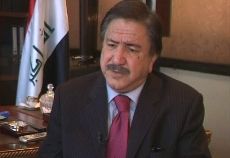
Mohsen al-Sadoun added that the eviction of terrorist Mujahedin-e Khalq organization (MKO, a.k.a. MEK and PMOI) from Iraq is considered to be a victory for independence and territorial integrity of Iraq in the same way that the US troops’ withdrawal from the country in 2011 was regarded as a triumph.
“Despite the disagreements between Erbil and Baghdad, the two sides are in the same boat on the issue of MKO expulsion,” added the vice president of the Kurdistan Alliance.
He also urged putting pressure on the UN and western countries to put an end to the MKO’s presence in Iraq and to find a third country for their resettlement.
Iraq’s Prime Minister Nuri al-Maliki has urged the expedition of MKO members’ expulsion from the Iraqi soil within the framework of the agreement signed with the United Nations.
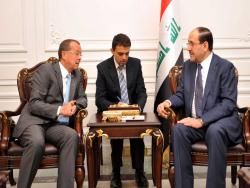
The office of the Iraqi Prime Minister released a statement saying, “In his Monday visit with Martin Kobler head of the UN Assistance Mission for Iraq (UNAMI), premier Nuri al-Maliki underscored the necessity of ending the terrorist MKO group’s presence in Iraq before year-end.”
According to the statement, Maliki urged the United Nations to speed up the closure of MKO’s case in Iraq.
The relocation of roughly 3400 members of terrorist MKO group from Camp Ashraf to Camp Liberty is in line with the memorandum of understanding signed on 25 December between Iraq and United Nations to temporarily transfer them to a former US military base in Baghdad for the UNHCR to determine their refugee status.
Iraq’s forthcoming elections and excluding the country from chapter VII of the UN charter were among other issues discussed at the meeting.
Thursday, 22 November 2012 Habilian
A member of Iraqi Parliament describes Mujahedin-e Khalq’s crimes in Iraq as inexcusable, and said the group’s presence in Iraq is a new challenge for the government.
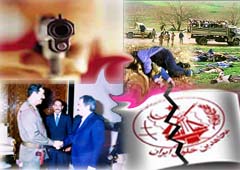
According to a report by Habilian Association, Arabic language news site Ashraf-news quoted Haitham al-Jubouri as saying that Mujahedin-e Khalq is a new challenge for the Iraqi government in addition to other active terrorist groups inside the country.
“Iraq’s position towards the group has not changed,” he added, calling MKO a terrorist group who has perpetrated many crimes in Iraq.
The member of the Finance Committee parliamentary Haitham al-Jubouri went on to say that, “the crimes of the group are inexcusable and will not be removed from the memory of Iraq.”
He added that Iraq maintains complete information on MKO involvement in 1991 Shiite Intifada and suppression of Shiites and Kurds in Iraq.
The terrorist group assisted the deposed Iraqi dictator Saddam Hussein in his brutal suppression of Shiite and Kurd uprisings in 1991.
Former deputy director of the US State Department’s Middle East Intelligence Office believes the U.S. scratched off Mujahedin-e Khalq organization from the FTO list to pressure Iran over its  nuclear program.
“The MEK has a rather unsavory history of opposing the release of the US hostages in January 1981, terrorism in Iran, a long period when much of it was a mercenary brigade in Saddam’s Army, and, of course, its cult-like and bizarre internal politics that have involved some insider human rights violations,” Wayne White told Habilian.
“That’s why, if someone wants to place the list game with it, it probably should be on the list, not off of it,” he added.
Asked if MEK poses a threat to U.S. national security, White said, “they are intensely pesky, have tons of (typically naive) supporters, and if they chose to act against the US they have assets.”
“Since plenty of silly Americans comprise their only major source of support (and probably funding), I doubt they would want to bite the hands that feed them,” Wayne White, now a scholar at the Middle East Institute of Columbia institute, further added.
He finally said, “I personally just wish they had died out by the late 1980’s after their defeat in Iran & were barely a memory.”