
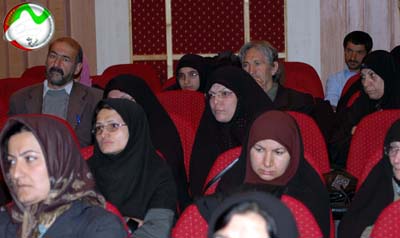
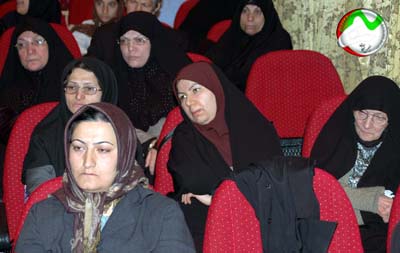
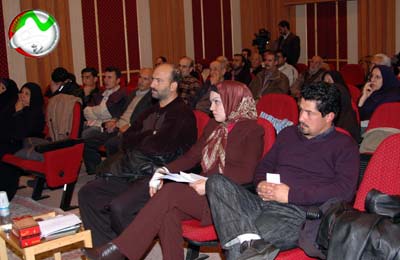
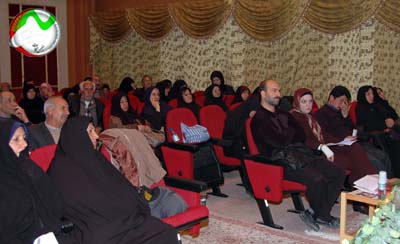
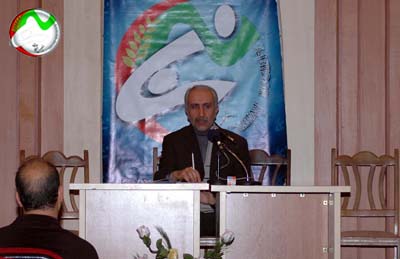
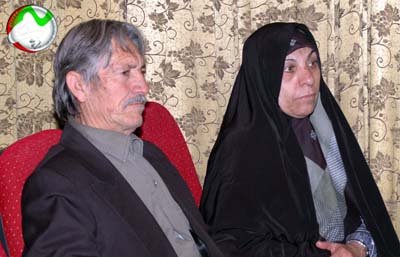
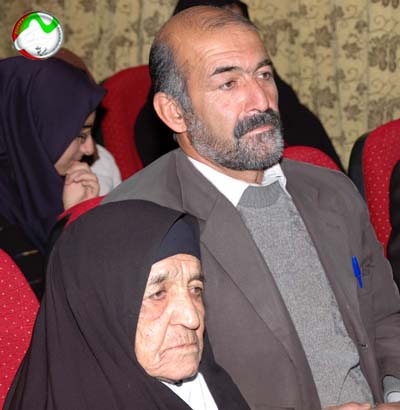
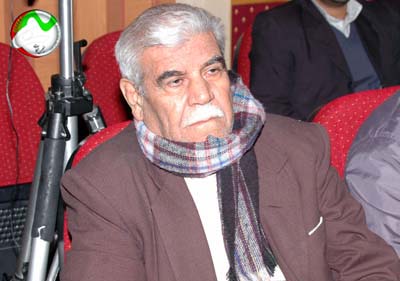
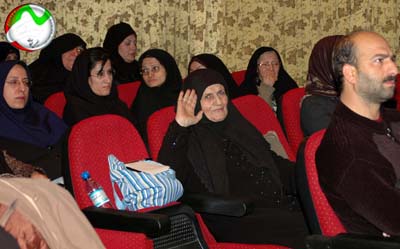
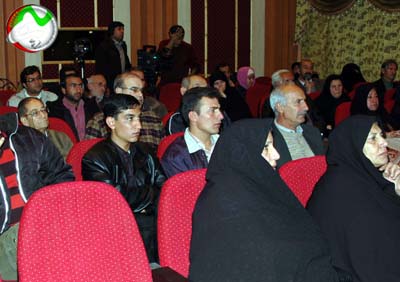
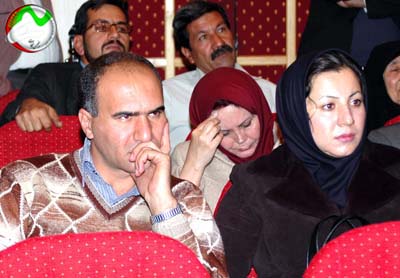
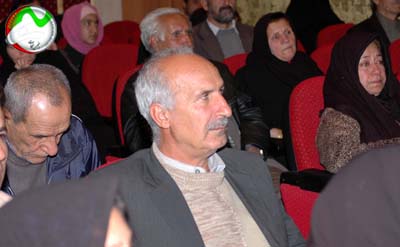
A meeting held in Shiraz under the title of”Salvation”with the participation of MKO family members as well as the former members of the Rajavis’ Cult.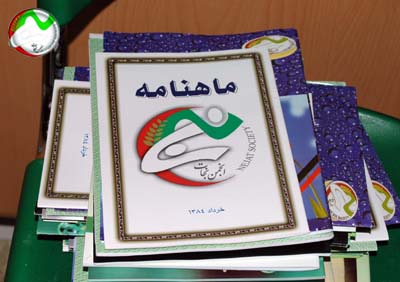

- Delayed Happy New Year
- How Desperate can you get to…
- Gordon Brown: No evidence that MKO has given up terror
- Baroness Nicholson: MKO still on terror is list in UK
- Brainwashing: Crime against Humanity
- Documents of 16000 victims of MKO presented to MEPs
- Failed abduction of Iranian family in Iraq by the MKO
- Iranian Pen Club letter to the ICRC
- McCormack: MEK is considered a terrorist organization
- Neocons find new exile group patsies to push war with Iran
- MKO supporter undermines efforts
- EU keeps MKO on its terror list
- EP delegation to Iran visits Nejat Society
Cults’ Methodology
1. Department Spokesman Sean McCormack :the MEK, the Mujahedin-e Khalq is considered a terrorist organization
2. Baroness Nicholson:Mojahedin Khalq Organisation (MKO) still on terrorist list in UK
3. EP Delegation to Iran visits Nejat Society
4. Mojahedin Khalq supporter "Struan Stevenson" undermines efforts to promote democratic Values
5. Gordon Brown: No evidence that MKO has given up terrorism
6. Adm Gregory Smith: US military does not support terrorist Mojahedin Khalq (MKO)
7. Home office to take the case of MKO to the Court of Appeal
8. Terrorist groups says Iran NIE wrong…
Download Pars Brief – Issue No.38
Download Pars Brief – Issue No.38
On Thursday, December20nd, the European Union updated the Common Position 2001/931/CFSP on the application of specific measures to combat terrorism and repeated Common Position 2007/448/CFSP.
The document published the official Journal of the European Union on Dec 22nd included the list of persons, groups and entities referred to in Article 1 of the document.
On page 113 of Legislation 340, you can consider Muajhedin-e-Khalq listed as a proscribed Organization by the EU. However on Dec.18th Maryam Rajavi addressed the European Parliament urging on the removal of her terror cult from the EU terror list. The EU listed MKO as a terrorist entity once more.
No Comments
Although the main origin of the message issued by Rajavi is seriously doubted and due to many reasons it is believed to be forged and fabricated, both Mojahedin and their opponents agree that the message related to Rajavi has been a vital response to the need of group’s forces.
To view Mojahedin’s confession to this need you can consider their several articles they put on their websites. Also it seems that they don’t insist on denying such a need.
But in this article we still review the proper message rather than viewing the need of Mujahedin or the forgery of the message.
In the last paragraph of his last message Rajavi says:
"Our last words, like the first words, are again to the hero people of Iran and all the people eager for the freedom and independence of Iran territory, all those who share the same opinion and practice for republic, democracy and Iranian’s ruling Iran far from religious dictatorship and Velayat Faqih totalitarian regime."
In 1990, after Rajavi realized that he ‘s forced to a locked cul-de-sac in Iraq and had no way out, he inquired his European partners ( who ,during the war ,had supported the group variously, for a decade) but they remind him explicitly that they couldn’t continue supporting a terrorist group any more.
In order to open their locked situation the Europeans suggested some solutions of which if the MEK could have used successfully, the way would have been paved for the west to use MEK. One suggestion was the alliance with monarchists, nationalists and even communists and finally shifting the so-called National Council of Resistance of Iran from its impractical form.
Since Rajavi believes that the competition with other alternative claiming groups is much more serious than fighting Islamic Regime, with his plan of "solidarity Front" he has resorted to a formality pretending that he has put that suggestion in to practice, but he is well aware that no solidarity will be achieved between his group and other groups. As Mehdi Samè said:" we called for solidarity, now it’s the others’ turn to welcome our call, but we see no one."!
Therefore," Solidarity Front" has practically become a slogan which is a winning card in Rajavi’s hand to offer the Western countries claiming his old claim that no other opposition is on the scene except MKO and also respond the expect of some supporters and members of MKO relying on the necessity of alliance with other oppositions.
In practice the action has changed into its opposite since the West understood the MEK’s deceit and that Rajavi hasn’t done any activity except contacting some singers who were related to the right wing and originally from monarchist groups"
A lot of individuals and groups in order to associate with MKO declared their conditions which ended with the critics to MKO’s ideology and relations. Thus it was disgraced more and more.
With the presupposition that " democracy is at my hand",Rajavi considered no need to change his relationships but continually followed his formalistic method in Los Angeles and Washington resorting to the least famous singers ( such as Masud Amini and Saeed Mohammadi) but they also sat down finally because they realized the indecency of cooperation with a traitor, anti-Iranian group and declared their regret of their past activities.
Approximately after the American statement was issued, MEK deeply realized that one of the reasons that the West has always called them " undemocratic ",is the lack of possibility of cooperation with other oppositions especially Monarchists. Thus, to open a way to cooperate with other groups is always considered a vital necessity for MKO and Rajavi has found out that lack of acceptance of MKO by other groups or individuals is so influential on Western thinking. That’s why he discusses the matter of "National Solidarity" from time to time."
From the other side, Rajavi tries slyly to prevent from paying the price of such cooperation since he knows that the price of this alliance ends to be dissolved in one front so that necessarily they should desist from their undemocratic methods to which their life is dependant.
Therefore MEK, like many other situations and crisis they are captured in, suffer from a substantial contradiction and an insoluble contrast. Rajavi’s policies are stuck in a cul-de-sac.
The bottom line is that the last paragraph (issued by any person) denounces a serious entreaty to receive aid. The call affirms the benefit Mujahedin used at the beginning of American invasion including the support of other groups or individuals during that critical period. This time understanding the serious decision of Iraqi officials to expel MKO, Rajavi does his best deceitfully to use this potentiality for his bankrupt group.
"Just as most soldiers believe bullets will hit only others, not themselves, most citizens like to think that their own minds and thought processes are invulnerable. ‘Other people can be manipulated, but not me,’ they declare." — Margaret Singer, Ph.D.
Many groups use unethical persuasion tactics in recruiting and retaining members. These methods can range from love bombing to scare tactics (imposing high exit costs, e.g. convincing a person that leaving the group means losing one’s salvation).
According to Wikipedia, the free encyclopedia, brainwashing, also known as thought reform or re-education, is the application of persuasive techniques to change the belief or behavior of one or more people usually for political or religious purposes. Whether any techniques at all exist that will actually work to change thought and behavior to the degree that the term "brainwashing" connotes is a controversial and at times hotly debated question.
In F.A.C.T.net (Fight Against Coercive Tactics Network) you can consider mind control or brainwashing is defined as all coercive psychological systems, such as brainwashing, thought reform, and coercive persuasion. Mind control is the shaping of a person’s attitudes, beliefs, and personality without the person’s knowledge or consent. Mind control employs deceptive and surreptitious manipulation, usually in a group setting, for the financial or political profit of the manipulator. Mind control works by gradually exerting increasing control over individuals through a variety of techniques, such as excessive repetition of routine activities, intense humiliation, or sleep deprivation.
Coercion is defined as, "to restrain or constrain by force…" Legally it often implies the use of PHYSICAL FORCE or physical or legal threat. This traditional concept of coercion is far better understood than the technological concepts of "coercive persuasion" which are effective restraining, impairing, or compelling through the gradual application of PSYCHOLOGICAL FORCES.
A coercive persuasion program is a behavioral change technology applied to cause the "learning" and "adoption" of a set of behaviors or an ideology under certain conditions. It is distinguished from other forms of benign social learning or peaceful persuasion by the conditions under which it is conducted and by the techniques of environmental and interpersonal manipulation employed to suppress particular behaviors and to train others. Over time, coercive persuasion, a psychological force akin in some ways to our legal concepts of undue influence, can be even MORE effective than pain, torture, drugs, and use of physical force and legal threats.
On June 23, 2003 Steven Halley in his article titled “Brainwashing and thought control in the news but far from new’’ mentions an excellent book by William Sargant entitled "Battle for the Mind." In this book, Sargant explains clearly that we all are capable of falling victim to alterations in our thinking through specific techniques …
Sargant is clear that brainwashing and thought control occur in many arenas. Sure it can occur in the religious world, but it also can occur in the political world. For example, a political prisoner is not allowed to sleep or eat much for a lengthy period of time. During this time, he is being intensely confronted with the "evils of democracy." Finally, as the stress grows to an intolerant level, the prisoner becomes willing to denounce democracy, and accept his captors’ point of view. A dramatic, but genuine thought shift occurs.
Dick Sutphen has also his own interpretation of how a cult is build through brainwashing in his book “The Battle for Your Mind: Persuasion and Brainwashing Techniques Being Used On The Public Today” : Conversion is a “nice” word for brainwashing…and any study of brainwashing has to begin with a study of Christian revivalism in eighteenth century America. Apparently, Jonathan Edwards accidentally discovered the techniques during a religious crusade in 1735 in Northampton, Massachusetts. By inducing guilt and acute apprehension and by increasing the tension, the “sinners” attending his revival meetings would break down and completely submit. Technically, what Edwards was doing was creating conditions that wipe the brain slate clean so that the mind accepts new programming. The problem was that the new input was negative. He would tell them, “You’re a sinner! You’re destined for hell!”
… I want to state the most basic of all facts about brainwashing: In the entire history of man, no one has ever been brainwashed and realized, or believed, that he had been brainwashed. Those who have been brainwashed will usually passionately defend their manipulators, claiming they have simply been "shown the light" …or have been transformed in miraculous ways.
The way to achieve conversion are many and varied, but the usual first step in religious or political brainwashing is to work on the emotions of an individual or group until they reach an abnormal level of anger, fear, excitement, or nervous tension.
The progressive result of this mental condition is to impair judgment and increase suggestibility. The more this condition can be maintained or intensified, the more it compounds. Once catharsis, or the first brain phase, is reached, the complete mental takeover becomes easier. Existing mental programming can be replaced with new patterns of thinking and behavior.
Brainwashing is a system of befogging the brain so a person can be seduced into acceptance of what otherwise would be abhorrent to him. He loses touch with reality. Facts and fancy whirl round and change places…. However, in order to prevent people from recognizing the inherent evils in brainwashing, the Reds pretend that it is only another name for something already very familiar and of unquestioned respect, such as education or reform." Edward Hunter, Brainwashing (New York: Pyramid Books, 1956).
What this means is that an organized entity which, for any stated reason, attempts to physically eliminate its opponents (as opposed to engaging with them in any other way) will be assumed to be employing mind control techniques (often referred to in common parlance as "brainwashing") in order to attract, recruit and maintain its recruits and to exert power over every aspect of their lives. Again, many scientists of human and social studies who have extensively studied this phenomenon agree that any cult, because of its unique characteristics, is potentially capable of using violence and physically eliminating not only its own members but also its opponents if it deems this necessary. Any cult will, in theory at least, believe this to be an absolute right.
Many relatively well-educated and affluent young people have been involved with new religious movements-sometimes pejoratively called "cults"—over the past two or three decades in America and other Western countries. Controversy has erupted about the meaning of this participation, as parents, friends, political leaders, and others have attempted to understand why this has occurred. An example of these well-educated people captured in a cult was “Ann Singleton” who got involved with one of the religious cults using psychological manipulation and mind control: MKO (Mojahedin Khalq Organization), the Iranian opposition group which is designated as a foreign terrorist organization by US ,EU and Canada.
“Ann Singleton” is a British woman who spent twenty years in MKO, cites her experiences with them. She was recruited by MEK when she was studying at Manchester University. She left the group when the leaders forced the married members to divorce and prevented the single ones from marriage. She defines the way she was influenced by the recruiters:’’ What happened to me could happen to anyone. These groups entice concerned activists then persuade them to commit terrorist atrocities. They convinced me to give up my life to follow them. Now I see their methods were identical to the ones cults use to brainwash people… They flatter you in a way that
you don’t even realize they are doing it. They really put themselves on a pedestal so that when they want you to join them, you feel special. I thought I was a savior of the world and would have done anything for the Mujahidin.”
In her book Saddam’s Private army Ann Singleton writes:
By the time he [Masud Rajavi] announced the Ideological Revolution, he had already transformed his supporters into a highly disciplined force, ready to act on his command. Now he had to set about changing their minds, or rather, numbing their minds, so those small matters such as politics, ideology or principle would not hinder or interfere with this discipline. He shifted the benchmark for devotion from discipline to obedience, a subtle, but highly significant change. It became necessary for anyone joining the Mojahedin to first accept that they were entering a pyramid system, in which all the decisions came from the very top…Meetings are the mainstays for Rajavi as his means of indoctrination. Through the means of meetings, he is able to send his ideological messages into the hearts of all the members. First he starts by speaking personally to three or four hand picked people and gives them hints on what he expects from them. He then sends them away to think. He brings them back into these small, discrete meetings, again and again until they come back with matching stories. Then in a bigger meeting of ten or twenty people, he does the same thing using the first three or four people to speak and create the example, while requiring that the others catch up with them. This works because for the second group of people, the first people seem to be more ideologically aware and tuned in since they are talking about things that the others have no clue about and have never heard of.
These secondary meetings go on as the first, until these further twenty people are ‘cooked’. Rajavi notes the contribution of these individuals and their stories, plus all the reports that they have been made to write. This pattern is repeated and grows up to the big meeting. By this time, some more hints have been given out through these twenty people to all the ordinary members, who after the big general meeting, are then expected to come out with their own stories of how they have understood the new ideological development. After that comes the time for a reshuffle in the organization so that those who have shown themselves most loyal are promoted – until the next time.
The meetings after Forouq-e Javidan (Rajavi’s failed military coup of 1988, and his second bid for power) were no different, except that after suffering such losses and emotional damage, the members were more willingly looking for some justification which would allow them to be forgiven by their ideological leader. This was in the hope that if they could get past this phase, the next time would give them a victory. It is taboo to even think about blaming the ideological leader, even in your mind.
Parvin Haji is another ex-member of MKO. She explains: ‘’as a former member of the Mojahedin cult, I wonder why the public does not know more about destructive cults and the warped motives of their leaders.
While experts may argue the finer points about what actually makes a cult or whether or not mind control or brainwashing keeps members in thrall, former members like me struggle to put their lives back together. But, it certainly isn’t easy: being in a cult is not something you walk away from and forget, it is like a disease and needs a long term cure.
There is no doubt that the Mojahedin-e Khalq is a destructive cult. But, when the claim of such an entity to be a democratic, freedom-loving political force which respects human rights, is not subjected to real scrutiny based on the evidence of former members, then I believe the tolerance of such destructive cults will be far more detrimental to society than anyone can imagine they are.’’
According to their methods of brainwashing or in other words mind control all the cults use the same techniques. Since you know Al-Qaida is another group working with mind control methods very similar to what MKO uses on its members.
Masud khodabande an ex-member of MKO describes the similarity comparing the two organization (in his interview with Alen Chevalrias the writer of a book on MKO titled Burned Alive):’’ The both organizations use the same system of psychological training to recruit their members and send them to death. This is their weak point and strength point at the same time. The strength point; since in this way they have individuals who follow them to the death. The weak point; because they must keep the members, isolated, in a definite situation for a long time. Therefore they need a territory. In the case of Al Qaida this territory was Afghanistan and for Mujahedin it was Iraq. Nor this one and neither that one could train their members in a free country with regulations and morals restrictions and organize their operations… None of them have principals. They consider themselves over rules…Al-Qaida also uses Islam as a means to lead its goals, just like Mujahedin. Ben Ladeen and Masud Rajavi claim that they are Muslims but they often don’t follow Islam. When they send people to death, it’s not for religion but it’s for their avidity for power. Do you think that all Muslims are convinced with Masud Rajavi and Osama Ben Laden declarations? …
Bahar Irani also compares the two organizations in an article on Mujahedin.ws:
“…The view point induces that unpredicted parameters and catalysts work as aspects of influential material laws and thus, it is required to advance according to these laws. The practical and fundamental difference between al-Qaeda and Mojahedi-e Khalq is exactly the same difference between a rebel and a revolutionary, that is, to best control, organize and conduct terrorist operations. Parallel to these precepts, Mojahedin, in regulation of their relations with the members, strive to infuse them with ideological teachings rather than engaging them in practical orders. Accordingly, it might be a rightly made claim by Mojahedin that the organization never enforced orders on the members to commit self-immolations in June 2003 following the arrest of Maryam Rajavi in France and they were deliberate actions.
The people who commit these loathsome acts are no doubt the byproducts of MKO’s adopted ideology. Explicitly putting in the words, they are slaves of a deeply imbued ideology that can be put into practice even in the absence of the leaders. “
Masud’s brother Ebrahim Khodabande who is also a former member of MKO and is spending his imprisonment period in Iranian Evin prison describes the mind control system as ‘’Development of mental prison’’ and writes: In the new phase of the organization’s history, under the phenomenon of the Internal Ideological Revolution, not only had people to leave their homes and families but they also had to consider their parents, spouses and even children as enemies; obstacles on the path to reach understanding of the noble position of the leadership. Members, even in the west, had to avoid the internet or satellite television and be fed information by the organization only. Iraqi territory provided a perfect opportunity to establish a huge safe-house with no opening to the free world so that members could have their brainwashing performed step by step without any interference. Members in the west would also spend some time there to acquaint themselves with the internal atmosphere of the organization and become pure and obedient elements… if a person leaves the MKO, and the ‘Current Operation’ [brainwashing] sessions are stopped, that person can be reconstructed and sent back into society. It means that these persons have not been terrorists and criminals but they have been in a situation that has forced them to be so."
The “sacrifice” required of the members was articulated in a series of “ideological revolutions” promoted by the leadership. The leadership asked the members to divorce themselves from all physical and emotional attachments in order to enhance their “capacity for struggle.” In case of married couples, this phase of the “ideological revolution” required them to renounce their emotional ties to their spouses through divorce. Masoud Banisadr reports how this process unfolded during an “ideological meeting for ‘executive and high ranking members’” following MKO’s defeat in Iran:
The first thing I was required to do in Baghdad was watch a videotape of an ideological meeting for “executive and high-ranking members.” The meeting, called “Imam Zaman,” started with a simple question: “To whom do we owe all our achievements and everything that we have?”… Rajavi did not claim, as I thought he might, to be the Imam of our times, but merely said we owed everything to Imam Zaman… The object was to show that we could reach Tehran if we were more united with our leader, as he was with Imam Zaman and God. He was ready to sacrifice everything he had (which in fact meant all of us!) for God, asserting that the only thing on his mind was doing the will of God,….we were expected to draw the conclusion that no “buffer” existed between Rajavi and Imam Zaman; yet there was a buffer between ourselves and him [Rajavi] … which prevented us from seeing him clearly. This “buffer” was our weakness. If we could recognize that, we would see why and how we had failed in Operation Forogh [Eternal Light] and elsewhere. Masoud and Maryam [Rajavi] had no doubt that the buffer was in all our cases our existing spouse.
In its annual report on terrorist entities in1994, the State Department has clarified that “ Those who monitor Mojahedin activities have also found evidence of controlled behavior. A Wall Street Journal reporter interviewed former members of the MKO this summer who described an authoritarian environment. These individuals, who refused to give their names for fear of retribution, claimed that the Mojahedin jailed or beat dissidents at MKO basses in Iraq. They also said that the Mojahedin forced couples living at MKO bases in Iraq to divorce, and, sent their children to live in MKO member homes in Europe. The NLA reportedly prohibits physical contact between the men and women stationed in Iraq. Another journalist who has reported on the Mojahedin described similar conduct. "Members living in the West are sometimes said to reside in communal houses, permitted little money of their own and kept on tightly controlled schedules. At Ashraf camp (in Iraq), one official identified himself as a "political officer" responsible for training "the cadres”…
And also DOS added some parts to its documentation on mujahedin in 2007as what follows: “Upon entry into the group, new members are indoctrinated in MEK ideology and revisionist Iranian history. Members are also required to undertake a vow of "eternal divorce" and participate in weekly "ideological cleansings." Additionally, children are reportedly separated from parents at a young age. MEK leader Maryam Rajavi has established a "cult of personality." She claims to emulate the Prophet Muhammad and is viewed by members as the "Iranian President in exile." “
Human rights abuses carried out by MKO leaders against dissident members ranged from prolonged incommunicado and solitary confinement to beatings, verbal and psychological abuse, coerced confessions, threats of execution, and torture that in two cases led to death.
The testimonies of the former MKO members indicate that the organization used three types of detention facilities inside its camps in Iraq. The interviewees described one type as small residential units, referred to as guesthouses (mihmansara), inside the camps. The MKO members who requested to leave the organization were held in these units during much of which time they were kept incommunicado. They were not allowed to leave the premises of their unit, to meet or talk with anyone else in the camp, or to contact their relatives and friends in the outside world.
Karim Haqi, a former high ranking MKO member who served as the head of security for Masoud Rajavi, told Human Rights Watch:
I was the head of security for Masoud Rajavi in 1991. They could not believe that I wanted to separate from the organization. I was confined inside a building called Iskan together with my wife and our six month old child. Iskan was the site of a series of residential units that used to house married couples before ideological divorces were mandated. The organization had raised a tall wall around this area. Its interior perimeter was protected by barbed wire, and guards kept it under surveillance from observation towers. While we were under detention, the organization reduced our food rations, subjected us to beatings and verbal abuses and also intimidated us by making threats of executions.
Ali Zadeh a former member of MKO describes his status while living in Ashraf: “… I found myself cut off from the rest of the world. I had no more contact with my family. My letters, which I gave to the camp’s office, never reached them. We were forbidden any friendships. You were not even pinnate to like animals. All of our feelings had to focus on brother Rajavi. Our daily meetings were psychodramas. People had to bare their inmost selves. They were made vulnerable and disoriented. I was personally insulted, beaten and jailed…”
As what Mehdi Khoshhal mentions in his book Control of Power MKO’s leadership controls every aspect of the members’ lives:’’ …Masud Rajavi closed the doors of Paradise and made it impossible for the ones who didn’t obey him. After 1987 he made the conditions more severe to deserve the Paradise. Now carrying the title Mojahed, giving blood, fighting and dying for the sake of the country and people were not enough. The key to Paradise was to love the leader passionately. Everybody who loved him would exactly go to Paradise. So, Rajavi could manage to overcome the problems and control the forces in this way. Rajavi works on the forces by the help of his knowledge about human psychology and community.’’
Young people are attracted by underground activities. They are easily seduced by them. Once they have joined, the young are completely exploited. They have to clean rooms, wash dishes, do the laundry, etc. They have ideological training sessions. They are permitted no time to think deeply or ask themselves any questions about the organization’s aims. They have no access to their normal news media. They have no right to read newspapers, magazines or books… They are limited to the movement’s own publications. Anyone who dares to break these rules is punished. Only members of the Political Bureau have the right to read everything, analyze the situation and order the others to think in a given way. This is how they kill their critical capacities, their uniqueness and their individual identities. They become completely submissive, obedient and vulnerable at will".
They mostly use teenagers, because they are able to brainwash them and work ideologically and emotionally with them, so they can succeed in their plan. Not everyone with a political belief is able to perform suicide operation. For instance on December 10th 1981 a twenty-one year old woman, supporter of MKO, killed ayatollah Dastgheib a spiritual leader in a suicide operation in the city of Shiraz. After about two decades of committing terrorist suicide operations, in January 2003, when Maryam Rajavi was arrested by French police many members were brainwashed to burn themselves including Neda Hasani a 25 year old girl who died after the self-immolation.
To prepare the individual to carry out orders without any discussion, the Mojahedin are methodical in their training techniques. First, they cut him off from the outside world. Then, they browbeat and humiliate him into a deep sense of guilt. In this way they destroy his moral sensibilities so that he becomes prepared to get indoctrinations.
Related Links:
1.http://en.wikipedia.org/wiki/Brainwashing
2.http://www.factnet.org
3.Article “Brainwashing and thought control in the news but far from new”
By STEVEN HALLEY who is a contributor to factnet.org
4.Book The Battle for Your Mind: Persuasion and Brainwashing Techniques Being Used On The Public Today by Dick Sutphen who is a bestselling author of 19 New Age books. He offers hundreds of mind-programming CDs to improve people’s life or manifest psychic experiences. http://www.dicksutphen.com/index.html
5.Brainwashing by Edward Hunter (New York Pyramid Books,1956,pages 185-186)
6.Cults in Our Midst (Paperback)
by Margaret Thaler Singer (Author), Janja Lalich (Author), Robert Jay Lifton (Author)
7.Ann Singleton interview with BBC on
8.Saddam’s Private Army by Ann Singleton
9. Women Lured by Mojahedin-e Khalq, the Religious Cult by Parvin Haji Canada, March 06, 2007 published at iran-interlink.org
10.Brule vif by Alain Chevalrias page 242
11.Why Brainwashing? Recruitment to New Religions by James T. Richardson http://www.thefamily.org/dossier/books/book3/chapter1.htm
12.Mojahedin.ws Bahar Irani “Inconspicuous Affinity between Al-Qaeda and MKO”
13.A Personal View from Evin by Ebrahim Khodabandeh http://www.survivorsreport.org
14.”NO EXIT” Human Rights Watch report on MKO http://hrw.org/backgrounder/mena/iran0505/
15.Book:”Control of Power” by Mehdi Khoshal
16. US State Department Terrorism Report 2007 http://www.state.gov/s/ct/rls/crt/2007
Nejat Society
Dick Cheney and MEK leaders
On Sunday 9th December 2007, the European Parliamentary Delegation to Iran met with the members and associates of Nejat (rescue) Society in their office in Tehran.
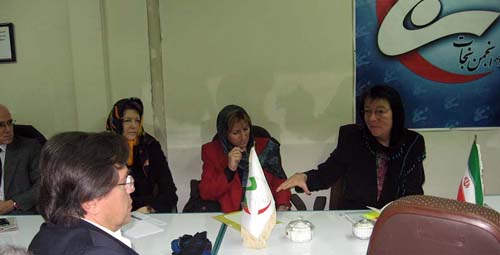
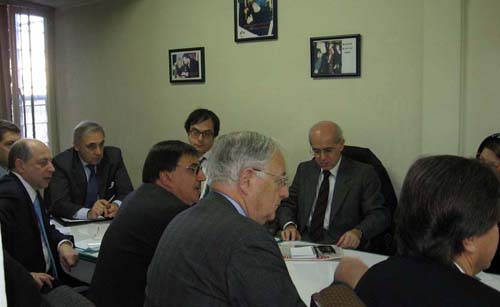
The Delegation which was headed by Ms Angelika Beer MEP from Germany (the Chairwoman of the EP Iran Delegation) consisted of 24 MEPs from various groups from different European countries.
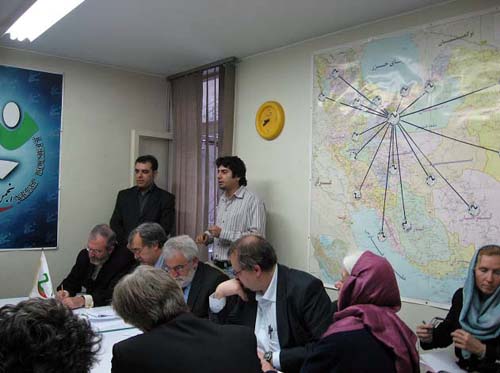
Mr Arash Sametipur a former member of the military section of the Mojahedin-e Khalq Organisation (MKO) and one of the administrators of the Nejat society welcomed the delegation and introduced the goals and activities of the society. He discussed how he was recruited in the USA and sent to Iraq to receive military trainings as well as ideological teachings and then sent to Iran to carry out assassinations. He explained that since the Iranian authorities have a good understanding of the cultic nature of the MKO and they are well aware that the followers are brainwashed, they consider the members of the MKO as the prime victims of the organisation which must be helped rather than be punished.
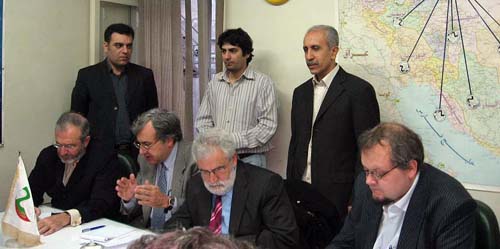
Then Mr Sametipur invited Mr Ebrahim Khodabandeh and Mr Jamil Bassam former members of the MKO from the political section to talk about their experiences with the activities of the organisation in the western countries. Mr Khodabandeh referred to the absence of Mr Paula Casaca MEP from Portugal who dropped his name from the list of the delegation in the last minutes due to the pressure imposed by the MKO. He said that he was really willing to visit Mr Casaca today and tell him some mere facts about Iran and about the MKO. He mentioned that surely Mr Casaca missed an opportunity to face the truth.
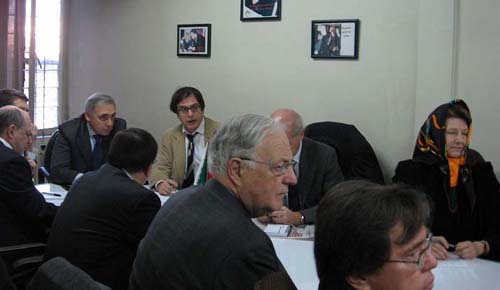
Next was Ms Hura Chalchi another administrator of the Society and also a former member of the military section of the MKO who went into the details of the society’s activities. She brought up the case of the families of the members of the MKO in Ashraf Camp in Iraq who have no contact with their beloved ones and urged the European parliamentarians to make every possible effort to ensure a safe and private meeting between the families and their relatives inside the MKO.
Mr Qorban-Ali Pur-Ahmadi from Gilan province and Mr Reza Sadeqi Jebali from Esfahan, both former members of the MKO and present members of Nejat Society spoke next. Mr Jebali referred to his last meeting with Mr Casaca in Ashraf Camp in Iraq and said that he was really looking forward to seeing him here today since he had spoken with him in Ashraf Camp and today he wanted to tell Mr Casaca the other side of the story about the MKO which he has never heard before.
Then Ms Shahin Rabi’i a relative of a member of MKO in Ashraf camp addressed the delegation and expressed her demand of private contact with his brother Sa’id in Iraq. She said that she believes her brother has been mind manipulated and she seeks a way to help him out.
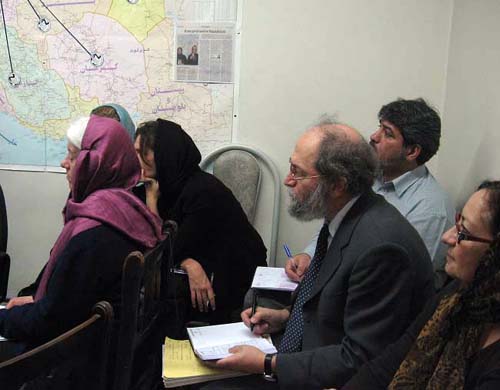
Then the members of the EP delegation raised their questions which were answered by the administrators and members of the society. Baroness Nicholson of Winterbourne MEP from the United Kingdoms referred to her visit with Mr Khodabaneh and Mr Bassam in Evin Prison four years ago on the demand of the family of Mr Khodabandeh in Britain and said that the MKO made a huge propaganda demonstrating that these two individuals were under severe torture and soon would be executed which later was proved to been wrong.
Members of the delegation also expressed their regret about the presence of Mrayam Rajavi in the European Parliament and emphasised the fact that these people like all cults do not expose their real identity and try to deceive people to reach their own goals. In the end Ms Beer thanked the Nejat Society for providing them with good information about the MKO.
Some materials and documentations on MKO were handed over to each member of the delegation.
Nejat Society,12 December