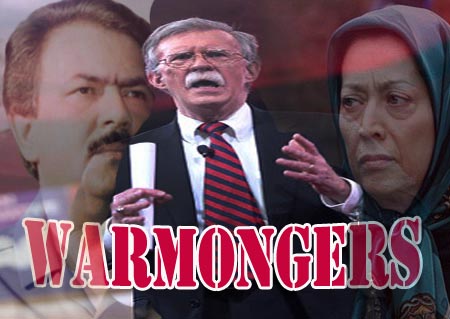
++ Several families of trapped MEK members in Camp Liberty have arrived in Baghdad to actively petition Iraqi governmental officials and UN staff to help them make contact with their loved ones. Once the MEK leaders found this out, the usual campaign of ugly swearing and disinformation began. Among the families is the daughter of Ghorban Ali Hossein Nejad, who with her husband has travelled from Iran to visit her sister, who remains in Camp Liberty. Using screen shots from the MEK’s own sites, Hossein Nejad exposes the MEK’s hollow propaganda strategy to demonise the families. He reveals that the MEK have invented a family member for him with the name ‘Hossein Nejad’ who apparently denounces him as an agent of the Iranian regime. No such relative exists, though his daughter had written to invite her sister to visit. Hossein Nejad reminds Rajavi about this and asks ‘how come you are now swearing at us?’
Addressing Rajavi directly, the article exposes the contradictory messages coming out of the MEK. Photoshopped pictures show a mish-mash of Iraqi and Iranian governmental officials along with the families posing with UN officials. “You label us and the UN as agents of the Sepah Pasdaran and Iranian Intelligence. At the same time you admit we are the family members of your hostages and then you say it is the Iraqi Government which is preventing the families from visiting. Then you complain to the same UN and Iraqi officials saying the families are there to kill you. None of this adds up. All of it shows how afraid you are of allowing people to see their families.
++ Reza Akbarinasab, who has been trying to make contact with his brother Morteza in Iraq since 2003, writes from Tabriz. Morteza’s son, Yasser, died in the camp under suspicious circumstances; the MEK announced several contradictory scenarios to explain his death, but former members are clear that he was murdered because he was a disaffected member. Reza rejects the fabricated denouncements against him on MEK websites supposedly written by his brother which are currently being posted. He says “the gaffe starts right there. I know my brother Morteza, and under no circumstances, not even under torture, would he utter the hideous language of this writing. Where then is our brother? We are more anxious than ever now, we already lost Yasser, we worry that we might lose Morteza too.”
++ Survivors of the MEK in Albania launched a Farsi website this week www.iran-azadi-albania.com. Ehsan Bidi has written a long, detailed and documented article about the MEK’s plots to kill him over there. Bidi is an outspoken critic who refuses to be silenced. The article says the plots began when he went to language classes. He names the people, including MEK commanders, who are involved and says he has passed this information to the Albanian authorities. His purpose in publishing the information is to let everyone know what difficulties the ex-members are facing in Albania. Bidi’s article follows last week’s revelations by Iran Interlink that the MEK have sent several highly trained agents to the country to ‘eliminate’ these dissidents. The MEK regard people like Bidi as a threat and will stop at nothing to shut them up. Bidi writes that he has already lost a friend who died while they were trying to escape Iraq and reach Albania. He is adamant he will not hesitate to give his own life to expose the cult so nobody else has the experience we have had.
In English:
++ An article by Nejat Bloggers expanded on the information concerning the presence of high ranking MEK officials in Tirana. The article lists those involved along with some of their photographs and pseudonyms.
++ Members of Iran Zanan (Iranian Women’s Association), Germany, have written to Congresswoman Nancy Pelosi concerning the MEK’s misuse of her name to pretend she supports the cult. The letter identifies the lies and deceit created by the MEK and warns Ms Pelosi not to allow the MEK to misuse her name without her knowledge.
April 24,2015
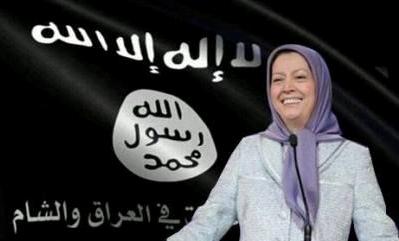 via videoconference April 29 at a House Foreign Affairs terrorism panel on "ISIS: Defining the Enemy." The council is an umbrella group of Iranian dissident groups that includes the Mujahedeen-e-Khalq (MEK), which was removed from the State Department’s terrorism list in 2012 after an intense lobbying campaign and has since spent hundreds of thousands of dollars to raise its profile on Capitol Hill.
 confrontation over the sequence and timing of lifting sanctions.
 ations indicate that the long running disputes between the members and the officials inside the Council have escalated to an even greater extent so that this has become the main concern of the leaders.
 policy makers who then make the actual decisions. The logic of this argument allows for the notion of detached decision-making on the part of the policy makers, and includes a built-in premise that the estimates they use are constructed in such a manner as to allow for a wide range of policy options. This model of decision-making works well on paper, and within the realm of academic theory, but in the harsh reality of post-9/11 America, where overhyped information is further exaggerated through a relentless 24-hour news cycle that encourages simplicity to the point of intellectual dishonesty, it is hard to imagine a scenario where such a pattern of informed, deliberate decision-making has, or could, occur.
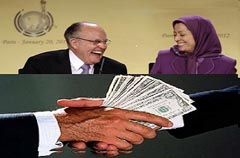 President Obama does in fact love America. Although the president hasn’t addressed this “issue,” one thing is clear: Rudy Giuliani might not.