
MKO’s disinformation is based on the truth of its members’ sufferings in the camps in Iraq
Being professional in the art of disinformation, MKO tends to apply fairly well defined and 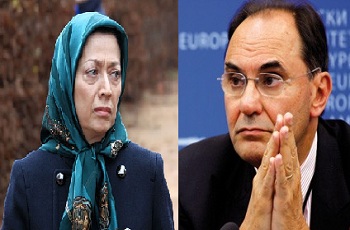 observable tools in this process. However, the public in general is not well informed about the manipulated tactics and is often easily led astray by them. Either the advocates of Mojahedin Khalq Organization (aka. MKO/MEK/MKI/PMOI/NCR) do not believe in what they state and comply for a variety of personal or political interests voice or it is MKO’s skill that pulls their strings in the profession of forging mediums to be manipulated in its art of disinformation. Remarkably, not even media and law enforcement feel obligation to deal with these issues and for the most part, only the players themselves understand the rules of the game.
The group is preparing for another political event to hold in Paris on June 23 and is channeling all its propaganda apparatus into convincing supporters and sympathizers to have their share in the gathering. Of course, the advertisements need to be carried out by particular personalities at the behest of MKO to sound something especial. In a statement published under the name of Alejo Vidal-Quadras, a vice President of the European Parliament, he plays the role of a broker inviting others to participate in the gathering and is also tasked with two assignments to carry out: to highlight a gained a judiciary victory against the State Department, and to draw attentions to the ends planned to be achieved in the event.
Concerning the former he states “This should be considered a great victory, not only for the PMOI, a member organization of the political coalition, National Council of Resistance of Iran (NCRI), but also for justice all around the world. We congratulate this victory to PMOI and NCRI, specially their members, supporters, and families in Camps Ashraf and Liberty and inside Iranian prisons, those who have suffered the most from this listing. (Bold lettering provided in the version released by MKO). The objectives of the gathering as he refers to are two: “First – Defend the rights of the residents in Camps Ashraf and Liberty who are one of the biggest assets for democracy in Iran’s future and to take necessary steps for their protection. Second – Recognize NCRI as a democratic alternative to this regime”.
Mr. Alejo is acknowledged to be the Vice President of the European Parliament and the President of the International Committee In Search of Justice (ISJ). So high-profile a personality should know, and he does know, that congratulating a halfway, unpromising court ruling, as no decisive decision is proven, means offering Maryam Rajavi consolation of a probable victory rather than a gained victory. However, she has already gained an absolute but unproductive victory when Mr. Alejo’s colleagues and fellow parliamentarian de-proscribed MKO from the EU list. So far none of the EU country members have changed opinion concerning the terrorist and violent potentiality of the group to help just now that it is mired in the dire need of cooperation from their part to send its expelled member to any of those countries.
Then, if removal from any terrorist list fails to warranty prevention of a human tragedy, as asserted by the group’s American and European pro-MKO activists, what is the use of all these attempts to annul another listing? If Mr. Alejo is really concerned about the violated rights of MKO’s members in Iraq and believes them to be a group of pro-democratic campaigners, as asserted in his statement, the best way to act, instead of inviting others to support by words, is to encourage and convince the EU country members, if he is known an influential weight amongst them, to make an active, positive move to end the predicament and plight of a cult’s victims in both Camp Ashraf and Liberty. Otherwise, we have to believe that all these ado for an organizationally drafted event is nothing but a widespread disinformation.
Neither MKO is concerned about condition of its members in Iraq nor cares about the international moves to solve the problem; it desperately attempts to survive a bankrupt terrorist cult. In fact, MKO’s disinformation is based on the truth of its members’ sufferings in the camps in Iraq. The warrantied humanitarian options are just before it but it is the sole party that protests and meets them with outright refusal. The right thing for Mr. Alejo to do, if he thinks MKO has developed any capacity for democracy, is to jolly its leadership into respecting the rights of the group’s members as a road to democracy and move them all to Liberty to be processed for refugee status as their universal, democratic rights.
By N. Morgan
 humanitarian, goodwill or sympathy towards it as a granted statutory right that has to be recognized and fought for universally. The relationship between the group’s American advocates and the leadership, now led by the Paris-based Maryam Rajavi, has led both to pursue strategies that neglect the dire risks of sabotaging the agreed move from Camp Ashraf to the temporary transit center near Baghdad.
 covenants and agreements on Iran to separate parts of the country’s soil and annex to that of theirs, attacking the country and killing its innocent citizens or depriving its people from their intrinsic rights and privileges.
 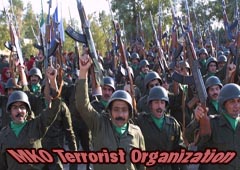 eccentric, it has become a typically expected behavior of MKO to make new excuses just on the threshold of a decided relocation. As expected, the group’s ringleaders and advocates have started a propaganda blitz announcing that they refuse to be relocated to the temporary facility until basic living conditions there improve. A number of current and former American officials have also joined the group calling for the U.S. government to push for those changes and improvements.
  MEK is currently campaigning to be officially delisted in the US as a terrorist organisation. Once off the list it will be free to make use of its support on Capitol Hill in order to become America’s most favoured, and no doubt best funded, Iranian opposition group.
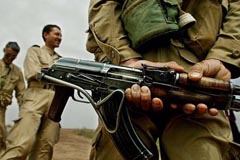 surrendered its arms to American forces after the coalition forces invaded Iraq in 2003. But when the US officials, and in most cases pro-MKO Americans, refer to the issue of arms and Ashraf, they state that the group has been disarmed. Even those American military commanders who had responsibility for Ashraf have all attested, when coming to testify in behalf of MKO, that MKO was disarmed. For instance, as reported by MKO’s own reporting channel, “Gen. Raymond Odierno (then 4th ID commander) in a video teleconference from Baghdad on June 18, 2003, stated that MEK ‘have been completely disarmed. We have taken all small arms and all heavy equipment’.”
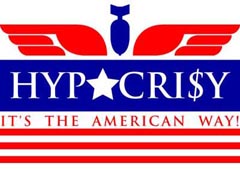 raised to a higher level in the “land of double standards”. Naturally we should wait for the removal of other Foreign Terrorist Organizations from the list at the proper time!