
Hot Pursuit into Syria, Iran, had been authorized; US Kills Innocents at Adwar Mass Grave with 50 Bodies Found at Samarra The Bush administration authorized hot pursuit of Iraqi Baathists into Syria and Iran, according to a just-released document at wikileak. The document also reveals that as late as 2005, the US military authorities were still unaware that the "mobile weapons labs" were a Neocon scam and never existed. (Biological weapons labs require a clean room, difficult to install on a winnebago). The document shows that by 2005, the US military had a de facto truce with the Mahdi Army (a paramilitary whose political party parent actually joined the Iraqi government later that year). It also shows that the Mojahedin-i Khalq terror group engaged in hostile action toward the US forces, but also were granted a truce in 2005. The MEK is an Iranian terror group that has killed civilians inside Iran and was given a base in Iraq by Saddam Hussein. US Neoconservatives have tended to support it and to want to use it to do further terrorism against Iran. The MEK has been defended by Patrick Clawson of the Washington Institute for Near East Policy (the think tank of the American Israel Public Affairs Committee) and by notorious Islamophobe and Giuliani adviser Daniel Pipes. Danny Postel explains cogently. In other words, key figures in the Israel lobbies support a terrorist group that has fired on US troops. US forces raided the village of Adwar south of Tikrit on Monday, and appear to have mistakenly killed an Awakening Council fighter, a woman and two children, wounding another girl as well. It may be that they were baited into firing on the family by anti-American guerrillas. This mistake is the second such in recent days, and adds to a strain felt between the Sunni Arab Awakening Councils and their American patrons. The LAT reports on how difficult it has been for the US military to root out the Salafi Jihadi extremists from Diyala province. Sawt al-Iraq reports in Arabic that hundreds of Iraq’s actors and performers staged a demonstration on Sunday in front of the national theater in Baghdad to protest their loss of livelihood and dire economic straits. They called on Prime Minister Nuri al-Maliki to improve their incomes just as he had for government employees. Unlike US screenwriters, they can’t even go on strike– they are already largely unemployed. Reuters reports political violence on Monday: ‘SAMARRA – Iraqi police and members of a neighborhood police unit found a mass grave containing about 50 bodies in an area west of Samarra, 100 km (60 miles) north of Baghdad, police said. Security forces had been searching for al Qaeda fighters when they found a house with 10 people inside who had been kidnapped from the area. Some of those inside led police to the grave. Three car bombs were also found. KHALIS – Six suspected militants were killed during operations by U.S. forces targeting al Qaeda near Khalis, 80 km (50 miles) north of Baghdad. Three died when one of the suspected militants detonated a vest packed with explosives. Another three were killed by U.S. soldiers in a nearby building. [Taji] – One member of a neighborhood police unit and a civilian were killed by a suicide bomber close to an internet cafe at Taji, 20 km (12 miles) north of Baghdad, a local tribal leader said. . .’ McClatchy adds: ‘Baghdad Two civilians were injured in an IED explosion that targeted an American convoy in Palestine Street east Baghdad around 12:00 pm. Police found four bodies in Baghdad today. Three bodies were found in Rusafa, the eastern side of Baghdad in the following neighborhoods (1 body in Ur, 1 body in Jisr Diyala and 1 body in Shaab). The fourth body was found in Washash neighborhood in Karkh, the western side of Baghdad. Misan Three officers in the Iraqi army were killed by gunmen in three different neighborhoods in Umara city south of Baghdad today morning. The first officer was a colonel who was a Lieutenant Colonel who was killed in al Askari neighborhood downtown Umara city. The second officer was a Major who was killed in the new buildings neighborhood downtown [A]mara city while the third officer was Lieutenant who was killed in his car while he was returning back home in al Uroba neighborhood downtown [A]mara city. Anbar A source in the Sahwa council of Sheikh Sanad said that three members of the Sahwa were killed and five others were injured when a suicide bomber wearing an explosive vest detonated himself near one of the check point of the Sahwa office of Sheikh Sanad Abdul Salim in Thiraa Dijla area east of Ramadi city at 3:30 pm.’
It goes without saying that Rajavi resorted to armed struggle expecting the support of international and foreign powers. Rajavi’s visit to France in early 1981, where he was given a glad hand winning propaganda support and facilities for settlement, was followed with declaration of military phase. It is evident that all such activities on the part of France aimed at exploiting Mojahedin in order to make due political changes in Iran. According to some MKO ex-members (e.g. Lotfollah Meisami), Rajavi was well aware of global transitions and even before initiating the armed phase was willing to make use of leftist parties and USSR-oriented groups whenever necessary. In this regard, Meisami writes:
Rajavi knows that world is divided into the West and the East and for sure is aware of their reciprocal understanding due to his political awareness. When released from prison, he got a formula according to which he had to make the West and the East satisfied to assume power. On the one hand, he makes secret contacts with the Soviets Union to make them convinced to rely on Mojahedin rather than Tudeh party pretending to be the greatest opposition group in Iran, and on the other hand, invited Western-oriented groups and parties for dialogue and negotiation. In fact he had relations with both the U.S. and the USSR. (1)
As such, he tried to recruit some Liberal intelligentsia with capitalism tendency including Hedayatollah Matindaftari, Ali-Asqar Haj Seyyed Javadi, Manuchehr Hezarkhani, Abdolkarim Lahiji, Fereydun Gilani, and later on Jamshid Peyman, some SAVAK members and Moezzi, Shah’s private pilot. An interesting point is that after the annihilation of Socialism camp, Rajavi turned to Western-oriented liberals, some of whom are already in NCR, and Rajavi makes use of their international reputation for attracting the attention and gaining the legitimacy regarding his liberalist mottos. Another instance of such an opportunistic policy is the case of Sa’adatti and delivering the case of General Moqarrabi, former member of Tudeh party, to Russians which had great consequences on armed phase for the organization. In fact, all these actions might be justified under the pretext of the world being divided into two camps of capitalism and socialism with Mojahedin’s pretentious strategic tendency towards the latter at the time. As implicitly stated by Saeed Shahsavandi, MKO made efforts preferably in winning the supports of USSR to assume political power:
In fact the purpose of organization’s contact with the USSR is gaining facilities and being armed as an authorized group. (2)
However, these facts reveal the major policy of MKO regarding the strategic role of the either camps in achieving the political power. But soon after the fall of socialism, the organization made an immediate shift toward the opposite camp.
We are to emphasize the fact that Rajavi’s opportunistic orientation in winning the political power and support of influential figures in international relations as well as world powers has been one of his goals in which his success depended upon the political status of NCR, MKO and also Rajavi’s talent in convincing them of the possibility of overthrowing the Iranian regime with regard to the potentiality of Mojahedin. In fact, the organization recruited members from both leftist parties and liberals as a means for achieving its objectives in due time. The fact that West in general and Europeans in particular, in spite of being aware of the terrorist actions of Mojahedin, supported the organization implies their fostered hope in fulfillment of the promise by Mojahedin to overthrow the Iranian government.
The countries attitude, however, ceased once they realized that the second revolution was not at hand. For instance, the France government, as the main supporter of Mojahedin, changed its stance concerning Mojahedin. It has to be pointed out that Mojahedin’s freedom for political and propaganda activities in France exceeded the supposed rights of refugees in international conventions which resulted in quantitative and qualitative growth of the National Council of Resistance to posture as a liable main opposition. However, the NCR soon proved to be incapable of winning the slightest significant victory and its advocates resolved to look at it with a more realistic and cautious eye and began to withdraw their support. Referring to Mojahedin’s strategies and tactics in the Europe for winning propaganda support Antoine Gessler observes:
The People’s Mojahedin of Iran, as we have seen, are past masters in the manipulative arts. Like many far Left organisations, they know the gears that run the media. And they are very gifted at”smoke screening”reporters. (3)
Additionally, he refers to opportunistic, dualistic and pragmatist features of Mojahedin seeking legitimacy and attention of outsiders and writes:
In addition, the Mojahedin are superb lobbyists,”tracking”down political officials, deputies, senators, etc., to get a signature which is supposed to support the PMOI’s fight and provide recognition to it as the only legitimate opposition. (4)
Bijan Niyabati, a leftist member of NCR, illustrates such a condition affected by the illusionary promise of overthrow and says explicitly:
The strength of military strokes of Mojahedin against top Iranian officials spread the false picture of short-term overthrow of Iranian regime not only among Iranian political activists but also foreign parties. (5)
Therefore, the political supports given to Mojahedin and their militancy were replaced by a logical withdrawal and all those governments that had neglected illegal plots of Mojahedin in their countries, and in France in particular, in the hope of establishing relationship with the so-called alternative of the Iranian government had to limit the group’s freedom. Rajavi’s hopes dashed, he had to seek new approaches to strengthen inter-organizational constancy and adopt a defensive mechanism before reaching unavoidably consequent crises.
Niyabati acknowledges the fact that the pressure of foreign forces exerted on Mojahedin made them make some new decisions, change their external relations and internal structure. According to him, the main changes occurred in the geometrical form of internal structure of both MKO and NCR. Before the change, Mojahedin claimed to be the hegemonic lead of a united front of oppositions through a council leadership, but after being in disgrace with western supporters, they were forced to demonstrate their real anti-democratic nature which Rajavi and his sympathizers tried to conceal under a variety of theoretical justifications:
The sum of internal and international pressures and their political impacts on the National Council of Resistance, the strategic failure of armed struggle and its organizational impacts on MKO, the lack of public support in its real concept, and most important of all, an urging need to take advantage of the Iraqi soil followed by a shift from the strategy of micro to macro, which despite the Mojahedin’s claim to be promoting their previous strategy was an acknowledgement of the failure of their old strategy, necessitated MKO to turn into a full pyramidal organization that had to be absolutely ideological. (6)
As Niyabati justifies, the ideological revolution was, in some respect, an inevitable consequent of dwindled foreign supports and its impacts on MKO and NCR. France ventured to assist Mojahedin at a time when it had taken a hostile stance toward Iran and broadly contributed military and logistic aids to Saddam in his war against Iranian aiming at overthrowing the Iranian government. After a while and due to new circumstances, France had to make a revision in its policy toward Iran. Although Mojahedin had earlier made the grounds for moving to Iraq by inviting Tareq Aziz, then Vice Prime Minister to Saddam, but their destabilized conditions in France and the internal conflicts in NCR were the best justification for such a transfer. In a nutshell, their policy in moving to Iraq may be considered as a result of the loss of support of western governments and France in particular. Moreover, the initiation of the ideological revolution was a precautionary defensive measure aiming at controlling the forthcoming challenges.
References:
1. Meisami, L.; The moral decline of a Mojahed. Raah-e Mojahed journal, (32), 1985.
2. Saeed Shahsavandi interview with the voice of Iran. Part 50.
3. Antoine Gessler; Autopsy of an Ideological Drift, 163.
4. ibid.
5. Niyabati, B. A different look at the internal ideological revolution of Mojahedin. p.12.
6. ibid, p.20.
I’m very excited and pleased to introduce today’s guest poster, Danny Postel, who comes to us with some absolutely chilling revelations about the bad faith of the neoconservatives’ supposed dedication to”freedom”(I know, I know: you’re shocked). Danny is the author of Reading “Legitimation Crisis” in Tehran: Iran and the Future of Liberalism and is co-coordinator of the Committee for Academic and Intellectual Freedom of the International Society for Iranian Studies. —Rick Perlstein By Danny Postel During the week of October 22-26, an official announcement effuses, “The nation will be rocked by the biggest conservative campus protest ever – Islamo-Fascism Awareness Week, a wake-up call for Americans on 200 university and college campuses.” Ringmastered by David Horowitz, this circus will be performing under the tent of something called the”Terrorism Awareness Project.” The purpose of this ballyhoolooza, we are told, is to confront the “Big Lies” of the Left regarding terrorism and militant Islam. Worthy subjects, to be sure. Indeed I would like to help the sponsors of the “wake-up call” promote awareness of them. Toward this end, let’s consider the American Right’s “special relationship” with one group of terrorists. The U.S. State Department officially considers the Mujahedeen-e Khalq (MEK) a Foreign Terrorist Organization. While those honors date back to 1994, they’ve been renewed during the Bush years. Indeed in 2003 Foggy Bottom went further, including the National Council of Resistance of Iran — an MEK alias — under the terrorist designation. (The MEK is also known as the People’s Mujahedeen.) To make a long and bizarre story short, the MEK got its start in early 1960s Iran, helped overthrow the Shah in 1979, but quickly turned on the revolutionary government it helped bring to power. Employing an ideological blend of Stalinism and Islamism, the tactics of a paramilitary guerilla faction, and the organizational structure of a cult, the group went into exile, eventually making their home in Iraq in the mid-1980s. Not only did Saddam give the organization cover: he armed, funded, and utilized them for a variety of ends over two decades. The group’s wicked political brew was on spectacular display on the old MEK flag (see below; since abandoned) [editor, Iran-Interlink – this is still the official MEK logo], with its sickle and Kalashnikov positioned atop ofbeneath a Koranic verse. (Not — to state the obvious — that the mere presence of a Koranic verse in and of itself implies Islamist political commitments, but in this case the shoe very much fits.) Here you have virtually everything the Right claims to oppose all rolled into one: Islamism, Marxism, terrorism, and Saddam. Naturally, then, neoconservatives would utterly deplore the MEK and everything it stands for, right? The MEK would in fact make an ideal target for Islamo-Fascism Awareness Week and Terrorism Awareness efforts, no? Well, no. At least one of the carnival’s acts, it turns out, is rather fond of the Islamo-Stalinist-terrorist cult group, and has repeatedly argued for the removal of the MEK from the State Department’s list of terrorist groups and indeed urged the U.S. government to embrace it. Daniel Pipes, who will be speaking at Tufts on October 24th as part of the Horowitz high jinks, has made the MEK a recurring theme in his writings going back several years. Pipes has also gone to bat for the MEK right in the pages of Horowitz’s house organ. But Pipes is far from alone on the Right in championing the MEK. He co-authored the first piece linked to above with Patrick Clawson of the right-wing Washington Institute for Near East Policy. Right-wing commentator Max Boot has argued not merely for the removal of the MEK from the terrorist list but for funding and unleashing it to do battle with Iranian forces — this while casually acknowledging that it is a “political cult.” (More on Boot’s disfigured views .) In some cases the MEK plays a stealth role in the media machinery of the American Right. What the FOX News Channel tells viewers about Alireza Jafarzadeh when he appears on its airwaves is that he is an “FNC Foreign Affairs Analyst.” What you have to go to the FOX News website to discover, however, is that Jafarzadeh served “for a dozen years as the chief congressional liaison and media spokesman for the U.S. representative office of Iran’s parliament in exile, the National Council of Resistance of Iran.” But it is scarcely known that the sonorous-sounding National Council of Resistance of Iran is in fact a front name for the MEK. Now, it’s true that Jafarzadeh discontinued his post with the National Council of Resistance of Iran—but only when (and only because) its Washington office was forced to close in 2003 as a result of the State Department decision about it being a front for the MEK. It’s not like he had a change of heart. If you attend an “Islamo-Fascism Awareness Week” event, you might want to ask the speakers about this terrorist cult and whether they condemn it. Some of them might — not all neoconservatives agree on the MEK. But the fact that several prominent American conservatives have cozied up to an Islamist-Stalinist cult that was on Saddam’s payroll and the State Department considers a terrorist organization — this raises serious questions (to put it mildly) about the Right’s bedfellows and the calculus that determines them. It suggests the need for a little more terrorism awareness. CRIMES AND CORRUPTION OF THE NEW WORLD ORDER NEWS –infowars.net
Anne Khodabandeh, who is of British nationality and the wife of the Iranian Massoud Khodabandeh, replied to the article published by "Alseyassah" on the first of this month under the heading "Iraqi warnings from the agent of the Iranian regime by the name of Massoud Khodabandeh", in a letter sent to the cultural office at the embassy of the State of Kuwait in London, of which "Alseyassah" has received a copy. In the reply, Massoud says that "the article was slanderous and defamatory to my good name and unfortunately its anonymous writer did not try to contact me by email or by telephone or at my address in Britain, or at the Centre de Recherches sur le Terrorism in Paris where I work". He refers to the scurrilous accusation made by the remnants of the Baathist regime in Iraq which links his name and his wife’s name to the Iranian intelligence services – which is completely untrue and there is not a shred of evidence for the lies which appear in that article.
 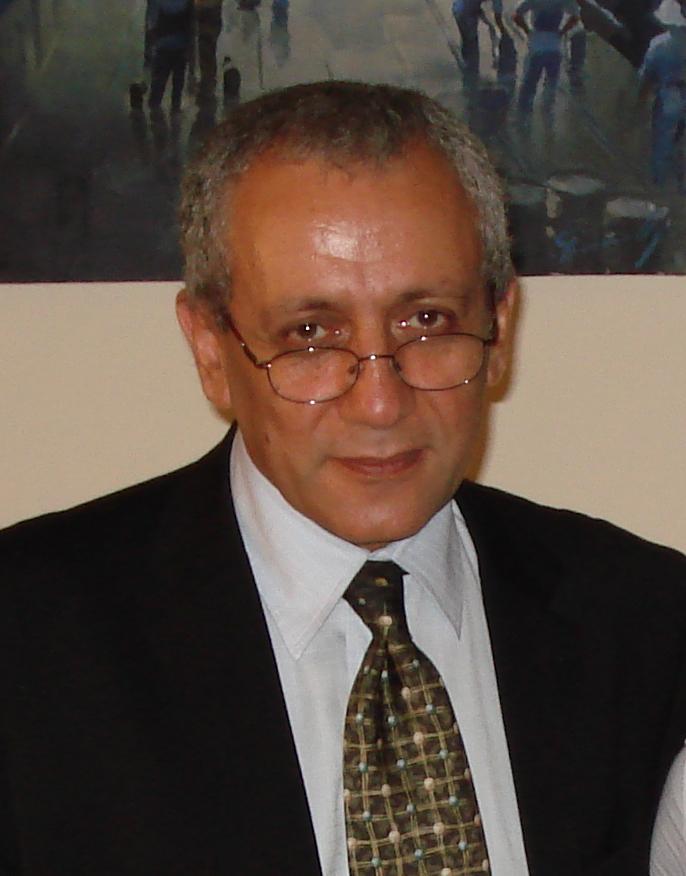 He also gives the reason why it was published. Mr Khodabandeh explains that he lives in the United Kingdom and is currently visiting Iraq at the invitation of government officials, and was invited in order to attend various meeting on the issue of foreign terrorist groups in Iraq. He adds that "in the course of this work I have regular contact with the US army and relevant humanitarian bodies and I am seeking ways to rescue people from the hands of the Saddamists in Diyali province". He considers that "as all Kuwaiti citizens know all too well, the "Mojahedin-e Khalq" organisation acted as Saddam’s private army in Iraq and helped to crush the Kurdish uprising in 1991 at the end of the first Gulf war. The Iraqi Government is now determined to remove all remnants of the Baathist regime, including the Iranian foreign terrorist group "Mojahedin-e Khalq", from its territory". He adds "I have travelled to Iraq to help those people who want to leave the group to find refuge and return to their families and to normal life."
He concludes by saying that readers of the newspaper "Alseyassah" will understand now why the Saddamists have tried to blacken his name and he states that the paper’s editors have acted properly in giving him the right to reply.
In this connection, it is important for "Alseyassah" to explain to Mr and Mrs Khodabandeh and to our readers that what was published on the first of February was an announcement and not an article and it was not simply ascribed to anonymous sources but it made clear in it that it was an announcement issued by the "League of Iraqi Academics and Educationalists" and it is important to explain that the accusations made by the League that Mrs Ann and her husband are "working in the service of the Iranian security services in Iraq and that they are carrying out the tasks of the Iranian regime under false pretences" were accusations carried by "Alseyassah" but not espoused by it, as was stated in the announcement itself.
TEHRAN (FNA)- Iraqi officials have issued warrants for arresting three members of an anti-Iranian terrorist group called the Mojahedin-e Khalq Organization (MKO), and the court order is viewed by observers as to be testing the United States’ honesty in restoring calm and security in Iraq. The Iraqi criminal court issued warrants for the arrest of Mozhgan Parsayee, Abbas Davari and Sediqeh Hosseini, who are deemed to be among leaders of the terrorist group, following the several complaints lodged by the relatives of a number of MKO members. While different peace-seeking groups and the plaintiffs are demanding implementation of the court ruling, the arrest warrants will produce no results unless the US troops show cooperation, and this has faced the US with a new challenge to prove its allegations about the fight against terrorism in Iraq. Despite the slogans frequently chanted by the US about a so-called tough campaign against terrorism, ever since the US invasion of Iraq and the fall of former Iraqi dictator Saddam Hussein, Washington has always shielded the MKO and provided backup and support for the terrorist group in a bid to use them for materializing its goals. The Bulgarian military commander in Iraq admitted in May 2006 that his forces are protecting the MKO at the request of the US central command in Iraq. Bulgaria had withdrawn most of its forces from the occupied Iraq by the end of 2005, but 154 of its soldiers still remain as security guards for the Ashraf camp where 3500 MKO terrorists are based. MKO terrorists have martyred many innocent Iranians over the past 25 years and had supported Saddam’s tyrannical Ba’th minority regime during the 8-year Iraqi imposed war on Iran in the 1980s. Fars News Agancy-10 Feb.2008
“It is with optimism that I usually regard elections. Win or lose, they are an opportunity for the voice of the people to be heard, but an exception to this will be the Iranian “elections” this March. Elections in Iran are neither free nor fair”. That is how Mark Williams, one out of 35 UK Parliamentarians that took the Government to court to have the ban on the MKO lifted, opens his article released in global politician. He is of the opinion that none of the elections inside Iran are fare and that the entire elected are pre-elected. True or false, the fact is that his source of information is biased toward Mojahedi-e Khalq terrorist cult and the world is well acquainted with the accuracy extent of the information released by the group.
Interestingly, he suggests the essentiality of a democratic change inside Iran. At least he has to err on the side of caution not to recommend an undemocratic, terrorist group for the accomplishment of the mission. He believes that the best solution is real democratic change in Iran and that, Britain and the EU must stop hindering the democratic Iranian Resistance as it strives for change.
Mr. Williams has to be notified that a globally proscribed terrorist group whose leading president-elect is neither elected by Iranian people nor even by a single ballot of the organization’s own insiders but promoted to the position by her egocentric husband is not legitimate at all to lead the campaign for the change inside Iran. Claimed by the organization and corroborated at least by two European court rulings, MKO has forsworn terrorism since 2001. Has anybody ever asked what terrorist deeds and atrocities the group has perpetrated against Iranian people before its claimed renunciation of terrorism?
How is that Mr. Williams has obtained information on the claimed number of 120,000 executed members and supporters of the organization while he knows nothing of the number of the key Iranian officials and innocent civilians who were mercilessly killed by the terrorist operation teams of the organization soon after the Iranian 1979 revolution? As a Member of Parliament, Mr. Williams has easy access to the approved evidences and reasons leading to the proscription of MKO as a terrorist organization. Even Mojahedin themselves know well that Iranian have closed the door on them; they only strive to get their foothold secure wherein they have taken refuge and are required to maintain a democratic conduct. February 5, 2008
THEY are Iraq’s forgotten terrorists, more than 3,000 fighters of the Mujahideen-e Khalq (MEK) languishing at one of their former military camps some 100km north of Baghdad.
‘They are definitely in a legal limbo. No one wants them,’ said Mr Said Boumedouha, a researcher at Amnesty International in London. No one, that is, except Iran.
The MEK, also known as the MKO or the People’s Mujahideen of Iran, is described as an Islamic Socialist group that advocates the overthrow of Iran’s government. Founded in Teheran in 1965, it opposed the rule of Iran’s shah, but was violently suppressed after the Iranian revolution as it was viewed as a threat by Ayatollah Khomeini’s newly established regime.
With its headquarters relocated to Iraq in 1986, the MEK fought with Saddam Hussein’s forces in the Iran-Iraq war of 1980-1988. They were organised as a conventionally armed brigade with an estimated fighting strength of 6,000 to 8,000 personnel. In mid-1994, Iraq’s Ministry of Defence announced that these fighters had been formally integrated with the country’s armed forces.
The MEK is designated as a terrorist organisation by the United States, the European Union and several individual countries – in part, it seems, because of anti-Western attacks and assassinations before the Iranian revolution. Teheran also views the MEK members as terrorists and has sought their extradition from Iraq.
There have been efforts to lift the yoke of this designation, including a 2002 call to end the US proscription signed by 150 members of Congress. In fact, some have suggested that Washington originally tagged it as a terrorist group in 1997 as a gesture to Iran’s newly elected reformist president.
The US proscription nevertheless remains in place, and the EU Council continues to blacklist the MEK despite a December 2006 ruling by the European Court of Justice that overturned Brussels’ edict freezing MEK funds.
There are currently some 3,360 MEK members at Camp Ashraf, located in Iraq’s Diyala province. About 110 others are defectors seeking refugee status and residing at the Ashraf refugee camp. Some have been voluntarily repatriated to Iran, claiming they were forced to join the MEK after being taken prisoner by Iraq in the Iran-Iraq war. The International Committee of the Red Cross (ICRC) says it has helped in the repatriation of 255 former fighters, most recently just this month, but the US-led Multinational Force in Iraq provides a figure of 380.
Though part of the Iraqi army, the MEK effectively declared itself neutral when coalition forces invaded the country in March 2003, and surrendered without a fight after suffering a few air attacks. But there is some confusion concerning its subsequent status.
‘The MEK were never captured or classified as prisoners of war (under the Third Geneva Convention). ‘Protected person’ status (under the Fourth Geneva Convention) was granted as part of a ceasefire agreement negotiated between the US and MEK,’ explained Major Winfield Danielson, a press officer with coalition forces in Baghdad.
‘Each member of the MEK was required to sign a document renouncing violence and agreeing not to take up arms. The MEK was also disarmed.’
However, this is contradicted by earlier statements that MEK members’ status was changed from ‘prisoners of war’ to ‘protected persons’ in June 2004.
‘The change in their status is linked to the change of authority (on June 28, 2004, when an interim government assumed control of Iraq). It was also prompted by a process that saw each individual disarm and renounce violence,’ Lieutenant-Colonel Barry Johnson, a US spokesman for detainee operations in Iraq, told me at that time.
The shift is curious in either case. ‘Protected person’ status applies to civilians, whereas the MEK personnel were uniformed soldiers in an established army – and affiliated with a proscribed terrorist group at that. ‘It is not the responsibility of the ICRC to independently determine their status,’ said ICRC official Dorothea Krimitsas in an e-mail from Geneva. The ICRC has never visited Camp Ashraf due to security concerns. But the coalition would contend that this may be unnecessary as the MEK members are not being detained.
‘Neither the active MEK members nor the former MEK refugees are being detained,’ said Major Danielson. ‘The Ashraf refugee camp refugees have every right to depart and travel in Iraq using an Iraqi-issued laissez-passer. They can also repatriate to Iran if they desire, or they may stay in the camp.
‘The active MEK members who live in Camp Ashraf have ‘protected persons’ status. As part of the ceasefire agreement, they may travel outside the city of Ashraf but must do so under the protection of coalition forces.’
Nor are MEK members at Camp Ashraf facing criminal charges, with Major Danielson noting that ‘they are not charged with criminal offences’. This appears peculiar in view of existing laws in the US and elsewhere that criminalise support for terrorist organisations.
According to the US State Department, for example: ‘It is unlawful for a person in the US or subject to the jurisdiction of the US to knowingly provide ‘material support or resources’ to a designated Foreign Terrorist Organisation.’
As prisoners of war, the MEK personnel would have to be ‘released and repatriated without delay after the cessation of hostilities’, according to Article 118 of the Third Geneva Convention. For ‘protected persons’ under the Fourth Geneva Convention ‘internment shall cease as soon as possible after the close of hostilities’, according to Article 133.
The ICRC maintains that the Iraq war ended with the transfer of sovereignty to the country’s interim government in June 2004, with the fighting since then characterised as ‘an internal conflict internationalised by the presence of multilateral forces’.
The coalition argues that the MEK personnel at Camp Ashraf are not being detained. But nor are they wandering about or relocating.
‘Our position is that they shouldn’t be returned to Iran due to the fear of torture and the death penalty. And they shouldn’t be handed over to Iraq for the same reason,’ said Amnesty’s Mr Boumedouha. ‘Their immediate future looks bleak.’
In this context, Mr Boumedouha sees the US-led coalition’s oversight of MEK personnel at Camp Ashraf as something of a humanitarian act in keeping with the ‘protected persons’ provision. If that is the case, the coalition is upholding the spirit of the Fourth Geneva Convention but perhaps not its legal mandate, as Article Six states: ‘In the case of occupied territory, the application of the present Convention shall cease one year after the close of military operations.’
However, some have suggested an alternative interpretation of the coalition’s treatment of the MEK people.
Unconfirmed allegations have surfaced in Teheran and elsewhere that the US Central Intelligence Agency is using the MEK for covert operations in Iran. Teheran failed to respond to a request to substantiate these claims.
Straits Times, Robert Karniol, Defence Writer
The paradoxical stance adopted by the US towards Mojahedin-e Khalq cultist organization has turned into a rather serious challenge mounting the already existing tension between the US and Iran. According to a number of political analysts, the dual stance might be the result of internal political disparities among the parties. But it has to be noted that regardless of all disparities, the parties reach a consensus when it comes to confront any alien element that imperils the country’s general interests. However, the prevalent political contradictions emerged mostly after the State Department first designated MKO as a terrorist organization in 1997, a status that the group continues to occupy ever since.
Despite MKO’s claim that its classification as a terrorist organization was at the behest of the Iranian government, the State Department’s latest report describing the group a cult of personality as well as a terrorist group indicates that the Americans have well realized the group’s threats. The internal disputes to deproscribe MKO in no way mean that some have come to be duped by group’s pro-democratic propagandas but rather it is regarded as an easy tool against Iranian regime. The speculation was even further underpinned when the group came to receive protection of the coalition forces in Iraq following Saddam’s fall. However, there are many undeniable factors, especially disclosed by the State Department’s report, that convince Americans never put any trust on the group. The features can be classified as:
– MKO’s Marxist ideology
– Group’s innate antagonism with capitalism and adoption of armed struggle to start a mass movement against capitalism
– Perpetration of terrorist operations against American military personnel and civilians inside Iran
– Playing a pivotal role to escalate the emerged US-Iran tension following the Islamic revolution
– supporting the takeover of the U.S. Embassy in Tehran in 1979
– MKO’s secrete ties with the USSR and the communist camp in general
– A zealous attachment to Machiavellianism
– Masterminding terrorist plots against American interests inside Iran
– Unannounced but implicit acknowledgment of al-Qaeda’s 9/11 terrorist operation
– Wearing a mask of pro-democracy as a tactic to assume political power
– maintaining the capacity and will to commit terrorist acts across the world
– close military and intelligence collaboration with Saddam’s regime Regardless of all lobbying attempts to get the group off the hook, MKO remained on the list. But the raised question is that how a designated organization happened to be the first terrorist organization to be granted ‘protected status’ by the US in its move to combat terrorism?
Hardly any of the designated terrorists groups on Americans’ list strive for getting close to the US to gain political legitimacy and most of them are recognized to be jeopardizing American interests here and there. In contrast, MKO hankers after convincing Americans that throughout its campaign, it has tried to accomplish a goal of establishing democracy on the US model. Interestingly, the group in an attempt to justify its claim distorted its past records of activities and adopted ideology. The best evidence is its published Democracy Betrayed wherein the group tries to prove absolute devotion to American favoured capitalism and liberalism.
But Americans are well aware of the fact that exactly in the same way that they manipulate the group, Machiavellian mannerism is theorized within MKO. That is why Americans, in spite of the heavy cost they sometimes have to pay, keep in touch with the group while is keen to it at a distance; that is exactly what America is doing in Iraq.
Soon after Americans settled in Iraq, more than a year after the invasion, they actually frustrated MKO’s liberation army by disarming it. In July 2004 all members of MKO in Iraq, including the leadership of the organisation based there, signed agreements which permitted them release from the control and protection of the Coalition forces in Iraq. In order to obtain that benefit, each individual had to sign a statement containing the following words:
…I agree to the following:
a. I reject participation in, or support for terrorism.
b. I have delivered all military equipment and weapons under my control or responsibility.
c. I reject violence and I will not unlawfully take up arms or engage in any hostile act. I will obey the laws of Iraq and relevant United Nations mandates while residing in this country.
Thus, renunciation of militarism was enforced on MKO against its will and its terrorist potentialities were curbed in Iraq. Furthermore, by setting up Temporary International Presence Facility (TIPF) in the vicinity of Camp Ashraf, dissatisfied members were granted opportunity to leave the group which debilitate the organization to a large extent. Beyond that, the State Department Office of the Coordinator for Counterterrorism in its last report released on April 30 for the first time brought up establishment of a cult of personality by its leader:
In addition to its terrorist credentials, the MEK has also displayed cult-like characteristics. Upon entry into the group, new members are indoctrinated in MEK ideology and revisionist Iranian history. Members are also required to undertake a vow of "eternal divorce" and participate in weekly "ideological cleansings." Additionally, children are reportedly separated from parents at a young age. MEK leader Maryam Rajavi has established a "cult of personality." She claims to emulate the Prophet Muhammad and is viewed by members as the "Iranian President in exile."
To sum up the Americans views, they indirectly argue:
– That MKO is a terrorist group that maintains unusually aberrant manners compared with other blacklisted organizations
– That its mannerism is rooted in its cult-like structure
– That MKO is a greater potential cult threat beyond its terrorist threat
– That the group is not only a global threat but also a closed cult enslaving its own members physically and mentally
– That the granted ‘protected status’ in Iraq is a measure to have it under control and to find an appropriate way of restoring the members’ mental health
– That instilled by the hope that it can win the US support, MKO can be prevented to commit mass-murder suicide like that of Jim Jones cult of the Peoples Temple
– That it is possible to have MKO under strict control through international conventions
– That the US’s paradoxical deal with MKO is the result of recognizing group’s dual terrorist-cult nature
– That MKO respect no political ethics in its campaign to assume the power
– That the gained experiences over destructive cults like Jim Jones and David Koresh is a warning to be more cautious and conservative to cope with MKO
– That ….
It can be continued with more reasons to see why the US has adopted a paradoxical but rational approach concerning MKO. Mojahedin.ws-February 2, 2008
The Libertarian Party seems to know how to get its own message out to a politically sensitized electorate who are really fed up with Bush’s irrationality and seek for something better. Bush is said to deliver his annual State of the Union address to a joint session of Congress next week and Libertarian Steve Kubby delivered his own version directly to the American people via Internet video in advance.
In part of his speech that he referred to as offering “an assessment of our nation’s situation and answers to the question, Steve Kubby said he had a pretty good idea of what Bush was going to say and leave many things untold. In respect to Iran and financing terrorist groups like MKO he said:
President Bush is going to tell you that IRAN represents yet another military challenge to US power and that “all options remain on the table” for dealing with that threat. What he’s not going to tell you is that neither the International Atomic Energy Agency nor our government’s very own intelligence services agree with his claim that Iran is actively seeking to develop nuclear weapons. Nor is he going to tell you that enmity between Iran and the US is and always has been almost entirely a function of US intervention in the Middle East, including financing the bombing and murder campaigns of terror groups like the MEK within Iran’s borders.
President Bush will tell you none of these things, because telling you those things might lead you to ask yourself what the hell you were thinking when you consented to allow him, his party, and those who pretend to be his opponents in Congress, to exercise power over yourself, your family, your friends and your neighbors in the first place.
January 26, 2008
If there are people, notably among parliamentarians, who believe that restraining the threats of the potential adversaries of a nation is ‘bad politics’, then, the good politics would be espousing a terrorist opposition against that nation. Besides, if a country like the UK proscribes an organization, under legislated laws, as terrorist to protect the nation against its threats, it is alleged to be a task of incentive done for political interests rather than for the security of the nation. That is what Roger Gale, a British MP and the former Vice Chairman of Conservative party, strongly advocates.
In an article released by Global Politician, Mr. Gale claims that blacklisting Mojahedin-e Khalq Organization (MKO/MEK) as a terrorist organisation first by the US in 1997, which was followed by the UK in 2001 and the EU in 2002, was a task to appease Iranian regime. I doubt that Mr. Gale has failed to have access to published reasons by the mentioned countries for proscribing MKO. Or he might have been kept in the dark about the group’s long, bloody, terrorist activities perpetrated against Iranian people.
Following the Iranian revolution, with Massoud Rajavi leading the group, the MKO declared an overall violent armed struggle to topple the ruling power and assume power instead. Iranian history will never forget this bloody chapter which the MKO drafted, and its collaboration with Saddam. The group failed in its violent strategy and taking shelter behind another alias, NCRI, led by husband-imposed leader, started a pro-democratic struggle for the same cause. Never has MKO been concerned about the nation itself but about gaining power regardless of who may pay the price.
The countries that proscribed the MKO were well acquainted with its dual nature and hideous terrorist threat it exposed not only to its own people but wherever it settled to set up a base. In fact, the MKO has turned into a grave problem many countries try to deal with. Redesignation of the MKO in spite of two courts’ ruling indicates that no country trusts the group’s democratic masquerade whether people like Mr. Gale like it or not. The group might have few supporters among parliamentarians outside Iran, but, to assure Mr. Gale, the MKO is short of an iota of publicity inside Iran and lacks the political weight to make any change
Sattar Orangi, Mojahedin.ws, January 21, 2008