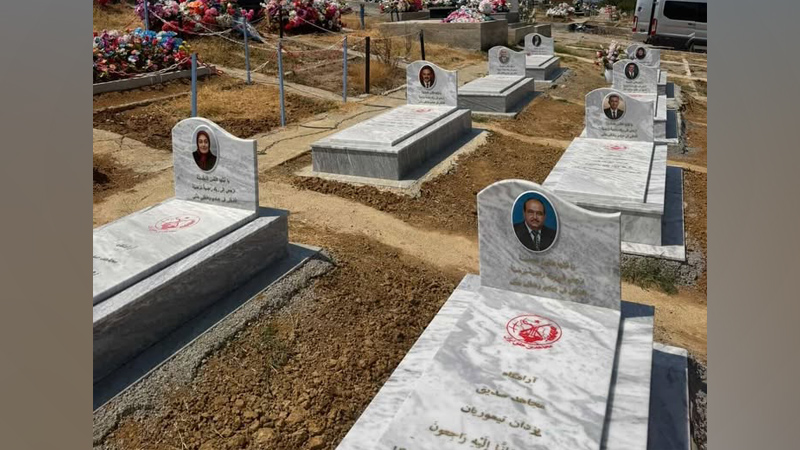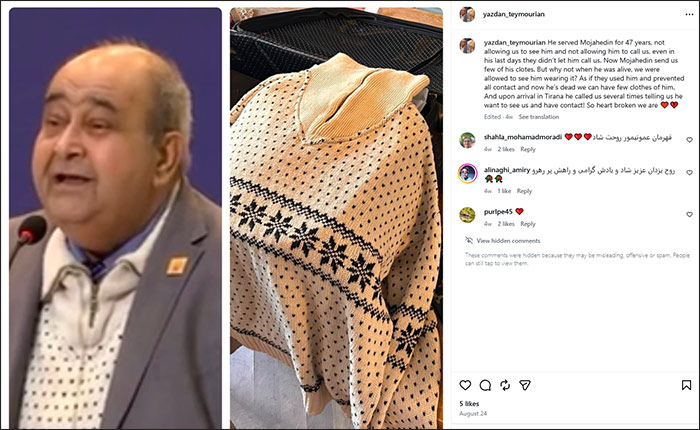
The recent social media post shared by the family of the late Yazdan Teimorian—a long-time member of the Mujahedin-e Khalq (MEK) who passed away at the age of 74 in June 2026—serves as a poignant window into the deep psychological and emotional trauma inflicted by strict isolation policies within closed political and ideological structure of the group.
Following the public announcement of Yazdan’s death in June 2026, his family utilized social media, specifically creating a dedicated Instagram account under the name Yazdan Teimorian, to mourn publicly and share his history. Most captions of Yazdan’s photos indicate the sufferings of Yazdan and his separated family under the rule of the MEK leaders. This is their most recent post:
“Love you, miss you every day. He had been sick in Ashraf Hospital and was kept away from his family. They didn’t let him have a last goodbye or even a last phone call with us. It’s so unfair.
Years ago, during our last phone call, he said, “Please bring the baby girl, my granddaughter, so I can hold her in my arms.” He needed his family and was longing for us.”
Analyzing this short heartfelt message reveals several critical themes concerning human rights, family separation, and the systemic control exercised over aging members in Ashraf 3, Manez, Albania.
Denial of End-of-Life Contact and Compassion
The post highlights that Yazdan Teimorian was sick in Ashraf 3 and was deliberately kept away from his relatives. In humanitarian terms, end-of-life care typically emphasizes comfort, dignity, and family reconciliation. The family’s grievance— “They didn’t let him have a last goodbye or even a last phone call with us”—underscores how ideological or organizational strictures can prevail fundamental human empathy, denying both the aging member and his family the opportunity for saying goodbye.
The Unfulfilled Human Desire for Familial Connection
The poignant recollection quoted by the family— “Please bring the baby girl, my granddaughter, so I can hold her in my arms”—illustrates the profound yearning for generational continuity and familial love that persists despite decades of separation. For decades, many members within the restrictive structures of the Cult of Rajavi are cut off from routine domestic life, marriages, and child-rearing. Highlighting this plea emphasizes that beneath decades of organizational commitment, core human attachments and the desire for parental and grandparental bonds remained entirely intact.
Institutional Control and Information Asymmetry
Reports surrounding the Teimorian family’s interactions with the MEK—including restricted visits during trips to Albania and delayed or tightly controlled notifications regarding his death—demonstrate a pattern of information gatekeeping. Organizations that isolate their rank-and-file members from the outside world often maintain strict control over communication channels to prevent defections, external influence, or independent oversight, unfortunately resulting in profound grief for families on the outside who are left unable to support their aging loved ones effectively.
To cope with the prolonged absence and the rigid barriers erected by the MEK, Yazdan’s family navigated their grief and fought against institutional silence through several distinct actions. Through social media, his daughter Sepideh and other relatives published commemorative posts, family photographs, and details regarding his life inside the organization to counter the information vacuum controlled by the group.
Mazda Parsi