Nejat Society
  • Home
  • Articles
  • Media
    • Cartoons
    • NewsPics
    • Photo Gallery
    • Videos
  • Publications
    • Books
    • Nejat NewsLetter
    • Pars Brief
  • About Us
  • Contact us
  • Editions
    • عربي
    • فارسی
    • Shqip
Nejat Society
Nejat Society
  • Home
  • Articles
  • Media
    • Cartoons
    • NewsPics
    • Photo Gallery
    • Videos
  • Publications
    • Books
    • Nejat NewsLetter
    • Pars Brief
  • About Us
  • Contact us
  • Editions
    • عربي
    • فارسی
    • Shqip
© 2003 - 2024 NEJAT Society. nejatngo.org
Facebook
Mujahedin Khalq Organization

Facebook bans Iranian exile troll accounts

Facebook has removed hundreds of fake accounts linked to an Iranian exile group and a troll farm in Albania.

The accounts posted content critical of Iran’s government and supportive of Mujahedeen-e-Khalq, a dissident group known as MEK. In many cases, the Facebook and Instagram accounts used fake profile names and photos.

Facebook determined the accounts were being run from a single location in Albania by a group working on behalf of MEK.

MEK Troll factory in Albania

MEK members working in the ‘ troll factory’ in Manez Camp, Albania

Facebook found other telltale clues suggesting a troll farm, in which workers are paid to post content, often misinformation, to social media.

For one, researchers found that the activity seemed to follow the central European workday, with posts picking up after 9am, slowing down at the end of the day, and with a noticeable pause at lunchtime.

MEK is a leading group opposing the Iranian government. It killed Americans before the 1979 Islamic Revolution and was labelled as a terrorist organisation by the US State Department until 2012.

The network of fake accounts was most active in 2017 and again in late 2020, Facebook said. In all, more than 300 accounts, pages and groups on Facebook and Instagram were removed as part of the company’s action.

About 112,000 people followed one or more of the Instagram accounts.

7news.com
April 7, 2021 0 comments
FacebookTwitterPinterestWhatsappTelegramSkypeEmail
Araghchi in Vienna
Mujahedin Khalq Organization as a terrorist group

MEK operative attack on Araghchi in Vienna

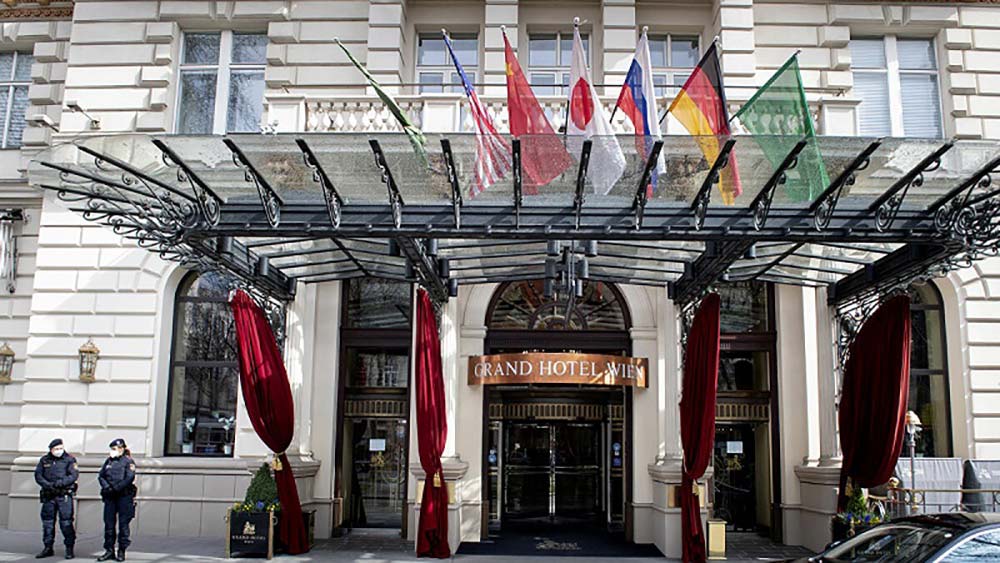
As Iranian Deputy Foreign Minister for Political Affairs Araghchi left the meeting place in Vienna, a member of the Mujahedin Khalq Organization (MEK/ MKO/ PMOI/ Cult of Rajavi) insulted him and tried to attack him, but to no avail, according to Mehr News Agency.

Intensive consultations between the various delegations are taking place in Vienna before the Joint Commission of the JCPOA which was held yesterday at 14:30 local time.

Vienna

Iranian Deputy Foreign Minister for Political Affairs Seyyed Abbas Araghchi who chairs the Iranian delegation at this meeting met Monday night with the head of the Chinese delegation and on Tuesday with the head of the Russian delegation.

Araghchi also met today with Enrique Mora, EU Coordinator and Chairman of the Joint Commission, to review the latest executive arrangements for the commission.

Araghchi in Vienna

After this meeting, and when Araghchi was leaving the meeting place, a female operative of MEK insulted him and tried to attack him, but she was stopped by the security guards.

As expected, members of MEK gathered in Vienna to protest the talks in front of the hotel where the joint commission was being held.

female operative of MEK in vienna

The Iranian embassy in Vienna had issued the necessary warnings to the Austrian police to maintain the security of Iranian negotiators.

The 18th Joint Commission of the JCPOA was held in Vienna with the participation of Iran and the remaining countries in the agreement.

Previously, Iran Foreign Minister Mohammad Javad Zarif said that the session of the JCPOA Commission seeks to finalize measures required to revive the deal.

April 7, 2021 0 comments
FacebookTwitterPinterestWhatsappTelegramSkypeEmail
Families sign letter
Mujahedin Khalq Organization members' families

Majid Zand Dochahi’s family letter to the Committee on Enforced Disappearances

The mother and father of Majid Zand Dochahi a member of the Mojahedin-e Khalq Organization (MEK, MKO), sent a complaint to the UN Committee on Disappearances against the Albanian government.

United Nations Committee on Enforced Disappearances
Office of the United Nations High Commissioner for Human Rights

Greetings,
My wife Ninaz Salem and me; Davood Zand Dochahi have been unaware of our son Majid Zand Dochahi for 20 years.

We once learned that he is in Iraq and in the MEK camp. We went to Iraq several times and went to Camp Ashraf to visit our son, but we did not succeed, and each time the officials of the organization prevented us from meeting our son.

We are now informed that the organization has been transferred to Albania and is based in a remote camp where there is no possibility of contact with its residents.

We ask you, the International authority, to provide means for us to communicate with our son in Albania to ensure his health.

Thank you in advance for your efforts.
Davood Zand Dochahi
Iran – Qom

April 6, 2021 0 comments
FacebookTwitterPinterestWhatsappTelegramSkypeEmail
Maryam Rajavi in Albania
The cult of Rajavi

Maryam Rajavi abandoned her followers to their fate in the Manez slave camp

There was some speculation recently as to the whereabouts of Maryam Rajavi – reminiscent of the disappearance of her husband Massoud Rajavi in 2003, who has since been presumed dead and yet speaks from the grave; does anybody miss him? Similarly, Maryam Rajavi who, no matter where she actually is, exists totally outside the consciousness of over 80 million people in Iran as the de facto head of the MEK cult which she inherited from her husband, has come to life in France.

Several observers who closely follow such issues have confirmed the news: Maryam Rajavi, after being expelled from Europe and being forced to spend two years in Albania, has now surfaced in Auvers sur Oise near Paris again. Unable to travel on her French documents, the CIA arranged for her to be given an Albanian passport stamped with a visa from France.

Rajavi has happily abandoned her followers to their fate in the slave camp in Manez, which is riddled with COVID-19, and emerged to celebrate her dead. (A far cry from the promise of regime change she has advertised for many a year.) Rajavi is photographed at the grave of a man who left the Iranian airforce forty years ago. She brought along a substitute for the dead pilot Behzad Moezi – his former flight technician and now MEK member – and dressed him in the same airforce uniform from that time; presumably to indicate that she is head of the defunct National Liberation Army of Iran. The MEK lost its military identity when it lost the patronage of Saddam Hussein two decades ago. That doesn’t appear to bother Maryam Rajavi. But her pose, in civilian clothes giving a military salute, only shows that she learned nothing about military etiquette over the past forty years.

What is made very clear from this sad little vignette is that the Biden administration still regards the MEK as a valuable tool. The CIA – which as an institution lacks any moral compass – is happy to continue to support Rajavi and exploit the slave labour of 2000 Iranian cult victims in Albania and is too dumb to comprehend that the families of these victims are sincere in their efforts to free their loved ones. The family of Behzad Moezi tried in vain to prevent Maryam Rajavi from exploiting him in death as she had exploited him in life*.

This ‘circus’ is a stark reminder, however, that the next-of-kin of all her dead followers are their families. It is they who should decide where and how their deceased loved ones are buried and honoured. Yet, even in death Rajavi cruelly denies these families their natural rights. Shame on her. Shame on those who wittingly follow her. And shame on the Biden administration which could act to put an end to this pointless debacle, but chooses not to.

* The one thing my father made clear to us, his only request, was to not let the Mujahedeen use his body for their circus. That is exactly what @Maryam_Rajavi did. Instead of being able to mourn our father, we’ve spent the last week trying to fight off this cult from afar.
— Maryam Moezzi (@maryam_moezzi) January 16, 2021
Iran Interlink WebsiteApril 4, 2021

April 6, 2021 0 comments
FacebookTwitterPinterestWhatsappTelegramSkypeEmail
MEK- Mujahedin khalq Organization
Mujahedin Khalq as an Opposition Group

The MKO has survived thanks to the treasons it committed

Moises Garduño is a Professor of the Faculty of Political and Social Sciences of the National Autonomous University of Mexico where he teaches Middle East Studies and Arabic Language. He is also PhD candidate in Contemporary Arab and Islamic Studies at the Faculty of Philosophy of Autonomous University of Madrid. His article titled “The collective action of Mujahedeen-e Khalq Organization (MKO): evolution, interests and current situation” was published on volume 51 of the Estud. Asia Áfr. Journal in 2016.

Rajavis

This paper defends the hypothesis that the political survival of the Mojahedin-e Khalq-e Iran Organization (The Fighters of the People of Iran) is dependent upon the recognition of this group’s joint interests with the political competitors of the Islamic Republic of Iran and not due to the effectiveness of any discursive or political project as these might relate to the Iranian society at large. The abstract reads:

For over three decades MKO has survived and operated against the government of the Islamic Republic of Iran supported by Saddam Hussein (in eighties) and for several personalities of the U.S. and some European governments in nowadays under National Council of Resistance of Iran (NCRI). Led by the charismatic Maryam Rajavi, wife of the movement’s official leader Massoud Rajavi, MKO promotes the establishment of”The Democratic Islamic Republic of Iran”, a project that displays that Islam, democracy and human rights can be implemented in”a future and new Iranian state. However, its history full of political treachery, terrorist acts and harassment against its own members, casts doubt on the authenticity of its political project which, with the unfavorable international environment faced since the departure of the U.S. troops from Iraq in 2009, questions its legitimacy and future as a political organization.

To read the full paper open the PDF file

April 5, 2021 0 comments
FacebookTwitterPinterestWhatsappTelegramSkypeEmail
Maryam Rajavi
Mujahedin Khalq Organization as a terrorist group

Trends on social media show Iranians’ hatred against the MEK

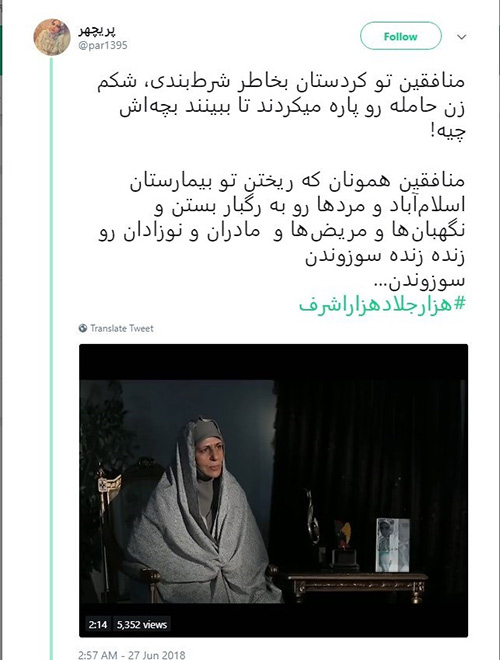
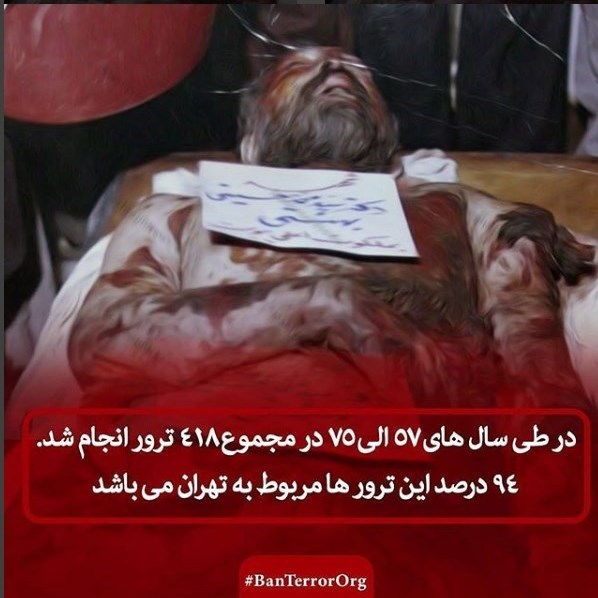
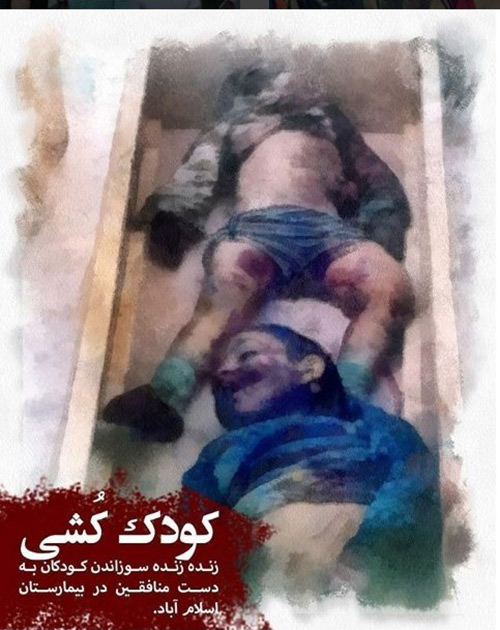
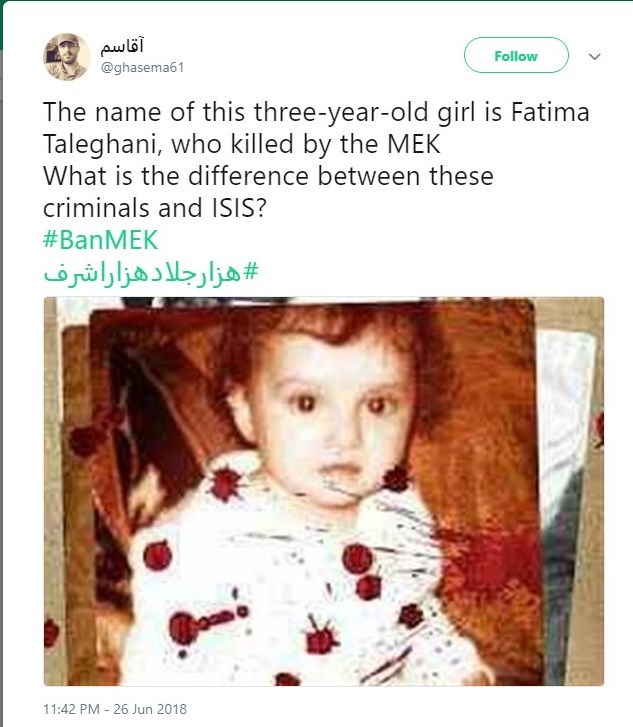
From time to time, Iranian users of the social media succeed to soar trends against the Mujahedin Khalq Organization (MKO/ MEK/ PMOI/ Cult of Rajavi) in order to show their hatred toward this violent group. They sometime give evidences for the hashtags to denounce the group.

Many People in Iran and around the world disclosed evidences of the most odious crimes committed by the terrorist MKO as hashtag #BanMEK was trending worldwide, Tasnim reported in June 2018.
A huge number of Persian-language internet users used hashtag هزارجلادهزاراشرف# (Thousand of Executioners,

Thousands of Ashrafs) on their personal accounts on Instagram and Twitter as the English version of the hashtag #BanMEK is trending on the social networking sites.

These hashtags became popular after the MKO’s leader, Maryam Rajavi, used Twitter to provoke unrest in Iran following protests over price hikes in the Grand Bazaar of capital, Tehran, on Monday.

Tweet Hezarjalad

In one of the posts on Twitter, a user says the MKO terrorists are the same persons who used to tear the abdomen of a pregnant woman just for a bet on the baby’s gender.

The MKO crimes emerge on social media as Iran on Thursday marked the anniversary of the 7th of Tir bombing, a terrorist attack in 1981 claimed by the MKO.

On June 28th, 1981 – the 7th of Tir 1360 in the Iranian calendar– a powerful bomb blasted at the headquarters of the Iran Islamic Republic Party in Tehran, while the members in a meeting.

Tweet Hezarjalad

72 officials of the Islamic Republic were killed, including Chief Justice Ayatollah Mohammad Beheshti – who was the speaker of the parliament – four cabinet ministers, 27 members of the Parliament and several other government officials.

The MKO – listed as a terrorist organization by much of the international community – fled Iran in 1986 for Iraq and was given a camp by former Iraqi dictator Saddam Hussein.

Tweet Hezarjalad

They fought on the side of Saddam during the Iraqi imposed war on Iran (1980-88). They were also involved in the bloody repression of Shiite Muslims in southern Iraq in 1991 and the massacre of Iraqi Kurds.
The notorious group is also responsible for killing thousands of Iranian civilians and officials after the victory of the Islamic revolution in 1979.

Tweet Hezarjalad

More than 17,000 Iranians, many of them civilians, have been killed at the hands of the MKO in different acts of terrorism including bombings in public places, and targeted killings.
The MKO also had a hand in the massacre of Kurds following the crushing of a 1991 uprising by Shiites in Iraq’s south and Kurds in the north, which was one of the most brutal acts of repression under Saddam Hussein.

First published in June 2018

April 5, 2021 0 comments
FacebookTwitterPinterestWhatsappTelegramSkypeEmail
Nejat Newsletter 82
Nejat Publications

Nejat Newsletter No. 82

Inside This Issue:

–  MEK ex- members celebrated Nowruz in Tirana
Tens of Mojahedin-e Khalq former members celebrated Nowruz – a festival that marks the Persian New Year on March 21st and the of ficial beginning of spring, in Tirana, AlbaniaNejat Newsletter 82

– EU Commissioner Ylva Jo hansson Asked To Look Into The MEK Problem In Albania
Ebrahim Khodabandeh, CEO of Nejat Society, Iran, wrote a letter to the European Com missioner for Home Affairs, Ylva Johansson. The text of the letter is as followsRAJAVI FACING INTER NATIONAL CONDEMNA TION

– Prosecuting MKO Terrorists Through Intl. Legal Channels
These people are former members of the most notorious anti Iran terrorist group, known as the MKO or Mojahedin-e Khalq Organization. They fled the group years ago after spending two decades in the MKO under duress. They have now filed a lawsuit at an Iranian court against leaders of the terror group, namely Masoud and Maryam Rajavi.

– WOMEN IN MOJAHEDIN KHALQ – INTERNATION AL WOMEN’S DAY
Ten Facts on Women’s Rights Abuse in the MEK Let’s review Maryam Rajavi’s promises for Iranian women on the occasion of the Internation al Women’s Day

– Razavizade family com plains to the UN Committee on Enforced Disappearances
We are the sister (Robabeh) and brother (Seyed Abbas) of Seyed Hossein Razaviza deh Bahabadi. We have not seen our brother for almost 37 years and now we want to file our complaint against the Albanian government under the UN International Con vention for the Protection of All Persons from En forced Disappearance, of which the Albanian govern ment is a signatory…

– RAJAVI FACING INTERNATIONAL CONDEMNATION
On 12th March 2021, several ex-MEK member organisations from Paris gathered together and sent a delegation to the Albani an embassy in Paris. They had a brief meeting with the deputy ambassador and arranged a formal meeting with the ambassador at a later date. In this conversation they handed over some docu ments and a statement to be passed to PM Edi Rama’s office.

– Civil Court Against Mojahe din-e Khalq Cult In Tehran
Iran: Tehran court asks MEK ‘to pay for financial and moral dam ages’ to former members…

To view the pdf file click here

April 4, 2021 0 comments
FacebookTwitterPinterestWhatsappTelegramSkypeEmail
weekly digest
Iran Interlink Weekly Digest

Iran Interlink Weekly Digest – 282

++ There was some speculation recently as to the whereabouts of Maryam Rajavi – reminiscent of the disappearance of her husband Massoud Rajavi in 2003, who has since been presumed dead and yet speaks from the grave; does anybody miss him? Similarly, Maryam Rajavi who, no matter where she actually is, exists totally outside the consciousness of over 80 million people in Iran as the de facto head of the MEK cult which she inherited from her husband, has come to life in France.

Several observers who closely follow such issues have confirmed the news: Maryam Rajavi, after being expelled from Europe and being forced to spend two years in Albania, has now surfaced in Auvers sur Oise near Paris again. Unable to travel on her French documents, the CIA arranged for her to be given an Albanian passport stamped with a visa from France. Rajavi has happily abandoned her followers to their fate in the slave camp in Manez, which is riddled with COVID-19, and emerged to celebrate her dead. (A far cry from the promise of regime change she has advertised for many a year.) Rajavi is photographed at the grave of a man who left the Iranian airforce forty years ago. She brought along a substitute for the dead pilot Behzad Moezi – his former flight technician and now MEK member – and dressed him in the same airforce uniform from that time; presumably to indicate that she is head of the defunct National Liberation Army of Iran. The MEK lost its military identity when it lost the patronage of Saddam Hussein two decades ago. That doesn’t appear to bother Maryam Rajavi. But her pose, in civilian clothes giving a military salute, only shows that she learned nothing about military etiquette over the past forty years.

What is made very clear from this sad little vignette is that the Biden administration still regards the MEK as a valuable tool. The CIA – which as an institution lacks any moral compass – is happy to continue to support Rajavi and exploit the slave labour of 2000 Iranian cult victims in Albania and is too dumb to comprehend that the families of these victims are sincere in their efforts to free their loved ones. The family of Behzad Moezi tried in vain to prevent Maryam Rajavi from exploiting him in death as she had exploited him in life. This ‘circus’ is a stark reminder, however, that the next-of-kin of all her dead followers are their families. It is they who should decide where and how their deceased loved ones are buried and honoured. Yet, even in death Rajavi cruelly denies these families their natural rights. Shame on her. Shame on those who wittingly follow her. And shame on the Biden administration which could act to put an end to this pointless debacle, but chooses not to.

2: The one thing my father made clear to us, his only request, was to not let the Mujahedeen use his body for their circus. That is exactly what @Maryam_Rajavi did. Instead of being able to mourn our father, we’ve spent the last week trying to fight off this cult from afar.

— Maryam Moezzi (@maryam_moezzi) January 16, 2021

++ Some candidates in Albania’s upcoming elections are running anti-corruption platforms. The MEK presence in Albania – particularly the slave camp in Manez – has become a topic of media interest. Some outlets have outlined the MEK’s involvement in political and judicial corruption.

In English:

++ Press TV reported the outcome of the judicial hearing on behalf of 42 former MEK members who allege the group committed human rights abuses against them and terrorism against Iran. The judge confirmed all the charges. The Press TV report concludes that since the MEK enjoys the full support of the West, it is unlikely that France and Albania would cooperate to extradite the perpetrators for trial. According to a separate report by Yusef Jalali for Press TV – ‘US changes definition of terrorism based on own interests: Rights activist’ – this demonstrates the West’s double standards on the issue of terrorism.

++ Habilian Association (representing victims of MEK terrorism) published the fifth part of a series of short films on YouTube charting the MEK’s illegal and extremist acts within European borders. The title is ‘Mujahedin-e Khalq a threat for EU countries’.

++ Nejat Society (representing the families of trapped MEK members), continues to campaign for the rights of individual members who have disappeared. This week, the brother of Ahmad Paydar asked the UN Committee on Enforced Disappearances, the Office of the UNHCHR and the UN office in Geneva to pursue his case as a former POW from the eight-year Iran-Iraq war. Ahmad Paydar is in the MEK slave camp in Albania. The family of Ali Rasekhi – also in the slave camp in Albania – petitioned the Albanian government and officials for news about him. They continue to ignore the family’s letters asking for news about him.

Apr 02, 2021

April 4, 2021 0 comments
FacebookTwitterPinterestWhatsappTelegramSkypeEmail
camp Ashraf 3
Albania

MEK in Albania—Potential Implications and Security Concerns for Albania

Publication: Terrorism Monitor Volume: 16 Issue: 19

Following the U.S. invasion of Iraq, the Mujahedeen El-Khalq (MEK) was the subject of frequent attacks from Iranian-backed proxies, which overwhelmed their members residing in camps Ashraf and Liberty in Iraq. Before this, MEK, an Iranian dissident group, began living in Iraq in the early 1980s under the protection of Saddam Hussein. As a group in exile, MEK sought refuge in Iraq under the protection of Hussein, who utilized their military capacities and ties to Iran to undermine the Iranian regime. Until 2012, the MEK was identified as a terrorist organization due to its activities inside Iran and against other regional and international powers, including attacks against U.S. diplomatic personnel and businesses operating in Iran in the 1970s. [1]

Following a series of lobbying efforts by MEK leadership and supporters, the group pledged to give up their weapons and violent tactics as a means to be delisted as a designated terrorist organization. [2] As a consequence, in 2013, the U.S. government pleaded to a number of governments to provide refuge to the MEK members, including Romania, which was the preferred destination at the time. Albania­—grateful to the United States for its support during the war in Kosovo and advocating for its bid to join NATO and the EU—was the only country that responded positively to the request. Albania initially admitted some 200 members between 2013 and 2014. The United States and Albanian governments have extended the agreement since 2013, increasing the number of asylum seekers to somewhere in the range of 500-2,000 MEK members. During the summer of 2016, Tirana received the largest contingent of about 1,900 people, an operation managed by the UNHCR (Shekulli, March 12, 2016). Part of the agreement with Washington was the development of deradicalization and rehabilitation programs to be offered to members of the group.

Now, the group is residing in the outskirts of Tirana’s capital in a highly fortified camp located in Manëz. From this camp, the group is allegedly intensifying its political activities aimed at bringing down the Iranian regime (Exit.al, March 14). With emerging threats coming from radicalization and violent extremism, due to the rise of the Islamic State and other political Islamist groups in the region, the Albanian government may not be prepared or equipped to respond to the potential implications the group’s presence in Albania may bring.

MEK Activities and Support in Albania

There are a number of opportunities MEK is exploiting in order to restart its political activities against the Iranian regime now that they are residing in Albania. Recent propaganda efforts by the group’s leader, Maryam Rajavi, the widow of the founder of MEK, Massoud Rajavi, suggest that she sees herself as a key actor in fostering the opposition in Iran and subsequently bringing down the Khomeini regime (Exit.al, March 14). Much of the group’s propaganda material available online is translated in Albanian and seeks to also reach out to a local audience in their host country (Iran-interlink.org).

Moreover, the group has gathered significant support from important U.S. leaders who do not shy away from expressing their support for MEK’s potential rise as Iran’s future “democratic government” (Exit.al, June 26). This sentiment is frequently expressed on a number of occasions when important figures of the U.S. political landscape have personally visited Albania and spoken at rallies organized by MEK in Tirana (KlanTV, March 21). The most recent gatherings saw figures such as John Bolton (now U.S. National Security Advisor), Rudy Giuliani, one of President Trump’s most trusted advisors and personal lawyer, and late U.S. Senator John McCain, among others. The three seemingly demonstrated their support for MEK to be at the center of regime change in Iran (Exit.al, June 26).

The reasons why the Trump administration is supporting the group’s political objectives are unclear. It is also unclear the level of support MEK still has among the population in Iran, but it is becoming increasingly obvious that MEK is also making some powerful friends in Tirana as well. Over the years, key leaders from the Albanian government and civil society organizations have similarly provided their support during rallies and conferences organized by MEK in Paris as well as in Albania, where its new headquarters are located. In May 2015, Albania’s former Prime Minister during the war in Kosovo and current Minister of Diaspora, Pandeli Majko attended the National Council of Resistance of Iran rally in Paris with a large delegation of parliament representatives, journalists, lawyers and some civil society representatives, reiterating Albania’s support for Iran’s resistance and promising his personal support for regime change. [3]

In an impassioned speech over a cheering crowd, Majko said “whether you want it or not, you have involved us in your story, in your drama, in your tragedies and we understand you very well…some years ago, an American President was in Berlin and from Berlin, this politician, this great man declared ‘Ich bin a Berliner’. And in the name of my friends and in Albania, I’ve come here to say ‘Men mujahed astam’. I have a dream to come soon to Tehran. Invited by you.” [4] At the time, Majko’s attendance in the Paris rally was not covered by local media.

Despite the group’s increasing political support, recent media reports and several incidents between MEK members and local communities in Albania expose their continuing secretive activities and ongoing struggles to receive legitimacy as a democratic organization. Over the years, several media agencies have been interested in documenting the lives of MEK members in Albania and their political struggles in Iran. Channel 4, a well-known British news agency, recently traveled to Albania to do the same. The film crew was met by hostile private security who were guarding the highly fortified Manëz camp. Camp members physically attacked Channel 4’s camera crew (Shqiptarja.com, August 19). This was an unprecedented event that raised several questions over the camp’s activities (Lapsi.al, August 19). The event was widely reported by local media, which was also able to obtain a threat assessment on the group by Albania’s Intelligence Agency. According to the report initially made available to Channel 4 and then to other Iranian and local media, the group remains “deeply indoctrinated” and some of their activities, including murders of their members, are similar to the ones in Iraq (The Iranian, August 2018).

Testimonies from dissidents who left the group in recent months speak of similar military trainings, indoctrination and pressure to follow the group’s ideology (Top Channel, February 13). Although in the early years some of their members who relocated to Albania sought opportunities to travel abroad and join family members in the West, some 200 members have fled the group and continue to live in Albania (Top Channel, February 13). There is no clarity of their legal status or the employment opportunities available in a country suffering from high unemployment rates. However, some advocacy initiatives—often seemingly pro-Russian and pro-Iranian—are already fostering opposition against the group. Some of this opposition is often portrayed by the MEK leadership as an operation conducted by Iran’s security agencies (Lapsi.al, August 19; Media e Lire, April 17; Nejat NGO, September 29) Moreover, integrating the rest of the members still in Manëz into Albania’s society does not seem to be in the immediate interest for the MEK.

Implications

The MEK’s presence and activities may have serious repercussions for Albania and Albanian policy-makers. Leaders in Tirana may not foresee the long-term consequences of expanding their role on foreign policy issues beyond the small Balkan nation’s traditional reach. The group remains an existential threat to the Iranian regime. Over the years, Tehran has supported significant raids via Hezbollah and other proxy organizations in Iraq to destroy the group and kill key MEK leaders. As a result, Albanian authorities should expect more involvement from Iran in its internal and regional affairs. At the moment, there are no clear signs that Iran’s presence is significant in the region. Authorities in both Kosovo and Macedonia, however, have raised alarm bells over Iranian-linked NGOs having ties to terrorism-related activities in the past (Balkan Insight, June 25, 2015). If no effective responses are undertaken, MEK’s presence and Iran’s attention towards the Western Balkans may inflame sectarian divides in smaller communities and amplify regional rifts. Sectarian division is a latent phenomenon among Albanian Muslims, but they also remain under the pressure of other forms of Islamist radicalization. This is due to the emergence of Islamic State and Turkey’s instrumentalization of political Islam, among others.

Albania continues to struggle with endemic corruption and organized crime and the emergence of religious radicalization as a regional security threat and potential sectarian rifts may add to the list of challenges facing Albania’s political landscape. As a result, the country may not be prepared to inherit a long-standing struggle between a major regional Middle Eastern power and a former terrorist organization. Especially since both may utilize Albania’s internal vulnerabilities for their own political gains.

Notes

1.See U.S. State Department Press Release (US State Department, September 28, 2012).
2.Pandeli Majko’s speech in Paris, May 10, 2015:
3.https://www.youtube.com/watch?v=kIR97EP_phE
4.Ibid.

First published in October 12, 2018

By: Ebi Spahiu – jamestown.org

April 4, 2021 0 comments
FacebookTwitterPinterestWhatsappTelegramSkypeEmail
MEK defectors rally in Paris
The cult of Rajavi

MEK defectors denounced the MEK crimes in Paris

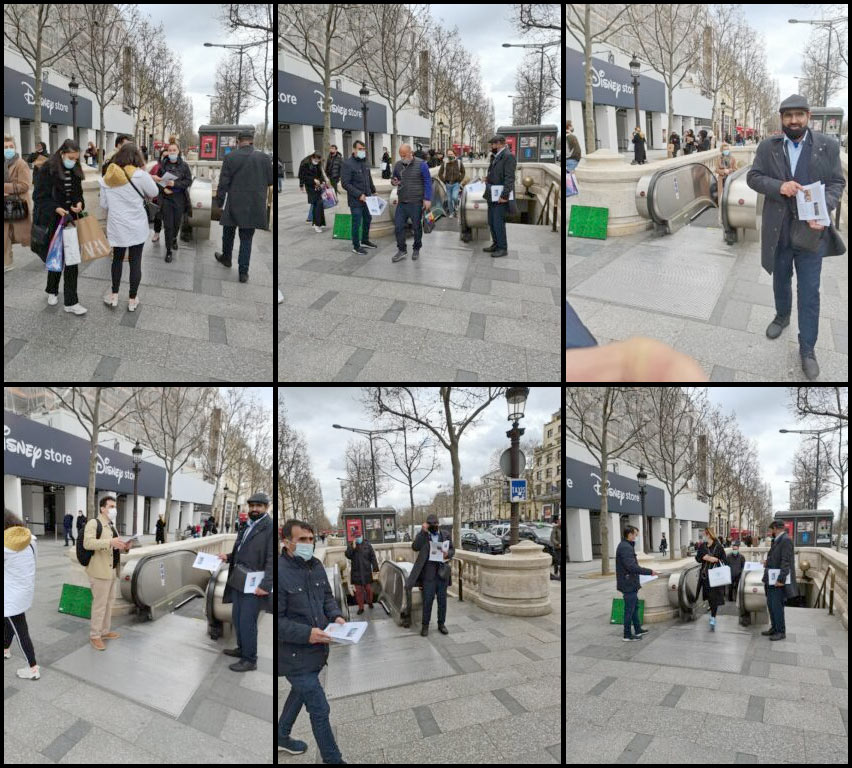
A number of defectors of the Mujahedin Khalq Organization (the MKO/ MEK/ PMOI/ the Cult of Rajavi) took action to denounce the group for kidnapping another former member, Hadi SaniKhani.

MEK defectors rally in Paris

Tens of former members of the MEK distributed flyers and brochures on the case of Sanikhani among citizens of Paris and its suburb. Hadi Sanikhani was recruited by the MEK in Turkey and then smuggled to Iraq to stay in the group’s cult-like system. He escaped from the group after it was relocated in Albania but after a few years he was disappeared. The MEK propaganda websites published some papers allegedly signed by Sanikhani.

Defectors believe that the MEK leaders have probably smuggled Sanikhani to France territory. They warned the French authorities and citizens about the MEK’s unlawful activities in France.

April 3, 2021 0 comments
FacebookTwitterPinterestWhatsappTelegramSkypeEmail
Newer Posts
Older Posts

Recent Posts

  • Pregnancy was taboo in the MEK

    December 22, 2025
  • MEPs who lack awareness about the MEK’s nature

    December 20, 2025
  • Why did Massoud Rajavi enforce divorces in the MEK?

    December 15, 2025
  • Massoud Rajavi and widespread sexual abuse of female members

    December 10, 2025
  • Farman Shafabin, MEK member who committed suicide

    December 3, 2025
  • Facebook
  • Twitter
  • Instagram
  • Youtube

© 2003 - 2025 NEJAT Society . All Rights Reserved. NejatNGO.org


Back To Top
Nejat Society
  • Home
  • Articles
  • Media
    • Cartoons
    • NewsPics
    • Photo Gallery
    • Videos
  • Publications
    • Books
    • Nejat NewsLetter
    • Pars Brief
  • About Us
  • Contact us
  • Editions
    • عربي
    • فارسی
    • Shqip