Nejat Society
  • Home
  • Articles
  • Media
    • Cartoons
    • NewsPics
    • Photo Gallery
    • Videos
  • Publications
    • Books
    • Nejat NewsLetter
    • Pars Brief
  • About Us
  • Contact us
  • Editions
    • عربي
    • فارسی
    • Shqip
Nejat Society
Nejat Society
  • Home
  • Articles
  • Media
    • Cartoons
    • NewsPics
    • Photo Gallery
    • Videos
  • Publications
    • Books
    • Nejat NewsLetter
    • Pars Brief
  • About Us
  • Contact us
  • Editions
    • عربي
    • فارسی
    • Shqip
© 2003 - 2024 NEJAT Society. nejatngo.org
Iran
Mujahedin Khalq as an Opposition Group

US Hostility towards Iran is Counterproductive

Nearly a thousand of us were gathered in Chicago beneath the alarming edifice of Chicago’s “Trump Tower.” Iran’s General Qassem Soleimani had been brutally murdered the day before in Iraq, with several of his associates; and the welcome surprise of Iran’s relatively measured response was yet a few days off.

A region-wide conflagration seemed just on the verge of engulfing perhaps millions of lives, and consuming, as well, much of the species’ remaining time and attention needed to face our direst threats: with the new war we could fear continued paralysis in the face of an unfolding climate collapse, a terrifying new Cold War (now with hypersonic missiles), and a global far-right resurgence driven by shocking inequality and violence.
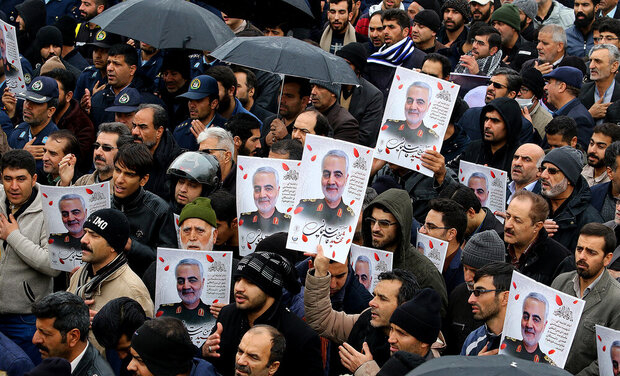
I’d been to Iran a year before with Voices’ Sarah Ball on a CODEPINK delegation and, addressing the crowd, I thought of how little attention Trump’s worst crimes, his war crimes, now receive from his critics in both parties. I wondered aloud if the right-wing trend that had made Trump commander-in-chief was not, as is often argued, a backlash by the poorest Americans against the same kind of contemptuous disregard that American power also shows for the dignity and safety of the people of Iran.

Tragically, in its “forever wars” the United States consistently denounces authoritarianism and religiosity among the world’s poorest, but only as an excuse to violently drive the people of those countries even further from security, democracy, and peace.
The US condemns the global poor it claims so ardently to wish to protect, too frequently as a shallow pretext for military and economic subjugation. Americans, correct to denounce Iran’s theocratic regime, ignore what Iranians are quick to recognize, that Iran’s worst enemy remains not its own government, but that of the United States.

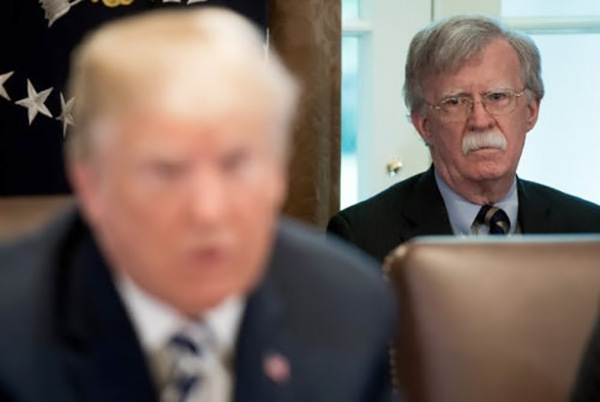
On our first day in Tehran, reformist foreign minister Mohammad Javad Zarif met with us and quipped that Iran veers rightwards whenever the war-hawk John Bolton is anywhere near the levers of US power. Today the White House would seem to have moved to the right of its stance under Bolton, while Trump’s enemies in both parties alarmingly hail Bolton as an ally in their quest to encircle Russia – Iran’s largest ally.

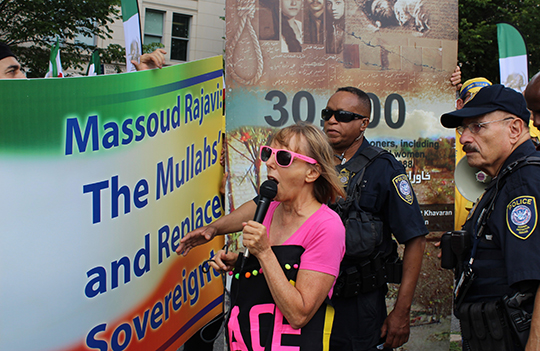
Predictably, if tragically, this past Friday, religious hardliners swept Iran’s parliamentary elections, with help from a Tehran regime secure as never before in the knowledge that, with US hardliners rampant, Iranians have nowhere else to turn. Iran’s brave dissidents generally rush to reject all expressions of support from US leaders, hastening to agree on one point only with the many Iranians who support the theocracy: that the United States (along with its Saudi and Israeli catspaws) remains the worst threat which Iranians must face.

There is no reason for US voters to suppose that their government’s hostility towards Iran is aimed at realizing anyone’s human rights. Staunch US support for the brutal Saudi dictatorship puts the lie to any such claim. Iran’s military support for its regional allies is massively dwarfed in destructive impact by the Saudi role, directly and through proxies, in bloodily destabilizing the region.

The US’ own 2003 invasion of Iraq remains the century’s worst human rights violation (if the Saudis’ US-backed, famine-assisted war in Yemen doesn’t catch it up). An untold number of Iranians facing dire economic hardship were recently gunned down protesting the greed (perhaps more than the strict religion) of Iran’s clerical oligarchs; but the US had, through its crushing sanctions, imposed this hardship deliberately and with the stated intent of callously forcing Iranians to topple the regime for them.
The idea that a US-driven regime change, either through sanctions or through war, might somehow democratize Iran is popular in the US, but it’s a prospect for which few Iranians would ever want to vote. Social scientists place Iran among Earth’s most nationalistic countries, with many in Iran acutely aware of the US-driven coup which crushed Iran’s stubborn bid for secular democracy in 1953.

The Islamism which revolutionary Iran adopted in 1979 was widely considered an anti-colonialist necessity, a “return to ourselves” required to resist further US cooptation and violence. Today, Iranians well note that US leaders’ regime-change plans tend to involve installing, as Iran’s ‘democratic’ rulers, Iran’s most feared terror group, the “Mojahedin-e Khalq”.

In 1988, during the Iran-Iraq war, the cultlike “MEK” actually invaded Iran, on Iraq’s behalf, from Iraqi soil, and with air cover from Iraq’s Saddam Hussein. Outside Tehran I visited the chief graveyard of that war, resting place for hundreds of thousands. It’s an odd definition of “democracy” under which we hope to impose, through war, the would-be leaders Iranians fear most.

We gathered at a terrible moment this winter beneath the unsightly bulk of Chicago’s Trump Tower, but far more ominous threats loom on our horizon, whether a US war on Iran can be averted or not. Our forever wars, nightmarish enough in themselves, should terrify us for the truly existential crises they prevent us from addressing.

Trump’s worst crimes are his war crimes, and both of the US’ political parties seem focused on urging Trump towards more war, not less. No mere election but a grassroots movement of never-before-witnessed scope would seem needed to turn our government, in this late hour, away from empire and towards the goal of human survival. But to succeed, that movement will need to involve and empower the bases of both parties, including many of Trump’s voters who it would seem easier to simply dismiss and denounce.

When the US settles for condemning Iran, it drives Iran and the world even further towards dictatorship. The most urgent threats facing our species aren’t enemies, like a country or a political party, that we can simply defeat, at however unacceptable a cost, but existential deadlines implicit in our nation’s own wealth and frightened arrogance, deadlines we can’t meet without our “enemies’” freely offered assistance.

The path we must follow within the US seems also to be the sole survivable path the US has left that it can follow abroad – to somehow redress those of our neighbors’ real grievances to which their undeniable failings should never have blinded us; to build a movement for species survival which no-one will join if we won’t share our wealth and our power; and to empower those who, like Iran, we’re most inclined to condemn – in the desperate hope of forging a difficult peace.

– Sean Reynolds (joveismad@juno.com) is a co-coordinator of Voices for Creative Nonviolence (www.vcnv.org) and, in February 2019, traveled to Iran’s Tehran and Isfahan with CODEPINK. He contributed this article to The Palestine Chronicle

By Sean Reynolds, Palestinechronicle
March 4, 2020 0 comments
FacebookTwitterPinterestWhatsappTelegramSkypeEmail
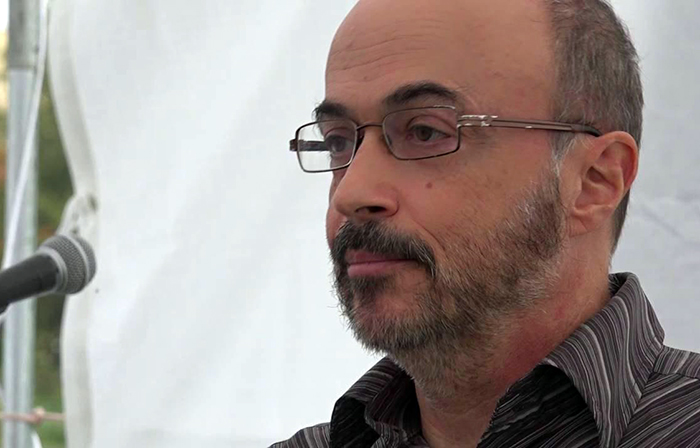
Mr. Gjergji Thanasi, Albanian author and human rights activist
Human Rights Abuse in the MEK

Response to Nejat Society’s appeal

Mr. Gjergji Thanasi, Albanian author and human rights activist, responded to the appeal by the Iranian Nejat Society’s CEO:

Mr. Gjergji Thanasi, Albanian author and human rights activist

He wrote:
As an Albanian who has extensive information about the MEK and their paramilitary facility near Manez town (Ashraf 3 Camp), I pity the rank and file MEK members who are little more than serfs to their lady owner, the old stateless harpy Maryam Rajavi!
As an Albanian I consider Rajavi’s activity in Albania to be a threat to the national security of my homeland and a blatant violation of human rights of the poor cult members!
Tell the families to wait and hope. Their loved ones momentarily are simply doomed. It is easier to break out from a low security jail than to leave Camp Ashraf 3. The quisling segments in the Albanian government and opposition behave shamefully like lap dogs to that evil woman Rajavi.
Momentarily there is very little you can do. It is virtually impossible to receive an Albanian visa as a holder of an Iranian passport. Only those Iranians who are holders of EU, British, American, Canadian, Australian and New Zeeland passports can enter Albania. Even they will suffer a low level harassment from our police.
Nothing special that cannot be handled by your Albanian lawyer. They will face a vigorous slander campaign on the part of MEK. The usual stuff: spies of the Mullahs’ regime, terrorists of the Quds force, even in case of senior citizens 70 years old or more.

Ebrahim Khodabande
March 3, 2020 0 comments
FacebookTwitterPinterestWhatsappTelegramSkypeEmail
blank
Mujahedin Khalq as an Opposition Group

MEK love affairs with other Extremists

Extremism means the advocacy of extreme measures or views. In the world of politics, extremist parties include far-left politics or far-right politics as well as radicalism, reactionism, fundamentalism and fanaticism. The Mujahein Khalq Organization (the MKO/ MEK/ PMOI/ the Cult of Rajavi, NCRI) can belong to all of the extremist agendas in the political spectrum.

The MEK can be considered far left because their ideology is basically founded on the classless society of Marxism. They are reactionary and radicalistic because they believe in the most old-fashioned version of Islam that separates males and females, forces women to cover up, permits the leader of the group to practice polygamy. They exercise cult-like practices so they are fanatics who worship their disappeared leader Massoud Rajavi.

There is no need to mention that, fundamentalism includes traits of all of the above-mentioned political agendas. Thus, the MEK is definitely an extremist movement.

Studying the group’s substance and function, one can find out that the MEK has some traits in common with every extremist ideology. Reviewing its history one can realize that the group`s beliefs and actions have been quite similar to an extremist group to a large extent. The most recent report on the MEK that was published in the Global Research a few weeks ago shows that violent extremism is inherent in this group.

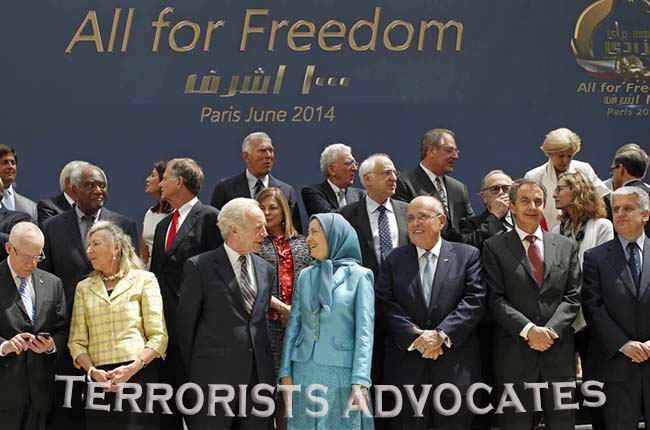
Robert Fantina is an author and activist for peace and international human rights who writes on the MEK’s alliance with the far left American figures like Rudy Giuliani.”Another famous and infamous U.S. citizen, former New York City mayor Rudy Giuliani, personal attorney to U.S. President Donald Trump, calls the MEK a ‘government in exile’.,”Fantina writes.”Apparently, Giuliani has lost the ability to discern truth from falsehood, fantasy from reality; this is not surprising, considering who employs him. [1]

Robert Fantina

As Fantina accurately clarifies the MEK extremist group”is responsible for the deaths of at least 12,000 Iranians”. He keeps on asking,”So is Giuliani saying that he would be ‘comfortable’ with a nation of 81,000,000 people run by terrorists? Perhaps so, since he himself works for the head of the largest terrorist organization in the world.”[2]

Fantina lists another radical ally of the MEK extremists. The first is normally Israel, a hostile state to Iranian government. Referring to the famous report of the NBC News on the group’s financial sources, he concludes that the US and Israel cooperate in their sponsorship for MEK.”That would make sense, since Israel, like the U.S., is a brutal, repressive regime, in violation of countless international laws, and forever violating the rights of the Palestinians in the most unspeakable ways,”he suggests. And since the U.S. supports Israel with $4 billion annually, one can be confident that some of that money is finding its way to the MEK.”He also asserts that Albania is a tool in the hands of the US to maintain the MEK for the rainy day. [3]

Nevertheless, there are also other extremist allies for the MEK out there.”Yet for a group that advocates gender equality and says it is the main pro-democracy Iranian faction, the MEK does little to hide its ties to the ultraconservative, autocratic government of Saudi Arabia”, according to the Middle East Eye.”MEK rallies often feature pro-Saudi speakers and sometimes even Saudi officials.”[4] In an interview with Jordan-based news outlet Albawaba News, former MEK head of security Massoud Khodabandeh detailed the covert means through which the Saudis helped fund the group, including regional smuggling networks and black market transactions. [5]

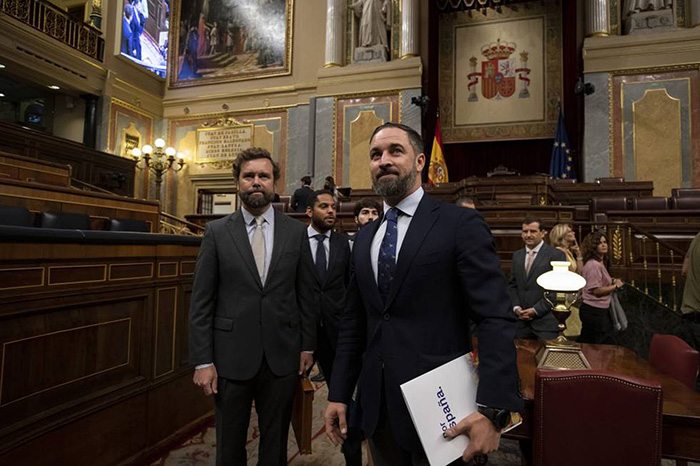
And finally the most recent revelations about the MEK’s connections with the other extremist groups was made by the Spanish newspaper El Pais. On January this year, the news outlet reported that two lawmakers for Spain’s far-right Vox, Santiago Abascal and Iván Espinosa de los Monteros, received party salaries for eight months that drew on funds from donations by the National Council of Resistance of Iran (NCRI). The two lawmakers belong to a far right Spanish party, VOX.”Both leaders received around €65,000 in total.”[6]
Kathrine Shakdam of the citizen truth tries to answer how come that a far left Islamic extremist group (MEK) gets in bed with a far right anti-Islamic extremist party (VOX) – both ends of the political and social spectrum. She brings the arguments of Julia Ebner, a research fellow at the London-based Institute for Strategic Dialogue. Speaking in an interview Ebner notes:”Both the far right and Islamist extremists benefit when their professed enemies engage in a terror attack or do anything that confirms their narratives. They want to see more rifts and more chaos in society. When communities are scared, when they’re driven apart, they’re vulnerable to the extremist narratives.”[7]

Seemingly, there is no difference for the MEK that its allies range from anti Muslim Zionist parties to Saudi Wahhabis and far away to far right Spanish or American parties. They seek to squeeze through the rifts they make in societies.

Mazda Parsi

References:
[1] Fantina, Robert, The United States Supports the Mujahedeen-e Khalk (MEK) Terrorist Organization, Global Research, February 18th, 2020.
[2] ibid
[3] ibid
[4] The Middle East Eye, Described by critics as ‘a cult’, Iranian opposition group is now lauded by top US officials as alternative to Iran’s government, July 17th, 2019.
[5] Webb, Whitney, Former MEK Official Exposes Saudi Arabia’s Covert Funding of Iranian Terror Group, Talking Point Memo, September 20th, 2020.
[6] Irujo, José María, Gil, Joaquín, Donations from the National Council of Resistance of Iran also funded other party expenses such as rent and computer equipment in 2013 and 2014, El Pais, January 28th, 2020.
[7] Shakdam, Catherine, Convenient Bedfellows: Why The MEK Backs Spanish Far-Right In Tactical Relationship, Citizen Truth, February 12, 2020.

March 3, 2020 0 comments
FacebookTwitterPinterestWhatsappTelegramSkypeEmail
Mr. JOSEP BORREL, The Esteemed High Representative of EU for Foreign Affairs
Mujahedin Khalq Organization members' families

Families of MEK members pen letter to Mr. Josep Borrell

Dear Josep Borrell
High Representative of the European Union for Foreign Affairs and Security Policy
Respectfully، we _ as families of Mojahedeen Khalq’s members (known as MKO or MEK) from Ardabil Province of Iran_ find it necessary to inform you some matters over that group and members trapped in.
For long years، we’re awaiting and praying for coming back our dears to home، with the hearts full of hope and grief.

As you know، Mko، with the history indicating violence and terrorism، has been resided in Iraq for years. and now، this group has gradually moved to Albania according to multilateral arrangements.
The families was banned from any forms of contacts with own dears on the basis of orders the Mko’s leaders and threathening members during past years. So، any contacts with Mko’s members has became impossible specially after moving to Albania. this caused to concerns and distresses for awaiting families.

Dear Sir
Writers of letter would appreciate if you would meet following demands.
_The members present in Mko camps trapped in a real political Cult with a terrorist background in which members are controlled and ruled by Mko’s leaders using psychologic methods over brainwashing and mind/mental control. thus، members do not have any right to freely determanation for own lives. consequently، those are forced to absolute subbordination while being deprived from any fundamenal rights and liberties of mankind.

Unfortunately، European Eunion (EU) removed the MKO from its 7 list of terrorist organizations in 2009 during an unclear and disputable process!! in spite of being the various evidences and records indicating continual resorting to violence by Mko.

Sadly، Albanian officials recently (as the host state) started unusual and disputable cooperation with Mko’s leaders in particular suppressing members wishing to leave group or members opposed to its activities، while obvious turning in foreign policy positions toward Iran. so far as it leads to severe critics by Albanian non_state/independent organs and even some scholars.

As matters said above، our demand from High Representative of the European Union for Foreign Affairs and Security Policy _given that some considerations over physical and mental situation of members_ is providing circumstanses _to any possible methods_ for visiting or freely making contact between members with families under control EU or UN bodies.

We will appreciate your reply

Best regards,

The list of members involved _trapped_ in mko from Ardabil Province of Iran:
Naser Gholipour
Hossein Samadi
Azim Ershadi
Reza Azizadeh
Salman Dolatpanah
Hasan Basharati
Barat Abdoli
Galil Arasi
Ali Yousefi Sadat
Rahmat Alizadeh
Fereydoon Parvaresh
Saleh Nasiri
Zaman MehdiZadeh
Matlab Nazari
Kiomars Sohbatzadeh
Mahbob Sabahati
Youssef Shabani
Samie Nazeri
Haj Mohammadi
Amir Aslan Hassanzadeh
Hamdaleh Mastaneh
Javed SuleimanJah
Hafez Nosrati
Asad Asadzadeh
Barat Rabiei

transcriptions
– international Red Cross
-Josep Borrell, EU foreign policy representative
-European Union Representation Office in the Republic of Albania
-Mr. Luigi Soreca Head of EU Delegation to Albania
-Elizabeth Tichie Fiesberger, President of the United Nations Human Rights Council
-Representation of the European Parliament in stabilizing EU-Albania relations

March 3, 2020 0 comments
FacebookTwitterPinterestWhatsappTelegramSkypeEmail
Camp Ashraf 3
Mujahedin Khalq; A proxy force

MEK In Albania Hijacks America’s Iran Policy

Since well before President Trump pulled out of the Iran nuclear deal in 2018, the U.S. and Iran have been in a de facto state of non-military warfare with sanctions, economic sabotage, cyber-attacks, disinformation campaigns and social media attacks the weapons of choice. Both countries have exploited conflict in the region, especially after the rise of ISIS, to extend their military presence and reach.
While some in the U.S. have pressed for war with Iran at all costs, the U.S.’s lack of response to Iran’s attack on its bases in Iraq following the assassination of General Qassem Soleimani exposed a real problem. It is an open secret among military and security analysts that war with Iran is not an option; neither the U.S. nor Israel can pursue war with Iran without facing mutual destruction.

It is an open secret among military and security analysts that war with Iran is not an option

Others on the anti-Iran front have pushed for regime change. But this long-term push to manufacture or engineer the collapse of the ruling system and replace it with a conformist government has also failed to bring about any result.

Since 2018, Secretary of State Mike Pompeo has straddled these agendas but has failed to make progress on either. Rather than act as the diplomatic face of the American government, Pompeo leaned on his CIA skillset in the belief that covert and insidious activities by proxy activists can be used to influence, manipulate, manufacture and divert the course of action around Iran. Now, as a result of these policy failures and errors of judgement, the U.S. is losing ground and influence in the Middle East and beyond so that America’s front line with Iran has retreated trench by trench from military containment to a petty propaganda war fought in Albania.

Why Albania?
Albania, of course, is now home to the Iranian Mojahedin Khalq (MEK). For 40 years, since its exile from Iran — first to Iraq then to Albania — the MEK has promised to be the agent of regime change, either through war or insurgency. And, in spite of having no evidence of its efficacy, for 40 years anti-Iran elements in the west, particularly neoconservatives, have supported the group and its agenda to the almost total exclusion of other genuine opposition groups and movements.
This exaggerated role of the MEK in U.S. Iran policy again came to attention when Pompeo rescinded a directive to U.S. embassies barring “direct U.S. government engagement” with Iranian militant and opposition groups. It soon emerged that an MEK lobbyist Robert G. Joseph had met with Brian Hook, the U.S.’s special representative for Iran and senior adviser to Pompeo, before the assassination of Soleimani and again just afterwards. Statements by Pompeo over the past few months have echoed MEK propaganda showing his susceptibility to this influence.
…the Trump administration still clings to the delusion that the MEK has leverage or influence or power in relation to events in Iran.

This continued engagement with the MEK indicates that the Trump administration still clings to the delusion that the MEK has leverage or influence or power in relation to events in Iran. It does not. The enduring support of MEK by anti-Iran pundits defies logic. Nothing has been gained throughout the past four decades. Much has been lost that can be linked to this support. The MEK promises regime change but cannot even come close to delivering.

MEK Capabilities

One reason for this failure — that those who exploit the group are unwilling to acknowledge — is the total absence of support for the MEK among Iranians inside and outside the country. So unpopular are the MEK in Iran that protestors in the November fuel protests, who were warned falsely by Iran’s hardline security services that the MEK were behind the violence, went home and demanded the government create safe and suitable conditions for public protest. Similarly, the students who in January this year protested their government’s response to shooting down Ukrainian Flight 752, issued a strong statement denouncing interference from outside Iran. This was clearly meant to distance their protest from the hated MEK.
The main reason the MEK has failed to perform, however, is its own structural defect. It is a cult not an opposition group. The MEK is subject only to its own internal dynamics and obeys only its own laws. It has no respect for or need to abide by or adopt external norms and values, whether legal or moral. The MEK’s aim is to stay relevant, so it pays advocates and lobbyists to have its name broadcast and published as widely as possible. But its PR image does not reflect either the real capabilities or the effectiveness of the group.
The MEK’s infamous troll farm exposed by The Intercept comes close to explaining why some in the Trump administration and beyond still cling to the hope that the MEK’s propaganda activities might finally triumph by imposing their false narrative on events. But as much as they want to utilize the MEK, they should know by now that this group cannot deliver what it promises. Nor will the MEK ever come under the purview of U.S. control.
From its first arrival in Albania in 2013, the MEK continued its antagonistic anti-Iran political activities. In 2017, the Trump administration overturned plans to de-radicalize the MEK members. Instead, the MEK built an extra-territorial garrison to house the enslaved members so they wouldn’t escape. Emboldened, the MEK was able to coerce the Albanian government into pushing back against Iran through its embassy in Tirana. Following the Soleimani assassination two more Iranian diplomats were expelled from Albania and rapid response police were deployed to protect the MEK camp as though it were a diplomatic facility and not a refugee camp. Prime Minister Edi Rama was forced to admit that although Albania had accepted to host the MEK as a humanitarian gesture, the group now poses a national security issue for his country.


European Perspective

Europe has a different view of the MEK. Since arriving in Albania, the group came under increasing scrutiny by European security and intelligence services, including the formidable services of Albania itself. Experts on the MEK had warned that the group’s maverick behavior would result in the U.S.’s front line with Iran being redrawn in Albania. European tolerance for the MEK has been stretched by events from self-immolations in 2003 to the alleged bomb plot at Villepinte in 2018, violence in the European Parliament in 2018 and interference in Spain’s elections. Last year, the MEK’s activities began to be curtailed as permission was denied for demonstrations and the annual rally at Villepinte. The MEK leader Maryam Rajavi and her acolytes have now moved their headquarters to Albania where they occupy an entire floor of the International Hotel in Skanderbeg Square in Tirana. Meanwhile, Albania’s accession to the E.U. is doomed as long as the MEK remains active in that country and the E.U. now regards the U.S. with suspicion on this issue, not amity.
In Albania the people are angry. They see their government bending to U.S. and MEK demands to the detriment of their country. Support for the MEK is symptomatic of everything that is wrong with U.S. Iran policy. Instead of striving for effective diplomacy, Pompeo oversees an actively antagonistic Iran policy that shows contempt for and alienates the very people who are needed to effect change: the ordinary citizens of friendly countries and foes alike.
By Massoud and Anne Khodabandeh

March 2, 2020 0 comments
FacebookTwitterPinterestWhatsappTelegramSkypeEmail
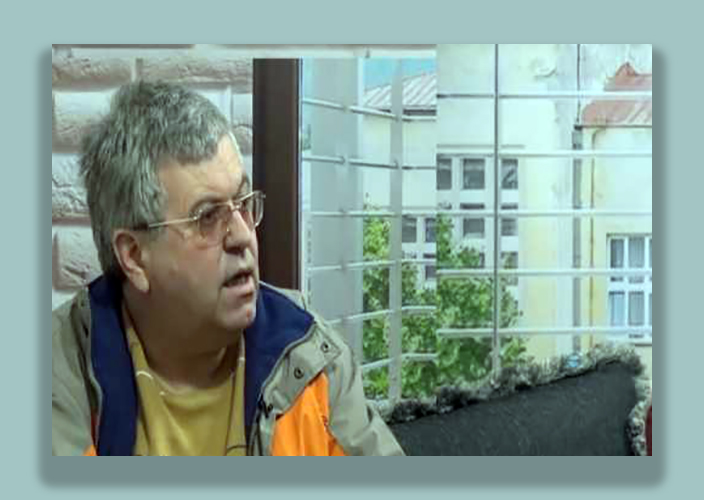
Ebrahim Khodabande
Missions of Nejat Society

Appeal of the Iranian Nejat Society CEO to awakened human consciences

A letter written by the CEO of the Iranian Nejat Society addressed to awakened human consciences has been sent to international and humanitarian organizations, such as different bodies of the UN, ICRC, AI, and HRW, as well as different institutes of the EU and EP, and also to international media. The text of the letter is as follows:

Ebrahim Khodabande

To awakened human consciences
I address you on behalf of thousands of suffering families of members of the Mojahedin-e Khalq Organization (MEK, MKO, better known as the Rajavi cult) residing in a remote isolated camp in Albania, about the severe abuses of basic human rights there.

The MEK finished the process of transferring from Iraq to Albania in 2016. This relocation was done in the manner of a group movement under an agreement made in Geneva between the USA, the Albanian government, the UNHCR and the MEK. It was agreed that the UNHCR be responsible for the transfer and the USA pay the expenses.

Later it was discovered that this relocation was not carried out under the UN refugee regulations which specify that people should seek asylum individually, but rather as the transfer of an organization belonging to the leaders of the MEK. The consequence was that the individual members have no legal status and are therefore considered “stateless”.

The MEK operates as a destructive, mind control cult. The organization forbids love, familial relationships, voluntary exit, and contact with the outside world in particular with friends and families, having privacy of thoughts and lifestyle, criticism of the leader, and denies many other basic human rights to its members.
I have thousands of letters from the families of the members. They just want to have a simple contact with their loved ones trapped inside the cult. The cult leaders have denied them this right and the Albanian government and other related bodies do not show any cooperation. How should I answer these families, what should I say in response to them?

A considerable number of MEK members have left the cult and since they have no clear legal status and do not hold official ID documentation, they are left in a very tight situation in Albania. The UNHCR and the interior ministry of the Albanian government will not do anything for them since they do not recognize their presence in Albania as individuals and have accepted them as part of a group.

These individuals are forced to depend on the MEK for their subsistence, and of course the cult only pays their monthly aid provided they do not reveal the abuse of human rights inside the organization and the cult’s crimes and corruption. They take the freedom of these former members away and make any support conditional on them performing tasks, such as spying on others.

Is there anybody within the vast number of international and humanitarian organizations who will pay a little attention to these extreme violations of human rights? Is there anyone who will have something to say to these aged mothers and fathers to relieve their pain? Is there anything humane beyond the international policies and mutual interests or conflict of interests of different parties raised?

I am anxiously looking forward to your response and thank you in advance.

Ebrahim Khodabandeh
Nejat Society CEO
Tehran, Iran

March 1, 2020 0 comments
FacebookTwitterPinterestWhatsappTelegramSkypeEmail
Maryam Rajavi
Mujahedin Khalq; A proxy force

Western countries revising their decisions on MEK !

In the recent Islamic Consultative Assembly election in Iran, the Fundamentalists took over the parliamentary majority with the majority of the popular vote, and in fact the Reformists lost their popularity among the people; Generally Fundamentalists are more loyal to their red lines and welfare of the people and are always more serious than the reformists in dealing with the US; in Iranian history, whenever the nation has been seriously opposed to the demands of Western countries, it has been Western countries that have turned to Iran and show their kind faces and, on the contrary, when Iran treat them with open arms and welcomed them, they got more greedy and have shown disrespect towards Iran. What has happened in Iran and in the international arena in recent years is that with powering Mr. Rouhani’s government, which is a moderate and negotiating government with western countries, when United States and Western countries see Iran at the negotiating table, they think that this negotiation is out of weakness and with greedy expectations they put Iran on a dangerous path, and as a result, even with Iran’s acceptance of the JCPOA and the fulfilment of its obligations, their demands will not end and practically they break the agreement or they don’t abide to their commitments and demand extra points.
The same thing happened in the military scene and with Iran’s inactivity on the political scene the US mobilizes all the opposition groups such as Mojahedin-e Khalq (MEK) and Monarchists, against Iran and even allow itself to assassinate the high rank Iranian general Qasem Soleimani, but when Iran launches missiles at US bases in Iraq in response to this brutal assassination, and when the United States sees Iran’s anger, Pompeo urges American diplomats to cut ties with MEK and other anti-Iranian groups, and on the other hand, they urge Iran to return to the negotiations.

Let’s take a look at one of the groups supported by the United States, the MEK, a group that was on the US list of terrorist groups until 2012.

This terrorist cult has been rejected by several governments around the world and, primarily it seems to have lost its power due to the high age of its members, who practically can no longer do anything but to create false propaganda against Iran using thousands of fake accounts, something which was revealed a while ago by Intercept news agency’s article about Heshmat Alavi’s fake identity.

As it can be seen in history, the Mojahedin-e Khalq was founded in 1965 with the aim of armed struggle with the Shah’s regime and during its fight, it assassinated 6 American advisers and bombed several US affiliated companies in Tehran. After 1979 Islamic Revolution, MEK who were not elected by the people to the legislative and presidential posts, and so on, began to make tension and assassinations in the new born Islamic Revolution, which some of these include the bombing the office of the Islamic Republic Party that led to assassination of more than 72 members of this Party, and bombing the office of Prime Minister of Iran, which led to assassination of Mohammad Ali Rajaei and Mohammad Javad Bahonar, the president and prime minister of Iran in that time.

They also had no merci to innocent people and for the guilt of being a fan of Islamic Republic, assassinated so many people, that they didn’t even have mercy on women, children and infants. At the outbreak of war between Iran and the Iraqi Ba’ath Party, the cult of MEK joined Saddam in the war against their own country and betrayed its own people by massacring them. People still have painful memories of this group for decades now, and most of Iranian families have usually lost a member of their family in these cowardly assassinations; they always consider the MEK as a terrorists and a traitor and deeply believe that they have no popularity and social place in Iran with assassination of 12000 Iranians.

In 2001, the MEK by spreading rumors that Iran is making nuclear weapons, cased United States to put some sanctions against Iran. They firmly call for a US war on Iran, and there have been many rumors and lies about Iran’s production of weapons of mass destruction in some places, to force the United States into a devastating war with this country, but each time their lies got exposed by the visit of the Atomic Energy Inspector of that place. It is better to say that MEK with producing lies and rumors against Iran are actually playing the same role as Ahmad Chalabi played in the US-Iraq war. It is along this connection that the CNN article “Pompeo orders diplomats not to meet with Iranian opposition groups amid tensions” on January 8, 2020, which is about the disconnection between American politicians and MEK, be justified.

In fact, MEK are influencing on politicians and intends to empowering its political figures in different countries that make that country to act against Iran as it did in the case of Spanish VOX Party, and while they had spent about a million dollars on the group, they were defeated in the last year’s elections and the rival party, the Socialists, won more seats in the Spanish parliament, and according to the El Pais article “Iranian exile financed 80% of the 2014 Vox campaign” on 13 January, 2019, or “El exilio iraní pagó ocho meses los sueldos de Abascal y Espinosa” on 28 January 2020, now they lost their fans in Spain because they have bought some figures to work for them against Iran.

This intervening in the political affairs of different European and American countries is to such an extent that even the European Parliament has limited MEK’s access to this Parliament sections which are active in Iranian issues in accordance with LobeLog article “Nobody Can Be “Comfortable” With Regime Change Involving MEK” on 22 August 2019.

France also for decades has been a safe haven for this terrorist group, according to LobeLoge article “Is France Moving Against The MEK?” on 6th of November 2019, last year France didn’t allow MEK to hold its annual conference on the outskirt of Paris, which led to some doubts on its relations with this country and many critics see the move as the first step to expel this group from French soil, which is considered the cradle of human rights around the world. If France expels MEK in light of the doubts which have been made, they will move completely to Albania, their new home. Where MEK has endangered the sovereignty of the Albanian government in this country.

According to articles published in various news agencies around the world, it seems that this terrorist cult has lost its place among the countries and anti-Iranian organizations of the world, as well as the high age of its members and the lack of practical usage of the group’s capabilities against Iran, it can be concluded that the group is in the way toward inexistency and any time the group’s financial resources is being cut off from the United States and Saudi Arabia, they would be like a brain dead patient who is cut off from the resuscitation system, and for sure they will immediately destroyed and disintegrated. It should be noted that like many who fled from this terrorist cult at the time of the group’s move to Albania, most of the remaining members now want to leave and return to their homeland, but are unable to escape due to the old age and spend the last years of their lives in a nursing home called Camp Ashraf 3.

Alireza Niknam, geopolitica.ru

March 1, 2020 0 comments
FacebookTwitterPinterestWhatsappTelegramSkypeEmail
blank
Mujahedin Khalq; A proxy force

Most of the victims of terror in Iran have been killed by the MEK

The first attempts to provide a definition of terrorist acts go back to the Geneva Convention of 1937 (UN, 1972).

The 1937 Geneva Convention for the first time defined the concept of terrorist acts as follows: “Criminal measures against a state for the purpose of terrorizing individuals and groups or at community level” (Article I, paragraph I, UN, 1972).

In addition to the UN legal mechanisms, it has issued numerous declarations, resolutions and reports on the prohibition and suppression of terrorism.

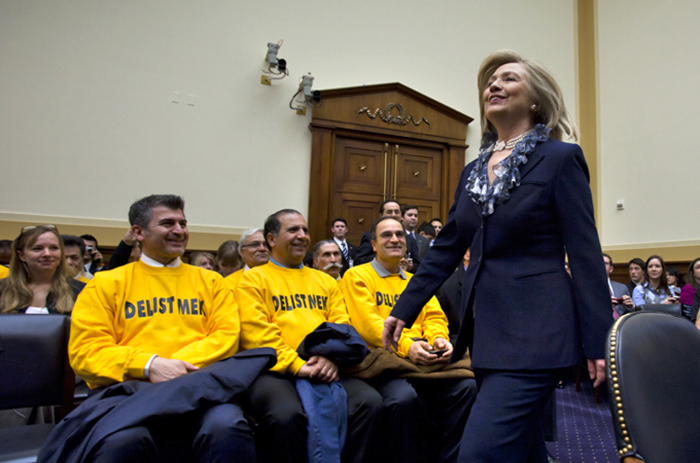
Hillary Clinton

According to international documents, there are generally three conditions for a behavior to be considered a terrorist:

There would be the possibilities of killing or at least severe bodily harm. In European law, even operations that cause financial loss without risking lives are considered to be terrorist operations.
Made by a person or organization with a design and with coordination and specific purpose.
The purpose is to create terror among individuals, groups, and people of a particular country.

In recent years, however, the favorable and profitable treatment in the subject of terrorism has led public opinion to think that some governments are setting up terrorist groups to wage proxy wars in their own interests or convince and support the already existed terrorist groups for their own interests.

Here are some examples as follow:

In recent days and weeks, the issue of assassination of Haj Qassem Soleimani on Iraqi soil by a foreign government has been the subject of domestic and foreign media debate. Here mentioning some points are important. First, the US government has invaded Iraqi sovereignty and military attacked on an official from another country who had authorized to attend. This is while that after the formal end of the Iraqi occupation in 2008, the United States entered into a security agreement with the Iraqi government entitled “Agreement between the United States of America and the republic of Iraq on the withdrawal of US troops from Iraq and organizing their activity during their temporary presence in Iraq” (abbreviated as SOFA). Subject to Article 5, Paragraph 2, of this agreement, the United States shall recognize the sovereignty of Iraq at any time by requesting the United States to withdraw from its territory. But it officially violates this rule and proudly accepts the responsibility for this terrorist act and in fact declares a public war against the Islamic Republic of Iran. Also beside Haj Qassem Soleimani, one of the most prominent figures in the fight against terrorism, especially ISIS, was Abu Mahdi al-Mohandes, who was also the deputy chief of Iraq’s Hashdo shaaby forces, testified in the attack. While, both of the mentioned figures and also the organization under their command, the Iraqi Quds fore and the Hashed al-Shaabi are on the list of US terrorist individuals or organizations. The question here is the Hashed al shaabi (all-Hashed al-Shaabi) organization, also known as the Iraqi mobilization, set up in 2014 and by the order of the religious authority to expel ISIS from Iraqi territory (after the capture of Mosul by ISIS) and was recognized in the Iraqi parliament on November 26, 2016 and is currently part of the Iraqi Armed Forces and is under the command of Commander in Chief of the Armed Forces, how can be attacked by a foreign country under different pretexts? Isn’t this a violation of the sovereignty of Iraq and a deliberate government terrorism and a favorable and profitable treatment of terrorism?

We go back for a few years.

On September 22, 2018 simultaneous with holding the Iranian Armed Forces parade, on an armed terrorist operation, several parade participants in the city of Ahwaz including several children, were martyred and separatists called al-Ahwazi took the responsibility of it.

The leaders of the terrorist group are based in Sweden, the Netherlands and Denmark. Habib Farajullah Cheab, deputy head of the al-Ahwazi terrorist group residing in Sweden, repost the tweet of Habib Jabr (head of the al-Ahwazieh terrorist group) in connection with the September 22 incident in Ahwaz. The message is: “targeting of the Revolutionary Guards in a military parade in Ahwaz by the national resistance of Ahwaz was in the context of self-defense and anti-terrorist militias in international level.”

Also, in April 1, 2018, he published a tweet with video of the attack on the headquarters of the Revolutionary Guards in Ahvaz. “The inscriptions of Najm al-Satte the Ahwazi National Resistance targeted the Revolutionary Guards headquarter in Ahwaz.”

on January 5, 2018, another tweet quoted the group as attacking a garrison in Mahshahr and Shadegan, saying: “the Ahwazi National Resistance has targeted the Javadolaemeh the Islamic Revolutionary Guard Corps garrison and garrison of Malek Ashtar garrison in the Abudy area of the Shadegan county.”

whilst, under international conventions of the fighting against terrorism, countries are obliged to take effective measures in this regard.

For example, in accordance with UN Security Council Resolution 1373, funds and other financial assets or economic resources of persons who committed a terrorist act or intend to do so, without any delay should be immediately blocked. This applies also to entities that are owned or operated by these entities, and to individuals and institutions that work on behalf of or under the guidance of such persons. Paragraph 2 (c) of the resolution also states: “Governments have no right to provide a secure base for the investment, planning, support or commission of terrorist acts.” It further states in paragraph f that “Governments shall provide assistance with criminal investigations or criminal trial procedures related to investment or support for terrorist acts, including assistance in gathering evidence necessary for the trial.” Paragraph 3 of the same resolution emphasized ensuring that the granting of refugee status is not abused by the members.

Despite the group’s admission of terrorist acts against a country, we still see these people backed by governments that claim to fight terrorism and freely pursue their activities. There is a claim that why a group that officially carries out terrorist operations is supported by some governments and even refuses to cooperate in bringing them to the courts.

But the United States accuse a group which formed for combating ISIS in its homelands and consider as a legal group, as a supporter of terrorism and committing terrorist acts and put it in the list of terrorist groups. Known a person as the hero of the fight against ISIS in the world who exiles ISIS out of the region, who is legally present at the request of Syria and Iraq on the territory of these countries to fight terrorism, as a terrorist and put him in the list of terrorist groups, and finally kills him cowardly.

The terrorist group of MEK is another example that most of the victims of terror in Iran have been killed by this group. This group, which was in the list of European terrorist organizations until 2009 and in the US list of terrorist organizations until 2012, to the testimony of many experts with the heavy costs of lobbying, and for the benefit of the US interests and their use against Iran, it goes out of the list. The group however, has a sectarian approach, with a rich record of terrorist operations and financial corruptions. The assassination of American advisors in Iran, the assassination of more than 12000 Iranians, including Iranian officials, cooperation with Saddam in invading Iran and betraying their own country, the suppression of the Iraqi Kurds, attacking on the Iranian embassies and ambassadors in different countries… all are just part of the crimes of this terrorist cult.

One day the US invades Iranian soil with the excuse of releasing its hostages, and another day it supports the terrorists who murdered innocent Iranians and its military advisers.

The military activities of Western governments, especially the United States in various countries, show that the fight against terrorism is a repeated excuse and a justification for attacking various countries and interfering in the affairs of the rich countries in terms of mineral resources. This dual behavior can be described as “the modern colonization in the new century.

By: Alireza Niknam

February 27, 2020 0 comments
FacebookTwitterPinterestWhatsappTelegramSkypeEmail
Rudy Giuliani
Mujahedin Khalq; A proxy force

Is Giuliani ‘comfortable’ with a nation of 81,000,000 people run by terrorists?

The United States Supports the Mujahedeen-e Khalk (MEK) Terrorist Organization

The United States continues to support the Mujahedeen-e Khalk (MEK), despite the fact that that terrorist organization is losing popularity, not that it ever had very much anyway, around the world.

The group remains basically based in Albania, a nation that allowed about 4,000 of its members into the country at the insistence of the U.S. government. As Dr. Olsi Jazexhi has stated, “The Americans imposed them (MEK) on Albania and since Albania is a very fragile state, they had to accept”.

But what of other nations? The MEK’s foothold in Spain was lost when it supported the far-right VOX party. It has been barred from rallying in Germany, and France forbid its annual Villepinte rally. MEK members have lost access to European Union Parliament members.

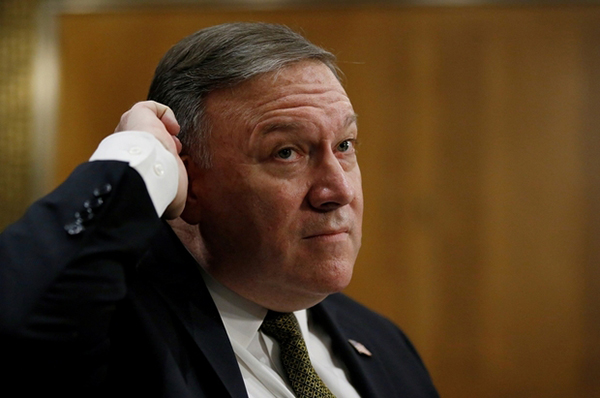
Even the mighty U.S. has officially cooled its rabid support for the anti-Iran terrorist group. Following the assassination of General Qassam Soleimani by the U.S. in January, the murderous U.S. Secretary of State, Mike Pompeo, ordered diplomats at all U.S. missions not to have contact with ‘Iranian opposition groups’.
Regardless of Pompeo’s statement, the group continues to have high-profile U.S. supporters, including former U.S. National Security Advisor John Bolton, who famously proclaimed in 2017 that the MEK and its minions would be celebrating in the streets of Tehran before the fortieth anniversary of the Iranian Revolution in February 2019. That anniversary, and yet another, came and went without any MEK celebrations anywhere in Iran, let alone in the nation’s capital.

Pompeo

Another famous and infamous U.S. citizen, former New York City mayor Rudy Giuliani, personal attorney to U.S. President Donald Trump, calls the MEK a ‘government in exile’. Apparently, Giuliani has lost the ability to discern truth from falsehood, fantasy from reality; this is not surprising, considering who employs him. All reputable polls of Iranians, in Iran and around the world, do not support his bizarre assumption that Iranians support the MEK; on the contrary, overwhelming evidence indicates that they oppose the MEK’s goals and tactics.

And to call the MEK a ‘government in exile’ is ludicrous. Consisting of a few thousand aging anti-Iran terrorists, and perhaps a limited number of younger recruits, the organization is not seen as a ‘government in exile’ by anyone but the delusional Giuliani.

He also made this amazing statement: the MEK is “…a group that should make us comfortable with regime change.” This statement is incredible in a variety of ways: 1) the U.S. should not be in the business of overthrowing governments (e.g. ‘regime change); 2) who is the ‘us’ that Giuliani says should be comfortable with the MEK as a potential governing body in Iran? Certainly not the Iranians; 3) this is a group that, until 2012, the U.S. designated as a terrorist organization. It is responsible for the deaths of at least 12,000 Iranians. So is Giuliani saying that he would be ‘comfortable’ with a nation of 81,000,000 people run by terrorists? Perhaps so, since he himself works for the head of the largest terrorist organization in the world.

With diminishing support in Europe, and even the U.S. putting the official breaks on contact with the MEK, how does it stay afloat? NBC News reported that it is likely that the MEK id financed by Israeli intelligence.

That would make sense, since Israel, like the U.S., is a brutal, repressive regime, in violation of countless international laws, and forever violating the rights of the Palestinians in the most unspeakable ways. And since the U.S. supports Israel with $4 billion annually, one can be confident that some of that money is finding its way to the MEK.

So with fading support, and funding probably coming from Israel, and thus, at least indirectly, from the U.S., what is the MEK to do? Hapless Albania must continue to house them, against the wishes of Albanians, but their leaders are in a U.S. chokehold, so they don’t have much choice.

The U.S. wants the MEK nearby in case it needs their terrorism for some reason; the U.S. is not averse to having some other country do its dirty work: witness the U.S.-financed Saudi slaughter of Yemenis, as just one example.

And should the Albanian government decide to act as its people want, rather than as the U.S. demands, would the MEK then turn its terrorism on them? Albania has certainly been put between a rock and a hard place by the U.S., which doesn’t care in the least about it or the Albanian people; the whole nation is just a pawn in an international chess game that the U.S. is playing, that no one else is interested in.
The Iranian Revolution, which overthrew the U.S. installed and supported Shah, just celebrated its forty-first anniversary, despite all the efforts of the U.S. to defeat it. One must remember that the democratically-elected government of Iranian Prime Minister Mohammed Mosaddegh was overthrown by the U.S. government in 1953, and then the Iranian people had to endure twenty-six years of oppression and torture under the U.S. puppet who did exactly what he was told by the U.S.; his repression of the Iranian people was unimportant to the U.S. government. It is unlikely that such an overthrow, if attempted, would be successful again. So instead of direct overthrow, the U.S. attempts to harm the people through sanctions, expecting them to rise up, overthrow the government, and usher in the MEK to repress the people and do the U.S.’s bidding. This is the fantasy that Giuliani, Bolton, Trump, Pompeo and their cohorts dream about, but as has been mentioned, reality and the Trump Administration barely have a nodding acquaintance with each other.
The government of Iran will continue to strengthen its defenses, as it works to strengthen its economy with products other than oil. The U.S. will continue its bizarre rantings about Iran and terrorism, trying to hide the fact that it, not Iran or any other nation on the planet, is the major sponsor of terrorism around the globe. And the Iranian people will continue to demonstrate the remarkable resiliency that has made their nation great.
*
By Robert Fantina

February 25, 2020 0 comments
FacebookTwitterPinterestWhatsappTelegramSkypeEmail
ADVT meeting on February 17th
Mujahedin Khalq Organization as a terrorist group

Why did Netherlands approve asylum for a terrorist?

Mohammad-Reza Kolahi was not only a terrorist but an MEK agent who blew up a meeting of 70 top Iranian officials in 1981, killing them all.

[Editor’s Note: Mohammad-Reza Kolahi was not only a terrorist, but a big one. As an MEK agent he had penetrated a meeting of 70 top Iranian officials in 1981. Under the cover as the event production sound man he had literally mined the entire meeting hall with explosives in the speakers the night before.

During the meeting he set the timer and then excused himself to go get some ice cream, and blew everybody up, including the Chief Justice, a decapitation strike on the Iranian revolution.

For his reward Kolahi was spirited away into Holland for a quick asylum by a MEK friendly Western intelligence agency, and lived happily ever after until someone tracked him down and using local thugs sent him on his merry way into the hereafter on December 15th, 2015.

Kolahi - MKO member

From Wikipedia:
Kolahi the bomber, in 1981

In 2018, it was revealed that Kolahi had been living in the Netherlands as a refugee under the false identity of Ali Motamed (Persian: علی معتمد‎) and had been murdered in December 2015.[3] Kolahi was married to an Afghan woman and had a 17-year-old son.[3] He had avoided events organised by his Afghan wife’s family for fear of images of his face emerging on social media.[8]

According to Het Parool, two men suspecting of killing Kolahi were identified as 28-year-old Anouar Aoulad-Buochea and 35-year-old Moreo Menso, “Both suspects have a criminal record and come from the same Bijlmer neighborhood of Amsterdam.” Several sources accused the Iranian government of being behind the assassination.[4]

Kolahi has been joined this past week by a bunch of Idlib jihadis, sent on their way meet Allah by the SAA and its anti-terrorism allies in the battle to rid Syria of Western and Persian Gulf state proxy terrorists. There is much work still left to do … Jim W. Dean ]

The mausoleum built for all the victims of this attack. If you look closely on the floor you can see the raise name stone rows.

– First published … February 23, 2020 –

Association for defending victims of terrorism’s public relation section reported in 17 February that, third session of “legal capacities in access to justice for victims” held in Allame Tabatabei University. University professors and prominent human rights activists, law students and lawyers and some victims’ families were attendances.

ADVT meeting on February 17th

As first speaker, Mr. Jafar Kousha, Professor of law in Beheshti University, said:

“When a crime happens the community waits for a good and appropriate response to it, so, no response can bring negative consequences. We should pay attention to goals, roles and effects of punishments. In this regard, safeguarding values is the base of punishments and security is the most important value in the society. So we must oppose anyone who wants to put in danger the security of society.”

This prominent professor who was delivering about “non-punishment as a cause of spread of crimes” added that: goals of punishments are deterrence and compensation and without consistency between crimes and punishments, we face with negative effects.

He continued: “Our question is that what is the consequences if culprits or someone who put security in danger became unpunished?”

meeting on February 17th

Professor Kousha said about the case of Hafte Tir terrorist incident in 1981 that in Iran, we have not any criminal code for terrorism and this is a major problem.

Professor of law in university of Beheshti asserted on the necessity of having professional structures and judges and said: the obstacles should be lifted. Political calculations and relations hinder judicial processes. Judicial branch is independent.

Our problem is the security and authority of judiciary branch. If we impose suitable punishments on culprits there will be tranquility in victims and society will be in order and anyone who wants to do terrorist crime will be faced by a powerful judicial process and will be deterred from doing so.

meeting on February 17th

Another speaker in this session was Doctor Zamani, professor of Law and Political Sciences in Allame University. He talked about international responsibility of the state of Netherlands. He thanked Association for Defending Victims of Terrorism for its essays to deliver this sort of issues and wished that these actions prevent the victims of Hafte Tir terrorist incident to become forgotten.

Doctor Zamani added: all the victims of Hafte Tir terrorist incident are voiceless. Netherlands has a powerful judiciary system and bringing its state to the court is very tough goal but we should pay attention to two issues:

First, state of Netherlands has approved asylum and residency for Ali Motamed. Is there any international commitment for states to investigate about background of whom been accused of terrorism and disapproving asylum for them?

Do the families of victims, who are present in this session, have the right of pursuing legal process about Hafte Tir terrorist incident in Netherlands’ judiciary authorities? Why the asylum been approved for Ali Motamed? Is there any lawsuit in this regard?

He added: terrorist attacks have public dimension and it is on all states to investigate about it. We want from the state of Netherlands to afford necessary judicial assistance for victims’ families.

Doctor Zamani in other part of his speech said that: commitment of state is commitment for result and not the commitment to mere a try. State of Netherlands should act transparent and committed. Independency of judiciary system should not be a reason for not assigning the judicial procedures to the state as a whole. State is integrated.

meeting on February 17th

He added: after 2001 we saw a wave of change in the approach of states toward asylum seekers and due diligence had been added. It should be announced that how Mohammad Reza Kolahi acquired asylum and why his past was unknown for the state of Netherlands.

At the last part of his speech, Mr. Zamani, professor of international law said: traditional principle is that state must avoid in being a base for terrorists or attacking other states. We don’t know that Mr. Kolahi had acquired citizenship or residency. State of Iran should insist for the truth. All the states have duty to background check for anyone who wants to enter to that country.

Then, Ms. Anicée Van Engeland, a senior lecturer in International Security and Law at Cranfield University, made a video conference. Her topic was France and its measure to enable victims of terrorism in access to justice.

She said, “France has been presented a success model when it comes to enabling victims of terrorism accessing to justice. There is, first of all, a governmental body called the interministerial support unit for victims (CIAV). That body takes care of everything that’s outside the law, which is medical support, psychological support, coverage of medical cost, and access to social benefits. There are also several associations that are there to support the victims of terrorism.”

The professor of Cranfield University said in another part of her speech,

“The rules also state that protection of victims need to be adequately recognized in the criminal proceeding. While in France there is no definition of who is a victim of terrorism, per se there is certainly a position that is adequately recognized in criminal proceedings.

Once the victims of terrorism have filled the complaint and their complaint is being processed, they can have access to the compensation fund for victims of act of terrorism in other offences. They will support them with psychological and physical support.

During that time the prosecutor of Paris will start drafting a list of people who have been the victims. And the victims need to bring evidence that they were actually in the location and they were injured during the terrorist action. It’s extremely important as a lot of people have tried to claim for compensation by being pretending victims.”

Pointing out the long procedure of French courts, she said, “One of the victims had said lodging a complaint is pointless, it just adds one bad thing to another. They kill you once with the offender, and the justice system doesn’t kill you once but a thousand times.” She added that, but we know also some reports of the people who are accessing to justice.

The next speaker was Dr. Fahim Danesh, a university lecturer and researcher of international, law pointed out the existence of international courts in the Netherlands which make the country as a symbol of law and justice. He and stated that, nevertheless, with a thorough and accurate knowledge of the Dutch legal system we can lodge a complaint.

In one part of his speech, he said,

“One of the most important rights of the victims is that they should be recognized. In international instrument it was emphasized that these people are victims and domestic courts are responsible to recognize them. Being a victim can be addressed and reflected psychologically.

A fund has been established at the International Criminal Court for supporting victims. Different states donate a lot of money to this fund and there are plans to normalize the situation of victims.” He added that one of the main demands of the Hafte Tir victims is that they are recognized.

The international law researcher referred the case of Mothers of Srebrenica who sued the Dutch government and they could eventually obtain compensation from the Dutch government although they faced a lot of problems. He continued,

“We are in favor of such judicial system. Following the file case be an opportunity. The Dutch have, in their legal structure, accepted that the families of the victims should be theoretically included. This entry can be called “Amicus Curiae” (Court Friend). On this basis, we can submit our considerations to the court. We just have to show that we are neutral and third party and that we are amicus curiae.

The next speaker of the meeting was Dr. Nargesian, the Assistant Prosecutor of International Affairs of Tehran’s court. He pointed out some of the aspects in the case, such as the absence of a contract between the government of the Netherlands and Iran, as well as passing 38 years of the case made it difficult to address the issue. “The 1951 Convention states that terrorist offenders should not be granted asylum”, he emphasized.

He continued “We have a legal gap in our country, and terrorism has not been criminalized in our criminal law. But the Dutch government must be accountable for granting asylum, and we are ready to hear legal advice from lawyers.

The next speaker at the meeting, Dr. Nejandi Manesh, a professor at Faculty of Law and Political Science of Allameh Tabataba’i University, said in one part of his speech, “We demand the Dutch government the right to know the truth. Why the word “Martyr” is written on the tomb of Ali Motamed?

If the murder was a normal case, why is the Mojahedin-e Khalq Organization’s (the Hypocrites) sign is on his tomb? Why the Dutch government has granted asylum to a terrorist? There were cases in which a person seeking asylum was a driver of a forbidden party who has not been granted asylum. Why has Mohammad Reza been granted asylum?

In another part of his speech, Allameh Tabataba’i University Professor said:

“Mojahedin-e Khalq Organization was designated as a terrorist group from 2002 to 2009. Why no measure was taken regarding the case? Removing the group from the terrorist list, must have done with prior consent of the victims. Perhaps the lawsuit against the Hypocrites in Albania will challenge the country’s judiciary, and all of these require the right question and what answer we are looking for.”

Dr. Nezhandi Manesh, spoke about the grief of Mr. Pakenjad, son of the martyr of Hafte Tir and said, “Another right that families have is to find a suitable way to compensation. Perhaps the bitterest moments I met was when Mr. Pakenjad was talking near the grave of his father and uncle’s killer. It was very heartbreaking.

In the end, he expressed his hope that within the legal framework, regardless of political discussions, the issue of litigation of the victims of the Hafte Tir bombing would be brought before the Dutch court and the victims get the desired result.

After discussing the legal issues, the families of the martyrs of Hafte Tir bombing expressed a part of their sufferings which still continue after many years. They urged the legal authorities and the attendees to pursue this issue diligently so that the desired result in the punishment of offenders can be achieved and the truth about the incident is clarified.

In the end of the meeting, Ms. Arjang, M.Sc. Student of International Law at Allameh Tabataba’i University, discussed the role and status of the United Nations in accessing justice for victims of terrorism.

At the same time, the exhibition “Who is Ali Motamed?” was held and welcomed by visitors and students.

Mohammad reza Kolahi

According to the media in the Netherlands, two Amsterdam criminals have been jailed for the 2015 murder of an Iranian, Mohammad Reza Kolahi Samadi, who lived in the Netherlands hiding behind the false name of Ali Motamed.

*

More background on the attack

June 28, 2017 (Persian calendar 1396/4/7) On 28 June 1981 the Hafte tir bombing occurred killing the chief justice and party secretary Ayatollah Mohammad Beheshti, four cabinet ministers (Health, transport, telecommunications and energy ministers), twenty-seven members of the Majlis, including Mohammad Montazeri, and several other government officials.

[Ayatollah]Khomeini accused the PMOI to be responsible and, according to BBC journalist Baqer Moin, the Mujahedin were “generally perceived as the culprits” for the bombing in Iran. The Mujahedin never publicly confirmed or denied any responsibility for the deed, but stated the attack was ‘a natural and necessary reaction to the regime’s atrocities.’

The bomber was identified as a young student and Mujahedin operative by the name of Mohammad Reza Kolahi, who had secured a job in the building disguised as a sound engineer. He was never found and no group or person has ever accepted the responsibility or been put on trial for this bombing.

This has led to conspiracy theories by some who claim that the bombing was motivated by an internal power struggle and perpetrated by a faction within the Iranian ruling party. IRP was eventually dissolved because of these polarizations. Another conspiracy theory maintains that only state-backed organizations could ever acquire such a powerful bomb and points the finger at Israel’s Mossad.

Assassinations of “leading officials and active supporters of the regime by the Mujahedin were to continue for the next year or two,” though they failed to overthrow the government. Two months after Hafte tir on August 30, another bomb was detonated killing the President Rajai and Premier Mohammad Javad Bahonar.

An active member of the Mujahedin, Massoud Kashmiri, was identified as the perpetrator, and according to reports came close to killing the entire government including Khomeini. The reaction following both bombings was intense with many arrests and executions of Mujahedin and other leftist groups.

To commemorate the event several public places in Iran including major squares in Tehran and other cities are named “Hafte Tir”.

By
Jim W. Dean, Managing Editor – from the Association for Defending Victims of Terrorism, Iran

February 24, 2020 0 comments
FacebookTwitterPinterestWhatsappTelegramSkypeEmail
Newer Posts
Older Posts

Recent Posts

  • The black box of the torture camps of the MEK

    December 24, 2025
  • Pregnancy was taboo in the MEK

    December 22, 2025
  • MEPs who lack awareness about the MEK’s nature

    December 20, 2025
  • Why did Massoud Rajavi enforce divorces in the MEK?

    December 15, 2025
  • Massoud Rajavi and widespread sexual abuse of female members

    December 10, 2025
  • Facebook
  • Twitter
  • Instagram
  • Youtube

© 2003 - 2025 NEJAT Society . All Rights Reserved. NejatNGO.org


Back To Top
Nejat Society
  • Home
  • Articles
  • Media
    • Cartoons
    • NewsPics
    • Photo Gallery
    • Videos
  • Publications
    • Books
    • Nejat NewsLetter
    • Pars Brief
  • About Us
  • Contact us
  • Editions
    • عربي
    • فارسی
    • Shqip