Nejat Society
  • Home
  • Articles
  • Media
    • Cartoons
    • NewsPics
    • Photo Gallery
    • Videos
  • Publications
    • Books
    • Nejat NewsLetter
    • Pars Brief
  • About Us
  • Contact us
  • Editions
    • عربي
    • فارسی
    • Shqip
Nejat Society
Nejat Society
  • Home
  • Articles
  • Media
    • Cartoons
    • NewsPics
    • Photo Gallery
    • Videos
  • Publications
    • Books
    • Nejat NewsLetter
    • Pars Brief
  • About Us
  • Contact us
  • Editions
    • عربي
    • فارسی
    • Shqip
© 2003 - 2024 NEJAT Society. nejatngo.org
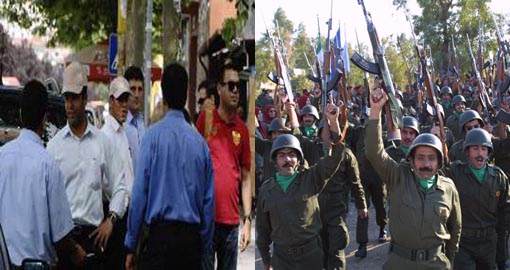
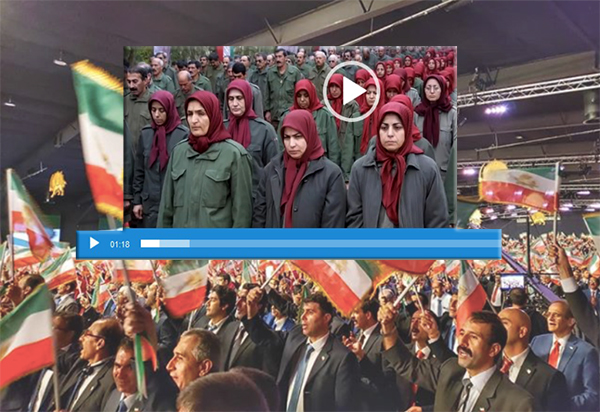
MEK Cult current operation - one of the groups self criticism sessions
Mujahedin Khalq; A proxy force

MEK Members Terrified of Cult Pressure,”First admitted then denied”

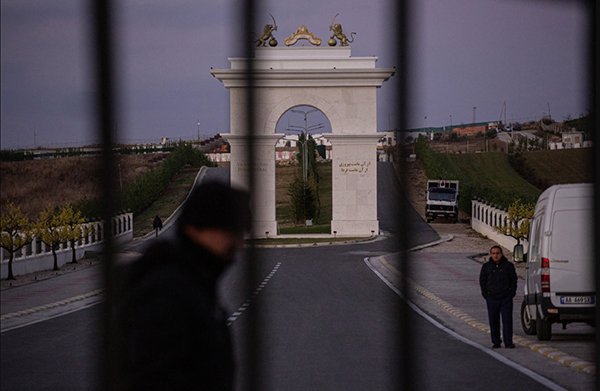
Patrick Kingsley was one of the few foreigners who has been recently allowed to enter the headquarters of the Mujahedin Khalq Organization (the MEK, MKO, PMOI, NCRI, the Cult of Rajavi). He is also one of the very few journalists who could manage to walk in the”Highly Secretive”base of the group near Tirana, Albania.

During his report on the tour of newly built town, he was given the opportunity to observe the life of a few thousands Iranians living under the cult-like system of the Rajavis even though the camp’s authorities have tried their best to manipulate his perception of the life inside the system.

The New York Times journalist tries to stay unbiased on what he has heard about the group’s cult-like nature. Seemingly he is not convinced by what he is shown in the group so he tends to complete his observations in the camp with interviewing former members outside the camp. He also does not restrict his investigations to those US army officials that the MEK authorities suggest.
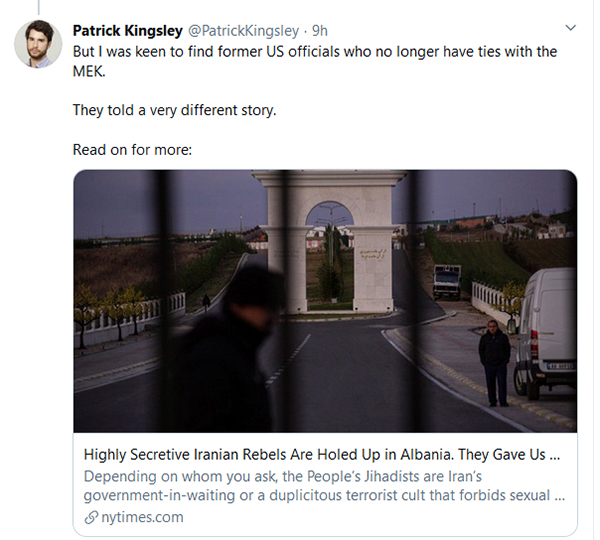
Eventually he finds a lot of controversy between what he was told by the group’s men and what he was told by former members and Captain Matthew Woodside, a former naval reservist who oversaw US policy in the Iraqi camp between 2004 and 2005 and who”was not one of those whom the M.E.K. suggested”that he contacts.

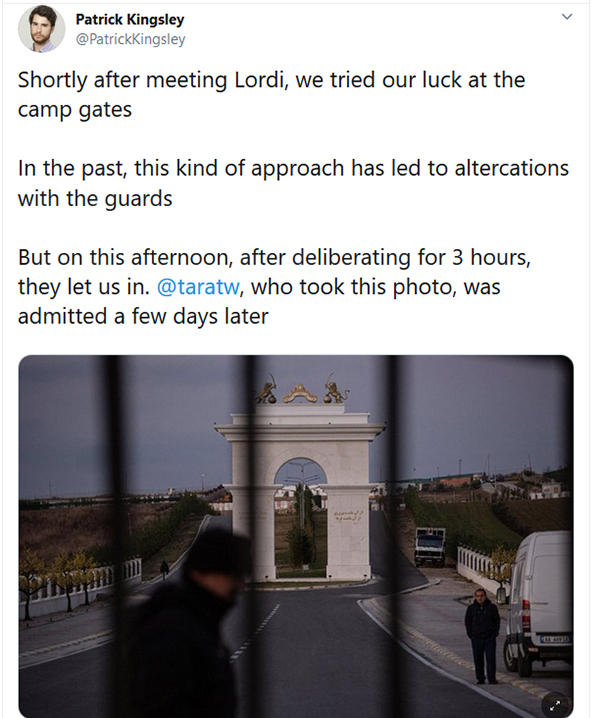
Sharing parts of his new article for the NY Times on tweeter, Kingsley exposes more facts about the life inside the MEK camp in Manez, Albania. He tweets:

Naturally, they all denied most of what was said about the group. They said celibacy, forced divorce and rejection of family life is just a necessary part of overthrowing the Iranian government.
One admitted the self-criticism.
One admitted it, then corrected himself.
The rest denied it

Hope the one member is OK right now. He would be lucky to survive peer pressure for the mistake he has made in front of a foreigner. It is very probable that he would be punished for tarnishing the MEK’s face for a Western journalist.
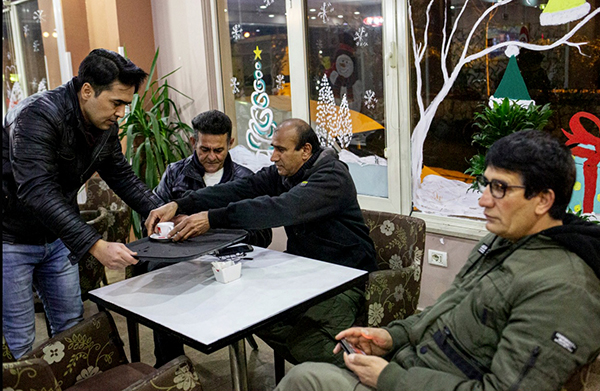
Patrick Kingsley brings the testimonies of ten former members now live independently in Albania”each of whom described being brainwashed in a celibate life“.”In the group, they stated that romantic relationships and sexual thoughts were prohibited, family contact very limited and friendships discouraged”, he clarifies.

And, he verifies that self-criticism is part of the MEK’s ruling system.”All of them said they were forced to participate in self-criticism rituals, in which members confessed to their commanders about any sexual or dishonest thought they had,”he writes.

“The oddest moment came when I asked about Massoud Rajavi, who hasn’t been seen since 2003, and whom former members say is the subject of cult-like reverence,”Kingsley tweeted about this part of his report:
In particular, senior officials stumbled when asked where the group’s leader, Massoud Rajavi, who disappeared in 2003, was.

“Where is he? Said Ali Safavi, the group’s main representative in Washington.”Well, we can’t talk about it, it’s …”
He paused, staring at his feet.
Is he still alive? Is he in Albania?
“We can’t talk about it,”said Safavi, after being silent for a few seconds. of several seconds of silence.

Ali Safavi is one of the MEK’s propaganda commanders. He is the group’s figure who runs the group’s propaganda in Western media. The group authorities chose him to deal with the NY Times correspondent probably because of his long time experience in working with English language media.
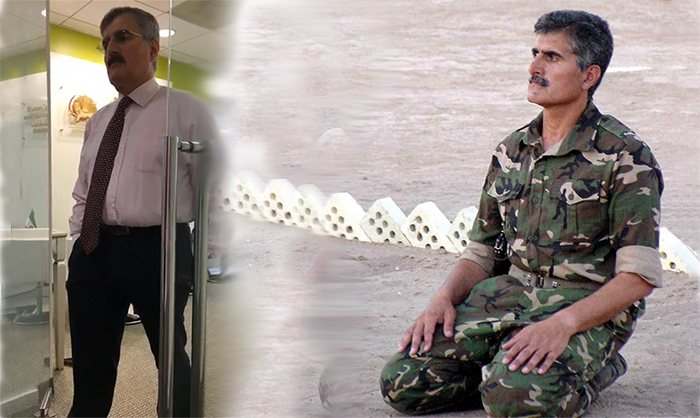
Ali Safavi

However, Safavi was not able to answer the simplest question about the whereabouts of the group’s leader Massoud Rajavi.
This is the bottom line of the entire report. The MEK’s leader has been disappeared for near two decades. No one is allowed to ask about his whereabouts. No one is allowed to answer about his whereabouts. This is absolutely a cult-like system that no one should know that its everlasting leader is sick or dead or something.
February 23, 2020 1 comment
FacebookTwitterPinterestWhatsappTelegramSkypeEmail
John Bolton and Saudis
Mujahedin Khalq; A proxy force

Saudi Arabia’s Dirty Money Feeds Mujaheddin-e Khalq Organization

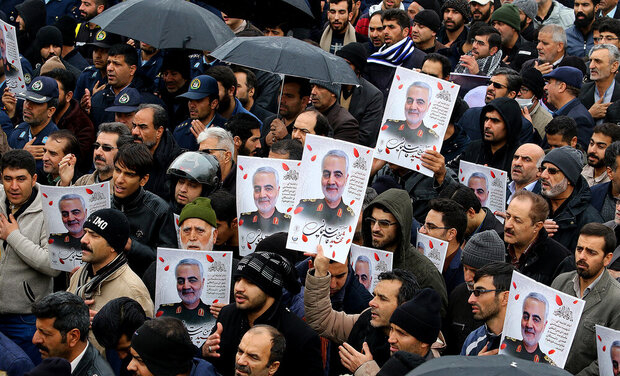
Iranian Foreign Minister once again condemned the US act of terror is assassinating former Quds Force commander Lieutenant General Soleimani, noting that the terror came while Soleimani was on a peace mission in Iraq.
“The US targeted Lt. Gen. Soleimani while he was traveling in a civilian vehicle on a mission to promote peace in Iraq,” the Iranian diplomat said in Munich Security Conference 2020 on Saturday.
He noted, “Iran’s missile attack on the US its military bases in Iraq was legitimate defense and based on Article 51 of the United Nations’ Charter,” adding, “People in many countries around the world have objected to this terrorist act and, contrary to what the presenter says, they were not ‘proxy forces’ or ‘militias’.”
Answering the question of whether the “revenge” of the Islamic Republic of Iran is over, he said, “No, Iran has taken military action in response to military action.”
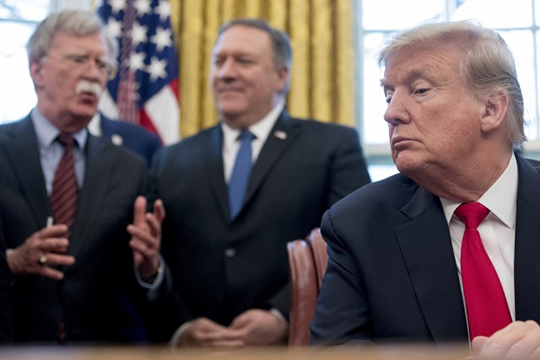
Iranian FM implied the role of Mike Pompeo in the assassination of Lt. Gen. Qasem Soleimani, saying that he is now trying to imitate Bolton’s behavior and therefore offered the assassination of Gen. Soleimani to Trump.
“I think President [Donald] Trump didn’t have good advisers. He has been waiting for our government to collapse since withdrawing JCPOA. At that time, John Bolton was telling him that Iran would come to its knees in a few months,”.

US policy on Iran
Referring to Joint Comprehensive Plan of Action (JCPOA), known commonly as the Iran nuclear deal, Zarif said, “Although the US had signed the agreement and had been endorsed by the United Nations Security Council, Trump has suddenly decided to withdraw from the Iran nuclear deal because of the agreement reached by former President Barack Obama.”
Stating that Iran won’t negotiate on JCPOA again, he said, “You don’t buy a horse twice.”
Responding to a question about the possibility of a dialogue between Iran and the US, FM Zarif said, “It does not mean that Tehran and Washington will negotiate directly, it means that the US should back to negotiating table of 5+1 which it had left it.”
“The United States continues to pursue a policy of regime change in Iran, which has failed over the past 41 years and Washington must accept the failure of that policy,” he added.

De-escalating tensions in the region

“Some countries including, Oman, Qatar and Iraq accepted to join the Hormuz Peace Endeavour (HOPE) initiative and Iran has sent a message to Saudi Arabia and Bahrain to advance the plan and ease tensions in the region, even though it has no diplomatic relations with these countries,” Iranian FM said.
Referring to Saudi Arabia’s negative behavior in response to Iran’s efforts to ease tensions, the foreign minister said, “After the assassination of Lt. Gen. Soleimani, their [Saudis] behavior moderated for several weeks, perhaps because they were concerned about our response. But after I said our answer was over, they went back to their previous behavior.”
“We are not seeking tensions with our neighbors at all. When Iraq invaded Kuwait, we helped Kuwait, despite Kuwait’s support for Iraq. When Saudi Arabia besieged Qatar, we helped Qatar. If anyone attacks Saudi Arabia today, we are ready to help them,” he said.

He went on to say, “We are ready to negotiate with all our neighbors about a security mechanism that will create security in the Persian Gulf. The Persian Gulf belongs to all of us. My message to my brothers is that the US does not provide you with security; the security does come from within the region.”
Zarif eventually referred to Saudi Arabia’s support for the terrorist group of Mujaheddin-e Khalq Organization (MKO also known as MEK) and said, “This terrorist group, which gives $ 50,000 to John Bolton for each speech, does not receive its money on the streets and through donations, but they receive it from some individuals in Saudi Arabia.”

US’ new plan for the Middle East
Referring to the ‘Deal of the Century”, Zarif said, “Trump has now angered the people of the region by unveiling the so-called “Deal of the Century,” adding, “Iran will not be responsible if any violence occurs in this regard.”

February 23, 2020 0 comments
FacebookTwitterPinterestWhatsappTelegramSkypeEmail
NEWYork Times on the MEK in Albania
Mujahedin Khalq; A proxy force

New York Times Questions Presence of MEK in Albania

The New York Times has published an article on the presence of the Iranian former Mujahedeen Khalq members in a camp near Tirana, questioning “what are they doing in Albania?”.

NYT tweet on his tour to the MEK camp

Reporter Patrick Kingsley, one of the few journalists allowed inside the barracks half an hour drive from Tirana, was initially rebuffed but after persisting was invited for a series of interviews and a tour.

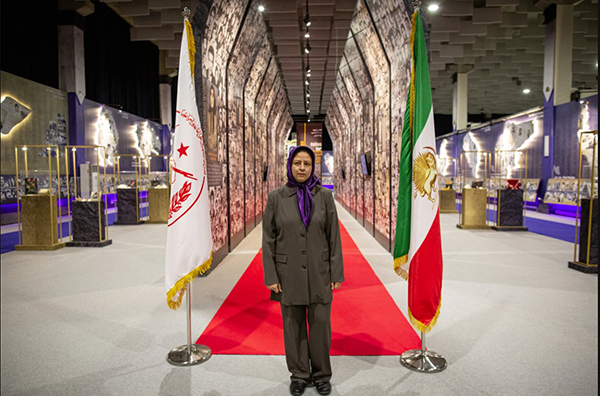
Describing them as “propaganda sessions”, Kingsley was shown a museum, a cafeteria, a gym, and a recording studio used to record songs for social media that promote their message.

Those that Kingsley interviewed disputed claims that they were not allowed to leave but they were unable to talk about the whereabouts of the group’s nominal leader Masoud Rajavi who disappeared in 2003. Members denied tales of brainwashing and cult-like behaviour reported by dissidents, stating that they are ‘Iranian spies’.

Kingsley was also put in contact with three former American military officers who had helped guard the MEK camp in Iraq after the US invasion. According to the article, they “spoke glowingly” about the group, stating that the members were free to leave at will.

Kingsley refers also to Captain Matthew Woodside, an ex-naval reservist, “not one of those whom the MEK suggested [Kingsley] contact” who told a different story and said “I find that organisation absolutely repulsive. I am astounded they are in Albania.

New York Times article is probably the first critical article on MEK’s presence in Albania in the mainstream American media.

In the past, Exit News has published stories on the Iranian MEKs. One of our journalists was also granted access to the facility in June 2019 for the occasion of a conference where de facto leader Maryam Rajavi, ex-Mayor of New York Rudy Giuliani, former senator Joe Lieberman, Columbian politician Ingrid Betancourt, and several former US Marines spoke.

.

“>NEWYork Times on the MEK in Albania

They observed members wearing a strict uniform, segregation between men and women, they also had their makeup confiscated and were asked not to take photos. Also noted was a heavy security presence including police and two different private security firms, and metal detectors at the entrance.

In the days following the visit, the Exit News journalists received some 15 phone calls and text messages asking them to return for further tours and talks.

Exit.al

February 20, 2020 0 comments
FacebookTwitterPinterestWhatsappTelegramSkypeEmail
blank
Mujahedin Khalq; A proxy force

US-Backed MEK Again Exposed As An Extremist Cult

The publication of the documented report on the MEK’s “Secretive” camp in Albania by the New York Times made a flow of reactions in the media since it is virtually the first time that an outlet of the mainstream American media that questions the presence of the group in Albania.

The Daily Wrap Up, a concise show of the Last American Vagabond website analyzes the NY’s report revealing the US’s hypocritical approach towards the world’s most controversial issues like terrorism, democracy and elections. The host of the show criticizes the US and Israel for their double standards to use the cult-like MEK terrorists in their hostile policies against Iran.

As Ryan accurately puts, the double standards of the US government includes not only the issues of elections and democracy but also forced hijab which is severely practices inside the MEK base. He also notices the hypocrisy of the US in dealing with notorious dictatorships like Saudi Arabia compared with the Islamic Republic.

By  Last American Vagabond

February 19, 2020 1 comment
FacebookTwitterPinterestWhatsappTelegramSkypeEmail
NYT photo of the Ashraf3 CAmp of MEK in Tirana
The cult of Rajavi

Mujahedin-e Khalq gave us a tour in their Albania’s Camp

Depending on whom you ask, the People’s Jihadists are Iran’s government-in-waiting or a duplicitous terrorist cult that forbids sexual thoughts. What are they doing in Albania?

NYT photo of the Ashraf3 CAmp of MEK in Tirana

MANEZ, Albania — In a valley in the Albanian countryside, a group of celibate Iranian dissidents have built a vast and tightly guarded barracks that few outsiders have ever entered.

Depending on whom you ask, the group, the Mujahedeen Khalq, or People’s Jihadists, are either Iran’s replacement government-in-waiting or a duplicitous terrorist cult. Journalists are rarely allowed inside the camp to judge for themselves, and are sometimes rebuffed by force.

But after President Trump’s decision to assassinate Qassim Suleimani, a powerful Iranian general, it seemed worth trying again. Would a group that claims to want a democratic, secular Iran allow a reporter inside their camp?

The group’s loudest allies include Rudolph W. Giuliani, the president’s personal lawyer, and John R. Bolton, his former National Security Adviser. Both have received tens of thousands of dollars for speaking at the group’s conferences, where these influential Americans describe the People’s Jihadists as Iran’s most legitimate opposition.

NYT tweet on his tour to the MEK camp

Initially, the group ignored several requests for access. So less in hope than desperation, I drove to its base and presented my credentials to a guard.

Three hours later, shortly before sunset, I got a call. To my surprise, I was being allowed inside. So began a series of interviews, propaganda sessions and tours that lasted until 1:30 a.m. A New York Times photographer was admitted several days later.

The group perhaps hoped to correct the impression left by previous journalistic encounters. A visit in 2003 by a Times reporter to the group’s former base in Iraq ended badly after her subjects spoke from a rehearsed script, and she was barred from talking to people in private.

Somaye Mohammadi

This time around, most residents were off limits, but officials did allow private interviews with several members.

At my request, these included Somayeh Mohammadi, 39, whose family has argued for nearly two decades that she is being held against her will.

“This is my choice,” said Ms. Mohammedi, after her commanders left the room. “If I want to leave, I can leave.”

While the group may not have tried to hide Ms. Mohammedi, there were several odd and telling moments when secrets were tightly held.

In particular, senior officials stumbled when asked about the whereabouts of the group’s nominal leader, Massoud Rajavi, who vanished in 2003.

“Where is he?” said Ali Safavi, the group’s main representative in Washington. “Well, we can’t talk about that, that’s … ”

He trailed off, staring at his feet.

Is he still alive? Is he in Albania?

“We can’t talk about it,” Mr. Safavi replied, after several seconds of silence.

Founded in 1965 to oppose the Shah of Iran, the group later rejected the theocracy that replaced him.

Immediately following the revolution, the group attracted significant public support and emerged as a leading source of opposition to the new theocratic regime, according to Professor Ervand Abrahamian, a historian of the group.

The group claims it still attracts significant support, but Mr. Abrahamian said its popularity plummeted after becoming more violent in the early 1980s.

“When you talk to people who lived through the revolution, and you mention the name ‘Mujahedeen’, they shudder,” said Mr. Abrahamian.

By the 1980s, the group’s ideology had begun to center on Mr. Rajavi and his wife, Maryam.

To prove their devotion to the Rajavis, members were told to divorce their spouses and renounce romance.

At the time, the group was based in Iraq, under the protection of Saddam Hussein.

Its destiny changed after the American-led invasion of Iraq. After an initial standoff, the group, also known as the M.E.K., gave up its weapons. Despite having been listed by America as a terrorist organization in 1997, it was placed under American protection.

But in 2009, American troops ceded responsibility for the M.E.K. to the Iraqi government. Led by politicians sympathetic to Iran, the Iraqi authorities tacitly allowed Iran-allied militias to attack the group.

American and United Nations diplomats began searching for a safer country to house the group. After intensive lobbying by a bipartisan group of lawmakers, the American government also removed them from a list of terrorist organizations in 2012.

A year later, they were finally welcomed by Albania. The Albanian government hoped its hospitality would curry favor with Washington, according to the foreign minister between 2013 and 2019, Ditmir Bushati.

MEK

The group purchased several fields in a valley 15 miles west of Tirana, the capital, and built a camp there.

When I visited, the base seemed oddly empty. The group claims it houses about 2,500 members. But across the two days, we saw no more than 200.

The others seemed to have been sequestered away — or to have left the group altogether.

Dozens of former members now live independently in Albania. I met 10 of them, who each described being brainwashed into a life of celibacy.

Inside the group, they said romantic relationships and sexual thoughts were banned, contact with family highly restricted, and friendships discouraged.

All recounted being forced to participate in self-criticism rituals, whereby members would confess to their commanders any sexual or disloyal thoughts they had.

“Little by little, you are broken,” said Abdulrahman Mohammadian, 60, who joined the group in 1988 and left in 2016. “You forget yourself and you change your personality. You only obey rules. You are not yourself. You are just a machine.”

The group strongly denied the accusations and portrays many of its critics, including Mr. Mohammadian, as Iranian spies.

I was taken on a three-hour tour of a museum about the M.E.K.’s history, where the exhibits did not mention Saddam Hussein or forced celibacy. Instead, they focused on the group’s persecution.

Some rooms had been turned into replica torture chambers, to explain how Iranian jailers punished and interrogated supporters during the 1980s.

In each room, members waited in silence for me. These turned out to be survivors of the torture — ready to personally explain each method of repression.

One survivor, Raheem Moussavi, stood beside a bloodied mannequin and slowly detailed the four different techniques the Iranian torturers used to beat him. The process culminated in being whipped by a metallic cat-o’-nine tails.

Searching for influence, the group has turned increasingly to the internet.

I was shown a recording studio, where two musicians compose anti-regime songs and music videos for release on Iranian social media.

I wasn’t shown the computer suites, which defectors had portrayed as a kind of troll farm: junior members using multiple accounts on Facebook and Twitter, typing messages that criticize the Iranian government, lionize the M.E.K. leadership and promote its paid lobbyists.

When Mr. Giuliani and Mr. Bolton made public speeches in recent years, members were ordered “to take a particular line and tweet it 10 times from different accounts,” said Mr. Mohammadian, the former member.

I was taken to an empty gym, and then to a small cafeteria. It was already close to midnight, but a small group of women had been told to wait up for me.

They scoffed at the idea of the troll farm. As for the limits on their private lives, they said such discipline was necessary when battling as cruel an adversary as the government of Iran.

“You can’t have a personal life,” said Shiva Zahedi, “when you’re struggling for a cause.”

After I left, the group put me in touch with three former American military officers who had helped guard an M.E.K. camp in Iraq after the American invasion.

Each spoke glowingly about the M.E.K., and said its members had been free to leave since the American military began protecting it in 2003.

American officers had access to every area of the Iraqi base, and found no prison cells or torture facilities, said Brig. Gen. David Phillips, who commanded the military policemen guarding the camp in 2003 and 2004.

“I wanted to find weapons, I wanted to find people tied to beds,” General Phillips said. “We never found it.”

But other records and witnesses gave a more complex account.

Capt. Matthew Woodside, a former naval reservist who oversaw American policy at the Iraqi camp between 2004 and 2005, was not one of those whom the M.E.K. suggested I contact.

He said that in reality American troops did not have regular access to camp buildings or to group members whose relatives said they were held by force.

MEK Camp In Albania

The M.E.K. leadership tended to let members meet American officials and relatives only after a delay of several days, Captain Woodside said.

“They fight for every single one of them,” he said.

It became so hard for some members, particularly women, to flee that two of them ended up trying to escape in a delivery truck, he recalled.

“I find that organization absolutely repulsive,” Captain Woodside said. “I am astounded that they’re in Albania.”

Besar Likmeta contributed reporting.

By Patrick Kingsley, Feb. 16, 2020

Patrick Kingsley is an international correspondent, focusing on long-term reporting projects. He has reported from more than 40 countries, written two books, and previously covered migration and the Middle East for The Guardian. @PatrickKingsley

February 17, 2020 0 comments
FacebookTwitterPinterestWhatsappTelegramSkypeEmail
Maryam Rajavi ans illir Meta of Albania
Albania

Where is Albania heading to?

I am wondering where the Albanian government is heading by giving full support to a terrorist cult, which they hosted back in 2016 after it was expelled from Iraq.

MEK background

The Mojahedin-e Khalq Organization (MEK, MKO, NCRI, NLA, or better known as the Rajavi cult) had a military base in Iraq facilitated by Saddam Hussein and they actively participated against their own county alongside the enemy in the 1980-88 Iran-Iraq war.

This was alongside a terrorist campaign waged inside Iran in the early 80s which claimed 12,000 lives. They also joined with Saddam’s army to suppress the 1991 uprisings in the north and south of Iraq.

The cult has also a disturbing record of abusing the human rights of its own members who are brainwashed and isolated in a closed camp, first in Iraq and now in Albania.

Saddam who had a hostile attitude towards Iran and Iranians used the MEK terrorist cult to carry out sabotage activities inside Iran until he was overthrown by the American invasion of the country in 2003.

Female operators in ISIS and MEK, victims of destructive cults

MEK moved from Iraq to Albania

After the fall of the Baghdad dictator in 2003, the Iraqi governments, one after the other, insisted that the MEK, which they found a threat to the country’s national security, be expelled from Iraq. The problem was that no country was prepared to host them until Albania showed itself willing to do so for the short-term benefit of some politicians.

At the present time the Albanian government serves the cult in the same way as Saddam Hussein did in the past.

Trump Thanks Albania for ‘Standing Up To Iran’

On January 15, 2020 it was announced that ‘Albania Expelled Two More Iranian Diplomats’. Acting Albanian Foreign Minister Gent Cakaj announced the decision in a Facebook post. “The two representatives of the Islamic Republic have been asked to leave the territory of the Republic of Albania immediately,” Cakaj wrote, without offering further details.

U.S. President Donald Trump thanked Albania for expelling Iran’s diplomats for alleged national security reasons. According to the U.S. embassy in Tirana, Trump thanked Prime Minister Edi Rama in a letter for his “steadfast efforts to stand up to Iran”.

The Trump administration’s hostility towards Iran and Iranians is no secret, and the US president thinks that he might somehow use the MEK terrorist cult against Iran. This is why he supports the group and tries to keep it intact despite violations of the basic rights of the members.

The role of the Albanian government in this matter is no more than blindly following Washington’s guidelines, even if that means paying the price of losing the EU membership that they are so eager to gain.

EU-Albania relationship

Albania is an EU candidate country and it has made considerable progress in recent years in meeting the political criteria and the objectives related to the five key priorities for the opening of accession negotiations. However, the Albanian government needs to further tackle the remaining challenges in a sustainable, comprehensive and tangible manner, particularly when it comes to the fight against corruption at all levels, the fight against organized crime, promotion of the rule of law as well as judicial reform, the protection of minorities and establishment of good neighborly relations.

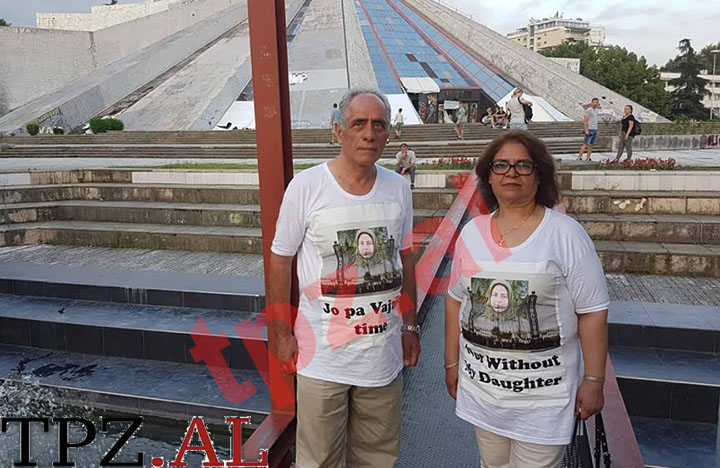
Now Albania, to appease its US instructors, has hosted a terrorist cult in Europe and fully supports it by every possible means. Defectors from the MEK are put under enormous pressure in order to be forced into returning to the cult, and the members are denied any contact with the outside world, particularly with their families. The Albanian government prevents the families of the MEK members from going there and visiting their loved ones.

What are the Albanians up to?

The Albanian government apparently prefers the short-term benefits of turning against Iran and supporting MEK against Iran to its long-term benefits in relation to Europe and the wider world. The MEK is no longer a security or even political threat for Iran, it is rather a human rights issue. But the MEK could well be a threat for Albania as well as the whole Europe.

The members have been brought to Albania without travel documents and therefore they have no legal status in the country (they are stateless) and they are currently living in conditions of modern slavery at the hands of the cult leaders.

In Albania, hundreds of members have left the cult and they have no legal and financial support at all. Thousands of families are deprived from having any contact with their loved ones in the MEK camp.

I am afraid the Albanians are taking a great risk by fully following Trump’s hostile policy towards Iran and Iranians. The support given by the Albanian government for US actions are unique in the world and will by no means make them closer to Europe.

February 15, 2020 0 comments
FacebookTwitterPinterestWhatsappTelegramSkypeEmail
blank
Mujahedin Khalq; A proxy force

Convenient Bedfellows: Why The MEK Backs Spanish Far-Right In Tactical Relationship

“Both the far right and Islamist extremists benefit when their professed enemies engage in a terror attack or do anything that confirms their narratives. They want to see more rifts and more chaos in society. When communities are scared, when they’re driven apart, they’re vulnerable to the extremist narratives.”

News resurfaced this February of political collusion between the infamous Iranian MEK group (Mojahedin-e-Khalq), also known as the MKO, a cult-type organisation centered around the quasi-worship of its two leaders: Maryam Rajavi and her spouse Masoud Rajavi, and Spain’s latest far-right outfit: Vox.

As Vox made its entry into Spain’s political life by winning a seat in Andalusia at the regional parliamentary elections in April of last year, questions were raised as to the origin of the party’s funding as well as its political associations, if any, to other far-right movements. Little could anyone have imagined that the group, which advocates a fiercely Islamophobic front, would benefit from the financial largesse of one very vocal Islamist group: the Iranian MEK.

While Spain’s right-wing has previously been relatively light on anti-Islam rhetoric, preferring to rail against secessionists in Catalonia and elsewhere, Vox has no such compunction. One of the party’s earliest controversies was a wildly Islamophobic video conjuring a future in which Muslims had imposed sharia in southern Spain, turning the Cathedral of Córdoba back into a mosque and forcing women to cover up.

Documents leaked to the Spanish newspaper El País show that almost 1 million euros donated to Vox between its founding in December 2013 and the European Parliament elections in May 2014 came via supporters of the National Council of Resistance of Iran (NCRI), an alias of the MEK.

The Terror Connection

Made infamous in the late 1970s for its anti-Shah, anti-America narrative, the MEK reinvented itself a terrorist organization after it was cast out of Iranian political life (1980) by late Ayatollah Ruhollah Khomeini on account of its radicalist views. Following a series of bloody terror attacks in Iran, the MEK found refuge in Iraq, under the protection of then-strongman Saddam Hussein.

To secure its position and benefit from Iraq’s protection, the MEK fought alongside the Iraqi army against their own countrymen during the Iraq-Iran war, arguing that it sought to reform the Islamic Republic into a vibrant democracy, made to the image of its political leadership – was born the cult of the Rajavi.

Today the MEK has seen its crimes against U.S. interests expunged on the basis of its desire to see Iran’s Ayatollahs come undone.


Anti-capitalist, anti-imperialist and anti-American, MEK fighters killed scores of the Shah’s police in often suicidal street battles during the 1970s. The group targeted U.S.-owned hotels, airlines and oil companies, and was responsible for the deaths of six Americans in Iran. It was actually the MEK which first etched their hatred of America into Iranians’ political subconscious through its militants’ cries of: “Death to America by blood and bonfire on the lips of every Muslim is the cry of the Iranian people,” and “May America be annihilated.”

A favorite among Trump hardliners, the MEK has worked terribly hard since the fall of Saddam Hussein to reinvent itself as a friend of the West one must admit with great success. Following a lavish lobbying campaign to reverse its designation as a terrorist organisation – despite reports implicating the group in assassinations of Iranian nuclear scientists as recently as 2012, the MEK was de-listed by the UK in 2009 and by the U.S. in 2012.

Under Maryam Rajavi’s influence – her husband has not been seen in public since 2003 – the MEK has won considerable support from sections of the U.S. and European right, eager for allies in the fight against Tehran.

While the MEK presents itself as a reformist group, in that it seeks to adopt and develop a modern revolutionary interpretation of Islam – in sharp contrast to the rigor of Iran’s traditional clergy, the group has often been described as a mix between Marxism and populist Islam – qualities which are an anathema to European far-right political movements.

And yet, we know now that the two have found some interesting common ground: if not on the basis of their respective ideologies, in their need for reciprocal rage. And though at first glance Islamists and far-right extremists may wish each other’s demise, they also need each other’s hatred to justify and even rationalize their respective existence.

United In Their Extremism

In truth, to see the two join together is not that much of an intellectual stretch, rather an alliance of convenience at a time when extremism is seeking to define the global narrative.

This is the argument Julia Ebner, a research fellow at the London-based Institute for Strategic Dialogue, makes in her book The Rage: The Vicious Circle of Islamist and Far Right Extremism – that both ends of the political and social spectrum desperately need each other in order to push their narratives, and so why not fund each other?
Pssst, while you’re here…

As she puts it, Islamist extremists claim that the West is at war with Islam, and far-right groups claim that Muslims are at war with the West. This makes Islamist extremists and the far right rhetorical allies.

Speaking in an interview Ebner notes: “Both the far right and Islamist extremists benefit when their professed enemies engage in a terror attack or do anything that confirms their narratives. They want to see more rifts and more chaos in society. When communities are scared, when they’re driven apart, they’re vulnerable to the extremist narratives.”

And, “So in a really fundamental way, each side has good reasons to celebrate when something horrible happens. If ISIS blows up a shopping center in some Western town, the far right points to that and says, ‘You see, we were right all along. Muslims are at war with the West.’ Likewise, right-wing terrorism or rhetoric gives Islamist extremists more fodder to sell their narrative about the West being hostile to all of Islam.”
A Story Of Political Codependency

“From the day it was founded in December 2013 – the same day that it registered as a political party with the Spanish Ministry of Interior – Vox started to receive Iranian funds,” said Joaquín Gil, one of the El País journalists who first reported on NCRI-linked funding of Vox.

Gil went on to explain that donations came from dozens of individual sources, from several countries including the United States, Germany, Switzerland, Canada, and Italy in amounts ranging from 60 to 35,000 euros, totaling almost 972,000 euros, in the period from December 2013 to April 2014, shortly before the European parliamentary elections.

According to Gil, Vidal-Quadras, a leading member of Vox had “asked his friends at NCRI … to instruct its followers to make a series of money transfers.” Vidal-Quadras has since confirmed that the MEK/NCRI had in fact organized the fundraising for Vox, alleging that at the time the MEK had no idea Vox was a far-right outfit.

Vox is arguing that the money was a personal favor to Vidal-Quadras, who, during his time at the EU Parliament had helped rehabilitate the MEK as a viable counterpart against Iran’s Islamic Republic.

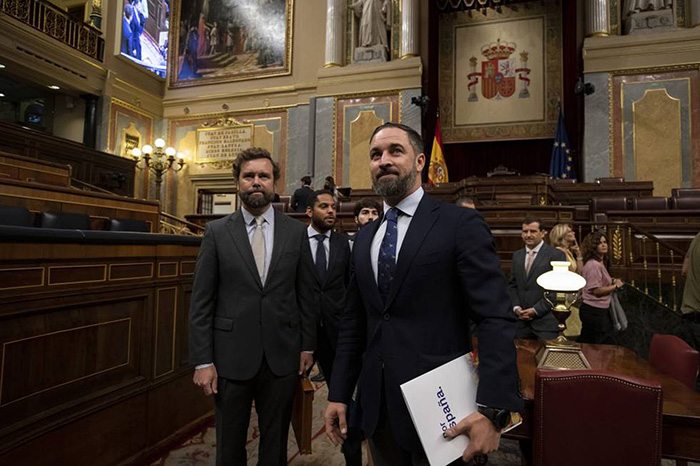
“We don’t have any relationship with them,” said Espinosa, the Vox vice secretary of international relations. “The funding of Vox by the NCRI came out of a personal relationship with Vidal-Quadras … They supported him … Not the party so much as him.”

In any case it is now evident that Vox could never have achieved any political victory without the financial output volunteered by the MEK – proof that extremists, for all their rhetoric, are more than willing to work together to push their respective narrative into the spotlight.

In their extremes it is often that Islamic radicals and the far-right meet. Both ideologies are based on the victimization of an in-group and the demonization of an out-group. More to the point both blame the ‘corrupt political establishment’ and ‘rigged mainstream media’ for all that is going wrong and aim to bring about radical societal change by creating countercultures.

As Ebner highlights in her book, “On both sides, you find groups that embrace violent solutions – including terrorism and hate crimes – to reach this goal, and others who resort to strategies such as hate preaching, information warfare, vigilantism, or street activism. Ultimately, both tend to encourage apocalyptic thinking and conspiracy theories, which can incite violence and in some cases inspire terrorism.”
Catherine Shakdam, Citizentruth.org

(The views and opinions expressed in this article are those of the authors and do not reflect the views of Citizen Truth.)

February 15, 2020 0 comments
FacebookTwitterPinterestWhatsappTelegramSkypeEmail
Maryam Rajavi and Brian Hook
Mujahedin Khalq; A proxy force

Brian Hook met MEK before, after the assassination

The United States’ point man on Iran met with a representative of the anti-Iran Mujahedin-e-Khalq Organization (MKO) terrorist group both before and after Washington’s assassination of senior Iranian commander Lieutenant General Qassem Soleimani, a report says.

Brian Hook, the US’s special representative for Iran and senior adviser to Secretary of State Mike Pompeo, held the meetings with Robert G. Joseph, who represents the so-called National Council of Resistance of Iran (NCRI) in September 2019 and on January 31, American news and opinion website The Daily Beast reported on Tuesday.

On its website, the NCRI calls itself the MKO’s “umbrella coalition,” but many consider the two to be synonymous.

Joseph referred to the meetings in a semi-annual report he filed with the US Justice Department earlier this week in line with the US’s Foreign Agent Registration Act.

The US assassinated General Soleimani, the former commander of the Quds Force of Iran’s Islamic Revolution Guards Corps (IRGC), and a number of others in a set of drone strikes targeting Baghdad’s civilian airport on January 3.

The director of public relations of pro-government Hashd al-Sha’abi forces has been killed after three Katyusha rockets fell on Baghdad International Airport.

General Soleimani, who had earned reputation as the region’s most popular anti-terror military figure, was on an official visit to the Iraqi capital when the attack took place.

Joseph, a former senior State Department official under President George W. Bush, advises the NCRI at $15,000 a month. Relentlessly an Iran hawk, Joseph told a meeting of the group last March that he hoped that the Iranian government would soon fall.

The MKO has conducted a litany of assassinations and bombings against Iranian officials and civilians since the 1979 Islamic Revolution. It notoriously sided with former Iraqi dictator Saddam Hussein during Iraq’s Western-backed war of 1980-88 against the Islamic Republic.

Out of the nearly 17,000 Iranians killed in terrorist assaults since the Revolution’s victory, about 12,000 have fallen victim to the MKO’s acts of terror.

The terrorist outfit was on the US’s list of terrorist organizations until 2012.

Many other Western states have crossed its name out on their blacklists, too. The NCRI has its headquarters in Paris, which also serves as the venue for the MKO’s annual conferences.

The group throws lavish conferences every year in the French capital, with certain American, Western, and Saudi Arabian officials in attendance as guests of honor. These include former US national security advisor John Bolton, US President Donald Trump’s personal lawyer Rudy Giuliani, former Canadian prime minister Stephen Harper, and former Saudi Arabian spy chief, Prince Turki al-Faisal.

The US-backed Mujahedin Khalq Organization (MKO) is notorious for its numerous terrorist attacks against Iranian civilians and government officials.

Also in January, Giuliani told The Daily Beast that General Soleimani had been “directly responsible for killing some of my MEK (MKO) people,” adding, “We don’t like him very much.”

Evidence once showed that Bolton had received a $40,000 “speaking fee” to address an annual MKO gathering.

Today the world’s catching on to @AmbJohnBolton’s chronic warmongering. But Iranians didn’t need to read a 10,000 word @NewYorker profile to be convinced: we’ve seen him shill for a cult terror group, and—along with his #B_Team accomplices—target Iranians with #EconomicTerrorism. pic.twitter.com/8n0UHyXOyq
— Javad Zarif (@JZarif) April 30, 2019

Last June, the MKO informed its members through an internal communiqué that it would “welcome” the assassination of General Soleimani and Iran’s Judiciary Chief Ebrahim Raeisi.

A US and Saudi Arabia-backed anti-Iran terrorist group has announced a plan to assassinate a senior Iranian commander and the country’s new Judiciary chief.

The NCRI hailed General Soleimani’s assassination in a blog post following the airstrikes.

Shortly after the US airstrikes, Pompeo circulated a memo to all American embassies barring “direct US government engagement with” MKO’s representatives, citing its controversial history, including alleged role in the assassination of three US army officers and three civilian contractors, The Daily Beast said.

He, however, walked back from the warning later, leaving the door open to such engagement. “Posts should welcome opportunities to meet with and learn from members of the Iranian diaspora community,” he advised American diplomats in a cable overriding the memo.

Pompeo himself spoke at an event that included MKO representatives last year.

February 15, 2020 0 comments
FacebookTwitterPinterestWhatsappTelegramSkypeEmail
Beheshti
The cult of Rajavi

To the international Human Rights Bodies

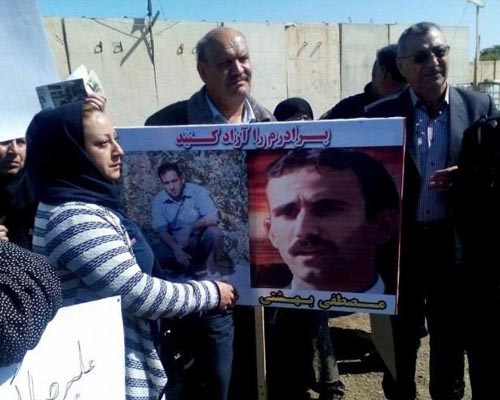
Ms. Narges Beheshti wrote a letter and sent it to deferent UN and EU institutes and other international bodies alongside appropriate documents.

Beheshti

The text of the letter is as follows:
My name is Narges Beheshti. My brother Mostafa Beheshti is a member of the Mojahedin-E Khalq Organization (MEK, MKO, NCR, NLA . . .) who is trapped in a remote isolated camp of the group in Albania.
MEK is a terrorist cult supported by the Albanian government. The cult brainwashes the members and forces them into terrorism and crimes.
My other brother Morteza Beheshti was also a member of the MEK living in the cult’s camp Ashraf in Iraq who was killed through a conflict.
Both brothers left Iran for more income and a better life, but were deceived into joining the group.
Morteza was married and had a son.

Beheshti
My mother passed away recently. After Morteza was killed, her only wish was to talk to Mostafa. Unfortunately, this never happened until she died.
The leaders of the MEK, just like other destructive cults, prevent the members to have access to the outside world, in particular to their friends and family.
What should I do if I want to contact my brother in Albania and learn about his situation? The Albanian government, in order to appease the MEK, does not let the families to travel to Albania. Even if the families be able to enter the country, they have no chance to see their loved ones and they would be harassed by the Police and authorities.
I firmly urge you to show me a way to persuade the MEK leaders as well as the Albanian authorities to let the members contact their relatives.
I am eagerly waiting for your response and thank you in advance for your efforts.

Narges Beheshti,
Tehran, Iran

February 12, 2020 0 comments
FacebookTwitterPinterestWhatsappTelegramSkypeEmail
Nowruz
Mujahedin Khalq; A proxy force

MEK and Persian Culture

Persian culture is one of the World’s oldest and richest cultures. The Persians are an Iranian ethnic group that make up over half the population of Iran. The Iranian nation inherited the tangible and intangible heritage of Persian culture. They cherish this culture and protect its symbols. They share a common cultural system and are native speakers of the Persian language. According to Wikipedia, the term Persian is still historically used to designate the predominant population of the Iranian peoples living in the Iranian cultural continent.
However, Persian culture is even appreciated and practiced by Iranian immigrants all over the world. Most Iranians living abroad grow their children under the new culture while trying to keep them alert about their homeland culture.

The Trump Administration’s Iran Fiasco

Members of the Mujahedin Khalq Organization are sort of immigrants; exiles who have founded their own colony under the rule of Massoud and Maryam Rajavi’s cult of personality. They are considered as an opposition against the Iranian government by western states and so a bargaining chip or a proxy force in their policies towards Iran. The role of the MEK in the hostile policies against Iran changes from time to time.
Sometimes the shift in policies is spontaneous. At lightning speed, the State Department overturns an order prohibiting US diplomats from meeting controversial Iranian dissident groups including the MEK. But now the note is canceled. A directive sent to American diplomats on Sunday January 12th, was replaced the week-old directive. “The posts should welcome the opportunities to meet and learn from members of the Iranian diaspora community,” said the new directive. [1]
The cable went on to say that American diplomats should consider hosting members of the diaspora for “Persian cultural events”, while noting that “not all of the interests and objectives of Iranian opposition groups align with American political priorities”. [2] It seems that Iranian cultures matters a lot to the US politicians as Donald Trump also threated Iranians to attack their cultural sites!

“There are at least two problems with this reversal,” said Jarrett Blanc, a former Obama administration official who worked on Iranian politics. “The first is that the policy is wrong. American diplomats should not meet with MEK or its affiliates. They represent a dangerous cult. We must avoid all the mistakes of the Iraq war, including being deceived by so-called diaspora opposition unrelated to it. The second problem is that it reflects the utter incompetence and chaos of this administration’s policy making – send out an instruction and less than a week later cancel it. They just don’t know what they are doing. “. [3]

Let us believe that the US government considers the MEK’s interests and objectives against its political priorities, it should also consider that the MEK is not an appropriate representative for Persian Culture. The capacity of the group for representing the Persian culture is often limited to the events hold under the cover of Persian New Year’s celebration in which paid political figures together with Maryam Rajavi call for the overthrow of the Iranian government.

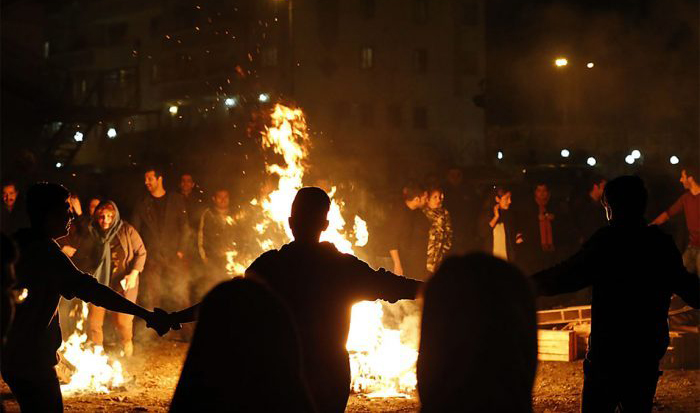
Speaking of Persian culture, it should not be forgotten that there is also another Persian Cultural tradition which is very important to the MEK leaders: Chaharshanbe Suri. It is an Iranian festival celebrated on the eve of the last Wednesday before Nowruz. Festival of Fire (Chaharshanbe Suri) is held on the last Wednesday of a year marking the arrival of spring. It is widely believed that Chaharshanbe Soori is a Zoroastrian celebration. People jump over the fire, sing, dance, play fireworks, eat sweets and nuts together with family, friends and neighbors. It is actually a national celebration before the great celebration of Nowruz. According to the Persian culture, on this day, the good prevails the evil and that is why people dance happily in their private gardens or in the streets.
In contrast, the last Wednesday of Persian year is an opportunity for the MEK to launch propaganda on its media outlets showing pictures of people’s celebrations around fire propagate them as acts of protest by Iranians against the government. Fire Festival in Iran, turns in to a protest against the regime in entire Iran. This is the caption of a photo of an ordinary fire festival on the last year’s Chaharshanbeh Suri in Iran: “Fire Festival in Iran, turns in to a protest against the regime in entire Iran”.

Fire Festival in Iran

How about Persian cultural events inside Camp Ashraf 3? Will the US politicians be able to get to know about Persian culture in the MEK headquarters? The answer can be found in the testimonies of former members. Persian culture is definitely a family-oriented culture. In the Persian culture, the family values are given a lot of prominence. All these celebrations are cherished in the center of family or with the company of friends. Happiness and peace are the mementos of these celebrations. But, in the MEK, family, friends and any other emotional relationships are forbidden. If the rank and file do have any family members inside the group, on the occasion of Nowruz, they are allowed to meet each other for a few minutes under the control of the group commanders in a public celebration organized by the group. Those who have no one inside the camp are never allowed to contact their families out of the group. Family is considered as enemy. The so-called celebration is overwhelmed with political and anti-Iran slogans, desires for the overthrow of the regime and speeches by the group leaders and their paid speakers to cheer up the crowd of manipulated individuals with their aggressive litterateur against Iranian nation.
The background of the links between the MEK and the US and Israel indicate that this relationship will mostly remain political and operational. The evidence is the assassination of the Iranian nuclear scientists that was carried out by the Israeli Mossad with the cooperation of the MEK operators. [4] [5]
The recent killing of the Iranian officials was done by the US government a few weeks ago. General Soleimani was bombed by the US drones under the direct order of Donald Trump who eventually promised to target the Persian cultural sites. The latest assassination took place last week. A commander of Iran’s revolutionary guard has been shot dead by masked assailants in front of his house in southwestern Iran.
“Of course, this latest killing also brings up the possibility of a foreign or external intelligence agency operation, though it remains speculation,” writes Tyler Durden of the Zerohedge. “One likely candidate alleged to enjoy US and Israeli covert backing is Mujahideen e Khalq (MEK), considered by Iran and many other countries as an active terrorist organization. Groups in Iran linked to the MEK have been previously known to be involved in political assassinations.” [6]
“Essentially a paramilitary cult devoted to overthrowing the Iranian government, the MEK is under the tight control and leadership of the charismatic opposition leader Maryam Rajavi, and is suspected of previously conducting brazen targeted killings of high level Iranian figures, especially nuclear scientists and engineers for years, likely at the bidding of foreign intelligence services,” he continues. “Until a few years ago the MEK was a designated terror group by the US State Department, though delisted under the Obama administration.” [7]
The US warmongers are more likely to be eager for the MEK’s violent background rather than its cultural aptitudes. As professional assassins brainwashed under a cult-like structure, the group is absolutely more useful in terrorist operations than in cultural events and eventually a favorable proxy force for the warmongers.
Mazda Parsi

References:
[1] Swan, Betsy & Banco, Erin & Suebsaeng, Asawin, Trump Admin Walks Back Anti-MEK Memo, the Daily Beast, January 13th , 2020.
https://www.thedailybeast.com/trump-administration-walks-back-anti-mek-memo
[2] ibid
[3] ibid
[4] Cockburn, Patrick, Just who has been killing Iran’s nuclear scientists? , Independent, October 6th, 2013.
https://www.independent.co.uk/voices/comment/just-who-has-been-killing-irans-nuclear-scientists-8861232.html
[5] M. Hersh, Seymour, Our Men in Iran? , the New Yorker, April 5th , 2012
https://www.newyorker.com/news/news-desk/our-men-in-iran
[6] Durden, Tyler, IRGC Commander & “Soleimani Ally” Shot Dead by Masked Assassins on Motorcycle, zerohedge.com, January 22nd, 2020.
https://www.zerohedge.com/geopolitical/key-soleimani-ally-irgc-commander-shot-dead-my-masked-assassins-motorcycle

February 10, 2020 0 comments
FacebookTwitterPinterestWhatsappTelegramSkypeEmail
Newer Posts
Older Posts

Recent Posts

  • The black box of the torture camps of the MEK

    December 24, 2025
  • Pregnancy was taboo in the MEK

    December 22, 2025
  • MEPs who lack awareness about the MEK’s nature

    December 20, 2025
  • Why did Massoud Rajavi enforce divorces in the MEK?

    December 15, 2025
  • Massoud Rajavi and widespread sexual abuse of female members

    December 10, 2025
  • Facebook
  • Twitter
  • Instagram
  • Youtube

© 2003 - 2025 NEJAT Society . All Rights Reserved. NejatNGO.org


Back To Top
Nejat Society
  • Home
  • Articles
  • Media
    • Cartoons
    • NewsPics
    • Photo Gallery
    • Videos
  • Publications
    • Books
    • Nejat NewsLetter
    • Pars Brief
  • About Us
  • Contact us
  • Editions
    • عربي
    • فارسی
    • Shqip