Nejat Society
  • Home
  • Articles
  • Media
    • Cartoons
    • NewsPics
    • Photo Gallery
    • Videos
  • Publications
    • Books
    • Nejat NewsLetter
    • Pars Brief
  • About Us
  • Contact us
  • Editions
    • عربي
    • فارسی
    • Shqip
Nejat Society
Nejat Society
  • Home
  • Articles
  • Media
    • Cartoons
    • NewsPics
    • Photo Gallery
    • Videos
  • Publications
    • Books
    • Nejat NewsLetter
    • Pars Brief
  • About Us
  • Contact us
  • Editions
    • عربي
    • فارسی
    • Shqip
© 2003 - 2024 NEJAT Society. nejatngo.org
No trust on the MEK
Mujahedin Khalq as an Opposition Group

The Islamic Republic of Iran at 41 and the MEK


Iran’s Islamic Revolution remains as bellwether, even though attempts to emulate it have not yet succeeded.

— Journalist Eric Walberg

In number theory, 41 is a prime number meaning it is not divisible by any number except itself and one. Similarly, the Islamic Revolution in Iran so far has been unique in its success and indivisible unity of purpose, despite numerous attempts at sabotage by external and internal actors. At this prime age of 41, Iran is fully capable of charting an assertive leadership path to recapture the spirit and reaffirm the original goals of the Islamic Revolution of 1979, among which is the propagation of Islam to bring about social change for the welfare of all humanity.2

It is no minor accomplishment for the Islamic Republic of Iran to have maintained an independent geopolitical course for a period of forty one years in spite of the overwhelming diplomatic, economic and military pressure employed by the United States to force Tehran to cave in to the diktats of the Washington regime. Even before the erstwhile shah, Mohammed Reza Pahlavi, had fled the country on January 17, 1979, U.S. air force general Robert E. “Dutch” Huyser had arrived on January 3 on a mission to test the waters for a rerun of the August 1953 coup, which had originally placed the U.S.-backed dictator in power in the first place.3
With the victory of the Islamic Revolution on February 11, 1979, Ayatollah Khomeini (r) went on to found an Islamic Republic, whose constitution (Article 154) explicitly states that Iran “is concerned with the welfare of humanity as a whole and takes independence, liberty and sovereignty of justice and righteousness as the right of people in the world over.” Imam Khomeini was very clear in his view that “Islam is revealed for mankind,” and, therefore, the revolution must be exported.3 This concept, which raised fears of popular uprisings toppling the U.S.-abetted tyrants in the region and beyond, put the nascent Islamic Republic on a collision course with the Washington regime. Among the despotic leaders shaken by Iran’s Islamic Revolution was the U.S.-supported Iraqi dictator, Saddam, who denounced Imam Khomeini and called upon Iranian Arabs to revolt.4

If external threats to the newly established Islamic Republic weren’t enough, others arose internally. Massoumeh Ebtekar, who witnessed the revolution firsthand and is currently Vice President of Iran for Women and Family Affairs, recalled that “we were sure that foreign elements were actively involved in attempts to weaken and undermine the young republic.” To avert the suspected foreign plot to overthrow the Iranian government, a group of students, including now Vice President Ebtekar, decided to act, and on November 4, 1979 occupied the U.S. embassy in Tehran and detained the staff.5 U.S. president Jimmy Carter responded ten days later by freezing US $12 billion’s worth of Iran’s assets in the U.S., and later banned all trade with and travel to Iran.6 Also affected were Iranian assets in U.S. banks in Britain, much of which were in Bank of America’s London branch.7 The following year on April 7, the U.S. cut diplomatic relations with Iran, and has never reinstated them.8 If Carter had not allowed the deposed shah entry to the U.S., the embassy takeover most likely would not have occurred.9
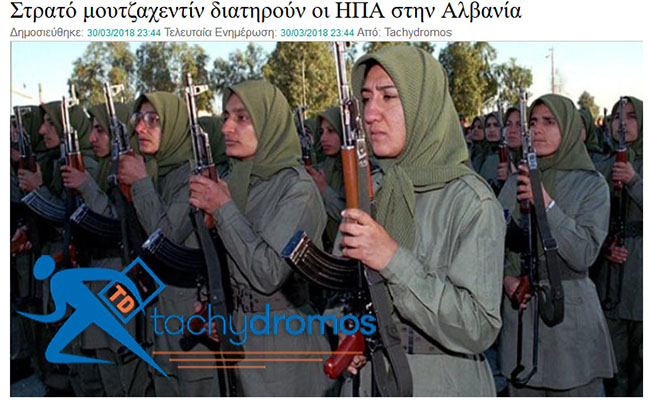
Another internal threat, the Mujahedin-e Khalq (MeK), was openly unhappy over the constitution, which, according to them, did not address their demands. After a humiliating defeat in the March and May 1980 parliamentary elections (no MeK candidates were elected),10 the MeK became increasingly belligerent over their lack of position in the new government, directing their frustration ever more violently towards members of the Islamic Republic Party (IRP), which had won a decisive victory in the elections.

Despite the electoral defeat, the MeK openly backed Iran’s first president, Abolhassan Bani Sadr, however, following his removal from office for incompetency in June 1981, the MeK declared an armed struggle against the standing government. On June 28, 1981 and again on August 30, the MeK carried out terror bombing attacks against the IRP and government leaders. In 1986, the MeK moved its operations to Iraq and aligned itself with Saddam, who backed the terrorist group until being ousted by the U.S. invasion in 2003. To date, the Washington regime views the MeK as a viable means by which to overthrow the legitimate government of Iran.11

Following the student takeover of the U.S. embassy, which was later shown to be a nerve center for CIA espionage in the region,12 U.S. president Carter ordered a desperate mission on April 24, 1980 to invade Iran and free the hostages despite negotiations for their release still being in progress.13 The so-called hostage crisis and the U.S. president’s failed interventionist response provided a perpetual pretext for Washington’s vehemently vindictive view against reestablishing any level of diplomatic relations with the Islamic Republic of Iran. The 444-day crisis, according to sworn testimony by Israeli intelligence agent Ari Ben-Menashe, was a joint effort by the CIA and Mossad to delay the release of the 52 hostages and thereby ensure an electoral victory for Ronald Reagan in the 1980 U.S. presidential race.14

In the midst of the post-revolutionary struggle to establish a fully functioning Islamic government, Iraqi dictator Saddam, with U.S. blessing, attacked the fledgling Islamic Republic on September 22, 1980, imposing a costly 8-year-long war that consumed some 60 to 70 percent of Iran’s national budget, not to mention the suffering of the Iranian people and their sacrifices in defense of Iran and Islam.15 The economic impact of the war on Iran itself was enormous with estimated direct costs in the range of US $600 billion and total cost of US $1 trillion.16 In the course of this U.S.-supported war, chemical agents were used extensively for the first time since the First World War, resulting in the deaths of some 4,700 Iranians in a single attack. The U.S. also provided Saddam with biological agents such as anthrax and E. coli.17

Howard Teicher, director of political-military affairs for the U.S. National Security Council from 1982 to 1987, in an affidavit stated, “CIA Director [William] Casey personally spearheaded the effort to ensure that Iraq had sufficient military weapons, ammunition and vehicles to avoid losing the Iran-Iraq war.” Teicher also testified that U.S. president Reagan had sent a secret message to Saddam advising him that “Iraq should step up its air war and bombing of Iran.” Teicher’s sworn testimony provides strong evidence that the U.S. intent was for Saddam to bomb Iranian cities, thereby unavoidably targeting civilians.18

Albania

Saddam followed Reagan’s advice to the letter by launching eleven SCUD B missiles at Tehran on February 29, 1988. Over the next two weeks, more than 100 of Saddam’s missiles rained down upon the cities of Tehran, Qom and Isfahan along with bombing raids conducted against a total of 37 Iranian cities. Earlier in October 1987 and again in April 1988, the U.S. as part of its overt but undeclared war against the Islamic Republic, attacked Iranian ships and oil platforms under expanded rules of engagement.19 As a result of Washington’s designation of the Persian Gulf as essentially a free-fire zone for Iranian targets, the commander of the USS Vincennes, William C. Rogers, fired two missiles (after twenty-three failed attempts)20 at what he claimed was a military target but in fact was Iran Air Flight 655 carrying 290 civilian passengers from Bandar Abbas to Dubai. For downing the civilian airliner and killing all on board, Rogers was awarded the Legion of Merit “for exceptionally meritorious service” for this appalling atrocity.21

Yet in spite of the near universal support given by the U.S. and its western minions to Saddam, the people of Iran rose up to defend their newly liberated land in what were termed “human wave attacks” in the western press. Giving their lives selflessly in the cause of defending Islam and Iran, these martyrs, whose numbers reached to half a million,22 struck fear in the black heart of Saddam and presented a conundrum to the materialistic west. Ayatollah Mohammad-Taqi Rahbar explains that martyrdom, while clearly understood in the Islamic world, “is incomprehensible and even pointless in materialist and atheistic cultures.”23

The incomprehensibility to most westerners of the spiritual basis of Iran’s Islamic Revolution leads to some interesting “anti-explanations.” Professor of Sociology at the University of North Carolina Charles Kurzman wrote, “After the Iranian Revolution, those who had considered the upheaval unthinkable became preoccupied with understanding how they could have been so mistaken.” After pointing out the shortcomings of the various political, economic, cultural and other explanations, Kurzman notes, “The more I learned about the Iranian Revolution, the more theoretical anomalies I discovered.” Yet this author acknowledges that 55 percent of educated, middle-class Iranians and 71 percent of others he interviewed spoke of Islam as being involved in their decision to participate in the revolution.24

Apparently, for secular-leaning western scholars, Islam cannot be accepted as the basis for an explanation of a successful revolution. For example, even Iranian expatriate scholar Ervand Abrahamian blames the Islamic Revolution on “overwhelming pressures” in Iranian society due to the shah, who “was sitting on such a volcano, having alienated almost every sector of society.”25 Downplaying the role of Islam in Iran’s revolution, Iranian expatriate scholar Asef Bayat insists that there was a “strong secular tendency,” which peaked in the 1970s. Bayat incredulously claims, “In Iran, an Islamic movement was in the making when it was interrupted by the Islamic revolution.”26 Other scholars date the origin of the Islamic movement in Iran to the tobacco crisis of 1890-1891, while Farhang Rejaee, a professor at the Carleton Centre for the Study of Islam in Ottawa, Canada, points to the assassination of Nasr al-Din Shah in 1896.27

The current Islamic movement in Iran had begun on the 15th of Khordad, 1342 (June 5, 1963), predating the Islamic Revolution by some 15 years. In a June 1979 speech marking the anniversary of the 15th of Khordad uprising, Imam Khomeini specifically referred to the Islamic movement and its creation in the mosque network. “Who are they that wish to divert our Islamic movement from Islam?” asked the Imam. “It was the mosques that created this revolution,” he emphasized, adding. “It was the mosques that brought this [Islamic] movement into being.”28 Likewise refuting the theories of the western and westernized scholars, Ayatollah Mohammad-Taqi Rahbar explains, “The secret of success of the Islamic Revolution of Iran also is naught but this: valuing the high ideals of Islam and of the Islamic humanities.” As to the failure of other revolutions, he blames “want of a sufficient depth in its spiritual dimension.” Finally, he affirms, “The revolutionary experience of Iran should indeed become a model for others to emulate.”29
By basing economics and social change on the solid foundation of Islam, Iran has achieved greater progress in many areas, such as reducing poverty, improving health care, eliminating illiteracy, increasing access to education and expanding opportunities for women, than had been the case during the shah’s regime. As a result, despite the unending U.S. hostility against Iran through ruthless imposed wars, covert and overt aggressions, punitive economic sanctions and continuous diplomatic isolation, the Islamic Republic has managed to amass an impressive list of accomplishments. U.S. economic sanctions have had the effect of causing Iran to seek self-sufficiency in a number of areas, including weaponry and other military hardware, food production, steel, paper and paper products, cement, heavy industrial machinery, pharmaceuticals and telecommunications equipment. In particular, the domestic production of armaments has helped to ensure the country’s independence and security, as has the highly developed military strategy of the “fast boat swarm” for naval defense in the Persian Gulf.30

Moreover, in the field of health care, Iran has made laudable strides, increasing life expectancy from 56 years in the 1970s to over 70, and reducing the infant mortality rate from 104 per 1,000 births to 25.31 The Islamic Republic has created, and continuously expanded, a system of hospitals and health clinics, concentrating on areas impacted by economic hardship. The results have been sufficiently impressive for some universities and NGOs in the U.S. state of Mississippi to introduce Iranian-style health care into the impoverished areas of the Mississippi Delta region.32 Rural areas also benefitted from the revolution in other ways besides access to health care. By 2002, rural literacy had risen to 70 percent, each village had an average of two college graduates, and 99 percent of rural households had electricity. In 1976 only ten percent of the rural work force was employed in the industrial, construction and service sectors, whereas 51 percent was employed therein by 1996.33 Land was redistributed among peasants, who formed numerous cooperatives, which assisted in raising prices for agricultural products. Even the poorest of Iranians were able to have at least some level of access to modern consumer goods.31

“The biggest advances in the educational, professional and social standing of women in Iran’s history have come since the revolution,” wrote scholars Hillary Mann and Flynt Leverett.34 After the victory of the Islamic Revolution, female literacy rates skyrocketed from 36 percent in 1976 to 74 percent in 1996, with urban women toping 82 percent.33 Women were provided with the same educational opportunities as men, and were employed in both the public and private sectors. Not only were women allowed to drive (unlike other “Islamic” countries), but also participated in political, commercial and civil activities, as well as in the security sector. Health care in the Islamic Republic included women’s clinics, where progressive family planning and other services were available.35

“This united gathering which took place in Iran, and this great change which happened, must be taken as an example to be followed and never forgotten,” said Imam Khomeini (r) on 7th of Esfand 1359 (26 February 1981).36 Despite that to date, no other Muslim-majority nation has yet to emulate successfully the revolutionary path taken by the valiant people of Iran, the paradigm remains as does the potential for Iran’s leadership to bring about a united Islamic Ummah.

Eric Walberg, Islamic Resistance to Imperialism (Atlanta: Clarity Press, 2015), 277. [↩]
Farhang Rajaee, “Iranian Ideology and Worldview: The Cultural Export of Revolution,” in The Iranian Revolution: Its Global Impact, ed. John L. Esposito (Miami: Florida International University Press, 1990), 66-67. [↩]
Amin Saikal, Iran Rising: The Survival and Future of the Islamic Republic (Princeton: Princeton University Press, 2019), 59-61. [↩] [↩]
John Esposito, “The Iranian Revolution: A Ten-Year Perspective,” in The Iranian Revolution: Its Global Impact, ed. John L. Esposito (Miami: Florida International University Press, 1990), 31, 33. [↩]
Michael Axworthy, Revolutionary Iran: A History of the Islamic Republic (Oxford: Oxford University Press, 2013), 166-168. [↩]
Seyed Hossein Mousavian, Iran and the United States (New York: Bloomsbury, 2014), 36, 65. [↩]
Michael Axworthy, ibid., 176. [↩]
Gary Sick, All Fall Down: America’s Tragic Encounter with Iran (New York: Random House, 1985), 288-289. [↩]
Dan Kovalik, The Plot to Attack Iran (New York: Skyhorse Publishing, 2018), 101. [↩]
Michael Axworthy, ibid., 181. [↩]
Seyed Hossein Mousavian, ibid., 78, 81-82. [↩]
Eric Walberg, ibid., 62. [↩]
Amin Saikal, ibid., 80. [↩]
Dan Kovalik, ibid., 80. [↩]
Amin Saikal, ibid., 82-84. [↩]
Tawfiq Alsaif, Islamic Democracy and its Limits: The Iranian Experience Since 1979 (London: Saqi, 2007), 74. [↩]
Dan Kovalik, ibid., 127. [↩]
Seyed Hossein Mousavian, ibid., 100. [↩]
Gary Sick, “Trial and Error: Reflections on the Iran-Iraq War,” in Iran’s Revolution: The Search for Consensus, ed. R.K. Ramazani (Bloomington: University of Indiana Press, 1990), 116-118. [↩]
Michael Axworthy, ibid., 276. [↩]
Seyed Hossein Mousavian, ibid., 101-102. [↩]
Michael Axworthy, ibid., 293. [↩]
Ayatollah Mohammad-Taqi Rahbar, Spiritual Dimensions of the Islamic Revolution of Iran, trans. Blake Archer Williams (Lion of Najaf Publishers, 2017), 84. [↩]
Charles Kurzman, The Unthinkable Revolution in Iran (Cambridge: Harvard University Press, 2005), 4-8, 184. [↩]
Ervand Abrahamian, A History of Modern Iran (Cambridge: Cambridge University Press, 2008), 155. [↩]
Asef Bayat, Making Islam Democratic (Stanford: Stanford University Press, 2007), 31-32. [↩]
Farhang Rejaee, Islam and Modernism: The Changing Discourse in Iran (Austin: University of Texas Press, 2007), 19-20. [↩]
Said Amir Arjomand, The Turban for the Crown: The Islamic Revolution in Iran (New York: Oxford University Press, 1988), 137. [↩]
Ayatollah Mohammad-Taqi Rahbar, ibid., 98. [↩]
Flynt Leverett and Hillary Mann Leverett, Going to Tehran (New York: Metropolitan Books, 2013), 42, 80, 188-189. [↩]
Eric Walberg, ibid., 237. [↩] [↩]
Flynt Leverett and Hillary Mann Leverett, ibid., 191. [↩]
Asef Bayat, ibid., 103. [↩] [↩]
Flynt Leverett and Hillary Mann Leverett, ibid., 193. [↩]
Amin Saikal, ibid., 89-90. [↩]
Imam Khomeini, Fundamentals of the Islamic Revolution, trans. M.J. Khalili and S. Manafi Anari (Tehran: Institute for the Compilation and Publication of Imam Khomeini’s Works, 2009), 168. [↩]

by Yuram Abdullah Weiler, Dissident Voice
February 9, 2020 0 comments
FacebookTwitterPinterestWhatsappTelegramSkypeEmail
Twitter new Policy
Mujahedin Khalq; A proxy force

will Twitter remove the MEK Bots disinfo, according to the new policy?

Twitter will remove or label “manipulated images and videos” on its platform in a bid to control disinfo, it has announced – though its new policy reads more like it’s setting itself up as a clairvoyant arbiter of truth.
“Synthetic or manipulated media that are likely to cause harm” will be removed – or at least plastered with warning labels – under new rules announced by Twitter on Tuesday.

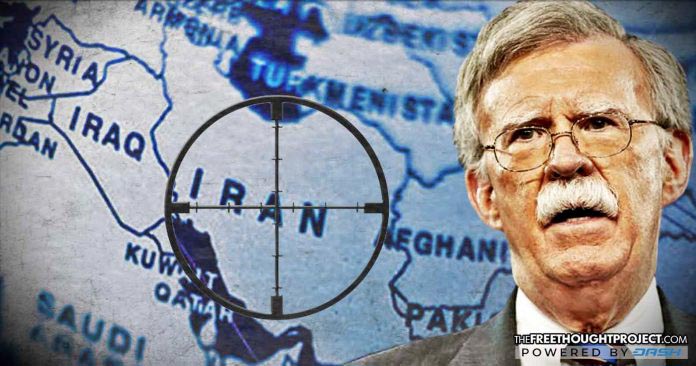
John Bolton

Citing overwhelming demand for stricter content regulations, perhaps in a preemptive attempt to excuse what some have already interpreted as overreach, the microblogging platform laid out a lengthy list of criteria that would supposedly be considered before removing or labeling a tweet.
Media is considered “synthetic or manipulated” if it is edited to significantly change its meaning, sequence, or other attributes, and of course ‘deepfakes’ are right out. But “any visual or auditory information… that has been added or removed,” including subtitles or audio overdubbing, can also get content flagged. Technically, this creates a loophole that makes even content that has simply been translated from another language a potential target.

A tweet may be labeled as “deceptive” if the context in which it is shared “could result in confusion or misunderstanding” or “suggests a deliberate intent to deceive people.” No one can control another user’s (mis)interpretation of their tweet – some people are just easily confused – and similar rules have already been used to target politically-charged satire and memes. No matter how clearly labeled, one man’s joke is inevitably declared another man’s fake news. But a deliberate intent to deceive people? How does Twitter propose to determine who is telling an innocent joke and who is maliciously trolling?

Making the viewer’s sense of humor the responsibility of the poster is likely to have a profoundly chilling effect on memes and other political humor, already besieged by ‘fact-checkers’ sinking their fangs into everything from the parody site Babylon Bee to the obviously-photoshopped image of US President Donald Trump giving a Medal of Honor to a terrorist-killing military dog. With the Pentagon itself taking aim at “polarizing viral content” – i.e., political memes – and so-called “malicious intent” in a sinister project announced in September, Twitter may have unwittingly volunteered itself as the first battlefield in the War on Memes.
While tweets containing synthetic or deceptive content will merely get slapped with a warning label when the new rules take effect on March 5, content “likely to impact public safety or cause serious harm” is singled out for removal. This seemingly-uncontroversial rule becomes menacingly vague on closer examination, listing “targeted content that includes tropes, epithets, or material that aims to silence someone” and “threats to the privacy or ability of a person or group to freely express themselves” among the categories of banned speech.
While this would seem to outlaw the tactics of groups like Sleeping Giants whose literal goal is to get those it unilaterally deems ‘fascists’ deplatformed by ginning up outrage mobs against them, Twitter is unlikely to defend the victims of such groups, if pastbehavior is any indication.

Which begs the question: what constitutes ‘serious harm’, or for that matter ‘public safety’, and who determines what is likely to result in it? Twitter has allowed faux-Iranian bots operated by the anti-Tehran Mojahedin-e Khalq (MEK) cult to run rampant on the platform, demanding an American invasion of “their” country – some of which have been retweeted by Trump himself as “proof” the Iranian people want regime change.

The new rules leave a wide swath of content open to interpretation, giving Twitter carte blanche to determine the intent and likely repercussions of any given tweet. While no one wants to be flooded with deepfakes or other truly deceptive content, especially during an election season, in practice these rules have been applied unevenly to silence political and social viewpoints that diverge from ‘woke’ centrist orthodoxy. Giving Twitter the power to determine both truth and intention is conferring an authority the platform has already shown it cannot handle responsibly.

By Helen Buyniski
Helen Buyniski is an American journalist and political commentator at RT.

February 8, 2020 0 comments
FacebookTwitterPinterestWhatsappTelegramSkypeEmail
Nejat News Letter
Nejat Publications

Nejat Newsletter – No.68

Inside This Issue:

– Where is Albania heading to?
Since Soleimani’s assassination, Albania has been on overdrive to prove its ass licking credentials to Pompeo; left, right and center are praising Pompeo and ranting against Iran. To date, Iran has ignored this. The more silent Iran is…blank
– MEK Overt and Covert Server of US Interests
For those who have been involved with the Mujahedin Khalq Organization (the MKO/ MEK/ PMOI/ Cult of Rajavi) or have studied its background from the early days of its foundation, it is clear that the group was founded as an anti-Imperialist movement against the Shah of Iran, in the 1960s.
“Anti-capitalist, anti-imperialist and anti-American, MEK fighters killed scores of…
– Inside Albania
As far as MEK is concerned, last week they have another three deaths. They have already gone to plan B – just die. Former MEK who live in Albania have written an Open Letter to…
– What is the problem with admin. backing down antiMEK memo?
At lightning speed, the State Department overturns an order prohibiting US diplomats from meeting controversial Iranian dissident groups – including a close friend with Trump World allies and previously designated a terrorist group, the Mujahideen-e-Khalq (MEK) ). The initial memo, lit by a career State Department employee, angered…
– Hillary de-listed the MEK, to exploit it in US-led destabilization
On January 3, 2020, the plane of Qasem Soleimani, major general of the Islamic Revolutionary Guard Corps (IRGC) and commander of its elite Quds Force, arrived at Baghdad International Airport. At the same time, the US MQ-9 Reaper, a prime assassination..
– Pompeo Flip-Flop
Pompeo’s flip flop over contact with militant Iranian exile and opposition groups was reported in various media. After the first directive was made public, James M. Dorsey, Euro-Asia Times concluded that “Mr. Pompeo’s directive is unlikely to persuade Iran that Washington has had a change of heart. Indeed, it hasn’t. Mr. Trump maintains his campaign of..
– NCRI MEK TERROR GROUP PAID VOX MPS SALARIES
… The National Council of Resistance of Iran (NCRI) had an armed wing that was on the United States’ list of terrorist organizations until 2012, a year before the group funded Spain’s ultranationalist party. Founded in Tehran in 1965 by three university students, the organization’s military legion, the Mojahedin-e Khalq (MEK),…

To download the PDF file click here

February 6, 2020 0 comments
FacebookTwitterPinterestWhatsappTelegramSkypeEmail
Mr. JOSEP BORREL, The Esteemed High Representative of EU for Foreign Affairs
European Union

Nejat Families pen letter to the High Representative of EU for Foreign Affairs

To: Mr. JOSEP BORREL, The Esteemed High Representative of EU for Foreign Affairs

Respectfully,
We, as family members of the captives held by the so called Mujahedin Organization, have for years been deprived from visiting our children or having contact with them due to the restrictive measures taken by Rajavi’s sect, in clear violation of human rights. In the period from 2009 to 2012 we made hard efforts until we arranged for being physically present alongside the notorious Ashraf & Liberty Camps, hoping to see our children. But to our misfortune, we unexpectedly faced the beastly and inhuman behaviour of the authorities of Rajavi’s Sect who did not fail to take any insulting measures even by throwing stones at us and called us with names of which only Massoud & Maryam Rajavi were deserving and our request for visiting our children was finally left without any response.

Your excellency,
The Sect authorities have even betrayed Iraqi people, after living in Iraq for almost 40 years and were involved in Massacre of thousands of Kurds in this country. The sect has a record of evil deeds like terrorizing and killing of 17000 civilians including so many women and children. They are no less evil than the ISIS; they are even more cruel, irrational and menacing. They explicitly and officially threaten both the family members insisting on visiting their children and former members who have officially abandoned the sect or those members who after passing 2 to 4 decades of their lives in this organization, decide to abandon it to have an ordinary and tranquil life. All these people have been threatened with death.
As the family members of the individuals now held in captive by the sect, we do not fear these threats.

MKO members in Albania - Camp Ashraf 3

Your excellency
Mujahedin is a sect who has brainwashed our children in a truly isolated environment far from modern world. Are the human rights organizations and institutions really unaware of this extent of human rights violation by the sect? We write this so that your excellency, as the high representative for foreign affairs in the European Union where human rights is considered attentively, to assist us. We are looking for the most basic right that a human must have. We are only seeking to visit our children and close relatives. We have so far been deprived of the right and are anxious about their health. All relatives and family members here are expectant and await the kind assistance of the highest representative of EU in foreign affairs and of the international communities. Any cooperation in this regard shall be appreciated in advance. We anxiously await your kind assistance.

With Best Regards
Relatives & Family Members of MEK Cult Captives

February 5, 2020 0 comments
FacebookTwitterPinterestWhatsappTelegramSkypeEmail
blank
Mujahedin Khalq Organization as a terrorist group

El Pais report on MEK paid salaries for the leaders of Vox Party

The anti-Iran terrorist group of Mojahedin-e Khalq (MEK) has bankrolled the foundation of the Spanish far-right Vox Party and paid salaries to some of its top members, according to a report.

The leading Spanish newspaper El Pais reported on Tuesday that two lawmakers for the Vox Party received party salaries from the MEK.

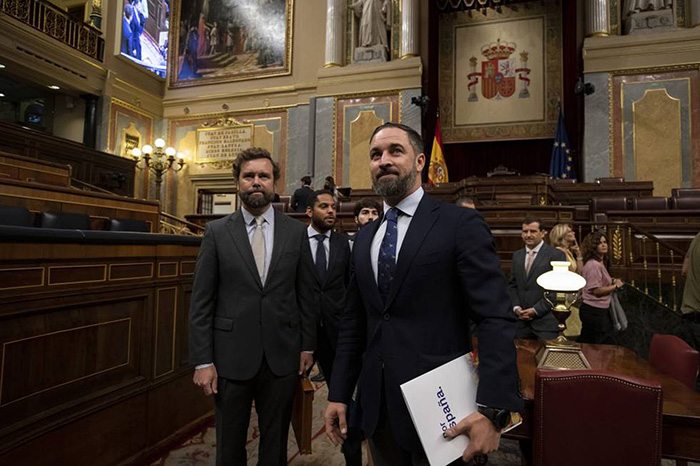
“Two lawmakers for Spain’s far-right Vox, Santiago Abascal and Ivan Espinosa de los Monteros, received party salaries for eight months that drew on funds from donations by the National Council of Resistance of Iran (NCRI),” El Pais quoted sources as saying, referring to the MEK by its other name.

According to the paper, both leaders received around €65,000 in total. The MEK was on the United States’ list of terrorist organizations until 2012, a year before the group funded Spain’s ultra-nationalist party.

“Vox, which is now the third-largest force inside the Spanish parliament with 52 lawmakers, was created in 2013 with around €1 million donated by the NCRI,” the paper said.

“On December 17 of that year, the day that it was registered as a new party on the Interior Ministry’s records, Vox received its first transfer from abroad by sympathizers of the Iranian exiles. The transfer was in the amount of €1,156.22,” it said.

The report added that a month after that, then-secretary general Santiago Abascal and senior official Ivan Espinosa de los Monteros began earning salaries paid for by the opponents of the Islamic Republic.

“The money reached Vox thanks to the mediation of Alejo Vidal-Quadras, the party’s original founder and first president. Abascal’s monthly salary was fixed at net €3,570 (€5,000 before taxes), which he received between February and October 2014, for a total of €40,000.”

“Espinosa de los Monteros received a monthly net amount of €2,300 (around €3,083 before taxes), according to two former party officials. Espinosa de los Monteros, who is now the spokesperson for Vox in Congress, earned this salary during the same period of time as Abascal, but invoiced the payments through a company,” it added.

The MEK was established in the 1960s to express a mixture of Marxism and Islamism. It launched bombing campaigns against the Shah, continuing after the 1979 Islamic Revolution, against the Islamic Republic. Iran accuses the group of being responsible for 17,000 deaths.

Based in Iraq at the time, MEK members were armed by Saddam Hussein to fight against Iran during a war which lasted for 8 years.

In 2012, the U.S. State Department removed the MEK from its list of designated terrorist organizations under intense lobbying by groups associated to Saudi Arabia and other regimes opposed to Iran.

A few years ago, MEK members were relocated from their Camp Ashraf in Iraq’s Diyala Province to Camp Hurriyet (Camp Liberty), a former U.S. military base in Baghdad, and were later sent to Albania.

February 5, 2020 0 comments
FacebookTwitterPinterestWhatsappTelegramSkypeEmail
Rudy Giuliani
Mujahedin Khalq; A proxy force

Rudy Giuliani is working with Iranian ‘cult’ MEK :MSNBC host

President Donald Trump’s attorney Rudy Giuliani has been accused of conducting his own “shadow diplomacy” with both Ukraine and Venezuela, despite not being a registered foreign agent. But as MSNBC host Chris Hayes pointed out, it’s another of Giuliani’s clients that could get him in trouble now.

“One reason the threat of catastrophe in the Middle East remains present, at the moment, is because the president is surrounded by people who have been quite openly pushing for a full military confrontation with Iran for a while,” said Hayes.

One, Hayes said, is his most infamous adviser: Mr. Giuliani.
Raw Story is now carbon balanced. Click to learn how you can offset your carbon footprint.

While Giuliani hasn’t been appointed to any government office or confirmed by the U.S. Senate, somehow he’s running his own government projects.

“Aside from his various meetings with various Ukrainian figures to manufacturer dirt on Joe Biden, has represented Turkish interests and then pushed for policies favorable to President Erdoğan,” Hayes continued. “And he has a longstanding relationship with a fringe Iranian dissident group known as the MEK a group rooted in Marxism and Islamism that’s often described as a cult and his primary goal is to overthrow the Iranian regime.”

The MEK is currently headquartered in Albania and most of the members are exiles from the country.

“They have paid tons of money to American political figures to curry favor, including John Bolton, Howard Dean, Ed Rendell and, of course, Rudy Giuliani. When contacted by the Daily Beast on Monday, Giuliani cited the MEK as a reason he supported the assassination of Qassem Suleimani saying he was, ‘Directly responsible for killing some of my MEK people.’ This would be a little like favoring action against the U.S. because you had friends in the Branch Davidians.”

Hayes said that the group is so “toxic” that Secretary of State Mike Pompeo sent out a cable on Tuesday to all U.S. diplomatic posts telling them not to meet with Giuliani’s client.

Giuliani, however, doesn’t work for the State Department, “so he can do whatever he wants,” Hayes said. “And we all get to deal with the consequences.”

By Sarah K. Burris, Raw Story

February 2, 2020 0 comments
FacebookTwitterPinterestWhatsappTelegramSkypeEmail
MEK pais vox party of spain.why?
Mujahedin Khalq Organization as a terrorist group

MEK Terrorists paid salaries for two leaders of Spain’s far-right Vox

Donations from the National Council of Resistance of Iran also funded other party expenses such as rent and computer equipment in 2013 and 2014

Two lawmakers for Spain’s far-right Vox, Santiago Abascal and Iván Espinosa de los Monteros, received party salaries for eight months that drew on funds from donations by the National Council of Resistance of Iran (NCRI), sources have told EL PAÍS.
Both leaders received around €65,000 in total. The NCRI had an armed wing that was on the United States’ list of terrorist organizations until 2012, a year before the group funded Spain’s ultra-nationalist party.

Vox, which is now the third-largest force inside the Spanish parliament with 52 lawmakers, was created in 2013 with around €1 million donated by the NCRI. On December 17 of that year, the day that it was registered as a new party on the Interior Ministry’s records, Vox received its first transfer from abroad by sympathizers of the Iranian exiles. The transfer was in the amount of €1,156.22.

A month after that, then-secretary general Santiago Abascal and senior official Iván Espinosa de los Monteros began earning salaries paid for by the opponents of the Iranian regime. The money reached Vox thanks to the mediation of Alejo Vidal-Quadras, the party’s original founder and first president. Abascal’s monthly salary was fixed at net €3,570 (€5,000 before taxes), which he received between February and October 2014, for a total of €40,000.
Espinosa de los Monteros received a monthly net amount of €2,300 (around €3,083 before taxes), according to two former party officials. Espinosa de los Monteros, who is now the spokesperson for Vox in Congress, earned this salary during the same period of time as Abascal, but invoiced the payments through a company. Another Vox lawmaker, Javier Ortega Smith, turned down the salary.
There are only two donations that did not come from the Iranian resistance movement, both under €2,000
The monthly amounts were determined at a breakfast meeting at the home of Espinosa de los Monteros and ratified at Vox’s Madrid headquarters. Both Abascal and Espinosa de los Monteros have declined requests for comment from this newspaper.

The gross €65,000 that both lawmakers earned for eight months came from a common party fund fed by 141 international money transfers made from various countries by NCRI sympathizers, according to a secret internal spreadsheet revealed by this newspaper last year.

Almost €1 million
In total, the ultra-nationalist party received €971,890.56 between December 2013 and April 2014. The money funded the 2014 European election campaign as well as various party expenses ranging from the rent on the party’s first headquarters on Diego de León street in Madrid to furniture and computer equipment.
In order to raise this amount, the NCRI sent out 35 collectors around the world: money was obtained from around a thousand supporters in cities and neighborhoods of around 15 countries, including Germany, Italy, Switzerland, Canada and the United States. Most of these contributions were anonymous, and the donors’ identities did not show up in the records of the bank account that Vox opened at a Catalan lender. This information did not appear in the party’s internal accounts, either. But the accounts do show the names of the 141 individuals who transferred the money.

A group under scrutiny
The National Council of Resistance of Iran (NCRI) had an armed wing that was on the United States’ list of terrorist organizations until 2012, a year before the group funded Spain’s ultra-nationalist party.
Founded in Tehran in 1965 by three university students, the organization’s military legion, the Mojahedin-e Khalq (MEK), underwent a lengthy journey in the international courts between 2003 and 2014 before it was taken off the European Union and United States’ blacklists. Britain stopped considering it a terrorist group in 2008 following a procedure initiated a year earlier by 35 lawmakers. A November 2018 investigation by The Guardian linked the decision to delist MEK to a”lavish lobbying campaign”to secure the support of global leaders.
Every year, the NCRI organizes a large event in Paris where Alejo Vidal-Quadras has been a guest speaker on more than 15 occasions. Other guests have included Spain’s former prime ministers José María Aznar, of the Popular Party (PP), and José Luis Rodríguez Zapatero, of the Socialist Party (PSOE).
In the records of the account that Vox created to help fund the campaign for the May 2014 European elections, there are only two donations that did not come from the Iranian resistance movement, both under €2,000. The foreign funds stopped coming in before the election was held.

Abascal and Espinosa de los Monteros were aware that their salaries were being funded by the NCRI. In January 2019, when EL PAÍS first revealed this information, Vidal-Quadras stated that “Abascal was aware of everything, I explained to him my relationship with the NCRI, and I told him that they would fund us. He was delighted. He didn’t put up any opposition.”
Vidal-Quadras’s relationship with the Iranian exiles goes back to his days as member of the European Parliament (1999-2014), when he received a delegation from this group in Brussels. Vox’s first president left the party in 2015 due to differences with Abascal after he failed to secure a seat in the European chamber.
When Abascal began to earn a salary from Vox, he had no other income. A few months earlier he had given up party membership in the Popular Party (PP) and lost his job as managing director of the Madrid Foundation for Patronage and Social Sponsorship when the regional agency was eliminated. Before that, former Madrid premier Esperanza Aguirre had placed him at the helm of the Data Protection Agency.
During his period in the Basque Country, from where he hails, Abascal served as a public official with the PP: as a councilor in the town of Llodio, as a member of the provincial parliament of Álava, and as an advisor to the city of Vitoria. His eight months on a Vox salary were the first time that Abascal earned money that did not come from public coffers. During these eight months, Espinosa de los Monteros was already involved in private business activities, and the fact that he demanded a party salary caused “surprise” among Vox members.
investigacion@elpais.es
english.elpais.com

February 1, 2020 0 comments
FacebookTwitterPinterestWhatsappTelegramSkypeEmail
blank
Mujahedin Khalq; A proxy force

What is the problem with admin. backing down anti-MEK memo?

At lightning speed, the State Department overturns an order prohibiting US diplomats from meeting controversial Iranian dissident groups – including a close friend with Trump World allies and previously designated a terrorist group, the Mujahideen-e-Khalq (MEK) ). The initial memo, lit by a career State Department employee, angered Iranian congressional hawks. And the Ministry’s decision to modify its guidelines encouraged them.

The first memo, first reported by Bloomberg and reviewed by The Daily Beast, included sober warnings against meeting with the PMOI, pointing to its terrorist past and claiming that most everyday Iranians have bad news. group opinion. The memo also warned of interactions with the Democratic Party of Iranian Kurdistan, highlighting its attacks on Iranian military targets; and ordered diplomats to obtain permission from the headquarters of the State Department before meeting with members of an Azeri separatist group. Secretary of State Mike Pompeo sent the memo on January 7 and warned that meetings with these groups could undermine American efforts to reach an agreement with Tehran. Joey Hood, a senior State Department official, approved the note, according to The Daily Beast document reviewed.

But now the note is canceled. The Daily Beast obtained a cable, sent to American diplomats on Sunday evening, replacing the week-old directive.

“The posts should welcome the opportunities to meet and learn from members of the Iranian diaspora community,” said the cable, which explicitly noted that it “replaces” the January 7 missive. “After 40 years of repression and violence at the hands of the Ayatollahs, the pride of the Iranian people for their history has not diminished or their determination to celebrate it in the face of the abuses of the Islamic Republic.”

The cable went on to say that American diplomats should consider hosting members of the diaspora for “Persian cultural events”, while noting that “not all of the interests and objectives of Iranian opposition groups align with American political priorities ”.

“Although it is up to the Iranian people to determine the future course of their nation, the United States will continue to support them and echo their calls for justice and accountability,” said the cable.

Although the new note does not mention PMOI or other groups, it said diplomats should simply “exercise good judgment when receiving invitations or meet with opposition groups” and should raise questions and concerns with senior state officials – an apparent revocation of the order that they only hold such meetings with the express approval of Foggy Bottom. State Department spokespersons did not respond to multiple requests for comment on the cable.

Trump’s lawyer Rudy Giuliani – whom the MEK hired to help them withdraw from the US list of foreign terrorist groups and who recently called the group “my people MEK” – welcomed the overthrow. “(The PMOI) is very much in favor of a free Iraq. It is headed by a great woman who has pledged to end the repression of women in a non-nuclear Iran, “the president’s personal attorney told The Daily Beast. “They were of great help to us during (the invasion) of Iraq and are supported by a very non-partisan group of former and former American officials.”

The PMOI is close to several other hawkish Trumpworld figures, including retired general Jack Keane and former national security adviser John Bolton. Former Attorney General Michael Mukasey, a longtime friend of Giuliani and a former legal partner, is a volunteer advisor to the group’s political arm.

“They undermine the president’s policy when no one is watching.”

– Hill collaborator

The group has a controversial past. For, among other things, its alleged role in the assassination of three US military officers and three other civilian contractors, the PMOI found itself on the official list of foreign terrorist organizations of the United States government. He was also charged with acting as the death squad for the late Iraqi dictator Saddam Hussein. A 2009 article published by Rand Corporation described “the PMOI’s almost religious devotion to (its leaders), public self-deprecation sessions, compulsory divorce, celibacy, forced separation from family and friends, and segregation sexual. ” The group and its allies vehemently deny all of these costs.

The rapid return came after the initial memo from the State Department angered the hawks of the Iranian Congress. One noted that the memo had been sent to diplomats just days after an American strike killed Soleimani, and that senior State Department politicians were likely preparing for reprisals from Tehran.

“This is a fairly large figure for the state,” said Christian Wiman, a former senior adviser to the department under Presidents Trump and George W. Bush. “Even if it is formulated diplomatically, it is not so common to have something published and to cancel it almost immediately. And I think it just shows that the original declaration was something that had been done at a lower level that did not have the support or buy-in from senior politicians. “

It was the second time in recent months that Hood, the career official who put the memo on the green, has angered Hill’s hawks. During a testimony to Congress on December 4, he had a tense exchange with Senator Ted Cruz on the financing of the Lebanese government and whether this money had gone to Hezbollah. A transcript of the hearing indicates that Hood laughed in response to a question from Cruz; the episode left the nerves raw.

“They undermine the president’s policy when no one is watching,” said a Hill staff member for a member who advocates a tighter policy toward Iran.

Others, meanwhile, highlighted the overthrow as the Trump administration’s last struggle to clearly explain its position on the conflict with Iran. A congressional staff member who worked on Iranian politics and who favored the overthrow noted that it comes from the fact that the administration sent mixed messages on the legal basis of the Soleimani strike and the number of American embassies threatened. by Iranian Allied Shia militias.

“I think there is a lot of fog of war-like messages that has come out,” said the staff member, who spoke anonymously to discuss the sensitive issue. “I think there is still a lot of fog of war.”

The overthrow of the State Department, as reflected in the cable, comes as Pompeo and other U.S. officials, including Defense Secretary Mark Esper, find it difficult to articulate the U.S. next steps after the murder of Soleimani and reconcile their accounts of the information that sparked this strike. .

For years, the Trump administration has maintained a “maximum pressure” campaign, imposing crippling sanctions on the Iranian economy in an attempt to reopen talks with Tehran on a nuclear deal. Since the Soleimani strike, Trump administration officials have struggled to define the administration’s Iranian policy. Some have said that the maximum pressure campaign still includes a military option. Others say that the United States has long communicated to the Iranians that if Tehran killed Americans, there would be military consequences.

“WE. The diplomats should not meet with the PMOI. They represent a dangerous cult. We must avoid all the errors of the war in Iraq, including being deceived by an alleged diaspora opposition unrelated to it.”

– former Obama administration official, Jarret Blanc

Now it seems that the State Department is changing its mind on how to approach Iran diplomatically after the Soleimani strike. In the hours immediately following the assassination, US officials in an attempt to defuse described the coup as a warning and insisted that America was still interested in working with Iran on conversations on the nuclear deal. The United States Special Representative for Iran, Brian Hook, appeared on BBC World, saying that the murder of Soleimani was intended to “advance the cause of peace”. Sunday’s cable, meanwhile, will encourage the Iranian hawks – and frustrate the elders of the Obama administration.

“There are at least two problems with this reversal,” said Jarrett Blanc, a former Obama administration official who worked on Iranian politics.

“The first is that the policy is wrong. American diplomats should not meet with MEK or its affiliates. They represent a dangerous cult. We must avoid all the mistakes of the Iraq war, including being deceived by so-called diaspora opposition unrelated to it. The second problem is that it reflects the utter incompetence and chaos of this administration’s policy making – send out an instruction and less than a week later cancel it. They just don’t know what they are doing. “

For years in the United States, PMOI lobbyists and defenders have waged an aggressive, sustained and successful campaign to have the group removed from the State Department’s list of terrorists, a decision that was finalized at the time of Obama. Donors to the organization also include Democrats such as retired General Wesley Clark and Howard Dean, as well as attorneys Victoria Toensing and Joseph di Genova, two of Trump’s informal legal advisers.

By Pauline Ewell – mashviral.com

January 26, 2020 0 comments
FacebookTwitterPinterestWhatsappTelegramSkypeEmail
blank
Mujahedin Khalq; A proxy force

“Soleimani Ally”Shot Dead By Masked Assassins On Motorcycle

An elite Islamic Revolutionary Guard Corps (IRGC) commander has been shot dead by masked assailants in front of his house in southwestern Iran. Crucially, he was a mid-range to possibly top commander of the IRGC’s hardline domestic wing, the Basij militia, and a close ally of recently assassinated Quds Force chief Qassem Soleimani, reports state news IRNA on Wednesday.
The details clearly suggest that it was an assassination — at this point by an unknown entity or group — given two men riding a motorcycle drove by and essentially executed him in the street.
Reuters has described the slain Basij militia commander, Abdolhossein Mojaddami, as”an ally of Qassem Soleimani”— who was himself assassinated by US drone strike on January 3rd.
US media wing Radio Farda describes: Abdol-Hossein Majdami Head of Basij militia in Darkhoein rural district of Shadegan killed Jan. 22nd 2020.
“IRNA said that Abdolhossein Mojaddami, a Basij commander in the city of Darkhovin in the southwestern province of Khuzestan, was shot on Tuesday in front of his home by two men riding a motorcycle,”Reuters reports based on official Iranian state media quotes.”There was no immediate claim of responsibility for the attack, IRNA said.”
The Associated Press added a few further limited details as follows:
Two gunmen on a motorcycle, armed with an assault rifle and a hunting rifle, ambushed Mojaddami, IRNA reported. Other Iranian media said the gunmen’s faces were covered with masks and that four shots were fired.
During sporadic protests going back to November, when unrest was fiercest inside Iran following a dramatic government gas subsidy cut — which saw economic protests give way to broader anti-regime mass gatherings — hundreds were reported gunned down by Basij militia working in tandem with police.
Tehran authorities defended security services’ use of deadly force, claiming”rioters”were attacking banks, oil facilities, and government buildings.
Interestingly, the Khuzestan region witnessed severe unrest as protesters clashed with police in November, and has since seen sporadic anti-government activity. It’s also considered one of the key oil-producing regions of the country.

Of course, this latest killing also brings up the possibility of a foreign or external intelligence agency operation, though it remains speculation. One likely candidate alleged to enjoy US and Israeli covert backing is Mujahideen e Khalq (MEK), considered by Iran and many other countries as an active terrorist organization. Groups in Iran linked to the MEK have been previously known to be involved in political assassinations.
Essentially a paramilitary cult devoted to overthrowing the Iranian government, the MEK is under the tight control and leadership of the charismatic opposition leader Maryam Rajavi, and is suspected of previously conducting brazen targeted killings of high level Iranian figures, especially nuclear scientists and engineers for years, likely at the bidding of foreign intelligence services. Until a few years ago the MEK was a designated terror group by the US State Department, though delisted under the Obama administration.

by Tyler Durden – Zerohedge.com

January 26, 2020 0 comments
FacebookTwitterPinterestWhatsappTelegramSkypeEmail
weekly digest
Iran Interlink Weekly Digest

Iran Interlink Weekly Digest – 267

++ Since Soleimani’s assassination Albania has been on overdrive to prove its ass licking credentials to Pompeo; left, right and center are praising Pompeo and ranting against Iran. To date, Iran has ignored this. The more silent Iran is the more Albania is pushed by Pompeo – from ordering the expulsion of two Iranian diplomats, to the point of placing ads in various media, arresting former MEK members and closing the private school which was funded by Iran. In the midst of this MEK is always there, as though Iran is so bothered about their existence in Albania. The Americans use MEK there to provoke Iran, but Iran doesn’t react. In Farsi this is a well-known scenario. Everyone knows what is happening. For the MEK it is a dream come true. This is what they have asked from the CIA before – to be able to silence ex members. Some writers have exposed dealing between the MEK and the CIA which mean that MEK have agreed to obey the order to leave Europe because this would happen anyway. In exchange, the CIA promises to make Albania safe for MEK to do what they want. According to this deal, MEK will rule Albania, not Rama. MEK will have the last word, not the government. Writers over last two weeks remind us that Saddam attacked Iran on the order of America. It was America that backed Saddam, who hosted the MEK. But this is something that Albania cannot replicate. The country is not big enough. The maximum that can be achieved is a military base like Israel. Albania is not capable of doing anything and the Americans are wasting their time.

++ As far as MEK is concerned, last week they have another three deaths. They have already gone to plan B – just die.

++ Rajavi jumped up trying to pretend that he’s crying for the airplane victims. This has attracted a very bad backlash, even among those close to MEK. Critics point out that for years Rajavi was giving directions for the Iraqi military to bombard civilians in Iran. Rajavi even praised America for hitting the Iranian Air passenger Flight 655 in 1988. ‘With this history’, they say, ‘you have nothing to say’.

In English:

++ Former MEK who live in Albania have written an Open Letter to the Minister of Justice, Etilda Gjonaj, concerning the detention of Ehsan Bidi who is being held without access to a lawyer. Bidi, who has a ten-year residence permit, is being threatened with deportation. The letter asks for justice to be served so that he is freed.

++ Pompeo’s flip flop over contact with militant Iranian exile and opposition groups was reported in various media. After the first directive was made public, James M. Dorsey, Euro-Asia Times concluded that “Mr. Pompeo’s directive is unlikely to persuade Iran that Washington has had a change of heart. Indeed, it hasn’t. Mr. Trump maintains his campaign of maximum pressure and this week imposed additional sanctions on Iran.” After the directive was overturned, The Daily Beast piece summed up the situation by quoting Jarrett Blanc, a former Obama administration official who worked on Iran policy: “There are at least two problems with this reversal. The first is that the policy is wrong. U.S. diplomats should not be meeting with MEK or its affiliates. They represent a dangerous cult. We should avoid all the mistakes of the Iraq war including being hoodwinked by purported diaspora opposition with no links at home. The second problem is that it reflects the total incompetence and chaos of this administration’s policy making —to send out an instruction and less than a week later countermand it. They just don’t know what they are doing.”

++ As Pompeo flip flopped over contact with MEK, a significant amount of commentary focused on the MEK in Albania and that country’s relationship with America and Iran. Along with the UK, Israel and Saudi Arabia, Prime Minister Rama came out strongly in support for the illegal assassination of general Qassem Soleimani. But Rama confessed that although Albania had accepted to host the MEK as a humanitarian gesture, the group now posed a national security issue. Elis Gjevori for TRT World reported in detail the problems caused by the MEK presence in that country. Dr Olsi Jazexhi, an Albanian academic and expert who has been tracking MEK activities in Albania, said “The reason for the MEK being brought to Albania is the general ignorance of Albanian politicians who do not understand the danger of international terrorism and the implications that this terrorism has on nation-states.” Adding, “MEK with its paramilitary camps that they have in Manza has created a state within a state.” The article concludes that “MEK actions in an impoverished country like Albania, which is still struggling to emerge from a communist dictatorship, doesn’t bode well for its long-term stability or rule of law. Iraq has become a battleground of influence between the US and Iran, a faraway conflict for many Albanians.”

++ Several pieces also focused on MEK’s role in online propaganda with the enslaved members in Camp Ashraf 3 used for cyber activity. In Mother Jones, Daniel Moattar interviewed Peyman Jafari, researcher and historian at Princeton University’s Center for Iran Persian Gulf Studies. Jafari mentioned the disinfo campaigns which emanate from Iran and the US. “Trump was bragging about his tweet in Persian being the most retweeted Persian-language tweet. But much of that retweeting happens by these bots, and through these online activist cyber armies like the MKO. Their activism, now, is basically tweeting. They have these halls of aging activists sitting behind computers and sending out tweets all day long… When Trump tweeted in Persian, a lot of Iranians’ reaction was just, ‘Shut up. You have instituted a travel ban. You have targeted our cultural sites. You have been sanctioning us.’ People are aware of that.”

++ Deutsche Welle reported on Albania’s involvement in the standoff between the US and Iran. But reporting MEK spokesman Behzad Safari crying wolf and Rama cringeworthily comparing MEK with persecuted Jews in WW2 does not have the effect they hope for. Instead, placing Albania in the crosshairs of Iran means that hosting the MEK is a disaster for the Albanian people. Mazda Parsi writing for Nejat Society which helps former MEK to rehabilitate, warns that the “Albanian government is definitely gaining advantages by offering safe haven to the MEK but they should be absolutely warned that a terrorist cult-like establishment like the MEK will come back to haunt their country someday. This is a serious warning.”
Jan. 24 , 2020

January 25, 2020 0 comments
FacebookTwitterPinterestWhatsappTelegramSkypeEmail
Newer Posts
Older Posts

Recent Posts

  • The black box of the torture camps of the MEK

    December 24, 2025
  • Pregnancy was taboo in the MEK

    December 22, 2025
  • MEPs who lack awareness about the MEK’s nature

    December 20, 2025
  • Why did Massoud Rajavi enforce divorces in the MEK?

    December 15, 2025
  • Massoud Rajavi and widespread sexual abuse of female members

    December 10, 2025
  • Facebook
  • Twitter
  • Instagram
  • Youtube

© 2003 - 2025 NEJAT Society . All Rights Reserved. NejatNGO.org


Back To Top
Nejat Society
  • Home
  • Articles
  • Media
    • Cartoons
    • NewsPics
    • Photo Gallery
    • Videos
  • Publications
    • Books
    • Nejat NewsLetter
    • Pars Brief
  • About Us
  • Contact us
  • Editions
    • عربي
    • فارسی
    • Shqip