Bolton was a wrong choice by the impulsive president
Donald Trump trumped his national security advisor John Bolton on Tuesday via a Twitter, saying he had”strongly disagreed”with many of Bolton’s positions.
Naming Bolton as national security advisor was in sharp contrast to Trump’s campaign promises including his criticism of “unending wars” that Republican President George W. Bush and his close team, Bolton included, had started in Afghanistan and Iraq.
After firing him, Trump admitted Bolton made a number of “big mistakes”, including pushing for the U.S. invasion of Iraq in 2003.
Trump has turned his administration into a trial and error system. Analysts say Trump’s decisions are based on his impulses and that he has no strategy.
It was quite clear that Bolton was a wrong choice for the important post of national security advisor. Even moderate Republican politicians did not approve of Bolton’s ultra-hawkish tendencies.
He is a hard-hearted person. He has shown no remorse for the disastrous Iraq war.
Not being affected by the tragedy of the Iraq war, he advocated for war against North Korea, Iran, Syria and Venezuela.
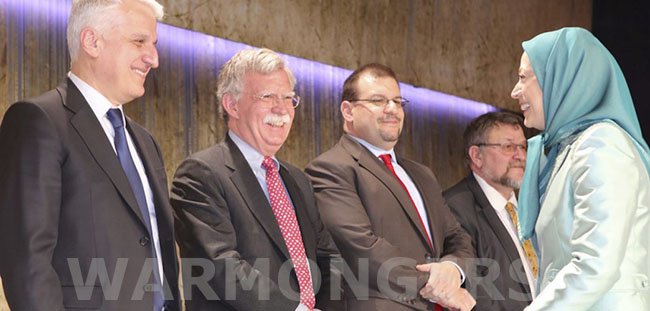
Bolton’s thirst for war against Iran was so high that he favored Mojahdin Khalq Organization (MKO/MEK) – a cult group that some analysts have likened to Cambodia’s Khmer Rouge – as a replacement for the Islamic Republic system.
Trump’s administration is fraught with repeated mistakes. Trump knew beforehand that Bolton had pushed for the Iraq war and that he was paid by the MEK, which was on the State Department terrorist list until 2012.
Also, in March 2015, while Iran and the 5+1 group (the five permanent members of the UN Security Council plus Germany) were busy negotiating a deal over Iran’s nuclear program, he wrote an editorial in the New York Times suggesting strikes on Iran’s nuclear sites.
Trump himself was a fierce critic of the 2015 nuclear deal. But, he ditched the deal in May 2018, just one month after naming Bolton for the senior post.
Though Bolton is not the only culprit for all the chaos haunting the Trump administration, he added new problems to the old ones. To the detriment of Europe, he triggered a new arms race with Russia by encouraging the Trump administration to abandon the Cold War-era INF Treaty, sabotaged dialogue between Washington and Pyongyang, and disgraced the U.S. for his unsuccessful push for the ouster of the Venezuelan government.
Writing in the National Interest on September 10, Paul Pillar, author of Why America Misunderstands the World, says, “Bolton’s wrecking career began as an undersecretary in the George W. Bush administration, when Bolton boasted of his role in killing the earlier Agreed Framework dealing with the North Korean nuclear program.”
Pillar also says, “In each of his positions in government, Bolton has made the world a more conflictual place and the United States a more isolated and despised country.”
Now, Bolton has been sacked or forced to resign but the U.S. is left with a number of emerging problems: Iran is reducing its commitments under the nuclear deal, or the JCPOA, to an extent that may lead to its demise, Washington’s allies in Europe and Asia have largely lost their trust America and now see Washington as a part of the problem rather than part of the solution.
NORTH CAROLINA – It’s obvious Donald Trump, who touts himself as a superb “dealmaker”, has not made any important deals yet as President. In fact, he’s done little but tear up extant deals, and the most notable one he destroyed was the JCPOA. But at the same time, Trump literally likes talking to other leaders, and some other leaders have responded to him saying they actually thought he was almost charming and reasonably well spoken. One would like to imagine this is the case, because Trump made a lot more sense when he was on the campaign trail back in 2016 than he has in the past two years. Why the change, because now, very few people like Trump, and his reelection is in doubt?
Well, Trump literally had no idea whom to appoint to help him once in office. He wound up appointing people (Bolton, Pompeo, even Pence) opposed to many aspects of his original, campaign agenda, and above all, he appointed some of the worst people imaginable to soothe U.S. relations and establish fundamentally peaceful relations with other countries like Russia, China, Iran and some others in the Middle East, except for Israel (which has been totally rewarded by the U.S. alone for nothing good). The Neocons have long been particularly aggressive. With Bolton fired this week, and some saner names being suggested as a replacement, one can only hope that Trump is beginning to realize that if he wants to MAGA, it will be impossible if he caters to Neocon madness. Under the spell of these American traitors, who are mostly Zionist in orientation, Trump hit Iran with the worst economic sanctions ever imposed on anyone short of outright military attack. And the thinking was that Iran would do the bidding of Pompeo and Bolton, which was way off the mark, and even farther off the mark succumb to the overthrow of the Islamic Republic in favor of the MEK, which is a whacko terrorist organization.
But more importantly, with the U.S. meddling in Hong Kong and with the tariff war underway between the U.S. and China, China’s President Xi no longer trusts Trump and seems to have concluded that trying to make a deal with the U.S. is a fruitless undertaking and that China might be better off just going its own way and doing deals itself with better partners. Such as Iran.
China has said it will invest $400 billion in Iran’s oil infrastructure and other industry. (Iran is, after all, the keystone country in China’s Belt and Road initiative given its size and location between East and West Asia. This scheme by China for Iran gives Iran the option of even continuing its current foreign policies in the Middle East.
Could it be that Trump realizes the opportunity costs the U.S. has borne with the Mideast policies it has maintained over the past three years? This may be too much to ask of Trump, such realization, but it’s not hard to imagine the benefits of a slowly warming relationship between the U.S. and Iran had the U.S. stuck to the JCPOA. (This writer argued with an editor at a major U.S. newspaper for the “normalization” of U.S. relations with BOTH Israel at one extreme and Iran at the other back in 2013, but the ideas were rejected and the editor refused to publish them. The editor had Neocon pals like Bill Kristol, a Zionist.) With normalization, the U.S. certainly would have gotten the lion’s share of scores of commercial deals with Iran, and China would not likely be preparing to make Iran a strategic partner.
Iran, for example, would likely have bought hundreds of Western-made aircraft from Boeing and Airbus, for one thing. The facts are that Natanyahu and the Jewish lobbies in the U.S., aiming to dominate naïve Trump as they did other Presidents, are ultimately to blame for what may be one of the biggest, commercial economic errors the U.S. has made since World War 2: pushing most of Asia and Russia together into a virtually united bloc that ultimately will declare a big “sayonara” to the unreliable, untrustworthy U.S.-led West.
Now, with Bolton out, it is possible that President Rouhani may have second thoughts about rejecting any talks with Trump at the UN General Assembly later this month. The question may be (in some jest) that if “Bibi” Natanyahu loses the election in Israel, whether Trump will do something even crazier than appointing Bolton in the first place in 2018 and appoint “Bibi” or someone like him to replace Bolton.
By Martin Love,
Minister: Failure of Anti-Iran Hardliners Marked by Bolton’s Dismissal
Iranian Minister of Interior Abdolreza Rahmani Fazli said on Sunday that US President Donald Trump’s dismissal of his National Security Advisor John Bolton marked the defeat of anti-Iran hardliners in pursuing their hawkish agenda against Tehran.
In a meeting in the Northeastern Iranian city of Mashhad today, Rahmani Fazli said that Bolton’s sacking by Trump showed that the hardliners in the US failed to push forward their policies against Iran.
He added that despite the fact that all the US sanctions against Iran were observed by the European signatories to the nuclear deal of 2015, officially known as the Joint Comprehensive Plan of Action (JCPOA), Iran’s political, security and foreign policy conditions are satisfactory compared to that of six months ago or a year ago.
After the Iran nuclear deal, it became evident to the world that Iran signed an agreement with the world powers and remained committed to its undertakings whereas the US violated its commitments and withdrew from the JCPOA, Rahmani Fazli said.
He said that the enemies thought that the pressure on Iran would trigger public unrest across the country so that they said the Islamic Republic would not last to celebrate the 40th anniversary of the Islamic Revolution in February 2019.
Public protests have reduced by 40% in the first five months of the current local calendar year compared to the preceding year, the minister said.
The country’s trade balance has improved, the inflation rate has reduced and the country has become capable of creating more jobs, he said, adding that all these indicate Iran’s accomplishment in the new planning.
If Iran moves in the same way, it will achieve sustainable growth, the minister said.
On Wednesday, Secretary of Iran’s Supreme National Security Council (SNSC) Ali Shamkhani underlined that the US president’s decision to fire Bolton indicated Washington’s political and moral failure against the Iranian nation.
Shamkhani said that changes in the positions and posts of officials at the White House would not change the perception of the Islamic Republic about the origins and nature of the US policies and measures.
He noted that the historic and deep-rooted hostility of the US government against the Iranian nation is beyond the role played by certain officials. As both Obama and Trump that were apparently different governments pursued the similar policy of sanctions against the Iranian nation.
Shamkhani added that Bolton was a salaried and devoted agent of the Mojahedin-e Khalq Organization (MKO, also known as the MEK, PMOI and NCRI) terrorist group in the White House, and his ouster as White House National Security Adviser should certainly be considered as the US political and moral bankruptcy vis-à-vis the Iranian nation.
He said that the promise he made based on his stupidity and the illusion that the Islamic Revolution would not reach the age of forty was recorded in his political career and the US government as a document of blind biasedness.
Shamkhani went on to say that Bolton’s humiliating expulsion from the White House not only led him to the dustbin of history, but also made MKO’s plot to fail against the Iranian nation.
Head of SNSC reiterated that enemies of the Iranian nation should not forget that the unprecedented expansion of the Islamic Republic of Iran’s regional power and downing of the modern American UAVs in the Persian Gulf have occurred when Bolton was attacking and threating Iran, indicating that Tehran’s strategic policies are not affected by the hostile approaches of people like Bolton.
He said that firing or appointment of officials within the US administration had no effect on changing Iran’s view of Washington’s hostile intentions, and the criterion for the Islamic Republic to evaluate its real policy and performance is their adherence to international obligations and the removal of cruel and illegal sanctions against the Iranian people.
He added that the use of iron hand in a velvet glove has lost its function for many years, and today’s situation in Iran, which is the result of a continued”active resistance strategy”, shows that the American will can no longer overshadow the interests of the Iranian nation.
US President Donald Trump abruptly announced in a tweet Tuesday that he had asked Bolton to resign, noting that he”strongly disagreed with many”of Bolton’s suggestions”as did others in the administration.”
“I thank John very much for his service. I will be naming a new National Security Advisor next week,”Trump wrote.
The tweet came just one hour after the White House press office said Bolton was scheduled to appear at a press briefing alongside Secretary of State Mike Pompeo and Treasury Secretary Steve Mnuchin.
Documents last year said that Bolton received $40,000 to participate and address the audience in a gathering of the MKO terrorist group in Paris in July 2017.
According to documents released by al-Monitor news website, the US Public Financial Disclosure Report in January 2018 for Bolton indicated that he had received $40,000 from the MKO as speaking fee in Paris gathering.
The MKO is listed as a terrorist organization by much of the international community. Its members fled Iran in 1986 for Iraq, where they received support from then dictator Saddam Hussein.
The notorious outfit has carried out numerous attacks against Iranian civilians and government officials for several decades.
In 2012, the US State Department removed the MKO from its list of designated terrorist organizations under intense lobbying by groups associated to Saudi Arabia and other regimes adversarial to Iran.
A few years ago, MKO members were relocated from their Camp Ashraf in Iraq’s Diyala Province to Camp Hurriyet (Camp Liberty), a former US military base in Baghdad, and were later sent to Albania.
Those members, who have managed to escape, have revealed MKO’s scandalous means of access to money, almost exclusively coming from Saudi Arabia.
The MKO terrorist group specified the targets as Major General Qassem Soleimani, who commands the Quds Force of the Islamic Revolution Guards Corps (IRGC), and Iranian Judiciary Chief Seyed Ebrahim Rayeesi.
The terrorist organization said it would “welcome” their assassination, adding that it desired for the ranking officials to “join” Asadollah Lajevardi, Tehran’s former chief prosecutor, and Ali Sayyad-Shirazi, a former commander of the Iranian Army’s Ground Forces during Iraq’s 1980-88 war against Iran.
Earlier in June, a leaked audio of a phone conversation between two members of MKO, revealed Saudi Arabia has colluded with the MKO elements to frame Iran for the recent tanker attacks in the Persian Gulf.
In the audio Shahram Fakhteh, an official member and the person in charge of MKO’s cyber operations, is heard talking with a US-based MKO sympathizer named Daei-ul-Eslam in Persian, IFP news reported.
In this conversation, the two elements discuss the MKO’s efforts to introduce Iran as the culprit behind the recent tanker attacks in the Persian Gulf, and how the Saudis contacted them to pursue the issue.
“In the past week we did our best to blame the [Iranian] regime for the (oil tanker) blasts. Saudis have called Sister Maryam (Rajavi)’s office to follow up on the results, [to get] a conclusion of what has been done, and the possible consequences,” Fakhteh is heard saying.
“I guess this can have different consequences. It can send the case to the UN Security Council or even result in military intervention. It can have any consequence,” Daei-ul-Eslam says.
Attacks on two commercial oil tankers in the Gulf of Oman on June 13, and an earlier attack on four oil tankers off the UAE’s Fujairah port on May 12, have escalated tensions in the Middle East and raised the prospect of a military confrontation between Iran and the United States.
The US, Saudi Arabia, and the UAE have rushed to blame Iran for the incidents, with the US military releasing a grainy video it claimed shows Iranian forces in a patrol boat removing an unexploded mine from the side of a Japanese-owned tanker which caught fire earlier this month.
It later released some images of the purported Iranian operation after the video was seriously challenged by experts and Washington’s own allies.
The MKO which is said to be a cult which turns humans into obedient robots, turned against Iran after the 1979 Revolution and has carried out several terrorist attacks killing senior officials in Iran; yet the West which says cultism is wrong and claims to be against terrorism, supports this terrorist group officially.
After the Islamic Revolution in 1979, the MKO began its enmity against Iran by killings and terrorist activities.
The ouster of John Bolton was the most important news over last few days in the US and perhaps in international arena; a hard-line politician who repeatedly was beating the drum of war and demanded the collapse of US opposing governments, was fired by Trump on Monday night.
A hard-line American right-wing politician, John Bolton witnessed an end in his career in Trump presidency. The post of national security adviser was the most important and perhaps most influential post of Bolton in his career; a position he took after April 5, 2018 HM McMaster lost. Of course, when Donald Trump took office, John Bolton was nominated as one of the potential candidates for the State Department, but that position didn’t reach Bolton and he became a national security adviser after a year.
Bolton’s father was a firefighter and his mother was a housewife. After studying law at Yale University, he entered politics. From his student years, he had a strong right-wing tendency, advocating for the Vietnam War and opposing the law on citizenship and the elimination of discrimination against blacks.
Bolton served as US ambassador to the United Nations from August 2005 to December 2006. George W. Bush had appointed him without a vote of confidence in Congress during its recess. However, Bolton resigned in December, because he certainly could not get a vote of confidence in the Democratic-controlled US Senate. During his time at the United Nations, he repeatedly attacked all of its structures and staff, including the UN Secretary-General.
Bolton is a senior fellow at the American Enterprise Institute and an expert on Fox News. He has also worked with many conservative think tanks such as the National Arms Association, a project for the New American Century, the Jewish National Security Foundation.
Bolton is a full-fledged warmonger. He advocates regime change in North Korea, was a supporter of the Iraq war and continues to defend his decision. He advocates regime change in Syria and Libya. Prior to the Trump administration, he had called for an end to the JCPOA and repeatedly called for bombing of Iran. Bolton is a supporter of the terrorist Mujahedin Khalq Organization (MKO). In general, he is in favor of using military force to advance the US goals, and says any country that opposes the US should be suppressed only by military attack.
Bolton has a well-known article on Iran that was published in the New York Times in 2015, and wrote his comments on Iran in detail with title of”To Stop Iran’s Bomb, Bomb Iran”. Bolton’s article said, in his opinion, an Iranian nuclear bomb would trigger an arms race in the Middle East, and countries such as Turkey, Saudi Arabia and Egypt would be forced to seek these kinds of weapons.
Bolton and US Secretary of State Mike Pompeo are widely rumored to have been deeply hostile to each other, according to CNN in Bolton’s final days these old tensions have become a full-fledged hostility. CNN wrote that Bolton is eyeing the State Department post.
Bolton’s hot summer
Bolton welcomed Donald Trump’s hostile rhetoric against Iran at a meeting of the MKO terrorist group in Paris in July 2017, saying that the outcome of the current Trump administration’s decision must be the review of its policies toward Iran that it cannot celebrate its 40th anniversary. He added that Iran will have a hot summer after the US sanctions are returned.
During Bolton’s tenure as Trump’s national security adviser, he made great efforts to fuel tensions between Iran and the United States. In his latest response in the eve of the UN General Assembly in an attempt to create a negative atmosphere against Iran, he accused Iran of lying and wrote in a Twitter message that now that two weeks are left to the UN General Assembly, be sure Iran is intensely busy with deceiving. Iran denied that Adrian Darya was going to Syria, then confirmed today that its oil had been discharged.
In June this year, Bolton attributed the Fujairah blasts to the Islamic Republic, which damaged four tankers, claiming that the blasts were caused by landmines that were almost certainly Iranian.
In July this year, after Iran shot down an American drone over the waters of the Oman Sea, US President Donald Trump said that in response to the drone downing, he initially ordered the attack on three targets in Iran, but canceled it ten minutes before the attacks because of the possibility of 150 deaths. In response, Bolton warned Iran not to confuse the US prudence with its weakness.
At the same time, the Wall Street Journal reported on Trump’s widespread disagreement with his national security team over their plans to attack Iran, with John Bolton leading the officials in charge of designing war plans. The Wall Street Journal wrote that Trump said in a private conversation that these guys want to get us into a war, and it’s disgusting. We don’t need more wars.
In February 2018, Connecticut Democrat Sen. Chris Murphy, in reaction to John Bolton’s statement that Iran was seeking a nuclear weapon, said Bolton was preparing the ground for war with Iran. Murphy wrote on Twitter that Bolton says Iran is seeking nuclear weapons. This is clearly not true. Intelligence agencies (US) have said the opposite and he knows. He sets the stage for war and we all need to be vigilant.
In a January 2018, Wall Street Journal reported that senior Pentagon officials expressed deep concern that Trump’s national security adviser, John Bolton, is creating a tension with Iran. That is when Trump ordered US troops out of the Middle East.
Zarif and Bolton at United Nations
Our Foreign Minister, Mohammad Javad Zarif, who worked with John Bolton at the United Nations in 1995 and 1996, is well aware of his views and sentiments. The FM nominated Bolton as a member of the Team B in May and warned Donald Trump that the group is planning to drag the US into war with Iran.
Zarif repeatedly referred to the team’s planning and goals in his interviews and tweets. As far as Trump responded to his Twitter account and wrote that there are various opinions [on Iran] and I will make the final decision. All aspects, views and policies will be considered. I am confident that Iran will soon seek negotiations.
Some analysts now believe that after firing Bolton, the US policies on Iran will be balanced, as the most important Trump-Bolton dispute was over Iran. Bolton’s split came at a time when Trump was eager to meet with leaders of countries that, in Bolton’s view, were sworn enemies of America.
Rand Paul, a Republican senator who recently met with Zarif, called John Bolton Secretary of War and expressed his happiness with Bolton’s ouster and told Fox News that he thinks Bolton’s departure from the White House a big part of the shadow of war on the world has gone away … His naive view was that”we must bring governments that we think are democratic by changing regimes everywhere”.
Bloomberg wrote that Trump initially supported maximum pressure on Iran, but he recently came up with softer diplomacy and reduced his government’s initial 12 terms of sanctions against Iran to three at the Group of Seven meeting in France, and in France, he spoke openly and repeatedly about the negotiations.
Bolton’s departure may pave the way for Trump’s dream of a meeting between US and Iranian leaders. But with the ousting of the White House National Security Adviser, the chances of a catastrophic new Middle East war are dramatically reduced.
‘I Rule the White House’: Will Bolton’s ouster help Trump facilitate US-Iran negotiations?
Most analysts agree that Donald Trump’s main motivation for dismissing his National Security Advisor, John Bolton, was that Bolton had been giving off the impression that he was the real decision-maker in the White House, while the president was merely a talking puppet.
Looking at Trump’s career, even before coming into office, it is clear that he is a man who cannot tolerate being subordinated to anyone. Trump sees himself as a leader who gives orders and expects his employees to execute them like soldiers.
The only thing Trump wants to hear from his underlings is “Yes, Sir.”
I informed John Bolton last night that his services are no longer needed at the White House. I disagreed strongly with many of his suggestions, as did others in the Administration, and therefore….
— Donald J. Trump (@realDonaldTrump) 10 сентября 2019 г.
A few articles published after Bolton’s ouster have suggested that the disagreement centered around the question of easing sanctions against Iran in order to facilitate a meeting between Trump and Hassan Rouhani, the president of the Islamic Republic.
A few weeks earlier, Trump was at the G7 meeting in France when Mr. Mohammad Javad Zarif, the foreign minister of Iran, suddenly arrived at the request of French President Emmanuelle Macron. He met with both Macron and French Foreign Minister Jean Yves Laudrian in Biarritz while Trump had dinner with the other G7 leaders.
Question: “The allies were saying it was disrespectful for Macron to invite Zarif, disrespectful to the U.S. You don’t feel that way?”
President Trump: “No. No. He asked my approval.” #G7 pic.twitter.com/Yo7tzJwdYu
— The Hill (@thehill) 26 августа 2019 г.
The next day, less than 12 hours after Zarif met with the French leaders, President Rouhani said that he is ready to sit and talk to “anyone” if it is in the interests of the Iranian people and could help solve their ongoing problems.
As someone who has been affiliated with the Iranian policy for decades, I can assure you that President Rouhani is not a person prone to slips of the tongue: he is a veteran politician and carefully chooses every word he says.
Given the current tense political situation in Iran, these words would be political suicide for most politicians, especially if this “anyone” includes Trump, a person who has not been shy about insulting Iran and its leadership, and the main culprit behind the cancellation of the JCPOA. Trump has also implemented heavy sanctions against the Iranian people during his time as commander-in-chief.
We should, therefore, presume that there is something else happening in the background. While only the future can tell us for sure, some analysts believe an agreement was reached wherein Rouhani would announce that he is ready to meet Trump if Trump agreed to allow restore exemptions for the 8 countries buying Iranian oil, and allow the European INSTEX program to kick off with an initial €15 billion investment.
However, as it turned out, Trump wasn’t ready to make any such statement, despite that it was all but expected during the news conference he held alongside Macron. It is likely, however, that the 12 hours which separated Rouhani’s speech and the news conference were packed with calls from Benjamin Netanyahu, John Bolton and the other members of the so-called “B4” (Benjamin Netanyahu, John Bolton, Mohammad Bin Salman and Mohammad Bin Zayed).
Some analysts have suggested that Trump was threatened by someone privy to information that could get him disqualified in the 2020 presidential race.
If we link this to the report published by Politico which claims to have found Israeli spy-instruments around the white house and other places in Washington, it is probable that Trump and his family and/or staff were spied on, perhaps even with Bolton’s permission.
Israel reportedly planted tiny devices around D.C. to spy on Donald Trump’s cellphone, but the White House hasn’t condemned the surveillance https://t.co/jLuT2k9aKV
— The Daily Beast (@thedailybeast) 12 сентября 2019 г.
However, there are also reports that news emerged over the past couple of weeks claiming that Bolton had been hiding information from Trump regarding the peace talks in Afghanistan, and telling others that Trump couldn’t be trusted with it.
Some believe that Mr. Zalmai Khalil Zad, the American envoy to the Afghan peace negotiations, was coordinating the talks with Bolton and keeping a low profile around Trump.
Well, there are dozens of possible reasons for Trump to have dismissed his advisor, Bolton’s removal is a sigh of relief for the majority of the world, and especially the Iranians.
Bolton was a war-hawk who helped drag the US into the Afghan and Iraq wars. Even though he knew that another war could cost Trump the election, he was heavily in favor of initiating conflict with Iran.
Bolton saw himself as protected by powerful lobbies within the US and therefore didn’t care if Trump was re-elected.
Experts doubt Trump’s explanation for canceling the Taliban meeting. I suspect the real reason is a combination of: 1. Pres. Ghani refused to participate; 2. John Bolton exploded; 3. Trump came to see that hobnobbing with the Taliban would be bad politics https://t.co/dywBzrGQdm
— Nicholas Kristof (@NickKristof) 8 сентября 2019 г.
Bolton participated in many Mojahedin-e Khalq Organization meetings and received more than $180,000 for a speech where he promised the members of this group (which is considered a terrorist organization in Iran and many other countries around the world) they would celebrate Nowruz (the Iranian New Year) together in Tehran.
While the Iranians don’t expect that Trump will choose someone much better than Bolton as far as enmity against Iran goes, Bolton’s dismissal is nonetheless one major enemy out of the picture.
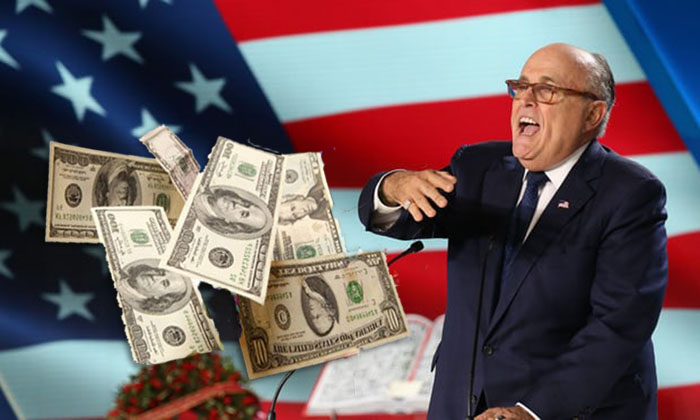
One group that is no doubt devastated by Bolton’s departure is the MEK — the Iranian exile group that wants regime change in Tehran, by force if necessary, and has paid Bolton & Rudy Giuliani to make speeches. See this NYT video by @ntabrizy. https://t.co/wQkQwqqzOL
— Edward Wong (@ewong) 10 сентября 2019 г.
While the B4 group has now become the B3, the forces who were backing Bolton are still in power, and the American administration is still stuffed by pro-war neocons and enemies of Iran.
WILL BOLTON’S DISMISSAL EFFECT IRANIAN-US RELATIONS?
Some believe that Trump dismissed Bolton because he wanted to negotiate with Iran on his own terms, and knew Bolton would attempt to sabotage his efforts. There have been reports that Trump and Rouhani shook hands in the UN lobby.
Again, it is impossible to say with 100% certainty what motivated Trump’s decision, but this version of events is perhaps the most probable.
It is important to note, however, that Iran cannot be compared to North Korea (or any other country in the world), and that the Iranian president is not Kim Jong Un. He cannot force his will and make top-down decisions for the entire country. There are certain domestic challenges the Iranian president faces which he cannot overcome on his own.
The most important challenge he faces is the strong anti-American sentiment among Iran’s politicians and population.
Any analyst can tell you that the P5+1 talks with Iran were mainly talks between Iran and the US and that the Iranian and American foreign ministers have talked together in private for many hours. It is difficult to believe that Javad Zarif and John Kerry sat for 17 hours behind closed doors just to discuss the politics of 3.67% Uranium enrichment.
This meeting was also very likely the start of the JCPOA and included promises that, if the cooperation was successful, the two countries would be able to move forward.
After all, no-one can deny that the attack against ISIS in the Iraqi city of Mosul was undertaken by Iranian ground troops and the US air force. Ask anyone with military experience whether or not such an attack could have been carried out without direct coordination.
The Iranian foreign minister did not sit with John Kerry merely because he was a representative of ex-president Barack Obama: he sat with the acting foreign minister of the US, and the JCPOA was later signed by the US administration.
The Iranian people believe that their country has already negotiated with the Americans and that a deal has already been reached, and that the issue is that that the Americans won’t abide by their agreement. What guarantee is there that if the Iranians sit down and renegotiate, the Americans won’t simply renege on the agreement yet again?
#Trump removes MEK terrorists’ BFF John Bolton pic.twitter.com/NSPxc7UeHI
— Tasnim News Agency (@Tasnimnews_EN) 11 сентября 2019 г.
Although the administration is promising to get congressional approval, this is little more than a promise: Trump has proven that when it comes to negotiating with Washington, there are no guarantees.
In this situation, no Iranian politician will be ready to endanger his political future by entering into, or even advocating for, public talks with Americans, especially given that we are nearing the next Iranian parliamentary elections. Pushing for talks without any guarantees could lead to the fall of an entire political wing in the country.
The only choice Iranian politicians have is to refuse to accept any such meeting until after some sanctions have already been removed; something concrete to show them that American policy toward Iran is capable of changing.
On the other side, the Americans believe that the only way they can bring Iran to the negotiating table is through pressure and sanctions and that if they ease the pressure, the Iranians will never budge, and Trump’s policy will be seen as a failure.
The debate right now is not even about whether or not talks will take place: it is about how to restore trust between the two countries. The keys to the negotiation-room door were stuck as a result of the administration’s refusal to compromise on sanctions, a position which was unwavering predominantly thanks to John Bolton.
With Bolton finally gone, the question is now whether or not the Europeans will be able to get the keys out.
Emad Abshenass- uwidata.com
Inside This Issue:
- MEK THE END OF THE PATH DOCUMENTARY -1
- MKO Serves White House Orders
- News from Albania
- When I was in a dark room…
- MEK has been a U.S. tool against Iran
- Zarif’s visit to Europe
- John Limbert on Iran and the U.S. policy of maximum pressure
For the past decades, the Middle East has been a fertile ground for proxy wars. However, Iran has almost always been a secure land in the heart of this chaotic region despite the fact that several dissident and separatist groups oppose the Iranian government. The Mujahedin Khalq Organization (the MKO/ MEK/ PMOI/ Cult of Rajavi) is one of these dissident groups with a long background of terrorist acts against Iranian nation.
The Group was once in the safe haven donated to them by Saddam Hussein who funded and supported them against Iran for about two decades. After the fall of Saddam, the MEK turned into the proxy force for the West, particularly the US and Israel, although it was listed as a”foreign terrorist organization by the US State Department until 2012.
The group is widely despised by the Iranians due to its violent history and its alliance with the fighting enemy of Iran Saddam Hussein. Jonathan Broder of Newsweek presents the most recent account on the MEK’s past and present.”Many independent scholars say the MEK’s alliance with Saddam in that long and bloody war turned the group into traitors in the eyes of most Iranians,”he writes.”In the 1990s, the Rajavis instituted a number of cult-like measures to prevent defections. According to a 2005 Human Rights Watch report based on interviews with several defectors, members were required, among other things, to divorce their spouses and send their children abroad for adoption, lest family obligations divert their attention from the struggle against the Islamic Republic.”[1]
Some suggest that the MEK was delisted by the then Secretary of State Hillary Clinton to”pave the way for the evacuation of Camp Ashraf’s MEK members to Albania”. [2]
Border doubts the assertion asking”But had anything really changed?”. He finds the answer in what Daniel Benjamin, the State Department coordinator for counterterrorism at the time, told Newsweek. According to Benjamin, the delisting was done”at the discretion of the secretary out of humanitarian concern because no country would take them otherwise, and not because of any changed thinking within the MEK.”[3]
Richard Black a Republican member of the Virginia State Senate clarifies the case of the MEK in Iran compared with the most notorious proxy forces in the region including ISIS and Al Qaeda. Asked about the possibility that the MEK openly takes in Iran the place that ISIS has had in Syria, giving way to a bloodbath in the Islamic Republic as well.”That is a distinct possibility,”he answered.”However, Iran is a cohesive, unified nation. Despite their internal political disagreements, Iranians are patriotic and even its dissidents are generally unwilling to undermine the unity of the nation. For that reason, I do not believe the MEK will find fertile ground to grow like ISIS did in the deserts of Iraq and Syria.”[4]
“Nevertheless, the West has decided to employ MEK-led terrorists to overthrow the duly-elected government of Iran,”he continued.”The Ashraf-3 base has just opened in Albania. Its purpose is to coordinate terrorist training, logistics and military action against Iran. The Ashraf-3 facility will be used to plan the infiltration and destabilization of Iran. It may use both MEK terrorists and battle-hardened ISIS and al Qaeda troops who are moved there from Iraq and Syria. The massive Ashraf-3 base is a complete city. It has parks, shopping centers, conference centers, and a luxury hotel. The heavily-guarded facility will be home to 3,000 MEK terrorists and families. If MEK succeeds in toppling Iran, Maryam Rajavi has already been designated as its first interim president. The United States designated the MEK as a terrorist organization in 1997. However, the push to overthrow seven Middle Eastern countries (including Iran) began to move forward rapidly in 2011 with the invasion of Libya. MEK was removed for the list of terrorist organizations in 2012 in order to bring about a violent regime change in Iran.”[5]
Senator Black believes that employing what he calls”terror weapon”– terrorist groups like MEK and Al Qaeda—has not been fruitful for the West.”The CIA fielded a quarter-million-man army of terrorists against the Soviet Union in Afghanistan, he said.”Saudi Arabia built a vast system of madrassas to indoctrinate youth in Wahabism, a remarkably murderous version of Islam. Although CIA’s jihadists did defeat the Soviets, they also gave birth to al Qaeda, which attacked the U.S. on 9-11 and went on to spread terror across the globe. Every time the West and its Gulf State allies use terrorists to overthrow governments, the results are disastrous.”[6]
The US-Israel alliance must know that proxy forces may run their ambitions in certain divided communities with its entire disasrous results but the MEK will not thrive to achieve its anti-national goals in Iran. The MEK is the one that is so hated by Iranian public opinion that it can never accomplish their regime change agenda in Iran, even if it launches the most violent acts of terror – as it has an extensive experience in them.
Mazda Parsi
References:
[1] Broder, Jonathan, Iran’s Opposition Groups are Preparing for the Regime’s Collapse. Is Anyone Ready?, Newsweek Magazine, August 27th, 2019.
[2] ibid
[3] ibid
[4] Ceoldo, Costantino, Richard Black speaks about Syria (and not only), Opinion.com, August 25th, 2019.
[5] ibid
[6] ibid
With news that three House Committees are investigating the Trump attorney’s efforts to pressure the Ukrainian government to look for dirt on Joe Biden, it’s a question worth asking.
While serving as President Trump’s personal lawyer, the former New York City mayor has traveled abroad to meet with Ukrainian officials. But he’s also traveled to Europe and the Middle East to carry out unrelated consulting work and attend speaking engagements.
TPM has gathered reporting on Giuliani’s foreign adventures since taking office, consolidating them in one map that reveals the extent of his global peddling.
Armenia
He traveled to the capital of Yerevan in October 2018 for a pro-Russian conference there, telling reporters he was not attending in his “capacity as a private lawyer to President Trump.”
Ukraine
Giuliani has traveled to Ukraine multiple times over the past decade. But it was a November 2017 trip to the city of Kharkiv that raised eyebrows, in part because of the person who invited him: Russian-Ukrainian developer Pavel Fuchs, who negotiated with Trump in the 2000s to build a Trump Tower Moscow. Giuliani has said the trip was for security consulting for the city of Kharkiv.
Giuliani also planned a trip in May 2019 to dig up dirt on presidential candidate Joe Biden, but he canned that effort amid public outcry.
Most recently, his antics — which included an August meeting in Spain with a foreign policy adviser to the Ukrainian President — have caught the attention of the House Intelligence, Foreign Affairs, and Oversight Committees, which sent letters to the White House and State Department to investigate Giuliani’s work “outside legitimate law enforcement and diplomatic channels.”
Turkey
Giuliani’s 2017 sojourn to Turkey has been largely forgotten amid a torrent of other scandals, but, in some ways, it set the tone for what was to come. The trip centered around a Turkish gold trader charged with conspiring to evade U.S. sanctions on Iran. Hired as a representative of the trader, Giuliani traveled to Turkey to meet with President Tayyip Recep Erdogan and with U.S. officials “to discuss a possible disposition” of the case, which reportedly would have seen the prosecution ending in a prisoner swap.
The judge in the case told Courthouse News that “had Rudy succeeded, he and [Presidents Trump and Erdogan] would have helped very significantly the country of Iran.”
Bahrain
Giuliani met with the King of Bahrain in the peninsular gulf state in December 2018 where, according to the country’s state news agency, “topics of joint interests” were discussed. In May, Giuliani’s security firm signed a consulting contract with Bahrain.
Qatar
Relatively little is known about Giuliani’s work for Qatar. He has said that he worked for the Qataris on an investigation and, according to Reuters, traveled to Doha in April 2017, weeks before agreeing to work pro bono as President Trump’s personal attorney. Some Giuliani associates, including former Attorney General Michael Mukasey, have been hired by the gulf state to “solicit the help of U.S. government officials” in resolving its dispute with Saudi Arabia.
Israel
Giuliani has traveled to Israel multiple times during the Trump Administration, including a June 2018 voyage that led him to bust some dance moves in Jerusalem. That was part of a trip that saw him speak at a conference where he trashed both the Mueller investigation and Stormy Daniels. Giuliani also rang the opening bell at the Tel Aviv stock exchange during a June 2017 visit that was connected to his former law firm Greenberg Traurig.
Albania
The Balkan republic plays host to the Mujahedin el-Khalq, a bizarre Iranian exile group that has faced accusations of being a cult. Giuliani traveled there in July 2019 with Joe Lieberman to a conference at the socialist-Islamic group’s recently built Ashraf 3 compound. He also traveled there in March 2018 for the Iranian New Year celebration of Nowruz. MEK is reportedly no longer ruled out in Trump Administration planning as a potential successor to the current Iranian regime.
France
At another June 2018 MEK rally in Paris, Giuliani called for the overthrow of Iran’s government. Thought it is known that the Trump attorney accepts speaking fees for his MEK work, the exact amount remains unclear.
Poland
Giuliani’s trip to Poland in February 2019 was another MEK-sponsored appearance, at a Warsaw conference that occurred at the same time that Secretary of State Mike Pompeo and Vice President Mike Pence were in the country for a summit on the Middle East. Giuliani did not restrict his dealings in Warsaw to MEK: he met on the side with a Ukrainian prosecutor who later offered him dirt on the Biden family.
Author Headshot
Josh Kovensky is an investigative reporter for Talking Points Memo, based in New York. He previously worked for the Kyiv Post in Ukraine, covering politics, business, and corruption there.
By Josh Kovensky, talkingpointsmemo
The price of oil fell by 2.2% just minutes after news spread that US National Security Advisor John Bolton was out of a job. In an instant, the prospect of a catastrophic war in the Middle East seemed to recede dramatically.
Bolton is famously the man who never met a war he didn’t like (except Vietnam, which he avoided). And conflict with Iran was the war he seemed to like most.

In 2015, he penned an editorial in the New York Times entitled”To Stop Iran’s Bomb, Bomb Iran.”He was a regular (paid) speaker at the annual meetings of Mujahedin-e-Khalq (MEK), an Iranian exile group which for years was hosted by Saddam Hussain, and which until 2012 was on the US State Department’s terrorist list.
At his most recent appearance at a MEK meeting, in 2018, Bolton declared:”The behavior and the objectives of the [Iranian] regime are not going to change and, therefore, the only solution is to change the regime itself.”
He has previously advocated for regime change in Venezuela, Iraq, North Korea, Libya and Syria, to name a few.
Bolton was, mostly via his perch at Fox News, one of the most vocal critics of the 2015 Iran nuclear deal. He assumed the position of National Security Advisor in April 2018 and, a month later, the US unilaterally pulled out of the agreement.
With Bolton gone, the mantle of Iran hawk now passes to Secretary of State Mike Pompeo. But, unlike Bolton, Pompeo seems to have prioritized his relationship with President Trump.
A recent profile of Pompeo in The New Yorker included a quote from a former senior White House official describing the Secretary of State as”among the most sycophantic and obsequious people around Trump.”A former US ambassador told the article’s author that Pompeo is”like a heat-seeking missile for Trump’s ass.”
The departure of Bolton may change the style of Trump’s position on Iran, but perhaps not the substance.
Washington’s policy of”maximum pressure”is designed, according to Pompeo, to change Tehran’s behavior. But going by the severity of the sanctions, they appear designed to bring Iran to its knees.
“We’ve now made Iran’s economy a shambles,”Pompeo boasted to ABC’s George Stephanopoulos Sunday, describing the effect of US sanctions.”We think their economy could shrink as much as 10 or 12% in the year ahead.”
Just two days later — a few hours after Bolton’s departure — Pompeo said Trump could meet with Iranian President Hassan Rouhani”with no preconditions.”
With Bolton out of the way, such a meeting can now go ahead without much resistance within the Trump White House.
It’s not clear, however, what might come out of a Trump-Rouhani meeting. If we look at the example of North Korea, while the nature of the relationship between Trump and Kim Jong Un may have changed — the leaders now exchange”love letters”instead of insults — the underlying issues, such as North Korea’s nuclear program, international sanctions, and so on, remain unchanged.
Without sanctions relief, or the promise of it, the Iranians are unlikely to play like Kim.
Also mitigating against a dramatic shift in US-Iran policy is Israeli Prime Minister Benjamin Netanyahu, who has lobbied successive American administrations to take a harder stand on Tehran.
Trump has been more than willing to grant Netanyahu almost all his wishes. He has recognized Jerusalem as Israel’s capital and moved the US embassy there, cold-shouldered and cut funding to the Palestinian Authority and to the UN agency for Palestinian refugees, and closed down the Palestinian diplomatic mission to Washington.
After months of bellicose rhetoric on Iran, this summer Trump began to change his tune. Rather than bomb Iran, he began to toy with the idea of talking with it.
So has Trump gone cold on confronting Iran? The 2020 elections loom large and the prospect of war with Iran combined with the real possibility of an economic downtown in the US could spell disaster for the President.
Never big on loyalty, Trump dumped Bolton unceremoniously. The loudest voice for confrontation with Iran has now been banished to the wilderness, or perhaps to Fox News, from whence he came.
While it’s always dangerous to try to predict Trump’s actions, there is now a real prospect of a slight improvement in the long and unhappy relationship between the US and Iran.
Trump is not known for his deep understanding of the complexities of the Middle East, or for a thoughtful approach to the delicate affairs of state.
Nor has he ever expressed much interest or sympathy for those who live here. But perhaps by design or — more likely — by happy coincidence, by dumping Bolton, President Trump may have made war less likely.
Analysis by Ben Wedeman, CNN Senior International Correspondent
Bolton’s departure will fundamentally alter Trump’s Iran policy
Whether national security adviser John Bolton was fired by President Trump or he quit is irrelevant. The change in foreign policy leadership will have a profound impact on how this administration’s Iran policy is shaped and implemented.
While it’s fair to call both Bolton and Secretary of State Mike Pompeo hawkish on Iran, their posturing on best practices for dealing with Tehran have always differed.
Bolton favored the ever-present threat of military action against the Islamic republic and has often openly advocated for it, including the episode in June when Trump approved military strikes in response to the downing of a U.S. drone, which he abruptly aborted when he learned the projected casualties.
Bolton, though, thought the attacks should proceed as planned. For decades he has been consistent in his contempt for the leaders in Iran — and other longtime adversaries — and not shy about the need to spill innocent blood sometimes to reach what he perceived to be U.S. strategic goals.
The Iraqi people now have
lead responsibility
The State Department is about to capitulate to the Taliban, al-Qaeda’s longtime ally, in order to withdraw U.S. forces from Afghanistan, argues Rep. Liz Cheney. (Video: Joy Sharon Yi, Danielle Kunitz/Photo: Rafiq Maqbool/AP Photo and Jabin Botsford/The Washington Post)
His absence also means that the Mujahideen-e Khalq (MEK), a reviled Iranian opposition group that long lived on the State Department’s list of foreign terrorist groups, no longer has a powerful ally in the White House.
The now former national security adviser and U.S. to the United Nations was one of dozens of U.S. politicians, including Rudolph W. Giuliani, to accept large speaking fees in exchange for publicly advocating the organization as a viable replacement for the Islamic republic.
The MEK can claim no popular support, and among Iranians of nearly all political orientations, inside the country and in the diaspora, it was Bolton’s paid alliance with the cultlike group that made him such an odious character.
With the MEK suddenly nowhere in the conversation, ordinary Iranians who would prefer to see their government negotiate its way out of the sanctions that currently have a stranglehold on the country’s economy will be more inclined than ever to support such a process with U.S. leaders.
And those millions of Iranians who prefer a regime change can be more confident now that the United States has no serious plans to install the hated group if the Islamic republic were ever toppled.
Either way, when it comes to Iran, the Trump administration’s hands are no longer tied by Bolton, an ideologue who views diplomacy as a weakness rather than a tool.
The shake-up creates the first real opportunity for Trump to pursue a policy of engaging Iran, which both he and Pompeo have publicly advocated for since this administration’s decision to exit the 2015 nuclear accord with the Islamic republic.
Bolton assumed duties as the national security adviser in April 2018, a month before Trump pulled out of the deal. Although Trump threatened to do so long before he took office, the timing probably pleased Bolton, as he loved to be seen as tough on Iran.
It was yet another reason Bolton’s mere presence in the administration — and at such a high level — made talks between the Trump administration and Tehran all but impossible.
Trump and Pompeo must now make a clear choice and stick with it: actively pursue a new deal with Iran’s leadership as Trump has promised to do since he was a candidate, or continue with the disingenuous charade that is their “maximum pressure” campaign, a policy that has only had the discernible effect of making the lives of average Iranians more miserable.
Trump and Pompeo have time and again put the possibility of new talks, without preconditions, on the table. Now they can prove it. Bolton’s departure, two weeks before the annual United Nations General Assembly session, puts the ball squarely in Tehran’s court.
If President Hassan Rouhani and his foreign minister, Mohammad Javad Zarif, refuse the offer to meet with their U.S. counterparts while in New York, it is they who will suddenly appear to be the unreasonable party.
The only thing that can be said for Bolton’s position on Iran was that it was clear, but he was a liability from the moment he joined this administration. The ways in which his ouster might change the direction of Trump’s Iran policy will prove it.
By Jason Rezaian