Nejat Society
  • Home
  • Articles
  • Media
    • Cartoons
    • NewsPics
    • Photo Gallery
    • Videos
  • Publications
    • Books
    • Nejat NewsLetter
    • Pars Brief
  • About Us
  • Contact us
  • Editions
    • عربي
    • فارسی
    • Shqip
Nejat Society
Nejat Society
  • Home
  • Articles
  • Media
    • Cartoons
    • NewsPics
    • Photo Gallery
    • Videos
  • Publications
    • Books
    • Nejat NewsLetter
    • Pars Brief
  • About Us
  • Contact us
  • Editions
    • عربي
    • فارسی
    • Shqip
© 2003 - 2024 NEJAT Society. nejatngo.org
weekly digest
Iran Interlink Weekly Digest

Iran Interlink Weekly Digest – 259

++ This week marks the anniversary of the failed Mersad or Forough Javidan (Eternal Light) operation in 1988. MEK had nothing to say except to repeat archive material from people who don’t want to say these things anymore. For example, an article from many years ago written by Manouchehr Hezarkhaneh, an elderly man, trapped by poverty and isolation in the MEK system with nowhere else to go. Some commentators say, ‘never mind that they don’t want to say anything because it was a disaster, now they themselves are trying to water it down as if it didn’t happen’. Mehr News in Tehran conducted a long interview with Ebrahim Khodabandeh , who went into detail about how the operation came about, that it was the last military opportunity before the peace. Khodabandeh explained how MEK prepared and executed the operation and that Massoud Rajavi knew he was sending around 4000 people to their possible deaths. 2500 died and only around 1500 came back. It was Rajavi’s last gift to Saddam (which didn’t work out) and it was a present to himself to bank the blood of these people so as to keep the feelings of revenge alive in the members. Khodabandeh said, ‘from whatever angle you look at it, it is nothing except a deliberate war crime and crime against humanity to kill thousands of people from your own side for political and financial gain’.
++ There were various reactions to Rajavi’s MEK rally in London. Reports from inside the rally sent to Iran-Interlink explained that 33 paid rent-a-crowd young people had been given 11 green, 11 white and 11 red t-shirts (as the Iranian flag) to stand at the front and pretend MEK has the support of the youth. Behind them there were about 150 people mostly in their 50s and 60s. Around 100 had been flown into London from European countries and 50 were from the UK. The rest of the crowd was photoshopped in online to make the rally appear bigger. The usual speakers – long term Zionist supporters – didn’t attend. Ironically even David Ames their head lobbyist in London couldn’t bring himself to attend the rally. The result was that in a televised message, Maryam Rajavi had to mention the names of three deceased lobbyists who died some time ago, including Lord Corbett, and then ask the newly appointed UK Prime Minister to join the Americans to send ships to the Persian Gulf and attack Iran. Many commentators pointed out the irony that consecutive British governments and US governments have come and gone and they all totally refuse to give her a visa even for a day visit, even though she has spent millions in legal challenges which have all come to a dead end. The last one was in the UK a few years ago. The court rejected Lord Carlisle’s best attempts to get her a visa. This is the outcast who is demanding the UK and US attack Iran.

++ A few Iranian outlets have referred to the MEK cyber group and troll farm and the photos of them that were leaked and spread on social media. MEK’s internal propaganda shows them as loyal workers. Commentators point out that MEK might have started out as something to be paid for, but the reality is that since going to Albania over 400 people have left them. Some talk publicly, some don’t. Many of those who talk say that ‘In Iraq we didn’t have access to the internet. But here, even though we were being watched we managed to see the news about Iran and the rest of the world, and we have woken up to reality. The MEK have only told us lies.’
In English:
++ Iran-Interlink wrote a short comment on a report in Middle East Eye about the MEK rally in London criticising the lack of due diligence and fact checking by politicians and journalists alike. Such that “The most important of these facts is that the MEK is a cult which keeps its members in Albania in conditions of modern slavery. If the MEK’s supporters want to believe that after not being paid for three decades, they are just ‘volunteers’, then there is not much else they won’t believe”.
++ Tehran Times quotes several officials, military and political, who say that while they do not underestimate the threat posed by MEK’s phone led espionage activities into Iran, there is no evidence that the group has any support inside the country.
++ Not a week goes by without one or more media outlet in America wringing its hands over the meaning of MEK’s relationship with John Bolton and Rudi Giuliani, and their relationship with President Trump and Mike Pompeo. This time Melissa Etehad in the Los Angeles Times had a go at solving the conundrum – will there, wont’ there, be a war with Iran. Right away MEK spokesman Alireza Jafarzadeh shoots himself in the foot by admitting that year after year, administration after administration, its demand (violent regime change) has essentially been ignored. With good reason according to several commentators. “The MEK has American blood on its hands” says Daniel Benjamin, the State Department counter-terrorism coordinator under President Obama. Unfortunately, the article falls foul of the misinformation (“Two Iranian suspected of surveilling the Mujahedin Khalq were arrested in Albania in 2018, and an Iranian diplomat in Vienna was arrested on suspicion of plotting to bomb a Mujahedin Khalq rally outside Paris.”) which skews accurate reporting on MEK and Iran, and this leads to a nonsensical conclusion: That Iran is worried about close relations between MEK and the Trump administration.
++ On the principal that ‘reality intervenes’, Ted Snider’s Counter Punch article is spot on. Snider explains how government and media ‘perception shapers’ shape public opinion by isolating events from the causal contexts which explain and make sense of them. He gives examples of Brazil and Iran, which, for context, has been subjected to economic warfare, cyber warfare and assassinations by America and Israel. This latter activity of course, carried out by the MEK. Without this context, Iran’s shooting down of a US drone can be spun as “an unprovoked attack”.
++ With respect to the failed Eternal Light (Mersad) operation of 1988, Mehr News and the Tehran Times published statements by military and political leaders. Essentially, they see MEK now as “US soldiers without uniforms”, who now click instead of shoot guns.

++ Saudi reporting on an Israeli attack on the MEK’s former garrison Camp Ashraf can only be interpreted as rewarding MEK for something, some service rendered perhaps. This is something touched on in an analytical piece in Iran Front Page which links recent developments involving Iraq, Israel, Rajavi and the US. “It seems that a visit [to Israel] by Maryam Rajavi, leader of the MKO terrorist group, and the launch of the recent attack was not a coincidence. Above all, the MKO’s perfect familiarity with the region after 30 years of presence there could have been taken advantage of by Israel for carrying out the attack.”
++ Eli Lake in Bloomberg is also troubled by perceived cosying up between MEK and the Trump administration. Citing Abbas Milani, director of Iran studies at Stanford University, the article argues for supporting Iran’s indigenous opposition groups rather than maximum pressure. But he makes it very clear “Milani recommends for example that Trump make clear that the relationship between his personal lawyer, Rudolph Giuliani, and the People’s Mujahedin, or the MEK, does not reflect U.S. government policy. This exiled opposition was once designated as a foreign terrorist organization by the State Department and is largely reviled by Iranians because it sided with Saddam Hussein in the Iran-Iraq war.”
++ Robert Fantina for Counter Punch exposes elements of the MEK’s cyber warfare against Iran, saying that in addition to spreading misinformation, MEK uses false accounts to give the impression it has widespread support among Iranians. One of these false accounts is Heshmat Alavi which the MEK has unashamedly resurrected since it was outed by The Intercept. Which goes to show, it’s all just a game. Certainly, Fantina is not convinced by MEK’s cause. “When this writer visited Iran in the summer of 2017, he found a modern, vital and exciting nation. Illegal and immoral U.S. sanctions have certainly taken a toll on the economy, but as a friend of his from Iran commented, Iranians are accustomed to sanctions, and manage fine anyway. The MEK and its criminal members and leaders will not prevail; the Iranian people are proud of what they have accomplished, and will not allow a few disillusioned people, even those who have the support of the United States, to defeat them.”

August 02, 2019
August 5, 2019 0 comments
FacebookTwitterPinterestWhatsappTelegramSkypeEmail
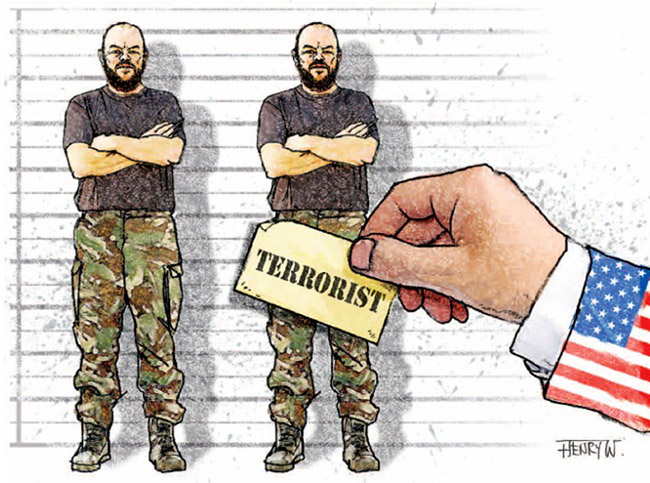
US advicated of MEK Terrorists
Mujahedin Khalq; A proxy force

Once sworn enemy; Now tactical ally

Is the Trump Administration Allowing a Terrorist Group to Shape Its Iran Policy?

A now powerful player in the White House, the MKO/MEK group has become a force to be reckoned with, most likely to the detriment of peace.
In a rare move last month Congressional members crossed party lines to join in a bipartisan effort to curb U.S. President Donald Trump’s belligerent tweets and comments about Iran. The vote was not veto proof. At the same time, it appears the MKO/MEK, also known as the People’s Mujahedin of Iran, a group long opposed to the Iranian government, has the ear of the hardliners in the White House.
The Mujahedin-e-Khalq (MEK), which was once a sworn enemy of the United States, has over the past few years reinvented itself as a tactical ally to several Western governments in view of its desire to see Iran’s government collapse.
Often described as a cult by both experts and former members, the group was responsible for the killing of six Americans in Iran in the 1970s.

At the height of 1979 Iranian Revolution the group cheered the storming of the U.S. embassy in Tehran, and the subsequent hostage crisis that followed. Fifty-two American diplomats were held hostage for a period of 444 days.

Such a history of violence and indoctrination was nevertheless ignored when party leaders Maryam and Masoud Rajavi offered to push for a modern-day regime change in Tehran and pose as the only viable alternative to what America sees as an absolute theocracy in Iran.
A report by Elizabeth Rubin published in 2003 in the New York Times, entitled: “The Cult of the Rajavi” best encapsulates the reality of the MKO/MEK.
In a move that coincided with calls in the Middle East for broad democratic reforms and an end to Western military interventionism, the United States announced its decision in 2012 to remove the MKO/MEK from its terrorism list.
While the MKO/MEK may disapprove of Tehran’s mullahs, in alignment with Washington’s narrative, its use of the adjective “democratic” hardly applies to what can only be described as a cult-like paramilitary organization revolving around the worship of its founders and leaders, Masoud and Maryam Rajavi.

human rights watch

During Saddam Hussein’s last year in power, some Iranians held in Abu Ghraib prison were repatriated to Iran in exchange for Iraqi prisoners of war (POWs). These were dissident members of the MKO who had been sent by the organization for “safekeeping” in Abu Ghraib.6 The release of these prisoners in 2002-2003 provided a direct window into conditions inside the MKO camps that was previously inaccessible to the outside world.

For well over a decade now, Human Rights Watch has denounced the countless serious rights violations the MKO/MEK continues to perpetrate against both its members and those its leadership labels as its ideological opponents. A 28-page report sheds light on the abuses its members face should they dare disobey, including claims that those wishing to leave the group have been subjected to “lengthy solitary confinements, severe beatings and torture.”
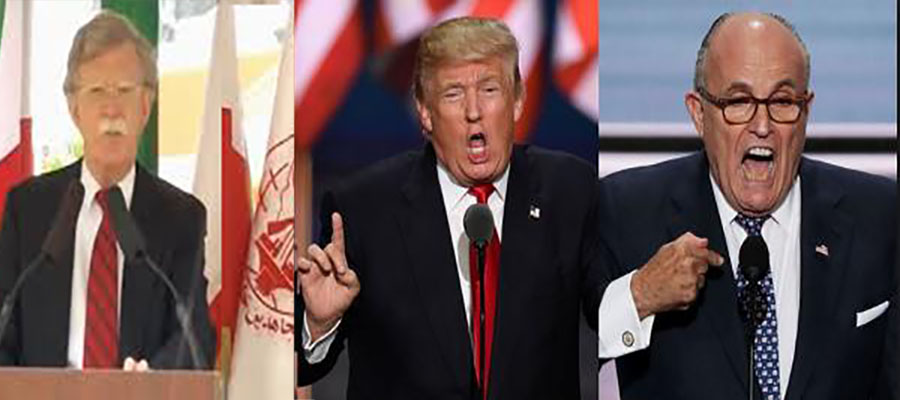
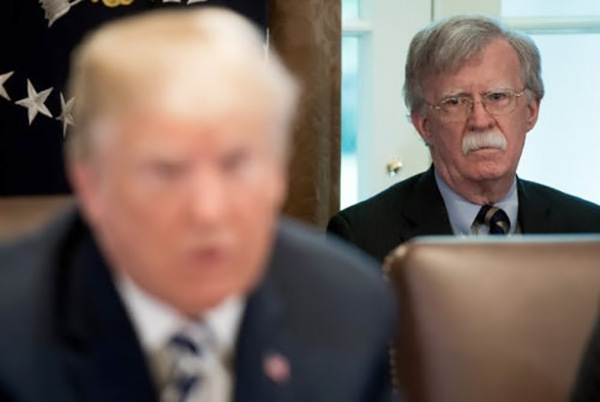
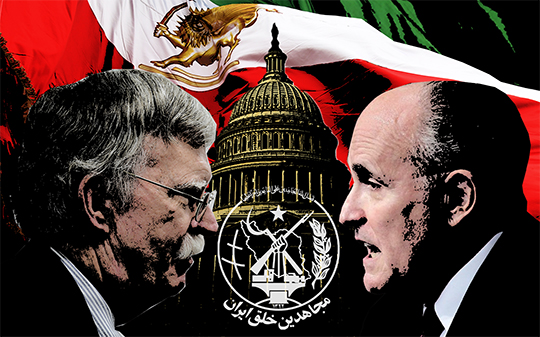
In 2018, Rudy Giuliani, Donald Trump’s personal lawyer, addressed an MKO/MEK rally in Paris, calling for regime change in Tehran. The arrival of National Security Advisor John Bolton, one of the MKO/MEK’s most powerful and enthusiastic advocates, has given the group unprecedented proximity to the White House and a new lease of political life notwithstanding fears the White House has essentially aligned its policy on Iran with that of the group’s political dogmatism.

blank

Iranian MEK pay John Bolton, Rudy Giuliani; NBC’s Engel

Addressing a crowd of MKO/MEK members, Bolton called in no uncertain terms for the fall of Iran’s regime and the rise of the extreme group.
“There is a viable opposition to the rule of the ayatollahs, and that opposition is centered in this room today … The behavior and objectives of the regime are not going to change, and therefore the only solution is to change the regime itself,” Bolton announced to the room.
“The outcome of the president’s policy review should be to determine that the Ayatollah Khomeini’s 1979 revolution will not last until its 40th birthday … The declared policy of the United States should be the overthrow of the mullahs’ regime in Tehran … The behavior and the objectives of the regime are not going to change and, therefore, the only solution is to change the regime itself,” Bolton continued.

Background and Influence
Believed to have between 5,000 to 13,000 members, the MKO/MEK was established in the 1960s as a reaction to the oppressive rule of Shah Reza Pahlavi, a mixture of both Marxism and Islamism. Born in violence, the group has seen its history peppered with calls for bloodshed and acts of terrorism.

In 1981 it led a series of attacks in Iran, which culminated with the killing of 74 senior officials, including 27 MPs. Later that year, its targeted bombing attacks claimed Iran’s president and prime minister’s lives.
Since the 1980s the group has lived in exile, first under the protection of late Iraqi dictator Saddam Hussein whose troops fought with MKO/MEK troops against Iran, then at the pleasure of several European governments, most notably France and Albania.
Eli Clifton, a fellow at the Nation Institute warned against the MKO/MEK’s influence in the U.S. noting,

“When [MKO] members go and swarm Capitol Hill and seek meetings with the members of Congress, they’re very often the only voices that are heard, because there is simply not a lot of Iranian-American presence on Capitol Hill.”

Moreover, Clifton stressed how the organization, which operates through front groups, writes very large checks to those speaking at their events, thus subsidizing political support. Estimates are in the range of $30,000 to $50,000 per speech. Bolton is estimated to have received upwards of $180,000 to speak at multiple events. His recent financial disclosure shows that he was paid $40,000 for one speech at an MKO/MEK event in 2017.
In 2018 Trita Parsi, leader of the National Iranian American Council wrote on Twitter:

“People, let this be very clear: The appointment of Bolton is essentially a declaration of war with Iran. With Pompeo and Bolton, Trump is assembling a WAR CABINET.”

That is not to say that all politicians and/or state officials, whether in the United States or in Europe, have fallen for the group’s clever play on identity politics. As demonstrated by Congress’ bipartisan efforts to curb hawkish cries for war on Iran, many still are willing to make no moves on Iran.
Over two dozen House Republicans joined Democrats to vote for a measure blocking President Donald Trump from taking military action against Iran without congressional approval. In the light of President’s propensity to push the limits of his executive prerogatives, such a measure comes as a welcome respite. The measure, introduced by Democratic Rep. Ro Khanna and Republican Rep. Matt Gaetz, would prohibit federal funds from being used for military action against Iran without the blessing of Congress. The measure passed 251-170.
“House and Senate leaders must recognize the will of Congress and include a strong provision to bar an unauthorized war with Iran in the final version of the defense bill that comes out of conference,” said Sen. Tom Udall (D-NM) in comments to the press.

Deception and Manipulation
Although many will take comfort in the measure, the White House remains too closely tied to the MKO/MEK for anyone to be callous about such political and ideological entanglement, especially if we consider what dire consequences we may all face should war break out in a region already plagued by unrest; notwithstanding the ever-present threat of Islamic radicalism, as expressed by Wahhabis and Salafis.

blank

An Iranian Activist Wrote Dozens of Articles for Right-Wing Outlets. But Is He a Real Person?

As a recent article by Murtaza Hussain in The Intercept states, the MKO/MEK has become too much of a reference point to Washington’s anti-Iranian stance for anyone to entertain any further, at least not if we are serious about acting on facts as opposed to fiction. And yes, in this instance the White House does appear to be collating “fake news” to formulate its Iranian agenda.
As the article infers, Washington’s data on Iran may not be real … at least not in a fashion befitting the most powerful military in the world.
The Intercept article reads: “In 2018, President Donald Trump was seeking to jettison the landmark nuclear deal that his predecessor had signed with Iran in 2015, and he was looking for ways to win over a skeptical press. The White House claimed that the nuclear deal had allowed Iran to increase its military budget, and Washington Post reporters Salvador Rizzo and Meg Kelly asked for a source. In response, the White House passed along an article published in Forbes by a writer named Heshmat Alavi.”
However, “Heshmat Alavi appears not to exist. Alavi’s persona is a propaganda operation run by the Iranian opposition group Mojahedin-e-Khalq, which is known by the initials MEK, two sources told The Intercept.” Alavi, the Intercepts posits, is but the product of a collective effort for war against Iran.
Hassan Heyrani, a high-ranking defector from the MEK who is said to have helped shape and directed similar disinformation campaigns in the past told the Intercept how Alavi’s online persona is “run by a team of people from the political wing of the MEK.”

“They write whatever they are directed by their commanders and use this name to place articles in the press. This is not and has never been a real person,” Hayrani further asserted.

While we may have all grown accustomed to Mr. Trump’s bellicose rhetoric and untruths, the possibility of a war with Iran to fit the ambitions of a group made infamous for its terrorist activities and cultish ideology ought to give us pause.
And though not all may look upon Iran’s current regime as ideologically pleasing, to argue change in favor of a group that disallows its members to marry for it would distract them from their political purpose and due worship of their leaders Masoud and Maryam Rajavi is ill-advised.

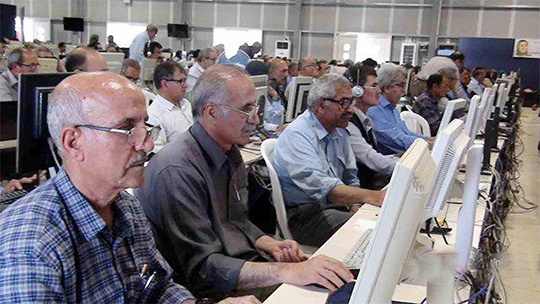
MKO electronic army – Albania Courtesy of The Spring Institute, Tehran.
A well-oiled machine benefiting from the largess of Iran’s wealthy enemies in the region, for example, the Kingdom of Saudi Arabia, the MKO/MEK has long infiltrated both mainstream media and social media through the establishment of its electronic army. In an interview for Al Bawaba in 2018 Masoud Khodabandeh, a former high-ranking MKO/MEK official, shed light on Saudi Arabia’s financial support for the group, explaining how Riyadh regime has funneled, gold bars, cash and other valuables worth hundreds of millions of dollars through various third parties.
Among other revelations, Khodabandeh described how after the fall of Saddam Hussein in Iraq, Prince Turki bin Faisal Al Saud became the outfit’s main supporter.
“I would say that after the fall of Saddam, the MKO, which was then being run by Masoud [Rajavi] under the patronage of Saddam, changed to the organization run by Maryam [Rajavi] under the patronage of Prince Turki bin Faisal Al Saud,” he said.
Reports by several organizations and officials in Iran have revealed how deeply embedded the MKO/MEK is within the media to the extent that its data manipulation is now regarded as gospel by even the most well-established of news agencies.
Heshmat Alavi, whose factual existence has been put into question, for example, has been a regular in outlets such as Forbes, The Hill, the Daily Caller, and The Federalist, begging the question of media complicity to serve the group’s powerful political agenda.
A recent documentary published in Iran argues the group’s systematic manipulation of the media as its leadership attempts to present itself as the only democratic alternative to Iran’s current system of governance, the Governance of the Jurist, enticing ever-more willing war hawks to promote belligerence over diplomacy.

What Lies Ahead for MKO/MEK?
In recent weeks, a timeline that coincides with a hardening of tone against Iran, state officials and activists in Tehran have raised questions as to the group’s future based on Maryam Rajavi’s illness. Sources in Iran have confirmed they believe Mrs. Rajavi suffers from cancer, consequently putting the MKO/MEK’s immediate political sustainability under much uncertainty.
Masoud Rajavi, who has failed to appear in public for several years, is believed to reside in Albania, where the MKO/MEK relocated most of its members, most of whom are well into their 50s and 60s.
While groups such as the MKO/MEK, with an ideological premise that relies on a cult of personality, in this case, that of a couple, have for obvious reasons a limited reach, we ought not to discount its ability to muddy our geopolitical waters should their views be fanned under a hawkish anti-Iranian agenda.

blank

Whitewashing the MEK Makes No Sense

If we consider how the group, as documented by the Intercept over the years has managed through heavy lobbying to wash away its terrorist past to now pose as an acceptable alternative to Iran’s current regime, to the tune of millions of dollars, the MKO/MEK’s ability to taint the broad geopolitical discourse through “influencers” should not be discounted, hence the importance of Congressional oversight on the U.S. Executive branch.

A report by Robert Mackey published in March 2018 issues a crucial warning:

“Despite such doubts that the MEK’s political wing, the National Council of Resistance of Iran, is any more reliable than Ahmad Chalabi’s Iraqi National Congress proved to be, spending lavishly on paid endorsements has earned the group a bipartisan roster of Washington politicians willing to sign up as supporters. At a previous gala in 2016, Bolton was joined in singing the group’s praises by another former U.N. ambassador, Bill Richardson; a former attorney general, Michael Mukasey; the former State Department spokesperson P.J. Crowley; the former Homeland Security adviser Frances Townsend; the former Rep. Patrick Kennedy, D-R.I.; and the former Vermont Gov. Howard Dean. That Paris gala was hosted by Linda Chavez, a former Reagan administration official.”

To disavow Iran politically should not translate into an alliance of convenience with groups we know to have promoted and perpetrated heinous acts of terrorism. Recent attempts at regime change in Libya and Syria, through the weaponization of less than desirable factions, on the basis that the end justified the means should serve as cautionary tales.
To offer more than an ear to a group, which not too long ago, rejoiced at the misfortune of U.S. diplomats certainly flies in the face of the America President Trump has been not only so keen on but vocal on defending and promoting.
To watch the MKO/MEK grow in strength and access ought at the very least to give us pause.

By Catherine Shakdam, citizentruth.org 

(The views and opinions expressed in this article are those of the authors and do not reflect the views of Citizen Truth.)

August 4, 2019 0 comments
FacebookTwitterPinterestWhatsappTelegramSkypeEmail
MEK Spy
Mujahedin Khalq; A proxy force

Israel used MEK info , in its recent attack against Iraq

What Does Israel Want in Iraq?

An Iranian political analyst has enumerated the reasons behind the Israeli regime’s willingness to get closer to Iraq, saying Tel Aviv’s main objective is to cut off Iran’s links with the axis of anti-Israel nations in the Middle East.

The following in an article by Abdolrahman Fathollahi, written exclusively for the Iran Front Page website:

Only 10 days after an Israeli attack on the Hashd al-Shaabi’s base in Amerli in the Saladin province of Iraq, media reports indicate that Tel Aviv has once again launched an attack, this time on “Abu Muntazir al-Mohammadawi” base, formerly known as Camp Ashraf, located in Diyali province north of Baghdad. However, Hashd al-Shaabi commander, Talib al-Mousawi, has dismissed the reports of such an attack, drawing a link between the attempts to prompt speculation about the issue and the Hashd al-Shaabi’s move to detonate and dismantle the remaining weapons of war inside Camp Ashraf.

Moreover, news reports show that an investigation committee formed to probe into the Amerli incident has concluded that there has been no attack. On the other hand, it seems that a visit by Maryam Rajavi, leader of the MKO terrorist group, and the launch of the recent attack was not a coincidence. Above all, the MKO’s perfect familiarity with the region after 30 years of presence there could have been taken advantage of by Israel for carrying out the attack.

Furthermore, according to the estimates provided by a number of Iraqi security and intelligence officials, the July 19 attack has involved the launch of three “Harop” loitering munitions from F-16 fighter jets. Since Israel is the only actor in the Middle East in possession of such weapons, it seems that Tel Aviv has perpetrated the strike against that base in Amerli of Saladin province.

In addition, what has become apparent is that the actual developments taking place in the Middle East, particularly at the Strait of Hormuz and the Persian Gulf, have resulted in an escalation of tensions. The path initiated by Trump’s withdrawal from the JCPOA and the re-imposition of sanctions was also affected by a security approach later; meanwhile, the deployment and presence of warships from the European and Southeast Asian countries could add to the security atmosphere in the region.

In the wake of these developments, one of the focal centers of the White House’s attempts to mount pressures on Tehran will be definitely Iraq, a country and actor with which Iran has established the highest degree of economic, political, diplomatic, military and security cooperation. The two nations have also strong cultural and religious commonalities.

Specifically mindful of this fact, Washington is seeking to turn Iraq into its trump card in the pressure campaign.

The Latest Act in Israel’s Iran Nuclear Disinformation Campaign

While the US has imposed economic sanctions and has also put its forces in Iraq at a high level of alert –citing concerns about some military and security developments in the wake of a possible skirmish with the military forces allegedly affiliated with Iran, Hashd al-Shaabi in particular– the ground has been prepared for Israel to look for a role in Iraq in order to exert an influence over Iraq’s ties with Syria and over the ongoing developments in the war-hit country on the one hand and, on the other, to overshadow Tehran-Baghdad relations in the current delicate situation.

In this regard, the news reports that Israeli intelligence agents had patrolled and scouted around downtown Baghdad with American military forces in 2018 and early 2019 certainly reveal that Tel Aviv had been seeking a metamorphosis of Iraq in relation to the regional developments for the pivotal purpose of improving the West Asia’s view of Israel, amid the period of heightened tensions between Tehran and Washington in the wake of Trump’s withdrawal from the JCPOA.

Israelis’ reasoning is that Iraq is the main bridge linking Iran to Syria, and then to Lebanon, Palestine and the occupied territories, so they believe that if Iraq’s role and position in such axis diminishes for any reason, it will definitely affect Tehran’s connection with those regions, and will therefore decrease Iran’s activities and role-playing along the border of Israel. All these facts have now made Iraq into a country with special significance for Israelis, especially after a series of anti-Israeli armed forces rose to power, like Hashd al-Shaabi which, after the defeat of ISIS, has turned into an influential actor in Iraq’s security, intelligence, military and even political-diplomatic interaction with Syria, Lebanon and Iran in the course of strengthening the anti-Israeli axis in the Middle East.

Israel’s concerns about the role of such Iraqi forces reached the highest degree in October 2018, when reports came out that a number of short-range ballistic missiles had been transferred from Iran to Iraq and to its western border regions near Jordan. As a result, it was already predictable that Israel’s focus on Iran’s presence and activities in Iraq on various pretexts would pave the way for the Israelis to launch attacks on Iranian-sponsored forces in Iraq.

Besides, Israel is pursuing a step-by-step plan for Iraq apart from those attacks. Tel Aviv is trying to force Iraq into a situation that would encourage it to seek normalization of ties with Israel, like a number of Persian Gulf littoral Arab states. Some cases of the Israeli ploy include a recent visit to Israel by Nobel Peace Prize 2019 laureate, Nadia Murad, and by Lamiya Aji Bashar, winner of 2016 Sakharov Prize, with a 15-strong delegation. Nadia Murad had already visited Israel back in July 2017. The other clues include the comments by Iraq’s Ambassador to Washington Fareed Yasseen a few weeks ago on the possibility of normalization of Iraq’s relations with Israel, as well as the last year’s trips to Israel by three Iraqi delegations comprised of Sunni and Shi’ite figures.

For the second step, Tel Aviv is trying to change the policies of Baghdad towards the ongoing developments in Syria, the military and security cooperation between Baghdad and Damascus along the common border, and above all towards the broad interaction between Iran and Iraq in all areas, in an attempt to exclude Iraq from the anti-Israeli axis in the region.

Nonetheless, the Iraqi political leaders, including Sayyid Ammar al-Hakim, Prime Minster Adil Abdul-Mahdi, Head of the Badr Organization Hadi Al-Amiri, national security adviser Falih Al-Fayyadh, President Barham Salih, and many others emphasize the necessity for Iraq to stay away from any foreign or regional tension, and even stress the need for Iraq’s role in reducing the tensions.

By Abdolrahman Fathollahi 

Abdolrahman Fathollahi is a journalist who writes on Iraq and the Iraqi Kurdistan. He has been a journalist since 2007.

August 3, 2019 0 comments
FacebookTwitterPinterestWhatsappTelegramSkypeEmail
Maryam Rajavi
Mujahedin Khalq; A proxy force

The MEK: Illusion vs. Reality

The oddly named People’s Mojahedin Organization of Iran (known as the MKO or MEK), whose sole purpose is the overthrow of the people’s government of Iran, has been busy. Some of their members, who seem to be mainly elderly, are technologically savvy, and use social media to further their disgraceful cause. But they don’t just individually post to Facebook, Twitter and other sites; they establish accounts under a variety of names, and ‘tweet’ and post from them, thus giving the impression that the MEK has widespread support.
It does, however, have some significant support from the United States government, which once designated it a terrorist organization, but now embraces it.

One may wonder why the U.S., which purports to support the self-determination of people everywhere (except in Palestine, Iran, Venezuela, Puerto Rico, Libya, Yemen, Syria, the Philippines, Guam, Cuba, and other places too numerous to name right now), would support an organization responsible for the deaths of many innocent people, that seeks the overthrow of the Iranian government. It really isn’t too much of a mystery.

After the U.S. overthrew the democratic government of Prime Minister Mohammad Mosaddegh in 1953, it installed the brutally oppressive Shah of Iran. His disregard for human rights and disdain for his own people was all fine with successive U.S. administrations, but in 1979, the people of Iran had had enough, overthrew him, and established the Islamic Republic of Iran.
The Shah had done the bidding of the U.S. government; if any of its citizens disagreed, they simply disappeared. But once the new Islamic Republic of Iran was created, there was an entirely different set of rules by which the U.S. had to play, and they weren’t rules of the U.S.’s making. And it didn’t like them one bit. No longer did the U.S. have a complacent ally, which posed no threat to Israeli hegemony. No longer could the U.S. call the shots in the Straits of Hormuz. No, things were different now, and the mighty U.S. was no longer in control.

America Is Wide Open for Foreign Influence

For years, the MEK was officially considered a terrorist organization by much of the world, but the U.S. rescinded that designation in 2012. Why it would endorse an organization whose sole purpose is the overthrow of a foreign government would be puzzling, but this is the hypocritical, terrorist United States we are discussing.

And what of the MEK? It’s current leaders, Maryam Rajavi and her husband, Massoud Rajavi, see themselves as the future rulers of Iran, if they are successful in their quixotic quest to thwart the will of 80,000,000 people. Outside of the repressive, anti-government circles of their own organization, they appear to have little Iranian support, although the U.S. would be happy to establish them as U.S. puppets.
And then there is the MEK’s distinguished journalist, Heshmat Alavi, a prolific anti-Iranian writer, who simply doesn’t exist! Yes, those tech-savvy MEK members created him, so they could write a variety of articles under one name, which would then become ‘prominent’ in anti-Iran circles.
Photographs purporting to be of dedicated MEK members, hard at work at their computer screens, probably writing articles that will be published under the name of a non-existent writer, or busy ‘tweeting’ and posting from accounts of non-existent people, indicate that most of them were probably born early in the terrorist reign of the Shah. This writer reviewed five such photographs, and of the dozens of people shown, perhaps two are under the age of sixty. There is nothing wrong with being older; wisdom often (but certainly now always) comes with years, but youthful optimism and enthusiasm have long since left these people. Even assuming that some Iranians, for some bizarre reason, support the MEK, these pictures represent the group that opposes the will of most of Iran’s 80,000,000 people. It is hard to imagine a dynamic leader emerging from this group of people, one who will inspire the masses to rise up against the very government they selected forty years ago.

So let us summarize: with the support of the United States and a few other governments, the MEK has assembled a group of mainly elderly people who create social media accounts under fictitious names, and ‘tweet’ and post anti-Iranian information. They write articles and submit them, often successfully (one must give them credit for deceiving some major U.S. news outlets) under the name of a non-existent journalist. Like all those social media accounts, said journalist is a figment of MEK’s creative imagination. They take their instructions from a woman who sees herself as Iran’s new savior. They see themselves as being able, with the assistance of the U.S., of course, to defeat the 40-year-old people’s revolution.
When this writer visited Iran in the summer of 2017, he found a modern, vital and exciting nation. Illegal and immoral U.S. sanctions have certainly taken a toll on the economy, but as a friend of his from Iran commented, Iranians are accustomed to sanctions, and manage fine anyway.
The MEK and its criminal members and leaders will not prevail; the Iranian people are proud of what they have accomplished, and will not allow a few disillusioned people, even those who have the support of the United States, to defeat them.
by Robert Fantina, counterpunch

August 3, 2019 0 comments
FacebookTwitterPinterestWhatsappTelegramSkypeEmail
blank
Mujahedin Khalq; A proxy force

US Using MEK Terrorists until Expiry Date

Head of Iran’s Civil Defense Organization Brigadier General Gholam Reza Jalali said Washington is using Mojahedin-e Khalq Organization (MKO, also known as the MEK, PMOI and NCRI) terrorists to attain its goals against Tehran until their expiry date arrives.

“The Monafeqin (hypocrites as MKO terrorists are called in Iran) have always been a plaything in the US hands and of course, they have an expiry date,”General Jalali said in Tehran on Monday.

He expressed pleasure that the MKO terrorist group has been expelled from Iraq, and said,”Their headquarters is now in Albania and they are pursuing a new plot using the internet.”

General Jalali explained that the MKO terrorists are misusing some economic weaknesses inside Iran and attempting to create chaos in the country, adding that the foreign social media have turned into a new ground for the MKO to exercise their terrorist moves.

In relevant remarks earlier this month, Iranian Ambassador and Permanent Representative to the United Nations Majid Takht Ravanchi told a UNSC meeting that more than 17,000 civilians of his country had been killed by Mojahedin-e Khalq Organization (MKO), a terrorist group sponsored by the US and Saudi Arabia.

Addressing a UN Security Council meeting entitled “Threats to international peace and security: Linkage between international terrorism and organized crime” in New York, Takht Ravanchi described Iran as a victim of terrorism and extra-national organized crime, stating that the MKO, supported by some regional and European countries, is working closely with the US intelligence service in a bid to descend Iran into chaos.

“Even though terrorists and organized criminals differ in their motives and methods, they are similar to one another concerning the repercussions of their acts, which are total disruption and comprehensive destruction,” he added.

He went on to say that Iran has been a victim of terrorists and international organized criminals, and has been a pioneer in the fight against them.

Takht Ravanchi highlighted that 17,161 Iranian citizens, including late president Mohammad Ali Rajayee, former Prime Minister Mohammad Javad Bahonar, late Head of Supreme Judicial Council Ayatollah Mohammad Beheshti, late Deputy Chief of the Iranian Armed Forces General Staff Ali Sayyad Shirazi, 27 legislators as well as four nuclear scientists have been killed by terrorists.

“The MKO terrorist group, which bears responsibility for the death of more than 12,000 Iranian civilians, is currently being sponsored by a number of regional counties and several states in Europe. (The United States of) America has provided its members refuge after removed the group from its list of designated terrorist organizations. The US intelligence service is working closely with them in order to hatch conspiracies of destruction in Iran,” the Iranian diplomat pointed out.

The MKO is listed as a terrorist organization by much of the international community. Its members fled Iran in 1986 for Iraq, where they received support from then dictator Saddam Hussein.

The notorious outfit has carried out numerous attacks against Iranian civilians and government officials for several decades.

In 2012, the US State Department removed the MKO from its list of designated terrorist organizations under intense lobbying by groups associated to Saudi Arabia and other regimes adversarial to Iran.

A few years ago, MKO members were relocated from their Camp Ashraf in Iraq’s Diyala Province to Camp Hurriyet (Camp Liberty), a former US military base in Baghdad, and were later sent to Albania.

Those members, who have managed to escape, have revealed MKO’s scandalous means of access to money, almost exclusively coming from Saudi Arabia.

The MKO terrorist group specified the targets as Major General Qassem Soleimani, who commands the Quds Force of the Islamic Revolution Guards Corps (IRGC), and Iranian Judiciary Chief Seyed Ebrahim Rayeesi.

The terrorist organization said it would “welcome” their assassination, adding that it desired for the ranking officials to “join” Asadollah Lajevardi, Tehran’s former chief prosecutor, and Ali Sayyad-Shirazi, a former commander of the Iranian Army’s Ground Forces during Iraq’s 1980-88 war against Iran.

Earlier in June, a leaked audio of a phone conversation between two members of MKO, revealed Saudi Arabia has colluded with the MKO elements to frame Iran for the recent tanker attacks in the Persian Gulf.

In the audio, which is being released by the Iran Front Page for the first time, Shahram Fakhteh, an official member and the person in charge of MKO’s cyber operations, is heard talking with a US-based MKO sympathizer named Daei-ul-Eslam in Persian, IFP news reported.

In this conversation, the two elements discuss the MKO’s efforts to introduce Iran as the culprit behind the recent tanker attacks in the Persian Gulf, and how the Saudis contacted them to pursue the issue.

“In the past week we did our best to blame the [Iranian] regime for the (oil tanker) blasts. Saudis have called Sister Maryam (Rajavi)’s office to follow up on the results, [to get] a conclusion of what has been done, and the possible consequences,” Fakhteh is heard saying.

“I guess this can have different consequences. It can send the case to the UN Security Council or even result in military intervention. It can have any consequence,” Daei-ul-Eslam says.

Attacks on two commercial oil tankers in the Gulf of Oman on June 13, and an earlier attack on four oil tankers off the UAE’s Fujairah port on May 12, have escalated tensions in the Middle East and raised the prospect of a military confrontation between Iran and the United States.

The US, Saudi Arabia, and the UAE have rushed to blame Iran for the incidents, with the US military releasing a grainy video it claimed shows Iranian forces in a patrol boat removing an unexploded mine from the side of a Japanese-owned tanker which caught fire earlier this month.

It later released some images of the purported Iranian operation after the video was seriously challenged by experts and Washington’s own allies.

The MKO which is said to be a cult which turns humans into obedient robots, turned against Iran after the 1979 Revolution and has carried out several terrorist attacks killing senior officials in Iran; yet the West which says cultism is wrong and claims to be against terrorism, supports this terrorist group officially.

After the Islamic Revolution in 1979, the MKO began its enmity against Iran by killings and terrorist activities.

August 1, 2019 0 comments
FacebookTwitterPinterestWhatsappTelegramSkypeEmail
blank
Mujahedin Khalq; A proxy force

He was recruited By terrorists in Refugee Camps

A member of the Mujahedin-e Khalq Organization (MKO) terrorist group has, in an interview, narrated the story of his life, including the way he was recruited in a refugee camp in Europe, and the terrorist operation he was about to carry out in Iran.

Saeed is among those who have joined the MKO terrorist cult in Europe. He emigrated from Iran, and, due to lack of awareness and negligence, joined the MKO in Europe before finally ending up in Camp Ashraf, the former MKO base in Iraq.

Tasnim News agency has conducted an interview with him. Due to security concerns, his real and full name as well as his photo are not published here.

– First, introduce yourself.

I’m Saeed. I’m 50 years old and continued my education up to the level of high school diploma. I’m single.

– How did you get familiar with the terrorist MKO group?

In 1992, I met some of my friends abroad. A [human] trafficker took me to the Netherlands where I first entered a refugee camp and stayed there for around 4 months. Then I left the camp.

As I had learned the language there very well, the refugee camp officials asked me go to the camp a few hours every day to work as a translator and help Iranians there. At that time, MKO members kept visiting the camp. They came to recruit new members from the migrants. I was only 25 years old at the time and had no information about political groups. It was the first time I had met them.

They would bring some pamphlets and movies with them and distributed them among the refugees to get familiar with the MKO. When a new individual or group entered the camp, MKO members would immediately know and come over to get familiar with the new comers.

Another thing they did was to take with them some individuals as volunteers to take part in MKO demonstrations and meetings in European countries. Those who wanted to go with them were people who had been tired of the atmosphere in the camp and wanted to go to another city free of charge or wanted to see another country or a new place for variety. They would also receive a free meal, which was an incentive, too.

The individuals who talked to us were very experienced. I was easily influenced by their words and I was attracted.

They would show us footage of Maryam and Masoud (Rajavi), and the way they would speak about these two people made me so interested that I really wanted to see Masoud even for a second.

In those days, whoever went to Europe had to start financial-social work. In other words, we had to walk in the streets and collect money from people for the organization. Of course, this was not done in the name of the organization. The MKO was running a few charities in Europe, and we worked under their names. Under regulations related to charities in the Netherlands, anyone who helped us would get a receipt which he or she could use to get tax exemption.

I had been brainwashed in those classes, so much so that we even spent our own money for the organization. I received salary as an asylum-seeker. I gave part of that to the organization, and I thought I was serving my country.

Not only did Iranians not help us, but they even confronted us.

After that period when I was in Europe to have a better life, I volunteered to go to Iraqi deserts. In there, we spent a major part of our time taking part in speeches, meetings to discuss the current affairs or performing weekly ablutions. In fact, we had to make confessions about our thoughts from morning until night. We had to criticize ourselves from morning till night, saying, for example, that I haven’t done enough for such and such task, I have had inappropriate thoughts on that occasion, etc. We spent the rest of the day doing parades and tough work.

– How did you defect from the organization and come to Iran?

Another individual and I had come to Iran to carry out a terrorist operation, but we were arrested very soon. My companion took his cyanide pill and died. I took the pill, too, but they rushed me to hospital and I survived. They managed to resuscitate me.

I fell victim to this terrorist group. Part of my life was wasted in this group and part of it in jail. I lost my life. I thank God that I failed to carry out the terror operation because If I had done that, it was only the organization and Masoud that would have benefited from it. Moreover, I would have been held accountable.

Of course, the Netherlands is an accessory to it all. I had sought asylum in the Netherlands and was seeking a better life, but they would open the doors of refugee camps to let in a bunch of terrorists who would deceive and recruit people.

They even deceive the people of their own country and swindle them out of their money allegedly to give it to orphaned children. In the Netherlands, they would show me the pictures of children. It was not clear in which countries the pictures had been taken. Later when I went to Camp Ashraf, I found out that there were no children at all, and that the money that was raised was only used to cover the cost of Maryam and Masoud’s debauchery.

Europe, which claims to be and advocate of human rights and claims to be fighting terrorism, has practically paved the way for a terrorist group such as the MKO, so that they are able to do anything from recruiting members to raising money. People like me are the victims of the irresponsibility of the likes of the Dutch government.

July 31, 2019 0 comments
FacebookTwitterPinterestWhatsappTelegramSkypeEmail
MEK Spy
The MEK; Baath Party Accomplice

MEK conducting phone spying against Iran

Head of the Iranian Army’s Strategic Studies says members of the terrorist Mojahedin-e Khalq (MEK) are conducting espionage activities against Iran by contacting the country from Australia, Europe and the U.S.

“I do not think anyone is as skilful as the Monafiqeen in phone espionage,” Brigadier General Ahmadreza Pourdastan said on Sunday, using the term Monafiqeen, which literally means “the hypocrites”, to refer to members of the MEK.

Pourdastan made the remarks at a ceremony to mark the 31st anniversary of Operation Mersad, 26–30 July 1988, which was the last major military operation of the Iran–Iraq War, involving a successful counterattack against a July 1988 military incursion from Iraq, by a military force of about 7,000 members of the MEK.

The MEK was established in the 1960s to express a mixture of Marxism and Islamism. It launched bombing campaigns against the Shah, continuing after the 1979 Islamic Revolution, against the Islamic Republic. Iran accuses the group of being responsible for 17,000 deaths.

Based in Iraq at the time, MEK members were armed and equipped by Iraq to fight against Iran alongside the Iraqi dictator Saddam Hussein during a war which lasted for 8 years.

“During Operation Mersad, the Iraqi Army provided air support and opened the road to Sarpol-e Zahab for the Monafiqeen,” Pourdastan said, adding that the MEK militiamen were then faced with a large number of people who delayed their advance, hence providing the Iranian Army with an opportunity to counter the aggression.

“Thanks to God, the Monafiqeen failed due to the commanders’ acumen and the people’s resistance,” he explained.

The general noted that the Iraqi Army’s eavesdropping became much more powerful after the MEK had joined them.

“The Monafiqeen eavesdropped all of our conversations and were familiar with the key words our warriors used,” he remarked.

Pourdastan then compared the MEK with the Daesh (ISIL) terrorist group, saying Daesh is the new version of the MEK, arguing that “we should not depict the enemy as weak and pathetic in our movies.”

Iran’s democracy foiled MEK, U.S. plots: government spokesman

Government spokesman Ali Rabiei draws a parallel between the MEK’s false belief that it had popular support in Iran when it launched attack on Iran in late July 1988, and the U.S. withdrawal from the 2015 nuclear agreement, which President Rouhani has attributed to Washington’s false belief that the Iranian people were fed-up with the system.

On Sunday, government spokesman Ali Rabiei also marked the anniversary of Operation Mersad in his press conference, hailing the victory of the Iranian Army, led by then-Ground Force Chief Brigadier General Ali Sayyad Shirazi, against the MEK.

Sayyad Shirazi was assassinated in 1999 while serving as the deputy chief of the armed forces. The MEK claimed responsibility for the assassination, which it said was in revenge for Operation Mersad.

Rabiei said, the Islamic Republic’s democracy has “foiled the plots hatched by the Monafiqeen and ill-wishers, who both wrongly assumed that the Iranian people would not support the establishment.”

He was drawing a parallel between the MEK’s false belief, before launching the attack, that it had social support in Iran, and the U.S. withdrawal from the 2015 nuclear agreement last year, which President Rouhani has attributed to Washington’s false belief that the Iranian people were fed-up with the system.

Rabiei then pointed to Washington’s “maximum pressure” campaign against the Islamic Republic, saying, “What we see today of U.S. sanctions and measures by the establishment’s ill-wishers closely resembles Monafiqeen’s aggression at the time of Operation Mersad.”

The MEK’s affiliation to the U.S. government attracted attention in 2012 when the latter removed the former from its list of foreign terrorist organizations.

The link became more overt after U.S. President Donald Trump assumed office in 2017. Trump’s associates, including his personal lawyer Rudy Giuliani and his national security advisor John Bolton have attended the MEK’s meetings and praised the group as “democratic alternative” to the Islamic Republic.

July 30, 2019 0 comments
FacebookTwitterPinterestWhatsappTelegramSkypeEmail
blank
Mujahedin Khalq; A proxy force

Terrorist supporters at white house

This Iranian opposition group was labeled a terrorist organization. Now it has supporters in the White House

For decades, the United States categorized the Mujahedin Khalq, or MEK, as a terrorist organization. In the Trump era, members of the Iranian dissident group, which seeks to topple the government in Iran, have found key allies in Washington.

People close to President Trump, including national security advisor John Bolton, and Trump’s personal lawyer, Rudolph W. Giuliani, are supporters of the Mujahedin Khalq. For years, Bolton and Giuliani have called for a change of government in Tehran and have described the Mujahedin Khalq as a viable alternative to the government of the Islamic Republic.

This month, Giuliani appeared at a Mujahedin Khalq conference in Albania, where he gave a speech condemning the Islamic Republic and described the group as a “government in exile.”

“This is a group that we can support. It’s a group we should stop maligning and it’s a group that should make us comfortable having regime change,” Giuliani said to a cheering audience.

During a 2017 Mujahedin Khalq conference in Paris, Bolton told a room filled with its members that U.S. policy should be “the overthrow of the mullahs’ regime in Tehran.”

He added, “There is a viable opposition to the rule of the ayatollahs and that opposition is centered in this room today.”

Both Giuliani and Bolton have received tens of thousands of dollars from the group in exchange for speaking at its rallies and conferences.

Founded five decades ago by leftist students in Iran who opposed the Western-backed monarchy of Mohammed Reza Shah Pahlavi, the Mujahedin Khalq is an insular organization with a militant past. Many Iranians despise the group and from 1997 to 2012, it was on the U.S. State Department’s list of terrorist organizations in part because of its bloody attacks in the 1970s that left American diplomats and businessmen dead.

The Mujahedin Khalq and its supporters claim that the group stands for a free and democratic Iran and that its decades-long struggle has helped make it the most qualified opposition group. But critics and human rights organizations describe the group as a cult, and many lawmakers and State Department officials don’t believe it has popular support or influence.

The group has a history of networking with U.S. politicians on both ends of the political spectrum.

“Different people come and go with each administration. We’ve had the same position and demands over the years no matter who is in the White House,” said Alireza Jafarzadeh, deputy director of the National Council of Resistance of Iran, a Mujahedin Khalq-linked group based in Washington.

But despite its continued lack of support among many in Washington, the Mujahedin Khalq feels emboldened now that tensions with Tehran have escalated and it has key supporters who have Trump’s ear. “I can’t recall in the past 40 years seeing such a two-year period where there’s been lots of developments shaping Iran,” said Jafarzadeh.

***
The Mujahedin Khalq, founded in the early 1960s by husband-and-wife team Massoud and Maryam Rajavi, carried out a series of terrorist attacks during the 1970s against Iran in which several U.S. military personnel and civilians who were working on defense projects in Tehran were killed, according to a 1994 U.S. State Department report.

The group also helped the country’s Shiite Muslim clerics topple the shah during the 1979 revolution. But it didn’t take long before the newly formed conservative theocracy headed by anti-Western Ayatollah Ruhollah Khomeini came to view the Mujahedin Khalq as a rival.
About 2,000 members of the group relocated to Iraq during the 1980s.

In addition to providing shelter, then-Iraqi President Saddam Hussein armed the group with heavy military equipment. During the Iran-Iraq war, its members teamed with Baghdad in an attempt to take down the Islamic Republic. Iraq remained a safe haven for the Mujahedin Khalq for nearly two decades.

Throughout that time, the group continued to launch attacks inside Iran and on its embassies abroad. The State Department described the Mujahedin Khalq in its 1994 report as “the single most violent underground group” in Iran.

“Shunned by most Iranians and fundamentally undemocratic,” the report said, the Mujahedin Khalq is not “a viable alternative to the current government of Iran.”

U.S. relations with the group, however, grew complicated after the American-led invasion of Iraq in 2003.

Although the group disarmed and was confined to Camp Ashraf, a 14 square-mile former Iraqi military base , the new Iraqi government wanted its members to leave. Faced with a potential humanitarian crisis, officials in Washington sought to find the Mujahedin Khalq a new home.

Daniel Benjamin, the State Department counter-terrorism coordinator under then-President Obama, said that was a factor in removing the Mujahedin Khalq from its list of foreign terrorist groups.

“All these people were the subject of violence, that’s what really caused the U.S. to look at the issue … to avoid a humanitarian catastrophe,” Benjamin said.

Eventually the U.S. brokered a deal with the government of Albania.

“The Albanian government basically wanted reassurance that they weren’t a terrorist group. I didn’t promote them as an ideal group but they didn’t deserve to be slaughtered,” said Daniel Fried, who was tasked by then-Secretary of State Hillary Clinton to find a country that would accept Mujahedin Khalq members.

Their future looked grim up until after the presidential election in 2016, when Trump’s “maximum pressure campaign” on Iran became American policy.

Already, several policies that the Mujahedin Khalq had long advocated for, such as designating Iran’s Revolutionary Guard as a terrorist group and placing U.S. sanctions on Iranian Supreme Leader Ayatollah Ali Khamenei, have been implemented under Trump.

“This administration sees ‘the enemy of my enemy as my friend.’ So any organization that opposes that Islamic Republic is fine by them,” said Barbara Slavin, the head of the Future of Iran Initiative at the Atlantic Council. “The administration knows it makes the Iranian government crazy. It sends a message of animosity.”

***

But the extent to which the Mujahedin Khalq can gain stronger credibility in Washington — even during the Trump administration — remains uncertain.

“The MEK has American blood on its hands. No serious observer or scholar of the region that I’ve met has thought that the MEK was remotely acceptable to any significant percentage of the Iranian people,” Benjamin said.

And in recent months some officials in the Trump administration have taken steps to distance it from the Mujahedin Khalq.

In April, Secretary of State Michael R. Pompeo met privately with a small group of Iranian Americans in Dallas. Michael Payma, an attorney, was one of those people invited to attend the roughly hourlong conversation.

“Pompeo said he knows Giuliani and Bolton have had some kind of relationship with the MEK, but he made it clear that neither him nor the president have any association with the group,” Payma recalled.

In June, Brian Hook, U.S. special representative for Iran, reiterated those points when he told reporters that the State Department meets with all members of the Iranian diaspora and that the future of Iran will be decided by its people, not the United States.

“We have been, I think, zealously neutral with respect to groups who all care very much about the future of Iran, and that’s going to be something which the people of Iran decide for themselves,” Hook said.

Regardless, Washington’s cozier relations with the Mujahedin Khalq has Tehran concerned.

In recent years, there has been an uptick in attacks against the group by Iran. Two Iranian suspected of surveilling the Mujahedin Khalq were arrested in Albania in 2018, and an Iranian diplomat in Vienna was arrested on suspicion of plotting to bomb a Mujahedin Khalq rally outside Paris.

Nader Karimi Juni, a Tehran-based analyst, said Iran is on edge because the Mujahedin Khalq has members and supporters in positions of power in the U.S. and Europe.

“Iran has good reason to regard the MEK as a threat,” Juni said.

By Melissa EtehadStaff Writer , latimes.com

Special correspondent Ramin Mostaghim in Tehran contributed to this report.

July 30, 2019 0 comments
FacebookTwitterPinterestWhatsappTelegramSkypeEmail
MKO defectors in Albania
Albania

work permits issued for MEK formers

Good news, MEK formers have been issued work permits.
After all the pressure the MEK and the US exerted on the UNHCR to not only give no succour to these people but to leave Albania completely, and all the pressure exerted on the Albanian government not to help or facilitate the survival of these MEK formers, they have succeeded in their aim.
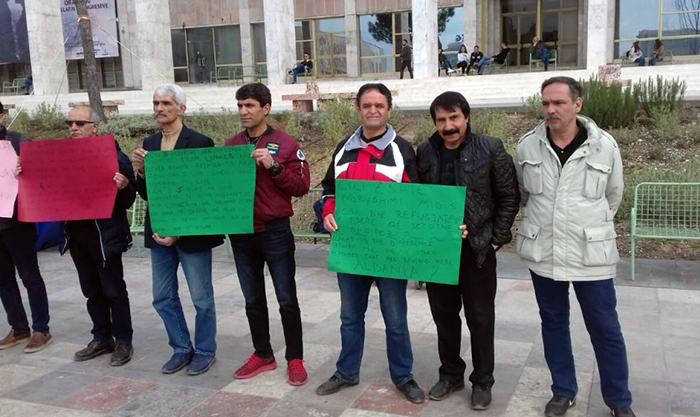
With the help of hunger strikes and demonstrations and the work of lawyers, the Albanian government has backed off and as a minimum has accepted that these people exist in their own right and are separate from the group supported by the US.

They are accepted as individuals, not as commodities.
The authorities have accepted they must issue work permits for these formers who live in Tirana. Many writing about this have said this is a huge setback for the MEK because they have used this lack of status to threaten people not to leave.
They tell members ‘you will be destitute if you leave the camp’.
Many write to congratulate the ex-members for their achievement and hard work over last few months.

July 28, 2019 0 comments
FacebookTwitterPinterestWhatsappTelegramSkypeEmail
blank
Mujahedin Khalq Organization as a terrorist group

Iran blasts US, Europe support of MEK

The top military aid to the Leader of Islamic Revolution Major General Safavi said that the terrorist group of MKO is the evilest anti-Iranian group.

Commemorating the thirty-first anniversary of the Mersad glorious operation in Kermanshah province, western Iran on Thursday, M.G Safavi noted that the terrorist group that has been assassinated and martyred countless Iranian civilians and senior clerics so far using terror attacks is under the US and European support.

“The Islamic Republic of Iran is a divine, invincible power which is increasing day by day, while on the contrary, the US and Zionists’ power is reducing year by year,”the top military aid to the Leader of Islamic Revolution stressed.

The commemoration ceremony of the 31st anniversary of MKO defeat anniversary (Mersad operation) held in Strait of Mersad, Islamabad, Western Iran with the presence of provincial officials, commanders and combatants of the eight years imposed war of Iraq against Iran.

The MKO has a dark history of assassinations and bomb attacks against the Iranian government and the Iranian people.

It notoriously sided with Saddam’s regime during the eight-year war with Iran.

July 27, 2019 0 comments
FacebookTwitterPinterestWhatsappTelegramSkypeEmail
Newer Posts
Older Posts

Recent Posts

  • The black box of the torture camps of the MEK

    December 24, 2025
  • Pregnancy was taboo in the MEK

    December 22, 2025
  • MEPs who lack awareness about the MEK’s nature

    December 20, 2025
  • Why did Massoud Rajavi enforce divorces in the MEK?

    December 15, 2025
  • Massoud Rajavi and widespread sexual abuse of female members

    December 10, 2025
  • Facebook
  • Twitter
  • Instagram
  • Youtube

© 2003 - 2025 NEJAT Society . All Rights Reserved. NejatNGO.org


Back To Top
Nejat Society
  • Home
  • Articles
  • Media
    • Cartoons
    • NewsPics
    • Photo Gallery
    • Videos
  • Publications
    • Books
    • Nejat NewsLetter
    • Pars Brief
  • About Us
  • Contact us
  • Editions
    • عربي
    • فارسی
    • Shqip