Mossad MEK Iran tip-off not trustworthy
A US aircraft carrier group and bomber task force were deployed to the Middle East after a tip-off on a “credible threat” from Iran, which came, conveniently vague and timely, from Israeli spy agency Mossad, it has been reported.
At an April 15 meeting in Washington, Israeli National Security Council chief Meir Ben-Shabbat passed along a warning to US National Security Advisor John Bolton, senior Israeli officials told Axios. The information Bolton received was left vague: the attack could hit a US target in the Persian Gulf, or maybe Saudi Arabia, or maybe the UAE.
“It is still unclear to us what the Iranians are trying to do and how they are planning to do it,” one of the senior officials said, but added it was “clear” that an unspecified event would take place sometime in the future, which would have unstated consequences.
The Axios report was corroborated by a separate report from Israel’s channel 13 journalist Barak Ravid, who claimed that Israel had handed over information to the US about an alleged Iranian plot to target US interests in the Gulf.
However elusive the bait, Washington eagerly dashed to bite, deploying the USS ‘Abraham Lincoln’ carrier strike group and a bomber task force to the Middle East, in a maneuver that just happens to play right into Israel’s hands.
Under the Trump administration, the US has been parroting Israel’s hardline policies towards Iran, the Jewish state’s regional archrival, first withdrawing from the landmark 2015 nuclear deal and then hitting Tehran with fresh rounds of sanctions. Last month, Washington went as far as to formally designate the Iranian Revolutionary Guard Corps (IRGC) a “terrorist organization.” Israeli PM Benjamin Netanyahu laid bare his relationship with US President Donald Trump, saying the terrorist listing was done at Netanyahu’s “request.”
Acting Secretary of Defense Patrick Shanahan did not specify from where he received the valuable intelligence, tweeting only that the deployment of the strike group “represents a prudent repositioning of assets in response to indications of a credible threat by Iranian regime forces.”
The Mossad doesn’t have the most trustworthy record when it comes to intelligence on Iran. It was likely the Mossad who, in 2004, passed fabricated documents to Iranian opposition group the Mujahedin-e-Khalq (MEK) which falsely portrayed Iran’s civilian nuclear energy program.
Today’s political climate in the United States is different from the pre-Iraq war era — but the ambitions of some of the people in Congress are the same
The chances of war between Iran and the United States have just increased again. A small mistake from either side could now lead to dangerous results — and easily escalate into a disaster for both sides, as well as the entire Middle East.
US National Security Advisor John Bolton announced that the US is deploying the USS Abraham Lincoln Carrier Strike Group and a bomber task force to the Middle East in response to”troubling and escalatory indications and warnings”from Iran yesterday.
It is no secret that Bolton wants a war with Iran aimed at changing the country’s government. In March 2015, at the height of nuclear negotiations between Iran and the Obama administration, Bolton wrote an op-ed titled “To stop Iran’s bomb, bomb Iran” in the New York Times, where he suggested the United States or Israel should attack Iran’s nuclear infrastructure. He also added that military attacks should be combined with “vigorous American support for Iran’s opposition, aimed at regime change in Tehran.”
Similarly, in 2017, at the gathering of Iranian opposition group Mujahedeen-e Khalq or MEK, Bolton said the policy of the United States should be “the overthrow of the mullahs’ regime in Tehran.”
John Bolton was one of the main architects of the 2003 invasion of Iraq by George W Bush. And today he seems to be playing a similar tune about Iran.
However, President Trump does not want another war in the Middle East. He constantly criticized his Republican and Democratic predecessors for waging costly conflicts in the region, and ran an election campaign on the promise of ending those wars and avoiding new ones.
Trump does not seem to have an obsession with regime change in Iran, either. What he really wanted was to tear up the Obama-era nuclear deal and negotiate a “better” deal (or perhaps just a new deal with his name on it, as some critics have suggested). But the current foreign policy team that surrounds the president may well push the president toward war anyway.
White House national security adviser John Bolton: ‘Iran is a rogue regime. It has been a threat throughout the Middle East.’
It is important to note that today’s political climate in the United States is different from the pre-Iraq war era. The Iraq war happened in the aftermath of the September 11th attacks, when the American public was outraged and ready to take out all enemies. It was not hard to sell a war, even one partially built on misinformation about Saddam Hussein’s weapons of mass destruction.
That has all changed over the past decade. Today, Americans are tired of years of wars in the region, with thousands of casualties and billions of their tax dollars spent. Although hawks still hold some positions of power in the US administration and in Congress, their long-time war agendas do not hold much support. Media organizations and journalists have also learned a lesson from the Iraq war: that not all information and intelligence from the administration can be taken at face value, and should be treated with caution.
Another difference today is that Europe would be unlikely to follow the US Into a war. An important reason for that is the existence of the Iran nuclear deal. Although the United States has unilaterally exited the deal, Iran and America’s European allies have stuck to the deal until today and the agreement has survived. The deal provides a mechanism for systemic diplomacy and regular contacts between Iran and European powers, and makes it difficult for the United States to get Europe on board with a military attack on Iran. This is, of course, unless something extraordinary happens in the region or in Europe that changes attitudes. German MP Stefan Liebich told me today that he isn’t supportive of American “threats” towards Iran and that “we have asked our government to reject any possible requirement of the German Armed Forces as a part of this adventure.”
It is clear that even John Bolton knows that it is not easy to sell a full-on war with Iran to the American public today. But it’s also clear that he would be quick to strike in the case of any “accident” which occurs, thus plunging the US into conflict with its Middle Eastern counterpart — a conflict that would be much worse than the Iraq war and a disaster for both the Iranian and the American people.
The people of Iran are extremely dissatisfied with the leadership of their country. The economy is on a constant downfall, Iran’s regional adventures in the Middle East have isolated the country from the West, and now saber-rattling with Washington has increased the threat of war. But despite all their grievances with their government, the Iranian people are also afraid of conflict and don’t want their country to end up like their war-torn neighbors Iraq and Afghanistan, much less to see civil wars like the ones in Syria or Libya. American hawks should bear the interests of everyday Iranians in mind as they attempt to further their agendas.
Negar Mortazavi ,New York, independent.co.uk
In an unusual statement for a national security adviser to make, John Bolton announced on Sunday night that an aircraft carrier strike group is being deployed as a warning to Iran:
In response to a number of troubling and escalatory indications and warnings, the United States is deploying the USS Abraham Lincoln Carrier Strike Group and a bomber task force to the U.S. Central Command region to send a clear and unmistakable message to the Iranian regime that any attack on United States interests or on those of our allies will be met with unrelenting force. The United States is not seeking war with the Iranian regime, but we are fully prepared to respond to any attack, whether by proxy, the Islamic Revolutionary Guard Corps, or regular Iranian forces.
This all sounds pretty alarming, but a couple of facts are worth keeping in mind. First, the White House probably did not actually decide to do this over the weekend. The Abraham Lincoln Carrier Strike Group had already left in early April on what the Navy press release called a “regularly scheduled deployment.” As Rand Corp. analyst Becca Wasser tweets, “chances are this deployment has been long-planned. [White House] message is piggybacking on planned ops to make a point.” (Hopefully the ships are at least headed in the right direction this time.)
Second, it’s not clear what “troubling and escalatory indications” Bolton is referring to. According to the New York Times, citing an American military official, “as of late Friday, military analysts were not tracking any new, imminent or clearly defined Iranian or Iranian-backed threats against Americans in Iraq or the region.”
Update, May 6, 2019: U.S. Officials are now saying, according to CNN, that the move was ordered in response to “serious and credible” intelligence suggesting a threat to U.S. forces in Syria, Iraq, and at sea from Iranian forces and proxies.
So, there’s no sign that anything actually “happened” over the weekend. Iran didn’t do anything out of the ordinary, that we know of, and neither did the United States. But the escalating rhetoric could still be worrisome.
Bolton’s latest rhetorical volley follows a series of moves by the Trump administration to dial up the pressure on Tehran, including designating the regime’s Revolutionary Guard Corps as a terrorist organization and ending sanctions waivers for countries importing Iranian oil.
Iran’s foreign minister, Javad Zarif, warned of unspecified “consequences” in response.
Iranian officials have suggested several times in recent weeks that they could retaliate by shutting down the Strait of Hormuz, the crucial waterway through which 20 percent of the world’s oil flows, a move that would cause an immediate spike in global oil prices and significantly raise the risk of armed conflict. Iran has threatened to do this several times over the years and has never followed through, but the latest signals from Tehran may have been what prompted Bolton’s missive.
There have also been reports that Iran could announce later this week that it is withdrawing from at least some of its commitments under the 2015 nuclear deal. This week will mark one year since the U.S. withdrew from the deal.
Bolton, who has given paid speeches to the controversial Iranian opposition group M.E.K., has long advocated regime change in Iran. As Dexter Filkins’ recent New Yorker profile of the national security adviser explained, President Donald Trump, a skeptic about military intervention, may be less enthusiastic about that strategy. (As one source told Filkins, “Bolton’s worst nightmare is that Khamenei will write Trump a letter saying, ‘Why don’t we get together and talk?’ Because he knows that Trump would jump at that opportunity.”)
Iran’s Zarif surmised this in a recent interview, describing Bolton, Israeli Prime Minister Benjamin Netanyahu, Saudi Arabia’s Crown Prince Mohammed bin Salman, and Abu Dhabi Crown Prince Mohammed bin Zayed as the “B team” who were looking to provoke Iran into doing something that could provide a pretext for military action, as opposed to Trump, who wanted to pressure Iran into negotiation.
While Trump has often seemed less preoccupied with Iran than some of his advisers have, he clearly sees a hard line as politically advantageous and has been letting Bolton—as well as Secretary of State Mike Pompeo—set the aggressive tone. We may see the consequences very soon.
Joshua Keating, The Slate
NBC’s Engel Accuses U.S. of Trying to ‘Provoke’ War With Iran
Appearing on MSNBC Monday morning, NBC’s chief foreign correspondent Richard Engel repeatedly accused the Trump administration of trying to “provoke” Iran into some sort of conflict by sending an aircraft carrier group to the region. He and anchors for the liberal cable channel portrayed the U.S. as a bully getting in Iran’s face.
During the 9:00 a.m. ET hour, Engel told host Stephanie Ruhle: “Well, if you look at the political chess board, right? I think what you’re seeing here with this aircraft carrier is just one piece, and it’s quite a troubling picture when you look at it as a whole.” Ruhle urged him on: “Paint it.” Engel continued: “It seems like this administration is trying to paint Iran into a corner, maybe even provoke some sort of conflict with Iran.”
The reporter argued that the U.S. ship deployment was “a very provocative action” and “very threatening” to Iran. Ruhle interjected: “Isn’t that like me going one inch away from your face going, ‘Hit me. Come on, hit me’?” Engel agreed with her school-yard characterization: “More or less, yes.” He reiterated her comments: “…it’s putting your face one inch from Iran and saying, ‘I’m doing this so that if don’t hit me – or if you hit me, I can hit you right back.’”
Referring to increased U.S. economic sanctions against Iran, Engel worried: “You’ve just taken Iran’s ability to earn a living, support itself, by tightening these sanctions.”
Wrapping up the discussion, Ruhle fretted: “On a one to ten scale, you being someone who has covered the Middle East for years, how concerned are you about the recent actions from our administration towards Iran, in terms of creating real conflict?” Engel replied by suggesting Trump would start a war for political benefit ahead of the 2020 election:
I think probably about a five at this stage. There’s a lot of time between now and the next elections, so just under two years we’re looking at. That’s enough time. That’s enough time to find some sort of provocation, go onto a conflict footing, which may have an impact on the political conversation in this country….it’s a troubling picture. I’d put it at a five, but we’ll see.
Appearing again in the 11:00 a.m. ET hour, Engel warned: “So then why is this aircraft group going there? Is it to deal with a specific threat?…Or is it for some other reason? Potentially to provoke Iran.” Fill-in host Yasmin Vossoughian eagerly seized on his comments: “Let’s go with that, let’s go with what you just brought up….this idea that this could be a provocation to provoke Iran, to have Iran walk in – sort of walk into a conflict.”
Engel began noting that Iranians were already seeing it that way, prompting Vossoughian to jump in: “That’s how they’re spinning it.” Engel objected to the term “spinning”: “They are perceiving it, I don’t know if they’re spinning it.” He then proclaimed:
…they think this is a trap that is being set for them. And they are not taking the bait….what they think is happening is that the United States is trying to pick some sort of fight, and is doing a provocative action, floating this flotilla right near Iran with the hopes, according to the Iranian interpretation, that it will incense them and start some kind of shooting conflict.
When the U.S. takes action against one of its enemies, and the world’s leading state sponsor of terrorism, the media still find a way to make Iran look like the victim.
Here is a full transcript of the May 6 exchange with Ruhle:
9:12 AM ET
STEPHANIE RUHLE: Now we need to head overseas. The U.S. sending an aircraft carrier, warships, and fighter jets to the Middle East as a, quote, “unmistakable message to Iran’s regime.” But so far the White House is not saying exactly what prompted the move. Here’s Secretary of State Mike Pompeo talking about it overnight on a flight to Finland.
MIKE POMPEO: It’s something we’ve been working on for a little while. It is absolutely the case that we’ve seen escalatory actions from the Iranians and it is equally the case we will hold the Iranians accountable for attacks on American interests.
RUHLE: Richard Engel, NBC’s chief foreign correspondent, my lucky day, joins me here in New York. Richard, I’m so glad you’re here because this means a lot. What exactly is the White House doing?
RICHARD ENGEL: Well, if you look at the political chess board, right? I think what you’re seeing here with this aircraft carrier is just one piece, and it’s quite a troubling picture when you look at it as a whole.
RUHLE: Paint it.
ENGEL: It seems like this administration is trying to paint Iran into a corner, maybe even provoke some sort of conflict with Iran. So take it one piece at a time. So you’re seeing this aircraft carrier floating near Iran. That’s a very provocative action. If you’re in Iran, that’s a very threatening thing. Then, why –
RUHLE: Isn’t that like me going one inch away from your face going, “Hit me. Come on, hit me”?
ENGEL: More or less, yes. And then, the reason the White House is saying it, and anonymous defense officials, is that they say this is to prevent Iran from carrying out an attack. So to go back to your analogy, it’s putting your face one inch from Iran and saying, “I’m doing this so that if don’t hit me – or if you hit me, I can hit you right back.”
Then look at another piece on the chess board. The U.S. just increased sanctions on Iran, tightened sanctions on Iran, denying Iran to really sell its oil around the world, threatening Turkey, India, China with sanctions if they do any business with Iran. So you’re floating this aircraft carrier in front with the threat that, “Should anything happen to American interests in the region, we’re gonna whack you.” You’ve just taken Iran’s ability to earn a living, support itself, by tightening these sanctions. Even though the rest of the world says that Iran is complying with the old nuclear deal.
Then another chess piece. Look at the timing. This come right after the Israeli Prime Minister Netanyahu got reelected by the skin of his teeth. And the Saudis would like this and the Saudis are very close to the Trump administration. Bolton is an Iran hawk, who was giving speeches for the MEK –
RUHLE: Okay, stay on this for a moment. Help me understand John Bolton as he relates to Iran.
ENGEL: So there are several Iran hawks, people in this administration who have for years been speaking about, been advocating for a hard line against Iran, if not direct violence against Iran and regime change in Iran. Rudy Giuliani has been one of them. John Bolton has been another. And they have spoken at gatherings sponsored by the MEK. The MEK used to be a terrorist organization, it was taken off the terrorist list. Iran certainly considers it a terrorist organization. And you go to these speeches, generally the MEK gives you money to appear at these speeches, and you talk about regime change in Iran. And Bolton and Rudy Giuliani have both been deeply tied into the MEK, and both have said that they don’t – have not disclosed how much they’ve ever taken in financial remunerations from the group.
RUHLE: On a one to ten scale, you being someone who has covered the Middle East for years, how concerned are you about the recent actions from our administration towards Iran, in terms of creating real conflict?
ENGEL: I think probably about a five at this stage. There’s a lot of time between now and the next elections, so just under two years we’re looking at. That’s enough time. That’s enough time to find some sort of provocation, go onto a conflict footing, which may have an impact on the political conversation in this country. But if you look at this administration, which is so close to President Trump personally, so close to Israel, so close to Saudi Arabia, Bolton and others in the inner circle, this warship going there, tightening sanctions on Iran even though the rest of the region – the rest of the world said Iran didn’t do it, it’s a troubling picture. I’d put it at a five, but we’ll see.
RUHLE: Putting it at a five, a troubling picture. Again, we’re so fortunate that the expert is here, Richard Engel.
Newsbusters.org
Shiva is a 37 year-old-girl, single and living with her mother. She is artistic. She writes poetries and paints. Opening her tweeter account, ten months ago, she started publishing her poems on tweeter. Some of the poetries were political criticizing the government. This was an opportunity for agents of the Mujahedin Khalq Organization (the MKO/MEK/ PMOI/ Cult of Rajavi) to recruit her.

The first time that an MKO agent messaged her she was frightened. “I won’t work with you “, she told the female recruiter. But, the trolls did not stop brainwashing her. Two other agents, Sohrab and Forough kept on their manipulation plan to convince Shiva to work for them.
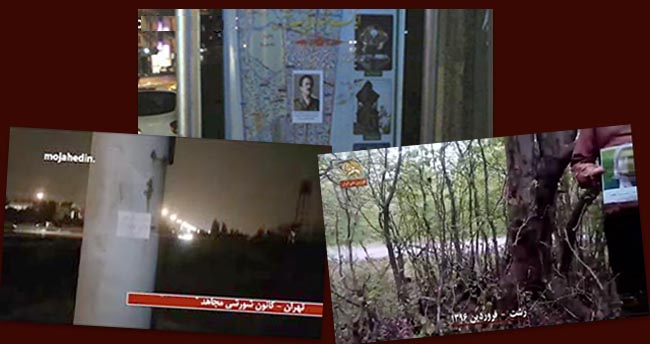
Ultimately, she was coerced to play the role of several “Resistance Units”. “I was told to print the pictures of the group leaders and hang them in different places, on various occasions and then take photos or film,” Shiva told Fars News Agency. “The photos and the locations should not be repetitive. Actually, I was acting as different resistance units. Forough wanted me to show that the Cult of Rajavi has a lot of supporters in Iran. So, I had to use different slogans, different pics, and different handwritings as if there are different resistance units.”
Eventually, Forough asked Shiva to establish a real resistance unit at least with two people. “I asked my cousins to help me take photos of the so-called resistance unit but they just made fun of me,” Shiva recalled. “I was sure that nobody in my family and friends would cooperate with me. I told it to forough. Yet, she made more bizarre suggestions. For example, she told me to give Rajavi’s pictures to the children in the neighborhood and then take photos while they cover their faces with the pictures. “
But, Shiva found it immoral. “Those children had no idea of whose picture they were. The organization wanted me to abuse them,” she said.
Shiva was arrested after eight months. “Gradually they were coercing me to do more difficult missions,” she said. “Recently they regularly told me to find some people to do more important missions together for example firing a military station.”
“I am really sorry for doing those jobs,” Shiva says.
Seeking war and paralyzing sanctions against the Iranian people, the Mujahedin Khalq Organization (the MKO/ MEK/PMOI/ Cult of Rajavi) should be considered as part of the B-team.
Iranian Foreign Minister Javad Zarif accused a ‘B-Team’ of pushing the US towards”disaster”by clashing with Iran.”President Trump believes putting pressure, bullying, will bring us to the negotiating table so he can make this ideal deal he has in mind. I don’t know what that deal is,”Zarif told the Asia Society in New York.
The so-called ‘B-Team’ Zarif named consisted of US National Security Advisor John Bolton, United Arab Emirates Crown Prince Mohamed bin Zayed, Saudi Arabian Crown Prince Mohammed bin Salman, and Israeli Prime Minister Binyamin Netanyahu.
“The B-Team is pushing US policy toward a disaster,”Zarif said, decrying what he called Trump’s”obsession”with”bullying”Iran. Zarif added that the B-team has a “plot” to push for the disaster.
How is the MEK involved with the B-team?
The MEK is the link between its financial sources and the right wing western politicians. The most recent revelations on the MEK’s money laundering activities was made by Foreign Policy last week. “The upstart far-right party is unapologetically Islamophobic, but without donations from Iranian exiles, it may have never gotten off the ground,” reported Sohail Jannessari and Darren Loucaides of FP. [1]
“Documents leaked to the Spanish newspaper El País show that almost 1 million euros donated to Vox between its founding in December 2013 and the European Parliament elections in May 2014 came via supporters of the National Council of Resistance of Iran (NCRI), an exiled Iranian group,”
According to FP. “The NCRI was set up in the 1980s by Mojahedin-e-Khalq (MEK) and a number of other Iranian dissidents and opposition groups. The MEK’s allies later abandoned the NCRI, making the organization functionally an alias for the MEK.” [2]
The FP correspondents who view the Vox as a racist, homophobic, Islamophobic and sexist party, interviewed some sources to investigate the motives of the MEK and its financial resources that make it capable of funding a right wing European group.
Alejo Vidal-Quadras, a now-retired Spanish politician, who previously served as one of the 14 vice presidents in the EU Parliament, has been a longtime paid supporter of the MEK and one of those lobbyists who helped the group get removed from the EU’s list of foreign terrorist organizations in 2009. “Spain’s Vidal-Quadras went on to help found Vox in late 2013. And supporters of the NCRI provided the funding needed to launch the right-wing party and contest the 2014 European elections,” according to El País. [3]
“The MEK may have just been returning the favor to a long ally, Vidal-Quadras, who has been supportive of the MEK for years,” FP authors suggest. “But as one former member of the MEK executive committee told Foreign Policy, the financial resources the group gained under Saddam Hussein have likely run out—which suggests that it may have another source of funding today.”
“Mojahedin [MEK] are the tool, not the funders. They aren’t that big. They facilitate,” said Massoud Khodabandeh, former member of the group and the Director of Middle East Strategy Consultants told FP. “You look at it and say, ‘Oh, Mojahedin are funding [Vox].’ No, they are not. The ones that are funding that party are funding Mojahedin as well.” [4]
Khodabandeh said he himself was involved in moving money for the MEK and its funders during the reign of Saddam Hussein. “I went to Riyadh and recovered three trucks of gold bars from agents of [the] Saudi intelligence agency [at that time] led by Prince Turki bin Faisal. We transferred them to Baghdad and then to Jordan. We sold the bars in Jordan,” he claimed. [5]
Khodabandeh’s account raises the question of where the MEK’s money is coming from today. Heyrani, the recent MEK defector, also handled parts of the organization’s finances in Iraq and was blunt when asked about the current financial backing of the MEK: “Saudi Arabia. Without a doubt,” he told FP. [6]
The flow of the money laundered by the MEK finds its way in the pockets of the far right politicians of the United States, too. President Trump’s national security adviser John Bolton is the most prominent figure to receive MEK’s hefty sums. “Bolton is estimated to have received upwards of $180,000 to speak at multiple events for MeK,” the Guardian reported in July 2018. “His recent financial disclosure shows that he was paid $40,000 for one speech at an MeK event last year.” [7]
Zarif also brought up Bolton’s past associations with the MEK in his interview with Bolton’s favorite news media, Fox News. Zarif said Bolton had told the group at a rally “that he would celebrate the 40th anniversary of the Islamic revolution, in Tehran with that terrorist organization.” [8]
Tom Rogan of Washington Examiner correctly suggests, “For Bolton, the priority is not a democratic Iran, but a pro-American Iran. Bolton has been flexible in pursuit of this end.” [9] He confirms that Bolton –as one of the Bs of the B team—has been the most frequent paid speaker of the MEK.
“While Bolton refused to comment when asked if he was paid for his speeches, the Wall Street Journal’s Farnaz Fassihi and Seymour Hersh have accused Bolton of receiving payments,” Tom Ragan states. ”Another source, speaking to the Washington Examiner, supported these claims.” [10]
Moreover, MEK’s connections with Israel have been denounced several times in the assassination of the Iranian nuclear scientists. MEK connections with Bolton, Bin Salman’s agents, Benjamin Netanyahou’s Intelligence Mossad simply indicates its substance as a tool in the hands of the enemies of Iranian nation.
By Mazda Parsi
References:
[1] Jannessari, Sohail & Loucaides, Darren, Spain’s Vox Party Hates Muslims—Except the Ones Who Fund It, Foreign Policy, April 27, 2019.
[2] ibid
[3] ibid
[4] ibid
[5] ibid
[6] ibid
[7] Merat, Aron, Terrorists, cultists – or champions of Iranian democracy? The wild wild story of the MEK, the Guardian, November 9, 2018.
[8] CNS News, Bolton haunted by MEK association, April 30, 2019.
[9] Rogan, Tom, John Bolton: A complex worldview that just might work for Trump, Washington Examiner, April 30 2019.
[10] ibid
++ The main issue in Albania has been the closure of the UNHCR office in Tirana and withdrawal of RAMSA charity support for the dissociated MEK members. Commentators say it is ridiculous that Rajavi is so excited about it that she is claiming the MEK closed the UNHCR office as if they had overthrown the Iranian government. Some write that ‘40 years ago you started saying you want to topple the Iranian regime and before that you wanted to destroy imperialism across the globe. Now you are jumping up and down to claim as a victory that your ex members will be hungry and homeless’. Others say it really is a victory because the MEK’s only raison d’être now is to stop people leaving and this will help deter them.
++ To mark International Workers Day on May 1st this week, some older people wrote about their memories of the original MEK. They relate that long, long ago, the MEK was pro-worker. What the MEK is now has no relation to the original beliefs and purpose of the organisation.
++ After the election in Spain, several people have been translating articles into Farsi and writing about the MEK’s involvement with Vox. They point out that the far-right Vox is Islamophobic, yet the MEK, who claim to be Shias, have given it support. The MEK have travelled from anti-imperialism to the far-right they say; evidence that MEK is a purely mercenary group which gets paid for these jobs.
In English:
++ Sohail Jannessari and Darren Loucaides, writing for Foreign Policy, examine the rise of the Vox party in Spain and the controversial contribution of almost one million euros to its election campaign. “The MEK is billed by U.S. politicians like Rudy Giuliani and current National Security Advisor John Bolton as the legitimate opposition to the current Iranian government. But the MEK also happens to be a former Islamist-Marxist organization that was only taken off the U.S. list of terrorist organizations in 2012—raising the question of why supporters of such a group would want to back an Islamophobic, hard-right Spanish party like Vox.”
++ During his visit to the UN in New York, Iran’s foreign minister Javad Zarif took part in several interviews, including with the right-wing Fox News. His swipe at John Bolton for supporting the MEK was reported in several media – CNS News, the Washington Examiner and Press TV.
++ Mazda Parsi in Nejat Bloggers took aim at US Secretary of State Mike Pompeo and National Security Advisor John Bolton who want to exert maximum pressure on the Iranian people ‘no matter how much it hurts’. Pompeo denied supporting the MEK, while Bolton is well known for his support, but Parsi points out “whether the MEK is embraced by the US administration or not, one thing is for sure. The MEK is not the representative of the Iranian “Khalq” [people] but it is against the Khalq. It is always supporting the most hostile policies and actions against Iranian nation.”
++ Scott Peterson in The Christian Science Monitor says ‘Europe is again a battlefield for Iran’s internal wars’, explaining “Why We Wrote This: Under increasing pressure from the U.S. and regional rivals, the Islamic Republic feels like it is fighting for its survival. One result appears to be the revival of a long-dormant covert war against insurgents based in Europe.” Terrorist attacks inside Iran have prompted “like clockwork” European accusations that Iran is plotting terrorist acts in Europe. The article exposes the mixed messages coming out of Iran, with one narrative denying any such activity, and top officials reportedly saying “ their intelligence agencies have shifted from defensive to offensive operations amid an American “maximum pressure” campaign that imposes ever-tougher sanctions and a renewed covert war with the United States, Israel, and Saudi Arabia.” Why this would lead Iran to launch attacks in Europe is not examined in the article. Unsurprisingly the MEK are involved. Draw your own conclusions.
May 03, 2019
When Iran’s Foreign Minister Javad Zarif took to the airwaves during his visit to the UN in New York, particularly for an interview with Fox News, a frisson of surprised anticipation swept the American political polity. How was it possible that Iran, the pariah nation, not only had the audacity to enter the lion’s den, but from there to lecture the lion on its dirty behavior!
Of course, this is a spat that Iran cannot easily win. What mattered most was that Zarif did not go for the throat of the lion but instead those who are pulling its chain. In short, he accused a “B team” of actively working to wage war on his country. And he singled out National Security Advisor John Bolton for supporting the Mojahedin-e Khalq (MEK), a group that believes in fomenting violent regime change in Iran.
A goaded Bolton went on Fox News to reply. But instead of answering Zarif’s accusations, Bolton merely blamed former Secretary of State Hillary Clinton for taking the MEK off the U.S. terrorism list in 2012. This was fantastic hubris. Bolton himself supported the MEK all the time it was on the list, attending rallies and taking speakers’ fees worth tens of thousands of dollars.
Bolton’s accusations against Clinton do not hold water. He, along with then Secretary of Defense Donald Rumsfeld, started the war with Iraq partly on the pretext that Saddam Hussein supported terrorist groups, including the MEK, as an instrument of his foreign policy. Bolton was also on board with Rumsfeld when the United States unilaterally granted Protected Persons status to the MEK even while it was recognized a terrorist entity—in direct violation of international law.
With the election of President Obama in 2009, newly appointed Secretary of State Hillary Clinton was left to clear up the mess Bolton and the cabal of neoconservatives created in Iraq. One of those problems was continued U.S. support for the MEK (which the United States designated a terrorist entity in 1997). With the help of a new tough negotiator in the UN Assistance Mission for Iraq, Clinton set about finding a peaceful resolution to the standoff between the sovereign Iraqi government and the unwanted and parasitic MEK.
Clinton searched for third countries to absorb the MEK. But the MEK, enjoying the backing of anti-Iran regime change pundits in Saudi Arabia, Israel, and the United States (including Bolton), dug in its heels and refused to be disbanded. In the end, only the dependent NATO ally Albania agreed to take the group’s members. Clinton authorized $10 million for the UN High Commissioner for Refugees (UNHCR) to transfer the MEK to Albania. She paid another $10 million for the establishment of a de-radicalization institute in Tirana to first deal with the MEK as preparation for handling returning Islamic State families. Another $10 million languishes in the account of the U.S. embassy in Tirana, money to rehabilitate the MEK members into normal society that Bolton and his cabal blocked.
All this was written into an agreement between the governments of Iraq, the United States, and Albania along with the UNHCR and the MEK. At that time this author was working as a consultant to the Iraqi government on security issues, including the safe containment and deportation of the MEK. I was relieved when the Obama administration found a safe and above all a peaceful solution to the threat posed by the MEK to the security of Iraq. I was pleased to find in this agreement specific steps toward humanizing individual MEK members and restoring them to normal life and their families.
As someone familiar with the MEK, John Bolton must then and is certainly now fully cognizant of the beneficial elements of this agreement. Yet, almost as soon as President Trump was elected, the de-radicalization project was put on hold, allowing the MEK over the next year to regroup and reactivate its anti-Iran activities. With the support of Bolton, former Senator John McCain, Rudi Giuliani, and a whole cast of minor cheerleading warmongers, the MEK has constructed a purpose-built closed training camp in Albania in which the members are kept as modern slaves to serve the MEK’s propaganda and terrorist agenda.
For all her faults, Hillary Clinton did not take money from the MEK while it was listed as a terrorist entity. And taking the group off the U.S. terrorist list, though controversial at the time due to the MEK’s own well-funded pressure campaign, was not wrong, as it enabled the UNHCR to relocate the members to the safety of a third country. Her plan to correct the mistakes of the Bush administration was a vital step toward making the Middle East and the rest of the world, including the United States, a safer place. Meanwhile, John Bolton continued to take money to promote the MEK’s warmongering agenda against American interests.
Before 2016, Iran did not have a diplomatic presence in Albania. Its embassy there dealt primarily with economic and cultural relations. But in 2018, the Albanian government of Edi Rama expelled two newly arrived Iranian diplomats at the behest of the Trump administration. John Bolton boasted about the achievement. Due to overt US support for the MEK, Iran drew its front line not in the Middle East but on the edge of the EU.
Now, with the Iranian foreign minister boldly speaking to the media inside the United States, Bolton has been reduced to deflecting rather than rebutting his accusations. Bolton’s master plan for a war against Iran has not only backfired but prompted Tehran to redraw its front line once again, this time in Washington, DC itself.
Massoud Khodabandeh is the director of Middle East Strategy Consultants and has worked long-term with the authorities in Iraq to bring about a peaceful solution to the impasse at Camp Liberty and help rescue other victims of the Mojahedin-e Khalq cult. Among other publications, he co-authored the book “The Life of Camp Ashraf: Victims of Many Masters” with his wife Anne Singleton. They also published an academic paper on the MEK’s use of the Internet.
by Massoud Khodabandeh, lobelog
Foreign Minister Mohammad Javad Zarif highlights again how the US National Security Advisor John Bolton has been feverishly trying to push Washington towards war with Iran.
Tweeting on Tuesday, Zarif wrote, “Today, the world’s catching on to Amb. John Bolton’s chronic warmongering.”
The top diplomat cited many evidenced revelations across the US media and elsewhere to exemplify his remarks.
The tweet incorporated a snapshot of a 2018 article in The New York Times that showed how Bolton had been promoting the notorious and deadly anti-Iran terrorist Mujahedin-e Khalq Organization (MKO) as “viable opposition” and an alternative to the establishment in the Islamic Republic.
Zarif also attached another image captured from a profile published by The New Yorker on Monday that detailed Bolton’s idiosyncrasies, including by citing a former senior advisor to the US administration’s remarks that “John wants to bomb everyone.”
“But Iranians didn’t need to read a 10,000-word New Yorker profile to be convinced,” Zarif chided.
“We’ve seen him (Bolton) shill for a cult terror group,” he tweeted. The Iranian foreign minister was referring to evidence showing how Bolton had received a $40,000 “speaking fee” to address the MKO’s annual gathering in Paris.
“…and—along with his B-Team accomplices—target Iranians with Economic Terrorism,” he added.
Zarif was echoing remarks he had made to Fox News on Sunday, in which he identified the B-Team as Bolton, Israeli Prime Minister Benjamin Netanyahu, Saudi Crown Prince Mohammed bin Salman, and Abu Dhabi Crown Prince Mohammed bin Zayed Al Nahyan.
The US has been pursuing a policy of “maximum pressure” against Iran under US President Donald Trump, which has Bolton as its top security aide. The policy has seen Washington reinstating draconian economic sanctions targeting the Islamic Republic.
Washington has been enlisting the assistance of its regional allies in implementing the policy. Recently, it said that it would target every country potentially buying Iran’s oil as of May 2 with “secondary sanctions.”
Saudi Arabia and the United Arab Emirates immediately reported that they would be making up for potential shortages of the Iranian crude.