Nejat Society
  • Home
  • Articles
  • Media
    • Cartoons
    • NewsPics
    • Photo Gallery
    • Videos
  • Publications
    • Books
    • Nejat NewsLetter
    • Pars Brief
  • About Us
  • Contact us
  • Editions
    • عربي
    • فارسی
    • Shqip
Nejat Society
Nejat Society
  • Home
  • Articles
  • Media
    • Cartoons
    • NewsPics
    • Photo Gallery
    • Videos
  • Publications
    • Books
    • Nejat NewsLetter
    • Pars Brief
  • About Us
  • Contact us
  • Editions
    • عربي
    • فارسی
    • Shqip
© 2003 - 2024 NEJAT Society. nejatngo.org
Europe

Europe Capitalizes on the Iran Deal

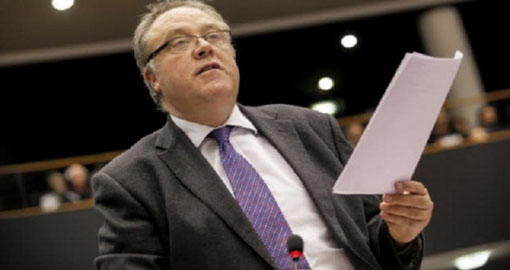
As Washington think-tanks, with some notable exceptions, keep churning out papers advising the next American president to double down on containing Iran, the European Parliament adopted a report on October 25 that is strikingly different in tone and substance. Drafted by the UK Labour Party politician Richard Howitt , the motion received overwhelming support in the house: 459 votes in favor, with 174 against and 67 abstentions. It outlines a set of recommendations for the EU and its member states to fully capitalize on the opening provided by the historical nuclear agreement between Iran and the P5+1.
The report praises the Joint Comprehensive Plan of Action (JCPOA) as a success of a multilateral diplomacy, which has already boosted economic and trade connections between Europe and Iran. The report calls on both the EU and Iran to build on this opening by expanding cooperation in counter-terrorism, environmental protection, academic and cultural exchanges, and aviation and maritime safety.

The report is notable also for the respectful and constructive tone it uses. Although by no means short on legitimate criticisms of Iran, it avoids the kind of bashing that can only provoke angry reactions and further alienation. For example, it recognizes the complexities of Iran’s internal politics and does not seek to take sides in Iran’s domestic political debates. It acknowledges the long history of relations between Iran and various European countries as a foundation to further expand ties. Instead of blasting the “repressive theocracy,” it states that “Iran’s revolutionary legacy and constitution as an Islamic Republic” should not be an obstacle to finding common ground on issues of democracy and human rights, where possible. These are novel formulations for an official position of an elected Western body on the Islamic Republic, and convey an intention to have a dialogue of equals.

Lingering Opposition

Despite the overwhelming support the house has given the report, a minority of MPs expressed vocal opposition. Some of the criticisms reflect what rapporteur Richard Howitt called “the lobbying interests” of forces opposed to the nuclear agreement with Iran in the first place: right-wing pro-Israeli organizations, Saudi Arabia, and the exiled Iranian dissident group Mojaheddin-e Khalk (MEK), which was on the EU terror list until 2009 and removed on technicality. The hawkish American Jewish Committee blasted the report for allegedly “giving Iran a free pass on human rights and support for Assad regime,” although it somewhat mitigated its criticisms when the EP adopted the last-minute amendment condemning Iran for its “calls for destruction of Israel and denial of Holocaust.” MEK, meanwhile, managed to convince enough MPs to consider an amendment calling to investigate the 1988 massacres of political prisoners in Iran—a crime indeed, but one that Iranians themselves, and not foreign legislative bodies, are best placed to address. However, the house ultimately rejected this amendment.

A different kind of opposition emerged from the Alliance of Liberals and Democrats (ALDE), traditionally the third pillar of European politics, after Christian democrats and social democrats. Although ALDE does not oppose the nuclear agreement as such, it rejected the report on the basis that it was “weak” on human rights and “has not preconditioned” any improvement of relations with Iran on tangible progress in this area.

These criticisms do not hold water. The report has no fewer than 34 references to human rights in its 51 paragraphs. It contains very detailed, carefully crafted wording on the death penalty and on the rights of women and religious minorities. It also makes a clear appeal to Iran to release all political prisoners. In the process of drafting the report, the rapporteur and his team consulted extensively with credible human rights organizations, such as Human Rights Watch and Amnesty International.

But pre-conditioning any cooperation on specific, unilaterally imposed benchmarks could have easily undermined any prospects for progress, for example, by leading the Iranians to cancel talks with the EU on human rights scheduled for November 9 in Brussels. Crucially, these talks involve the Iranian judiciary, the bastion of the conservatives and the main source of the human rights violations. As Howitt said during the debates on his report, “those who say they support human rights, but would jeopardize our leverage to influence them, should examine their own consciences.”

As to the regional situation, the report is careful not to take sides between Iran and its antagonists, such as Saudi Arabia. The critics would have liked to see a strong condemnation of Iran’s support for the Bashar al-Assad regime in Syria and the removal of clauses that acknowledge the EU and Iran’s common interest in fighting the so-called Islamic State. Instead, the report acknowledges that by following the JCPOA the EU now has increased its leverage over Iran while maintaining ties with Saudi Arabia, Turkey, and other traditional Western allies in the region. The EU is thus in a unique position to play the role of an honest broker in the conflicts ravaging the region, from Syria to Yemen.

Indeed, it is disingenuous for the critics to claim that they support the nuclear agreement while at the same time putting so many conditions to any cooperation with Iran. The irony is that such an approach would not only squander an opportunity to build a new relationship with Iran but also undermine the nuclear deal itself. The JCPOA is not something once achieved and put in the freezer until the regime in Iran changes—which, one suspects, is the real agenda of many of the critics of the report. For the agreement to survive, all sides need incentives to comply, and that requires trust. This process would be so much more difficult to accomplish in the absence of a broader rapprochement.

Glimmers of Hope

There are signs that the pragmatic approach espoused by the report works. Contrary to the war of words that usually followed EP resolutions in the past, the Iranian foreign ministry welcomed the report as a positive indication that the EU seeks closer relations with Iran. Of course, the reactions of other factions within the regime are yet to be seen. As the string of totally unacceptable arrests and harassment of dual Western-Iranian nationals shows, influential forces that thrive on confrontation exist in Iran as well as in the West. But ultimately, this is how diplomacy works – by taking patient, reciprocal steps, that strengthen moderates on all sides and eventually lead to the demise of old enmities.

This most recent statement reflects a broader European approach to relations with Iran. Just as the EP was debating the Howitt report, the EU lifted sanctions on Bank Saderat, which, however, remains on the OFAC (US Treasure’s Office of Foreign Assets Control) black list. The EU Commissioner for humanitarian aid and crisis management Christos Stylianides, meanwhile, was in Tehran on the same day committing additional 6 million euros to help Afghan refugees in Iran, bringing the total EU humanitarian support to 12.5 million euros in 2016.

These steps by the EU executive and the parliament reinforce the upward trend in the EU-Iran relations. This rapprochement will enable both sides not only to pursue common interests but also to address problematic issues such as human rights and some aspects of Iran’s regional policies without derailing the relations. Given the investment the EU has already made in these relations, it won’t likely follow the new US president if he or she chooses to heed the advice of hawkish Washington-based think tanks and return to the policy of sanctions and isolation of Iran. And that’s another reason why the next American president would be wise to disregard such advice.

This article reflects the personal views of the author and not necessarily the opinions of the European Parliament.  Photo: Richard Howitt

By Eldar Mamedov,
November 3, 2016 0 comments
FacebookTwitterPinterestWhatsappTelegramSkypeEmail
Former members of the MEK

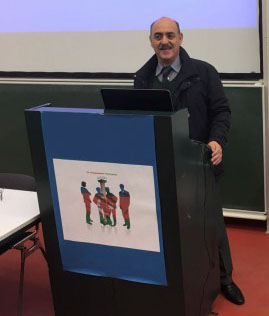
MKO ex-member in Koln University

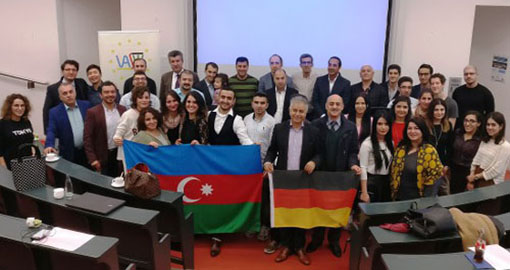
On Saturday October 29th former member of the Mujahedin-e Khalq Organization (the MKO) addressed a seminar in Koln University.

Mr. Davoud Arshad member of “No to Terrorism and Cults Society” was invited to attend the seminar by the Union of students and scholars of Koln University.

Human Rights, Energy Crisis and Cultural Interactions were subjects discussed in the seminar. Mr. Arshad spoke on the relations between violation of human rights in cults and expansion of terrorism in the world.

As a victim of the MKO (the cult of Rajavi), Mr. Arshad describes how horribly members of the MKO particularly female members are victims of human rights abuses.

He explains that regarding the energy crisis and the consequent wars of energy in certain regions of the world such as Persian Gulf, the potential for appearance of terrorist extremists threatens the world. The ISIS and the MKO are examples of terrorist extremists that are used as proxies in the wars over energy in the Middle- East, implied Mr. Arshad.

“Terrorist groups like the Cult of Rajavi and the Islamic State have been producers of crisis in the region”, he added. “One of them created the crisis of Iran – Iraq war and the other is responsible for the current instability of the region.”

Mr. Arshad answered the questions of the audience on the MKO. He stated that the improvement of interactions of cultures between immigrants and hosting country prevents the isolation of immigrants and eventually reduces the opportunities for terrorist groups to recruit young immigrants.

He clarifies how the conflict over oil-rich regions paves the way for states like Saudi Arabia to exploit terrorists in order to accomplish its ambitions in the region. “Such terrorist cult have the capacity to be used by Saudi Arabia in a probable war with Iran”, he said about the MKO –as a terrorist group sponsored by Saudis. Mr. Arshad stressed that Saudi Arabia’s money keeps terrorists active in the conflicts.  

November 2, 2016 0 comments
FacebookTwitterPinterestWhatsappTelegramSkypeEmail
Albania

Albania: Mojahedin Khalq (Rajavi cult) using slave labour to profit from business

Local observers in Tirana are reporting that the Mojahedin Khalq cultic terror group (MEK) is buying and creating several sandwich and kebab shops in the city and is using the MEK members to work in these fast-food businesses.          

On the surface this may look like a positive move. In an article titled ‘Albania: What would a de-radicalization program for the Mojahedin Khalq involve’, it was suggested by cult expert Anne Khodabandeh that to “offer paid work opportunities which are age and ability appropriate” to these people could be part of a de-radicalisation package to reintegrate them back into normal life.

But this is not what is happening here. The businesses belong to the MEK and are not part of a rehabilitation scheme. There are no plans by Albanian authorities to de-radicalise them. This is important because it is known that the MEK members exist in a state of modern slavery and have never benefitted from pay or worker rights during their decades of membership of the cult.

Over 2500 radicalised MEK members are now living in Tirana as part of the group. The problem for the leaders is how to occupy them so they do not decide to leave. After all, in their former military bases in Iraq, their aim was violent regime change in Iran. That is what they trained for. In Albania if they cannot pursue this agenda they must be used in some other way.

The use of unpaid labour in business is of course very attractive. Such modern slaves need only to be fed and accommodated. The profit from their labour goes straight to the MEK coffers. The MEK members pay no tax, have no health or pension insurance and absolutely no employment rights. Certainly the Albanian authorities will want to investigate the crimes and corruption inherent in such behaviour. How are they getting away with it? Who is turning a blind eye? Who is abetting such behaviour?

In such a state, the MEK members are extremely vulnerable. They are victims of ruthless exploitation but are unable to even recognise let alone protest their predicament. With the right knowledge (about cultic abuse), Albania’s human rights groups would find a rich source of research material if they have the unwavering courage to delve into the MEK’s devious and, frankly, dangerous world.

October 31, 2016 0 comments
FacebookTwitterPinterestWhatsappTelegramSkypeEmail
UN High Commissioner for Refugees

MKO hostages’ mothers pen letter to the chief of UNHCR

The forgotten victims of the Rajavi Cult (MKO, MeK, NCR) demand information on their children.

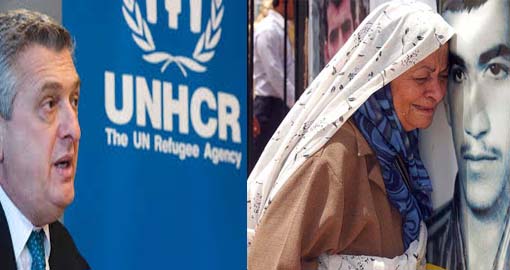
More than 350 suffering mothers of the members of the Rajavi Cult, who live in Iran and who have been deprived of contact with their children and are known as the forgotten victims, have collectively written a letter to Mr Filippo Grandi, Head of the UN High Commission for refugees in Geneva.

The text of the letter signed by more than 350 mothers is as follows:

Mr Filippo Grandi

United Nations High Commissioner for Refugees,

Geneva, Switzerland

Tehran, October 30, 2016            

With regards, as you are already aware, the Mojahedin-e Khalq Organization does not allow its members any sort of contact with their families and this fact has imposed a great deal of suffering on us as their mothers.

Today in Europe, mothers whose children have been recruited by ISIL and been sent to Iraq and Syria and other parts of the world, are called ‘the forgotten victims’ since they have no means of contact with their loved ones and do not have any information about them.

If you look at our case, we are even more forgotten than those mothers, since unlike them we have not been able to attract any world attention because of political reasons. We do know the whereabouts of our children and have approached them many times and have even gone as near as about 100 meters to them in Iraq. But the MEK leader Massoud Rajavi has denied us from having any contact with or knowledge about our children.

Now that the MEK have all moved to Albania we urge you, as the head of the body responsible for them and their location in Tirana, to use your authority to arrange meetings with our loved ones and let us know about them and how we can contact them. Please do not leave us suffering the way it is at the moment and has been in the past.

We are certain that you can easily arrange this. Therefore, we ask you to respect ours and our loved ones’ human rights and putting aside all the political and regional and international issues; please be brave and help us as mothers to have our rights.

Best Regards,

Signatures

October 30, 2016 0 comments
FacebookTwitterPinterestWhatsappTelegramSkypeEmail
Mujahedin Khalq; A proxy force

America’s ironic two faced war on terror ignores US support for Mojahedin Khalq

America’s Ironic “Two-Faced” War on Terror

Rarely ever does hypocrisy align so succinctly as it does within the pages of American policy and media coverage. US policy think tank, the Brookings Institution, recently provided an extreme example of this in a paper titled, “A convenient terrorism threat,” penned by Daniel Byman.
The paper starts by claiming:

Not all countries that suffer from terrorism are innocent victims doing their best to fight back. Many governments, including several important U.S. allies, simultaneously fight and encourage the terrorist groups on their soil. President George W. Bush famously asked governments world-wide after 9/11 whether they were with us or with the terrorists; these rulers answer, “Yes.”

Some governments—including at times Russia, Egypt, Turkey, and Pakistan among others—hope to have it both ways. They use the presence of terrorists to win sympathy abroad and discredit peaceful foes at home, even while fighting back vigorously enough to look plausible but not forcefully enough to solve the problem. This two-faced approach holds considerable appeal for some governments, but it hugely complicates U.S. counterterrorism efforts—and the U.S. shouldn’t just live with it.

Byman then begins labelling various nations; Somalia as a “basket-case,” Iran as a “straightforward state sponsors of terrorism” and attempts to frame Russia’s struggle against terrorism in Chechnya as somehow disingenuous or politically motivated.

Byman also attempts to claim Syrian President Bashar Al Assad intentionally released terrorists from prison to help escalate violence around the country and justify a violent crackdown, this despite reports from Western journalists as early as 2007 revealing US intentions to use these very terrorists to overthrow the governments of Syria and Iran specifically, the New Yorker would reveal.

The US is as Much a Sponsor of Terrorism in Reality as Byman Claims Others are in Fiction

But worse than Byman’s intentional mischaracterisations and lies of omission regarding US allies like Saudi Arabia, Qatar and Israel’s overt, global-spanning sponsorship of terrorism, is the fact that not only is the US itself engaged in sponsoring terrorism as it poses as fighting against it globally, the Brookings Institution and Byman have specifically and publicly called for the funding, training and arming of designated foreign terrorist groups in pursuit of self-serving geopolitical objectives.

Indeed, Daniel Byman is one of several signatories of the 2009 Brookings Institution report, “Which Path to Persia? Options for a New American Strategy toward Iran.”

The report not only reveals the blueprints of using supposedly “peaceful” and “democratic” protests as cover for violent, US sponsored subversion (as was precisely done in Syria beginning in 2011), it specifically lists a US State Department-designated foreign terrorist organisation as a potential US proxy in violently rising up against, and eventually overthrowing the government in Tehran.

The report would explicitly state (our emphasis):

Perhaps the most prominent (and certainly the most controversial) opposition group that has attracted attention as a potential U.S. proxy is the NCRI (National Council of Resistance of Iran), the political movement established by the MEK (Mujahedin-e Khalq). Critics believe the group to be undemocratic and unpopular, and indeed anti-American.

In contrast, the group’s champions contend that the movement’s long-standing opposition to the Iranian regime and record of successful attacks on and intelligence-gathering operations against the regime make it worthy of U.S. support. They also argue that the group is no longer anti-American and question the merit of earlier accusations. Raymond Tanter, one of the group’s supporters in the United States, contends that the MEK and the NCRI are allies for regime change in Tehran and also act as a useful proxy for gathering intelligence. The MEK’s greatest intelligence coup was the provision of intelligence in 2002 that led to the discovery of a secret site in Iran for enriching uranium.

The report then admits MEK’s status as a designated foreign terrorist organisation and that it has targeted and killed both American officers and civilians in the past (our emphasis):

Despite its defenders’ claims, the MEK remains on the U.S. government list of foreign terrorist organizations. In the 1970s, the group killed three U.S. officers and three civilian contractors in Iran. During the 1979-1980 hostage crisis, the group praised the decision to take America hostages and Elaine Sciolino reported that while group leaders publicly condemned the 9/11 attacks, within the group celebrations were widespread.

The Brookings Institution also admits in its report that undoubtedly MEK continues to carry out undeniable terrorist activity against political and civilian targets within Iran, and notes that if MEK is to be successfully used as a US proxy against Iran, it would need to be delisted as a foreign terrorist organisation (our emphasis):

Undeniably, the group has conducted terrorist attacks—often excused by the MEK’s advocates because they are directed against the Iranian government. For example, in 1981, the group bombed the headquarters of the Islamic Republic Party, which was then the clerical leadership’s main political organization, killing an estimated 70 senior officials. More recently, the group has claimed credit for over a dozen mortar attacks, assassinations, and other assaults on Iranian civilian and military targets between 1998 and 2001. At the very least, to work more closely with the group (at least in an overt manner), Washington would need to remove it from the list of foreign terrorist organizations.

And eventually, that is precisely what was done. MEK would be delisted by the US State Department in 2012, announced in a US State Department statement titled, “Delisting of the Mujahedin-e Khalq,” which noted:

With today’s actions, the Department does not overlook or forget the MEK’s past acts of terrorism, including its involvement in the killing of U.S. citizens in Iran in the 1970s and an attack on U.S. soil in 1992.

The Department also has serious concerns about the MEK as an organization, particularly with regard to allegations of abuse committed against its own members. The Secretary’s decision today took into account the MEK’s public renunciation of violence, the absence of confirmed acts of terrorism by the MEK for more than a decade, and their cooperation in the peaceful closure of Camp Ashraf, their historic paramilitary base.

MEK’s inability to conduct violence in the decade preceding the US State Department’s decision was not because of an ideological commitment to nonviolence, but a matter of strategic limitations placed on the terrorist organisation by Iraqi and Iranian security forces who were determined to liquidate it and who forcibly disarmed the group.

And even if the 2012 US State Department decision was based on an alleged decade of nonviolence, the policymakers at the Brookings Institution who signed their names to “Which Path to Persia?” including Daniel Byman, certainly did not apply the same criteria in suggesting its use as an armed proxy.

In all likelihood, had Iraq and Iran not successfully cornered and disarmed the group, it would be fighting America’s proxy war against Tehran on both sides of the Iran-Iraq border. MEK fighters would be carrying out US-backed armed violence against Iran and Iraq side-by-side other US-backed terrorist groups operating across the region as part of America’s current proxy war against Syria, Russia and Iran.

Daniel Byman of the Brookings Institution’s latest paper even at face value is disingenuous, full of intentional mischaracterisations meant to direct attention away from the US and its closest allies’ own sponsorship of terrorism amid a very much feigned “War on Terror.” Understanding that Byman quite literally signed his name to a policy paper promoting the arming and backing of a US State Department designated foreign terrorist organisation makes his recent paper all that more outrageous.

What is also as troubling as it is ironic, is that Byman not only signed his name to calls for arming a listed terrorist organisation, he was also a staff member of the 9/11 Commission, according to his Georgetown University biography. A man involved in sorting out a terrorist attack who is also advocating closer cooperation with listed terrorist organisations is truly disturbing.

The political and ethical bankruptcy of American foreign policy can be traced back to its policy establishment, populated by unprincipled hypocrites like Byman and co-signatories of Brookings’ “Which Path to Persia?” The US certainly cannot convince other nations to abandon an alleged “two-faced” policy of promoting and fighting terrorism simultaneously when it stands as a global leader in this very practise.

Joseph Thomas is chief editor of Thailand-based geopolitical journal, The New Atlas and contributor to the online magazine “New Eastern Outlook”.

Joseph Thomas, New Eastern Outlook,

October 29, 2016 0 comments
FacebookTwitterPinterestWhatsappTelegramSkypeEmail
Mujahedin Khalq Organization members' families

The suffering mother of MKO hostage couldn’t tolerate to live without her son

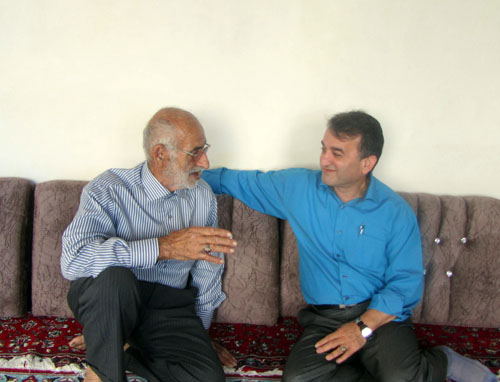
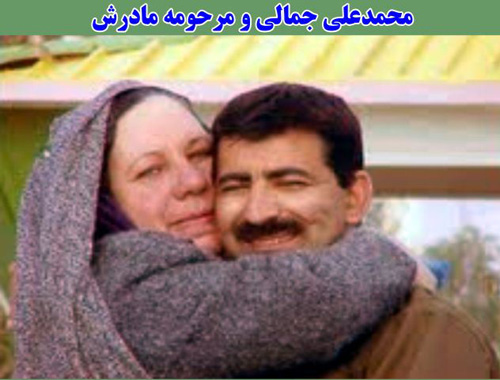
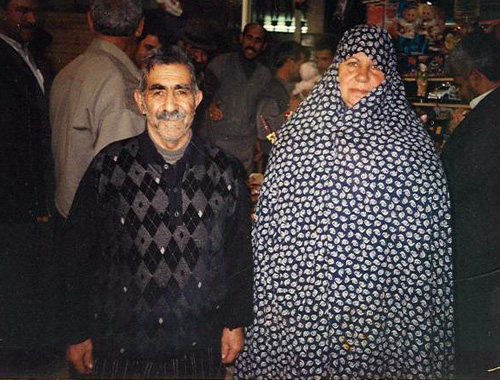
Mr. Mohammad Ali Jamali enslaved during Iran-Iraq war in 1988.  During the last 27 years Mohammad has suffered a lot at MKO Camps and far from his family and homeland. Mohammad’s ailing mother managed to visit him just once in 2013 at Camp Ashraf[ The picture refers to this visit ]. The suffering mother couldn’t tolerate the suffering of staying away from her dear son and eventually passed away.

The last seconds of her life she had Mohammad’s photo at her hands.

Mohammad’s father is still looking forward to see his son return home. The Jamali family asked the international human rights bodies to help them release their beloved Mohammad Ali from the Cult of Mujahedin-e Khalq.

Mr. Mohamamdali Jamali and his mother at Camp Ashraf
Mr. Jamali dad and his sister

October 27, 2016 0 comments
FacebookTwitterPinterestWhatsappTelegramSkypeEmail
Maryam Rajavi

Desperate widow of Massoud Rajavi

This year’s October 21st marks the 23th anniversary of a fake election. Twenty three years ago, Massoud Rajavi, the leader of the Mujahedin Khalq Organization (the MKO), declared the selection –not election– of his trusted sweet-heart as the “president-elect” of the so-called National Council of Resistance which has been the propaganda front of his organization. Although, Maryam was introduced as the president elect of the Council, none of the members of the Council voted for her. She was just assigned by Massoud!

The title “President Elect” has been embraced by the MKO propaganda for nearly three decades while the original selection of Maryam Rajavi is on the first place contradictory to all values of democracy. Former member of the MKO, Mrs. Ann Singleton has ironically described the fake election inside the group in her Facebook status:

“On the subject of elections the American candidates could take lessons from the MEK. In order to elect Iran’s next President (no, come on, stop laughing already), the Rajavis staged their own election among the MEK members. Voter turnout was compulsory of course, no member would dare not attend when commanded. Neither was it a secret ballot, it was decided by a public show of hands. As a result, Maryam Rajavi was voted with a 100% majority <ahem> as the President elect of Iran. (Where do they dream up such titles?) Oh, and by the way, there only was one candidate. Yes, you guessed it, Maryam Rajavi. And she received only one nomination. Yes, you guessed it – from her husband. That was two and a half decades ago and she’s been President elect ever since, unopposed. See, democracy in all its glory.” 

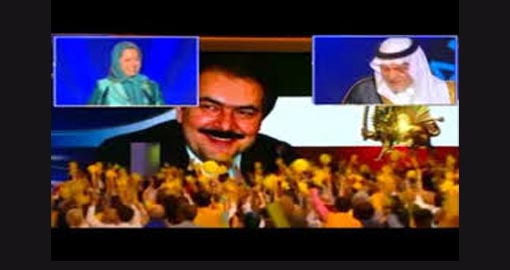
By the way, Maryam Rajavi has been the “Queen of Propaganda” of the MKO during all the years of her illusory presidency. She has been the leading actress in the MKO’s masquerade shows wearing luxurious suits and Hijab. This year’s Paris gathering was going fine until Saudi Prince Turkie Feisal declared the death of Massoud Rajavi calling him Maryam Rajavi’s “late husband”! This huge gaffe turned Maryam’s smiling face to a shocked panicky one. Although the interpreter was careful enough to conceal the surprising news in the Persian translation, the group propaganda and its Queen were faced with a sever challenge wondering what position to take. However, the authorities of the group sounded to be so prudent on the issue that they cannot confirm or deny it obviously.

Definitely, in any community, when the leader dies, the system seeks to replace the deceased leader with a new person. The appointment of the new leader can be based on elections otherwise the successor has been previously determined. As a matter of fact, Maryam Rajavi has never been appointed as the successor of Massoud because Massoud was not supposed to die at all.

As a cult-leader, Massoud Rajavi was considered in the MKO as an everlasting leader. In the opening speech of the so-called grand gathering on July 9th, Maryam Rajavi repeated the claim by praising her disappeared husband as “the everlasting vigilant lion” – it was just a few minutes later that Turkey Feisal revealed Massoud’s death.

 Actually, Maryam Rajavi is the main victim of Massoud Rajvi’s cult-like system. Being firstly brainwashed by Massoud’s indoctrinations, Maryam turned into the relevant puppet of the leader. She was so horribly manipulated by Massoud that she not only didn’t disagree with his greed for women and power, but also she aided him to achieve all his capricious ambitions in the cult. Maryam Rajavi was the leading person to persuade female members of the group’s Elite Council to get naked in front of Massoud, to marry him and to have sex with him.

Considering the crucial situation of Maryam Rajavi as the widow of Massoud, she seems not to have the necessary capacities of an independent cult-leader. This might explain her recent eagerness to organize meetings with controversial figures. She is resorting to anyone who might aid her in the absence of Massoud’s teachings. Thus, her companions can be find among the most anti-feminism states such as Saudi Arabia despite her long-life slogans for women’s rights and women’s equality.

Today Maryam Rajavi is ambiguously leading the cult of Rajavi. The cult propaganda has launched a huge propaganda to glorify her part as the “President Elect”. The recent enthusiasm to highlight Maryam‘s role seems to be a futile effort to maintain the hegemony of Massoud but the new decline in the group regarding the acceleration of defection of members after the complete relocation in Albania indicates the extent of failure of the cult’s propaganda.

Finally, it is worth to know Ann Singleton’s account about Maryam rajavi’s personality and the current situation of her cult:

“I posted this two years ago. Since then we have been told that Massoud Rajavi has died – although the MEK/NCRI deny this. We know that the MEK have been expelled from Iraq and are now settled in a housing block on the outskirts of Tirana. We know that Saudi Arabia are not keen to promote the MEK because it is no longer useful for the Saudi agenda. The MEK is slowly disintegrating. It would behove Maryam Rajavi to allow people to leave more quickly on humanitarian grounds. A first step would be to allow family contact. But since Rajavi is a callous and jealous woman, we shouldn’t expect much from her. “

Mazda Parsi,

October 26, 2016 0 comments
FacebookTwitterPinterestWhatsappTelegramSkypeEmail
Mujahedin Khalq Organization members' families

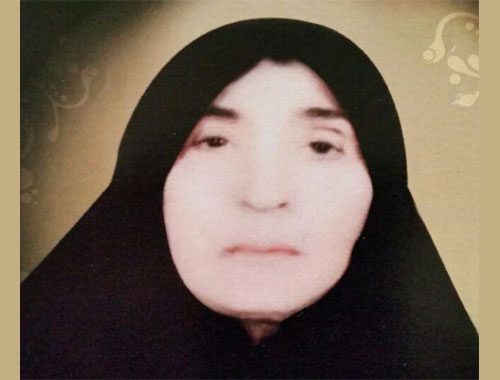
Pictorial- Longing for son’s release from MKO Cult, mother dies

Mohamamd Ghaderi was a Prisoner of Iran –Iraq War. He captivated by the Baath forces when he was 22 years old. While living in Baath regime prisons under severe tortures and harsh condition the MKO cult elements deceived him into joining the group. Since then he have had no contact with his family. longing to see her son again, His suffering mother died.

Mr. Zabihollah Ghaderi; Mohammad’s father is still looking forward to see the release of his beloved son.

Mr. Mohammad Ghaderi; MKO Cult hostage
Mr. Mohammad Ghaderi mother
Mr. Mohammad Ghaderi father

October 25, 2016 0 comments
FacebookTwitterPinterestWhatsappTelegramSkypeEmail
Iran Interlink Weekly Digest

Iran Interlink Weekly Digest – 166

++ Activity in Farsi language has been negligible over the past week, with nothing of significance to report.

In English:

++ Another article by Anne and Massoud Khodabandeh, ‘Albania: What would a de-radicalization program for the Mojahedin Khalq involve’, focuses on what needs to be done for the 2500+ MEK who have arrived in Tirana over the past three years so that they can return to normal civilian life. The first step, says the article, is to understand how the radicalisation process actually works and how this affects individuals. From this information it is possible to implement a plan which will re-engage and activate the person’s authentic self and emotions. This would include separating the ordinary members from the minders and leaders and removing all MEK control mechanisms. Another major step would be to allow the families of MEK members to have contact with their loved ones.

++ Tehran Times reports on a film titled Cyanide which premiered in Tehran this week. The latest film by Behruz Shoeibi concerns an episode in the history of the MEK in the 1970s. “Shoeibi, members of the cast and crew, and Cinema Organization of Iran Director Hojjatollah Ayyubi attended the screening of the movie at Eyvan-e Shams Hall. ‘Today is the time to spotlight this subject’, Ayyubi said in a brief speech before the screening of the film. ‘The world today is facing the threat of Daesh, but the Iranian people previously experienced such a threat by deviant groups such as the MKO, which was much worse than Daesh’, he added.”

++ In another of his insightful analyses of MEK activity, Mazda Parsi of Nejat Society has written about the radicalization of the MEK. He suggests that European countries were reluctant to take any MEK because, even though it claims to have renounced violence, the group still has the potential capacity as a radicalised extremist terrorist group to threaten European citizens as well as Albanians. The evidence for this lies in the radicalisation process itself and in the indoctrination of the MEK members. The self-immolations of 2003 following the arrest by French police of leader Maryam Rajavi were a result of this violent extremist mindset. Parsi says that the involvement of families, friends and human rights bodies is very important to the process of de-radicalisation. However, paid political advocacy for the MEK is proving to be an obstacle.

October 21, 2016

October 23, 2016 0 comments
FacebookTwitterPinterestWhatsappTelegramSkypeEmail
Iran

“Cyanide” about Mojahedin Khalq story premieres in Tehran

“Cyanide”, the latest film by Behruz Shoeibi, about Mojahedin-e-Khalq Organization (MKO, MeK – also known as People’s Mujahedin of Iran, PMOI), an Iranian political–militant organization in exile that carried out many

Photo: Hamed Komeili in a scene from “Cyanide”

terrorist operations during the 1980s to overthrow the Iranian government, premiered at Eyvan-e Shams Hall on Monday Evening.

Shoeibi, members of the cast and crew, and Cinema Organization of Iran Director Hojjatollah Ayyubi attended the screening of the movie.

“Today is the time to spotlight this subject,” Ayyubi said in a brief speech before the screening of the film.

“The world today is facing the threat of Daesh, but the Iranian people previously experienced such a threat by deviant groups such as the MKO, which was much worse than Daesh,” he added.

He said that he would do his best to see that the film would have successful screenings across the country.

Starring Hamed Komeili and Hanieh Tavassoli, “Cyanide” tells the story of Vahid Afrakhteh, a devout Muslim member of the MKO military unit during the reign of Iran’s last monarch, Mohammad-Reza Shah.

He is gradually changed into an obedient Marxist under the influence of his fellow member Taqi Shahram.

Vahid is arrested by Iranian intelligence agents after assassinating a U.S. military envoy in Iran.

He voluntarily cooperates with SAVAK to arrest his bandmates, all of whom are executed.

October 22, 2016 0 comments
FacebookTwitterPinterestWhatsappTelegramSkypeEmail
Newer Posts
Older Posts

Recent Posts

  • Pregnancy was taboo in the MEK

    December 22, 2025
  • MEPs who lack awareness about the MEK’s nature

    December 20, 2025
  • Why did Massoud Rajavi enforce divorces in the MEK?

    December 15, 2025
  • Massoud Rajavi and widespread sexual abuse of female members

    December 10, 2025
  • Farman Shafabin, MEK member who committed suicide

    December 3, 2025
  • Facebook
  • Twitter
  • Instagram
  • Youtube

© 2003 - 2025 NEJAT Society . All Rights Reserved. NejatNGO.org


Back To Top
Nejat Society
  • Home
  • Articles
  • Media
    • Cartoons
    • NewsPics
    • Photo Gallery
    • Videos
  • Publications
    • Books
    • Nejat NewsLetter
    • Pars Brief
  • About Us
  • Contact us
  • Editions
    • عربي
    • فارسی
    • Shqip