Nejat Society
  • Home
  • Articles
  • Media
    • Cartoons
    • NewsPics
    • Photo Gallery
    • Videos
  • Publications
    • Books
    • Nejat NewsLetter
    • Pars Brief
  • About Us
  • Contact us
  • Editions
    • عربي
    • فارسی
    • Shqip
Nejat Society
Nejat Society
  • Home
  • Articles
  • Media
    • Cartoons
    • NewsPics
    • Photo Gallery
    • Videos
  • Publications
    • Books
    • Nejat NewsLetter
    • Pars Brief
  • About Us
  • Contact us
  • Editions
    • عربي
    • فارسی
    • Shqip
© 2003 - 2024 NEJAT Society. nejatngo.org
Former members of the MEK

I left, because of the MEK involvement in child labour, execution and torture

Iran Farda TV broadcasted two interviews with Ms. Fariba Hashtroodi. Ali Limonadi interviewed Ms. Hashtroodi.  

Hashtroodi, a journalist and author, had formerly been with the MEK as a member of the NCRI.
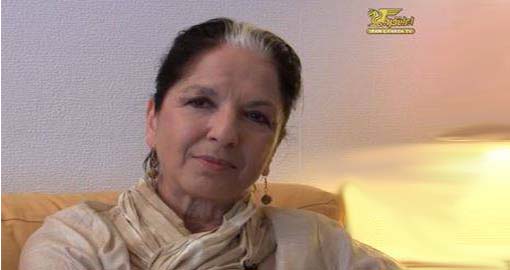
In reaction to the interviews, the MEK went on overdrive everywhere to swear in the most horrible ways imaginable to attack her. They also forced every member of the NCRI to swear at her.

Apparently this is all because in her interview she said “why is Rajavi claiming that anybody going back to their homeland Iran is a mercenary, while he himself has been mercenary for many different parties – Saddam, MOSSAD, CIA, Saudi Arabia, etc, taking money and working for different places against interests of his own country”.

This is why the MEK is so hysterical against her. In the second interview Limonadi recollects trying to interview Marzieh the singer in Rajavi’s house in Paris.

He said “I tried to talk with her, but I was so uncomfortable because she was surrounded by MEK people all the time and couldn’t talk freely. The atmosphere was really horrible, how this old woman was under so much pressure. I felt sorry for her. A friend told me ‘you’ve delved inside the beehive and come out alive. Well done!”

Hashtroodi explains that “I left them for no other reason than that evidence was put in front of me by others which showed the MEK involvement in child labour, execution and torture along with other issues and I found I couldn’t turn my head away and deny it”.

Iran Interlink Weekly Digest,
April 25, 2016 0 comments
FacebookTwitterPinterestWhatsappTelegramSkypeEmail
Human Rights Abuse in the MEK

Rajavi ; inimitable jailor

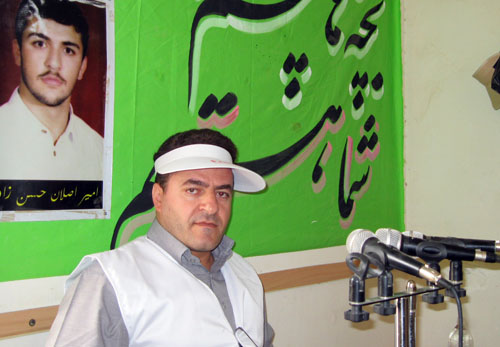
I was so happy when the travel arrangements were made for my visit to Iraq. I eagerly traveled to Iraq and Camp Liberty where my brother resided. I hoped to see my brother; Hamidreza Nuri after so many years. However, I found myself confronted with feelings of desperation when I reached the Camp Liberty gate. The camp was enclosed with concrete walls. The same as other families, I called my brother. I cried his name. I hopped Hamidreza would hear my voice and reply me. We stayed there for a few days. The cult leaders denied our visit. The MKO Cult leaders had assigned some brainwashed members to curse at families. They welcomed us with placards of insults and swears.  I thought to myself that Rajavi and his elements are inimitable jailors.  
Now I am sure that the Rajavis fear the families. They have kept our family members hostages and abusing their rights. Now I am decided to help those enslaved by the MKO Cult. They need help. I am determined to liberate my brother from the bars of the Rajavi Cult.

April 24, 2016 0 comments
FacebookTwitterPinterestWhatsappTelegramSkypeEmail
Albania

US, EU Back Albania’s Regional Center to Fight Radicalism

Albanian Prime Minister Edi Rama said Thursday that preparations were underway in his country to set up a regional center for the fight against radicalism.

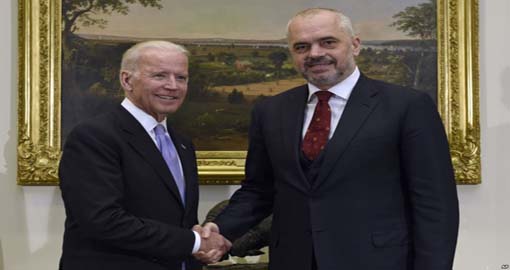
Image: Vice President Joe Biden shakes hands with Albanian Prime Minister Edi Rama in the Roosevelt Room of the White House in Washington, April 14, 2016.

In comments made immediately following a meeting with President Barack Obama at the White House, Rama said his government had the backing of the United States and the European Union in this undertaking.

He said Albania was also striving to promote religious coexistence among youth. Young people, he said, should not take religious coexistence for granted; they need to invest in it.

Rama said he was also meeting with FBI officials to ask for technical support in improving Albania’s justice system. The changes include the creation of an anti-corruption court and a prosecutor’s office as well as a national investigative body similar to the FBI. The United States has provided $20 million in assistance to support the reforms, and $5 million more is budgeted this year.

During his visit, Rama praised the United States for its strong support of Albania since the collapse of communism in the early 1990s.

Albania, a NATO member since 2009, enjoys a strategic partnership with the United States.

The Balkan nation has been helping relocate thousands of members of the exiled Iranian Mujahedeen-e-Khalq opposition group. Over the past year and a half, Albania has taken in about 1,000 members of the group and has committed to taking 2,000 more.

During his weeklong visit, the Albanian prime minister has drawn attention with comments strongly critical of Republican presidential candidate Donald Trump, saying Americans should not vote for him.

April 23, 2016 0 comments
FacebookTwitterPinterestWhatsappTelegramSkypeEmail
Iran Interlink Weekly Digest

Iran Interlink Weekly Digest – 142

++ Marking the anniversary of the execution of some of the MEK founders in 1971, Massoud Rajavi started promoting himself on MEK websites in a way that he wouldn’t do before. He now claims that during the trial he said ‘kill me, I am here to be martyred’. He claims that the judge was afraid of him. Commentators have reminded us of the documents which came out of SAVAK after the fall of Shah which show that Rajavi betrayed each and every founder member and several others and that’s why he was the only one not executed. This week many other documents about this have been posted online, including testimony from the former heads of SAVAK, and various people from inside and outside Iran who were there at the time of the trial and executions. Even some MEK loyalists have criticised Rajavi saying ‘if the founders were alive they would not accept raping women, siding with Saddam and separating children from their families Those founders had nothing to do with you.’

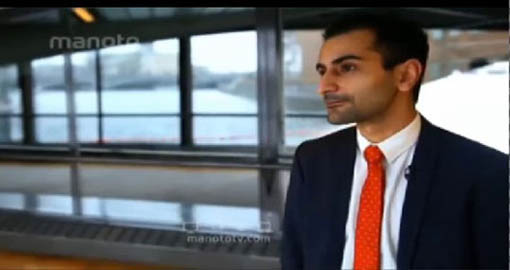
++ In a documentary programme by Manoto TV, Hanif Bali, now an MP in the Swedish parliament, says he is lucky he didn’t end up in Iraq. He was removed from his MEK parents when he was three and fostered by eight different families. He says that when he became a teenager the MEK tried to persuade him to go to Iraq. He refused. Farsi comments on this story remind us that other teenagers under 18 were not so lucky and were deceptively taken to Camp Ashraf. Some were killed, some developed psychotic illnesses and depression, while still others remain trapped in Iraq.

++ There have been several articles about the situation of Tirana and how Massoud Rajavi is desperately spending money to stop people running away and stop defectors talking about the realities there. Commentators jeer that his main worries now are not about politics but about being exposed for all the crimes and immoralities that he has been committing all these years.

++ Last week and this week two interviews with Fariba Hashtroodi by Ali Limonadi were broadcast by Iran Farda TV. Hashtroodi, a journalist and author, had formerly been with the MEK as a member of the NCRI. In reaction to the interviews, the MEK went on overdrive everywhere to swear in the most horrible ways imaginable to attack her. They also forced every member of the NCRI to swear at her. Apparently this is all because in her interview she said “why is Rajavi claiming that anybody going back to their homeland Iran is a mercenary, while he himself has been mercenary for many different parties – Saddam, MOSSAD, CIA, Saudi Arabia, etc, taking money and working for different places against interests of his own country”. This is why the MEK is so hysterical against her. In the second interview LImonadi recollects trying to interview Marzieh the singer in Rajavi’s house in Paris. He said “I tried to talk with her, but I was so uncomfortable because she was surrounded by MEK people all the time and couldn’t talk freely. The atmosphere was really horrible, how this old woman was under so much pressure. I felt sorry for her. A friend told me ‘you’ve delved inside the beehive and come out alive. Well done!” Hashtroodi explains that “I left them for no other reason than that evidence was put in front of me by others which showed the MEK involvement in child labour, execution and torture along with other issues and I found I couldn’t turn my head away and deny it”.

In English:

++ In a series on ‘Elimination Projects in the MEK’ by Nejat Society, various deaths inside the MEK are examined. This week the story of Alan Mohammadi is told. She was among those teenagers returned to Iraq and trapped there as “one crucial sentence was repeated by the MKO leaders on various occasions: ‘Entry doors of Camp Ashraf are open but exit doors are closed’. Alan’s death in 2001 was variously explained as accidental, then suicide. Nasrin Ebrahimi who left the MEK and escaped to Europe says that if she committed suicide “it shows the extremely brutal atmosphere ruling the MKO. Yes, a lot of people [attempted or] committed suicide in Camp Ashraf including me but I’m sure that the 16-year-old Alan was murdered by the MKO”.

++ An article by Massoud Khodabandeh ‘Clinton-Albania deal ensures MEK (Rajavi cult) members stay as terrorists’ says western governments must do more to help defectors from any terrorist entity, including ISIS, to find safe passage out of their group. “if we stand by and allow Daesh, like the MEK, to dictate the conditions of how a defector is treated without making any effort to facilitate their safe exit, if we cannot offer a helping hand to those who wish to redeem themselves, then we are no better than the terrorists ourselves.”

++ Open Letter of 72 former Mojahedin Khalq members in Europe and North America to the UNHCR highlights the plight of Ehsan Bidi and Siavosh Rastar who have been left destitute because they refuse to return to the MEK to claim sustenance in Albania.

++ Voice of America: “Albanian Prime Minister Edi Rama said Thursday that preparations were underway in his country to set up a regional center for the fight against radicalism.”

++ Ashraf News, Baghdad. “Iraqi security sources revealed on Monday that five members of the MKO terrorist organization, who are in Camp Liberty in Baghdad, declared their defection and turned themselves in to security forces stationed near the perimeter of the camp.

“Police Colonel, Mohsen Jaber Al-Kanani, told the reporter of Ashraf News, ‘Five members of the Organization of Iran (PMOI) defected on Sunday from the organization and turned themselves in to security forces after they had enabled them to leave Camp Liberty’.

“Al-Kanani said that the Iraqi police handed over those five to the United Nations mission in Baghdad, noting that ‘the dissidents were Ali Hussein Khodabandeh, Mohsen Tayeb Zadeh, Massoud Bakhshi Zadeh, Syed Jalal Rahimpour, Manouchehr Shirazi,’ noting that ‘three of the dissidents are from Kermanshah province in western Iran’.”

April 23, 2016 0 comments
FacebookTwitterPinterestWhatsappTelegramSkypeEmail
Camp Liberty

Five more Camp Liberty residents defect the MKO

Sources to Ashraf News: Defection of five Mojahedin Khalq members in Camp Liberty

Iraqi security sources revealed on Monday that five members of the MKO terrorist organization, who are in Camp Liberty in Baghdad, declared their defection and turned themselves to security forces stationed near the perimeter of the camp.

Police Colonel, Mohsen Jaber Al-Kanani, told the reporter of Ashraf News, “Five members of the Organization of Iran (PMOI) defected on Sunday from the organization and turned themselves to the security forces after they managed to leave Camp Liberty.”

 Al-Kanani said that the Iraqi police handed over those five to the United Nations mission in Baghdad, noting that “the dissidents were Ali Hussein Khodabandeh, Mohsen Tayeb Zadeh, Massoud Bakhshi Zadeh, Sayed Jalal Rahimpour, Manouchehr Shirazi,” .. “three of the dissidents are from Kermanshah province in western Iran."

Hundreds of MKO terrorist organization members who are in Camp Liberty seek to defect, leave the organization and join their families who have been protesting more than a month in front of the Camp, demanding to meet with their sons detained by the organization leaders Maryam and Massoud Rajavi.

April 23, 2016 0 comments
FacebookTwitterPinterestWhatsappTelegramSkypeEmail
Mujahedin Khalq; A proxy force

A “Red Cleric” who loves terrorists

Jacques Jean Edmond Georges Gaillot (born 11 September 1935 generally known in French as Monseigneur Gaillot) is a French Catholic clergyman and social activist. He was Bishop of Évreux in France from 1982 to 1995. In 1995, by decision of Pope John Paul II, he was demoted to be Titular Bishop of Partenia, an extinct diocese, for having expressed too controversial and heterodox positions on religious, political and social matters.

Throughout 1989, Gaillot continued to cause considerable tension within the French Bishops’ Conference, to the extent that the members of the episcopate voted to censure him. This disciplinary action came after Gaillot gave an interview to the publication Lui, the French equivalent of Playboy. Furthermore, he also gave interviews to leading gay magazines and lambasted the incompetence of the Roman Catholic hierarchy to judge the circumstances of homosexuality. At this point, the bishop offered his resignation to the Pope, should he feel it necessary to remove him; no such action was taken however. [1] He has expressed his publical support for euthanasia [citation needed] and same-sex marriage, when it was legalized in France.

In 2004 Bishop Gaillot met with Maryam Rajavi, MKO’s leader. Rajavi publicly thanked the bishop and expressed that his support had been very effective in promoting the cause of what she calls “Iran resistance”. Jacques Gaillot has praised the terrorists in Camp Liberty in Iraq for their brutal activities, what he calls it fighting for “bring freedom and democracy to Iran.” Camp Liberty in Iraq houses thousands of members of the terrorist group MKO.

The People’s Mujahedeen of Iran, also known as the Mujahedin e-Khalq organization (MKO, MEK, …) in its Persian acronym, is a terrorist organization, that has carried out decades of brutal terrorist attacks, assassinations, and espionage against the Iranian government and its people, as well as targeting Americans. The group used to seek to overthrow the Iranian revolutionary government with the help of Saddam Hussein during the Iran-Iraq War.

Founded in 1963 by a group of leftist Muslim Iranian university students as an Islamic and Marxist political mass movement, the MKO was originally devoted to armed struggle against the shah, capitalism, and Western imperialism. However, according to a report by the Christian Science Monitor, it was the only group that used violence against Americans in the run-up to the revolution, launching a string of assassinations and attacks against American military and diplomatic officers in Iran in the 1970s.

The US Department of State describes MKO’s terrorist activities as follows:

The group’s worldwide campaign against the Iranian government uses propaganda and terrorism to achieve its objectives. During the 1970s, the MKO staged terrorist attacks inside Iran and killed several U.S. military personnel and civilians working on defense projects in Tehran. In 1972, the MKO set off bombs in Tehran at the U.S. Information Service office (part of the U.S. Embassy), the Iran-American Society, and the offices of several U.S. companies to protest the visit of President Nixon to Iran. In 1973, the MKO assassinated the deputy chief of the U.S. Military Mission in Tehran and bombed several businesses, including Shell Oil. In 1974, the MKO set off bombs in Tehran at the offices of U.S. companies to protest the visit of then U.S. Secretary of State Kissinger. In 1975, the MKO assassinated two U.S. military officers who were members of the U.S. Military Assistance Advisory Group in Tehran. In 1976, the MKO assassinated two U.S. citizens who were employees of Rockwell International in Tehran. In 1979, the group claimed responsibility for the murder of an American Texaco executive. Though denied by the MKO, analysis based on eyewitness accounts and MKO documents demonstrates that MKO members participated in and supported the 1979 takeover of the U.S. Embassy in Tehran and that the MKO later argued against the early release the American hostages. The MKO also provided personnel to guard and defend the site of the U.S. Embassy in Tehran, following the takeover of the Embassy.

In 1981, MKO leadership attempted to overthrow the newly installed Islamic regime; Iranian security forces subsequently initiated a crackdown on the group. The MKO instigated a bombing campaign, including an attack against the head office of the Islamic Republic Party and the Prime Minister’s office, which killed some 70 high-ranking Iranian officials, including Chief Justice Ayatollah Mohammad Beheshti, President Mohammad-Ali Rajaei, and Prime Minister Mohammad-Javad Bahonar. These attacks resulted in an expanded Iranian government crackdown that forced MKO leaders to flee to France. For five years, the MKO continued to wage its terrorist campaign from its Paris headquarters. Expelled by France in 1986, MKO leaders turned to Saddam Hussein’s regime for basing, financial support, and training. Near the end of the 1980-1988 Iran-Iraq War, Baghdad armed the MKO with heavy military equipment and deployed thousands of MKO fighters in suicidal, mass wave attacks against Iranian forces.

The MKO’s relationship with the former Iraqi regime continued through the 1990s. In 1991, the group reportedly assisted the Iraqi Republican Guard’s bloody crackdown on Iraqi Shia and Kurds who rose up against Saddam Hussein’s regime. In April 1992, the MKO conducted near-simultaneous attacks on Iranian embassies and consular missions in 13 countries, including against the Iranian mission to the United Nations in New York, demonstrating the group’s ability to mount large-scale operations overseas. In June 1998, the MKO was implicated in a series of bombing and mortar attacks in Iran that killed at least 15 and injured several others. The MKO also assassinated the former Iranian Minister of Prisons in 1998. In April 1999, the MKO targeted key Iranian military officers and assassinated the deputy chief of the Iranian Armed Forces General Staff, Brigadier General Ali Sayyaad Shirazi.

In April 2000, the MKO attempted to assassinate the commander of the Nasr Headquarters, Tehran’s interagency board responsible for coordinating policies on Iraq. The pace of anti-Iranian operations increased during “Operation Great Bahman” in February 2000, when the group launched a dozen attacks against Iran. One attack included a mortar attack against a major Iranian leadership complex in Tehran that housed the offices of the Supreme Leader and the President. The attack killed one person and injured six other individuals. In March 2000, the MKO launched mortars into a residential district in Tehran, injuring four people and damaging property. In 2000 and 2001, the MKO was involved in regular mortar attacks and hit-and-run raids against Iranian military and law enforcement personnel, as well as government buildings near the Iran-Iraq border. Following an initial Coalition bombardment of the MKO’s facilities in Iraq at the outset of Operation Iraqi Freedom, MKO leadership negotiated a cease-fire with Coalition Forces and surrendered their heavy-arms to Coalition control. Since 2003, roughly 3,400 MKO members have been encamped at Ashraf in Iraq.

In 2003, French authorities arrested 160 MKO members at operational bases they believed the MKO was using to coordinate financing and planning for terrorist attacks. Upon the arrest of MKO leader Maryam Rajavi, MKO members took to Paris’ streets and engaged in self-immolation. French authorities eventually released Rajavi.

The group formally renounced the use of violence in 2001, but an FBI investigation found MKO members to be “actively involved in planning and executing acts of terrorism” as recently as 2004. In February 2012, NBC News reported that the Israeli government had coordinated with MKO to launch a series of assassinations against Iranian nuclear scientists. The group’s delisting may open the door to future cooperation with the United States as well.

The MKO was removed from the State Department’s terrorism list three years ago after a concerted lobbying campaign, which featured some of the most prominent politicians and officials in the U.S., including John Bolton, former U.S. ambassador to the United Nations; Tom Ridge, former director of Homeland Security; and Rudy Giuliani, former mayor of New York City.

the MKO is a kind of cult, according to the FBI, Human Rights Watch, the Rand Corporation, and just about every other organization which has investigated the group. It is precisely the kind of organization that should not testify about Islamic extremism.

Jeremiah Goulka, author of “The Mujahedin-e Khalq in Iraq: A Policy Conundrum,” a report published by the Rand Corporation in 2009, told MintPress, “At the MKO camps, there’s a whole set of practices that are all textbook out of cult theory – sleep deprivation, make-work projects… forced celibacy, forced divorce, [and] gender segregation.”

Masoud Banisadr, a former member of the MKO, who had served as the group’s representative to the United Nations and the U.S., confirmed that forced divorces were common in the group. Banisadr told MintPress: “All members were forced to divorce their spouses, and later they have to send their children abroad to Europe and United States to be adopted by supporters and other members.”

Two former members of the MKO, Anne Singleton and Massoud Khodabandeh, published a book last September detailing coercive tactics used by the group’s leaders to maintain control and suppress dissent. A Human Rights Watch report also revealed a similarly questionable organization in Camp Ashraf.

The group currently has an office on Pennsylvania Avenue in Washington, where they launch campaigns related to Iran, attend congressional legislative hearings about the country, and attempt to influence public perception of Iranian government.

1. Englund, Steven (October 6, 1995). "Provocateur or Prophet? the French Church & Bishop Gaillot". Commonweal

April 20, 2016 0 comments
FacebookTwitterPinterestWhatsappTelegramSkypeEmail
Human Rights Abuse in the MEK

I was lucky that I didn’t get back to the MKO!

Hanif Bali was only three years old when he was separated from his parents in Camp Ashraf and was sent to Sweden. The 29-year-old Hanif is now a member of parliament for Sweden’s Moderate Party.

“I was lucky that I didn’t get back to Iraq”, he said in a documentary that was filmed from a day of his life by Manoto TV. When in 1991, Massoud Rajavi ordered his rank and file to leave their children under the pretext of the Gulf War, Hanif and many other children were transferred to Europe where they were kept in the MKO’s team houses or by Swedish families or Iranian sympathizers of the MKO.

“I have had seven to eight mother,” Hanif said about his childhood as an immigrant. His biological mother was not allowed to call him except once a year on his birthday. “About my father I have very few memoires,” he said with a regretful look.

A large number of children of the MKO members were then brought back to the MKO’s camp in Iraq, Camp Ashraf. Some of them were eventually killed. Hanif was determined not to get back to the unpleasant life of the group in Iraq although the group recruiters tried to convince him to join the group when he was eighteen. The recruiter showed him a film of his father. In the film, Hanif’s father tried to indoctrinate him to go to Iraq and to allegedly fight just like his childhood friends who had gone to Ashraf and had been killed for the group’s cause. “I was shocked by the film because it was the first time to see my father,” he stated. He was lucky that his aunt was with him in that recruitment meeting. ”We won’t discuss it now”, she said. So, Hanif who felt angry with his father went home. He was very angry with him that after long years of no call and no contact, his father was just asking him to join the group. “Today, when I think of that day, I still get angry”, he told Manoto.

“This was a hard decision for a young boy to take”, he asserted. ”If I had accepted to join the group at that day, I would have been in a camp in the midst of war, in the midst of misery.”

Hanif was grown up in a democracy far from the cult-like totalitarian system that brainwashed parents to leave their beloved children behind for their leaders’ ambitions. He defines the big gap between his life and that of his parents, “The big difference between me and my parents is that I don’t see the world as black and white”.

April 20, 2016 0 comments
FacebookTwitterPinterestWhatsappTelegramSkypeEmail
Albania

Clinton-Albania deal ensures MEK members stay as terrorists

When is a terrorist, who is not a terrorist, still a terrorist?

The answer to this complicated riddle can be surprisingly simple: When they are forced to remain in a terrorist group because there is no safe way for them to escape.

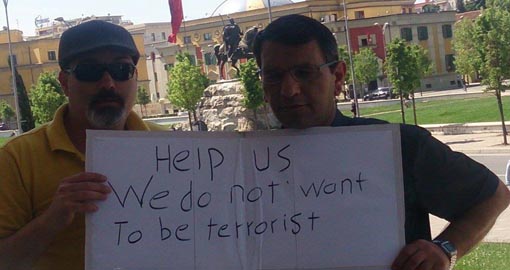
Image: Ehsan Bidi and Siavosh Rastar – who have no accommodation or money because this is supposed to be provided by Mojahedin Khalq terrorist group which they left

There is an ongoing debate in Europe and North America about how defectors from terrorism should be treated as they try to return to their homes in the West. Some say that on security grounds they should be either banned from re-entry or prosecuted and where possible imprisoned as an example to others. Others, usually practitioners who understand that deceptive recruitment is a huge factor in people’s involvement in terrorism, advocate for a more humanitarian and redemptive approach: allow these people home, albeit with severe restrictions imposed on their lives and activities, and get them to undergo re-programming.

What this debate does not address, however, is just how possible it is to actually escape a terrorist group in the first place. If you are in Raqqa, how do you step outside the group and remain safe?

In this context the fate of a handful of Iranians, stranded in Albania without any financial support or accommodation and unable to access refugee services, shines a spotlight on this aspect of the West’s approach to terrorism.

It would be easy to dismiss former MEK members Ehsan Bidi and Siavosh Rastar’s case as a local, individual problem. But when we look in more detail, it has everything to do with whether America and the West are complicit in forcing people to remain in terrorist groups because we do not see the need to help them leave at all. Certainly this is not a solution to terrorism – Plan B: get them all to leave – but a more facilitating approach toward genuine defectors could be a major factor in undermining the hold such groups have on their members.

Three years ago, Ehsan Bidi was brought to Albania along with other members of the Mojahedin Khalq (MEK). But Bidi was already a separated member when he arrived; it had just not been possible for him to escape them while in Iraq. As soon as he arrived he left them. Since then, he had been living on a small financial contribution from the UNHCR along with basic accommodation which they had provided. Suddenly at the end of March this year all this support ended. He and others like him were left destitute.

What Bidi and another handful of defectors didn’t know was that under the 2013 deal struck between former Secretary of State Hillary Clinton and the then Albanian Prime Minister Sali Berisha, the MEK members transferred to Tirana from Camp Liberty in Iraq would not be given official UN refugee status and would be dependent on Maryam Rajavi’s MEK for all their accommodation and costs while in Albania. Amazingly, neither the government of Albania nor the UNHCR has any obligation to treat them as refugees. All of these people are being transferred not as refugees but as the active members of a terrorist entity. In fact, part of the deal struck by Clinton was that the MEK would be removed from the US terrorism list specifically to allow this deal even though every active member remains radicalised to the core and capable of committing acts of terrorism.

This means that when people like Bidi and Rastar choose to reject membership of this terrorist group, they not only face the wrath of the MEK – which has promised to kill Bidi in particular because he is so vocal about this predicament – but they are also left destitute because the state doesn’t recognise them except as members of that terrorist group. After the UNHCR pulled the plug on its support, Bidi and the others were told ‘you must ask Rajavi to allow you back in the MEK or ask the Iranian embassy to send you back to Iran’. Clearly an impossible choice. It is a conundrum which was created by America and must be resolved by America.

A similar situation arose in Iraq after 2003 when the MEK were captured, disarmed and kept in Camp Ashraf. Within weeks the American army was being approached by defectors begging them for help to escape the clutches of the cult. After trying to send them back or ignore them, the army was eventually obliged, under the Fourth Geneva Convention, to establish a separate Temporary Internment and Protection Facility (TIPF) within their own compound to house the defectors. This allowed many others to escape and return to their families and to civilian life.

It is necessary now for the American administration to acknowledge that it has the same obligation toward the people it transferred to Albania under Clinton’s 2013 deal. It must give them the same opportunity to leave the MEK as was granted to people while in Iraq. Safe, alternative accommodation and social support must be given to those who, on principle, reject membership of a terrorist group. It’s almost unthinkable that this isn’t happening already.But while nobody imagines that in among the chaos of war in the Middle East and the massive refugee crisis that has engulfed Western countries, there can be a TIPF or something similar for ex-terrorists, we also know that Daesh kills defectors. They do this under the principle of ownership – we own our fighters and can dispose of them as we see fit.

In this case, if we stand by and allow Daesh, like the MEK, to dictate the conditions of how a defector is treated without making any effort to facilitate their safe exit, if we cannot offer a helping hand to those who wish to redeem themselves, then we are no better than the terrorists ourselves.

toptopic.com

Khodabandeh: The article has been translated and published in Albania ; The issue is of course important for the Albanians too:

gazetaimpakt.com/lajm/6997/marreveshja-klinton-shqiperi-i-detyron-anetaret-e-mek-kulti-raxhavi-te-qendrojne-si-terroriste/

April 19, 2016 0 comments
FacebookTwitterPinterestWhatsappTelegramSkypeEmail
Mujahedin Khalq Organization

Why MeK keeps making the promise of overthrowing Iran’s gov’t

After Maryam Rajavi in 2010 and Parviz Khazaei in 2012, now is the MeK’s European patron Struan Stevenson to predict the overthrow of Iranian government.

Each time that the group makes a promise, they resort to a ground to reiterate their unending promises over and over again.

The MeK leadership’s excuse for this time is deepening the "cracks" among political parties in Iran, which has been stated by Stevenson.

"But his gerrymandering of the election lists may turn out to be the last straw for people who have had enough of fascist oppression, terrorism, corruption and brutality. The fault lines continue to deepen as more and more cracks appear. 2016 will be a pivotal year for Iran and it may well be the year that sees an end to the world’s most dangerous regime."

The reason that the hiding leader of MeK does not make such a promise is mainly because what he said in a public meeting years before his breakout. He said, "I withdraw all my remarks as regards the overthrowing. I’ve made a ghastly mistake."

Of course he intended to fool the members by this as he found it necessary that all the members accept to remain in Iraq with a long-term vision and with no hope. But this strategy did not hinder MeK leadership to resort to false promises in order to keep the frustrated and disappointed members in the camps in Iraq.

In 2007, for example, Rajavi assured the members that US Republicans would definitely attack Iran and that year was Iranian government’s final year.

So why such claims are repeated and the deadline for overthrowing Iranian government is being extended?

The truth is that the disillusioned members of MeK need a beacon of hope. They need to know that they will be released from that miserable condition one day and that they can take their revenge on the Iranian people after Rajavi’s gaining power.

Misinformation on the conditions in Iran is also like that. The Rajavi and his members are interested in misrepresenting the conditions in Iran and claim that Iran is a crisis-stricken country.

Of course the MeK leader intends to wage a so-called psychological warfare against the supporters of the other party with these claims.

But the major function of these promises is for the Rajavi to keep the miserable members and convince them not to leave the Rajavi’s organization and look forward to the day that the regime is "overthrown by itself."

2016 will be over and we should look forward to the next grounds of the MeK to repeat the promise!

April 18, 2016 0 comments
FacebookTwitterPinterestWhatsappTelegramSkypeEmail
The cult of Rajavi

Elimination projects in the MKO – Alan Mohammadi

Alan was 14 years old when she was brought to Camp Ashraf to visit her parents who were members of the Mujahedin-e Khalq Organization. She had been sent to Europe after the so-called ideological revolution in the MKO that forced couples to divorce and eventually to leave their children. Alan and her peers had been sent to Germany where they were kept in pensions or by Iranian families who were sympathizers of the MKO.

Alan who was supposed to come to Camp Ashraf to visit her parents could not accept that she would not be allowed to leave the Camp anymore. Ms. Nasrin Ebrahimi former member of the MKO writes about Alan’s sad story inside the MKO,” As I knew the group’s reality, I realized that Alan and other children like her would never get back to Europe and the group would force them to stay in Ashraf, Iraq.” The teenagers were first told by the leaders to stay in the Camp to get to know more about the “Organization”. They were treated friendly and given present. High-ranking officials used to receive them in private meetings.

“This tactic was effective. Some of the children were deceived by the group and stayed in Camp Ashraf,” writes Ms. Ebrahimi.”Some others including Alan still insisted on leaving Iraq.”

But, one crucial sentence was repeated by the MKO leaders on various occasions: “Entry doors of Camp Ashraf are open but exit doors are closed.”

Consequently, children were forced to attend indoctrination meetings. ”I remember what happened to Alan during the meetings,”Ebrahimi writes. “I remember her with her innocent face and her small body that had become the topic of their so-called ideological arguments.” Alan was ordered to divorce her parents, her friends and her normal life in Europe! She was told not to think of the opposite sex. The MKO leaders tried to indoctrinate her to admit their main cult jargon: “Long Life Divorce”!

After dozens of brainwashing sessions, Alan still asked to let her leave the camp. She resisted against the indoctrination process. So, she endured the most severe psychological tortures. Commandants abused her verbally and humiliated her before her peers in the meetings but Alan did not obey Massoud Rajavi’s mind controlling system. Thus, she was no more tolerated by the system.

One day in 2001, the group announced her death. There are different accounts about Alan’s tragic fate. The group’s propaganda told that Alan had shot herself by a machinegun unintentionally. Nasrin Ebrahimi wonders,” How that little girl could shoot herself by such heavy weapon?” Another version says that Alan committed suicide. Given that the second version is true, it shows the extremely brutal atmosphere ruling the MKO.

“Yes, a lot of people committed suicide in Camp Ashraf including me but I’m sure that the 16-year-old Alan was murdered by the MKO”, asserts Nasrin Ebrahimi.   

April 17, 2016 0 comments
FacebookTwitterPinterestWhatsappTelegramSkypeEmail
Newer Posts
Older Posts

Recent Posts

  • Pregnancy was taboo in the MEK

    December 22, 2025
  • MEPs who lack awareness about the MEK’s nature

    December 20, 2025
  • Why did Massoud Rajavi enforce divorces in the MEK?

    December 15, 2025
  • Massoud Rajavi and widespread sexual abuse of female members

    December 10, 2025
  • Farman Shafabin, MEK member who committed suicide

    December 3, 2025
  • Facebook
  • Twitter
  • Instagram
  • Youtube

© 2003 - 2025 NEJAT Society . All Rights Reserved. NejatNGO.org


Back To Top
Nejat Society
  • Home
  • Articles
  • Media
    • Cartoons
    • NewsPics
    • Photo Gallery
    • Videos
  • Publications
    • Books
    • Nejat NewsLetter
    • Pars Brief
  • About Us
  • Contact us
  • Editions
    • عربي
    • فارسی
    • Shqip