Nejat Society
  • Home
  • Articles
  • Media
    • Cartoons
    • NewsPics
    • Photo Gallery
    • Videos
  • Publications
    • Books
    • Nejat NewsLetter
    • Pars Brief
  • About Us
  • Contact us
  • Editions
    • عربي
    • فارسی
    • Shqip
Nejat Society
Nejat Society
  • Home
  • Articles
  • Media
    • Cartoons
    • NewsPics
    • Photo Gallery
    • Videos
  • Publications
    • Books
    • Nejat NewsLetter
    • Pars Brief
  • About Us
  • Contact us
  • Editions
    • عربي
    • فارسی
    • Shqip
© 2003 - 2024 NEJAT Society. nejatngo.org
Mujahedin Khalq; A proxy force

The New Yorker Doesn’t Factcheck What ‘Everyone Knows’ Is True

Dexter Filkins has been one of the top journalists covering America’s wars since 9/11—first for the New York Times, and since 2011 for the New Yorker—often uncovering stories that were not welcomed by the US national security structure. But when Filkins, in a long-form New Yorker article last summer (7/20/15), took on the subject of Argentine prosecutor Alberto Nisman’s untimely death and its relation to his role in indicting senior Iranian officials for a 1994 Buenos Aires terror bombing, it tested how far Filkins would go in questioning conventional wisdom.
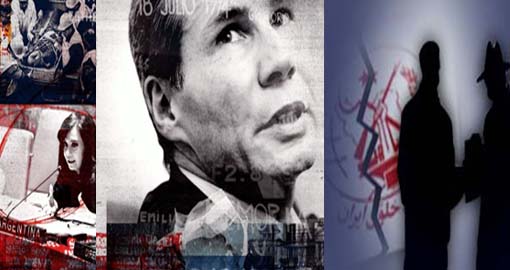
 The July 18, 1994, bombing of the Jewish community center in Buenos Aires (known by the Spanish initials AMIA), which killed 85 people and wounded nearly 300, is almost always blamed on Iran in media references to the attack. Other than my own investigation of the case in 2008 (The Nation,  1/19/08), I’m aware of no journalist who has gone beyond that frame in covering it.

 Filkins apparently intended to write a journalistic portrait of Nisman and the disputed circumstances in which he died of a gunshot wound last January, rather than to explore the case itself. But in order to write such a portrait, Filkins had to deal with the evidence Nisman used in his AMIA indictment, and Filkins stumbled badly in writing about those issues.

 Filkins’ failure goes to the root of a systemic problem of news media coverage of Iran and many other issues. Certain narratives about episodes and issues in recent history have become so unanimously accepted among political and media elites as to be virtually unchallengeable in media reporting. Such narratives have been repeated in one form or another for so many years that reporters simply would not think to question them for a moment, much less actually investigate their truth.

 The narrative surrounding the AMIA bombing and its Iranian origins is a notable example of the phenomenon. Reporting on the Argentine investigation of the bombing and the indictment of the Iranians by Nisman in 2006 has treated Iran’s responsibility as an accepted and documented fact. And when Filkins believes he is adding independent reporting that corroborates Nisman’s interpretation of the evidence, he actually committed errors that a careful reporter would normally have avoided.

 Filkins presents the primary evidence of Iranian/Hezbollah responsibility in Nisman’s 2006 indictment as follows:

In the course of 801 pages, he charged seven Iranian officials, including the former president, Ali Akbar Rafsanjani, and also indicted Hezbollah’s senior military commander, Imad Mugniyah. “The decision to carry out the attack was made not by a small splinter group of extremist Islamic officials,” Nisman wrote, but was “extensively discussed and ultimately adopted by a consensus of the highest representatives of the Iranian government.” Drawing on the testimony of Iranian defectors, Nisman wrote that the decision was made on August 14, 1993, at a meeting of the Committee for Special Operations, which included the Supreme Leader, Ali Khamenei.

But if Filkins had read the English-language version of Nisman’s indictment, which is now available, or had done an online search on the subject, he would have learned that the sources that Nisman relied for that spectacular intelligence claim were not “defectors,” but the four members of the Mujahideen E Khalq’s political front, the National Council of Resistance Iran (NCRI). The MEK, an armed opposition group, had been a terrorist arm of the Saddam Hussein regime during the Iran/Iraq War, and had carried out terrorist actions against Americans and Iranians in the 1980s and early 1990s. It was taken  off the State Department’s list of terrorist organizations in 2012 after a well-funded campaign to buy off prominent political and national security figures.

The two MEK sources that made specific claims about the meeting were senior officials of the organization: Reza Zakeri Kouchaksaraee, president of the NCRI’s Security and Intelligence Committee, and Hadi Roshanravani, a member of its International Affairs Committee. Nisman quotes from testimony by Kouchaksaraee before the Argentine Oral Court in 2003 that the decision to bomb the AMIA had been made by a meeting of the Supreme National Security Council on August 14, 1993: “This meeting lasted only two hours from 4:30 to 6:30 pm,” said the MEK official.

Nisman quoted Roshranravani as having testified to the same starting time, but a meeting date two days earlier: August 12, 1993. Roshranravani even claimed that the NCRI knew the exact agenda of the meeting, and that “the idea for an attack on Argentina” had been discussed during a discussion on “the strategy of exporting fundamentalism throughout the world.”

Neither NCRI official nor Nisman himself offered any explanation for how an exiled armed opposition organization could have penetrated the highest level of the Iranian government—or why Argentine investigators had been unaware of such crucial alleged intelligence for nearly a decade. Furthermore, the NCRI had by then a long history of publicizing intelligence claims—especially on alleged Iranian weapons of mass destruction—that Mossad, Israel’s international intelligence service, hoped would influence international opinion.

Nisman called two other NCRI members who testified before the same court “defectors.” But one of them, Ali Reza Ahmadi, was identified as an Iranian foreign service officer from 1981 to 1985, while the other, Hamid Reza Eshagi, was not otherwise identified. Those two witnesses made only joint statements, merely supporting what the senior officials of the NCRI had testified. They made no claim to independent knowledge of the meeting.

A review of the indictment reveals that Nisman cited the same four NCRI members a total of 61 times to document the alleged participation of each of the seven senior Iranians for whom Nisman was requesting arrest warrants. Nearly half of the citations were for Kouchaksaraee, the head of NCRI’s Security and Intelligence Committee.

Filkins appears to have been unaware, however, of Nisman’s reliance on the testimony of the armed opposition to the Iranian regime, with its shady history, for the crucial information on which his indictment of the Iranians was based. “Much of the testimony that guided Nisman toward the Iranian regime,” Filkins writes, “was provided by a man referred to in court documents as ‘Witness C’—Abolghasem Mesbahi, an Iranian intelligence agent who defected to Germany in 1996.”

But in identifying Mesbahi as the key source, Filkins not only misrepresents the alleged evidence in Nisman’s indictment, but also demonstrates a remarkable lack of curiosity about a figure whose record as a witness on this and other cases was marked by serious anomalies and even absurdities.

Mesbahi’s claims about Iranian sponsorship of the AMIA terror bombing had provided fodder for a number of stories on the case for years. But it turns out his story was not consistent. Mesbhai’s initial statement to Argentine investigators, in a secret 100-page deposition in 2000, claimed that Iranian planning for the AMIA bombing began in 1992. According to the transcript, Mesbahi said one Iranian intelligence cell was devoted to “cooperating with members of the Argentine police, corrupting them or threatening them to collaborate with the attack,” while another worked on obtaining the explosives.

 But when Mesbahi testified to the oral court by video conference from the Argentine embassy in Berlin in November 2003, he declared: “It’s a rule that in terrorist operations, local sources of the chosen country can never be trusted. It is not possible that anyone who lived in Argentina was involved in or informed about the attack.”

In the same sensational 2000 deposition, Mesbahi claimed that, after the attack, Argentine President Carlos Menem had sent an emissary to Tehran, whom he described as a bearded man of about 50 years of age, who had negotiated a deal that resulted in a $10 million deposit to a numbered account that Menem had provided. In return, Mesbahi testified, Menem agreed to “make declarations that there was no evidence against Iran that it was responsible.” The money, he writes “was paid from another Swiss account, controlled by Rafsanjani, the Iranian president.”

But in his 2003 testimony, Mesbahi backed away from this account, saying that everything he knew about the affair had come from someone who had died in 1997, and that he did not know if any payments had actually been made.

And as for the previous date for the Iranian decision to carry out the bombing, Mesbahi told the oral court the decision was made in 1993, not 1992, as he had claimed before.

It was not only in regards to AMIA that Mesbahi was known to the US intelligence community as a “fabricator.” He had claimed to German investigators that Iran asked Libya and the Abu Nidal terrorist organization to carry out the attack on Pan Am 103 in December 1988. That claim was discredited by the FBI.

 Even more outrageously, he had also concocted a tale of having been tipped off by Iranian contacts, through a series of “coded messages” in the summer and early September of 2001, about plans for a coming Iranian terrorist strike in the United States that would involve crashing civilian airliners into buildings in major US cities, including Washington and New York, on September 11–and that he had frantically tried to contact someone in German or US intelligence about the information. In fact, neither the German nor US government ever got any communication from Mesbahi.

Filkins does quote a single sentence from the head of the FBI’s mission to Buenos Aires to assist in the AMIA investigation, James Bernazzani, summing up his view of Mesbahi as a witness: “Mesbahi was full of shit.” But he does not confront the significance of Bernazzani’s comment. “Still, many American officials believe that Iran was involved in the bombing,” he writes, as if to dismiss questions of Mesbahi’s suspect credibility.

Filkins quotes former CIA operative Robert Baer as saying Iran could be presumed to be involved because of the alleged involvement of the Iranian-backed Lebanese militia group Hezbollah:

The assumption was that the Iranians were involved, because the attack was carried out by a unit that they created…. [Hezbollah security chief Imad] Mugniyah never did anything without the green light of the Supreme Leader.

 But Filkins’ assumption that the United States had hard evidence of Hezbollah’s involvement is seriously misguided. Filkins cites Bernazzani’s account of assisting the Argentine intelligence agency SIDE with its investigation of the bombing by examining the truck and finding “bits of flesh and bluejeans stuck to a fragment of metal.” Filkins completes Bernazzani’s account:

Technicians at an FBI lab quickly identified a man who they believed was the driver: Ibrahim Hussein Berro, a Hezbollah operative from Lebanon. Intelligence analysts determined that Berro’s family had been fêted by Hassan Nasrallah, Hezbollah’s leader, shortly after the bombing. “The case we made would have stood up in the US judicial system,” Bernazzani said.

But that is not what happened. As Bernazzani told me in a November 2007 interview, the FBI investigators did believe the DNA evidence they found in an evidence locker had come from the suicide bomber, but they could not link it with any specific individual, because they had no DNA sample at that point with which the compare the evidence. In fact, the only evidence the FBI and its Argentine colleagues were able to find for Iranian and/or Hezbollah involvement in the bombing for several years was, he said, “circumstantial.”

 Bernazzani recalled that it was more than eight years after he began working on the case in late 1996 that Nisman had taken a DNA sample from one of Ibrahim Hussein Berro’s brothers during his visit in September 2005. Bernazzani told me that he assumed—though he didn’t know for a fact—that the Argentines had compared the DNA found earlier with that of the brother.

But Nisman never talked about the DNA evidence publicly—including in his indictment—except to claim to a reporter in 2006 that the samples had been contaminated. Bernazzani was certainly under the impression in 2005, before he retired from the FBI, that the sample was not contaminated. The implication is that the DNA sample from the evidence locker and the sample taken from Berro’s brother did not match.

Filkins cites Nisman’s claim in the indictment that the coordinator of the entire AMIA bombing operation was Mohsen Rabbani, previously the leader of the Al Tawhid mosque in Buenos Aires and, in 1994, the cultural attache of the Iranian embassy. It was Rabbani, according to Nisman, “who financed the attack, oversaw the purchase of the Renault [van used in the bombing] and directed the assembly of the bomb.”

But the evidence of Rabbani’s guilt cited by Nisman is based on the kind of inferential leaps usually employed to construct crude conspiracy theories. The indictment argues, for example, that it is “reasonable to infer” that Rabbani’s withdrawal of a total of $94,000 from a bank account between March 22 and July 18, 1994, was to pay for expenses related to the AMIA attack.

The evidence for Nisman’s conclusion that Rabbani had overseen the purchase of the suicide bomb car consists entirely of the fact that Rabbani “made inquiries at various Buenos Aires car dealers concerning the purchase of a van that was identical or similar to the one that was used as a car bomb in the AMIA attack several months later.” But in fact the Renault Trafic van was just about the only vehicle available in Buenos Aires for hauling relatively small loads, and the intelligence report on the surveillance of Rabbani available in the public record of the Argentine investigation shows that Rabbani had looked at a car dealer’s white Trafic on May 1, 1993—15 months before the bombing—but had not bought it.

Filkins notes approvingly Nisman’s use of phone metadata and travel dates to infer the involvement of Iran and Hezbollah in the plot to carry out the bombing. The approach used by the Argentina’s SIDE, as described in Nisman’s indictment, began with the assumption that a certain set of phones that were in contact with one another only from July 1 through July 18, 1994, represented the “operational group” for the bombing. Then they inferred that the fact that some of those phones were in contact with subscribers in Lebanon who were, in Nisman’s words, “suspected of having ties with Hezbollah” was evidence of Hezbollah’s involvement in the bombing.

Bernazzani told me that he was appalled by SIDE’s use of “link analysis” to establish responsibility, and that officials in Washington had not taken such “speculative” theorizing seriously either.”It can be very dangerous,” he said. “Using that analysis, you could link my telephone to bin Laden’s.”

Filkins thus assembled a set of “facts” from Nisman and others supporting his thesis of Iranian guilt, without any serious effort to inquire into its accuracy, reliability and significance. His handling of Bernazzani’s testimony further suggests a readiness to interpret data that doesn’t fit the accepted picture in such a way as to keep it intact.

The point of  deconstructing this New Yorker piece is not that Filkins is more careless about checking facts than his journalistic peers; rather, it is to direct attention to much more bigger and more complex problem affecting the entire news media structure: a climate of opinion in which certain issues are matters of such solid consensus that normally alert and energetic journalists suspend their skepticism and factchecking, because, after all, “everybody knows” that certain propositions are true.

——————————————————————————–

Gareth Porter, an independent investigative journalist and historian on US national security policy, is the winner of the 2012 Gellhorn Prize for Journalism.  His latest book is Manufactured Crisis: The Untold Story of the Iran Nuclear Scare, published in 2014.

Fair.org

November 5, 2015 0 comments
FacebookTwitterPinterestWhatsappTelegramSkypeEmail
Camp Liberty

UN Hotline and Email for the families of residents of Camp Liberty

The families of the members of Mojahedin Khalq in Camp Liberty can now get news about their loved ones on the following hotline:

00964-7809174160

Families can also contact UN authorities responsible for Camp Liberty through:

irqaascp@unhcr.org

We would appreciate it if human rights organisations and others inside and outside Iran could provide this information to the families of the residents of Camp Liberty.

Translated by Iran Interlink

November 4, 2015 0 comments
FacebookTwitterPinterestWhatsappTelegramSkypeEmail
Camp Liberty

UNHCR Update on the situation of Camp Liberty residents

Update No. 12

Update on the situation of residents of the Hurriya Temporary Transit Location

• UNHCR strongly condemns rocket attacks of 29 October 2015 which hit several precincts in the vicinity of Baghdad International Airport, including the Hurriya Temporary Transit Location (TTL) (also known as Camp Liberty). The impact on the Hurriya TTL resulted in the deaths of more than 20 residents and dozens of others were taken to hospitals for treatment of injuries sustained in the attack.

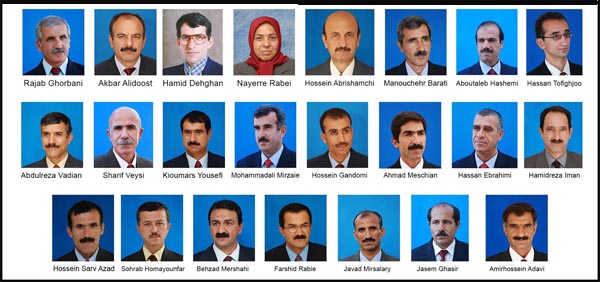
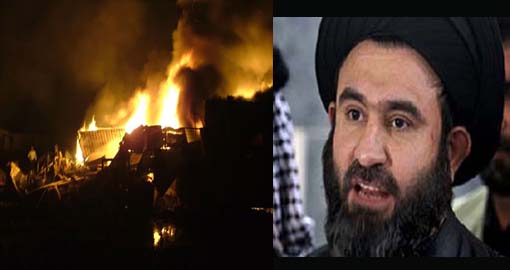
• Following the attack the High Commissioner for Refugees António Guterres made the following statement: “This is a most deplorable act, and I am greatly concerned at the harm that has been inflicted on those living at Camp Liberty. Every effort must continue to be made for the injured and to identify and bring to account those responsible.”

• UNHCR and the United Nations Assistance Mission in Iraq (UNAMI) have been working since 2011 to find relocation opportunities outside Iraq for residents of the Hurriya TTL. These people formerly resided at Camp Ashraf (also known as Camp New Iraq). Approximately 2,160 of this group remain in the Hurriya TTL.

• UNHCR considers that all residents of the Hurriya TTL who are registered with UNHCR are persons of concern to UNHCR. They are entitled to protection against expulsion or forced movement to any place where their lives or freedom would be threatened. The Memorandum of Understanding between the Government of Iraq and the United Nations explicitly recognizes that residents benefit from the principle of non-refoulement.

• Working with States and its partners UNHCR has supported the relocation of more than 900 residents to safe third countries since 2011. The solutions being delivered by UNHCR are current with more than 260 residents relocated since July 2015. Arrangements are in place to relocate in excess of 200 more people by the end of 2015.

• UNHCR deeply appreciates the measures taken by some countries already to relocate residents to situations of safety and security. Albania’s exceptional contribution to this humanitarian endeavor merits special note. These measures contribute greatly to international efforts to find solutions for this group of people.

• UNHCR urgently renews its calls upon governments of other countries to find ways to offer long term solutions for the residents who remain at the Hurriya TTL. If long term solutions cannot be made available immediately, the urgent need to relocate the residents would justify an extraordinary evacuation to a safer temporary platform from where they could be permanently relocated to a third country. UNHCR stands ready to assist states in achieving this objective.

• This appeal for help should be read in light of the potential for more attacks on the Hurriya TTL. As well as the attack of October 2015, residents of the Hurriya TLL suffered three rocket attacks in 2013, each of which resulted in deaths and injuries. There was also an attack on Camp New Iraq in September 2013 which left 52 dead and seven persons missing. The latest attack demonstrates that the current conflict and generalized violence across Iraq leaves residents of the Hurriya TTL open to significantly heightened security risks and it emphasizes the need for a quick and pragmatic action on the part of States to ensure that these people are relocated to a situation of safety and security.

• UNHCR continues to call upon the Government of Iraq to take all possible measures to ensure the safety and well-being of residents, including ensuring access to life saving medical treatment.

UNHCR

Geneva, 30 October 2015

November 4, 2015 0 comments
FacebookTwitterPinterestWhatsappTelegramSkypeEmail
Mujahedin Khalq; A proxy force

The Cult of Rajavi, a Proxy Force Kept for Rainy Day

For decades the US, Israel, and Saudi Arabia have been trying to take advantage of the chaotic situations created by civil wars. They did this by training and equipping proxy forces.  The result of this catastrophic tactic has so far been huge casualties and loss of lives in the region.

One of the most instrumental proxy forces used against the Iranian Government is the Mujahedin Khalq Organization (the MKO/ the Cult of Rajavi). The group itself has made too much effort to gain the support of the US, Israel, and Saudi Arabia although its hostility towards the Islamic Republic seems to be convincing enough for the Saudis and Zionists.

The MKO in its turn gives enough credit to its supporters for their warmongering agendas in the Middle East including Yemen, Syria, and Iraq.

 For the time being, the US is fighting a complicated proxy war in Syria. According to the New York Times, “Insurgent commanders say that since Russia began air attacks in support of the Syrian government, they are receiving for the first time bountiful supplies of powerful American-made antitank missiles.” [1]

The propaganda media of the Cult of Rajavi publishes the news of US-Saudi backed forces of the ISIS and other insurgents in Syria and Yemen reporting their alleged progress, every day. The Cult of Rajavi cannot conceal its happiness of the recent visit between the US Secretary of State and his counterpart in Saudi Arabia because they might go on the same path to back the MKO against the Islamic Republic, some day.

The MKO’s propaganda accuses the Islamic republic of intervening in the internal affairs of the countries in the region while it is cheering the US and Saudi for their military and financial aid to fighting rebels and terrorists in the region.

Change will definitely come to nations in different ways but not by a destructive cult with a dark history of terror against civilians and violation of human rights against its own members. Furthermore, since this group is hated by Iranians due to its treason during the eight year war with Iraq and collaborating with Saddam, it does not have any place among people of Iran. [2]

An October 7, 2015 hearing before the US Senate Committee on Armed Forces (SASC) titled, “Iranian Influence in Iraq and the Case of Camp Liberty,” served as a reaffirmation of America’s war mongers’ commitment to back the terrorist MKO.

During the hearing, former US Senator Joseph I. Lieberman, former US Marine Corps Commander and former Supreme Allied Commander Europe General James Jones, USMC (Ret.), and Colonel Wesley Martin, US Army (Ret.) provided testimony to back the MKO terrorists. [3]

The Bangkok based American journalist Tony Cartalucci writes, “All three witnesses made passionate pleas before a room full of nodding senators for America to continue backing not only MEK terrorists currently harbored on a former US military base in Iraq, but to back groups like MEK inside of Iran itself to threaten the very survival of the government in Tehran.” [4]

Cartalucci lists the MKO’s violent attacks:

”Admissions to the deaths of the Rockwell International employees can be found within a report written by former US State Department and Department of Defense official Lincoln Bloomfield Jr. on behalf of the lobbying firm Akin Gump in an attempt to dismiss concerns over MEK’s violent past and how it connects to its current campaign of armed terror – a testament to the depths of depravity from which Washington and London lobbyists operate.

 “To this day MEK terrorists have been carrying out attacks inside of Iran killing political opponents, attacking civilian targets, as well as carrying out the US-Israeli program of targeting and assassinating Iranian scientists. MEK terrorists are also suspected of handling patsies in recent false flag operations carried out in India, Georgia, and Thailand, which have been ham-handedly blamed on the Iranian government.” [5]

 He also confirms the MKO’s cult-like attitude referring to Council on Foreign Relations Senior Fellow Ray Takeyh who described the group a “cult-like organization” with “totalitarian tendencies.” [6]

Cartalucci criticizes the speakers of the hearing, “Not once is any of this backstory mentioned in the testimony of any of the witnesses before the senate hearing, defiling the memories of those who have been murdered and otherwise victimized by this terrorist organization. The de-listing of MEK in 2012 as a foreign terrorist organization by the US State Department is another indictment of the utter lack of principles the US clearly hides behind rather than in any way upholds as a matter of executing foreign policy.”[7]

Once more, Cartalucci warns about the notorious policy paper “Which Path to Persia? Options for a New American Strategy toward Iran” that eagerly discussed the potential of the MKO as a proxy force against Iran, in 2009. [8]

Belen Fernandez of Al Jazeera criticizes the double standards of the West on terrorism. She announces the Islamic Republic as victim of terror. “While Iran is portrayed in Western and Israeli circles as a relentless supporter of terrorism worldwide, the conference focused on a less politically convenient reality: that of Iran as a victim of terror,” she states. As an enlightened journalist who has interviewed victims of the MKO terror attacks in Tehran, Fernandez condemns the US’s hypocrisy on the issue of terrorism. ”Indeed, when it comes to terrorizing people, the “land of the free” beats the Islamic Republic, hands down. But the victory goes largely unreported in mainstream circles because double standards have become standard operating procedure.” [9]

Mazda Parsi

References:

[1] BARNARD, ANNE& SHOUMALIOCT, KARAM, U.S. Weaponry Is Turning Syria Into Proxy War With Russia, The New York Times, October 12, 2015[2] Cartalucci, Tony, The Mujahedeen e-Khalq (MEK): The US Prepares to Back a New Terrorist Army in Iran, Prelude to a Wider War?,  Land Destroyer,  October 10, 2015

[3] ibid

[4] ibid

[5] ibid

[6] ibid

[8] ibid

[9] Fernandez, Belen, When it comes to terrorising people, the US beats the Islamic Republic, hands down, Aljazeera.com, September 08, 2015

November 2, 2015 0 comments
FacebookTwitterPinterestWhatsappTelegramSkypeEmail
Camp Liberty

Pictorial- 23 MKO members killed in Camp Liberty October rocket attack

Barrage of rockets slammed late Thursday, October30, 2015 into a former military base near the Baghdad International Airport called Camp Liberty that houses as a temporary transit location the MEK members,killing three Iraqi soldiers, officials said.It is said that 27 of the Camp residents died in the attack.

Iraqi police said 16 rockets hit Camp Liberty, a former U.S. base that now houses Mujahedeen-e-Khalq. They said at least 16 soldiers guarding the camp were also wounded while the Iranian group, known as MEK, said dozens of MEK members were wounded as well.

23 MKO members killed in Camp Liberty October attack

November 2, 2015 0 comments
FacebookTwitterPinterestWhatsappTelegramSkypeEmail
Iran Interlink Weekly Digest

Iran Interlink Weekly Digest – 118

++ Twelve more Camp Liberty residents have been transferred to Tirana bringing the total in the last twenty days to 144. In the past two weeks, nine of them have separated from the MEK.

++ Farsi comments on the report of UN Special Rapporteur on Iran, Ahmad Shahid, this week have welcomed the fact that although he spoke with MEK representatives in Geneva, they have not been able to influence his report. Shahid’s report does not reflect any of the MEK’s views. They wanted to feed him violence and regime change, but his report showed the vast distance between the MEK and genuine human rights advocates. In interviews Shahid said he had spoken with the Iranians in Geneva about the excessive number of executions, noting that most are drug related. He also welcomed the lifting of sanctions as a positive move for human rights.

++ This week AP reported that Maysam P will appear in court in Germany on charges of spying against the MEK. The MEK had reported this on their own websites before the AP report and named the individual as Maysam Panahi, which suggests they had prior knowledge of the case. Panahi is a former member of the MEK who escaped Camp Liberty in 2012 and was transferred to Germany by the UNHCR. Massoud Khodabandeh wrote in Facebook that ‘irrelevant to those who hold the MEK’s leash, it is clear that if anyone wanted to infiltrate the MEK to get information to pass to Iranian Intelligence services, they would certainly not spend years running away from the organisation and would, from the start, have stayed with them. It is as though a person who needs to find something in one particular room, packs up their belongings and moves to another city!’ Khodabandeh pointed out that ‘if those holding the leash believe that this kind of publicity which paints the MEK as victims will bring a higher price for them to be laid on the table for payment, they are vastly mistaken. The MEK is no longer a card to be played, it is finished. Even then, if, for some reason, they believe that Iranian Intelligence are completely mad or insanely stupid and are still interested in finding internal news on the MEK, then the logical suggestion would be for them to find an infiltrator inside the MEK in Auvers sur Oise rather than somebody who risked their life to escape the MEK and get to safety.’

In English:

++ Dalia Mae, Gumshoe News, ‘Destabilizers for Hire at Camp Liberty’. An article ridiculing the 7th of October (2015) Committee on Armed Services US Senate Hearing which heard testimony on the Iranian Influence in Iraq and the case of Camp Liberty. “And guess who was chairing the committee – John McCain…” In the meeting Joseph Lieberman iterated a typical Neoconservative misconception about Iran, the MEK and its currency as an opposition: “…And here’s the point I want to make about the National Council of Resistance of Iran and other democratic opposition groups that are Iranian. We ought to be supporting them. This regime in Tehran is hopeless. It’s not going to change. There’s no evidence it’s going to — every piece of evidence is the contrary. So, I hope we can find a way — we used to do this, not so long ago, supporting opposition groups in Iran. They deserve our support, and actually they’re a — they would constitute a form of pressure on the government in Tehran that would unsettle them as much as anything else we could do, because it would threaten the survival of the regime, which, from every objective indicator I can see, is a very unpopular regime in Iran.”

++ Habilian Association issued a report on the 2nd International Congress on 17000 Iranian Terror Victims featuring the Iranian President Hassan Rouhani and a number of high administrative officials which was held on August 31, 2015. The report said, “Iran has the right to demand members of MKO from other countries and international organizations as they have committed crimes in Iran.” MKO’s extradition to Iran is an inevitable task and the group’s betrayals and crimes are to such a level that Iran must take all necessary measures to deal with the group …”

++ Mazda Parsi in Nejat Bloggers writes ‘Massoud Rajavi dead or alive? Who cares?’ in response to the testimony of retired Colonel Wesley at the Senate Armed Forces Hearing. Parsi writes, “whether Massoud Rajavi is dead or alive is definitely critical to two main groups not to the lobbyist or lawmakers. The first group who absolutely want to know about Rajavi’s whereabouts are victims of the terrorist acts of the MKO. Thousands of Iranian families are victims of the MKO’s blind mortar attacks, bombings and assassinations, as well as Iraqi Shiites and Kurds whose uprising was suppressed by the MKO – as Saddam’s Private Army – in 1991.

“The second group includes members of the Cult of Rajavi who lost years of their lives, isolated from the free world, under the manipulative cult-like system of the group or who are still taken as hostages in the cult. Families of the MKO hostages also suffer the cruelty of the MKO leaders, particularly Massoud Rajavi who first created the system of abusive and torturing of its members in the cult.

“Victims of Massoud Rajavi await his “appearance” because he should be brought to justice for the atrocities he committed against his own followers, and civilians in Iran and Iraq.”

++ “Rockets near Baghdad airport kill soldiers, Iranian refugees

“BAGHDAD (AP) — A barrage of rockets slammed late Thursday into a former military base near the Baghdad International Airport that houses an Iranian refugee group, killing three Iraqi soldiers, officials said. The Iranian exiles said at least 20 of their people died in the attack.

“Iraqi police said 16 rockets hit Camp Liberty, a former U.S. base that now houses the exiled Iranian opposition group known as the Mujahedeen-e-Khalq. They said at least 16 soldiers guarding the camp were also wounded while the Iranian group, known as MEK, said dozens of Iranian refugees were wounded as well.”

++ According to Press TV “In an interview with Fars news agency on Friday, Wathiq al-Battat, the leader of Iraq-based Mukhtar Army, claimed responsibility for the rocket attacks [on Camp Liberty].

++ Iran Interlink commenting on the attack on Camp Liberty accuses Massoud and Maryam Rajavi of personal responsibility for the deaths. Their ideology can be stated simply as ‘shed blood for publicity’. Their refusal to allow the residents of the camp in Iraq to be taken to safety by international agencies in spite of themselves claiming such an attack was inevitable demonstrates their culpability for the deaths of the victims.

November 1, 2015 0 comments
FacebookTwitterPinterestWhatsappTelegramSkypeEmail
Camp Liberty

Militia Says Group Was Warned to Leave Iraq as Soon as Possible

Iraqi Militia Attacks MeK Camp, Killing 26

Yesterday’s attack on the Mujahedin-e Khalq (MeK) base at Camp Liberty, a strike which killed 26 people, has been claimed by the al-Mukhtar Army, a Shi’ite militia active in the ongoing war against ISIS. The group says they’d warned the MeK to leave Iraq as soon as possible, and promised more attacks if they don’t.

The Camp Liberty base has been wildly controversial in Iraq, as the MeK, primarily an Iranian opposition faction, was an ally of the Saddam Hussein government ousted in the 2003 US invasion. At the time, the MeK was still listed as a terrorist organization in the US, but the group was left in the camp irrespective of this, pending some eventual resettlement that never came.

The MeK’s status as a Saddam ally, and it’s continued hostility toward the Iranian government, a close ally of the current Iraqi government, has made it a common target for Shi’ite factions in the country, and militias like the al-Mukhtar Army are given increasingly free reign with the growing ISIS war.

Though the militia was quite clear about having carried out the attack themselves, the MeK issued a statement blaming the Iranian government for the attack. The US issued a statement condemning the attack and vowed to support the relocation of the MeK to some other place.

by Jason Ditz,

October 31, 2015 0 comments
FacebookTwitterPinterestWhatsappTelegramSkypeEmail
Camp Liberty

Iraqi militia takes credit for rocket attack targeting Iranian dissident camp

Iraqi militia have threatened more attacks following a rocket barrage that killed at least 26 people at an opposition camp near Baghdad. UN chief Ban Ki-moon has condemned the attack.

Camp Hurriya (Liberty), a former US military base, has housed members of the People’s Mujahedeen Organisation of Iran (PMOI) since 2012, a group that had fought alongside Saddam Hussein’s forces in the Iran-Iraq war in the 1980s.

On Thursday at least 15 rockets crashed in and around the camp near Baghdad’s international airport killing more than two dozen people.

Iraqi joint operations command spokesman Yahya Rasool said investigation is underway and that two Iraqi soldiers were wounded in the attack. An abandoned truck mounted with rocket tubes had been recovered in Bakriya, north of the camp, he said.

"The people behind this attack are terrorist criminals who want to destabilize the country," Yasol told Reuters news agency, without specifying any group or nation.

Shiite militia warns of further attacks

A Shiite Muslim militia in Iraq has claimed responsibility for the attack – the deadliest in years – that targets the Iranian opposition.

"We warned the members of this terrorist organization to leave Iraq as soon as possible … If they don’t do so, there will be more similar attacks," al-Mukhtar Army commander Wathiq al-Battat was quoted as saying by Iran’s Fars news agency.

The PMOI stands accused by rights groups of taking part in the brutal suppression of a 1991 Shiite uprising against Saddam Hussein, making it widely reviled by members of Iraq’s own Shiite Arab majority, which came to power after the US-led Iraq invasion in 2003.

EU, UN, US line up to condemn attack

UN chief Ban Ki-moon "condemns the attack… on Camp Hurriya, near the Baghdad International Airport, which left at least 26 residents dead and many more wounded," the general secretary’s office said Friday in a statement.

"This is a most deplorable act, and I am greatly concerned at the harm that has been inflicted on those living at Camp Liberty.” the UN’s High Commissioner for Refugees Antonio Guterres said. "Every effort must continue to be made for the injured and to identify and bring to account those responsible."

US Secretary of State John Kerry said efforts to relocate the members – in the works for years – should be accelerated.

"No matter the circumstances, on this point we remain absolute: the United States remains committed to assisting the UN High Commissioner for Refugees in the relocation of all Camp Hurriya residents to a permanent and safe location outside of Iraq," Kerry said in a statement.

“It is crucial that the Iraqi government fully investigate the incident and immediately step up security at the camp in line with its duty of protection of the camp residents under the December 2011 agreement with the United Nations,” the EU’s external affairs office said in a statement.

PMOI had been delisted as a ‘terror organization’

Until a few years ago, PMOI — also known by its Farsi name Mujahideen-e-Khalq Organization (MKO) — was listed as a terrorist organization by both the US and the European Union.

Shahin Gobadi, a PMOI spokesman, accused "agents of the clerical (Iranian) regime inside the government of Iraq" of launching the attack and also placed responsibility on the Iraqi government and the United Nations.

The group, which critics have described as a cult, enjoys a well-connected network of former and current officials who advocate on its behalf.

Following an intensive lobbying campaign, it succeeded in being removed from the US and EU terror lists.

But around 3,000 remaining dissidents at Camp Hurriya are still waiting to be relocated to other countries.

October 31, 2015 0 comments
FacebookTwitterPinterestWhatsappTelegramSkypeEmail
Massoud Rajavi

Rajavi Ideology – ‘shed blood for publicity’

Massoud and Maryam Rajavi are personally responsible for the deaths of 25 residents along with several Iraqi soldiers during a katyusha attack aimed at Camp Liberty yesterday. Maryam Rajavi’s only response has been to say ‘we warned you repeatedly this would happen’.

 In the context of real events in Iraq this sounds more like a wish than a warning. What Rajavi does not reveal is that, in spite of fears of exactly the kind of attack she has repeatedly looked forward to, she and her husband have consistently refused to allow the MEK members to leave Iraq and take refuge in third countries. Since 2003, successive Iraqi governments have ruled the MEK’s presence in Iraq unconstitutional and have worked with the United Nations, the International Committee of the Red Cross, Iraq’s ministry of human rights and the Iranian embassy in Iraq to find a safe and peaceful way to remove all the MEK from Iraq. With the principle of non-refoulement accepted by all other parties as the basis of this programme, only the MEK leaders refused to cooperate.

Even when the resident’s families and even the MEK’s own lobbyists in the West like Rudi Giuliani, John Bolton, Brian Binley and Struan Stevenson, have tried to rescue the individuals trapped in the MEK camps in Iraq, the Rajavis have time and time again refused to let them go or to let them be helped. Even though many individuals who managed to escape the camps have made their way to safety in Europe. Even though millions of refugees fleeing Syria and Iraq have made their way to Europe. Even though the UN negotiated a safe haven in Albania to which it is slowly but surely transferring the remaining residents of Camp Liberty. If Rajavi had allowed these people to leave five years ago, these tragic deaths would not have occurred.

The MEK has many enemies in Iraq. As part of Saddam Hussein’s repressive apparatus and known as ‘Saddam’s Private Army’, the Rajavis and their MEK are responsible for the deaths of over 25,000 Iraqi citizens. In this context we may never discover who launched yesterday’s or any previous attacks on the MEK in Iraq. What we can state with absolute certainty, however, is that the Rajavis caused these deaths because in spite of giving ‘repeated warnings’ they refused to allow these vulnerable individuals to be taken to safety. They deliberately left them in harms way.

It should now be clear to everyone that the reason behind Massoud Rajavi’s insistence on keeping people in Iraqi is not because these aging and sick people are involved in a struggle against Iran. It is because of the ideology which he created after being released from prison in 1979 and began acting as the MEK’s spokesman. This ideology is simply expressed as ‘kill for publicity’. From 30th June 1981, the Eternal Light operation in 1988, the self-immolations in Europe in 2004 and the repeated attacks on Camps Ashraf and Liberty in Iraq, in all these cases Rajavi has caused deaths in order for an MEK spokesman to have a media interview and cry victim. The result is simply the continued survival of the MEK brand. The cost is counted in the lives of people who could easily be helped. These are not martyrs to a cause, they are victims of Rajavi’s vanity. Camp Liberty is nothing more than a blood bank waiting to be spent by Rajavi.

October 31, 2015 0 comments
FacebookTwitterPinterestWhatsappTelegramSkypeEmail
Camp Liberty

Wathiq al-Battat (Mukhtar Army) claimed responsibility for rocket attacks

At least 20 members of the terrorist Mujahedin-e Khalq Organization (MKO) have reportedly been killed in an incident during which a barrage of rockets was fired at their camp in the Iraqi capital, Baghdad.
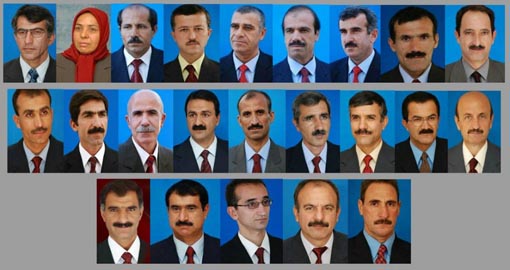
Iraqi police confirmed that at least 15 rockets had slammed into Camp Hurriyet (Camp Liberty) near Baghdad International Airport on Thursday night, AFP reported.

“Fifteen rockets were fired from Bakriya around and on the edge of Camp Liberty,” the Baghdad Operations Command said.

 This is while the terrorist group has reportedly said that 23 of its members were killed and that two dozen others were wounded in the attack. The group also claimed that some 80 rockets had rained down on the camp.

 Three Iraqi soldiers guarding the camp were also killed and at least 16 others wounded during the rocket attack, according to Iraqi police.

In an interview with Fars news agency on Friday, Wathiq al-Battat, the leader of Iraq-based Mukhtar Army, claimed responsibility for the rocket attacks.

In December 2011, the United Nations (UN) and Baghdad agreed to relocate some 3,000 MKO members from Camp Ashraf, now known as Camp New Iraq, to Camp Hurriyet, a former US military base.

The last group of the MKO terrorists was evicted by the Iraqi government in September 2013 and relocated to Camp Hurriyet to await potential relocation to third countries.

The MKO is listed as a terrorist organization by much of the international community and has committed numerous terrorist acts against Iranians and Iraqis.

 In 1986, the terrorist group’s members fled Iran for Iraq, where they received now-executed Iraqi dictator Saddam Hussein’s support and set up Camp Ashraf near the Iranian border.

October 31, 2015 0 comments
FacebookTwitterPinterestWhatsappTelegramSkypeEmail
Newer Posts
Older Posts

Recent Posts

  • MEPs who lack awareness about the MEK’s nature

    December 20, 2025
  • Why did Massoud Rajavi enforce divorces in the MEK?

    December 15, 2025
  • Massoud Rajavi and widespread sexual abuse of female members

    December 10, 2025
  • Farman Shafabin, MEK member who committed suicide

    December 3, 2025
  • Nejat Newsletter No.131

    December 3, 2025
  • Facebook
  • Twitter
  • Instagram
  • Youtube

© 2003 - 2025 NEJAT Society . All Rights Reserved. NejatNGO.org


Back To Top
Nejat Society
  • Home
  • Articles
  • Media
    • Cartoons
    • NewsPics
    • Photo Gallery
    • Videos
  • Publications
    • Books
    • Nejat NewsLetter
    • Pars Brief
  • About Us
  • Contact us
  • Editions
    • عربي
    • فارسی
    • Shqip