Nejat Society
  • Home
  • Articles
  • Media
    • Cartoons
    • NewsPics
    • Photo Gallery
    • Videos
  • Publications
    • Books
    • Nejat NewsLetter
    • Pars Brief
  • About Us
  • Contact us
  • Editions
    • عربي
    • فارسی
    • Shqip
Nejat Society
Nejat Society
  • Home
  • Articles
  • Media
    • Cartoons
    • NewsPics
    • Photo Gallery
    • Videos
  • Publications
    • Books
    • Nejat NewsLetter
    • Pars Brief
  • About Us
  • Contact us
  • Editions
    • عربي
    • فارسی
    • Shqip
© 2003 - 2024 NEJAT Society. nejatngo.org
USA

Open letter of a group of ex-members of MEK to the US Congress

Honorable Members of the US Congress,
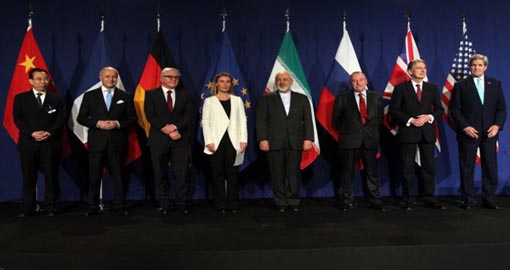
With regards, we are the former members of the Mojahedin-e Khalq Organization (MEK, MKO, NCRI), who had been members of this cult for between 10 to 30 years, mostly in Iraq.

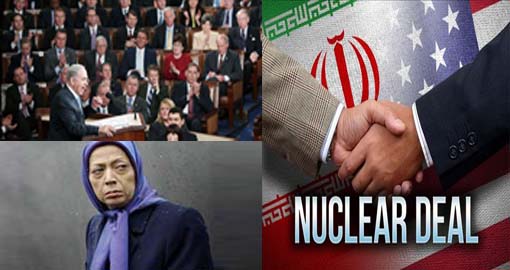
We are most pleased by and very much welcome the nuclear agreement made between Iran and the P5+1 and consider it an important step towards establishing global peace and security in alliance with the people of Iran’s best interests.

We also fully support the lifting of the sanctions against Iran since we find it in the best interest of Iran and its people.The people of Iran welcomed the agreement and the world was witness to their celebration and satisfaction in the news broadcasts.The people of Iran have suffered enough damage from the 8 years of war between Iran and Iraq.

We have all spent a life time trying to bring freedom, justice and welfare for the people of Iran,to restore human rights and civil rights for our homeland and therefore now we have no wish other than what Iran’s people desire.

We condemn all the efforts made to reject this agreement in Congress by those who are in favor of launching war against the Iranian nation and against the economic interests of the Iranian people and find it contrary to the efforts made to restore global peace which is in the best interests of all nations including those of the US and Iran.

Some fundamentalists and extremists, including the cult leader Massoud Rajavi and his wife Maryam of the terrorist MEK, see their existence only in war mongering and terrorism. We declare that the people of Iran support this agreement and of course they know best what is to their best interests.

Therefore we, alongside the people of Iran and peace loving organizations and personalities around the world, urge members of the US Congress to support the nuclear agreement with Iran and let all sanctions be lifted and Iran’s wealth be released.

We are certain that your approving vote would not only improve the living standards in Iran but would pave the way for reformists and civil rights activists to struggle for political freedom and human rights in Iran both inside and outside the country.

A group of former members of the MEK:

1.Milad Ariaie

2.Issa Azadeh

3.Abdolkarim Ebrahimi

4.Nasrin Ebrahimi

5.Adel Azami

6.Ehssan Bidi

7.Hamid Reza Bikas

8.Shahrooz Tajbakhsh

9.Edvard Tornado

10.Shirzad Jalili

11.Ali Jahani

12.Parvin Haji

13.Ghorban Ali Hossein Nejad

14.Karim Haqqi

15.Mahboobe Hamze (Mohammadi)

16.Yoosef Hamidi

17.Anne khodabandeh

18.Ebrahim khodabandeh

19.Massoud khodabandeh

20.Habib Khorrami

21.Hassan Khalaj

22.Mehdi Khoshhal

23.

24.Ali Akbar Rastgoo

25.Mohammad Razzaqi

26.Siavosh Rastar

27.Mojtaba Rashidi

28.Sadeq Rezaei

29.Majid Roohi

30.Hamid Reza Zaree Sistani

31.Ali Reza Zahedi

32.Mehrdad Sagharchi

33.Mohammad Hossein Sobhani

34.Mahmood Sepahi

35.Mehdi Sojoodi

36.Niloofar Sarfaraz

37.Batool Soltani

38.Hamid Reza Soleimani

39.Rabeah Shahrokhi

40.Ahmad Reza Shafiei

41.Mir Baqer Sedaqi

42.Hamed Sarrafpoor

43.Mohammad Iraqi

44.Hassan Azizi

45.Karim Gholami

46.Ghafoor Fattaheian

47.Ali Ghashgavi

48.Mohammad Karami

49.Homayoon Kehzadi

50.Homeira Mohammad Nejad

51.Ahmad Mohammadi

52.Hooreiyah Mohammadi

53.Mohammad Mohammadi

54.Mortaza Mohammadi

55.Mostafa Mohammadi

56.Zahra Moeini

57.Zahra Mirbaqeri

58.Seid Amir Movassaqi

59.Nader Naderi

60.Mohammad Reza Najjareian

61.Ali Reza Nasrollahi

62.Manssoor Nazari

63.Mehdi Nikbakht

64.Ahmad Hajari

Copy to:

– Office of the President of the United States

– U.S. Department of State

Published by Peyvande Rahaee, Paris,
August 25, 2015 0 comments
FacebookTwitterPinterestWhatsappTelegramSkypeEmail
Missions of Nejat Society

Nejat families letter to Presdient al- Ebadi

Dear Mr. Presdient Heidar Alebadi,

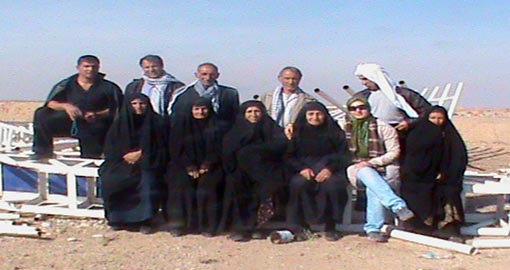
We are a number of families from Ilam Province, Iran. Each family has a loved one taken as a hostage by the Mujahdin Khalq Organization (the cult of Rajavi) for over twenty years. Our beloved children have not been allowed to even make a phone call to contact us. The Cult of Rajavi has kept them behind the bars of the cult against their will.

Your majesty and the international community have witnessed a lot of the MKO’s hostages fleeing Camp Ashraf and Camp Liberty. They escaped their life and went to Europe where they revealed the true face of the cult.

They write of mental and physical torture they tolerated in the Cult of Rajavi. They tell their stories but the international and human rights bodies keep silent. No one care for our loved ones who have not succeeded to escape the MKO Camps.

We have traveled to Iraq several times, waiting behind the tall walls of Ashraf, suffering the hot weather in the hope of visiting our loved ones for just a moment, even from far distance.

Your cooperation and understanding to aid us meet our loved ones will be greatly appreciated.

Respectfully Yours,  

Akbar Cheraghi

Iraj Nasiri

Ne’mat Pirani

Yari Kuchaki

Ali Mahdawi

Morad Jalilian

Sattar Kheyri

Jahangir Khademi

Hamid Kheyri

Khalil Faryadras

Yusof Namdari

Ali Asghar Barani

Taher Gholamhosseini

August 24, 2015 0 comments
FacebookTwitterPinterestWhatsappTelegramSkypeEmail
Mujahedin Khalq; A proxy force

AIPAC’s Military “Expert” Loves the MEK And GOP’s Islamophobic Fringe

The American Israel Public Affairs Committee (AIPAC) has committed over $20 million to defeating the Obama administration’s nuclear agreement between the P5+1 and Iran. But that doesn’t mean its campaign has gone smoothly. One of the top challenges facing AIPAC is finding reputable ex-military validators to denounce the agreement.

With a plethora of experts signing letters in support of the Joint Comprehensive Program of Action—one signed by 36 retired top-ranking military officers, another signed by Jewish communal leaders (including AIPAC’s former executive director), and a third signed by 75 leading nuclear non-proliferation experts— AIPAC is dipping into the third or fourth string of “experts” to find anti-deal voices.

On Thursday, the AIPAC-funded Citizens For a Nuclear Free Iran (CFNI) released its third television commercial and its first attempt to put forward a retired military officer, Ret. Lt. Gen. David A. Deptula, as a voice against the deal. But Deptula has a history of associating with extreme elements opposing diplomacy with Iran.

Deptula’s Bedfellows

Deptula has appeared at multiple events supporting the Mojahedin-e-Khalq (MEK), a fringe Iranian opposition group that advocates regime change in Iran and, until 2012, was listed on the State Department’s terrorism list.

In April, Deptula signed on to a letter supporting the House Foreign Affairs Subcommittee on Terrorism, Nonproliferation, and Trade’s controversial decision to invite MEK leader Maryam Rajavi to testify. An Obama administration official told Al-Monitor at the time that, “[The MEK] has shown time and time again that they’re not the most credible voices,” and warned lawmakers to be wary of any claims made by Rajavi’s organization.

Deptula, on the other hand, vouched for the MEK’s intelligence-gathering capabilities on multiple occasions.

In February, 2012, according to remarks posted on an MEK website, Deptula praised the group, saying:

The MEK’s access to intelligence about all aspects of Iranian society are very important to countering the malicious aspirations of the current regime in Iran.

And, in May 2012, Deptula told a MEK-hosted Capitol Hill briefing:

It’s also important to recognize that the most secretive information about the current Iranian regime’s connection in international terrorism about its nuclear weapons program and about its menacing intentions for Iraq has to a large extent come from the Iranian opposition movement.

But the MEK has had a questionable track record when it comes to providing sound intelligence on Iran’s nuclear program.

In February, right-wing media outlets leapt at the MEK’s claim that it had evidence of a secret underground nuclear site. The MEK exhibited photos allegedly showing a tunnel leading to the facility and a steel door. And that’s where the story fell apart. The DailyKos matched the photo to a safe company’s website. The full, uncropped image showed windows and sunlight, refuting the MEK’s claim of having acquired evidence of a nuclear facility but also revealing that the group had intentionally cropped a catalog image of a safe in a warehouse to look like a surreptitious photograph of an underground bunker.

The group’s biggest intelligence coup came in 2002, with the public exposure of the Natanz uranium enrichment facility and Arak heavy water production plant for plutonium extraction. The MEK claimed its clandestine network in Iran had unearthed the nuclear facilities but The New Yorker reported in 2006 that Israeli intelligence had made the discovery and passed information about the sites to the MEK.

Indeed, the CFNI has, through either happenstance or intention, relied heavily on the MEK since its founding earlier this summer.

Ali Gharib and I reported back in July that the group promoted news articles citing the MEK’s rejection of the nuclear deal and incorporated b-roll footage from an MEK press event in its first television ad. (CFNI deleted the articles from its website but offered no explanation for the removal.)

Aligned with Gaffney

But vouching for the MEK’s intelligence capabilities isn’t Deptula’s only brush with fringe foreign policy views. In April, Deptula signed on to a Center for Security Policy letter praising the highly controversial “Open Letter to the Leaders of the Islamic Republic of Iran” assembled by Sen. Tom Cotton (R-AR) and 46 fellow senators, a letter that Obama characterized as part of an effort, led by Cotton, to “make common cause with the hard-liners in Iran.”

In January, Deptula signed another letter, alongside Frank Gaffney. Gaffney, Deptula, and the other signatories, congratulated Louisiana Governor Bobby Jindal for comments he made at a Henry Jackson Society event in London. The letter praised Jindal’s harsh remarks about Islam, saying:

It is high time that the rest of our present and future leaders come to grips with the unhappy reality you observed so succinctly when you said: “A so-called religion that allows for and endorses killing those who oppose it is not a religion at all, it is a terrorist movement.”

Deptula’s decision to sign letters organized by Frank Gaffney—a leading figure in pushing conspiracy theories about Muslim Brotherhood infiltration of the U.S. government and questioning whether Obama is a native-born U.S. citizen—strongly suggests sympathy for, if not identification with, the Republican far right.

But AIPAC’s promotion of Deptula is part of an emerging pattern of the organization’s shredding of its bipartisan image, as a growing number of Democrats, as well as centrist ex-military and non-proliferation experts, line up in support of the Iran nuclear deal. AIPAC’s shift towards the GOP is also hinted at in CFNI’s incorporation papers in Washington, DC. Craig Engle, a Republican political operative, is listed as the group’s incorporator.

On Tuesday, the Huffington Post’s Sam Stein flagged an AIPAC memo quoting six former military commanders opposed to the Iran deal. One of those, retired Adm. James Lyons, speaking at an event in January, echoed Gaffney’s conspiracy theories about the Muslim Brotherhood’s penetration of “every one of our national security agencies” and accused CIA Director John Brennan of being a “Muslim convert.” He also said that the Muslim Brotherhood has “carte blanche entry into the White House.”

With validators like Deptula and Lyons, AIPAC risks whatever reputation it has enjoyed as an influential voice on U.S. Middle East.

By Eli Clifton,

August 23, 2015 0 comments
FacebookTwitterPinterestWhatsappTelegramSkypeEmail
Mujahedin Khalq; A proxy force

The MKO booster of War Machine

As an ardent opponent of the nuclear deal between Iran and the West, the Mujahedin Khalq Organization (the MKO) is allegedly proposing a third option: democratic change in iran. The propaganda arm of the MKO, National Council of resistance, suggests that democratic change in Iran should be fulfilled by empowering the Iranian people to change the regime.

However, the reality behind the alleged third option is absolutely different. The MKO opposes any deal with Islamic Republic since it considers it as appeasement. The group apparently is not in favor of military action against Iran because they want to show their so called sympathy for Iranian people rather they only care for their own interest and survival.

Here we are going to discuss why the MKO is not being honest when they claim they are against the invasion of Iran. During the 8 year war between Iran and Iraq MKO was the private army of Saddam Hussein. The group was funded and trained  by the former Ba’th regime. Besides, the group’s current attitude towards.The West and Iraq do not show any evidence that they are honest on what they claim.

The MKO has been lobbying in the US Congress for over a decade. Its multi-million dollar lobbying campaign to advocate its cause has become much harder after a deal between Iran and the West was reached. The complicated lobbying activities of the group is ultimately in line with with a minority of Zionist warmongers of US legislators and former military generals who are supported by the powerful Zionist lobby AIPAC.

Daniel Larison of the American Conservative describes how AIPAC and the MKO beat on war drums: “AIPAC has been lobbying against the nuclear deal as one would expect, and this week they are touting the opposition of a handful of former military officers to the agreement. The first one that they cite is Hugh Shelton, who recently penned an op-ed objecting to the deal while praising the virtues of the “former” terrorist group Mujahideen-e Khalq’s political umbrella organization, the so-called National Council of Resistance of Iran. It is telling that they edited the quote to leave out his reference to the latter, since they probably know it would discredit what Shelton says. “

Larison clarifies that supporters of the MKO are on a very wrong path. “Anyone that sides with this group is pushing a regime change agenda that is extremely unpopular among Iranians, and so shouldn’t be taken seriously on anything related to Iran,” he writes.

Larison’s assertion about the MKO’s unpopularity inside Iran verifies the invalidity of the group’s so-called third option. The alleged democratic change by supporting the MKO as the “main opposition” is only promising by the help of the same Iranians. Definitely, the Iranian nation never forgets the MKO traitors who sided with Saddam Hussein.

Larison criticizes the army general Hugh Shelton for his “plainly false” claim that the MKO is the “main opposition” against the Islamic republic. “The group is widely hated inside Iran and has almost no support in the Iranian diaspora,” he puts.  “It is wildly unrepresentative of what most Iranians in Iran and elsewhere want for their country, and it is also at odds with what most Iranians think about the nuclear deal. “

 Thus, on one hand, the so-called third option of Maryam Rajavi is not binding and on the other hand her lifelong strategy does not agree any deal with the Iranian government. The left option for the MKO is nothing but war. While, the majority of Iranian are advocating for peace all around the world, the MKO is beating on war drums harder.

By Mazda Parsi

Source:

**Larison, Daniel, The MEK and the Deal with Iran MKO, The American Conservative, August 13, 2015

August 22, 2015 0 comments
FacebookTwitterPinterestWhatsappTelegramSkypeEmail
Iran Interlink Weekly Digest

Iran Interlink Weekly Digest – 109

++ The MEK continues to react to the nuclear deal. From the start until now the MEK have been dizzy. From one side they shout against the EU and US, repeating Netanyahu’s rants against the deal. On the other hand the Rajavis claim the deal represents ‘the defeat of Iran’ and ‘we forced them to sign this defeat’. Comments in Farsi say that Massoud Rajavi claiming such power as to have toppled Sarkozy in France, toppled Maliki in Iraq and that ‘we will topple Obama in the US’ is really ridiculous. Some say that although this is not the result of a sane mind and he really is delusional, but still this contradictory reaction shows that the MEK are really afraid they have lost everything they had since they had banked everything on the nuclear issue. However, from this week the MEK is officially moving from the nuclear issue to that of human rights, staging small pickets in Europe and North America to try to change the subject. The Farsi Commentariat identify the agenda of the MEK paymasters behind this rather than their own analysis and planning. The problem is that Western human rights organisations don’t want to be associated with the MEK because they have their own dirty history with Saddam Hussein and as cult. Instead the MEK has resorted to fabricating lies – using photos taken inside Iran of demonstrations and worker strikes and claiming these are MEK supporters inside Iran. Again, those who know them point out that this is not a new tactic, and say for example, this is how Iran Aid deceived the public into donating money; falsely claiming they were running refugee camps and saving all kinds of victims over the years. This activity is merely a symptom of the MEK trying to say they are still alive after the nuclear deal.

++ Nejat Association published a short two part interview with Byram Ali Mohammadi. In it he explains how, as a young teenager, he went to Turkey to find a job and while working in a car wash the MEK deceptively recruited him and took him to Iraq. Once there he found a way to run away but the MEK caught him and brought him back to their camp. As soon as he arrived in Tirana he escaped them and contacted his family who were able to help him and bring him back to Iran. He is the youngest and newest person to repatriate to Iran from Albania and there have been quite a few before him.

++ The MEK is still continuing its campaign of writing against the BBC using the names of various political prisoners in Iran. Farsi comments point out how ridiculous this is. It means that prisoners in Iran have access to satellite television to watch the BBC, then are then free to write a response using stock MEK invective and then post it to the UK! This means prisons in Iran are more open than anywhere else in the world. Other comments say that these nasty attacks on the BBC and Britain mean the MEK has given up after many years on the hope of getting a visa for Maryam Rajavi and have now childishly turned round to swear at the UK. Massoud Khodabandeh of Iran Interlink spoke with BBC Farsi about this issue. The producer said it was ‘unfortunate that when the BBC want to say something about the MEK and give them the opportunity to explain themselves, they always refuse, yet when we produce a programme which is irrelevant to them they come out and swear at us. However, the BBC understands its audience and their trust in us as well as their knowledge of the MEK and so it doesn’t affect us but only reveals the MEK’s madness.’

++ Following Mostafa Mohammadi’s activities in Auvers-sur-Oise to try to get his daughter back, the MEK continue to rant against him labelling him an agent of the Iranian regime. In addition this week the MEK have broadcast a video of Somayeh Mohammdi swearing at her family. It is clear from her behaviour that this is forced and that swearing at her own mother is not something she can easily do. The Mohammadi family are now back in Canada. Mostafa published an open letter to his daughter Somayeh saying that as we know you, we can see this does not come from your own thoughts and feelings and is forced. He continues, ‘however, me and your mother, your two brothers and your sister sat together and watched it over and over again. It made us very happy to see that you are OK. And we noticed that Maryam Rajavi has been forced to give you some civilian clothes to appear in. Although these are not exactly what she buys for herself from the Champs Elysees, we see it as a step toward your freedom that you have abandoned wearing military clothes.’ The letter continues, ‘if you do get to hear about this letter, my message is to maintain your hope and I promise we will meet again despite everything that Rajavi is doing and saying’.

In English:

++ In several articles promoting the nuclear deal, the MEK is cited as a deceptive and destructive element in opposing it.

++ An article by Mazda Parsi of Nejat Association discusses recent examples of the destructive and dangerous aspects of the MEK’s cult activities. He identifies the cases of Mostafa Mohammadi and Ghorban Ali Hossein Nejad at Auvers-sur-Oise in which the MEK used public violence to try to silence them. The article refers to the Family Survival Trust as “a reliable and informed source on the cults since they professionally deal with a large number of case studies being abused by different cults. FST’s website proposes, ‘What damaging cults have in common is their vindictive abusiveness and their dissociative totalitarianism’.” Parsi links this with an interview with Ebrahim Khodabandeh who is a leading cult expert in Iran in which he says the MEK tells lies to recruit members then brainwashes them to tell lies themselves.

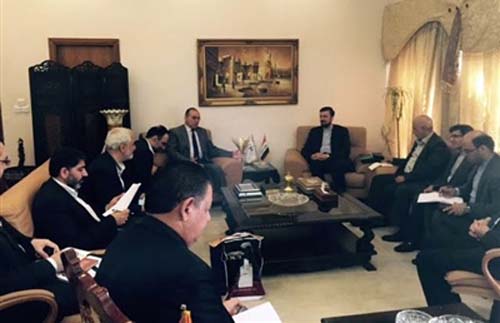
++ Iran’s Fars News Agency reported the visit of Iran’s Deputy Head of the Human Rights Headquarters for International Affairs Kazzem Qaribabadi to Baghdad. During meetings with officials from Iraq’s Judiciary and Human Rights ministries, Qaribabadi called for the complete expulsion of Mojahedin-e Khalq Organization terrorist group members from Iraq and expressed Iran’s appreciation of Iraq’s stance toward the MEK. “He underlined the necessity for joint cooperation in fighting terrorism at international circles, hailing Iraq’s campaign against the terrorist groups, specially the ISIL”, the report said.

August 21, 2015

August 22, 2015 0 comments
FacebookTwitterPinterestWhatsappTelegramSkypeEmail
Mujahedin Khalq; A proxy force

Seventy-Plus Nuclear Non-Proliferation Experts Endorse Deal

As an abundance of nuclear non-proliferation experts rallies behind the Joint Comprehensive Program of Action (JCPOA) signed last month by the P5+1 and Iran, the paucity of arms-control specialists who oppose the deal has become increasingly apparent. Indeed, the latter seem as rare as the diminishing number of climate and atmospheric scientists who still question whether human activity is contributing in important ways to global warming.

The Arms Control Association (ACA) released a joint statement on Tuesday endorsed by 75 of the world’s leading nuclear non-proliferation specialists, including a former director of the International Atomic Energy Agency (IAEA) and former top U.S., UN, and foreign government non-proliferation officials. The statement concludes that the July 14 agreement “is a strong, long-term, and verifiable agreement that will be a net-plus for international nuclear non-proliferation efforts.”

The accord, the statement goes on, “advances the security interests of the P5+1 nations (China, France, Germany, Russia, the United Kingdom, and the United States), the European Union, their allies and partners in the Middle East, and the international community.”

Though all of us could find ways to improve the text, we believe the JCPOA meets key nonproliferation and security objectives and see no realistic prospect for a better nuclear agreement.

We urge the leaders of the P5+1 states, the European Union, and Iran to take the steps necessary to ensure timely implementation and rigorous compliance with the JCPOA.

The statement comes just 10 days after 29 top U.S. nuclear scientists and engineers released a two-page letter to Obama congratulating him and his team on “negotiating a technically sound, stringent and innovative deal that will provide the necessary assurance in the coming decade and more that Iran is not developing nuclear weapons, and provides a basis for further initiatives to raise the barriers to nuclear proliferation in the Middle East and around the globe.”

As noted in The New York Times account, the first signature on that letter was from Richard L. Garwin, “a physicist who helped design the world’s first hydrogen bomb and has long advised Washington on nuclear weapons and arms control. He is among the last living physicists who helped usher in the nuclear age.”

Garwin and five others who signed the August 8 letter—including Frank von Hippel, the former assistant director for national security at the White House Office of Science and Technology Policy—also signed ACA’s statement released Tuesday.

Particularly notable among the other 70 are former IAEA Director General Hans Blix, several former UN under-secretaries-general for disarmament affairs, including the current commissioner of the Japan Atomic Energy Commission, Amb. Nobuyasu Abe, Amb. Jayantha Dhanapala, and Amb. Sergio Duarte. Signatory Jacqueline Shire served as a member of the UN Panel of Experts for Iran established under a 2010 UN Security Council resolution that, among other things, was set up to tighten restrictions on Iranian financial and shipping enterprises related to “proliferation-sensitive activities.”

Other former senior international officials with responsibility for non-proliferation oversight or enforcement include Tariq Rauf, the IAEA’s former head of the Verification and Security Policy Coordination unit; Laura Rockwood, a nearly 30-year veteran as head of the IAEA’s section for Nonproliferation and Policy making in the Agency’s Office of Legal Affairs; and Thomas Shea, former IAEA Safeguards official and head of its Trilateral Initiative Office.

The signers also included a host of former senior State Department, Pentagon, and White House officials who have had direct responsibility for nuclear proliferation issues, such as Amb. Kenneth Brill, a founding director of the US National Counterproliferation Center (2005-09); Robert Einhorn, the State Department’s Advisor for Nonproliferation and Arms Control (who also participated in the P5+1 negotiations; former Principal Deputy Under Secretary of Defense Jan Lodal; and Andy Weber, former Assistant Secretary of Defense for Nuclear, Chemical, and Biological Defense Programs.

Absent from the list of signatories is Gary Samore, who worked as White House coordinator for Arms Control and Weapons of Mass Destruction during Obama’s first term. He subsequently served as president of the strongly anti-Iran United Against Nuclear Iran (UANI) until last week when, as we noted, Sen. Joseph Lieberman replaced him. Samore has decided to support the deal, while UANI’s leadership and donors remain strongly opposed.

Vox’s Max Fisher published an interview on Monday with UANI’s CEO, former Amb. Mark Wallace, that helped illustrate the challenge faced by UANI, AIPAC, and other groups opposed to the JCPOA: the dearth of serious non-proliferation experts who support their position.

Max Fisher: One of UANI’s real assets has been having a leader with Gary Samore’s credentials as a pedigreed arms control expert. Did you guys think about looking for a replacement who could also be seen as firstly an arms control wonk?

Mark Wallace: Well, Olli Heinonen, for example, is on our advisory board. I still have Gary’s arms control expertise; I don’t think that has changed. We have [head of the Nonproliferation Policy Education Center] Henry Sokolski. Olli Heinonen has been a big player in this. Even David Albright, even though he’s not affiliated with us, has been very useful. I’m trying to label them all arms control wonks, you know what I mean; they’re familiar with the space.

We’ve been doing this now for a long time, and I think that the nature of the deal is quite well-framed. I don’t think there’s a lot of debate about the terms anymore. Certainly that expertise matters, but all of our team, we have a very seasoned team, but there are no secrets to that agreement anymore. Well, actually, there are some parts of the agreement that are secret, but you know what I mean. The terms of the agreement are well-baked, and there’s enormous commentary on all of them.

And you do see skepticism from the very serious people in that community, which I would characterize as Gary Samore, Olli Heinonen, and David Albright.  I think their skepticism has been quite loud and clear about the agreement.

Max Fisher: With a couple of exceptions whom you named, the arms control community seems to have generally lined up behind the Iran deal. I think some people see the change in leadership in UANI as a sign that you guys are no longer focusing on trying to persuade the arms control community. Is that fair?

Mark Wallace: I don’t see what you describe. When I think of the real experts who have led in the space, it’s really been Gary [Samore], Olli [Heinonen], Henry [Sokolski], and [David] Albright. Those are leaders in that space. Olli’s statements have been quite concerned about the deal, and even Gary acknowledges that there are some real problems with the deal.

Max Fisher: Okay, still, the fact remains that UANI will transition from being led by an arms control expert to being led by a politician. How should we read that?

Indeed, weighed against the list of signatories compiled by Arms Control Association, and what with Samore explicitly supporting the agreement, the list of non-proliferation experts on the opposition side looks very thin indeed. And, to the best of my knowledge, neither Albright nor Heinonen has come out explicitly against the JCPOA, although Heinonen has made it a habit to speak about his reservations at events sponsored by just about any group opposed to the deal. For instance, Heinonen has spoken at least twice (see here and here) before front groups of the Mujahedeen-e-Khalq (MEK), the expatriate Iranian group that a lengthy lobbying and legal campaign helped get removed from the State Department’s terrorism list in 2012 in exchange for its agreeing to disperse its Iraq-based militants to third countries.

One key signatory of Tuesday’s statement was Leonard “Sandy” Spector, deputy director for nonproliferation studies at the Middlebury Institute of International Studies and a former assistant deputy administrator for Arms Control and Nonproliferation at the U.S. National Security Administration. In early 2013, Spector co-authored a report with Albright, Foundation for Defence of Democracies (FDD) president Mark Dubowitz, and two others that called, among other measures, for Washington to “increase Iranian isolation, including through regime change in Syria” and “undertake …overt preparations for the use of warplanes and/or missiles to destroy Iran’s nuclear capabilities with high explosives.” Only if Tehran provided “meaningful concessions,” it said, should sanctions relief be considered, according to the report.

It appears clear that Spector, presumably like Samore and the expert non-proliferation and arms control community in general, has been persuaded that the Obama administration has indeed obtained “meaningful concessions” from Iran and that the deal should be approved. But it also appears that, as with climate change, Republicans don’t care.

Jim Lobe,

August 20, 2015 0 comments
FacebookTwitterPinterestWhatsappTelegramSkypeEmail
Mujahedin Khalq; A proxy force

CASMII Statement on Iran and the P5+1 Deal: Prospects for Lasting Peace

Introduction

The nuclear deal signed between Iran and the P5+1 countries on July 14, 2015, and the subsequent UN Security Council resolution passed on July 20 are the first major steps taken by the United States and its allies toward a peaceful relationship with the Islamic Republic of Iran. These steps represent a crucial turning point from the neoconservative dominated interventionist policies that came into full force by the previous American administration, and continued in various forms within the current one.

While the deal has been vigorously criticized on both sides, the willingness to cooperate to resolve differences without resorting to force is ultimately a victory for citizens of both countries and those of the region. The agreement could be the first of a series of steps that may lead to true peace and cooperation between Iran and the United States. Even now, however, this small step is in danger of being sabotaged by the same powerful forces that constantly seek to promote hostilities with Iran. The Western media narrative is still dangerously shortsighted and inflammatory. Decades of biased demonization without any balancing response have created much fear, disinformation and mistrust to be exploited by the pro-war forces exactly as it was done with the disastrous Iraq war in 2003.

It is with this reality in mind that we set to provide some of the missing context crucial to understanding this deal and the Iranian behavior in general. We hope that peace-loving voices in the independent media would make good use of these facts in order to save this fragile step toward a more peaceful future.

A History of Lies and a Manufactured Crisis

Two seemingly contradictory trends have been dominant with respect to Iran’s nuclear question. First, for decades Iran has been accused of not just developing nuclear weapons but being a short time away from actually using them [1]. Second, non-political nuclear experts, including those at the United Nations, American and Israeli intelligence agencies have consistently disproven these accusations [2]. The western media hardly discusses the latter point, and the irresponsible hype around the former creates the impression of constant imminent danger that needs to be addressed by force [3].

The propaganda campaign against Iran has not been without purpose. The long-standing policy has been to engineer “regime change” [4], the same goal that the Bush Administration articulated with respect to Iraq. Just like Iraq, the Iranian nuclear issue was simply identified as potent rally point to “sell” future hostilities to the public [2]. Just like Iraq, unsubstantiated allegations from self-serving sources were used to convict Iran rhetorically. For example, the terror group MEK claimed [5] to have “exposed” two “secret” Iranian nuclear sites under construction in 2002, which was immediately seized upon by Western governments and media as positive proof that Iran was developing nuclear weapons in violation of the NPT. Left unsaid in the propaganda blitz were the inconvenient facts that the facilities were for production of energy and that Iran had no legal obligation to declare them until shortly before nuclear material is transported to them (i.e. several years later) [6].

In response to the accusations, the Khatami administration voluntarily suspended Iran’s nuclear energy program, but regime change proponents saw this only as a sign of weakness, and refused to negotiate with Iran. Still in the following years, other chances for peace were created with the help of intermediaries such as the EU [7], Brazil and Turkey, but again the American side was not interested in a successful deal [8].

The Bush administration used strong-arm and fear tactics as leverage to push through UN sanctions against Iran [9], fully exploiting the fears of the international community – not so much the fear of a nuclear Iran, but fear of US starting another war. This is the basic origin of the UN sanctions in force against Iran today. The present nuclear deal’s proposal to lift these sanctions is certainly a welcome path toward peace, but it does not address the inherent injustice toward Iran.

Why Nuclear Energy is Important to Iranians

Some commentators have asked why Iran cares about nuclear energy if it has substantial oil reserves? [10] The premise of the question, which is never challenged in the western media, represents a view that openly considers Iranians as lazy simpletons without ambition or capacity for complex economic planning in their own country. For historic reasons dating back to British and Russian colonial strategies in Iran, the independent development and mastery of native industries in Iran is of tremendous importance to Iranians across the political spectrum. The sanctions against Iran and its oil industry have done nothing but to reaffirm and reemphasize this important phenomenon in the Iranian psyche. Iran is a country rich with significant deposits of Uranium and one of the few in the world that has the potential to build the entire nuclear ecosystem entirely inside the country. As such nuclear energy represents not only national pride, but also a strategy to diversify energy resources and be better prepared for exactly the kind of economic warfare waged upon it for decades.

Legal Basis for the Iranian Nuclear Program

One often repeated canard heard from British and American pundits is that “we are giving Iran” a large sum of money in “exchange” for not developing nuclear weapons. The statement is beyond absurd [11]. The only funds under discussions are the ones legitimately belonging to Iranians themselves that have, for example, been withheld by Iran’s trading partners due to American threats of economic retaliation. The withholdings have always been on shaky legal grounds and some of them have been successfully challenged in courts. The other side of the equation is also not true. Iran is already obligated under the Treaty on Nonproliferation of Nuclear Weapons (NPT) not to develop any nuclear weapons. This was Iran’s legal obligation before the deal and it will remain so after the deal.

What Western media fail to mention is that the same NPT signed both by Iran and the United States, entitles Iran to “have the right to participate in, to the fullest possible exchange of equipment, materials and scientific and technological information for the peaceful uses of nuclear energy”. The NPT further explicitly obliges nuclear weapons states like the U.S. to “facilitate” such transactions [12]. The United States has never taken this obligation seriously and has worked to block Iran’s access to civilian nuclear technologies. It was the lack of such “facilitation” from the West that partially convinced Iranians to develop their own native nuclear power infrastructure, to which they also have what the NPT explicitly calls “the inalienable right of all the Parties to the Treaty to develop research, production and use of nuclear energy for peaceful purposes without discrimination” [13].

Failure of Sanctions and Regime Change Policies

Contrary to the claims of the Obama administration, the failure of sanctions policies – and not their success – brought about this agreement [14]. The toughest sanctions in modern history were placed on Iran with the urging of US and Israel. American officials and hawkish pressure groups have been boasting since 2006 that “crippling” and “strangling” sanctions would force Iran to dismantle its nuclear program. There was widespread belief that Iranian people would blame the government for the economic turmoil, then rise up and topple the government with the help of friendly outside forces. It was supposed to be the freezing of assets, then financial sanctions, then an oil embargo, then preventing Iran from buying processed petroleum products, then punishing of third party suppliers to Iran, etc. that were each supposed to push Iran over the edge and bring regime change or at least force Iran to halt its nuclear activity [15]. None of these achieved the desired effect. Of course plenty of ordinary Iranians suffered and continue to suffer under the sanctions, be it due to increased inflation, air transport accidents or lack of proper medicine, all brought about by the sanctions. But ultimately neither capitulation, nor revolution came to pass. In reality, as bad as their situation became during the “crippling” sanctions era, it was nothing compared to what the Iranians had experienced in the 1980’s when Saddam Hussein imposed a real war on them. Saddam was militarily and financially supported by almost the same cast of countries now negotiating with Iran and Iranians do not forget this.

The sanctions regime, enacted with enormous cooperation and economic sacrifice from America’s allies around the world began to unravel. By 2015, analysts were nearly unanimous in predicting the complete collapse of the sanctions regime. Even the Obama administration, the architect of many crippling sanctions against Iran acknowledges this failure when the President claims the only real alternative to the deal is eventual war with Iran.

Prospects for Peace and Cooperation

The Vienna nuclear discussions were concluded in agreement without even a mention to the many acts of sabotage conducted against Iran which were with full knowledge and in some cases, full participation of the United States. The most well known of these acts are the cyber attacks against the Iranian nuclear infrastructure, and the assassination campaign against Iranian civilian nuclear scientists. While both of these extra-legal acts of aggression have been attributed to Israel, it is widely believed the US was fully complicit in their execution.

The present nuclear agreement also doesn’t acknowledge Iran’s continued non-deviation of nuclear materials as confirmed by many international experts including US and Israeli spy agencies. In spite of this point, Iran agrees to substantial reduction of its nuclear centrifuges and fissile material, and further, it agrees to voluntarily adopt the additional protocols even though many NPT signatories have not adopted them.

In contrasts to the claims of Obama critics that Iran somehow “duped” the P5+1 with a favorable deal for itself, the nuclear deal is under attack by many Iranians for being unfair to Iran. In this context the signing of the deal by the Iranian executive and the official backing of it from the Supreme Leader’s office represent an enormous olive branch to the West, particularly the United States.

American administrations have failed to reciprocate important Iranian peace overtures in the past and the resulting diplomatic disgrace within Iran’s political order has consistently given rise to more confrontational politics. A rejection of this deal by the American Congress would signal an unmistakable failure of Iranian pragmatists and substantially increase the chances of continued hostilities in the future.

We call on all responsible, non-violent groups to recognize this historic opportunity for peace and to support the present nonproliferation agreement. A coalition of powerful forces with deep pockets has enormous investments in hostile policies between Iran and US. Already millions of dollars are being poured into misinformation and propaganda campaigns to kill this agreement. Only by forcefully, publicly and proactively confronting the lies, can we defeat the coalition and preserve this historic chance for peace.

Notes

[1]       In 1992 Benjamin Netanyahu went on the record claiming Iran could be as little as three years away from a nuclear weapon. Future Iraq-war architect Donald Rumsfeld said in 1998 that Iranian ICBMS will reach the United States by 2003. For a short summary of claims throughout the decades see Scott Peterson’s “Imminent Iran Nuclear Threat? A Timeline of Warnings Since 1979”, http://www.csmonitor.com/World/Middle-East/2011/1108/Imminent-Iran-nuclear-threat-A-timeline-of-warnings-since-1979/Israel-paints-Iran-as-Enemy-No.-1-1992

[2]       The 2004 US DNI estimate to congress did not cite any evidence toward weaponization. It detailed Iran’s nuclear energy progress and expressed concern that “same technologies” could be used for military applications. The 2007 estimate reported that Iran has capabilities but has not decided to pursue nuclear weapons. The estimate was much maligned in the media and many voices within the Bush administration were calling for its revision, but Intelligence community  refused to budge. Ronald Burgess, Jr., Director of the Defense Intelligence Agency, said in early 2010 that: "The bottom line assessments of the NIE still hold true. We have not seen indication that the (Iranian) government has made the decision to move ahead with the program.” Subsequent estimates have confirmed the same basic facts, but remain susceptible to opportunistic politicization. For more information see Joshua Rovner’s 2015 Washington Post article “Why U.S. intelligence is right about Iran.” Similarly Israeli intelligence estimates indicate that Iran has not taken steps toward a weapons program. Even before Prime Minister Netanyahu was waving a cartoonish bomb graphic at the United Nations, the Mossad had told him Iran was “not performing the activity necessary to produce weapons.” See the Guardian’s 2015 article “Leaked cables show Netanyahu’s Iran bomb claim contradicted by Mossad.”

[3]       See Gareth Porter’s Manufactured Crisis: The Untold Story of Iran Nuclear Scare (2014, Just World Books). A short review is available at FPIF.

[4]       In his 2007 Telegraph Article titled “Bush sanctions ‘black ops’ against Iran”, Tim Shipman reports “President George W Bush has given the CIA approval to launch covert ‘black’ operations to achieve regime change in Iran, intelligence sources have revealed.” The article details funding of dissident groups, supplying violent extremist groups with money and weapons as well as currency/economic manipulation as some of the methods employed to achieve regime change.

[5]       National Council of Resistance, “People’s Mujahedeen”, or “Mujahedeen Khalgh” (MEK) has a long and illustrious history of violent attacks against civilians starting with American citizens in the years before the Iranian revolution. See the Guardian’s 2012 article “what is the MEK and why did the US call it a terrorist organisation?” An excerpt appears below:

The MEK ran a bombing campaign inside Iran against the Shah’s regime the 1970s. The targets were sometimes American, including the US information office, Pepsi Cola, PanAm and General Motors. The group routinely denounced Zionism and "racist Israel", and called for "death to America".

A state department report in 1992 identified the MEK as responsible for the killing of six Americans in Iran during the 1970s. They included three military officers and three men working for Rockwell International, a conglomerate specialising in aerospace including weapons, who were murdered in retaliation for the arrest of MEK members over the killings of the US military officers.

MEK has been enlisted by Israel (believed to be the real source of 2002 revelations), to conduct a campaign of assassinations against Iranian scientists. More recently, the group has been working hard to sabotage the nuclear negotiations between Iran and the P5+1. In a moved timed shortly before Benjamin Netanyahu’s controversial address to the US Congress, the MEK claimed to possess new evidence showing a secret nuclear facility called “Lavizan-3”. The evidence was disproven almost immediately by multiple sources.

[6]       “Under its safeguards agreement, Iran is not required to allow IAEA inspections of a new nuclear facility until six months before nuclear material is introduced into it.”, Albright and Hinderstein, 2002. http://www.isis-online.org/publications/iran/iranimages.html

[7]       From “To Stop Iran Nukes, Give it a Stake,” 2012, by David Patrikarakos:

Almost ten years ago, in May 2003, shortly after the United States had obliterated the Iraqi Army, Iran offered the U.S. a historic deal via the Swiss ambassador under which it would compromise on its program and normalize relations between the two countries. The deal was reportedly rejected out of hand by then vice-President Dick Cheney (we don’t negotiate with evil was his terse and short-sighted response). Nonetheless, European diplomats at the International Atomic Energy Agency sensed palpable fear in their Iranian counterparts during those early months of 2003; a few months later, in the October 2003 Tehran agreement, Iran agreed to suspend uranium enrichment while talks to resolve the overall crisis continued. Iran subsequently suspended enrichment for two years while vague European promises of more discussions never materialized – largely because without U.S. involvement in negotiations, there was simply nothing of substance they could offer Iran.

[8]       From “The Turkey-Brazil-Iran Agreement: Thanks, but No Thanks?” by Patrick Seale, 2010:

Washington has interpreted the Tehran agreement as an act of defiance of its global authority, an argument which carries weight with other permanent members of the Security Council. Reluctant to see the initiative in important matters of international security slipping from its hands, the Obama administration has persuaded the permanent members of the Council to circulate a tough draft resolution demanding that Iran suspend uranium enrichment, and adding a long list of restrictions on Iranian military, commercial and financial activities.

[9]       See “US Coercion of India against Iran at IAEA”, CASMII, March 2007.

[10]     In fact the case for Iran’s nuclear energy needs was made by the USA itself in 1960’s. America supplied Iran with its first atomic reactor as well as set up education and training programs. (See “Sixty Years of ‘Atoms for Peace’ and Iran’s Nuclear Program”), 2013.

[11]     See “Treasury: No, Iran Is Not Getting $150 Billion From The Nuclear Deal,” Huffington Post, 2015.

[12]     NPT Article IV.

[13]     At various times in the past two decades, the US administration has claimed that the NPT article IV does not give Iran the right to enrich Uranium on its own soil because there’s no explicit mention of enrichment in the text of the article. For example in a 2013 debriefing to congress, Wendy Sherman—Undersecretary of State for Political Affairs and the senior U.S. representative in the P5+1 nuclear talks with Iran said this:

It has always been the U.S. position that Article IV of the Nuclear Non-Proliferation Treaty does not speak about the right of enrichment at all [and] doesn’t speak to enrichment, period.  It simply says that you have the right to research and development.

While she acknowledged that close US allies such as Germany and Japan do not hold this view, she nevertheless reiterated that it is the US position with respect to Iran.

International experts have debunked this position on multiple grounds. For a good summary see “America’s Lead Iran Negotiator Misrepresents U.S. Policy (and International Law) to Congress” (2013) by Flynt Leverett and Hillary Mann Leverett. The authors point out that not only Germany and Japan, but an overwhelming majority of countries in the world read the NPT’s phrase “inalienable right” to include nuclear enrichment.

From any objectively informed legal perspective, denying non-weapons states’ right of safeguarded enrichment amounts to nothing more than a shameless effort to rewrite the NPT unilaterally.

Furthermore, the Leveretts cite evidence that enrichment is wholly consistent with the NPT, including articles II and III.

In 1968, as America and the Soviet Union, the NPT’s sponsors, prepared to open it for signature, the founding Director of the U.S. Arms Control and Disarmament Agency, William Foster, told the Senate Foreign Relations Committee—the same committee to which Sherman untruthfully testified last month—that the Treaty permitted non-weapons states to pursue the fuel cycle.  We quote Foster on this point:   “Neither uranium enrichment nor the stockpiling of fissionable material in connection with a peaceful program would violate Article II so long as these activities were safeguarded under Article III.”

Furthermore, even specifically with respect to Iran, the US stated position was that enrichment was a legal right. As Dr. Mohammad Sahimi points out in 2013 “Iran Has a Right to Enrich—And America Already Recognized It.”

[14]     See “No, Sanctions Didn’t Force Iran to Make a Deal” (2014) and “The US Was Forced to Negotiate with Iran Because of Changing Global Circumstances” (2015).

[15]     Timeline: Sanctions on Iran, 2012.

CASMII, campaigniran.org

August 20, 2015 0 comments
FacebookTwitterPinterestWhatsappTelegramSkypeEmail
Iran

Iran Urges Iraq to Expel All MKO Members

Deputy Head of Iran’s Human Rights Headquarters for International Affairs Kazzem Qaribabadi called for the complete expulsion of Mojahedin-e Khalq Organization (MKO, also known as the MEK, PMOI and NCR) terrorist group members from Iraq.

Qaribabadi made the remarks in meetings with Iraq’s judiciary and human rights officials during his two-day visit to Baghdad which started on Tuesday.

During the meetings on the first day of his trip, he underlined the necessity for joint cooperation in fighting terrorism at international circles, hailing Iraq’s campaign against the terrorist groups, specially the ISIL.

Qaribabadi also appreciated Iraq’s position against the MKO terrorist group, and underlined the necessity for continued efforts to expel all MKO members from the Arab country.

The MKO, founded in the 1960s, blended elements of Islamism and Stalinism and participated in the overthrow of the US-backed Shah of Iran in 1979. Ahead of the revolution, the MKO conducted attacks and assassinations against both Iranian and western targets.

The group started assassination of the citizens and officials after the revolution in a bid to take control of the newly-established Islamic Republic. It killed several of Iran’s new leaders in the early years after the revolution, including the then President, Mohammad Ali Rajayee, Prime Minister, Mohammad Javad Bahonar and the Judiciary Chief, Mohammad Hossein Beheshti who were killed in bomb attacks by the MKO members in 1981.

The group fled to Iraq in 1986, where it was protected by Saddam Hussein and where it helped the Iraqi dictator suppress Shiite and Kurd uprisings in the country.

The terrorist group joined Saddam’s army during the Iraqi imposed war on Iran (1980-1988) and helped Saddam and killed thousands of Iranian civilians and soldiers during the US-backed Iraqi imposed war on Iran.

Since the 2003 US invasion of Iraq, the group, which now adheres to a pro-free-market philosophy, has been strongly backed by neo-conservatives in the United States, who argued for the MKO to be taken off the US terror list.

The US formally removed the MKO from its list of terror organizations in early September, one week after Secretary of State Hillary Clinton sent the US Congress a classified communication about the move. The decision made by Clinton enabled the group to have its assets under the US jurisdiction unfrozen and do business with the American entities, the State Department said in a statement at the time.

In September 2012, the last groups of the MKO terrorists left Camp Ashraf, their main training center in Iraq’s Diyala province. They have been transferred to Camp Liberty. Hundreds of the MKO terrorists have now been sent to Europe, where their names were taken off the blacklist even two years before the US.

The MKO has assassinated over 12,000 Iranians in the last 4 decades. The terrorist group had even killed large numbers of Americans and Europeans in several terror attacks before the 1979 Islamic Revolution.

Some 17,000 Iranians have lost their lives in terror attacks in the 35 years after the Revolution.

August 19, 2015 0 comments
FacebookTwitterPinterestWhatsappTelegramSkypeEmail
The cult of Rajavi

Victims of the MKO Need Help

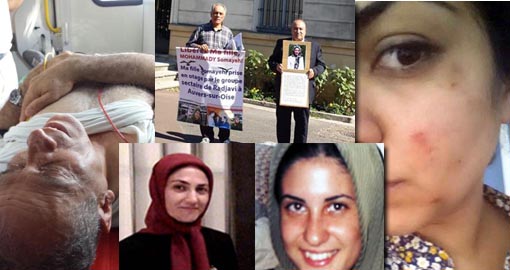
Mostafa was visiting the headquarters of the Mujahedin Khalq Organization (the MKO) in Auvers sur d’Oise, Paris when he was beaten up by some of the thugs of the group. He was violently encountered because he was asking the group leader to allow him to meet with his daughter Somayeh.  After travelling to the group’s camp in Iraq for several times, Mostafa, finally took his case to the group leader, Maryam Rajavi.    Due to severe beating Mostafa was hospitalized overnight. He was accompanied with his other daughter Hooriyeh who was also injured by the MKO agents in Auver.

Somayeh is an example of many people captured in the cult of Rajavi (the MKO), separated from family, friends and society. “Family Survival Trust” that is a foundation formed by volunteers who are concerned for people, families, communities and societies who are abused by totalitarian cults. Some of the members of this foundation are volunteers whose children, parents, siblings, friends or colleagues were recruited by cults. Their task is very similar to ours at Nejat NGO that is specifically focused on the salvation of the victims of the MKO cult.

This article refers to Family Survival Trust as a reliable and informed source on the cults since they professionally deal with a large number of case studies being abused by different cults. FST’s website proposes, “What damaging cults have in common is their vindictive abusiveness and their dissociative totalitarianism”.

The above mentioned fact about destructive cults is definitely witnessed by a large number of members of the MKO (the Cult of Rajavi).

Ghorban Ali Hossein Nezhad is a former high-ranking member and interpreter of the group.  He also has a daughter taken as a hostage in the MKO’s Camp Liberty, Iraq. As a disassociated member, he is not allowed to meet with his daughter Zeinab by the group leaders. “Cults are dissociative, separating members from families, friends and colleagues,” FST proposes.

The horrifying events that are happening inside the cults are the main reasons that the cults’ leaders are able to keep members out of reach for a long time.   Ebrahim Khodabande, a former member of the MKO and cult expert describes how a cult victim is indoctrinated by the cult system:

 “Cults have no unchangeable principal; they have only one fixed principal and that is: Everything must go around the leader’s interests and will. Maryam Rajavi told us:” You are not good enough unless you recognize Massoud’s interests and will and then you try to fulfill them”.

According to FST, Cults recruit members by various forms of enticement or deception, demanding total submission and adoption of the ideas by members. Free thinking is not allowed.

 Khodabandeh’s testimony absolutely confirms the above characteristics of cults: “In cults, lying and deceiving is formulated and indoctrinated by the system. Everything is based on lie and deception. The hierarchy tells lies from top to bottom.”

He admits that he was deceived and then was recruited by the MKO. ”Then I was brainwashed under the mind-control system and I was manipulated to tell lies about the group’s cause as if it was a secular pro-western organization,” he says.

The MKO’s pro-West and pro-democracy gesture has an external function for the leaders. This way they can gain the support of western politicians, particularly Zionist warmongers of the US Congress. ”At the same time, to gain acceptance from wider society, cults lobby politicians and the public, using the same ideas of freedom of expression which they deny their members,” FST states.

In contrast with the MKO’s slogans for human rights and democracy, the Human Rights Watch report titled “No Exit” offers testimonies of numerous cases of human rights violations committed in the Cult of Rajavi. Besides, there are a lot more interviews and memoires of ex-members of the group who were victims of its cult-like structure (most of them are available at Nejat NGO website).

 “Cults tend to be psychologically manipulative or abusive in order to exploit and control members commercially or sexually,” according to the FST’s description of cults. ”Some cults can also be physically abusive”. The No Exit report confirms that members of the Cult of Rajavi are mentally and physically tortured and at least in one case a man named Parvis Ahmadi was killed under torture in the group’s jail in Camp Ashraf.  Parvis’s case was approved by some other defectors of the group.

Furthermore, as FST proposes, cults are abundant and deceptive and the reason for concern is clear. “The separation from loved ones, whose personalities may become unrecognisable after cultic recruitment, causes a great deal of grief and upset to families and friends,” the website says. “Seeing changes in, or hearing of the abuse suffered by, cult victims – or sometimes having to deal with an individual’s disappearance – can cause a great deal of stress, anger and upset in the home.”

The common grief of the two fathers Hossein nezhad and Mohhammadi made them to take an action near the MKO’s headquarters in Auver Sur D’Oise, Paris. They tried to inform citizens of Auver Sur d’Oise about the violent, cult-like nature of the MKO. They distributed flyers, brochure, images and CDs to inform the citizens that the cult has kidnapped their daughters.

Khodabandeh believes that it is essential for the family of the victims to be involved in order to speed up the process of liberation. He suggests that the salvation of the MKO hostages is possible if they are supported from outside of the cult, such as the family members and other philanthropists. “That’s why the cult leaders forbid and control any contact with families,” he says. All cult victims need help, no matter how they have been involved or harmed, according to FST.

By Mazda Parsi

August 17, 2015 0 comments
FacebookTwitterPinterestWhatsappTelegramSkypeEmail
Iran Interlink Weekly Digest

Iran Interlink Weekly Digest – 108

++ The Mojahedin Khalq likes to pose to an English speaking audience as a political opposition group, but even a cursory glance into its murky Farsi world reveals the cultic quagmire which more accurately reflects its actual state. One of the major problems for the MEK are its numerous critics. These include what we call ‘internal critics’ who are still enthralled by the MEK but believe they are capable of constructive criticism of the organisation, its leadership and its policies. Several Farsi outlets reported on an appearance by internal MEK critic Iraj Mesdaghi on the Youtubed TV programme Andishe. In answer to his critics Mesdaghi declares “not only do I not regret being with the MEK, but I am proud that I have been and still am a supporter of the MEK.” In response, some people wrote open letters and comments criticising Mesdaghi for supporting a plethora of crimes from the past three decades. They question whether Mesdaghi really is criticising the MEK or in fact working for them to annoy the ex-members.

Iran Interlink as usual published these items with the sources in the Persian section. After a week, Mesdaghi suddenly responded to this on his website (affiliated to the MEK) by swearing at Iran Interlink and specifically saying that this is the website of the Intelligence services of Iran and claiming that Massoud Khodabandeh has planned all the things he has said himself in coordination with the people in Tehran and that they have made a plan to attack me because I write about thirty years ago when I was in prison in Iran. Iran Interlink published the whole of Mesdaghi’s writing as an example of how Mesdaghi answers his critics. After that several people both overtly and indirectly criticised Iran Interlink for even engaging with him as he is notorious for being ‘mentally disturbed’ and because he has ‘nothing better to do than swear at everyone and everything under the sun because he believes he is better than he really is’. Massoud Khodabandeh copied the attacks Mesdaghi used against him on his Facebook with this explanation: the point that every now and then he attacks me for any old reason is because he thinks that if he attacks me he will be attacked less by the Rajavis – which shows he doesn’t know Massoud Rajavi at all. He doesn’t know that contrary to what he believes about himself he is a very weak person and is so afraid of Rajavi that he tries to placate him by attacking me. I pray that all those internal critics who still think there is a chance to stay inside the MEK and criticise Rajavi will one day wake up and join the real world.

++ When Hadi Ta’ali, who was just over sixty years old, died this week in Tirana, Maryam Rajavi was quick to claim him as her martyr and the ‘best of the best’, blaming the Iraqi government and the UN for his death because of lack of medical attention. Each of the authorities in Iraq have repeatedly made it clear that it is the MEK leaders there who don’t allow their critics to have medicine. Over this week at least twenty ex members have written to say that they knew him and that everyone inside the MEK also knows that Ta’ali was actually held captive there and had at various times been taken to the MEK court and subjected to beating and imprisonment. These writers express profound contempt for Maryam Rajavi’s opportunism; after killing him she claims him as her martyr.

++ A two part programme made by BBC Farsi has attracted controversy through its mention of the MEK. Some of the stories featured people who have been in prison in Iran. One of guests was ex member Saeid Shahsavandi. This prompted the MEK to again start attacking the BBC; labelling it “Ayatolllah BBC”. However, another such person is Saleh Kohhansal who is still in prison in Iran. The MEK claim he belongs to them and has published a letter supposedly from him against the BBC. The letter, written with the typical nervous MEK language of hatred, swears at everyone and praises Rajavi, has prompted reactions from internal critics as well as ex members saying that Maryam Rajavi is clearly trying to get him killed, but the point is that no one believes this letter comes from him unless you believe that a prisoner in Iran has access to satellite TV to watch BBC Farsi (satellites are illegal for ordinary citizens), and that he is free to not only write a letter swearing at the highest people in Iran and accuse them of anything he likes, but nobody even stops him sending it. Ironically they point out that nobody inside the MEK can watch satellite and for even getting close to insulting Rajavi you will, as a minimum, be severely beaten up if in Europe and if in Iraq then God help you.

++ The UN has reached an agreement with the MEK to send 203 Camp Liberty residents to Albania. This number is broken up into a group of fifteen or sixteen every week. The individuals in the first two groups have been named by Haghighat Association so that families know their loved ones are in Tirana. The new arrivals have said that the reason only fifteen per week has been negotiated by the MEK is because with this agreement we are seeing the end of Camp Liberty and the MEK sees this clearly as well. Rajavi is afraid that if a larger number come they will all revolt. The MEK is rapidly trying to buy properties in Tirana to disperse these people quietly so it will not look as though they have left all at once.

In English:

++ AlMuraqib alIraqia, Baghdad refers to the testimony of a former member of the MKO, Gorban Ali Hussein Nejad who served as the Arabic interpreter of the group leader, Massoud Rajavi, to expose financial corruption among some political parties in Iraq in relation to the Mojahedin Khalq.

++ Nejat Society in Tehran published an interview with cult expert Ebrahim Khodabandeh in which he describes how the Mojahedin Khalq used deception and psychological manipulation to get him to tell lies to further the cult leader’s agenda.

++ Ali Gharib writes in Lobelog about ‘UANI, Joe Lieberman and the MEK (Mojahedin Khalq)’.

 August 14, 2015

August 15, 2015 0 comments
FacebookTwitterPinterestWhatsappTelegramSkypeEmail
Newer Posts
Older Posts

Recent Posts

  • Pregnancy was taboo in the MEK

    December 22, 2025
  • MEPs who lack awareness about the MEK’s nature

    December 20, 2025
  • Why did Massoud Rajavi enforce divorces in the MEK?

    December 15, 2025
  • Massoud Rajavi and widespread sexual abuse of female members

    December 10, 2025
  • Farman Shafabin, MEK member who committed suicide

    December 3, 2025
  • Facebook
  • Twitter
  • Instagram
  • Youtube

© 2003 - 2025 NEJAT Society . All Rights Reserved. NejatNGO.org


Back To Top
Nejat Society
  • Home
  • Articles
  • Media
    • Cartoons
    • NewsPics
    • Photo Gallery
    • Videos
  • Publications
    • Books
    • Nejat NewsLetter
    • Pars Brief
  • About Us
  • Contact us
  • Editions
    • عربي
    • فارسی
    • Shqip