Nejat Society
  • Home
  • Articles
  • Media
    • Cartoons
    • NewsPics
    • Photo Gallery
    • Videos
  • Publications
    • Books
    • Nejat NewsLetter
    • Pars Brief
  • About Us
  • Contact us
  • Editions
    • عربي
    • فارسی
    • Shqip
Nejat Society
Nejat Society
  • Home
  • Articles
  • Media
    • Cartoons
    • NewsPics
    • Photo Gallery
    • Videos
  • Publications
    • Books
    • Nejat NewsLetter
    • Pars Brief
  • About Us
  • Contact us
  • Editions
    • عربي
    • فارسی
    • Shqip
© 2003 - 2024 NEJAT Society. nejatngo.org
Mujahedin Khalq; A proxy force

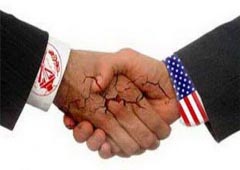
MEK Uses Congressional Spotlight to Push Regime Change in Iran

WASHINGTON — MEK leader Maryam Rajavi told lawmakers on April 29 that the path to defeating the Islamic State (IS) runs through regime change in Tehran.

Testifying by teleconference from the exiled group’s headquarters in Paris, Rajavi urged the United States to stand up to Iran throughout the region. Her appearance has sparked controversy because the MEK was listed as a terrorist group until 2012, but several lawmakers defended her right to testify and held up her organization as a viable democratic alternative to the mullahs.

"Since [1979], the regime in Tehran has acted as the driving force for, and the epicenter of, this ominous phenomenon regionally and worldwide," Rajavi testified before the House Foreign Affairs Committee’s panel on Terrorism, Nonproliferation and Trade. "The ultimate solution to this problem is regime change by the Iranian people and resistance."

The hearing drew a crowd of MEK supporters, including a who’s who of lawmakers who have long supported — and taken money from — the MEK and its Iranian-American affiliates. They include Reps. Judy Chu, D-Calif., and Sheila Jackson Lee, D-Texas, who aren’t on the committee but stopped by to praise Rajavi.

"This is a very historic hearing," said Jackson Lee, who along with panel Chairman Ted Poe, R-Texas, actively pressed the State Department to take the MEK off its terrorism list. "This is one of the few times that the voice of the opposition [to] the government of Iran has been part of an official discussion. And that’s very important for the American people."

Other lawmakers, including ranking member William Keating, D-Mass., ignored Rajavi and directed their questions only at the other witnesses. Rep. Danny Davis, D-Ill., who also isn’t a committee member, was the only one to challenge her to explain why the United States should put its trust in a group that was kicked out of Iran in the early 1980s and fought alongside Saddam Hussein against Tehran.

"Over the past 30 years, the United States has been drawn into some serious diplomatic and military dead-ends in the Mideast by mistakenly backing individuals and organizations claiming popular support, which turned out to be exaggerated and somewhat manufactured," Davis told Rajavi. "Would you please tell us about the role of the [MEK] … and its place in the current Iranian political life?"

Rajavi said it was impossible to gauge support for the MEK because the mullahs would never allow free and fair elections. But she said the regime’s "fear" of the group and its efforts at "demonizing" was a strong indication of the MEK’s "strength."

Freshman Rep. Lee Zeldin, R-N.Y., left little doubt that he believed in her.

"I honestly do not know if my president is on the same exact team that I am," he told Rajavi. "Because there are individuals like you, who are willing to rise up and take control of your country’s future."

Rep. Brad Sherman, D-Calif., said the MEK’s terrorism designation belonged in the past and compared Rajavi’s appearance to Japanese Prime Minister Shinzo Abe’s address to Congress earlier in the day. He said the media had "attacked" the MEK’s inclusion in the hearing because she was advocating for a certain policy — namely, regime change — but argued that most if not all other witnesses do the same.

"I’ve never heard a witness that wasn’t providing information to further their public policy interests," Sherman said.

Other witnesses, however, took a much different view, arguing that Rajavi’s testimony detracted from the fight against IS. Former State Department counterterrorism coordinator Daniel Benjamin pulled out of the panel after finding out that Rajavi was testifying, and former Ambassador to Syria Robert Ford demanded to be seated on a separate panel.

"I wanted to have an in-depth discussion of the Islamic State in great detail, because, precisely, we have American servicemen and women in harm’s way," Ford told reporters after leaving the hearing before Rajavi’s appearance. "It’s really important to get the strategy right. And that requires a detailed discussion."  

By: Julian Pecquet, Congressional Correspondent for Al-Monitor
May 3, 2015 0 comments
FacebookTwitterPinterestWhatsappTelegramSkypeEmail
Mujahedin Khalq; A proxy force

Buying your way to respectability

Maybe you’ve heard the saying “money talks, bullshit walks”? Well on Capitol Hill, money and bullshit are often the same thing, and they both get to talk as long as they want or until the cash runs out, whichever comes first. Take the People’s Mujahedin, or Mujahedin-i Khalq (MEK), an Iranian exile group that I’ve written about in the past. MEK used to reside on the State Department’s list of terrorist groups until 2012, when a massive PR campaign led by the most prominent collection of lobbyists that money could buy, bolstered by some strategic donations to the right politicians, convinced Hillary Clinton to remove them from the list. To be fair, the EU had already delisted MEK as a terror group in 2009, and Canada delisted them right after the US did, and obviously there’s no corruption in either Europe or Canada, so I’m sure this was all on the up and up. All MEK did to get listed as a terror group in the first place was little stuff like assassinating a half-dozen or so Americans and blowing up a few US-owned buildings in Iran in the 1970s, before the revolution. Totally innocent stuff, you know.
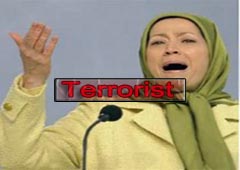
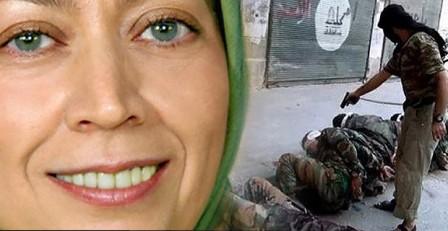
MEK, known for its opposition to Iran’s current clerical government, was actually founded in the 1960s as a Marxist group opposed to the Shah and his decadent, Western, corrupt, yadda yadda, you know the drill. After the Iranian Revolution, which MEK fully supported, its leader, Massoud Rajavi, found himself getting the short end of the stick in the new Iranian order, so he fled the country before Ayatollah Khomeini could throw him in prison. He set up in Iraq and struck up a friendship with an amiable fellow named Saddam Hussein, and also started dropping MEK’s previous anti-Western and Marxist rhetoric in an effort to get on America’s good side. Also, where MEK had criticized the Shah for having cordial relations with Israel, after the Revolution it started working with the Israelis to carry out covert attacks inside Iran, particularly assassinations of Iranian nuclear scientists. In 2002, the National Council of Resistance of Iran, which claims to be Iran’s “government-in-exile” but is really MEK’s cuddlier political front group, claimed to have revealed information about the existence of Iran’s Natanz uranium enrichment facility to the US, which is true inasmuch as you’re willing to ignore the fact that the US already knew about Natanz before NCRI/MEK said anything.

Since he took firm control of the group after the 1979 revolution, MEK has essentially existed as Massoud Rajavi’s personal entourage/fan club. It’s got a creepy cult of personality vibe about it even when you get past the fact that it has demonstrably engaged in numerous real-deal terror attacks over the course of its existence (it supposedly “renounced violence” in 2001, but it kept right on assassinating Iranian nuclear scientists, so…). It’s even mirrored that not-at-all creepy US cult, Scientology, in that, not unlike David Miscavige’s missing-since-2007 wife, Shelly, nobody has seen or heard from Massoud Rajavi in over a decade, since the Iraq War, when the US actually targeted MEK camps (they were, after all, still on the terror list) and upended things for Massoud’s bro Saddam. MEK insists that Massoud is alive and well and in hiding, but control over the organization appears to have gone to his wife, Maryam Rajavi.

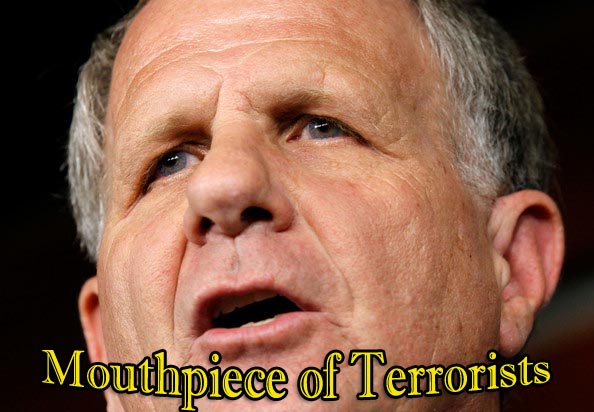
All of this is prelude to the news that Maryam Rajavi will testify tomorrow by videoconference to the House Foreign Affairs Committee’s Subcommittee on Terrorism, Nonproliferation, and Trade about…the fight against ISIS. Maryam Rajavi has no experience as a counterterrorism expert, nor does MEK have any experience fighting (or any reason to fight, let’s be honest) against ISIS. Subcommittee chair Ted Poe (R-TX) claims that he invited her to testify “about the threats the Islamic State (IS) poses to MEK members who remain at Camp Liberty in Baghdad,” but, and this may come as a shock so sit down before you read it, she plans on explaining how the US should fight ISIS by overthrowing the clerical government in Iran. That makes no logical sense, but MEK has never been about “making sense.”

Rajavi’s invitation to testify has caused a bit of a kerfuffle around tomorrow’s hearing, as both former US Ambassador to Syria Robert Ford and former State Department Coordinator for Counterterrorism Daniel Benjamin have flatly refused to appear alongside Rajavi (Ford has said he would be willing to testify on a different panel, which the subcommittee apparently has decided to do, but Benjamin seems to have pulled out of the hearing altogether). Benjamin cited MEK’s past terrorist activity, including its participation in the 1979 US embassy hostage crisis, as the reason for his unwillingness to testify alongside Rajavi, while Ford was a little blunter:

“The committee handled this abysmally,” Ford told Al-Monitor in a phone call late Monday. “What the fuck do the MEK know about the Islamic State?”

Poe has been defending his decision to include Rajavi in the hearing (at the cost, mind you, of getting testimony from an actual counter-terrorism expert) because she can testify about how threatened the MEK members in Baghdad are by ISIS (which, if they’re in Baghdad, is “hardly at all”). The problem with that is a) she’s planning on testifying about regime change in Tehran instead and b) why doesn’t Poe invite someone from, say, Iraq’s Yazidi community, which is actually directly threatened by ISIS, to testify before his subcommittee? Maybe (SPOILER ALERT: here’s where the money comes in) it has something to do with the fact that nobody from the Yazidi community has managed to put a cool $38K in cash and prizes in Ted Poe’s pockets the way MEK has:

Poe received $17,900 in campaign contributions from supporters of the MEK between 2009 and 2014, according to an analysis I conducted of campaign finance data. Surprisingly, nearly half—or $8,600—of the total flowed into his campaign while the group was still on the State Department’s terrorism list between 2009 and its delisting in 2012.

In 2013 and 2014, the group also paid for $19,671 in travel expenses (including business-class plane fare) for Poe’s travel to MEK events in France.

So, hey, if you’ve ever wanted to testify before Congress but there’s no discernible reason why they should invite you to do so, plus maybe you’ve got some unsavory things in your past that could complicate matters, don’t worry! Just fork over a few tens of thousands to your favorite congressperson and you could soon find yourself offering your “expertise” (or irrelevant ranting, but whatever, you bought your time fair and square) to our nation’s top legislators! Good luck!

ATTWIW.com

May 3, 2015 0 comments
FacebookTwitterPinterestWhatsappTelegramSkypeEmail
Nejat Publications

Pars Brief – Issue No. 86

Inside This Issue:

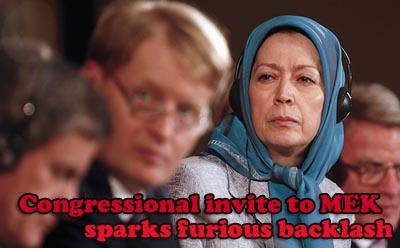
1.    Congressional invite to MEK sparks furious backlash
2.    Benjamin Helped Delist Mojahedin Khalq. That Doesn’t Mean He Wants to Testify With Them
3.    Why Is Congress Listening to an Ex-Terrorist Iranian Cult Leader?
4.    Not The Onion: Tom Cotton Befriends Radical Marxist Muslim Cult
5.    Poe’s Financial Ties To MEK May Explain Maryam’s House Testimony
6.    Mojahedin Khalq (MEK) Lobby in European Parliament fails to deliver.
 

Download Pars Brief – Issue No. 86

May 2, 2015 0 comments
FacebookTwitterPinterestWhatsappTelegramSkypeEmail
Mujahedin Khalq Organization's Propaganda System

Threat of IS for Liberty residents?

"She knows more about what’s taking place at Camp Liberty than any person, anywhere," Congressman Ted Poe said about Maryam Rajavi the leader of the Mujahedin khalq Organization (the MKO) who is supposed to testify before a hearing in the US Congress next week. "And that’s why she’s testifying." [1]

Yes, Congressman Poe is right. Maryam Rajavi is the most informed person about what is really going in the MKO camps in Iraq or France but she is not the most reliable person at all. She is not reliable because of the long history of fraud and Goebbels -like propaganda of her group.

Maryam Rajavi, the self-claimed president of National Council of Resistance of Iran (the propaganda arm of the MKO), will testify via video conference on April 29 at a House Foreign Affairs terrorism panel on "ISIS: Defining the Enemy”. Surprisingly, the organizers of the event are supposed to define the threat of ISIS terrorists via testimonies of Maryam Rajavi while she has never taken any position against ISIS. [2]

Ann and Massoud Khodabandeh, are the couple who happened to be the disassociated members of the MKO and also the experts on the organization explain why Congress should not rely on Rajavi’s testimony to discuss the threat of the Islamic State:   

“She won’t. She can’t. Because the MEK are friends of the Islamic State (IS), they support the Islamic State. Maryam Rajavi has spoken in Farsi in favour of the Islamic State. The Islamic State do not pose any danger to the MEK in Camp Liberty. In fact, before the Iraqi army and militias drove IS back from its encroachment, it was clear to all those who know the MEK that the leaders were hoping that when IS reached Baghdad, the MEK would be liberated from Camp Liberty and join the terrorist forces.” [3]

  It is well known that any disassociated member who tells the truth about the organization and denounces the MKO and exposes the abuse by its leader will be branded by the group as the agent of the Iranian intelligence service.  Hence, the US officials should be cautious about letting the MKO’S  leader to attend a Congressional hearing.

According to Al Monitor, Daniel Benjamin, formerly the State Department’s counter terror coordinator, also was slated to testify at the House hearing. But on Monday, Benjamin declared that “I will not appear at a hearing” about the Islamic State with the MEK’s defacto leader, because “I know of no substantive expertise that the MEK has developed on ISIS.” News of Benjamin’s cancellation was first mentioned on Twitter by ALM Congress Pulse. [4]

Benjamin told committee staff that he "did not believe the MEK had anything to contribute to a discussion of [IS], and that this would be a distraction from an important issue," he told Al-Monitor. "I said the story of the day would be the rehabilitation of the MEK, and I did not want to be associated with that in any way."  [5]

Foreign Policy also quoted from Benjamin that the MEK’s “exclusive focus” of concern has for decades been Iran. “So one has to wonder what the purpose of Rajavi’s presence on this panel is,” Benjamin told FP. [6]

“Being delisted as a Foreign Terrorist Organization — a decision I took part in — doesn’t mean that this group … has suddenly … become trustworthy or worthy of engagement,” he said. [7]

Besides Daniel Benjamin, Robert Ford former US ambassador to Syria who was also invited to testify at the hearing declined to attend the event. According to Al Monitor, Ford said he would not testify at the same time as Maryam Rajavi". The committee handled this abysmally," Ford told Al-Monitor in a phone call late Monday. "What the fuck do the MEK know about the Islamic State?" [8]

A very comparable reaction was made by Ahmed Shahid UN Special Reporter on Human Rights last year. Shahid who had been invited to address in a similar event in Canadian Parliament withdrew from the program because Maryam Rajavi was supposed to deliver speech too. [9]

However, Congressman Ted Poe who is on top of the MKO pay roll, still defends his invitation despite Benjamin’s considerations on the MKO’s violent history. Definitely, Congressman Poe might not be so naïve to get misled by the propaganda of a cult of personality but he might be paid enough to cover the truth. The untrustworthy background of the MKO to deal with the International Community is so well reported and documented that you may find a case of the group’s deceitful approach on Ted Poe’s own website on House of Representatives.

Ardavon Niami’s article which had been originally published on NIAC website on December 12 2011, was available on Poe’s page the following day. The article was focused on the destiny of residents of Camp Ashraf before its closure in 2013.  Niami reports that the relocation process of Ashraf residents was obstructed by their leaders.” U.S. officials testified before the House Foreign Affairs Oversight and Investigations Subcommittee last week that efforts to peacefully resolve the standoff are being rebuffed by MEK leadership”, He wrote. “U.S. Special Adviser on Camp Ashraf Daniel Fried said MEK leadership has impeded a refugee resettlement process and interfered with the UN’s ability to conduct interviews with individuals at the encampment.” [10]

Ted Poe’s web page says, “Fried told Congress that the Administration’s efforts have been met intransigence by Camp Ashraf leadership to agree to any relocation plan other than en masse relocation outside Iraq.” [11]

Although, the relocation of Ashraf residents was finally accomplished in 2013 –after over a decade of international efforts—about 100 of its high ranking members of the group who stayed in the Camp under the order of the leadership faced a deadly attack in September 2013, following which 53 members were killed!

Furthermore, the relocation process from Iraq Camp Liberty to Europe is very slow due to obstacles made by the MKO leaders. Based on testimonies of former members and various documented and investigated reports, the most crucial threat to residents of the MKO’s camps, is caused by the group’s leaders who do not have any consideration for the members. They only care for their own interests.

By Mazda Parsi

References:

[1] Pecquet, Julian, MEK leader to testify before Congress, Al Monitor, April 23, 2015

[2] ibid

[3]Khodabandeh, Ann & massoud, Congress cannot rely on Rajavi’s testimony, The Iran Interlink, April26, 2015

[4 ] Pecquet, Julian, Congressional invite to MEK sparks furious backlash, Al Monitor, April 28, 2015 

[5]ibid

[6] Francis, David, Renowned U.S. Arabist Is Second Witness to Refuse to Appear With MEK Leader, Foreign Policy , April28, 2015

[7]ibid

[8] Pecquet, Julian, Congressional invite to MEK sparks furious backlash, Al Monitor, April 28, 2015 

 [9] Gharib, Ali , Controversial Iranian Exile Shakes Up Canadian Parliament’s Human Rights Program, The Nation, May 14, 2014

[10] Niami , Ardavon,  U.S. Officials Warn that MEK is Obstructing Humanitarian Solution in Ashraf, NIAC, December 12, 2011

[11] ibid

April 30, 2015 0 comments
FacebookTwitterPinterestWhatsappTelegramSkypeEmail
Mujahedin Khalq; A proxy force

Poe’s Financial Ties To MEK May Explain Maryam’s House Testimony

Wednesday’s scheduled congressional hearing on “ISIS: Defining the Enemy” is rapidly shrinking in size. Two key witnesses are refusing to attend due to the invitation to testify that Ted Poe (R-TX), the chairman of the House Foreign Affairs Subcommittee on Terrorism, extended to Maryam Rajavi, leader of the Mujahedeen-e-Khalq (MEK).

 Former U.S. Ambassador to Syria Robert Ford and former State Department counterterrorism director Daniel Benjamin have both said that they won’t appear for the hearing after learning that Rajavi would also be a witness on the same panel. She is scheduled to participate via videoconference from Paris, the headquarters the National Council of Resistance of Iran (NCRI), a MEK front.

 MEK, which the State Department removed from terrorism list in 2012 following a lengthy and expensive lobbying campaign, is believed to have been responsible for the killing of six Americans in Iran between 1973 and 1976.

 The group, which went into exile after losing a violent power struggle in the early years of the Islamic Republic, aligned itself with Saddam Hussein during the Iran-Iraq war and, despite claims to being Iran’s viable democratic government in exile, is widely believed to have little or no grassroots support in Iran. The group has long faced criticism from Iran specialists and rights groups such as Human Rights Watch that it has devolved into a cult based on devotion to Maryam and her long-missing husband, Massoud Rajavi. According to numerous accounts, the group exerts a high degree of control over its followers, going so far as to mandate divorces and celibacy for their soldiers.

But, as Ali Gharib and I documented in February, MEK’s influence in Washington, particularly with Iran hawks, has coincided with a flow of money from the group to American politicians, in particular, to embattled Sen. Robert Menendez (D-NJ) who is currently under indictment on unrelated federal corruption charges.

So why did Poe and the Republican majority on the terrorism subcommittee decide to invite Rajavi (a copy of whose testimony was obtained by Ali who previewed it Tuesday on The Nation’s website) Campaign finances may offer at least part of the answer.

Poe received $17,900 in campaign contributions from supporters of the MEK between 2009 and 2014, according to an analysis I conducted of campaign finance data. Surprisingly, nearly half—or $8,600—of the total flowed into his campaign while the group was still on the State Department’s terrorism list between 2009 and its delisting in 2012.

In 2013 and 2014, the group also paid for $19,671 in travel expenses (including business-class plane fare) for Poe’s travel to MEK events in France.

In contrast, Sen. Lindsey Graham (R-SC), returned a $2,600 campaign contribution from a MEK supporter in Virginia in 2013. “During routine due diligence by campaign staff, it was discovered that a few donors had associations the campaign was uncomfortable with,” a spokesman for Graham’s campaign told Politico. “In an abundance of caution, the contributions were refunded.”

Poe seems less concerned about the association. His insistence on inviting Rajavi adds to the irony of his chairmanship of the terrorism subcommittee (shades of Sen. James Inhofe’s chairmanship of the Senate Environment Committee).

With Ford and Benjamin out, Rajavi will be joined on Wednesday by only one other witness: Walid Phares, a pro-Israel Lebanese-American Maronite Christian with a long association with hard-line neo-conservatives and a terrorism “expert” for Fox News. During Lebanon’s civil war that raged from 1975 through the 1980’s, Phares served as an ideologue for the Lebanese Forces, an umbrella group of various Christian militias. Some of these militias carried out the Sabra and Shatila massacres in September, 1982, in which at many as 3,000 Palestinians—mostly women, children and the elderly—were killed following Israel’s conquest of Beirut. Among other positions, he served as co-chairman of the Middle East working group of Mitt Romney’s foreign policy advisory team.

by Eli Clifton,

April 30, 2015 0 comments
FacebookTwitterPinterestWhatsappTelegramSkypeEmail
Maryam Rajavi

Cult Leader Will Tell Congress: Fight ISIS by Regime Change in Iran

Last week, the House Foreign Affairs’ Subcommittee on Terrorism, Nonproliferation, and Trade announced that a controversial Iranian exile opposition figure would be testifying via video uplink at a hearing on the Islamic State, known as ISIS. What does the witness, Maryam Rajavi, a co-leader of the Mojahedin-e Khalq (MEK), have to say about the subject at hand?

Rajavi’s written testimony, a copy of which was obtained by The Nation, focuses on an unexpected way of bringing ISIS to heel: by fostering regime change in Iran. “The ultimate solution to this problem” of Islamic extremism, such as ISIS, Rajavi says in the written statement, “is regime change by the Iranian people and Resistance”—a reference to the National Council of Resistance of Iran (NCRI), the MEK’s political wing.

It sounds counter-intuitive—Iran’s aid to the Iraqi government and various Iraqi militias, after all, is widely credited with stopping ISIS’s advances there—but not when you know about the MEK’s tortuous past. Over the years, the MEK has been nothing if not opportunistic; animated by the twisted logic that the enemy of its enemy is its friend, the group seizes whatever political angle is fashionable at the moment to bring them relevance (Congress is happy to oblige). But more to the point, the MEK has always had only one goal: the overthrow of the Iranian regime. For decades, it has tried to shoehorn regional and geopolitical dynamics into its aim, irrespective of any salient connections.

The plan to bring down ISIS by toppling Iran’s government, then, is little more than the latest chapter of group’s 50-year history of monomaniacally trying to install itself atop the Iranian government. Indeed, Rajavi is testifying at Congress with the title of “president-elect” of the NCRI, which hopes to run a transitional government immediately upon the fall of the Islamic Republic.

Founded as an Islamo-Marxist revolutionary group in the 1960s, the MEK spent its early years pursuing its Quixotic aims by opposing the Shah’s government with a vengeance: through student organizing, outright terrorism—including against American targets when the United States was allied with the Shah, helping to earn its 1997 American designation as a terror group—and fighting at the vanguard of the Islamic Revolution. By the 1980s, after the leader of the revolution, Ruhollah Khomeini, kicked the group out of Iran, critics were regularly deriding the MEK as a cult of personality—not least because of its continuing “wacky” behavior, as a former congressional aide put it to me for a feature I wrote this winter with Eli Clifton.

So how do Rajavi and MEK plan to end the threat from ISIS by upending the Iranian regime? That’s not so clear. But it definitely involves ignoring, despite the current clashes, the distinction between Sunni and Shia extremism—including, for example, propagandistic exaggerations like saying that “Shiite militias act more viciously than their Sunni equivalents, such as ISIS”—and pointing out several times that Iran went Islamist before anyone else. That’s about it.

It’s worth noting, however, that the MEK does have some experience in Iraq: after going into exile, its leaders gathered their fighters in Saddam Hussein’s Iraq, to take his side in the Iran-Iraq war—earning the enmity of many Iranians. After the war ended, the MEK, led by Maryam Rajavi and her husband Massoud (who hasn’t been seen in public for a dozen years), stuck around and enjoyed Hussein’s largesse, acting, periodically, as mercenaries to crush incipient uprising against the Iraqi strongman—earning, in turn, the enmity of many Iraqis.

After Hussein’s fall in 2003, the American invaders stripped the MEK of its multitude of arms. (Curiously, for a group that claims to have renounced violence in 2001, Rajavi cites in her Congressional testimony the “disarming” of the MEK as a “misguided polic[y]” that helped give rise to Muslim extremism—but not the invasion that toppled their benefactor itself.) The MEK then languished in its camps, coming under periodic attack by a murky combination of the Iraqi army and, reportedly, government-aligned Shia militias. Dozens of MEK adherents were slaughtered.

The period also marked the growth of an ardent pro-MEK lobby in the United States. As Eli Clifton and I detailed in our Intercept piece this winter, a multimillion-dollar campaign kicked into gear to remove the MEK from the US State Department’s terrorist list. Once that hurdle was cleared, the MEK—despite its cult-like practices—began to accumulate more mainstream power in Congress, where super-hawkishness against Iran is guaranteed to attract powerful bedfellows, including large amounts of pro-Israel donor money and more modest cash from MEK supporters themselves.

Meanwhile, the massacres of the MEK’s ex-fighters at its Iraqi desert bases fueled the group’s hatred of the Iraqi government led by Nouri al-Maliki, which had failed to protect them. Just as the MEK had grown close to Hussein because he was an arch-enemy of the Iranian regime, the group likewise reviled Maliki’s government, and vice-versa, for its closeness to the Iranians—the Islamic Republic had hosted and fostered Maliki’s movement in exile before the 2003 war, and supported his Shia government after its rise to power in Iraq.

When ISIS began to rip apart what was still then Maliki’s Iraq, the MEK’s prevailing logic seemed to again fall back on the enemy of its enemy. Perhaps chastened by their own labeling by the US as a terrorist organization, the group seldom uses the word “terrorism” in conjunction with ISIS. Instead, MEK propaganda refers to ISIS as “extremists,” in some instances. At other times, the language is more ambiguous: Last June, when ISIS took the northern Iraqi city of Mosul, one MEK website gave a triumphalist account of the conquest, referring to ISIS as “revolutionary forces.”

Historical revisionism of the ISIS assault started almost immediately. “These forces have taken over the Badoush prison and they had hundreds of prisoners that had been proclaimed to be terrorists and they freed them,” read a Persian-language post on the website Mojahedin.org. HRW, however, collected survivor testimonies from the prison takeover that told a different story: “After seizing Badoush Prison near Mosul, the gunmen from Islamic State, also known as ISIS, separated the Sunni from the Shia inmates,” an HRW release said, “then forced the Shia men to kneel along the edge of a nearby ravine and shot them with assault rifles and automatic weapons.”

Herein lies the MEK contradiction behind its early positions. On the one hand, ISIS, like the MEK, is militantly opposed to Iranian influence in the region. But Rajavi needs to gin up support in Washington. So she poses herself in opposition to ISIS, claiming the best strategy for fighting the marauding Sunni terrorists is to… overthrow the first regime in the region to commit blood, money and heavy weaponry to the fight against ISIS.

As ISIS became the world’s most famous terrorist group, the MEK eased its whitewash and adopted the stances Rajavi will bring to Congress on Thursday: namely, that ISIS is an extremist group—whose model and inspiration is Iran, however nonsensical that point is. That Congress would invite these ex-terrorists—Rajavi’s past prevents her from getting a visa, the reason for her video testimony—speaks ill of their commitment to shaping serious policy on either ISIS or Iran. Rajavi’s participation proved such an embarrassment that a distinguished diplomat, Ambassador Robert Ford, and another witness withdrew from the hearing rather than speak alongside her on the dais—just as the top UN official for human rights in Iran withdrew from a program last year in Canadian parliament where Rajavi was set to appear.

The MEK’s story is a tragic one of sustained failure, of being massacred and massacring, of being abused and abusing its own people, of terrorizing and being terrorized, and of a constantly morphing politics consistent only in its oddness and toxicity. That story needs to be heard, but as a cautionary tale, not as expert advice. Instead, Congress is asking one of the groups most hated in Iraq and Iran what to do about those countries’ woes. What could go wrong?

Ali Gharib, The Nation

April 30, 2015 0 comments
FacebookTwitterPinterestWhatsappTelegramSkypeEmail
Mujahedin Khalq; A proxy force

Former Iranian Terrorist Group, MEK, To Testify Before Congress

Why is a Texas Congressman inviting the political leader of a former Iranian terrorist group to testify about ISIS and Islamic Extremism before a House subcommittee on terrorism?

WASHINGTON — Maryam Rajavi, acting president of the National Council of Resistance of Iran (NCRI), will address the House Foreign Affairs’ Subcommittee on Terrorism, Nonproliferation, and Trade about the Islamic State of Iraq and Syria ( Islamic State of Iraq and Syria).
The NCRI is the political wing of the People’s Mujahedeen of Iran, also known as the MEK in its Persian acronym. The group is a former terrorist organization, which, according to the FBI, killed American citizens in Iran in the 1970s, was involved in the 1979 hostage crisis, and attempted to overthrow the Iranian revolutionary government with the help of Saddam Hussein during the Iran-Iraq War.

Al Monitor reports Rajavi was invited by Texas Rep. Ted Poe, the chair of the subcommittee, to testify about the dangers ISIS poses to MEK members at Camp Liberty in Iraq. Poe is quoted as saying about the hearing: “This hearing will explore what drives ISIS and how we can use ISIS’ ideology against it.”

The MEK rose to fame in Washington in 2002, when it publically revealed that Iran was enriching uranium at a secret location called Natanz. However, it has since been revealed that the U.S. was already aware of the site and had even provided details about it to the International Atomic Energy Agency.

The group’s most recent foray into the international spotlight came in February, when they claimed to have revealed another secret nuclear site near Tehran called Lavizan-3. Yet this revelation has garnered little attention, as nuclear nonproliferation experts do not believe the NCRI’s claims are credible. Further, there is a stronger understanding now that the MEK intends to upset the nuclear negotiations between the P5+1 countries and Iran by any means necessary.

Jeffrey Lewis, director of the East Asia Nonproliferation Program at the James Martin Center for Nonproliferation Studies, wrote last month in Foreign Policy: “[T]here is every reason to think the latest allegations by NCRI represent a politically motivated effort to derail the engagement of Iran over its nuclear program.”

Likewise, State Department spokeswoman Jen Psaki told a Februar press briefing: “We don’t have any information at this point in time to suggest the [NCRI’s] conclusions are accurate.”

The MEK was removed from the State Department’s terrorism list three years ago after a concerted lobbying campaign, which featured some of the most prominent politicians and officials in the U.S., including John Bolton, former U.S. ambassador to the United Nations; Tom Ridge, former director of Homeland Security; and Rudy Giuliani, former mayor of New York City.

A MintPress News investigation into this campaign revealed that claims made by the MEK and their supporters in the U.S. government are not grounded in truth and are laden with legalistic terms to confuse basic historical facts.

Despite this, Raymond Tanter, a former member of the National Security Council under Ronald Reagan, recently wrote an article in Townhall praising the subcommittee for selecting Rajavi as a witness for the hearing. He wrote: “As a prodemocracy woman with a moderate view of Islam, Rajavi represents the opposite of the misogynous Iranian regime’s rulers.”

Tanter added that Rajavi is a good candidate to testify because the subcommittee members will be able to ask how her how she’s dealt with Islamic extremists in the past and how to counter radical Islam.

The problem with this reasoning is that the MEK is a kind of cult, according to the FBI, Human Rights Watch, the Rand Corporation, and just about every other organization which has investigated the group. It is precisely the kind of organization that should not testify about Islamic extremism.

Jeremiah Goulka, author of “The Mujahedin-e Khalq in Iraq: A Policy Conundrum,” a report published by the Rand Corporation in 2009, told MintPress, “At the MEK camps, there’s a whole set of practices that are all textbook out of cult theory – sleep deprivation, make-work projects… forced celibacy, forced divorce, [and] gender segregation.”

Masoud Banisadr, a former member of the MEK, who had served as the group’s representative to the United Nations and the U.S., confirmed that forced divorces were common in the group. Banisadr told MintPress: “All members were forced to divorce their spouses, and later they have to send their children abroad to Europe and United States to be adopted by supporters and other members.”

The group currently has an office on Pennsylvania Avenue in Washington, where they launch campaigns related to Iran, attend congressional legislative hearings about the country, and attempt to influence public perception of the current regime.

Former Iranian Terrorist Group, MEK, To Testify Before Congress

By Sean Nevins , Mint Press News

April 30, 2015 0 comments
FacebookTwitterPinterestWhatsappTelegramSkypeEmail
Mujahedin Khalq Organization as a terrorist group

Benjamin Helped Delist Mojahedin Khalq. That Doesn’t Mean He Wants to Testify With Them

Former State Official Helped Delist the MEK As a Terror Threat. That Doesn’t Mean He Wants to Testify With Them.

Controversial Iranian dissidents group may no longer be considered by the U.S. as a terror threat. But it has spooked a former State Department counterterror official who is refusing to testify at a House hearing where the group’s leader will also speak.

The April 29 hearing, in front of a House subcommittee on terrorism and nonproliferation, will focus on the threat from the Islamic State, which has overrun much of Syria and Iraq. Among the invited speakers is Maryam Rajavi, president of the Paris-based National Council of Resistance of Iran (NCRI), which is the umbrella organization for groups that include Mujahedeen-e-Khalq (MEK).

Until 2012, the MEK was on the State Department’s terrorism list for killing six Americans in the 1970s. For years, the MEK  — which has been likened to a cult — filled campaign coffers of numerous lawmakers while paying steep speaking fees to officials like former Pennsylvania Governor Ed Rendell and former New York Mayor Rudy Giuliani, who were paid up to $30,000 for speeches supporting the MEK — which is dedicated to overthrowing Iran’s clerical regime.

Daniel Benjamin, formerly the State Department’s counterterror coordinator, also was slated to testify at the House hearing. But on Monday, Benjamin declared that “I will not appear at a hearing” about the Islamic State with the MEK’s defacto leader, because “I know of no substantive expertise that the MEK has developed on ISIS.” News of Benjamin’s cancellation was first mentioned on Twitter by ALM Congress Pulse.

In an email to Foreign Policy, Benjamin noted that the MEK’s “exclusive focus” of concern has for decades been Iran. “So one has to wonder what the purpose of Rajavi’s presence on this panel is,” said Benjamin, who is now director of an international studies program at Dartmouth University.

“Being delisted as a Foreign Terrorist Organization — a decision I took part in — doesn’t mean that this group … has suddenly … become trustworthy or worthy of engagement,” he said.

Rep. Brad Sherman (D-Calif.), who sits on the House panel, disputed that, and said the group should no longer be vilified since it is no longer on the U.S. list of foreign terror threats.

“Former is former,” Sherman told FP Monday afternoon, referring to the State Department list. He said the group helped uncover Iran’s secretive nuclear facility at Natanz.

However, other claims by the group have been less reliable. The Obama administration believed the MEK was providing misinformation in an effort to derail recent nuclear talks with Iran. During negotiations MEK insisted Tehran was building underground nuclear facilities, an assertion dismissed by the State Department.

The MEK did not return multiple requests for comment. It last drew widespread attention in Washington in 2013, when members of the group were trapped at Camp Ashraf in Iraq. American supporters of the group sent a letter to President Barack Obama urging him to help the MEK members escape “premeditated mass murder planned at the highest level and executed by Iraqi forces and agents, using equipment and training provided by U.S. forces.”

Sherman also dismissed Benjamin’s rationale for pulling out of his appearance — that MEK had nothing to offer on the Islamic State threat.

“If people pulled out of hearings just because they thought the witnesses’ expertise was on a related issue but not on the official title of the hearing, we’d have a lot of empty chairs,” he said.

David Francis, Foreign Policy,

April 29, 2015 0 comments
FacebookTwitterPinterestWhatsappTelegramSkypeEmail
Maryam Rajavi

Renowned U.S. Arabist Is Second Witness to Refuse to Appear With MEK Leader

House counterterrorism panel is pushing ahead with a hearing on the Islamic State — even though two of its top witnesses are refusing to testify alongside the leader of a controversial Iranian dissidents group that was itself regarded as a terrorist organization as recently as 2012.

Arabist Robert Ford, who served as U.S. ambassador to Syria and also was posted in Baghdad, in Cairo, and across the Mideast, told Foreign Policy on Tuesday that he would not appear on the panel with Maryam Rajavi, leader of the Mujahedeen-e-Khalq (MEK).

He is the second witness to balk at sharing the spotlight with Rajavi. On Monday, former State Department counterterrorism director Daniel Benjamin pulled out of the hearing, which is scheduled for Wednesday.

“I didn’t want to be on a panel with the MEK. I was shocked they invited the MEK. What the MEK has to do with the Islamic State, I don’t have a clue,” Ford told FP. “I told the committee to put me on a panel without the MEK or I wouldn’t appear.”

Rajavi will not be at the hearing: She is set to testify via videoconference, presumably from Paris, where her National Council of Resistance of Iran (NCRI) is based. The NCRI is an umbrella organization of groups that include the MEK.

Until September 2012, the MEK was designated by the State Department as a foreign terrorist organization for the alleged 1970s killing of six Americans in Iran. The group is led by Iranian exiles who bitterly oppose Tehran’s clerical regime and is widely believed to have allied with Saddam Hussein in neighboring Iraq during the 1980s war between those two nations.

It has bankrolled numerous high-profile U.S. officials and other worldwide dignitaries who appear on the MEK’s behalf, a roster that includes former FBI Director Louis Freeh and former New York City Mayor Rudy Giuliani. Representatives for the MEK have not returned repeated requests for comment.

A spokeswoman for House Foreign Affairs subcommittee chairman Ted Poe (R-Texas) defended the panel’s decision to call Rajavi as a witness. In a Tuesday email to FP, spokeswoman Shaylyn Hynes said Rajavi’s background as a Muslim woman gives her insight into “prejudices inherent in radical Islamist ideology.”

“As the leader of an Iranian opposition group, she can speak to how ISIS’ ideology is both similar to and different from the mullahs leading Iran,” Hynes said. “Finally, as an exiled leader of a group that has had members living in Iraq for decades, including most recently in a refugee camp in Baghdad, she has firsthand and on the ground knowledge of ISIS.”

Additionally, Hynes said, Rajavi has already been approved as a witness by the full House Foreign Affairs Committee.

Meanwhile, in a follow-up interview Tuesday with Foreign Policy, Benjamin — who had a role in the State Department’s decision to delist the MEK — criticized the House panel for agreeing to let Rajavi testify by video. He said that is not a perk that is offered to U.S. witnesses.

“Why won’t she travel here to testify?” Benjamin asked. He said he was offered — and turned down — tens of thousands of dollars by the group to speak on its behalf.

“This is still a group that has American blood from killings in the 1970s on its hands and killed many other innocents as well,” he said. “That has never been apologized for.”

David Francis, Foreign Policy,

April 29, 2015 0 comments
FacebookTwitterPinterestWhatsappTelegramSkypeEmail
Mujahedin Khalq Organization as a terrorist group

Congressional invite to MEK sparks furious backlash

A House panel’s invitation to the leader of an Iranian dissident group has caused a furious backlash from former State Department officials who refuse to testify along with her.

Former ambassador to Syria Robert Ford and ex-counterterrorism coordinator Daniel Benjamin told Al-Monitor that they did not want to give a platform to the Mujahedeen-e-Khalq (MEK), a group that the United States considered a terrorist organization until three years ago. Ford said he would not testify at the same time as Maryam Rajavi, while Benjamin has pulled out altogether from Wednesday’s terrorism subcommittee hearing on the self-proclaimed Islamic State (IS).

"The committee handled this abysmally," Ford told Al-Monitor in a phone call late Monday. "What the fuck do the MEK know about the Islamic State?"

Ford said he got the committee to agree to host Rajavi on a second panel after other witnesses testify as a condition for his participation. She is set to appear via teleconference from Paris, where the National Council of Resistance of Iran (NCRI), an umbrella group of Iranian opposition groups that includes the MEK, has its headquarters in exile.

Benjamin, who helped delist the MEK while serving as coordinator for counterterrorism in 2009-2012 under Secretary of State Hillary Clinton, called the invitation from panel chairman Ted Poe, R-Texas, "disgraceful." The MEK is widely believed to have been added to the terrorism list under President Bill Clinton as a goodwill gesture to reinforce the relatively moderate presidency of Mohammad Khatami, and the NCRI has since spent millions of dollars lobbying to get it delisted and boost its standing on Capitol Hill.

Benjamin told committee staff that he "did not believe the MEK had anything to contribute to a discussion of [IS], and that this would be a distraction from an important issue," he told Al-Monitor. "I said the story of the day would be the rehabilitation of the MEK, and I did not want to be associated with that in any way."

Poe has defended his invitation to Rajavi, which Al-Monitor first reported last week, saying hundreds of MEK members who remain at Camp Liberty in Baghdad could be at risk of being massacred by IS militants. Proponents of regime change in Iran have applauded the invitation, calling Rajavi and the NCRI a viable, democratic alternative to both Sunni and Shiite Islamists.

"Is Maryam Rajavi the right person to testify?" asked Raymond Tanter, who served on the National Security Council under President Ronald Reagan, at the conservative website Townhall.com. "She is the right person: As a pro-democracy woman with a moderate view of Islam, Rajavi represents the opposite of the misogynous Iranian regime’s rulers; they are authoritarian, suppress women and hold an extreme view of Islam."

The MEK did not respond to a request for comment.

Its defenders say the decades-old allegations against the group are misinformed and rely excessively on propaganda from Tehran.

"Now freed from the restrictions and stigma of [the terrorist] designation, the MEK’s members and supporters will have the opportunity to contest not only the factual record but assessments dismissive of the group’s political potential," Lincoln Bloomfield, a former State and Defense Department official, wrote in a 2013 book about the MEK. "Their first and obvious point will be that no one knows how Iranians would vote in a free and open election."

Bloomfield and other MEK defenders argue that MEK attacks against Iranian targets were a form of legitimate armed resistance against a religious dictatorship, and that the killings of a half-dozen American citizens inside Iran in the 1970s were carried out by factions with no connection to the current leadership. They point out that support for the MEK within Iran is impossible to gauge since advocating on its behalf is punishable by death.

The group’s detractors, of which there are many among current and former State Department officials, think banking on the MEK is delusional. They say the MEK is little more than a Rajavi cult and that supporting it publicly undermines pro-democracy activists within Iran.

"Although I participated in and supported the decision to delist the MEK as a Foreign Terrorist Organization — in part because of real humanitarian concerns about the plight of its members in Iraq — I continue to have serious concerns about the group," Benjamin told Al-Monitor in an email. "No one can seriously dispute that the MEK has plenty of American blood on its hands. In addition to killing US civilians and military personnel, participating in the 1979 takeover of the US Embassy in Tehran and serving as a strike force for Saddam Hussein, the group treats its own member abysmally and coercively."

By Julian Pecquet, Al-Monitor

Barbara Slavin contributed to this report

April 29, 2015 0 comments
FacebookTwitterPinterestWhatsappTelegramSkypeEmail
Newer Posts
Older Posts

Recent Posts

  • Pregnancy was taboo in the MEK

    December 22, 2025
  • MEPs who lack awareness about the MEK’s nature

    December 20, 2025
  • Why did Massoud Rajavi enforce divorces in the MEK?

    December 15, 2025
  • Massoud Rajavi and widespread sexual abuse of female members

    December 10, 2025
  • Farman Shafabin, MEK member who committed suicide

    December 3, 2025
  • Facebook
  • Twitter
  • Instagram
  • Youtube

© 2003 - 2025 NEJAT Society . All Rights Reserved. NejatNGO.org


Back To Top
Nejat Society
  • Home
  • Articles
  • Media
    • Cartoons
    • NewsPics
    • Photo Gallery
    • Videos
  • Publications
    • Books
    • Nejat NewsLetter
    • Pars Brief
  • About Us
  • Contact us
  • Editions
    • عربي
    • فارسی
    • Shqip