Nejat Society
  • Home
  • Articles
  • Media
    • Cartoons
    • NewsPics
    • Photo Gallery
    • Videos
  • Publications
    • Books
    • Nejat NewsLetter
    • Pars Brief
  • About Us
  • Contact us
  • Editions
    • عربي
    • فارسی
    • Shqip
Nejat Society
Nejat Society
  • Home
  • Articles
  • Media
    • Cartoons
    • NewsPics
    • Photo Gallery
    • Videos
  • Publications
    • Books
    • Nejat NewsLetter
    • Pars Brief
  • About Us
  • Contact us
  • Editions
    • عربي
    • فارسی
    • Shqip
© 2003 - 2024 NEJAT Society. nejatngo.org
Iraqi Authorities' stance on the MEK

Al-Bayati: presence of MEK in Iraq illegal

This week in Baghdad, Human Rights Minister Mohammed Mahdi al-Bayati met with the Deputy Representative of Human Rights Minister Mohammed Mahdi al-Bayatithe Secretary-General of the United Nations Mission in Iraq Georgi Posten.
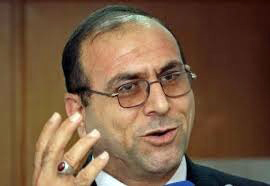
Al-Bayati expressed support for all initiatives and steps that would strengthen national unity on the one hand and achieve justice for the victims of terrorism on the other hand, stressing that the issue of a general amnesty should include those who have not stained their hands with the blood of innocent people.

In respect of the MEK, al-Bayati stressed that the presence of the terrorist MEK in Iraq is illegal and pledged support to expedite UNAMI’s efforts to fully expel the MEK.

November 22, 2014 0 comments
FacebookTwitterPinterestWhatsappTelegramSkypeEmail
Iran Interlink Weekly Digest

Iran Interlink Weekly Digest – 73

++ Mohammad Sahimi, a prominent professor and analyst in the US, has published the second in a collection of articles about Daesh. This is titled ‘Daesh and Daesh-like groups’. In it he examines similarities in the creation, funding and support of various terrorist groups including the MEK.

++ According to Iran Interlink’s sources in Iraq, 120 residents of Camp Liberty were due to be transferred to Tirana, Albania last week. This was cancelled because the MEK leader changed his mind again. The residence in Tirana has been ready for months. At first Rajavi wouldn’t allow access to anyone in Liberty. Then he granted access only if he chose the 120 transferees himself. The UNHCR accepted this on the understanding that 120 transfers are better than none. The interviews went ahead only for Rajavi to halt the process again because he wants more concessions. From the time this plan was achieved by UNAMI, Rajavi has demanded various things: heavy machinery, more land, unrestricted access to the border (with Jordan), etc. Through the Zionist backed Western media and MEK outlets, Rajavi has hidden these demands behind allegations that “Iraqi officials” are denying medical help, restricting fuel and have confiscated lift trucks. This is not a new ploy and both UNAMI and the Iraqi authorities have consistently and publicly rejected these allegations.

++ This week in Baghdad, Human Rights Minister Mohammed Mahdi al-Bayati met with the Deputy Representative of the Secretary-General of the United Nations Mission in Iraq Georgi Posten. Al-Bayati expressed support for all initiatives and steps that would strengthen national unity on the one hand and achieve justice for the victims of terrorism on the other hand, stressing that the issue of a general amnesty should include those who have not stained their hands with the blood of innocent people. In respect of the MEK, al-Bayati stressed that the presence of the terrorist MEK in Iraq is illegal and pledged support to expedite UNAMI’s efforts to fully expel the MEK.

++ Sahar Family Foundation published an article about the ongoing issue of excessive numbers of deaths among MEK members in Europe and Camp Liberty. The article says that although it has been known about for some time, no agency or body is trying to investigate or stop it. The deaths are ongoing. The common factor is that the dead people are all known to be disaffected members who have been unable to escape the group. All had been kept in the MEK by force. Sahar believes that some deaths have been deliberately expedited by withholding medical care, others may simply have been murdered.

++ Massoud Taghipourian’s article in Nejat Association is titled, ‘Rajavi has no supporters even in cyberspace’. He identifies various MEK activities to demonstrate how divorced from reality the MEK is. Most of the MEK’s work, he says, is directed towards keeping the members busy, giving them something to do. All their so-called cyber victories are only for internal consumption. But even inside the MEK only a few hundred people get to see this. One of the internal jobs is to ‘Like’ MEK sites on Facebook and other social media. Even with this activity, it is clear their supporters are in the tens rather than the hundreds.

++ The MEK’s main task this week has been to work against the nuclear negotiations. The group posted bill boards in Washington against peace, and held a couple of demonstrations with fewer than ten people each in the US and Vienna. On November 20th another so-called revelation meeting was chaired by John Bolton and attended by paid lobbyists. Again, after all these efforts to attack Iran’s nuclear programme nobody listened except a couple of well-known Zionist backed media. This has been a waste of Zionist money. In fact there was more coverage of the meeting inside Iran than rest of world put together. News agencies like Fars News made full reports on the MEK’s demonstration of eight people with as many, if not more, flags in their hands in Vienna. Since 1997 Maryam Rajavi has been banned from travelling to North America and the UK. France, where she is a refugee, has said they would expel her if only they could. Rajavi’s attempts to make herself and her cult indispensable to the Zionist agenda is backfiring since she is simply trying too hard to be more than the nobody she is.

++ The other area on which the MEK concentrated this week was its ongoing attack of the government of Iraq and the militia forces which have joined the army in fighting Daesh. The MEK clearly shows dissatisfaction that Iraq is winning in its efforts to repel and destroy Daesh. Earlier this year Massoud Rajavi was hoping Daesh would take over and ‘liberate’ Camp Liberty. He exposed his group to severe criticism for this direct support. Since the Daesh incursion was unsuccessful he has avoided direct support for Daesh and is, instead, attacking those forces which are fighting against it.

++ This week, Massoud Rajavi’s captive audience of MEK members was treated to a snooze fest of almost two hours as an audio tape was broadcast. However, after spewing out seemingly endless soporific nonsense, Rajavi finally got to the point. Massoud Rajavi threatened the lives of his critics in the West. Accompanying the audio with pictures, he identified such persons as former president Abol Hassan Bani Sadr and broadcaster and journalist Ali Reza Nourizadeh, along with many others, as targets. In particular he listed those people who testified against the MEK to the Judiciary in France. Rajavi told his audience, “These people are directly responsible for those who died in Iraq, including attacks on Ashraf and Liberty. Therefore it is the responsibility of the MEK to bring them to justice and kill them.” As for the ex-members (many of whom already have experience of the MEK’s thuggery and violent attacks in European cities), most have chosen to ignore it, but some have written articles and comments in Farsi ridiculing both Rajavi and his threats, especially because he has been in hiding for the past decade. But Iran Interlink reminds the authorities in Europe that this audio message was broadcast via the MEK satellite of a Saudi owned company operating in London. Britain removed the MEK from its terrorism list because it believes the MEK when it claims to have renounced violence. In this message, the head of the MEK is clearly saying that is not the case. He is ordering the deaths of his critics. Obviously the UK, US and France where the MEK operate freely will be held to account should any injury or death occur due to their lack of vigilance and failure to protect those individuals threatened.

In English:

++ Press TV reported the “influential” Lord Carlisle’s failure to get the ban on Maryam Rajavi entering the UK repealed. The report says: “Home Secretary Theresa May says Rajavi’s entry to the UK would not be conducive to the public good for reasons of foreign policy and in light of the need to take a firm stance against terrorism. Lawyers linked to the terrorist organization say Home Secretary’s reasons are irrelevant. But that argument has unanimously been rejected by Supreme Court judges. Critics have slammed attempts to downplay the actions of the MKO and put them forward as a democratic opposition.”

++ Mazda Parsi writing for Nejat Bloggers asks, ‘Are good terrorists always beneficial?’ Identifying “blatant double standards” in the fight against terrorism, Parsi draws on sources to make his argument. He says “Western states, Saudi Arabia, and some other Gulf States have been contributing funds and arms to the rebels against Assad Government. Thus, terrorists are not considered terrorists as long as they serve the interests of these certain countries. The same not-written rule is applied about the Mujahedin Khalq Organization (the MKO) which is not actually an opposition group but it is a terrorist extremist cult against Iran. If cable news viewers and consumers of US print media knew who these “Iranian dissidents” actually were, they would begin to ask some serious questions about US foreign policy, writes Caleb Maupin of Russia Today.”

November 21, 2014

November 22, 2014 0 comments
FacebookTwitterPinterestWhatsappTelegramSkypeEmail
Nejat Publications

Pars Brief – Issue No. 83

Inside This Issue:

  1. Italian professor: MKO has no place in Iran
  2. ISIS supporter Maryam Rajavi attacks Obama from French parliament
  3. Mossad helped by Americans use Mojahedin Khalq (Rajavi cult) for assassinations
  4. The MEK: US War on Iran Takes Bizarre Turn
  5. Who are the “Iranian dissidents?” US media promotes bizarre terrorist cult

Download Pars Brief – Issue No. 83

November 20, 2014 0 comments
FacebookTwitterPinterestWhatsappTelegramSkypeEmail
Mujahedin Khalq; A proxy force

Are Good Terrorists Always Beneficial?

The current situation of the Middle East has once more indicated the blatant double standards in the approach of certain states to terrorism. For instance, extreme hypocrisy is seen in Syria right now. Western states, Saudi Arabia, and some other Gulf States have been contributing funds and arms to the rebels against Assad Government. Thus, terrorists are not considered terrorists as long as they serve the interests of these certain countries.

The same not-written rule is applied about the Mujahedin Khalq Organization (the MKO) which is not actually an opposition group but it is a terrorist extremist cult against Iran. If cable news viewers and consumers of US print media knew who these “Iranian dissidents” actually were, they would begin to ask some serious questions about US foreign policy, writes Caleb Maupin of Russia Today. [1]

He warns US policy makers about the MKO’s violent past and deceitful tactics. Stating a number of terrorist acts of the group, Maupin writes about the MKO’s treasonous alliance with Saddam Hossein: “During the Iraq-Iran War, the group became very friendly with Saddam Hussein. With money pouring in from the Iraqi regime, the group formed an armed outfit called the “Iranian National Liberation Army.” They went through Iran committing war crimes, hoping that they could secure victory for the US-backed Iraqi invaders that used chemical and biological weapons against Iranian civilians.” [2]

Tony Cartalucci suggests that the US double standard over terrorism is a documented foreign policy. He refers to Brookings Institute as the corporate-financier funded and directed policy think tank that “has served as one of several prominent forums documenting and disseminating US foreign policy.” According to documented reports of Brookings Institute the US foreign policy makers should use rebel terrorist groups against Iran and Syria. [3]

Despite the above-mentioned documents, the US as the sponsor of terrorist has its own justifications.  “Occasionally, US officials will try to justify the coddling of this group of violent extremists with vague claims that it “renounced violence”, the Russia Today correspondent notifies. “However, the group is very open about continuing its armed underground activities inside the Islamic Republic of Iran.” He brings facts on recent violent acts of the MKO hand in hands of Israel. “Reports indicate that it was members of MEK, in cooperation with the Mossad that assassinated scientists working on Iran’s peaceful nuclear energy program in 2012,” he writes. [4]

Maupin submits,” The program of the United States and Israel for the Middle East is permanent civil war, chaos, and death. Part of implementing this program is the rallying cry of “regime change in Iran,” and the promotion of violent terrorists who oppose the Islamic Republic.”[5]

The same plan has been designed by the US to destabilize the regime of Syria. The US apparently plans on protecting ISIS for as long as possible under the guise of being the sole force “fighting it,” while ISIS consolidates and moves on Western designated targets, according to Cartalucci. “In the process of “fighting” ISIS, the US is managing to destroy Syrian infrastructure and defenses.” [6]

“The US, however, has failed in attempts to exclude Syrian, Iraqi, and Iranian forces from countering the ISIS threat and now the region is witnessing a race between ISIS’ inevitable destruction and America’s attempts to topple Damascus before ISIS vanishes from its geopolitical toolbox”, Cartalucci adds.[7]

As a matter of fact, miscalculation of the US is not limited to the use of ISIS. The Mujahedin Khalq is not an appropriate option for the West either. While Syrian opposition or even the ISIS forces may enjoy some support among Salafi Sunnits, the MKO hardly ever enjoys support among Iranians. Furthermore, they are detested by the majority of Iranians.

Numerous journalists, analysts, academics and human rights bodies such as Human Rights Watch and even the US state Department have determined that the MEK is an undemocratic, cult-like organization that is widely detested inside Iran.

Mazad Parsi

Sources:

[1] Maupin, Caleb, Who are the “Iranian dissidents?” US media promotes bizarre terrorist cult, Russia today, October 21 2014

[2]ibid

[3]Cartalucci Tony, Daesh-IS is “America’s Dream Rebel Army”, Global Research, November 11 2014

[4] Maupin, Caleb, Who are the “Iranian dissidents?” US media promotes bizarre terrorist cult, Russia today, October 21 2014

[5]ibid

[6] Cartalucci Tony, Daesh-IS is “America’s Dream Rebel Army”, Global Research, November 11 2014

[7]ibid

November 19, 2014 0 comments
FacebookTwitterPinterestWhatsappTelegramSkypeEmail
Albania

120 more TTL residents relocated in Tirana

Another group of Temporary Transit Location transferred to Albania.

In spite of the MKO leaders’ attempts to obstructing the process, On Monday November18th, a group of 120 Camp Liberty (TTL) residents moved to Albania.

More members are due to be transferred to Tirana in near future.

November 18, 2014 0 comments
FacebookTwitterPinterestWhatsappTelegramSkypeEmail
Former members of the MEK

Delegation of MKO defectors visit EU MEP

On Friday, November 7th, 2014 a delegation of former members of the Mujahedin Khalq Organization (the MKO) including Mrs. Batoul Soltani member of Iranian Women Society and Mr. Ali Akbar Rastgoo of Aawa Association met Mr. Axel Voss member of Group of the European People’s Party (Christian Democrats) of the European Parliament, in his office.
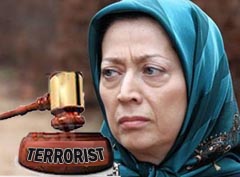
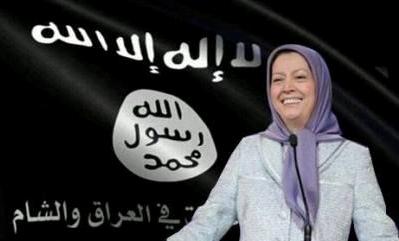
They discussed the issues of the MKO Refugees in camp Liberty, Iraq.

Former members of the MKO asked Mr. Voss to facilitate the relocation process of residents of Camp Liberty to third countries in order to release them from caotic situation in Iraq and the oppressive rule of the organization over its members.

The delegation stated that the crucial case of the MKO refugees in Iraq is hardly ever exposed to members of the Euro Parliament due to influence of the MKO’s lobbies there. They asserted that Members of the Parliament should look for receiving countries to resettle the refugees instead of calling for more protective forces for Camp Liberty and they should ask their states to play their role to solve a part of this problem as Albania Germany and Italy.

According to dissociated members of the Mujahedin Khalq, if each member state of the European Union receive a small number of Liberty residents, they will save the lives of these individuals without imposing too much pressure on their states.

The meeting lasted over an hour. At the end, Mr. Axel Voss expressed his pleasure over meeting MKO ex-members and hoped that the issue would be solved as soon as possible.

Aawa Association

Translated by Nejat Society

November 17, 2014 0 comments
FacebookTwitterPinterestWhatsappTelegramSkypeEmail
Maryam Rajavi

Parliamentarians lose Maryam Rajavi court battle

Eminent parliamentarians have lost a Supreme Court battle over Home Secretary Theresa May’s decision to ban a dissident Iranian politician from Britain.

An appeal by the cross-party group of 15 MPs and peers, led by Liberal Democrat Lord Carlile, was rejected in a majority ruling by justices at the UK’s highest court today.

They had previously lost actions in the High Court and Court of Appeal over the exclusion of Maryam Rajavi.

The  politicians wished to invite Mrs Rajavi, who is now living in Paris, and is recognised internationally as an expert on Iranian political affairs and the position of women in Islam, to address meetings to be held in the Palace of Westminster to discuss ”democracy, human rights and other policy issues relating to Iran”.

Their complaint related to the “interference with their rights” in relation to freedom of expression, caused by exclusion decisions by the Secretary of State.

Mrs Rajavi, who has been excluded from the United Kingdom since 1997, also unsuccessfully appealed alongside the parliamentarians against decisions made by the Home Secretary to maintain her exclusion.

The Home Secretary stated that lifting the exclusion would cause significant damage to the UK’s interests in relation to Iran and place British people and property in Iran and the region at risk.

Both the High Court and Court of Appeal held that the exclusion was “justified and proportionate”.

The Supreme Court dismissed the appeal by a majority of 4-1.

Lord Sumption, who dismissed the appeal, said the UK “has had a uniquely difficult relationship with Iran for at least a century and a half”.

He said: “The passage of time heals many things, but in an ancient and distinctive national culture like Iran’s, injured pride can subsist for generations.

“In recent years, the participation of the United Kingdom in international sanctions against Iran and a number of violent incidents have revived old suspicions at a time when negotiations with Iran about middle eastern issues, nuclear non-proliferation and human rights have assumed considerable importance for British interests and global security.”

It was against this background that the Home Secretary, on the advice of the Foreign Office, decided that it was not conducive to the public good to allow Mrs Rajavi to enter the UK.

Mrs Rajavi, who has close links with Iranian opposition organisations, is not excluded from any other European country and engages regularly with parliamentarians in the European Parliament.

The bid to lift the ban on her entering the UK began in 2010. Dismissing the latest challenge, Lord Sumption said that “on the undisputed facts before the Secretary of State it has not been shown that she was guilty of any error of principle”.

Lord Neuberger, president of the Supreme Court, said: “I consider that it is not open to a court on the facts of this case to conclude that the decision of the Home Secretary to refuse entry to Mrs Rajavi was unlawful.”


Government may weigh rights against national security without courts’ interference

Crown Office, November 14 2014

Mujahedin-e-Khalq-OrganizatR (on the application of Lord Carlile of Berriew QC and others) (Appellants) v Secretary of State for the Home Department (Respondent) [2014] UKSC 60 – read judgment

The exclusion of a dissident Iranian from the UK, on grounds that her presence would have a damaging impact on our interests in relation to Iran, has been upheld by the Supreme Court. (My post on the Court of Appeal’s ruling is here).

At the heart of the case lies the question of institutional competence of the executive to determine the balance between the relative significance of national security and freedom of speech. The exclusion order was imposed and maintained because the Home Office is is concerned with the actual consequences of Mrs Rajavi’s admission, not with the democratic credentials of those responsible for bringing them about. The decision-maker is not required by the Convention or anything else to ignore or downplay real risks to national security where they originate from people acting for motives which are contrary to the values of this country.

The following summary of the facts is partly based on the Court’s press release. References in square brackets are to the paragraphs in the judgment.

Background facts and law

Mrs Maryam Rajavi is a dissident Iranian politician, resident in Paris. She has close links with Iranian opposition organisations, including Mujahedin e-Khalq, otherwise known as the People’s Mojahedin Organisation of Iran. MeK is a political organisation founded in 1963 by opponents of Shah Mohammed Reza Pahlavi, which participated in the Iranian revolution of 1979 but subsequently fell out with the regime led by Ayatollah Khomeini. It was formerly a proscribed terrorist organisation under Section 3 of the Terrorism Act 2000 but is now designated as non-violent. It goes without saying that the lifting of this proscription is not accepted in Iran, where MeK remains an illegal organisation.

In 1997, the Home Secretary excluded Mrs Rajavi from the UK on the ground that her presence “would not be conducive to the public good for reasons of foreign policy and in light of the need to take a firm stance against terrorism”. That exclusion remains in force. In December 2010, Lord Carlile of Berriew, together with two other members of the House of Lords, asked the Home Secretary for a meeting to discuss lifting the exclusion to enable Mrs Rajavi to address meetings in the Palace of Westminster. After seeking the advice of the Foreign Office, the Home Secretary replied in February 2011 stating that she had concluded that Mrs Rajavi’s admission to the UK would not be conducive to the public good. She set out detailed reasons for this decision, noting in particular that

It is widely recognised that the MeK was actively concerned in terrorist activities between the 1970s and 2001. Acts committed by the MeK during this period include attacks on western interests …The MeK’s history of terrorist violence until June 2001 and involvement in the Iran/Iraq war, where it was fighting with Iraqi forces against Iran, continues to resonate today. It has resulted in there being little support for the group among the general population in Iran, including anti-regime organisations, demonstrators and oppositionists.

Lord Carlile and other members of the House of Lords wrote a letter threatening judicial review, which elicited a response from the Home Office asserting that Articles 9 and 10 of the European Convention on Human Rights were not engaged but that the decision was in any event justified and proportionate. Lord Carlile and others then went ahead with judicial review proceedings, arguing that the decision contravened their freedom of belief and expression rights under the Convention. Mrs Rajavi herself later joined as a claimant. The Home Secretary issued second and third decisions in October 2011 and January 2012, supported by evidence from the Foreign Office, stating that lifting the exclusion would cause significant damage to the UK’s interests in relation to Iran and place British people and property in Iran and the region at risk. It is now common ground that Article 10 is engaged in relation to both Mrs Rajavi and the members of the House of Lords. But was the Home Secretary’s decision justified and proportionate? Both the judge and the Court of Appeal held that it was. The claimants appealed to the Supreme Court.

The Supreme Court dismissed the appeal by a majority of 4-1 (Lord Kerr dissenting).

Reasoning behind the Court’s decision

Lord Sumption delivered the leading judgment. The other three majority judgments give similar reasons, but with differences of nuance.

The threshold argument

The claimants argued that the Home Secretary’s reasons were legally irrelevant, because they depended on the potential reaction of a foreign state which did not share the values embodied in the Convention. The Supreme Court unanimously rejected this argument. Iran’s reaction was plainly factually relevant to the decision, and the correct emphasis was on the democratic values to be protected, not the circumstances prompting the need for protection [14-18, 63, 144-146].

Was the Home Secretary’s decision justified and proportionate?

A predictive judgment of the executive about the likely reaction of a foreign country to a decision of the United Kingdom government is ordinarily entitled to a large measure of respect from the courts both (i) because the constitutional separation of powers assigns such judgments to the executive, and (ii) because the executive has greater institutional competence in this area by virtue of its greater specialised experience and the wider range of advice available to it (see my previous post on Lord Sumption’s recent lecture on this very topic, particularly his point about the overuse of the word “deference” in this context).

A threat to British persons or interests is one potential consequence which in an age of widespread international lawlessness, some of it state-sponsored, is unfortunately more common than it used to be. The existence and gravity of the threat is a question of fact. It cannot rationally be regarded as any less relevant to the public good because it emanates from a foreign state as opposed to some other actor, or because that state does not share our values, or because the threat is to do things which would be unlawful by our laws or improper by our standards, or indeed by theirs. [15]

…The future is a foreign country, as L P Hartley almost said. They do things differently there. Predicting the likely consequences of a step which the evidence suggests will be viewed in Iran as a hostile act, cannot be a purely analytical exercise. Nor can it turn simply on extrapolation from what did or did not happen in the past. There is a large element of educated impression involved. The decision calls for an experienced judgment of the climate of opinion in Iran, both inside and outside that country’s public institutions. The exercise is made more difficult by the intense political emotions engaged in Iran, combined with a large element of irrationality and the involvement of potentially violent mobs. The consequences of a failure to engage with this complex and unstable society are sufficiently serious to warrant a precautionary approach. [46]

Lord Sumption cites with approval Lord Hoffmann’s observation in another exclusion case, on the question of institutional competence of the executive in matters of national security, where “the cost of failure can be high”.

“This seems to me to underline the need for the judicial arm of government to respect the decisions of ministers of the Crown on the question of whether support for terrorist activities in a foreign country constitutes a threat to national security. It is not only that the executive has access to special information and expertise in these matters. It is also that such decisions, with serious potential results for the community, require a legitimacy which can be conferred only by entrusting them to persons responsible to the community through the democratic process. If the people are to accept the consequences of such decisions, they must be made by persons whom the people have elected and whom they can remove.” (Secretary of State for the Home Department v Rehman [2003] 1 AC 153)

The Human Rights Act 1998 did not abrogate the constitutional distribution of powers between the organs of the state which the courts had recognised for many years before it was passed. And even in the context of Convention rights, there remain areas

which although not immune from scrutiny require a qualified respect for the constitutional functions of decision-makers who are democratically accountable. Examples are decisions involving policy choices (R (Alconbury Developments Ltd) v Secretary of State for the Environment, Transport and the Regions [2003] 2 AC 295 at paras 75-76); broad questions of economic and social policy (Wilson v First County Trust Ltd (No 2) [2004] 1 AC 816 at para 70); or issues involving the allocation of finite resources (Wandsworth London Borough Council v Michalak [2003] 1 WLR 617 at para 41 (Brooke LJ)).

Where qualified rights under the Human Rights Convention are engaged, such as the Article 10 rights at issue in this case, the court must decide for itself whether they have been interfered with and if so whether the interference is justifiable. In this case, according to Lord Sumption, the executive’s decision was rational, there were no grounds to challenge the good faith or the evidential base of the decision, and the Secretary of State had committed no error of principle, nor had she underrated the value of Article 10 rights or overstated the risk [19-47, 51].

It does not follow from the court’s constitutional competence to adjudicate on an alleged infringement of human rights that it must be regarded as factually competent to disagree with the decision-maker in every case or that it should decline to recognise its own institutional limitations. [32]

The other judges agreed. In Lord Neuberger’s view, the Home Secretary’s decision was proportionate and the Article 10 rights did not outweigh the risks she had identified [70-74]; in Lady Hale’s opinion, on the basis of evidence now some years old, it had not been shown that the article 10 right claimed was sufficiently important to put at risk the UK’s “fragile but imperative” relationship with Iran [98-109]; and Lord Clarke concluded that there was no evidence before the court permitting it to doubt the strength of the Home Secretary’s reasons [111-117].

It is important to understand the reasons why the United Kingdom has had a more difficult relationship with Iran than other countries have, which still affect the way that it is perceived there. Lord Sumption, taking a characteristically scholarly approach, noted the particular historical context of this fraught association, following British control of the country’s natural resources in the late nineteenth century and the first half of the twentieth, a succession of British-orchestrated coups, and two extended British military occupations, all of which

have combined to leave an enduring imprint on political sentiment. The passage of time heals many things, but in an ancient and distinctive national culture like Iran’s, injured pride can subsist for generations. In recent years, the participation of the United Kingdom in international sanctions against Iran and a number of violent incidents have revived old suspicions at a time when negotiations with Iran about middle eastern issues, nuclear non-proliferation and human rights have assumed considerable importance for British interests and global security.

However sensitive this position may be, it remains the case that the UK has diplomatic relations with Iran. There is a British Embassy in Tehran and an Iranian Embassy in London. As the Secretary of State told the appellants in her letter, the UK has a strong interest in working with Iran on major policy issues including nuclear counter-proliferation, wider issues in the Middle East and human rights. Cooperation between both countries on issues of mutual importance also include reciprocal visa services (both diplomatic and public), consular services and cultural/educational exchanges. Allowing Mrs Rajavi into this country would only exacerbate the perception that “the UK is supportive of anti-Iranian extremist activities, including the sort historically carried out by the MeK.” The lifting of her exclusion may well “result in accusations, however unjustified, of double standards in respect of the condemnation of terrorism”:

The presence of a British Embassy in Tehran means that staff there are particularly vulnerable to anti-Western sentiment in general and anti-UK sentiment in particular. There is substantial concern that if bilateral relations were to deteriorate as a consequence of the lifting of the exclusion order, there could be reprisals that put British nationals at risk and make further consular cooperation even more problematic.

Accordingly, although the Court of Appeal was wrong to approach the issue on the usual domestic judicial review grounds, the appeal was dismissed.

Lord Kerr’s dissent

Lord Kerr acknowledged that the courts should accord respect to the executive’s assessment of the risks and consequences of Mrs Rajavi’s being admitted to the UK, though it is not required to “frank” that decision. However, it was for the court to assess the importance of the right infringed. In his view, contrary to Lord Sumption’s position, the court was both competent and constitutionally required to make such an assessment and it would be an error to attach special weight to the Home Secretary’s view on this point [150-162]. In this case, only the most compelling and pressing circumstances would justify a restriction on the right. The Home Secretary had identified solid countervailing factors, but the court should take into account the fact that these matters are unpredictable and that any retaliation would be perverse and rooted in anti-democratic beliefs. The risks could not be precisely identified but the interference with the Article 10 right is direct and immediate [163-180].

Lord Sumption dealt with this dissent in his speech. He pointed out that the central issue on this appeal was exactly how the court is meant to determine where the balance lies between national security on the one hand, and freedom of expression on the other, if

1. it has no means of independently assessing the seriousness of the risks or the gravity of the consequences were they to materialise, and

2.the Secretary of State is not shown to have committed any error of principle in her own assessment of them.

For that is indeed the position in which the court finds itself. We are not in point of law bound to accept the factual assessment of the Foreign Office about the impact on our relations with Iran of admitting Mrs Rajavi to the United Kingdom. But if we reject it we must have a proper basis for doing so. In this case, there is none. …We have absolutely no evidential basis and no expertise with which to substitute our assessment of the risks to national security, public safety and the rights of others for that of the Foreign Office. [49]

Lord Kerr was, in effect, urging “nothing less than a transfer to the courts of the constitutional function of the Home Secretary, in circumstances where the court is wholly incapable of performing it.”

Hillingdon & Oxbridge Times,

November 16, 2014 0 comments
FacebookTwitterPinterestWhatsappTelegramSkypeEmail
Mujahedin Khalq; A proxy force

The Islamic State (ISIS) is “America’s Dream Rebel Army”

US policy paper reveals desire for construction of full-scale extraterritorial army to invade Syria. Such an army is being built in Iraq and Turkey and it’s called “ISIS.”

The corporate-financier funded and directed policy think tank, the Brookings Institution, has served as one of several prominent forums documenting and disseminating US foreign policy. It would host in part the architects of the so-called “surge” during the nearly decade-spanning US occupation of Iraq, as well as battle plans for waging a covert war against Iran now well under way.

Part of this covert war against Iran involved the arming and backing of listed terrorist groups, and in particular, the Mujahedeen-e-Khalq (MEK) which has killed US servicemen, American civilians, as well as countless innocent Iranians over the decades. Among those signing their name to this plan found within Brookings’ “Which Path to Persia?” report, was Kenneth Pollack. Now, in efforts to overthrow the government of Syria, also a stated and integral part of undermining, isolating, and destroying Iran, Pollack has revealed another element of the plan – to create a full-scale proxy military force outside of Syria, then subsequently invading and occupying Syria with it.
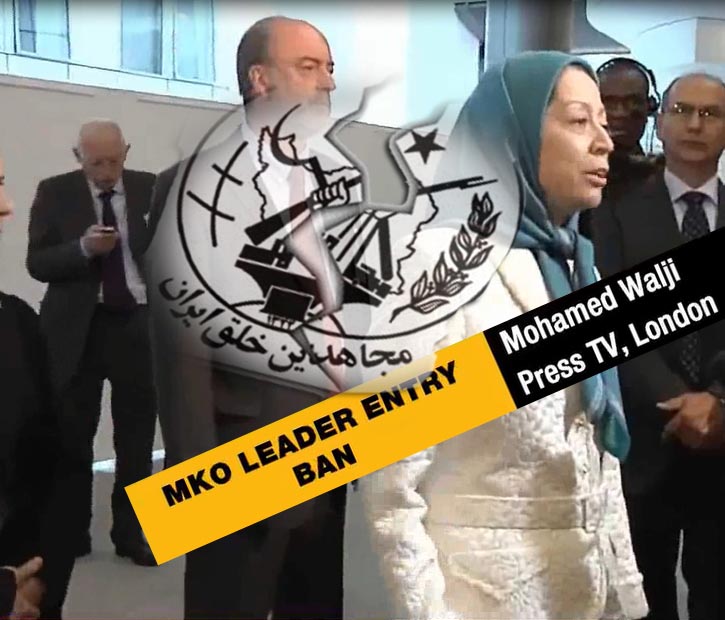

In the report titled, “Building a Better Syrian Opposition Army: How and Why,” Pollack cites the so-called “Islamic State” or “ISIS” as the ultimate impetus for expanded US intervention. However, upon looking at Pollack’s proposal, it merely looks as if the US is using ISIS as a pretext to more overtly intervene in order to overthrow the government of Syria – not in fact neutralize ISIS.

After a considerable preamble assuring readers that the aim of creating a “better Syrian opposition army” would exclude sectarian extremists and result in the same “success” the US had in training the Iraqi army, the document explains:

…building a new Syrian army is best not done in Syria itself. At least not at first. The program would need the time and sanctuary to perform the necessary training, reorganization, sorting  and  socialization  into  a  new  Syrian  army  without the distractions and pressures of Syria itself.  The  Saudi  offer  to  provide  facilities  to  train 10,000 Syrian opposition fighters is one of reasonable possibility, although one of Syria’s neighbors would probably be preferable. Jordan already serves as  training  ground  for  America’s  current  training program and it would be an ideal locale to build a real Syrian army. However, Turkey could also conceivably serve that purpose if the Turks were willing.

Clearly, not only is this already being done as admitted by Pollack himself, it is being done on a scale already eclipsing Pollack’s alleged plan – the only difference is it is being done through the use of sectarian extremists – not the imaginary, nonexistent secular professionals Pollack uses as a marketing gimmick to sell this scheme.

More tellingly, Pollack’s plan continues by stating (emphasis added):

In addition to being armed, trained and officered like a conventional military, a new Syrian army would also have to be equipped like one. That would mean not just small arms and crew-served weapons, such as the United States and its allies are already providing, but heavy weapons and logistical support. Like the Croats and Bosniaks, a new Syrian army will need the wherewithal to defeat both the regime and the Islamist extremists. That will require tanks, armored personnel carriers, artillery, surface-to-air missiles and the like to match the regime’s own heavy weapons—and so eliminate the firepower imbalance that the regime’s forces have employed to such advantage so far.

Surely, Pollack’s plan will never materialize in any practical dimension – however it may be possible to use such a marketing ploy to pour more resources into both the ongoing proxy war against Syria and Iran in general, and more specifically into the terrorist battalions already being armed, funded, trained, equipped, and sent off from Jordan and Turkey into Syrian territory. Handing advanced weapon systems into the hands of front groups consisting of intentionally ineffectual, immensely corrupt, incompetent US proxies is as good as handing the weapons directly to ISIS – and of course – this is precisely how the US is building its actual “new opposition army” – namely, in the form of ISIS itself.

 Removing Pollack’s rhetoric about secular professionals, and inserting “ISIS” reveals Pollack’s paper as the actual already ongoing plan to overrun not only Syria, but pro-Iranian factions in Iraq, and perhaps even Iran itself. ISIS is a massive mercenary army trained and funded abroad by the US with its support laundered via Saudi Arabia, Qatar, Jordan, and Turkey, staged along Syria’s borders in both Jordan and Turkey, and acquiring an impressive arsenal just as what is required in Pollack’s plan to enter into and overthrow the government of Syria – minus eradicating extremists of course.

Even a cursory look at ISIS’ holdings across the region reveal ratlines leading into NATO-member Turkey’s territory and all along the Turkish-Syrian border where news outlets like the New York Times and Washington Post have reported for years the CIA had been operating – unloading billions in aid, gear, weapons, and even vehicles to militants fighting within Syria.

Headlines over the past 3-4 years including, “C.I.A. Said to Aid in Steering Arms to Syrian Opposition,” “First Syria rebels armed and trained by CIA ‘on way to battlefield’,” “Arms Airlift to Syria Rebels Expands, With Aid From C.I.A.,” and “Official says CIA-funded weapons have begun to reach Syrian rebels; rebels deny receipt,” reveal precisely how ISIS acquired its vast resources.

ISIS is organized on a professional level precisely as described by Pollack, most likely the result of US military advisers and their counterparts in Saudi and Qatari special operations. ISIS is also heavily armed precisely as was required by Pollack’s plan. They now possess an impressive and ever growing arsenal of weapons including tanks, missiles of all kinds, artillery, and even a small collection of aircraft including Russian warplanes and American helicopters.

The New York Times, after years of reporting on the CIA’s delivery of weapon systems to “moderate” militants, now laments of ISIS’ possession of advanced anti-air missiles. In its article, “Missiles of ISIS May Pose Peril for Aircrews in Iraq,” it reports:

Syrian rebels have amassed multiple Manpad models since 2012, and the Islamic State has generally had little trouble acquiring any weapon used by Syrian rebels either through purchase or capture, military analysts say.

 Iraqi troops – the result of what Pollack claims as an American “success” – have also augmented ISIS with precisely the weapons needed for Pollack’s dream “opposition army.” No less than 30 M1 Abrams main battle tanks have fallen into ISIS’ hands.

Prolific Neo-Conservative propagandist Michael Weiss in the Wall Street Journal attempts to downplay the implications of such weapons falling into ISIS’ hands by stating in his op-ed titled, “Exploiting the ISIS Vulnerabilities in Iraq – The terrorists’ heavy military equipment is hard to maintain, easy to target from the air,” that:

Today, we estimate that ISIS has less than a total of 30 working M1 Abrams tanks and howitzers that are either self-propelled or towed behind trucks (based on our knowledge of how the Iraqi army is equipped and what divisions were in the north). These are the weapons that gave the Islamic State the advantage over the Peshmerga in recent firefights. Yet ISIS does not have the highly trained maintenance crews that are necessary to keep these weapons in good working order. The same problem exists for its armored Humvees and Mine Resistant Ambush Protected personnel carriers. Without maintenance, these captured U.S. vehicles and weapons will break down.

Only, ISIS’ Saudi, Qatari, and Jordanian sponsors most definitely do possess the highly trained maintenance crews necessary to keep these weapons in good working order – since these despotic regimes each in turn possess a large number of exactly these weapon systems purchased from the United States itself. If the Saudis in particular, can fund, train, and arm ISIS with small arms and missiles, how difficult would it be to supply them with spare parts and properly trained maintenance crews? Turkey also maintains a number of US weapon systems, and possesses the ability to maintain modern battle tanks if not the M1 specifically – and is already harboring, supplying, and backing ISIS – another inconvenient truth challenging Weiss’ attempts to mislead readers.

In fact, Pollack’s “proposal” appears more like an after-action report. ISIS is the “better Syrian opposition army” the West has sought all along. That is probably why attempts by the US to “fight” ISIS appear half-hearted and why those the US is supposedly “saving” from ISIS see Western intervention as more of a threat than ISIS itself believing it is designed simply to prolong ISIS’ existence in the face of growing and increasingly more formidable indigenous opposition.

Any provisions to build Pollack’s “army” will undoubtedly end up only bolstering ISIS and its affiliates – just as military aid policymakers like Pollack at Brookings advocated for the arming of “moderates” resulted in the creation of ISIS in the first place. While the US desperately attempts to disown responsibility for ISIS’ creation and perpetuation through an unconvincing propaganda campaign, false flag terror strikes against the “homeland,” and a series of increasingly ludicrous, orchestrated strawman victories in Iraq and Syria – Damascus, Baghdad, and Tehran are leading the real fight against ISIS.

The US apparently plans on protecting ISIS for as long as possible under the guise of being the sole force “fighting it,” while ISIS consolidates and moves on Western designated targets. In the process of “fighting” ISIS, the US is managing to destroy Syrian infrastructure and defenses. The US, however, has failed in attempts to exclude Syrian, Iraqi, and Iranian forces from countering the ISIS threat and now the region is witnessing a race between ISIS’ inevitable destruction and America’s attempts to topple Damascus before ISIS vanishes from its geopolitical toolbox.

Tony Cartalucci, Bangkok-based geopolitical researcher and writer, especially for the online magazine “New Eastern Outlook”.

globalresearch.ca

November 13, 2014 0 comments
FacebookTwitterPinterestWhatsappTelegramSkypeEmail
UK

MKO Leader loses appeal at Supreme Court to get entry into UK

Parliamentarians (Lord Carlile and others) lose Maryam Rajavi court battle

Maryam Rajavi is one of the leaders of the anti-Iran terrorist group Mujahedin Khalq, or the MKO. The terrorist group has assassinated many Iranian officials and killed many other Iranian citizens since the victory of the Islamic Revolution in 1979.

The MKO also joined forces with former Iraqi dictator Saddam Hussein during his war against Iran in the 1980s and also helped Saddam in his domestic campaigns of repression in Iraq. Until 2008 it was on Europe’s terror list. But since then there’s been efforts to bring the group in from the cold. Rajavi has been banned from entering the UK. But Lord Carlile, who’s an influential member of the House of Lords, has been trying to get the ban lifted at the Supreme Court. Home Secretary Theresa May says Rajavi’s entry to the UK would not be conducive to the public good for reasons of foreign policy and in light of the need to take a firm stance against terrorism. Lawyers linked to the terrorist organization say Home Secretary’s reasons are irrelevant. But that argument has unanimously been rejected by Supreme Court judges. Critics have slammed attempts to downplay the actions of the MKO and put them forward as a democratic opposition. Critics have also accused the House of Lords of committing an illegal act by having been engaged with the terrorist organization The US, the UK and several European countries have been accused of helping and sheltring the terrorist organization. But for now, the latest attempt to get Maryam Rajavi in to Britain has failed.

Download MKO Leader loses appeal at Supreme Court to get entry into UK

November 13, 2014 0 comments
FacebookTwitterPinterestWhatsappTelegramSkypeEmail
Mujahedin Khalq; A proxy force

The MKO happy with GOP victory

Less than a week after the US midterm elections– in which Republicans snatched control of the Congress– the Mujahedin Khalq Organization (the MKO) sounds hopeful for its ambitions for power in Iran. It seems pretty obvious that the MKO is dreaming of failure of nuclear talks between Iran and West and eventually the imposition of more sanctions against Iran and finally military invasion.
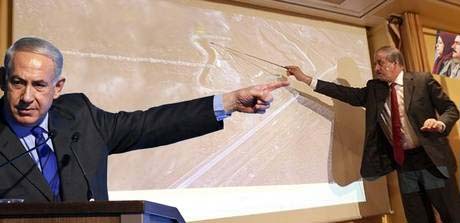
The takeover of Republicans over the US Congress may narrow the path for Obama and his foreign policy makers who tend to engagement and diplomacy with the Iranian Government and this is exactly what the MKO wants. The group’s advocates in the Congress mostly belong to the GOP party. However, it has been successful to buy the support of some Democrats too.

The MKO’s multimillion-dollar campaign of lobbying in the corridors of the Capitol Hill ultimately ended in the removal of the group from the List of Foreign Terrorist Organizations of the State Department in September 2012. A few months after its delisting, the MKO reopened its office in Washington a block away from the White House, eating cake with some of its congressional sponsors.

In fact, the MKO has a long list of advocates among republicans. The group has hired the most powerful republican lobbying firms such as Akin Gump to run its agenda in the US government. Rep. Ileana Ros-lehtinen, Rep.  Dana Rohrabacher are two of most vocal supporters of the MKO in the Congress. They often appear in the group’s rallies to speak on behalf of the group and its warmonger belief. Also, former republican figures and hardliners have deep pockets of the MKO dollars.  Tom Ridge, Rudy Guiliani, Fran Townsand, Patrick Kennedy and Micheal Mukasey are other formerly high profiles in the MKO campaign who have been beating on war

drums against Iran for years.

The MKO hopes that the republican majority could be able to stop nuclear talks while the last round of the talks is now taking place in Oman. It means that before next January and the start of republicans’ rule over the Congress the talks will be done. Therefore, it is clear that the result of the midterm elections is not going to affect the negotiations, at least for the time being. However, President Obama has promised that he would try to convince Republicans in case of reaching any agreement with Iran.

Today, the MKO propaganda office has found itself with new supporters of war in the Congress. Thus, the timing to launch the old repeated propaganda against the Iranian nuclear program seems appropriate for the group.

Last Friday, the office of the MKO’s propaganda arm, the so-called National council of Resistance held a press conference show to claim that Iran has installed explosive chambers in Parchin site. Yet, the so-called revelation of the NCR has hardly ever gained attention in the media.

Seemingly the efforts of the MKO’s lobby and huge expenses it paid will not simply bear fruit. By the way, any agreement with Iran that is defendable by Obama and his party can very probably satisfy the Republicans, considering that the US public opinion extensively oppose a new war.

Regarding the current crisis of the Middle East and the threat of terrorists of the Islamic State group, and the Iranian good will to reach an agreement with the West, any agreement between the two sides is considered as a win-win deal, regardless of who won the US congressional elections.

The only loser of the entire story is the MKO and its warmonger opportunist drive that is seeking to overthrow the Iranian government at any cost.

By Mazda Parsi

November 10, 2014 0 comments
FacebookTwitterPinterestWhatsappTelegramSkypeEmail
Newer Posts
Older Posts

Recent Posts

  • The black box of the torture camps of the MEK

    December 24, 2025
  • Pregnancy was taboo in the MEK

    December 22, 2025
  • MEPs who lack awareness about the MEK’s nature

    December 20, 2025
  • Why did Massoud Rajavi enforce divorces in the MEK?

    December 15, 2025
  • Massoud Rajavi and widespread sexual abuse of female members

    December 10, 2025
  • Facebook
  • Twitter
  • Instagram
  • Youtube

© 2003 - 2025 NEJAT Society . All Rights Reserved. NejatNGO.org


Back To Top
Nejat Society
  • Home
  • Articles
  • Media
    • Cartoons
    • NewsPics
    • Photo Gallery
    • Videos
  • Publications
    • Books
    • Nejat NewsLetter
    • Pars Brief
  • About Us
  • Contact us
  • Editions
    • عربي
    • فارسی
    • Shqip