Nejat Society
  • Home
  • Articles
  • Media
    • Cartoons
    • NewsPics
    • Photo Gallery
    • Videos
  • Publications
    • Books
    • Nejat NewsLetter
    • Pars Brief
  • About Us
  • Contact us
  • Editions
    • عربي
    • فارسی
    • Shqip
Nejat Society
Nejat Society
  • Home
  • Articles
  • Media
    • Cartoons
    • NewsPics
    • Photo Gallery
    • Videos
  • Publications
    • Books
    • Nejat NewsLetter
    • Pars Brief
  • About Us
  • Contact us
  • Editions
    • عربي
    • فارسی
    • Shqip
© 2003 - 2024 NEJAT Society. nejatngo.org
Mujahedin Khalq; A proxy force

Women of Iran, Washington just doesn’t get it

Discovering Iran

Iran Trip: September – October 2014

Marcel Proust said: “The voyage of discovery is not in seeking new landscapes but in having new eyes.” During the past two decades, I visited Iran on numerous occasions staying 10-14 days at a time. This time around, I stayed for 2 months and, heeding Proust, I carried with me a fresh pair of eyes. I discarded both my Western lenses as well as my Iranian lenses and observed with objective eyes. It was a formidable journey that left me breathless.

Part I – Women of the Islamic Republic of Iran

It is hard to know where to start a travel log and how to describe a newfound world in a few pages. However, given the obsession with the status of women, it is perhaps appropriate to start with the women in Iran as I perceived them.

Western media with help from feminists and Iranians living outside of Iran portray Iranian women as being “oppressed”—foremost because women in Iran have to abide by an Islamic dress code: hijab. Yes, hijab is mandatory and women choose to wear either a chador or a scarf. But what is crucial to understand is the role chador played pre-1979 versus the post Revolution era.
Prior to the 1979 Revolution, the chador was indicative of a thinly veiled caste system. While a few distinguished women of high socio-economical background chose to wear the chador, the rest, the majority of Iranian women, were simply born into the habit. In short, the socio-economically disadvantaged wore the pre-1979 chador. In those days, the chador was a hindrance to a woman’s progress; she was looked down at and frowned upon. She could not move forward or up. She was oppressed. But Western feminists were blind to this oppression. After all, the Shah was modern and America’s friendly dictator.

The Revolution changed the status quo and chipped away at the caste system. A revolution, by definition, is a complete change in the way people live and work. And so it is with the Iranian Revolution. The post 1979 chador is no longer an impediment to a woman’s future. Today’s Iranian woman, the same (formerly) less privileged class, has found freedom in her chador. She has been unshackled and she marches on alongside her (formerly) more privileged colleagues. This emancipation is what the Western/Westernized feminists see as oppression.

I myself come from yesterday’s tiny minority of “privileged” women, far too comfortable in my “Western” skin to want to promote hijab, but I will not allow my personal preferences to diminish the value of the progress made because of hijab. The bleeding hearts from without should simply change their tainted lenses instead of trying to change the lives of others for Iranian women do not need to be rescued, they do not follow—they lead.

On two separate occasions I had the opportunity to sit and talk with a group of PhD students at Tehran University’s Global Studies Department. Frankly, these young women charmed me. Their inquisitive and sharp minds, their keen intellect, their vast knowledge, their fluent English, and their utter confidence dazzled me. Western feminists would consider them “oppressed”. Seems to me that feminism needs rescuing, not Iranian women.

The inordinate success of women goes vastly beyond education; they participate in every aspect of society: motherhood, arts and sciences, high tech, film and cinema, research, business, administration, politics, sports, armed forces, bus and taxi drivers, fire-fighters, etc. Women’s active role in society is undeniable. What I found tantalizing was their role as cultural gatekeepers.

Women – The Cultural Warriors

Cultural imperialism is part and parcel of neocolonialism. The eradication of an indigenous culture and replacing it with a hegemonic one enables the hegemon to exert influence on the subject nation—to own it. And women are the nuclei. They hold the family together and pass on traditions. To this end, in every colonial adventure, regardless of geography, women have been the primary targets (i.e. victims of rescue). Iran has been no different. While some have indeed abandoned their culture in order to embrace that of another, the vast majority have resisted and fought back with authentic Iranian tradition.

One group of these cultural warriors left a deep impact on me. I attended a dance ensemble at the famous Roudaki Hall (Talar Roudaki). Girls aged 6 to 18 sent the packed hall into a thunderous applause when they danced to various traditional songs from around the country. Their dance was not MTV stuff. It reflected the beauty and purity of an ancient culture. Their movements and gestures were not intended to be seductive, they were graceful and poetic ushering in the ancient past and bonding it with the present, strengthening it. These were the women of Iran who would guard Iran’s precious culture and traditions against modern, Western culture deemed central to ‘civilization’ and ‘freedom’ by Western feminists.

It is not my intention to give the false impression that every woman in Iran is happy, successful, and valued. Like any other society, Iran has its share of unhappy, depressed girls and women. It has its share of women who have been abused and betrayed. It has its share of girls and women who turn to drugs, prostitution, or both. I came across these as well. I also noted that laws in Iran do not favor women, be it divorce, child custody, or inheritance. Yet women have leapt forward.

Part II – Esprit de Corps: Washington Just Doesn’t Get It

Numerous visitors have travelled to Iran and brought back reports describing the landscape, the food, the friendliness of the people, the impact of the sanctions, and so forth. For the most part, these reports have been accurate—albeit incomplete. I do not want to tire the reader with my observations on these same topics; rather, I invite the reader to share my journey into the soul of the country—the spirit of the Iranian nation.

Washington’s missteps are, in part, due to the simple fact that Washington receives flawed intelligence on Iran and Iranians. This has been a long-standing pattern with Washington. Prior to the 1979 Revolution, a plethora of US personnel lived in Iran. Thousands of CIA agents were stationed there. Their task went beyond teaching torture techniques to the Shah’s secret police; they were, after all, spies. In addition to the military personnel that came in tow with the military equipment sold to the Shah by the U.S., there were official US personnel who worked at the American Embassy in Tehran. None got it.

They all failed miserably in their assessment of Iranians. These personnel were simply too busy enjoying a lavish lifestyle in Iran. As the aforementioned travellers have all repeated, Iran is beautiful, the food scrumptious, the people hospitable. These personnel attended parties thrown by those close to the Shah (or other affluent Iranians) and lived the kind of life they could not have dreamt of elsewhere. American ambassadors doled out visas to the lazy kids of these same families who would not have otherwise been able to make it to the US under normal student visa requirements.

These same Iranians, the privileged elite, provided Americans in Iran with intelligence—inaccurate, flawed information that was passed onto Washington. Washington was content. After all, why doubt your friends, and how could possibly the secret police trained by CIA not get the facts right? To this end, Washington believed Iran would remain a client state for the unforeseen future. The success of the revolution was a slap in the face, but Washington did not alter course.

For the past several decades, Washington has continued to act on flawed intelligence. Today, it relies on the “expertise” of some in the Iranian Diaspora who have not visited Iran once since the revolution. In addition to the “Iran experts”, Washington has found itself other sources of ‘intelligence’, foremost; the Mojahedeen Khalg (MEK) terrorist cult. This group feeds Washington information provided them by Israel. Previous to this assignment, the cult was busy fighting alongside Saddam Hussein killing Iranians and Kurds. Is it any surprise that Washington is clueless on Iran?

What Washington can’t fathom is the source of Iran’s strength, its formidable resilience. Thanks to its ‘experts’, and the personal experience of some visitors, Washington continues to believe that the Iranian people love America and that they are waiting for Washington to ‘rescue’ them from their government. No doubt Iranians are generous, hospitable, and charming. They welcome visitors as guest regardless of their country of origin. This is part and parcel of their culture. They also believe a guest is a ‘blessing from God’—mehmoon barekate khodast. Karime khodast. But this is where it ends.

While the Iranian people love people of all nationalities, including Americans, they see Washington for what it is. Over the past decades, Washington and its policies have adversely affected virtually every single family in Iran. These include those whose dreams and hopes were shattered by the CIA orchestrated coup against their nascent democracy and its popular leader, Mossadegh. Later, lives were turned upside down the Shah’s CIA/Mossad trained secret police arrested, brutally tortured, killed or simply made disappear anyone who dared venture into politics. Thanks to America’s staunch support, these stories never found their way to the papers. And then there are the millions of war widows and orphans, the maimed soldiers, the victims of chemical weapons supplied to Saddam Hussein by America to use against Iranians while the UN closed its eyes in an 8-year war. Not to forget the victims of American sponsored terrorism, and sanctions. Millions of Iranians have first hand experience of all that has been plagued upon them by Washington.

It is these victims, their families and acquaintances that fight for Iran’s sovereignty, that are the guardians of this proud nation. They are the source of Iran’s strength. Victor Hugo once said: “No army can withstand the strength of an idea whose time has come.” There simply is no army on earth which can occupy, by proxy or otherwise, the land the people have come to believe belongs to them not by virtue of birth, but because they have fought for it, died for it, kept it from harm.

I met many such families; one in particular was more memorable. During the Shah’s regime, this family worked on my father’s farm. The father and his sons worked the farm and the mother helped around the house. In those days, this family and future generations would have simply continued to work on the farm, remain ‘peasants’ with no prospects for the future. But the revolution rescued them.

Shortly after the revolution, the war started. The boys in the family all went to war. One uncle lost his life to chemical warfare. The rest survived – and thrived. They got themselves free education provided by the same government America wants to dislodge. One of these boys, the man I met after some 35 years, Kazem, once condemned to be a ‘peasant’, had become a successful businessman. I spent hours talking to the family and to Kazem in particular. What impressed me was not just his affluence and his success in business, but the wisdom that only comes with age, and yet he had acquired it in youth. He had intellect and dignity. A gentleman, I found his knowledge of global affairs to be superior to most one would meet at a college in the US. He had experienced war and witnessed death. Iran belonged to him. He would fight for it over and over without hesitating to die for it.

This is the Iran the Diaspora has left behind, the Iran that is unknown to them. This is a far superior country than the one I left behind as a child and visited throughout the years. Iran’s guardians, its keepers, are all Kazems. It has been said that the strength of an army is the support of the people behind it. The whole country is that army. As Khalil Gibran rightly observed: “Out of suffering have emerged the strongest souls; the most massive characters are seared with scars.” With every wrong policy, America adds to the scars, strengthens the character and spirit of this unbreakable nation. This is what Washington is not able to grasp.

Foreign Policy Journal

November 9, 2014 0 comments
FacebookTwitterPinterestWhatsappTelegramSkypeEmail
Iran Interlink Weekly Digest

Iran Interlink Weekly Digest – 72

++ The Mojahedin Khalq are holding a press conference in Washington today to reveal Iran’s nuclear secrets.

++ Farideh Vanaai a long serving MEK member died in a hospital in Tirana this week. Maryam Rajavi blamed Iraq for withholding medicine. Responses in Farsi make it clear that even though their lobbyists repeat their lies wherever and whenever they can, nobody believes this because it is Massoud and Maryam Rajavi who refuse to allow MEK members to leave Camp Ashraf and go to hospital. Mohammad Razaghi and Hamed Sarafpour, who reside in Europe, have written in detail to explain that many of these people are old and ill. Rajavi herself admits the latest victim is the 210th person to die, a number which is much higher than normal for this demographic. Two weeks ago another person died in Camp Liberty called Mohammad Taghi Abbassian. His death was suspicious to the writers because they knew that he had been unhappy in the MEK for a long time and they suspect that the MEK had stopped his medicine because of this. Massoud Khodabandeh posted on Facebook in response to this that in Iraq it is clear, there are 210 beds in accommodation in Tirana which have been ready for months. The only reason residents were not able to go was that Massoud Rajavi blocked it. The UN has now given in to his demands and Rajavi has handed over his own list, of which over half are almost dead. It is clear he is sending them to Albania to die because he won’t let them be taken to hospital in Iraq. We should expect more deaths in Tirana after they arrive and the burden will be on the UN to sort them out. Khodabandeh says that dumping his sick on the UN is a deterrent to render the UN passive.

++ There were several reactions to Maryam Rajavi’s meeting in Paris last week. Commentators point out that the MEK are on the same side as Daesh and yet Rajavi was able to visit the French parliament and ludicrously blame Iran for creating it. Even Israel, America and Saudi don’t say this.

++ This week marked the anniversary of Ashura. Reports from Iran suggest that the MEK was trying to use the occasion to incite disturbances; mixing this event to the acid attacks and the recent increase in executions in Iran. The MEK were very hopeful and their backers very excited about these disturbances, but the MEK proved unable to raise even a finger as the plan was intercepted and thwarted by the Iranian authorities.

++ A. Afshari has sent a letter to Iran Interlink exposing one of the MEK’s agents in the Netherlands called Ali Reza Kazemi. This individual is widely known and has been exposed several times before by many other people on different occasions. His job for the MEK is to manufacture front groups. This latest one is called Iran Academy, and like other MEK groups which don’t admit their association with the MEK, Kazemi says he has nothing to do with them. Kazemi has also infiltrated the Netherlands government paid Farsi language Radio Zamaneh. Afshari warns the radio station to beware of Kazemi as the MEK don’t infiltrate a place for no reason.

++ An open letter by families of residents in Camp Liberty from East Azerbaijan has been published called ‘the true nature of some British MPs’. The letter quotes Brian Binley and other lobbyists who under the guise of sympathy for the victims in Liberty are actually supporting terrorism. The families challenge these MPs and say that “the money you people get for lobbying (even though you are elected representatives of the British people), is stained with the blood of our children who are being held captive. People like you, to save face at least, should ask Rajavi to open the camp.”

In English:

++ Anne Khodabandeh wrote about Maryam Rajavi’s speech in Paris last week. Her article titled ‘ISIS supporter Maryam Rajavi attacks Obama from French parliament’, concludes: “When a supporter of ISIS sits in the French parliamentary building and attacks President Obama, the cracks are seriously beginning to show in the West’s approach to resolving the whole Middle East situation. Observers may not be sufficiently informed to tell Western governments what to do in their own interests, but any schoolchild can point out the damage the MEK is doing to them.”

++ Hannah Allam writing for The Tribune in an article titled ‘Think helping to fight ISIS will get you off terrorist list? Think again’, points to the different treatment of Kurdish nationalists whose groups are listed as terrorists. Although they are fighting against Daesh there are no moves to de-list them. “The main criticism of the process is the seemingly arbitrary way that groups get on and, more rarely, off the list.” An exception Allam identifies is the MEK “a deep-pocketed Iranian dissident group that ran by far the most ambitious campaign to get off the terrorist list. After legal victories in Europe, the group hired top lawyers and paid high-profile speakers tens of thousands of dollars a pop to raise awareness of the MEK cause in the United States.

A Washington lobbying firm received nearly $1 million to work on getting the MEK off the terrorist list, according to an investigation of the group’s payouts by the British newspaper The Guardian. The MEK cultivated an image of a pro-democracy, Western-friendly supporter of the ouster of Iran’s theocratic government; detractors describe it as a cult-like militant group with only fringe support among ordinary Iranians…

“But the official line that lobbying played only a small role in the MEK’s de-listing rings hollow when that case is compared with other designees who slipped from the headlines years ago. One seemingly outdated presence is Abu Nidal, the Palestinian guerrilla group whose eponymous founder was shot and killed in muddy circumstances in Iraq in 2002. Even the State Department’s annual terrorism review calls the group “inactive”.”

++ Mazda Parsi writing for Nejat Bloggers asks for an independent international probe into the suspicious deaths in the MEK after Maryam Rajavi called for just this after the execution of Reihaneh Jabbari the Iranian woman convicted of murdering Morteza Sarbandari. Parsi highlights the hypocrisy of this stance and cites numerous examples of MEK women whose deaths were highly suspicious.

++ Observer Research Foundation, Euroasia Review, asks why, when Iran and the P5+1 appear to be making progress on a nuclear deal in which Iran is making many concessions, has there been an explosion at Iran’s Parchin missile centre. The article points the finger of suspicion at Israel which is desperate to derail any deal. “Iran has been facing targeted killing of its nuclear scientists and precision guided cyber-attacks on its nuclear reactors since the early 2010… Israel’s intelligence agency, the Mossad, was the obvious suspect. It is believed to have acted in collaboration with the Mujahideen e-Khalq, an Iranian émigré organisation banned by the US as a terrorist organisation. The Americans, instead of chastising Israel for working with a banned terrorist organisation, helped them to launch highly sophisticated cyber-attacks on Iran’s nuclear facilities.”

The article concludes: “With such baggage of hostility and mistrust, it is surprising that the Iranian leadership is at all negotiating with the US, yet it seems to have no choice. The economic hardships that its people have borne for all these years leave it with little options. President Rouhani has promised a Government of ‘Hope and Recovery’ and he has to deliver on that.”

November 8, 2014 0 comments
FacebookTwitterPinterestWhatsappTelegramSkypeEmail
Mujahedin Khalq; A proxy force

Think helping to fight ISIS will get you off terrorist list? Think again

The role of Syrian Kurds in the U.S.-led fight against the Islamic State has prompted calls for the removal of an affiliated Kurdish guerrilla group from the U.S. blacklist, bringing fresh scrutiny to a terrorist-designation process that some critics call arbitrary and outdated.

So far, the U.S. government’s response to the fighters of the Kurdish Workers Party, the PKK, could be summed up as: Thanks for the help, but you’re staying on the list.
Shedding a U.S. foreign terrorist designation is a long and complicated undertaking – a feat accomplished by just a handful of the dozens of groups that have landed on the list since its inception in 1997. A designation means that a group has earned the dubious label – and economic sanctions – of being named a “tier-one” foreign terrorist organization. Tier-two members are banned from entry to the United States; tier-three groups are undesignated but closely monitored.

Several organizations have languished on the State Department’s tier-one list even though they’re essentially defunct, with their leaders killed, jailed or engaged in peace talks with the governments they once attacked. Others on the 59-member list have been weakened but are still considered threatening. And, of course, there are the active, high-profile groups that in American minds are synonymous with terrorism: the Islamic State, al Qaida and Hezbollah, for example.

Those three, as well as the PKK, are among a half-dozen U.S.-designated groups now involved in the conflict over the Islamic State’s cross-border fiefdom. The battle is stirring up an unprecedented soup of militants, with five tier-one terrorist groups – both Sunni and Shiite Muslim – on the same side as the United States against the Islamic State, itself a designee. The Obama administration’s unsavory de facto partners against the Islamic State include the Lebanese militants of Hezbollah and the Nusra Front, the Syrian branch of al Qaida.

It’s a fairly unique set of circumstances. The closest you have is Af-Pak,” said a State Department official involved in designations, referring to Afghanistan and Pakistan. He spoke on condition of anonymity so as to freely discuss the sensitive topic. “But even there the groups are mostly working cooperatively. Here, you see them at direct loggerheads.”

It’s that opposition to the Islamic State, which is also known as ISIS or ISIL, that the PKK is hoping to leverage in order to wriggle off the tier-one list. The group has waged a guerrilla war for Kurdish rights in Turkey for 30 years and was blacklisted in the United States more than a decade ago. The PKK is closely affiliated with the group known as the PYD, whose fighters are on the front line of the ferocious battle to keep the Islamic State out of Kobani, a Syrian Kurdish town on the border with Turkey.

Homeland Security Secretary Jeh Johnson even used the group’s fight against the Islamic State recently to rebut claims from Republicans in Congress that terrorists had been caught crossing the Mexican border; Johnson said the four men in question had claimed membership in the PKK – “an organization that is actually fighting against ISIL and defended Kurdish territory in Iraq.”

U.S.-Turkish relations already are fraught, with Washington trying to nudge Ankara toward a more active role in the anti-Islamic State coalition. That task would become only more difficult were the United States to de-list a top enemy of the Turkish government. President Recep Tayyip Erdogan made it clear this month that he wasn’t pleased with recent American overtures to the Syrian Kurds, sowing anger in Washington as lawmakers demanded to know which side Turkey, a NATO ally, was on in the war against the Islamic State.

A U.S. diplomat met with a leader of the PYD for the first time last month, ending a longtime U.S. policy of steering clear of the group because of its PKK ties. The State Department has played down the meeting as exploratory and stressed that, under U.S. law, the PYD and PKK are separate entities, though “we’re certainly aware” of the connections, as a spokeswoman put it.

 The State Department designations official said that tier-one groups are reviewed every five years and that the PKK was just reassessed in 2013, with a determination that it still belonged on the list. That makes it difficult, he said, to find legal grounding for a fresh assessment so soon. He said there was no de-listing effort under way, despite lobbying that notes the Syrian Kurdish fight against the Islamic State.

“The idea that ‘This group’s being very helpful against ISIL so we should remove the designation’ – that wouldn’t merit a sufficient case, in our view, for de-listing,” the official said.

The main criticism of the process is the seemingly arbitrary way that groups get on and, more rarely, off the list.

Why, for example, is Nusra Front designated when Ahrar al Sham, another militant jihadist group in Syria with alleged al Qaida connections, is off the list? Or take the case of Iranian-backed Shiite militias that once waged a deadly insurgency against U.S. forces in Iraq – Kata’ib Hezbollah was designated, but an equally egregious group, Asaib Ahl al Haq, wasn’t.

In both cases, officials have said that designation possibilities were floated but vetoed because national security officials determined that it was more useful to keep them off the list. In the case of Asaib Ahl al Haq, the Iraqi and Western authorities released more than 400 members – including the leader – in negotiations that resulted in the release of British hostage Peter Moore in 2010.

While the State Department official wouldn’t address Asaib or other specific cases, he acknowledged that adding a group to the list is “an extremely interagency process,” with an element of horse trading as national security officials weigh the benefits and costs of a designation. The final step is the personal approval of the secretary of state.

“There could be any number of reasons a designation is denied,” the official said. “Sensitive law enforcement equities, intel equities and diplomatic priorities – those can all be reasons a designation doesn’t go forward.”

Though Americans are most familiar with the Arab and Muslim factions on the list, the roster is diverse and truly global, including the Japanese religious cult behind a deadly chemical attack on the Tokyo subway and two separate splinter groups from the old Irish Republican Army, or IRA.

Latin America’s longest-running war involves another longtime member of the terrorist list – the FARC, a Marxist-Leninist guerrilla group that’s been weakened considerably in recent years and is now engaged in peace talks with the Colombian government under the auspices of Cuba.

Also on the list is Shining Path, the Peruvian communist guerrillas who launched a string of massacres, bombings and assassinations in the 1980s. Another perennial is ETA, the Basque separatists who for more than four decades have targeted Spain’s political class and tourism industry with bombings and assassinations.

The LTTE, better known as the Tamil Tigers, remains on the list, even though the guerrilla organization that gained notoriety for its suicide attacks was defeated by Sri Lankan government forces in 2009 and has been declared finished.

Europe’s second-highest court ruled this month that the European Union’s decision to place the Tamil group on a list of terrorist organizations was procedurally flawed and must be annulled, according to news reports. The Tamil Tigers had challenged the EU’s decision in 2006 to blacklist the group and freeze its assets, perhaps the harbinger to a similar campaign in the United States.

That was the path taken by the Mujahedin e Khalq, or MEK, a deep-pocketed Iranian dissident group that ran by far the most ambitious campaign to get off the terrorist list. After legal victories in Europe, the group hired top lawyers and paid high-profile speakers tens of thousands of dollars a pop to raise awareness of the MEK cause in the United States.

A Washington lobbying firm received nearly $1 million to work on getting the MEK off the terrorist list, according to an investigation of the group’s payouts by the British newspaper The Guardian. The MEK cultivated an image of a pro-democracy, Western-friendly supporter of the ouster of Iran’s theocratic government; detractors describe it as a cult-like militant group with only fringe support among ordinary Iranians.

Over time, so many retired generals, politicians and Cabinet members began agitating for the MEK’s removal from the blacklist that the Treasury Department investigated whether the officials were providing illegal support to designated terrorists.

In the end, the group’s litigation forced the hand of then-Secretary of State Hillary Clinton. In 2012, she faced a court-imposed deadline: Either justify keeping the group on the list or approve a removal. She chose to de-list the group.

By then, officials have said, the MEK no longer met the key criteria for designation and, more importantly, removing the label gave the United States more room to intervene to protect the group’s Iraq encampment from the crackdowns of the Iran-friendly government in Baghdad.

But the official line that lobbying played only a small role in the MEK’s de-listing rings hollow when that case is compared with other designees who slipped from the headlines years ago. One seemingly outdated presence is Abu Nidal, the Palestinian guerrilla group whose eponymous founder was shot and killed in muddy circumstances in Iraq in 2002. Even the State Department’s annual terrorism review calls the group “inactive.”

Abu Nidal was last reviewed in 2009, so it’s due a fresh assessment, the State Department official said. Without speaking to specific cases, he added that groups that might appear benign to the general public sometimes are still engaged in activities that the U.S. monitors through classified channels.

“There’s a rationale for keeping on groups that might seem defunct,” he said, “and it’s not just based on unclassified information that’s available to the public.”

Hannah Allam, Tribune

November 6, 2014 0 comments
FacebookTwitterPinterestWhatsappTelegramSkypeEmail
The cult of Rajavi

Independent Int. Probe Should be Called for Suspicious Deaths in the MKO

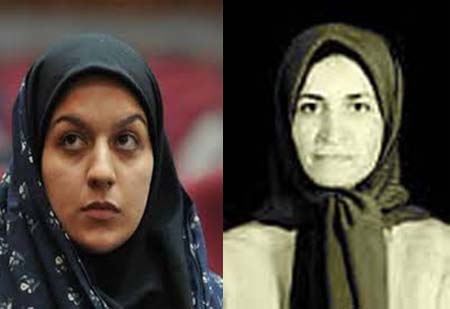
Following the execution of Reihaneh Jabbari the Iranian girl convicted of murdering a man Morteza Sarbandari, Maryam Rajavi called for an independent international probe into her execution. This was not the first reaction of the MKO propaganda on the case of Reyhaneh. The group’s media had launched a wide propaganda about her trial. However, their propaganda pushed her towards execution.
Abdusamad Khoramshahi Reyhaneh’s attorney told Radio BBC Persian that the media’s intervention in Reyhaneh’s process of trial was an effective drive for her death. Media’s propaganda including the MKO’s turned out to be an obstacle for Sarbandari family to forgive the murderer of their father. According to the MKO’s propaganda Sarbandari was a former Intelligence agent who wanted to rape Reyhaneh.  Reyhaneh admitted that she had killed her victim with Knife.

 Furthermore, it cannot be said simply that Reyhaneh deserved death penalty or not due to the complexity of her case. In addition, people have different ideas about Capital Punishment.

The main contradiction in Maryam Rajavi’s propaganda about Reyhaneh’s death sentence should be closely investigated in her organization’s record of cases of torture, murder, and execution. Numerous cases of disappearance and abusive conduct against dissident members can be simply found in the testimonies of former members.

As former member of the MKO’s so-called Council of Leadership (Elite Council), Mrs. Batoul Soltani recounts the horrible fate of at least three women who were murdered by the group authorities. According to memoires of Mrs. Soltani, Minou Fathali was a member of the Elite Council who opposed the mass marriage and sexual relationship of elite members with Massoud Rajavi the leader of the cult. She did not attend Salvation Dance Ceremony.  Batoul writes: “Minou left the meeting while she was crying”.  I heard her telling to Maryam Rajavi, “I don’t want. I hate it.”

Minou was under severe pressure by Maryam Rajavi and other high-ranking officials of the cult but she was never convinced to dance undressed in front of Mssoud Rajavi. She was degraded in the cult hierarchy, separated from her comrades and then her death was announced in the group’s Journal.  Soltani reveals that Minou was then killed by the Batoul Rajaiee, a notorious figure of the MKO Elite Council. However, after the fall of Saddam Hussein, the name of Minou was declared as a martyr of the American bombs.

Mehri Mousavi was another member of the cult of Rajavi who was mysteriously murdered in Camp Ashraf.  Batoul Soltani wrote an article in the memorial of Mehri. She remembers the day she found a report written by Mozhgan Parsaiee about Mehri. “She has problem with Salvation Dance and relationship with Christ,”Soltani cites from the report. Christ is the pseudonym of Masoud Rajavi among high-ranking members.

Mehri became a subject of the groups’ peer pressure meetings. Massoud rajavi personally beat her and kicked her out of the meeting, based on memoires of Batoul Soltani.  Mehri Mousavi was then found suffocated by her scarf in her dorm. She was also announced as a martyr of bombardments by American forces.

Among many other victims of the MKO’s efforts to wipe out internal dissidents one can definitely see the name of Maasoumeh Gheibipour. According to Batoul Soltani, Maasoumeh was not observing religious rules well so she was under severe peer pressure in the cult. She was all the time suppressed by the cult officials for her careless covering or for her not performing prayers – despite Maryam Rajavi’s claims of seeking and advocating a secular democratic government in Iran.

During brainwashing sessions Maasoumeh dared to criticize the organization and its leaders’ attitudes and decisions but she was labeled as a “traitor”.   Maasoumeh was no more seen in the group’s meetings!

The three above-mentioned cases are examples of dozens of people who were killed in the MKO’s cult-like system just because their absolute obedience was doubted and questioned by the leaders. The list of Masoud Rajavi’s victims inside the group includes male and female members of whom one can only find the name of Parviz Ahmadi in the report of the Human Rights Watch on abuses in the MKO, “No Exit”, published in 2005. According to HRW’s report, Parviz Ahmadi was killed after he was tortured in the group’s prison in Camp Ashraf.

Therefore, Independent International Probe is certainly needed for murders and mysterious deaths in MKO camps. Maryam Rajavi and her disappeared husband should be brought to justice for unspeakable human rights abuses they have committed for over three decades.

Reyhaneh Jabbari who had actually killed a man might not deserve to be executed but how about Minou, Mehri, Maasomeh and many other individuals who lost their lives for criticizing the cult? Did they deserve to be executed?

Mazda Parsi

November 5, 2014 0 comments
FacebookTwitterPinterestWhatsappTelegramSkypeEmail
Mujahedin Khalq; A proxy force

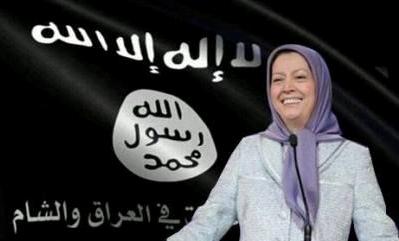
ISIS supporter Maryam Rajavi attacks Obama from French parliament

This week an inter-parliamentary group from Iran visited France for the enhancement of parliamentary, economic and political relations between Tehran and Paris. The Iranian delegation of three senior MPs was headed by Chairman of the Parliament’s National Security and Foreign Policy Commission Alaeddin Boroujerdi. The talks were deemed by both France and Iran to have been constructive.

Boroujerdi’s interview with France 24 indicates that the nuclear issue and ISIS were at the top of the agenda in the meetings: the West wants Iran to help fight ISIS in return for a favourable outcome to the nuclear negotiations.

In a panic at the thought of closer ties between the two countries, Israel set about trying to disturb the atmosphere in the French parliament by pushing the terrorist Mojahedin Khalq leader Maryam Rajavi into a meeting with legislators in order to voice Israeli concerns and demands.

But using the MEK will never work out positively for Israel, for the simple reason that the MEK are incapable of making any difference to anyone or any situation of any real importance. Instead the MEK will only make things worse.

The Iranian delegation did not discuss the MEK, nor did they react to the presence of Rajavi nearby – it could be of course that the French parliamentarians hosting the Iranian delegation had been too embarrassed to bring the impromptu affair to their attention as it was irrelevant to the work of the delegation. However, Iran’s Fars News Agency published without comment the content of Maryam Rajavi’s speech which spoke for itself.

Maryam Rajavi tried to claim legitimacy as a result of the failure of a legal case against her and several other leading MEK members. Fortunately, informed people do not make the same assumptions as she does. Indeed, in June a spokesman for the Ministry of Foreign Affairs said France has “no contact with the “People’s Mujahedin Organization of Iran” which is known for its use of violence. It has no legal existence in France as an organization. Its violent and undemocratic Ideology has been exposed by several human rights organizations, such as Amnesty International who have reported on the organization’s cultic practices and its refusal to formally renounce violence. We also warn about the intense campaign of disinformation and influence it leads.”

Maryam Rajavi’s speech showed what a liability she and her disinformation are even for her own sponsors. She not only attacked Iraq, Iran and Syria as being responsible for the creation of ISIS, but vehemently attacked the USA too for backing the Maliki government saying: “During these years, not only did the United States not voice any protest against these actions, but they praised Maliki’s measures. The by-product of these crimes was the expansion and strengthening of ISIS in Syria and Iraq. This was the outcome of showing leniency towards the most horrendous dictatorship in contemporary times and its proxies.” She warned: “And now, the mullahs of Iran are exploiting this policy by the West; poised to fill the vacuum created by the ISIS retreat as a result of the international coalition attacks with the militias.”

Yet only a few months previously MEK websites were filled with pages showing support for ISIS when Rajavi believed the terrorist army would overrun Baghdad and take over the MEK camp near the airport.

Rajavi’s speech is largely incoherent and certainly adds up to nothing but disparate rants against everyone and everything. But in that it is inspired by the Israeli way of doing politics. Divorced from reality, Rajavi urges the Western coalition not to work with Iran. Clearly nobody told her about the FRANCE 24 interview with Boroujerdi who said that the US-led coalition against the Islamic State group cannot be trusted. “The very countries that created the Islamic State group are now part of a coalition that … wants to destroy them,” he said. “How can a contradiction like this be resolved? It’s only natural that we cannot trust [the coalition]. We don’t want to enter a political game.”

As though to confirm and cement her ignorance and stupidity, Maryam Rajavi finally mentions her hostages in Camp Liberty and says she hopes that with the “removal of Maliki in Iraq, the French government would use all means possible for Camp Liberty to be recognized as a refugee camp under the United Nations’ supervision”.

Maryam Rajavi has clearly not read Massoud Khodabandeh’s fourth report from Baghdad on the current situation of the MEK and Camp Liberty published in October. This report makes it clear that the new government of Iraq led by Prime Minister Abadi has already put in place plans to expedite and speed up the process of removing the MEK entirely from Iraqi territory. Apparently Abadi is even more keen than Maliki to be rid of the MEK, and the UN agrees.

When a supporter of ISIS sits in the French parliamentary building and attacks President Obama, the cracks are seriously beginning to show in the West’s approach to resolving the whole Middle East situation. Observers may not be sufficiently informed to tell Western governments what to do in their own interests, but any schoolchild can point out the damage the MEK is doing to them.

About Anne Khodabandeh (Singleton):

Middle East Strategy Consultants,

Autor of “Saddam’s Private Army” and “The life of Camp Ashraf”

November 2, 2014 0 comments
FacebookTwitterPinterestWhatsappTelegramSkypeEmail
Iran Interlink Weekly Digest

Iran Interlink Weekly Digest – 71

++ Maryam Rajavi announced to Camp Liberty residents that Zohreh Akhiani has been ‘elected’ as head of the MEK. Maryam claimed that the Central Council – which consists of nearly everyone – has chosen her. This came as a surprise since the Central Council was abolished two decades previously and was replaced by the 12 member women only Leadership Council. Many people are asking why it has been resurrected now. Ebrahim Khodabandeh, Zahra Mirbagheri and many other prominent ex members who know the mentality of Rajavi gave their analyses of this move. Khodabandeh wrote: Putting aside the ridiculous aspects of this issue, like Massoud Rajavi pretending to be shocked when everyone knows he is in charge of everything that happens in the MEK, there are two significant aspects to it. One is that Rajavi is under extreme pressure for being undemocratic and so he is trying to prove that there is such a thing as a council. The second thing is that so many of the Leadership Council have escaped the MEK and run away. Rajavi can’t answer for this and he wants to dilute the importance of what he created in order to hide its failure. According to people inside the MEK the Leadership Council women have been chastised and told, ‘you are not leaders, only Massoud and Maryam are leaders, this has gone to your heads and you need to put yourselves back in your places again’. Other commentators say this has been done to buy time and keep people busy and diverted from the real problems in Camp Liberty where the atmosphere is wild and chaotic with a lot of fighting and arguments breaking out. They ridicule the idea of a council in a camp 1km by 1km in which nearly all the 3000 old and sick residents are made members.

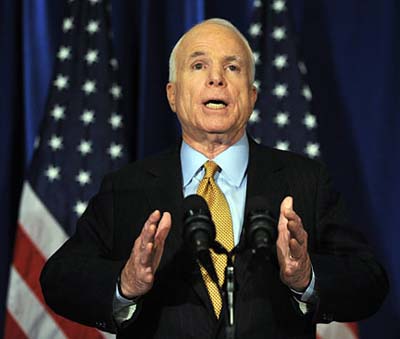
++ Several people have commented on Senator John McCain’s support for the MEK. They point to the evidence that he supports ISIS, including the much publicised photograph with ISIS leaders. McCain is the link between the MEK and ISIS. They are on the same side and McCain supports both these terrorist entities.

++ This week an inter-parliamentary group from Iran visited the French Senate. At the same time some manufactured committees invited Maryam Rajavi into the building to make speeches to parliamentarians. Several Farsi writers point to the efforts of Israel to prevent any positive engagement between France and Iran, but say that using the MEK will not hinder it. Both France and Iran are wise to this ploy and the French government has already said it considers the MEK to be a terrorist group. Iranians treat this as a laughing matter. Fars News simply translated Maryam Rajavi’s speech in which she claims that Iran is behind ISIS and she demands that the Americans take the side of Israel against Iran.

++ A couple of officials from Iraq have commented that although 210 places have been ready for some months to take residents from Camp Liberty, and the US is willing to take 80 of them, the major obstacle is still the MEK which is trying to delay the process as much as possible, hoping, presumably that some more of the camp’s residents will be killed or die in Iraq. [The MEK submitted its own list of potential transferees, half of whom are disabled or seriously or terminally ill]. Meanwhile IRNA reported that the names of people pardoned by Iran have been passed to the UNHCR, which says they are now free to go back home. IRNA says UN sources admit that if the residents could choose themselves, many would want to go back, the problem is that the MEK don’t give the UN free and unfettered access to these people.
++ There were a few reactions to Rajavi jumping on the acid attack bandwagon. Articles and comments compare this with what the MEK do to their own people, like the hysterectomies and self-immolations, etc. Some mention Nafiseh Badamchi, the so-called doctor in the MEK camp who performed the hysterectomies. Some witnesses named the victims like Minoo Fathali who was killed by the MEK in Camp Ashraf because she refused to be part of Rajavi’s harem and was trying to expose them.

++ From last week when Iraqi Prime Minister al-Abadi went to Iran, the MEK’s sites have been silent, pretending it never happened. Before this they had claimed to have been instrumental in the change from al-Maliki to al-Abadi.

++ Mohammad Sahimi, a prominent professor in the US, has begun a collection of articles in Farsi (he normally writes in English). The title of his first is ‘The cause of the rise of ISIS’. In the article he goes into detail about the MEK as an example of a mercenary force which is being used wrongly for short-term purposes.

In English:

++ Following Massoud Khodabandeh’s visit to Iraq in October, Iran Interlink published the Fourth Report from Baghdad about the Mojahedin Khalq and Camp Liberty. The report uncovers the positions and actions of the various parties involved in the process of removing the terrorist MEK from Iraq. The report concludes that the families of Camp Liberty residents and former members of the group have been successful in disabling the MEK’s peripheral support network and are now dealing with the central core of the group, the loyal members and the hostages. The report says that the MEK’s political, financial and logistical support must be dealt with at governmental level. The group’s criminal activities are, likewise, a matter for law enforcement agencies.

++ Mazda Parsi of Nejat Bloggers ridicules Maryam Rajavi’s latest masquerade to entertain the individuals inside the group, particularly the female members. Maryam’s love letter to Zohreh Akhyani assigns her head of the MEK and orders her to make a Central Council of “one thousand heroic women”. Parsi points out that in the past decade there have not been more than 900 women MEK members and many of these have been killed, died or run away.

++ Nejat Bloggers reported on a visit by Ebrahim Khodabandeh to Baghdad. Khodabandeh, formerly a high ranking official in the MKO’s international relations department, visited several Iraqi officials including two MPs, Adnan Seraj and Adnan Shahmari. He also met the Iranian Ambassador in Baghdad Hassan Danaieefar. During his to Baghdad, he was interviewed by Iraqi media and newspapers including Al-Masar TV and Kul Al-akhbar Newspaper. During these meetings, he described the grief suffered by families of members of the cult of Rajavi who are taken as hostages by the cult leaders in Camp Liberty, near Baghdad.

++ Ehsan Roshanzamir of Iranian Pen Club (Ghalam), has written an Open Letter to Senator John McCain. The letter points out that the MEK were part of the reason America invaded Iraq in 2003. Roshanzamir talks about the dire conditions suffered my MEK members and about the MEK’s collaboration with ISIS, and warns McCain not to allow himself to be humiliated by association with either group.

October 31, 2014

November 1, 2014 0 comments
FacebookTwitterPinterestWhatsappTelegramSkypeEmail
Iraq

MEK tries to delay the process of Liberty residents’ transfer

A couple of officials from Iraq have commented that although 210 places have been ready for some months to take residents from Camp Liberty, and the US is willing to take 80 of them, the major obstacle is still the MEK which is trying to delay the process as much as possible, hoping, presumably that some more of the camp’s residents will be killed or die in Iraq.

[The MEK submitted its own list of potential transferees, half of whom are disabled or seriously or terminally ill]. Meanwhile IRNA reported that the names of people pardoned by Iran have been passed to the UNHCR, which says they are now free to go back home. IRNA says UN sources admit that if the residents could choose themselves, many would want to go back, the problem is that the MEK don’t give the UN free and unfettered access to these people.

Iran Interlink Weekly Digest

November 1, 2014 0 comments
FacebookTwitterPinterestWhatsappTelegramSkypeEmail
USA

Open letter to Senator John Sidney McCain

The Honorable John Sidney McCain

United States Senator

United States Senate

Washington DC

Dear Senator McCain

As an Ex-resident of Camp Ashraf for nearly three decades, I have read your letter of support for the people of Camp Liberty in Iraq to US Secretary of State John Kerry.

The people in Camp Liberty are victims of terroristic policies. Before the invasion of Iraq they were used to operate, help, administer and train terrorists. After the invasion, the leader escaped to the West, and now they are being used to safe guard the leaders in the West by feeding and creating the necessary cause for the leaders to deceive the West about their ominous thoughts and beliefs.

I am sure you remember that the September 11 tragedy masterminded and put to action by people who lived in West and pretended to be civilized people. Even now days people from civilized world who have been deceived, are joining the most barbaric terrorist groups in the Middle East region and elsewhere, which as a consequence the world has paid and is still paying a heavy price because of their evil actions.

On the verge of the invasion of Iraq and toppling of its dictator, we were told in the Camp Ashraf by Masoud Rajavi and Maryam Rajavi, that we must stay in Camp Ashraf for any price that it requires, and if we had to leave, we would ask them to send us to California, to create a dead end situation for US in order to prevent US from moving us from the Camp Ashraf.

Masoud and Maryam Rajavi having watched the September 11 barbarism live on CNN, praising it, commented facing their 4000 members then “…because Al Qaeda harmed Imperialism before and better than us, must not think Al Qaeda is more progressive than we are, ,”. Mujahidin believe in violence to reach their political goals, look at their emblem.

Mujahidin believe in destroying the Western Civilization as Western Imperialism, oppose and compete with ISIS and Al Qaeda from the point of being more anti-Western and anti-Imperialistic than they are.

Your Honor

What I would like to point at is that, it is time for everybody in the west and around the world to face international and regional terrorism with open eyes. Terrorism has changed face and is adopting new tactics to destroy the civilization. They have learnt how to deceive the world and utilize every means to reach their mediaeval barbaric goals.

Especially as a well-known and influential Senator that have great responsibility on your shoulders on behalf of your constituents and contemporary world, with the facilities at reach to investigate about the true nature of the people and groups, facing them blind folded or be deceived just by their appearance or pretense of supporting democracy or women’s rights … is no longer acceptable by the public opinion and the future generations.

All members of the Mujahidin are barred from any public and free media, books, newspaper, contacting their families and even their children. They must only love Masoud and Maryam Rajavi as their Caliphate and if anything else went through their mind but must be daily reported. They are a Cult group and not a political entity.

Mujahidin believe in separation of sexes in any common ground of activity. They force their women members to divorce their husbands and marry Masoud Rajavi as the Caliphate who owns them!

Residents of Camp Liberty are used as a prey by Masoud and Maryam Rajavi to gain media attention to utilize it to reach their goals in the West while they are still at reach by law. Masoud and Maryam Rajavi are waiting as such ISIS to reach the power to show his real face.

Your Honor

But please don’t let your political consciousness be humiliated by them.

Sincerely yours

Ehsan Roshanzamir

October 29, 2014 0 comments
FacebookTwitterPinterestWhatsappTelegramSkypeEmail
Mujahedin Khalq Organization

Iran Interlink Fourth Report from Baghdad

Introduction

Massoud Khodabandeh from Iran Interlink visited Baghdad over ten days during October 2014 to gather the latest information pertaining to the Mojahedin Khalq presence in Iraq. Events in Iraq have been changing rapidly with the Iraqi army and militia mounting an effective offensive campaign against Daesh*. This report is therefore something of a snapshot of conditions on the ground at that time. No doubt the situation will have changed as the report is published. However the intention of the report is to provide significant information about the situation of the MEK and any influence it has on these events regardless of how they unfold.

blank

It is hoped that an understanding of the role of the Mojahedin Khalq (MEK) and its relation with Saddamists* and Daesh will inform efforts to confront the violence.

Although some observers may think the MEK is irrelevant, finished, or too small to make a difference, the fact it still features in the narrative of those who seek to influence American foreign policy and the fact it has had enough Western support to remain in Iraq, are strong signs that this group is far from irrelevant. This report seeks to explain why.

My thanks to Othman H. al-Bustan, Ebrahim Khodabandeh, Maryam Sanjabi and others in Baghdad. Without their help the investigations, meetings and the reporting of them could not have taken place.

The report was compiled, edited and published by myself and Anne Khodabandeh (Singleton) in the UK.

* Daesh is al-Dawla al-Islamiya fi al-Iraq wa al-Sham, also known as ISIS, ISIL and IS. For the purposes of this report I will refer to them by the Arabic Daesh.

* Saddamists are people associated with and loyal to the ousted regime of Saddam Hussein and who are actively opposed to the current government and constitution of Iraq.

 1. Situation of the MEK in Iraq

blank

Rajavi’s combatants are nearing retirement age.

Who will pay for their healthcare and pensions?

Inside Camp Liberty

Residents of Camp Liberty who have chosen to escape the camp rather than wait for relocation by the UNHCR have been able to report on conditions inside Camp Liberty. Since early 2012 when most Camp Ashraf residents were relocated to the Temporary Transit Facility also known as Camp Hurriyeh, tens of individuals have managed to get themselves out of the camp and take refuge with the UN and Iraqi authorities. The International Committee of the Red Cross (ICRC), has independent oversight of this. Reports by these individuals indicate that conditions inside Camp Liberty are worsening month on month, and that suppressive measures are increasing to try to keep a lid on the rising discontent. MEK commanders are instructed by Massoud Rajavi how to control the residents and how to behave toward them. This means an almost total gender separation, with only commanders able to meet with members of the other sex. Under the same conditions of gender separation, members of the same family, siblings and parents for example, are not given access to visit one another, and are obliged to treat one another as comrades rather than relatives if they do meet. Other, local curfews exist to separate and control people. Residents are accommodated in dormitories and are confined to their quarters for most of the day when they are not actively engaged in work or meetings. Association between residents is strictly controlled, and monitors are posted to listen to conversations between residents.

In addition to work, daily schedules include both confessional and indoctrination meetings. Residents are obliged to report their activities and thoughts and feelings in public, with ‘sins’ against Rajavi’s edicts being punished through humiliation and sometimes beatings by other attendees, who are also subjected to this treatment. According to the reports of escapees, most residents no longer accept such sessions willingly as part of their conditions for membership in the Mojahedin Khalq. This has resulted in widespread disaffection. Arguments and physical fights are now commonplace. This can be between residents and between the various ranks.

This is by far the most volatile aspect of the situation inside the camp. Residents who challenge orders and/or ask questions are automatically singled out and taken for questioning by commanders. However, spontaneous arguments often escalate and residents will now challenge the commanders directly. Questions include: where is Massoud Rajavi (who has not been seen since March 2003 and is only heard in audio messages broadcast in the indoctrination meetings); why is just about anyone who leaves the MEK labelled an agent of the Iranian regime, why were they not identified as agents while they were in the camp; what are we doing to overthrow the Iranian regime.

Residents who have left in the past few months are now reporting that even the commanders are beginning to accept that they have no answers to these questions, and as a result some of them are beginning to ask questions of their own.

Two actions have taken on highly controversial aspects for the residents.

One is the conduct of visitors who are brought inside the camp by the MEK. These are, for example, American or European advocates of the MEK who are paid to speak at various rallies and lobby in parliament. Visits are arranged to stage manage a demonstration of conditions in the camp. So, to back up MEK claims of mistreatment, food, water and medicine shortages are manufactured as are hygiene issues. However, residents are never allowed to even approach the visitors without prior arrangement, and any permitted conversations are monitored by both the commanders and the MEK’s Western facilitator, handler and English language translator, Ali Safavi. (UK resident Safavi escorts the visitors from North America and Europe via the MEK’s bases in Jordan.)

There is a great deal of grumbling among residents that they are not allowed to speak to such visitors who are among only a handful of people from outside the camp that many residents have actually seen for over a decade. Other visitors from outside are officials from agencies of the UN or various embassy staff. Again resident contact with these officials is almost non-existent and is always subject to MEK control. (The families of camp residents have, of course, been denied contact with their loved ones since 2003 opened the possibility of their travelling to Iraq to find them. The MEK describe families as ‘poison’.)

The other event which has caused controversy concerns the 42 survivors of the Camp Ashraf massacre of September 1, 2013. The survivors were transferred by the UN to Camp Liberty in November 2013 and handed over to MEK commanders at the camp. According to escapees, they were immediately taken to separate accommodation and were essentially held incommunicado, not only from the outside world, but from the rest of the camp’s residents also, including most commanders.

Under pressure from Iran-Interlink for the MEK to allow investigators into the massacre to have access to these survivors, the MEK finally brought them out to have lunch in the refectory with other residents. The 42 had visibly been instructed not to talk to anyone at all, not even one another. Photographs were taken of the survivors having their lunch in this public place. Not one single resident was fooled that this was anything except a PR exercise to demonstrate to the outside world and MEK advocates that they are free and accessible. However, no outside visitors such as UN or Red Cross officials were present during this stunt.

These actions have caused dissent to escalate almost to crisis point. Only the severity of existing controls has kept a lid on the atmosphere of discontent and rage. Loyal commanders are now extending their control to their peers. Massoud Rajavi’s latest instruction to the residents relayed via the commanders is encapsulated in the slogan that ‘from 1 to 100 percent of everybody’s time must be spent in saving the organisation’. Rajavi has said that although the situation in Iraq is tense because of the presence of Daesh, ‘the regime’ is attacking from the other side and making people want to run away. The task of every resident is to watch every other resident to prevent anyone from escaping. Rajavi says, and believes, that there is a psychological war being waged on the camp by the Iranian regime. He cannot, or will not, acknowledge that both the insupportable conditions of absolute control and the unanswered questions of the residents are fuelling internal dissent.

Iranian supporters of the MEK in the West, known as internal critics because they are loyal to the MEK but have many criticisms of the group’s aims and tactics and other behaviours, are filling the Farsi language blogosphere and social media with open letters and articles addressed to Rajavi simply asking him to acknowledge the validity of their questions and provide even the simplest or even impenetrable answers, rather than attacking all and any questioners as ‘agents of the Iranian regime.’ Thus the Camp Liberty residents’ questions are reportedly (by internal sources willing to speak) being echoed in MEK bases throughout the West, even at the highest levels in Auvers-sur-Oise.

(Interestingly, several MEK members have made internet contact with Ebrahim Khodabandeh – a former member – in Tehran, and divulge their misgivings and discontent openly to him as an old friend and colleague. Some of the MEK’s closest supporters regularly visit Iran, an act which is deemed a sin inside the organisation.)

Iraq Perspective

Iraqi officials continue to work with UNAMI to facilitate the process of removing all MEK from Iraq which began in 2011 when the American army formally handed over responsibility for the MEK to the government of Iraq.

After the formation of the new government of Iraq, the MEK claimed that they had been instrumental in the ouster of al-Maliki. During the time of my visit, officials from the ministry of Human Rights, Defence and Interior Affairs that I spoke with said that contrary to MEK and Saddamist propaganda, and in spite of differences in other areas of policy, the new Prime Minister al-Abadi is totally on the same page as al-Maliki about the MEK and Saddamists. They emphasised that the officials dealing with this issue have not changed and the policy has not changed either.

A source from inside the al-Abadi faction related that during his meetings with Western government representatives in Paris and in Baghdad, al-Abadi made it clear for the Americans that Iraq will not curtail her relations with Iran, and that it is in Iraq’s interests to work even more closely with Iran. If Iraq is pushed to choose between Iran and America, it will be unfortunate but Iraq will choose Iran. This message was conveyed to American officials, who reportedly acknowledged it. The official said this shows where the MEK’s place is in Iraq; they have no hope of remaining.

Some MPs I spoke with have related that parliament has resumed passing laws which had been delayed due to the crisis caused by Daesh. This will mean that anyone involved in supporting the MEK and/or Saddamists can be impeached. A law has been drafted to ban parliamentarians from taking money for lobbying for the MEK or Saddamists. Parliament has evidence against several individuals who fit this category.

Dr Adnan al-Saraj, from al-Maliki’s Islamic Dawa Party coalition and head of the Centre for Media Development, went into detail with us about how the policy of both al-Maliki and al-Abadi toward the MEK is the same. He identified the main problem for the government in expelling them humanely as the lack of cooperation from Western countries. He said, “They tell us one thing, but in reality they don’t cooperate and do what is needed”.

Adnan al-Shahmani, the MP in charge of the Parliamentary Committee overseeing the situation of the MEK, talked in detail about what the government is doing to resolve this situation in a positive way. He said three aspects are being pushed together and are slowly getting results. One is the humanitarian aspect, especially toward those who have been tricked into the group, and pushing for family access – upholding the human rights of the residents and their families. The second part is pursuit of the legal aspect of the situation; some MEK members have been accused of torture and murder and they need to be taken to court and tried. Iran has also asked for the extradition of around 100 individuals so that it too can pursue legal cases against them. The third aspect is that of security. This is an ongoing issue because the MEK are actively working with the Saddamists and Daesh. This trio represents a security threat to the whole country. However, al-Shahmani reported that Iraq’s security forces are now on top of this issue and are determined to resolve it.

In his visit to Iran, Prime Minister al-Abadi met with Iran’s top leaders. During his visit with the head of the Judiciary he described the MEK as a problem imposed [by America] on Iraq. Iran pledged to do everything possible to help resolve the situation, and in turn asked for the extradition of around 100 leading members accused of murder and terrorist acts.

UN Relocation Process

In March 2013, Albanian Prime Minister Sali Berisha had announced that Tirana was ready to host 210 members of the MEK “for humanitarian reasons.” Since then, over 200 residents have already been transferred to Albania. In early October this year, the UN High Commissioner for Refugees in Albania was able to announce it has provided the necessary measures for the transfer of a further 210 Camp Liberty residents to Albania. Local reports indicate that several apartments are ready to accommodate the newly arrived individuals.

Although it is now been made possible to transfer another 210 residents to a place of safety, the MEK initially refused to allow anyone to leave Camp Liberty. (This may be linked to news that over half of the MEK members who now reside in Tirana have renounced the group and have begun to speak out about human rights abuses inside Camp Liberty. The MEK leader Massoud Rajavi cannot afford to allow more of the camp’s residents the freedom to decide their own futures, and would prefer to keep them locked up in Iraq under his direct control.)

The MEK leadership has not permitted the UNHCR to select suitable individuals for transfer and has insisted on submitting its own list of people it is willing to let go. Half the list comprises residents who are either disabled or chronically ill – some even dying. The rest are commanders and suppressive agents of the MEK which it wishes to transfer in order to replicate the cult conditions in Tirana. Word from inside Camp Liberty is that this will not work because the commanders themselves will defect once they are free of the controls of Camp Liberty.

During my visit, UN and Red Cross (ICRC) personnel left Baghdad and went to Arbil and Jordan because of the security threat posed by Daesh. However, a few of these staff have now returned to Baghdad as the situation has become less volatile. UNHCR personnel have begun the interview process for 210 Camp Liberty residents prior to their transfer to Tirana, Albania.

As well as these transfers, American personnel are interviewing for up to 80 people in both Iraq and Albania who will be accepted by the US. According to participants, these interviews are aimed at finding the most harmless individuals, those willing to sign bunches of papers renouncing their past and agreeing to have no further involvement with the MEK. If they are not prepared to sign these documents they are not called for interview.

A third interview process takes place in the Mohajer Hotel in Baghdad which is provided by the UN for Camp Liberty residents who have escaped and who have asked the Iraqi authorities to give them refuge. The UNHCR does conduct interviews with these individuals with a view to transferring them out of Iraq. In these conditions they are able to contact their families and start the process of rehabilitation.

Escapees from Liberty

Over the fortnight leading up to my visit, six residents of Camp Liberty individually took the brave and extraordinarily difficult step of escaping from the camp. The lockdown imposed by Mojahedin-e Khalq commanders is so intense that residents are unable to leave their accommodation blocks without permission, are not allowed freedom of association, not even among relatives, and of course a strict gender applies which separates men and women. Every moment of their lives is scheduled and observed. Residents are obliged to attend daily confessional meetings in which ‘sinners’ are humiliated and sometimes beaten.

After two decades of these conditions (eleven of them spent unable to even pretend to be a military group after being disarmed by the US army), residents are finding it harder and harder to submit to the bizarre strictures of cult culture. But submit they must if they are to avoid severe punishments for transgressing these rules. The first rule being total, unquestioning obedience to every dictate under the totalitarian rule of Rajavi.

Since 2011, over two hundred and fifty residents have escaped from the MEK. Around twenty percent of these have returned home to their families in Iran. The others have found ways to travel to Europe or are still in Baghdad awaiting UNHCR transfers.

During my visit I met with several escaped Camp Liberty residents living in Hotel Mohajer. Six of these had requested repatriation to Iran and were eventually able to go. (Jane Holl Lute thanked Iran for accepting them.) Seven more had undergone UNHCR interviews and were waiting for places to go to. Three had already been accepted by Western countries because of prior connections there.

Of the six most recent escapees, one asked to be allowed immediately to join his family in Iran. The rest are being kept safe in accommodation.

Iranian Perspective

Since announcing an amnesty for “repentant” MEK members in 2003, Iran has allowed escapees to return home to their families, in particular former POWs and those economic migrants who had clearly been deceived by the MEK in recent years. More contentious figures including long term members have been dissuaded from returning and have mostly found a way to reach Europe instead which circumvented the UN refugee transfer route. Following the Presidential elections in 2013, Iran called a moratorium on voluntary repatriations. For several months Iran did not accept any new transfers. Now, after undertaking a review of its policies and practices concerning the process of repatriating former members of a terrorist entity, the IRI has again begun to accept vetted individuals who wish to return to their families. Certainly Iran has been understandably cautious about allowing any MEK to enter Iran under any pretext. However, Sahar Family Foundation which works in Baghdad with the families of MEK members reports that Iranian embassy officials describe this as “an obligation toward their families”.

With a new government in place, Iraq is working with Iran to expedite the return of ‘pardoned’ MEK to Iran as quickly as possible. Iran has drafted new legislation to allow this. Iraq has also said it has formulated plans to speed up the process which it has handed to UNAMI for approval.

The IRI has compiled a list of around 100 MEK members which it says it will prosecute for crimes against humanity and war crimes if they return to Iran. Arrest warrants have been lodged with INTERPOL for several leading MEK members. The government of Iraq has also compiled a list of 150 MEK members which it says participated in illegal activities in Iraq, including the massacre of thousands of Kurdish civilians in March 1991. The Iraqi police and judiciary will pursue the arrest of all named persons.

Clearly for the past twenty years Iran has considered the MEK to be an irritant rather than an existential threat. As a pseudo-political force acting to publicise a regime change agenda and with a defunct terrorist force the MEK has no potency. However, the IRI does regard the MEK as a social problem. Along with Western agencies, including the US Department of State and the authors of the 2009 RAND report, Iran has identified the MEK as a dangerous, destructive mind control cult which engages in violence to achieve its political aims and which believes that the ends justify the means so that it is not bound by legal, moral or social laws. Former members have described these practices in detail and there is a huge body of evidence behind this assessment. The danger therefore is to its own members who have been effectively enslaved and abused by the leaders, and to any potential new recruits.

Western Support for the MEK

In September the MEK held what it called an ‘International Conference’ in Paris with the title: “First Anniversary of Ashraf massacre, Middle East in crisis, threats and solutions”. The MEK assembled around fifty of its paid lobbyists and advocates to address an audience also assembled from paid refugee and student populations in Europe. Among the issues to be denounced by the speakers was the “inhumane siege imposed on Camp Liberty”.

In Iraq, UNAMI has had to deal with constant complaints from the Mojahedin commanders about “siege conditions” at the camp. On 31 August, UNAMI reported that “the provision of life support systems such as water, electricity and food continue to be well in excess of basic humanitarian standards”. In addition, MEK advocates in Europe, such as MEPs Julie Ward and Judith Kirton-Darling, also insist that the MEK be protected from further attacks like the events at Camp Ashraf on September 1, 2013 and for them to be moved as soon as possible to third countries to prevent further violence. Yet when Jane Holl Lute, Ban Ki-Moon’s Special Representative, negotiated 210 refugee places in Albania, the MEK refused to allow any residents to leave the camp. It was only after grinding negotiations with the camp’s commanders that the MEK submitted its own list of people it was prepared to let go.

It is apparent that the MEK have no achievements to boast of in their gatherings, and can only celebrate the anniversary of some disastrous event or other in their history. The only ‘achievement’ has been that in 2012 then Secretary of State Hillary Clinton removed the MEK from the US terrorism list. This allowed the MEK to be paid to act as an adjunct to that branch of American foreign policy which is covertly working toward violent regime change, hardly something to endear the MEK to the Iranian people.

Reports from a variety of sources have revealed that the MEK has invited a number of its American lobbyists to visit Camp Liberty. Their route takes them via Jordan where they are also in contact with the Saddamists. The trace of their movements show that they have stayed in the compound of Saddam’s daughter, Raghad Hussein, with the knowledge of Jordanian intelligence. The handler for these trips is Ali Safavi who has an American travel document but who is mostly resident in an MEK base in London. From Jordan they travel to Baghdad and Camp Liberty. On the way they stop in Falujah where they are accommodated in a building belonging to some of Daesh’s top personnel. Entry into Camp Liberty is highly restricted and monitored by the Iraqi security forces who are tasked with guarding the camp. However, it is understood that the foreign visitors are taken in by MEK vehicles and by US embassy staff. While inside the camp, residents are made to stand back and not approach the visitors. Ali Safavi and other English speaking commanders act as translators who are able thereby to monitor and if needed to censor conversations.

These visits are designed to convince the lobbyists that all is well inside the camp and that rumours of discontent are untrue. However, they are also used to convince residents that Western powers support the MEK and their future is thereby assured and if they trust their leader Massoud Rajavi, all will be well. One of the difficulties for the MEK leader is that while advertising this American support he cannot afford to let the Camp Liberty residents near them even to say thank-you because of fears they will speak out of turn and reveal their desperation or even despair. On the other hand the carefully selected visitors have had their visit micro-managed by MEK handlers and are not in any frame of mind (or are not even interested) to engage with their environment sufficient to undertake an investigation into actual conditions – mental or physical – for the residents.

To attract sympathy among Western policy makers the MEK maintains the permanent pretence of victimhood. Yet for this sympathy to be converted into actual financial and political support the group must also still maintain the fiction that the Iranian regime is afraid of them.

It is true that the Islamic Republic is sensitive to the issue of the MEK. Western politicians who see this think they know why. But they don’t. The IRI recognises the majority of Camp Liberty residents and in the base in Paris as victims of a destructive cult. Iran’s government regards the MEK not as a threat to its existence, but as a danger to the health and welfare of all the citizens of Iran. As a pernicious cult, the MEK is a social not a political danger.

2. MEK activities in relation to ISIS

blank

blank

 Screen shots of MEK websites showing support for Daesh

Since 2003 MEK has been active in helping what are known in Iraq as Saddamists. That is, people associated with and loyal to the ousted regime of Saddam Hussein and who are actively opposed to the current government and constitution of Iraq. Such Saddamists are currently led by his daughter, Raghad Hussein, and by Saddam’s former second-in-command Izzat Ibrahim Al-Douri, both of whom are based in Jordan. The MEK has also maintained its bases in Jordan. Jordanian intelligence and authorities are fully aware of these groups and their activities.

While still under American protection, the MEK used Camp Ashraf to gather Tribal leaders and Saddamists and crucially al-Qaida affiliates. There were various motivations behind this activity. With regard to the Tribal leaders the MEK were keen to bribe them to accept the MEK in the Diyala Province. The residents of Camp Ashraf (as then) were obliged to organise lavish dinner parties for these guests. During a time of war and privations, the guests were treated to some of the most sumptuous feasts possible in those conditions, while the MEK provided slave labour to run the events. This ploy was partially successful and Tribal leaders tolerated the American-backed presence of the MEK for most of the decade. The Saddamists were of course former employers of the MEK. They have been instrumental in facilitating payments and political support for the MEK in so far as the MEK furthered their cause against the new government. This was particularly the case when the Iran-leaning Nouri al-Maliki became Prime Minister. The Saddamists have also been allies of the Saudi backed al-Qaida. The insurgents attended Camp Ashraf for training in the bomb making and guerrilla warfare which the MEK had learned while pursuing their terrorist activities in Iran in the 1980s. Al-Qaida were also potential protectors should the insurrection prove successful.

The creation of Daesh in Iraq has been linked to the move by Bremmer and Rumsfeld who agreed to disband 400,000 Iraqis with military training, including the full officer corps, after 2003. Many of these unemployed soldiers went on to create an insurgency as some joined various resistance groups against the American military. Some have gone on to join Daesh at top levels of leadership. Izzat Ibrahim al-Douri is now helping coordinate Daesh attacks. The MEK seeks to provide training and logistical support in return for protection from Daesh.

Officials close to the security services in Iraq divulged that they are in possession of taped conversations, documents and films which show the MEK have on occasion carried money for Daesh and the Saddamists, including Ezat Ibrahim. The same sources say they have documents from inside Camp Liberty concerning what Massoud Rajavi announced to his commanders as Daesh approached Baghdad in July 2014. He told them then, ‘don’t worry, they will arm us when they reach the camp’.

During the duration of my stay in Baghdad, Daesh in Falujah were very close to the airport and it was uncertain how that assault would unfold. It is clear now that Daesh have been repulsed and forced to retreat. However, Rajavi was very hopeful. Camp Liberty is close to the airport and a Daesh victory there would have meant the camp coming under their control. A source inside Camp Liberty revealed that Massoud Rajavi sent a message to loyal commanders at the camp saying that he has been reassured (he didn’t say by whom), that ‘Daesh will not interfere with our camp when they overrun the area’. This was surprising because no one in Baghdad has any doubt that Rajavi’s endgame is to kill all the residents of Camp Liberty.

While these events unfolded, the MEK websites remained uncharacteristically silent. The sites stopped giving news and only talked about the nuclear issue between Iran and the Americans. It was as though Rajavi was waiting in anticipation of how events would unfold. Certainly he was hopeful of a Daesh victory since, according to his announcement above, this would mean the MEK remaining in Iraq. It cannot be emphasised enough that the MEK is not a militant force. It would be incapable of joining in any military action. Instead, Rajavi wants to maintain a ‘bank account’ of people to expend at his will and for some gain.

Information gleaned from various sources in the Iraqi government and agencies concerned with Camp Liberty and the MEK can be interpreted in this way. The MEK’s links with the Saddamists are financial and political. The MEK facilitate activities inside Iraq and traffic people and money between Daesh and the Saddamists. In return they have benefitted from political lobbying to prevent or delay the expulsion of MEK members from Iraq. The MEK’s links with Daesh sprang from their links with al-Qaida operatives. The MEK have provided training in terrorism, logistics including money handling, and most significantly consultation in public relations, manipulation of public image and in the recruitment and brainwashing of recruits.

 3. Methodology behind MEK terrorism

Since the mid-1980s, disaffected members of the MEK who left have spoken about their experiences and revealed the secretive inner workings of the organisation. Human rights agencies collected hundreds of personal testimonies from former members at all levels who described gross violations of human rights including torture and murder. Until the 2005 report ‘No Exit’ by Human Rights Watch was published, these agencies also found hundreds of reasons not to expose or act to curtail the blatant human rights abuses carried on by the MEK against its own members. The silence was so deafening it was interpreted as clear bias in obeisance to a virulent Western anti-Iran agenda.

In Europe, as these testimonies accumulated and former members gained support and understanding from one another it became clear to them and anyone else who had an interest in really understanding the inner workings of the MEK, that the organisation was using cultic abuse to recruit, maintain and control its members. Once it became possible to identify, name and analyse the underlying behavioural and ideological factors which govern the MEK, it became possible to effectively challenge the organisation. As well as exposing the group’s deceptions to public scrutiny the former members sought to rescue the MEK still trapped in the group.

It became apparent that MEK who left and returned to a supportive family and/or community very quickly shed their cult personality and were able to re-integrate into normal society. An important, though not exclusive, factor in this recovery was the non-judgemental understanding and support of the family and the local community. This view was compounded when, in 2003 after the MEK were disarmed by the American army and corralled into Camp Ashraf, several of their families took the extraordinarily courageous – perhaps we can say desperate – step of travelling through a war zone to try to make contact with their loved ones.

When the MEK denied them this contact, they turned to the various Associations and Societies formed by former MEK in Europe for help and advice about how to proceed and how to talk to the MEK to get contact. When several MEK were released from prison in Iran after serving sentences for terrorist acts, they also joined with the families and former members to launch an international campaign to rescue loved ones from Camp Ashraf. As well as the European and Canadian groups, a non-governmental body called Anjoman Nejat (Rescue Society), was established in Iran with over 700 families from all over the country.

With expertise gained through knowledge and activism, these groups have, over the past decade, been successful in exposing the MEK in every possible way and in every forum. There is nobody now who can claim they have no knowledge of what the MEK is, and any support it has – political or otherwise – is given with this knowledge.

An examination of MEK behaviour over thirty years can be instructive in understanding how the methodology used to deceptively recruit and to brainwash the people in its ranks can be traced in newer terrorist groups like al-Qaida and Daesh. There will be people who reject the concept of brainwashing because they do not understand it and believe it to be a fiction. There are many others who have invested in their own interpretation of how and why young people are being recruited. Many of these believe they are radicalised by extreme interpretations of religious texts as preached by extremist clerics or that there is a romantic pull attraction for the Jihadi lifestyle as advertised on internet sites and social media. These interpretations however, lead us toward Islamophobia and increasing curtailment of civil freedoms and rights. They do nothing to stem the threat of terrorist recruitment and the fear of a backlash.

For experts, a fundamental precept in identifying cultic abuse is that people do not join such groups, they are recruited. That is, a relationship is deliberately sought and established through a deceptive message and behaviour which is then exploited using manipulative methodology designed to deliberately and cynically alter the mindset of the victim. The aim is to, as quickly as possible, switch off a person’s critical thinking and leave them susceptible to psychological manipulation. If a victim does not realise this is happening, the chances are this will be successful; though for many this process does not work. But groups like al-Qaida and Daesh are becoming ever more sophisticated in applying these techniques to the point that they are now able to initiate recruitment via the internet. Families of young people recruited by terrorist groups talk about the inexplicable change in their children’s behaviour and beliefs.

Once the recruit comes under the hegemony of the leaders they undergo further processes of manipulation and brainwashing. From there, individuals can be selected to perform different tasks. From hundreds of recruits only a handful will be able to be converted into the kind who will die or kill to order. The rest fulfil support roles. The brainwashing process works best if a person is isolated from normal society, from their previous life and family. The MEK used their camps in Iraq and bases in Western countries. But rather than attach the descriptor ‘organisation’ to the MEK it is useful to use the onion analogy to demonstrate how this works, how a person becomes increasingly isolated and unreachable even while operating in what appears to be normal society.

At the very heart of the onion are the leader, the lieutenants and recruiters and the most brainwashed members, the actual terrorist forces; these are the most inaccessible group. Just outside this is a layer of financial, logistical and political support which holds this inner part in place; ironically perhaps the most accessible group of people. The third layer will be a criminal class who perform vital but illegal functions such as people trafficking, passport forging and money laundry as well as sourcing and procuring supplies. These are then protected by and hidden behind layer after layer of support functions. These will typically include the initiators of recruitment, the people who deceive public and political opinion, people who divert attention through controversy or manufactured campaigns. There will also be groups of people who provide services for the inner layers, who provide accommodation, food and clothing, even aid workers who perform menial and other tasks which they may not even associate with terrorism.

This structure explains how terrorist entities operate beyond the strictures of a single organised body. The layers of this onion can exist anywhere in the real world, but they all function to push recruits through a series of brainwashing processes. The more processes they are susceptible to and submit to, the closer they get to the centre where their optimum function is found – to die or kill on command. (If anyone doubts that these are the real victims of deceptive recruitment, remember, they usually die.) A signifier which differentiates this type of structure from other similar military entities is that in the case of cultic groupings the recruits do not join voluntarily with full knowledge of what they are really getting involved in, and they are recruited for life; as the 2005 Human Rights Watch report on the MEK stated, there is No Exit. (On September 17, CNN broadcast an item which included a recorded telephone conversation between member of Daesh and an American Muslim convert. The Daesh recruiter was heard to invite the convert to ‘come, hang [out] with us’. As the anchor pointed out, “there was no explicit invitation to come and bomb something, or behead someone, no, just come hang with us.”)

Conclusion

It does not need stating that combatting the kind of structure described above requires a multi-faceted approach as each layer of the ‘onion’ demands a different approach. Using this understanding and analysis, the families and former members of the MEK have been able, over many years, to reduce and disable the MEK’s functions in all but the three innermost layers. Certainly the political, financial and media support enjoyed by the MEK comes from the West. Maryam Rajavi’s base in Auvers-sur-Oise is still there not because its secretive and abusive inner workings are unknown, but precisely because it is required to be there in order to fulfil the MEK’s lobbying function for these countries. That kind of support must be addressed at governmental level. The third layer of criminal activity is the responsibility of law enforcement agencies.

So, the last, central core of the MEK’s ‘onion’ is Camp Liberty in Iraq. It is here that the leader Massoud Rajavi has effectively imprisoned the majority of MEK members and it represents for him the existential bastion of the MEK. Without Camp Liberty the MEK will be severely reduced. And it is here that the struggle of the residents’ families to free their loved ones is being waged. This and the previous three reports make clear that the only people serious about rescuing the Camp Liberty residents are their families, former members, the government of Iraq and the government of Iran. All the other players are complicit in a game to keep the MEK locked up behind closed doors.

Massoud Rajavi will do anything in his power to hold on to the people in the camp. He is supported in this by the will of Western anti-Iran, regime change pundits. Now that Senator McCain, as a go-between for the anti-Shia terrorist forces in Iraq and Syria, has come out in defence of the MEK, it is clear that the MEK still play an active role in the regime change plot for Iraq, Syria and Iran.

Rajavi wants to keep them there because he has nothing else. His only claim is to have an anti-Iran force in Iraq. He keeps them hidden because they are old and sick and are not useful for anything. But in terms of numbers, he claims to have nearly three thousand people. He wants them there because in that way he can continue to interfere in the internal affairs of Iraq on behalf of his paymasters. Rajavi’s paymasters want Camp Liberty to remain because this is their only excuse to continue their presence in Iraq so they can interfere in the internal affairs of the country.

UNAMI’s role in supporting this situation is lamentable. Although Jane Holl Lute is to be congratulated on finding places for 210 residents, and the American’s have managed to find places for 80 (some of whom may be from Albania anyway), a pattern has become clear over ten years. Removing a small number of residents acts to relieve pressure, not to solve the situation. Just as the Temporary Internment and Protection Facility (TIPF), which was run by the American army adjacent to Camp Ashraf, absorbed 800 of the more disaffected residents, this was done to remove them so they didn’t infect the others with their dissent. Now the MEK proposes sending around 100 of the disabled and sick and dying members to Albania. They serve no useful purpose for Rajavi or his masters and they can be removed to be a burden on another country. This is not a start to resolving the situation, it is done to placate public opinion and pretend something is being done.

As far as the government of Iraq is concerned there is no obstacle to allowing all the residents of Camp Liberty to be accommodated in separate, more comfortable buildings like Hotel Mohajer, and for their asylum cases to be processed from there. Ostensibly the UN also has no objections. The UN is trying to convince other countries to take them and is trying to convince the MEK to go. But because these efforts are being stymied, Camp Liberty has become a de facto retirement home cum hospice; but without comfort or medical support or the loving attendance of family. Condemned to suffer the daily strictures of cult culture and severe suppressive measures, the residents of Camp Liberty are deadened to their own fate. Hardly able to think beyond the moment, liable to explosive anger or morose depression, it is not a life worth living.

The people who have managed to escape Camp Liberty are not dead. They come to Europe and talk and are active in exposing the MEK. They get on with normal life, they return to their families, they get married, find work, and in this way break every taboo Rajavi created to scare them into submission. This is why the residents are not allowed out of Camp Liberty, not because the West cannot offer refugee places for them through the UNHCR.

It is time to open the gate and let these people leave. Serious people know this is the only way. The UN must surely acknowledge that ten years of negotiation with the leaders who have imprisoned the residents have achieved nothing. It is not possible to negotiate with people who refuse to accept any legal, moral or social obligations or considerations. Indeed, by negotiating only with a handful of MEK leaders there is a tacit acknowledgement that they ‘own’ the people inside, that they are effectively the slaves of the leader and have no voice or choice of their own. This cannot be the case.

The most effective solution to this problem is to unlock the gates of the camp. Allow the families to claim their loved ones. And enable each individual to make their own informed choice in a free atmosphere.

October 27, 2014 0 comments
FacebookTwitterPinterestWhatsappTelegramSkypeEmail
Human Rights Abuse in the MEK

1000 heroines out of 900 women in Camp Liberty !

The recent order by Maryam Rajavi the co-leader of the Mujahedin Khalq Organization to her assistant in Camp Liberty is definitely a new masquerade show to entertain the individuals inside the group, particularly female members.

According to the new order which was published in form of a letter to Zohreh Akhyani the first official of Camp Liberty, she is ordered form what Maryam Rajavi calls “Central Council” made of a “Thousand Heroine”. She gave her agent in liberty an eight-month deadline to form the so-called council.

According to many reports, the number of female members of the MKO is about nine hundred. Regarding that during the past decade a large number of the group members –of which some were women– managed to leave it and another large number died or were killed in clashes with Iraqi forces, the number of women in liberty could hardly ever be more than the reported digit, 900, even if the group’s fraudulent recruiters have been able to recruit new female members. However, the latter is very improbable.

 Let us imagine that there are really a thousand women in Liberty, another miscalculation would emerge. According to Maryam’s order, members of the Central Council should be elected by their “competency” and “majority of the votes”. What sort of elections does Maryam Rajavi think of? Electing a thousand heroine of a thousand women! So what about the competency of the elected ones? What does majority of votes mean in her doctrine?

Let us imagine that a fair election is launched and then a thousand female members get the title of “Members of Central Council”, so what? What is the function of this council? What is the difference of “Central Council” one with the “Leadership Council” which was formed by Massoud Rajavi and included only female members?

Based on testimonies of disaffected female members of the MKO’s Leadership Council, all women in the MKO pass the hierarchy and become a member of the Leadership Council someday.

 Mrs. Batoul Soltani was member of the so-called Council. She could release herself from the cult-like structure of the MKO after she witnessed corruption of the MKO authorities. As a member of the elite council she was made to sleep with the leader of the MKO cult of personality, Massoud Rajavi. According to Batoul, when she left the cult near a decade ago the number of members of the Leadership Council was six hundred! This number must have raised to a much higher level during the past decade.

Six hundred members in the Leadership Council of a group that the number of its entire members –male and female– hardly ever mount to 4 thousand people and every year several people escape its cult-like, suppressive and violent structure. And now Central Council again consisted of women whose roles and functions are not clarified in the entire letters of Maryam Rajavi and Zoreh Akhyani.

The new show of the Cult of Rajavi is absolutely used to manipulate individuals who are taken as hostages in the cult. It is also a new entertaining program to keep them busy-minded. Not only it does not get any attention in the outside world but also it looks disgusting.

Rajavi is not so creative to misuse the recent acid attacks in Iran. She seeks to find a way to show off her nonexistent feminist ideas!

The truth about the conditions of women in the MKO camps is abuse, abuse, abuse!

The Thousand Heroine of Liberty are banned from love, marriage, having children….Their everyday life is tightly controlled by the cult system. They are not free to choose their covering style, their eating style, their timing for sleep, work and etc. They have to report all their acts and thoughts to their superior official. Some of them have become barren after the leader ordered a mass Hysterectomy surgery. At last some were sexually abused by Massoud Rajavi after a mass marraige!

This is the story of a Thousand Heroines of the MKO.

Mazda Parsi

October 26, 2014 0 comments
FacebookTwitterPinterestWhatsappTelegramSkypeEmail
Newer Posts
Older Posts

Recent Posts

  • The black box of the torture camps of the MEK

    December 24, 2025
  • Pregnancy was taboo in the MEK

    December 22, 2025
  • MEPs who lack awareness about the MEK’s nature

    December 20, 2025
  • Why did Massoud Rajavi enforce divorces in the MEK?

    December 15, 2025
  • Massoud Rajavi and widespread sexual abuse of female members

    December 10, 2025
  • Facebook
  • Twitter
  • Instagram
  • Youtube

© 2003 - 2025 NEJAT Society . All Rights Reserved. NejatNGO.org


Back To Top
Nejat Society
  • Home
  • Articles
  • Media
    • Cartoons
    • NewsPics
    • Photo Gallery
    • Videos
  • Publications
    • Books
    • Nejat NewsLetter
    • Pars Brief
  • About Us
  • Contact us
  • Editions
    • عربي
    • فارسی
    • Shqip