Nejat Society
  • Home
  • Articles
  • Media
    • Cartoons
    • NewsPics
    • Photo Gallery
    • Videos
  • Publications
    • Books
    • Nejat NewsLetter
    • Pars Brief
  • About Us
  • Contact us
  • Editions
    • عربي
    • فارسی
    • Shqip
Nejat Society
Nejat Society
  • Home
  • Articles
  • Media
    • Cartoons
    • NewsPics
    • Photo Gallery
    • Videos
  • Publications
    • Books
    • Nejat NewsLetter
    • Pars Brief
  • About Us
  • Contact us
  • Editions
    • عربي
    • فارسی
    • Shqip
© 2003 - 2024 NEJAT Society. nejatngo.org
The cult of Rajavi

Deception in the Substance of the MKO

Once the Mujahedin Khalq Organization (the MKO) was removed from the list of foreign terrorist organizations of the US department of State, it was believed that it would surely use its lobbying campaign to achieve US financial and military sponsorship. Their support for a group that until less than two years ago was designated a terrorist organization and described by the US State Department as “fundamentally undemocratic” and “not a viable alternative to the current government of Iran”, became legitimate in September 2012.
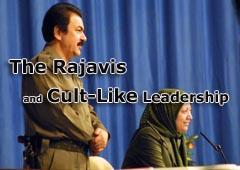
The portrait of the MKO as a democratic alternative of the Islamic Republic was drawn by the group’s skillful manipulative propaganda machine in the US Congress.  A long list of American formerly prominent politicians became permanent participants and speakers at the group’s rallies and lobbying campaigns to flatter and praise Maryam Rajavi.

The MKO, in its turn, allocates a highly focused part of its propaganda on the support it gains by the side of American infamous high profiles such as John Bolton. A highlighted icon on the group’s website demonstrates several speeches by American figures in support of the cult of Maryam Rajavi. Definitely, the MKO propaganda is highly proud of having the support of a number American warmongers who do not believe in engagement with Iran.  

Daniel Larison of the American Conservative makes fun of the US mainstream figures who have been deceived by the group’s propaganda apparatus. He points to Hugh Shelton, a former Chairman of the Joint Chiefs who “is opposed to diplomacy with the Iranian government, because he insists that Tehran can’t be trusted to honor its agreements”. [1]

Larison ironically notifies the deceitful approach of the MKO that is deeply trusted by certain American politicians. He suggests, “Leaving aside how crazy it is to spurn diplomacy because governments sometimes lie and break their promises, there is something especially weird about an argument that simultaneously promotes the cause of the MEK while complaining about Iranian deceit.”[2]

 “As it has sought to rehabilitate itself in the West, the MEK has claimed all sorts of spurious, self-serving things about what it represents,” he reveals the hypocrisy of the MKO. “Despite being a bizarre authoritarian cult with Marxist and quasi-Islamist views, it now pretends to be exactly what Westerners want an Iranian exile group to be.”[3]

In addition, the American Conservative correspondent clarifies that manipulated Western sponsors of the MKO do not care about the fraudulent attitude of the group as long as it runs their agenda against Iran. “It doesn’t matter to the MEK’s American fans that it is lying about its political views, and they are obviously not worried about reciting those lies for Western audiences,” he writes. “Indeed, it has so completely hoodwinked them that they think it should be rewarded with American support.”[4]

“The shilling for this group by many prominent American former officials and politicians is one of the more disgraceful displays of the last decade, and as long as it continues it should be held up for derision”, he conclude. [5]

 This is added to covert spying and military cooperation the group has managed with Israel despite its old history of anti-Zionism ideology. The president of National Iranian American Council (NIAC) Trita Parsi states the MKO’s Long time hostility against Israel: “The MEK’s history of violence and anti-Israeli activities is long and bloody. In the 1970s, it established deep ties with Yasser Arafat and both provided and received training from the PLO fighters… Massud Rajavi, the head of the MEK, greeted Arafat in Tehran with a Kalashnikov as a welcoming gift.”[6]

NIAC’s president suggests that the bizarre mixture of Islam and Marxism in the ideology of the MKO had made it totally hated by Israel since the group “fell in both categories”. According to Parsi, “Israeli diplomats knew that whoever seized power in Iran in 1979 would be no lover of Israel—whether it was the Islamists who opposed Israel on religious and ideological grounds, or the leftists who viewed Israel as an outpost for American imperialism in the region.” [7]

How came that the MKO turned out to become an ally of Israel?

Trita Parsi finds it not surprising in the MiddleEast where “Political one-night stands are not unusual” but he warns that “associating Israel with a cultish Iranian terror group is damaging to Israel on several levels.” [8]

This warning demonstrates the MKO’s extremely bad fame among intellectuals. It is notoriously known for its deceitful nature.

Mazda Parsi

Sources:

[1] Larison, Daniel, The Disgraceful Shilling for the MEK Continues, The American Conservative, August 9, 2014

[2] ibid

[3] ibid

[4] ibid

[5] ibid

[6] Parsi, Trita, Is Israel flirting with Iranian terrorists? , Open Zion,  May 15, 2012

[7] ibid

[8] ibid

August 21, 2014 0 comments
FacebookTwitterPinterestWhatsappTelegramSkypeEmail
USA

ISIS a pretext for US-sponsored regime change in Iraq

The ousting of Iraqi Prime Minister Nouri al-Maliki is part of a broader US plan for Iraq and the Middle East as a whole.

Against the backdrop of the war against the Islamic State (IS, formerly ISIS/ISIL), Washington has managed to kill two birds with one stone, as the saying goes. Not only has the US removed a political leader who had proven to be problematic due to his opposition to US military presence in Iraq, as well as his staunch support for Syria and President Assad, they have also created the conditions for the dismemberment of the Iraqi state.
The US and its allies are supporting de facto ‘independence’ for the Kurdish region in the north of the country, using the IS as a convenient pretext for openly arming and supporting Kurdish forces. Naturally, one should not look for altruism in Washington’s motives. Rather, this strategy is to benefit western oil companies with dollar signs in their eyes, licking their lips in anticipation of being able to deal directly with Kurdish President Barzani.

Additionally, Maliki’s ouster deprives Syrian President Assad of a key ally, thereby emboldening the IS and the other militants waging war against Syria. It provides further evidence, as if more were needed, that the political future is bleak for any Iraqi leader who dares to break from the script written for him by Washington. Perhaps most importantly, it allows the US and its allies to be the leading force politically in the war against the IS, an organization created by US policy and covert operations in the region.

In the sales and marketing industry, there is a term known as ‘solution selling’ whereby the salesperson either creates or exaggerates a problem, then presents his or her product as the invaluable solution. Indeed, this sort of sales strategy is precisely the approach Washington has taken in the region, and specifically in Iraq.

The IS disease

The IS has only very recently become an internationally recognized epidemic of militant Islamist extremism that must be eradicated at all costs. That international recognition came only when the organization began taking control of territory in Iraq, threatening Western oil and gas interests. While the IS was waging its brutal and vicious war against the Syrian people and government however, the IS was merely an afterthought, simply a group of extremists fighting the ‘brutal dictator’ Assad.

It seems then that the danger of ISIS and the necessity to eradicate it is directly correlative to US interests. Put another way, the IS is a useful tool in Syria and southern Lebanon where it creates chaos to the detriment of Assad and Hezbollah respectively, while in Iraq, the IS is dangerous where it threatens the US client regime in Kurdistan and Western oil interests. But of course, the detail consistently left out of most analysis of the IS problem is the simple fact that it is a creation of US intelligence and its covert war on Syria.

As early as 2011, the US CIA was involved in an elaborate and widespread program to covertly arm militant extremists in Syria in order to overthrow the government of President Assad. As the New York Times and other media outlets reported in 2012, the CIA was working with the Muslim Brotherhood and other groups along the Turkish-Syrian border to funnel weapons, communications equipment, and other military materiel to terrorist groups at war with Damascus. Despite vehement claims by Washington that only ‘moderate rebels’ were receiving such support, it is an open secret that much of those supplies ended up in the hands of then-ISIS, which already by 2012 was beginning to establish itself as a dominant fighting force in the Syrian war.

Perhaps it should then begin to make sense why, when ISIS launched its allegedly ‘surprise’ attack on the critical Iraqi city of Mosul in June, they were so well armed and equipped with everything from matching pickup trucks to anti-tank weapons, RPGs, and a host of other US-made equipment. Naturally, in the days and weeks following the attack, ISIS armed itself even further with confiscated Iraqi military equipment, also provided by the US. So it would be fair to say that, consciously or unconsciously, the United States helped to create and unleash the IS we know today.

No longer simply another militant organization among many, the IS has grown, thanks to US sponsorship, into the premier terrorist fighting force in the region, capable of engaging national militaries (Iraq, Syria) and other well-organized armed groups such as Hezbollah. In effect, the IS has become the enforcer of US foreign policy, a proxy force that furthers the US agenda without any significant US military presence needed. And yet, the IS is presented in the mainstream media as the greatest threat in the Middle East. Why so? Why were they no threat at all in Syria, but have become the great menace in Iraq?

Iraq, Maliki & Western interests

The US waged an aggressive war and occupation of Iraq for nearly a decade for the purposes of establishing a puppet government that would be amenable to Western economic and geopolitical interests. In many ways, that project failed as PM Maliki emerged as a strong, nationalistic leader who was unwilling to accede to the demands of the occupiers.

Washington wanted to permanently base US troops in the country, and Maliki rejected this proposal, demanding the permanent withdrawal of all US forces by the end of 2011. Maliki purged Iraq of the US-sponsored terrorist organization the Mujahideen-e-Khalq (MEK) which had waged a decades-long campaign of terrorism against Iran by closing down Camp Ashraf, the base from which the organization operated. Maliki also sacked two key figures in Iraq’s banking establishment, both of whom were close associates of neocon darling, and failed Iraqi presidential candidate, Ahmed Chalabi, thereby earning him the ire of Washington, which sought to maintain its grip on the purse-strings of Iraqi wealth.

But of course, these were by no means Maliki’s only ‘crimes’ in the eyes of the US. He also challenged Western oil companies looking to make massive profits off of Iraq’s vast energy deposits. Perhaps the best-known instance occurred in 2012 when ExxonMobil signed an oil exploration deal with the semi-autonomous Kurdistan region in northern Iraq. Maliki rejected the validity of the deal, noting that any oil contracts must be negotiated with the central government in Baghdad, rather than Barzani’s US-aligned government in Arbil. Maliki’s spokesman noted at the time that:

“Maliki views these deals as representing a very dangerous initiative that may lead to the outbreak of wars… [and] breaking up the unity of Iraq…Maliki is prepared to go to the highest levels for the sake of preserving the national wealth and the necessary transparency in investing the wealth of the Iraqis, especially oil… [He] sent a message to American President Barak [sic] Obama last week urging him to intervene to prevent ExxonMobil from going in this direction.”

It is no secret that Maliki’s strong-willed resistance to this deal, in addition to his refusal to pay ExxonMobil upwards of $50 million to improve production at one major southern oilfield led directly to the oil company pulling out of the lucrative West Qurna-1 project. Essentially then, Maliki took on the very powerful oil corporations (BP is no friend of Maliki either), seeking to get a better deal for Iraq. It would be safe to assume that the endemic corruption in Iraq would have made it easier for Maliki and his associates to enrich themselves by skimming off the top and/or receiving payouts from other oil interests. However, this is secondary to the primary ‘crime’ of challenging the hegemony of oil companies in Iraq.

And it is here that we see quite clearly why the US has been so keen on protecting their Kurdish puppet government, which really should be understood as a ruling clique centered on President Barzani and ex-President of Iraq Talabani, their families, and cronies. Since as early as 2011, Western oil companies sought to bypass Maliki and the legal government in Baghdad by making independent deals with the Kurds. Not only did they not want to pay the taxes that would be used to fund the recovery of Iraq from more than a decade of war, they attempted to play the Iraqi and Kurdish authorities off one another in a cynical ploy to more effectively and efficiently exploit the corruption and competition that exists in both.

Of course, it should be noted that the US, Israel, and other Western powers have long maintained very close ties with Barzani and the Kurds. A valid argument could be made that Kurdistan represents a forward base for US military power projection in Iraq and, particularly against Iran. Additionally, Israel has long maintained close ties with Kurdish authorities, both in terms of political support as well as covert intelligence and espionage-related activities. As Israeli scholar Ofra Bengio recently wrote in the pro-US, pro-Israeli publication the Middle East Quarterly:

“From the 1990s on, the American Israel Public Affairs Committee (AIPAC) maintained relations with Kurdish officials since ‘pro-Israel Jewish activists viewed support for the Kurds, a small nation struggling for self-determination in a hostile Arab neighborhood, as helping Israel reach out to a natural ally.’ According to Morris Amitay, AIPAC’s executive director from 1974 to 1980, ‘Our Israeli friends always appreciated our friendship with the Kurds.’ Amitay’s son, Mike Amitay, also served as executive director of the Washington Kurdish Institute (WKI) from 1996 to 2005.”

Naturally, the Israeli connection is not strictly a benevolent one. Rather, Israeli intelligence and special forces have been deeply intertwined with their Kurdish counterparts as far back as 2003 and the commencement of the second US war in Iraq (though likely decades before that). As Pulitzer Prize-winning journalist Seymour Hersh noted in 2004:

“The Israelis have had long standing ties to the Talibani and Barzani clans [in] Kurdistan and there are many Kurdish Jews that emigrated to Israel and there are still a lot of connection. But at some time before the end of the year, and I’m not clear exactly when, certainly I would say a good six, eight months ago, Israel began to work with some trained Kurdish commandoes, ostensibly the idea was the Israelis — some of the Israeli elite commander units, counter-terror or terror units, depending on your point of view, began training — getting the Kurds up to speed.”

So, as should be self-evident, Washington’s decision to use military force against ISIS is a cynical ploy to protect intelligence assets, economic interests, and create a nominally independent Kurdish state which will become integrated into the US-Israeli sphere of influence in the region. In order to achieve these strategic objectives, first and foremost, Maliki had to be gotten rid of.

And so, regime change has once again come to Iraq, this time through the backdoor. By arming ISIS in Syria, the US unleashed a monster in Iraq, which it now uses as the pretext for fulfilling the long-standing goal of de facto partition of Iraq. With Kurdish independence robbing Iraq of vital oil resources, it is unlikely that any ruling coalition consisting of Sunnis and Shia will effectively govern the country, regardless of the individuals at its helm. And this is precisely the point. Sadly, in the interests of the West, Iraq will now endure yet another civil war and period of misery and despair. There will be no economic development, no political progress, no peace. Exactly what Washington wanted.

Eric Draitser, RT

(Eric Draitser is an independent geopolitical analyst based in New York City and the founder of StopImperialism.com.)

August 19, 2014 0 comments
FacebookTwitterPinterestWhatsappTelegramSkypeEmail
Former members of the MEK

Masoud Banisadr joins Int. experts to discuss “UNDUE INFLUENCE” of extremist groups

Dr Masoud Banisadr is joining a panel of international experts at a workshop in London on the weekend of August 23-24, 2014. The workshop will address some of the major concerns relating to the undue influence of extremist groups and cults. Other participants include:

Steven Hassan – one of the world’s leading authorities on cults and undue influence, and author of two of the most acclaimed books on the subject – Combatting Cult Mind Control and Freedom of Mind: Helping Loved Ones Leave Controlling People, Cults and Beliefs. Steven has appeared numerous times in television programs and on radio shows to share his professional insights on undue influence as a Licensed Mental Health Counselor (LMHC). Steve has developed the BITE model for addressing undue influence. Freedom of minds.com

Masoud Banisadr – a representative of the group Mujahideen-e-Khalq Organization (MeK). He left the MeK in 1996 and has written of his experiences in the book Masoud: Memoirs of an Iranian Rebel (and more recently Destructive/ Terrorist Cults: A New kind of Slavery). He is active in raising awareness of undue influence and its links with terrorist organisations. Banisadr.info

–

PRESS CONFERENCE – August 22, 2014 at 1.30pm

On Friday August 22, before the two-day meeting a press conference will be held to draw attention to this issue, but also to highlight what some experts consider should be the approach to tackling the fallout. The press conference is for members of the press and AAWA invited guests.

Details of the press conference

22nd August 2014 at 1.30pm

London College, Victoria Gardens, Notting Hill Gate, London W11 3PE

For more Information:

International experts meet in London to discuss “UNDUE INFLUENCE” of extremist groups

Iran Interlink from AAwa.co

August 17, 2014 0 comments
FacebookTwitterPinterestWhatsappTelegramSkypeEmail
Mujahedin Khalq Organization's Propaganda System

Joining hands with the deceitful MKO terror-cult would be a huge mistake

The adept propaganda apparatus of MKO mixes the huge sums of money with huge sums of deception in order to portray the organization the way the audiences want it to be.

Among human rights advocates it wears the mask of human rights defenders and shows itself as a prototype of a favored society. As the most colorful motto of the group, the leaders use slogans in support of gender equality and freedom of women while there are documented and concrete evidences of their modern slavery system against their own members, especially, females who are suffering the worst physical, mental and sexual abuses within the MKO Cult affairs. Batoul Soltani referring to the wide aspect of oppressions imposed on women says:” What I saw in this organization was that women were merely tools in every level I witnessed.”[1]

While they hinder the process of the members’ relocation from Iraq, the Cult leaders show the MKO as an unarmed group, captured in Iraq and are in need of protection as victims of the US invasion in Iraq.

To the pro-war, for-regime change faction they pose as the most organized, legitimate opposition group who are after a west’s friendly establishment. The group plays the role of spies, serves as assassins – as it assassinated the Iranian scientists. It tries to poison the atmosphere of Iran – west relations and bashes to impede the Iran – world powers nuclear negotiations.

The strategy of deception is deep-rooted in the background history of the MKO as a fraudulent cult. As a group which believed in anti-imperialism struggle the MKO fought against the Shah of Iran along with other revolutionary groups. Despite its persistent denial today, MKO fully supported the US embassy takeover of 1997. In fact, on the day that the American Embassy was stormed by militant Islamists, the MKO issued a proclamation with the following words: “After the Shah, it’s Americans turn”.[2]

The group then turned against the newly established government of Iran and started a series of bombings and mortar attacks against both officials as well as civilians. When they assassinated post-revolution government officials on June28, 1981 with a bomb, the MKO said it was “destroying America’s nest in Iran” and Massoud Rajavi announced “we have rendered the regime without future and destroyed their contact with Imperialism by bombing this building and killing the people in it”.[3]

Then it allied with the arch enemy of the Iranian people and fought alongside Saddam Hussein in the 8-year long Iran-Iraq war. In 1992, The MKO leadership denounced the coalition forces efforts in expelling Saddam’s army from Kuwait and called it “colonial schemes and conspiracies,” and once again reiterated the organization’s anti-Americanism by calling the U.S. an “imperialist” entity.[4 ]

However when the MKO lost Saddam as its ally, it took all its adversaries towards the “American Imperialism” for granted and made all its efforts to garner the attention of the US.

Thankful to its deep-pocket and huge lobbying efforts the MKO could get itself delisted from the FTO list of the United States. It also has the support of a list of high profiles –mostly former – and congressmen of the US who view the group as a useful tool in promoting their agenda to pull the US into another disastrous war in the Middle East, this time Iran.

However, the weird point is that these war advocates who are after regime change in Iran, standing up issues like human rights and nuclear program, promote the terrorist cult of Mujahedin Khalq which has killed many civilians in Iran as well as having at one time targeted Americans.

Hue Shelton a former Chairman of the Joint Chiefs while accusing the Iranian government for deceptive behavior declares its opposition to Iran, 5+1 negotiations. [5]

Daniel Larison in his recent column in Conservative Magazine mentions this advocacy as a “disgraceful shilling” of prominent American former officials and politicians” and reiterates “doesn’t matter to the MEK’s American fans that it is lying about its political views, and they are obviously not worried about reciting those lies for Western audiences. Indeed, it has so completely hoodwinked them that they think it should be rewarded with American support.”[6].

Larison refers to the opportunistic substance of the MKO and describes the group as:” a bizarre authoritarian cult with Marxist and quasi-Islamist views, [that] now pretends to be exactly what Westerners want an Iranian exile group to be.” [7]

The MKO Terror Cult promoters should consider the fact that the least investment in the Mujahedin Khalq Organization and Joining hands with the group as a terrorist cult with no respect to human rights or democracy would be a historical mistake. 

A.Sepioud

References:

[1] PressTV, Comrades in Arms, August7,2014

[2]Open Democracy.net, MKO, US Congress’s support for Terrorism Mujahedin-e Khalq

[3] https://www.nejatngo.org/en/posts/5184

[4] Open Democracy.net, MKO, US Congress’s support for Terrorism Mujahedin-e Khalq

[5] Shelton, Hue, To Stop Iran Gaining Nukes, Stop Rewarding It for Lying, Newsweek, June8,2014

[6] Larison,Daniel, The Disgraceful Shilling for the MEK Continues, The Conservative Magazine, August9,2014

[7] ibid

August 17, 2014 0 comments
FacebookTwitterPinterestWhatsappTelegramSkypeEmail
Iran Interlink Weekly Digest

Iran Interlink Weekly Digest – 63

++ This week, Sahar Family Foundation has reported on yet another internal message from Massoud Rajavi to the residents of Camp Liberty and other MEK members, clearly stating that “I am not responsible for the overthrow of the Iranian regime, and as an ideological leader I am only responsible for your sins and your next life”. This has prompted many questions in Farsi sites, particularly ‘why did so many people get killed and why has three decades of war ended in this?’ The other issue raised is about the mental state of Massoud Rajavi himself; has he given up, is he engineering an exit, is he just mad?

++ This week Maryam Rajavi travelled to Geneva, as a publicity stunt, where she talked about everything under the sun, posing simultaneously as both a humanitarian personality and the leader of an opposition group. This prompted many victims of the MEK to write against what she said, naming her as ‘at the top of the list of human rights abusers and war criminals in the world’. On the political side she became a laughing stock because she claimed to have been instrumental in the “overthrow” of Nouri al-Maliki. Rajavi claimed that the Iraqis only achieved his overthrow by getting closer to the MEK ideology and understanding more what Massoud Rajavi is about. Massoud Khodabandeh commented on his Facebook : ‘Firstly, Maryam Rajavi apparently doesn’t know that Prime Ministers – especially those who have served twice – can be changed; unlike her own pseudo- presidency. Secondly, I don’t give it more than a month before she starts to claim that the new Prime Minister of Iraq is “an agent of the Iranian regime”, alongside UNAMI, UNHCR, ICRC, etc.’ Rajavi’s claim was so ridiculous that even many MEK supporters have been questioning the sanity of their leader. Al-Abadi is from the Badr faction and is much more hardline against Saddamists and the MEK, and has been at the forefront of efforts to get rid of them. An al-Dawa Party spokesman today said that al-Abadi is “determined to work toward the expulsion of the terrorist MEK from Iraq”.

++ This week the Iran Ghalam (Pen) website in Germany was hacked; the usual thing that Rajavi does when she runs out of other projects to spend Israel’s money; such as fancy clothes, plastic surgery and trips. Iran Ghalam sorted out the site and issued a short note to Rajavi titled ‘the disgusting face of terrorism’. The note reminds us of all Rajavi’s war crimes and crimes against humanity – including the recent support for ISIS and Jaish al-Adl, up to petty crimes like hacking sites. Iran Ghalam says that “by separating from this group we are vaccinated from hate and hatred, and if this is supposed to make us hate you, be assured, it doesn’t; we are neither provoked nor intimidated. The face of it is disgusting but we will calmly continue to educate and inform.”

++ Mojtabah Rashidi in Paris has reacted to Maryam Rajavi’s visit to Geneva. He reminds her of the hundreds of allegations of abuse from inside her organisation. He challenges Rajavi to answer just one question from the many hundreds which have been asked by hundreds of people, including insider Iraj Mesdaghi. “You don’t even dare answer one question”, says Rashidi. “To me, as someone who knows you, this sudden presentation of yourself as a humanitarian person is not a bold, but is rather a defensive action aimed at whitewashing the evidence that has come out against you.”

++ Irandidban published article about the MEK in Iraq saying, “you [Massoud Rajavi] announce things to people in Camp Liberty who are under your control and can’t even question it. It is clear that the MEK knows their problem has got worse now that al-Maliki has gone and al-Abadi from the Badr faction has arrived. The MEK hope has been to get support from the Pentagon and others to keep them in Iraq because they are collapsing, or to be given a place to be allowed to continue the cult culture, but now with the new PM that hope has disappeared as well.”

In English:

++ Daniel Larson in The American Conservative, tears apart those Americans who ‘shill’ for the MEK, stating that “Despite being a bizarre authoritarian cult with Marxist and quasi-Islamist views, it now pretends to be exactly what Westerners want an Iranian exile group to be. It doesn’t matter to the MEK’s American fans that it is lying about its political views, and they are obviously not worried about reciting those lies for Western audiences. Indeed, it has so completely hoodwinked them that they think it should be rewarded with American support.” He concludes: “Naturally, any exile group would like foreign governments to believe that it is the “main opposition” to the regime in its home country, but in order for this deception to work the foreigners have to be thoroughly oblivious and/or indifferent to the internal political realities of the country in question. If there is ever to be a “viable alternative” to the current Iranian regime, it will come from inside Iran and won’t have anything to do with a group that is best-known for its service to one of Iran’s worst enemies during the Iran-Iraq war. The shilling for this group by many prominent American former officials and politicians is one of the more disgraceful displays of the last decade, and as long as it continues it should be held up for derision.”

++ Ekatarina Kudashkina writes for Rianovosti, “We’re continuing to explore the US-led Global War on terror and try to understand why it has actually resulted in an increased terrorist threat around the globe.” Citing the MEK as one example of many, the article challenges the notion of America’s war on terrorism, asking has this “actually reduced the level of terrorism or has it increased the hatred and the radicalization of various groups or any of the individuals around the world…?”

++ Press TV produced an excellent documentary on sexual abuse inside the Mojahedin Khalq. ‘Comrades in Arms, Cases of sexual abuse by MEK Leader Massoud Rajavi in Camp Ashraf’

Synopsis:

People’s Mujahedin of Iran or the MEK is a terror entity responsible for thousands of civilian death in post revolution Iran. See how this group has been more of a dark CULT fraught with corruption and harassment. Comrades in Arms unfolds the story of those women who fell for the deceptive slogans of the MEK. Looking for a brighter future these women ended up in Camp Ashraf, where a fate worse than death awaited them. Masoud Rajavi, the leader of the organization had come up with a new idea about marital life; it was detrimental to the future of the organization. For him, marital love was a shackle that could impede the progress of his plan.

Therefore, Rajavi called for a compulsory divorce according to which all MEK members had to get divorced. But that was not the end of the story. While he forbade his men from having sexual relations with their wives, he decided to take their place. As a result, he turned Camp Ashraf into a big harem where he could have his female comrades in arms night and day. Risking their lives, however, some of the sexual victims managed to escape from the camp to show the true colors of Rajavi, once their spiritual leader and now the most lecherous man in the world they know.

++ Mazda Parsi writing for Nejat Bloggers revisits the Villepinte show in June, asking whether the short term gains of the paid speakers will outweigh the long term detriment to them. Pointing out that the gathering of Iranians consisted of all non-Iranians, Parsi questions “why this large number of non-Iranians – especially Americans – who speak in favor of the MKO despite the numerous reports and documents that confirm cult-like undemocratic substance of the group?” The various answers given by these speakers are strangely more damning than supportive of the MEK as they depict the MEK as a mercenary force to be used for American interests.

++ The UNHCR published a report ‘Update No. 11 – Conflict in Iraq continues to affect residents of the Hurriya Temporary Transit Location’. Anne Khodabandeh wrote in her Facebook, “This is an important document issued by the UNHCR concerning the plight of individuals held hostage by the Rajavi cult (Mojahedin Khalq) in Iraq. The current figure of 2,700 differs from the 3,280 who were transferred from Camp Ashraf to Camp Liberty in 2012. It would be helpful if the UNHCR would give a break down as to where the 580 ‘missing’ people are. Who has died, who has escaped and who has been moved to third countries.”
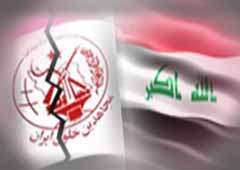
++ A report in Arabic today, translated by Iran-Interlink says, “A member of the political bureau of the Islamic Al- Dawa Party, Salah Abdul Razzaq, said today that Prime Minister-designate Haider al-Abadi, is determined to work toward the expulsion of the terrorist MEK from Iraq. Salah Abdul Razzaq, the former governor of the province of Baghdad, stressed that the Iraqi Prime Minister Haider al-Abadi would work to end the presence of the terrorist MEK in Iraq. Abdul Razzaq said that international bodies will work seriously with the new government to expel the MEK terrorist members and prosecute the criminal elements and restore the rights of the oppressed Iraqis.”
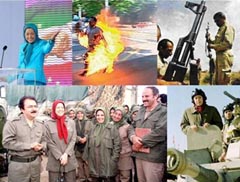
15 August 2014

August 16, 2014 0 comments
FacebookTwitterPinterestWhatsappTelegramSkypeEmail
Camp Liberty

Conflict in Iraq continues to affect residents of the Hurriya

Update No. 11

Conflict in Iraq continues to affect residents of the Hurriya Temporary Transit Location

The surge in conflict since June 2014 has continued across significant areas in Iraq. Violence has displaced hundreds of thousands of Iraqis, who have either moved internally or across borders to become refugees in the region. UNHCR and its partners have scaled up operations to respond to their urgent needs for protection and assistance.

The dramatic deterioration of the security situation in Iraq as a result of the fighting is equally worrying in the context of the efforts – on-going since 2011 – of UNHCR and the United Nations Assistance Mission in Iraq (UNAMI) to find relocation opportunities outside Iraq for former residents of Camp New Iraq (formerly Ashraf). Approximately 2,700 people reside in the Hurriya Temporary Transit Location (TTL) near the Baghdad International Airport (BIAP).

The residents suffered three separate rocket attacks in 2013, each of which resulted in deaths and injuries. In addition, an attack against Camp New Iraq in September 2013 left 52 dead and seven persons missing. The escalation in conflict across Iraq leaves residents of the Hurriya TTL open to significantly heightened security risks.

In light of the current situation, UNHCR urgently renews its calls upon governments of other countries to admit residents and to find ways to offer long term solutions to all. If long term solutions cannot be made available immediately, the urgent need to relocate the residents would justify an extraordinary evacuation to a temporary platform from where they could be permanently relocated to a third country. UNHCR stands ready to assist states in achieving this.

UNHCR deeply appreciates the measures taken by some countries already to relocate residents to situations of safety and security. These measures contribute greatly to international efforts to find solutions for this group of people.

UNHCR recalls that all residents of the Hurriya TTL registered with UNHCR are persons of concern to UNHCR. They are thus entitled to protection against expulsion or forced movement to any place where their lives or freedom would be threatened. The Memorandum of Understanding between the Government of Iraq and the United Nations explicitly recognizes that residents benefit from the principle of non-refoulement.

UNHCR continues to call upon the Government of Iraq to take all possible measures to ensure the safety and well-being of residents, including ensuring access to life saving medical treatment.

UNHCR,Geneva

August 16, 2014 0 comments
FacebookTwitterPinterestWhatsappTelegramSkypeEmail
The MEK Expulsion from Iraq

Leading Al-Dawa Party: al-Abadi committed to expulsion of Mojahedin Khalq

A member of the political bureau of the Islamic Al- Dawa Party, Salah Abdul Razzaq, said today that Prime Minister-designate Haider al-Abadi, is determined to work toward the expulsion of the terrorist MEK from Iraq.

Salah Abdul Razzaq, the former governor of the province of Baghdad, stressed that the Iraqi Prime Minister Haider al-Abadi would work to end the presence of the terrorist MEK in Iraq.

Abdul Razzaq said that international bodies will work seriously with the new government to expel the MEK terrorist members and prosecute the criminal elements and restore the rights of the oppressed Iraqis.

Translated by Iran Interlink

August 16, 2014 0 comments
FacebookTwitterPinterestWhatsappTelegramSkypeEmail
Mujahedin Khalq; A proxy force

Embracing the MKO, Success in the Short Term, Disaster in the Long Term

Regarding heavy expenses and large amounts of money, energy and time the Mujahedin Khalq Organization (the MKO) spends to portrait itself as a pro-democracy movement, its so-called Great Gathering in Villepinte Paris, was expected to be addressed by at least a few Iranian political and intellectual figures, as it is usual in other oppositions’ meetings and conferences. The large group of speakers who addressed the gathering almost entirely included foreign politicians, particularly American former high profiles.

The absence of Iranian prominent figures in the MKO propaganda indicates the unpopularity of the group among Iranian diaspora although large number of audience were bused to the hall from different parts of Europe. Speakers were offered first class flights and luxurious hotels in Paris to address the bused audience.

 But, why this large number of non-Iranians –especially Americans- speak in favor of the MKO despite the numerous reports and documents that confirm cult-like undemocratic substance of the group ?

Ray McGovern, an ex-CIA operative was one of those individuals –lesser known than the heavyweight list that supports the cause of the MKO in the US—who are enough concerned and informed about the dark record of the  group. McGovern explained the use of the group in the US to Monitor in February 2005, years before the group was removed from the list of terrorist organizations of the State Department:

 "Why the U.S. cooperates with organizations like the Mujahedin, I think, is because that they are local, and because they are ready to work for us. Previously, we considered them a terrorist organization. And they exactly are. But they are now our terrorists and we now don’t hesitate to send them into Iran….for the usual secret service activities: attacking sensors, in order to supervise the Iranian nuclear program, mark targets for air attacks, and perhaps establishing secret camps to control the military locations in Iran. And also a little sabotage."[1]

At the time, Pat Long a former department manager in the military secret service, also said to Monitor, “Global Option has been taken up as buffer by the Pentagon in order to hide the Pentagon’s relations with a terrorist organization from the public.”[2]

The ex-civil servant of Pentagon secret services added: "Secret Services adopt security measures in their operations to which we can’t link the orders of government. So, if the operation fails, one can claim that the government has had no role in it and that there were other hands involved.”[3]

Pat Long predicted the puppet role of the MKO for the world powers. "They are again in business,” she said. “This time not beside Saddam Hussein but at the side of the US: always useful, always a puppet in the hands of powers."[4]

As Saddam Hussein’s private army during the 1980s and the 1990s, the MKO shifted to serve the US and Israel in the following decades. Karen Kwiatkowski, ex Pentagon official notifies, "MKO is ready to do things over which we would be ashamed, and over which we try to keep silent. But for such tasks we exactly use them."[5]

Considering the fact that the Cult of Rajavi is such an opportunistic group that may resort to various powers from time to time depending on its regional situation, Elizabeth Rubin of The New York Times warns western Politicians, "MEK is not only irrelevant to the cause of Iran’s democratic activists, but a totalitarian cult that will come back to haunt us." [6]

However, the MKO elements are almost the only Iranians who are seen in the halls of the US Congress “mingling with Hill staffers and representatives”.

Congressional support for the MKO as a cult-like terrorist entity is widely questioned because the leaders of the MKO operate their organization autocratically, stifling opposition within the group and fostering a cult-of-personality around Massoud Rajavi and his wife, Maryam. Practically the MKO isolates its members from the outside world, manipulating and abusing them in its modern slavery system. The mind controlling and brainwashing structure of the cult defy everything that democracy represents.

If the cult of Rajavi comes to power in Iran, it would continue its quest of goals that are contrary to democracy and increase the likelihood of continued terrorist activity, perhaps building a nuclear bomb. By the way, embracing the MKO is finally a lose-lose game for both its supporters and the group.

Mazda Parsi

References:

[1]  Schmidt, Markus & Goetz, John, US Government’s Secret Plans for Iran, MONITOR – WDR TV, Germany, February 3, 2005

[2] ibid

[3] ibid

[4] ibid

[5] ibid

[6] Rubin, Elizabeth, An Iranian Cult and Its American Friends, The New York Times, August 13, 2011

August 13, 2014 0 comments
FacebookTwitterPinterestWhatsappTelegramSkypeEmail
Human Rights Abuse in the MEK

Cases of sexual abuse by MEK Leader Massoud Rajavi in Camp Ashraf

Comrades in Arms, Cases of sexual abuse by MEK Leader Massoud Rajavi in Camp Ashraf

blank

Synopsis:

People’s Mujahedin of Iran or the MEK is a terror entity responsible for thousands of civilian death in post revolution Iran. See how this group has been more of a dark CULT fraught with corruption and harassment.

“Comrades in Arms” unfolds the story of those women who fell for deceptive slogans of the MEK. Looking for a brighter future these women ended up in Camp Ashraf, where a fate worse than death awaited them. Masoud Rajavi, the leader of the organization had come up with a new idea about marital life; it was detrimental to the future of the organization. For him, marital love was a shackle that could impede the progress of his plan.

Therefore, Rajavi called for a compulsory divorce according to which all MEK members had to get divorce. But that was not the end of the story. While he forbade his men from having sexual relations with their wives, he decided to take their place. As a result, he turned Camp Ashraf into a big harem where he could have his female comrades in arms night and day. Risking their lives, however, some of the sexual victims managed to escape from the camp to show the true colors of Rajavi, once their spiritual leader and now the most lecherous man in the world they know.


To download the video file click here

Transcript:

 Batoul Soltani:

I’m Batoul Soltani, a resident of Germany. I was born in Isfahan. I’ve been living in Germany for more than four years. Before that, I was in the MEK for 20 years and before that I was in Iran for 20 years.

We were pursuing more ambitious goals and looking for a better tomorrow thinking that they – according to their slogans – would bring people more democracy or a brighter future. Looking for such ideals, we fell for their slogans and joined their organization. We had passed the point of no return.

What I saw in this organization was that women were merely tools in every level I witnessed. After all, 20 years is not a short period of time. And what we witnessed from the beginning – though my marriage conformed to social norms and was not an organizational marriage – I encountered women who were devoid of emotional involvement with their husbands but the organization had made them marry. For the first time, I saw compulsory marriages in the organization. It’s very difficult to love someone by force. I think that it’s very difficult for a woman to do so.

 Zahra Goini :

I’m Zahra Goini. I was born in Tehran in 1968. In November 1986 I got married. On March, 25, 1987 I left Tehran for my honeymoon till now that I’m abroad.

It was the New Year, 1987. He said that we were going on our honeymoon. I told my family, “Look! He says that he has decided to go.” He said, “No, Zahra is lying. I don’t want to go. We are going on our honeymoon. Look! This is my ticket to the south and then we’ll make a pilgrimage to Mashhad, God willing.” As we arrived in Shiraz he told me that we might not return. We arrived in Pakistan, I think a few weeks later. It was a long journey. It took us a while to get there. We were taken to the MEK’s base. All of a sudden, an official there came and said – when my husband talked to him – my husband said, “You can return to Iran.” I was stunned, “Seriously, shall I return to Iran? Why have I come here? You’re my husband. I’ve come with you. Where shall I go alone? What shall I say? No, I’ll stay; even if you go to hell I will be with you.” Meanwhile, the organization had taken all of our money and gold. Anyway, we gave the money and two days later they told us that we would go to Iraq, albeit with new passports.

 Batoul Soltani:

When we arrived in Iraq we were taken to the smartest hotels the organization was using as its bases and there was not the least sign of war there. We didn’t feel the war because Saddam had given the best hotels to the organization and the organization was using one of them as a school, one as a place for taking care of children, and one as a residential place for couples to see each other. At that time, organizational marriages were on the rise for four to five years. Of course the organization would not allow raw or junior recruits but those who were at least commanders of divisions to marry women. Everything was obligatory there: organizational obligations, organizational do’s and don’ts, organizational rules, and relations that would become tense and tenser every minute.

 Nasrin Ebrahimi :

I’m Nasrin Ebrahimi. I’m 31 years old. I live in Switzerland. I’ve been living here for about eight years. Before that, I lost ten years that could have been the best years of my life in Iraq, in the Mojahedin-e-Khalq, an organization which was very easy to enter and very difficult to exit from.

As for Camp Ashraf, it’s very painful to talk about it. It’s like to be in the Guantanamo Bay detention camp for years and experience the sufferings and then talk about it.

Well, at that time he completely separated men and women from each other. We women moved to another center. We would never see a man, unless in our only street called 100 Street where we would see a man in the distance or in meetings held by Masoud Rajavi or Maryam Rajavi but we were not allowed to see them. They would sit on one side and we on the other side. If we looked at them we had to explain why. That’s why when walking we had to hold our head up or down. Our eyes shouldn’t meet a comrade’s eyes.

 Zahra:

Suddenly, they said that Iran’s government had accepted UNSC resolution 598. Soon after, we had to prepare ourselves. Many forces joined us from abroad. What for? We wanted to go to Tehran. “Yesterday Mehran, today Tehran” became their slogan.

Not only weren’t the women prepared but also the men were not as well. They pushed all in Operation Eternal Light by force.

In Operation Eternal Light I was hit in the arm by shrapnel and since it was wrapped up badly – they said that you would see the doctor in ten minutes and he would unwrap it – my arm went blue because it wasn’t treated on time. After the operation, the doctor came up to me and said, “Look! They had sent a letter about you saying that this arm had to be cut off and we had to have your signature. I feel sorry for you who are a young woman to have your arm cut. It’s no problem if you were a man. But you are a young woman. I don’t know why they think so. You’ll have children in the future and have to carry your children in your arms. With one arm, it’s difficult for you. I didn’t cut your arm. I did the operation on my own initiative. You have only a three-day chance of recovery.”

It used to be much bigger. In an operation in Frankfurt they made it small. They performed a skin transplant as big as this and here they had sewn this way to here. My arm was always like this.

They threw us into Operation Eternal Light by force. They forced us to get divorced. Masoud used to say, “You who got stuck behind Charzevar Canyon, you woman or you man what were you thinking about? When you got stuck in the canyon you were thinking about the opposite sex. You as a woman were thinking about your husband and you as a man were thinking about your wife. That’s why you couldn’t advance towards Tehran. Now you must divorce all including your children.”

 Masoud Rajavi:

I’m well aware. You brothers, what were you thinking about? Huh? Everyone must know well. And you sisters? We asked around hundreds – am I right, Maryam? – those who were in Operation Eternal Light in person and listened to them. Let’s remove all the obstacles in the way. This is a lesson of union and unity.

 Batoul:

It was a very difficult process for me as it was a mental torture for me. I was with a group of people who kept talking about divorce and hate children and mutual life. It was not accepted for them to have children. It was a sin for the people I was with to sleep with their spouses. Divorces had begun from the upper echelons of the organization. The officials were divorcing their wives according to the plan formulated by Masoud Rajavi. The first one was Maryam Rajavi who had divorced Mehdi Abrishamchi and married Masoud Rajavi. They were expanding the scope of the plan into other women and men started from the leadership to other members.

 Mehdi Abrishamchi:

 In the name of God; in the name of Masoud and Maryam.

 As an MEK member, as a little child of the MEK I have nothing to say except to congratulate Masoud and Maryam with all my heart and soul and that I’m brimming with ideological joys.

Batoul:

Suddenly, I saw my commander come up to me and said, “Well, this sister has charge of you.” I asked, “Sister, won’t my husband come here to see his baby?” She answered, “No, your husband has got divorced and he won’t come here. Don’t ask about him anymore.” Close to tear, I asked, “Divorce?! So what about me? So what about this baby? Why …?” She interrupted me, “No why, in the army you cannot ask why.”

 Nasrin:

Is it possible not to think about love?! There used to be sessions in which we talked about love, affection, husband, wife, the past, which were called “era and weekly ablution”. When people talked you could realized that they thought about those issues. Personally speaking, I had a hair clip my boyfriend had given me in Iran. I had kept the hair clip and I held it dear. One may say that a hair clip is no big deal. But for me it was so valuable that even when I was to flee Ashraf Camp the first thing I took with me was the hair clip he had given to me. And when I got Tifu, he was the first person I called.

 Masoud Rajavi:

 This Maryam I’m writing equals the first in charge, which equals a full payment criterion, which in turn means 100 on 100. We chose her as a role model for you, which equals the connecting ring between you and what I want.

 Batoul:

At this point, Maryam Rajavi would tell us, “You women, after divorcing your husbands, you should marry Masoud.” And we always considered her words as an ideological thesis. I could never imagine that her words would be put into practice some day and I would have to sleep with Masoud. I really thought that it was merely an ideological discourse. As for Maryam Rajavi herself, I couldn’t imagine that Masoud had sexual relationship with her. I couldn’t imagine it.

 Maryam Rajavi:

 Let me draw it in this diagram. Look, this is a diagram for every individual with gender on top and individuality immediately below it. I’ll explain it. Immediately individuality. This diagram has a dividing line with gender on one side and individuality on the other side. Here is the highest point of individuality. Below it there are all personal problems lined up.

 Nasrin:

Maryam Rajavi used to hold many meetings for us, very long meetings. She would hold many meetings especially for women. She said, “We women all have only one husband who is Masoud Rajavi.” She even said, “You have the most handsome and the best man in the world. So what’s wrong with you?”

 Maryam Rajavi:

 … Here, the highest value is melting into the leadership, which means a perfect union whose fruit is getting rid of all personal shackles.

 Nasrin:

She said, “Since women have mostly emotional problems you consider him as your husband.” But her words cut no ice with me. Not at all. For me it was just a talk. That’s all.

 Batoul:

One day a ceremony was held – it was the wedding ceremony – in which Masoud Rajavi performed the marriage ceremony and the women stood up one by one saying, “Yes.” Before the ceremony, they had insisted that everybody should be clean and tidy and take a bath etc. Their insistence on being clean aroused my suspicions that what all that insistence was for; that why we had to have a clean, hairless body. “Are we supposed to strip naked in front of someone,” I ask myself. She even told us to perform our ablutions and be clean and tidy and wear our best, new clothes and clean socks. Before the ceremony once more they told us, “Anybody who is not clean enough or haven’t taken a bath or need to wash herself go and make herself clean.”

We were in Badizadegn Camp when informed of a pool meeting exclusively for the leadership council. At that time, I was a member of the leadership council. We attended the meeting and listen to music playing there. All of a sudden, Masoud and Maryam entered the hall. Masoud was in leisure clothes; he was wearing a T-shirt and Maryam had a soft, pink, silk dress on with her hair brushed. They entered the hall. Maryam stood behind Masoud. She didn’t sit down beside him. Masoud took a look at us and said, “Maryam, why have you brought them here again?” and that moment I realized that it was not something new. Maryam answered, “They’ve come here to unite you. They are your wives. They’ve tied the knot with you and want to be united with you. And these empty seats are for them.” I asked, “Sister Maryam, why don’t you take a seat there?” She said, “This is for each and every Masoud’s wife.” I wondered what was going on. When she said so I found some women with their headscarves fallen on the ground or some with no headscarves at all. I wondered why they had taken off their headscarves in front of brother Masoud. I told one of them about her headscarf. She said, “No problem! Who’s my nearest man than Masoud? “I love him so much. There’s no one nearer to me than Masoud.” I can remember all these scenes clearly.

 Zahra:

One of the women stood at the podium saying, “Ladies, feel at home. Take your headscarves off. You dance for the leader.” I said, “We dance for the leader?! I used to be reproach for letting my hair out of the headscarf. Now you tell me to take my headscarf off and put on those clothes?!” That very woman, Batouleh Rajaee told me, “Haven’t you got divorced? You gave your hand to Masoud via Maryam. Now put Maryam aside and give your hand directly to Masoud. Now you must do your best dance for him.”

Nasrin:

They would give us freedom on purpose and encourage us to dance with music when played. The commanders would say, “Be at home! He’s your brother. Don’t you call him brother? Show your love and affection towards him.” They even liked us to kiss him. They prompted us to kiss Rajavi.

 Zahra:

At first, we danced in uniform. Just two days later, that is the day we were supposed to dance – no one knew – they brought us silk fabrics. Now we had to see how those fabrics would go with our faces. Could the color brighten the complexion? After all, I was one of the candidates for dancing.

 Batoul:

I suddenly realized that the senior members of the leadership council began to take their dresses off. When about 25 senior members of the leadership council began to take off their dresses and stripped naked other women who were of my rank followed suit and Maryam Rajavi and others were encouraging, “This is your pool. You should dive into it. Common on! Get undressed in front of the leader.” The meeting went on this way; for about three to four hours they were dancing. Masoud, though at first pretended to be discontent over our presence there, sat comfortably eyeing up us all.

Nasrin:

I can remember that Masoud Rajavi was staring me in the eyes. I didn’t know what I had to do at that moment. I began looking at somewhere else. That’s while we were told to say something to Masoud when he would look at us; something like “I love you” and to make a fuss over him. “The brother doesn’t look everybody in the eye.”

Rajavi would choose those who were pretty. That was overt. One could see that. It was not covert. He wasn’t even-handed with all. He would really handpick certain women, chat with them in front of other women. He would talk to them to go to him.

 Batoul:

Masoud would hold the so-called “liberty dance session” with the help of Maryam reasoning that, “When you see Masoud and another woman making love it will cleanse you of jealousy. It will prevent you from being jealous for other women.”

 Nasrin:

Rajavi would make us a gift of underclothes and towels. Maryam Rajavi used to stand beside him. We would pass by … At that moment you had to show how much you loved your leader or husband as Marayam Rajavi used to say. He would blow into our faces making some gestures. He would stare somebody in the eye. He did such things. Most of the time, he himself gave us underclothes or things like combs, towels and suchlike. Sometimes, Maryam Rajavi would rub them to her face and then gave them to Masoud and he gave them to us.

To get closer, he would come to our dormitories. We women were located in three separate units. To stimulate us he would say, “I’m going to unit 14 to stay the night there.” And commanders would make us ask him to come to our dormitories and be with us. “Oh brother, come and sleep with us for God’s sake. Don’t go there.” It was a childish thing; the scene was disgusting for a viewer from outside. But since we were involved in it we couldn’t realize its ugliness.

 Zahra:

This was his old slogan that women were open to exploitation but we were exploited most in the organization. “You are women?”, “Yes”. “The same as men?”, “Yes”. “Men clean tanks, why don’t you women?” They sexually exploited us. We women were subjected to the worst kinds of exploitation under the name of giving women independence. They claimed that they were after equality for women and whatever they were deprived of through history.

Maryam Rajavi:

Yes, we believe that women and men are equal. We even believe that an exploited woman has more potential than an exploited man to progress and can achieved competence like him, but not haphazardly.

Batoul:

When I went to the place where Masoud’s bedroom was located in … it was a building in Badizadegan Camp the first time I went there. It was in the leadership’s residence. There was a room which was Masoud’s bedroom with a double bed in it and everything was ready for … but Masoud was not there then. I was there waiting from 8 p.m. until midnight when Masoud came. It was the first night we were together until morning. That night I saw another exploitative relations and an act that I could never imagine Masoud Rajavi doing.

It used to be done in Parsian Camp until the fall of Saddam. We would even go for a swim with Masoud and do anything. After the fall of Saddam, Parsian Camp closed down. I couldn’t imagine that such a thing would continue. I was stunned thinking that such a huge number of people were killed in the war … He made me sick. That was one thing. The other thing was that I always thought that he only had such a relationship with me. I never knew that he had the same relationship with many other women. It was after the fall of Saddam that I was informed by some women that he had had the same relationship with other women.

When Maryam Rajavi called me to see Masoud at night it didn’t mean that I was in love with Masoud waiting with bated breath to see him or that I had an overwhelming urge since I had no husband. No, that was not the case. The only reason was that I couldn’t stand up against the organization when I was there. I knew that if I had fought them they would have done away with me. I couldn’t fight with them. I thought, “If I say no to them, what would happen next? Would they leave me alone? No. and this is not a subject to be discussed in the leadership council.” Then it would come to my mind that such and such a member of the leadership council who had disappeared mysteriously might have been killed or whatever. Later on, I had no doubt that they would kill anyone who disagrees with them in the leadership council. So I decided to let him do whatever he wanted waiting for a moment to save my body. There was some Naghmeh Hakami. She wasn’t ill or whatsoever. She died all of a sudden when there was a talk about melting in the ideological leader those years. There was another woman called Seddigheh. She died too. We wondered why she died since she was healthy. Zahrah Fayyaz died. Just like that. Zahra Nouri died. At that moment I thought, “Suppose Batoul Soltani died.” By dying I mean being martyred. They even exploited corpses.

Well, he plays God. I could see Rajavi’s true colors when I looked in astonishment at what he was doing. I wondered why marriage and sexual satisfaction was banned for all men while he exempted himself. The moments I was looking at him he found me bewildered and said, “You eyeballs are sexy.”

 Nasrin:

It appears that Masoud Rajavi slept every night with numerous women – at least as far as I know- with numerous, different women. On average, I would go every month or every two months to his bedroom.

It makes me sick when I hear the phrase “pure Mujahedins’ relations” because we saw the reality, because we know how a blatant lie it is. There are no pure relations in the organization. I haven’t seen relations so filthy as in the organization than in everywhere else. Isolated communities always have the filthiest relations. The more isolated, the filthier.

I attempted suicide because I had lost my hope completely. I made many pleas to them to let me leave the organization but they didn’t accept. I left no stone unturned but it was not possible. That’s why I attempted suicide. I liked to die because I couldn’t stand anymore. It was a difficult moment and my whole body was trembling when I was doing it. When I took the knife … I still can hear the sound of the knife when I put it on my wrist. I put the knife on my wrist and cut it and drop the knife. I had tied on an apron. My apron became soaked with blood. Because I was frightened and had lost a lot of blood I felt faint and fell on the ground. I had locked the door … I was terribly disappointed. I had locked the door but I didn’t know that the place I was in had another door from the street’s side and that door was open so a sister – as they used to say – called Shamsi came in and as she saw the scene she began screaming and others came in and took me to hospital by car.

After I survived the attempted suicide I felt as if I had been given another hope and had a new lease of life. I guess that I fled less than 20 days after my suicide. I fled immediately.

 Batoul:

To be honest, the thought of escaping struck me the day I saw Masoud doing that in 2000. Before that, I thought that Masoud wouldn’t do that – even if he was under pressure from Maryam Rajavi, as he claimed – but that night, that is the first night I went to Masoud’s bedroom and saw that the organization was not the matter and what mattered was sex and nothing else. I made my final decision to escape there.

It was November 2006. The next month that is in December I feigned a headache and illness and slept in the dormitory and didn’t go to work saying that I felt sick and had a headache etc. and then I could make my escape. I threw caution to the wind saying that either I would be caught, taken and killed or I would escape sound and safe. I couldn’t stand being there anymore.

Right now, he’s paying the hush money to those who have left him. Therefore, it’s so important for him to protect his reputation that he’s prepared to pay the highest price to keep his former people silent. I’ve seen many of them over these recent years and I know.

– By the way, what happened that we accepted what they said? The divorce thing, the separation from our children …

– Operation Eternal Light while untrained …

– Yes.

– I think the main reason was that we were cut off from the outer world. We were not in touch with our families, friends. We were not even allowed to love each other. We had learned to accept what the organization would say without objection. But poor are those who are still there.

– That’s right. I’m thinking about that because when I told Hajar, that is Kobra Tahmasebi that I would like to experience the life outside here she asked me, “Do you know what awaits you?” I answered, “I don’t care what awaits me. I want to go outside to know how much the sexuality you’re talking about is true. I want to check whatever you talk about. I want to see if a woman including myself goes out of here will pursue a simple life or … you say that I’ll be lead astray. You know, when I left there I realized that no, it depends on how one wants to live.

– How are you?

– Are you fine?

– Yes, thanks.

– Have you brought tea?

 Zahra:

I’ve got two children; one daughter, one son. I’m happy and I try to have the best for my children and give them the best not because they are my children but because I want them to learn to be honest. I teach my children to draw the line at any oppression; I teach my children to be as they are before they want to be for others. Every life has its ups and downs but I’m content with them all.

 Nasrin:

Since I left the MEK I haven’t just been pursuing my personal life. The guys loom large in my mind; those who we know how got stuck there and we know that none of them wants to stay there. That’s why we have been trying to help them half of our lives. We’ve talked to members of Parliament in Europe and influential figures to show them the real face of the organization.

They appear good, happy and beautiful in public but they are rotten to the core. Only we who were there know their real characters and therefore hate their appearances. It makes us sick when Maryam Rajavi delivers a speech. It taxes our patience to listen to her speech word by words because we know that she’s lying through her teeth. It makes us puke when she talks about women.

There are some people in Auvers-sur-Oise, Paris, France which is the cradle of freedom, who haven’t take one step outside Auvers-sur-Oise for 25 years and the only thing they do is cooking. There are such women here. How can we stand Maraym Rajavi when she appears in public putting on beautiful dresses and uttering beautiful words?! It’s really disgusting for us when we know the other side of the story. We told the French, “You whose country is the cradle of freedom host a cult whose members haven’t come outside this castle, this very small place for 25 years and you don’t know what’s going on inside.”

 Batoul:

That’s right that I have planned for my life and I’m living my own life and work or trying to earn good income to overcome my economic problems but as part of my job or what motivates me and I’d like to have it on my list of priorities and pursue it is that I want to be the voice of those friends and help them know the realities about the leader of the MEK, Masoud Rajavi who betrayed the trust of each and every member of the organization including my own husband, a person who himself may not know what has happened to him or that Rajavi has betrayed him but it’s my duty and the duty of those like me who left the organization. I’ve designed a website and try to make my voice and other women’s heard by the members or the public and let them know what we have gone through.

August 12, 2014 0 comments
FacebookTwitterPinterestWhatsappTelegramSkypeEmail
Mujahedin Khalq; A proxy force

The Disgraceful Shilling for the MEK Continues

The de-listing fight may be over, but that hasn’t stopped the Mujahedin-e Khalq‘s American cheerleaders from uncritically repeating its propaganda. Here is Hugh Shelton, a former Chairman of the Joint Chiefs:

The main Iranian opposition, the National Council of Resistance of Iran (NCRI), is a viable alternative to the Islamist regime, and we owe it a chance to build a secular, democratic, non-nuclear Iran. If anyone doubted the NCRI’s support base, a groundswell of more than 100,000 Iranians turned up in Paris last month for its annual rally, joined by top politicians, dignitaries and former national security figures, myself included. It was an enormous display of support.

Shelton is opposed to diplomacy with the Iranian government, because he insists that Tehran can’t be trusted to honor its agreements and shouldn’t be “rewarded” for previous deceptive behavior. Leaving aside how crazy it is to spurn diplomacy because governments sometimes lie and break their promises, there is something especially weird about an argument that simultaneously promotes the cause of the MEK while complaining about Iranian deceit. (The NCRI is the umbrella organization that the MEK dominates.) As it has sought to rehabilitate itself in the West, the MEK has claimed all sorts of spurious, self-serving things about what it represents. Despite being a bizarre authoritarian cult with Marxist and quasi-Islamist views, it now pretends to be exactly what Westerners want an Iranian exile group to be. It doesn’t matter to the MEK’s American fans that it is lying about its political views, and they are obviously not worried about reciting those lies for Western audiences. Indeed, it has so completely hoodwinked them that they think it should be rewarded with American support.

 It’s important to remember that the MEK and its umbrella group are not “the main Iranian opposition” or anything like it. For one thing, the real “main” Iranian opposition is still in Iran, and unlike the MEK it is not widely loathed by Iranians. Naturally, any exile group would like foreign governments to believe that it is the “main opposition” to the regime in its home country, but in order for this deception to work the foreigners have to be thoroughly oblivious and/or indifferent to the internal political realities of the country in question. If there is ever to be a “viable alternative” to the current Iranian regime, it will come from inside Iran and won’t have anything to do with a group that is best-known for its service to one of Iran’s worst enemies during the Iran-Iraq war. The shilling for this group by many prominent American former officials and politicians is one of the more disgraceful displays of the last decade, and as long as it continues it should be held up for derision.

By Daniel Larison

August 10, 2014 0 comments
FacebookTwitterPinterestWhatsappTelegramSkypeEmail
Newer Posts
Older Posts

Recent Posts

  • The black box of the torture camps of the MEK

    December 24, 2025
  • Pregnancy was taboo in the MEK

    December 22, 2025
  • MEPs who lack awareness about the MEK’s nature

    December 20, 2025
  • Why did Massoud Rajavi enforce divorces in the MEK?

    December 15, 2025
  • Massoud Rajavi and widespread sexual abuse of female members

    December 10, 2025
  • Facebook
  • Twitter
  • Instagram
  • Youtube

© 2003 - 2025 NEJAT Society . All Rights Reserved. NejatNGO.org


Back To Top
Nejat Society
  • Home
  • Articles
  • Media
    • Cartoons
    • NewsPics
    • Photo Gallery
    • Videos
  • Publications
    • Books
    • Nejat NewsLetter
    • Pars Brief
  • About Us
  • Contact us
  • Editions
    • عربي
    • فارسی
    • Shqip