
MKO dispatched members in Albania
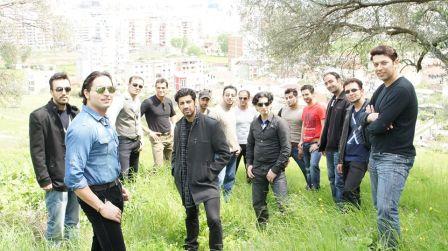
MKO dispatched members in Albania
Florida Republican congresswoman condemns Hamas
A Republican US congresswoman known for her staunch support for Cuban exile terrorists has drafted a 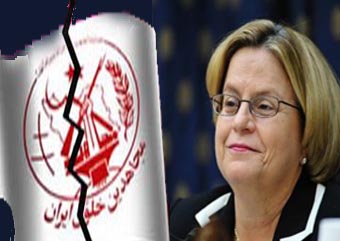 resolution condemning the Palestinian militant resistance group Hamas for allegedly using human shields in its asymmetrical warfare against Israel.
Reps. Ileana Ros-Lehtinen (R-FL) and Ted Deutch introduced the bipartisan resolution condemning what they call “the despicable use of human shields by Hamas.”
In the resolution, Ros-Lehtinen states:
Hamas has proven that it has no respect for innocent Israeli life with its continued onslaught of indiscriminate rocket fire on civilian populations, and it once again is showing it has no respect for the lives of the Palestinian people by using them as human shields. [Palestinian President Mahmoud Abbas] must demand that Hamas cease its attacks against the people of Israel and its use of Palestinians, including women and children, as human shields.
Ros-Lehtinen’s condemnation of Hamas for allegedly placing civilians in harm’s way has raised eyebrows among some human rights advocates, who point to her staunch support for Florida-based Cuban exile terrorist groups as proof of a double standard at work.
Orlando Bosch and Luis Posada Carriles masterminded the 1976 bombing of Cubana Airlines Flight 455, an attack which killed 73 innocent civilians and was the worst act of airborne terrorism in the Western Hemisphere before 9/11.
Both men enjoyed Ros-Lehtinen’s support. A Cuban exile herself, Ros-Lehtinen viewed the terrorists as “freedom fighters” struggling to liberate her homeland from Fidel Castro’s repressive communist regime. Ros-Lehtinen made the campaign to free Orlando Bosch from prison after he illegally entered the United States one of the key election issues during her first run for Congress. To secure Bosch’s freedom, Ros-Lehtinen turned to an up-and-coming and well-connected real estate developer named Jeb Bush, who lobbied his father —President George H.W. Bush —to free the unrepentant terrorist for “humanitarian reasons.”
Ros-Lehtinen also supports the Mujahedeen e-Khalq (MEK), an Iranian exile terror group that carried out an assassination campaign targeting US officials in the 1970s, and more recently has been responsible for many attacks against the Iranian regime and infrastructure, acts committed with the blessing of the United States and Israel.
While Israeli government and military officials, as well as prominent supporters abroad, have accused Hamas of using civilians as human shields, there is no credible independent proof that the militant group, which is considered a terrorist organization by Israel and the United States, is doing so.
Such accusations are not new to the current Gaza conflagration; Israel also accused Hamas of using human shields during its 2008-2009 Cast Lead invasion of the tiny, densely populated Palestinian enclave of 1.8 million inhabitants. Israeli forces killed 926 civilians during the offensive, including 429 women and children.
Contrary to Israeli claims, the international human rights group Amnesty International found “no evidence Palestinian fighters directed civilians to shield military objectives from attack, forced them to stay in buildings used by militants or prevented them from leaving commandeered buildings.”
Amnesty and other human rights groups did, however, determine that Israeli forces used Palestinian human shields, including children, during Cast Lead. Israel’s use of human shields had been so widespread and controversial among Israeli troops that the nation’s highest court banned it in 2005.
Unhappy with the court’s decision, the Israel Defense Forces (IDF) asked the High Court of Justice to reconsider its ban on the use of Palestinian human shields, a war crime the IDF euphemistically referred to as an “early warning procedure.”
Critics of Israeli policies and actions claim Israel is accusing Hamas of using human shields in order to deflect blame for the more than 300 innocent civilians, including entire families and dozens of children, its forces have killed during Operation Protective Edge. More than 1,500 Palestinians have also been wounded. Two Israeli civilians have been killed by Islamic militants.
The United Nations says nearly 80 percent of those killed by Israeli forces have been innocent civilians.
Israel counters that Hamas operates in crowded civilian neighborhoods in Gaza and uses civilian infrastructure, including homes and schools, to store and launch thousands of rockets indiscriminately against Israeli cities and towns.
According to Israeli officials, more than 1,600 rockets have been launched against the Jewish state from Gaza.
Hamas fires rockets into Israel as an act of resistance of decades of illegal Israeli occupation of Palestine. Although Israeli forces withdrew from Gaza in 2005, Israel maintains tight control over the tiny territory, causing great suffering for its residents, most of whom are refugees.
Brett Wilkins, Digital Journal
Mansoureh Karami, the wife of assassinated Iranian nuclear scientist Masoud Alimohammadi, shows the leather satchel, a bound PhD thesis and eyeglasses case used by her husband the day of his death in 2010 and riven with pellets sprayed by a bomb attached to a motorcycle, in Tehran, Iran, on July 15, 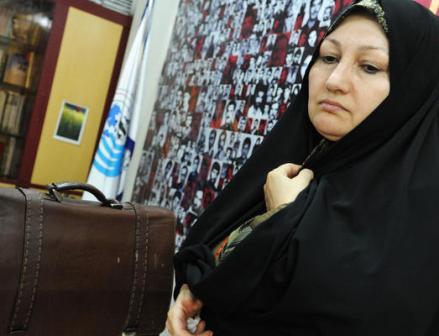 2014. Mr. Alimohammadi was the first of five “nuclear martyrs” scientists killed as part of a US-Israeli covert war against Iran’s nuclear program that has assassinated scientists and included the Stuxnet and other viruses. Iranian Majid Jamali Fashi confessed that he had been recruited by Israeli intelligence for the killing, trained by Mossad in Israel, then sentenced and executed in Iran.
The wife of the first scientist to be assassinated speaks about her husband’s growing fear of a net closing around him – and of meeting his Israeli-trained assassin before his execution.
Tehran — There were no signs of trouble the morning of the assassination.
Iranian scientist Masoud Alimohammadi and his wife woke before dawn and prayed together. Then she prepared breakfast while he made a list of things to do that day.
“He was a very precise person and always wanted everything to go smoothly,” Mansoureh Karami recalls about her husband.
morning Mr. Alimohammadi – a balding man with a thick mustache, close-set eyes, and dozens of published academic papers – said goodbye three times to his wife: when she gave him his packed lunch, as he tightened his shoe laces, and as he got out of his car to close the house’s gate behind him.
That’s when the explosion came.
A remote-control bomb attached to a motorcycle nearby killed the particle physicist with a lethal spray of metal pellets, giving Iran its first “nuclear martyr” and sending shockwaves through Iran’s scientific and nuclear community.
By the time the fifth nuclear scientist was killed, it was less of a surprise. Those working on Iran’s nuclear program had been watching their backs for years.
The covert war waged by the US and Israel against Iran’s nuclear program has seen the assassination of five Iranian scientists, malicious computer viruses like Stuxnet, espionage, and unexplained explosions, as well as several apparent attempts by Iran to fight back in kind, with largely unsuccessful operations from India to Georgia to Thailand.
Iran’s “nuclear martyrs” have been a rallying point for the country’s nuclear program and its “right” to uranium enrichment for years, regardless of the high cost of sanctions. Negotiations in Vienna today seek to curb that program to ensure it can never produce a nuclear weapon – an aim Iran says it rejects.
Begging for forgiveness
Alimohammadi feared being targeted for his clandestine work, even though few beside his wife knew that he was anything more than a lecturer, or that he had any nuclear expertise. Alimohammadi detected interest in his work outside Iran that prompted him to travel less.
His assassin was an Iranian operative recruited and trained by Mossad, the Israeli spy agency. News reports from Israel indicate that a televised confession by Majid Jamali Fashi, broadcast on Iran state TV in early 2011, was genuine. Speaking from Tehran’s Evin prison, the young man described his training – which included working with two new Iranian motorbikes, and a perfect replica of Alimohammadi’s street and house – at a station for Mossad, Israel’s spy agency, off the Tel Aviv-Jerusalem highway east of Ben Gurion Airport.
Mr. Fashi pleaded guilty in court, and was sentenced to death. Before he was executed, however, Karami confronted him face-to-face at Evin prison.
“There were many things passing through my mind, of taking revenge,” Karami told The Christian Science Monitor.
She brought the leather satchel her husband used the morning of his death. Eyes brimming with tears, she unpacked it to show how the metal pellets carved through a bound PhD thesis of one of Alimohammadi’s students and tore through his eyeglasses case, breaking the lenses.
Before the meeting, Karami had vowed that, as many pellets as had entered her husband’s head, she would “hammer that many nails in that person’s head.” But when she met Fashi she found a broken man pleading for forgiveness, sobbing so much that he used up an entire box of tissues.
“When I saw him, I saw him being so powerless and small. I said it’s a waste for my hands to expend all this energy [hammering nails],” recalls Karami. She has two grown children, a degree in psychology, and is now pursuing a master’s degree in women’s studies.
“I will never forgive him – there is no place for forgiveness. Because I don’t think he only affected my family, but the whole country,” says Karami, focusing her determined dark brown eyes. “All the people of the world – no matter their beliefs – they still respect their country, and he betrayed his country.”
Growing fear
Alimohammadi had a full public life as a lecturer and quantum field theorist who wrote on subjects from condensed mass physics to black holes. But Karami says there were many signs that his “top secret” nuclear work – unknown even to his mother and sister, says Karami – had attracted scrutiny from outside Iran.
“He was always proud about the fact that the 55 papers he had given were completely different from his nuclear work, so he always said there was a kind of doubt that exists about what he did,” says Karami. She echoes Iranian officials when she adds that the Islamic Republic is not after a nuclear weapon – only scientific development.
Alimohammadi knew he was being monitored by some Western nations and the opposition Mojahidin-e Khalq (MKO/MEK), which in 2002 first exposed the existence of Iran’s uranium enrichment program.
In 2006, for example, a colleague at a conference in Britain was questioned for 24 hours about Alimohammadi’s nuclear activities. In 2008 another colleague was interrogated for 48 hours, perhaps in Italy.
And in 2009, during a hajj pilgrimage to Mecca, Alimohammadi “realized people were filming him and he was being followed,” says Karami. “After that he paid more attention, and went out much less.” A month before his death, he expressed fear he might be kidnapped during a trip to Jordan and felt physically ill before departing.
The couple did not stop their long daily walks in their traditional Gheytariyeh neighborhood in north Tehran or long hikes in the mountains on weekends, but Alimohammadi took precautions.
“Before his death he gave me the number of someone, and said: ‘Whenever I don’t come home, if something happens to me, call this number before calling the police,’” recalls Karami.
When the time came, she says her hands shook so violently that her son had to dial for her.
The making of national heroes
Assassin Fashi was one of 10 agents working for Mossad whose arrests were announced by Iran’s intelligence ministry in January 2011. They were heralded as a “remarkable triumph” that showed “intelligence supremacy over the Zionist regime’s espionage system.”
In his televised confession, Fashi said that after his recruitment at an Israeli consulate outside Iran and travel to Israel, he was shown a scale model of Alimohammadi’s home, exact in every detail from the tree and asphalt to the street curb. Reporting from Israel, Time magazine in early 2012 quoted “intelligence sources” confirming Fashi’s “involvement in a Mossad cell that the sources claim was revealed to Iran by a third country.”
Fashi said in his confession, “They told me that the subject of the operation is a person involved in making an atomic bomb and that humankind is in danger and you are the savior.”
Fashi said that after the attack, “I was very proud that I have done something important for the world and then suddenly realized that what I believed in was a lie.”
Four more assassinations of scientists connected to Iran’s nuclear program followed, three by magnetized bombs attached to their cars while stuck in traffic by motorcycle-riding assailants.
Iran is widely believed to have attempted to strike back with copycat attacks. A magnetized bomb attached by a motorcyclist to the car of the wife of the Israeli defense attaché in New Delhi wounded her and three others in February 2012. On the same day, a similar bomb was found attached to a car close to the Israeli embassy in Tbilisi, Georgia. It was defused.
The killings helped make the nuclear issue one of “national dignity,” says Karami. Portraits of the dead scientists were often shown during press conferences held by Iran’s previous top nuclear negotiator Saeed Jalili, and are frequently displayed on national days such as the revolutionary anniversary. They have achieved hero status in Iran, ranking among the most revered martyrs of the Iran-Iraq war of the 1980s.
“I know a lot of people in my neighborhood who are not pro-revolutionary. But now [after the assassinations], on the nuclear issue they speak completely for the government,” says Karami. “I am certain of our officials, that they will not forget our martyrs.”
Scott Peterson,
++ As the situation in Gaza has escalated there has been a lot of condemnation of the MEK which has remained mum about the situation of the Palestinians and only expressed sympathy for the illegal settlers.
++ A picket was held in The Hague in the Netherlands to protest the situation of Behzad Alishahi a former member of the MEK who has been held in detention for several months. Various organisations sent representatives; some Iranian and some Dutch. Participants asked the Netherlands not to distinguish between good and bad terrorists and to treat MEK, Al Qaida and ISIS all the same. They stated that ample evidence has been found that the MEK created a case against Alishahi because he is a vocal critic and could not be silenced by their usual intimidation methods. According to this evidence, the MEK had collected signatures from their own supporters against fabricated allegations and then published articles boasting their power, saying if anyone criticises us we will do the same to you. The protestors read a message from Alishahi which thanked the participants and continued, “it is clear this action is targeting me individually, but is aimed at their internal critics to make them back off and keep quiet. As far as I am concerned it is only to be expected that your enemy will do these things against you. I hold my head high because so many friends are on my side.”
++ Ariya Iran Association in Paris has published documents and videos from Peace Association showing some of the participants in Villepinte making objections and heckling during the meeting. Peace Association has published the video showing tens of people standing up and trying to object before being escorted from the building by the hired security.
++ The website Mojahadin.com in Tehran posted a short piece titled, ‘When the Mojahedin Khalq override their masters’. After a spokesman for the Pentagon announced, “As far as we know Iran has no military presence in Iraq”, the MEK published a different version. A screenshot of the MEK website declares: ‘Pentagon spokesman says Iranian military is present in Iraq”.
++ In Iraq, Karim al-Nouri, spokesman for the ministry of transport was asked in an interview about the situation of the MEK. He said “it is public knowledge and we have clear evidence that the only reason the MEK are still in Iraq is because every time we increase the pressure on them to leave, the Americans intervene to keep them here. Our decision that they leave Iraq is irreversible, but we have now added the Judicial ruling that some will not be allowed to leave because they must face prosecution.”
++ Nejat Association (Eastern Azerbaijan branch) made an appeal based on an item the MEK have published. The MEK have claimed that 3100 tribal leaders have asked the US president to ask the UN to send blue helmets to protect Camp Liberty. In this statement the MEK claim that, “not allowing us to bring things into the camp that we want to has left us short of medicine and medics and has resulted in 21 deaths”. Nejat and the families are now appealing to UNAMI officials to force the MEK and its backers to make public the names of these 21 who have died so their families can be informed.
++ Nejat Association has published a new book titled, ‘A tune for death’. The book examines the words and behaviour of the MEK and Rajavi against the writings and knowledge of Margaret Singer, author of Cults in our Midst (1995).
++ Edalaat Association in Iran held a meeting in Tehran this week to address the issues of how the victims of the MEK can recover mentally and how they can move forward legally from their experiences. Various experts were invited to speak. Among the speakers was Mansoureh Karami widow of Massoud Alimohammadi, the first assassinated nuclear scientist.
++ Hanif Heydarnejad, an internal MEK critic, posted a piece on his own website titled, ‘The Heroic People of Iran’. He describes how, in his youth he got to know the MEK and its anti-imperialist struggle and examines the MEK position up to the recent event at Villepinte. He concludes that although the ‘People’s Mojahedin’ have always claimed to be the ‘Vanguard of the Heroic People of Iran’, there is no sign of these people any more. He now asks, “Where are these heroic people? We certainly didn’t see any of them in Villepinte. The people who left the MEK did so because they changed so much from what they started as.”
In English:
++ In an article titled, The Great Iranian Nuclear Swindle, Arron Merat unpicks the politically motivated false narrative about Iran’s nuclear programme which has been “wilfully adopted by much of the press”. The author identifies the role of the MEK in manufacturing false information about the Iranian programme and concludes: “The Gulf of Tonkin incident, which misleadingly sold the US on a full-scale war in Vietnam, and the claim of “mobile biological weapons labs” by the “Curveball” informant that helped selling the world on the Iraq War, are but two examples of falsehoods wilfully interpreted as truth by a supine press and a public conditioned to believe the worst. The West cannot allow a similar travesty to unfold in Iran. Its leaders should accept that the case against Iran is political, not technical, and work to end this long and burdensome affair.”
++ Hamid Babaei, counselor for the Permanent Mission of the Islamic Republic of Iran to the United Nations, wrote an opinion column in USA Today, ‘Why are Newt Gingrich, Joe Lieberman and Patrick Kennedy hanging with members of a terrorist cult?’ Babaei’s scathing criticism of well-known American political figures who attended the MEK’s Paris rally declares, “Their appearance and their support for the People’s Mujahedin Organization (MEK) as an Iranian “opposition group” demonstrates their cluelessness about Iran. Considering the group’s history, its popularity in Iran is comparable to an American-led affiliate of Al-Qaeda.” After detailing the MEK’s “violent history, cultic nature and oppression of its own members spanning close to four decades”, the piece reveals that “in 2009, the State Department submitted information in court stating the MEK had trained individuals “to perform suicide attacks” and a declassified FBI report from 2004 similarly found that MEK cells around the world were “actively … planning and executing acts of terrorism. Most importantly, none of the members of the organization have ever been brought to justice by the Western governments who give them shelter.” Babaei’s powerfully argued case concludes, “The principle of the prevention of impunity dictates that acts of terror must not remain without legal consequence and those responsible must be brought to justice. The many victims of the MEK, those who have been killed or maimed and their family members deserve justice and the principles that Western nations claim to be unflinchingly dedicated to in the context of the so-called war on terror are trampled on every day that they accommodate terrorists, rather than contribute to their prosecution.”
++ Jim Lobe in Lobelog warns that Iran Hawks (who he identifies as the Israel lobby and its many allies in Congress), are launching a new effort to sabotage any agreement in the P5+1 nuclear negotiations with Iran. The piece identifies several of the politically motivated actors in this scheme, including some linked to the MEK, and says, “hawks here appear to be taking their cue more from Netanyahu than the professionals, as this week saw clear evidence of their gearing up for a major fight both within and outside of Congress.”
++ An article by Iran Interlink titled, ‘Mixed messages from Mojahedin Khalq signal collapse of internal unity’, says that the MEK were disappointed when ISIS – which the MEK had initially supported – had not overrun Diyali province and restored Camp Ashraf to them, and were now claiming to be against ISIS so as to lay the ground for a massacre of the residents of Camp Liberty which could subsequently be blamed on Iran no matter which group carried out such an act. The article identified the growing divisions between Massoud and Maryam Rajavi in how they see the cult operating, each view based on their different perceptions of where their true allegiances and interests lie.
++ Mazda Parsi in Nejat bloggers, like many Farsi articles, questions why the Mojahedin are so reluctant to cover the news of Gaza. He writes, “The MKO’s lack of enthusiasm and sympathy for the slaughter of Palestinians stems from the decade-long alliance of the group with Israeli Intelligence agencies. The notorious alliance includes financial, military, operational and spying cooperation that aims to demonize the Iranian Government. Their purpose is to curtail the nuclear program by any possible means.”
++ In a moving piece published by Christian Science Monitor, Scott Peterson reports on his interview with Mansoureh Karami, the wife of assassinated Iranian nuclear scientist Massoud Alimohammadi. The article describes Karami’s meeting with her husband’s killer.”Before the meeting, Karami had vowed that, as many pellets as had entered her husband’s head, she would “hammer that many nails in that person’s head.” But when she met Fashi she found a broken man pleading for forgiveness, sobbing so much that he used up an entire box of tissues.
“When I saw him, I saw him being so powerless and small. I said it’s a waste for my hands to expend all this energy [hammering nails],” recalls Karami. She has two grown children, a degree in psychology, and is now pursuing a master’s degree in women’s studies.
“I will never forgive him – there is no place for forgiveness. Because I don’t think he only affected my family, but the whole country,” says Karami, focusing her determined dark brown eyes. “All the people of the world – no matter their beliefs – they still respect their country, and he betrayed his country.”
Photos of Palestinian children killed by Israeli bombs in Gaza are widely published in media outlets while 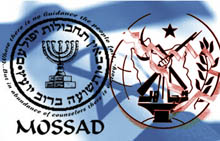 the propaganda websites of the Mujahedin Khalq Organization (the MKO) reluctantly cover the Gaza crisis, and most of the times they ignore the whole story. Israeli deadly strikes on civilians in Gaze are totally ignored by the MKO. The group’s media only circulates some trivial news on the crisis.
The MKO’s lack of enthusiasm and sympathy for the slaughter of Palestinians stems from the decade-long alliance of the group with Israeli Intelligence agencies. The notorious alliance includes financial, military, operational and spying cooperation that aims to demonize the Iranian Government. Their purpose is to curtail the nuclear program by any possible means.
According to various reports the allegations on the Iranian nuclear program was actually forged by Israel and then handed to the MKO agents. The most recent account on the Israeli-MKO alliance to deceive the world community was authored by Arron Merat of the VICE News. Merat confirms that the Iranian nuclear program has been proved peaceful," The two most recent National Intelligence Estimates in 2007 and 2011, representing the best judgments of 16 US spy agencies, concluded that the Islamic Republic is not pursuing nuclear weapons."
As a matter of Fact the NIE report was not able to face the Israeli long-time propaganda to demonize Islamic Republic. "Israel wanted to convince the US that both Israel and the US are facing a major strategic threat in the Middle East, and the source of that threat was an Iran which was embarking on a program of WMDs,” Peter Jenkins, a former British ambassador to the IAEA, explained to Arron Merat. “They were worried that as the Cold War was ending, Israel would cease to be seen in the US, as it had been up to 1990, as a valuable partner in an unstable part of the world.”
The fear mongering Campaign launched by Zionist regime was then paired with the MKO propaganda against Iran. The alleged lab top document on the Iranian nuclear activities – which was then considered as the base for the entire allegations about Iran’s intention to build a nuclear bomb—had originated from the MKO.
Merat once more confirms Gareth Porter’s thoroughly investigated report on the fake Israeli document on Iran’s nuke. He states, "Karsten Voigt, the coordinator of German-North American relations in the German Foreign Office, publically disputed Powell’s remarks, stating that Europe “shouldn’t let their Iran policy be influenced by single-source headlines” and noting that the laptop had in fact come from “an Iranian dissident group” — a veiled reference to the exiled, eccentric Mujahideen al Khalq (MEK) group."
The author notices that in 2013 Voigt clarifies that the MKO was not a credible source. The term "doubtful" was used by Voigt to show the German Intelligence agencies’ concern over the US decision making.
To clarify the close relation between the MKO and Israel Arron Merat notes, "Reports suggest that Israel used the MEK to leak satellite photography of Iran’s Natanz nuclear enrichment facility in a much-publicized scare back in 2002."
He then completes the narrative of this lethal alliance by referring to Seymour Hersh’s well known report on NBC News citing that "Israel financed and trained MEK units that assassinated five Iranian nuclear scientists between 2007 and 2012."
Regarding the deep alliance and mutual services between the MKO and Zionists, the group’s today approach on not covering Israeli atrocities in Gaza is not surprising. The MKO has to preserve its new sponsors after heavy losses it sustained under the collapse of its former sponsor, Saddam Hussein.
Mazda Parsi
Following a meeting in Paris on June 21, 2014 to share their experiences on living within the MKO Cult , the former members of the terror-cult of Rajavis gathered in Saint Michelle Square, Paris. Books, flyers and Placards on the MKO crimes were distributed. Defectors explained true substance of the MKO and its cult-like terrorist history to French citizens and Iranians including passengers or France residents.
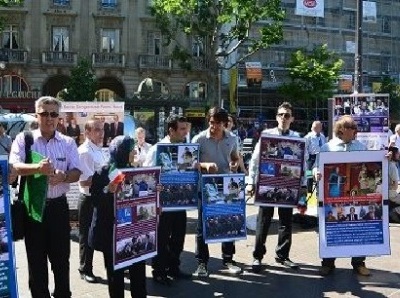
MKO defectors in Albania far from the cultic boundaries
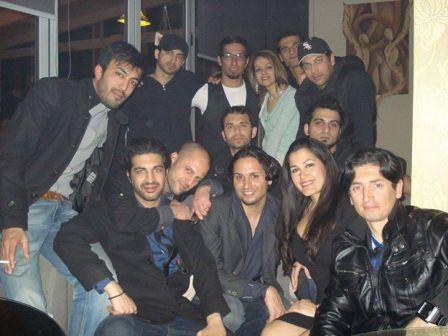
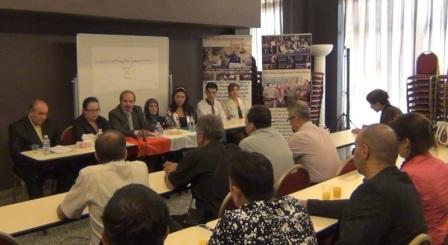
A number of former members of the Mujahedin Khalq Organization (the MKO) attended a meeting in Paris on June 21, 2014.
The meeting was organized by Yaran Iran Association. It was also attended by some Iranians residing in Paris.
The Mojahedin Khalq has performed yet another volte-face (complete reversal) today, which is characterist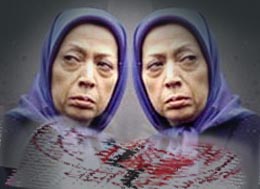 ic of the online presence of this group. When a screenshot of the MEK’s official website praising the actions and achievements of ISIS was widely circulated and universally condemned in June, the MEK panicked. Now, on a different website, (National Council of Resistance of Iran or NCRI) the MEK has retracted that position and claims not only that it doesn’t support ISIS but that the ‘Iranian regime’ has put about this rumour in order to engineer a massacre of the residents of Camp Liberty – a camp which the MEK refuses to open to outside help.
In spite of its expensive and sophisticated look, the online life of the MEK/NCRI is becoming more and more inconsistent, with the group issuing statements and news items one day which are retracted and removed a week later when the negative impact of what they said hits home. Over its history, the MEK has been unable to maintain a clear message. Once it boasted of killing Americans in Iran in the 1970s – ‘Let’s make Iran another Vietnam’ was the headline banner – only to deny this during its campaign to be removed from the US terrorism list in 2012. It boasted the embassy sieges in 1992 and again denied this later. The MEK has several times embraced as ‘martyrs’ operatives sent on terrorist missions, only to denounce them later as ‘agents of the Iranian regime’ when it was found they were not actually killed in these operations.
The problem for the MEK is not so much the inconsistency of these messages; that can be put down to incompetent propaganda and desperate expediency. The problem is that so many eye witnesses are vocal in speaking the truth and so much factual evidence exists to back their claims, that it is impossible for the group to escape not only its past, but also its present crimes and failures.
An example of this is the claim in this latest statement that the MEK “has never interfered in the internal affairs of Iraq”. Yet there is a video of Maryam Rajavi ordering her combatants to ‘take the Kurds under your tanks and save your bullets for the Revolutionary Guards’, as the MEK followed orders from Saddam Hussein in 1991 to suppress the Kurdish uprising which followed the First Gulf War. Sadly for Rajavi, survivors of this massacre cannot be airbrushed out of history to suit the current MEK position.
It is interesting that the MEK’s new position of denying any links or sympathies with ISIS or Al Qaida is accompanied with the accusation that this is ‘disinformation by the mullah’s regime’ with the goal of “preparing the ground for a large scale massacre of Iranian refugees, members of PMOI, in Camp Liberty.”
Putting aside the contradiction that members of a paramilitary group cannot also be described as refugees, what does the MEK really mean?
The MEK initially sent out messages of support for ISIS because they believed the group would overrun Iraq, take control of the Diyala province and restore the MEK to Camp Ashraf which the Iraqi government had forced them to evacuate a year ago. When this failed the MEK now anticipate a Sunni backlash against the Shiite populations and, although not aimed at the Diyala province, have re-worked this narrative to suit a dual purpose – to encourage or actually engineer a deadly attack on the residents of Camp Liberty which can be subsequently blamed on Iran, and which will rid the Rajavis of a few more potential eye witnesses to their crimes before they can be brought to safety in the West.
If this sounds overly cynical let us not overlook one aspect of the MEK’s online life which is at least consistent, that is, its unfailing support for non-democratic forces the world over. The MEK never declare support for democratic movements or groups but always side with terrorist groups. Even its denial of support for ISIS is couched in bizarre, suspect terms. The MEK says “crimes” such as blowing up Shiite shrines is “inhumane”, but there is no mention of the shocking murders which took place in Mosul and elsewhere.
Indeed, from its initial praise of ISIS to news about a landslide in Iran, the MEK is curiously selective in its support. For years the people of Gaza have suffered greatly under the programme of ethnic cleansing by the Zionist political leaders of Israel and supporters and enablers of Zionism in the West. The MEK have not reported on this, let alone voiced an opinion. The MEK knows instinctively that it needs to support Israel, while at the same time trying to blame Iran, so the important news they have published is about the suffering of the illegal settlers under attack from Iranian-made missiles. Such a stance could only arise from a conflict of interests inside the MEK, and shows that not only is the MEK’s political system collapsing but the brain behind it is collapsing too.
Massoud Rajavi still believes he is the leader of an independent cultic group which will, and can, obey his every whim. Maryam Rajavi in Paris serves a different reality. She must obey paymasters and protectors whose agenda is only to use the MEK as long as it is useful and discard it should it prove unhelpful. Between these two positions a kind of poisonous rot has set in which both Rajavis are powerless to change or control.
No matter how slick and well financed the MEK’s propaganda is, if it doesn’t maintain a consistent message it is worse than useless, it becomes ridiculous. Maryam Rajavi should ignore the whims of her husband Massoud and take a leaf from the book of her Zionist masters whose false ‘victim’ narrative and blatant lies are at least consistent if not truthful.
“In Iran we have big deserts — when it rains the ground cannot absorb the water quickly, so the land becomes blue like the sky,” a retired government official from the foreign ministry of the Islamic Republic explained to me. “The nuclear issue is also a mirage. It is not real. It is not about uranium. It is not about proliferation. It is not about the atom bomb. It is about America’s fight with us and our fight with America.”
Perhaps no international news story has been shaped by  as much deception and wrong-headed analysis as the Iranian “nuclear crisis.” The average Western news consumer is under the impression that Iran has been secretly building a nuclear weapon under the cover of a civilian energy program, but is now being forced to change course due to sanctions and military threats. The Supreme Leader Ayatollah Ali Khamenei’s fatwa against nuclear weapons and the Islamic Republic’s assertions that it simply seeks to develop the civilian power program it inherited from the Shah are both roundly dismissed as sophistry at best and, at worst, deceitful.
The politically motivated narrative, willfully adopted by much of the press, of a duplicitous Iran posing a regional and even global threat has been manufactured — often deliberately — to serve security and bureaucratic interests in the West.
The International Atomic Energy Agency (IAEA) monitors Iran’s enrichment program with regular inspections, closed-circuit television cameras, electronic seals on uranium stocks, and intelligence from Western spy agencies that have spared little effort in hunting for evidence of foul play. None has ever been found. No trustworthy evidence detailing an Iranian nuclear weapons program has emerged, and Iran has never diverted nuclear material from its civilian program.
‘Iran has to be identified as Enemy No. 1.’
“The Americans had no issue with us developing nuclear energy before the revolution so we wouldn’t burn our oil,” Mohammad Ali Shabani, a doctoral candidate at the University of London’s School of Oriental and African Studies who is conducting research in Iran, told me. “But now they do, so it is clear that the problem is not proliferation but our government.”
The two most recent National Intelligence Estimates in 2007 and 2011, representing the best judgments of 16 US spy agencies, concluded that the Islamic Republic is not pursuing nuclear weapons. Perhaps wary of politicians playing fast-and-loose with the facts after the debacle over weapons of mass destruction in Iraq, James Clapper, the US director of national intelligence, summarized the 2011 estimate by affirming that he had a “high level of confidence” that Iran had not decided to develop the bomb. His confidence was not based on an absence of evidence but on, among other intelligence, intercepted communications — reportedly between Iranian military commanders — that indicated Iran had stopped researching nuclear weapons in 2003.
US and Iranian involvement in Iraq is escalating again. Read more here.
Although the US does not have evidence detailing the pre-2003 research, it is probable that prior to America’s ousting of Saddam Hussein — whose forces killed 20,000 Iranian troops with chemical agents during the Iraq-Iran War (1980-1988) — the Islamic Republic was seeking to deter a neighboring threat.
There is, however, considerable evidence to suggest that non-proliferation is being used as a convenient political tool to keep pressure on Iran to maintain a security configuration in the Middle East favorable to US and Israeli interests.
Origins of the crisis
In the decades preceding the Islamic Revolution in 1979, Israel and Iran — both principle beneficiaries of US political and military support in the region — cooperated deeply against the growing threat of Iraq. After 1979, when American relations with Iran became hostile and Iran broke off official ties with Israel, Israel still held out for Iranian cooperation, providing covert support to the Islamic Republic in its war with Iraq and discouraging America from providing Saddam with logistical assistance.
But in 1992, in the wake of the Cold War and under domestic pressure to end the first Palestinian intifada (1987-1993), Israel elected Yitzhak Rabin, who adopted two mutually reinforcing security policies: pursuing detente with the Palestinians and casting Iran as a nuclear proliferator seeking to sow “murderous Islamic terror.”
“Israel wanted to convince the US that both Israel and the US are facing a major strategic threat in the Middle East, and the source of that threat was an Iran which was embarking on a program of WMDs,” Peter Jenkins, a former British ambassador to the IAEA, explained to me. “They were worried that as the Cold War was ending, Israel would cease to be seen in the US, as it had been up to 1990, as a valuable partner in an unstable part of the world.”
“Iran has to be identified as Enemy No. 1,” Yossi (Joseph) Alpher, a former Rabin adviser, told the New York Times in 1992.
Israeli officials used their influence to aggressively persuade the US that Iran was re-arming itself after its war with Iraq and getting Russian help to develop missiles that could one day reach the US.
In fact, Iran at that time was exhausted by the war and decreasing its arms purchases, according to World Bank figures. In 1993, Iran spent 16 times less than Saudi Arabia and nearly nine times less than Israel despite having a population about three-times larger than both of those nations combined.
Israel also spun Iran’s purchase of rudimentary nuclear equipment from China as evidence of a nefarious nuclear program that would produce a “Shia bomb” in a decade, and invoked the “existential threat” posed by Iran to justify its threat of airstrikes. In 1992, Benjamin Netanyahu, then an MP, said that Iran would get the bomb in three to five years.
The “Iran threat” was an easy sell to the US intelligence establishment and the political right.
A Field Guide to Iraq’s Fighting Factions, Part 3: Who Gets Iraq — Iran or the US? Read more here.
“At the end of the Cold War you have intelligence agencies that are a little worried about how they are going to justify their existence,” Jenkins said. “They can still spy in China and a little bit elsewhere, but Russia had been their bread and butter for 45 years. They needed some new sexy threats.”
CIA director Robert Gates — who reportedly told his staff, “The only moderate Iranian is one who has run out of bullets” — was one key figure pushing the narrative of Iranian post-war rearmament. Others such as Paul Wolfowitz, John Bolton, and Dick Cheney, who would later emerge as the biggest proponents for regime change in Iran, were instrumental in making the nuclear threat a mainstream concern in US politics.
The laptop of death
No twist in the nuclear tale better exemplifies the dubious case against Iran than the emergence of alleged evidence of the “possible military dimensions” (PMD) of its nuclear program.
PMD remains the only major “outstanding nuclear issue” on the IAEA’s file on Iran after a decade of allegations were investigated and dismissed by the agency. The entire documentary evidence for PMD comes from one purloined computer that found its way to intelligence officials in 2004. Dubbed the “laptop of death,” it contained over 1,000 pages of documents allegedly from 2001 to 2003 concerning the redesign of a ballistic missile’s re-entry vehicle, high-explosives testing for a nuclear weapon detonator, and a uranium conversion system.
‘Was this salted in there for someone to find?’
This questionable material was essentially ignored for six years while the highly politicized IAEA was run by Mohamed ElBaradei, a Nobel Peace Prize winner who frequently stymied Western interference. Following ElBaradei’s replacement by Yukiya Amano — who by his own (leaked) admission is “solidly in the US court” on the handling of Iran’s program — discussion of PMD formed the backbone of a splashy IAEA report in 2011. The report was cited by the US and EU as justification for the most draconian sanctions ever imposed on a nation, which have disproportionately affected Iran’s poor.
Iran has never had a chance to review the original copies of the documentary evidence against it, but responded to the charges with a 117-page document after reviewing electronic versions of the material.
Journalists and respected think tanks like the Institute for Science and International Security have pointed out gaping “technical flaws” in the laptop documents. For example, the 2002 re-entry vehicle drawings were bizarrely based on Iran’s older Shahab-3 missile design and not the Shahab-4, which CIA testimony had indicated was being developed at least as far back as 2000.
Informed commentators also asked why a laptop, supposedly from the heart of Iran’s covert nuclear weapons program, contained documents on three completely disparate parts of the project with no rational connection between them.
After inspecting the cache, Robert Kelley, a former IAEA inspector in Iraq (and no stranger to doctored WMD documents) asked himself, “Was this salted in there for someone to find?” He added that the IAEA’s presentation of the allegations produced a “sickly sense of déjà vu,” reminding him of the skewed Iraq WMD intelligence that misled public opinion.
“Only this time the IAEA is generating the dodgy theories instead of analyzing and testing them,” Kelley told me. “The 2011 weapons annex is conveniently broken into numbered paragraphs. If you make a simple spreadsheet and look at dates and contents you quickly see that most of the information is old, released many years ago, and of very uneven quality.”
Secretary of State Colin Powell first referred to the laptop evidence against Iran in late 2004, asserting that he had seen “information” that revealed Iran was working to adapt missiles to deliver a nuclear weapon. The timing of his comments — just three days after Iran had reached a deal with Britain, Germany, and France over its nuclear program — was designed to block progress toward a detente with the Islamic Republic.
Iran nuclear negotiations are kind of hard. Read more here.
Days later, Karsten Voigt, the coordinator of German-North American relations in the German Foreign Office, publically disputed Powell’s remarks, stating that Europe “shouldn’t let their Iran policy be influenced by single-source headlines” and noting that the laptop had in fact come from “an Iranian dissident group” — a veiled reference to the exiled, eccentric Mujahideen al Khalq (MEK) group.
Despite or perhaps because of the question marks floating over the veracity of the laptop documents and their links to the MEK, contradictory accounts were leaked to several US newspapers suggesting that the laptop had come from an Iranian asset or from Iranian assets linked to German intelligence.
Voigt expanded on his 2004 assertion in 2013, telling investigative reporter Gareth Porter that his contacts in the BND, Germany’s intelligence agency, had informed him that the agency considered the MEK source “doubtful” and that Germany was concerned that the US was acting on dubious evidence, as they had done in the run up to the 2003 invasion of Iraq.
The MEK is an Islamist-Marxist group that helped overthrow the Shah of Iran during the Iranian Revolution but lost out to Ayatollah Khomeini’s Islamist bloc. It resorted to a campaign of assassination inside Iran (killing Iran’s prime minister and several senior clerics) and fought with Saddam against Iran in the war. Reports suggest that Israel used the MEK to leak satellite photography of Iran’s Natanz nuclear enrichment facility in a much-publicized scare back in 2002. The secrecy of the site alarmed many observers; the fact that IAEA safeguards did not require Iran to announce Natanz until 180 days prior to the introduction of nuclear material was lost in the media’s coverage. (Iran is reluctant to announce such plans early because the US actively blocks its procurement of civilian power technology.) According to reports from NBC News and the investigative journalist Seymour Hersh, Israel financed and trained MEK units that assassinated five Iranian nuclear scientists in between 2007 and 2012.
A nuclear explosion simulation diagram leaked to the Associated Press and described as having more than triple the explosive force as the Hiroshima bomb has also been roundly debunked.
In a critique of the alleged simulation that was posted at the Bulletin of the Atomic Scientists, nuclear physicists Yousaf Butt and Ferenc Dalnoki-Veress pointed out what they called a massive error in the correspondence of the two illustrated curves. “This diagram does nothing more than indicate either slipshod analysis or an amateurish hoax,” they wrote.
“I think the hype surrounding Iran’s nuclear program has been manufactured,” Dr. Butt, who is a senior scientific adviser to the British American Security Information Council, told me, adding that the simulations would still not contravene IAEA rules even if they were real. “We’ve analyzed quite a bit of the evidence that has come out on simulated explosions and magnets, and there is a lot of smoke but very little fire.”
“For any country pursuing nuclear power, there’s always a concern they will weaponize,” he went on. “But I would not see Iran being ranked higher in any way than any others. For example, Brazil and Argentina also enrich uranium and have even had weapons programs in the past, but are not pursued as vehemently as Iran.”
Avoiding the worst
The July 20 deadline for the current round of nuclear talks, in which Iran is negotiating more nuclear transparency for sanctions relief, is fast approaching. Iran’s nuclear myths have ended talks before, empowering radicals both in the West and in Iran and increasing the chance of war.
The Gulf of Tonkin incident, which misleadingly sold the US on a full-scale war in Vietnam, and the claim of “mobile biological weapons labs” by the “Curveball” informant that helped selling the world on the Iraq War, are but two examples of falsehoods willfully interpreted as truth by a supine press and a public conditioned to believe the worst.
The West cannot allow a similar travesty to unfold in Iran. Its leaders should accept that the case against Iran is political, not technical, and work to end this long and burdensome affair.
Arron Merat covered Iran for the Economist.
Arron Merat, Vice News