Nejat Society
  • Home
  • Articles
  • Media
    • Cartoons
    • NewsPics
    • Photo Gallery
    • Videos
  • Publications
    • Books
    • Nejat NewsLetter
    • Pars Brief
  • About Us
  • Contact us
  • Editions
    • عربي
    • فارسی
    • Shqip
Nejat Society
Nejat Society
  • Home
  • Articles
  • Media
    • Cartoons
    • NewsPics
    • Photo Gallery
    • Videos
  • Publications
    • Books
    • Nejat NewsLetter
    • Pars Brief
  • About Us
  • Contact us
  • Editions
    • عربي
    • فارسی
    • Shqip
© 2003 - 2024 NEJAT Society. nejatngo.org
Mujahedin Khalq; A proxy force

Spoiler Alert: Iran Hawks Take Wing Against Nuclear Deal

After a period of relative (and blissful) quiescence, the Iran hawks are springing back into action, preparing the groundwork for sabotaging any nuclear deal that may be reached by Iran and world powers by July 20 or shortly thereafter. While prospects for an agreement within that time frame remain uncertain — the most important sticking point by far appears to be the gap between US demands that Iran retain only a few thousand centrifuges and Iran’s insistence that it needs many more to meet its energy needs — the hawks (by which I mean the Israel lobby and its many allies in Congress) are taking no chances.
Officially, Israeli Prime Minister Benjamin Netanyahu and his ambassador here, Ronald Dermer, still insist that Iran should not be permitted any enrichment capacity whatsoever, even as Israel’s professional national security officials have reportedly agreed with US intelligence (and International Atomic Energy Agency reports) that Iran is fully complying with the Geneva Joint Plan of Action (JPOA) and that Tehran is engaged seriously in seeking a satisfactory resolution of the issue.

For now, however, hawks here appear to be taking their cue more from Netanyahu than the professionals, as this week saw clear evidence of their gearing up for a major fight both within and outside of Congress.

On Thursday, the chairman of the House Foreign Affairs Committee, Ed Royce — who recently video-cast encouraging words to a conference in Paris organized by the (former) terrorist Mujahedin-e-Khalq (MeK) cult — and the committee’s ranking Democrat, Eliot Engel, released a letter they’d been circulating since late last month now signed by 342 other House members demanding that Obama consult Congress more closely on the ongoing negotiations and suggesting that Iran will have to satisfy Congressional demands on human rights, terrorism, ballistic missile development, and other issues unrelated to the ongoing nuclear negotiations before it will approve major sanctions relief. Here’s the most problematic passage:

Your Administration has committed to comprehensively lifting “nuclear-related” sanctions as part of a final P5+1 [US, UK, France, China, and Russia plus Germany] agreement with Tehran.  Yet the concept of an exclusively defined “nuclear-related” sanction on Iran does not exist in U.S. law.  Almost all sanctions related to Iran’s nuclear program are also related to Tehran’s advancing ballistic missile program, intensifying support for international terrorism, and other unconventional weapons programs.  Similarly, many of these sanctions are aimed at preventing Iranian banks involved in proliferation, terrorism, money laundering and other activities from utilizing the U.S. and global financial systems to advance these destructive policies.

Iran’s permanent and verifiable termination of all of these activities – not just some – is a prerequisite for permanently lifting most congressionally-mandated sanctions.  This often unnoted reality necessitates extensive engagement with Congress before offers of relief are made to Iran, and requires Congressional action if sanctions are to be permanently lifted.  With the July 20 negotiating deadline on the near horizon, we hope that your Administration will now engage in substantive consultations with Congress on the scope of acceptable sanctions relief.

Of course, President Barack Obama himself can provide a certain degree of sanctions relief under executive order as he no doubt intends to if a deal is struck. And there is no doubt that Congress has a role to play in lifting sanctions. But the letter’s assertion that there is no exclusively defined “nuclear-related” sanction against Iran under US law and that any relief can only be extended by addressing a host of non-nuclear-related issues appears calculated to sow doubts about Obama’s ability to deliver among Iran’s leadership, thus strengthening hard-liners in Tehran who argue that Washington simply cannot be trusted. That’s why more than two dozen groups, including Win Without War, MoveOn.org, Americans for Peace Now and the National Council of Churches, called on Royce and Engel (unsuccessfully unfortunately) to clarify the letter’s intent:

Demanding that non-nuclear issues be added to the nuclear negotiations at this time will only ensure that we get no deal and face the prospect of an unconstrained Iranian nuclear program or a disastrous war opposed by the American people.

… It would be a travesty if the very sanctions that Congress enacted under the premise of stopping Iran from getting nuclear weapons proved to be the obstacle that blocked a nuclear deal.

(It may be worth noting that Royce has raised more money from “pro-Israel” PACs associated with the American Israel Public Affairs Committee than any other House candidate in the current election cycle, while Engel is number 4 in the rankings — only behind the just-defeated former House Majority Leader, Eric Cantor — according to the latest figures provided by the Center for Responsive Politics (CRP).

While Royce and Engel were releasing their letter, on one side of the Capitol, Sen. Mark Kirk, by far the biggest Congressional recipient of AIPAC-related funding in his 2010 re-election campaign, teamed up with Marco Rubio, the keynoter at last year’s Republican Jewish Coalition convention, to introduce The Iran Human Rights Accountability Act on the other. Among other provisions, it would impose visa bans and asset freezes against Supreme Leader Ayatollah Ali Khamenei and President Hassan Rouhani. It’s just the kind of thing that generates a lot of goodwill in Tehran. Indeed, one of the Act’s chapters could only be interpreted as “regime change:” it declares the “policy of the United States” to be laying “the foundation for the emergence of a freely elected, open and democratic political system in Iran that is not a threat to its neighbors or to the United States and to work with all citizens of Iran who seek to establish such a political system.” Another gift to the hard-liners in Tehran who are as eager to undermine their negotiators in Vienna as the hawks here are to blow up the negotiations.

On Friday came news of yet another letter that is circulating on the Senate side, this one from Lindsey Graham, who has long promoted military action against Iran, and Robert Menendez, who last winter co-sponsored with Kirk the Iran Nuclear Weapon Free Act of 2014, which itself was clearly designed to sabotage the JPOA. (Graham, incidentally, is the second-leading recipient of “pro-Israel” PAC funds in the current Senate election cycle after Cory Booker, while Menendez topped the list in the 2011-12 cycle, according to CRP.) Like the Royce-Engel letter, this new one attempts to prescribe to the administration an acceptable deal that would warrant sanctions relief by Congress, specifically with respect to verification and monitoring provisions, disclosure by Iran on possible military dimensions (PMDs) of its nuclear program, and enforcement mechanisms, including making Iran “understand that that the United States reserves all options to respond to any attempt by Iran to advance its nuclear weapons program.”

And, like the Royce-Engel letter, a number of the demands included in the Graham-Menendez letter seem certain to raise doubts about Washington’s good faith and/or Obama’s ability to deliver the sanctions relief Tehran wants. For example, it says “… Iran must dismantle its illict nuclear infrastructure, including the Fordow enrichment facility and the Arak heavy water reactor…” despite the fact that Iran has made clear that, while it is prepared to make major concessions to accommodate international concerns about both facilities, it is not prepared by any means to completely “dismantle” them. Similarly, the letter demands that Iran submit to extraordinary verification and monitoring measures beyond those provided under the Nuclear Non-Proliferation Treaty’s Additional Protocol for “at least 20 years,” a time span that is certain to be dismissed as a non-starter in Tehran. In addition, it requires that Iran provide “full details about its nuclear program,” including PMDs, despite the fact that IAEA Director General Yukiya Amano has said it will take much longer than July 20 before his agency would be able to acquire that information, even with Tehran’s full cooperation.

“While the letter is written in terms that are sufficiently vague as to be somewhat meaningless, it could be interpreted in ways that call for outcomes that are not in the cards and could be deal-killers,” Daryl Kimball, executive director of the Arms Control Association (ACA), told LobeLog Friday.

“The negotiation is now in the final days, so who do these members of Congress think they are influencing? The Iranians? The other P5+1 parties? While members of Congress have legitimate concerns and interests in the outcome, they should wait until there is an outcome,” added Kimball.

“At this point, they can only complicate the talks and make it more difficult to achieve an agreement,” he said.

Meanwhile, outside Congress, neoconservative and other hard-line groups and individuals are also mobilizing what feels like a concerted campaign. Thus, in the latest edition of Bill Kristol’s Weekly Standard, the doom-minded and highly defensive duo of Dick and Liz Cheney conclude a lengthy article entitled, “The Truth About Iraq,” with:

[W]e should be clear that we recognize a nuclear-armed Iran is an existential threat to Israel and to other nations in the region, as well. We should refuse to accept any “deal” with the Iranians that allows them to continue to spin centrifuges and enrich uranium. In the cauldron of the Middle East today, accepting a false deal — as the Obama administration seems inclined to do — will only ensure Iran attains a nuclear weapons and spark a nuclear arms race across the region. The Iranians should know without a doubt that we will not allow that to happen, and that we will take military action if necessary to stop it.

Meanwhile, the hard-line neoconservative Foreign Policy Initiative (FPI), the Likudist Foundation for Defense of Democracies (FDD), and the ever-hawkish Foreign Policy Project of the Bipartisan Policy Center (BPC) announced a policy forum for next Thursday, July 17, entitled, “High Standards and High Stakes: Defining Terms of an Acceptable Iran Nuclear Deal.” The forum will feature Kirk, Engel, Rep. Brad Sherman, and Sen. Dan Coats, who previously co-chaired BPC’s task force on Iran. Panelists, according to the announcement, will also include the FDD’s Reuel Marc Gerecht, former Assistant Secretary of State for International Security and Non-Proliferation Stephen Rademaker, and Ray Takeyh of the Council on Foreign Relations. Given this line-up, it would be most surprising if any of the participants diverted from Netanyahu’s definition of an “acceptable Iran nuclear deal.”

Both Rademaker and Takeyh are currently serving on the Iran task force at the Jewish Institute for National Security Affairs (JINSA). (Most members of the BPC Iran task force previously co-chaired by Coats moved over to the JINSA task force when the original BPC staff director, Michael Makovsky, was appointed to head JINSA last year.) JINSA announced Friday that its task force, which includes Dennis Ross, as well as Rademaker, Takeyh, and FPI’s Eric Edelman among other well-known hawks, will also hold a briefing on the subject July 28, apparently in the belief that a deal may be concluded by then.

On yet another front, The Israel Project launched Thursday its latest web campaign, “No Bomb for Iran,” complete with a scary black-and-white photo of a mushroom cloud and the slogan, “If Iran Goes Nuclear, Terror Goes Nuclear.” It, too, echoes Netanyahu demands to essentially dismantle Iran’s centrifuges (although it doesn’t say all centrifuges), in addition to “roll[ing] back” its ballistic missile program despite the fact that the administration has clearly stipulated that missiles are not now a subject of negotiation.

So, as the US and its P5+1 partners appear to be closing in on a deal with Iran, the hawks are taking wing. Oh, and AIPAC’s board is supposed to meet here next week.

Jim Lobe,
July 14, 2014 0 comments
FacebookTwitterPinterestWhatsappTelegramSkypeEmail
Mujahedin Khalq; A proxy force

US politicians bribed to back MKO: Iran diplomat

An Iranian diplomat has slammed the US for backing the anti-Iran Mujahedin-e Khalq Organization (MKO), saying the terrorist group has bribed American politicians into showing public support for it.

In a column published on the USA Today daily on Thursday, Counselor and Head of Press Office for the Permanent Mission of Iran to the UN Hamid Babaei, criticized Washington for removing the MKO from the US State Department’s list of terrorist organizations in 2012.

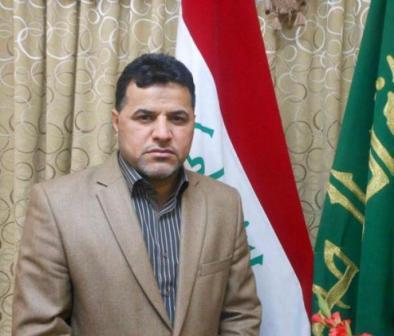
The Iranian official also highlighted the crimes perpetrated by the MKO members against the Iranian and Iraqi nations and said the support of some American political figures for the terrorists as an Iranian “opposition group” shows “their cluelessness about Iran.”

“Washington lobbyists and former American politicians and officials have accepted millions of dollars from the group…in return for which they have publicly supported” them, wrote Babaei.

He further censured the Western states for sheltering the terrorists instead of bringing them to justice for their crimes.

“It remains unclear why an organization with such a violent history would be allowed so freely to operate in many Western countries,” said Babaei, stressing that the “dual nature of standards against terrorism is likely the greatest threat being faced by international efforts to stop terrorism today.”

The MKO fled Iran in 1986 for Iraq, where it received the backing of Iraq’s executed dictator Saddam Hussein and set up a camp near the Iranian border. The terrorist group also sided with Saddam during Iraq’s eight-year war on the Islamic Republic in 1980-1988.

The group is listed as a terrorist organization by much of the international community and is notorious for committing numerous terrorist acts against Iranians and Iraqis.

The European Union also removed the MKO from its list of terrorist organizations in 2009 after the group filed a petition against the blacklisting in 2008.

July 13, 2014 0 comments
FacebookTwitterPinterestWhatsappTelegramSkypeEmail
Mujahedin Khalq; A proxy force

Big money buys powerful friends: Column

Why are Newt Gingrich, Joe Lieberman and Patrick Kennedy hanging with members of a terrorist cult?

Several well-known American political figures appeared at a rally in Paris on June 27 in support of an anti-Iran organization that was until recently formally listed as a terrorist group by the United States and Europe. They included Howard Dean, John R. Bolton, Bill Richardson, Newt Gingrich, former Rep. Patrick Kennedy, and Joseph I. Lieberman. Their appearance and their support for the People’s Mujahedin Organization (MEK) as an Iranian "opposition group" demonstrates their cluelessness about Iran. Considering the group’s history, its popularity in Iran is comparable to an American-led affiliate of Al-Qaeda.

Among the many victims of MEK terror are innocent civilians in Iran, as well as Westerners including Americans. Its violent history, cultic nature and oppression of its own members spans close to four decades. It supported Saddam Hussein’s regime in the 1980s, and its leader even boasted about killing thousands of Iranians while this cult served ex-Iraqi dictator’s expansionist ambitions. The scope of their crimes against the people of Iran and Iraq among others is baffling, and yet many Western countries seem to be unwilling to impose serious restrictions on the MEK the way they do with other terrorist groups.

It has also been reported that some in the American foreign policy community are conflicted about there being a possible role for this group in the future of American policy towards Iran. But one must wonder what state of bewilderment has befallen American foreign policy when such a group is seen as even a potential part of a solution to its policy conundrums in the Middle East.

Some American politicians supporting the MEK have claimed that these accusations are merely allegations from opponents in Tehran. In fact, scores of journalists, government agencies, and think tanks from around the world have catalogued these practices. The U.S. Department of State has stated that the MEK is "responsible for violent attacks in Iran that victimize civilians" including "attacks against clearly civilian targets." Adding that the MEK "joined Saddam Hussein’s brutal repression of the Kurdish rebellion" in 1991. The State Department has also referred to them as a "repressive cult despised by most Iranians and Iraqis." This is the reason why the Iraqi people, Kurds and Shiites in particular despise this group, not Iranian political influence as some have tried to claim.

U.S. based Human Rights Watch (HRW) has extensively recorded the MEK’s oppression of its own members, demanding that they divorce their spouses and "all physical and emotional attachments in order to enhance their ‘capacity for struggle.’" HRW also stated that MEK members are exposed to "solitary confinement to beatings, verbal and psychological abuse, coerced confessions, threats of execution, and torture that in two cases led to death."

Recently the French Foreign Ministry decried the MEK’s "violent and non-democratic inspirations," its ”cult nature" and "intense campaign of influence and disinformation."

U.S. officials attributed their removal from the list of terror groups to what they deemed the MEK’s "public renunciation of violence." But the MEK’s stated renunciation of violence also involved the claim that it had never itself targeted civilians — an assertion the State Department has clearly said is false. After the September 11 attacks, the MEK understood that their fate would lie in the hands of the West and that they could no longer rely on their benefactor, Saddam Hussein. The decision in 2001 to lay down arms and stop murdering civilians was a tactical decision — not a moral epiphany — that can be overturned if the aforementioned strategic calculation was ever to change.

Moreover, in 2009, the State Department submitted information in court stating the MEK had trained individuals "to perform suicide attacks" and a declassified FBI report from 2004 similarly found that MEK cells around the world were "actively … planning and executing acts of terrorism." Most importantly, none of the members of the organization have ever been brought to justice by the Western governments who give them shelter.

Instead Washington lobbyists and former American politicians and officials have accepted millions of dollars from the group, as campaign donation or speakers fees — the exact amounts of which most refuse to disclose publicly — in return for which they have publicly supported the MEK, claiming them to be an opposition group that deserves the protection of the U.S. By undertaking these efforts that the Rand Corporation called "cultic practices and its deceptive recruitment," the group managed to get itself removed from the terror list.

The dual nature of standards against terrorism is likely the greatest threat being faced by international efforts to stop terrorism today. If politicians are to be selective in opposing one terrorist group while supporting another based on their potential geopolitical usefulness, many nations would have many reasons to support various terrorist groups. When fighting terrorism, reaching for moral consistency cannot be seen as a possible option or an inconvenience; it must be considered a necessity.

It remains unclear why an organization with such a violent history would be allowed so freely to operate in many Western countries, raise money, build institutions, and ultimately be allowed to engage in a multi-million dollar political campaign. It’s simply impossible to imagine al-Qaeda or Boko Haram having the same level of freedom to operate.

The principle of the prevention of impunity dictates that acts of terror must not remain without legal consequence and those responsible must be brought to justice. The many victims of the MEK, those who have been killed or maimed and their family members deserve justice and the principles that Western nations claim to be unflinchingly dedicated to in the context of the so-called war on terror are trampled on every day that they accommodate terrorists, rather than contribute to their prosecution.

Hamid Babaei is counselor for the Permanent Mission of the Islamic Republic of Iran to the United Nations.

Hamid Babaei

July 12, 2014 0 comments
FacebookTwitterPinterestWhatsappTelegramSkypeEmail
Iran Interlink Weekly Digest

Iran Interlink Weekly Digest – 60

++ This week, right minded Iranians all over the world have given their attention to the atrocities being inflicted on Palestinian civilians in Gaza. Predictably, only the MEK – out of fear of their Israeli owners – have remained silent on this issue in particular.

++ The mother of a resident in Camp Liberty held hostage by Rajavi has died after her desperate appeal for Rajavi to allow a last phone call with her son was denied. Ironically, although Rajavi did not allow this contact, the MEK announced her death in a statement which refers to her as a Mojahedin Martyr and claiming she was one of their supporters. This nasty ploy of Maryam Rajavi provoked many reactions in Farsi sites about the way she behaves. Hamed Sarafpour sent his condolences to the family and reminds us that it was only a week ago the family had made a last desperate attempt to arrange a phone call. This, he says, is how shameless Rajavi is.

++ Sahar Family Foundation reporting from Tirana during the last week has detailed the situation of ex members there who, although they are freed from MEK control, still face many problems. They live in an apartment block paid for by UNHCR but have been told that at end of a year this funding will be withdrawn and they will have to fend for themselves. This UN support includes a small stipend for food and fuel which already doesn’t cover their basic needs. On top of that they are being harassed daily by MEK operatives who obviously have unlimited financial backing. The MEK threatens them to be silent, but even if they agree to be silent they are then pushed to come back and work for the MEK. The pressure can be triggered by anything such as contacting their families, or a random accusation of being ‘agents of the Iranian regime’. The latest ploy is for the MEK to tell them their picture or name is on Iran-Interlink or Nejat Association websites and if they refuse to write swearing at these sites they will be beaten up because they are “obviously” agents of Iranian Intelligence and the MEK will therefore deal with them as “the enemy”.

++ This week has seen a spate of savage verbal attacks on Mrs Zahra Moini in Cologne, Germany from a variety of MEK sources trying to stop her talking after she became vocal about her experiences with the cult. The MEK threatened to publish information they have about her if she doesn’t cooperate. The MEK also claims she has never been with them and was an agent of the regime when she came to Iraq and they threw her out when they discovered this, and afterwards she was sent to Germany by Iran. Moini has been a resident and citizen of Germany for many years and it is only now that she has become a vocal critic that the MEK are attacking her. Today, a collectively signed open letter has been sent to her by ex members in Albania, reassuring her that many of them knew her in Iraq and witnessed the many difficulties she underwent there at the hands of the Rajavi cult. They have promised to bear witness wherever needed that she and her husband Babak Nik Tale’an were forced to hand-write dictated texts falsely confessing to be agents of the Iranian regime, and that was the condition that they would transfer them back to Germany from Iraq. They remind her that each one of them also has written such false confessions as the MEK forces everyone to do. Iran Interlink has also published photographs of Moini standing with Maryam Rajavi.

In English:

++ Global Research published an analytical article by Eric Draitser titled ‘The Strange Case of Iraq’s Prime Minister Nouri al-Maliki against the Backdrop of the “War” against the Islamic State (IS)’. Draitser identifies a clear shift that has taken place in the rhetoric against, and analysis of, Prime Minster Nouri al-Maliki and his government recently. The article states, “It should come as no surprise to anyone who is even moderately aware of how US foreign policy and propaganda has historically operated, that the demonization of Maliki is directly linked to the inability of Washington to control him or, to put it another way, his refusal to accept US diktats… it was Maliki’s refusal to grant the US request to maintain US military bases in the country after the withdrawal which prompted the first round of attacks on him and his government… Maliki also took the absolutely monumental step of closing down Camp Ashraf and killing or expelling its inhabitants. Far from being a camp for “Iranian political exiles” as Western media have attempted to portray, Ashraf was the base of the Iranian terrorist organization Mujahideen-e-Khalq (MEK), an organization supported wholeheartedly by neocons (as well as most “liberals”) in its continued terror war against Iran. Of course, because Maliki dared to cleanse Iraq of these US-sponsored terrorist thugs, he was immediately convicted in the court of US public opinion which described the operation as an assault on Iranian “freedom fighters.” We know all too well what the US means when it describes terrorists as freedom fighters.”

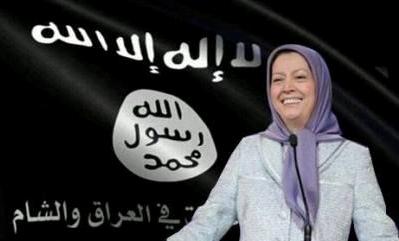
++ A. Sepinoud and Mazda Parsi on Nejat Bloggers write about the MEK’s seemingly desperate attempts to link itself to ISIS and other terrorist groups in the region apparently as a perverse way of proving that it still exists.

++ Iran’s Tasnim news agency reported that Ali Ashraf Rashidi, Head of Iran’s Evin prison, dismissed as a “lie” the recent media reports that a fire had erupted in one of the jail’s wards last week. MEK media outlets among others reported a fire on July 1 in one of the Evin prison wards. Rashidi explained the incident as “like how two electricity wires may have contact in any house resulting in short circuit and puff of smoke, the same incident happened in the clerics ward”, noting that anti-Iran groups are not expected to provide authentic reports anyway.”

++ Iraq’s Al-Raie International News Agency reported that “Awad Al Awadi, member of the Sadrist Al Ahrar Bloc of the Iraqi Parliament, called on the Iraqi attorney general to request that Interpol issue international arrest warrants for the leaders of the terrorist Mujahedin Khalq Organization (the MKO), in particular Massoud and Maryam Rajavi.” He said, “some of the elements of the MKO who had come from Europe Entered Iraqi territory crossing Turkey borders in order to join ISIS forces in Mosul. Al Awadi stated, ”This is considered a threat to Iraqi national security and the Iraqi Government has the right to pursue the issue via international bodies.”
11 July 2014

July 12, 2014 0 comments
FacebookTwitterPinterestWhatsappTelegramSkypeEmail
Nejat Publications

Pars Brief – Issue No. 80

Inside this Issue:

  1. France warns against "disinformation" campaign by Iranian opposition
  2. International meeting for ISIL in France
  3. Why Canada is getting it wrong on Iran
  4. What the ‘Wall Street Journal’ and the MEK Get Very Wrong About Iran’s Nuclear Program
  5. European MEK Supporters Downplay ISIS Role in Iraq
  6. Controversial Iranian Exile Shakes up Canadian Parliament’s Human Rights Program
  7. Big money buys powerful friends: Column

Download Pars Brief – Issue No. 80

July 10, 2014 0 comments
FacebookTwitterPinterestWhatsappTelegramSkypeEmail
Iraq

Al-Ahrar Member called for international arrest warrant for MKO leaders

Baghdad – Awad Al Awadi member of  the Sadrist Al Ahrar Bloc of the Iraqi Parliament, called on the Iraqi  attorney general to make the Interpol issue the international arrest warrant for the leaders of the terrorist Mujahedin Khalq Organization (the MKO), in particular Massoud and Maryam Rajavi.

Regarding  that some of the elements of the MKO who had come from Europe Entered Iraqi territory crossing Turkey borders in order to join ISIS forces in Mosul, Al Awadi  stated," This is considered a threat to Iraqi national security and the Iraqi Government  has the right to persue the issue via international bodies."

Member of Iraqi National Coalition continued," We had previously warned Iraqi Government on the danger of the group’s stay in the country; these forces were developed in the arms of the fallen Baa’th dictatorship." He insisted on the necessity of encountering the MKO terrorists seriously.

AlRaie International News Agency – Translated by Nejat Society

July 9, 2014 0 comments
FacebookTwitterPinterestWhatsappTelegramSkypeEmail
Terrorist groups and the MEK

MKO–ISIS alliance backed by Western Warmongers

The Islamic State of Iraq and Syria (ISIS) and the Mujahedin Khalq Organization (the MKO) are both groups of zealous extremists left over from the days of crisis in Iraq. They are both supported by a group of Western high profiles.

Western supporters of these extremists are shadowy people about their real intentions. Members of the European Parliament who back the MKO as what they call "Resistance" and the ISIS as what they call "part of popular uprising" hardly ever like to go on public record supporting terrorist extremist like the MKO and ISIS unless it is the highest priority which is their common enemy in the region, Islamic Republic of Iran. This means that terrorism designations are fundamentally political choices according to such Western politicians.

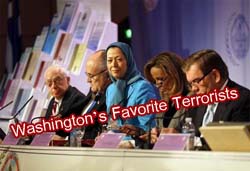
The so-called Grand Iranian Gathering was attended by dozens of purchased politic men who praised the MKO and its brother ISIS.  While the main objective of the meeting was to support the MKO’s so-called resistance, the cult leader Maryam Rajavi seized the opportunity to violently lash out against Iraqi Prime Minister Nouri al-Maliki and rejoice over the progress achieved by the ISIS.

The ISIS atrocities in Iraq were claimed by the MKO as victories of "Iraqi revolutionary forces and tribes"! The group’s opportunistic strategy sees its survival in the achievements of the so-called Islamic State that seeks to seize the entire Islamic countries in the region.

Today, in the chaotic situation of Iraq and Syria, the MKO might be the last thing that the international community pays attention to. Thus the MKO resorts to any notorious force that opposes Iraqi and Iranian states. It contributes with them, tries to get involved with them just to draw the world’s attention to itself.

Maryam Rajavi’s meeting with Ahmed Jarba the head of Syrian opposition two months ago was another effort made by the MKO to get itself seen in the region’s equation. To obtain this goal the group’s skillful propaganda bought officials and audience and held its annual gathering –this year—to demonstrate its support for the Saddamist extremists whose leader claimed to be the Califat of all Muslims around the world.

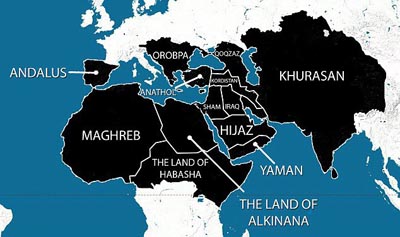
Maryam Rajavi perhaps dreams of ruling one of the provinces in the map of ISIS’s territory 5-year plan !

Mazda Parsi                                         

July 8, 2014 0 comments
FacebookTwitterPinterestWhatsappTelegramSkypeEmail
Iran

MP: Spy agencies in colloboration with MEK terrorists assassinate scientists

Senior MP Criticizes IAEA for Leaking Iran’s Secret Nuclear Information

TEHRAN (FNA)- A senior Iranian lawmaker strongly criticized the International Atomic Energy Agency for disclosing sensitive information of Iran’s nuclear industries in blatant violation of the international law.

"The International Atomic Energy Agency should be a safe place for its member-states," rapporteur of the parliament’s National Security and Foreign Policy Commission Seyed Hossein Naqavi Hosseini said on Sunday.

The prominent legislator warned that if the IAEA’s reports and information protection codes and mechanisms continue to show the same breaches, Iran will reconsider its cooperation with the IAEA.

"Unfortunately, we have seen disclosure of Iran’s information several times; we have seen that after the Atomic Energy Organization of Iran (AEOI) had sent its secret information to the IAEA, they were found in other places after a while, and this cost our country dearly, as when the Zionist regime found access to the same information, many of our nuclear scientists were unfortunately assassinated and martyred," Naqavi Hosseini said.

Western and Israeli spy agencies, collaborated by the terrorist Mojahedin-e Khalq Organization (MKO, also known as MEK, NCRI and PMOI), have assassinated several Iranian scientists in the last several years.

In the fifth attack of its kind in two years, terrorists killed a 32-year-old Iranian scientist, Mostafa Ahmadi Roshan, and his driver on January 11, 2012.

The blast took place on the second anniversary of the martyrdom of Iranian university professor and nuclear scientist, Massoud Ali Mohammadi, who was also assassinated in a terrorist bomb attack in Tehran in January 2010.

The assassination method used in the bombing was similar to the 2010 terrorist bomb attacks against the then university professor, Fereidoun Abbassi Davani – the former head of Iran’s Atomic Energy Organization – and his colleague Majid Shahriari. While Abbasi Davani survived the attack, Shahriari was martyred.

Another Iranian scientist, Dariush Rezaeinejad, was also assassinated through the same method on 23 July 2011.

In a rare confession that Mossad agents were behind the assassination of Iranian nuclear scientists, a report written by Dan Raviv and published by the CBS News said in early March that Washington officials have communicated to Israeli intelligence agencies to stop the targeting of scientists, saying it may derail nuclear talks between Tehran and world powers.

In his report Dan Raviv, a journalist who co-wrote a book about Israel’s Mossad secret operations, also said that apart from Washington’s pressure, Israel’s intelligence agencies have also concluded that the operations had become too dangerous for them as they do not want their experienced forces to be “captured and hanged”.

In their 2012 book, entitled ‘Spies Against Armageddon: Inside Israel’s Secret Wars’, Raviv and Israeli journalist Yossi Melman said that Israeli spies have killed at least four Iranian nuclear scientists.

Iran had already announced that the assassination of its scientists, including Mostafa Ahmadi Roshan, Daryoush Rezaeinejad, Professor Majid Shahriari, and Professor Masoud Ali-Mohammadi, have been carried out by Israeli agents.

Tehran is in talks with the five permanent members of the UN Security Council, plus Germany to fully resolve the decade-old dispute over the Tehran’s nuclear energy program.

The two sides had inked an interim nuclear deal in Geneva, Switzerland, on November 24, 2013. The Geneva deal took effect on January 20. The two sides are now in pursuit of a final comprehensive deal.

Iran has repeatedly emphasized that its nuclear energy program is meant for civilian purposes only.

The IAEA in its recent report confirmed Iran’s commitment to the interim deal it struck with the Group 5+1 (the US, Russia, China, France and Britain plus Germany) in Geneva in late November.

The monthly update report by the IAEA showed that Iran was meeting its commitments to limit certain aspects of its nuclear energy program under the Geneva deal.

The report noted that Iran has acted to eliminate virtually all its stockpile of 20-percent enriched uranium gas.

The report also stated that since the Geneva nuclear deal took effect on January 20, Iran has either diluted to a lower enrichment level or fed for conversion into oxide form more than 97 percent of its uranium gas stock refined to a fissile concentration of 20 percent.

Iran and the G5+1 clinched a landmark interim deal in the Swiss city of Geneva on November 24, 2013.

Under the Geneva deal, dubbed the Joint Plan of Action, the six countries undertook to provide Iran with some sanctions relief in exchange for Iran agreeing to limit certain aspects of its nuclear activities during a six-month period.

As part of the interim deal, Iran suspended 20-percent uranium enrichment as of January 20 when the agreement came into force. Iran then started to dilute and oxidize its 196-kg stockpile of 20-percent-enriched uranium.

July 6, 2014 0 comments
FacebookTwitterPinterestWhatsappTelegramSkypeEmail
Iran Interlink Weekly Digest

Iran Interlink Weekly Digest – 59

++ Iraqi news agencies Al-Moragheb and Kol al-Akhbar reported sightings of 120 MEK working alongside ISIS in Mosul dressed in their own uniforms. Previously there had been reports of ISIS using MEK equipment moved from Camp Ashraf and that the MEK openly supported ISIS on its official website.

++ An article by Ebrahim Khodabandeh drew a fierce reaction from the MEK, including death threats. The article reveals that some members and internal critics of the MEK are in contact with him in Tehran by telephone and email and they like to nag about what is happening inside the MEK. Some also travel to Tehran and have met with him there. This includes several members of the NCRI. One who visits regularly says the MEK don’t have a problem about this activity as long as it is kept secret from others. The MEK threaten to expose such people and denounce them as traitors if their visits become known. Khodabandeh categorises the problematic questions circulating inside the MEK which include: working for Saddam Hussein, the insistence on staying in Iraq now, the continuation of the cultic indoctrination sessions and where Massoud Rajavi is. Anyone raising any of these issues inside the MEK is sworn at and accused of treachery. One NCRI member who travels regularly to Tehran told the MEK he was finished with them and no longer believes in anything they do or say. The MEK only threatened to expose and destroy him and even had the audacity to ask for money as part of this blackmailing stance. Khodabandeh concludes his article by addressing these MEK members and saying, it’s alright to rescue yourself, but you have a humanitarian duty to help rescue others, not leave them behind still trapped.

++ Representatives of Iran Setaregan Association had a meeting at the Iraqi embassy in Bern, Switzerland, briefing officials and offering cooperation to help rescue the MEK victims in Camp Liberty in Iraq.

++ Reactions to Villepinte continued, mainly putting the humanitarian aspect first. Writers criticised the MEK for paying millions of euros for speakers and audience which could have been better used to help the people trapped in Iraq. Several question why the MEK and NCRI add “of Iran” to the name while they have no Iranian speakers on the platform and the paid US speakers only talk about the MEK in Iraq. Why are all the speakers Western? Why not bring Iraqi or Iranian speakers? they ask.

++ Nobody except the MEK themselves has mentioned Villepinte without describing it as a PR disaster. Many commentators ridiculed the speeches of various speakers, and said the likes of Giuliani and Bolton calling for freedom and regime change ‘on behalf of the people of Iran’ is a joke for people.

++ In Iraq various people welcomed the fact that France referred to the MEK a terrorist cult, but a few articles point out that words and actions do not match. France says one thing, but does another. If you really mean what you say, they point out, why don’t you do something about it.

++ Videos of the participants in a meeting of ex members on Saturday 21st June in Paris was released this week by Iran Ghalam (Pen) Association, showing both speakers and parts of a small demonstration in the city afterwards.

++ In Paris, four members of the Foreign Affairs Committee of the National Assembly issued a statement warning parliamentary colleagues and government officials to be cautious about the deceptions of the MEK and not to fall into their trap. They advise colleagues and others to keep away from them.

++ Among articles by Bahar Irani on Mojahedin.ws, one predicts the fate of the MEK after the defeat of ISIS. Another compares Abu Baghdadi with Massoud Rajavi after Baghdadi claimed he is leader of all the Moslems in world, just as Rajavi did.

++ The final part of a series of articles by Milad Ariyai titled ‘Quarter of a Century After Eternal Light’ has been published. In this last part Ariyai talks about his own experience of the operation, before during and after.

++ Nejat Association published a demand from Mrs Babai in Iran, who has begged Rajavi and his gang to let her see her son once more before she dies from her terminal illness. At same time, in an open letter to the MEK leader from the Netherlands, Reza Azmudeh has a similar issue with his mother who is in hospital and her last wish is to see her son Morteza or at least speak over the phone with him.

++ Last week in Karbala the authorities accused a man called Mahmoud al-Serkhi and his gang of killing several people. A bomb factory was discovered and several gang members arrested. The man was known as a gangster under the Saddam regime whose accusations of rape and killing were dropped due to Hussein’s protection. After 2003 he put on mullah’s clothes and now calls himself ‘Grand Ayatollah’. Ironically the Saudi papers (which are anti-shia and don’t believe in shiite religious terminology) all refer to him as Grand Ayatollah. This was exposed in both Iraqi and Iranian papers in an effort to contain him. But the MEK were quick to jump on the bandwagon and praised him when he declared his intention to kill Grand Ayatollah Sistani and Prime Minister Maliki.

++ Jamshid Salvar wrote an interesting article on his blog ‘the footprints of the wolves’ – which is dedicated to analysing Rajavi and MEK activity. The article is, ‘a glance at the childish dreams of Maryam Rajavi versus this week’s clear stance by the French government toward the cult’. He writes that just as Iraq is throwing them out and the Americans don’t want them, now the French may expel the MEK. At this time, Maryam Rajavi, who is past 60 still acts like a child, surrounding herself with her paid audience and speakers. Salvar points out what rubbish she speaks, having promised regime change ‘in six months’ for two decades. In the latest meeting she refrained from saying six months leading Salvar to speculate whether her timetable has expanded into the 22nd Century. Yet Rajavi has paid all her speakers to say exactly the same thing, “Iraq has been handed to Iran on a silver plate”. Maryam Rajavi is on overdrive to support ISIS, calling them revolutionaries and then connects this situation to Camp Liberty to ask the Americans to liberate the retired MEK members so they can join ISIS. She has also not forgotten to repeat every word of Netanyahu on the 5+1 negotiations with Iran, and even exceeds him in lying about everything. Rajavi blames everybody else under the sun – the US, the West, the UN – for her failure to deliver over the past three decades. Salvar writes that ironically Maryam claims that the fact ex MEK members talk and write and expose her means she has power over them and Iran and Iraq are afraid of her. In effect she believes ‘they swear at me therefore I am’. Maryam is fond of lecturing everyone else but falls short of what she and Massoud should do themselves; the Americans should stop the Iraqi government from being against the MEK, they should find the missing 7 from Camp Ashraf, they should leave the area surrounding Camp Liberty and allow them to do what they want, the MEK should be given political asylum as a group and the UN should send blue helmets for their security – presumably Rajavi will tell them what to do when they get there. Salvar says Maryam Rajavi is like a child. They are about to throw her out of France and she’s still talking about these things. The reason she asks the US to help is clear, there are 75 people in Camp Liberty who are wanted for war crimes and she is asking for a way to smuggle them out of the camp because if they go on trial they will talk about her as well. Maryam Rajavi says ‘if we are allowed to have a demonstration in Tehran the regime will be toppled in 35 days’. Salvar asks, ‘where did you get 35 days from?’ But says the idea of having a demonstration is rubbish because the MEK can’t even fill the salons in the West and has to pay for the audience. He says that everyone describes Villepinte as a PR disaster because this bubble of pretence suddenly burst with just one sentence from the French government, especially that the MEK is illegal – France won’t keep them there. We know that is why people inside the MEK are already panicking he concludes, especially because Maryam Rajavi’s court case is still not closed.

In English:

++ Several articles looked at the stance taken by France, including a Press TV interview with Dr. Webster Griffin Tarpley, an author and historian from Washington, to discuss why the French Foreign Ministry has recently condemned the anti-Iran terrorist MEK for its acts of violence. He identifies sensitivity toward the growing threat of ISIS. Although Tarpley doesn’t directly say the MEK support ISIS he says, “obviously there is a feeling in the MEK I would guess that they have got to get involved, that they have got to contribute, they have got to make themselves heard or they are not going to get the funding that they are accustomed to getting.” Asked if the French would expel the MEK Tarpley said that it’s up to them but there is “in the Western intelligence community a kind of frisson – a shudder of alarm – about the terrorists that are being minted in the ISIS but also in the Nusra Front inside Syria and in this entire situation.”

++ Massoud Khodabandeh’s article in Iranian.com says everyone is a loser for allowing the MEK to promote ISIS in Paris.

++ Habilian Association in Iran highlights Guy Taylor’s report in the Washington Times which says that each of the former U.S. officials who spoke to the paper acknowledged that some of their respect for the MKO “stems from the group’s history of having shared intelligence with Washington” about Iran’s nuclear program and the Iranian military activity inside Iraq. The MKO has provided U.S. military officials and successive U.S. administrations with “all types of good intelligence,” said Gen. Shelton. [Ironically, ‘spying for the MEK’ is the reason the IRI gave for the execution of Gholamreza Khosravi] The report quoted an MEK spokesman saying “…the organization’s reach and popularity inside Iran are deep and were instrumental in bringing about the 2009 uprising against the government in Tehran!” [Ironically the very excuse given by the IRI for its severe crackdown on people’s peaceful protests.]

++ Sahar Family Foundation wrote a letter to Jane Hol Lute on behalf of several hundred families of residents in Camp Liberty. Now the situation has become so tense and dangerous the families want to know what plans and progress has been made to rescue their loved ones: “It is now about 6 months since you were appointed as the UN Secretary-General’s special adviser to relocate the residents of Camp Liberty to other countries. We are aware that you have always been successful in your previous tasks and no one doubts your capabilities. We wish kindly to ask you to let us know what efforts you have made to transfer these people to a safe place, and what obstacles you have faced during fulfilling your mission and what programs you have for the future.”

++ Fars News (Iran) reported that “the Secretary of Iran’s Human Rights Council, Mohammad Javad Larijani, blasted the European states for sheltering members of the terrorist groups, including PJAK (the Party for Free Life of Kurdistan) and Mojahedin-e Khalq Organization (MKO, also known as MEK, PMOI and NCRI), adding that they have turned into a safe haven for the terrorists.”

++ Voltairenet described the MEK’s Villepinte meeting as an ‘International meeting for ISIL in France’. “While the main objective of the meeting was to support the Mujahidin military base in Iraq, Camp Asharaf and their fight against Iran, MEK president Maryam Rajavi seized the opportunity to violently lash out against Iraqi Prime Minister Nouri al-Maliki and rejoice over the progress achieved by the Islamic Emirate in Iraq and the Levant (ISIL)… French politics nowadays are profoundly schizophrenic: on one hand France (as the U.S.) officially condemns the destabilization of a State by a terrorist organization, while on the other hand, the Élysée participates alongside the U.S. in the secret war in the Middle East and details Foreign Legion officers to oversee the ISIL in Syria and Iraq.”

 04 July 2014

July 6, 2014 0 comments
FacebookTwitterPinterestWhatsappTelegramSkypeEmail
USA

US turned against Maliki for cleansing Iraq of US sponsored MEK terrorists

The Strange Case of Iraq’s Prime Minister Nouri al-Maliki against the Backdrop of the “War” against the Islamic State (IS)

While the world’s attention has been fixated on the rapid advance and conquering of territory by ISIS/ISIL in Iraq, a clear shift has taken place in the rhetoric against, and analysis of, Prime Minster Nouri al-Maliki and his government. Though he was praised up and down by Washington while US troops remained on Iraqi soil, in the nearly three years since their exit he has transmogrified into a brutal sectarian autocrat evoking the worst aspects of both Saddam’s regime and that of his Shia neighbors and allies in Iran. What could possibly account for such a dramatic about-face?

The question then becomes: Is it simply that the world has finally taken notice of Maliki’s dictatorship against the backdrop of the war against ISIS/ISIL? Or could it be that the narrative has changed because the US agenda and interests have changed, and thus, so too has the image of Maliki. From democratic representative of the religious/ethnic majority to vicious tyrant bent on the destruction of Sunni and Kurdish minorities, Maliki has undergone a shocking political makeover.

Indeed, Maliki is not the first, nor is he likely to be the last, leader propped up, armed, and supported politically and militarily by the US, only to then become the proverbial “greatest threat to peace and stability in the region.” Such was Saddam’s fate. So too was it the fate of Jean-Bertrand Aristide in Haiti. And it seems now that Maliki, like countless other would-be US puppets who suddenly discovered their own national interests, has magically become the center of evil in Iraq and the region.

It should be noted that an examination of how the narrative on Maliki has shifted should not be taken as a de facto endorsement of all his actions or policies. Quite the contrary, such an analysis is rooted in an examination of the facts and material conditions, rather than an emotional appeal to “pick a side” and “support the people.” These and other hollow phrases have adorned the writing of many analysts on this issue in recent weeks without thoroughly examining the real forces at play. As such, the hollow phrases turn into shallow analysis which leads to the confusion about Iraq today.

Washington, Tehran, and Maliki’s “Sins”

It should come as no surprise to anyone who is even moderately aware of how US foreign policy and propaganda has historically operated, that the demonization of Maliki is directly linked to the inability of Washington to control him or, to put it another way, his refusal to accept US diktats. Consequently, he has been made into a villain, rather than a leader attempting to establish independent institutions in a country in which all institutions were created by the authority of a military occupation. So, the question then becomes, is Maliki simply trying to consolidate all power to himself? Or has Maliki been attempting to purge his government of US agents, clients, puppets, and other assorted front men? As is so often the case, the answer will lie somewhere in the middle.

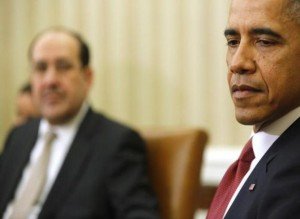
To listen to the talking points of the State Department, news pundits, and “security experts,” you’d think that everyone in the Obama administration and the US political elite was in agreement that Maliki is an autocratic dictator. However, Obama himself revealed quite the opposite when the Iraqi Prime Minister came to the White House less than two and half years ago. On December 12, 2011, just weeks before the ultimate withdrawal of US troops from Iraq, President Obama stood next to Maliki and made the following remarks:

Today, I’m proud to welcome Prime Minister Maliki — the elected leader of a sovereign, self-reliant and democratic Iraq… Iraq faces great challenges, but today reflects the impressive progress that Iraqis have made.  Millions have cast their ballots — some risking or giving their lives — to vote in free elections.  The Prime Minister leads Iraq’s most inclusive government yet.  Iraqis are working to build institutions that are efficient and independent and transparent.

In examining these and other comments made by Obama, and Bush before him, it becomes clear that a tectonic shift has occurred in how Maliki is viewed by Washington. Once seen as a pliable, compliant client regime, Maliki has now become the embodiment of corruption, sectarianism, and lust for power. What could possibly have motivated such a drastic change?

First and foremost are Maliki’s attitudes and policies towards the US occupation and the presence of military and non-military personnel. In fact, it was Maliki’s refusal to grant the US request to maintain US military bases in the country after the withdrawal which prompted the first round of attacks on him and his government. And it was then that the image of Maliki as Iranian puppet truly became popularized, at least in Western media. Indeed, as The Guardian noted at the time,

“The Pentagon had wanted the bases to help counter growing Iranian influence in the Middle East. Just a few years ago, the US had plans for leaving behind four large bases but, in the face of Iraqi resistance, this plan had to be scaled down this year to a force of 10,000. But even this proved too much for the Iraqis.”

Maliki also took the absolutely monumental step of closing down Camp Ashraf and killing or expelling its inhabitants. Far from being a camp for “Iranian political exiles” as Western media have attempted to portray, Ashraf was the base of the Iranian terrorist organization Mujahideen-e-Khalq (MEK), an organization supported wholeheartedly by neocons (as well as most “liberals”) in its continued terror war against Iran. Of course, because Maliki dared to cleanse Iraq of these US-sponsored terrorist thugs, he was immediately convicted in the court of US public opinion which described the operation as an assault on Iranian “freedom fighters.” We know all too well what the US means when it describes terrorists as freedom fighters.

And so, by refusing basing rights, refusing to extend immunity and legal protections to US contractors operating in Iraq, and wiping out Camp Ashraf and MEK members, Maliki became a villain. More to the point, it was his refusal to allow Iraq to be used by the US and its allies as a military and political bulwark against Iran that earned him the West’s ire. Far from wanting a “sovereign, self-reliant and democratic Iraq” as Obama eloquently proclaimed, Washington needed the country to remain a client state to be used as a weapon of US foreign policy in the region. By rejecting this, Maliki, almost overnight, became “a dictator.”

But the Maliki-as-dictator meme has become a powerful device for shaping the narrative about Iraq. One of the primary methods of this narrative-building is establishing, and constantly reiterating, that Maliki has consolidated all power to himself by purging his government of political rivals. While there is undoubtedly some truth in the fact that Maliki has sought to sideline certain political figures who were unwilling to “play ball” with his regime in Baghdad, this is only half the story, the only half western media wants you to hear.

The other side of that story is the fact that Maliki was left by the US with a government rife with factions and individuals who represented not Iraq, but Western political and financial interests. One of the patterns to which Maliki’s accusers point as an example of his dictatorship is his purging of key figures in major Iraqi institutions. However, these same accusers never mention exactly who was purged, and why.

One of the principal examples of such purging was Maliki’s sacking of two key figures in the banking establishment in Iraq. Specifically, Maliki dismissed Sinan al-Shabibi, Governor of Iraq’s Central Bank, and Hussein al-Uzri, former head of the state-owned Trade Bank. These dismissals were reported as a power grab. However, for the most part, they fail to mention the critical fact that these two very powerful individuals in Iraq’s financial establishment are very close friends and associates of Ahmed Chalabi. This name should ring a bell for those who have followed the Iraq tragedy for these last twelve years; Chalabi was the darling of Bush, Cheney, and the neocons. A close political ally, Chalabi was originally envisioned by Cheney and Co. as the leader of the new Iraq, an Iraq which would be amenable to US political and corporate interests in the country.

Though Chalabi was rejected by the Iraqi people, and was never able to establish political power for himself at the time, he and his neocon friends were able to embed their people in Iraq’s banking institutions, thereby giving the US effective control over credit in the country. As has always been known, power over finances is de facto political power and authority. So, was Maliki seeking to consolidate all power to himself? Or was he attempting to rid Iraq’s banks of corrupt agents of Western finance capital who had been undemocratically put in place by precisely those same forces who eagerly championed the destruction of Iraq?

Another of Maliki’s grave crimes was taking on Western oil companies looking to make massive profits off of Iraq’s vast energy deposits. Perhaps the most well known instance occurred in 2012 when ExxonMobil signed an oil exploration deal with the semi-autonomous Kurdistan region in northern Iraq. Maliki rejected the validity of the deal, noting that any oil contracts must be negotiated with the central government in Baghdad, rather than Barzani’s US-aligned government in Arbil. Maliki’s spokesman noted at the time that:

Maliki views these deals as representing a very dangerous initiative that may lead to the outbreak of wars… [and] breaking up the unity of Iraq…Maliki is prepared to go to the highest levels for the sake of preserving the national wealth and the necessary transparency in investing the wealth of the Iraqis, especially oil… [He] sent a message to American President Barak [sic] Obama last week urging him to intervene to prevent ExxonMobil from going in this direction.

It is no secret that Maliki’s strong-willed resistance to this deal, in addition to his refusal to pay ExxonMobil upwards of $50 million to improve production at one major southern oil field, led directly to the oil company pulling out of the lucrative West Qurna-1 project. Essentially then, Maliki took on the very powerful oil corporations (BP is no friend of Maliki either), seeking to get a better deal for Iraq. It would be safe to assume that the endemic corruption in Iraq would have made it easier for Maliki and his associates to enrich themselves by skimming off the top and/or receiving payouts from other oil interests. However, this is secondary to the primary “crime” of challenging the hegemony of oil companies in Iraq. Doesn’t Maliki realize that the US fought a war in Iraq to protect and further the interests of oil companies, among others?

Undoubtedly, Maliki’s greatest sin in the eyes of US-NATO-Israel-GCC has been his steadfast support for Syria and Assad. Maliki refused to abandon Assad when the US-NATO war machine was gearing up to bomb Syria. He loudly proclaimed his support for Assad and his resistance to any attempts to coax and cajole Iraq into allying against him. In this way, Maliki affirmed the alliance of Tehran-Baghdad-Damascus-Hezbollah against the US-NATO-Israel-GCC axis of power, and in doing so put himself at the top of Washington’s enemies list.

In late 2013, Maliki, along with Assad and Iranian authorities, participated in continued negotiations over the proposed Iran-Iraq-Syria gas pipeline, which would bring Iranian and Iraqi gas to the Mediterranean via Syria, thereby giving those countries direct, overland access to the European market. Naturally, this was seen as a direct challenge to US ally Qatar and its dominance of the Middle Eastern gas trade to Europe. It should be noted that it is no mere coincidence that the eruption of the war in Syria coincided perfectly with the initial negotiations over the proposed pipeline.

So, rather than a leader defending national interests and attempting to engage in independent economic development outside the hegemony of Western political and corporate powers, Maliki has been portrayed as a corrupt and brutal tyrant bent on destroying Sunnis, Kurds, and anyone else who stands in his way. Might it not have something to do with Maliki not being a willing puppet for a war on Syria?

Almost as an afterthought are still other reasons why Maliki has been demonized. He has purchased significant military hardware from Russia, including attack helicopters, rather than being solely reliant on US military assistance. Maliki allowed Iraqi Vice President Hashemi, a politician known to be close with Qatar and the US, to be indicted and tried for running an assassination-for-hire operation. Maliki moved to reorganize Iraqi political life by breaking some of the deliberately dysfunctional political institutions created by the US occupiers after the initial war. He sought to use loans and credit to rebuild some of the destroyed infrastructure. He refused to allow Shia politics to be the sole territory of the Sadrists and others. These and countless other actions obviously demonstrated to the US and its allies that “Maliki must go,” as they are so fond of saying.

Is the US Really Supporting Maliki?

One of the more pernicious aspects of the coverage of the conflict in Iraq has been the propagandistic talking point from both mainstream and some non-mainstream outlets that the US is “supporting” and “propping up” Maliki. Dozens of articles and interviews have appeared in recent weeks in which experts espouse the notion that the Obama administration is trying to keep Maliki in power. Despite flying in the face of both logic and the facts, this narrative has taken root in many quarters, and has become the basis upon which many have provided de facto support to ISIS/ISIL and the Sunni insurgents allied, however tenuously, with them.

It would seem that those who argue that the US wants to preserve Maliki’s position in Iraq have not been paying attention. Indeed, headlines such as “US leaders want Iraq’s Nouri al-Maliki to step down in return for US airstrikes on ISIS: Report” from the International Business Times, or “Iraq must form new government, Kerry warns in Baghdad” from the Financial Times, call into question that very assertion. In fact, it is not Maliki that the US is trying to preserve, it is its own influence in Iraq. This is the point that many so-called experts have utterly failed to grasp; Maliki is not doing what he’s told, so the US wants to put in his place someone who will. And they are using the ISIS/ISIL takeover as a convenient pretext for this sort of regime change.

And whose name keeps coming up in discussion about who the US might want to see replace Maliki? It’s none other than good old Ahmed Chalabi, the same puppet who Bush and Co. tried to install in the first place. Ayad Allawi, another Iraqi politician with close ties to the US, is also on the short list. So, two failed US political proxies are now being promoted as the “democratic” and “inclusive” future of Iraqi politics. It’s enough to make anyone laugh, or be sick.

It is also amusing to hear so-called experts discussing how the US has sent troops to Iraq to help Maliki. Such a superficial analysis reveals a complete lack of understanding of both military matters and the way in which the US operates abroad. The authorization for the deployment of 300 military personnel to Iraq is evidence not of an attempt to save Maliki, but to preserve certain key political, financial, and energy infrastructure for Western interests.

The US is not protecting Maliki, but protecting itself and its investments from Maliki, should he attempt to cling to power. Those troops have been protecting the US embassy, advising key figures in regards to securing the oil fields, and providing protection for foreign oil workers among others. This cannot be mistaken for military support for Maliki, unless of course it is the goal of those espousing this nonsense to convince the world that Maliki is the “US man in Iraq.”

Today Iraq is at war, and in danger of breaking apart. With Islamist militants and Sunni insurgents fighting a war against the government in Baghdad, the country is headed for total collapse and partition. But this war did not start with ISIS conquering Mosul. It did not start with Maliki consolidating power. It began before the last US troops ever left Iraq. It began when Maliki decided that he would not be cowed by US threats and diktats. It began the second Iraq tried to assert itself independently. And for this, Iraq is paying the ultimate price.

Eric Draitser is an independent geopolitical analyst based in New York City, he is the founder of StopImperialism.org and OP-ed columnist for RT, exclusively for the online magazine “New Eastern Outlook”

By Eric Draitser

July 6, 2014 0 comments
FacebookTwitterPinterestWhatsappTelegramSkypeEmail
Newer Posts
Older Posts

Recent Posts

  • The black box of the torture camps of the MEK

    December 24, 2025
  • Pregnancy was taboo in the MEK

    December 22, 2025
  • MEPs who lack awareness about the MEK’s nature

    December 20, 2025
  • Why did Massoud Rajavi enforce divorces in the MEK?

    December 15, 2025
  • Massoud Rajavi and widespread sexual abuse of female members

    December 10, 2025
  • Facebook
  • Twitter
  • Instagram
  • Youtube

© 2003 - 2025 NEJAT Society . All Rights Reserved. NejatNGO.org


Back To Top
Nejat Society
  • Home
  • Articles
  • Media
    • Cartoons
    • NewsPics
    • Photo Gallery
    • Videos
  • Publications
    • Books
    • Nejat NewsLetter
    • Pars Brief
  • About Us
  • Contact us
  • Editions
    • عربي
    • فارسی
    • Shqip