The MEK leaders deny their cooperation with Saddam Hussein primarily because such an association significantly undermines their legitimacy and popular support, particularly within Iran, where they are widely viewed as traitors for siding with an enemy during the Iran-Iraq War.
This denial is a strategic effort to rehabilitate their image and present themselves as a legitimate opposition force for a democratic Iran.
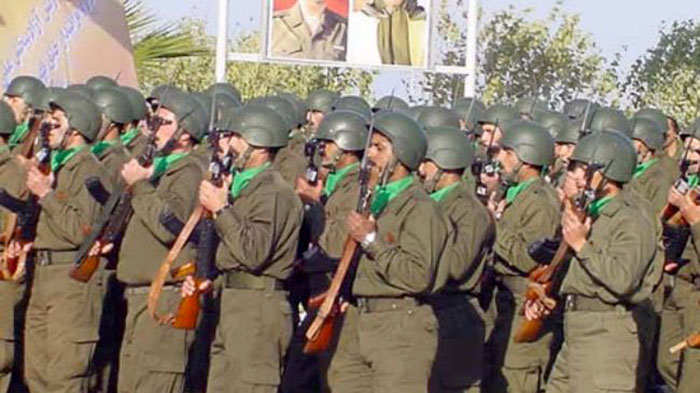
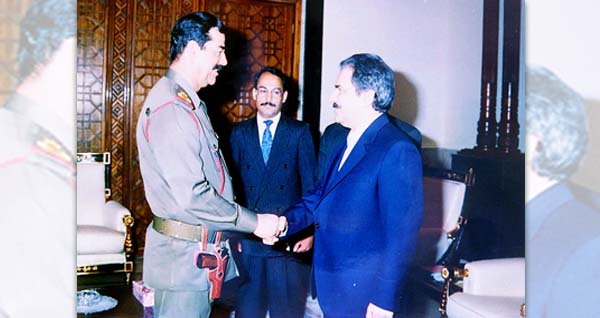
The MEK’s cooperation with Saddam Hussein involved receiving arms, cash and a miliary base in Iraq called Camp Ashraf, from which they launched attacks against Iran during the Iran-Iraq War.
They also assisted Saddam Hussein in suppressing Kurdish and Shia uprisings in Iraq in 1991, although the MEK vehemently denies it.
This historical alignment with a hostile foreign power during a devastating conflict led to their deep unpopularity inside Iran.
By denying this cooperation, the MEK leaders aim to distance themselves from these controversial actions and present a more palatable image to international audiences and potential supporters.
Documents on MEK’s alliance with Saddam Hussein
The primary documents and testimonies confirming the cooperation between the Mujahedin-e Khalq (MEK) and Saddam Hussein include reports from the United States Department of State, declassifies intelligence documents, and testimonies from former MEK members and Iraqi officials.
Key evidence points to the MEK’s relocation to Iraq in the 1980s, their receipt of financial and military support from the Iraqi regime, and their participation in military operations alongside Iraqi forces, particularly during Iran-Iraq War and the suppression of the 1991 Iraqi uprisings.
A Specific document includes the “country Reports on Terrorism” published annually by the US State Department, which have historically detailed the MEK’s presence and activities in Iraq under Saddam Hussein’s Patronage.
Additionally declassifies intelligence assessments from various Western governments, though not always publicly available in their entirety, have corroborated these alliances.
Testimonies from former high-ranking MEK members, such as those collected by human rights organizations and independent researchers have also provided firsthand accounts of the MEK’s operational and logistical integration with Saddam’s regime.
Furthermore, statements from former Iraqi officials post-2003 have shed light on the extent of this cooperation, including the provision of arms, training, and intelligence sharing.
In the most recent court session examining the charges against 104 members of MEK as well as the organization’s nature as a legal entity, held on September 23rd, six former members of the group named Samad Eskandari, Hadi Shabani, Fathollah Eskandari, Kamand Ali Azizi, Doost Mohammad Farahi, and Foad Basri testifies about the MEK cooperation with Iraqi Baa’th regime during the Iran-Iraq War.
The impact of alliance with Saddam on Rajavi’s political career
The immediate impact of alliance with Saddam Hussein on the political career of Massoud and Maryam Rajavi was perceived as positive because they were successful in achieving some strategic goals as an armed opposition force.
Conversely, the long-term implications were detrimental, especially as Saddam’s regime was increasingly considered as invader to Iran and as an offensive regime that abused human rights of minorities, used chemical weapons against civilians.
Any leader including the Rajavis, closely associated with Saddam have been faced criticism and political fallout as his international standing deteriorated and finally his regime collapsed.
Sources:
1. Country Reports on Terrorism, US department of State
2. Reports of Human Rights Watch on the MEK, Human Rights Watch