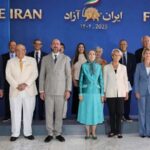
Maryam Rajavi’s public appearances and interactions with the media have been largely controlled and strategic, primarily focusing on presenting the narrative the Mujaheddin-e Khalq (MEK) as a pro-democracy opposition to Iranian government.
There is no publicly available record or credible report of Maryam Rajavi having participated in a formal, unscripted debate with an opposing point of view or undergoing a challenging, in-depth interview with independent journalists where she is pressed on controversial aspects of her organization’s activities over the past four decades.
Her media engagements typically include prepared statements, speeches at rallies, and interviews with sympathetic news outlets or journalists where the questions are often pre-screened or aligned with the MEK’s democratic gesture. All interviewers follow the specific agenda of the group.
The absence of such engagements is often attributed to several factors. One primary reason cited by critics and observers is the MEK’s highly centralized and authoritarian structure, which discourages independent scrutiny and dissent. The MEK has faced numerous accusations of cult-like practices, human rights abuses against its own members within its camps, and a lack of internal democracy, which challenging interviews or debates could expose.
Furthermore, the MEK’s history of violent struggle and its designation as a terrorist organization by some countries (though later delisted by the US and EU) has led to a cautious approach to public relations, prioritizing controlled messaging over open dialogue.
The MEK’s strategy is focused on maintaining a consistent public image, concentrating on its opposition to Iranian government and its so-called vision for a democratic Iran, while avoiding situations that could lead to critical examination of its past or internal mechanisms such as cult-like practices under the despotic ruling of Maryam Rajavi and her disappeared husband Massoud Rajavi.
Some analysts argue that the MEK’s hierarchical and authoritarian structure, with the Rajavis at its apex, is incompatible with the transparency and accountability expected of a democratic leadership. The group’s documented history of internal purges, isolation of members, and strict ideological control are reasons why open debate format would be problematic for their narrative.
It is difficult to consider Maryam Rajavi a democratic leader of a democratic organization based on her consistent avoidance of open, challenging journalistic scrutiny and the documented internal practices of the MEK, despite her widely propagated ten-point plan for future of Iran.
Mazda Parsi