On the occasion of World Men’s Day, Atefeh Sebdani, an Iranian-born Swedish author and a survivor of childhood separation from her parents within the Mujahedin-e Khalq (MEK), has shared a deeply personal and painful reflection on Facebook.
Her words reveal a childhood marked by parental abandonment, child trafficking, sexual and physical abuse, and the absence of trustworthy male role models. She also speaks about the role of Massoud Rajavi and the MEK’s organizational practices, as well as the harassment she faced from men associated with the group after she began publicly sharing her experiences.
Her testimony is a reminder of the human cost of authoritarian organizations and personality cults, the vulnerability of children caught in their systems, and the courage it can take to speak out about experiences that others would rather remain hidden.
Below is her full statement, in her own words:
I was not raised with any male role models at all.
It started with my dad who was not only absent. But chose to put me into a child trafficking system to use me as labour in another continent.
Then I came to a foster family where the two men in that family sexually, mentally and physically abused me for a whole childhood.
The role model I was supposed to look up to was the leader of the cult who forced women and men to stop having human emotions and intersex relationships in sex separated system. He made robots out of his members, ordered attacks and killings and then disappeared for decades.
Then was all the men in the cult that could have been role models when I started to speak about my experiences. They chose to harass and gaslight me.
Despite a horror of men around me, I knew they weren’t the framework.
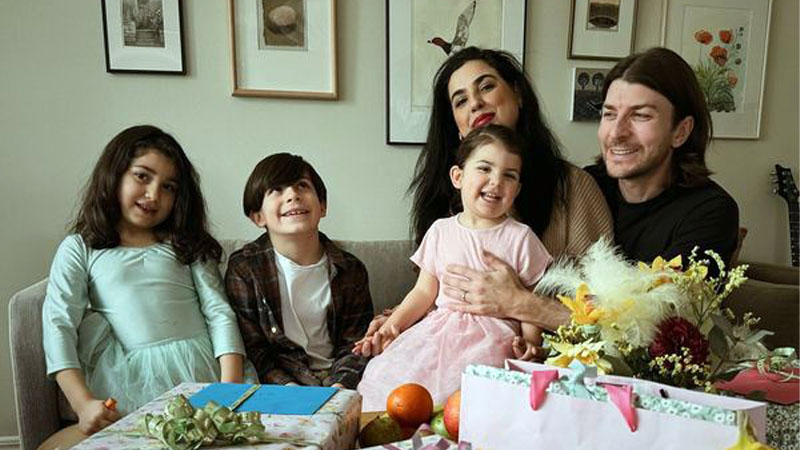
At 18 I met someone I knew was the perfect man. The man who would indeed be the best role model for my children and for other men. We married, got children but the other way around… and to this day: I love him more than words can explain.
Today is international men’s day, and I want to lift one man up who not only saved me but showed me what a man can be. One who rarely is lifted up cause he lives quietly.
My partner in life. My love, Max.
You are my manly role model.
You showed me how real men are.
You gave me back my trust.
You are the perfect father, the perfect husband.
Thank you for walking the earth at the same time as me.
Sebdani was born to parents who joined the MEK and eventually settled at Camp Ashraf in Iraq, the organization’s main military base under the leadership of Massoud Rajavi. When she was approximately five years old, she and her two younger brothers were separated from their parents as part of the MEK’s policy of sending children abroad. According to Sebdani’s testimony, this separation was ordered by Massoud Rajavi.
In the early 1990s, she and her brothers were smuggled out of Iraq, travelling through Jordan before eventually reaching Sweden in 1991. Their parents remained with the group in Iraq. At just five years old, Atefeh suddenly found herself responsible for looking after her two younger brothers, effectively assuming the role of their mother.
In Sweden, the children were placed with an MEK-supporting foster family. Sebdani has described a childhood marked by psychological pressure, ideological indoctrination, abuse, and the suppression of her Iranian identity. She has also spoken about the emotional consequences of losing her parents and growing up without the security and affection of her biological family.
As an adult, Sebdani built a professional career in engineering, technology, digital strategy, and business development. She eventually began speaking publicly about her childhood and the experiences of children separated from their parents by the MEK.
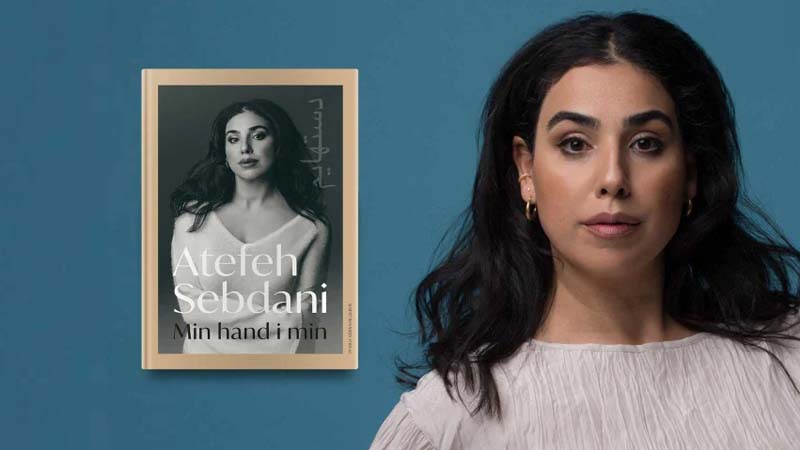
In 2023, she published her autobiographical memoir, My Hand in Mine (Min hand i min), in which she recounts her childhood, separation from her mother, journey from Iraq to Sweden, and struggle to reclaim her identity. She also appeared in the 2024 documentary The Children of Camp Ashraf, directed by Sara Moein, which explores the experiences of children separated from their parents in the MEK.
Today, Atefeh Sebdani is an important voice among former MEK children, bringing attention to the human consequences of the organization’s policies and the lasting impact of separating children from their families.
Mazda Parsi