
The families of the Mojahedin Khalq’s members residing in Camp Ashraf in Iraq have recurrently, in separate letters, warned the international humanitarian bodies, especially the International Committee of the Red Cross, of the members’ serious condition. That is natural in a war-torn country to witness a shortcoming in people’s essential needs, but the worst happens to the residents of a camp suffering double imposed restrictions, first by the camp’s own controlling authorities and then by the coalition forces.
The restricted members have to suffer against their own will. At a time when they are in need of urgent action by the international institutions, the camp commanders, supported by the occupying forces, have prohibited any visit to the camp. At the same time, the heads of the organization running a comfortable life in European countries, organize rallies to weep crocodile tears over the members’ serious condition in Camp Ashraf.
In a recent protesting rally in Geneva reported by NCRI, “a delegation representing the protestors marched to the headquarters of the International Committee of the Red Cross to deliver a letter on behalf of hundreds of families of the PMOI members residing in Ashraf City”. Nothing is known about the contents of the letter but for sure it never demanded the Red Cross to visit Camp Ashraf. A regular visit of the Red Cross Committee from the camp to have a free interview with the members might put an end to all sufferings and anxieties.
mojahedin.ws – 30/07/2006
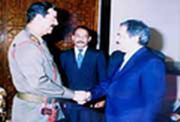 patronage of Saddam Hussein. He gave the group money, weapons, jeeps and military bases along the Iran-Iraq border — a convenient launching ground for its attacks against Iranian government figures. When U.S. forces toppled Saddam’s regime, they were not sure how to handle the army of some 5,000 Mujahedeen fighters, many of them female and all of them fanatically loyal to the Rajavis. The U.S soldiers’ confusion reflected confusion back home. The Mujahedeen has a sophisticated lobbying apparatus, and it has exploited the notion of female soldiers fighting the Islamic clerical rulers in Tehran to garner the support of dozens in Congress. But the group is also on the State Department’s list of foreign terrorist organizations, placed there in 1997 as a goodwill gesture toward Iran’s newly elected reform-minded president, Mohammad Khatami.
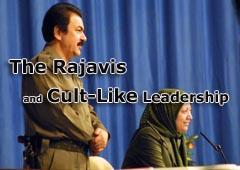 a move most Iranians will never forgive. Then, right after the Iran-Iraq cease-fire in 1988, as if orchestrating the tragic turning point in his own Rajavi Opera, he launched thousands of his warriors on ”Operation Eternal Light” across the border to capture Iranian territory. Two thousand Mujahedeen fighters — many of them the parents, husbands and wives of those who are now in Iraq — were killed by the Revolutionary Guard.