The Israeli point man on Iran affairs, Uri Lubrani, has been forced into early retirement amid incessant power struggles between Mossad and the Israeli Defense Ministry.
Senior defense officials told The Jerusalem Post on Sunday that Israeli Defense Minister Ehud Barak decided to shut down Lubrani’s office after coming under excruciating pressure from the notorious Mossad spy agency.
According to the senior officials, who were speaking on condition of anonymity, Mossad spymasters had grown weary of Lubrani’s interference in intelligence affairs and had demanded his dismissal.
The dismissal, which is likely to end the operations of Israeli Radio’s Farsi service, has been met with an angry response in Tel Aviv.
“At a time when Israel is working to stop Iran’s nuclear program it is unfortunate that Lubrani is being forced out,”said an Israeli political heavyweight on condition of anonymity.
“He is one of the country’s foremost experts on Iran and is one of the only people who warned about what was happening in Iran before the nuclear program picked up steam,”he added.
With a career that spans half a century, Lubrani headed the Israeli Mission to Iran before the establishment of the Islamic Republic in 1979.
One of the Israeli Defense Ministry’s most senior advisors, Lubrani spearheaded a torrent of conspiracies in Iran. He has vocally and actively pursued a regime change in Iran, calling for investment in Iranian terrorist groups such as the Mujahedin Khalq Organization (MKO).
MKO is a Marxist-Islamist guerilla army which was founded in Iran in the 1960s. They were exiled some twenty years later for performing numerous acts of terrorism in the country.
Lubrani’s lay-off comes as Israeli spymasters and Defense Ministry officials are currently mired in a political tug-of-war for power.
News on the MEK
American obstacles on the way of investigating MKO crimes
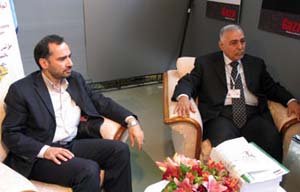
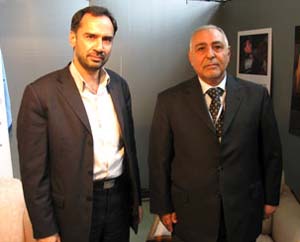
"We have collected many documents about the crimes Mujahedin-e Khalq Organization has so far committed in Iraq; but Americans refrain from letting us find access to a part of documents over MKO crimes inside the country" announced chief investigative judge of the Supreme Iraqi Criminal Court in a meeting with Secretary General of Habilian Association.

According to the database of Habilian Association (families of terror victims) in a meeting with Secretary General of Habilian Association, Adnan al-Bedeyri also said: We have managed to meet many remnant families of MKO suppression of Kurds in northern Iraq and have collected remarkable documents in this regard.
He also added: Despite all the attempts made by the MKO in order to deviate the case, we strive to get the result and try to tie up any loose ends with this file. We also ask you, as the representatives of terror victims, to provide Iraq’s supreme criminal court with any documents you have about MKO crimes.

Underlining that they never follow political goals in this case, the Iraqi official also said: We have put our backs into fulfilling the Iraqi people’s demand for incrimination of the assassins of Iraqi people and we are all in our power to arrive at this result.
Then Secretary General of Habilian Association said in his part: we have discussed the issue of MKO with many Iraqi authorities and are totally aware of the intensity of their hatred against this terrorist cult.
Referring to the fact that America has always made obstacles on the way of fulfillment of the will of Iraqi officials and people about MKO after the occupation of Iraq, Hashemi Nejad also said: MKO tries to portray itself as a political opposition group which has renounced terrorism; but their actual intention is to create an atmosphere of tension and hostility between the government and the people of Iraq. Then Hashemi Nejad pointed out MKO deception in international community and said: MKO struggles to cheat and mislead world’s public opinion and make the international community believe that they are being oppressed by the Iraqi government. To do this MKO is being accompanied by some European political figures.
He also said: Iraqi people are never satisfied with MKO presence inside their country and the only way for bringing to an end their terrorist activities and expelling them from Iraq is to unveil the crimes they have so far committed.
Iranian foreign ministry spokesman Monday lambasted the recent move by European and British lawmakers to remove the anti-Iran terrorist group, the Mojahedin-e Khalq Organization (MKO), from the US black list. 
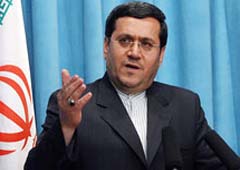
"Utilizing the MKO, which is a used card, would be useless for the westerners," Hassan Qashqavi told reporters in a weekly press conference here in Tehran on Monday.
Asked to comment on the recent request by some European and British Lawmakers from US President Barack Obama to strike the name of the MKO off the US terror list, Qashqavi strongly criticized EU ignorance and compromise with terrorists and extremists, MKO in particular.
"Any compromise with terrorists, including the MKO, would produce negative outcomes for all those who support these terrorists," Qashqavi noted.
After removing an anti-Iranian terror group from their blacklist, more than 100 members of the European Parliament have tried to persuade the US president to lift an American ban on the Mojahedin Khalq Organization.
Meantime, More than 180 members of the British Parliament issued a letter to President Obama, urging him to change the terrorist status of the MKO.
The anti-Iran terror group, blacklisted as a terrorist organization by many international entities and countries, was put on the US terror list in 1997 by the then President, Bill Clinton.
The MKO, whose main stronghold is in Iraq, is blacklisted by much of the international community, including the United States.
Before an overture by the EU, the MKO was on the European Union’s list of terrorist organizations subject to an EU-wide assets freeze. Yet, the MKO puppet leader, Maryam Rajavi, who has residency in France, regularly visited Brussels and despite the ban enjoyed full freedom in Europe.
The MKO is behind a slew of assassinations and bombings inside Iran, a number of EU parliamentarians said in a recent letter in which they slammed a British court decision to remove the MKO from the British terror list. The EU officials also added that the group has no public support within Iran because of their role in helping Saddam Hussein in the Iraqi imposed war on Iran (1980-1988).
Many of the MKO members abandoned the terrorist organization while most of those still remaining in the camp are said to be willing to quit but are under pressure and torture not to do so.
A May 2005 Human Rights Watch report accused the MKO of running prison camps in Iraq and committing human rights violations.
According to the Human Rights Watch report, the outlawed group puts defectors under torture and jail terms.
The group, founded in the 1960s, blended elements of Islamism and Stalinism and participated in the overthrow of the US-backed Shah of Iran in 1979. Ahead of the revolution, the MKO conducted attacks and assassinations against both Iranian and Western targets.
Leaders of the group have been fighting to shed its terrorist tag after a series of bloody anti-Western attacks in the 1970s, and nearly 30 years of violent struggle against the Islamic Republic of Iran.
In recent months, high-ranking MKO members have been lobbying governments around the world in the hope of acknowledgement as a legitimate opposition group.
The group started assassination of the citizens and officials after the revolution in a bid to take control of the newly established Islamic Republic. It killed several of Iran’s new leaders in the early years after the revolution, including the then President, Mohammad Ali Rajayee, Prime Minister, Mohammad Javad Bahonar and the Judiciary Chief, Mohammad Hossein Beheshti who were killed in bomb attacks by MKO members in 1981.
The group fled to Iraq in 1986, where it was protected by Saddam Hussein and where it helped the Iraqi dictator suppress Shiite and Kurd uprisings in the country.
The terrorist group joined Saddam’s army during the Iraqi imposed war on Iran (1980-1988) and helped Saddam and killed thousands of Iranian civilians and soldiers during the US-backed Iraqi imposed war on Iran.
Since the 2003 US invasion of Iraq, the group, which now adheres to a pro-free-market philosophy, has been strongly backed by neo-conservatives in the United States, who also argue for the MKO to be taken off the US terror list.
The MKO has been in Iraq’s Diyala province since the 1980s. The Iraqi government and parliament has announced that it would not tolerate the group anymore and is seeking to expel the group from the country in the near future.
The Iraqi parliament is seriously pursuing expulsion of the anti-Iran terrorist group, the
Mojahedin-e Khalq Organization (MKO), from the country, an Iraqi lawmaker said on Sunday.

"Despite pressures exerted by certain bodies to prevent expulsion of MKO, the Iraqi parliament is following the case seriously," Iman al-Asadi, a member of the Shiite United Iraqi Alliance (UIA) – the largest bloc in the Iraqi parliament with 83 out of a total 275 seats – told FNA.
She underlined that expulsion of MKO sets a priority for the Iraqi government.
Reminding pressures on Iraqi government about the MKO’s fate, Asadi stated, "What such institutions want is unacceptable. MKO is not valuable for us. We do not recognize them."
Iraq has vowed to return MKO members to Iran or send them to a third country as it holds the anti-Iran group responsible for destabilizing Iraq through its terror attacks.
The MKO moved to Iraq in 1986 where it enjoyed the support of former Iraqi dictator Saddam Hussein who funded the group to work against Iran in the 1980-88 war. The group launched attacks on Iran from its headquarters, the Camp Ashraf, in the northern province of Diyala.
The MKO is also responsible for numerous acts of violence against Iranian civilians and government officials as well as Iraqis during the reign of Saddam.
The group started assassination of the citizens and officials after the revolution in a bid to take control of the newly established Islamic Republic. It killed several of Iran’s new leaders in the early years after the revolution, including the then President, Mohammad Ali Rajayee, Prime Minister, Mohammad Javad Bahonar and the Judiciary Chief, Mohammad Hossein Beheshti who were killed in bomb attacks by MKO members in 1981.
The MKO has been in Iraq’s Diyala province since the 1980s.
LONDON- British lawmakers issued a letter to U.S. President Barack Obama calling for the removal of the People’s Mujahedin of Iran from a terrorist list.
More than 180 members of the British Parliament joined a similar effort by European lawmakers proposing that the Obama administration shift its stance on Iranian opposition movements as part its new policy of engagement.

"Our experience has shown that the Iran crisis cannot be resolved without an Iranian solution and without relying on its main opposition movement," the letter said.
President Bill Clinton included the PMOI on the U.S. State Department’s Foreign Terrorist Organizations list in 1997 following the election of Iranian President Mohammad Khatami.
Though largely targeting Iranian government officials, PMOI’s killing of American contractors in Tehran in the 1970s, participation alongside Saddam Hussein’s forces in suppressing Kurdish and Shiite rebellions in Iraq in 1991 and later attacks on Iranian embassies in 1992 earned it a spot on the terrorist lists of several nations.
The PMOI and its affiliates in the Paris-based National Council of Resistance of Iran have waged a successful delisting campaign in Britain and Europe, with similar efforts under way in the United States.
In the letter to Obama, lawmakers said they fear a "catastrophic humanitarian crisis" would result from Washington’s refusal to delist the group, adding that Iran uses the listing as justification for threats against the PMOI.
"It is time for the U.S. administration to listen to this message, a message brought by you who have proved to be symbols of peace and democracy in today’s world," Maryam Rajavi, NCRI president, said in a videotaped statement.
http://www.upi.com/Emerging_Threats/2009/05/14/Britons-support-PMOI-in-letter-to-Obama/UPI-46881242336414/
Pope Benedict XVI’s recent commentary suggesting religion is being exploited to fuel continuing wars is a concept familiar to award-winning author Reza Aslan.
Aslan, 35, who spoke Monday before a packed audience at the World Affairs Council in San Francisco to promote his latest book How to Win a Cosmic War: God, Globalization, and the End of the War on Terror, discussed religious ideology and extremism and its destructive impact on the world.
According to Aslan, the former Bush administration’s self-proclaimed “War on Terror” was never about terrorism. If it were, Aslan argues, the war would have included terrorist groups like ETA (Basque separatists), or the Iranian group Mujahideen-e-Khalq, for example. Instead, the US war on terror is specifically targeting Islam and Muslims, in areas of the world where the US has oil and gas reserve interests.
“That is what it is. The war on Islam,” Aslan said. “That is how it was deliberately conceived and it was how it was consciously propagated.”
ByFanny Dassie – Fogcityjpournal
The support by the US and Europe for the anti-Iran terrorist group, the Mojahedin-e Khalq Organization (MKO), would damage their standing both in Iran and the world, an Iranian analyst said on Sunday.
Referring to the move by the European Parliament to demand Washington to strike the name of the MKO off the US list of terrorist groups, Reza Talayee Nik told FNA that the West is seeking to make an instrumental use of the MKO in confrontation with Iran, using the group as a pressure lever against the Islamic Republic.
“Placing the name of the Monafeqin (the Hypocrites, as MKO is referred to in Iran) in the list of terrorist groups or delisting it does not take place in accordance with a stable policy in Europe and the US,”Talayee Nik, a former member of the parliament’s National Security and Foreign Policy Commission said.
After removing the anti-Iranian terror group from their blacklist, the EU lawmakers are now urging US President Barack Obama to follow suit.
More than 100 members of the European Parliament have tried to persuade the US president to lift an American ban on the MKO.
Meantime, he pointed out that the western world has already failed in using the MKO as a pressure lever against the Islamic Republic, saying that the weakness and inability of the terrorist Mojahedin-e Khalq Organization is the reason for the West’s failure in using the group as a tool against Iran.
He further pointed out that the Europe is after maintaining its position in the competition with Russia and some other regional countries in providing an atmosphere for negotiations between Iran and the US.
The analyst mentioned that the EU aims to make a tactical use of the MKO in a bid to provide an advantage for the US in potentials talks with Iran,”but influence of the Zionist lobby on Europe has cause the EU’s failure in attaining desirable results”from such a move.
The MKO, whose main stronghold is in Iraq, is blacklisted by much of the international community, including the United States.
In the past, the MKO was on the European Union’s list of terrorist organizations subject to an EU-wide assets freeze. Yet, the MKO puppet leader, Maryam Rajavi, who has residency in France, regularly visited Brussels and despite the ban enjoyed full freedom in Europe.
The MKO is behind a slew of assassinations and bombings inside Iran, a number of EU parliamentarians said in a recent letter in which they slammed a British court decision to remove the MKO from the British terror list. The EU officials also added that the group has no public support within Iran because of their role in helping Saddam Hussein in the Iraqi imposed war on Iran (1980-1988).
Many of the MKO members abandoned the terrorist organization while most of those still remaining in the camp are said to be willing to quit but are under pressure and torture not to do so.
A May 2005 Human Rights Watch report accused the MKO of running prison camps in Iraq and committing human rights violations.
According to the Human Rights Watch report, the outlawed group puts defectors under torture and jail terms.
The group, founded in the 1960s, blended elements of Islamism and Stalinism and participated in the overthrow of the US-backed Shah of Iran in 1979. Ahead of the revolution, the MKO conducted attacks and assassinations against both Iranian and Western targets.
Leaders of the group have been fighting to shed its terrorist tag after a series of bloody anti-Western attacks in the 1970s, and nearly 30 years of violent struggle against the Islamic Republic of Iran.
In recent months, high-ranking MKO members have been lobbying governments around the world in the hope of acknowledgement as a legitimate opposition group.
The group started assassination of the citizens and officials after the revolution in a bid to take control of the newly established Islamic Republic. It killed several of Iran’s new leaders in the early years after the revolution, including the then President, Mohammad Ali Rajayee, Prime Minister, Mohammad Javad Bahonar and the Judiciary Chief, Mohammad Hossein Beheshti who were killed in bomb attacks by MKO members in 1981.
The group fled to Iraq in 1986, where it was protected by Saddam Hussein and where it helped the Iraqi dictator suppress Shiite and Kurd uprisings in the country.
The terrorist group joined Saddam’s army during the Iraqi imposed war on Iran (1980-1988) and helped Saddam and killed thousands of Iranian civilians and soldiers during the US-backed Iraqi imposed war on Iran.
Since the 2003 US invasion of Iraq, the group, which now adheres to a pro-free-market philosophy, has been strongly backed by the neo-conservatives in the United States, who also argue for the MKO to be taken off the US terror list.
The MKO has been in Iraq’s Diyala province since the 1980s, but the Iraqi government and parliament have in recent months stepped up efforts to expel the terrorist group from the country.
The MKO is responsible for numerous acts of violence 
against Iranian civilians and government officials as well as Iraqis
A senior Iranian dignitary describes the EU-led decision to remove the Mujahedin Khalq Organization (MKO) from the terror blacklist as a ‘strategic mistake’.
A senior member of Majlis National Security and Foreign Policy Commission Javad Jahangirzadeh said the EU move to exempt the MKO from the killings of thousands of Iranians was a political disgrace, Fars News Agency reported Sunday.
“It is the European Union’s strategic mistake to hold hope on the MKO because the terrorist group has no social or popular base in Iran,”he added.
The lawmaker said the mistake by European countries would be in Iran’s favor because the”West has no concrete information and analysis about the MKO.”
The Mujahedin Khalq Organization, which identifies itself as a Marxist-Islamist guerilla army, was founded in Iran in the 1960s, but was exiled some twenty years later for performing numerous acts of terrorism in the country.
The terrorists are especially notorious for taking sides with former dictator Saddam Hussein during the war Iraq imposed on Iran (1980-1988).
Anne Singleton, an expert on the MKO and author of Saddam’s Private Army explains that the West aims to keep the group afloat in order to use it in efforts to destabilize Iran and possibly attempt to stage a regime change.
“With a new Administration in the White House a pre-emptive strike on Iran looks unlikely. Instead the MKO’s backers have put together a coalition of small extremists groups, the known minority and separatist groups, along with the MKO. These groups will be garrisoned around the border of Iran and their task is to launch terrorist attacks inside Iran over the next few years to turn up the heat,”she explains.
“The role of the MKO is to train and manage these groups using the expertise they acquired from Saddam’s Republican Guard,”Singleton added.
A 2007 German intelligence report from the Federal Office for the Protection of the Constitution has identified the MKO as a”repressive, sect-like and Stalinist authoritarian organization which centers around the personality cult of [MKO leaders] Maryam and Masoud Rajavi.”
After removing an anti-Iranian terror group from their blacklist, European Union lawmakers are now urging President Barack Obama to follow suit.
More than 100 members of the European Parliament have tried to persuade the US president to lift an American ban on the Mujahedin Khalq Organization (MKO), AFP reported on Thursday.
The MKO, which identifies itself as a Marxist-Islamist guerilla army, was founded in Iran in the 1960s but was exiled some twenty years later for carrying out numerous acts of terrorism inside the country.
The group is especially notorious for the help it extended to former dictator Saddam Hussein during the war Iraq imposed on Iran (1980-1988) and helped him in the massacre of thousands of innocent Iraqis.
The group masterminded a slew of assassinations and bombings inside Iran, one of which was the 1981 bombing of the offices of the Islamic Republic Party, in which more than 72 Iranian officials were killed, including the then Judiciary chief Ayatollah Mohammad Beheshti.
The report adds that the lawmakers feel the group’s removal from the US list of terror is necessary as it has”clearly demonstrated”its commitment to the West and its opposition to religious fundamentalism.
The organization, known as the”Rajavi cult”after its leader Masoud Rajavi, was placed on Washington’s list of banned organizations in 1997.
The European Union had also initially banned the group, but later gave in to the intense lobbying of Rajavi’s wife Maryam and removed it from the terrorist list in January.
Renowned journalist Elizabeth Rubin of the New York Times brands the group as a cult, operating like”any other military dictatorship.”
“No one can criticize Rajavi. And everyone must go through routine self-criticism sessions…If there’s a sign of resistance, you are considered not revolutionary enough, and you need more ideological training. Either people breakaway or succumb,”she wrote in 2003.
The group’s cult-like activities include psychological coercion techniques, physical abuse and ‘forced sterilization’ to prevent members from leaving the group.
The MKO is responsible for several acts of terror in Iran including the 1994 bombing of a revered Shia shrine in Mashhad in eastern Iran.
In 2003, French anti-terrorist police arrested 165 members in Paris, including Maryam Rajavi, for ‘associating with wrongdoers in relation with a terrorist undertaking.’
More recently, around 10 members of the notorious organization were arrested in France and Switzerland on charges of money laundering on September 29, 2008.
Iran: As the Main victim of US backed terrorism, Iran has lost 16000 of its nationals to Mojahedin Khalq Orgaisation (MKO, MEK, Rajavi cult)
US petrol embargo not to harm Iran’s will for nuclear rights: FM Spokesman Service: Foreign Policy
TEHRAN (ISNA)-Iran’s will to achieve its sacrosanct right of peaceful nuclear technology will not be harmed by US boycott of petrol supplies to the country, said Iran’s Foreign Ministry Spokesman on Monday.
“The policy of threat and sanction has joined the history and has lost viability, those who show the byway (sanctions) to the new US administration should put this policy aside because it does not accord with their change policy,” Hassan Qashqavi said at his weekly press conference.
As the Oil Minister has announced Iran has considered mechanisms that will make the petrol embargo futile and it has no effect on Iran’s will to accomplish its lawful nuclear rights, he noted.
Also regarding US State Department recent report that has called Iran one of the main sponsors of terrorism, he said Iran has always been one of the “main victims of terrorism” and has lost 16,000 of its nationals in Mujahidin Khalq Organization (MKO) terror acts.
“The main emblematic of state terrorism is Israel and its main sponsor is the US, thus Iran can’t be labeled in this way, all and everybody should have the cause of fight against terrorism in a non-political atmosphere.”
Regarding the growing power of Taliban in Pakistan and Iran’s program and the possibility of negotiation with NATO and the US in this regard, he stressed on regional approaches to resolve the insecurity problem.
Asked about the impact of Iran’s upcoming presidential elections on Tehran-Washington rapprochement of ties, Qashqavi explained the country’s leading policies and strategies are not influenced by the elections.
Meanwhile, regarding the Iranian-American journalist Roxana Saberi, sentenced to 8 years in jail for espionage for Washington he noted “Saberi’s case is not complicated, this Iranian woman has received a verdict and her case is now in the appeal court.”
Also over Israel’s expansion of Jewish settlements in Quds, Qashqavi said the move has made a wide reaction among Muslims as well as the Orthodox church of occupied territories of Palestine.
The move is against all international conventions and calls for serious response by UNESCO, Organization of Islamic Countries and the Arab league, he continued.
The Foreign Ministry Spokesman also played down US Secretary of State Hilary Clinton’s remarks on Iran’s growing influence in Latin American countries saying “she can have her comments but our ties with Latin America is a dynamic one and in favor of our interests in culture, politic and economy.”
Qashqavi, regarding some Arab countries demand from Iran to remove the tag of Persian Gulf from medals and brochures of Islamic Solidarity Games he said the name will not be dropped for any excuse because it is historical, international and approved by the UN and any other name is fabricated.