A senior Iranian lawmaker blamed the western powers for their double standards on terrorism, cautioning that the West’s approach has strengthened terrorist groups in recent years.
"The United States and the EU recently delisted the terrorist Mojahedin-e Khalq organization (MKO, also known as the MEK, NCR and PMOI) from their list of terrorist organizations, and now they want to list Hezbollah as terrorist entity," Member of the Iranian Parliament’s National Security and Foreign Policy Commission Evaz Heidarpour Shahrezayi told parliament news agency on Monday.
The Iranian legislator described Israeli President Shimon Peres’ call on European Union to put Lebanese Hezbollah on its list of terrorist organizations as completely illogical.
"By lobbying with EU to designate Hezbollah as a terrorist entity, Israelis are trying to isolate the resistant group at the international level," he added.
"This is a clear manifestation of West’s double standard policy on the issue," he concluded.
The MKO is behind a slew of assassinations and bombings inside Iran, a number of EU parliamentarians said in a recent letter in which they slammed a British court decision to remove the MKO from the British terror list. The EU officials also added that the group has no public support within Iran because of their role in helping Saddam Hussein in the Iraqi imposed war on Iran (1980-1988).
Many of the MKO members abandoned the terrorist organization while most of those still remaining in the grouplet are said to be willing to quit but are under pressure and torture not to do so.
A May 2005 Human Rights Watch report accused the MKO of running prison camps in Iraq and committing human rights violations.
According to the Human Rights Watch report, the outlawed group puts defectors under torture and jail terms.
The group, founded in the 1960s, blended elements of Islamism and Stalinism and participated in the overthrow of the US-backed Shah of Iran in 1979. Ahead of the revolution, the MKO conducted attacks and assassinations against both Iranian and Western targets.
The group started assassination of the citizens and officials after the revolution in a bid to take control of the newly established Islamic Republic. It killed several of Iran’s new leaders in the early years after the revolution, including the then President, Mohammad Ali Rajayee, Prime Minister, Mohammad Javad Bahonar and the Judiciary Chief, Mohammad Hossein Beheshti who were killed in bomb attacks by MKO members in 1981.
The group fled to Iraq in 1986, where it was protected by Saddam Hussein and where it helped the Iraqi dictator suppress Shiite and Kurd uprisings in the country.
The terrorist group joined Saddam’s army during the Iraqi imposed war on Iran (1980-1988) and helped Saddam and killed thousands of Iranian civilians and soldiers during the US-backed Iraqi imposed war on Iran.
Since the 2003 US invasion of Iraq, the group, which now adheres to a pro-free-market philosophy, has been strongly backed by neo-conservatives in the United States, who argued for the MKO to be taken off the US terror list.
The US formally removed the MKO from its list of terror organizations in early September, one week after Secretary of State Hillary Clinton sent the US Congress a classified communication about the move. The decision made by Clinton enabled the group to have its assets under US jurisdiction unfrozen and do business with American entities, the State Department said in a statement at the time.
In September 2012, the last groups of the MKO terrorists left Camp Ashraf, their main training center in Iraq’s Diyala province. They have been transferred to Camp Liberty which lies in the Northeast of the Baghdad International Airport.
Camp Liberty is a transient settlement facility and a last station for the MKO in Iraq.
Mujahedin Khalq Terror group
Head of an Iraqi human rights group says Iraq seeks to try in absentia the members of the terrorist Mujahedin-e
Khalq organization (MKO, a.k.a. MEK and PMOI) in Iraq.
“The silence of the Iraqi government, international organizations, and the mass media regarding the martyrs and victims of Munafeqin (hypocrites, a term used in Iran and Iraq for the members of MKO) grouplet made us request the hearing in the absence of the Munafeqin,” head of the Association of Justice to Defend Iraqi Victims of MKO, Dr. Nafe al-Isa, told Habilian Association in an interview on Thursday.
He said the people of Tuz Khurmato, who are victims of the MKO and the trial is going to be held in their city, expressed happiness and satisfaction over the issue.
He added that the trial will be held as coordinated with the judicial system, and the witnesses will be heard in the first session.
Dr. Nafe al-Isa also called on Iranian media to cover the sessions, the first of which will be held on February 18, 2013.
An Iraqi official says the terrorist Mujahedin-e Khalq Organization (MKO) had turned its Camp Ashraf into a base for training al-Qaeda operatives who carried out terrorist attacks against the Iraqi nation.
Head of the Security Committee of Diyala Province Meysam al-Tamimi noted that the MKO had transformed Camp Ashraf, situated about 120 kilometers (74 miles) west of the border with Iran, into a training camp for al-Qaeda members when they were in charge.
He said a large amount of money and weapons was also funneled through Camp Ashraf to al-Qaeda and Salafist extremist groups to help them target Iraqis in acts of terror.
The MKO fled to Iraq in 1986, where it enjoyed the support of Iraq’s executed dictator Saddam Hussein, and set up its camp near the Iranian border.
The group is also known to have cooperated with Saddam Hussein in suppressing the 1991 uprisings in southern Iraq and carrying out the massacre of Iraqi Kurds.
The MKO has carried out numerous acts of violence against Iranian civilians and government officials.
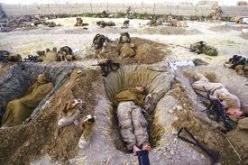
Iraqi officials announced on Sunday that they have found the bodies of a large number of Iraqi citizens and officials slain by the terrorist Mojahedin-e Khalq Organization (MKO, also known as the MEK, PMOI and NCR) in a mass grave in MKO’s Camp Ashraf in the Northern Diyala province.
"As proofs and evidence show, the corpses of Iraq’s Shiite citizens, officials, officers, sheikhs and religious scholars have been buried in the mass grave," a high-ranking Iraqi political source said in an interview with al-Mustaqbal al-Iraq news agency.
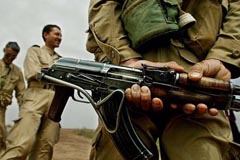
He said that the corpses belong to the people who were killed by the MKO from 2006 to 2009.
An Iraqi official had informed in early January that several mass graves had been unearthed in Camp New Iraq, formerly known as Camp Ashraf, in the Diyala Province, which was the headquarters of the terrorist MKO before a majority of the group members were transferred to Camp Liberty around Baghdad a few months ago.
Sadeq al-Husseini, the deputy chairman of Diyala’s provincial council, added that the Iraqi Ministry of Human Rights was in charge of determining the identities of the bodies and whether they were Kurds, the residents of southern provinces or from the town of Khalis in Diyala Province.
He said that the bodies were being examined in medical laboratories in Arbil Province, adding that human rights violations in the camp did not seem improbable.
The MKO is behind a slew of assassinations and bombings inside Iran, a number of EU parliamentarians said in a recent letter in which they slammed a British court decision to remove the MKO from the British terror list. The EU officials also added that the group has no public support within Iran because of their role in helping Saddam Hussein in the Iraqi imposed war on Iran (1980-1988.)
Many of the MKO members abandoned the terrorist organization while most of those still remaining in the grouplet are said to be willing to quit but are under pressure and torture not to do so.
A May 2005 Human Rights Watch report accused the MKO of running prison camps in Iraq and committing human rights violations.
According to the Human Rights Watch report, the outlawed group puts defectors under torture and jail terms.
The group, founded in the 1960s, blended elements of Islamism and Stalinism and participated in the overthrow of the US-backed Shah of Iran in 1979. Ahead of the revolution, the MKO conducted attacks and assassinations against both Iranian and Western targets.
The group started assassination of the citizens and officials after the revolution in a bid to take control of the newly established Islamic Republic. It killed several of Iran’s new leaders in the early years after the revolution, including the then President, Mohammad Ali Rajayee, Prime Minister, Mohammad Javad Bahonar and the Judiciary Chief, Mohammad Hossein Beheshti who were killed in bomb attacks by MKO members in 1981.
The group fled to Iraq in 1986, where it was protected by Saddam Hussein and where it helped the Iraqi dictator suppress Shiite and Kurd uprisings in the country.
The terrorist group joined Saddam’s army during the Iraqi imposed war on Iran (1980-1988) and helped Saddam and killed thousands of Iranian civilians and soldiers during the US-backed Iraqi imposed war on Iran.
Since the 2003 US invasion of Iraq, the group, which now adheres to a pro-free-market philosophy, has been strongly backed by neo-conservatives in the United States, who argued for the MKO to be taken off the US terror list.
The US formally removed the MKO from its list of terror organizations in early September, one week after Secretary of State Hillary Clinton sent the US Congress a classified communication about the move. The decision made by Clinton enabled the group to have its assets under US jurisdiction unfrozen and do business with American entities, the State Department said in a statement at the time.
Iran’s Judiciary Spokesman and Prosecutor-General Gholam Hossein Mohseni Ejeii said the West’s support for the terrorist Mojahedin-e Khalq Organization (the MKO, also known as the
MEK, NCR and PMOI) displays that its mottos about respect for human rights are mere words which meet no action.
"How is it possible that the US and Israel as well as some western countries consider themselves as supporters of human rights, while they paved the way for the killing of and damage to a large number of Iranian citizens through their support for the MKO in the past years," Mohseni Ejeii said.
Instead of blocking the attempts of terrorist groups in line with their mottos about support for human rights, the western countries recognize these groups and endorse the behavior of these terrorist groups through this recognition, he complained.
The MKO is behind a slew of assassinations and bombings inside Iran, a number of EU parliamentarians said in a recent letter in which they slammed a British court decision to remove the MKO from the British terror list. The EU officials also added that the group has no public support within Iran because of their role in helping Saddam Hussein in the Iraqi imposed war on Iran (1980-1988).
Many of the MKO members abandoned the terrorist organization while most of those still remaining in the group are said to be willing to quit but are under pressure and torture not to do so.
A May 2005 Human Rights Watch report accused the MKO of running prison camps in Iraq and committing human rights violations.
According to the Human Rights Watch report, the outlawed group puts defectors under torture and jail terms.
The group, founded in the 1960s, blended elements of Islamism and Stalinism and participated in the overthrow of the US-backed Shah of Iran in 1979. Ahead of the revolution, the MKO conducted attacks and assassinations against both Iranian and Western targets.
The group started assassination of the citizens and officials after the revolution in a bid to take control of the newly established Islamic Republic. It killed several of Iran’s new leaders in the early years after the revolution, including the then President, Mohammad Ali Rajayee, Prime Minister, Mohammad Javad Bahonar and the Judiciary Chief, Mohammad Hossein Beheshti who were killed in bomb attacks by MKO members in 1981.
The group fled to Iraq in 1986, where it was protected by Saddam Hussein and where it helped the Iraqi dictator suppress Shiite and Kurd uprisings in the country.
The terrorist group joined Saddam’s army during the Iraqi imposed war on Iran (1980-1988) and helped Saddam and killed thousands of Iranian civilians and soldiers during the US-backed Iraqi imposed war on Iran.
Since the 2003 US invasion of Iraq, the group, which now adheres to a pro-free-market philosophy, has been strongly backed by neo-conservatives in the United States, who argued for the MKO to be taken off the US terror list.
The US formally removed the MKO from its list of terror organizations in early September, one week after Secretary of State Hillary Clinton sent the US Congress a classified communication about the move. The decision made by Clinton enabled the group to have its assets under US jurisdiction unfrozen and do business with American entities, the State Department said in a statement at the time.
Iraqi officials announced that a number of al-Qaeda operatives have been trained in the main training camp of the terrorist Mojahedin-e Khalq Organization in Iraq’s Diyala province (Camp
Ashraf) to carry out terrorist attacks against the Iraqi people.
"When the MKO elements were still in Camp Ashraf, the al-Qaeda forces were trained in there and the camp had turned into a center for terrorism and killing," Head of the Security Committee of Diyala province Meysam al-Tamimi said.
According to Ashrafnews, Tamimi also said that the Iraqi security forces have found a secret cache of heavy weaponries in the Camp, adding that the MKO had been training the al-Qaeda members how to use these weaponries.
He said that the al-Qaeda members were trained to conduct terrorist operations in the province specially to force the people residing around Camp Ashraf to leave the area.
The mass graves which have recently been unearthed near the main training camp of the terrorist MKO in Iraq’s Diyala province also unveiled a strong bond between the MKO and the Al Qaeda terrorist group.
Speaking to FNA on Sunday, Udai al-Khadran, the governor of the city of Khalis in Diyala province, said Al Qadea and the MKO members cooperated to intensify unrests in Khalis.
He added that the MKO members are involved in Al Qaeda bombing plots and kidnappings in Diyala.
Khadran added that there exist documents substantiating that some Iraqi officials are collaborating with terrorists and have taken bribes to the very same end.
Earlier in January, an Iraqi official said several mass graves have been unearthed in Camp New Iraq, formerly known as Camp Ashraf, in Iraq’s Diyala Province, which was the headquarters of the terrorist MKO.
Sadeq al-Husseini, the deputy chairman of Diyala’s provincial council said that the Iraqi Ministry of Human Rights was in charge of determining the identities of the bodies and whether they were Kurds, the residents of southern provinces or from the town of Khalis in Diyala Province.
He said that the bodies were being examined in medical laboratories in Arbil Province, adding that human rights violations in the camp did not seem improbable.
The MKO is behind a slew of assassinations and bombings inside Iran, a number of EU parliamentarians said in a recent letter in which they slammed a British court decision to remove the MKO from the British terror list. The EU officials also added that the group has no public support within Iran because of their role in helping Saddam Hussein in the Iraqi imposed war on Iran (1980-1988).
Many of the MKO members abandoned the terrorist organization while most of those still remaining in the grouplet are said to be willing to quit but are under pressure and torture not to do so.
A May 2005 Human Rights Watch report accused the MKO of running prison camps in Iraq and committing human rights violations.
According to the Human Rights Watch report, the outlawed group puts defectors under torture and jail terms.
The group, founded in the 1960s, blended elements of Islamism and Stalinism and participated in the overthrow of the US-backed Shah of Iran in 1979. Ahead of the revolution, the MKO conducted attacks and assassinations against both Iranian and Western targets.
The group started assassination of the citizens and officials after the revolution in a bid to take control of the newly established Islamic Republic. It killed several of Iran’s new leaders in the early years after the revolution, including the then President, Mohammad Ali Rajayee, Prime Minister, Mohammad Javad Bahonar and the Judiciary Chief, Mohammad Hossein Beheshti who were killed in bomb attacks by MKO members in 1981.
The group fled to Iraq in 1986, where it was protected by Saddam Hussein and where it helped the Iraqi dictator suppress Shiite and Kurd uprisings in the country.
The terrorist group joined Saddam’s army during the Iraqi imposed war on Iran (1980-1988) and helped Saddam and killed thousands of Iranian civilians and soldiers during the US-backed Iraqi imposed war on Iran.
Since the 2003 US invasion of Iraq, the group, which now adheres to a pro-free-market philosophy, has been strongly backed by neo-conservatives in the United States, who argued for the MKO to be taken off the US terror list.
The US formally removed the MKO from its list of terror organizations in early September, one week after Secretary of State Hillary Clinton sent the US Congress a classified communication about the move. The decision made by Clinton enabled the group to have its assets under US jurisdiction unfrozen and do business with American entities, the State Department said in a statement at the time.
Iran’s Deputy Permanent Representative to the UN Gholam Hossein Dehqani called on the United Nations to hold an international conference attended by all countries’ high-ranking officials
to study ways of fight against terrorism.
"The Non-Aligned Movement (NAM) assumes the present measures to counter terrorism in the international arena as to be inadequate and calls for increased movement by the international community in this regard," Dehqani who was addressing a UN Security Council meeting on behalf of the NAM said.
"Increasing multilateral cooperation among countries under the supervision of the UN can act as the most effective tool to counter international terrorism and therefore, NAM offers to hold an international summit under the UN supervision to study and give a shared response to terrorism and its different forms," he added.
Dehqani also condemned the politically-tainted and double-standard behavior of certain states towards terrorism, and describing it as an obstacle on the way of decisive campaign against terrorism.
In relevant remarks in December, Iranian Vice-President Mohammad Reza Rahimi voiced Iran’s strong support for all-out cooperation in the war on terrorism, but meantime underlined the need for identification and removal of the root causes of this devilish phenomenon.
"Extremism, terrorism and violence is not acceptable any noble and rooted culture, religion or nation. The Islamic Republic of Iran as the biggest victim of terrorist operations in the region and the world in the recent years expresses its readiness for comprehensive cooperation in fighting terrorism," Rahimi said in the 11th Shanghai Cooperation Organization (SCO) summit meeting in Kyrgyz Capital city of Bishkek at the time.
He further stressed Tehran’s emphasis on "the identification and eradication of the roots" of terrorism as a main task which needs to be taken by the international community.
Iran has long been a victim of the US and Israeli terrorism, specially state-sponsored nuclear terrorism. The US and Israeli spy agencies have admitted that they have assassinated Iran’s nuclear scientists and tried to infiltrate virus and other types of malware into Iran’s cyber network to hinder the country’s progress in the field of civilian nuclear technology.
Western spy agencies, collaborated by the terrorist Mojahedin-e Khalq Organization (MKO), have assassinated several Iranian scientists in the last three years.
The MKO is behind a slew of assassinations and bombings inside Iran, a number of EU parliamentarians said in a recent letter in which they slammed a British court decision to remove the MKO from the British terror list. The EU officials also added that the group has no public support within Iran because of their role in helping Saddam Hussein in the Iraqi imposed war on Iran (1980-1988).
Many of the MKO members abandoned the terrorist organization while most of those still remaining in the grouplet are said to be willing to quit but are under pressure and torture not to do so.
A May 2005 Human Rights Watch report accused the MKO of running prison camps in Iraq and committing human rights violations.
According to the Human Rights Watch report, the outlawed group puts defectors under torture and jail terms.
The group, founded in the 1960s, blended elements of Islamism and Stalinism and participated in the overthrow of the US-backed Shah of Iran in 1979. Ahead of the revolution, the MKO conducted attacks and assassinations against both Iranian and Western targets.
The group started assassination of the citizens and officials after the revolution in a bid to take control of the newly established Islamic Republic. It killed several of Iran’s new leaders in the early years after the revolution, including the then President, Mohammad Ali Rajayee, Prime Minister, Mohammad Javad Bahonar and the Judiciary Chief, Mohammad Hossein Beheshti who were killed in bomb attacks by MKO members in 1981.
The group fled to Iraq in 1986, where it was protected by Saddam Hussein and where it helped the Iraqi dictator suppress Shiite and Kurd uprisings in the country.
The terrorist group joined Saddam’s army during the Iraqi imposed war on Iran (1980-1988) and helped Saddam and killed thousands of Iranian civilians and soldiers during the US-backed Iraqi imposed war on Iran.
Since the 2003 US invasion of Iraq, the group, which now adheres to a pro-free-market philosophy, has been strongly backed by neo-conservatives in the United States, who argued for the MKO to be taken off the US terror list.
The US formally removed the MKO from its list of terror organizations in early September, one week after Secretary of State Hillary Clinton sent the US Congress a classified communication about the move. The decision made by Clinton enabled the group to have its assets under US jurisdiction unfrozen and do business with American entities, the State Department said in a statement at the time.
2013-01-16
http://english.farsnews.com/newstext.php?nn=9107136313
The mass graves which have recently been unearthed near the main training camp of the terrorist Mojahedin-e Khalq Organization in Iraq’s Diyala province unveiled a strong bond between the MKO and the Al Qaeda terrorist group. 
Speaking to FNA on Sunday, Udai al-Khadran, the governor of the city of Khalis in Diyala province, said Al Qadea and the MKO members cooperated to intensify unrests in Khalis.
He added that the MKO members are involved in Al Qaeda bombing plots and kidnappings in Diyala.
Khadran added that there exist documents substantiating that some Iraqi officials are collaborating with terrorists and have taken bribes to the very same end.
Earlier in January, an Iraqi official said several mass graves have been unearthed in Camp New Iraq, formerly known as Camp Ashraf, in Iraq’s Diyala Province, which was the headquarters of the terrorist MKO.
Sadeq al-Husseini, the deputy chairman of Diyala’s provincial council said that the Iraqi Ministry of Human Rights was in charge of determining the identities of the bodies and whether they were Kurds, the residents of southern provinces or from the town of Khalis in Diyala Province.
He said that the bodies were being examined in medical laboratories in Arbil Province, adding that human rights violations in the camp did not seem improbable.
Later a report by the website of the Habilian Association, a human rights NGO formed of the families of 17000 Iranian terror victims, said that the MKO executed a number of disobedient members and buried them in a mass grave in Camp Ashraf before leaving the place.
The report added that Seyed Taleb Mohammad Hassan, the head of Diyala provincial council, was quoted by Iraqi Kurdistan Navkho news agency as saying that "relevant bodies have investigated the corpses in the mass grave and found out that some of those buried in there had been executed by the MKO".
Further investigations showed that these murdered individuals "have been killed for criticizing or opposing the MKO", he added.
Mass grave in Camp Ashraf contains executed Mojahedin Khalq leaders and cadres
After weeks of investigation at the now empty former camp of the terrorist Mojahedin Khalq
![]() |
| Izzat Ebrahim and Massoud Rajavi still at large |
organisation, Diyala Provincial Council reported that another mass grave has been unearthed in Camp Ashraf. According to this report, the MEK has executed a number of its leaders and cadres and buried them in Camp Ashraf.
President of the Diyala Provincial Council Mr. Taleb Mohammed Hassan confirmed that the remains of some bodies found inside the grave belonged to people who died of natural causes, and there are people buried inside the camp after the MEK executed them presumably because of their dissent.
Parliamentary sources have previously reported that the remains of Kurds had been discovered in Camp Ashraf in a mass grave. In this case, Diyala Provincial Council said the remains now uncovered are those of the members of the MEK itself and do not relate to any other persons.
Analysts have found that the UK uses various controversial strategies to support MKO terrorists.
The Mujahedeen-e Khalq Organization (MKO), an anti-Iran terrorist group, whose members are stray across Europe and the U.S., receives all-out support from the UK government through
various controversial strategies, according to detached members.
In December 2012, it was revealed that an unnamed British company has bought the movable property of Ashraf Camp, located in the eastern Iraqi province of Diyala near the Iranian border, worth $25 million. It also offered the Iraqi government $500 million for the camp, media reports said.
The unnamed company then declared that 60 percent of the proceeds of the transaction will be given to MKO terrorists.
The terrorist group was uprooted from Iraqi soil as stipulated in the country’s law.
The MKO, which is responsible for the deaths of 17,000 Iranians since the 1979 Islamic Revolution, fled to neighboring Iraq in the 1980s. The group received military training from former Iraqi dictator Saddam and set up its camp near the Iranian border in order to be able to carry out terror acts inside Iran.
The group also cooperated with Saddam in the massacres of Iraqi Kurds and in suppressing the 1991 uprisings in southern Iraq.
Later in December 2012, a former MKO member, Massoud Khodabandeh was interviewed on Press TV’s political program The Monarchy where he pointed out that the anti-Iranian terrorist group would not survive without support from Britain and other Western states.
“I don’t see any terrorist organization capable of continuing, unless somebody wants it. Somebody has got to want this terrorist organization [MKO], somebody has got to finance it and somebody has got to arm it,” Khodabandeh said.
“One of the reasons that I am saying they have support is; not facing them directly to stop their violent activities in the West and to stop their money laundering in the West. When I say money laundering, I have been in it, I have seen it. This is not an unknown concept for the British government”, he added.
In a documentary called Cult of the Chameleon, aired on Al Jazeera back in 2007, Khodabandeh’s wife Anne Singleton, also a former MKO member from Leeds, UK, explained how she was manipulated and taken into the cult by active MKO terrorist group members, while she attended Leeds University in the 1970s.
“When I became a full-time cult [MKO] member, I gave up everything that I had. I gave up my home and all the possessions in it,” Singleton said on the documentary.
Singleton eventually ended up in the Ashraf garrison for further manipulation and military training. Later on, she managed to escape the prison-like garrison, but with difficulty.
Apart from Iraq and Iran, the European Union (EU), Canada and even the United States had listed the MKO as an active terrorist organization. So how was the cult allowed to freely manipulate, promote and recruit members for itself in a prominent British University?
Moreover, a website called UK Committee in Support of Ashraf (UKCSA) is a London-based organization which openly supports the MKO. The organization has published articles and interviews and proposed the idea of removing the MKO from the US State Department’s list of foreign terrorist organizations.
The UKCSA presents the Ashraf camp with pictures of greenery, flowers and natures, making it look like an attractive location for visiting.
The UK-based website also makes out that it is a legal campaign helping people in the Ashraf garrison who are allegedly sick and that donations are needed to support ill patients in the camp.
More UK support for the MKO came as in April 2012; the American Free Press website reported that Britain takes part in hidden operations in the Middle East to train MKO terrorists to target Iranian scientists and officials.
“MEK fighters have also been trained at secret Middle East sites by special forces teams from Britain, the U.S. and Israel and have been supplied at U.S. taxpayer expense with state-of-the-art weaponry and surveillance gear”, the report said.
The MKO is behind a number of assassinations and bombings inside Iran. A number of EU parliamentarians previously condemned a British court decision to remove the MKO from the British terror list.