Yuram Abdullah Weiler, a Colorado-based writer and political critic, believes that the broad international coalition against ISIL is a massive media event to justify direct US intervention in Syria, underscoring that last year’s false-flag chemical attacks were not sufficient, but this year’s beheadings of western journalists seem to have sold intervention in Syria to the West.
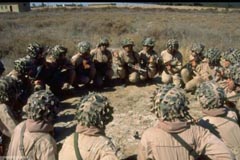
“The Washington regime has a history of using covert action to attain its geo-political goals. From the Philippines to Latin America to the Middle East, the US has intervened in so many countries that it is difficult to count them. And what some would call covert action, I would call state-sponsored terrorism, so in that sense, the US is the world’s leader in its support of terrorism,” he said in an interview with Fars News Agency.
When asked about the formation of an international fact-finding commission to prosecute backers of the ISIL, he answered, “But realistically, the US is not a party to the Rome Statute that established the International Criminal Court (ICC) and has a veto in the UN Security Council, making the US practically immune from criminal prosecution. Certainly, a fact-finding commission should be formed, and perhaps some way could be found to prosecute US war criminals, such as Barack Obama, George Bush, Dick Cheney, Donald Rumsfeld and those from other countries such as Prince Bandar Bin Sultan of Saudi Arabia. If nothing else, evidence should be gathered and documented, then stored for prosecution when the opportunity presents itself.”
Yuram Abdullah Weiler is a freelance writer and political critic who has written dozens of articles on the Middle East and US policy. A former engineer with a background in mathematics and a convert to Islam, he currently writes perspectives on Islam, social justice, economics and politics from the viewpoint of an American convert to Shiite Islam, focusing on the deleterious role played by the US in the Middle East and elsewhere. A dissenting voice from the “Belly of the Beast”, he lives in Denver, Colorado.
What follows is the full text of the interview:
Q: Many analysts believe that the so-called Islamic State of Iraq and the Levant (ISIL) is the product of the US polices in the Middle East. What’s your take on that? Do you believe that the US and its allies have directly contributed to the creation of the ISIL?
A: Absolutely, ISIL is a joint creation of the United States, Saudi Arabia and Qatar with logistical support from the Israeli entity, Turkey, Jordan and other regional actors. While its origin can be traced to former US arch enemy Abu Mus’ab al-Zarqawi, who formed al-Qaeda of Iraq (AQI) in response to the illegal 2003 US invasion of Iraq and later changed its name to the Islamic State of Iraq (ISI). It lost membership when the US bribed Sunni tribes to participate in awakening councils, but bounced back with a vengeance when the US decided to overthrow Syrian President Bashar al-Assad, and Saudi and Qatari began pouring funding into it through Kuwait.
Saudi Prince Bandar bin Sultan was heavily involved with arming Takfiri terrorists both in Syria and Iraq when he was head of Saudi intelligence from July 2012 until April 2014, as was Hamad bin Khalifa Al Thani, Emir of Qatar until June 2013 when the strategic city of al-Qusayr was repatriated by the Syrian Army. As the chief logistical supplier to Takfiri extremists in Syria, Qatar has provided over 85 planeloads of weapons and supplies compared to only 37 for Saudi Arabia and lesser amounts for other actors such as Jordan. Turkey serves as the primary logistical base through which most munitions, materials and manpower are funneled to the foreign-backed militants in Syria.
At first, ISI collaborated with other western-backed militants such as the Free Syrian Army, but in April 2013, parts of ISI split off and merged with its Syrian spinoff, Jabhat al-Nusra, to form the Islamic State of Iraq and the Levant (ISIL). However, after the entry of Hezbollah into the conflict in Syria and Assad’s forces gaining the upper hand with the fall of al-Qusayr, Jabhat al-Nusra split off from ISIL in early 2014 to continue its western-endorsed mission of regime change in Syria. After repudiation by al-Qaeda, ISIL remained in Syria and, continuing to amass recruits and funding, made its move in June, capturing large swaths of Northern Iraq, and declaring a caliphate in July. The February 2014 disavowal of ISIL by CIA asset al-Qaeda may have indicated a breakdown in command and control, or perhaps it was a smoke screen.
In any event, this ISIL blitz could not have been a surprise to Washington, since at least 8 US satellites–4 Lacrosse and 4 Key Hole–crisscrossing over the Persian Gulf for surveillance. Hence, Washington must have intended for ISIL to capture those armaments in Northern Iraq and send them to Syria, thus avoiding the need for US Congress to approve lethal aid for Syrian “rebels.” But because of the barbarity displayed by ISIL with beheadings, rapes and other atrocities, Obama has been forced to put on a show of opposition to demonstrate US “sincerity” in fighting against terrorism. Meanwhile, Washington’s ISIL Takfiri proxies continue with their regime change duties in Syria, but now with the benefit of US air support.
Q: As you know NATO heads of state convened in the Welsh city of Newport on 4-5 September and US Secretary of State John Kerry and Defense Secretary Chuck Hagel told foreign and defense ministers participating in the NATO summit that the US was forming a broad international coalition against ISIL. Ministers from the United States, the United Kingdom, France, Germany, Canada, Australia, Turkey, Italy, Poland and Denmark met in Wales to hammer out a strategy for battling ISIL, but the policy was questioned by many regional officials and political leaders.
After the so-called US-led coalition against the ISIL declared its creation, scores of experts and a number of countries lashed out at the western states for pursuing a double-standard policy towards campaign against terrorism in various countries. What’s your perspective on that?
A: The Washington regime has a history of using covert action to attain its geo-political goals. From the Philippines to Latin America to the Middle East, the US has intervened in so many countries that it is difficult to count them. And what some would call covert action, I would call state-sponsored terrorism, so in that sense, the US is the world’s leader in its support of terrorism.
Iran has long been a target of US state-sponsored terrorism going back to the CIA-engineered 1953 coup ousting Prime Minister Mohammad Mossadegh. A more recent example of US support of terrorism is the Mujahideen-e Khalq (MEK), which has been taken off the list of designated terrorist organizations. Not only has this deadly extremist group claimed thousands of victims in Iran, but it has in the past killed a few Americans as well. Nevertheless, Washington took the terrorist group off its list as part of its ongoing efforts to destabilize Iran.
Regarding Syria, if the US commander-in-chief were truly serious about fighting terrorism, he would collaborate with Syrian President Bashar al-Assad, who has been battling foreign-backed extremists since early 2011. Not only has Obama refused to do that, but he has threatened Assad with retaliation if any US warplane is shot down over Syrian territory. So it should be clear that the broad international coalition against ISIL is a massive media event to justify direct US intervention in Syria. Last year’s false-flag chemical attacks were not sufficient, but this year’s beheadings of western journalists seem to have sold intervention in Syria to the West.
Q: Many experts maintain that an international fact-finding Commission ought to be formed in order to prosecute the backers of the ISIL under international law. What do you think?
A: The US has been in clear violation of international law in a number of instances: The 2003 invasion of Iraq; drone strikes in Pakistan, Afghanistan, Yemen, and other countries; the Guantanamo prison camp; the treatment of detainees in Afghanistan; the NATO bombing of Serbia; the use of napalm in Vietnam; support of the Zionist apartheid regime; torture of prisoners at Abu Graib; firebombing campaigns during World War II; the use of secret prisons; and we could go on and on. Supporting ISIL is just the latest outrage against international law committed by the US.
But realistically, the US is not a party to the Rome Statute that established the International Criminal Court (ICC) and has a veto in the UN Security Council, making the US practically immune from criminal prosecution. Certainly, a fact-finding commission should be formed, and perhaps some way could be found to prosecute US war criminals, such as Barack Obama, George Bush, Dick Cheney, Donald Rumsfeld and those from other countries such as Prince Bandar Bin Sultan of Saudi Arabia. If nothing else, evidence should be gathered and documented, then stored for prosecution when the opportunity presents itself.
Interview by Javad Arab Shirazi
Mujahedin Khalq Terror group
News Analysis: Providing arms, training to rebels will exacerbate Syria crisis
DAMASCUS — Washington’s recent decision to arm and train the Syrian rebels, who will supposedly fight the Islamic State (IS) terror group, will only exacerbate and prolong the Syrian crisis in what analysts said would be
like “casting oil on a smoldering fire.”
Unlike the situation in Iraq, where the administration of President Barack Obama is coordinating and cooperating with the Iraqi forces in their battle against the IS militants, Washington has turned a deaf ear to the calls of the Syrian government for cooperation on battling the IS in Syria, seeking instead to cooperate and deal with the so-called “moderate” Syrian rebels by agreeing to arm and coach them to be able to confront the IS in Syria.
Obama, who is leading an international coalition of reportedly 50 countries to fight the IS, said that the Syrian opposition forces were fighting both the brutality of Islamic State terrorists and the “tyranny” of the administration of President Bashar al-Assad.
“We will provide training and equipment to help them (moderate rebels) grow stronger and take on IS terrorists inside Syria,” said Obama, who is a staunch critic of Assad that repeatedly called for his departure and questioned his legitimacy.
The Congress on Thursday backed Obama, authorizing the military to arm and train moderate Syrian rebels. The U.S. move, while failing to surprise the Syrian politicians given the fact that the U.S. has always been in favor of the opposition, was seen as a policy toward prolonging the crisis in Syria by attempting to replace the IS fighters with others who will remain loyal to their Western patrons and would keep fighting against the Syrian government.
Maher Murhej, a Syrian politician and head of the Youth Party, told Xinhua he wasn’t surprised by the recent U.S. move, pointing out that the training of the Syrian rebels has already started.
“My information is that the new Congress decision has sanctioned the financing of the rebels, and regarding the training, I have information that training camps have already been opened in Saudi Arabia two weeks ago, namely in the city of Ha’il in northwestern Saudi Arabia, to train Syrian rebels of the Islamic Front and Islam Army groups,” Murhej said, noting that there is no such a thing as “moderate” rebels as the vast majority of the armed militant groups are radicalized.
Saudi Arabia overtly agreed last week to host training camps for “moderate” Syrian rebels, agreeing thus on Obama’s broad strategy to combat the IS group, which has captured large chunks of territories in Syria and Iraq over the past few months.
Meanwhile, Murhej pointed out that the American strategy aims at keeping the Syrian government busy with fighting the rebels for years to come as it is seeking to replace the IS fighters with other rebel groups that would continue fighting the Syrian government troops.
Obama has recently sanctioned to strike the IS positions in Syria, akin to what his air force is doing in Iraq. However, the conundrum for Obama was that he didn’t want to make a move against the IS that could play in the hands of the Syrian regime, meaning that he wouldn’t want to weaken the IS so that the Assad troops can fill in the void.
Instead, the U.S. president decided to arm the “moderate” rebels so that they could be able to fill in the void that the IS may leave after the U.S. strikes on their positions in Syria, analysts said.
Still, the new approach may take at least a year to train the rebels and weaken the IS fighters, which means that the Syrian crisis is likely not going to see an exit or an end in the near future.
“After getting done with the IS, the West wants to leave other rebels to keep fighting the Syrian government… they want an armed insurgency that could last for years in Syria,” Murhej said, adding that “the superpowers are not only working on prolonging the crisis in Syria, actually they are drawing a new strategy for the future in the region. They are talking about camps that would be permanent so we are looking at 10 to 15 years of insurgency in Syria.”
Murhej drew a comparison between the current hosting of the armed rebels by Saudi Arabia and what happened at the times of the late Iraqi President Saddam Hussain, who had hosted on Iraq soil the Mojahedin-e-Khalq movement (MEK), an Iranian opposition movement in exile that advocated the overthrow of the Islamic Republic of Iran. During the Iran-Iraq War in the 1980s, the group was given refuge by Saddam Hussein and mounted attacks on Iran from within Iraqi territory.
“They (superpowers) are attempting to create a similar group to the Islamic State but this time under the commandership of the West,” Murhej said.
Xinhuanet
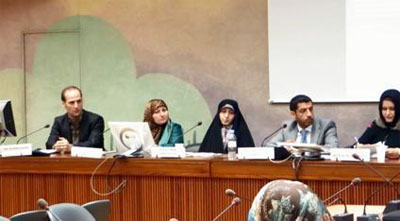
The Association for Defending Victims of Terrorism, ADVT is an Iranian non-governmental organization. It’s members are all victims of – or have lost loved ones to terrorism. At the 27th United Nations Human rights council in Geneva they held this panel on terrorism and human rights.

Speakers from Iran, Britain and the United States are here. Shia, Sunni and Christian. Also here are Iranian victims of terrorism to tell their story. Like Mansoureh Karami, whose husband Massoud AliMohammadi was the first Iranian nuclear scientist to be assassinated in Tehran. Today, the world’s attention is on the violence and terrorism of ISIL in Syria and Iraq. A statement read on behalf of Iraqi Assyrians, warned that the entire population risks being wiped out of the Nineveh province. NGOs warn of a catastrophe, where the story of the victims are lost. The stories heard here will sadly not be the last – but they hope by sharing their experiences they can somehow help.
Also:
Association for Defending Victims of Terrorism (ADVT) Holds a Panel on: Terrorism and Human Rights
Link to the source
Panelists:
Dr. Hamid Sajadi, Chief Executive of Association for Defending Victims of Terrorism (ADVT)
Ms. Rubab Mehdi Rizvi, Chairperson of Markazi Imam Hussain Council
Dr. Mohammed Serkal, the UN Coordinator on Minorities Rights, Alkhoei Foundation
Ms. Janet McElligott, Activist, Former US White House staffer and Counterterrorism Expert
Ms. Mansoureh Karami, Wife of Assassinated Nuclear Scientist, Massoud Alimohammadi
Ms. Masoumeh Eskandari, Daughter of Terror Victim
Mr. Ali Alssarray, President of International Organization against Terror and Religious Intolerance
Mr. Nineb Lamassu, Research Assistant, Faculty of Asian and Middle Eastern Studies, University of Cambridge
Date: September 17, 2014
Time: 11:30- 13:00
Venue: Room XXIV, Palais des Nations. Geneva, Switzerland
Themes:
· Examining the reasons for the increasing ability of terrorist groups in recruiting new members from around the world;
· Analyzing the role of civil society and victims of terrorism in countering terrorism;
· Drawing the attention of the world people to a return to traditional for of slavery which is carries out by hostage-takings of terrorist groups of ISIS and Boko Haram;
· Evaluating the international responses specially the Resolution 2170 of the UN Security Council in which victims of terrorism and long-term impacts of terrorist attacks on them are not considered.
The Association for Defending Victims of Terrorism, ADVT, Geneva
Razak Abdul A’imma al-Haidari, Iraqi MP, from the Badr Parliamentary bloc said that the Mujahedin Khalq Terrorist Organization was counting on the ISIL in Iraq to collude with them to keep its members at Camp Liberty
(Temporary Transit Location) and then to take them back to Camp Ashraf.
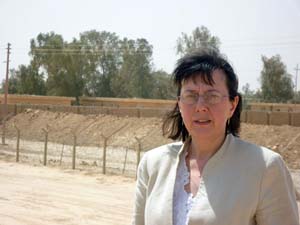
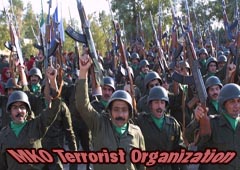
‘The MEK is ready to cooperate with any terrorist party hostile to Iraqi government and the people’, the MP Al-Haidari told Ashraf News reporter.
He emphasized that since the MKO is considered a threat for the future of the country, the newly established government of Iraq as well as Iraqi people are serious in removing them from Iraqi soil.
The member of Iraqi National Alliance asserted: Navigating the MKO media, one could see the organization hailing the crimes and savagery committed by the ISIL in Iraq.
He also noted that the leadership of the terrorist Organization in France believed that the Prime Minister Maliki’s stepping down would pave the way for their organization’s stay in Iraq. However Mr. Haidar al-Abadi putted an end to their illusions and at his first press conference emphasized on the expulsion of all terrorist groups – including the Mujahedin Khalq Organization – from the Iraqi territory.
Translated by Nejat Society
President Obama’s short speech to the nation on September 10, addressed the urgent need to take action against the Islamic State (aka ISIS or ISIL). The speech began with a description of ISIS and the danger it poses. Of course Obama used his own potent words to talk about ISIS, but the organisation which he described has the characteristics of a group that:
•Recruits by deception; pretends to embrace religious precepts but in reality pursues an extremist political ideology.
•Holds such simplistic and erroneous beliefs that it can only prevent its members from seeing through them by preventing them from thinking and therefore fills every minute of their day with activity, whether military training or peeling carrots or cleaning latrines.
•Indoctrinates recruits with thought stopping fears and certainties so as to create a stark, unassailable ‘us and them’ mentality, a sense of innate superiority which obliges followers to ruthlessly eliminate all enemies.
•Uses cruel, arbitrary punishments, extra-judicial killings, and example killings to warn against disobedience.
•Demonstrates its abilities through terrorising acts, then boldly advertises that it has killed tens of thousands of people.
•Has a leader who arrogates all rights and knowledge to himself, who dictates the sexual behaviour of his followers and has a hareem of women for his own use.
•A leader who dictates the minutiae of the followers’ lives and operates a strict hierarchy of control with obedience to his whims as the guiding principle for promotion or demotion.
•Is universally hated by ordinary people.
This, however, is not a description of ISIS, it is a description of the Mojahedin-e Khalq (MEK), the exiled Iranian terrorist group. While ISIS claims to be Sunni, and the MEK claims to be Shiite, there are such significant similarities they can both be defined as destructive cults. The major distinguishing difference of course is the incomprehensible savagery of ISIS, which even the MEK never aspired to.
The MEK operates as a totalitistic, destructive mind control cult which harms its own members as much as its victims. Its past is littered with death and destruction; the MEK has publicly boasted of killing 12,000 during its terrorist campaign against Iran, and it also killed 25,000 Iraqis for Saddam Hussein during its 30 year sojourn in that country. But in spite of this history the MEK now has some high profile advocates in Washington. Some, like Ileana Ros-Lehtinen and Hillary Clinton, choose to ignore the unsavoury aspects of the group’s behaviour and embrace its vehemently anti-Iran stance instead.
This was only possible because the MEK were brought under control during Operation Iraqi Freedom in 2003. The militant group were bombed, then disarmed and corralled into a single camp, effectively rendering it impotent as an armed force. The MEK’s means of surviving this was to focus on a new identity and present itself under the guise of a political opposition. Fronting Maryam Rajavi as a democratic, feminist leader the MEK used its apparently unlimited financial resources to court western policy makers with a vague promise of engineering regime change in Iran by acting as the vanguard of a counter revolution. The MEK’s advocates support it not because of its potential as a terrorist force or even because of its numbers which at present comprise fewer than a thousand loyal, active members. Instead, it is as a cult that it has value. The MEK’s ability to deceptively recruit and manipulate people into doing just about anything is its chief asset; an asset that could not be bombed out of them or confiscated along with their weapons. The fact too that MEK followers are not paid and are effectively enslaved, makes it even better value.
This is also why the IRI is still cautious of the group. Observers express themselves puzzled by the sensitivity shown by successive Iranian governments to this apparently toothless tiger. But Iran has a sophisticated understanding of the dangers posed by cultic terror groups born from experience. Iran also understands that simply waging war on such a group, fighting fire with fire, will not destroy it. Iran has been successful in reducing the MEK to nothing more than a lobbying group because its approach to the MEK is as a cult, not just a terrorist organisation. Inside Iran, a country wide attempt is made to educate against the dangers of such cults and controlling groups. It is their way of inoculating the population against deceptive recruitment.
There can be no doubt that ISIS at present is like a mad dog running wild. There can be no comparison between the old defunct MEK and the 30,000 young fanatics who are ISIS. It must be either destroyed completely or brought under control. Like the MEK, ISIS has made sophisticated use of the internet to create a massive cyber presence for itself, on its own terms, which then translates into mainstream media coverage becoming part of its recruiting tool. The immediate concern of western governments is that ISIS must be stopped because it poses a threat to their own populations as much as regional ones; a lesson bitterly taught by Al Qaida.
As a consequence, President Obama has gathered a coalition of forty countries willing to take on IS militarily. But, for all their bravado, the central, unspoken dilemma for all of them is that ISIS has the potential to do precisely what most of these coalition countries want – oust the Assad regime in Syria and push back Iranian influence in Iraq by strengthening the Sunni tribes in the north. This is why, behind the belligerent threats of bombing, the will to actually destroy the group completely is weak. This is why, instead of negotiating a tough pax with the Syrian government, America proposes to flout international law to launch illegal aerial bombing raids into that sovereign country.
In northern Iraq, Iran has shown itself as the US’s natural ally in any effort to contain ISIS. Iran is the one country with the greatest experience of dealing with this kind of cultic terrorist threat, and could perhaps help formulate a comprehensive plan to bring ISIS under control just as the MEK is now under control. Yet Iran remains the US’s greatest nemesis.
What is preventing cooperation on this vital issue is the continued enmity between America and Iran. But the stark fact is that an American policy of threats and sanctions have yielded nothing in the way of stopping or reducing Iran’s regional standing.
Realistically, if America and Israel together could have defeated Iran and forced the country to submit either through sanctions or war, then this would have happened by now. This has not and cannot now happen – not through pre-emptive strikes on Iran’s nuclear facilities, not through engineering civic riots and insurgency, and certainly not through proxy terrorist groups. But American policy toward Iran, based on what Gareth Porter describes as a manufactured crisis, has ensured that the US is incapable of acknowledging that after Israel, Iran is her natural strategic partner in the Middle East. This is not to say that America has to like the Islamic Republic of Iran, or to stop criticism of its policies or to not drive a hard bargain on nuclear issues. But to continue the hopeless pursuit of regime change at the expense of diplomatic engagement and potential cooperation is self-defeating to say the least.
Already as a result of this misconstrued policy, Iran will certainly enter the next round of nuclear negotiations significantly stronger, rather than weaker. American leverage will be practically null: America’s belligerence toward Russia over the Ukraine has severely, if not permanently, alienated the two countries; Congressional sanctions have forced both Russia and China to pursue separate trade deals with Iran; Germany and France are coolly weighing their economic losses against any political gains in continuing to follow America’s intransigent position toward Iran. Even the plucky, loyal little UK may keep at arms length an American negotiating team which has gone behind their backs before. Without lifting a finger itself, Iran will benefit from these fractures in the P5+1. On top of that, its popular (in the rest of the world), support for the Palestinian cause, its success in helping Iraqi Shia militia repel ISIS, and its principled insistence on Iran’s inalienable right under the terms of the NPT to a civic nuclear power program, will all lend the Iranian negotiators gravitas on the world stage. Perhaps the only option left is for the talks fail, for one side or the other to be forced to walk away from the table. In that case, everyone loses.
Clearly it is controversial to attempt even a neutral description of the Iranian position. To go further and suggest that the US needs to find a way to cooperate with Iran in order to find a way to curtail the horrors of ISIS, is perhaps beyond the pale for many. But when this overwhelming and self-defeating enmity prevents sound political analysis from understanding and acknowledging the real problem, and when this prevents the creation of real, effective solutions, then we need to question where American interests really lie, and who is prepared to serve them.
Iranian.com, About Anne Khodabandeh (Singleton):Middle East Strategy Consultants,
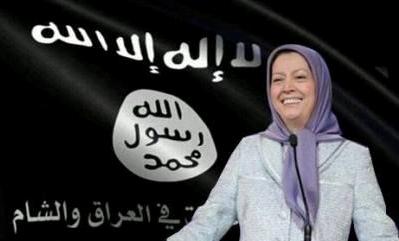
The propaganda arm of the Mujahedin Khalq Organization held the alleged Paris Conference on “Middle East in Crisis Threats and Solutions”! The self-claimed president of the MKO, Maryam Rajavi gave herself credit to
advise Western Politicians about “the situation in the entire Middle East and the policies of Europe and the U.S.”!
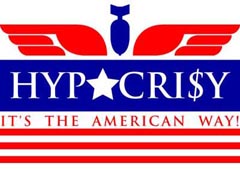
This is not the first time that the cult of Rajavi endeavors to show off. Their so-called grand gathering this year was another effort by the cult to get itself recognized in the regional relations despite reports on its cooperation with forces of Islamic State terrorist extremists.
In her speech Maryam Rajavi “stressed that the terrorism that has engulfed the Middle East today is the outcome of inaction by the West in face of tyrants, especially the Iranian regime” but she failed to notice that her cult-like group is part of the terrorism that has engulfed the Middle East.
As a matter of fact, the atrocities of terrorists of the Islamic State in Iraq ring the alarms for the West. For example French Foreign Ministry has recently condemned the MKO for its violent, nondemocratic activities. Because of long-time MKO’s presence in France, the government might be one of the most exposed Western countries to the threat of the cult of Rajavi. The French warning came immediately after the MKO held its so-called annual grand gathering where the group leader praised the “uprising” of what it called ”Iraqi revolutionaries”.
Dr. Webster Griffin Tarpley told Press TV, “The reason why the French might be doing this now I would think has something to do with ISIS and the events in Syria and Iraq. When you see a group like ISIS which is similar in many ways to the terrorists of the MEK, obviously there is a feeling in the MEK I would guess that they have got to get involved, that they have got to contribute, they have got to make themselves heard or they are not going to get the funding that they are accustomed to getting. So, they have got to do something perhaps not against Syria but primarily against Iran which is their specialty.” []
This is Dr. Griffin’s account of the MKO: “It’s of course extremely dangerous and the thing that the French point to, I think it shows the insidious methods that MEK has. It’s a very sinister group but here is what they are expert in. They buy officials, they essentially bribed them. I guess most people would say the formula they took here in the US was they would hold conferences and they would offer speaking fees to a lot of very important intelligence community type officials and these speaking fees were astronomical. Of course, the money was coming from the US taxpayer. It was a way to recycle US taxpayer money into the pockets of some of these corrupt officials.”[]
The paid American politicians may not know that Iranians loathe the MKO and the violent substance of the MKO under the leadership of the Rajavis could be a potential ISIS under Abubakr Al Baghdadi. They seem to think it is more admirable to speak on behalf of a formerly terrorist designated group when it is motivated by a desire to help them overthrow the Islamic Republic but they do not seem to ponder the threat the region is faced by the side of cult-like terrorist groups.
US presidential candidate Mitt Romney was one of those MKO-paid speakers who confessed that he had no information on the true nature of the Cult of Rajavi. Ralph Forbes of the American Free Press Newspaper wrote in January 2012,” GOP presidential hopeful Mitt Romney looked like a deer caught in the headlights when he was asked if he supported an international, anti-American terrorist organization with a bloody record for killing innocent civilians thousands of times worse than al Qaeda.” Forbes ironically notices,”This “expert on international affairs” claimed he never had heard of them.” []
The MKO has always been part of Iraqi crisis. It was Saddam’s Private Army in massacring the Shiits and Kurds Uprisings in 1991. Maryam Rajavi’s famous quote approves the group’s outrages against Iraqi civilians: “Take the Kurds under your tanks. Save your bullets for Iranian soldiers.”
Besides, the group’s propaganda campaign has been very active in influencing Iraqi political relations. They try to buy the support of Sunni tribal leaders and politicians. They also try to bribe them in order to target the publically elected Shite officials.
Today, the MKO makes its utmost effort to cause more crisis in Iraq only because it has no other way to maintain its cult structure. More chaos in the region helps the group leaders to buy more time to distract the attention of the international community towards their abusive attitude against their own members and to prolong the survival of Rajavi’s cult of personality in Iraq, not so far from the Iranian border.
The international community should beware of the risk of ignoring the threat of such destructive groups in the region otherwise another Islamic State would emerge under another Abubakr Al Baghdadi. It would be no surprise if the name of the new extremist leader would be Maryam Rajavi.
Mazda Parsi

In 1998, five Cuban counterterrorism agents were arrested in Miami and held in solitary confinement for 17 months. Then — after a dubious seven-month-long trial in which no hard evidence was ever presented — the group was convicted and given the equivalent of more than four life sentences.
The agents were then shipped off to five different maximum-security prisons spread across the United States so as to eliminate any possibility for communication.
What did these five Cubans do to deserve this sentence?
The Cuban Five, as they have become known, were in pursuit of known terrorist Luis Posada Carriles, who was responsible for the 1997 hotel bombings in Havana.
But as it turned out, Posada was a CIA operative. In order to protect its valuable asset and cover up the job, the U.S. government arrested the Cuban Five and denounced them as spies.
Exiled Cubans like Posada have a long and bloody history of terrorism against Cuba. Likewise, America has a long and bloody history of actively supporting those terrorist attacks.
After Posada escaped from Cuba, the CIA trained him in explosives and sabotage. He remained a CIA operative for many years, even helping to organize the failed Bay of Pigs invasion.
Posada is also widely assumed to be the mastermind behind the 1976 bombing of a Cuban airliner. Seventy-three civilian passengers died on that plane. Posada was eventually allowed to walk free.
Meanwhile, three of the five Cubans who were trying to catch Posada remain locked in maximum-security prisons.
None of this guarantees that the Cuban Five weren’t spies. It’s possible that their imprisonment was entirely justified, and that the sensitive nature of the case warranted classifying the incriminating evidence.
But the more likely explanation is that since the United States had an economic and political interest in toppling the Castro regime, and since terrorism from Cuban exiles advances that goal, the U.S. government had made it a priority to thwart Cuban counterterrorism agents at any cost.
And so it goes for U.S. foreign policy around the world. America picks and chooses which terrorists to condemn and which to support, often wavering between the two depending on the prevailing incentives.
The case of the Cuban Five was not an isolated incident. The United States supports terrorism wherever and whenever it’s strategic to do so.
Back in 1959, some sources say, the CIA hired a young Iraqi assassin to eliminate Prime Minister Abd al-Karim Qasim. The assassin was a then-unknown thug named Saddam Hussein. When Hussein botched the job, the United States supposedly set him up with money and protection within the Ba’ath Party. Then in 1963, the Ba’ath Party organized a CIA-backed military coup that would eventually place Hussein in power. At the time, America sought to bolster its position in the Cold War by exerting control over Iraq, even if it may have meant forging an alliance with Hussein, a known terrorist and newly established dictator.
America was consistently one of the staunchest supporters of the Hussein regime, even going so far as to provide Iraq with vital military intelligence that was used to administer chemical weapons in the Iran-Iraq War. Not only did the U.S. government know Hussein was using lethal chemical weapons like nerve gas and sarin, we actively supported him. With the help of American intelligence, Hussein’s wanton usage of chemical weaponry killed thousands and won the war for Iraq.
The alliance with Hussein ended abruptly once he invaded Kuwait. Hussein became more useful as an enemy than an ally, so the American propaganda machine took Hussein and turned him into the terrorist and dictator we know him as today. Though America’s aim in aiding terrorist activity is often regime change or political upheaval, U.S. politicians are sometimes willing to support terrorism just for the extra campaign money.
Iranian terrorist group Mojahedin-e-Khalq has largely been beyond reproach from American politicians, despite the widely held belief that the group was responsible for the assassination of several Iranian nuclear scientists. A host of top-ranking U.S. officials, including the likes of Rudy Giuliani, Frances Townsend and Howard Dean, have all publicly defended MEK. Why? MEK has been funneling tens of thousands of dollars into their pockets in exchange for their support. And following America’s lead on the issue, Israel’s secret service has also provided MEK with extensive financing, training and weapons.
Which leads me to what is perhaps the most well-documented and notorious case of U.S.-sponsored terrorism: funding for Israel’s military.
By America’s own definition, Israel is perpetrating acts of terrorism against Palestine. Israeli airstrikes have purposefully targeted Palestinian hospitals and schools in a crusade to crush the Palestinian people in a barbaric war of expansion. This is “premeditated, politically motivated violence perpetrated against noncombatant targets,” as the U.S. State Department defines terrorism.
While there is no doubt that Palestine also commits acts of terrorism, as Noam Chomsky has put it, Palestinian terrorism is “very small as compared with the U.S.-backed Israeli terrorism. Quite typically, violence reflects the means of violence. It’s not unusual. State terror is almost always much more extreme than retail terror, and this is no exception.”
To date, Israel’s aggressive invasion of the Gaza Strip has killed more than 2,100 Palestinians — around 75 percent of whom were civilians — while fewer than 80 Israelis have died.
And behind the scenes is America: Israel’s generous benefactor who watches from the sidelines as Palestinian women and children are brutally murdered.
In 2013 alone, the United States gave a whopping $3.1 billion in military aid to Israel. That amounts to nearly a quarter of Israel’s entire defense spending, which includes F-16 fighter jets, smart bombs, Apache helicopters and white phosphorous munitions.
America has no moral justification for this, only a political motivation. Simply put, American politicians support Israeli terrorism because American voters are overwhelmingly pro-Israel.
These examples are by no means the only instances of U.S.-backed terrorism. If the price is right, the United States has shown that it will support any amount of terrorism, anywhere in the world. But it doesn’t have to be that way. In America, it’s not dictators and tyrants that are supporting terrorism. It’s elected officials, and their power is vulnerable every election year. So while they’re the ones bankrolling terrorism, we’re the ones keeping them in office.
But, as of right now, the evidence is undeniable: America supports terrorists. Unless we do something about it, America will continue to support terrorists. And at some point, the lines start to blur, and if you squint just right, it starts to look an awful lot like America itself is the terrorist.
Sam Hillestad, The Brown Daily Herald
Interview with Massoud Banisadr
In 1979, Masoud Banisadr was a young postgraduate maths student at Newcastle University, watching political
upheaval in his homeland of Iran on the nightly news. After the fall of the Western-backed Shah, wanting to play his part in a new society he joined Mujahedin-e-Khalq (MEK), an Islamic Marxist revolutionary organisation.
But a couple of years after the revolution, the MEK began to clash with Ayatollah Khomeini’s theocratic regime and were soon deemed an enemy of the new Iran. MEK suicide bombings and assassinations followed. In 1981, thousands of MEK members went into exile, and by 1986 had established a tight-knit paramilitary organisation in Iraq led by husband-and-wife team Masoud and Maryam Rajavi.
Banisadr became the MEK’s PR man, moving between Camp Ashraf, their headquarters in Iraq, Geneva and Washington DC, trying to win over Western politicians. He finally left the group in 1996, went into hiding and now lives back in England.
The United States removed MEK from its list of terrorist organisations in 2012, but Banisadr still considers it a fanatical cult acting under the warped leadership of the Rajavis. He argues that any terrorist organisation is either a cult or “has no option but to become one in order to survive”.
I spoke to Banisadr about the power of cults, and how this might help us understand why young men in the UK are vulnerable to joining the Islamic State and other extremist groups.
![]() |
| An MEK oath ceremony at Camp Ashraf in Iraq, taken around 2002 by a member who has since left and does not wish to be named. |
VICE: You were once a high-ranking member of MEK. Why do you now see the organisation as a cult?
Masoud Banisadr: There was a charismatic leader, Rajavi. There was a black-and-white world view imposed; followers cutting themselves off from family; followers losing their personality. There was mind manipulation. At Camp Ashraf in Iraq there were talks lasting for days on end. I remember one task where we had to write down our old personality in one column on a board, and the new personality in a different column. I remember a guy who said, “My brother works in the Iranian embassy in London. Before I loved him as my brother, now I hate him as my enemy. I am ready to kill him tomorrow, if necessary.” And everyone applauded.
How did you justify violence?
I was fortunate not to be involved in any violence. But all group members accepted MEK suicide bombings and killings in Iran to be revolutionary acts. This was the brainwashing. And later, in my role as official representative, I would justify and explain these acts as the only means we had to defend ourselves. I was a nice person, well-mannered, and could argue very rationally with politicians. So I was a good salesman.
Why did MEK members divorce their wives?
In 1990, Rajavi said all members must divorce their spouses. My own wife had already left the group by then. All members accepted these terms, and it [applied to] everyone except the leader and his wife Maryam. In a single day, everyone became celibate. Someone asked, “What about sex in the afterlife?” He replied, “I know your trick – you want to fantasise about the afterlife. But no – you must be prepared to forget about sex, about spouses, about love.”
No sex?
No sexual thoughts. The idea was that we were in a war to take back Iran, so you cannot have a family until the war is won. This was the excuse the outside world would hear, but inside we were told your spouses are a barrier between you and the leadership. We were ordered to surrender our soul, heart and mind to Rajavi and his wife.
![]() |
| Masoud meeting trade union leaders at an International Labour Conference in Geneva in 1987 (published in an MEK newspaper). |
How did you manage to leave the organisation?
What saved me was seeing my daughter. In 1996 I came to London to arrange some meetings. I saw my daughter, after many years of not seeing her. I had totally forgotten about the guy who was the father, the old Masoud. I only knew Masoud, the MEK member. The old Masoud wanted to hug her, but the group member – living under strict rules where men and women never interacted – knew he should not. I was fortunate that I had a bad back problem, so I was allowed to go and recuperate in hospital. And in those two weeks, being around ordinary people, seeing ordinary families, I allowed feelings for my own family to come back. And so, finally, I decided to leave the group.
Where did you go?
I had to go on the run for a time. I learned how to hide myself around the UK until they gave up looking for me.
What do you think it is that makes young people vulnerable to extremist causes?
Well, terrorism is like a virus. It attacks us through our weaknesses. It kills our personality, our individuality, like a cult. I think there are three stages. The first stage is the injustice of the world. Young Muslims see injustice, become angry and want to react. Then comes along a powerful ideology, and the Wahabi ideology offers a very simple, black-and-white world view, and a very narrow-minded interpretation of jihad, offered as a solution to young Muslims. But both these stages are not enough to make someone a terrorist, a human bomb or a fighter for a caliphate. A third stage is required: the mind manipulation, which robs someone of their personality, makes them identify entirely with the group and cuts them off from their parents and society.
So radical ideas alone aren’t enough to go off and fight for, say, the Islamic State?
If you’re a young Muslim and you feel like a nobody, it’s appealing to hear that we can return to the time of Prophet Mohammed – [that] we will be powerful again and feel proud of ourselves. This can make you radical – even prepared to be violent – but you will not stay a fighter or become a martyr without being entirely cut-off from family and the values of the society you were brought up in. That requires the mind-manipulation that goes on in a destructive cult.
Where does the Islamic State fit in? Do you consider it a cult as well as a terrorist organisation?
The signs are there. The leader – Abu Bakr al-Baghdadi – is charismatic and has unlimited ambition. He has been introduced as the leader of all Muslims, the Caliph. Normal leaders want political power. Cult leaders want something more than governing a city or country – they want to govern history. They want to change the structure of humanity. For a while they were calling themselves ISIL – Islamic State of Iraq and Levant.
They wanted control of Iraq, Syria, Lebanon, Jordan, Israel. Now they call themselves the Islamic State. They want whatever they think was once part of the Islamic empire, so they claim Spain, Portugal, North Africa, India and part of China and Russia. They want the whole world, to make everyone Muslim. This is not normal leadership; this is heading towards cult. There is no limitation you can deal with, politically.
What would you say to British parents who have children fighting in Syria or Iraq?
It’s very difficult, very delicate. If a parent says anything critical against a radical preacher, or about an organisation like Islamic State, that’s when a person’s mind becomes defensive. It is difficult to argue rationally. So if a parent has contact, they should not try to talk about politics or religion. They should show only kindness and love. This is the member’s weakness. Feelings do not die away, even if personality has changed. So the parent has to let them know they will be there, waiting. There has to be a pathway back to a life where family love is there, something that has nothing do with ideological thinking. Unconditional love unlocks the mind manipulation that has taken place.
Thanks, Masoud.
Adam Forrest, Vice.com
Pro-Israeli American Billionaires Helped by the White House “Make War on Iran”, Law Suit Reveals
There is a group of Jewish American billionaires who are apparently doing their best to make sure than negotiations with Iran go nowhere in the mistaken belief that they are doing what is best for Israel. And they
would also appear to be assisted in their efforts by the White House, which is at the same time claiming that it wants the talks to be successful. The odd relationship is currently playing out in a Manhattan courtroom where the Justice Department is seeking to squash a lawsuit that it fears might expose the extent to which the government has hypocritically played fast and loose with classified information while simultaneously sending journalists and whistleblowers to jail over allegations that they have done the same.
The power and wealth of the anti-Iran groups as well as their unrivalled access to the United States government means that a policy of détente with Iran, which would be a no brainer based on both American and Iranian interests, only proceeds by fits and starts with the US Congress and much of the media lined up solidly to stop the effort. The American Israel Public Affairs Committee (AIPAC) and its affiliated educational foundation, which have focused on the “Iranian threat” over the past three years, have a combined budget of more than $90 million while AIPAC’s spin-off the Washington Institute for Near East Policy (WINEP) has $8.7 million.
The American Enterprise Institute’s (AEI) efforts are more diversified but uniformly hawkish when it comes to the Middle East. It has a budget of $45 million. Identified multi-million dollar donor/supporters of AIPAC, AEI, and WINEP include Sheldon Adelson of Las Vegas Sands, Paul Singer of Elliot Management hedge fund and Bernard Marcus of Home Depot.
Other right wing think tanks including Heritage and Hudson in Washington also support unrelenting pressure directed against Iran. Even the more centrist Brookings Institute is hard core when it comes to Middle Eastern politics by virtue of its Saban Institute funded by Israeli-American billionaire Haim Saban. And then there are the mainstream Jewish organizations to include the Anti Defamation League, the Conference of Presidents of Major Jewish Organizations and the American Jewish Congress, all of which have vast resources and unparalleled access to the White House, Congress and the media.
All the pro-Israel anti-Iran groups engage in pressure tactics on Capitol Hill and have been effective in dominating the political debate. Of thirty-six outside witnesses brought in to testify at seven Senate hearings on Iran since 2012 only one might be characterized as sensitive to Iranian concerns. The enormous lobbying effort enables the anti-Iran groups to define the actual policies, move their drafts of legislation through congress, and eventually see their bills pass with overwhelming majorities in both the House and Senate. It is democracy in action if one accepts that popular rule ought to be guided by money and pressure groups rather than by national interests.
Less well known is United Against Nuclear Iran, which has a budget just shy of $2 million. UANI is involved in the New York lawsuit. The group, which has somehow obtained a 501[c]3 “educational” tax status that inter alia allows it to conceal its donors, has offices in Rockefeller Center in New York City. It is active on Capitol Hill providing “expert testimony” on Iran for congressional committees, to include “help” in drafting legislation. At a July Senate Foreign Relations Committee hearing on Iran all three outside witnesses were from UANI. It is also active in the media but is perhaps best known for its “name and shame” initiatives in which it exposes companies that it claims are doing business with Tehran in violation of US sanctions.
UANI is being sued by a Greek billionaire Victor Restis whom it had outed in 2013. Restis, claiming the exposure was fraudulent and carried out to damage his business, has filed suit demanding that UANI and billionaire Thomas Kaplan turn over documents and details of relationships regarding UANI donors who it is claimed are linked to the case. Kaplan, a New York City resident, made his initial fortune on energy exploration and development. More recently he has been involved in commodities trading in precious metals. His wife Daphne is Israeli and his involvement in various Jewish philanthropies both in the US and in Israel have invited comparison with controversial deceased commodities trader Marc Rich, who reportedly worked closely with the Israeli government on a number of projects.
The Justice department would like to the see the UANI lawsuit go away as it is aware that what is being described as “law enforcement” documents would include both privileged and classified Treasury Department work product relating to individuals and companies that it has investigated for sanctions busting. Passing either intelligence related or law enforcement documents to a private organization is illegal but the Justice Department’s only apparent concern is that the activity might be exposed. There is no indication that it would go after UANI for having acquired the information and it perhaps should be presumed that the source of the leak is the Treasury Department itself.
Who or what provided the documents to a private advocacy group that is also a tax exempt foundation supported by prominent businessmen with interests in the Middle East is consequently not completely clear but Restis is assuming that the truth will out if he can get hold of the evidence. The lawsuit claims that UANI intimidates its targets by defaming their business practices as well as by demanding both examination of their books and an audit carried out by one of its own accountants followed by review from an “independent counsel.”
Kaplan is named in the suit as he appears to be the gray eminence behind UANI. He once boasted “we’ve (UANI) done more to bring Iran to heel than any other private sector initiative.” Kaplan also employs as a director or officer in six of his companies the Executive Director of UANI Mark Wallace and reportedly arranged the awarding of the Executive Director position at Harvard’s Belfer Center to its President Gary Samore.
Kaplan is a business competitor to Restis, whose lawyers are apparently seeking to demonstrate two things: first, that the US government has been feeding sometimes only partially vetted information to UANI to help in its “name and shame” program and second, that UANI is itself supported by partisan business interests like Kaplan as well as by foreign sources, which apparently is meant to imply Israel. Or even the Israeli intelligence service Mossad. Meir Dagan, former head of Mossad, is on the UANI advisory board, which also includes ex-Senator Joseph Lieberman and former Senior Diplomat Dennis Ross, both of whom have frequently been accused of favoring Israeli interests and both of whom might well have easy access to US government generated information.
And then there is the Muhadedin-e-Khalq, the Iranian terrorist group that has assassinated at least six Americans and is now assisting the Israeli government in killing Iranian scientists, a prima facie definition of what constitutes terrorism. The group was on the State Department terrorist list from 1997 until 2012, when Secretary of State Hillary Clinton de-listed it in response to demands coming from friends of Israel in Congress as well as from a large group of ex government officials, many of whom were paid large honoraria by the group to serve as advocates. The paid American shills included former CIA Directors James Woolsey and Porter Goss, New York City Mayor Rudolph Giuliani, former Vermont Governor Howard Dean, former Director of the Federal Bureau of Investigation Louis Freeh and former United Nations Ambassador John Bolton. The promoters of MEK in congress and elsewhere claimed to be primarily motivated by MEK’s being an enemy of the current regime in Tehran, though its virulent anti-Americanism and terrorist history make it a somewhat unlikely poster child for the “Iranian resistance.”
Supporters of MEK also ignore the fact that the group is run like a cult, routinely executes internal dissidents, and has virtually no political support within Iran. But such are the ways of the corrupt Washington punditocracy, lionizing an organization that it should be shunning. MEK’s political arm is located in Paris and it has long been assumed that it is funded by the Israeli government and by at least some of the same gaggle of billionaires, possibly including their Israeli counterparts, who support the anti-Iranian agenda in the United States.
Iranian negotiators have accepted that their country should have only limited uranium enrichment capabilities coupled with a rigorous inspection regime but the talks in Geneva drag on and on as the United States continues to hesitate, raising new objections regularly in spite of claims that it operates in good faith and seeks a settlement. That an agreement is within reach is undoubtedly true and it would even be good for Israel as it would remove the regional nuclear option while making much less likely another pointless and devastating war. But the men who write the checks do not see it that way and, unfortunately, they are the ones who all too often both pay the piper and call the tune.
Philip Giraldi,
The enemy of my enemy is my friend. Based on news reports, a number of U.S. officials and former officials have adopted this motto in recent months. They seem to believe the prospect of the nuclear issue being solved and rapprochement with Tehran so threatening that they have rushed to Iran’s great foe: the People’s Mojahdein Organization (MEK).
The MEK is a cult-like dissident group, based outside of Iran, primarily in Iraq and France for much of the past three decades. It was considered a terrorist group by the United States until 2012 and by the European Union until 2009, when it was removed from the list of terrorist organizations and became increasingly viewed as an alternative to Iran’s current regime. This shows that the MEK’s campaign to galvanize support in the West has been relatively successful.
A more careful examination of the MEK provides evidence of the group’s problematic nature.
First, the MEK has no viable chance of seizing power in Iran. If the current government is not Iranians’ first choice for a government, the MEK is not even their last—and for good reason. The MEK supported Saddam Hussein during the Iran-Iraq War. The people’s discontent with the Iranian government at that time did not translate into their supporting an external enemy that was firing Scuds into Tehran, using chemical weapons and killing hundreds of thousands of Iranians, including many civilians. Today, the MEK is viewed negatively by most Iranians, who would prefer to maintain the status quo than rush to the arms of what they consider a corrupt, criminal cult.
Second, what Iranians understand, but the American MEK supporters choose to ignore, is the MEK’s track record of human-rights abuses. The MEK controls every aspect of its members’ lives and tortures them. Some of these human-rights abuses include: mass, compulsory divorces, beatings and torture, costing some members their lives, and solitary confinements so extreme that some members preferred to take their lives than be subjected to them.
Third, to understand the origins of anti-Americanism in pre-revolutionary Iran, look no further. The MEK was responsible for the assassination and failed attempts to kidnap and assassinate Americans in Iran in the 1970s. It was also the MEK that pressured the Islamic revolutionaries to take a stronger stance against the United States. The MEK further supported the 1979 U.S. embassy hostage crisis in Tehran.
Fourth, on the surface, the MEK has evolved since the ‘70s into a democratic alternative to the Islamic Republic and a potential ally for the West and Israel. However, the organization is merely manipulating the West, hoping it will rush to it for fear of the greater enemy: the Islamic Republic. To do so, the MEK has teamed up with Israel, while it is as anti-Israeli as the Iranian regime, criticizing the Shah’s support for Jerusalem as much as the Islamic revolutionaries. This is not a real ideological shift, but rather a smart, tactical move by the MEK.
Fifth, the MEK may appear as a modern organization on the surface, but it is, in fact, a crypto-Shiite Communist group. In effect, it is the product of the Leninist-style party and the eleventh-century Ismaili order, the Assassins: a religious, Communist cult based around the myth of an invisible leader, Massoud Rajavi, who has not been seen for years (and who is said to be dead or hiding).
Sixth, the MEK claims that it would dismantle Iran’s nuclear program, which has led some in the United States to believe its empowerment to be a viable solution to the Iranian nuclear crisis. Even if the MEK had a real chance of coming to power in Iran, which it does not, it would most likely not dismantle the nuclear program. In fact, it would have even more incentive to pursue nuclear weapons and would be less likely to engage with the international community. The MEK is a far less accountable organization than the Islamic Republic is, as, unlike the latter, it is a cult-like organization, rather than an established government that has certain checks and balances. As such, sanctions and deterrence would be less effective on the MEK than on the current government.
The voices supporting the MEK are ignoring the lessons of some of the most catastrophic U.S. foreign-policy mistakes in the past few decades, urging Washington to repeat history. Overhyping the threat of an adversary and blindly supporting groups opposing it led to the creation of Al Qaeda in Afghanistan. Supporting the MEK is neither in accordance with American values, nor beneficial to U.S. interests. Instead, the United States should pursue the diplomatic track, which is what most Americans favor. Diplomacy will not only promote U.S. interests in the Middle East, but also help empower Iranians to improve their lives by normalizing the Iranian political climate.
Ariane Tabatabai, The National Interest
Ariane Tabatabai is a Stanton Nuclear Security Fellow at the Harvard Kennedy School’s Belfer Center for Science and International Affairs. Follow her on Twitter @ArianeTabatabai.