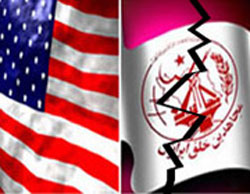
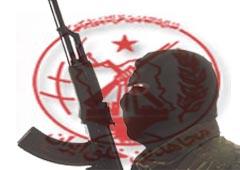
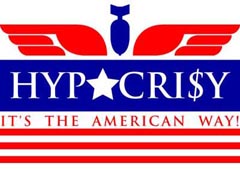
WASHINGTON – For decades, an Iranian dissident group has seemed to be on the wrong side of history. Suppressed by both the Shah of Iran and then the ayatollahs who deposed him in 1979, its supporters have faced prison, death and exile, and were shunned in the United States as members of a cult-like terrorist organization.
The Mujahadin-e-Khalq (MEK) former guerrilla movement began to shake off its painful past last year when the State Department took it off the official U.S. list of terrorist organizations. The European Union made a similar decision in 2009 after a prolonged court battle.
But as Iran elects a new president on Friday, the MEK has no discernible role in politics at home, where it is mistrusted – even by government critics – for having been allied with Iraq’s Saddam Hussein during the 1980s Iran-Iraq war.
Yet Iran’s clerical rulers remain obsessed with a perceived threat from the group, frequently warning Western governments against any giving the MEK shelter or support, diplomats say.
Unable to operate openly in Iran, the MEK is instead waging some of its battles in Washington. It opened an attractive new office in April just a five-minute walk from the White House.
Long active as an advocacy group in the United States and Europe, the MEK is now formalizing its campaign to pressure the Obama administration to maintain a hard line – including in multilateral nuclear talks – with the Islamic Republic, which it hopes will one day crumble.
Now that it is no longer on the U.S. blacklist, the MEK can hire registered lobbyists and raise funds on its own, rather than rely on wealthy Iranian-American sympathizers.
Democratic former Senator Robert Torricelli signed up as a lobbyist earlier this year for the National Council of Resistance of Iran, the Paris-based political arm of the MEK.
"They (the MEK) deserve to have a voice in Washington, to be heard, and to (show) what the Iranian people are actually looking for in the future of Iran: a non-nuclear Iran, a government that is based on democratic values," said Soona Samsami, the U.S. representative of the NCRI.
Once one of Capitol Hill’s biggest fund raisers, Torricelli pulled out of the race for a second Senate term in 2002 amid an ethics scandal.
His lobby registration form says he will be "meeting with U.S. government and congressional officials, and advising on general strategy."
Other notable backers of the MEK include former Pennsylvania governor Ed Rendell and ex-CIA director James Woolsey.
A TOUGH SELL
Even though it has renounced violence, the MEK is a tough sell in the United States, which for many years has blamed it for the killing of six Americans in Iran in the 1970s.
A 2009 study by the RAND Corporation think tank depicted the MEK as a cult-like movement run with military-style discipline, gender separation and "near-religious devotion" to its Paris-based leaders – a description the MEK denies.
"I can’t believe the U.S. government is going to be particularly excited about working with them … because in the U.S. government, I would hope there would be people who would understand that this is not where the political future of Iran lies," said Patrick Clawson, director of research at the Washington Institute for Near East Policy.
Some U.S. policymakers are mistrustful of Middle East exile groups following Washington’s reliance on Iraqi expatriates who pushed America toward war in Iraq in 2003.
Calls from MEK representatives for "regime change" in Iran remind some of Ahmad Chalabi and his Iraqi National Congress, which helped convince the administration of former President George W. Bush that Saddam had weapons of mass destruction.
"They’ll deny it, but I think it’s pretty simple: their goal is to keep pushing the politics in America to lead to an invasion, some kind of major unsettlement of Iran, that they can sweep into as a new government," said Jeremiah Goulka, author of the RAND study.
Some in the U.S. government also share that suspicion – but the MEK resents comparisons to Iraqi exiles of 10 years ago.
"We’ve never been in favor of a war. We’ve never tried to push things towards that direction," said Alireza Jafarzadeh, the deputy U.S. representative of the NCRI. The MEK is "not the U.S. creature that Chalabi was," he said.
Attempts to make over the MEK’s image have been boosted by a report from a former senior State Department official who questions whether the group really committed the killings of six Americans in Iran in the 1970s that are often blamed on it.
The killings, during a guerrilla campaign against the U.S.-backed Shah, were actually the work of a faction that later broke away from MEK, said Lincoln Bloomfield, whose report has just been published as a book by the University of Baltimore.
"Not a single person you could name in the MEK had any knowledge of it or had anything to do with it," he said.
The study grew out of a 2011 memo Bloomfield wrote as a consultant for a law firm that lobbied to remove MEK from the terrorism list on behalf of the Iranian-American Community of Northern California. The author said he had no financial interest in the book, and proceeds are going to the university.
The MEK still has some 3,000 members in Iraq, many of whom were invited by Saddam in the 1980s. The group fell out of favor after his 2003 downfall and current Iraqi officials have applied pressure for them to leave.
After clashes with Iraqi security forces in 2011 in which 34 people were killed, the residents were moved last year as part of a plan in which the United Nations intends to process them for refugee status in other countries.
But progress has been slow, and their temporary home at a former U.S. military compound in Baghdad known as Camp Liberty came under fire in February when eight people were killed in a rocket attack by unknown assailants.
U.S. officials have tentatively identified a handful of Camp Liberty residents who may be allowed to move to the United States. But they would be expected to renounce their membership in MEK, the officials told Reuters.
Forty-four residents of the camp have left over the last month for Albania, which has offered to take up to 210 of them.
Susan Cornwell (Editing by Alistair Bell and Jackie Frank)
Paid advocacy for MKO
The tragic comedy of the phony War on Terror is being exposed as never before for the sham that it is. Press TV reported yesterday the opening of the MKO terrorist organization office a block away from the White House.
What a message that sends to the world…that we look out for our terrorists and take good care of them, but it just might take a little time to do it.
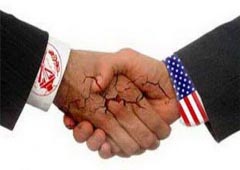
This is the group who inflicted four 911’s on Iran by murdering 12,000 in terrorist attacks, much of it under Saddam, and then under US protection when we took over Iraq. Israel was involved, also…no surprise there.
We had no boots on the ground inside Iran for Intel collection so the War on Terror stopped at the border of the MKO Camp Ashraf. Terrorists who worked for us were given effect immunity while keeping them on the terrorist list, I assume until a day when maybe nobody would remember what they did. We did not forget, about MKO, or the others.
So the powers that we think they have slipped this one by on us. Here we have our Nobel Peace Prize winner President effectively pardoning the killing of four times the 911 victims when he has no authority to do so because the MKO are not American citizens. I did not mention aiding and abetting terrorism because that obviously was not a concern to his administration or the NeoCons.
We are all put at risk if terrorist groups with well connected big bad brothers can provide them with not only material support but protect them from prosecution. The status of a country doing so is lowered to that of a Mafia chief, Murder Incorporated. This is not a fitting robe to wear for America…or is it?
I was shocked, but not too much so, to find John Bolton and retired general Jim Jones, a Bush regime national security adviser, welcoming the MKO to Washington, DC. Does this mean that Jones was running a terror operation out of the White House? Aren’t there some big laws against that…where even a former government official can be prosecuted for crimes against humanity?
I can only think that they felt that with the public’s attention on the big terrorist training camp going up in the Middle East, the one also under US protection and allowed to train with live fire weapons and actually kill people that no one would notice. This training camp is Syria, of course. We have a repeat of the Afghanistan Mujahedin fiasco in the works going on here, but in a powder keg region.
Oh yes, we have reports that the only reason that the CIA is handling the arms shipments to the rebels is to try to make sure they do not fall into the hands of these extremist terrorists. But using the Saudi Arabia and Qatari terrorist regimes as proxies is a very thin veil indeed.
Americans know they are supporting these groups in Syria because they are good killers. They are even taking heads to prove it and bringing young teens into their ranks to use as future cannon fodder. Strategically, they know they cannot topple Assad without them so they are shedding crocodile tears over their false concerns about unleashing a new wave of terror on the regime.
Assad has not been an angel and might himself see the inside of a court room, but it would be a huge injustice if the dock did not contain at least a hundred others from the leadership of those we know who have been engaged in terrorism but claim diplomatic immunity. That did not work for the WWII Germans, the Serbians, nor any of the Africans.
If the world is going to give out free passes for terrorism, I would at least like to see some kind of vote so the rest of us can participate in playing God regarding who gets to kill and who does not. The reputation of Western jurisprudence, what is left of it, is squarely on the line.
This was a hot topic at the UN this week with the Thematic Debate on International Justice. This issue of certain countries issuing themselves free terrorism passes while seeking punishment for those doing the same was viewed as possibly needing a bit of reform. Imagine that. If the UN in its infinite non-wisdom would not mention who these countries were, but we all know.
Iran’s conference representative, Gholam Hossein Dehqani said, “Iran believes that the prosecution and punishment of aggressors and perpetrators of horrific international crimes will promote international peace and security and bring peace and tranquility to world nations.”
Dehqani is right of course. But our current international justice, or injustice system…depending on the case, which is corrupted and outdated, requires a complete overhaul.
Right off the bat the first improvement I would make is that any country giving itself a free pass from terrorism prosecution would go to the top of the list for being prosecuted. And you can forget the ICC. It moves at a snail’s pace where we will all be dead and buried before they finish. They can be used for the slow motion cases…maybe the older ones.
In America, we have a statute called the Speedy Trial Act that once you are arrested the government has to take you to trial within a reasonable period or in effect you are serving a conviction for a crime when you have not been found guilty. And no, Guantanamo does not have this.
Syria provides us a perfect example. The crime is happening now. We don’t want a trial initiated ten years down the road. We want investigators and prosecutors in the field collecting evidence while it is fresh so those aiding and abetting in terrorism can be quickly identified and arrested to stop the crimes in progress.
If such an entity were found to be a country, then they would be subject to sanctions, and something called asset confiscation, starting with all the hidden offshore accounts. When drug dealers are arrested all of their cash and property are seized so ill gotten gains cannot be used by the defense. In the US they will go to a drug dealer’s house and even collect up the children’s toys and clothes.
As always, some would say this could never be possible as those most guilty would not go along with it. But then that would just trigger a dual justice system development…the older corrupted one and then a new one that can…yes, issue arrest warrants, capture, detain, and put on trial those guilty of these crimes.
Let’s invent a new reason for having wars, a better one, to arrest and prosecute crimes against humanity people. War would be popular overnight. And all of those who protect the guilty would then become accessories after the fact. We have all these empty FEMA camps over here. Let’s use them toward a good purpose.
Oh, and one other thing. No multinational corp. has ever been brought into court for crimes against humanity…nor a single bank. Do you really think that not one ever committed these crimes? Of course they have. But they also have put themselves on the immunity list, other than fines that their stockholders pay. Financial crimes against humanity should warrant the death penalty for the lives they destroy.
So laugh all you want at my ideas, and don’t feel bad either. I am laughing at all of you who think you have some system of justice to punish mega crimes against humanity where those countries doing the judging give themselves immunity. I laugh not out of disrespect for their victims but at the silliness of it all for those who think they are involved in international justice when they are really providing cover for the bad guys.
Huge numbers of lives are at stake and Syria is going to be the big demonstrator. General Breedlove was going through his confirmation hearings yesterday as the new NATO cmdr. and said he supports giving lethal weapons to the rebels. Because we all know they already have them I suspect he meant heavy weapons.
His only concern was their not falling into the wrong hands. OK Mr. Breedlove, if you think that is such a cool idea, what if you, your family, grand kids and parents all had to die if you are wrong…just like the Syrians? Would you still think it was a cool idea?
Syria would become a wasteland of death and destruction if that happened and maybe some other places, also. There have already been enough crimes committed to keep the gallows going for a long time. Such crimes require an industrial scale justice system, not the slow motion shake and bake kind we have now.
We need to replace or convert General Breedlove’s command to a new ICC Justice NATO…called JATO, maybe. Let us save the heavy lethal weapons for them as we will all get a bigger bang for our buck. And rather than watching the innocent on TV die, let us watch the guilty ones for a change. It won’t be so sad.
By Jim W.Dean
The Christian Science Monitor reported on the opening of the MEK’s office in Washington last week:
An Iranian dissident group that languished on the US list of terrorist organizations for more than a decade under both Democratic and Republican administrations marked its full rehabilitation Thursday when it opened sleek new offices – complete with floors covered by plush Persian carpets – within sight of the White House.
The article doesn’t explain that the de-listing of the MEK was mostly a quid pro quo to get most of the group’s members in Iraq to relocate from its old base at Camp Ashraf. It also fails to mention that many of the people at
Camp Ashraf were being held there against their will. Taken together with the many disgraceful displays of support by members of Congress and various former officials, all of this creates the impression that the group’s “rehabilitation” is much more meaningful than it is.
The group remains hated in Iran for its long period of collusion with Hussein during the Iran-Iraq war and afterwards, and it remains in its own organization a totalitarian quasi-Marxist cult, so the idea that it represents the aspirations of most Iranians is absurd on its face. If reports on the assassinations of Iranian scientists are to be believed, the group continues to engage in acts of terrorism inside Iran, but as far as some Iran hawks are concerned this is “useful” terrorism and therefore not something that needs to worry us. Few things better express the hostility that some Iran hawks have for the country and people of Iran than the warm embrace they have given the MEK.
The MEK is an awful group all on its own, but what makes it potentially so dangerous is that it has been embraced by so many prominent foolish Americans that want to treat it as a leading opposition group. Of course, the de-listing campaign was always just the beginning of a lobbying effort to try to get U.S. support for the MEK in the future. One passage from the Monitor article reveals just how deluded the group’s American supporters can be:
Senator Torricelli compared the NCRI in 2013 to when the “Free French” opened an office in London in 1940. “Maybe a lot of people didn’t notice,” he said, but the French resistance would go on to play a crucial role in France’s liberation.
The NCRI, with a new office in Washington, can start down that same path, he said, adding, “I’m proud to be a soldier in that struggle.”
There’s something especially perverse about likening the MEK to the Free French. The MEK was a group that collaborated with the invader of their own country, and they wanted to impose themselves on Iran with the backing of that invader. If the MEK had succeeded in its goals in the 1980s, it would have been the puppet leadership installed by Hussein to replace the Iranian leadership of the time.
By Daniel Larison
An Iranian opposition group that was once considered a terrorist front by the State Department has hired an ex-senator to lobby for them.
Former Sen. Robert Torricelli (D-N.J.) has registered to represent the National Council of Resistance of Iran at his lobby firm Rosemont Associates, according to lobbying disclosure records.
The council’s members include the Mujahedin-e Khalq (MEK), which was removed last year from the State Department’s terrorist organization list after an aggressive lobbying campaign by its supporters.
Torricelli has been lobbying for the council since April 2, according to his registration. The ex-senator has been providing consulting services and strategy advice while meeting with “other supporters of the Iranian resistance in the United States” and “U.S. government and congressional officials.”
The lobbying registration also says Torricelli “provides public speaking services abroad for the client, as requested.”
Speeches by high-profile Washington figures like Torricelli played heavily in the campaign to delist the MEK. The push included legal action, television ads and lobbying by Iranian-American groups.
Speaking fees paid by MEK supporters to former government officials — including ex-Pennsylvania Gov. Ed Rendell (D) and Gen. Hugh Shelton, former chairman of the Joint Chiefs of Staff — reportedly attracted the attention of federal investigators. Taking payments from a terrorist group is against the law.
The MEK was blamed by the State Department for several attacks in the 1970s that killed Americans in Iran. But the group’s supporters say it has since renounced violence and worked to promote democracy. Then-Secretary of State Hillary Clinton removed the MEK from the terrorist list last year.
On Thursday, the council re-opened its Washington office after the U.S. government closed it down a decade ago. Several prominent Washington names attended the opening ceremony, including Torricelli.
By Kevin Bogardus
The National Council of Resistance of Iran has opened shop just a stone’s throw from the White House — and only months after being removed from a US State Department list of designated terrorist groups.
The Washington Post reports that the NCRI, an organization of Iran exiles considered terrorists by the State Department between 1997 through 2012, has officially begun operating out of a downtown Washington, DC office building.
“Once-banned Iran exile group opens office a block from White House,” reads the Post article from Thursday afternoon.
The NCRI had been barred from operating within the United States since 2003, but a campaign that drew the attention of some high-profile American politicians in recent years helped have their name removed from the same Department of State roster that contains foreign organizations including al-Qaeda, Hamas, the Palestine Liberation Front and the Army of Islam.
Critics of the NCRI have called the group a front for the People’s Mujahedin of Iran, or MEK, the group of Islamic Marxists that helped violently overthrew the Pahlavi Shah during a 1979 revolution in Iran and was credited with killing six American citizens that decade. As recently as 2002, the US Federal Bureau of Investigation told the State Department that ‘‘[i]t is the unanimous view of the FBI personnel who are involved in and familiar with the FBI’s investigation of the [MEK] that the NCRI is not a separate organization, but is instead, and has been, an integral part of the MEK at all relevant times.’’
“Contrary to NCRI’s portrayal of itself as an umbrella organization, of which the MEK was just one member, the FBI concluded that it is NCRI that is ‘’the political branch,’” the agency found at the time.
A decade later though, a group of influential politicians including former UN ambassador John Bolton, Rep. Dana Rohrabacher (R-California), presidential candidates Newt Gingrich (R), Rudy Giuliani (R) and Howard Dean (D) rallied on behalf of the NCRI to have their name removed from the State Department list.
"Have you ever seen a more bipartisan disciplined group as the one that supported this issue?" asked lobbyist Victoria Toensing of DiGenova & Toensing when she weighed in on the NCRI to US News & World Report last year.
Now that the organization formerly considered terrorists has been given the go-ahead to operate in the US, they’ve opened their doors alongside the rest of the powerful lobbying groups that litter downtown DC’s K Street district.
“The MEK are Iranians who desire a secular, peaceful, and democratic government,” Rep. Rohrabacher told the Post last year as the State Department considered their appeal. “Nothing threatens the Mullah dictatorship more than openness and transparency.”
Others haven’t been as certain, though, and cite a number of incidents credited to MEK throughout the 1980s and ‘90s, including an attempted attack in 1992 against the Iranian mission to the United Nations in New York City.
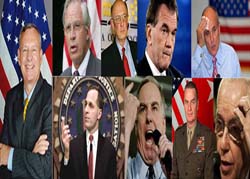
NCRI officials speaking to the Post confirmed that Bolton and a handful of others — including former Obama National Security Adviser Jim Jones — attended the grand opening of the group’s new DC office, styled as “Iran’s Parliament-in-exile.”
With Washington luminaries in attendance, the Iranian dissident group NCRI and its formerly armed wing MEK inaugurated their sleek new offices Thursday, within sight of the White House.
An Iranian dissident group that languished on the US list of terrorist organizations for more than a decade under both Democratic and Republican administrations marked its full rehabilitation Thursday when it opened sleek new offices – complete with floors covered by plush Persian ca
rpets – within sight of the White House.
Just how stunning the reversal of fortunes has been for the National Council of Resistance of Iran (NCRI) and its formerly armed wing, the Mojahedin-e Khalq, or MEK, was underscored by the long list of Washington luminaries who attended the office inauguration.
From prominent former members of Congress to former national security officials and high-profile diplomats, the caliber of the American advocates on hand for the ribbon-cutting demonstrated how effective the Iranian opposition organization has been at transforming its image – from that of a fringe group with a violent past to one in which it is the embodiment of the democratic aspirations of the Iranian people.
Referring to the NCRI’s platform, which states as its goal the fall of the ayatollahs’ regime and the establishment of “a free, secular, democratic, and non-nuclear Iran,” Gen. James Jones, who served as President Obama’s first national security adviser, described the objectives as “completely in sync with our core [American] values.”
That is a remarkable turnaround for a group that President Clinton placed on the list of terrorist organizations in 1997 – ostensibly as a result of the one-time Marxist group’s violent acts, including against Americans, but by some theories as part of a campaign to pave the way to negotiations with the Iranian regime.
Whatever the reason, the terrorist designation stuck through the Bush administration and was only lifted by former Secretary of State Hillary Rodham Clinton last September after a long court battle.
Others on hand to fete the Iranians’ new status included former US ambassador to the United Nations and Bush administration diplomat John Bolton, former Sen. Robert Torricelli (D) of New Jersey and former US Rep. Patrick Kennedy (D) of Rhode Island, and P.J. Crowley, a former assistant secretary of State for public affairs who served under Hillary Clinton.
Several Republican members of Congress who have lobbied on the group’s behalf sent their regrets at being unable to attend but sought to mark the occasion through letters or by dispatching staff to the opening.
Mr. Crowley, now a teacher of diplomacy and global communications at George Washington University, hailed the NCRI as the “better option’ for “democratic change” in Iran when stacked up against the alternatives.
“When change comes to Iran,” Crowley said, “it will be the NCRI that brings in that change.”
Yet despite the group’s Washington makeover, not everyone is convinced that the Paris-based organization, which some critics slam as a cult enthralled with leader Maryam Rajavi, is the opposition that many Iranians see as the ideal alternative to the Islamic revolution.
The MEK’s fighters are still hated by many Iranians for living in exile in Iraq under the protection of Saddam Hussein – and for having allegedly fought on Iraq’s side in the Iran-Iraq war. Hundreds of those fighters still live precariously in camps in Iraq, with their security and well-being a passionate issue for prominent advocates like General Jones.
Some US critics of the NCRI say there are no grounds for believing the group has anything of a positive image, let alone actual support, in Iran. Going further, they point to the high speaking and lobbying fees that some of the group’s prominent American advocates have reportedly been paid as evidence of Washington support that is only dollars-and-cents deep.
But the dignitaries at Thursday’s inauguration – described by Ambassador Bolton as “a distinguished bipartisan group, a rare occasion in Washington these days” – said they were on the NCRI’s side because they see it as Iran’s best hope for attaining freedom.
Senator Torricelli compared the NCRI in 2013 to when the “Free French” opened an office in London in 1940. “Maybe a lot of people didn’t notice,” he said, but the French resistance would go on to play a crucial role in France’s liberation.
The NCRI, with a new office in Washington, can start down that same path, he said, adding, “I’m proud to be a soldier in that struggle.”
By Howard LaFranchi, Staff writer
The congressional team led by Dana Rohrabacher, a California Republican, met the MKO terrorists in Paris on Sunday and expressed strong support for the group.
The US congress members called for the immediate transfer of the MKO terrorists to Camp Ashraf in Iraq’s Diyala Province. The American legislators even threatened to declare Iraq’s Prime Minister Nouri al-Maleki a sponsor of terrorism after an attack on the terrorist members inside another camp in Iraq.
The mortar attack, which happened earlier this month on Camp Liberty near Baghdad, left at least seven members of the terrorist group dead and more than 50 others wounded.
Members of the MKO terrorist group are being transferred from Camp New Iraq, formerly known as Camp Ashraf, which is situated about 120 kilometers (74 miles) west of the border with Iran, to Camp Liberty near Baghdad Airport.
The MKO is listed as a terrorist organization by much of the international community.
On September 28, the terrorist group was taken off the US State Department’s terrorism blacklist a week after US Secretary of State Hillary Clinton sent the US Congress a classified memo about the move.
The MKO fled to Iraq in 1986, where it received the support of Iraq’s executed dictator Saddam Hussein, and set up its camp near the Iranian border.
The MKO has carried out numerous acts of violence against Iranian civilians and government officials.
The decision of the US State Department to remove the Mujahedin Khalq Organization (MKO) from its list of foreign terrorist organizations created an atmosphere of ambivalence particularly in
the West. Public opinion in the West may face contradictory ideas regarding the decision. On the one hand well-paid supporters of the group view the decision as “correct” but “overdue” ,on the other hand, there are experts and journalists and of course Iranians who view it as an evidence of American double standards and hypocrisy.
Regardless what people –pros or cons –may think of the apparent reality: a group is no more considered “terrorist”, the true substance of the MKO as well as many other cult-like groups does not change. In the world of “legal” or “illegal”, “bad” or “good”, “terrorist” and “freedom fighters”, conventions never tell the truth.
Even in the Press Release of the spokesperson’s office of the DOS, you may see the ambivalence in the published decision:”With today’s actions, the Department does not overlook or forget the MEK’s past acts of terrorism, including its involvement in the listing of US citizens and an attack on US soil in 1992. The Department also has serious concerns about the MEK as an organization, particularly with regard to allegations of abuse committed against its own members.”[1]
While the DOS says”Yes” to the MKO, there is a “No” in the background informing its decision. It seems that the US government is not able to fully commit to that “Yes”. This was also implied in comments of a US official who spoke to Barbara Slavin and Laura Rozen of Al-Monitor on condition of anonymity. They wrote in their piece titled” Iran Group MEK’s Delisting Does not Signal US Approval, ”The US official added that taking the MEK off the terrorist list would not connote US government approval. Responsible for the deaths of half a dozen Americans in the 1970’s and for killing hundreds of Iranians after 1979, the MEK is widely regarded as a cult that demands that its followers stay celibate and obey the commands of Mariam Rajavi, the wife of MEK leader Massoud Rajavi, whose whereabouts are unknown.”[2]
Another US official assured Elise Labott who first published the news of delisting on CNN, that US government is concerned about the group’s bad reputation. “While they represent themselves as a legitimate democratic group worthy of support, there is universal belief in the administration that they are a cult”, the official told CNN.”A delisting is a sign of support or amnesia on our part as to what they have done and it does not mean we have suddenly changed our mind about their current behavior. We don’t forget who they were and we don’t think they are now who they claim to be, which is alternative to the current regime.”[3]
One of the authors of the famous RAND report on the MKO, published in 2009, is Christina Wilkie who is also a Huffington Post correspondent. She has a different analysis on the group delisting. As she has widely investigated on the MKO and as she says she’s been reporting on the group for the Huffington Post, she has been threatened by members of the group and her email was hacked by them. However, she believes that the DOS’s “decision was a good one.” She makes it clear that she believes the MKO is a “militant cult of personality” and she doesn’t trust them but Clinton delisted them because she “understands that they’re a dangerous cult, and that all the other potential outcomes of the 30-year standoff between the MEK and the outside world would have likely been much, much worse.”[4]
Wilkie thinks that on top the list of risky MKO functions was mass suicide and to stop such a tragedy,” Clinton only had one major bargaining chip. In exchange for leaving Camp Ashraf, the secretary agreed to delist the group from the U.S. list of Foreign Terrorist Organizations,” this way she saved the lives of “ thousands of brainwashed MEK foot soldiers”.[5]
At least Wilkie admitts that the State Department officials feel some ambivalence about the terrorist substance of the cult of Rajavi: ”But the question facing secretary Clinton wasn’t whether the MEK could be trusted,” she writes. “Or even if the MEK’s members were still dangerous. Privately, US officials don’t pretend to know the answer to either one.”[6]
It seems that no pretext can ultimately enclose the dual approach of the US administration. In a Mint Press article, the author Martin Michaels describes the terror listing or delisting of Foreign Terrorist Organization as paradoxical. He refers to US administration’s decision to classify Wikileaks as the enemy of the State comparing the decision to that of delisting the MKO. He concludes, “The Selective branding of Wikileaks, the MEK or other organizations align with the interests of the US while the MEK may share some of the same goals, namely, regime change in Iran, the labeling indicates an underlying desire to justify alliances in the name of security.”[7]
By Mazda Parsi
References:
[1] US Department of State, Delisting of the Mujahedin-e-Khalq, Office of Spokesperson, September 28, 2012
[2]Slavin, Barbara & Rozen, Laura, Iran Group MEK’s Delisting Doesn’t Signal US Approval, Al Monitor, Septemeber2, 2012
[3] Labott, Elise, Clinton to remove Iranian exile group from terror list, CNN, September 21, 2012
[4]Wilkie, Christina, MEK is Bad News, But Delisting Them Was A Good Decision, the Huffington Post, October 1, 2012
[5]ibid
[6]ibid
[7]Michaels, Martin, Wikileaks And The MEK: The Paradoxical Labeling Of Foreign Terrorist Organizations, Mint Press News, October 1, 2012
Department of State Public Notice 8050 dated September 21, 2012, reads thus:
In the matter of the designation of Mujahadin-e Khalq, also known as MEK, also known as Mujahadin-e Khalq Organization, also known as MKO, also known as Muslim Iranian Students’ Society, also known as National Council of Resistance, also known as NCR, also known as Organization of the People’s Holy Warriors of Iran, also known as the National Liberation Army of Iran, also known as NLA, also known as National Council of Resistance of Iran, also known as NCRI, also known as Sazeman-e Mujahadin-e Khalq-e Iran, as a Specially Designated Global Terrorist Pursuant to Section 1[b] of Executive Order 13224, as amended. Acting under the authority of Section 1[b] of Executive Order 13224 of September 23, 2001, as amended ]"the Order’] I hereby revoke the designation of the entity known as the Mujahadin-e Khalq, and its aliases, as a Specially Designated Global Terrorist pursuant to Section 1[b] of the Order. This action takes effect September 28, 2012.
Hillary Rodham Clinton,Secretary of State
With this stroke of the pen, as it were, the United States removed from its global terrorist list an
organization—Mujahedin-e Khalq [MEK]—that had been listed since 1997. A shadowy outfit, MEK’s delisting was the result of a full-court press by a bipartisan group of policy influentials, including General Hugh Shelton, former chairman of the joint Chiefs of Staff; Lee Hamilton, former congressman from Indiana; Bill Richardson, former governor of New Mexico; General Wesley Clark, former supreme commander of NATO; and Louis Freeh and Michael
Hayden, former directors of the FBI and CIA, respectively.
In a speech at a conference in February 2011, Governor Richardson urged that MEK should be removed from the terrorist list : "This is a movement that doesn’t want any money. This is a movement that doesn’t want weapons," Richardson declared. "This is a movement that just wants to be allowed to roam, to do your democratic thing." Equally opaquely, General Shelton said at the same event: "When you look at what the MEK stands for, when they are antinuclear, separation of church and state, individual rights, MEK is obviously the way Iran needs to go."
On one level, the ostensible reason for the United States’ delisting is that the Iraq-based MEK is a force in exile dedicated to removing the current regime in Tehran. As General Shelton added, "By placing the MEK on the FTO [Foreign Terrorist Organizations] list we have weakened the support of the best organized internal resistance group to the most terrorist-oriented anti-Western world, anti-democratic regime in the region." In the zero-sum game of U.S.-Iran relations, there appears to be, then, a certain logic to the move. It is illuminating, however, to take a closer look at this movement, through the eyes of some individuals lesser known than the heavyweight list that supports their cause, but who might just be in a position to know more about it. These would include Ray McGovern, an ex-CIA operative, who said of the MEK: "Why the U.S. cooperates with organizations like the Mujahedin, I think, is because that they are local, and because they are ready to work for us. Previously, we considered them a terrorist organization. And they exactly are. But they are now our terrorists and we now don’t hesitate to send them into Iran….for the usual secret service activities: attacking sensors, in order to supervise the Iranian nuclear program, mark targets for air attacks, and perhaps establishing secret camps to control the military locations in Iran. And also a little sabotage."
Or, from Karen Kwiatkowski, formerly with the Department of Defense: "MEK is ready to do things over which we would be ashamed, and over which we try to keep silent. But for such tasks we’ll use them." (For both these quotes, see "US Government’s Secret Plans for Iran," by Markus Schmidt, John Goetz, WDR TV, Germany, February 3, 2005).
And what exactly are these "tasks"? According to the State Department’s original statement designating MEK as a terrorist organization (in 1997, when the Clinton administration was trying to engage Iran), MEK instigated a bombing campaign, including an attack against the head office of the Islamic Republic Party and the Prime Minister’s office, which killed some 70 high-ranking Iranian officials, including Chief Justice Ayatollah Mohammad Beheshti, President Mohammad-Ali Rajaei, and Prime Minister Mohammad-Javad Bahonar. In addition, MEK assassinations range in date and targets from U.S. military personnel and civilians in the 1970s (hence the original terrorist listing) to, almost certainly, the killing of at least five leading Iranian nuclear scientists in recent months.
Complementing the lethal violence of the MEK is the organization’s bizarre internal dynamic. Elizabeth Rubin of The New York Times visited its Camp Ashraf headquarters in Iraq in 2003, and, in the course of the drumbeat of support for de-listing, posted an article in the Times on August 13, 2011, "An Iranian Cult and its American Friends." Herein she describes a—"cult" is the only appropriate term—headed by a woman named Maryam Rajavi and her husband, Massoud. What she relates is eerily reminiscent of the doomed Jim Jones cult in Guyana in the 1970s—"a fictional world of female worker bees…staring ahead as if they were working at a factory in Maoist China….Friendships and all emotional relationships are forbidden. From the time they are toddlers, boys and girls are not allowed to speak to each other. Each day at Camp Ashraf you had to report your dreams and thoughts….After my visit, I met and spoke to men and women who had escaped from the group’s clutches. Many had to be reprogrammed. They recounted how people were locked up if they disagreed with the leadership or tried to escape; some were even killed."
So far, this is only a Jim Jones situation—which is bad enough—in that the tragedy affected only the cult’s members. But, as Rubin also reports:
During the Iran-Iraq war in the 1980s, the group served as Saddam Hussein’s own private militia opposing the theocratic government in Tehran. For two decades, he gave the group money, weapons, jeeps and military bases along the border with Iran. In return, the Rajavis pledged their fealty.
In 1991, when Mr. Hussein crushed a Shiite uprising in the south and attempted to carry out a genocide against the Kurds in the north, the Rajavis and their army joined his forces in mowing down fleeing Kurds. Ms. Rajavi told her disciples ‘Take the Kurds under your tanks, and save your bullets for the Iranian Revolutionary Guards.’ Many followers escaped in disgust.
Rubin concludes: "MEK is not only irrelevant to the cause of Iran’s democratic activists, but a totalitarian cult that will come back to haunt us."
All of which begs the pressing question: Why the policy reversal? And why now? There are at least three reasons, from the pragmatic to the venal. First, MEK’s presence in Iraq has been a growing source of tension between the host country’s Shia government and the United States. As a 2009 Rand Corporation report ("The Mujahedin-e Khalq in Iraq: A Policy Conundrum") says:
From the early weeks of Operation Iraqi Freedom [OIF] until January 2009, coalition forces detained and provided security for members of the MEK, an exiled Iranian dissident cult group living in Iraq. From the outset of OIF, the MEK was designate d a hostile force, largely because of its history of cooperation with Saddam Hussein’s military in the Iran-Iraq war and its alleged involvement in his suppression of the Shia and Kurdish uprisings that followed the Gulf War of 1991.
The Rand report goes on:
The coalition’s decision to provide security for a foreign terrorist organization was very controversial because it placed the United States in the position of protecting a group that it had labeled a terrorist organization. Among many resulting complications, this policy conundrum has made the United States vulnerable to charges of hypocrisy in the war on terrorism.
The Nour Al- Maliki government in Iraq, therefore, wanted the MEK out; but only by offering the prospect of de-listing could the Obama administration persuade its rogue protectee to leave Ashraf peacefully, as it has now done, to be processed for resettlement by the UN High Commissioner for Refugees.
Second, the dance with the MEK is a commentary on our lack of engagement with Iran, despite early promises for such by President Obama. According to a blog posting of September 24, 2012, by Leila Kashefi, a Washington-based Iranian-American human rights activist: "It has been incredible to watch members of a designated terror group walk the halls of Congressional office buildings, mingling with Hill staffers and representatives. ‘The only Iranians we see are the MEK’, said one staffer."
Third—and this is the least salubrious factor in the de-listing—despite General Shelton’s protestations to the contrary, the MEK both wants and gets money, and uses it strategically. How exactly the group receives its support is a murky, perhaps impenetrable question. A report by the UK daily, The Guardian ("Iranian exiles, DC lobbyists and the campaign to delist the MEK," September 21 2012) attributes this to "a formidable fundraising operation and campaign to transform the MEK’s image led by more than 20 Iranian-American organizations across the US. These groups and their leaders have spent millions of dollars on donations to members of Congress, paying Washington lobby groups and hiring influential politicians and officials, including two former CIA directors as speakers." As the Financial Times summed up in a recent editorial (Mujahedin mistake," September 25, 2012) "MEK has found the best friends money can buy". (As a footnote, it goes without saying that neither of these press organs is typically amicably disposed toward the Iranian regime.)
Others have been skeptical about the role of expatriate groups—citing their characteristic frugality! Another, perhaps fanciful, explanation has been the largesse of Saddam Hussein toward MEK in the 1990s, and shrewd stewardship of his funding. Or perhaps the multiple aliases—self describing as "freedom fighters" or "democracy" activists—have diversified the funding options. Whatever the nature of the money trail, according to the Guardian report, "Several prominent former officials have acknowledged being paid significant amounts of money to speak about the MEK. The former Pennsylvania governor, Ed Rendell, has accepted more than $150,000 in speaking fees at events in support of unbanning the MEK." (Others who have accepted fees include Howard Dean, former governor of Vermont, and Rudy Giuliani, former mayor of New York City. See, for example, "Iranian group’s big-money push to get off US terrorist list," Christian Science Monitor, August 8, 2011.) Nor do these friends in court appear overly concerned with a process of background checking: For Representative Dana Rohrabacher, "If they want to contribute to me because I believe strongly in human rights and stand up in cases like this, that’s fine. I don’t check their credentials." [Guardian]
Finally, what are the consequences of the step to delist the MEK? In practical terms, the liberation will enable the MEK to lobby the U.S. Congress for support in the same way as the Iraq Liberation Act of 1998 allowed the Iraqi National Congress led by the exiled Ahmad Chalabi to do so—a monumental policy error that led to the invasion of Iraq in 2003. In this regard, history, as we know all too well, has a habit of repeating itself. Some 30-odd years ago, we saw the mujahedin of another state as "allies" in a cosmic struggle. Welcome to the Afghanistan of the Taliban, three decades on. It is the old adage "the enemy of my enemy is my friend" taken to absurd extreme.
Lest there are doubts about the adverse ethical as well as policy consequences, consider the response from the National Iranian American Council [NAIC], an organization opposed to the current regime, dated September 21, 2012:
The NAIC deplores the decision to remove the MEK from the U.S. list of foreign terrorist organizations. This decision opens the door for Congressional funding of the MEK to conduct terrorist attacks in Iran, makes war with Iran far more likely, and will seriously damage Iran’s peaceful pro-democracy movement as well as America’s standing among ordinary Iranians. The biggest winner today is the Iranian regime, which has claimed for a long time that the U.S. is out to destroy Iran and is the enemy of the Iranian people.
All in all, a sad saga—one of taking the moral low ground in pursuit of dubious policy objectives. Let us give the last word to the Financial Timeseditorial, which sums it up rather well:
"The US government’s decision to take Mujahedin-e Khalq, the exiled Iranian organization, off its list of terrorist groups is a vivid example of the influence of money and lobbying in Washington. At worst it highlights the analytical fog that clouds many US policy heavyweights’ view of Iran."
By David C. Speedie , Carnegie Council
In a particularly blatant display of U.S. double standards, Secretary of State Hillary Clinton
announced that the Mojahedin Khalq (People’s Mojahedin), known also by the acronyms MKO, MEK, and PMOI (People’s Mojahedin Organization of Iran), and dedicated to the violent overthrow of the legitimate government of the Islamic Republic of Iran, had been removed from the United States’ list of designated terrorist organizations as of September 28, 2012.
By removing the MKO from the list, the terrorist organization can now legally seek funding from the U.S. government, some of whose officials have already received hundreds of thousands of dollars in fees for speaking on its behalf. In addition, U.S. companies can now engage in business transactions directly with the MKO without the necessity of obtaining a license.
The MKO is a cultish, Marxist-influenced radical terrorist organization with roots in the Freedom Movement of Iran dating back to 1965 that was revitalized in the 1970s by a group of young intelligentsia who had been influenced by foreign ideas about Islam, politics, and government. The MKO began its armed struggle against the U.S.-supported shah in 1971 and continued its efforts by joining the Islamic Revolution of Iran. The terrorist group assassinated at least six U.S. citizens, participated in the seizure of the U.S. embassy in Tehran, and opposed the release of the U.S. hostages, urging their execution instead. Later on, however, the MKO withdrew its support for the revolution’s leadership and directly opposed the government of the fledgling Islamic Republic.
In the aftermath of the victory of the Islamic Revolution, Ayatollah Khomeini submitted the proposed constitution for an Islamic government to a public referendum on December 2, 1979. The MKO rejected the concept of velayat-e faqih (rule of the supreme jurisprudent), abstained from the referendum, and began to voice their opposing views by carrying out increasingly violent acts, including assassinations and bombing attacks on government leaders.
On June 28 1981, the MKO began a series of vicious attacks by bombing the headquarters of the Islamic Republic Party during a meeting of party leaders, resulting in 74 fatalities. This was followed by other terrorist attacks resulting in deaths and destruction at a time when the Islamic Republic was engaged in its Sacred Defense against Saddam Hussein’s regime (the Iran-Iraq war) from 1980 to 1988.
Eventually forced into exile because of its terrorist activities within Iran, the MKO was given asylum and financial support in Iraq by Saddam from 1986 until the time his regime was toppled by the U.S. invasion in 2003. On July 26, 1988, after the UN-brokered ceasefire was accepted, a 7,000-man assault force from the MKO, armed by Saddam, invaded and attacked Iran, but was forced to retreat back into Iraq three days later. According to the U.S. State Department, the MKO aided Saddam’s Republican Guard in suppressing the 1991 Shia uprising in Iraq.
Since November 4, 1979, the MKO has been responsible for over 70 acts of terrorism within Iran, which have claimed the lives of over 12,000 Iranians over the past three decades. Other humanitarian organizations place the figure of Iranian victims of terror even higher, while the MKO itself claims that it has inflicted over 40,000 casualties within Iran.
The U.S. State Department, acknowledging the terrorist group’s grizzly record, stated “the Department does not overlook or forget the MKO’s past acts of terrorism, including its involvement in the killing of U.S. citizens in Iran in the 1970s and an attack on U.S. soil in 1992.” According to news sources, the MKO is responsible for carrying out the assassinations of leading Iranian scientists and when asked about this by a BBC correspondent, a senior State Department official responded, “The United States government has not claimed that the MKO was involved in the assassination of scientists in Iran.”
The official added, “We believe that terrorism is terrorism no matter what country on earth it may be practiced in or against any party that it may be practiced against. So we do not distinguish between actions in or against Iran or in or against any other country.” This statement is especially breathtaking, since the MKO is listed in the University of Maryland’s Global Terrorism Database as one of the organizations responsible for the seizure of the U.S. embassy in Tehran on November 4, 1979. In other words, while continuing to hold the Iranian government responsible for the U.S. embassy hostage crisis, the U.S. government has effectively pardoned one of the actual perpetrators by removing its name from the terrorist list!
So why has this obviously irrational delisting of the MKO taken place? Just as the Afghan mujahedin were used in a covert U.S. war to overthrow the Soviet-aligned government in Afghanistan, the MKO is being used in conjunction with Mossad to fight a covert war against the government of the Islamic Republic of Iran. And the U.S. trained members of the MKO at the U.S. Department of Energy’s Nevada Security Site under the auspices of the Joint Special Operations Command between 2005 and 2008. According to an unnamed source, as a result of the Nevada JSOC training, “MKO now has a capacity for efficient operations that it never had before.”
It appears that as long as the terrorists commit their abominable acts in accordance with Washington’s policy goals, they are not treated as terrorists but instead as allies, and even while they are still officially listed as terrorists by the State Department. As arch-Zionist Alan Dershowitz would undoubtedly agree, the MKO may still be terrorists, but they are now the United States’ terrorists. No doubt, deceased Texas Congressman Charlie Wilson, the mastermind of Operation Cyclone, would agree as well.
Yuram Abdullah Weiler ,