
The congressional team led by Dana Rohrabacher, a California Republican, met the MKO terrorists in Paris on Sunday and expressed strong support for the group.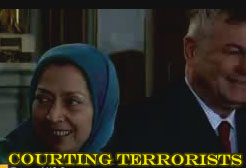
The US congress members called for the immediate transfer of the MKO terrorists to Camp Ashraf in Iraq’s Diyala Province. The American legislators even threatened to declare Iraq’s Prime Minister Nouri al-Maleki a sponsor of terrorism after an attack on the terrorist members inside another camp in Iraq.
The mortar attack, which happened earlier this month on Camp Liberty near Baghdad, left at least seven members of the terrorist group dead and more than 50 others wounded.
Members of the MKO terrorist group are being transferred from Camp New Iraq, formerly known as Camp Ashraf, which is situated about 120 kilometers (74 miles) west of the border with Iran, to Camp Liberty near Baghdad Airport.
The MKO is listed as a terrorist organization by much of the international community.
On September 28, the terrorist group was taken off the US State Department’s terrorism blacklist a week after US Secretary of State Hillary Clinton sent the US Congress a classified memo about the move.
The MKO fled to Iraq in 1986, where it received the support of Iraq’s executed dictator Saddam Hussein, and set up its camp near the Iranian border.
The MKO has carried out numerous acts of violence against Iranian civilians and government officials.
The decision of the US State Department to remove the Mujahedin Khalq Organization (MKO) from its list of foreign terrorist organizations created an atmosphere of ambivalence particularly in 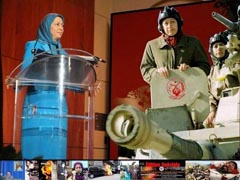 the West. Public opinion in the West may face contradictory ideas regarding the decision. On the one hand well-paid supporters of the group view the decision as “correct” but “overdue” ,on the other hand, there are experts and journalists and of course Iranians who view it as an evidence of American double standards and hypocrisy.
Regardless what people –pros or cons –may think of the apparent reality: a group is no more considered “terrorist”, the true substance of the MKO as well as many other cult-like groups does not change. In the world of “legal” or “illegal”, “bad” or “good”, “terrorist” and “freedom fighters”, conventions never tell the truth.
Even in the Press Release of the spokesperson’s office of the DOS, you may see the ambivalence in the published decision:”With today’s actions, the Department does not overlook or forget the MEK’s past acts of terrorism, including its involvement in the listing of US citizens and an attack on US soil in 1992. The Department also has serious concerns about the MEK as an organization, particularly with regard to allegations of abuse committed against its own members.”[1]
While the DOS says”Yes” to the MKO, there is a “No” in the background informing its decision. It seems that the US government is not able to fully commit to that “Yes”. This was also implied in comments of a US official who spoke to Barbara Slavin and Laura Rozen of Al-Monitor on condition of anonymity. They wrote in their piece titled” Iran Group MEK’s Delisting Does not Signal US Approval, ”The US official added that taking the MEK off the terrorist list would not connote US government approval. Responsible for the deaths of half a dozen Americans in the 1970’s and for killing hundreds of Iranians after 1979, the MEK is widely regarded as a cult that demands that its followers stay celibate and obey the commands of Mariam Rajavi, the wife of MEK leader Massoud Rajavi, whose whereabouts are unknown.”[2]
Another US official assured Elise Labott who first published the news of delisting on CNN, that US government is concerned about the group’s bad reputation. “While they represent themselves as a legitimate democratic group worthy of support, there is universal belief in the administration that they are a cult”, the official told CNN.”A delisting is a sign of support or amnesia on our part as to what they have done and it does not mean we have suddenly changed our mind about their current behavior. We don’t forget who they were and we don’t think they are now who they claim to be, which is alternative to the current regime.”[3]
One of the authors of the famous RAND report on the MKO, published in 2009, is Christina Wilkie who is also a Huffington Post correspondent. She has a different analysis on the group delisting. As she has widely investigated on the MKO and as she says she’s been reporting on the group for the Huffington Post, she has been threatened by members of the group and her email was hacked by them. However, she believes that the DOS’s “decision was a good one.” She makes it clear that she believes the MKO is a “militant cult of personality” and she doesn’t trust them but Clinton delisted them because she “understands that they’re a dangerous cult, and that all the other potential outcomes of the 30-year standoff between the MEK and the outside world would have likely been much, much worse.”[4]
Wilkie thinks that on top the list of risky MKO functions was mass suicide and to stop such a tragedy,” Clinton only had one major bargaining chip. In exchange for leaving Camp Ashraf, the secretary agreed to delist the group from the U.S. list of Foreign Terrorist Organizations,” this way she saved the lives of “ thousands of brainwashed MEK foot soldiers”.[5]
At least Wilkie admitts that the State Department officials feel some ambivalence about the terrorist substance of the cult of Rajavi: ”But the question facing secretary Clinton wasn’t whether the MEK could be trusted,” she writes. “Or even if the MEK’s members were still dangerous. Privately, US officials don’t pretend to know the answer to either one.”[6]
It seems that no pretext can ultimately enclose the dual approach of the US administration. In a Mint Press article, the author Martin Michaels describes the terror listing or delisting of Foreign Terrorist Organization as paradoxical. He refers to US administration’s decision to classify Wikileaks as the enemy of the State comparing the decision to that of delisting the MKO. He concludes, “The Selective branding of Wikileaks, the MEK or other organizations align with the interests of the US while the MEK may share some of the same goals, namely, regime change in Iran, the labeling indicates an underlying desire to justify alliances in the name of security.”[7]
By Mazda Parsi
References:
[1] US Department of State, Delisting of the Mujahedin-e-Khalq, Office of Spokesperson, September 28, 2012
[2]Slavin, Barbara & Rozen, Laura, Iran Group MEK’s Delisting Doesn’t Signal US Approval, Al Monitor, Septemeber2, 2012
[3] Labott, Elise, Clinton to remove Iranian exile group from terror list, CNN, September 21, 2012
[4]Wilkie, Christina, MEK is Bad News, But Delisting Them Was A Good Decision, the Huffington Post, October 1, 2012
[5]ibid
[6]ibid
[7]Michaels, Martin, Wikileaks And The MEK: The Paradoxical Labeling Of Foreign Terrorist Organizations, Mint Press News, October 1, 2012
Department of State Public Notice 8050 dated September 21, 2012, reads thus:
In the matter of the designation of Mujahadin-e Khalq, also known as MEK, also known as Mujahadin-e Khalq Organization, also known as MKO, also known as Muslim Iranian Students’ Society, also known as National Council of Resistance, also known as NCR, also known as Organization of the People’s Holy Warriors of Iran, also known as the National Liberation Army of Iran, also known as NLA, also known as National Council of Resistance of Iran, also known as NCRI, also known as Sazeman-e Mujahadin-e Khalq-e Iran, as a Specially Designated Global Terrorist Pursuant to Section 1[b] of Executive Order 13224, as amended. Acting under the authority of Section 1[b] of Executive Order 13224 of September 23, 2001, as amended ]"the Order’] I hereby revoke the designation of the entity known as the Mujahadin-e Khalq, and its aliases, as a Specially Designated Global Terrorist pursuant to Section 1[b] of the Order. This action takes effect September 28, 2012.
Hillary Rodham Clinton,Secretary of State
With this stroke of the pen, as it were, the United States removed from its global terrorist list an  organization—Mujahedin-e Khalq [MEK]—that had been listed since 1997. A shadowy outfit, MEK’s delisting was the result of a full-court press by a bipartisan group of policy influentials, including General Hugh Shelton, former chairman of the joint Chiefs of Staff; Lee Hamilton, former congressman from Indiana; Bill Richardson, former governor of New Mexico; General Wesley Clark, former supreme commander of NATO; and Louis Freeh and Michael
 Hayden, former directors of the FBI and CIA, respectively.
In a speech at a conference in February 2011, Governor Richardson urged that MEK should be removed from the terrorist list : "This is a movement that doesn’t want any money. This is a movement that doesn’t want weapons," Richardson declared. "This is a movement that just wants to be allowed to roam, to do your democratic thing." Equally opaquely, General Shelton said at the same event: "When you look at what the MEK stands for, when they are antinuclear, separation of church and state, individual rights, MEK is obviously the way Iran needs to go."
On one level, the ostensible reason for the United States’ delisting is that the Iraq-based MEK is a force in exile dedicated to removing the current regime in Tehran. As General Shelton added, "By placing the MEK on the FTO [Foreign Terrorist Organizations] list we have weakened the support of the best organized internal resistance group to the most terrorist-oriented anti-Western world, anti-democratic regime in the region." In the zero-sum game of U.S.-Iran relations, there appears to be, then, a certain logic to the move. It is illuminating, however, to take a closer look at this movement, through the eyes of some individuals lesser known than the heavyweight list that supports their cause, but who might just be in a position to know more about it. These would include Ray McGovern, an ex-CIA operative, who said of the MEK: "Why the U.S. cooperates with organizations like the Mujahedin, I think, is because that they are local, and because they are ready to work for us. Previously, we considered them a terrorist organization. And they exactly are. But they are now our terrorists and we now don’t hesitate to send them into Iran….for the usual secret service activities: attacking sensors, in order to supervise the Iranian nuclear program, mark targets for air attacks, and perhaps establishing secret camps to control the military locations in Iran. And also a little sabotage."
Or, from Karen Kwiatkowski, formerly with the Department of Defense: "MEK is ready to do things over which we would be ashamed, and over which we try to keep silent. But for such tasks we’ll use them." (For both these quotes, see "US Government’s Secret Plans for Iran," by Markus Schmidt, John Goetz, WDR TV, Germany, February 3, 2005).
And what exactly are these "tasks"? According to the State Department’s original statement designating MEK as a terrorist organization (in 1997, when the Clinton administration was trying to engage Iran), MEK instigated a bombing campaign, including an attack against the head office of the Islamic Republic Party and the Prime Minister’s office, which killed some 70 high-ranking Iranian officials, including Chief Justice Ayatollah Mohammad Beheshti, President Mohammad-Ali Rajaei, and Prime Minister Mohammad-Javad Bahonar. In addition, MEK assassinations range in date and targets from U.S. military personnel and civilians in the 1970s (hence the original terrorist listing) to, almost certainly, the killing of at least five leading Iranian nuclear scientists in recent months.
Complementing the lethal violence of the MEK is the organization’s bizarre internal dynamic. Elizabeth Rubin of The New York Times visited its Camp Ashraf headquarters in Iraq in 2003, and, in the course of the drumbeat of support for de-listing, posted an article in the Times on August 13, 2011, "An Iranian Cult and its American Friends." Herein she describes a—"cult" is the only appropriate term—headed by a woman named Maryam Rajavi and her husband, Massoud. What she relates is eerily reminiscent of the doomed Jim Jones cult in Guyana in the 1970s—"a fictional world of female worker bees…staring ahead as if they were working at a factory in Maoist China….Friendships and all emotional relationships are forbidden. From the time they are toddlers, boys and girls are not allowed to speak to each other. Each day at Camp Ashraf you had to report your dreams and thoughts….After my visit, I met and spoke to men and women who had escaped from the group’s clutches. Many had to be reprogrammed. They recounted how people were locked up if they disagreed with the leadership or tried to escape; some were even killed."
So far, this is only a Jim Jones situation—which is bad enough—in that the tragedy affected only the cult’s members. But, as Rubin also reports:
During the Iran-Iraq war in the 1980s, the group served as Saddam Hussein’s own private militia opposing the theocratic government in Tehran. For two decades, he gave the group money, weapons, jeeps and military bases along the border with Iran. In return, the Rajavis pledged their fealty.
In 1991, when Mr. Hussein crushed a Shiite uprising in the south and attempted to carry out a genocide against the Kurds in the north, the Rajavis and their army joined his forces in mowing down fleeing Kurds. Ms. Rajavi told her disciples ‘Take the Kurds under your tanks, and save your bullets for the Iranian Revolutionary Guards.’ Many followers escaped in disgust.
Rubin concludes: "MEK is not only irrelevant to the cause of Iran’s democratic activists, but a totalitarian cult that will come back to haunt us."
All of which begs the pressing question: Why the policy reversal? And why now? There are at least three reasons, from the pragmatic to the venal. First, MEK’s presence in Iraq has been a growing source of tension between the host country’s Shia government and the United States. As a 2009 Rand Corporation report ("The Mujahedin-e Khalq in Iraq: A Policy Conundrum") says:
From the early weeks of Operation Iraqi Freedom [OIF] until January 2009, coalition forces detained and provided security for members of the MEK, an exiled Iranian dissident cult group living in Iraq. From the outset of OIF, the MEK was designate d a hostile force, largely because of its history of cooperation with Saddam Hussein’s military in the Iran-Iraq war and its alleged involvement in his suppression of the Shia and Kurdish uprisings that followed the Gulf War of 1991.
The Rand report goes on:
The coalition’s decision to provide security for a foreign terrorist organization was very controversial because it placed the United States in the position of protecting a group that it had labeled a terrorist organization. Among many resulting complications, this policy conundrum has made the United States vulnerable to charges of hypocrisy in the war on terrorism.
The Nour Al- Maliki government in Iraq, therefore, wanted the MEK out; but only by offering the prospect of de-listing could the Obama administration persuade its rogue protectee to leave Ashraf peacefully, as it has now done, to be processed for resettlement by the UN High Commissioner for Refugees.
Second, the dance with the MEK is a commentary on our lack of engagement with Iran, despite early promises for such by President Obama. According to a blog posting of September 24, 2012, by Leila Kashefi, a Washington-based Iranian-American human rights activist: "It has been incredible to watch members of a designated terror group walk the halls of Congressional office buildings, mingling with Hill staffers and representatives. ‘The only Iranians we see are the MEK’, said one staffer."
Third—and this is the least salubrious factor in the de-listing—despite General Shelton’s protestations to the contrary, the MEK both wants and gets money, and uses it strategically. How exactly the group receives its support is a murky, perhaps impenetrable question. A report by the UK daily, The Guardian ("Iranian exiles, DC lobbyists and the campaign to delist the MEK," September 21 2012) attributes this to "a formidable fundraising operation and campaign to transform the MEK’s image led by more than 20 Iranian-American organizations across the US. These groups and their leaders have spent millions of dollars on donations to members of Congress, paying Washington lobby groups and hiring influential politicians and officials, including two former CIA directors as speakers." As the Financial Times summed up in a recent editorial (Mujahedin mistake," September 25, 2012) "MEK has found the best friends money can buy". (As a footnote, it goes without saying that neither of these press organs is typically amicably disposed toward the Iranian regime.)
Others have been skeptical about the role of expatriate groups—citing their characteristic frugality! Another, perhaps fanciful, explanation has been the largesse of Saddam Hussein toward MEK in the 1990s, and shrewd stewardship of his funding. Or perhaps the multiple aliases—self describing as "freedom fighters" or "democracy" activists—have diversified the funding options. Whatever the nature of the money trail, according to the Guardian report, "Several prominent former officials have acknowledged being paid significant amounts of money to speak about the MEK. The former Pennsylvania governor, Ed Rendell, has accepted more than $150,000 in speaking fees at events in support of unbanning the MEK." (Others who have accepted fees include Howard Dean, former governor of Vermont, and Rudy Giuliani, former mayor of New York City. See, for example, "Iranian group’s big-money push to get off US terrorist list," Christian Science Monitor, August 8, 2011.) Nor do these friends in court appear overly concerned with a process of background checking: For Representative Dana Rohrabacher, "If they want to contribute to me because I believe strongly in human rights and stand up in cases like this, that’s fine. I don’t check their credentials." [Guardian]
Finally, what are the consequences of the step to delist the MEK? In practical terms, the liberation will enable the MEK to lobby the U.S. Congress for support in the same way as the Iraq Liberation Act of 1998 allowed the Iraqi National Congress led by the exiled Ahmad Chalabi to do so—a monumental policy error that led to the invasion of Iraq in 2003. In this regard, history, as we know all too well, has a habit of repeating itself. Some 30-odd years ago, we saw the mujahedin of another state as "allies" in a cosmic struggle. Welcome to the Afghanistan of the Taliban, three decades on. It is the old adage "the enemy of my enemy is my friend" taken to absurd extreme.
Lest there are doubts about the adverse ethical as well as policy consequences, consider the response from the National Iranian American Council [NAIC], an organization opposed to the current regime, dated September 21, 2012:
The NAIC deplores the decision to remove the MEK from the U.S. list of foreign terrorist organizations. This decision opens the door for Congressional funding of the MEK to conduct terrorist attacks in Iran, makes war with Iran far more likely, and will seriously damage Iran’s peaceful pro-democracy movement as well as America’s standing among ordinary Iranians. The biggest winner today is the Iranian regime, which has claimed for a long time that the U.S. is out to destroy Iran and is the enemy of the Iranian people.
All in all, a sad saga—one of taking the moral low ground in pursuit of dubious policy objectives. Let us give the last word to the Financial Timeseditorial, which sums it up rather well:
"The US government’s decision to take Mujahedin-e Khalq, the exiled Iranian organization, off its list of terrorist groups is a vivid example of the influence of money and lobbying in Washington. At worst it highlights the analytical fog that clouds many US policy heavyweights’ view of Iran."
By David C. Speedie , Carnegie Council
In a particularly blatant display of U.S. double standards, Secretary of State Hillary Clinton 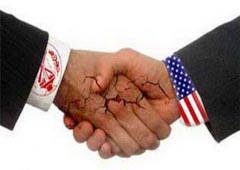 announced that the Mojahedin Khalq (People’s Mojahedin), known also by the acronyms MKO, MEK, and PMOI (People’s Mojahedin Organization of Iran), and dedicated to the violent overthrow of the legitimate government of the Islamic Republic of Iran, had been removed from the United States’ list of designated terrorist organizations as of September 28, 2012.
By removing the MKO from the list, the terrorist organization can now legally seek funding from the U.S. government, some of whose officials have already received hundreds of thousands of dollars in fees for speaking on its behalf. In addition, U.S. companies can now engage in business transactions directly with the MKO without the necessity of obtaining a license.
The MKO is a cultish, Marxist-influenced radical terrorist organization with roots in the Freedom Movement of Iran dating back to 1965 that was revitalized in the 1970s by a group of young intelligentsia who had been influenced by foreign ideas about Islam, politics, and government. The MKO began its armed struggle against the U.S.-supported shah in 1971 and continued its efforts by joining the Islamic Revolution of Iran. The terrorist group assassinated at least six U.S. citizens, participated in the seizure of the U.S. embassy in Tehran, and opposed the release of the U.S. hostages, urging their execution instead. Later on, however, the MKO withdrew its support for the revolution’s leadership and directly opposed the government of the fledgling Islamic Republic.
In the aftermath of the victory of the Islamic Revolution, Ayatollah Khomeini submitted the proposed constitution for an Islamic government to a public referendum on December 2, 1979. The MKO rejected the concept of velayat-e faqih (rule of the supreme jurisprudent), abstained from the referendum, and began to voice their opposing views by carrying out increasingly violent acts, including assassinations and bombing attacks on government leaders.
On June 28 1981, the MKO began a series of vicious attacks by bombing the headquarters of the Islamic Republic Party during a meeting of party leaders, resulting in 74 fatalities. This was followed by other terrorist attacks resulting in deaths and destruction at a time when the Islamic Republic was engaged in its Sacred Defense against Saddam Hussein’s regime (the Iran-Iraq war) from 1980 to 1988.
Eventually forced into exile because of its terrorist activities within Iran, the MKO was given asylum and financial support in Iraq by Saddam from 1986 until the time his regime was toppled by the U.S. invasion in 2003. On July 26, 1988, after the UN-brokered ceasefire was accepted, a 7,000-man assault force from the MKO, armed by Saddam, invaded and attacked Iran, but was forced to retreat back into Iraq three days later. According to the U.S. State Department, the MKO aided Saddam’s Republican Guard in suppressing the 1991 Shia uprising in Iraq.
Since November 4, 1979, the MKO has been responsible for over 70 acts of terrorism within Iran, which have claimed the lives of over 12,000 Iranians over the past three decades. Other humanitarian organizations place the figure of Iranian victims of terror even higher, while the MKO itself claims that it has inflicted over 40,000 casualties within Iran.
The U.S. State Department, acknowledging the terrorist group’s grizzly record, stated “the Department does not overlook or forget the MKO’s past acts of terrorism, including its involvement in the killing of U.S. citizens in Iran in the 1970s and an attack on U.S. soil in 1992.” According to news sources, the MKO is responsible for carrying out the assassinations of leading Iranian scientists and when asked about this by a BBC correspondent, a senior State Department official responded, “The United States government has not claimed that the MKO was involved in the assassination of scientists in Iran.”
The official added, “We believe that terrorism is terrorism no matter what country on earth it may be practiced in or against any party that it may be practiced against. So we do not distinguish between actions in or against Iran or in or against any other country.” This statement is especially breathtaking, since the MKO is listed in the University of Maryland’s Global Terrorism Database as one of the organizations responsible for the seizure of the U.S. embassy in Tehran on November 4, 1979. In other words, while continuing to hold the Iranian government responsible for the U.S. embassy hostage crisis, the U.S. government has effectively pardoned one of the actual perpetrators by removing its name from the terrorist list!
So why has this obviously irrational delisting of the MKO taken place? Just as the Afghan mujahedin were used in a covert U.S. war to overthrow the Soviet-aligned government in Afghanistan, the MKO is being used in conjunction with Mossad to fight a covert war against the government of the Islamic Republic of Iran. And the U.S. trained members of the MKO at the U.S. Department of Energy’s Nevada Security Site under the auspices of the Joint Special Operations Command between 2005 and 2008. According to an unnamed source, as a result of the Nevada JSOC training, “MKO now has a capacity for efficient operations that it never had before.”
It appears that as long as the terrorists commit their abominable acts in accordance with Washington’s policy goals, they are not treated as terrorists but instead as allies, and even while they are still officially listed as terrorists by the State Department. As arch-Zionist Alan Dershowitz would undoubtedly agree, the MKO may still be terrorists, but they are now the United States’ terrorists. No doubt, deceased Texas Congressman Charlie Wilson, the mastermind of Operation Cyclone, would agree as well.
Yuram Abdullah Weiler ,
The return of People’s Mujahedin, unpopular opponents in Iran
Washington withdrew the People’s Mojahedin Organization of Iran led by Maryam Rajavi, from  their list of "terrorist". A decision denounced by Tehran, which required collaboration between the group and Washington.
"Old forefronts of the opposition against the Shah, but also the Islamic Republic of ayatollah Khomeini, the People’s Mojahedin Organization of Iran (PMOI) was listed in 1997 as terrorist organization by the United States. Since the Iranian opposition group has renounced violence long time ago, Washington finally decided on September 28 to remove them from the list. But according to Thierry Coville, Iran’s researcher at the Institute of International and Strategic Relations (IRIS), the overdue recognition is futile, because the organization suffers its image within its own country.
The opposition has lost much of its aura in Iran. "The People’s Mojahedin are opponents in exile and have lost all legitimacy in Iran since the episode of the war with Iraq, where they conducted operations against the Iranian army," explains Thierry Coville. The "Iranian public opinion far from considering them as opponents see them as traitors. They no longer enjoy any popularity among the Iranians, whether in the country or among the diasporas," he insists.
Founded in 1965 in opposition to the Shah, PMOI, with obedience to Marxism, conducted urban guerrilla actions to undermine the regime. After the 1979 Islamic revolution and the advent of ayatollah Khomeini, the organization becomes the most aggressive opposition to the Islamic Republic of Iran. In 1981, Massoud Rajavi, leader of mujahedin, founded with other opponents, the National Council of Resistance of Iran (NCRI), which reflected the forces opposed to the dictatorship of the Shah and ayatollah Khomeini’s government.
During the Iran / Iraq war (1980-1988), the Mujahedin settled in Iraq where they create the National Liberation Army of Iran (NLA) in 1986 and launched operations against their country. In 1988, Ayatollah Khomeini issued a fatwa ordering the execution of members of the organization. Based in France, PMOI is directed by Maryam Rajavi, the wife of Massoud Rajavi.
In announcing the news of his removal from the list of terrorist organizations, the group, which is headquartered in the Auvers-sur-Oise in suburb of Paris, in a statement hailed a "correct decision".
"Mrs. Maryam Rajavi, President-elect of the National Council of Resistance for the period of the transfer of sovereignty to the Iranian people, welcomed" the decision of the U.S. Secretary of State Hillary Clinton, "the statement said." we hope to better introduce ourselves and our goals to international community and the American people. "
Lobbying and working with American Secret Service
According to Thierry Coville, several factors explain the change in U.S. position. Tensions between the U.S. and Iran over its nuclear program are no strangers. "The fact that the United States declares the Mujahedin accessible now, is not trivial at a time when Washington and Israel raise Iran as the greatest enemy in the planet," noted the researcher.
In addition, it has been long time that PMOI seeks to improve its image. Designated in 1997 as a "terrorist" organization in the United States, it has, for several years, renounced violence and actively collaborated with the U.S. Secret Service.
"The Mujahedin have worked effectively with the U.S. Secret Service in providing information gleaned from their contacts in the country on the Iranian nuclear program, but still on the Iranian aid to Bashar al-Assad", explains the researcher.
Thierry Coville also noted that the decision of the U.S. administration is the result of a genuine communication by the Iranian opposition organization. "The Mujahedin have been lobbying and in a less conventional way: they paid services responsible for American security to testify in their favor. Rudolph Giuliani, the former mayor of New York, for example, who was present at the last Congress in Paris, was paid to speak at the forum, "reveals Thierry Coville.
The decision of the U.S. State Department to remove the PMOI from the list of terrorist organizations finally coincide with the evacuation ,nearly complete and demanded by the UN and the United States, of Camp Ashraf, North of Baghdad, where the Mujahedin had occupied for years.
France24 – Translated By Nejat Society
The recent announcement by the United States Department of State about removing the  notorious Mujahedin-e Khalq (MeK) Organization from its blacklist of terrorist organizations on September 28, 2012, has been followed by many analytical accounts. They ranged from many media analyses provided by the Western and Iranian experts who were opposed to the decision, to admiring accounts by former American politicians. The proponents of the move among former US politicians were mostly those whose palms had been greased by the MeK through accepting hefty financial contributions from the organization. They had, therefore, organized extensive campaigns and lobbies across the United States in order to take the name of the organization out of the list of terrorist organizations.
Iran
This article does not actually mean to put renewed emphasis on this grave mistake which has been committed by the US government. It is already too late and the United States has provided the group with considerable maneuvering room. (A secondary point here: given the behavior of the Canadian Prime Minister Stephen Harper and its government in the past years, especially in the past few months, it is almost certain that Ottawa will soon remove the MeK from its list of terrorist organizations in order not to lag behind the United States and the European countries in this regard!)
This paper only means to remind Western politicians of a few characteristics of this terrorist organization as defined by firsthand Western sources. Let’s hope that this would help the Americans to realize that delisting the MeK is not just a simple delisting of an organization from the long list of 52 organizations designated as terrorist entities by the US Department of State. This delisting, however, will have consequences and implications which may prove to be quite different from what they may seem at a first glance.
1. The issue of weird and cult-like conduct of the leaders of this organization and their bizarre treatment of other members has been acknowledged by many Western sources. A special case was a report released by RAND (Research and Development) Corporation in 2009, entitled “The Mujahedin-e Khalq in Iraq: A Policy Conundrum,” (1) in which a special part had been dedicated to “Cultic Characteristics of the MeK.” Under that title, the report says, “… [MeK’s] subsequent exile undermined its optimism and openness. In France, Masoud Rajavi dramatically changed the nature of the organization. In 1985, he announced that Maryam Azodanlu, the wife of his close associate Mehdi Abrishamchi and the younger sister of a senior MeK member, would assume the position of MeK co-leader. Rajavi divorced his second wife, the daughter of former Iranian president, Abol-Hasan Banisadr, Rajavi’s ally, and announced that Maryam would divorce her husband and marry him. These actions would advance a new “ideological revolution.”
The Rajavis claimed that their new revolution was meant to highlight the equality of women, an idea that the IRI [Islamic Republic of Iran] found threatening. Although the MeK did promote women to leadership positions, which constituted a reversal of tradition in Iranian society, the marriage and the subsequent aggrandizement of Masoud Rajavi’s leadership role marked the beginning of an organizational transformation into a cult of personality. Initial changes included increased mandated study, enforced communal living arrangements, and imposed supervision of the group’s membership in exile throughout Europe.”
Elsewhere in the same document, it says, “After the MeK moved to Iraq in 1986, the Rajavis created the NLA [National Liberation Army], which included nearly the entire MeK contingent in Iraq, and they used its militaristic structure to consolidate their control.
Following the failure of Operation Eternal Light, the Rajavis initiated a series of policy changes that continued the transformation of the increasingly insular organization into a cult. While rarely admitting total failure, Rajavi implied in his speeches that the operation had not achieved its goals due to insufficient devotion to the overthrow of the IRI among the MeK rank and file, who were instead distracted by sexual interests as a result of their coeducational housing. To enforce a new “military” discipline, rank-and-file members were instructed not just to move into gender-segregated housing but also to divorce their spouses, maintain complete celibacy, and even cut off communication with friends and family, both within and beyond MeK compounds. Love for the Rajavis was to replace love for spouses and family. In addition, the Rajavis used funding provided by Saddam to construct self-sufficient camps that included schools, medical clinics, training centers, and prisons (often called “reeducation centers”) so that the population had little need for contact with the society beyond its walls.”
Three years after the RAND report was released, that behavior still continues within the ranks of the organization. Many examples of it can be found in the weblogs run by ex-members who have succeeded to escape the clutches of this organization. The authors of the RAND report have also noted in the conclusion part of their report that, “MeK leaders and supporters … allege that former MeK members and critics of the MeK are either Iranian agents or their dupes. However, interviews with US military and civilian officials, information voluntarily furnished by former MeK members at the ARC, and visits to Camp Ashraf suggest that these denials are not credible.”
2. The MeK is also no favorite with major human rights organizations. A great number of documents on frequent instances of human rights violations within the ranks of this cultic organization can be found here: Human Rights Watch, No Exit: Human Rights Abuses inside the MKO Camps, New York, May 2005.
3. The United States, put the MeK, or as better known in Iran as ‘Monafeqin (hypocrites)’, on its list of terrorist organizations in 1997 and delisted them in 2012. The Council of Europe also listed the MeK as a terrorist organization in 2001 and delisted it in 2009. Britain, likewise, put the MeK on its terror list in 2001 and delisted it in 2008. Such periods of being “listed” and “delisted” have been seldom repeated for any other terrorist organization. Many such organizations have stayed on the terrors lists of the United States, the UK, or the European Union for many long years. It would be very ridiculous to assume that this development followed a decision by members of this group to really give up terrorism, regret their past deeds and try to go for more democratic approaches. Therefore no other explanation for this measure may occur to an analyst, except for the direct role of political decisions and expediencies, topped by the decision to use the MeK as a means of exerting pressure on Iran. The independent observers have, as such, considered this issue as a proof to the fact that the United States’ judiciary is not a truly independent power.
4. Last year, the UN special rapporteur on human rights for Iran, Ahmed Shaheed, submitted his first report to the UN Human Rights Council in which had had pointed to 17,000 names given to him by an Iranian nongovernmental organization in writing as the names of those killed in terrorist operations by the MeK. The Iranian nation will never forget two facts about this group. The first fact is countless cases of blind assassinations carried out by MeK members in early post-revolution years which were mostly carried out by members of this group in desolate streets and places and targeted people who were only suspected of being connected in some way to the nascent establishment of the Islamic Republic. They included many shoemakers, workers, bakers, teachers and civil servants. The second fact is their unbridled cooperation with the former Iraqi dictator Saddam Hussein during his imposed war against Iran. Without a doubt, it will be impossible for the Iranian nation, regardless of their political tendencies for or against the Islamic establishment, to imagine that the United States does not consider this group as a terrorist group anymore.
5. From 2003 onward and after this terrorist group lost its support from Saddam, its members lived in limbo at Camp Ashraf. The internal cult-like rules of the organization considered escaping to Iran by its members as a great treachery which was punishable by death. However, since 2005, many of them have returned to Iran voluntarily and through mediation of the International Committee of the Red Cross (ICRC). Perhaps, removing the MeK from the US Department of State’s list of terrorist organizations will make it possible for its members to interact more freely with the ICRC, or return to their families in Iran with more ease. In that case and if the MeK actually decided to stop its overt activities as well as covert terrorist operations against Iran and accept a more democratic structure in order not to be listed as a terrorist organization again, it would perhaps die in a few years. The reason is that the MeK owes its identity to its strange, clichéd, cultic, and inflexible rules and any kind of compromise in that regard will totally change its identity. There is a Persian proverb which says that “at times a remedy works just the opposite of what it is intended to do.”
By Mahmoud Reza Golshanpazhooh Executive Editor of Iran Review , Eurasia Review
Notes:
(1) http://www.rand.org/pubs/monographs/MG871.html
The French diplomatic genius Charles Maurice de Talleyrand once said: "It was worse than a crime; it was a mistake." This is perhaps the best way to describe the US State Department’s  recent decision to take the Mujahadeen-e-Khalq (MEK) off its notorious list of 52 foreign terrorist organizations. It was yet another setback in the negotiations between Iran and the West on the former’s nuclear program.
It is one of those cynical moves that will only exacerbate an already unfavorable diplomatic atmosphere, suffering from a dearth of goodwill and mutual trust. Iran and the US are already stuck in a dangerous game of chicken: Washington is pressing its advantage by increasingly tightening the noose around Iran’s economy, while Tehran is relentlessly pushing the boundaries of its nuclear-enrichment capabilities toward a fait accompli. Both sides are in essence locked in a precarious form of brinkmanship, bringing the world closer to a devastating confrontation. The Persian Gulf has been witnessing increased military tensions in recent months, with both the US and Iran fortifying their military presence and stepping up their military activities.
Meanwhile, sanctions have been biting into Iran’s increasingly vulnerable economy, embittering the Iranian population toward the West, especially the US. Instead of reaching out to the Iranian people, as he repeatedly promised, US President Barack Obama is not only imposing what can be termed in international law as collective punishment, but also accommodating an organization that most Iranians identify with treachery and deceit.
Obviously, the current deadlock could only be broken through sustained and meaningful diplomacy. However, diplomatic efforts have been in a protracted state of hiatus, with the Iranians postponing any major agreement until the US overcomes its cyclical diplomatic handicap – the inability to make a decisive and lasting concession until the conclusion of the presidential election.
The MEK decision is also a classic example of how domestic politics can derail high-stake diplomacy, with the fate of international security hanging in the balance. To secure his re-election bid, President Obama is trying hard to look tough on Iran. But what Obama ignores is how his short-term political calculations may carry long-term risks vis-a-vis the Iranian nuclear issue.
An ambivalent decision
The delisting of the MEK came ahead of a court-ordered October deadline, with US Secretary of State Hillary Rodham Clinton sending a classified document to Congress earlier, detailing her department’s position on the matter.
In 1997, the State Department placed the MEK on its Foreign Terrorist Organizations List for its history of terrorist activities, especially against US citizens in the 1970s. However, ironically, Washington protected the MEK members in Iraq’s Camp Ashraf after toppling Saddam Hussein, the organization’s main patron. Later, when the group came under increasing pressure – ahead of US troop withdrawal – by the Tehran-backed government in Baghdad, Washington opposed any violent crackdown on the camp, while exploring means to transfer MEK members elsewhere. Finally, amid a logistical headache and rising political noise, Washington transferred some of the 3,000-strong MEK militia to Camp Liberty, a former US military base near Baghdad International Airport.
The State Department justified its delisting of the MEK on the grounds that the organization has publicly renounced violence, cooperated in the closure of Camp Ashraf, and has shunned terrorism for more than a decade.
Crucially, the move came in the midst of continuous vilification of Iran as an imminent nuclear threat that should be met with force, a narrative enthusiastically espoused by a wide spectrum ranging from hawkish Republicans in the US Congress to pundits in the mainstream media as well as Israeli Prime Minister Benjamin Netanyahu (and his powerful friends in the Israel lobby in the US). Netanyahu has already called for an explicit "red line" against Iran’s nuclear program, coaxing Washington to place the military option squarely on the table.
However, it is not clear whether Washington actually sees the MEK as a possible asset and a viable ally in the event of direct confrontation with Iran as the window for a diplomatic compromise rapidly narrows. The delisting was perhaps just an effort to annoy Tehran or, more important, to appease the anti-Iran establishment amid the current US presidential election campaign.
For its proponents, the recent move was just a logical extension of a broader Western accommodation of an organization that claims to represent the "legitimate democratic opposition" in Iran. Britain delisted the MEK back in 2008 and the European Union a year later. The group has significant presence in such places as Paris, which hosts its headquarters, and has staged major rallies in the French capital.
Maryam Rajavi, the organization’s Paris-based leader, welcomed the US move by stating: "This has been the correct decision, albeit long overdue, in order to remove a major obstacle in the path of the Iranian people’s efforts for democracy."
Anti-Iran hawks in the US hardly held back their enthusiasm. Republican Representative Dana Rohrabacher expressed his joy with the decision, because he believes "the MEK are Iranians who desire a secular, peaceful and democratic government", while Ted Poe, Republican member of the House of Representatives Foreign Affairs Committee, described the decision as "long overdue".
The decision is a culmination of years of lavish and aggressive lobbying by the MEK – boosted by growing support from rich Iranian-American exiles opposed to the regime in Tehran – directed at (current and former) top US officials and leaders from both the Democratic and Republican camps.
The MEK spent US$1.5 million alone to hire three leading Washington lobby firms. It channeled millions of dollars in "speaking fees" to sympathetic American officials and leaders who graced the MEK’s high-profile events, rallies and campaign gatherings calling for the State Department to delist the organization.
The list of top-notch supporters is astonishing. The former Democratic governor of Pennsylvania, Ed Rendell, has been among the group’s biggest beneficiaries, reportedly receiving up to $150,000 in speaking fees. For the Republican chairwoman of the House Committee on Foreign Affairs, Ileana Ros-Lehtinen, the figure stands at around $20,000. Former presidential candidates from both the Republican and Democratic parties, namely Bill Richardson, Howard Dean and Rudolf Giuliani, have also joined the fray.
With the speaking-engagement fees running in the territory of $15,000-$30,000, former top security/intelligence officials, namely ex-Federal Bureau of Investigation director Louis Freeh, former Central Intelligence Agency directors Porter Goss and James Woolsey, and Obama’s former national security adviser General James Jones, have lent their support too. Even Wesley Clark, a former North Atlantic Treaty Organization commander, is among the elite supporters.
What is clear is that the Obama administration has found it increasingly difficult to ignore an organization that has astutely exploited growing cynicism against Iran, staged numerous rallies and vigils outside the State Department, organized huge sit-ins in congressional hearings, and rallied the support of leading US figures. The administration has finally succumbed to the pressure. But this domestic concession could carry significant costs in the broader multilateral efforts to resolve the Iranian nuclear conundrum.
Potential diplomatic fallout
In the initial years of the Islamic Revolution, its supporters had to contend with the MEK, an organization founded on an eclectic Marxist-Islamist-nationalist ideology, as a major rival in determining the fate of the new Islamic Republic. After all, during the 1979 revolution, the MEK was among the major players within the broad coalition of forces that deposed the Shah. After a series of violent confrontations in the immediate post-revolutionary years, a severely weakened MEK lost whatever measure of popular legitimacy it enjoyed when it sided with Saddam Hussein against Iran during the eight-year "imposed war" (Jang-e-Tahmili).
After its expulsion from Iran, much of its paramilitary capability was concentrated in Iraq, under the generous sponsorship of the Baathist regime. So it practically lost any significant presence within Iran. The MEK is an organization with few to no roots within Iran’s political landscape, so it is not clear how it could play a critical role in changing that landscape and/or Tehran’s nuclear posture to America’s advantage. This is precisely why successive US administrations have instead reached out to reformist elements within Iran, never seeing the MEK as a viable ally.
It must be noted that Washington’s 1997 decision to include the MEK in the list of terrorist organizations was part of its nascent diplomatic outreach to the newly empowered reformist government in Tehran under president Mohammad Khatami. After all, inclusion of groups in the Foreign Terrorist Organization list has been generally arbitrary, simply tuned to America’s short-term strategic interests.
In recent years the Obama administration, at least rhetorically, sided with Iran’s so-called Green Movement – a loose network of forces composed of certain reformist leaders and disenchanted sections of the society – that formed the backbone of post-election protests in 2009. However, there have never been institutionalized channels of communication between Washington and Iran’s leading reformists. So it seems that accommodating the MEK is somehow a desperate effort to build ties with alternative Iranian elements explicitly opposed to the regime.
Yet there may have been even more concrete reasons. Reports suggesting increased intelligence and security cooperation between the MEK on the one hand and Israeli and US agencies on the other in recent years provide the strongest hint behind Washington’s decision to delist the group.
In 2002, an MEK-affiliate group, the National Council of Resistance in Iran, revealed a laptop containing confidential information about Iran’s burgeoning enrichment activities in Natanz and Arak. Since the MEK does not possess an independent and credible intelligence-gathering capacity, it is widely believed that Israeli intelligence agencies were behind the leaked documents. The revelation marked the beginning of a decade of tense nuclear negotiations between Iran and world powers, which precipitated a severe set of sanctions and repeated threats of military intervention against Tehran.
In April this year, leading investigative journalist Seymour Hersh reported that back in 2005, the Nevada-based Joint Special Operations Command trained "Iranians associated with the MEK" as part of the George W Bush administration’s broader "global war on terror". Commentators have also suggested that various Western intelligence agencies, especially Israel’s Mossad, have been working closely with the MEK in a "shadow war" ranging from sabotage against Iran’s key military and oil facilities to the assassination of Iranian nuclear scientists and sabotage of nuclear installations.
Understandably, the Iranian authorities immediately lashed out against Washington’s decision to delist one of its most long-standing nemeses. Iran holds the MEK responsible for at least 12,000 deaths, including high-profile members of the regime in the early years of the revolution. Iranian state television accused the US of double standards by supporting "good terrorists" who serve its interests by working against Iran and its nuclear program. The Iranian Foreign Ministry warned that the decision would put on the US "responsibility for past, present and future terrorist operations by this group", just as Rajavi expressed her hopes that the delisting "will lead to the expansion of anti-regime activities within Iran".
Negotiations on the nuclear program are already in bad shape. Despite repeated overtures by Tehran – from decreasing enrichment activities to the 3-5% territory, to shipping out its stockpile of high-enriched uranium, and opening up of its whole nuclear infrastructure for inspection – to resolve the standoff, the Obama administration has repeatedly refused to meet Iran’s two basic demands: (1) An unequivocal recognition of Iran’s enrichment rights under the Non-Proliferation Treaty (NPT); and (2) reversal of unilateral sanctions battering Iran’s entire economy.
Obama’s accommodation of the MEK will further undermine its nuclear diplomacy toward Iran. It will do nothing but strengthen the hands of Iranian hardliners – at the expense of pro-diplomacy pragmatists – who have called for a withdrawal from the NPT, an increase of enrichment levels to 60%, and preparations for a military confrontation with the West.
Beyond regime insiders, the Obama administration has also alienated ordinary Iranians and opposition elements who detest the MEK and view the latest move as another cynical ploy to retard Iran’s scientific progress and bring the country to its knees.
Richard Javad Heydarian is a Manila-based foreign-affairs analyst. He has reported for or been quoted in The Diplomat, UPI, Foreign Policy, Tehran Times, Russia Today and Foreign Policy In Focus, among others.
By Richard Javad Heydarian
As of last Friday, the Mujahedeen-e-Khalq (MEK), a formerly violent Iranian opposition group once allied with Saddam Hussein, no longer appears on the State Department’s list of "foreign terrorist organizations" (FTOs). The delisting comes after years of lobbying, assisted by prominent political figures, and legal wrangling, culminating in an appeals court ruling ordering Secretary of State Hillary Clinton to act on the MEK’s petition by Monday. Clinton’s decision probably means the MEK’s supporters, who include former Attorney General Michael Mukasey, former New York Mayor Rudy Giuliani, and former Pennsylvania Gov. Ed Rendell, do not need to worry about being charged with providing "material support" to an FTO by helping the group shed that label.
 Theoretically, however, they could still be prosecuted if it can be shown that they "coordinated" their advocacy with the MEK prior to Friday.
Over at Popehat, Los Angeles attorney Ken White, a former federal prosecutor, recalls that in 1999 he helped convict a man "for helping terrorists who now aren’t terrorists." The defendant helped MEK members "secure legal residence in the United States through various forms of fraud, including fraudulent asylum applications." In addition to immigration fraud, his actions qualified as providing material support to an FTO—possibly the first conviction under that provision, White says. Looking back, he is ambivalent about his role in the case, recognizing the political considerations that determine which groups count as FTOs:
The six people the MEK killed in the 1970s are still dead. They were dead when the State Department designated the MEK as a foreign terrorist organization and they have been dead all the years since and they won’t get any less dead when the State Department removes the MEK from its FTO list. The MEK is the organization that once allied with Saddam Hussein; that historical fact hasn’t changed, although its political significance has. No — what has changed is the MEK’s political power and influence and the attitude of our government towards it.
More generally, White says, the MEK’s delisting shows how arbitrary the contours of the War on Terror are:
The scope of the War on Terror — the very identity of the Terror we fight — is a subjective matter in the discretion of the government. The compelling need the government cites to do whatever it wants is itself defined by the government.
The definition of the enemy then determines not only who can be charged with violating the ban on material support but who can be subject to warrantless surveillance, indefinite detention, and summary execution by drone. But don’t worry: The Obama administration is providing all the process it believes is due.
By Jacob Sullum,Reason Magazine
The completely false claim that the MEK represents the legitimate Iranian opposition was one of the principal reasons many of these advocates gave for removing the group from the list of  foreign terrorist organizations.
No one could have ever seen this coming:
Members of Congress and supporters of the People’s Mujahedin of Iran (MEK) are to press the Obama administration to recognise it as the “legitimate opposition” to the Iranian government after the group is removed from the US list of banned terrorist organisations in the coming days.
Of course, this has been what many of the MEK’s American advocates have been calling for all along. The completely false claim that the MEK represents the legitimate Iranian opposition was one of the principal reasons many of these advocates gave for removing the group from the list of foreign terrorist organizations. It’s absurd that any informed person could seriously believe an Islamo-Marxist totalitarian cult represents a legitimate, much less democratic, alternative to the current Iranian regime. This is the falsehood that many of the group’s advocates promote.
The reinvention of the MEK as a “democratic” political organization just demonstrates how meaningless that label can be. It’s a reminder of how willing some Iran hawks are to work with any group, no matter how disreputable, if it shares their hostility to the Iranian government. Anyone who supports aligning the U.S. with this group is admitting that he isn’t interested in a more democratic Iran or the success of the Iranian opposition. Now that the group will be removed from the list, the supporters it has cultivated in Congress and elsewhere will be able to agitate on its behalf much more freely, and its lobbying efforts will presumably increase. The coordinated campaign to remove the MEK from the FTO list was a disgrace, and the sequel promises to be even more obnoxious.
By Daniel Larison
Hillary Clinton announces anti-Tehran group People’s Mujahedeen of Iran is no longer on State Department’s list of terror organizations
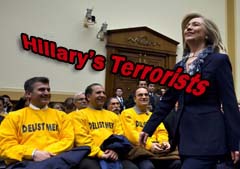
In Washington, it seems, the difference between a terrorist and a freedom fighter is a multimillion-dollar public relations campaign.
Last week, Secretary of State Hillary Clinton announced that the anti-Tehran group People’s Mujahedeen of Iran (MEK) will no longer be designated a terrorist group after having been placed on the American list 15 years ago for killing U.S. servicemen.
The administration’s change of heart comes after the MEK said it renounced violence in 2003 and recently got the backing of a U.S. Federal Court, which said it has seen no evidence the group is still involved in terrorist activities.
But Clinton’s decision, in part a response to the court’s finding, also comes after a multimillion-dollar campaign on behalf of MEK that has seen a long list of former senior officials and current members of Congress paid lavish fees to make speeches or appearances at MEK functions promoting an end to its terrorist status.
Among those who have been paid to speak on behalf of the MEK’s cause are former New York mayor Rudy Giuliani, former U.S. attorney-general Michael Mukasey, former White House chief of staff Andrew Card, and former U.S. home-land security chief Tom Ridge.
Among those from the U.S. military who have put in appearances are former chair-man of the Joint Chiefs Peter Pace, former Supreme Allied Commander in Europe Wesley Clark, and President Barack Obama’s former national security adviser James Jones.
Former Central Intelligence Agency chiefs James Woolsey, Porter Goss and Michael Hayden have also been paid to speak on MEK platforms.
This, along with unresolved questions about whether MEK has indeed renounced violence – and if so, how recently? – raises the spectre that the Obama administration may be so keen to back Iranian groups opposed to the Tehran regime of Supreme Leader Ayatollah Ali Khamenei that it is not looking too carefully at their credentials or records.
Still fresh in Washington memories is the part Ahmed Chalabi played in feeding false or distorted information about his Iraqi homeland to the receptive audience within the administration of President George W. Bush. As the United States found out after the 2003 invasion of Iraq, there weren’t any weapons of mass destruction, and the invading troops were not welcomed as liberators.
It seems unlikely that the Obama administration would fall for the same kind of blarney from the somewhat sinister husband-and-wife team of Massoud and Maryam Rajavi, who, if several U.S. government reports are to be believed, run MEK as a personality cult complete with brainwashing, brutal internal discipline, and the indoctrination of children.
If Obama is not about to be stampeded into war with Iran by Israeli Prime Minister Benjamin Netanyahu – with the aim of stopping the Tehran regime acquiring the ability to make nuclear weapons – he is unlikely to be impressed by the Rajavis.
Indeed, the history and record of the MEK is so tainted that taking it off the list of terrorist groups will likely do the reputation of the Obama administration no good among the main-stream reformist movement in Iran.
MEK was founded in 1965 by a group of university students as a Marxist Muslim opposition to the Shah of Iran.
Its first terrorist attacks were in 1971, and MEK made special targets of Americans, who were instrumental in keeping the Shah in power.
In 1973, U.S. army Col. Louis Lee Hawkins was shot and killed outside his home in Tehran. In 1975, two U.S. air force officers were killed in an attack on their car. And in 1976, three employees of Rockwell Inter-national were also shot and killed.
MEK joined enthusiastically in the 1979 revolution that ousted the Shah and brought the Islamic Republic to power. The group actively sup-ported the takeover of the U.S. embassy after the coup and the keeping of American diplomats as hostages.
But MEK quickly fell out with the new leader, Ayatollah Khomeini, and killed several of his senior officials in bomb attacks.
In 1986, MEK moved its headquarters to Iraq, where it came under the patronage of Saddam Hussein, fighting for him in his war against Iran and playing a lead role in his murderous campaigns against the Iraqi Kurds.
About 3,000 of the remaining MEK members in Iraq are now in a former American camp outside Baghdad awaiting placement in third countries.
MEK’s attempts to rehabilitate its image started in 2002, when it says it gave the U.S. and its allies the first information about Iran’s nuclear development program.
However, New Yorker magazine journalist Seymour Hersh says that the then-head of the United Nations’ nuclear watch-dog, the International Atomic Energy Agency, Mohamed ElBaradei, told him that the information about Iran’s nuclear program came from the Israeli government and was only channelled through MEK. Much of the evidence of MEK’s continued involvement in violence is circumstantial at best, but one persistent story is that the group’s operatives are working for the Israeli intelligence agency Mossad inside Iran.
In particular, there are many claims that the five Iranian nuclear scientists assassinated since 2007 and the destruction of a missile research centre were operations conducted by MEK for Mossad.
By Jonathan Manthorpe