
Judit Neurink was interviewed about her book "Misleide Martelaren" (Misled Martyrs), which covers the 40-year history of the Iranian opposition group known as the Mujahedin Khalq Organization (MEK), Radio Farda reported on 7 November.
Neurink told Radio Farda she got interested in the subject about two years earlier, when MEK members immolated themselves after their leader, Maryam Rajavi, was arrested in France. Neurink asked herself why people would do such a thing, and said "My book tells a story that many don’t know — about brainwashing, about the imprisonment of friends and comrades, about torture, and about persuading people to go to Iran and kill civilians." Neurink said she interviewed MEK members, but experience showed her that this is like listening to a recorded message when the needle is stuck. Neurink described MEK as "dangerous." Radio Farda said Neurink’s book will be translated into English and Persian.
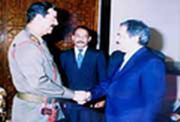 patronage of Saddam Hussein. He gave the group money, weapons, jeeps and military bases along the Iran-Iraq border — a convenient launching ground for its attacks against Iranian government figures. When U.S. forces toppled Saddam’s regime, they were not sure how to handle the army of some 5,000 Mujahedeen fighters, many of them female and all of them fanatically loyal to the Rajavis. The U.S soldiers’ confusion reflected confusion back home. The Mujahedeen has a sophisticated lobbying apparatus, and it has exploited the notion of female soldiers fighting the Islamic clerical rulers in Tehran to garner the support of dozens in Congress. But the group is also on the State Department’s list of foreign terrorist organizations, placed there in 1997 as a goodwill gesture toward Iran’s newly elected reform-minded president, Mohammad Khatami.
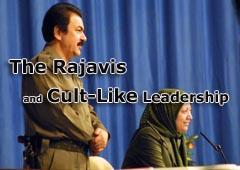 a move most Iranians will never forgive. Then, right after the Iran-Iraq cease-fire in 1988, as if orchestrating the tragic turning point in his own Rajavi Opera, he launched thousands of his warriors on ”Operation Eternal Light” across the border to capture Iranian territory. Two thousand Mujahedeen fighters — many of them the parents, husbands and wives of those who are now in Iraq — were killed by the Revolutionary Guard.