
Dramatic End of the Democratic Cult

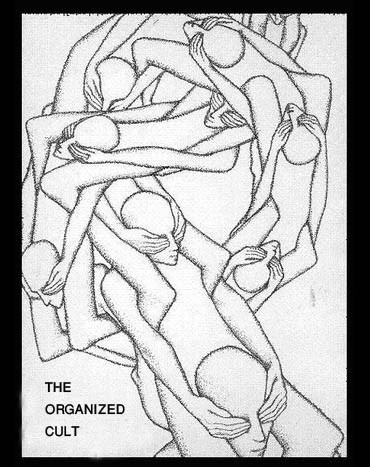
We should bear in mind that all the mottoes of the council and its commissions are to justify the functions of the Mujahedeen. Its members are the old staff of the Mujahedeen sect. SARVE NAZ CHITSAZ, the leader of the women commission, is one of the members of the Mujahedeen sect who tried to settle the forced divorces against the members.
In 21 Khordad 1385, this commission tried to abuse from the plan of the regime in terms of having the veil for the women in the offices. They declared that they had performed the regulations having to do with the veil perfectly.
It is funny for the sect that even a small hole in hosiery of men is against the order, but the women should confess about their sexual desires in front of men. The women should explain their dreams for the leader everyday.
As the detached members who have been in the sect for two decades, we must explain the major discrepancies between the recent view of the commission and the previous function of the Mujahedeen:
1)From 1370, after the fall of the families and forced divorce, the house and the office of men and women were separated completely. The women were settled in desolate places or in castles with tall walls.
2)The Mujahedeen represented a plan that no man and woman allow to sit in front seat of an automobile, even the old one.
3)In 1372, a plan was represented that the women should have a pistol to show their nobility upon the men.
4)Some of the women had a sexual relationship with foreign workers in Ashraf garrison. Doesn’t it show the bad function of the sect about the women?
5)All the marriages were performed according the interests of the sect, which was the organized marriage.
The women commission should find answers to the problems of the women who killed themselves because of forced marriages, or for those whose families were separated from them forcibly.
Finally, we come to this conclusion that the Mujahedeen just wants to continue its parasitic life, so at any period try to use new strategies.
TheBlackFile – 21 June,2006
On 18 June 2003, following Maryam Rajavi’s arrest in France, a number of Mojahedin’s sympathizers, reported 20, committed self-immolations in streets of Paris and other Western cities to obtain her liberation. Commonly believed, these acts of self-burning were organizationally preset acts of dissent dictated to the members who practiced them. The organization, however, insists to hail them as heroic, spontaneous acts done by some sympathizers.
Pay attention that Mojahedin had videotaped all scenes of the self-immolations, implying it is impossible to be in the right place at the right time unless you were prepared and informed beforehand. The acts of self-burnings had to be stopped somewhere, and that justifies Maryam Rajavi’s call from prison on members to refrain from self-immolation. But the call came after two innocent women, Sediqeh Mojaveri and Neda Hassani, died of the burn injuries.
In a Mojahedin’s TV program on the anniversary of the self-immolations, Ali Hassani, Neda Hassani’s brother, described his sister’s self-immolation before the French Embassy in London based on completely videotaped scenes. His words prove the fact that none of these fiery protests had been done deliberately; the innocent practitioners were set on fire to fulfill a decreed mission.
The organization even inside itself had the children who were studying at schools work in ordinary jobs. After a time, in their own relations, they introduced ranks to them.
Children before reaching their teens, most of them being under influence, wore military uniforms and fought together with the Rajavi’s forces against the enemy.
It is essential for the organization to make its supporters adopt the ideals they bore as their own, appoint a target for them, make them stronger and try to protect them against being disconcerted by taking every kind of precaution. In this way it needs to make use of the energy of its supporters at the ultimate level.
However, the organization tries to remove its supporters from their homes by cutting their family bounds because in their opinion family relations alienate the supporters from the organization and fighting.
Consequently, in their opinion, family is a factor which weakens one in fighting. For them, people who leave their wives or husbands and children to join the organization have ideological superiority over the others.
These are presented as strong people. In connection with people who have family loyalty and emotional relations are accepted to make up the weak power.
Because these feelings become permanent in time by means of the family and cause problem in the organization. But the people who labour in the organization in spite of their family relations are respected highly. In this case, the organization carries out the control duty of the individuals in the family and the affairs of the organization are accomplished with the help of them.
People who intend to fight and struggle join the organization by means of communications and several charms and become permanent forces.
But most of the forces are attracted with more complex methods and the targets of the war are appointed to them in the organization. The life styles of the people who join the organization change in many ways.
The organization treats the people who haven’t joined them yet tenderly and emotionally as a result of their experience. But after they join the organization, walls are built all around them and their roads to return are blockaded.
In fact, there are not any ways other than joining the Organization for the individuals. In the organization the members have to betray and torment their wives in order to prove their authority and loyalty on the subject of divorcing.
Also had a similar strategy followed in his prisons. He told the prisoners to kill or torture their warrior friends for their repentance to be admitted.
Did you know Why ‘freedom of thought’ is a sin in the Mojahedin? Why every single member of the Mojahedin is required to write a daily report about every thought which comes to their mind during the day?
With the introduction of the”Second Phase of the Ideological Revolution”in 1989, married couples and children were separated from one another in a bid to divert all personal love and affection towards the Ideological Leaders Massoud and Maryam Rajavi. The Revolution did not stop at that point however. Soon, unmarried people were also expected to ‘divorce’ in their hearts and minds everything to do with the opposite sex. They should not allow themselves to think about the opposite sex at any time during the day even, for that matter, during their sleep and dreams. A sex related dream or, remembering your child or, a passing memory of a girl or boy you knew perhaps as a teenager, were all declared to be signs that a person is”drowning in a world of sexuality”, and that therefore they”needed the Leaders’ help”.
The problem outside of Ashraf Camp was that members would meet and talk
over the phone with people of the opposite sex, see billboard advertisements, and even sometimes watch uncensored television. Inside Ashraf Camp the refectories were separated, men and women would not sit in the same car, and even the petrol station had separate timetables for men and women so that they would not meet. This resulted in a different level of thoughts about the opposite sex.
The Rajavis’ compulsory daily report was introduced thus:”once you write down all these ‘contradictions’ and read them aloud in the meeting at the end of the week, then the collective presence [peer pressure] will shame you sufficiently that you will reduce and will ultimately eliminate these bad thoughts or ‘contradictions’ to the point that your heart and mind will eventually belong solely to the leader.”
Once people were forced to write down their ‘contradictions’, the daily reports began to read along these lines:”I used the petrol pump after sister x, and I felt aroused”, or”I saw two birds together in a tree and I had an erotic thought”, or”when I sat on the chair that sister x has just left, I felt”. The more that time passed, the more ridiculous the reports became. And the more they wrote, the more they had things to write about. It became clear that most members over the years came to the conclusion that the daily report is something they have to do in order to get the leaders off their backs, and that what they actually think and do (when they get the chance) is not really what they should write about. After all, the reports should show”progress”. If not, you will be accused of resisting”Massoud and Maryam’s Ideological Revolution”. And of all other crimes only this is absolutely unforgivable.
Although no one has claimed, and is unlikely to claim, that any individual can ever achieve this totally pure state of mind (Massoud and Maryam Rajavi declared that from the start they did not have this problem, and that is why they are the ideological leaders and that is why they can remain married without corruption), the process intensified year after year to the point that the daily report has evolved into the ‘daily collective meeting’.
These meetings are held on a daily basis under any circumstances, even if there are only two or three people together for any task or mission. In the daily meeting, daily reports have to be read out in turn (except for the head of the meeting who must attend a separate meeting with peers in the hierarchy), and the others have to attack the writer, swear at him or her as hard as they can and in their own words”crack”the person by whatever means. If anyone comes down soft on the target, he or she will be accused of having something to hide inside, and of not taking the side of the Leaders in confronting the outside savage world. These meetings nowadays frequently result in physical fighting and abuse. Those who resist are labeled as agents of the intelligence ministry of Iran, who have no claim to any rights and can be treated according to the will of the Ideological Leaders. (In fact, such ‘traitors’ are ideologically condemned to execution by the Leaders. Actual execution of the order depends on the circumstances, and according to the whim of the Leaders. For instance, sending a ‘traitor’ to Abu Ghraib prison was equivalent to putting into practice the death sentence, since the victims were unlikely to survive there.)
As this psychologically cohesive method combined with other manipulations have been exercised over the years, the behaviour of people in the Mojahedin, including the way they see other nonmember people, the language they use and even in some cases the physical tone of the voice, face and body features and even the day-to-day desires of members have changed. For instance, it is not abnormal any more to see women who have more pronounced body and facial hair growth. The practice of self satisfaction [masturbation – which in Islamic teachings is forbidden] has become something so widespread for both men and women, that it has even been mentioned by Maryam and Massoud Rajavi in the general meeting as a problem which has arisen after banning sex.
The extent of the problem is such that in Ashraf Camp, new regulations for men’s dormitories emphasise among other things that:
– No two men are allowed to stay in the dormitory without the presence of a third man.
– In the case of two people being sick, a third man should be chosen to stay with them.
– People are not allowed to change their clothes in the dormitory except behind a screen.
– Rubbing medicine on the back or chest of a patient should preferably be carried out by an older member and supervised by a third man at all times.
– Taking a shower or bath should only take place at certain times of the day and only according to specific regulations.
And for the people outside Ashraf Camp (in Europe, etc):
– Men are not allowed to report to or talk in private to their women commanders except in the presence of another member, and vice versa.
– Members who need to go online. They should be a minimum of two people and one should ask frequent questions about the other’s need to visit sites or download emails.
– Members who have to go to meetings with politicians, etc. There should be at least one other person present at all time during travel outside the base until return.
There are many other rules and regulations similar to the above which govern the daily minutiae of life in the Mojahedin. It is interesting that now in some cases it is preferred to send a supporter to monitor a member while outside. This is because more and more frequently, two members would plan together to go to a cinema, sex shop, etc and agree not to tell the commanders. Distant supporters are told that because they have come from the Iraqi deserts, such members need their help until they get used to their new environment. It seems that not only have these regulations brought no real relief or for that matter”love of the Ideological Leaders”, instead they have overwhelmed the hearts and minds of members. During recent years, crimes like”rape and related murder and other crimes”against women in Ashraf camp, which had never been seen in the Mojahedin before the Ideological Revolution, have increased to shocking numbers.
The major problem for the Mojahedin are those who have regular contact with supporters as part of their work. Supporters report that after any long visit by a member to their homes or places of work it is usual for them to receive bills for long hours of connection to sex websites. Many supporters now refuse to allow their children into the presence of MKO members and prefer only to meet them in the streets or in the MKO safe houses in Europe. Women members are expected not to concern themselves with the minimum of hygiene and personal grooming. As a result, most of the women members who are no longer as young as before suffer from all sorts of mental and physical disorders, including the above mentioned coarsening of beards and moustaches which is mainly due to hormone imbalance or disorder. Woman are denied treatments or any kind of make up, bleaching or waxing, etc. – except for Maryam Rajavi and the women she chooses to have looking acceptable. While Massoud Rajavi has been dying his hair for the last fifteen years and all of his, and Maryam’s family, have had the most expensive cosmetic dental treatment possible, ordinary members are expected to have no more than a backpack to contain all their belongings; that is, all their clothes, books, mementos etc. These backpacks are regularly checked for forbidden items including any trace of contact with,or pictures of, family or friends. At its inception, the daily report accompanied by follow-up”ideological meetings”served the leaders’ purpose to keep a grip on the members on one hand and on the other hand provided blackmail material for a rainy day in case any member found the courage to try to escape the cult. It is now, however, increasingly working against the Rajavis as they attempt to whitewash their image as heads of an Islamic Marxist terrorist cult who have used their members to attack the interests of the west as and when needed to pursue their own agenda.
Mojahedin members (which includes around 97% of those claiming membership of the NCRI) are indoctrinated in the Rajavis’ anti-imperialist ideology. They are motivated by their promise to destroy world imperialism and replace it with what the Rajavis call”the divine, classless society”. It is with this motivation that they submit to the suffocating strictures imposed on them by the Rajavis. Following the fall of Saddam Hussein, such members cannot reasonably be expected to change their ideological direction without a total re-programming of their world view. The Rajavis know this only too well.
However, an explanation is needed for these members, who are very much needed for activities like the self immolations of June 2003 to protest the arrest of Maryam Rajavi, as they see current Mojahedin behaviour in contradiction to everything they have been taught to believe.
The explanation is that”fooling the Americans and their allies”is a tactic. The ideology has not changed, but the path to”the divine classless society”at this point of time, must pass through this tactic, until we are ready to confront”imperialism and the world devourers”again. Members are praised for their superior understanding, and the leader is worshiped as the members are taught to realise that they could not have passed this phase of the struggle to save humanity if it had not been because of the ideological leader and the introduction of the”ideological revolution”at the very right time.
Dear Mr. Tunne Kelam, MEP from Estonia According to Mojahed Journal No. 775 (Nov. 18, 2005), in “Iran’s Nuclear Case Referral to UN Security Council seminar in European Parliament, you had said that National Council of Resistance is the best alternative and that their demonstration, in which you had participated, was very illuminative for you!!
We inform you that Demonstrations under the name of NCRI are in fact organized by the terrorist group of the MKO (Mojahedin-e Khalq organization), which has no popular support for its cooperation with Saddam Hussein and enjoying his financial, logistical and intelligence assistance. You can verify the accuracy of this by referring to diplomatic and independent sources.
Isn’t it better for you to support the whole opposition instead of concentrating your support on the MKO, which believes in violent activities? We believe that supporting the MKO would cause irreparable damage to your political fame.
In and out of Iran, the MKO is known as a religious sect that has ordered its members not to marry in their lives. Isn’t this clearly depriving human beings from their basic rights? So, how this organization claims to be struggling to establish democracy in Iran while it ignores democratic rights of its own members? This sectarian factor sheds doubt on the claims of this group.
In June 2003, Maryam Rajavi, who was hiding in Paris, was arrested by the order of French Interior Minister. She ordered her members to set themselves on fire [to force the government to free her]. More than 10 people set themselves on fire. Aren’t these brutal acts, which remind of Middle Ages, signs of a religious sect that resorts to political pressure in the soil of Europe?
We believe that your support for the NCRI and participating in its demonstration show that you have not enough information on the Iranian opposition. Awaa Club, formed by former member of the MKO, based in Germany, can give you more information about the past of this organization and its future plans.
November 27, 2005