On a blisteringly hot summer afternoon in 2006, Reza Sadeghi ran into an old friend at the Iraqi headquarters of the Mojahedin-e Khalq, an exiled Iranian militant group better known as the MEK. The two men had not seen each other in over a decade. Sadeghi guided his friend, who had just arrived from Canada, on a stroll through the desert compound known as Camp Ashraf. He was glad to catch up with an old comrade. But he also had a burning question.
To Download the video file click here
Sadeghi had effectively given his life to the MEK, which means “People’s Mujahideen of Iran.” A 26-year veteran of the group, he had not left Camp Ashraf for over a decade. During that time, he’d had no contact with his family or news of them. The MEK leadership had forced him and most of the other cadres living at Camp Ashraf to abandon even their closest relationships. Most painful for Sadeghi were thoughts of his son, Paul, his only child, now 16 years old. Sadeghi hadn’t seen or spoken to Paul since he’d arrived in Iraq.
As Sadeghi and his old friend strolled through the compound, two MEK minders followed at a distance. Sadeghi walked a bit faster, signaling to his friend that he needed to talk out of earshot of their escorts. Turning a corner between buildings, he whispered: “How is Paul?”
Sadeghi had first learned about the MEK in early 1980, shortly after the Iranian Revolution, when the group’s leader, a man named Massoud Rajavi, arrived at Sadeghi’s neighbor’s home in Isfahan for a private memorial. Rajavi had come to eulogize Sadeghi’s best friend’s older brother, who lived on Sadeghi’s street. Sadeghi worshipped the older brother, who had died a few years earlier under mysterious circumstances. The shah had been toppled in the 1979 revolution, and the MEK had played a role. They no longer had to hide. Rajavi was there to tell the family and neighbors that the brother was an MEK martyr who had died protecting Rajavi and the MEK leadership from an internal coup when they were still an underground group. The group’s message about freedom and democracy resonated with Sadeghi, and he viewed its armed struggle as heroic.
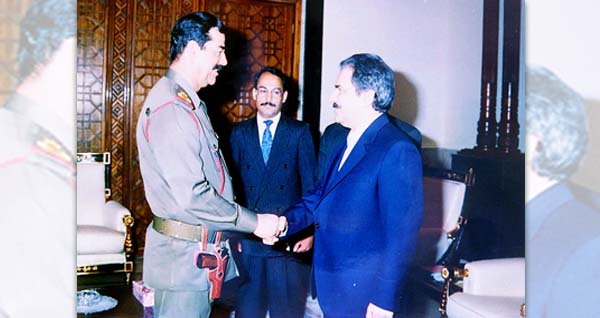
The Mojahedin-e Khalq started as a militant revolutionary movement, committed in principle to bringing human rights and democracy to Iran. But over the last four decades, it has devolved into a secretive, cult-like group that resembles a militant, Islamist version of the Church of Scientology. The MEK has carried out bombings, sabotage missions, and murders. Since its founding in 1963, it is believed to have killed hundreds or even thousands of Iranians, as well as a handful of Americans.
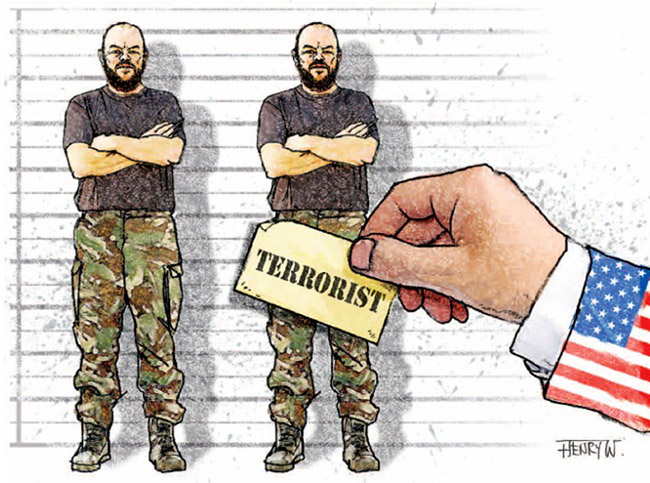
From 1997 to 2012, the United States designated the MEK a foreign terrorist organization. But the group, which once opposed U.S. intervention in Iran, has effectively switched sides, becoming a convenient proxy force for Tehran’s enemies, particularly American neoconservatives, the Gulf Arab states, and Israel. The current MEK leadership maintains close ties with several prominent American politicians, including Donald Trump’s former national security adviser John Bolton and the president’s personal attorney Rudy Giuliani, both of whom have been paid speakers at MEK events.
Yet despite the harm it has caused to Iranians and others, the MEK’s most numerous victims may have been its own members. Interviews with six defectors in Europe reveal that the MEK has isolated, disappeared, and tortured many of its cadres into submission, including forcing dozens of female members to have sex with Rajavi and undergo medical sterilization so they could devote themselves more fully to the leader and his cause.
During the U.S. occupation of Iraq, Human Rights Watch and the Rand Corporation provided some of the first accounts in English of the MEK’s treatment of dissidents and the repressive conditions at Camp Ashraf. But the interviews with the six defectors, including several who held senior positions in the organization, provide the most comprehensive account to date of what life was like inside the MEK and afterward, when they have found themselves alone in an unfamiliar world, trying to pick up the pieces of their former lives.
Having traded a despotic regime in Iran for another at Camp Ashraf, the defectors told us, they are relieved to be free. At the same time, they’ve been forced to grapple with a bitter irony: The only people who can truly understand what they’ve endured are other former MEK members.
“I couldn’t feel whether I was alive or dead,” said Issa Azadeh, a senior operative who left the group in 2014 after 34 years. “I was thinking, ‘Did I make a mistake?’ But the first time when I got into the internet, I saw the truth. I searched about cults. I realized we were robots.”
The MEK did not respond to requests to comment for this story. On a website associated with the group, high-ranking MEK official Ali Safavi last week denounced this story, which had not been published, as “a new propaganda hit piece,” characterizing it as a distraction orchestrated by Iran’s ruling clerics to draw public attention away from the devastating impact of the coronavirus in Iran.
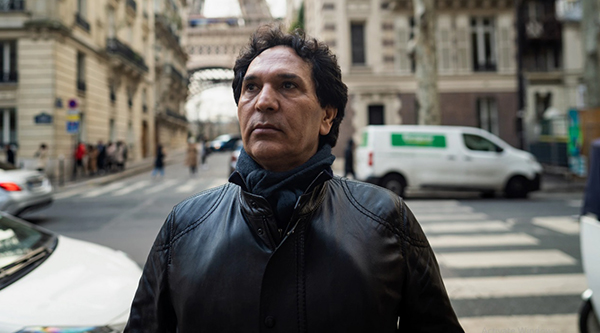
Reza Sadeghi joined the group in 1980, after the fall of the shah, while he was still in high school. But in 1981, a new Iranian government led by Ayatollah Ruhollah Khomeini pronounced the MEK an enemy of the state. The revolutionary regime declared war on the group, which had thousands of members at the time. Sadeghi was shot in the leg by a government militia member during a demonstration in Tehran. He was later arrested, charged with membership in a banned group, and ultimately sentenced to five years in prison, he told The Intercept in a recent interview. While in detention, Sadeghi was frequently starved, beaten, and tortured by his captors. During one stretch, he spent 22 months in solitary confinement.
After leaving prison in 1986, Sadeghi fled to Canada. He reconnected with the MEK — whose members had been forced out of Iran and were now scattering across the globe — and took up a new set of duties, including fundraising for the group. While in Canada, he married; Paul arrived two years later. Sadeghi lived in Toronto with his family before relocating to Los Angeles, all the while helping to wage the MEK’s desperate international battle to overthrow the Iranian government and reclaim the revolutionary inheritance they believed[Ayatollah] Khomeini had denied them.
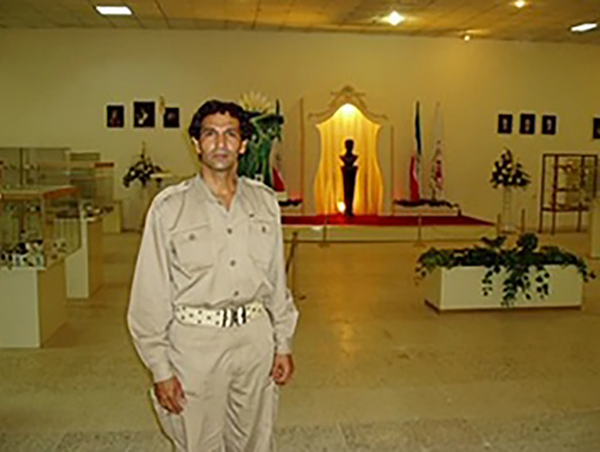
In 1996, Sadeghi traveled to Camp Ashraf, the group’s sprawling compound in northeast Iraq, for a mandatory six-month military training. While the MEK did propaganda and intelligence work, the group’s core skills were military. Membership required extensive training, including everything from weapons skills and bomb-making to operating a T-55 tank.
While he was in Iraq, Sadeghi decided to leave Paul, who was then almost 5 years old and had been born in Canada, with Sadeghi’s parents in Iran. At the time, Paul had never met his grandparents or been to Iran. Sadeghi planned to train for six months, retrieve Paul, and return to the U.S., where he’d spent several years raising money for the MEK’s leadership, which is based in Europe.
But when his training was over, the group asked Sadeghi to stay for another six months. He had been selected to train for assassination missions inside Iran and would fine-tune the fighting and sabotage skills that his commanders told him would soon help liberate his country. His MEK commander told Sadeghi that Paul would be sent back to Toronto to live with his mother, a Canadian woman whom Sadeghi had divorced not long after their son was born. Sadeghi agreed to stay.
The MEK operates under a strict hierarchy, and members are not allowed to communicate with relatives outside the group. There were no phone calls, no letters, and virtually no access to the world outside of the 13-square-mile camp, except, beginning in 2003, when U.S. soldiers occupied a small base inside Camp Ashraf, where they kept an eye on the group.
After the fall of Iraqi President Saddam Hussein, the MEK base in Ashraf presented a conundrum for the U.S. government. Here was a group of roughly 3,500 Iranian exiles — branded as terrorists — who were no longer welcome inside Iraq. They were stateless refugees with nowhere to go. The United States established a basic agreement with the MEK: The Americans would disarm the group and protect them at Ashraf from Iranians or Shia Iraqis who sought revenge for their attacks on Iran’s revolutionary government. The United States would also try to accommodate MEK defectors without outright meddling in the group’s internal affairs. They did this via what became known as the Temporary Internment and Protection Facility, a U.S. military-controlled area that was later officially recognized by the United Nations High Commissioner for Refugees as a holding zone for refugees.
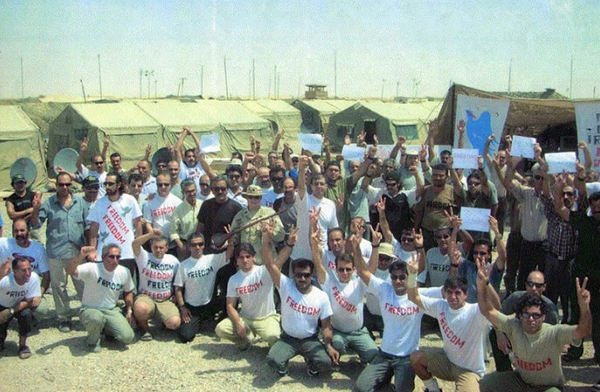
Sadeghi got only rare updates about Paul during the 10 years he spent in Ashraf. Members were forbidden from discussing family or friends who were not MEK members. When he did ask about his son, they always told him that the boy was well, living in Toronto with Sadeghi’s ex-wife and receiving hundreds of dollars in support every month from the group.
Now, his old friend from Toronto told Sadeghi something that seemed impossible. His son, the friend said, was not in Canada at all. He had never left Iran and was being raised by Sadeghi’s parents there. Sadeghi’s Canadian ex-wife had filed a report with Canadian authorities, believing that Sadeghi had kidnapped the boy. Paul was declared a missing child by the Royal Mounted Canadian Police. His picture had even been printed on milk cartons in Canada in the hope that someone might find him and return him to his mother.
“No, he’s in Canada,” Sadeghi declared in disbelief. The friend insisted that wasn’t true. Canadian authorities had even interviewed him about Sadeghi and his son, the man said.
Sadeghi abruptly left his friend and marched to his commander’s office. He told her that he was leaving the organization to retrieve his son. He planned to join the U.S. soldiers at the spartan desert encampment they’d built to house those who managed to escape, Sadeghi said.
His commander called a group of other MEK members to detain him. Suddenly, about a dozen of Sadeghi’s comrades were grabbing him, trying to push and lift him into the back seat of a nearby Toyota pickup. As he resisted, he felt one of his fingers snap. The MEK members shoved him into the back of the truck, pinning him to the floor with their bodies. The truck started driving. “You’re dead,” one of Sadeghi’s captors told him. “We are going to put you in the ground, and no one will ever know what happened to you.” Forced disappearances and solitary confinement were not uncommon at Camp Ashraf, and Sadeghi was sure he would be executed.
His only chance, he thought, was to try to kick out the window of the truck hoping the commotion would attract attention. He slammed his foot against the glass as the others fought to restrain him. The windows didn’t break, but as the truck slowed to turn onto the camp’s main road, it approached two American soldiers patrolling the road in a Humvee.
The soldiers stopped the truck and ordered everyone out. The men in the back got off Sadeghi and he raised himself up. “I want to leave the MEK,” he told the Americans in English. “I need your help.” The Americans took Sadeghi past the razor wire and armed Humvees and into their own makeshift military compound next door.
Once inside, Sadeghi asked to make a phone call. He still had the phone number of his brother who lived in Canada. He called him and asked for their parents’ number in Iran. After so much time without a word, they didn’t even know whether Sadeghi was alive or dead.
“When my mother picked up the phone, all I could say was hello. I didn’t know what else to say to her.” he recalled recently. “She recognized my voice and just started crying.”
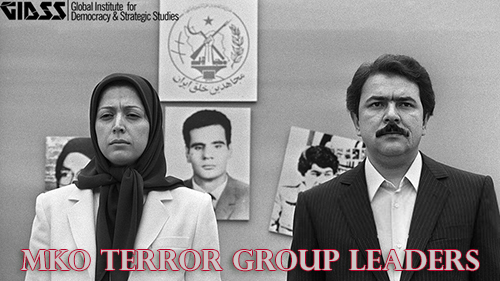
For most of its existence, the MEK has functioned as a mini totalitarian state, impenetrable to outsiders. Few left the group, and fewer still could speak freely with those inside. But since being evicted from Iraq in 2013 and relocating to Albania, a steady trickle of defectors have begun to paint a fuller picture of those lost years. Sadeghi, Azadeh, and four other high-ranking former MEK members, all now living in Europe, spoke with The Intercept for this story, revealing new details about the MEK’s history and operations, as well as the bizarre, tragic lives of thousands who have essentially found themselves trapped inside the organization.
These former members described the life of a typical MEK member as a nightmare of psychological and physical torture, paranoia, forcible separation from family, and ideological indoctrination. Some female MEK members have been ordered to have their ovaries surgically removed to prove their commitment to the organization. The MEK is a highly secretive organization, and it was not possible to independently verify all parts of the defectors’ stories. However, five of them agreed to speak on the record about their experiences, which were broadly consistent and often confirmed aspects of other former members’ accounts. Secret Iranian intelligence documents obtained by The Intercept also confirm several of their claims, including information that is not publicly known. Their testimonies reveal a brutal organization that, for decades, has held thousands in a state of physical and psychological slavery as it degenerated from a popular political movement to a freakish cult of personality under the absolute control of one all-powerful leader.
For most of the MEK’s history, the group’s leader has been Rajavi, a paunchy, mustachioed onetime University of Tehran law student who reinvented himself as a revolutionary firebrand. From the beginning, the group was violent. In the 1970s, the MEK assassinated a handful of Iranian officials and foreigners in Iran, among them several Americans.
Many MEK members were killed and jailed in Iran; those who survived fled. It was during this long, strange exile that the group became a full-blown cult of personality focused on Rajavi, and, after he disappeared in 2003, his wife Maryam. Massoud Rajavi is widely believed to be dead, but most MEK defectors who spoke to The Intercept said that they are unsure of his fate. Some suggested that he is still alive and controls the group in secret, a reflection of his towering psychological presence.
The MEK has shelled out hundreds of thousands of lobbying dollars in Washington, first as part of a successful campaign to get itself removed from the State Department’s list of foreign terrorist organizations and later, to build its reputation as a credible alternative to the Iranian government. Daniel Benjamin, a senior counterterrorism official for the Obama State Department who was part of the effort to delist the MEK, said the goal was to resolve the group’s status as the U.S. military withdrew from Iraq, and that as an opposition faction within Iran, the MEK was irrelevant. “We don’t know how many followers they have inside [Iran], but it’s certainly very small,” he told The Intercept. “Their history is pretty horrifying and nothing that should lead anyone to think that they would rule Iran in a positive way.”
Since then, the group has cultivated an impressive roster of American supporters in addition to Bolton and Giuliani, including Democrats like former presidential candidate Howard Dean and Sen. Bob Menendez. Former Attorney General Michael Mukasey, now one of President Donald Trump’s lawyers, allegedly began working for the MEK as far back as 2017, but only registered as a lobbyist for the MEK this fall. (Giuliani reportedly took part in Mukasey’s initial meeting with the group.)
“This is a group that has both pariah status and friends in high places. Its friendships are largely purchased,” Benjamin said. “Anyone who’s looked at the MEK ideology or its past I think recoils in horror at the thought of them having any significant role in governing Iran. There is no serious debate over the group’s history. It has American blood on its hands.”
The sources of the MEK’s funding remain unclear. But the group is believed to receive money from Gulf Arab states to maintain its sprawling headquarters in Albania and to finance rallies and lobbying efforts throughout the West. The powerful Saudi prince and former intelligence chief, Turki al-Faisal, has been a notable guest speaker at its events. The MEK is suspected of having ties to the intelligence services of Israel and Saudi Arabia, both sworn enemies of Iran. A former senior U.S. intelligence official who spoke to The Intercept confirmed previous reports that some MEK members participated in the Israeli assassinations of Iranian nuclear scientists.
“The MEK has long been a deniable asset for the Israelis,” the former senior intelligence official said.
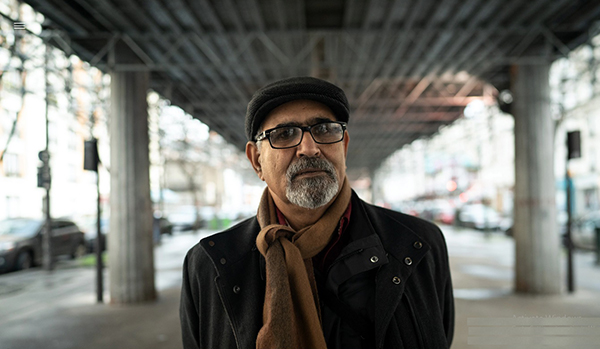
Issa Azadeh is imposing. Broad-shouldered and about 6-foot-2 with a dark goatee and glasses, he was a high-ranking MEK military and intelligence officer. Every member of the MEK at Camp Ashraf had to undergo intense military training. Now 61, Azadeh still looks capable of carrying out the demanding assassination and sabotage missions he was trained for.
Like Reza Sadeghi, Azadeh joined the MEK in his youth. He defected only in 2014, after a period of growing disillusionment with what he viewed as the group’s authoritarianism. After a lifetime of sacrifice to the movement, he finally realized that he had fallen into the grip of a totalitarian organization with no apparent intention of bringing human rights and democracy to Iran.
“I loved the MEK very much. I saw all my dreams in this organization, everything,” Azadeh said when we met in Cologne, Germany, last fall. “But when I got involved in detail with things that no one else knew, I realized that there was no difference between [Joseph] Stalin and Massoud Rajavi.”
“If you doubt Rajavi, it means that you doubt God.”
For MEK members, he said, “Rajavi was right after God. This is something that they put in our minds. Over the years, minute by minute, month by month, year by year, they put that in our minds. If you doubt Rajavi, it means that you doubt God.”
Azadeh was one of the MEK’s original street fighters. When he joined, a war was underway between the revolutionary factions that had defeated the shah’s regime. This struggle pitted Khomeini and his followers against leftist and Islamist groups like the MEK. Those battles soon became bloodier than the revolution itself. As Khomeini gained the upper hand, his enemies found themselves cast into prison or exiled; thousands were killed. Despite their support for the uprising against the shah, the MEK found themselves banned from taking part in new elections.
In the summer of 1981, operatives from the MEK, now effectively outlawed in Iran, bombed a government building, killing over 70 people. Their increasing willingness to commit violence was sapping their support in Iran, including among other opposition movements. But it was their decision to side with Saddam Hussein during the Iran-Iraq War that put the MEK beyond the pale for most Iranians.
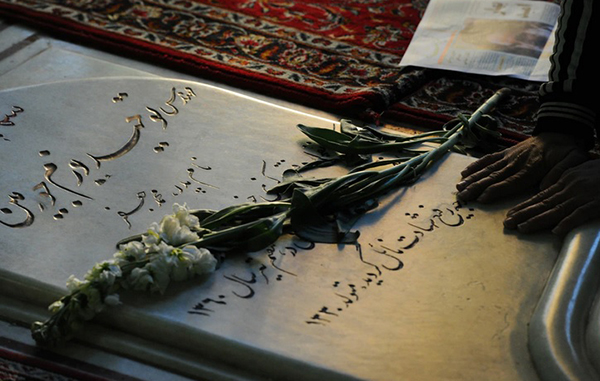
In 1986, thousands of MEK operatives, including Azadeh, were reorganized on Iraqi soil at Camp Ashraf. The war against Iran was nearing its sixth year, and hundreds of thousands had already been killed on both sides in brutal, World War I-style trench warfare, as well as the Iraqi regime’s use of chemical weapons.
In the midst of this bitter conflict, the MEK’s leadership cut a deal with Saddam to organize its 7,000 followers to fight on the Iraqi side. Azadeh soon found himself on the front lines. In 1988, he took part in Operation Mersad, an MEK-led offensive that aimed to capture the Iranian city of Kermanshah, one of the last major offensives of the war. Bristling with tanks, heavy weaponry, and air support provided by Saddam, the MEK units succeeded in driving almost 200 kilometers into Iran. But as they gained ground, they found that the Iranian Revolutionary Guard Corps had led them into an ambush. Thousands of MEK members were killed, many by airstrikes that hit their tanks and heavy vehicles on the open highways near Kermanshah.
Azadeh survived the operation, but the MEK was devastated. The group had sacrificed thousands of loyal cadres in a pointless battle and its hopes of taking power in Iran by force had evaporated. At the same time, the MEK’s transformation into a cult began to rapidly accelerate. Azadeh and others had seen their comrades slaughtered in a senseless operation authorized by Rajavi, but before they could process this disaster, a new set of directives came down that would radically alter their lives. It was time for an “ideological revolution” inside the MEK, Rajavi said in an address at Camp Ashraf in 1989.
“Rajavi told us that you have to divorce your family completely,” Azadeh said. The leader told his acolytes that “family are the main poison for you guys” and counseled them that if their siblings or other relatives showed up at Camp Ashraf, the MEK members would be required to kill them. Azadeh was shocked. “At one time, family for MEK was honor,” he said. “Then Rajavi announced that family is poison or shame.”
A few years earlier, Rajavi had ordered his deputy Mehdi Abrishamchi to divorce his wife, Maryam, and then married her himself. Now it was time for the entire MEK to take this step. Members of the group were soon asked to immediately divorce their spouses. In a sign of the psychological thrall in which Rajavi held his followers, Azadeh and many others accepted the order unquestioningly. “I was the 38th person that Massoud Rajavi personally took their [wedding] ring off,” he said. At the time, his wife was living in the Iranian city of Kerman.
“[Rajavi] said: ‘Don’t think about women. That’s not your life,’” Azadeh recalled. “’You have only one aim and one target: to obey everything I say and to overthrow the Iranian government.’”
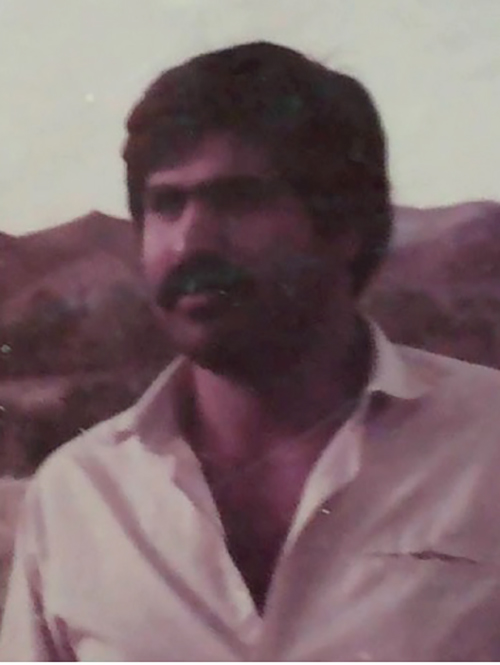
By the time the Iran-Iraq War ended in 1988, around 3,500 MEK members were living at Camp Ashraf. Intended as a launch pad for the MEK to liberate Iran, the base had become a place where members were ordered to surveil each other and carry out increasingly intense self-criticism sessions. MEK cadres were banned from leaving, communicating with the outside world, or even moving around Camp Ashraf without Rajavi’s permission. Some would spend two decades on the base without ever seeing it in its entirety, according to all the defectors who spoke to The Intercept. People also began to disappear into detention, accused of disloyalty to Rajavi and his revolution.
Azadeh was troubled by the organization’s adherence to secrecy and its self-imposed segregation from the wider world. “Why do we have to be scared of letting people in if we talk about freedom and democracy?” he wondered.
A reign of terror began to descend over Camp Ashraf. Even Azadeh, who had given up his wedding ring to Rajavi on command, found himself targeted.
According to the defectors, as many as 700 people were detained at Camp Ashraf in the year after the Iran-Iraq War ended. They were taken to isolated cells, where they were held incommunicado for months at a time. “They used to tell us that these people went for an operation or training,” Azadeh said. He suspected the explanations were lies. He was a senior commander who worked in the operational headquarters; orders to send members to fight or train would have crossed his desk. When he happened to see one of the arrests, Azadeh secretly followed the guards as they took the MEK member away. They delivered the man to a building used as a prison. It was clear, Azadeh said, that the arrests were calculated to instill fear.
Azadeh began to agitate. “I wrote [to Rajavi] and told him that we young people came to this organization for freedom and democracy,” Azadeh said, remembering the message he sent to his leader. “The Iranian government executed and tortured us. What’s the difference between you and the Iranian government?”
Three days later, Azadeh became one of the disappeared. ”At night, they came and blindfolded and handcuffed me and put me in prison,” he said. He was interrogated, beaten, tortured, and berated by MEK commanders. After four months in solitary confinement, he was brought out of his dark cell to meet Rajavi at another building on the base. Rajavi told him that Iranian intelligence agents had infiltrated the MEK and he’d ordered a purge to find them, adding that some had been executed and others released, Azadeh recalled. “Rajavi said, ‘Even if 1,000 people died, there is nothing that compares. They have no value next to Maryam Rajavi.’”
Afterward, Massoud Rajavi and Azadeh had lunch together and Rajavi recited a Persian proverb: “You saw the camel and you didn’t see the camel.” Azadeh explained Rajavi’s message: “It means if there is a cup of tea, say there is no cup of tea.” Rajavi then kissed Azadeh on the cheek and told him that he was “a child of this organization.”
Azadeh could scarcely comprehend what had happened, but he felt a wave of relief and elation. Many more MEK members were released in the coming weeks, but some never reemerged, Azadeh said. All was forgiven, it seemed. But Rajavi’s grip on his followers had only grown stronger.

One of the most notable things about the MEK is the prominence of women in the group. In contrast to the Iranian government, where women hold few leadership positions, the MEK has made a point of highlighting its female members. It also claims to favor gender equality and women’s rights, another contrast between the group and Iran’s ruling clerics. Today, the face of the organization is Maryam Rajavi, who rose to prominence after marrying Massoud in 1985. The heads of the MEK military commands — each of which numbers roughly 120 people — are women. The MEK High Council, supposedly an important decision-making body, is also all women and has 24 members.
But according to two female defectors, the apparent prominence of women in the group has less to do with equity than with furthering its leaders’ desire for control. They say that what looks like empowering women is more about suppressing men, who Massoud Rajavi and those around him view as the more serious threat. It also has to do with MEK leaders’ attempts to intimidate and control the group’s hundreds of female members.
Batool Sultani was an MEK commander and a member of the High Council. Soft-spoken with brown hair and glasses, Sultani easily blended into the crowd when we met in Cologne. The High Council governed the conduct of everyone living at Camp Ashraf. They could order the isolation, ostracization, and imprisonment of members who ran afoul of Rajavi. But when it came to major decisions, the council had “no real power,” Sultani said. “It was just for show and a means of using the women to keep control over the men who might become Massoud Rajavi’s rivals in the Mojahedin.”
She had joined the MEK in the 1980s, following her husband, who had become enamored with the group and its leader. She had rationalized the decision as a way to keep her family together. But the group’s cultish nature became clear when they began living at Camp Ashraf in Iraq. Her relationship with her husband rapidly grew strained. They were both subject to what she described as “brainwashing” by the group’s senior cadres, who segregated them by rank and controlled their interactions with one another.
In 1991, MEK commanders took Sultani’s two young children, age 6 months and 5 years; the children were sent to live with MEK members in Holland and Sweden. It was a decision that she felt unable to oppose. In the insular world of the MEK, Massoud Rajavi had been effectively transformed into a subject of worship. Cadres were taught to both fear and love him, and they did. Many female members were expected to express this love physically.
“Maryam Rajavi came to us as female members of the group many times and asked us why we haven’t demanded to see our leader in his bedroom,” Sultani said. “There was a strong pressure” on MEK women to initiate sexual relationships with Rajavi, she said, “to show your commitment to the leader and the group.”
Soon the pressure became even more overt. Female MEK members were periodically given stainless-steel pendants printed with Rajavi’s face, a sign that they had been summoned to his bed. Sultani received hers in 1997 and soon became sexually involved with Rajavi. According to records she and other defectors say they kept, over 400 female members of the group had sexual relations with him.
Sultani’s husband, a man named Hussein Moradi, is still part of the MEK and lives in Albania. She speaks with detachment about her past life. But like other former members, she is bitter about what the MEK did to her family. Since leaving the group, she has tried to rebuild her relationships with her children, who are now in their early 20s, only to find them angry and uncomprehending about the decades she spent away from them.
“I try to tell them we were like robots, it was brainwashing. Anything Massoud Rajavi told us to do we did; we didn’t feel like we had any choice,” she said. “They ask me why I never called, even on their birthdays. It is hard for them to understand any of this.”
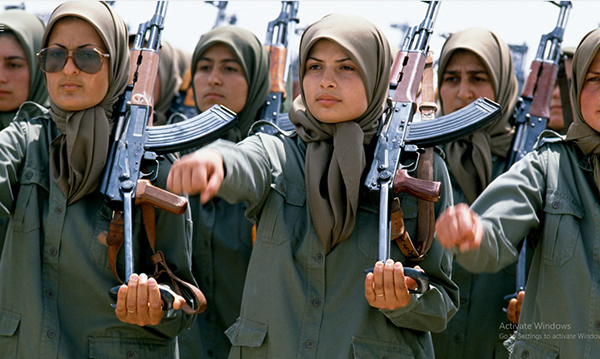
Another female member of the High Council at Camp Ashraf, whom The Intercept agreed to identify only as Sima, said she joined the MEK in the 1980s and left it in 2014. Unlike other former members, Sima asked that her real name not be used because she feared retaliation from current MEK members. She now lives in hiding in a European country and agreed to meet privately in a place where other local supporters of the group were unlikely to see her.
“You must know the organization and the psychological warfare that they start against you,” she told us in an effort to explain her fear. “They assassinate your personality and you will lose your closest friends; even your family wouldn’t trust you. This is the reason that these people are scared.”
Sima joined the MEK in Iran after becoming disillusioned with leftist movements that seemed hesitant to confront either the shah or the Islamic Republic. But unlike others, she said, she never felt fully committed to the group’s ideology. After getting caught up in the organization, it was just hard to find a way back to the life she’d had before. MEK members were being executed by the Iranian regime. She married another member, and when the group moved to Camp Ashraf, she found that she had nowhere else to go. By this time, the world outside Rajavi’s control felt both unreal and frightening.
Like other MEK members, Sima spent years at Camp Ashraf doing military training in preparation for what they viewed as the inevitable invasion of Iran that would install Rajavi as the country’s leader. They pored over maps of possible attack routes and conducted weapons and intelligence training. There was also money, lots of it, coming from Saddam’s Iraqi intelligence services. Sima was among those who managed the group’s finances in the years before the 2003 U.S. invasion of Iraq.
“I was managing the money for the hundred people in my section,” Sima said. “We received sacks full of Iraqi dinars every month.”
As the years dragged on, she began to clash with other members. In response, they placed her under surveillance and forced her to engage in grueling self-criticism sessions that she described as psychologically tortuous. Around 2000, Sima was nearing a breaking point. She made a plan with another woman to escape from Camp Ashraf. They plotted their exit in meticulous detail, but the other woman turned her in to MEK leaders. As punishment, Sima was subjected to even more intense ostracization and psychological torture.
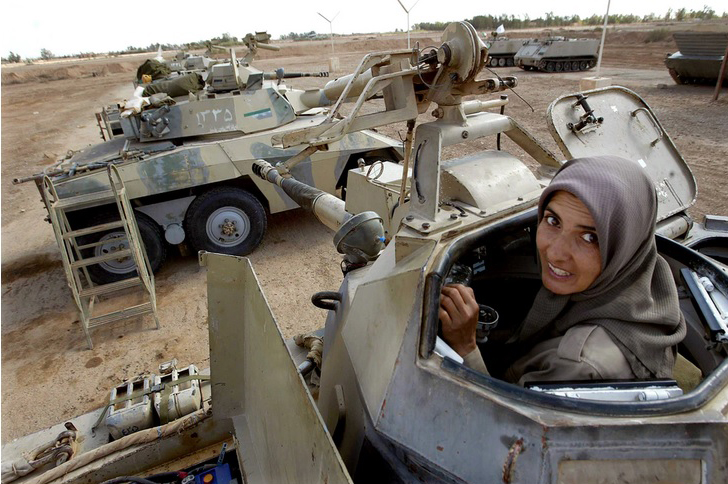
For most of the next 14 years, Sima was confined to one section of Camp Ashraf, unable to move freely on her own. Like Batool Sultani, Sima described an intense form of psychosexual manipulation by Rajavi that she said became an integral tool for controlling female cadres. Years earlier, in 1995, “Rajavi gave every single woman in the organization a pendant and told us that we are all connected to him and to no other man,” Sima said. She was forced to divorce her husband and, like Sultani, eventually became sexually involved with Rajavi.
Around 1998, an even more chilling directive came down from Rajavi to the female members of the organization. “I see some obstacles which have prevented us from reaching our goals and achieving victory,” Rajavi told members of the group, Sultani recalled. “That obstacle is hope for the future. We want to eliminate any kind of hope for the future from your mind. You are either with us or not!”
Sterilization would be a means of focusing the women’s minds. “They said that this organ of the body, the womb, has made women want to be mothers someday and return to domestic life,” Sultani said. “And so, visits with women began, to get them to go in groups of 20 or 30 to have a hysterectomy.”
Women were scheduled for appointments at an MEK hospital in Camp Ashraf. The procedures would be carried out by a female MEK member who had been trained as a doctor, assisted by a local Iraqi physician. At first, Sultani resisted. But finally “the pressure was so great that it broke my resistance, and I agreed that I, too, should make an appointment,” she said. “In other words, they gave so many and varied arguments for me to go to the hospital that I had no choice.”
“When you are under brainwashing, you would do anything and everything. You would do any military operation, you would go and have sexual relations with your leader, you would sell information and intelligence.”
Sultani said she finally defected from the MEK in 2006, after she was scheduled for the surgery but before it could be carried out.
“How many women have reached the castle?” Rajavi later asked in a meeting Sultani attended, referring to what she called the “women who had abandoned the last vestiges of their sexual world and were operated on.” The doctor answered that there had been 50 so far.
After much urging from MEK leaders, Sima said she finally agreed to have her ovaries surgically removed in 2011. “When you are under brainwashing, you would do anything and everything,” she told The Intercept. “You would do any military operation, you would go and have sexual relations with your leader, you would sell information and intelligence. We were under constant control by the leader.”
When Sima finally left the group, she said, “I was like a lost person.” The United Nations set up a meeting between her and her brother, whom she hadn’t seen for 30 years. At first, she was reluctant to hug or kiss him, so deeply alienated had she become from her closest kin. He showed her how to shop and use money. “We’ve never seen anything like this for about 30 years,” Sima said. “I completely forgot about real life outside MEK.”
Now in her early 60s, she is separated from her husband and has no family except a brother who lives in a neighboring European country. She relies on support from the government that granted her asylum. In her spare time, she writes in Persian about her experiences in the MEK. “They destroyed my life,” she says quietly.
When she first spoke out against the group, current members requested a meeting. They offered her several thousand euros not to criticize the group, which Sima says she declined. “I told them, ‘You cannot return what I lost, my family, my husband. You cannot return that.’”
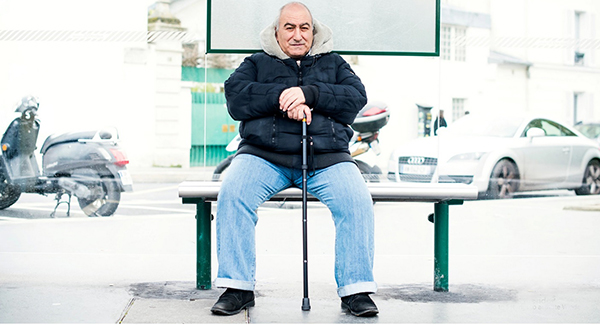
Of all the MEK defectors we spoke to, Ali Hosseinnejad was the oldest and spent the most time in the organization. He joined in 1970 as a university student studying Arabic literature. His entire adult life, as well as the lives of his closest relatives, has been governed by the MEK. Two of his brothers were also members. While in graduate school in 1975, he was arrested for his MEK affiliation and served a year in prison. His wife, who went by the nickname Tayebeh, joined the organization in 1978. They had two daughters, Zeynab and Mona.
In 1981, when the Iranian government declared the MEK a banned organization, Hosseinnejad and his family decided to flee Iran. Zeynab was 4 years old but Mona was a newborn, too young to be exiled. Ali, Tayebeh, and Zeynab fled to Europe, leaving Mona with Hosseinnejad’s mother in Iran. For three years, they moved between Turkey, Greece, and Spain, finally settling in France, where the MEK established a headquarters in exile. Tayebeh become the commander of the MEK’s suburban Paris headquarters.
Then, in 1986, the three moved again, this time to Camp Ashraf. Like Azadeh, Hosseinnejad, his wife, and one of Hosseinnejad’s brothers were part of Operation Mersad, the failed MEK operation that had sought to capture an Iranian city for Saddam during the Iran-Iraq War. Hosseinnejad survived, but his wife and brother were killed. Their bodies were never recovered.
Hosseinnejad returned to Ashraf. Zeynab, then 10, asked about her mother. Unable to tell her the truth, Hosseinnejad said that her mother had moved to Iran. Devastated, Hosseinnejad eventually sent Zeynab back to France, where she lived in the MEK compound outside Paris. Zeynab would later learn from an MEK member in France that her mother had been killed inside Iran.
Hosseinnejad was left a widower with two dead brothers, one child in France, and another in Iran whom he hadn’t seen since she was 3 weeks old. Still, Hosseinnejad remained loyal to the MEK. He stayed in Ashraf and became Rajavi’s Arabic translator.
Now nearly 70, Hosseinnejad looks even older, with hunched shoulders and a weary manner. Looking back, Hosseinnejad said he was troubled by much of what he knew about Rajavi and the MEK but felt that he couldn’t leave. “I always had a problem with one person being in charge forever,” Hosseinnejad told us. But relentless psychological pressure, he said, kept him in the group.
As Rajavi’s translator, Hosseinnejad had access to sensitive information about MEK operations. From the beginning of the MEK’s time in Iraq, the group worked for and with Saddam’s intelligence apparatus against Iran. “Even during the Saddam era, the MEK was spying for Saddam [on Iran],” Hosseinnejad said. “That was a big problem for me.” But few inside the MEK knew.
By all accounts, the MEK’s efforts on behalf of Saddam and Iraq ended any chance of their winning broad support in Iran. Even in the early years, the defectors told us, the group was secretive and rigidly hierarchical. While MEK members were willing to pragmatically help the Iraqis fight to remove the ayatollahs, few in the organization understood how close the relationship between Saddam and Rajavi was.
“We joined the MEK for freedom and democracy and independence,” Sadeghi said. “But if we knew that Masoud Rajavi was spying on the Iranian government during the [Iran-Iraq] war, I would never accept that. If I knew that [we received] money from Saddam Hussein to give information, I would never accept that.”
After the U.S. invaded Iraq in 2003, the Americans disarmed the MEK and the group became more focused on propaganda. Hosseinnejad was assigned to support the group in its “meddling in Iraqi affairs.” By then, Zeynab had returned to Iraq and been trained as an MEK fighter. But the psychological stress and isolation in the camp began to wear on Hosseinnejad. Despite living in the same compound, he was allowed to see Zeynab just once a year. He hadn’t seen Mona, his younger daughter, since the day he fled Iran.
“If this is really a movement like Rajavi says it is, where is everyone?”
Finally, in 2012, Hosseinnejad left the MEK. He told us that life in the group had taken a toll on his health. He now lives in France. Zeynab left the MEK in 2018 and moved to Paris, and father and daughter have reconnected.
While reporting this story, we tried to talk to MEK leaders in the Paris suburb of Auvers-sur-Oise, where Hosseinnejad once worked. In January, a reporter and a cameraperson from The Intercept approached the group’s open-air compound on a residential street blocked off by gated checkpoints. We hoped to speak to an MEK representative about the defectors’ claims. Instead, guards from the MEK tried to physically detain us, even trying to grab the keys out of the ignition of our rental car.
Hosseinnejad acknowledged that his choice to join and stay in the MEK destroyed his life. At one point, he reached for his phone and scrolled through his Facebook page to find a video of Zeynab and Mona meeting for the first time in 37 years. In it, the sisters cry as they hold each others’ faces in their hands.
Given the slim likelihood that the MEK will ever come to power in Iran, the group has developed ways of targeting Iranian assets, including carrying out assassinations and bombings, with small teams of operatives. It also runs an extensive propaganda operation out of its base in Albania with the aim of steering the United States and Iran into a war that could lead to regime change. Former MEK members said that the group’s leaders are absolutely committed to starting such a war.
Many MEK members are now in their 50s and 60s. They have spent decades separated from their families under the control of the Rajavis and a few other top officials. Over the years, some younger members have been recruited or born into the group. After 2003, MEK members based at Camp Ashraf began looking for Iraqi teenagers who had been separated from their families to adopt and train. Some remain part of the group today.
Reza Sadeghi said he saw all this. As he began to notice the deceit, coercion, and corruption of the group, he went back over his memories of the life he had spent with the MEK.
“I remember we were attending a rally at Camp Ashraf where everyone from the movement was supposed to be gathered together,” he said. “They had told us that we had hundreds of thousands of members and maybe millions more supporters in Iran. At the rally, there were only a few thousand people at most. I remember at the time a few of us were wondering, If this is really a movement like Rajavi says it is, where is everyone?”

In the post-Saddam era, the MEK resisted any visits from outsiders, but representatives from the Red Cross and the U.N. occasionally passed through the compound. Over time, its members became effectively stateless. Their leaders kept members’ Iranian passports — if they had passports at all — while warning anyone who might contemplate leaving that they had no visas to be in Iraq. In essence, the organization told potential defectors: You can be detained by an Iraqi government friendly to Iran or smuggle yourself back to the Islamic Republic, whose security services will certainly arrest you. Most stayed.
The day Sadeghi decided to leave in 2006 was the first step in trying to rediscover the life he’d given up the day he joined the MEK.
In the coming months, with the help of the U.S. military and the Red Cross, Sadeghi worked to get his passport back and return to Iran. Throughout it all, he said he had only one goal: to get back to his son Paul. Four months later, he boarded a flight to Tehran. He was detained by Iranian intelligence as soon as he landed.
“They held me for two weeks,” he said. “They asked me all kinds of questions, but I found that they already knew everything about me.”
After he was released, Sadeghi went to his family home in Isfahan, on the same street where he’d first learned about the MEK. His reunion with Paul was bittersweet.
“My son was supposed to be away from me for six months. It was 10 years,” he said. “The first question was, ‘Dad, where were you? I cannot believe that in the 20th century, you were in some place that you couldn’t be able to send me a postcard or call me for my birthday.’”
Sadeghi had no answer. He was ashamed. He could not articulate how being a member of the MEK had made him feel bereft of individual agency.
Instead, Sadeghi focused on returning Paul to Canada and reuniting him with his mother. Paul was 16 and would soon be compelled to serve in the Iranian military if he stayed. Sadeghi would get Paul out before he was conscripted, even if Sadeghi couldn’t accompany his son to Canada. Paul is now back there and recently married. Sadeghi eventually smuggled himself to Belgium, where he still lives. He is trying to get to Canada so he can live near Paul.
In the meantime, Sadeghi, like the other defectors, has many regrets and struggles in his new life. What’s left of his family is scattered between Iran and the West.
“I would never [again] leave Iran, because all these years I left my family and my parents died,” he said. “I miss them very much.”
Every night, he dreams some version of the nightmare he’s lived. “Either I am in prison [in Iran], or I am in Camp Ashraf trying to escape. When I wake up, I’m sweating.”
Murtaza Hussain, Matthew Cole, The Intercept