Nejat Society
  • Home
  • Articles
  • Media
    • Cartoons
    • NewsPics
    • Photo Gallery
    • Videos
  • Publications
    • Books
    • Nejat NewsLetter
    • Pars Brief
  • About Us
  • Contact us
  • Editions
    • عربي
    • فارسی
    • Shqip
Nejat Society
Nejat Society
  • Home
  • Articles
  • Media
    • Cartoons
    • NewsPics
    • Photo Gallery
    • Videos
  • Publications
    • Books
    • Nejat NewsLetter
    • Pars Brief
  • About Us
  • Contact us
  • Editions
    • عربي
    • فارسی
    • Shqip
© 2003 - 2024 NEJAT Society. nejatngo.org
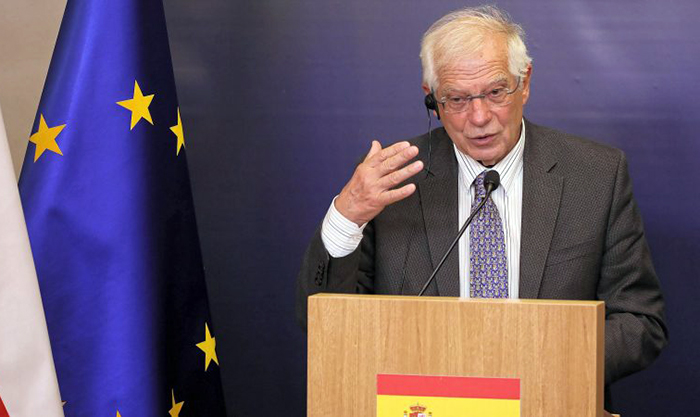
Mr. JOSEP BORREL, The Esteemed High Representative of EU for Foreign Affairs
European Union

Nejat Families pen letter to the High Representative of EU for Foreign Affairs

To: Mr. JOSEP BORREL, The Esteemed High Representative of EU for Foreign Affairs

Respectfully,
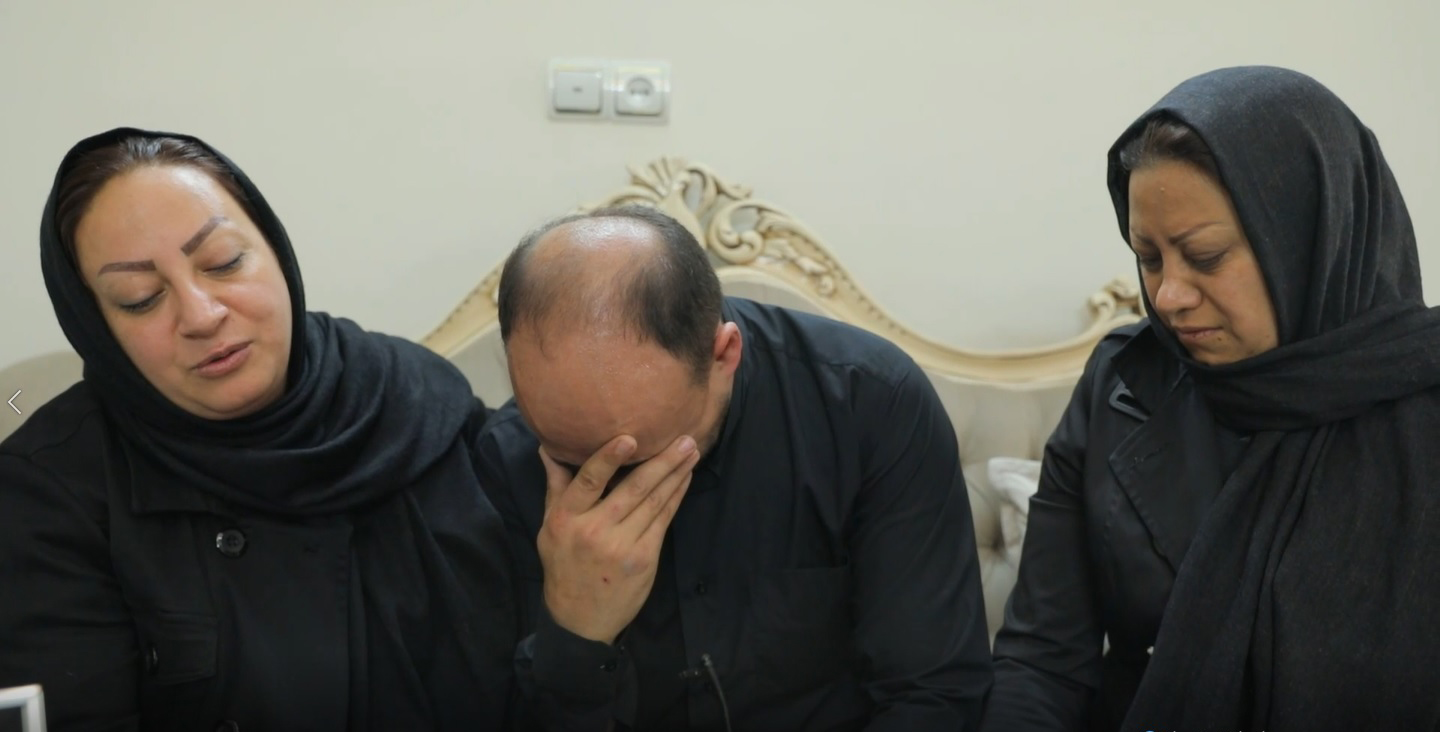
We, as family members of the captives held by the so called Mujahedin Organization, have for years been deprived from visiting our children or having contact with them due to the restrictive measures taken by Rajavi’s sect, in clear violation of human rights. In the period from 2009 to 2012 we made hard efforts until we arranged for being physically present alongside the notorious Ashraf & Liberty Camps, hoping to see our children. But to our misfortune, we unexpectedly faced the beastly and inhuman behaviour of the authorities of Rajavi’s Sect who did not fail to take any insulting measures even by throwing stones at us and called us with names of which only Massoud & Maryam Rajavi were deserving and our request for visiting our children was finally left without any response.

Your excellency,
The Sect authorities have even betrayed Iraqi people, after living in Iraq for almost 40 years and were involved in Massacre of thousands of Kurds in this country. The sect has a record of evil deeds like terrorizing and killing of 17000 civilians including so many women and children. They are no less evil than the ISIS; they are even more cruel, irrational and menacing. They explicitly and officially threaten both the family members insisting on visiting their children and former members who have officially abandoned the sect or those members who after passing 2 to 4 decades of their lives in this organization, decide to abandon it to have an ordinary and tranquil life. All these people have been threatened with death.
As the family members of the individuals now held in captive by the sect, we do not fear these threats.

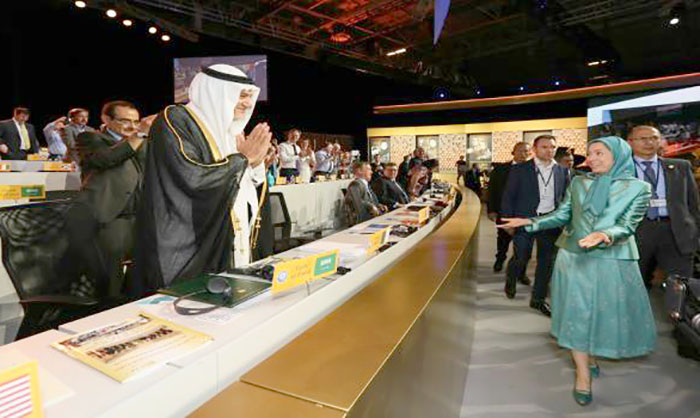
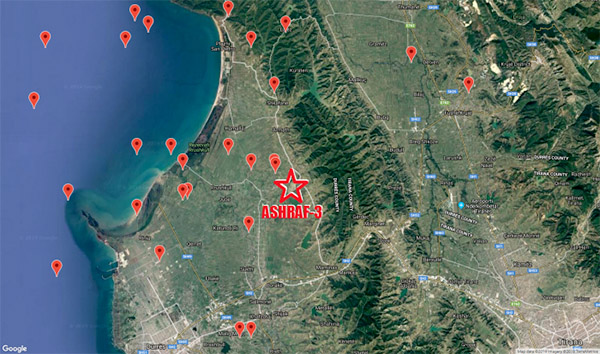
MKO members in Albania - Camp Ashraf 3

Your excellency
Mujahedin is a sect who has brainwashed our children in a truly isolated environment far from modern world. Are the human rights organizations and institutions really unaware of this extent of human rights violation by the sect? We write this so that your excellency, as the high representative for foreign affairs in the European Union where human rights is considered attentively, to assist us. We are looking for the most basic right that a human must have. We are only seeking to visit our children and close relatives. We have so far been deprived of the right and are anxious about their health. All relatives and family members here are expectant and await the kind assistance of the highest representative of EU in foreign affairs and of the international communities. Any cooperation in this regard shall be appreciated in advance. We anxiously await your kind assistance.

With Best Regards
Relatives & Family Members of MEK Cult Captives

February 5, 2020 0 comments
FacebookTwitterPinterestWhatsappTelegramSkypeEmail
Mujahedin Khalq Organization as a terrorist group

El Pais report on MEK paid salaries for the leaders of Vox Party

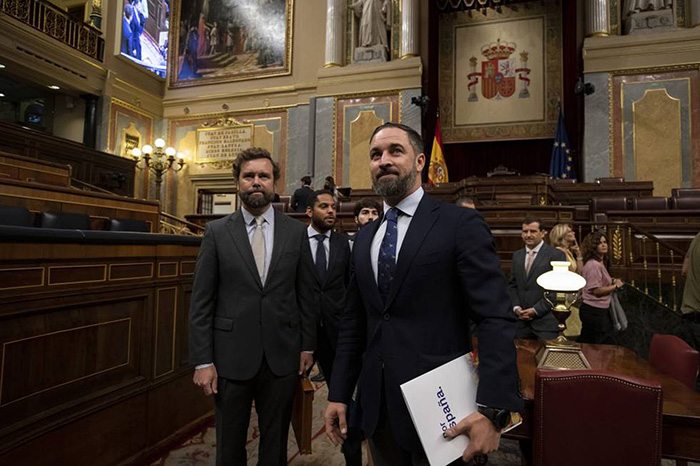
The anti-Iran terrorist group of Mojahedin-e Khalq (MEK) has bankrolled the foundation of the Spanish far-right Vox Party and paid salaries to some of its top members, according to a report.

The leading Spanish newspaper El Pais reported on Tuesday that two lawmakers for the Vox Party received party salaries from the MEK.

“Two lawmakers for Spain’s far-right Vox, Santiago Abascal and Ivan Espinosa de los Monteros, received party salaries for eight months that drew on funds from donations by the National Council of Resistance of Iran (NCRI),” El Pais quoted sources as saying, referring to the MEK by its other name.

According to the paper, both leaders received around €65,000 in total. The MEK was on the United States’ list of terrorist organizations until 2012, a year before the group funded Spain’s ultra-nationalist party.

“Vox, which is now the third-largest force inside the Spanish parliament with 52 lawmakers, was created in 2013 with around €1 million donated by the NCRI,” the paper said.

“On December 17 of that year, the day that it was registered as a new party on the Interior Ministry’s records, Vox received its first transfer from abroad by sympathizers of the Iranian exiles. The transfer was in the amount of €1,156.22,” it said.

The report added that a month after that, then-secretary general Santiago Abascal and senior official Ivan Espinosa de los Monteros began earning salaries paid for by the opponents of the Islamic Republic.

“The money reached Vox thanks to the mediation of Alejo Vidal-Quadras, the party’s original founder and first president. Abascal’s monthly salary was fixed at net €3,570 (€5,000 before taxes), which he received between February and October 2014, for a total of €40,000.”

“Espinosa de los Monteros received a monthly net amount of €2,300 (around €3,083 before taxes), according to two former party officials. Espinosa de los Monteros, who is now the spokesperson for Vox in Congress, earned this salary during the same period of time as Abascal, but invoiced the payments through a company,” it added.

The MEK was established in the 1960s to express a mixture of Marxism and Islamism. It launched bombing campaigns against the Shah, continuing after the 1979 Islamic Revolution, against the Islamic Republic. Iran accuses the group of being responsible for 17,000 deaths.

Based in Iraq at the time, MEK members were armed by Saddam Hussein to fight against Iran during a war which lasted for 8 years.

In 2012, the U.S. State Department removed the MEK from its list of designated terrorist organizations under intense lobbying by groups associated to Saudi Arabia and other regimes opposed to Iran.

A few years ago, MEK members were relocated from their Camp Ashraf in Iraq’s Diyala Province to Camp Hurriyet (Camp Liberty), a former U.S. military base in Baghdad, and were later sent to Albania.

February 5, 2020 0 comments
FacebookTwitterPinterestWhatsappTelegramSkypeEmail
Rudy Giuliani
Mujahedin Khalq; A proxy force

Rudy Giuliani is working with Iranian ‘cult’ MEK :MSNBC host

President Donald Trump’s attorney Rudy Giuliani has been accused of conducting his own “shadow diplomacy” with both Ukraine and Venezuela, despite not being a registered foreign agent. But as MSNBC host Chris Hayes pointed out, it’s another of Giuliani’s clients that could get him in trouble now.

“One reason the threat of catastrophe in the Middle East remains present, at the moment, is because the president is surrounded by people who have been quite openly pushing for a full military confrontation with Iran for a while,” said Hayes.

One, Hayes said, is his most infamous adviser: Mr. Giuliani.
Raw Story is now carbon balanced. Click to learn how you can offset your carbon footprint.

While Giuliani hasn’t been appointed to any government office or confirmed by the U.S. Senate, somehow he’s running his own government projects.

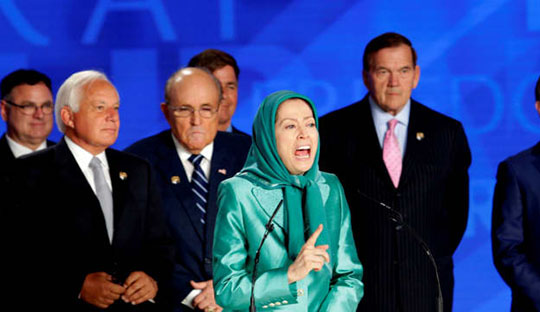
“Aside from his various meetings with various Ukrainian figures to manufacturer dirt on Joe Biden, has represented Turkish interests and then pushed for policies favorable to President Erdoğan,” Hayes continued. “And he has a longstanding relationship with a fringe Iranian dissident group known as the MEK a group rooted in Marxism and Islamism that’s often described as a cult and his primary goal is to overthrow the Iranian regime.”

The MEK is currently headquartered in Albania and most of the members are exiles from the country.

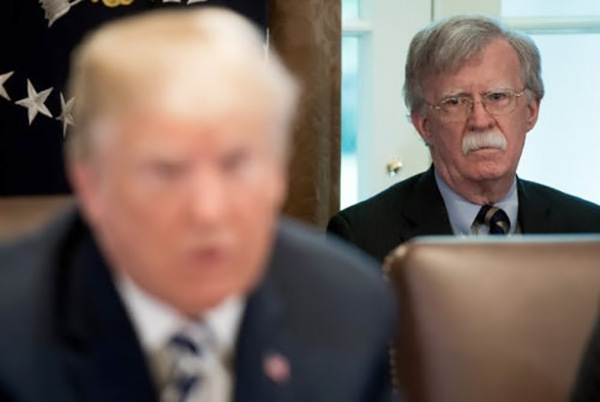
“They have paid tons of money to American political figures to curry favor, including John Bolton, Howard Dean, Ed Rendell and, of course, Rudy Giuliani. When contacted by the Daily Beast on Monday, Giuliani cited the MEK as a reason he supported the assassination of Qassem Suleimani saying he was, ‘Directly responsible for killing some of my MEK people.’ This would be a little like favoring action against the U.S. because you had friends in the Branch Davidians.”

Hayes said that the group is so “toxic” that Secretary of State Mike Pompeo sent out a cable on Tuesday to all U.S. diplomatic posts telling them not to meet with Giuliani’s client.

Giuliani, however, doesn’t work for the State Department, “so he can do whatever he wants,” Hayes said. “And we all get to deal with the consequences.”

By Sarah K. Burris, Raw Story

February 2, 2020 0 comments
FacebookTwitterPinterestWhatsappTelegramSkypeEmail
MEK pais vox party of spain.why?
Mujahedin Khalq Organization as a terrorist group

MEK Terrorists paid salaries for two leaders of Spain’s far-right Vox

Donations from the National Council of Resistance of Iran also funded other party expenses such as rent and computer equipment in 2013 and 2014

Two lawmakers for Spain’s far-right Vox, Santiago Abascal and Iván Espinosa de los Monteros, received party salaries for eight months that drew on funds from donations by the National Council of Resistance of Iran (NCRI), sources have told EL PAÍS.
Both leaders received around €65,000 in total. The NCRI had an armed wing that was on the United States’ list of terrorist organizations until 2012, a year before the group funded Spain’s ultra-nationalist party.

Vox, which is now the third-largest force inside the Spanish parliament with 52 lawmakers, was created in 2013 with around €1 million donated by the NCRI. On December 17 of that year, the day that it was registered as a new party on the Interior Ministry’s records, Vox received its first transfer from abroad by sympathizers of the Iranian exiles. The transfer was in the amount of €1,156.22.

A month after that, then-secretary general Santiago Abascal and senior official Iván Espinosa de los Monteros began earning salaries paid for by the opponents of the Iranian regime. The money reached Vox thanks to the mediation of Alejo Vidal-Quadras, the party’s original founder and first president. Abascal’s monthly salary was fixed at net €3,570 (€5,000 before taxes), which he received between February and October 2014, for a total of €40,000.
Espinosa de los Monteros received a monthly net amount of €2,300 (around €3,083 before taxes), according to two former party officials. Espinosa de los Monteros, who is now the spokesperson for Vox in Congress, earned this salary during the same period of time as Abascal, but invoiced the payments through a company. Another Vox lawmaker, Javier Ortega Smith, turned down the salary.
There are only two donations that did not come from the Iranian resistance movement, both under €2,000
The monthly amounts were determined at a breakfast meeting at the home of Espinosa de los Monteros and ratified at Vox’s Madrid headquarters. Both Abascal and Espinosa de los Monteros have declined requests for comment from this newspaper.

The gross €65,000 that both lawmakers earned for eight months came from a common party fund fed by 141 international money transfers made from various countries by NCRI sympathizers, according to a secret internal spreadsheet revealed by this newspaper last year.

Almost €1 million
In total, the ultra-nationalist party received €971,890.56 between December 2013 and April 2014. The money funded the 2014 European election campaign as well as various party expenses ranging from the rent on the party’s first headquarters on Diego de León street in Madrid to furniture and computer equipment.
In order to raise this amount, the NCRI sent out 35 collectors around the world: money was obtained from around a thousand supporters in cities and neighborhoods of around 15 countries, including Germany, Italy, Switzerland, Canada and the United States. Most of these contributions were anonymous, and the donors’ identities did not show up in the records of the bank account that Vox opened at a Catalan lender. This information did not appear in the party’s internal accounts, either. But the accounts do show the names of the 141 individuals who transferred the money.

A group under scrutiny
The National Council of Resistance of Iran (NCRI) had an armed wing that was on the United States’ list of terrorist organizations until 2012, a year before the group funded Spain’s ultra-nationalist party.
Founded in Tehran in 1965 by three university students, the organization’s military legion, the Mojahedin-e Khalq (MEK), underwent a lengthy journey in the international courts between 2003 and 2014 before it was taken off the European Union and United States’ blacklists. Britain stopped considering it a terrorist group in 2008 following a procedure initiated a year earlier by 35 lawmakers. A November 2018 investigation by The Guardian linked the decision to delist MEK to a”lavish lobbying campaign”to secure the support of global leaders.
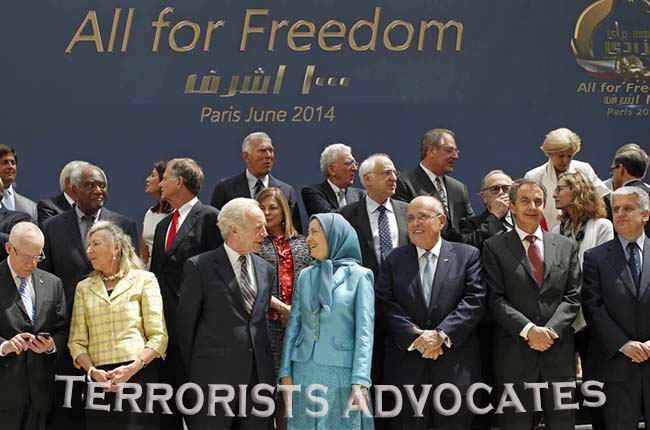
Every year, the NCRI organizes a large event in Paris where Alejo Vidal-Quadras has been a guest speaker on more than 15 occasions. Other guests have included Spain’s former prime ministers José María Aznar, of the Popular Party (PP), and José Luis Rodríguez Zapatero, of the Socialist Party (PSOE).
In the records of the account that Vox created to help fund the campaign for the May 2014 European elections, there are only two donations that did not come from the Iranian resistance movement, both under €2,000. The foreign funds stopped coming in before the election was held.

Abascal and Espinosa de los Monteros were aware that their salaries were being funded by the NCRI. In January 2019, when EL PAÍS first revealed this information, Vidal-Quadras stated that “Abascal was aware of everything, I explained to him my relationship with the NCRI, and I told him that they would fund us. He was delighted. He didn’t put up any opposition.”
Vidal-Quadras’s relationship with the Iranian exiles goes back to his days as member of the European Parliament (1999-2014), when he received a delegation from this group in Brussels. Vox’s first president left the party in 2015 due to differences with Abascal after he failed to secure a seat in the European chamber.
When Abascal began to earn a salary from Vox, he had no other income. A few months earlier he had given up party membership in the Popular Party (PP) and lost his job as managing director of the Madrid Foundation for Patronage and Social Sponsorship when the regional agency was eliminated. Before that, former Madrid premier Esperanza Aguirre had placed him at the helm of the Data Protection Agency.
During his period in the Basque Country, from where he hails, Abascal served as a public official with the PP: as a councilor in the town of Llodio, as a member of the provincial parliament of Álava, and as an advisor to the city of Vitoria. His eight months on a Vox salary were the first time that Abascal earned money that did not come from public coffers. During these eight months, Espinosa de los Monteros was already involved in private business activities, and the fact that he demanded a party salary caused “surprise” among Vox members.
investigacion@elpais.es
english.elpais.com

February 1, 2020 0 comments
FacebookTwitterPinterestWhatsappTelegramSkypeEmail
Mujahedin Khalq; A proxy force

What is the problem with admin. backing down anti-MEK memo?

At lightning speed, the State Department overturns an order prohibiting US diplomats from meeting controversial Iranian dissident groups – including a close friend with Trump World allies and previously designated a terrorist group, the Mujahideen-e-Khalq (MEK) ). The initial memo, lit by a career State Department employee, angered Iranian congressional hawks. And the Ministry’s decision to modify its guidelines encouraged them.

The first memo, first reported by Bloomberg and reviewed by The Daily Beast, included sober warnings against meeting with the PMOI, pointing to its terrorist past and claiming that most everyday Iranians have bad news. group opinion. The memo also warned of interactions with the Democratic Party of Iranian Kurdistan, highlighting its attacks on Iranian military targets; and ordered diplomats to obtain permission from the headquarters of the State Department before meeting with members of an Azeri separatist group. Secretary of State Mike Pompeo sent the memo on January 7 and warned that meetings with these groups could undermine American efforts to reach an agreement with Tehran. Joey Hood, a senior State Department official, approved the note, according to The Daily Beast document reviewed.

But now the note is canceled. The Daily Beast obtained a cable, sent to American diplomats on Sunday evening, replacing the week-old directive.

“The posts should welcome the opportunities to meet and learn from members of the Iranian diaspora community,” said the cable, which explicitly noted that it “replaces” the January 7 missive. “After 40 years of repression and violence at the hands of the Ayatollahs, the pride of the Iranian people for their history has not diminished or their determination to celebrate it in the face of the abuses of the Islamic Republic.”

The cable went on to say that American diplomats should consider hosting members of the diaspora for “Persian cultural events”, while noting that “not all of the interests and objectives of Iranian opposition groups align with American political priorities ”.

“Although it is up to the Iranian people to determine the future course of their nation, the United States will continue to support them and echo their calls for justice and accountability,” said the cable.

Although the new note does not mention PMOI or other groups, it said diplomats should simply “exercise good judgment when receiving invitations or meet with opposition groups” and should raise questions and concerns with senior state officials – an apparent revocation of the order that they only hold such meetings with the express approval of Foggy Bottom. State Department spokespersons did not respond to multiple requests for comment on the cable.

Trump’s lawyer Rudy Giuliani – whom the MEK hired to help them withdraw from the US list of foreign terrorist groups and who recently called the group “my people MEK” – welcomed the overthrow. “(The PMOI) is very much in favor of a free Iraq. It is headed by a great woman who has pledged to end the repression of women in a non-nuclear Iran, “the president’s personal attorney told The Daily Beast. “They were of great help to us during (the invasion) of Iraq and are supported by a very non-partisan group of former and former American officials.”

The PMOI is close to several other hawkish Trumpworld figures, including retired general Jack Keane and former national security adviser John Bolton. Former Attorney General Michael Mukasey, a longtime friend of Giuliani and a former legal partner, is a volunteer advisor to the group’s political arm.

“They undermine the president’s policy when no one is watching.”

– Hill collaborator

The group has a controversial past. For, among other things, its alleged role in the assassination of three US military officers and three other civilian contractors, the PMOI found itself on the official list of foreign terrorist organizations of the United States government. He was also charged with acting as the death squad for the late Iraqi dictator Saddam Hussein. A 2009 article published by Rand Corporation described “the PMOI’s almost religious devotion to (its leaders), public self-deprecation sessions, compulsory divorce, celibacy, forced separation from family and friends, and segregation sexual. ” The group and its allies vehemently deny all of these costs.

The rapid return came after the initial memo from the State Department angered the hawks of the Iranian Congress. One noted that the memo had been sent to diplomats just days after an American strike killed Soleimani, and that senior State Department politicians were likely preparing for reprisals from Tehran.

“This is a fairly large figure for the state,” said Christian Wiman, a former senior adviser to the department under Presidents Trump and George W. Bush. “Even if it is formulated diplomatically, it is not so common to have something published and to cancel it almost immediately. And I think it just shows that the original declaration was something that had been done at a lower level that did not have the support or buy-in from senior politicians. “

It was the second time in recent months that Hood, the career official who put the memo on the green, has angered Hill’s hawks. During a testimony to Congress on December 4, he had a tense exchange with Senator Ted Cruz on the financing of the Lebanese government and whether this money had gone to Hezbollah. A transcript of the hearing indicates that Hood laughed in response to a question from Cruz; the episode left the nerves raw.

“They undermine the president’s policy when no one is watching,” said a Hill staff member for a member who advocates a tighter policy toward Iran.

Others, meanwhile, highlighted the overthrow as the Trump administration’s last struggle to clearly explain its position on the conflict with Iran. A congressional staff member who worked on Iranian politics and who favored the overthrow noted that it comes from the fact that the administration sent mixed messages on the legal basis of the Soleimani strike and the number of American embassies threatened. by Iranian Allied Shia militias.

“I think there is a lot of fog of war-like messages that has come out,” said the staff member, who spoke anonymously to discuss the sensitive issue. “I think there is still a lot of fog of war.”

The overthrow of the State Department, as reflected in the cable, comes as Pompeo and other U.S. officials, including Defense Secretary Mark Esper, find it difficult to articulate the U.S. next steps after the murder of Soleimani and reconcile their accounts of the information that sparked this strike. .

For years, the Trump administration has maintained a “maximum pressure” campaign, imposing crippling sanctions on the Iranian economy in an attempt to reopen talks with Tehran on a nuclear deal. Since the Soleimani strike, Trump administration officials have struggled to define the administration’s Iranian policy. Some have said that the maximum pressure campaign still includes a military option. Others say that the United States has long communicated to the Iranians that if Tehran killed Americans, there would be military consequences.

“WE. The diplomats should not meet with the PMOI. They represent a dangerous cult. We must avoid all the errors of the war in Iraq, including being deceived by an alleged diaspora opposition unrelated to it.”

– former Obama administration official, Jarret Blanc

Now it seems that the State Department is changing its mind on how to approach Iran diplomatically after the Soleimani strike. In the hours immediately following the assassination, US officials in an attempt to defuse described the coup as a warning and insisted that America was still interested in working with Iran on conversations on the nuclear deal. The United States Special Representative for Iran, Brian Hook, appeared on BBC World, saying that the murder of Soleimani was intended to “advance the cause of peace”. Sunday’s cable, meanwhile, will encourage the Iranian hawks – and frustrate the elders of the Obama administration.

“There are at least two problems with this reversal,” said Jarrett Blanc, a former Obama administration official who worked on Iranian politics.

“The first is that the policy is wrong. American diplomats should not meet with MEK or its affiliates. They represent a dangerous cult. We must avoid all the mistakes of the Iraq war, including being deceived by so-called diaspora opposition unrelated to it. The second problem is that it reflects the utter incompetence and chaos of this administration’s policy making – send out an instruction and less than a week later cancel it. They just don’t know what they are doing. “

For years in the United States, PMOI lobbyists and defenders have waged an aggressive, sustained and successful campaign to have the group removed from the State Department’s list of terrorists, a decision that was finalized at the time of Obama. Donors to the organization also include Democrats such as retired General Wesley Clark and Howard Dean, as well as attorneys Victoria Toensing and Joseph di Genova, two of Trump’s informal legal advisers.

By Pauline Ewell – mashviral.com

January 26, 2020 0 comments
FacebookTwitterPinterestWhatsappTelegramSkypeEmail
Mujahedin Khalq; A proxy force

“Soleimani Ally”Shot Dead By Masked Assassins On Motorcycle

An elite Islamic Revolutionary Guard Corps (IRGC) commander has been shot dead by masked assailants in front of his house in southwestern Iran. Crucially, he was a mid-range to possibly top commander of the IRGC’s hardline domestic wing, the Basij militia, and a close ally of recently assassinated Quds Force chief Qassem Soleimani, reports state news IRNA on Wednesday.
The details clearly suggest that it was an assassination — at this point by an unknown entity or group — given two men riding a motorcycle drove by and essentially executed him in the street.
Reuters has described the slain Basij militia commander, Abdolhossein Mojaddami, as”an ally of Qassem Soleimani”— who was himself assassinated by US drone strike on January 3rd.
US media wing Radio Farda describes: Abdol-Hossein Majdami Head of Basij militia in Darkhoein rural district of Shadegan killed Jan. 22nd 2020.
“IRNA said that Abdolhossein Mojaddami, a Basij commander in the city of Darkhovin in the southwestern province of Khuzestan, was shot on Tuesday in front of his home by two men riding a motorcycle,”Reuters reports based on official Iranian state media quotes.”There was no immediate claim of responsibility for the attack, IRNA said.”
The Associated Press added a few further limited details as follows:
Two gunmen on a motorcycle, armed with an assault rifle and a hunting rifle, ambushed Mojaddami, IRNA reported. Other Iranian media said the gunmen’s faces were covered with masks and that four shots were fired.
During sporadic protests going back to November, when unrest was fiercest inside Iran following a dramatic government gas subsidy cut — which saw economic protests give way to broader anti-regime mass gatherings — hundreds were reported gunned down by Basij militia working in tandem with police.
Tehran authorities defended security services’ use of deadly force, claiming”rioters”were attacking banks, oil facilities, and government buildings.
Interestingly, the Khuzestan region witnessed severe unrest as protesters clashed with police in November, and has since seen sporadic anti-government activity. It’s also considered one of the key oil-producing regions of the country.

Of course, this latest killing also brings up the possibility of a foreign or external intelligence agency operation, though it remains speculation. One likely candidate alleged to enjoy US and Israeli covert backing is Mujahideen e Khalq (MEK), considered by Iran and many other countries as an active terrorist organization. Groups in Iran linked to the MEK have been previously known to be involved in political assassinations.
Essentially a paramilitary cult devoted to overthrowing the Iranian government, the MEK is under the tight control and leadership of the charismatic opposition leader Maryam Rajavi, and is suspected of previously conducting brazen targeted killings of high level Iranian figures, especially nuclear scientists and engineers for years, likely at the bidding of foreign intelligence services. Until a few years ago the MEK was a designated terror group by the US State Department, though delisted under the Obama administration.

by Tyler Durden – Zerohedge.com

January 26, 2020 0 comments
FacebookTwitterPinterestWhatsappTelegramSkypeEmail
weekly digest
Iran Interlink Weekly Digest

Iran Interlink Weekly Digest – 267

++ Since Soleimani’s assassination Albania has been on overdrive to prove its ass licking credentials to Pompeo; left, right and center are praising Pompeo and ranting against Iran. To date, Iran has ignored this. The more silent Iran is the more Albania is pushed by Pompeo – from ordering the expulsion of two Iranian diplomats, to the point of placing ads in various media, arresting former MEK members and closing the private school which was funded by Iran. In the midst of this MEK is always there, as though Iran is so bothered about their existence in Albania. The Americans use MEK there to provoke Iran, but Iran doesn’t react. In Farsi this is a well-known scenario. Everyone knows what is happening. For the MEK it is a dream come true. This is what they have asked from the CIA before – to be able to silence ex members. Some writers have exposed dealing between the MEK and the CIA which mean that MEK have agreed to obey the order to leave Europe because this would happen anyway. In exchange, the CIA promises to make Albania safe for MEK to do what they want. According to this deal, MEK will rule Albania, not Rama. MEK will have the last word, not the government. Writers over last two weeks remind us that Saddam attacked Iran on the order of America. It was America that backed Saddam, who hosted the MEK. But this is something that Albania cannot replicate. The country is not big enough. The maximum that can be achieved is a military base like Israel. Albania is not capable of doing anything and the Americans are wasting their time.

++ As far as MEK is concerned, last week they have another three deaths. They have already gone to plan B – just die.

++ Rajavi jumped up trying to pretend that he’s crying for the airplane victims. This has attracted a very bad backlash, even among those close to MEK. Critics point out that for years Rajavi was giving directions for the Iraqi military to bombard civilians in Iran. Rajavi even praised America for hitting the Iranian Air passenger Flight 655 in 1988. ‘With this history’, they say, ‘you have nothing to say’.

In English:

++ Former MEK who live in Albania have written an Open Letter to the Minister of Justice, Etilda Gjonaj, concerning the detention of Ehsan Bidi who is being held without access to a lawyer. Bidi, who has a ten-year residence permit, is being threatened with deportation. The letter asks for justice to be served so that he is freed.

++ Pompeo’s flip flop over contact with militant Iranian exile and opposition groups was reported in various media. After the first directive was made public, James M. Dorsey, Euro-Asia Times concluded that “Mr. Pompeo’s directive is unlikely to persuade Iran that Washington has had a change of heart. Indeed, it hasn’t. Mr. Trump maintains his campaign of maximum pressure and this week imposed additional sanctions on Iran.” After the directive was overturned, The Daily Beast piece summed up the situation by quoting Jarrett Blanc, a former Obama administration official who worked on Iran policy: “There are at least two problems with this reversal. The first is that the policy is wrong. U.S. diplomats should not be meeting with MEK or its affiliates. They represent a dangerous cult. We should avoid all the mistakes of the Iraq war including being hoodwinked by purported diaspora opposition with no links at home. The second problem is that it reflects the total incompetence and chaos of this administration’s policy making —to send out an instruction and less than a week later countermand it. They just don’t know what they are doing.”

++ As Pompeo flip flopped over contact with MEK, a significant amount of commentary focused on the MEK in Albania and that country’s relationship with America and Iran. Along with the UK, Israel and Saudi Arabia, Prime Minister Rama came out strongly in support for the illegal assassination of general Qassem Soleimani. But Rama confessed that although Albania had accepted to host the MEK as a humanitarian gesture, the group now posed a national security issue. Elis Gjevori for TRT World reported in detail the problems caused by the MEK presence in that country. Dr Olsi Jazexhi, an Albanian academic and expert who has been tracking MEK activities in Albania, said “The reason for the MEK being brought to Albania is the general ignorance of Albanian politicians who do not understand the danger of international terrorism and the implications that this terrorism has on nation-states.” Adding, “MEK with its paramilitary camps that they have in Manza has created a state within a state.” The article concludes that “MEK actions in an impoverished country like Albania, which is still struggling to emerge from a communist dictatorship, doesn’t bode well for its long-term stability or rule of law. Iraq has become a battleground of influence between the US and Iran, a faraway conflict for many Albanians.”

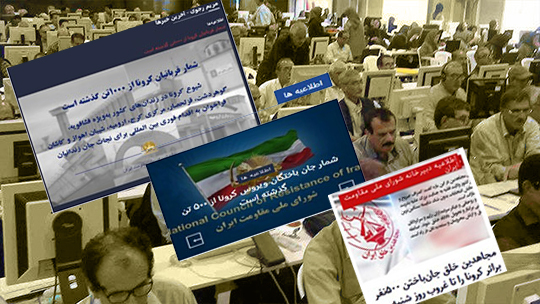
++ Several pieces also focused on MEK’s role in online propaganda with the enslaved members in Camp Ashraf 3 used for cyber activity. In Mother Jones, Daniel Moattar interviewed Peyman Jafari, researcher and historian at Princeton University’s Center for Iran Persian Gulf Studies. Jafari mentioned the disinfo campaigns which emanate from Iran and the US. “Trump was bragging about his tweet in Persian being the most retweeted Persian-language tweet. But much of that retweeting happens by these bots, and through these online activist cyber armies like the MKO. Their activism, now, is basically tweeting. They have these halls of aging activists sitting behind computers and sending out tweets all day long… When Trump tweeted in Persian, a lot of Iranians’ reaction was just, ‘Shut up. You have instituted a travel ban. You have targeted our cultural sites. You have been sanctioning us.’ People are aware of that.”

++ Deutsche Welle reported on Albania’s involvement in the standoff between the US and Iran. But reporting MEK spokesman Behzad Safari crying wolf and Rama cringeworthily comparing MEK with persecuted Jews in WW2 does not have the effect they hope for. Instead, placing Albania in the crosshairs of Iran means that hosting the MEK is a disaster for the Albanian people. Mazda Parsi writing for Nejat Society which helps former MEK to rehabilitate, warns that the “Albanian government is definitely gaining advantages by offering safe haven to the MEK but they should be absolutely warned that a terrorist cult-like establishment like the MEK will come back to haunt their country someday. This is a serious warning.”
Jan. 24 , 2020

January 25, 2020 0 comments
FacebookTwitterPinterestWhatsappTelegramSkypeEmail
USA double standards on terrorists
Mujahedin Khalq; A proxy force

MEK Overt and Covert Server of US Interests

For those who have been involved with the Mujahedin Khalq Organization (the MKO/ MEK/ PMOI/ Cult of Rajavi) or have studied its background from the early days of its foundation, it is clear that the group was founded as an anti-Imperialist movement against the Shah of Iran, in the 1960s.
“Anti-capitalist, anti-imperialist and anti-American, MEK fighters killed scores of the Shah’s police in often suicidal street battles during the 1970s”, wrote Arron Merat in the Guardian.

“The group targeted US-owned hotels, airlines and oil companies, and was responsible for the deaths of six Americans in Iran.”Death to America by blood and bonfire on the lips of every Muslim is the cry of the Iranian people,”went one of its most famous songs.”May America be annihilated.”

However, a U Turn in the MEK’s policies took place just after the fall of the group’s main logistical and financial sponsor, Saddam Hussein in 2003. Having found themselves helpless and desperate, the group leaders tried to find new sponsors. The sponsors were naturally supposed to be chosen among the enemies of Iranians. Definitely, the US was the most hostile state against the Iranian government and eventually the most potential sponsor for the MEK.

In order to gain the support of the US government the MEK leaders had to serve it in any way possible. Their services included bribe, spying and operational activities as of a proxy force and any other service that a mercenary force may offer.
The MEK’s evident role in spying on Iranian nuclear facilities, in the killing of Iranian nuclear scientists and other cross boarder operations inside Iran, which were revealed by numerous journalists and analysts, bring them to similar assumptions about any violent act against Iranians.
Max Perry of the Dissident Voice has also the matching analysis about the downing of the Ukranian plane. His theory compares the MEK with a Dominican Republic-based Cuban exile terrorist organization that associated with the US intelligence in the bombing of Cuban Airlines Flight 455 in 1976 which killed all 73 passengers and crew on board. This was part of the Operation Northwood of which”the planners concluded that such deceptive operations would shift U.S. public opinion unanimously against Cuba”.

https://dlb.nejatngo.org/Media/Interview/IMPAKT_Mohammadi_201807_p1.mp4

“It was also entirely plausible that U.S. special operations planners could have consulted the Northwoods playbook replacing Cuba with Iran and the right-wing gusanos who were to assist the staged attacks in Miami with the Iranian opposition group known as Mujahedin e-Khalq (MEK/People’s Mujahedin of Iran) to do the same in Tehran.,”writes Max Perry.”In July of last year, Trump’s personal lawyer and former New York City Mayor Rudolph Giuliani gave a paid speech at the cult-like group’s compound in Albania where he not only referred to the group as Iran’s”government-in-exile”but stated the U.S’s explicit intentions to use them for regime change in Iran. The MEK enjoys high level contacts in the Trump administration and the group was elated at his decision to murder Soleimani in Baghdad.”

“That the U.S. is still cozy with”former”terror groups like MEK seeking to repatriate is good reason to believe its use of militant exiles for covert operations like those from Havana has not been retired. If there were jumps to conclusions that proven serial liars could be looking for an excuse to stage an attack to lay the blame on Iran, it is only because the distinct probability was overwhelming.”Perry concludes.

Whether Perry’s hypothesis is correct or not, warmongers in the US government seems to be insolent enough to themselves to enjoy the services of a formerly terrorist designated group like the MEK. While the State Department ordered employees a few days after the assassination of General Soleimani not to meet with Iranian opposition groups including the MEK, it override the memo a few days later. The overt endorsement of MEK terrorists was covered by the Daily Beast.
“At whiplash speed, the State Department is walking back an order barring American diplomats from meeting with controversial Iranian dissident groups—including one close with Trump World allies and previously designated as a terror group, the Mujahedeen-e-Khalq (MEK),”reported the Daily Beast.”The initial memo, greenlit by a career State Department employee, angered Congressional Iran hawks. And the Department’s move to change its guidance has drawn cheers from them.”
The new directive of secretary Pompeo seeks to preserve the MEK as its spying and operational tool.”While the new memo did not mention MEK or the other groups, it said diplomats should simply”use good judgement when receiving invitations or meeting with opposition groups”and should raise questions and concerns with senior State officials––an apparent revocation of the order that they only take such meetings with Foggy Bottom’s explicit approval.”
Nevertheless, the covert and overt cooperation between the terrorist cult of the MEK and the US do not seem to be productive in the US policies towards Iran. Alexander B. Downes’s analysis on the options US may choose to topple the Iranian government in the Washington Post, clarifies that”Cooperation with local opposition groups”such as the MEK”is not a feasible option”.
Particularly about the MEK he writes,”The leading dissident organization, the Albania-based Mujahedin-e-Khalq (MEK), has no presence in Iran, not to mention a highly dubious past.”

By Mazda Parsi

January 25, 2020 0 comments
FacebookTwitterPinterestWhatsappTelegramSkypeEmail
Mujahedin Khalq; A proxy force

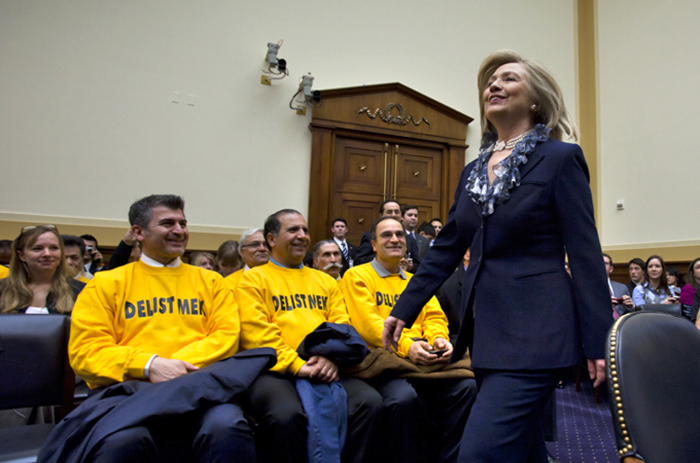
Hillary de-listed the MEK, to exploit it in US-led destabilization

On January 3, 2020, the plane of Qasem Soleimani, major general of the Islamic Revolutionary Guard Corps (IRGC) and commander of its elite Quds Force, arrived at Baghdad International Airport. At the same time, the US MQ-9 Reaper, a prime assassination drone, was loitering in the area with other military aircraft.

At the Airport, Soleimani left with Abu Mahdi al-Muhandis, the deputy head of the Iran-backed Iraqi Popular Mobilization Forces. As they entered two vehicles, the convoy headed toward downtown Baghdad. At 1 am local time, the Reaper launched several missiles on Baghdad Airport Road. The two cars exploded in flames killing some 10 people, including Soleimani and al-Muhandis.

: US assassination of Qassem Soleimani

After the devastation, whatever was left of Soleimani could be identified only by his ring. Ironically, several perished Iranian and pro-Iranian commanders had been instrumental in the defeat of the Islamic State.

Secretary of State Mike Pompeo said Washington had made an “intelligence-based assessment” that Soleimani was “actively planning in the region” to attack US interests. In turn, President Donald Trump declared Soleimani was behind “imminent attacks” on US diplomatic facilities and personnel across the Middle East.

That’s the official story.
Undermining de-escalation

Afterwards, Trump’s team got caught offering mixed messages about Iran’s “imminent” attacks as a justification for Soleimani assassination. National security adviser Robert O’Brien says Trump authorized eliminating Soleimani who cooperated with his allies “to kill American diplomats and soldiers in significant numbers.” Defense Secretary Mark T. Esper claims there was “exquisite intelligence” indicating Soleimani was “conducting preparing military operations” akin to “terrorist activities” against the US. In turn, Pompeo seized Iran’s past behavior as justification.

None of these reasons, which stress attributed intentions rather than hard evidence, seem credible in the light of Iran’s efforts at multilateral diplomacy, its challenging economic conditions and the behind-the-façade attempt at de-escalation with Saudi Arabia. However, the mixed messages do reflect a longstanding US effort to justify “permanent war” in the Middle East and certain other hot spots. The House resolution to limit Trump’s war powers against Iran is a move in the right direction but it can neither reverse the past policy mistakes nor halt the current escalation.

In the subsequent TV address, Trump delivered his Orwellian soundbite. “We took action last night to stop a war… We did not take action to start a war.” And yet, several US planes were taking off from bases in the eastern United States toward the Middle East as Pentagon sent 3,500 members of the 82nd Airborne Division, one of the largest deployments in decades.

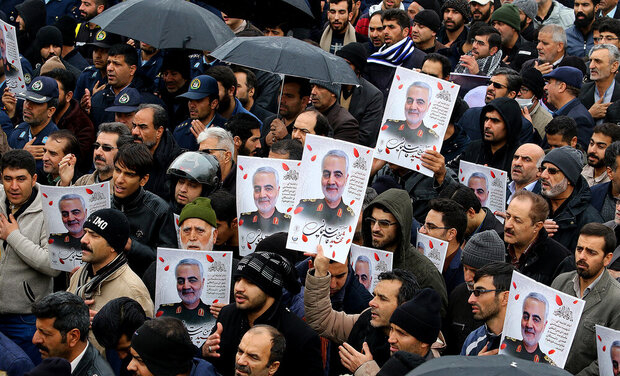
Amid mega rallies for Soleimani and Iraqi parliament calling for the expulsion of US troops from the country, Iran’s Supreme Leader Ali Khamenei spoke about the impending “retaliation.” Trump warned Tehran that any retaliation would result in US targeting 52 Iranian significant sites, including cultural sites. The allusion was to the number of American hostages during the Iran hostage crisis some 40 years ago.

Then came the bomb shell. Two days after the assassination, Iraq’s Prime Minister Adil Abdul-Mahdi addressed his country’s parliament suggesting that Soleimani was on a peace mission. According to Abdul-Mahdi, he had planned to meet Soleimani on the morning the general was killed to discuss a diplomatic rapprochement that Iraq was brokering between Iran and Saudi Arabia. Abdul-Mahdi said Trump personally thanked him for the efforts creating the impression that Soleimani could safely travel to Baghdad, even as the White House was busy planning a hit.

Subsequently, Pompeo rushed to defend the assassination, again. “We know that [the report about Soleimani’s peace mission] wasn’t true,” he said. “We got it right.” Once again, he presented no hard evidence.

In reality, the US assassination appears to have been the latest effort to preempt de-escalation plans in the region, to reinforce Iran’s destabilization. It follows years of misguided covert operations. Here’s how it happened.

The Trump Administration’s Iran Fiasco

From Trump’s U-turn to new Iran sanctions

Only a few years ago, there was still great hope in Iran. After years of diplomacy, the comprehensive nuclear accord (JCPOA, July 2015) was achieved between Tehran and the so-called P5+1 nations; that is, the five permanent members of the UN Security Council—China, France, Russia, UK, and the US, plus Germany together with the European Union (EU). Under the deal, Iran agreed to eliminate its stockpile of medium-enriched uranium, while the International Atomic Energy Agency (IAEA) gained access to all Iranian nuclear facilities.

To Iran, the deal offered relief from US, UN and multilateral sanctions on energy, financial, shipping, automotive and other sectors. These primary sanctions were lifted after the International Atomic Energy Agency’s (IAEA) certification in January 2016 that Iran had complied with the agreement. Yet, secondary sanctions on firms remained in place, along with sanctions applying to US companies, including banks.

After the 2016 US election, the Congress with its Democratic majority—not president-elect Trump—paved the way for a U-turn. Following the House of Representatives, the Senate in late 2016 unanimously extended the Iran Sanctions Act (ISA) for a decade. Stunningly, the deal that President Obama had portrayed as his legacy in the region was shot down surprisingly fast. Intriguingly, most Democrats reversed their positions regarding the nuclear deal.

As Trump arrived in the White House, he began developing a far more muscular policy against Iran to benefit from Saudi economic and geopolitical support. In May 2017, Trump and Saudi Arabia’s then-king Salman bin Abdulaziz Al Saud signed a historical arms deal, which totaled $110 billion immediately and $350 billion over a decade. Widely perceived as a “counterbalance” against the Iranian influence in the region, it cemented the ties between Saudi Arabia and the US. However, Crown Prince Mohammed bin Salman’s reform efforts have been tarnished by harsh measures against members of his family and opposition, the Khashoggi murder and dismemberment, and the devastating war and famine in Yemen.

In return for the Saudi deal, the White House began a concerted push to counter Iran’s regional and strategic weapons programs, which had been excluded from the Iran deal. In May 2018, Trump signed National Security Presidential Memorandum 11, “ceasing U.S. participation in the [Iran nuclear deal]” and taking additional action to counter Iran’s “influence and deny Iran all paths to a nuclear weapon.”

That’s when the US effectively nullified a decade-long unified, multilateral approach to Iran’s activities, while setting in motion unilateral economic sanctions, which have affected not just U.S. businesses but targeted commerce from other major economies, particularly China, France, Russia, UK, Germany and the EU.

Even after Iran’s missile attacks against two bases of American troops, which seem to have purposefully shunned human targets, Trump promised further ratcheting up of economic sanctions against Iran. The use of sanctions is predicated on a purposeful effort to overthrow the Iranian government.

From Bolton’s “Shah scenario” to regime change

The Trump administration has greenlighted clandestine efforts to weaken Iran’s “moderates” hoping to incite “hawks” into strategic moves that could be used as a pretext for regime change. In April 2018, Trump hired the neoconservative uber-hawk John Bolton as US National Security Advisor (he was booted less than a year and half later). A relic of the Bush era, Bolton had engaged in the “weapons of mass destruction” pretense that led to the Iraq War. Now he advocated regime change in Iran and other countries.

By November 2017, Bolton urged the US to have a contingency plan for a “Shah of Iran scenario” and regime change before February 2019; the 50th anniversary of the Iranian revolution. His change agent was Mojahedin-e Khalq (MEK), an Iranian opposition group which advocates a violent coup in Iran. In the early 2010s, the UK, EU and the US considered MEK a terrorist organization until then-State Secretary Hillary Clinton de-listed the group, to exploit it in US-led destabilization.

To support his economic sanctions with clandestine operations, Trump named Michael D’Andrea as the head of CIA’s Iran operations. Nicknamed “Ayatollah Mike,” he inspired the character of The Wolf in the Oscar-awarded movie Zero Dark Thirty (2012). Although D’Andrea failed to track Nawaf al-Hazmi, one of the hijackers who crashed American Airlines flight 77 into the Pentagon on September 11, 2001, he was made head of the CIA’s Counterterrorism Center few years later. With President Obama’s blessing, he also presided over hundreds of US drone strikes in Pakistan and Yemen. His operatives oversaw several interrogations, which a US Senate report has described as torture. And he has been blamed for the Camp Chapman attack in Afghanistan in which seven CIA operatives were killed.

When the then-CIA chief Mike Pompeo became Secretary of the State, his deputy Gina Haspel took charge of CIA. Following 9/11, Haspel oversaw a secret CIA prison in Thailand, which housed suspected Al-Qaeda operatives. Relying on “enhanced interrogation techniques,” she, like D’Andrea, was deeply involved in the detention and interrogation program condemned by the 2014 Senate report.

Worse, Haspel played a key role in the destruction of 92 interrogation videotapes that showed the torture of detainees in black sites. While the Bush and Obama era CIA leaders supported her CIA nomination, more than 100 retired US generals and admirals expressed “profound concern,” due to her record.
Plunging oil production

D’Andrea and Pompeo favor regime change in Iran and some observers see their covert-operation influence in the 2019-20 Iranian protests in many cities. As Iranians have greatly suffered from US efforts at domestic destabilization and international insulation, some demonstrators are obviously motivated by economic woes. But it also seems that Bolton’s Shah scenario and its variations remain on the table, as evidenced by the role of the US-sponsored Pahlavi loyalists among some protesters.

In contrast, Iranians see oil as the main reason to US interest in the Middle East. Iran and Iraq hold some of the world’s largest deposits of proved oil and natural gas reserves. Combined, their reserves exceed those of Venezuela, which has the world’s largest proved reserves.

Between 2010 and 2013, the sanctions hurt Iran’s economy contributing to the fall of crude oil exports from 2.5 million barrels per day to 1.1 million by mid-2013. That, in turn, was compounded by the plunge in oil prices since early 2014. Following the nuclear deal, Iran’s production soared back to 4 million barrels. With Trump’s efforts at regime change, the capacity steadily decreased to 3.7 million barrels per day. Recent OPEC estimates suggest it has plunged to 2.8 million barrels.
Iran’s Petroleum Production and Consumption, 2011-2018 (Source: EIA, Difference Group)

Iran’s Petroleum Production and Consumption, 2011-2018 (Source: EIA, Difference Group)

If Iran’s production capacity takes a further hit, that will penalize particularly its biggest importers China, India, South Korea and Turkey.
Diminished Prospects

Since Russia and China were expected to stay behind the Iran nuclear deal, the real question was whether the European powers—Germany, France, the UK, and the EU itself—would defend it. Unsurprisingly, the Trump administration targeted European businesses that did business in and with Iran after the nuclear deal. In June 2019, the EU created a mechanism (INSTEX) that allows European countries to trade with Iran despite US sanctions. But it was too little, too late. Brussels failed to sustain the Iran nuclear deal against Trump’s unilateral moves.

Before 2015, Iran’s economy shrank by 9% two years, due to sanctions. After stabilization, sanctions relief enabled Iran’s oil exports to return to nearly pre-sanctions levels, permitted Tehran to regain access to funds held abroad, boosting 7% overall economic growth in 2016. Foreign energy firms made new investments in the energy sector and major aircraft manufacturers sold Iran’s commercial airlines new passenger aircraft. The relief contributed to the victory of Iran’s President Hassan Rouhani in the 2017 presidential election. Growth broadened to the non-oil sector. Real GDP growth was projected to rise toward 4.5% over the medium-term as financial sector reform was anticipated to take hold.

But then came the Trump U-turn. In May 2018, he had the U.S. withdraw from the nuclear deal, while secondary sanctions drove Iran’s economy into mild recession as major companies exited the country rather than risk being penalized by the US. The value of Iran’s currency declined sharply. Even before the US escalation, Iran’s economy was expected to undergo a second consecutive year of recession and contract by 8.7% in 2019/20. Inflation was estimated to reach 38% annually with mounting fiscal pressures. Economic expansion, which began after the nuclear deal, has been undermined. Neither is stagnation enough for the Trump administration. What the White House is fostering is progressive contraction.

Following the drastic re-escalation, Iran’s economy will have to cope with even more challenging downward risks. And if oil exports were to be curtailed further, the economy could enter into a steeper recession and suffer from high inflation rates. In such a status quo, the challenge of protecting the vulnerable households would put additional pressure on the government finances and potentially the rial. Unfortunately, that may be precisely the White House’s objective.

“The challenges highlight the crucial role of further economic diversification by focusing on non-oil sources of growth and government revenues,” the World Bank stated in a recent update. In reality, economic diversification can only be built on peaceful conditions and political stability, which allow governments to proceed with a medium-term diversification. Such preconditions predate Trump’s Iran policy that has undermined years of international, multilateral diplomacy.

The net effect is the most dangerous escalation in the Middle East in decades and possibly the last nail in the fragile global economic prospects that could cause a synchronized global contraction in the course of 2020.

This article was originally published by the UK-based World Financial Review on January 10, 2020.

By Dan Steinboc, World Financial Review

January 23, 2020 0 comments
FacebookTwitterPinterestWhatsappTelegramSkypeEmail
Albania

Will the MEK turn back to haunt Albania?

Albanian President Ilir Meta said a few weeks ago that”Albania is not a devilish country, but a democratic country that has suffered from an unprecedented devilish dictatorship and has come to value human rights as sacred“. His comments was a reaction to Iranian supreme leader ayatollah Ali Khamenei who mentioned Abania as a “very small but devilish European state, where Americans cooperate with Iranian traitors against the Islamic Republic.”
Actually, Albania backed the US attack to assassinate the Iranian general Qassem Soleiman, on the first days of January 2020. Whether Albania is a democratic country or not, it is now publicly supporting the terror of an Iranian official and advocating and sheltering the Mujahedin Khalq Organization (the MKO/ MEK/ PMOI/ Cult of Rajavi) with a long history of terrorist acts and cult-like practices.
However, the stance of the Albanian president seems expectable due to the social and health services that the MEK offers the Albanian people for free. It is also very likely that a part of those huge sums of money that the group donates western politicians in exchange for their support, goes to the pockets of Abanian government officials that have warmly welcomed the terror group in their territory.
The MEK’s so-called humanitarian services to the Albanians can be regarded as an act of generosity and sympathy. But, the true face of the MEK lies in its history and the conditions of its rank and file: about two thousand elderly members who are kept in a hypnotic-like state.
The cult-like structure of the MEK makes it an inhuman entity from inside with a humanitarian face from outside. The potential threat of Rajavi’s cult of personality has been drawn into attention since the group’s relocation to Albania. The experience of the group’s residence in Iraq has given important lessons to the international society.
The MEK functioned as a private army for Saddam Hossein. They collaborated with Baath Party in suppression of Iraqi Kurd’s and Shiit uprisings in the early 1990’s. Meanwhile they were offering social services to Iraqi Sunni tribes who were hostile against Iraqi shiits and kurds and Iranians. The MEK played a very crucial role to escalate the divisions and instability in Iraq at Saddam’s era and after its collapse. Iraqi newly established government actually expelled the group from its territory since the beginning of its ruling but they could not manage the expulsion until 2013.
The group was received by Albania under a beneficial contract between the United States and the poor Albania. Albanian government is definitely gaining advantages by offering safe heaven to the MEK but they should be absolutely warned that a terrorist cult-like establishment like the MEK will come back to haunt their country someday. This is a serious warning.
Mazda Parsi

January 22, 2020 0 comments
FacebookTwitterPinterestWhatsappTelegramSkypeEmail
Newer Posts
Older Posts

Recent Posts

  • Slovenian PM Janez Janša, MEK & Israel promoter

    July 1, 2026
  • MKO Rally Dispersed by French Police in Humiliating Blow to Terrorist Group

    June 27, 2026
  • Nejat Society Albania’s Conference on June 20th

    June 22, 2026
  • Maryam Rajavi’s Stance, Peace or Survival Tactic?

    June 22, 2026
  • France’s foreign ministry denies asking for ban of MEK’s rally

    June 20, 2026
  • Facebook
  • Twitter
  • Instagram
  • Youtube

© 2003 - 2025 NEJAT Society . All Rights Reserved. NejatNGO.org


Back To Top
Nejat Society
  • Home
  • Articles
  • Media
    • Cartoons
    • NewsPics
    • Photo Gallery
    • Videos
  • Publications
    • Books
    • Nejat NewsLetter
    • Pars Brief
  • About Us
  • Contact us
  • Editions
    • عربي
    • فارسی
    • Shqip