Nejat Society
  • Home
  • Articles
  • Media
    • Cartoons
    • NewsPics
    • Photo Gallery
    • Videos
  • Publications
    • Books
    • Nejat NewsLetter
    • Pars Brief
  • About Us
  • Contact us
  • Editions
    • عربي
    • فارسی
    • Shqip
Nejat Society
Nejat Society
  • Home
  • Articles
  • Media
    • Cartoons
    • NewsPics
    • Photo Gallery
    • Videos
  • Publications
    • Books
    • Nejat NewsLetter
    • Pars Brief
  • About Us
  • Contact us
  • Editions
    • عربي
    • فارسی
    • Shqip
© 2003 - 2024 NEJAT Society. nejatngo.org
Maryam Rajavi

Kastriot Myftaraj: Maryam Rajavi calls for uprising, should be arrested

In the latest issue of “Moscow Speaking” in Ora News, Kastriot Myftaraj commented on the recent threat of war that Iranian Mojahedin dictator Maryam Rajavi has made against Iran.

Kastriot Myftaraj comments on the recent call by Maryam Rajavi for an uprising in Iran that was made from the Mojahedin camp in Manzas, citing the Criminal Code of the Republic of Albania to denounce Rajavi’s terrorist demand.

Article 221 of the Criminal Code of Albania imposes imprisonment for 15 to 25 years, while the head of the insurgency can be sentenced to life imprisonment for such demands.

Article 211 carries a sentence of imprisonment for not less than 15 years for incitement to commit war, in this case by the Iranian Mojahedin leader.

Myftaraj notes that calls by Maryam Rajavi and the Iranian jihadists in Manzas for war against Iran provokes the latter to attack Albania with its missile system.

For this reason, Myftaraj denounces these calls for war and uprising by the Iranian jihadists sheltered in Manzas.

September 29, 2018 0 comments
FacebookTwitterPinterestWhatsappTelegramSkypeEmail
USA

US envoy to UN denies Giuliani’s claim that Trump wants ‘revolution’ in Iran

US Ambassador to the United Nations Nikki Haley says Washington is not seeking to overthrow Iran’s government, denying claims by President Donald Trump’s personal lawyer Rudy Giuliani that the US favored a “revolution” in Iran.

“The United States is not looking to do a regime change in Iran,” Haley told CNN on Sunday. “We’re not looking to do regime change anywhere.”

Giuliani, Trump’s attorney and former mayor of New York City, told an anti-Iran event on Saturday that Trump’s policy of economic pressure and sanctions against Tehran could spur on a regime change.

“I don’t know when we’re going to overthrow them,” Giuliani said during the so-called Iran Uprising Summit at a hotel in Times Square. “It could be in a few days, months, a couple of years. But it’s going to happen.”

Giuliani’s remarks went against the Trump administration’s declared policy of not seeking a change of government in Iran despite imposing strong economic sanctions against the country.

Trump withdrew from the 2015 Iran nuclear deal in May and announced that his administration was going to snap back sanctions on the Islamic Republic, most notably measures that were going to target its oil exports from November 4.

Washington hopes that the economic pressure will force Tehran not only to halt its nuclear program entirely but also change its policies towards various conflicts in the Middle East.

US Secretary of State Mike Pompeo also contrasted Giuliani in an interview aired Sunday, telling NBC News that Trump was ready to meet with Iranian President Hassan Rouhani during (UN) General Assembly gathering later this week.

“If there’s a constructive dialogue to be had, let’s get after it,”he said.

Iran has made it clear that direct talks with the US are not an option until Washington drops all of its hostile policies.

Iran’s President Rouhani says the US is not able to prove its trustworthiness for any negotiations after quitting the nuclear deal with Iran.

This is not the first time that Giuliani is partaking in such events.

Earlier this year, he stole the show at a conference held by notorious MKO terrorists in Paris and made similar calls for regime change in Iran.

“Freedom is right around the corner … Next year I want to have this convention in Tehran!” he said.

The MKO is listed as a terrorist organization by much of the international community. Its members fled Iran in 1986 for Iraq, where it enjoyed Saddam’s backing.

Out of the nearly 17,000 Iranians killed in terrorist assaults since the victory of Iran’s 1979 Islamic Revolution, about 12,000 have fallen victim to MKO’s acts of terror.

September 27, 2018 0 comments
FacebookTwitterPinterestWhatsappTelegramSkypeEmail
Maryam Rajavi and Giuliani
Mujahedin Khalq; A proxy force

US Anti-Iran Summit Coincided with Foreign-Based Terror Attack in Iran Killing 25

A group known as al-Ahvaziya claimed responsibility for the attack on a military parade in Khuzestan Province.

Terrorists in Iran launched an attack on a parade on Saturday killing 25 — including a four-year-old girl. Unsurprisingly, the group claiming responsibility for the massacre has links to foreign entities in Saudi Arabia and their allies.

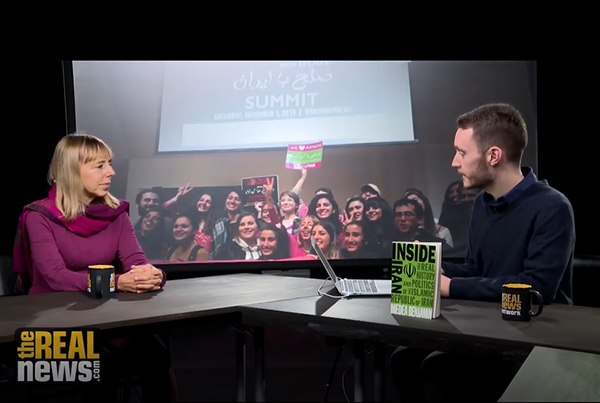
Also on Saturday, Donald Trump’s lawyer, Rudy Giuliani, spoke at an “Iran Uprising Summit” in New York City’s Time Square supporting efforts to overthrow Iran’s revolutionary government. The summit included supporters of the National Council of Resistance of Iran (NCRI) and other groups that share Washington’s goal of overthrowing Tehran.

“The people of Iran obviously have now had enough,” Giuliani said on Saturday. “The sanctions are working. The currency is going to nothing … these are the kinds of conditions that lead to successful revolution.”

Giuliani spoke to members of the Mujahideen-e-Khalq, or MEK, a group Washington only recently removed from their foreign terrorist list — likely in efforts to plot so-called “regime change” in Tehran in broad daylight rather than behind closed doors. John Bolton, Donald Trump’s National Security Advisor, has strong links to the MEK, which has killed over 17,000 civilians terror attacks over the group’s tenure.

The MEK along with similar takfiri groups and their political fronts frequently meet for anti-Iran conferences with high-ranking US and Western diplomats and officials in places like Paris and New York.

Foreign-based Group Claims Responsibility for the Attack

A group known as al-Ahvaziya claimed responsibility for the attack on a military parade in Khuzestan Province which killed at least 25 and injured roughly 60 others. Four terrorists opened fire on crowds. Iranian security forces killed three of the attackers but managed to apprehend one.

Based in London, al-Ahvaziya also has branches in the United Arab Emirates, Saudi Arabia, and Egypt. The group held their annual conference in Cairo, Egypt last year. Masquerading as a national liberation movement, al-Ahvaziya aims to destroy Iran’s territorial integrity by advocating the secession of Khuzestan Province from the rest of Iran.

Ironically enough, Khuzestan Province contains one of the richest oil fields in the world — producing 750,000 barrels per day with an estimated 65.5 billion in reserves. This falls in line with Washington’s general goal of sanctions to cripple Iran’s economy and foment discontent as well as their broader regional goals of death by Balkanization through splitting up sovereign nations like Syria and Iran to exploit natural resources and acquire capital.

Since 1999, al-Ahvaziya has frequently targeted oil reserves, pipelines, and civilians with bombs. One of their most deadly attacks prior to Saturday’s took place in 2006 when they detonated a bomb in an office building killing 11 and wounding 87.

Al-Ahvaziya has a safe haven in Denmark where the group’s leader provided an interview nearly immediately following the attack.

 Silence and Snark from World Leaders

The world remained relatively silent following the terror attack in Iran on Saturday.

US Ambassador to the United Nations, Nikki Haley, advised Tehran to “look in the mirror.” Washington claims Iran is the world’s biggest sponsor of terror despite the fact that the Islamic Revolutionary Guards Corps (IRGC) and their affiliated groups being the most successful ground force for eliminating terror groups like ISIS and al-Qaeda.

Iran’s UAE envoy, Abdulkhaleq Abdulla, justified the terror attack on Twitter claiming more attacks would soon follow. Iran’s Foreign Ministry Spokesman Bahram Qassemi condemned Abdulla’s remarks as “irresponsible and thoughtless” and demanded Abu Dhabi be held accountable.

On the other end of the spectrum, Russian president, Vladimir Putin, phoned his Iranian counterpart, Hasan Rouhani shortly following the attack to express support. Putin offered condolences and support for further cooperation to combat terrorism.

Iranian president, Hasan Rouhani, offered sympathy to the families of those killed during the attack. Rouhani, along with Tehran’s Top General, IRGC, and Intelligence Minister, all pledged a swift and strong response to those who carried out the attack along with their sponsors.

The CIA launched a coup against the democratically elected government in Tehran 1953. In 1979, Iranians overthrew the CIA-backed regime in a popular revolution which Washington has remained hell-bent on destroying for the past 40 years.

Top Photo | Left to right: Maryam Rajavi, former MEK leader and leader of the National Council of Resistance of Iran talks with Rudy Giuliani and Senator Joe Lieberman at s free Iran Gathering, July 1, 2017. Flickr | Maryam Rajavi

By Randi Nord September 24th, 2018,Mintpressnews.com

September 27, 2018 0 comments
FacebookTwitterPinterestWhatsappTelegramSkypeEmail
Mujahedin Khalq; A proxy force

US Vows to “Overthrow” Iran as Terrorists Target Iranians

A terrorist attack on a military parade targeting civilians and military personnel alike left at least 29 dead and up to 70 more wounded in Iran’s southwest region of Ahvaz.

At the same time, in New York City, US political figures including US President Donald Trump’s lawyer Rudolph Giuliani attended and expressed open support for “revolution” in Iran at the 2018 Iran Uprising Summit organized by Mojahedin-e Khalq (MEK).

MEK is a terrorist organization that has previously killed US service members and civilian contractors, but was removed from the US State Department’s Foreign Terrorist Organizations list in order for the US to more openly and directly support the terrorist front’s efforts to destabilize and overthrow the Iranian government.

West Refuses to Call Ahvaz Attackers Terrorists

The Iranian government has blamed the Al Ahvaziya terror organization for the September 22 attack.

According to the BBC, Al Ahvaziya has also taken credit for the attack – yet the BBC – along with other media fronts across the West as well as Western governments – has refused to characterize Al Ahvaziya as a terrorist organization and instead depicted it as an “anti-government Arab group.”

The BBC’s article, “Iran blames Gulf foes for deadly Ahvaz attack,” would claim:

A spokesman for the Ahvaz National Resistance, an umbrella group that claims to defend the rights of the Arab minority in Khuzestan, said the group was behind the attack.

Yet the same BBC in 2006 after a similar attack in Ahvaz, Iran would clearly characterize the group’s activities as terrorism and would even quote the UK Foreign Office who condemned the attack as terrorism while denying accusations the British government had been covertly backing the terrorists.

The BBC in its 2006 article titled, “Iran accuses UK of bombing link,” would claim:

A UK Foreign Office spokesman in London has denied the accusation, saying Britain condemned terrorism.

“Any linkage between HMG (Her Majesty’s Government) and these terrorist attacks is completely without foundation,” said the official.

The failure of the US and British governments to now wholly condemn the recent Ahvaz attack as an act of terrorism carried out by what is undeniably a terrorist organization, alone raises suspicions. However, US policy papers have revealed a long-term open conspiracy to back armed militancy in Iran, just as the US, UK, and their allies have been exposed currently doing in nearby Syria as well as Libya in 2011.

US-backed Iranian “Revolutionaries” are Terrorists – Says US

As Iran grieved in the wake of the Ahvaz attack, US politicians hosted MEK terrorists in New York, vowing to overthrow the Iranian government.

Reuters in their article, “Trump lawyer Giuliani says Iran’s government will be overthrown,” would report:

President Donald Trump’s personal lawyer Rudy Giuliani on Saturday said that U.S. sanctions on Iran are leading to economic pain that could lead to a “successful revolution” contrasting with administration comments that government change in Tehran is not U.S. policy.

“I don’t know when we’re going to overthrow them,” said Giuliani, who spoke in his own capacity though he is a Trump ally, at an Iran Uprising Summit held by the Organization of Iranian-American Communities, which opposes Tehran’s government.

Reuters would intentionally avoid naming the National Council of Resistance of Iran (NCRI) and MEK as the event’s organizers – and would even crop a photo for their article of Giuliani speaking to hide the NCRI’s logo.

While defenders of US support for MEK claim the group has reformed itself, US policy papers reveal that MEK was delisted specifically so the US could more openly use the group to carry out armed subversion against the Iranian government on Washington’s behalf.

It should be noted that Giuliani, current National Security Adviser John Bolton, and many other prominent US politicians had lobbied for, and attended MEK events long before the US State Department delisted it as a foreign terrorist organization.

The Brookings Institution in a 2009 policy paper titled, “Which Path to Persia? Options for a New American Strategy Toward Iran” (PDF), under a chapter titled, “Inspiring an Insurgency: Supporting Iranian Minority And Opposition Groups,” would openly admit (emphasis added):

Perhaps the most prominent (and certainly the most controversial) opposition group that has attracted attention as a potential U.S.  proxy  is  the  NCRI  (National  Council of Resistance of  Iran),  the  political  movement  established  by  the  MeK  (Mujahedin-e  Khalq). Critics believe the group to be undemocratic and unpopular, and indeed anti-American.

Brookings would elaborate regarding its terrorist background, stating (emphasis added):

Undeniably, the group has conducted terrorist attacks—often excused by the MeK’s advocates because they are directed against the Iranian government. For example, in 1981, the group bombed the headquarters of the Islamic Republic Party, which was then the clerical leadership’s main  political organization, killing an estimated 70 senior officials. More recently, the group has claimed  credit for over a dozen mortar attacks, assassinations, and other assaults on  Iranian civilian and  military targets between 1998 and 2001.

Brookings also mentions MEK’s attacks on US servicemen and American civilian contractors, noting:

In the 1970s, the group killed three U.S. officers and three civilian contractors in Iran.

Brookings would also emphasize (emphasis added):

The group itself also appears to be undemocratic and enjoys little popularity in Iran itself. It has no  political base in the country, although it appears to have an operational presence. In particular, its  active participation on Saddam Husayn’s side during the bitter Iran-Iraq War made the group widely  loathed. In addition, many aspects of the group are cultish, and its leaders, Massoud and Maryam Rajavi, are revered to the point of obsession.

Brookings would note that despite the obvious reality of MEK, the US could indeed use the terrorist organization as a proxy against Iran, but notes that:

…at the very least, to work more closely with the  group (at least in an overt manner), Washington would need to remove it from the list of foreign  terrorist organizations.

And while Al Ahvaziya is accused of carrying out the Ahvaz attack, it should also be noted that MEK “networks” specifically in Ahvaz have helped promote and carry out violence ranging from riots to arson for months – openly admitted to by MEK “network” accounts across social media – illustrating a synergy of terrorism, agitation, subversion, and propaganda functioning as an analogue to Western-backed terrorists and their supporters operating in Syria.

Additionally, at the New York City “Uprising Summit,” MEK leader Maryam Rajavi would admit to MEK organizing riots through “resistance units.” In her official message, now posted on various MEK websites, should would openly admit:

Today, the ruling mullahs’ fear is amplified by the role of the Mujahedin-e Khalq (MEK) and resistance units in leading and continuing the uprisings. Regime analysts say: “The definitive element in relation to the December 2017 riots is the organization of rioters. So-called Units of Rebellion have been created, which have both the ability to increase their forces and the potential to replace leaders on the spot.”

The roadmap for freedom reveals itself in these very uprisings, in ceaseless protests, and in the struggle of the Resistance Units.

Thus, while Iranians mourned in the wake of the Ahvaz terrorist attack, Rajavi was broadcasting her message in New York City gloating of her terrorist organization’s capacity to sow violence and chaos across Iran.

MEK, Al Ahvaziya, and other terrorist groups operating within or along Iran’s borders do so with extensive, admitted US support.

Iran’s most recent accusations that the West and their Persian Gulf allies are behind terrorist organizations attacking Iran are difficult to dispute when US politicians are consorting with literal terrorists in New York calling for an “uprising” as terrorist attacks unfold inside Iran – more so when US policy papers themselves admit their proxies of choice are undeniably terrorists and supporting them must be done either covertly, or after a thorough political whitewash.

A similar process of whitewashing listed terrorist organizations occurred regarding Al Qaeda-affiliate, the Libyan Islamic Fighting Group (LIFG) used by the US and UK to overthrow the Libyan government in 2011, delisted as a foreign terrorist organization by the US State Department in 2015, before members of the terrorist front carried out a suicide bombing in Manchester, UK in 2017 killing 23 (including the bomber).

Spreading Syria’s Chaos to Iran Before the War Ends

The US-engineered proxy war against Syria was always a means toward eventually attacking, dividing, and destroying Iran, before moving onward to Central Asia and southern Russia.

As the Syrian conflict approaches its conclusion, and with that conclusion favoring Damascus and its Russian and Iranian allies, there is renewed impetus in Washington and among America’s allies to spread the war into Iran.

Sanctions, subversion, terrorism, and eventually direct military confrontation are all options either already being exercised, or being prepared to confront and overthrow Tehran’s political order.

By now, even to the most casual observers, it should be clear that it is the West – not Iran – who presents the greatest threat to global peace and stability – sponsoring the very worst terrorist organizations on the planet, carrying out heinous crimes against the populations of Syria, Iraq, and Iran – and as a result of being granted impunity and given endless resources by the West, allowed to menace the Western public as well as amply illustrated during the 2017 Manchester attack.

By Tony Cartalucci

Tony Cartalucci is Bangkok-based geopolitical researcher and writer, especially for the online magazine “New Eastern Outlook” where this article was originally published. He is a frequent contributor to Global Research.


Also:

The Mujahedeen e-Khalq: The US Prepares to Back a New Terrorist Army in Iran, Prelude to a Wider War?

September 27, 2018 0 comments
FacebookTwitterPinterestWhatsappTelegramSkypeEmail
Rudy Giuliani
Mujahedin Khalq; A proxy force

Giuliani Has Been Told to Stop Advocating for Foreign Interests but Just Did It Anyway

This time Trump’s lawyer suggested there will be a regime change in Iran

Earlier this month, seven Senate Democrats asked the Justice Department to investigate whether President Trump’s lawyer, Rudolph Giuliani, is breaking the law by lobbying for foreign interests without registering as a foreign agent. One of Giuliani’s foreign clients that the senators cited is Mujahedin-e-Khalq, or MEK, an Iranian opposition group that the State Department once included on a list of organizations that support terrorism. Giuliani has spoken at the group’s gatherings and the organization routinely cites its ties to the former mayor to boost its credibility. “Giuliani regularly advocates for regime change in Iran, which is one of MEK’s top objectives,” the senators wrote.

Giuliani showed how seriously he takes such criticism on Saturday. The former New York mayor spoke at a Manhattan event whose organizers include the National Council of Resistance of Iran, which is closely linked to MEK. During his remarks he suggested that the United States supports regime change in Iran.

    “I don’t know when we’re going to overthrow them. It could be in a few days, months, a couple of years. But it’s going to happen.”

“I don’t know when we’re going to overthrow them,” Giuliani told the audience. “It could be in a few days, months, a couple of years. But it’s going to happen.”

Giuliani also said that sanctions imposed by the Trump Administration after the United States pulled out of a deal in which Iran agreed not to develop nuclear weapons “are working” by damaging Iran’s economy. “These are the conditions that lead to successful revolution,” he said.

This statement conflicts with official US policy. The State Department says the United States does not support regime change in Iran and announced last week that Giuliani “does not speak for the U.S. government on foreign policy.” During an appearance on CNN Sunday, UN Ambassador Nikki Haley also responded to the suggestion by the president’s lawyer. “The United States is not looking to do a regime change in Iran,” Haley said.

Giuliani was paid through his “firm” to deliver the speech, he told The Daily Beast last week. He declined to disclose his fee. Giuliani does not reveal all his clients, but he has recently worked for foreign entities including the government of Qatar, a member of Ukrainian political party that former Trump campaign manager Paul Manafort admitted he illegally lobbied for, and Turkish officials prosecuted in the United States for circumventing prior US sanctions on Iran.

Giuliani has previously admitted that he advises Trump on matters other than legal issues. And Giuliani’s critics have expressed skepticism that he steers clear of concerns that are the priorities of his clients in his conversations with Trump or White House aides. “Without further review, it is impossible to know whether Mr. Giuliani is lobbying U.S. government officials on behalf of his foreign clients,” the Democratic senators wrote this month.

Giuliani has insisted he does not believe he is required to register with the Justice Department as a foreign agent because he does not directly lobby Trump or the US government. But the Foreign Agents Registration Act has no such limitation. The law says that anyone in the United States working to influence policy on behalf of foreign governments or political parties must register their activities with the Department of Justice. On Saturday, Giuliani appears to have received payment to advocate in the United States for an aggressive US policy towards Iran.

Dan Friedman, Mother Jones,

Dan Friedman is a reporter in Mother Jones‘ DC bureau. Reach him at dfriedman@motherjones.com.

September 26, 2018 0 comments
FacebookTwitterPinterestWhatsappTelegramSkypeEmail
Kevin Barrett
Mujahedin Khalq; A proxy force

Why Western media silent on Ahvaz terrorist attack

The mainstream Western media have been mostly silent about the deadly US-sponsored terrorist attack in the Iranian city of Ahvaz, according to US scholar and political analyst Kevin Barrett.

“Innocent people being killed by terrorists is front page news in the West; but, in the case of terrorism against Iran, suddenly, everything changes and the media tends to ignore and downplay it,”Barrett told Press TV in an interview on Saturday.

Barrett sees the attack as another terrorist operation launched by the United States and its regional allies.

“There have been close to 20,000 people killed in these kinds of terrorist attacks by extremist groups in Iran over the years to almost the complete silence of the western media and that is because it is the western governments led by the United States and its Israeli master who are in fact organizing, funding, arming, equipping, and unleashing these terrorists against Iran and they have been ever since the Islamic Revolution of 1979,”Barrett said.

Barrett noted that US President Donald Trump and top officials in his administration like Secretary of State Mike Pompeo and National Security adviser John Bolton were behind such state-sponsored terrorist attacks on innocent people.

“Today, we have in power in the United States the Trump administration whose two main Iran advisers — Bolton and Pompeo –are fanatical anti-Iran haters,” Barrett said.

Barrett said the pair had received huge bribes from the Iranian terrorist opposition group Mojahedin-e Khalq Organization (MKO), known to most other countries by another acronym, MEK.

“These guys bribes are usually called ‘speaking fees’, and Bolton and Pompeo and others will go in front of these terrorist organized events – propaganda exercises – for huge sums of money, to basically paper over MEK’s terrorist past,” Barrett said.

In return, Barrett assumed, the pair helps the terrorists receive funds to launch anti-Iran operations. “We can assume that the pair is helping their friends by upping the level of US support for them,” he said.

Barrett said direct support of terrorists groups like the MEK and state-sponsored terrorism was doing the US no good.

Barrett concluded that US-sponsored terrorist attacks were going to be counterproductive in the long run because “terrorism doesn’t work … Iranian people are not going to stand it. People like Bolton and Pompeo may have failed to learn that lesson and they will be learning it in the future. “

September 26, 2018 0 comments
FacebookTwitterPinterestWhatsappTelegramSkypeEmail
MKO Terrorists
Mujahedin Khalq; A proxy force

Traitors to the homeland

When Iranians rose up against the tyrannical rule of Mohammad Reza Shah Pahlavi in 1979, they had a picture of what they wanted in its place. It took them a short while, however, to translate that picture into a functioning government that would, among the other things expected of it, establish security.

For nearly a year, a number of outfits openly engaged in armed activity against the new government inside the capital and other cities.

One group was particularly notorious: the Mojahedin-e Khalq Organization (MKO), known to most other countries by another acronym, the MEK, which espoused a twisted ideology of Marxism and terror combined.

MKO had its roots in a formerly Islamic, student movement against Mohammad Reza Shah, but it had dropped Islam and adopted Marxism along the way, purging those of its members who had refused to acquiesce.

In its metamorphosized form, and after the Islamic Republic was established, MKO would bomb government buildings, conduct targeted killings of prominent political and religious figures, and most grotesquely, carry out routine blind assassinations of ordinary Iranians out on the streets in an attempt to create a sense of instability, insecurity, and fear.

Fear, it thought, would ultimately lead to popular dissatisfaction with the new regime.

It was wrong. And it failed.

Soon, and as the republic gradually solidified, putting into order its security apparatuses, MKO was subdued. Many of its members were either taken into custody or taken out in well-planned security operations. Others either gradually came to their senses and defected, or fled the country.

Dead men (and women) walking

The killing sprees of MKO were finished. But the group itself wasn’t.

In September 1980, a little over a year and a half after the revolution, the then-regime of Iraqi dictator Saddam Hussein invaded Iran, wishing to topple the nascent republic and overtake territory.

That invasion started after Hussein won the blessing of the United States, via the then-National Security Advisor Zbigniew Berzinski, according to Sasan Fayazmanesh, in his book “The United States and Iran: Sanctions, wars and the policy of dual containment.” (Routledge, 2008)

For MKO, the war had an inherent irony. It both threw the group’s surviving members a lifeline and lay bare their most treasonous colors, hastening their effective death:

They joined the Iraqi invasion of their own fatherland, as rank and file — cannon fodder, really. The Iraqi dictator — who was himself overthrown in 2003 by his initial American backers — gave MKO military training and hardware, and a camp near the Iranian border.

Hussein, who eventually agreed to a truce in 1988, nevertheless mobilized MKO members in a relatively large-scale offensive against Iran days after the truce agreement. MKO declared it would be marching to Tehran in a matter of “48 hours.”

Again, it failed.

In a counter-offensive code-named “Operation Mersad,” Iranian armed forces not only thwarted MKO but also almost decimated the group. Bodies of helmeted, indoctrinated young men and women were strewn across the roads or stuck in the mangled wreckage of tanks and other armored vehicles, along Iran’s western borders after the operation.

An image from the archives of the Islamic Republic News Agency (IRNA) shows Iranian soldiers walking past the dead bodies of MKO members and the wreckage of their military vehicles in western Iran in 1988.

When Saddam was toppled in 2003 and a new government took over, the group felt endangered. (It had been designated a terrorist organization by the US since 1997.) So, it was crucial that MKO now got another lease on life.

In the period between the end of the Iran-Iraq War and the US invasion of Iraq in 2003, political winds had already begun to shift, in a way that would somehow benefit MKO:

After he failed to overtake Iranian territory, Hussein invaded and annexed the fellow-Arab state of Kuwait, angering the very similarly fellow-Arab states that had funded his war machine against Iran just years earlier. He faced solid opposition, by a coalition of military forces, with the US at its head, which pushed him back to within Iraqi borders but stopped short of an invasion.

Training assassins and taking them off the terror list

But, no more an obedient friend of the Arab states of the Persian Gulf and America, Hussein was bound to be taken out, a fate that met him in 2003.

What had remained intact of MKO in the ruins of Iraq, however, could still be exploited. At least, so thought Iran’s adversaries.

Saudi funding began to pour in. And “generously-compensated” legions of American lobbyists joined. To no one’s surprise, the group was taken off the State Department’s list of designated terrorist organizations in 2012.

In the lobbying campaign that was launched, “[m]any of the American supporters, though not all, accepted fees of $15,000 to $30,000 to give speeches to the group, as well as travel expenses to attend M.E.K. rallies in Paris,” The New York Times reported that same year.

Furthermore, American journalist Seymour Hersh, a Pulitzer Prize winner who has written for The New Yorker, reported in 2012 that a number of MKO members were secretly trained by the United States Joint Special Operations Command (JSOC) at the Department of Energy’s Nevada National Security Site, a secretive training facility northwest of Las Vegas, in a program that began in 2005 and purportedly ended “sometime before President Obama took office.”

“The M.E.K.’s ties with Western intelligence [had already] deepened after the fall of the Iraqi regime in 2003,” Hersh wrote.

He also cited an NBC report — itself citing “two senior Obama Administration officials” — that said MKO “units… financed and trained by Mossad, the Israeli secret service” had been involved in the assassination of four Iranian nuclear scientists and an attempted attack on another one after 2007.

Funding ‘regime change’

But Iranian counterintelligence stopped any more such activity.

By 2016, MKO’s hands were increasingly tied. It had to fully leave its last camp in Iraq for the Albanian capital, Tirana. Yet, it was now being more openly embraced by Iran’s Western and Arab adversaries.

In 2016 and 2017, Saudi Arabia’s former spy chief, Prince Turki bin Faisal Al Saud, attended MKO meetings in Paris. “Advance with God’s blessings,” bin Faisal said in a speech in the 2016 meeting, wishing the terrorists success in attempting “regime change” in Iran.

In 2018, another meeting in Paris attracted Rudy Giuliani, personal attorney to US President Donald Trump, and Stephen Harper, a former prime minister of Canada. Both of them, too, gave speeches advocating “regime change” in Iran.

In September came a revelation of how the group received funding for its “regime change” agenda all along the way: through Saudi smuggling networks and Saudi-linked black market sales.

Former MKO member Massoud Khodabandeh, “who personally oversaw the transfers,” told Jordanian newspaper Albawaba that “Saudi officials operating within the security apparatus of Turki bin Faisal al Saud, the head of Saudi intelligence at the time, and the late king Abdullah bin Abdulaziz al-Saud, gave the MEK three tons of solid gold, at least four suitcases of custom Rolex watches and fabric covering the Kaaba, the most holy site in Islam. The transfers were worth hundreds of millions of dollars.”

“Gold and other valuable commodities were be shipped from Saudi Arabia to Baghdad. Then, they would be sold in black markets in Amman, Jordan[,] via Saudi-linked businessmen; the money would go to offshore accounts linked to the MEK, funding their operations.”

“Fraud and money laundering” were other source of revenue.

“From Washington D.C., to Tampa, Dallas, Los Angeles and even London, Stockholm and Paris, the MEK operated ‘cells’ that took part in fraud schemes and fake charities,” according to Albawaba, which cited an FBI investigation of the activities.

Online bugs

But, despite the showbiz and the speakers beckoned by the specter of Saudi money, MKO grew increasingly irrelevant in actual space in later years. That was when it took to the virtual.

In an article titled “Faking the online debate on Iran,” Al Jazeera looked at MKO’s latest anti-Iran activities, online.

Late last year, when short-lived protests erupted in some Iranian cities, MKO saw a virtual opening.

Hassan Shahbaz, another former MKO member, said, “Our orders would tell us the hashtags to use in our tweets in order to make them more active. It was our job to provide coverage of these protests by seeking out, tweeting and re-tweeting videos while adding our own comments,” according to Al Jazeera.

Hassan Heyrani, also a former member, said “several thousand accounts” were being run “by about 1,000-1,500” MKO members to turn anti-Iranian hashtags into top trends.

And bots came in handy, too. Lots of them.

Marc Owen Jones, a keen observer of online political propaganda by Saudi Arabia, told the Qatar-based news channel, “If you want to use bots to be effective, you need a lot of accounts, which means you might create a lot of accounts on a specific day or week or month. The majority of the accounts tweeting on the #FreeIran and #Iran_Regime_Change hashtag from late December [2017] up to May, were created within about a four-month window. What that would suggest is that a lot of the activity on those hashtags came from bots.”

The MKO online propagandists may be aided by Saudi companies that, according to an earlier investigation by BBC, offer “automated ‘bot’ accounts” for as little as 200 dollars “to artificially boost the popularity of hashtags to make them trend on Twitter – in contravention of the social media network’s rules.”

(Although not exactly well-liked by his cousin rulers, Saudi Prince Waleed bin Talal — a Twitter shareholder — may be pulling a few strings of his own, may he not?!)

All of that while Twitter recently closed — in the words of Foreign Minister Javad Zarif — the accounts of real Iranians while ignoring MKO’s anti-Iran propaganda activities.

    Hello @Jack. Twitter has shuttered accounts of real Iranians, incl TV presenters & students, for supposedly being part of an ‘influence op’. How about looking at actual bots in Tirana used to prop up ‘regime change’ propaganda spewed out of DC? #YouAreBots https://t.co/dTs0diYrM4

— Javad Zarif (@JZarif) September 16, 2018

Khodabandeh, the former MKO member, told Al Jazeera that the group had “changed from a terrorist military organisation to an intelligence-based propaganda machine.”

He is wrong. MKO continues to be the terrorist organization that it has always been. The only difference now is that, facing Iranian power like never before, the group and its sponsors can only attempt online subversion against Iran. Like Saddam Hussein of Iraq, MKO and the House of Saud will have their expiration dates for the US. And until that day arrives, they can wiggle only as much.

By Hossein Jelveh,

(The views expressed in this article do not necessarily reflect those of Press TV.)

September 26, 2018 0 comments
FacebookTwitterPinterestWhatsappTelegramSkypeEmail
MEK after Trump
Mujahedin Khalq; A proxy force

Why is Washington Entertaining the MKO as a Political Alternative?

With so many dangerous unknowns revolving around the MKO/MEK and its proclivity to shed blood, Washington’s wholehearted support boggles the mind.

Strong on the legitimacy his office grants him U.S. State Department Mike Pompeo was quick to lambast his predecessor: John Kerry, for diplomatically engaging Washington’s new favorite enemy … the root of all that goes bump in the night: Iran.

Speaking to reporters at the State Department earlier this September Pompeo was lavish in his criticism, somewhat unaware of the sheer irony his ire betrays.

“What Secretary Kerry has done is unseemly and unprecedented,” exclaimed Pompeo before adding: “This is a former secretary of state engaged with the world’s largest state sponsor of terror and according to him, he was talking to them, he was telling them to wait out this administration … You can’t find precedent for this in US history, and the secretary ought not engage in this kind of behavior.”

If Pompeo may, out of political opportunism look onto Kerry’s initiative to communicate with Iran as a betrayal, he’s in no position to grandstand on terrorism – not as far as talking to Terror’s patron goes.

Terror’s Biggest Exporter – Saudi Arabia or Iran?

Let us first of all address the proverbial elephant in the room: Iran. Iran is by no means and no stretch of anyone’s imagination, the biggest “sponsor of terror.” That title was long bestowed to the House of Saud, the very charming monarchical dynasty that birthed Wahhabism and its sister in extremism: Salafism.

Wahhabism and Salafism – which terms have often been used interchangeably, posit that whoever dares exist outside their school of thought ought to perish by the sword. Such an ascetic, violent and reactionary nihilistic interpretation of Islam has served as an ideological ground zero for groups such as Al Qaeda, ISIS, Boko Haram, and the Taliban, if not to say an incubator.

Terror, that Terror which claimed tens of thousands of innocent lives to its flag over the years is ideologically tied up to Saudi Arabia. Worse still, experts have already, proof in hands, assessed beyond any shadow of a doubt that Terror has been one of Saudi Arabia’s most active exports if we consider the resources spent in the promotion of such religious dogmatism.

In his book The Looming Tower, Lawrence Wright asserts that while Saudis constitute only one percent of the world’s Muslims, they pay “90 percent of the expenses of the entire faith, overriding other traditions of Islam.” Others estimate that, on an annual basis, Saudi Arabia spends three times as much in exporting its Wahhabi ideology as did the Soviets in propagating Communism during the height of the Cold War.

Back in 2015, President Trump would have agreed with this assessment. In fact, he eternalized such assessment in his book: ‘Time to Get Tough,’ which was published ahead of the presidential election. Trump writes: “Then look at Saudi Arabia. It is the world’s biggest funder of terrorism. Saudi Arabia funnels our petrodollars – our very own money – to fund the terrorists that seek to destroy our people, while the Saudis rely on us to protect them.”

In 2010 then-Secretary of State Hillary Clinton also came to the conclusion that Saudi Arabia was a great sponsor of Terror.

Her memo, published by WikiLeaks, says Saudi donors “constitute the most significant source of funding to Sunni terrorist groups worldwide.”

It further reads that despite some positive steps made by the regime, “It has been an ongoing challenge to persuade Saudi officials to treat terrorist financing emanating from Saudi Arabia as a strategic priority.”

Clinton also stressed that Saudi Arabia provided “a critical financial support base for al-Qa’ida, the Taliban, Lashkar-e-Toiba and other terrorist groups, including Hamas, which probably raise millions of dollars annually from Saudi sources.”

Interestingly enough such knowledge of wrongdoings did not prevent U.S. state officials at the highest levels of government to pursue close relations with Saudi Arabia … and so Secretary of State Pompeo may want to review his initial outcry of disgust vis a vis John Kerry.

Grandstanding is never pretty when done over quicksand.

Is America Aiding And Abetting?

But here is where things get a little dicier… or morally revolting depending on how one wishes to look at it.

Under the Trump administration, the United States has become a de facto patron of terror, if not in means, at least in political accreditations.

In June 2018 Donald Trump’s personal lawyer, Rudy Giuliani spoke to the National Council of Resistance of Iran (NCRI), an umbrella coalition largely controlled by the Mujahedin-e-Khalq (MEK), which was once listed as a terrorist organisation in the U.S. and Europe and is still widely viewed as a Marxist-Islamist cult built around the personality of its leader, Maryam Rajavi.

“We are now realistically being able to see an end to the regime in Iran,” Giuliani enthusiastically called out. And: “The mullahs must go, the ayatollah must go, and they must be replaced by a democratic government which Madam Rajavi represents … Freedom is right around the corner … Next year I want to have this convention in Tehran!”

The former New York mayor, who became a cybersecurity adviser in the White House before being named as Trump’s personal lawyer in April 2018, is one of a long line of American neocons to have attended the NCRI annual conference in Paris, France.

Hinting to America’s role in manufacturing unrest in Iran to manifest regime change in favor of and by the MEK/MKO Giuliani had this to say: “Those protests are not happening spontaneously … They are happening because of many of our people in Albania [which hosts an MEK compound] and many of our people here and throughout out the world.”

U.S. National Security Advisor John Bolton is also touting this shadowy exiled cult as an alternative to the Iranian government while arguing democracy building.

The MKO/MEK’s ‘Swath of Terror’

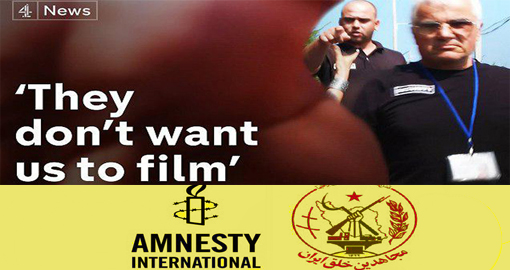
British journalist Lindsey Hilsum had a recent run-in with the MKO/MEK when she traveled to Albania, home to the group’s military arm. Sprawling over 200,000 square meters, the camp benefits from heavy militarised protection, against it seems Albania’s own best opinions … if not wishes.

Hilsum was brutalized by the group after she was accused of being an agent sold to Iran. If the incident was conveniently kept from mainstream media, it nevertheless betrays the nefarious nature of the organization whose taste for secrecy borders the pathological.

In her documentary for Channel 4 (UK) Hilsum produces documents enouncing in no uncertain terms how dangerous Albania believes the MKO/MEK to be – highlighting the length foreign governments will go to secure an alliance with the U.S.

SECRET DOCUMENT OBTAINED BY CHANNEL 4 JOURNALIST LINDSAY HILSUM EXPOSING THE THREAT POSED BY THE MKO/MEK.

With so many dangerous unknowns revolving around the MKO/MEK … notwithstanding the group’s proclivity to shed blood – including that of its members should they wish to leave, Washington’s wholehearted support boggles the mind.

A state department report in 1992 identified the MKO/MEK as responsible for the killing of six Americans in Iran during the 1970s. They included three military officers and three men working for Rockwell International, a conglomerate specializing in aerospace including weapons, who were murdered in retaliation for the arrest of MKO/MEK members over the killings of the U.S. military officers.

The MKO/MEK was an enthusiastic supporter of the seizure of the U.S. embassy in Tehran following the Iranian revolution, something both U.S. officials and mainstream media have been keen to sweep under the rug to serve more immediate agendas.

It called the eventual release of the American hostages a “surrender.”

After falling out with Iran’s new government, led by Ayatollah Khomeini, the MEK launched a bombing campaign against the Islamic government. In 1981, it attacked the headquarters of the Islamic Republic Party, killing 74 senior officials including the party leader and 27 members of parliament. A few months later it bombed a meeting of Iran’s national security council, killing Iran’s president and the prime minister.

The state department described the MKO/MEK as cutting a “swath of terror” across the country in the following years and of “violent attacks in Iran that victimize civilians.”

“Since 1981 the [MEK] have claimed responsibility for murdering thousands of Iranians they describe as agents of the regime,” the report said.

In light of Western capitals’ suffering at the hands of terror militants, one would think that they would work to minimize threats – not invite them in.

CHANNEL 4 DOCUMENTARY – SEPTEMBER 2018

By Good Politic

September 26, 2018 0 comments
FacebookTwitterPinterestWhatsappTelegramSkypeEmail
Iran

Iran: How about looking at actual bots in Albania

Iran Says Twitter Shut Legitimate Accounts, but Not Anti-Government Ones

DUBAI — Iranian Foreign Minister Mohammad Javad Zarif on Sunday accused Twitter of closing accounts of “real” Iranians, while allowing anti-government ones backed by the United States.

In August, Facebook Inc, Twitter Inc and Alphabet Inc collectively removed hundreds of accounts tied to an alleged Iranian propaganda operation.

“Hello @Jack. Twitter has shuttered accounts of real Iranians, (including) TV presenters & students, for supposedly being part of an ‘influence op’,” Zarif said in a tweet, addressing Twitter CEO Jack Dorsey.

“How about looking at actual bots in (the Albanian capital of) Tirana used to prop up ‘regime change’ propaganda spewed out of (Washington) DC? #YouAreBots,” Zarif said.

Twitter declined to comment when contacted by Reuters in the United States.

Iranian media have accused Israel, Saudi Arabia, and exiled opposition groups, including the Mujahideen Khalq which has some members based in Albania, of being behind social media campaigns calling for the overthrow of the Islamic government

Iranian Supreme Leader Ayatollah Ali Khamenei accused the United States and Israel this month of waging a media war to discourage Iranians, as the country faces economic hardship after the reimposition of U.S. sanctions.

(Reporting by Dubai newsroom; Editing by Mark Potter)

September 25, 2018 0 comments
FacebookTwitterPinterestWhatsappTelegramSkypeEmail
Rudy Giuliani
Mujahedin Khalq; A proxy force

Giuliani to Speak Beside Leader of Accused Iranian ‘Cult’

The ex-New York mayor and Trump attorney has long been a supporter of the MEK. But the State Department cautions that Giuliani ‘does not speak for the U.S. government.’

President Trump’s personal lawyer on Saturday will speak alongside the leader of an Iranian opposition group that was designated as a terrorist organization and has often described been as cult-like. It’s the latest signal of the Trump administration’s coalescing hard-line stance against Iran.

Rudy Giuliani is scheduled to speak at the Sheraton in Times Square on Saturday to a gathering convened by the Organization of Iranian-American Communities, an anti-regime group he’s addressed before. Also slated to speak is the co-leader of the Mujahideen-e-Khalq (MEK), Maryam Rajavi, who will address the attendees remotely, according to a representative for the event.

But the Trump administration is already disavowing any implication that Giuliani’s appearance has anything to do with its Iran policies. “Rudy Giuliani does not speak for the U.S. government on foreign policy,” a State Department spokesperson told The Daily Beast.

“Rudy Giuliani has been shilling for the MEK for so long that he is clearly banking on everyone forgetting that the group was listed as a Foreign Terrorist Organization, has American blood on its hands and has never owned up to its deeds,” said Daniel Benjamin, the State Department’s counter-terrorism coordinator in the Obama administration who now directs Dartmouth College’s John Sloan Dickey Center for International Understanding. “Giuliani’s buckraking has been scandalous all along, but it is worse when he does this while acting as the president’s lawyer.”

    “Rudy Giuliani has been shilling for the MEK for so long that he is clearly banking on everyone forgetting that the group was listed as a Foreign Terrorist Organization, has American blood on its hands and has never owned up to its deeds.”

— Daniel Benjamin

Giuliani confirmed to The Daily Beast that his “firm” will be paid for the speech, but declined to reveal how much, saying it was “confidential, unless they want to disclose the details.” Majid Sadeghpour, a spokesman for the Organization of Iranian-American Communities, said “it is not our policy to discuss any kind of arrangements regarding the speakers. (He also said the group has no “formal relationship” with the MEK or a related group, the National Council of Resistance of Iran.)

“Our relationship goes back approximately 10 years,” Giuliani said, adding that he was invited to speak by “a client of my firm.” Giuliani did not directly respond when asked if he ran his speech by the administration, saying in a text message: “[T]hey are my thoughts as were the over 1,000 speeches I’ve given in the last 17 years and of course before.”

Sadeghpour said the group had invited Rajavi “to provide a video speech about the developments in Iran, as her movement has been the main target of terror plots by the Iranian regime, including here in the U.S.,  as well as arrests and attacks by the Iranian regime inside the country.”

The OIAC conference is pegged to a forthcoming United Nations Security Council session, chaired by Trump and scheduled for September 26, ostensibly about nonproliferation but also about Iran. Trump will discuss “Iran’s violations of international law and the general instability Iran sows throughout the entire Middle East region,” U.S. ambassador to the United Nations Nikki Haley said earlier this month.

And on its agenda is the prospect for overthrowing the Tehran regime. “The summit will focus on the organized opposition as the alternative to Iran’s ruling theocracy,” an invitation reads, “as well as the need for a decisive Iran policy to deal with the regime’s suppression of its own citizens and its export of terrorism.”

From 1997 to 2012, the MEK was on the State Department’s list of terrorist groups. The exile organization, implacably opposed to the Iranian theocracy after supporting the 1979 revolution, was a terrorist organization before the mullahs’ takeover. The MEK even killed American military personnel in Iran. It became a catspaw of Saddam Hussein’s during the 1980s, when it attacked regime targets, killed Iranian civilians. And the group has a history of behaving like an abusive cult in its treatment of its members, according to observers like Benjamin.

A 2003 New York Times Magazine story by Elizabeth Rubin, “The Cult of Rajavi,” quoted a former MEK member alleging: “Every morning and night, the kids, beginning as young as 1 and 2, had to stand before a poster of Massoud and Maryam, salute them and shout praises to them.” A 2009 Rand Corporation monograph described the MEK’s “near-religious devotion to the Rajavis (Massoud and his wife, Maryam), public self-deprecation sessions, mandatory divorce, celibacy, enforced separation from family and friends, and gender segregation.”

    “A substantial number of these MEK members… did not have a clear understanding of the group’s goals and methods of operation—particularly with respect to its cult behavior—and many have been forced to remain against their will.”

— Rand Corporation monograph

Yet the U.S. occupation of Iraq treated MEK members there as protected persons beginning in 2003, “which has left the United States open to charges of hypocrisy in the war on terrorism,” Rand observed. Rand’s monograph, penned in 2009, raised alarm about what was then a U.S.-protected MEK site called Camp Ashraf. It said that residents of the camp included “a substantial number of these MEK members [who] were lured to Iraq under false pretenses or did not have a clear understanding of the group’s goals and methods of operation – particularly with respect to its cult behavior—and many have been forced to remain against their will.”

None of that has hobbled the MEK’s outsized political influence in the United States, where it leverages its hatred of the Iranian regime for an enemy-of-my-enemy strategy. Rand called the group “skilled manipulators of public opinion” who are “adept at crafting and promoting its image as a democratic organization that seeks to bring down Iranian tyrants, both secular and religious.”

In 2012, an MEK lobbying effort prevailed on Secretary of State Hillary Clinton to remove the group from the State Department’s list of terrorist groups. The MEK has long seen the wisdom of cultivating American political figures across the spectrum, including Democratic ex-governors Howard Dean and Ed Rendell; #resistance hero Michael Hayden, who used to direct the CIA and the NSA; Barack Obama’s former National Security Advisor Jim Jones; and ex-Joint Chiefs of Staff chairmen Hugh Shelton and Pete Pace. On Saturday, Jones will join Giuliani at the forum.

Giuliani has for years backed the MEK, appeared with Maryam Rajaviand taken her group’s money. And he’s spoken to the Organization of Iranian-American Communities before while serving as Trump’s attorney. The last time, in May, Giuliani claimed that Trump is “as committed to regime change as we are,” and pantomimed ripping up the Iran nuclear deal that the Trump administration has abandoned. He also spoke to an MEK gathering in Paris, where Rajavi is headquartered, in June.

Neither Giuliani nor his old law firm, Greenberg Traurig, appear in Justice Department records for foreign lobbying on behalf of the MEK or its known associates. But Giuliani has acknowledged that he took money for his May speech to the Organization of Iranian-American Communities, though he told the Washington Post that he doesn’t discuss his foreign clients with Trump.

Giuliani’s Saturday speech comes amidst rising hostility to Iran and frequent speculation about a confrontation. In July, Trump tweeted at his Iranian counterpart: “NEVER, EVER THREATEN THE UNITED STATES AGAIN OR YOU WILL SUFFER CONSEQUENCES THE LIKES OF WHICH FEW THROUGHOUT HISTORY HAVE EVER SUFFERED BEFORE.” Last week, the administration showed signs of putting that threat into practice. It threatened reprisal for any Iranian-aligned forces that kill or injure U.S. personnel in Iraq. Shortly afterward, the secretaries of State and Defense stuck by its Saudi and Emirati allies over their brutal, U.S.-backed war in Yemen, a proxy fight against an Iranian-tied group. And James Jeffrey, the State Department special envoy for Syria, said the U.S. military mission in Syria has expanded into ensuring what the Post called an “Iranian departure.”

Giuliani’s “support for the MEK, as well as John Bolton’s longtime backing of the group,  is strengthening the impression here and in Iran that the administration supports a policy of regime change,” Benjamin warned. “The risks and costs of such a policy would be enormous, and it’s a pretty good way to guarantee that Tehran will see building nuclear weapon as being in its interest.”

—with additional reporting by Lachlan Markay

Spencer Ackerman, The Daily Beast

September 25, 2018 0 comments
FacebookTwitterPinterestWhatsappTelegramSkypeEmail
Newer Posts
Older Posts

Recent Posts

  • Pregnancy was taboo in the MEK

    December 22, 2025
  • MEPs who lack awareness about the MEK’s nature

    December 20, 2025
  • Why did Massoud Rajavi enforce divorces in the MEK?

    December 15, 2025
  • Massoud Rajavi and widespread sexual abuse of female members

    December 10, 2025
  • Farman Shafabin, MEK member who committed suicide

    December 3, 2025
  • Facebook
  • Twitter
  • Instagram
  • Youtube

© 2003 - 2025 NEJAT Society . All Rights Reserved. NejatNGO.org


Back To Top
Nejat Society
  • Home
  • Articles
  • Media
    • Cartoons
    • NewsPics
    • Photo Gallery
    • Videos
  • Publications
    • Books
    • Nejat NewsLetter
    • Pars Brief
  • About Us
  • Contact us
  • Editions
    • عربي
    • فارسی
    • Shqip