Nejat Society
  • Home
  • Articles
  • Media
    • Cartoons
    • NewsPics
    • Photo Gallery
    • Videos
  • Publications
    • Books
    • Nejat NewsLetter
    • Pars Brief
  • About Us
  • Contact us
  • Editions
    • عربي
    • فارسی
    • Shqip
Nejat Society
Nejat Society
  • Home
  • Articles
  • Media
    • Cartoons
    • NewsPics
    • Photo Gallery
    • Videos
  • Publications
    • Books
    • Nejat NewsLetter
    • Pars Brief
  • About Us
  • Contact us
  • Editions
    • عربي
    • فارسی
    • Shqip
© 2003 - 2024 NEJAT Society. nejatngo.org
Female members of the Mujahedin-e Khalq at Camp Ashraf
Mujahedin Khalq as an Opposition Group

Iran’s Chameleon Splinter Group: The MEK’s Will to Power

The Mujahideen al-Khalq (MEK) is a group that defies conventional understandings of non-state actors.

Its revolutionary beliefs were once seated in a Marxist understanding of history mixed with Islamism. Now, they are willing to sell their ideology to the highest bidder; there is evidence to suggest the MEK mirrors the stated beliefs of the state that gives them the most support. As of now, its stated goal is to establish a secular, democratic state in Iran.

However, the only thing is seems genuinely invested in is its leader, Maryam Rajavi, who controls its members so tightly that it has been described as a cult centered around her.

Sitting in a military-style compound in Tirana, Albania the roughly 3,500 members of the MEK are said to be waiting for some unspecified event to become relevant again. That moment may be coming soon.

“Sitting in a military-style compound in Tirana, Albania the roughly 3,500 members of the MEK are said to be waiting for some unspecified event to become relevant again. That moment may be coming soon.”

It is now backed by the U.S. as a tool intended to destabilize the Ayatollah regime in Iran, which both the U.S. and MEK view as a threat.

But what does the group actually believe?

The MEK’s Ever-Shifting Ideologies

Photo : Iraqi security forces stand watch outside Camp Ashraf in Iraq, the former home of the MEK (AFP/FILE)

Tracing the beginnings of its ideology is easy enough: started in 1965 by a group of radical students at  Tehran University, the MEK advocated for a Marxist reading of history mixed with Shia Islam. Iran, controlled by the U.S. and U.K.-installed Shah, emphasized the MEK’s Marxist leanings to alienate it from the political discourse of Iran at the time, and targeted the group and its founders.

After suffering a split from the more secular, left-leaning members and the execution of its founders, the MEK steadily aligned itself with the hyper-conservative religious cleric, Ayatollah Khomeini.

However [Ayatollah] Khomeini may have been for the help of the MEK and other leftist revolutionaries in ousting the Western-backed Shah, he did not plan to include them in his government.

Their exclusion from Iranian politics and governance pushed the MEK into the fringe, where their first real ideological shift happened: going from idealistic pro-Ayatollah activist group to embattled guerrilla fighters.

The political aims for which they campaigned and fought began to fall by the wayside as the group emphasized militant insurgency and its leader, Massoud Rajavi, began to exert more control over its members.

By killing high-level officials of the ruling party in Iran, the MEK showed its willingness to go after those it saw as obstacles to its own plan to take power, even if those in the way were Iranians.

Thousands of members of the MEK were killed by regime intelligence and security forces, but Saddam Hussein promised to support the group, which likely saved it from being eliminated entirely. The group moved from Iran to a base in Iraq, called Camp Ashraf.

Saddam’s move however, led to an about-face for the MEK’s guiding principles, and represents the moment it began to be reviled by Iran. By the time Saddam began funding and housing the MEK, he was already steeped into a stalling invasion of Iran. He began to use the MEK as an auxiliary military force against Iran. The MEK, now refocused on destabilizing the Iranian regime as much as it could, obliged and took part of several operations that killed thousands of Iranians.

Supported by Saddam’s air force, the MEK managed to capture and briefly occupy the Iranian town of Mehran on the Iranian border with Iraq. The MEK reportedly stayed in the town even after official Iraqi army forces had left, and though they were eventually pushed back into Iraq, the battle left three to five thousand Iranians dead.

Their most ambitious plan however, hatched by Massoud Rajavi was Operation Mersad. Rajavi ordered an all-out invasion into Iran by MEK forces.

The operation took place at the end of the Iran-Iraq War. Rajavi hoped that his MEK forces, numbering close to 7,000, would be met with a warm welcome by Iranians while he stormed into Tehran to overthrowing the Ayatollah’s regime. He thought the task would be simple and that the MEK could easily do it.

He was mistaken.

The MEK’s Descent into Being a Cult

Although he initially made headway with little resistance, the MEK ventured too far deep into Iran, and Iranian helicopters and war planes bombed them, killing thousands. Many others were captured and eventually executed. The plan backfired as the MEK became encircled by Iranian forces.

The group lost nearly half of its fighters, and it limped back to Iraq without a clear vision of where it could go next.

The move to invade Iran cemented the MEK’s domestic reputation as a group of rogue militants in the pocket of whomever would fund them, and forever doomed their ability to generate popular support inside the country.

After this incident, Massoud Rajavi began to mold and shape the MEK into a more insular group, one that could be controlled by just a few people, namely, him and his wife, Maryam Rajavi. Throughout the 1980s, Massoud orchestrated what he called an ‘ideological revolution,’ within the MEK, which forced its members to obey his orders.

But these tools of control became more sinister after Operation Mersad.

“After the failed military operation of ‘Forough Javidan’ [Operation Mersad]…” Massoud Rajavi ordered all those who lost a spouse to immediately re-marry, Khodabandeh said. On top of that, “within a few months he started a new phase of [the so-called] ideological revolution in which his demand was that everyone has to divorce forever and all the women are now his.”

“he [Massoud Rajavi] started a new phase of [the so-called] ideological revolution in which his demand was that everyone has to divorce forever and all the women are now his.”

This order reorganized the MEK from being a militant group with some remnants of ideological beliefs, to one where its members were primarily subservient to a person, who dictated every aspect of their lives. Children of MEK members were forcibly taken from their parents and flown out of Iraq, where they were raised in the U.S. and U.K. by sympathizers.

Khodabandeh said he knew of at least one child who was flown out: “I know one of them who changed hands in Canada and U.S. five times. They would register the children for benefits and then would leave them in the street.”

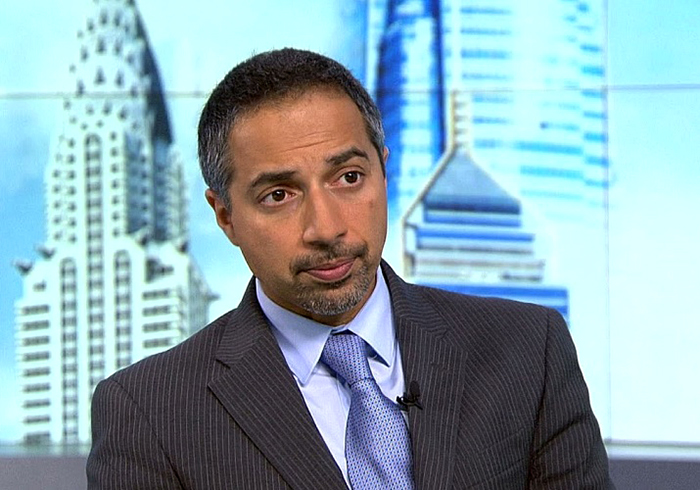
“Every time they faced a major defeat like this, in order to retain control of the organization, the leadership became more and more repressive internally and cultish,” Trita Parsi, the founder and former president of the National Iranian American Council, said to Al Bawaba in an interview.

Massoud Rajavi also introduced other methods of control, some years before the failed invasion of Iran ever happen. Many of them were intended to prevent further divisions in the group from forming.

One ‘session’ was called The Cross, where some MEK members were forced to bear a cross on them. Another, called ‘Individuality,’ forced members to describe their loyalty to Massoud and prove that they were working towards his goals. Of course, members were forced to confess deviant thoughts or actions to MEK leadership as well.

Those who had transgressed Massoud would be punished, sometimes through solitary confinement and public shaming.

Human Rights Watch began looking into the group’s treatment of its members, and found members who had been held in solitary confinement for years at a time, and of dissident members being tortured to death in front of others as a way of showing the danger of going against the group.

in order to retain control of the organization, the leadership became more and more repressive internally and cultish

Trita Parsi, National Iranian American Council

The ‘Social Division’ of the MEK released a statement urging its members to accept this internal, ‘ideological revolution,’ that was really a kind of ongoing purge of the group.

“To understand this great revolution…is to understand and gain a deep insight into the greatness of our new leadership, meaning the leadership of Massoud and Maryam. It is to believe in them as well as to show ideological and revolutionary obedience of them…By correcting your old work habits and by criticizing your individual as well as collective shortcomings, we shall gain much awareness in confronting our enemies…Report to your commanders and superiors in a comprehensive manner your progress, its results and outcomes that you gain from promoting and strengthening this ideological revolution.”

After Massoud Rajavi disappeared in 2003, Maryam took over and continued enforcing cult-like practices on the MEK.

The group’s moved to Tirana, Albania has reportedly done nothing to loosen the hold Maryam has on its members. Trita Parsi views this as a tragic mistake, since the U.S. had the ability to separate its members and give them more freedom; something the U.S. declined to do. Parsi thinks many would have defected if they were given such a chance.

Meanwhile, Tara Sepehri Far, an Iran researcher with the Human Rights Watch told Al Bawaba that there are no signs the MEK’s abusive practices against its membership has ended.

“We haven’t updated our research after that but we’re not aware of remedy that has been paid to victims since then,” Far stated. “My understanding is the group still keeps the camp isolated in Albania and doesn’t allow independent monitors and journalist to freely report from there.”

Former MEK members have told journalists that the group’s leadership forces individuals in the Tirana camp to write down their sexual thoughts every day and then read them out loud to others, using shame as a method of control. A leaked Albanian police report assess the MEK as a dangerous group and that there are “reasonable suspicions” that it may be torturing and even killing members trapped inside the Tirana compound today.

“It’s not really proper to called them MEK ‘members,’ they’re more or less MEK hostages. They want to leave but they’re not allowed to,” said Parsi, who has spoken to several families of MEK members in the U.S. who have been fighting for years to reconnect with loved ones stuck in the compound in Albania.

My understanding is the group still keeps the camp isolated in Albania and doesn’t allow independent monitors and journalist to freely report from there

Tara Sepehri Far, Human Rights Watch

The MEK’s public face is that it is a force for democracy and secular pluralism, though it has little to show for its claim.

The group’s official website says, “The PMOI/MEK seeks to replace Iran’s religious dictatorship with a secular, pluralistic, democratic government that respects individual freedoms and gender equality.”

However, the website also can’t help but remind everyone that it is fundamentally a one-person show by naming Maryam Rajavi as “the future President of Iran,” having apparently decided the results of a hypothetical election in Iran to be in her favor.

“[Massoud] Rajavi always would say that if it was not because of the Internal Revolution the organisation would not exist,” Khodabandeh said.

“I think he was right but the organisation which existed after these changes is not the first one anymore.”

The revolutionary beliefs of the MEK were slowly weeded out of its membership and replaced with forced obedience to one person: Maryam Rajavi.

According to Khodabandeh, the MEK “has since became the tool for the ones who paid to keep it going and became a closed dictatorial organisation.”

Ty Joplin, Albawaba, Jordan,

September 25, 2018 0 comments
FacebookTwitterPinterestWhatsappTelegramSkypeEmail
MEK troll farm in Albania
Mujahedin Khalq; A proxy force

Iranians respond to MEK troll farm: #YouAreBots

Anyone who has been active on Twitter and tweeted about Iran in the past year can attest that the online debate over events in the country has taken a dramatic turn for the hostile.

Many Iran observers are perplexed by the sharp increase in vitriol spewed at journalists and analysts. Some speculate that regime-change advocates were encouraged by US President Donald Trump’s electoral victory and are seizing their chance to influence the online debate about Iran while there is a sympathetic ear in the White House. Others felt that the nationwide protests in January were a turning point in the Islamic Republic and that the public discourse had moved on from Reformism and into much starker choices. However, an investigative report by Al Jazeera has shed light on a third reason for the spike in Twitter activity: what many Iran observers had suspected from the outset, a Twitter troll factory meant to influence the already contentious debate over Iran.

According to the Al Jazeera report, the exiled Iranian opposition group Mujahedeen-e-Khalq (MEK) has set up a center at its headquarters in Albania, where 1,000-1,500″online soldiers”are instructed to promote hashtags in support of overthrowing the Islamic Republic. Two former MEK members told Al Jazeera that they would receive specific daily orders on what to highlight regarding Iran and also which specific Iran analysts to attack on social media, often sharing the White House’s critical messages against Iran and amplifying their tweets via bots.

In response to the report, Iran’s Foreign Minister Mohammad Javad Zarif tweeted to Twitter co-founder and CEO Jack Dorsey, “Hello @Jack. Twitter has shuttered accounts of real Iranians, incl TV presenters & students, for supposedly being part of an ‘influence op’. How about looking at actual bots in Tirana used to prop up ‘regime change’ propaganda spewed out of DC? #YouAreBots”

In August, Twitter claimed to have closed 284 accounts originating in Iran for “engaging in coordinated manipulation.” One popular account from inside Iran that was shut down then belonged to SeyedMousavi7, who shortly afterward released a video through friends saying that he is a university student and had only sought to present a different narrative of Iran. Another belonged to Iran’s English-language news channel Press TV journalist Waqar Rizvi. A Sept. 17 special Etemaad report described the apparent discrepancy in Twitter’s actions as “strictness with Iran, silence in the face of fake anti-Iranian accounts.”

Iranian lawmaker Amirhossein Ghazizadeh Hashemi also tweeted to Dorsey, “You suspended my official account as MP of Iran for my violation of not determined twitter rules, but why you have not blocked bots of MEK in Tirana, a group that killed 17000 Iranian people, used to prop up ‘regime change’ propaganda? #YouAreBots”The figure is a reference to a bombing campaign by the MEK after losing a power struggle with members of the Islamic Republican Party after the 1979 revolution.

Meanwhile, there has been some criticism of Zarif’s call for Twitter to shut down the reported MEK accounts. Britain-based Manoto, an outlet broadly viewed as sympathetic to the monarchist camp, told its viewers that the foreign minister “described [all] opponents of the Islamic Republic as bots.”

Other social media users also brought up one irony of the Twitter battle: that the microblogging platform, with which the foreign minister, the president and the supreme leader all have either verified accounts or unofficial accounts that are run through their offices, is still officially blocked in Iran.

Al-Monitor Staff

September 24, 2018 0 comments
FacebookTwitterPinterestWhatsappTelegramSkypeEmail
Sahar Adibzade
Former members of the MEK

Female defector officially declared her defection from the MKO

Sahar Adibzadeh denounced the Mujahedin Khalq Organization after she left the group’s camp in Iraq in 2015. She officially declared her defection from the group via Women Association Website on September 18th, 2018.

Sahar 39, was recruited by the MKO when she was in her 20s. “I was deceived by the group’s propaganda and trusted them,” she said.

She is now determined to launch her human rights activities in order to help release those who are still forced to stay in the Cult of Rajavi.

Adibzadeh has previously published parts of her memoirs of working with the group and living in its cult-like structure. However, she will appear on Mardom TV to publicly announce her defection from the cult. “Whoever who has defected the Cult of Rajavi should publicly denounce the group in order to stop any abuse by the side of the group,” she told Women Association.

She describes the suffocating atmosphere of Camp Ashraf as place where women are forced to wear uniforms with strict hijab; there are no children and all members are single. “I wondered why those women looked so sad!” Sahar said.

After experiencing the life inside Ashraf, the MKO collapsed in Sahar’s mind. “Gradually I found out that they had nothing to offer,” she added.

Also:

What is behind the alleged “widespread campaign of MEK supporters” in Iran?

September 24, 2018 0 comments
FacebookTwitterPinterestWhatsappTelegramSkypeEmail
Ebrahim Khodabandeh
Mujahedin Khalq; A proxy force

Former MEK Official Exposes Saudi Arabia’s Covert Funding of Iranian Terror Group

According to the Iranian terror group’s former head of security, Saudi intelligence helped fund the group by smuggling valuables like gold and Rolex watches into Iraq and Jordan for sale on the black market.

AMMAN, JORDAN — Though it had been suspected for years, testimony from a former high-ranking official from the Iranian militant opposition group Mujahedeen Khalq (MEK) has confirmed that the group had been covertly financed by the Kingdom of Saudi Arabia. For decades, the Gulf Kingdom — known for its general hostility towards Shi’ite Muslims — contributed hundreds of millions of dollars in gold and other valuables to help finance the Iranian Marxist militant group – namely the group’s ultimate goal of instigating violent regime change in Iran and subsequently taking power.

In an interview with Jordan-based news outlet Albawaba News, former MEK head of security Massoud Khodabandeh detailed the covert means through which the Saudis helped fund the group, including regional smuggling networks and black market transactions.

According to Khodabandeh, gold and other valuable commodities, such as Rolex watches, were shipped from Saudi Arabia to Baghdad and then sold on black markets in the Jordanian capital of Amman by Saudi-linked businessmen. The proceeds from those transactions were then placed in offshore accounts tied to the MEK and subsequently used to fund their operations.

Khodabandeh also recounted how the Saudis had even given the group a kiswa – a large drape that adorns the Kaaba shrine in the Islamic holy city of Mecca. Manufactured at a cost of approximately $5 million, kiswas are often worth significantly more than their cost of production given their religious significance.

The former MEK official also told Albawaba that he had personally overseen the transfer of valuables from Saudi Arabia to Baghdad that were then sold in order to fund the group. In one instance, Khodabandeh had smuggled three trucks filled with gold bars from Saudi Arabia to Baghdad along with two Iraqi and two Saudi accomplices. He estimated that the gold contained in the trucks was worth nearly $200 million, all of which eventually found its way into MEK coffers.

Khodabandeh also asserted that Prince Turki bin Faisal al Saud, former head of Saudi intelligence, was intimately involved in the smuggling rings used to covertly fund the MEK. Unsurprisingly, bin Faisal has since become a vocal advocate for the group and has spoken at several of the group’s annual conferences hosted in Paris. At the 2017 MEK conference, bin Faisal stated:

    Your efforts to confront this regime are legitimate, and your struggle to rescue all sectors of the Iranian society… from the oppression of the Velayat-e Faqih rule, as was said by Mrs. Maryam Rajavi, is legitimate and an imperative. Therefore, advance with God’s blessing.”

Khodabandeh went onto to state that, while former Iraqi leader Saddam Hussein had once been the main patron of the MEK, bin Faisal who had taken over as the main backer of the group in recent years, asserting that the group had become an “organization run by Maryam [Rajavi, current MEK leader] under the patronage of Prince Turki bin Faisal al Saud.” The former MEK official concluded the interview by stating that the MEK had “changed from a terrorist military organization to an intelligence-based propaganda machine.”

Past Saudi Funding An Inconvenient Truth for MEK’s “Moderate” Makeover

Despite their past as a militant organization responsible for the mass murder of Iranian and American citizens, the MEK has sought to change their image in recent years and reinvent itself as a “moderate” Iranian opposition group and government-in-exile. These efforts have grown in recent years despite the fact that the group has next to no support within Iran and has consistently been characterized asboth “cultish” and “authoritarian.”

The MEK’s facelift from terror group to propaganda machine began in the 2000s, kicking into high gear after former Secretary of State Hillary Clinton had them removed from the U.S. list of foreign terrorist organizations in 2012. The MEK’s propaganda efforts have since kicked into overdrive under the Trump administration, given that President Trump has sought to place “maximum pressure” on Iran with the ultimate goal of regime change. Currently, the Trump administration is stocked with known MEK supporters, including Rudy Giuliani, John Bolton and Elaine Chao, who have received thousands of dollars from the group over the years.

Despite its record of killing innocent civilians, Western media cited MEK spokespeople and members in its reporting on the Iran protests earlier this year as “proof” that the Iranian people support regime change and the MEK, ignoring the massive pro-government ralliesthat coincided with the protests. Little mention was made of the fact that MEK fighters have been trained by the U.S. military in the past and share connections with Israeli Mossad. The recent revelations of the group’s connections to Saudi Arabia have also unsurprisingly slipped under the media’s radar.

Whitney Webb is a staff writer for MintPress News and a contributor to Ben Swann’s Truth in Media. Her work has appeared on Global Research, the Ron Paul Institute and 21st Century Wire, among others. She has also made radio and TV appearances on RT and Sputnik. She currently lives with her family in southern Chile.

Whitney Webb, Mint Press,

September 23, 2018 0 comments
FacebookTwitterPinterestWhatsappTelegramSkypeEmail
Mujahedin Khalq Organization's Propaganda System

MEK brings American bomber L. Todd Wood to Albania to show that it is not a terrorist

The MEK terrorist organization, which recently faced a series of national and international allegations about the totalitarian way that it keeps its members isolated, is spending a lot of money recently to show it is not a terrorist organization but is a baker’s organization.

MEK recently deployed its high-level commander in America, Ali Safavi, who is the MEK’s liaison with the Trump administration, to show that MEK is a human and not a terrorist organization. Commander Ali Safavi, who has previously headed Saddam Hussein’s military operations against Iraqi Kurds in which thousands of Kurds were killed, recently brought American ex-bomber pilot L. Todd Wood to Albania. American Wood, who hosts neocon warmongering and anti-Russian warfare site Tsarizm.com and writes for the Christian fundamentalist media Washingtontimes.com, an outlet founded by false Korean messiah, founder of the Moonie religion Sun Myung Moon, came to the Manzas jihadist camp to inspect the “democrats” that the Trump administration has sheltered in Albania.

As a man trusted by MEK, L. Todd Wood in an internet video he produced, calls Manzas camp a residential complex – like Sunny Hill or the Malaysian palaces in Tirana. Unlike other journalists who were beaten, expelled, treated as Iranian agents and attacked by Argon’s private armed police, L. Todd Wood gives the impression that the terrorist camp of Manzas is a five-star resort where some angels sleep and not the devils of jihad. The idea is given that the camp is open and anyone can enter there.

In the video, under the supervision of Commander Ali Safavi, elderly Iranian jihadists are shown as bakers, scribes, playing with computers, playing music, fixing their teeth, and being totally peaceful. The video also shows the terrifying commander Behzad Saffari, who led the Mojahedin gangs in Tirana several weeks ago in beating Canadian citizen Mostafa Mohammadi. The video also shows Mostafa’s daughter Somayeh, who tells the US bomber L. Todd Wood about the documents MEK has fabricated against her father and gives the idea that Somayeh is free to meet anyone, anywhere.

To give the impression of normality, the Iranian terrorists invited some Manzas villagers to their camp to eat cakes and drink Fanta, and in the background watch and listen to folk songs. The Manzas villagers, who eat sponge cakes, are divided into separate tables where the women sit with elderly terrorist women, while the men sit with the terrorist men. Bomber L. Todd Wood looks happy as he tries the food and sees the MEK’s terrorist military squads cooking. L. Todd Wood looks happy when he has a Mojahedin cake along with fearsome commander Behzad Saffari.

However, L. Todd Wood’s video shows one of the many rooms where daily the Iranian terrorists produce fake news and troll the internet to spread fake news against Iran. In the terrorist’s internet attack hall hang photographs of the MEK’s supreme leaders, Maryam Rajavi and her husband Massoud Rajavi, killed by the Americans. The Mojahedin tell Wood how they deal with spies from their internet rooms and how they use secret apps to deal with terrorist activity around the world.

To show that they are not a cult of jihadists and terrorists, the Mojahedin show Wood some music videos that MEK made. They convey the idea that you are not in a terrorist camp where women are separated from men and live alone and ageing under the Manzas sun and live isolated in the camp in the hope of waging war against Iran one day, but as if you are in an Iranian bubble. The video ends with a jihadist who seems to be a member of the Roma community, who falls into an Iranian stupor while above his head sits the lion holding a sword – the emblem of MEK.

Todd Wood’s visit is one of the MEK’s recent desperate moves to fix its image in Albania and the world. In recent weeks, the MEK High Command has visited many newspapers and media in Albania where, under the leadership of Commander Zhila, journalists and various owners are “respected” by MEK in order to remain silent and not talk about them anymore. The campaign of intimidation visits by the high terrorist command is silencing many Albanian media who are no longer talking or reporting about the MEK’s lies which the international media are reporting. Commander Zhila controls MEK’s money and money pisses upward, as the Albanian people say.

Had MEK been a baker’s organization living in a residential complex where Iranians eat rice, fix their teeth and listen to music, Somayeh Mohammadi’s father and all Albanians would flood into Manzas and meet with Somayeh and the hundreds of other terrorists who are not allowed to meet their families. They would meet with the MEK’s ordinary members and ask why they are not free and why they live inside this idiotic military camp where Maryam Rajavi feeds them like rabbits with bread and rice, sterilizes them so as not to have sex and keeps them like mice to be thrown to death and jihad one day? But MEK does not allow any such thing.

Gazeta Impakt, Translated by Iran Interlink

September 23, 2018 0 comments
FacebookTwitterPinterestWhatsappTelegramSkypeEmail
Mujahedin Khalq; A proxy force

Saudi Arabia Secretly Sent Truckloads of Gold and Rolex Watches to the Iranian MEK

It is widely rumored that Saudi Arabia has been a loyal supporter of the Mujahideen al-Khalq (MEK), an Iranian opposition group which began as a collective of radical students and is now more accurately described as a cult.

There has been no concrete account of Saudi’s support for the MEK, until now. In an interview with Al Bawaba, a former top-ranking member of the MEK has provided details of specific transfers of valuables good from Saudi Arabia to the MEK, worth hundreds of millions of dollars.

The details are difficult to verify, but nonetheless represent the first comprehensive account of the MEK’s partnership with Saudi Arabia.

According to the former MEK member who personally oversaw the transfers, Saudi officials operating within the security apparatus of Turki bin Faisal al Saud, the head of Saudi intelligence at the time, and the late king Abdullah bin Abdulaziz al-Saud, gave the MEK three tons of solid gold, at least four suitcases of custom Rolex watches and fabric covering the Kaaba, the most holy site in Islam. The transfers were worth hundreds of millions of dollars.

Saudi’s Gold Transfers to the MEK

Massoud Khodabandeh, who used to head security for MEK’s top leaders and was one of its most-senior members, described to Al Bawaba a network of smuggling and black market sales that Saudi used to fund the MEK covertly.

Gold and other valuable commodities were be shipped from Saudi Arabia to Baghdad. Then, they would be sold in black markets in Amman, Jordan via Saudi-linked businessmen; the money would go to offshore accounts linked to the MEK, funding their operations.

In 1989, a year before Saddam Hussein attacked Kuwait, Khodabandeh and the MEK’s leader at the time, Massoud Rajavi, went to Saudi with an escort by Iraq’s secret police. “Rajavi was to perform pilgrimage as well as other things. At the time for our return to Iraq, we were presented with two suitcases each, presents from King Abdullah, then crown prince. They included gold, [and] Rolex watches,” Khodabandeh said. These watches were custom-made and had the king’s head designed into them.

The MEK, having disavowed personal possessions, removed the king’s head from the watches and sold them to black market businessmen in Amman, Jordan.

They were also presented with a piece of a priceless kiswa, a large drape that is adorned over the Kaaba in Mecca, Saudi Arabia. Kiswas are embroidered with gold and are manufactured at a cost of around $5 million, but the religious and symbolic importance of the fabric makes them much more valuable.

“I was also assigned to bring gold in special lorries,” Khodabandeh said.

Aided by two Iraqi and two Saudi representatives, Khodabandeh smuggled three trucks filled with gold bars from Saudi Arabia to Baghdad. He estimated that each truck held about a ton of gold, making the shipment’s contemporary worth almost $200 million.

“After a few days I arranged for it to go to Amman to be sold,” added Khodabandeh. “We knew a few businessmen who could do this for us and move the money to offshore accounts.”

That top Saudi officials, including the late king Abdullah who was crown prince at the time, was funding a Shia militant group complicates the narrative that Saudi was exclusively exporting a hyper-conservative brand of Sunni Islam, called Wahhabism, around the world to combat Shi’ism. In looking to destabilize the Iranian regime, Saudi appeared more than willing to funnel millions of dollars worth of goods to the Shia MEK.

 Khodabandeh noted that some of the money received from its dealings with Saudi was for military vehicles.

Through the Saudi-linked businessmen in Amman, “we bought large fleets of Toyota semi-military vehicles and many other logistical needs.”

 Other Sources of MEK Funding: Saddam and the U.S.

During much of the 1980s and 1990s, the MEK was sheltered and supported by Saddam Hussein, who co-opted the group and used it as a paramilitary force for his own geopolitical agenda, which included a war against Kurds and Iran. Under the orders of Saddam, the MEK killed thousands of Iranians in the Iran-Iraq war, cementing their reputations as traitors to the Iranian people.

Khodabandeh told Al Bawaba that, in addition to receiving regular payment from Saddam, the MEK was funneled money from Iraqi oil that was exported to the U.K.

The MEK also garnered a significant amount of money from fraud and money laundering activities around the world.

A massive FBI investigation into the group’s finances in 2004 revealed a complex web of front organizations disguised as charities that were MEK revenue generators. Fraud and laundering schemes were found all over Europe and the U.S.,

From Washington D.C., to Tampa, Dallas, Los Angeles and even London, Stockholm and Paris, the MEK operated “cells” that took part in fraud schemes and fake charities.

One such fake charity was called the Committee for Human Rights. MEK members posed as representatives of the so-called Committee for Human Rights, seeking donations for the medical treatment of starving Iranian refugee children. The donations received were then laundred via Turkey back to the main base in Iraq, where they were used “to fund MEK’s terrorist operation” according to the report.

To smuggle in MEK members to the United States, which listed the group as a foreign terrorist organization at the time, the organization forged identity and immigration documents.

In 2012, it was delisted as a terror group and recruited by the U.S. for use in destabilizing the Iranian regime. The U.S. paid $20 million to the U.N. refugee agency to transfer thousands of MEK members from Iraq to Tirana, Albania. The U.S. also gave Albania funds to build a military-style facility for the MEK, in which it is currently holed up.

The U.S. also “allocated a budget of 10 million dollars for the purpose of a ‘de-radicalization’ program to dismantle MEK as an organisation and sort out the members,” according to Khodabandeh. But the Trump administration halted the program.

The contemporary MEK is almost unrecognizable from its founding principles.

What began as a radical, anti-Shah student movement in Tehran, the MEK morphed into an anti-Ayatollah guerrilla group when it was forced from the Iranian political scene, then it became a pro-Saddam militia operating in Iraq killing Iranians and Kurds. Now, it is an asset by the U.S. President Donald Trump, whose advisors think it can be wielded against the current Iranian regime.

“There is a viable opposition to the rule of the Ayatollahs,” Trump’s National Security Advisor John Bolton proudly announced to a conference hall full of MEK members bussed in to the annual gathering from their compound. “And that opposition is centered in this room today.”

The group’s shifting alliances closely align with its sources of funding, making the group a kind of quasi-mercenary force, although the group has not engaged in combat in years.

Turki bin Faisal al Saud, who was directing Saudi’s intelligence at the time Khodabandeh was assigned to smuggle Saudi goods into Iraq for the MEK’s benefit, has since become an outspoken advocate for the MEK.

“Your efforts to confront this regime are legitimate, and your struggle to rescue all sectors of the Iranian society… from the oppression of the Velayat-e Faqih rule, as was said by Mrs. Maryam Rajavi, is legitimate and an imperative,” bin Faisal told thousands of MEK members at an annual conference for the group in Paris in 2017.

“Therefore, advance with God’s blessings.”

Khodabandeh said that bin Faisal replaced Saddam as the main backer of the group. “I would say that after the fall of Saddam, the MEK which was then being run by Massoud under the patronage of Saddam, changed to the organisation run by Maryam under the patronage of Prince Turki bin Faisal Al Saud.”

“It changed from a terrorist military organisation to an intelligence-based propaganda machine.”

By Ty Joplin , Albawaba

September 22, 2018 0 comments
FacebookTwitterPinterestWhatsappTelegramSkypeEmail
MEK troll farm in Albania
The cult of Rajavi

Secret MEK troll factory in Albania uses modern slaves

At last the world, and in particular the citizens of Albania, have gained a window into the hidden world of the Iranian Mojahedin Khalq (MEK) camp in Manez, Durres. Back in August, the UK’s Channel 4 international editor, Lindsey Hilsum, was blocked from approaching the camp by armed security and MEK zealots. Her report talked about the secrecy which surrounds “the shadowy cult”. Since the group arrived in Albania it has aggressively evaded investigation by all outsiders.

The MEK’s standard response to requests from journalists for interviews is that they are in collusion with the Iranian regime to demonize and destroy the group and therefore pose a threat to their lives in the camp.

This of course is nonsense. As well as being an insult to their host government and the Albanian security services, this answer is in line with the MEK’s history of labelling all and every person who criticises them ‘agents of the Iranian regime’ to deflect enquiry, investigation and accountability.

Now a report by Al Jazeera has revealed some of what they are trying to hide behind the green curtains surrounding the camp. Al Jazeera said, “in spite of the accusations of disinformation and fake news from both sides”, it had “the facts, location and actual personnel explaining the modus operandi of an organized troll factory”; the MEK camp in Albania.

According to this report, MEK has established a Twitter troll factory which, for the past two years, has up to 1,500 MEK members tweeting in support of regime change against Iran.

In a political context, this is not surprising. The MEK has, according to Ty Joplin of Albawaba, “lobbied itself from terrorist to freedom fighter… Since the downfall of patron Saddam Hussein, the MEK has ‘changed from a terrorist military organisation to an intelligence-based propaganda machine’.”

In response to the revelation, Iran’s Foreign Minister, Mohammad Javad Zarif, made a political point, accusing Twitter of closing the genuine Twitter accounts of Iranians and challenging Twitter co-founder and CEO Jack Dorsey to look at “actual bots” in Tirana. But while it is fair to bat the ball back to the other side – that’s part of his job – politicizing this issue risks diverting attention from the true scandal behind MEK’s activities.

“Looking at actual bots” is exactly what Al Jazeera managed to do when it interviewed two former MEK members in Tirana. One described how “several thousand accounts are managed by about 1,000-1,500 MEK members… It was all very well organised and there were clear instructions about what needed to be done.”Another said,”Our orders would tell us the hashtags to use in our tweets in order to make them more active.”

What is clear is that this kind of activity costs money. And there is no doubt that the MEK has access to a lot of money. The payments made to high profile speakers over many years and the millions of dollars spent on lavish gatherings to mark Nouruz and the armed struggle testify to deep pockets.

But, back in Albania if the Al Jazeera interviewer had asked ‘how much money does an MEK member make for spending all day, every day as an internet troll?’ The answer would be “nothing”. MEK does not pay its members anything. It never has and never will. This is because it operates as a cult to which members belong rather than are employed by. It is a peculiar relationship, but one worth investigating if we are to have a true picture of how a so-called political group can achieve influence at the highest levels of policy in the USA and deceive public opinion.

As scandals involving child labor and slavery in manufacturing, supply and retail have demonstrated, it is vital to look beyond the superficial profits and share prices when examining a company. So too, in the world of politics there must be proper scrutiny over those who seek to influence public opinion and lobby government policy.

To be absolutely clear, MEK members are not paid for their work. So, none of the one and a half thousand internet trolls that Al Jazeera says are working in the MEK click factory are being paid. In fact, no MEK member is paid.

The next time anyone encounters MEK enforcers Behzad Saffari, Farid Toutonchi or Jila Deyhim and in Albania, remember they are not being paid for what they do. When parliamentarians in Britain sit with Hossein Abedini and Dowlat Norouzi to condemn Iran, when MEPs and their assistants are harassed by MEK at the EUP, and when lawmakers and researchers meet with Ali Safavi (video at end) and Ali Reza Jafarzadeh in the US, they should be aware that none of them receive a wage for their work.

Of course, this means they do not have savings or a pension and do not pay tax in their host countries like regular workers. But being unpaid is not even the main issue here. MEK members all suffer the deeper problems associated with cultic abuse and the total control over every aspect of their lives, including their thoughts and beliefs.

Two examples: In the case of Somayeh Mohammadi, MEK cannot allow her to leave their camp and meet even for five minutes alone with her parents. She is not trusted to return to them. But they cannot allow her to leave because she knows sensitive information which MEK do not want to be made public. However, the publicity surrounding her case has almost certainly saved her life. Unfortunately, Malek Sharai who ‘drowned’ in an irrigation channel and whose body was buried without an autopsy was not so lucky. It turns out he was a survivor of the September 1st massacre in Camp Ashraf, Iraq in 2012. Sharai knew exactly what happened that day and who was responsible for the deaths of 53 people.

MEK members live in conditions of modern slavery. They are owned by MEK leader Maryam Rajavi in Paris and are, in turn, being exploited by her backers and advocates.

Albania already has serious problems with mafia gangs and criminals. But this newly imported problem cannot be ignored simply because they are a foreign group hidden away from public scrutiny. It cannot be ignored because the group is supported at the highest levels in the Trump administration. This is a human rights issue and continued exploitation of these victims should not be tolerated – which country condones, let alone legally sanctions the use of slaves? The US pledged money to Albania to de-radicalize and rehabilitate MEK members in Albania as ordinary citizens. It is time now for that to be actioned.

Massoud and Anne Khodabandeh, Balkan Post

Massoud Khodabandeh is the Director of Middle East Strategy Consultants and has worked long-term with the authorities in Iraq to bring about a peaceful solution to the impasse at Camp Liberty and help rescue other victims of the Mojahedin-e Khalq cult. Khodabandeh co-authored the book ‘The Life of Camp Ashraf – Victims of Many Masters’ with his wife Anne Singleton.

September 22, 2018 0 comments
FacebookTwitterPinterestWhatsappTelegramSkypeEmail
Mujahedin Khalq Organization's Propaganda System

Mojahedin Khalq keyboard warriors target journalists, Academics, activists

For a country that has been on the wrong end of United States foreign policy for nearly four decades, it is no surprise the debate over Iran has been polarising. The US’s decision to withdrawal from the nuclear deal this year has boosted those calling for the hardest stance against the Islamic Republic.

Those pushing back against what many say is an agenda for regime change in Iran are reporting an online backlash the likes of which they have not seen before. However, the Twitter accounts doing the trolling may not be the organic opposition voices they are made out to be.

For all the accusations of disinformation and fake news from both sides, it is rare that we can point to facts, a location, and actual personnel explaining the modus operandi of an organised troll factory.

The Listening Post’s Will Yong investigated this story and the trail has led him, surprisingly, to Tirana, Albania.

https://dlb.nejatngo.org/Media/Report/Aljazeera_MKO_Bots.mp4

Faking the online debate on Iran

How keyboard warriors target journalists, academics and activists who favour dialogue instead of war with Iran.

Last month, Google, Facebook and Twitter announced the shutdown of pages and accounts they say were linked to Iran. While the effectiveness of Iran’s online disinformation networks is far from established, the Islamic Republic has now joined Russia in the popular consciousness as another government using the internet to destabilise its adversaries.

Meanwhile, a widespread campaign of social media manipulation by actors who are opposed to the government in Tehran has had many analysts eyeing Iran’s enemies for clues to who might be behind the project.

“The turning point was really [Donald] Trump’s election,” says journalist and New America fellow Azadeh Moaveni. “Once it became clear that there would be heightened hostility with Iran, there was a profusion of new accounts, anonymous accounts who were single-mindedly and purposefully going after people who wrote about, talked about Iran with nuance.”

While Twitter did not respond directly to questions about the methodology it used to detect organised manipulation of its platform, lecturer in Middle East history at Exeter University, Marc Owen Jones, shared with us how he uses freely available Twitter metadata to detect the presence of bots.

“If you want to use bots to be effective you need a lot of accounts, which means you might create a lot of accounts on a specific day or week or month,” explains Jones. “The majority of the accounts tweeting on the #FreeIran and #Iran_Regime_Change hashtag from late December up to May, were created within about a four-month window. What that would suggest is that a lot of the activity on those hashtags came from bots.”

Most of the accounts identified had only a few dozen or a few hundred followers and used generic profile pictures. The vast majority tweet almost exclusively in opposition to the Islamic Republic with many exhibiting sympathies with an exiled Iranian dissident group, the Mujahedeen-e Khalq (MEK).

The MEK was instrumental in Iran’s 1979 revolution but turned to violent attacks on civilian targets after being sidelined by Ayatollah Khomeini. A violent backlash forced the group into Iraqwhere they allied with Saddam Hussein during the Iran-Iraq war.

In 2013, the MEK moved to Albania at the behest of the United States. The group has long lobbied for policies to overthrow Iran’s government.

The MEK declined our request for an interview citing, “terrorist threats of Iranian regime and mobilising the agents of Iranian Ministry of Intelligence under the guise of journalist”.

However, former MEK members still stranded in the Albanian capital, Tirana, having left the group, described how the MEK uses thousands of fake Twitter accounts to both promote their organisation and to boost online calls for regime change.

“Overall I would say that several thousand accounts are managed by about 1,000-1,500 MEK members,” former MEK member, Hassan Heyrani, told The Listening Post. “It was all very well organised and there were clear instructions about what needed to be done.”

The MEK online unit was especially active during several weeks of protests beginning in December 2017. Members were ordered to emphasise the anti-regime character of the demonstrations.

“Our orders would tell us the hashtags to use in our tweets in order to make them more active,” says Hassan Shahbaz, another former MEK member. “It was our job to provide coverage of these protests by seeking out, tweeting and re-tweeting videos while adding our own comments.”

MEK keyboard warriors would also target journalists, academics and activists who favour dialogue rather than confrontation with Iran.

“Because of my platform, I have received a significant amount of Twitter attacks of this kind, but I am nowhere near being alone,” Trita Parsi, author of, Losing an Enemy: Obama, Iran, and the Triumph of Diplomacy, said. “This is actually a very pervasive phenomena, the big victim of this is that we don’t have a rational conversation about policy towards Iran.”

Since access to Iran for journalists is restricted, social media can become a proxy for where the debate is going, leaving open the possibility that both state and non-state actors can use platforms like Twitter to create and manipulate trends in ways that suit their agenda.

“It’s not like what happens on social media stays there any more,” Marc Owen Jones said. “It filters its way into mainstream media. There is so much propaganda, so much fake news that it would take very little to create a wave of what looks like popular Iranian opinion against the government that’s not necessarily real.”

Contributors

Trita Parsi – Author, Losing an Enemy – Obama, Iran and the Triumph of Diplomacy’

Azadeh Moaveni – Fellow, New America

Marc Owen Jones – Lecturer in Middle East History, Exeter University

Hassan Heyrani – Former MEK member

Hassan Shahbaz – Former MEK member

The Listening Post, Aljazeera

September 22, 2018 0 comments
FacebookTwitterPinterestWhatsappTelegramSkypeEmail
Mujahedin Khalq; A proxy force

Who are the MEK? from Terrorist to Freedom Fighter

A little ways outside the center of Tirana, Albania lies a military-style base surrounded by high walls and tight security.

What makes the compound one of the most unique in the world, is that its walls may be keeping its inhabitants in, rather than keeping any intruders out. Inside are thousands of members of the Mujahideen al-Khalq (MEK), an Iranian organization that was deemed a terror group by much of the world, only to be quietly re-marketed as a peaceful, democratic organization.

Now, it is considered a vital strategic partner by U.S. President Donald Trump and his foreign policy team who hope that the MEK will one day storm Tehran, overthrow the Ayatollah’s regime and take the reigns of power.

“There is a viable opposition to the rule of the Ayatollahs,” Trump’s National Security Advisor John Bolton proudly announced to a conference hall full of MEK members bussed in to the annual gathering from their compound. “And that opposition is centered in this room today.”

But who are the MEK? No one seems to know.

That question is nearly impossible to answer, not least because the MEK has shifted its own identity so many times that former members cannot recognize the group as a coherent body anymore. Tightly controlled by its leader, Maryam Rajavi, many who have studied the group call it a cult. Iranians call them hypocrites for becoming a pro-Saddam militia that killed thousands of Iranians in the 1980s. Trump’s White House call them the last viable hope of a Free Iran.

To understand the MEK, Al Bawaba spoke with Massoud Khodabandeh, who was one of the groups most senior leaders for decades, before he escaped and renounced what it had become.

From Students to Guerrilla Fighters

Formed in 1965 by a group of students from Tehran University, the MEK was organized against the rule of the Shah, whose government was installed by the U.K. and U.S. to ensure Iranian oil flowed to the West. Its left-leaning members initially mixed a Marxist understanding of history with Islam, but were targeted by the Shah’s secret intelligence, the SAVAK.

Many of its members were jailed and executed, and the group underwent a series of internal rifts. Eventually, Massoud Rajavi rose to lead the group, and the MEK allied itself with the revolutionary cleric, Ayatollah Khomeini, who was quickly positioning himself as the top contender for the Shah’s job as ruler of Iran.

Khomeini, a far-right Islamist, graciously accepted the help of the MEK, but had no plans to share power with them. When he did seize power in the 1979 Revolution, he disavowed the MEK and its leadership, driving them out of the political scene. They quickly transformed into guerrilla fighters battling the Ayatollah regime inside Iran.

In June 1981, the MEK killed 70 high-ranking members of the Ayatollah’s Islamic Republican Party. The bombing also reportedly injured Ayatollah Ali Khamenei, who is now the current ruler of Iran, permanently affecting his right arm.

Then two months later, they bombed the offices of Mohammad-Javad Bahonar, who was Prime Minister, and Mohammad-Ali Rajai, who was the president at the time, killing both.

[Ayatollah]Khomeini then set his sights on expelling the MEK from Iran; most of the members fled to Iraq while its leadership went to Paris.

In Iraq, Saddam Hussein immediately found a use for the MEK, and took them under his wing. He allowed them to build a new base for themselves called Camp Ashraf just north of Baghdad in 1986, and began funding the group. Saddam was fighting a brutal war with Iran at the time, and deployed the MEK as a militia against Iran’s army and its Revolutionary Guards.

Under the command of Saddam and Massoud Rajavi, the MEK killed thousands of Iranians and then was used to violently suppress Iraqi Kurds, something Khodabandeh thought utterly contrary to the original ideals of the group, which he thought to be emancipatory.

“I had joined MEK with idealistic aims and revolutionary ideas,” Khodabandeh told Al Bawaba in an interview. “I was a teenager then.”

“After years, especially after seeing the situation in Iraq and the role of MEK in Saddam’s army, it was obvious that not only had that aim gone out of the window, but the force was now a force for suppression.”

As one of its senior members who helped create international branches in Europe and lead its security, Khodabandeh thought he could convince the rest of the leadership to stick to its founding principles.

“I tried for years to somehow influence the direction with no success whatsoever,” he said.

By the late 1980s, the group was universally reviled in Iran for its role in the Iran-Iraq war, and was firmly part of Saddam’s network of militias he controlled. Its goal of revolution in Tehran seemed distant and abstract compared to the funds and arms it was getting for killing Iranians and Kurds.

Because of its loyalty to Saddam, and its assassination of six American citizens, including three members of the military, the U.S. designated the MEK a Foreign Terror Organization (FTO) in 1997, and much of the world followed suit shortly thereafter.

How the MEK Got Off the Terror List

For most organizations, to be deemed a terrorist group spells doom for its ability to network and function internationally. They are either treated as pariahs, or actively targeted by states to be eliminated.

The MEK stands as one of only groups who successfully lobbied itself off the list, paying out millions of dollars in a tri-pronged campaign that included donating to influential U.S. politicians, saturating U.S. magazines with pro-MEK advertisements and convincing the U.S. military and political establishment that it was an asset rather than a security threat.

Its removal from the terror list began in 2003, when the U.S. invaded and occupied Iraq, ousting Saddam Hussein and battling against his militias. The MEK was perceived as just another pro-Saddam militant organization, and were targeted as such by the U.S.

But then something strange happened.

After a brief period of conflict, the MEK called for a ceasefire and began discussions with U.S. officials about its status. According to a RAND report, the MEK’s negotiators convinced their U.S. counterparts that they had actually offered to help fight on the U.S.’ behalf before the invasion and that its members were U.S.-educated.

Both were false. They also told the U.S. officials that they hadn’t killed any U.S. forces, even though the MEK had killed at least one member of the special forces. With limited knowledge of the group, the U.S. officials were convinced and accepted the MEK’s terms of the ceasefire, which included the group keeping its weapons.

The MEK then quickly built trust with the U.S., and was treated less like a terror organization and more like a oppressed minority. For their part, the MEK quickly ditched its friendship with Saddam and replaced him with the U.S., who was busy fighting an insurgency and struggling to establish a new government in Iraq.

Despite being listed still as a terror group, then-Secretary of State Donald Rumsfeld moved to grant the MEK the status of ‘“protected persons” under the Fourth Geneva Convention in June 2004, effectively placing it under the protective custody of the U.S. The U.N., International Red Cross and Rumsfeld’s own department disagreed with the decision, but it was final. Rather than prisoners of war to be prosecuted, the MEK had been granted special privileges.

The U.S. also provided the MEK with its own office space in a forward operating base near Camp Ashraf; a move that further signaled the U.S.’ comfort with the MEK. They also openly prosthelytized to U.S. troops and formal requests to stop them were denied.

The MEK then set about the task of convincing U.S. policy makers that they could be a valuable asset in the ongoing geopolitical struggle against Iran, who was considered one of the key players in the so-called ‘Axis of Evil.’

 A Remarkable Lobbying Effort

In Washington D.C., the MEK went about becoming a permanent fixture in the social and political spheres. According to Trita Parsi, the founder and current president of the National Iranian American Council, the MEK gained the favor of many policy makers.

“Even when the MEK was on the terrorist list, the group operated freely in Washington. Its office was in the National Press Club building, its Norooz receptions on Capitol Hill were well attended by lawmakers and Hill staff alike, and plenty of congressmen and women from both parties spoke up regularly in the MEK’s favor. In the early 2000s, in a move that defied both logic and irony, Fox News even hired a senior MEK lobbyist as an on-air terrorism commentator,” Parsi writes.

At a time when anti-terror rhetoric was reaching fever levels, and the U.S. was passing highly controversial laws that put the U.S. in a kind of secure, lockdown mode, with warrantless wiretapping, systematic searches, surveillance programs and clandestine torture sites becoming the norm, the MEK was in good standing with the U.S., as terrorist groups go. Although some in the Department of State wanted them shipped back to Iran, and recognized that many of their members were responsible for war crimes, officials in the Department of Defense sheltered them and began using them as a tool against Iran.

The MEK also wanted to win over the hearts and minds of everyday Americans, who likely had not heard of the small, nascent group but may have been concerned about peace and democracy, which the MEK now claimed were their guiding principles.

The group spent hundreds of thousands of dollars from 2005-2012 taking out ads in major newspapers, including The New York Times and the Washington Post. Their ads were designed to look more like petitions or news stories, and they blended into everyday reading.

“35,000 Iranians Rally in Brussels,” one advertisement headline read, seeking to show that the group had popular support. “250 Parliamentarians, 50 Jurists Condemn . . . Conspiracies against Iranian Mojahedin in Iraq, Call for Removal of Terror Tag from PMOI,” read another.

One full-page ad in The New York Times called for the group to be returned to Camp Ashraf after many had been forcibly transferred to the less-secure Camp Liberty.

To be sure, the group was under attack by Iraqi forces during the mid-2000s; tens of them died and hundreds were wounded in a series of strikes against Camp Ashraf and Camp Liberty.

The MEK paid for a vast array of U.S. bipartisan support. Among its public allies, even when it was a terror group, was R. James Woolsey and Porter J. Goss, both former CIA heads, former president George W. Bush’s homeland security chief Tom Ridge, Obama’s first national security advisor, James Jones, former New York mayor Rudolph Giuliani, popular Vermont Democrat Howard Dean. Its other allies included Democrat Congressman John Lewis, former FBI Director Louis Freeh, former Representative Patrick Kennedy and retired General Wesley Clark among others.

The ad campaigns and tireless lobbying efforts worked.

In Sept 2012, then Secretary of State Hillary Clinton announced the group was coming off the terror list. A Republican Congressman Dana Rohrabacher praised the decision, saying  “The lives of hundreds of the M.E.K. misplaced persons could well be saved as result.” He also insisted that the group seeks “a secular, peaceful, and democratic government,” in Iran.

The MEK had convinced enough powerful people that they were a genuinely potent opposition force that could offset the power of the Ayatollah’s regime in Iran.

The de-listing also open the way for them to expand their lobbying efforts in the U.S., which they have done. Rudy Giuliani regularly attends their annual gatherings, getting paid tens of thousands of dollars to do so, as does current National Security Advisor John Bolton, who was reportedly paid at least $180,000 by the group in 2017. Other politicians donated to include Barack Obama and John McCain.

With U.S. help, the MEK were lifted out of Iraq and into a new base in Tirana, Albania where they reside now.

Now that the average age of the MEK’s members is around 55 or 60, “it is fair to say the members have nowhere to go but to stay,” and watch the organization slowly fade away, Khodabandeh said.

“The only alternative for them is suicide. Especially the ones who have joined following an idea.”

Albawaba Website / By Ty Joplin

September 17, 2018 0 comments
FacebookTwitterPinterestWhatsappTelegramSkypeEmail
MKO Terrorists
Mujahedin Khalq 's Terrorism

The MEK Involves in All Types of Terrorism

17 years ago, series of airline hijackings and suicide attacks were committed by 19 militants associated with the Islamist extremist group al-Qaeda against targets in the United States. This was the deadliest terrorist attack on American soil in US history. The attacks against New York City and Washington D. C. caused extensive death and casualty and triggered an enormous U.S. effort to combat terrorism. Some 2750 people were killed in New York, 184 at the Pentagon and 40 in Pennsylvania (where one of the hijacked planes crashed after the passengers attempted to retake the plane); all 19 terrorists died. Hundreds of police officers and firefighters who had rushed to the scene of the attacks, were killed.

Surprisingly, the Mujahedin Khalq Organization (the MKO/ MEK/ the Cult of Rajavi/ the PMOI) celebrated the incident in their then headquarters in Iraq, Camp Ashraf. Let’s explore the nature of the MKO and why it cheered such a human catastrophe.

The 9/11nine eleventh attack sparked investigations and researches on terrorism and its definitions, purposes and types. Eastern Kentucky University considers five types of terrorism:

State-Sponsored terrorism, which consists of terrorist acts on a state or government by a state or government.

Dissent terrorism, which are terrorist groups which have rebelled against their government.

Terrorists and the Left and Right, which are groups rooted in political ideology.

Religious terrorism, which are terrorist groups that are extremely motivated by religion

Criminal Terrorism, which are terrorists acts used to aid in crime and criminal profit.

What about the MKO? Which type of terrorism does it practice and belong to? To answer the question, all the above-mentioned types should be investigated in the history of the group.

State-sponsored terrorism

The MKO was logistically and financially supported by the former Iraqi dictator Saddam Hussein. It was sheltered In Iraq acting as “Saddam’s private army” in spying operations and cross border attacks against the Iranians. The group also aided Saddam with suppressing the uprisings of Iraqi Kurds and Shiits. The MKO even had a share of the Oil-for-Food program of Iraq.

After the fall of Saddam Hussein, the MKO was disarmed and at the same time guarded by the US military. It was relocated in Albania under the supervision of the UNHCR and the US. Previously, in April 2012, Seymour Hersh of the New Yorker had revealed that the Joint Special Operations Command (JSOC) of the US army conducted military and spying training, beginning in 2005, for members of the Mujahideen-e-Khalq in the terrain of the Department of Energy’s Nevada National Security Site. Moreover, there are numerous reports on Saudi’s financial support for the MKO.

Dissent Terrorism

The MKO was basically founded as an anti-Shah armed movement in the 1960s. It broke out with the newly established Islamic Republic after the 1979 revolution and launched a massive armed struggle against the government.

Terrorists and the Left and Right

The third type refers to terrorism which is based on a leftist or rightist political ideology. The MKO’s ideology mixes Islam and Marxism –although they are hardly ever combined. As a leftist movement, the MKO assassinated American military personnel and civilians working in Iran in the 1970s because they were regarded as the arms of Imperialism by the MKO.

After the Iranian revolution the MKO leaders accused Islamic Republic of being reactionary and once again resorted to armed struggle against Iranian civilians and authorities. The MKO’s most recent terrorist attacks were the assassination of the Iranian nuclear scientists that was allegedly done with collaboration of Israeli Intelligence

Religious terrorism

The MKO is a Muslim organization in which the Islamic rules are combined with cult-like practices. Hijab is mandatory for women. Male and female members are completely separated in the group’s camps. Religious ceremonies should be attended by all members. The members of the group have been indoctrinated by the group leader, Massoud Rajavi, to believe that he is vicegerent of God on earth.  The ruling atmosphere is very similar to the ones of religious extremists like al Qaeda and ISIS.

Furthermore, the MKO leaders explicitly supported the extremist Islamists. A large number of former members of the group gave testimonies on the celebration that Massoud Rajavi held in Camp Ashraf to cheer the catastrophic 9/11thincidents. “This was the reactionary Islam, Look forward for the revolutionary Islam of Maryam”, Rajavi said.

Criminal Terrorism

This type of terrorism has always been a part of the MKO’s existence. The criminal acts of the group included bank and jewelry shop robberies before the Iranian revolution as well as child smuggling after they separated the children from their parents in Camp Ashraf and sent them to Europe. The group supporters also attacked Iranian diplomatic missions in 13 countries across the world in 1991.

Thus, whether the MKO is blacklisted as a terrorist organization or not, it has always had the potentials of committing terrorist acts. The threat of a state sponsored extremist criminal group is not deniable at all.


Mazda Parsi

September 15, 2018 0 comments
FacebookTwitterPinterestWhatsappTelegramSkypeEmail
Newer Posts
Older Posts

Recent Posts

  • Pregnancy was taboo in the MEK

    December 22, 2025
  • MEPs who lack awareness about the MEK’s nature

    December 20, 2025
  • Why did Massoud Rajavi enforce divorces in the MEK?

    December 15, 2025
  • Massoud Rajavi and widespread sexual abuse of female members

    December 10, 2025
  • Farman Shafabin, MEK member who committed suicide

    December 3, 2025
  • Facebook
  • Twitter
  • Instagram
  • Youtube

© 2003 - 2025 NEJAT Society . All Rights Reserved. NejatNGO.org


Back To Top
Nejat Society
  • Home
  • Articles
  • Media
    • Cartoons
    • NewsPics
    • Photo Gallery
    • Videos
  • Publications
    • Books
    • Nejat NewsLetter
    • Pars Brief
  • About Us
  • Contact us
  • Editions
    • عربي
    • فارسی
    • Shqip