Nejat Society
  • Home
  • Articles
  • Media
    • Cartoons
    • NewsPics
    • Photo Gallery
    • Videos
  • Publications
    • Books
    • Nejat NewsLetter
    • Pars Brief
  • About Us
  • Contact us
  • Editions
    • عربي
    • فارسی
    • Shqip
Nejat Society
Nejat Society
  • Home
  • Articles
  • Media
    • Cartoons
    • NewsPics
    • Photo Gallery
    • Videos
  • Publications
    • Books
    • Nejat NewsLetter
    • Pars Brief
  • About Us
  • Contact us
  • Editions
    • عربي
    • فارسی
    • Shqip
© 2003 - 2024 NEJAT Society. nejatngo.org
Ali Mohammad Rahimi Alashti
Former members of the MEK

Ali Mohammad Rahimi Alashti announced defection from the MEK

Ali Mohammad Rahimi Alashti, announced his defection from the Mujahedin-e Khalq (MEK) on New Year’s Eve. He left the MEK’s camp Ashraf 3 in Manez and joined the office of Nejat Society in Tirana.

According to his announcement, he was in the MEK for 34 years. “I was a soldier in the Iran-Iraq war and I was taken as a war prisoner by Iraqi forces in 1886,” he says. “I was transferred to Iraqi POW camp and I was kept there for 4 years.”

In 1990, the war was over but the POWs had not been exchanged. The MEK recruiters came to the disastrous Iraqi POW camps and tried to convince the Iranian prisoners that the MEK’s camp was a better place to stay.

Rahimi joined the MEK but soon he found out that it was not a better place in any way. “I should note that the entire 34 years that I was in the MEK, I witnessed nothing except for lie, deception and fraud,” he states, “We were under the most severe mental torture in the brainwashing sessions of the MEK.”

When the group was relocated in Albania, the cult-like ruling kept on working. Based on Rahimi’s testimony, once the MEK was settled in a European country, it was not reformed to a better organization but the restrictions and cult-like pressure even deteriorated.

Last year, he finally asked the group officials to allow him to leave the group. “The daily routines were boring and exhausting,” he explains why he left. “I could not see any future for my life. There was no possibility to contact my family so I decided to leave the group.”

The MEK leaders did not let him go immediately. They forced him to stay for one more year. During the last year of his stay in Ashraf 3, he endured more mind control meetings but, he was determined to leave.

He closes his announcement letter by saying: “Today, I announce my defection from the MEK. I joined Nejat Society Albania and from this time I will have no relationship with the MEK. I am going to be by the side of Nejat Society in order to fulfill its humanitarian objectives.”

January 1, 2024 0 comments
FacebookTwitterPinterestWhatsappTelegramSkypeEmail
Mohammadmehdi Chizari
Mujahedin Khalq Organization as a terrorist group

The MEK do not hesitate to kill civilians; MEK victim says

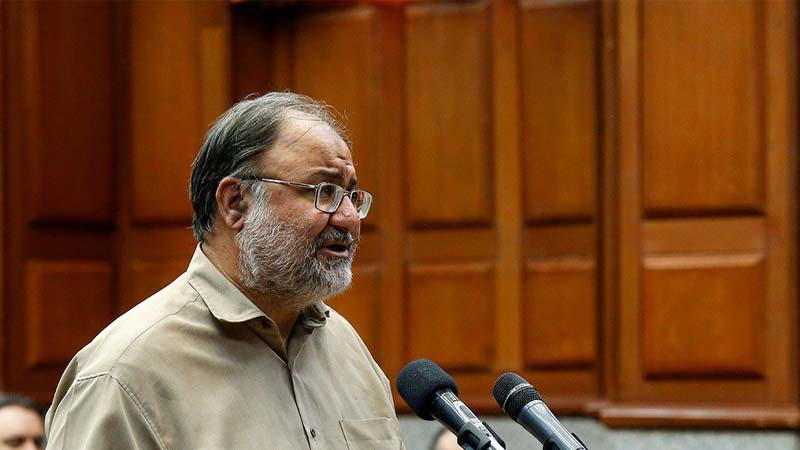
Mohammad Mehdi Chizari, a victim of the terror attacks of the Mujahedin-e Khalq (MEK), said that in addition to losing his leg, he is still suffering from the damages of shrapnel left in his body after the mortar attacks committed by the group agents.

In an interview with Mizan news agency, Mohammad Mahdi Chizari, said, “I was seriously injured at 13:30 on March 23, 2018, following a mortar attack by members of the MEK terrorist group on the Noor residential complex located on Niayesh Street in Tehran.”

“Referring to the fact that at the time of the explosion, I was a supervising engineer at one of the municipal buildings”, he said. “I was hit by shrapnel from 5 mortars, which caused me to lose my left leg above the knee, and my right leg was also seriously injured. In addition, 75 fragments of these mortars hit different parts of my body and caused injury.”

This terror victim stated that the MEK uses every opportunity to commit treason and crime in order to disrupt peace in the Iranian nation, and said, “They are trying to serve super powers like the United States and some European countries. And committing crimes like the incident that caused my injury is one of the services they offered their masters.”

Chizari emphasized that the Mujahidin did not hesitate to kill and injure innocent people in the alleys and streets, and they are even proud of it.

“Pointing out that I was waiting for justice from the very beginning”, he added. “The holding of this court makes the people of Iran happy, especially the victims of terror and their families.”

Chizari expressed hope that the prosecution of the leaders of the MEK, will be completed as soon as possible and that the material and moral damages caused to the terror victims and their families will be compensated in the best possible way. He stated, “We are very hopeful about this; God willing, when the outcome of the court is determined, the leaders of the MEK terrorist group will be punished for their actions.”

December 30, 2023 0 comments
FacebookTwitterPinterestWhatsappTelegramSkypeEmail
trial of MEK members
Iran

The third session of the court hearing for MEK trial

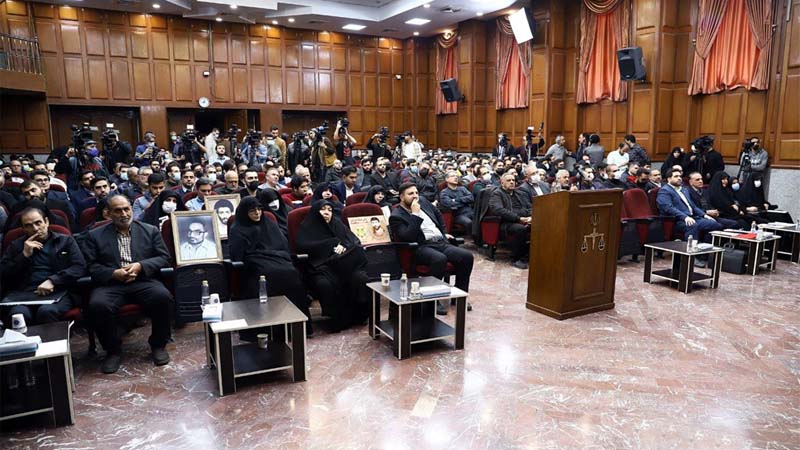
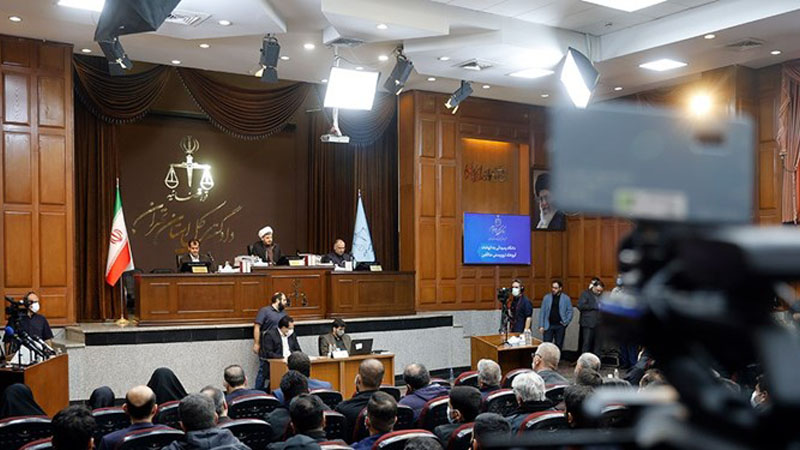
The third session of the court hearing the charges against 104 members of the Mujahedin-e Khalq (MEK), as well as the nature of this organization as a legal entity, today, was held on Tuesday, December26th, in the eleventh branch of the Criminal Court of Tehran, presided over by Judge Dehghani and court advisors Morteza Turk and Amin Naseri.
A number of family members of the victims of MEK terror acts attended the hearing. At the beginning of the trial, the judge asked the representative of the prosecutor to stand and read the indictment.

The accusations of a number of defendants of the file were read by the prosecutor’s representative. These people include: Nikoo Khaefi, Mohammad Hayati, Zahra Bakhshai, Dowlat Noruzi, Morteza Esmaeelian marnani, Mehrban Hajinezhad, Golnar Javaheri Saatchi, Mahmood Atai Karizi, Homeira Hojati Emami, Abolghasem Rezai.
The indictment included the following crimes committed by the MEK during over 4 decades.

MEK as Saddam’s mercenary

The MEK cooperated with Saddam Hussein during the Iran-Iraq war. The MEK’s terror teams entered Iran with the help of Iraqi intelligence to launch cross border operations.
According to the indictment, some intelligence documents that have reached the Iranian intelligence ministry show that the MEK took oil from Iraq in exchange for assassination. Rajavi did not know that during the meetings the MEK leaders and the Iraqi intelligence officials, the meetings were recorded. After the fall of Saddam, the films were revealed.

Cross border operations from east of Iran

According to the intelligence documents, Masoud Rajavi asked General Haboush, the then head of the Iraqi Intelligence Service, to provide conditions for the MEK so that the group could enter Iran’s territory from the east of the country and carry out assassinations. Haboush asked Rajavi to carry out the operations of the MEK in Tehran.

Forough Javidan, military operation against your own nation

The MEK conducted a massive military attack against Iran enemy using more than 7,000 troops and hundreds of tanks and personnel carriers in 1988. The operation was financially and logistically sponsored by Iraqi army. 14188

MEK’s Reconnaissance teams

Prior to terrorist attacks, MEK’s reconnaissance teams selected their Iranian country-men who seemed to be religious. They marked the victims’ locations for terror teams. There were civilians including women and children among the targeted victims.

Smuggling arms for terror teams

The supplies of explosives and weapon required for terrorist operations were trafficked by the MEK forces through the border of Pakistan and Afghanistan.

Bombing and mortar attacks

Once the teams are funded and armed, they launch acts of violence in urban areas most of which are nongovernmental, like the group’s mortar attack on Noor residential complex in 1999 that left several people killed and wounded.

Mohammad Mahdi Chizari, a survivor of the MEK’s mortar attack on the Noor residential complex in 1999, appeared on the witness stand following the reading of a part of the indictment related to this terrorist act. In response to the Judge’s request he showed his scars left from that terrorist operation.

December 27, 2023 0 comments
FacebookTwitterPinterestWhatsappTelegramSkypeEmail
Lider Navai, the brother of Pooran Navaee
The cult of Rajavi

Pooran Navai, a hostage of the MEK for 4 decades

Pooran Navai was a young girl when she joined the Mujahedin-e Khalq (MEK), in the early years after the Iranian revolution.

At the time, the inclination of young people to the MEK and other groups was somehow normal. The anti-American and anti-imperialist slogans of the group, which was lavishly used in the publications of the group, and the history of their struggles during the Shah’s time, are considered as factors to gain the trust of the youth.

Pooran was one of those youths who got caught in the MEK, which is now known as a cult. She has been in the MEK for over 4 decades and her family who live in Azerbaijan, in north-west of Iran have been longing to visit or contact her.

Pouran Navai is near 60 years old now. A few years ago, she was diagnosed with cancer. The MEK leaders did not allow her family to visit her even in those hard days.

Her brother, Lider Navai, who is a university professor is a member of Nejat Society. As a representative of his family, he regularly visits Nejat Society, writes letters to the Albanian government and international human rights bodies asking them to aid him visit his sister freely.

“Over the past years, I have spoken to my sister, Pooran once or twice on the phone,” he told Nejat Society. “She said she had cancer. From the way she spoke, I understood that she was very depressed and under the control of the cult commanders.”

Lider was able to find out that his sick sister was under supervision. “While talking on the phone, I realized that someone else is with her and she controls my sister and dictates to her what to say and what not to say,” he recalls. “Therefore, I understood that according to the leaders of the MEK, respecting the privacy of the members has no meaning.”

“When my sister joined this group, she did not know the real content of the ideology ruling the group. She was a healthy, passionate and motivated woman. Now, a sick and depressed woman is left of that person who is almost 60 years old.”
In 2018, Lider Navai traveled to France. He tried to visit his sister whose cancer treatment had just ended. He had previously made an appointment but the MEK leaders canceled the visit in the last moment.

Lider has written several letters addressing his beloved sister. He has published the letters on Nejat Society website and the social media in the hope that Pooran will read the letters someday.
“For years now, I have been dreaming the day that I will see you in the warm center of the family and we will be together in hardships and joys as before,” he writes in his latest letter to Pooran. “The anti-human act of the Cult of Rajavi in keeping men and women celibate in closed camps and without communication with the outside world, both in Iraq and now in Albania, shows a cult-like structure that is far from any human rights criteria.”

“From the point of view of human rights, your existence has no value for Rajavi. The leaders of this cult use the members caught in it only as a human shield in order to achieve their sinister objectives and anti-human crimes.”

Pooran Navai is in Camp Ashraf 3 in Manez, Albania. Her mother died a few years ago while she was expecting her return to her family and hometown.

December 25, 2023 0 comments
FacebookTwitterPinterestWhatsappTelegramSkypeEmail
Trial of MEK leaders in Tehran
Mujahedin Khalq Organization as a terrorist group

Who are the main defendants of the MEK’s trial

The second session of the court hearing of the charges of the Mujahedin-e Khalq (MEK) was held last week on Tuesday, December 28, at the 11th branch of the Criminal Court of Tehran, presided over by Judge Dehghani.

The criminal court of Tehran had previously issued a public announcement to announce that based on the case filed in this court, 104 members of the MEK, as well as the very organization as a legal entity, are supposed to be tried.

According to the case’s indictment, the defendants are accused of breaking Iran’s law, refusing to hand over their weapons to Iranian authorities after the 1979 revolution, illegally infiltrating state organizations, harboring animosity against Iranian people and assassinating thousands of Iranians in acts of terror.

In the first two sessions, the indictments of 19 people out of the 104 defendants were read aloud. Regarding that the first defendant is the Mujahedin-e Khalq Organizatoin as an entity, let’s get to know the second and third defendants of the file:

Massoud Rajavi:

Massoud Rajavi born on August 18, 1948 in Tabas in the Northwest of Iran. He became the leader of the MEK in the late years of the Pahlavi dynasty after the early leaders of the group had been executed and Massoud survived the death sentence that all his comrades received. Due to his “cooperation” with the Shah’s Intelligence, SAVAK, his death sentence was reduced to life imprisonment.

In 1981 when Massoud Rajavi called his followers to launch an armed struggle against the Islamic Republic. A large number of innocent civilians were killed during the MEK’s acts of violence. His group has claimed responsibility of dozens of attacks during since 1981 until now –the group’s so-called resistance units still commit acts of violence in Iranian cities.

He fled Iran and joined the Iraqi dictator Saddam Hussein who was at war with Iran. In Iraq, Rajavi formed the National Liberation Army (NLI) that was logistically and financially sponsored by Saddam Hussein’s Baath Regime. NLA was actually Saddam’s Private Army to suppress Iraqi shiits and kurds’ uprisings.

Sheltered in Iraq, near Iranian border, Massoud Rajavi led numerous cross border operations and terrorist attacks inside Iran. NLA was also an arm of Iraqi military in the suppression of Shiite and Kurdish uprisings inside Iraq in the early 1990s.
Rajavi married to Maryam Qajar Azodanlu (later known as Maryam Rajavi) in 1985, who was already married to one of his close associates Mehdi Abrishamchi and divorced her husband in order to marry Rajavi. The marriage that was called as “ideological” by Massoud, resulted in the transformation of Rajavi as a normal political leader to the leader of a cult of personality.

The Cult of Rajavi required members to obey cult-like regulations that Massoud indoctrinated in the hierarchy of the group. The regulations included forced divorce, forced celibacy, absolute obedience to the leader, Massoud. Rajavi married all women of the group’s Elite Council in a ceremony called “Freedom Dance.”

He disappeared in the 2003 invasion of Iraq and it is not known whether he is alive or dead. Rajavi has been wanted by Iraqi government since 2010 for crimes against humanity. He is now the Prime suspect of the Iranian court.

Maryam Rajavi:

Born in December 1953, Tehran, Maryam Qajar Azodanlu (later called Rajavi) was raised in a middle-class family. She joined the MEK after her older sister was killed by the secret Police of the Shah.
Married to Mehdi Abrishamchi, one of the high-ranking members of the group, she had a baby girl when they fled Iran to join Massoud Rajavi in France.

In France, Maryam became the administrator of Massoud’s office. The close relationship between Maryam and Massoud in the office led to their dramatic marriage in 1985 immediately after she divorced Mehdi Abrishamchi. The marriage was celebrated as an ideological revolution in the history of the group. Maryam Rajavi is the co-leader of the MEK.
Following the ideological marriage, Maryam became Massoud’s tool to run his cult of personality. They forced members to divorce their spouses, they ordered forced celibacy, forced hijab and founded Rajavi’s dictatorship. Since then, Maryam Rajavi was announced as the role model for all members of the group to leave their own family life and have Massoud in their minds as their only love.

In 2003, After the American invasion to Iraq, Maryam fled to France. Her headquarter in Auver sur d’oise in the suburb of Paris was raided by the French Police in June 2003. She was placed under arrest together with 160 of the group members and the assets of the MKO were frozen by the French judiciary. The Police seized millions of dollars from the group’s headquarters. The group was accused of preparing to commit or finance acts of terrorism and money laundering.
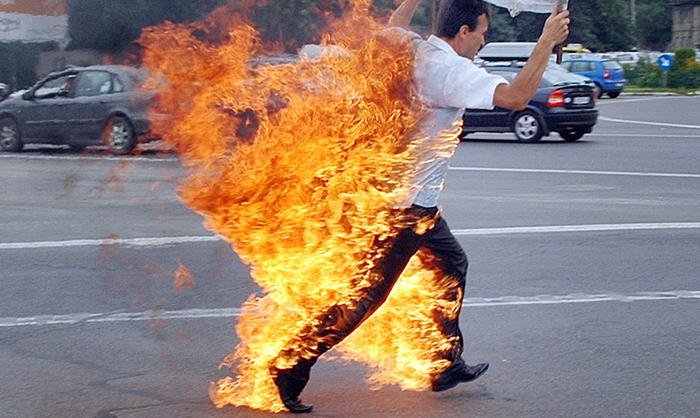
A dozen of brainwashed supporters of the Cult of Rajavi set themselves on fire to protest the arrest of Maryam. Two women were killed eventually. French Police released the cult leader to stop the horrible scenes of self-immolations in European capitals.

Maryam was the first assistant of her disappeared husband Massoud in his quest for sexual abuse of female members of their cult. She was charged with the responsibility of mental preparation of members of the group’s so-called Elite Council to get naked in front Massoud and consequently get in bed with him.

Today, Maryam Rajavi tries to portrait herself as pro-democracy leader of opposition. She boasts of her so-called ten-point plan for future Iran of which none of the items are fulfilled in her own organization. Inside the Cult of Rajavi there is no right to freely choose for clothing, for religion, for job or studies. Maryam Rajavi is the she-guru of the MEK.

December 24, 2023 0 comments
FacebookTwitterPinterestWhatsappTelegramSkypeEmail
MEK women
Mujahedin Khalq Organization as a terrorist group

MEK and Iraqi Kurds’ Genocide; Evidence from Air Force Officer’s Memoirs – Part 2

The terrorist Mojahedin-e Khalq Organization forces played a leading role in the violent suppression of Iraqi Kurds during the Morvarid (Pearl) operation, an incident that became a catalyst for the defection of numerous members from the organization.

The presence of the terrorist Mojahedin-e Khalq Organization (aka MKO or MeK) in Iraq, driven by shared strategic objectives amidst local and regional changes, went beyond a simple partnership, evolving into a comprehensive coalition with Saddam Hussein. While their cooperation touched upon a wide range of matters, the specific focus here is on the MeK’s role in the violent suppression of Iraqi Kurds during the Morvarid (Pearl) operation, an incident that became a catalyst for the defection of numerous members from the organization.

More details of the encounters between Rajavi’s forces and the Iraqi Kurds are mentioned in the memoirs of a fighter pilot who was among the flight crew during the escape of Bani Sadr and Rajavi, and spent years within the organization. In the following, we quote exactly this person’s memories as the second account of this incident.

Rajavi’s forces were returning to Sulaiman Beg Road with full equipment and were deployed around the cities of Tuz and Kifri. Those who were passing through Tuz, were ordered to target this city with their cannons and machine guns. The citizens stopped working and gathered in front of the shops to see what is going to happen.

One of the Kurdish commanders came forward and asked to speak with the commander of the MeK forces named Reza Karamali. That person said, “We are not at war with you. Our goal is to liberate our regions from the hands of Saddam Hussein. If it happens, you won’t have any problems in this country. Isn’t it better to turn away your cannons?”

Karamali said, “You are a mercenary of the Khomeini regime, and you have always been and will be our enemy, and you have already killed our troops or handed them over to the Islamic Republic.”

It was at this time that a bullet from an unknown location was shot and killed Reza. [In response,] The MEK started shooting blindly at the city and destroyed many places and shops with cannonballs.

They had promised Saddam that they would intercept the Kurds until the arrival of the Iraqi forces; therefore, they blocked the main entrances and exits of Kifri, Jalawla, and Tuz. First, for about two days, the Kurdish groups tried to avoid clashing with the MeK. This did not mean that they were unable to do so, but they did not want to find themselves on two fronts, namely fighting with the MeK on one side, and with Saddam on the other. The MeK justified its members saying that they are not actually Kurds, but rather the Islamic Republic’s soldiers and troops, dressed as Kurds!

The Kurds continued to try to negotiate with the MeK until a group of the Mojahedin attacked Kifri. They entered the city with tanks and personnel carriers. The conflict started inside the city and this MEK group with 11 members were all killed. After that, the attempt to negotiate failed and the forces attacked each other, especially the MeK tried to kill and arrest many Kurds in order to hand them over to the Iraqi government.

This action of the MeK and the blockage of the Kurds gave Saddam the opportunity to bring a number of his remaining forces to these areas and, using helicopters and artillery, push the Kurds back and regain control of Jalawla, Tuz, and Kifri. (1)

References

1. Asadi, The Reactionary, pp. 86-93

December 23, 2023 0 comments
FacebookTwitterPinterestWhatsappTelegramSkypeEmail
Kurds Massacre
Mujahedin Khalq Organization as a terrorist group

MEK and Iraqi Kurds’ Genocide; Evidence from US State Department Report – Part 1

The Mojahedin-e Khalq Organization (MeK) significantly contributed to the distressing suppression of Iraqi Kurds amidst the Persian Gulf War.

The anti-Iran terrorist Mojahedin-e Khalq Organization (also known as MKO or MeK) significantly contributed to the distressing suppression of Iraqi Kurds amidst the Persian Gulf War. This dark chapter, marked by violence and bloodshed, is a poignant reminder of the atrocities committed against the Iraqi Kurds.

On the occasion of the International Day of Commemoration and Dignity of the Victims of the Crime of Genocide, we reflect on the profound impact of MeK’s involvement in the brutal crackdown on the Kurdish community. As part of our commitment to shedding light on historical truths, we will provide a translation from the book “Mojahedin-Khalq Organization: Arising & the End” vol.3 published by the Political Studies and Research Institute (PSRI) offering insights into the events surrounding this tragic episode in history.

“The MEK are the protectors of the Iraqi borders and are like the Iraqi army. Listen to them and follow their instructions.” Saddam Hussein (1)

During the Persian Gulf War, the Iraqi Kurds took advantage of the weakness of the central government and seized control of the Kurdish regions. To keep Saddam’s regime in power and under the pretext that the Islamic Republic of Iran was attacking MEK bases in Kurdish territories, Rajavi moved his forces to these areas to suppress Iraqi Kurds until Saddam’s troops arrived from the south (2).

At the beginning of Iraq’s occupation of Kuwait, the MEK were settled in an area called Nawjul (located in northern Iraq) (3) where Iraqi Kurds used to live. However, it had been completely evacuated before being handed over to them! This means that Saddam’s army attacked the towns and villages of this region and killed its people or made them flee to Iran and Turkey. A few months after the Operation Eternal Light (Mersad), Saddam entrusted the protection and guarding of Nawjul to Rajavi’s elements where they planted wheat and barley to fill their days. When the Persian Gulf War began, Rajavi’s forces moved from their camp known as Ashraf to Nawjul.

During air attacks of US and its allies on the military and strategic regions of Iraq, MEK camps and shelters remained immune from damage according to some kind of agreement. For example, two large Iranian flags along with pictures of Masoud and Maryam were installed in Ashraf and Nujal bases, which were easily visible to the attack aircrafts (4).

Having faced defeat, Saddam brought all remaining forces to the border with Kuwait. As a result, northern areas were evacuated of Ba’athist forces. In this situation, an opportune moment was created for Iraqi Kurdish groups to launch raids into these areas and once again reside there.

In the northern areas, the Kurds occupied the major cities of Mosul and Sulaymaniyah and then advanced towards cities such as Tuz, Kifri, and Jalawla. With the occupation of these cities, it was enough for the Kurds to pass through Suleiman Beg’s route to reach the main road and advance directly towards the cities of Khales and Baghdad. At that point, no force could have stopped them (5).

The clash between Rajavi’s forces and the Kurds occurred at this point. We present two accounts of this incident. The first narrative consists of excerpts from a report submitted by the US Department of State to the Congress:

In March 1991, following Operation Desert Storm, the NLA reportedly fought against the Iranian Revolutionary Guards (The Islamic Revolution Guards Corps or IRGC) near the border town of Qasr-e Shirin. Analysts assume that Saddam permitted the NLA to cross into Iran at this time in order to signal that he would not tolerate Iranian support for a Shi’a uprising in southern Iraq (6). At that time, the Iraqi Kurds also claimed the Mojahedin had assisted the Iraqi army in its suppression of the Kurds, “a claim-substantiated by refugees who fled near the Iranian border.” (7) The leader of the patriotic Union of Kurdistan of Iraq, Jalal Talabani, told reporters that “5,000 Iranian Mojahedin joined Saddam’s forces in the battle for Kirkuk.” (8)

A recent Wall Street Journal report stated that the NLA’s “only major offensive in the past six years came in 1991, just after the (Persian) Gulf War, when Saddam Hussein ordered Mr. Rajavi to help quell a Kurdish revolt in northern Iraq, participants in that operation say.” (9)

A former MKO member who was in Iraq said his trouble with the Mojahedin leadership, began when he questioned the MKO’s operation against the Kurds.” (10)

References

1. Shams Haeri, The Marsh, p. 27. The author has mentioned that he, along with other prisoners, heard this message from the Iraqi radio in the college prison (one of the MEK prisons in Iraq) in Ashraf barracks.

2. The US State Department report with reference to a Jalal Talabani’s interview and the Wall Street Journal report on October 4, 1994; also a research report of the German Green Party

3. This region is located between the city of Kirkuk and the Kurdish-inhabited cities of Kifri and Tuz.

4. Asadi, The Reactionary, pp. 86-93

5. ibid

6. Michael Theodoulou, The Times, April 2,1992; Alan Cowell, New York Times, June 5,1991

7. Associated Press report, May 10, 1991

8. Michael Theodoulou, The Times, April 2,1992

9. Peter Waldman, The Wall Street Journal, October 4, 1994

10. ibid

December 23, 2023 0 comments
FacebookTwitterPinterestWhatsappTelegramSkypeEmail
Trial of MEK leaders in Tehran
Mujahedin Khalq Organization as a terrorist group

The second court hearing for the trial of MEK leaders held today

The second court hearing for the trial of 104 members of the Mojahedin-e Khalq Organization (MEK) took place today.

Held at the 11th Branch of the Criminal Court of Tehran Province, the trial of MEK leaders was chaired by Judge Dehghani, and court advisors were Morteza Tork and Amin Naseri.

What are the MEK terror cult crimes

The horrendous crimes committed by the MKO/MEK terror cult are well documented and include terrorist attacks, sabotage of civilian infrastructure, participation in military aggression, and complicity in Baathist Iraq’s genocide of the Kurds.

In Iran alone, 17,161 victims of their terrorist actions have been documented, among them President Mohammad Ali Rajaee, Prime Minister Mohammad-Javad Bahonar, Judiciary Chief Ayatollah Mohammad Beheshti, as well as several lawmakers, ministers and scholars.

After failing to seize power and losing their socio-political base in Iran, the terror cult sought refuge in Baathist Iraq and participated in Saddam Hussein’s aggression against Iran, which was overtly backed by the West.

Post-Baathist Iraq acknowledged the former regime’s aggression against the Islamic Republic and Iraqi Kurds, convicted and punished many of those responsible, but none of the MKO/MEK members have so far been held accountable for their crimes, in Iraq or Western countries.

In only the 1988 operation against Iran, the terrorist group’s crimes included aggression and violation of UN resolutions, chemical attacks on Iranian villages with hundreds of victims, urbicide (city-killing) of Iranian cities and towns, and massacres of medics, voluntary helpers and others.

During the war and the subsequent Iraqi uprising against Saddam Hussain’s regime, MKO/MEK directly participated in genocidal campaigns against the Kurdish population, with over 4,000 victims in the vicinity of Kirkuk alone.

Testimonies from former MKO members confirm that Rajavis and senior MKO officers personally ordered the brutal massacre of Kurdish civilians, claiming that members of the Islamic Revolution Guards Corps (IRGC) were hiding in Kurdish traditional clothing, which was a blatant lie.

The same testimonies say many MKO/MEK members were horrified by the massacres but were not in a position to oppose their leaders because they would have risked their lives.

Experts believe that by brutalizing the Iraqi Kurds, the Rajavis desperately wanted to prove themselves useful to the Iraqi dictator, without whose support they would have been without the only base available at the time.

December 19, 2023 0 comments
FacebookTwitterPinterestWhatsappTelegramSkypeEmail
Akbar khosravi's brother
Mujahedin Khalq Organization members' families

Akbar Khosravi was kidnapped by the MEK

Hojat Khosravi, the brother of Akbar Khosravi visited Nejat Society office in Urumia. While meeting Nejat representatives there he asked the authorities of the Albanian government to provide him with the conditions to meet his brother Akbar who has been taken as a hostage by the Mujahedin-e Khalq (MEK).

Hojjat Khosravi further said, “Our demand from the Albanian government is only humanitarian. The Albanian government should pay attention to this demand. Families of MEK’s hostages are still feel uncertain due to the ban on travel to Albania by the government of this country.”

He asks the Albanian government to consider only the human aspects and human rights regarding members of the MEK and refrain from politics in this regard.

The authorities of the Albanian government at the time also announced that the reason for the presence of the MEK members in this country was only a humanitarian issue and not a political one. Now they should fulfill their human duty and provide the conditions for families to meet their loved ones in the camp of the Cult of Rajavi, away from the pressures and media manipulations of the MEK leaders.

“I consider the establishment of the Albanian Nejat Society as a good omen and I am sure that this work can have a great role and efficiency in fulfilling the wishes of the families,” Hojat said. “From here, I send greetings to all those involved and those who are trying to ease the conditions and draw the attention of the government of Albania to the legitimate wishes of the families.”

It is worth to mention that Akbar Khosravi was born in 1974 and is from Naqdeh, Azerbaijan. He is now 49 years old and is trapped in the MEK cult, in Albania. During this period, the leaders of the MEK have not allowed his family to have any contact or visit with him.

After the fall of Iraqi dictator Saddam Hussein, the family of Akbar Khosravi made many efforts to save Akbar from the hands of this notorious cult, but they have not succeeded so far.

Akbar Khosravi’s brother says: “Akbar was never a political person. At the age of 17, while he was studying in the third grade of high school in Naqdeh city, in September 1991, together with one of his friends, they wanted to go to European countries through the Iraqi border to reach favorable conditions and earn more money.”

Akbar Khosravi left a letter for his family and went. “My friend and I want to go to Europe for work and we will definitely return one day,” He wrote in that letter. “There, we will find a good and well-paying job to support our family financially.”

From that date onwards, The Khosravis have had no information about Akbar. Until, through the defectors who entered Iran in 2003, they learned that Akbar was captured by the MEK. In the early 1990s, Akbar was taken to Camp Ashraf by the agents of the MEK with the promise of work in Europe.

December 18, 2023 0 comments
FacebookTwitterPinterestWhatsappTelegramSkypeEmail
Iran begins trial of MEK members
Iran

Consequences of holding court for MEK leaders in Iran

The first court hearing for the trial of leaders of the Mujahedin-e Khalq (MEK) was held on Tuesday, December 12th, with five lawyers representing the accused. The trial is considered historical as it is the first time that the complaints of many plaintiffs are dealt with in a national court. This court of which the next session will be held next week will have some consequences.

The plaintiffs of the MEK include diverse groups: victims of the group’s terrorist operations including civilians and government officials, former members of the group who endured torture and imprisonment, families of current members of the group who are isolated behind the bars of the cult-like system of the group.

The complainants who were present in the first hearing were mostly civilians who were injured and amputated by the MEK terror acts. A number of them were family members of those killed by the terrorist operations of that responsibility was officially claimed by the MEK.

The court is a crucial step in the documentation process of the crimes committed by the MEK. The facts, testimonies and verdicts that are documented by the Iranian judiciary are expected to be considered as a background for a fair trial in international courts or in judiciary systems of France and Albania.

As a consequence of the recent hearing in Iranian judiciary, there is a possibility that the leaders of the MEK will be extradited to Iran. Once they are extradited to Iran, their trial will take place before the eyes of the accusers. Long time hatred of the Iranian nation for the MEK traitors will be countered.

The historic trial of 104 members of the MEK is regarded as a step towards peace and security for the Iranian people as well as the Europeans who host the group in France and Albania. The official documents of the court should be recorded as historical documents to condemn the Cult of Rajavi.

Mazda Parsi

December 16, 2023 0 comments
FacebookTwitterPinterestWhatsappTelegramSkypeEmail
Newer Posts
Older Posts

Recent Posts

  • A Criterion for Proving the Violent Nature of the MEK

    December 31, 2025
  • Rebranding, too Difficult for the MEK

    December 27, 2025
  • The black box of the torture camps of the MEK

    December 24, 2025
  • Pregnancy was taboo in the MEK

    December 22, 2025
  • MEPs who lack awareness about the MEK’s nature

    December 20, 2025
  • Facebook
  • Twitter
  • Instagram
  • Youtube

© 2003 - 2025 NEJAT Society . All Rights Reserved. NejatNGO.org


Back To Top
Nejat Society
  • Home
  • Articles
  • Media
    • Cartoons
    • NewsPics
    • Photo Gallery
    • Videos
  • Publications
    • Books
    • Nejat NewsLetter
    • Pars Brief
  • About Us
  • Contact us
  • Editions
    • عربي
    • فارسی
    • Shqip